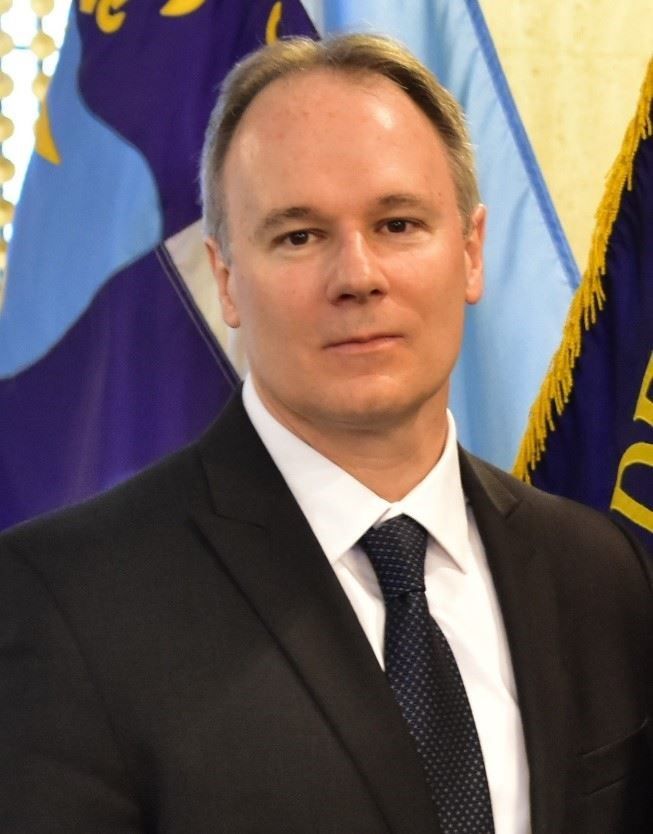
Bedford, NY, March 3, 2024 – MaryAnn Carr, a Democratic candidate in the NY-17 Congressional race, has issued a powerful call for an immediate ceasefire in the ongoing conflict in the Middle East. As violence continues to escalate in the region, Carr urges swift action to prioritize peace and humanitarian relief efforts.
With a deep commitment to diplomacy and human rights, Carr emphasizes the urgent need for all parties involved to cease hostilities and engage in meaningful dialogue to resolve the crisis. “The current situation in the Middle East is untenable and has resulted in immense suffering for innocent civilians,” said Carr. “It is imperative that we put an end to the violence and work towards a sustainable peace that respects the rights and dignity of all individuals.”
Carr’s call for a ceasefire comes at a critical juncture in the conflict in the Middle East continues to exact a devastating toll on civilian lives and infrastructure. By advocating for an immediate cessation of hostilities, Carr aims to mobilize support for peace efforts and humanitarian aid initiatives in the region and a call to release hostages.
In addition to calling for a ceasefire, Carr pledges to work tirelessly in Congress to support diplomatic solutions, promote human rights, and advance policies that contribute to lasting peace and stability in the Middle East.
As a candidate in the NY-17 Congressional race, Carr is committed to representing the interests of her constituents and advocating for policies that uphold justice, equality, and dignity for all.
If victorious, MaryAnn Carr would make history as the First Black Woman to be elected to represent the 17th Congressional District, but first, she must face off with former Congressman Mondaire Jones, in the June Democratic Primary!
For more information on Maryann Carr’s campaign and her stance on critical issues, please go to https://www.maryannforny.com.
From the outset of his campaign, Latimer has been unequivocal about his allegiances and positions. Despite the significant toll of over 30 thousand lives lost, with 70 percent being women and children, Latimer has maintained a conspicuous political silence regarding the actions of the Israeli army.
George Latimer recently made statements that seemed to align with MAGA rhetoric by targeting Muslim and humanitarian communities for their protest votes in Michigan and six other states. These votes were cast in opposition to President Biden’s support for Israel and his reluctance to call for a ceasefire and a two-state solution in the Israeli-Palestinian conflict.
Latimer questioned the loyalty of these groups to President Biden and to democracy itself. However, he appears to ignore the fact that protest votes are a legitimate and essential part of the democratic process, used to express dissent and advocate for change.
Moreover, Latimer specifically mentioned Rep. Rashida Tlaib, who is Muslim, in his comments, which could be interpreted as a subtle form of dog-whistle politics often employed by MAGA-aligned individuals to appeal to certain voter bases.
It’s important to note that criticizing a politician’s stance or actions does not equate to disloyalty to the country or democratic principles. Holding elected officials accountable for their positions on human rights issues is a crucial aspect of a healthy democracy.
Latimer’s statements seem to disregard the genuine concerns of Muslim and humanitarian communities regarding the Israeli-Palestinian conflict and the U.S. government’s role in it. Such rhetoric risks further marginalizing these groups and undermining efforts to address human rights issues through democratic means.
The loss of innocent lives, particularly those of civilians caught in the crossfire while trying to meet their basic needs, is a tragedy that demands immediate attention and condemnation from political leaders. Latimer’s failure to address these reported deaths and to call for an urgent investigation into the circumstances surrounding them was a glaring omission that spoke volumes about his priorities and level of concern for human rights.
As a prominent political figure, Latimer is responsible for speaking out against potential human rights violations and advocating for the protection of innocent lives, regardless of their nationality or political affiliation. His silence in the face of such disturbing reports of civilian casualties was deeply troubling and raised serious questions about his commitment to justice and humanitarian principles.
In a conflict as complex and longstanding as the one between Israel and Palestine, it is crucial for leaders to approach the situation with empathy, nuance, and dedication to protecting the most vulnerable. Latimer’s apparent indifference to the reported deaths of civilians seeking food and supplies suggested a lack of understanding or concern for the human toll of the conflict.
“I support President Biden’s temporary ceasefire that finally brings home all of the Israeli hostages and gets humanitarian aid to Gaza,” Latimer wrote in a post on X. “This is about building enduring peace resolutions and this plan will save countless lives and restore humanity.“
Many people in the human rights community have referred to George Latimer, a seasoned politician, as Genocide George because of his inaction. Instead of recognizing this criticism as an opportunity for immediate change, he has taken it as a badge of honor. The real reason Latimer is now calling for a ceasefire is the same reason President Biden and the Vice President have spoken out: to gain votes.
Unfortunately for George, his tweet doesn’t provide any context about the conflict, the disproportionate impact on Palestinian civilians, or the calls from the international community for an immediate ceasefire to prevent further loss of life.
By explicitly mentioning “Israeli hostages” but not addressing the Palestinian civilian casualties, the tweet seems to prioritize Israeli concerns over Palestinian lives.
George Latimer’s call for a ceasefire now, after months of conflict, is primarily politically motivated rather than stemming from genuine concern for civilian casualties.
As the old saying goes, when people show you who they are, believe them. The unfortunate reality for Westchester’s voters who believe in humanity on both sides is that it’s not just Latimer; the Democratic Party and its leadership have also remained silent and have hidden their humanitarian cap to be a US politician brought by a foreign government.
As the Israeli-Palestinian conflict unfolds, the crucial question remains: will George Latimer and other Democratic leaders ultimately take a principled stand on the right side of this issue, or will they be remembered as being on the wrong side of history?
I want to state that I denounce terrorism in all its forms unequivocally. However, to put the Israeli-Palestinian conflict in perspective, consider this analogy: if one team scored only 1,200 points while the other team scored 30,000 points, which team would be considered the winner? Any rational person would conclude that the game was unfair and should be called off.
In the context of the Israeli-Palestinian conflict, the stark disparity in casualties between the two sides raises serious concerns about the proportionality and justification of Israel’s military actions. While Israel has the right to defend itself against terrorist attacks, the sheer number of Palestinian civilians killed, including a significant proportion of women and children, suggests that the force being used may be excessive and indiscriminate.
When innocent lives are being lost on such a disproportionate scale, it is no longer a matter of winning or losing a conflict but rather a question of basic human rights and the value placed on human life. The international community has a moral obligation to intervene and call for an immediate cessation of hostilities to prevent further loss of civilian life on both sides.
It is crucial for all Westchester elected officials, the Democratic Party, including George Latimer, to recognize the severity of the situation and to use their influence to push for a peaceful resolution that addresses the underlying causes of the conflict and ensures the protection of all civilians, regardless of their nationality or political affiliation. Silence or inaction in the face of such disproportionate violence is not a neutral stance but rather a tacit endorsement of the status quo.
Their actions, or lack thereof, in addressing the suffering of innocent civilians and the alleged human rights violations will shape their legacies. The public will watch closely to see if they prioritize justice and humanitarian concerns over political expediency. We will remember on election day!
Picture this: the big election in Westchester for District Attorney is like a giant symphony of democracy, and the spotlight is on the candidate forum happening on March 7, 2024. It’s a big deal, organized by Black Westchester and backed by ten important groups, with more people thinking about joining. This isn’t just any old debate; it’s like feeling the pulse of our democratic spirit.
Amid all this excitement, two candidates, Adeel Mirza, and William Wagstaff III, are all in, ready to take part. But there’s a bit of buzzkill: an email from Doug Forand, who’s on Team Cacace for DA, is making us wonder about Susan Cacace. It seems like she might not be so sure about jumping into the democratic dance, and that’s got us questioning if she’s really all in for the people or some of the people.
Let’s keep it straight: just because Cacace got a thumbs-up from the Democratic Committee doesn’t mean she’s got the June primary in the bag. History shows us that the party’s top pick can stumble, as Mimi Rocah proved in 2019, going against the party’s first choice and still winning both the primary and the big election. Cacace’s team needs to get that district leaders, as important as they think they are, don’t control what everyone thinks.
If she’s already acting like she’s won based on the nomination, that’s a recipe for thinking she deserves the job without earning it. We’re saying loud and clear: being part of debates isn’t a choice for candidates; it’s a must-do. It builds trust with us regular voters and makes sure we’re in the loop. As a family member deeply affected by injustice, I’m appalled to witness Susan Cacace’s refusal to participate in the upcoming justice forum. In a system that often falls short for everyone, her absence sends a troubling message about transparency and commitment to justice.
So, the ball’s in Cacace’s court when it comes to the debate. But for us, it’s a way to see if she’s really serious about being fair, open, and sticking to the democratic values we all care about.
Candidates for the big job need to be right in there, making sure everyone gets a fair say and knows what’s going on.
In a nutshell, I’m sounding the alarm for democratic integrity. Judge Susan Cacace, it’s not too late to join in. The people who will decide if you become the next District Attorney are hoping you reconsider and participate in this crucial debate.
Kenneth Chamberlain Jr Son of Kenneth Chamberlain, Sr. (Victim Of Injustice)
Cacace’s Debate Snub is a “failure to be inclusive and transparent,” Westchester Coalition for Police Reform Co-Founder Says
WESTCHESTER COUNTY – In a resounding collective voice, the Westchester Coalition for Police Reform, led by co-founder Kenneth Chamberlain Jr. and joined by influential cosponsoring organizations like the Urban League of Westchester and WESPAC Foundation, expresses deep disappointment and dissatisfaction with “Judge Susan Cacace’s refusal to participate in the upcoming candidate’s forum for the Westchester County District Attorney race, scheduled for March 7, 2024.
Nada Khader, Director of the WESPAC Foundation, emphasized the importance of every District Attorney candidate sharing their vision for the Office of the District Attorney. “We want to know where each candidate stands on racial equity, alternatives to incarceration, restorative justice, and police, prosecutorial, and judicial accountability,” she stated. “It is unacceptable that Candidate Judge Cacace refuses to participate in a candidate’s forum in the City of Mount Vernon and address these critical issues.”
Patrick Schelle, a social worker and community organizer with the Alternatives to Incarceration Coalition, echoed this sentiment, expressing concern that Cacace’s lack of participation suggests a wavering commitment to justice for Westchester residents. “If Susan Cacace is a true leader,” he stated. “She would participate in this forum and engage in discussion with the other candidates and concerned citizens.”
Sorraya Sampson, President & CEO of the Urban League of Westchester, remarked, “While we’re pleased to see multiple candidates participating in the debate, it’s regrettable that Judge Cacace has chosen to abstain. This debate is a vital platform for voters to assess all options and make informed decisions. It is important for all candidates to join in and connect with the people they hope to represent.”
The Westchester Coalition for Police Reform emphasizes the significance of this debate as a pivotal platform for voters to assess candidates’ positions and make informed decisions. With candidates Adeel Mirza and William Wagstaff III committed to participating actively, Judge Susan Cacace’s reluctance raises concerns about transparency and her dedication to the democratic process.
Kenneth Chamberlain Jr., co-founder of the Westchester Coalition for Police Reform, urged the public and media to seek clarification from Judge Cacace on her decision. “While the decision to attend the debate ultimately rests with Susan Cacace, it is crucial for the electorate to interpret this choice not to participate is indicative of her commitment to inclusivity, transparency, and democratic values,” he stated.
Adding their influential voice to the call, SURJ Westchester supports Kenneth Chamberlain Jr. and WCPR’s call for candidate Susan Cacace to take part in the upcoming Westchester DA Candidate Forum. Emphasizing the critical importance of hearing from all candidates, they urge participation to ensure Westchester voters can make a fully informed choice for this office.
Mayor Shawyn Patterson-Howard and the City of Mount Vernon Recreation Department kicked off their Women’s History Month festivities, on Monday, March 4th, featuring Sage, the Women’s Collective of Lewis & Kirk entertaining all in attendance in Mount Vernon’s Rotunda.
The ceremony featured the honoring of four local sheroes of Mount Vernon, Mary Kingsley, Joann Dunn, Emily Fida, and Claudette Gyles, for their outstanding service to the Mount Vernon community.
After the presentation of the proclamations, the crowd was thrilled to an incredible dance performance called The Revelators who performed to jazz singer, composer, pianist, and arranger Nina Simone’s “Four Women,” off the former Mount Vernon residents’s 1966 album, “Wild Is the Wind.” It tells the story of four African American women. Each of the four characters represents an African-American stereotype in society. Thulani Davis of The Village Voice called the song “an instantly accessible analysis of the damning legacy of slavery, that made iconographic the real women we knew and would become.”
There was an amazing exhibition of handmade quilts from the Ladies of The Doles Center Quilting Club on display.
The headliners, Sage, the Women’s Collective of Lewis & Kirk consisting of Jodi Melendez (vocalist), Taylor Moore (drummer), Yayoi Ikawa (pianist), and Charisa The Violin Diva (violinist), entertained the crowd at the end of the ceremony. Jodi–who also performed at the Mayor’s 2nd Inaugural Ball-sang several songs including a great rendition of Lauryn Hill’s “Killing Me Softly.”
“Recreation Commissioner Kathleen Walker-Pinckney and her team brought the heat tonight,” Mayor Shawyn Patterson-Howard shared with Black Westchester after the event.
All photos by Devon Louis of the Mount Vernon Recreation Department. The ceremony was catered by food vendor and caterer, Sassy’s Fishcakes, who brought the taste of Barbados to Mount Vernon City Hall. Follow them on Instagram.
With a career spanning half a century, Paul Kwame Johnson has carved out a distinguished role as a teacher, actor, director, and playwright in Yonkers and throughout Westchester County. For many years, Paul Kwame Johnson has shared his talents with the Sarah Lawrence College community annually by bringing performers to campus. His most recent foray at Sarah Lawrence College occurred on February 17, A Tribute to Black Theatre Part 2, a show that celebrated Black History Month.
Johnson’s passion for community work began as an undergraduate at Sarah Lawrence, sharing theatre skills with teenagers on Yonkers basketball courts. Soon after, in 1971, Paul Kwame Johnson joined his friend, musician James Hill, at the Yonkers Community Action Program’s ‘School 12’, which led to the founding of Youth Theatre Interactions. This after-school performing arts Yonkers cultural institution still exists today.
Johnson is currently with the Theodore D. Young Community Center Adult Acting Workshop’s Little Blue Room Theatre Company, the signature multi-cultural theatre ensemble in Westchester County. In leading the Little Blue Room Theatre Company with an unwavering dedication to artistic excellence and social responsibility, Johnson, with a company of cultivated performers, continues to enrich and inspire the cultural fabric of New York.
In A Tribute to Black Theatre Part 2, Johnson showcased the undeniable talent of each company member while skillfully directing a powerful program that confronts uncomfortable truths and challenges preconceptions, ultimately allowing us to witness our humanity reflected on stage. Without missing a beat, Johnson and company tackle complex themes with depth and nuance. The powerful exploration of racial dynamics in “Race,” followed by the poignant examination of identity in “The Right Box,” are selections that provoke introspection and dialogue. “The Real Black History,” written by company member Tina Harper, is a program highlight.
Johnson, underscoring a reverence for pioneers and literary figures who have used their words as tools for social change, beautifully weaves the works of historical poet, novelist, and playwright Paul Lawrence Dunbar and playwright Melvin Van Peebles into an impactful series of poignant character pieces beautifully portrayed. Martin Luther King Jr.’s iconic “Selma to Montgomery” speech on March 25, 1965, is a spirited, rousing call to action delivered by the entire company. Johnson honors the legacy of these seminal figures by drawing connections that encourage audiences to reflect on equality and justice. A fabulous African Dance performance titled “Goddesses” was gracefully performed by the colorfully costumed and lovely young dancers of the Falcon Dance Team. The generous and rich choreography by Jessica Parris was pleasing and joyful.
The talkback that followed A Tribute to Black Theatre Part 2 is where Johnson’s distinct legacy as a socially engaged artist becomes apparent, where the medium truly becomes the message. Here, the traditional boundaries between audience and performer dissolve, and the roles dynamically reverse. Audience members, deeply moved by the resonance of Johnson’s storytelling and the authenticity of the performances, eagerly step into the spotlight. With passion and eloquence, they share their connections to the themes explored on stage, drawing from their lived experiences and entering the performative. This reversal of roles serves as a testament to the transformative power of theatre, where the stage becomes a platform for personal and collective reflection and exchange. With audience members stepping onstage or speaking from their seats to reminisce, remember, or respond, it celebrates Johnson’s years of teaching and making theatre; this remarkable happening-like exchange speaks to skill, spirit, love, and commitment to bringing theatre home to all.
The Little Blue Room Theatre Company members: Donel Dinkins, Paula Santa-Donato, Paul Santa-Donato, Tanisha Downey, Luther Garrison, Tina Harper, Olivia Hunter, EV McFall and Tee Sudderth
Allen Lang is the director of the SLC Theatre & Civic Engagement Program and a Sarah Lawrence College Theatre Faculty member.
New York State Senate Majority Leader Andrea Stewart-Cousins and State Senator Shelley Mayer teamed up to host a special screening of the acclaimed Ava DuVernay film “Origin” Friday in Yonkers, as a special observance of Black History Month and Women’s History Month at the Cinema de Lux Ridge Hill.
“Origin” is a 2023 film written, directed, and produced by the Oscar-nominated DuVernay, based on the 2020 book “Caste: the Origins of Our Discontent” by award-winning author Isabel Wilkerson. The film examines how factors other than race play a role in discrimination and hate, and looks at the role caste systems have played in various societies. To date, “Origin” has been nominated for more than 20 awards at a dozen festivals and awards shows, with five wins so far, including a Best Director award for DuVernay from the African-American Film Critics Association.
“Black History Month and Women’s History Month come in consecutive months, and days like today offer us the chance to observe the intersection of the two in a thought-provoking way,” Sen. Stewart-Cousins said. “That’s why, as we close out another meaningful Black History Month and begin Women’s History Month, I am so honored to be joining with Sen. Mayer here at the Showcase Cinema de Lux Ridge Hill to bring these perspectives to light with the showing of “Origin.”
The audience members were visibly moved by the touching and sometimes heavy subject matter.
“What makes this such a poignant and powerful piece of media for us to consume as we celebrate Black History and Women’s History, is that it reminds us also, of our ability to change hearts and minds with our voices, our vision and our stories,” Sen. Stewart-Cousins said. “The crucial lesson of Black History Month and Women’s History Month is that history is ongoing. The story is not yet written, and together, we can write the next chapter.”
State Senator Shelley B. Mayer said, “I was proud to join Majority Leader Andrea Stewart-Cousins in co-hosting a special screening of Ava Duvernay’s Origin. Thank you to all who attended, and I hope they share the inspiration and challenge I am left with as we continue towards a more equal and just society. I also thank Majority Leader Stewart-Cousins for leading this transformative event and I thank Ava Duverney and Isabel Wilkerson for sharing their incredible stories.”
At the screening, Sen. Stewart-Cousins and Sen. Mayer thanked the Showcase Cinema de Lux Ridge Hill for their partnership in hosting the screening.
I had the pleasure of being interviewed by The Journalist Sin-Seer about my new book, ‘We Got Our Own Thang – A Look At Hip-Hop From The 914.” Check out the interview below, broken up into three parts as I talk about the book, the artists, The DJ’s, The Producers, The Legends, the history of 914 Hip-Hop, and much more!!!
Black Westchester presents The People Before Politics Radio Show Episode 390 with Damon K. Jones and AJ Woodson with our guest Rev Edward Mulraine discussing Isreal, Palestine, and The Black Community. Where Do Black People Fit in?
As a Black community, we are suffering from a lack of leadership and unity that is holding us back. Several complex issues plague us, from broken cultural ties to tense gender relations. Healing these divisions requires a special kind of moral guidance – that provided by upright Black men.
The Bible provides many verses extolling uprightness and integrity as crucial virtues for leaders. As Proverbs 11:3 states, “The integrity of the upright guides them, but the unfaithful are destroyed by their duplicity.” Upright men allow righteousness to direct their conduct.
Upright Black men embody integrity, spirituality, and strength of character. They promote self-acceptance and identity pride in the face of internalized racism that causes dangerous self-doubt. As Genesis 1:27 explains, God created man in His image; upright men help others recognize their innate divine essence.
They model healthy masculinity focused on respect and compassion, not aggression. Ephesians 6:12 reminds us that we do not wrestle against flesh and blood but against spiritual forces of injustice; upright men wage this righteous struggle while rejecting violence.
And they foster open dialogue to build understanding between Black men and women. Proverbs 12:26 notes, “The righteous choose their friends carefully, but the way of the wicked leads them astray.” Upright men befriend and support moral partners.
The scriptures mandate for upright Black men to speak truth to power and advocate for justice. Proverbs 31:8-9 highlights the duty to stand up for the marginalized and oppressed, addressing systemic injustices such as economic inequality and racial discrimination. Ephesians 4:15 emphasizes the importance of advocacy rooted in empathy and reconciliation, while Proverbs 29:25 reminds individuals to trust in the Lord and not succumb to fear when confronting injustice. Together, these verses underscore the responsibility of upright Black men to defend the rights of the marginalized and strive for a more equitable society guided by faith, compassion, and courage.
As upright Black men, we must embrace the spiritual armor of God and acknowledge the existence of spiritual warfare within our community. Ephesians 6:12 reminds us “For our struggle is not against flesh and blood, but against the rulers, against the authorities, against the powers of this dark world and against the spiritual forces of evil in the heavenly realms.”
We must stand confidently against the rulers, authorities, and powers of this dark world and the spiritual forces of evil in heavenly realms. Upholding righteousness and truth, we courageously confront oppressive power structures perpetuating evil and injustice. Through our unwavering commitment to integrity and justice, we strive to dismantle systems of oppression and pave the way for a brighter future.
In short, upright Black men can get our community back on track by motivating and mentoring others. They lead by example, living by their principles and spreading wisdom from scripture and cultural heritage. We desperately need more of these ethical leaders if we want to empower Black people to overcome society’s limitations.
So, how do upright Black men come into being? They commit themselves to growth across six key areas of life: physical, mental, emotional, social, purposeful, and spiritual health. This self-improvement gives them the strength, resilience, and moral authority to inspire change. It’s a lifelong journey, but the rewards for themselves and the Black community are immense.
Certainly, upright Black men cannot propel progress in isolation; they require partners and allies, with a particular emphasis on the Black woman. The Black man and woman represent spiritual dualities and serve as the cornerstone of community cohesion. Their collective presence is an essential catalyst for societal advancement, yet we need more in this vital area.
If you’re a Black man navigating the journey of self-discovery and purpose, I encourage you to contemplate embracing the path of uprightness. Consider this for your fulfillment and for recognizing the urgent need for your contribution. Your leadership and character possess the potential to invigorate our community in profound and transformative ways.
The struggles faced by Black Americans are complex; there’s no denying it. But the service and example provided by upright Black men offer real hope. We all have a responsibility to support these leaders in any way we can as they work to guide us to a better future