



There is an old rule in politics and public life: never confuse moral posturing with moral authority. For decades, the Southern Poverty Law Center has been treated not merely as an advocacy group but as an institution with the power to shape reputations, influence policy, and define who is considered legitimate in public discourse. Its reports have informed media narratives, guided corporate decisions, influenced school systems, affected law enforcement training, and helped shape the ideological assumptions of the modern Democratic coalition. This influence matters because when an institution has that kind of power, the standard for judging it cannot be sentiment. It must be outcomes, such as how SPLC classifications-influenced policies impact communities and social cohesion, emphasizing results over reputation. Understanding this helps readers evaluate whether social justice efforts truly benefit marginalized groups or serve institutional agendas.
The outcome now confronting the SPLC is extraordinary. A federal grand jury has returned an 11-count indictment against the organization, charging six counts of wire fraud, four counts of bank fraud, and one count of conspiracy to commit money laundering. Those are not symbolic charges. There are criminal allegations that donor money was solicited under one mission and used for another.
According to the indictment, prosecutors allege the SPLC paid at least $3 million between 2014 and 2023 to eight individuals tied to extremist organizations, including figures associated with the Ku Klux Klan, National Socialist groups, Aryan Nations affiliates, and others. Prosecutors further allege money moved through at least five fictitious entities, layered through sham accounts and prepaid instruments to obscure its source. The wire fraud allegations center on whether donors were told contributions would dismantle extremism while funds were allegedly diverted elsewhere. The bank fraud allegations focus on whether false entities were used to deceive financial institutions. The money laundering conspiracy allegation concerns whether layered transactions were designed to conceal the movement of funds. That is not a bookkeeping dispute. That is an allegation of systemic deception.
One source allegedly connected to leadership surrounding the Unite the Right rally reportedly received approximately $270,000 over eight years. Again, these are allegations, and guilt belongs to courts, not headlines. But indictment alone raises a question too important to ignore: how might this affect public trust in organizations like the SPLC that shape narratives about extremism? What does this mean for the credibility of institutions that influence political discourse and policy?
It becomes even more serious when one remembers the role this organization has played in shaping political thought, particularly on the left. The SPLC did not simply monitor hate groups. It helped shape the moral vocabulary through which much of modern Democratic politics discusses race, extremism, dissent, and public legitimacy. Its classifications have been cited in debates over domestic terrorism, policing, education, and political extremism. Its framing has often flowed into progressive policymaking. That is political influence. Substantial political influence.
Which is why this indictment matters beyond the courtroom. When institutions that help shape policy face allegations of fraud tied to the very forces they claim to oppose, the issue is no longer simply criminal exposure. It is whether policy itself has too often been informed by institutions shielded from scrutiny. That is where logic has to replace emotion.
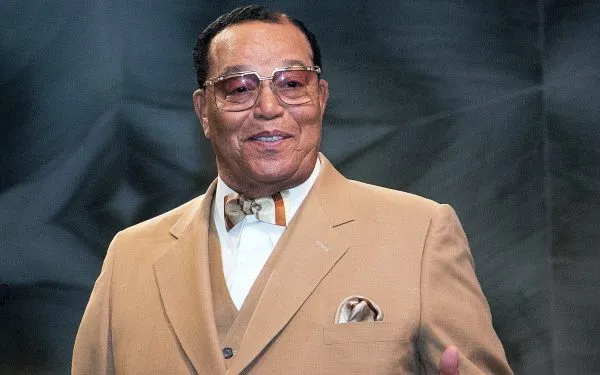
For years, the SPLC labeled Minister Louis Farrakhan a racist and extremist, and that label carried consequences. It influenced how the media treated him, how institutions treated him, and how Black nationalist thought itself was framed in the broader public imagination. But there is another question rarely asked when those labels were applied: what were the actual outcomes produced by Farrakhan and the Nation of Islam? Serious analysis should judge institutions by results, not caricatures. The audience should feel respect for the social contributions that may be overlooked when only labels are considered. Focusing on outcomes allows for a more nuanced understanding of the organization’s real impact on communities and social stability, fostering a more critical evaluation beyond superficial labels.
Whatever criticisms have been made of Farrakhan, one fact is difficult to dismiss. He has been a pillar in large segments of Black America. For decades, the Nation of Islam has preached discipline, sobriety, personal responsibility, economic self-help, family structure, moral order, and reverence for God. Those are not the teachings of social chaos. Those are the teachings of social repair.
Its influence has helped turn many Black men who might have been lost to crime, addiction, idleness, or street culture into law-abiding citizens, husbands, fathers, business owners, and contributors to their communities. Many who came through those teachings did not become radicals. They became responsible. They opened businesses, mentored youth, took on family responsibilities, built institutions, and practiced self-restraint. In neighborhoods too often abandoned by political systems and failing social policy, that mattered, and it still matters.
Critics have often been eager to attach labels, but far less eager to measure outcomes. Measured by outcomes, one can argue the Nation of Islam has done more to rehabilitate broken lives, restore discipline, and promote economic self-determination in Black communities than many organizations that enjoyed far greater political legitimacy. This raises a critical question: if results judge social justice efforts, how should we evaluate organizations like the Nation of Islam versus those with more mainstream approval? Are we overlooking effective community impacts because of labels and reputation?
Another fact deserves to be said plainly. Neither Farrakhan nor the Nation of Islam has been known as an organization committing criminal acts against other ethnic groups. That distinction matters. Being controversial is not the same as being criminal, and moral disapproval is not evidence of social harm. In fact, many of the values often treated suspiciously by critics, faith, discipline, entrepreneurship, self-sufficiency, and strong families, are precisely the values Black communities have often needed more of, not less. The audience should feel a sense of fairness and the importance of objective evaluation beyond superficial labels.
Which makes the labeling even more revealing. An institution now under indictment helped stigmatize a movement whose social outcomes, whatever one thinks of its rhetoric, often included order, responsibility, business ownership, and uplift. That deserves reflection. Because if outcomes matter more than accusations, then the question is not simply why Farrakhan was labeled. The question is whether those labels obscured contributions too significant to ignore.
And that is where the irony hardens. The same institution that warned America about alleged hate now faces indictment over alleged payments involving Klan-linked actors. That is not merely a contradiction. That is a historical reversal.
Thomas Sowell has often argued that the test of ideas is not intentions but results. That principle applies here. What were the results of allowing one organization to function as both political influencer and moral referee? Did it improve public understanding? Or did it help create a climate where dissenting Black voices could be stigmatized while the institutions doing the stigmatizing escaped examination?
Those are outcome questions, and they matter.
Because this is bigger than one indictment, it goes to a deeper problem in American politics. Too many institutions claim virtue as a substitute for accountability. Too many organizations assume that, because they speak the language of justice, they are exempt from scrutiny. Too many people mistake moral branding for moral credibility.
This case challenges all of that.
If the allegations fail, the SPLC may survive bruised. If they hold, one of the most influential ideological institutions in American public life may have been exposed as something very different from what it claimed to be.
And if that happens, the consequences will not stop with the SPLC. Questions will follow about media, academia, policy networks, and the broader political ecosystem that treated certain institutions as beyond criticism. Those questions are overdue.
Because the issue here is not merely whether money moved improperly, it is whether an institution that helped shape public morality can survive scrutiny under the standards it applied to others.
That is the real story.
Not irony, but accountability.
Not symbolism, but outcomes.
And perhaps the greatest lesson is an old one. Those who claim authority to judge others should be prepared to have their own conduct judged by the same standard.