Home Blog Page 150

Yonkers Legal Notice – SO.52-2023 – Bond Ordinance

0

LEGAL NOTICE

The ordinance, a summary of which is published herewith, has been adopted on November 28, 2023, and approved by the Mayor on December 18, 2023, and the validity of the obligations authorized by such ordinance may be hereafter contested only if such obligations were authorized for an object or purpose for which the CITY OF YONKERS, in the County of Westchester, New York, is not authorized to expend money or if the provisions of law which should have been complied with as of the date of publication of this Notice were not substantially complied with, and an action, suit or proceeding to contest such validity is commenced within twenty days after the publication of this Notice, or such obligations were authorized in violation of the provisions of the constitution.

Vincent E. Spano, City Clerk

City of Yonkers, New York

SPECIAL ORDINANCE NO.52-2023

BOND ORDINANCE OF THE CITY OF YONKERS, NEW YORK AUTHORIZING FUNDING FOR VARIOUS CAPITAL PROJECTS INCLUDED IN THE CITY’S 2023-2024 CAPITAL BUDGET, AS AMENDED; STATING THE TOTAL ESTIMATED MAXIMUM COST THEREOF IS $82,981,816; APPROPRIATING SAID AMOUNT THEREFOR; AND AUTHORIZING THE ISSUANCE OF BONDS OF SAID CITY IN THE PRINCIPAL AMOUNT OF NOT TO EXCEED $82,981,816 TO FINANCE SAID APPROPRIATION

The bonds are authorized to finance various capital projects included in the City’s 2023-2024 Capital Budget, as amended. 

The amount of obligation to be issued is $82,981,816.

The periods of usefulness are various, periods from 3 to 40 years.

Pursuant to the provisions of Section 17 of the Special Local Finance and Budget Act of the City of Yonkers, constituting Chapters 488 and 489 of the Laws of 1976 of the State of New York (herein called the “Act”), the City is authorized and directed to include the pledge and agreement of the State of New York (herein called the “State”) contained in said Section 17 of the Act, in the ordinance, and the Act provides that upon payment for the bonds or notes by the original and all subsequent holders thereof the inclusion of such pledge and agreement shall be deemed conclusive evidence of valuable consideration received by the State and City for such pledge and agreement and of reliance upon such pledge and agreement by any holder and that any action by the State contrary to or inconsistent with the provisions of such pledge and agreement shall be void.

A complete copy of the Bond Ordinance summarized above shall be available for public inspection during normal business hours at the office of the City Clerk, 40 South Broadway, Yonkers, New York 10701.

The Profound Influence of Black Fathers: Shaping Daughters’ Understanding of Masculinity and Relationships

In today’s society, the role of Black fathers in the lives of their daughters often goes underestimated and overlooked. In modern Black culture, there has been a concerning trend where Black men are sometimes perceived as merely fathers who have children but are not actively involved in raising them. Statistics show that a significant portion of Black children, around 80 percent, are born out of wedlock. This trend has significant and long-lasting consequences, particularly for young girls, who are the focus of this discussion.

When a young girl grows up without a positive and nurturing Black male figure in her life, it can profoundly affect her ability to form meaningful connections with men in her adulthood. The absence of such a role model deprives her of the opportunity to witness a healthy and loving relationship with a Black man, which is essential for her understanding of what a healthy connection with a man should entail.

A father’s role is multifaceted, with profound implications for his daughter’s development. He is the first man in her life to provide unconditional love and unwavering support. He is a positive role model who helps her foster effective communication skills with men and teaches his daughter to respect masculinity by his example. Additionally, he offers emotional security, laying the foundation for trust and self-confidence to serve her throughout her life.

It is essential to recognize that this responsibility does not rest solely on the father’s shoulders. Mothers, too, play a vital role, understanding that fathers are needed for more than just financial support. Emotional, spiritual, and caring guidance from fathers is equally crucial in their Black daughters’ lives. It is a collective effort to ensure that these girls grow up with the love and support they deserve.

Consequences of an Absent or Neglectful Father:

When a father does not fulfill these responsibilities in raising his daughter, it can negatively affect her emotional well-being, self-esteem, and ability to form healthy relationships. Here are some potential consequences:

Low Self-Esteem: A lack of emotional support, positive role modeling, and encouragement can lead to low self-esteem in the daughter. She may struggle with self-doubt and have a negative self-image.

Insecurity: Without a secure emotional bond and validation from her father, a daughter may develop insecurity that can manifest in various aspects of her life, including relationships with others.

Difficulty in Forming Healthy Relationships: A father’s role modeling significantly influences a daughter’s understanding of healthy relationships. With positive role modeling, she may be able to form healthy, respectful, and loving relationships with others.

Communication Challenges: If effective communication patterns are established during childhood, the daughter may be able to express her thoughts and feelings, hindering her ability to communicate effectively in relationships.

Emotional and Psychological Issues: The lack of emotional support and a positive father-daughter relationship can contribute to emotional and psychological issues such as anxiety, depression, and a sense of abandonment or neglect.

Risky Behaviors: Some girls and young women may seek validation and acceptance elsewhere if they don’t receive it from their fathers. This can lead to engaging in risky behaviors, substance abuse, or entering into unhealthy relationships in an attempt to fill the emotional void.

Difficulty in Setting Boundaries: A father’s guidance on setting healthy boundaries can empower a daughter to assert herself and protect her own emotional and physical well-being in relationships.

Understanding and Respecting Masculinity:

Respecting masculinity is a crucial aspect of a healthy father-daughter relationship. It involves understanding holistic, healthy, and spiritual masculinity. A father can play a vital role in helping his daughter develop a nuanced and respectful view of masculinity as part of her broader understanding of human relationships.

Children absorb messages and cues from their surroundings from an early age, including their family, media, and society. These early experiences form the foundation of their understanding of gender roles and relationships. For young girls, their father often serves as one of the primary male role models, offering valuable insights into masculinity.

Positive masculinity is not a one-size-fits-all concept but encompasses a range of qualities and behaviors that are constructive, respectful, and empathetic. It includes responsibility, integrity, emotional intelligence, and a commitment to gender equality. A positive masculine role model demonstrates that being a man does not equate to dominance, aggression, or the suppression of emotions but rather to qualities that contribute positively to one’s own life and the lives of others.

The Importance of Respecting Masculinity:

When a woman grows up respecting a man’s masculinity, it can have several positive effects:

Healthy Masculine Role Modeling: An active father can serve as a role model for positive masculinity, demonstrating traits like responsibility, empathy, integrity, and Respect for others.

Understanding Boundaries: Fathers can teach their daughters about the importance of respecting others’ boundaries contributing to respectful and healthy interactions with men in the future.

Positive Male Relationships: A girl with an active father is more likely to have positive early experiences with men, leading to a greater sense of trust and comfort when forming relationships with men.

Emotional Security: An active and emotionally available father can provide his daughter with a sense of security and stability, contributing to her overall well-being and her ability to form healthy relationships with men in adulthood.

As we explored earlier, the absence of a father figure can lead to a range of emotional and psychological challenges for daughters. This absence often results in a lack of positive masculine role modeling, emotional support, and guidance. However, it’s important to recognize that the consequences of an absent father can extend beyond the immediate family dynamic and into how a woman views and interacts with men throughout her life. In this context, understanding and respecting a man’s masculinity is significant. Let’s delve further into how a woman’s relationship with her father, or the absence thereof, can influence her perceptions of and interactions with men and how this, in turn, can impact her personal and professional relationships.

When a woman grows up without respecting a man’s masculinity, it can have various consequences for her relationships and interactions with men. It’s important to recognize that the idea of “respecting a man’s masculinity” will be interpreted differently, especially in today’s modern era where women are taught to be independent, and there’s no need for a man.

However, In this text, the perception of how a man’s masculinity fits into a woman’s life runs contrary to what is taught to modern women today. It’s not about suggesting that women should be subordinate to men, but rather understanding that the concept of a man’s masculinity and its role within a female child’s upbringing and in a woman’s life can be seen as fulfilling and even spiritual. Unfortunately, regardless of the different understandings, statistics have proven the outcomes are the same circumstances and behaviors. Here are some potential results:

Strained Relationships: Lack of Respect for a man’s masculinity can lead to strained relationships with men, including romantic partners, family members, colleagues, and friends. This lack of Respect can manifest as dismissive or disrespectful attitudes and behaviors.

Communication Issues: Disregarding a man’s masculinity can result in communication problems and misunderstandings. Effective communication often requires understanding and acknowledging each other’s perspectives, which may be compromised if Respect is lacking.

Conflict and Tension: Disrespecting a man’s masculinity can lead to conflicts and tensions in personal and professional relationships. It may contribute to power struggles, arguments, and negative interactions.

Stereotyping and Prejudice: If a woman fails to respect a man’s masculinity, she may rely on stereotypes or prejudice when forming opinions about men. This can lead to unfair judgments and discrimination based on gender.

Difficulty in Intimate Relationships: A lack of Respect for a man’s masculinity can hinder emotional intimacy and connection in romantic relationships. It may create an atmosphere of distrust and insecurity.

Impact on Career: In a professional setting, respecting the masculinity of male colleagues or superiors can help career advancement and teamwork. It may lead to difficulties in collaborating with male coworkers and supervisors.

It’s important to emphasize that mutual Respect is essential in all relationships, but it’s also important to understand it must be learned, and for someone to learn it; it must be taught. A young girl having a healthy, positive Black man in her life allows her to recognize and value the diverse qualities, perspectives, and experiences that Black men bring to the table while avoiding harmful stereotypes or prejudices about Black men. 

The presence or absence of a Black father figure in a daughter’s life can have profound and far-reaching effects. While having an involved and supportive father offers numerous advantages, an absent or neglectful father can pose challenges and potential consequences. It is crucial to recognize that the impact of a father’s presence or absence is significant but not deterministic.

Fostering understanding, empathy, and open communication within all family dynamics is essential. Creating an environment where every child, regardless of their family structure, can develop a strong sense of self-worth and the skills to build healthy, fulfilling relationships in adulthood is a collective responsibility. Respect for masculinity, when understood in a holistic and healthy context, can contribute to more positive and balanced relationships between fathers and daughters, and between women and men in society as a whole.

In conclusion, the saying “Daughters end up marrying their fathers” underscores the weight of this relationship. It reflects that our upbringing and early father-daughter bonds influence our adult choices and relationships. A healthy, positive father-daughter relationship can set the stage for a lifetime of positive interpersonal connections.

The impact of an absent father on a woman’s life can be profound, but it is not insurmountable. Recognizing father’s wounds and taking proactive steps to heal them through counseling can lead to personal growth, improved self-esteem, healthier relationships, and enhanced mental well-being. Seeking counseling is a courageous and transformative journey toward healing, allowing individuals to break free from the chains of past pain and embrace a brighter, more fulfilling future.

The Truth Black Families Are Owed: 50 Years of the Black Family Crisis, but Nobody Wants to Admit it.

In 1965, a controversial report warned of a growing crisis in Black families that would hinder racial equality. The so-called Moynihan Report sparked an immediate backlash rather than an honest reckoning. For the next 50 years, the inconvenient truths in the report would be ignored, while Black communities suffered the consequences.

Authored by Daniel Patrick Moynihan, then an assistant secretary of labor under President Johnson, the report aimed to understand why racial inequality persisted even as legal barriers fell. It flagged a startling rise in single-mother households and welfare dependence in African-American communities despite more Black men obtaining jobs. Moynihan hypothesized that the relative lack of stable, two-parent homes in Black neighborhoods would severely hamper children’s development and advancement.

At the time, the outcry drowned out the substance of the report. Critics attacked Moynihan’s focus on family structure as “blaming the victim,” insisting he ignored racism and economic forces. Leading Black scholars and civil rights figures decried notions of crumbling Black families as racist stereotypes. They pushed an alternative narrative of strong, matriarchal family units continuing African traditions. The controversy meant Johnson distanced himself from implementing the report’s recommendations.

While academics and activists argued their perspectives, the tangible trends in low-income Black communities painted a contrasting picture. Over the course of the following five decades, the rate of out-of-wedlock births within the Black community increased significantly, prompting some to view it as a crisis. School dropout, crime, addiction, and delinquency rose markedly through the 1970s, 1980s, 1990s, and 2000s; we see the same trends today in 2024. Most devastatingly, welfare dependency – the problem Moynihan had said would perpetuate the economic marginalization of the Black community became a reality.

However, liberal elites, mainly Democrats, remained unwilling to confront the evidence, choosing ideology over facts. Black single mothers continued to be romanticized as strong pillars of their community. Discussions framed that traditional Black family with a Black man and women as an oppressive white structure to reject. Debates focused narrowly on providing services while refusing to discuss behavioral causes for poverty. With political correctness dominating, the honest discussion Black families needed has been silenced for 50 years.

In the early 1980s, a new conservative critique finally challenged the censorship around family breakdown. Sociologists like Charles Murray, Lawrence Mead and Thomas Sowell directly blamed welfare incentives and ghetto cultural pathologies – not abstract racism or “blaming victims” – for the declines in two-parent homes. Though controversial, they advocated that the Black single-family unit was the face of dysfunctional poverty, where liberals had painted them as heroic.

Let us not forget that Many welfare programs give more excellent benefits to unmarried individuals than to a married couple of otherwise identical income. The resulting marriage penalty discourages marriage and rewards single parenthood.

Their iconoclastic stance shattered the stagnant orthodoxy. News outlets rang the alarm on “The Vanishing Black Family.” The suppressed Moynihan Report was dusted off and revisited during its 20th anniversary, but Black leadership controlled by liberal money did not listen.  

William Julius Wilson, a renowned liberal, broke ranks to admit his colleagues had become “confused and defensive”. He agreed social science needed to investigate single parenthood’s impacts on poor children rigorously.

The black social theorist Thomas Sowell, a professor at Stanford University, has extensively written about the decline of the black family. In his article titled “A Legacy of Liberalism,” Sowell dismisses the argument that attributes current black impoverishment to slavery or inherent racism. He criticizes the “legacy of slavery” argument, stating that it discourages critical thinking and reliance on empirical evidence by evoking emotional reactions. Sowell suggests that for a more profound analysis, we should compare the economic status of blacks a century after slavery ended with their status after three decades of the liberal welfare state. He points out that despite the widespread belief that black economic progress started or accelerated with the passage of civil rights laws and “war on poverty” programs in the 1960s, historical data shows that the poverty rate among blacks had already decreased from 87 percent in 1940 to 47 percent by 1960, well before the implementation of those programs.

The evidence is accurate, and they have known it for 50 years.  

 Sociologist Sara McLanahan began researching the outcomes of single motherhood in the 1990s. Though expecting to prove no real differences from two-parent homes, her analysis uncovered worse results across child wellbeing indicators from income to school performance. Despite initially facing resistance, her findings made academics accept family structure as conclusively necessary.

McLanahan’s research marked a turning point. With the concentrated poverty and social dysfunction in inner cities at a peak, President Clinton – Known for political savviness regarding public sentiment – made marriage promotion a feature of his welfare reform agenda. In his 1994 State of the Union address, he admonished that “more than half of our children will be born into families where there is no marriage.” The numbers simply made denial impossible any longer.

From the 2000s to the present day, the vision of a flawless, strong single Black mother was promoted, and anyone who pushed back on the narrative was labeled sexist. When you deal with facts over feelings, academics today agree with McLanahan’s evidence. Popular Black culture has glamorized unwed pregnancy. Along with a broken view of feminism, it disregarded marriage as an important building block in the Black community. What’s unfortunate is that we are fighting a battle against the disappearing Black family in 2024; in the early 1960s, about 20 percent of black children were born to unmarried mothers, and Black Marriage was at 80 percent; by 2024, 80 percent of Black children are born out of wedlock. But we have yet to see this as a crisis in the Black community.

In another article, Sowell asserted, “The significant expansion of the welfare state in the 1960s had a detrimental impact on the black family structure, causing its decline, even though the black family had persevered through centuries of slavery and generations of racial oppression.”

There are 80 percent of Black children born out of wedlock, and the average single parent earns 55 thousand a year. When will Black leaders, Black pastors, and even so-called liberal white people wake up? The Black community is 50 years trapped in a cycle of fatherless childhoods and teenage parenthood and stuck in ghettos across America when the solution that has been known for 50 years by academics is more two-parent families represented a desperately needed solution.

The Toll of Denial to the Black Community

There was, and there is, planned obstruction of open discussion and obfuscation of facts regarding Black family breakdown exacted a heavy price on Black communities over 50 years.

The Black community has suffered due to those who claimed to champion its interests, as well as the silence of Black political and religious leaders who failed to address the significant policy issues inherent in the American welfare system. Consequently, we have witnessed several generations of young Black individuals who were ill-prepared to establish stable family structures. This situation deprived impoverished Black men and women of the opportunity to make informed choices, as they were exposed to misleading narratives about their available alternatives.

According to a study published in the Journal of Blacks in Higher Education, 54 percent of the White population is married, while only 31.2 percent of the Black population is married. Additionally, 27.5 percent of the White population has never been married, whereas half of the Black population has never been married. An article in Forbes Magazine explores the advantages of being married for families, particularly in terms of achieving middle-class status and generational wealth. Married-parent families typically enjoy higher incomes than single-parent families, meaning they have better access to quality schools, neighborhoods, and job opportunities. Furthermore, married parents are more likely to invest more time and resources into raising their children.

Furthermore, marriage rates in states are closely connected to their economic well-being. States with more married parents tend to have higher incomes, better chances for kids from low-income families to improve their financial situations, less child poverty, and higher family incomes.

For example, when you compare states with the most married-parent families to those with the fewest, the ones with the most married parents have an average $1,451 higher income per person. Kids from low-income families in these states also have a 10.5% better chance of moving up the income ladder, and there’s a 13.2% lower rate of child poverty.

Approximately 80% of Black children are born to unmarried parents, while roughly 38% of Black children continue to live below the poverty line, as revealed by a Pew study analyzing Census data. The stark reality is that Black children are still four times more likely than their white or Asian counterparts to experience poverty. We must recognize that there exists a significant issue within Black families, yet it seems that, as a society, we are either unaware or reluctant to address it. Could it be that our Black leadership fears being labeled as sexist or canceled for advocating Black marriage and the importance of strong Black families led by both men and women?

Apart from the decline in wages of the Black family, particularly Black men, the sudden shift in the American economy’s demand for less-skilled workers has created a disparity for Black males. This disparity is rooted in the disparity between the types of jobs they historically identified with, which were closely linked to their sense of identity, and the present reality of job opportunities available to those with lower levels of education. Notably, the decline in manufacturing jobs, which have historically played a vital role in sustaining Black middle-class families, over the past few decades can be attributed to both a decrease in job prospects for workers with intermediate skill levels and their reluctance to pursue employment in different industries or skill categories.

One of the most tragic aspects of this situation is the disproportionate burden placed on marginalized Black fathers. Black men have been intentionally excluded from discussions about family progress, leading to an inaccurate portrayal of them as increasingly irrelevant. In reality, 51 percent of Black men are single but still in the middle class, and 31 percent are married, underscoring their significance in various family structures. Despite their vital roles, they have been unfairly stigmatized as neglectful or unnecessary.

The media has often portrayed Black women as self-reliant and not in need of a husband while subtly suggesting that being a baby momma is better than being a wife. On the flip side, some Black men have embraced these stereotypes, choosing to baby daddy without marrying, and this cycle continues. These misconceptions, coupled with the unsupported notion that all single Black mothers are heroic figures while excluding Black men, have marginalized many Black men and promoted an unfair narrative.

While there is often an emphasis on Black women’s independence from Black men, studies reveal that for Black men, marriage can significantly influence their economic mobility. Approximately 70% of married Black men attain middle-class status by midlife, in sharp contrast to the 20% of never-married Black men and 44% of divorced Black men who reach a similar economic status. These statistics underscore the crucial role of marriage in offering economic stability and support for Black men as they strive to achieve upward mobility.

The critical issue we must confront is our reluctance to acknowledge the decline of two-parent Black households. Discussions about the state of Black families in the United States and their progress started long before the Moynihan report, but they were often disregarded by Black leadership. This report specifically examined how the structure of Black families impacted various factors that collectively hindered the advancement of social equity.

According to a Harvard report, breaking the cycle of intergenerational poverty among Black Americans necessitates a significant transformation in the economic prospects of Black men, particularly concerning their earnings. One critical aspect to note is the bidirectional relationship between earnings and marriage. Married men tend, all else being equal, to earn more. For instance, one study involving identical twins suggests that marriage can boost earnings by as much as one-fourth. This increase in earnings for married men may be linked to a heightened sense of responsibility to provide financially for their families, especially their children. Consequently, low marriage rates among Black men may have an impact on their earnings.

Recognizing that addressing the profound racial inequalities cannot be achieved solely through upward mobility is crucial. Relatively speaking, Black girls are more likely to escape poverty through their own earnings. However, it’s essential to consider the substantial number of Black children who are initially raised in low-income households. Closing the racial gaps in upward mobility will require comprehensive shifts in economic outcomes, focusing on improving men’s earnings.

Regrettably, many of the social problems highlighted in the Moynihan report have worsened for Black communities in the decades since its publication. Achieving social and economic progress depends on multiple factors, requiring action from policymakers, community leaders, and individuals. Suppose we fail to address these issues and improve social equity and economic opportunities for Black men and families. In that case, we may find ourselves lamenting the lack of progress and stagnation in Black family well-being for another 50 years.

The current state of sociology and the conditions Black families and communities face provide strong support for the enduring relevance of Patrick Moynihan’s insights from over 50 years ago. We can no longer overlook the consequences of out-of-wedlock births, as we have known for years that Black children often find themselves ensnared in an unending cycle of hardship. This harsh reality has been learned the hard way over three generations.

Drawing from my 33 years of experience as a Correction Officer at the Westchester County Department of Corrections, I have witnessed three generations of men, women, and their children entering our correctional system. It was clear that the issue extended beyond mere criminal behavior; it was a systemic failure characterized by symbolism without meaningful substance, and it had never adequately addressed the fundamental needs of Black families. Whether the crisis within Black families will finally receive the attention it deserved decades ago and whether it will serve as a catalyst for the much-needed change we seek remains uncertain.

This article serves as a testament to the failure of intellectual gatekeepers, both within the Black community and among white individuals, who chose to conceal the crisis conditions in low-income neighborhoods to protect their ideologies or avoid facing uncomfortable truths. With the benefit of hindsight, some may feel regret for their actions. This article also criticizes any Black leaders who were either swayed by liberal incentives or too afraid to address these issues from their platforms.

The seriousness and scale of the breakdown of Black families were often sidelined in favor of addressing racism and civil rights, with a lack of awareness that preserving the Black family is, in itself, a civil rights issue. 

Today, prevailing sociology supports the insights of Patrick Moynihan, made over 50 years ago. It is clear that being raised by a single parent in Black communities, who usually face a disadvantage of wealth, significantly increases the likelihood that children will remain trapped in a cycle of disadvantage. Two generations have learned this the hard way. Whether Black families will finally receive the honest analysis they should have had decades ago remains uncertain. Still, there is no time to wasted in taking action to save the Black family.

Landscape Architecture Design Services to Implement Environmental Justice

0

The Municipal Housing Authority for the City of Yonkers (“MHACY”) is soliciting proposals from qualified landscape architecture firms for final design and construction documents to implement portions of a recently-completed Green Infrastructure Plan at various sites as specified in this Request for Proposal (“RFP”).

Proposals will be accepted on a continual basis for a period of 30 calendar days. Proposals may be sent to the following: procurement@mhacy.org, cc kmagoolaghan@mulfordcorporation.com
Subject Line: MHACY RFP#231211_LA_

Proposals must be submitted no later than 5:00 PM (EST) on January 11, 2024. Awardees will be interviewed and selected no later than January 31, 2024. Questions regarding this RFP should be directed to procurement@mhacy.org, cc kmagoolaghan@mulfordcorporation.com.

MHACY is an equal opportunity employer and does not discriminate on the basis of race, sexual orientation, color, national origin, sex, religion, age, disability or family status.

MHACY solicits and encourages the participation of minorities and small businesses in procurement. Contact, related to this procurement, with members of the Authority’s Board of Commissioners or the Authority’s officers and/or employees other than the contact person shown below, during the procurement process could result in disqualification of a proposal.

Contact related to this procurement, with members of MHACY’s Board of Commissioners, or MHACY’s officers and/or employees other than the contact person show above, during the procurement process could result in disqualification of a proposal.

Former Mamaroneck Public Library Business Manager Charged With Stealing $44,700

0

Defendant, who resigned from the library in March after 27 years, allegedly spent library funds on personal expenses for nearly seven years

WHITE PLAINS, N.Y. – Westchester County District Attorney Miriam E. Rocah announced today that the former business manager of the Mamaroneck Public Library was arraigned on a felony charge of stealing approximately $44,769 from the library between 2016 and 2023.  

“We are committed to seeking accountability for the alleged betrayal of trust by a lifelong Mamaroneck resident who held a position of leadership in the community,” DA Rocah shared with Black Westchester. 

The defendant, Mary Soto, 62, of Mamaroneck, was arrested on December 14th by the Westchester County District Attorney’s Office and arraigned before Judge Christie L. Derrico in Mamaroneck Village Court on the charge of Grand Larceny in the Third Degree. The defendant’s next court date is January 25, 2024.  

As alleged in the felony complaint, between May 2016 and February 2023, the defendant stole approximately $44,769 from the library’s bank accounts in the form of credit card and recurring debit transactions, for personal expenses. The defendant resigned from the library in March after 27 years.  

The case is being prosecuted by Assistant District Attorney Renee Hassel of the Public Integrity and Law Enforcement Integrity Bureau in the Trials and Investigations Division. 

The charges against the defendant are merely accusations, and the defendant is presumed innocent unless and until proven guilty.  

How Wealthy Special Interests AIPAC Control Politics with GOP Blood Money: A Detriment to Westchester Residents

In the current campaign funding landscape, wealthy special interests such as GOP-funded AIPAC wield significant influence, often setting the political agenda to the detriment of regular Westchester residents. These organizations primarily comprise Wall Street millionaires and corporations seeking to control our cherished district’s political power and direction.

Research reveals that the rich typically hold distinct political values compared to the general public, especially on issues like taxation, unemployment, education, and the minimum wage. Their disproportionate influence on legislative direction, especially in matters of economic justice, makes it exceedingly challenging to enact reforms that benefit the working class and the poor.

This has led to a situation where politicians in Westchester may claim to be progressive while accepting substantial donations from GOP-funded organizations like AIPAC, effectively diverting taxpayer dollars overseas. Meanwhile, average Westchester residents grapple with high inflation, taxes, and the unaffordability of living in the very county they work in. The county’s underprivileged face homelessness, food inequity, failing schools, and wealth disparities, all within Westchester itself.

This unfair system of political financing disproportionately affects low-income individuals, women, and ethnic minorities. A specific group of affluent white men, the majority of major donors in our elections, primarily controls it. This means that ordinary people like Ray-ray, Grandma, or June Bug can’t compete with these wealthy white donors. In this system, the average working class is used for their votes, while the rich and wealthy set the political agenda. As a result, a small minority holds substantial power, making it less likely that elected officials will address the needs of low-income Black, Brown, Latino, and White communities, which contributes to the observable disparities in our cities.

I already know what the haters will say. What about the Justice Democrats? After reviewing the Justice Democrats PAC’s website, it’s evident that their content and commitment are inclusive for all Americans. AIPAC’s website prioritizes exclusivity to one agenda; as I see it, the Justice Democrats’ agenda is more inclusive to all Americans like better schools, fair trade, medical for all, a working social security system, free public college and trade school, and ensuring the average worker receives a living wage. Not just giving masses of money to candidates to support more and more of our tax dollars overseas. What raises concern is the fact that in 2022, the United States allocated over $3.3 billion in foreign assistance to Israel while pressing domestic issues like homelessness remain unaddressed, with the government often citing budget constraints.

If someone suggests lowering the allocation to $1 billion and channeling the remaining $2 billion to help disadvantaged communities within the U.S., does this automatically label them as anti-Israel? If you’re reading this and live in Mount Vernon, Yonkers, Peekskill, Ossining, or Greenburgh, wouldn’t allocating $2 billion from your tax dollars to your community be advantageous? This is a political debate concerning the control of the distribution of wealth, resources, and services, an issue that affects Black, Brown, Latino, and economically disadvantaged white Americans.

It’s essential to remember that these funds come from hard-working American taxpayers who might not see a direct return on their investment. This isn’t about being anti-Israel but rather questioning the allocation of resources in a way that serves the best interests of all Americans. The debate revolves around responsible resource allocation and ensuring that taxpayer dollars benefit both international commitments and pressing domestic needs.

When organizations like AIPAC explicitly target Black and Brown congressional candidates that address the needs of their districts, questions arise about why we allocate substantial resources overseas when many average Americans struggle to afford their rent. This further exacerbates the lack of racial diversity in public office, as candidates of color often face difficulty raising the necessary funds to run for office without access to wealthy, primarily White donors. Addressing the influence of big-money organizations is crucial to fostering a more equitable and inclusive political system in Westchester that truly represents the interests of all its residents.

The influence of wealthy special interests, as exemplified by organizations like AIPAC, is now profoundly impacting the political landscape in Westchester’s 16th Congressional District. This influence, primarily driven by affluent white individuals and corporations, shapes policy agendas and funding priorities that often do not align with the needs and interests of average Westchester residents. As a result, this system disproportionately affects low-income individuals, women, and ethnic minorities, hindering their representation in public office and exacerbating social inequalities. It is crucial to address the pervasive influence of big money organizations to create a more equitable and representative political system in Westchester.

“It’s all about the Benjamins, baby,” US Congresswoman Omar tweeted, referencing Puff Daddy’s 90s song about money. When pressed for an explanation, she clarified that she was referring to the financial influence exerted by groups like AIPAC.

In 2019, lobbyist Ady Barkan wrote AIPAC lobbyists on Capitol Hill are highly skilled. However, money plays a central role in the entire system.”

AIPAC proudly boasts on its website that it outspends any other Political Action Group in America. This excessive involvement of AIPAC in Democratic primaries, like the one in Westchester, poses a substantial obstacle to critical policies such as universal healthcare, effective climate action, and workers’ rights. When Democrats who receive funding from AIPAC label themselves as progressive, it amounts to mere political rhetoric and foolery! In reality, AIPAC opposes the very democratic principles we advocate for. Rather than promoting progress, AIPAC stands as a hindrance to the values we hold dear.

Beware of the disturbing reality: some Democrats backed by GOP millionaires are channeling millions to right-wing organizations like AIPAC while carefully selecting Democrats to primary progressive individuals of color. AIPAC, despite its connections with insurrectionist Republicans, is now openly targeting Black members of Congress, all while concealing its close ties to Republican fundraising networks. This is nothing short of accepting “blood money,” and any Democrat who embraces such funding cannot genuinely be considered progressive; they are effectively Republicans in disguise!

Their embarrassment over Trump may have driven many Westchester Republicans to vote Democratic. However, it’s becoming clear that this embarrassment may fade over time. This is evident from an incident where a Westchester AIPAC supporter sent out an email urging Republicans to change their party registrations to Democrat to vote out Congressman Jamaal Bowman. As of now, George Latimer has not publicly denounced this supporter’s actions.

The most disheartening aspect of this situation is witnessing Black, Brown, and Latino communities enthusiastically rallying behind a candidate who receives funding from organizations like GOP-funded AIPAC, which don’t have their best interests at heart and endorse policies that perpetuate oppression and inequality. As usual, after they have given their support and convened people to vote for these candidates, they have the unmitigated gall to question why their communities continue to face high crime rates, poverty, and struggling education systems.

As we approach the end of June, it’s time for those with progressive values to take a stand and be honest about what’s truly unfolding. We face a crucial choice: either we witness the emergence of a new breed of hybrid GOP Democrats, representing primarily white areas of our county and offering mere crumbs to the leadership of color throughout the county, or we see the grassroots awaken, no longer swayed by deceptive leaders who seek to maintain their positions and favors. We, the people, have the power to stand up against the GOP-led AIPAC, which has lured Democratic candidates with a bag of gold, potentially undermining the multicultural, multiracial political system that so many had hoped for – one founded on equity and fairness.

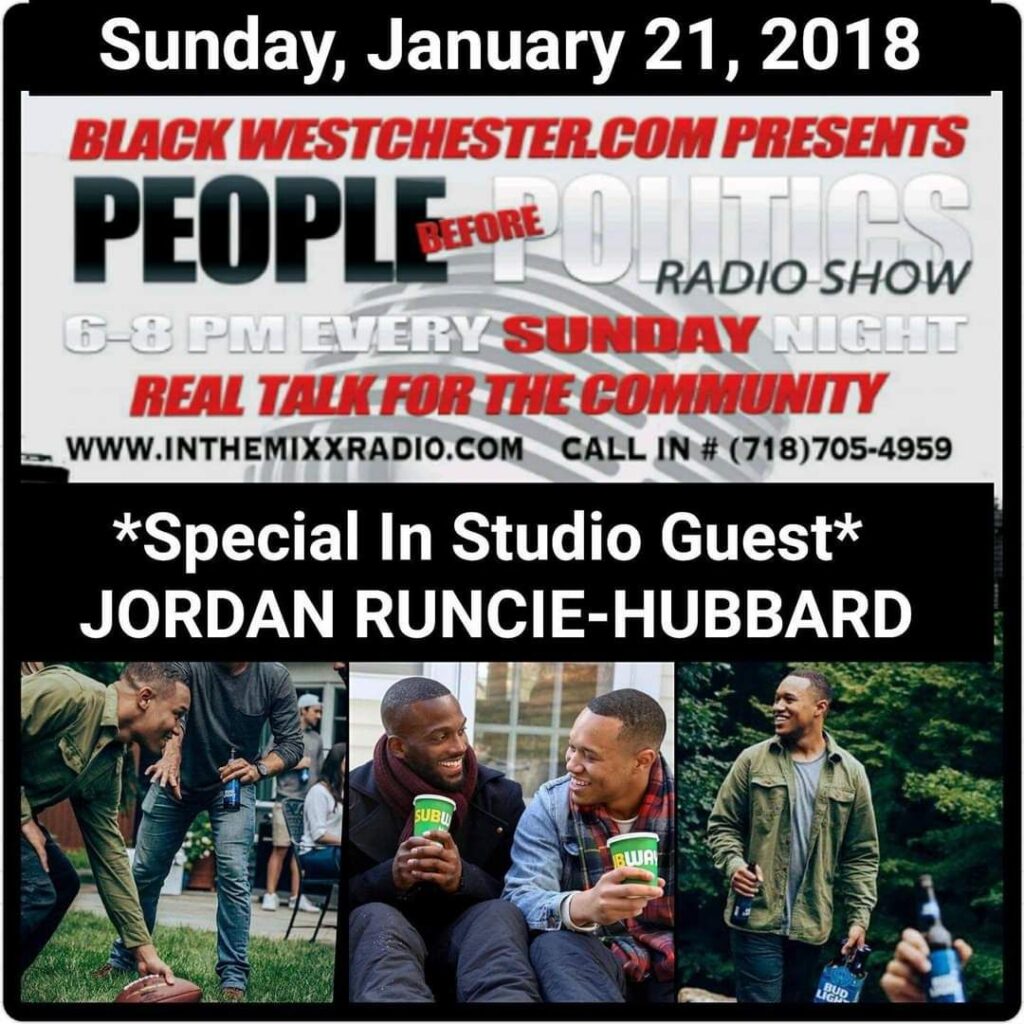
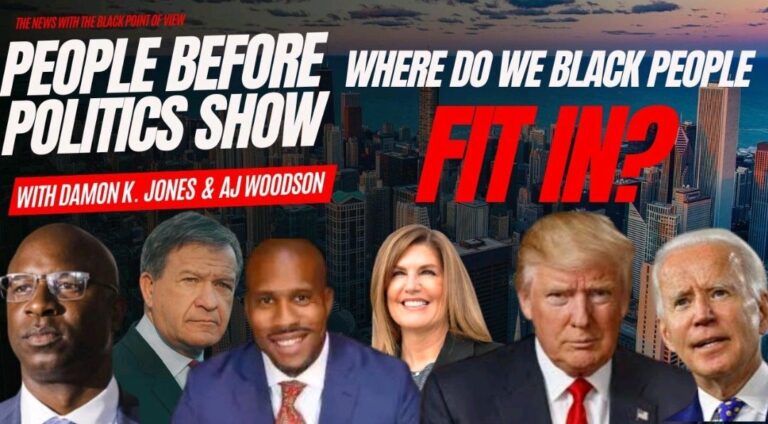
Special Edition of Black Westchester Power Hour – Influence of AIPAC & Attempted Crucifixion of Congressman Jamaal Bowman

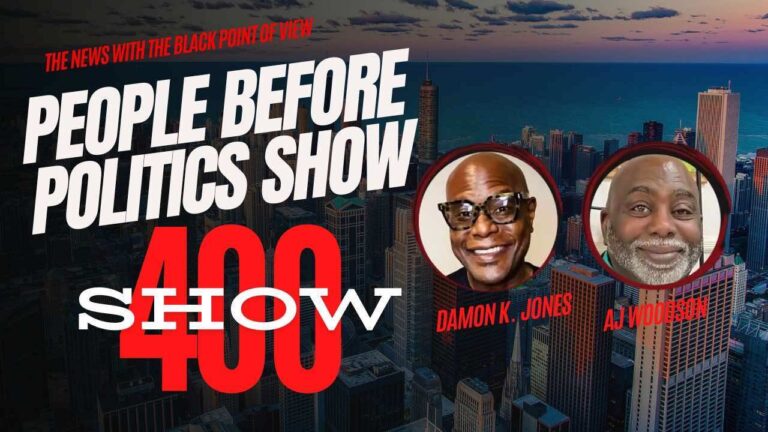
Welcome to a special edition of People Before Politics Radio’s Black Westchester Power Hour with Damon K. Jones and AJ Woodson talking about the CD-16 Congressional Showdown between Congressman Jamaal Bowman and challenger County Executive George Latimer and the influence of dark money from AIPAC to remove Bowman and other members of ‘The Squad.’

Black Westchester Magazine and the People Before Politics show have highlighted the negative impacts of Political Action Committees (PACs) on Black communities:

1. **Influence of Special Interests**: Some PACs receive funding from corporate interests or wealthy donors whose priorities do not align with the needs of Black communities. This can lead to policies and candidates that do not effectively serve the best interests of Black constituents.

2. **Polarization**: PACs often contribute to the polarization of American politics. They may finance attack ads and negative campaigning, which can further divide communities along racial and partisan lines.

3. **Distortion of Priorities**: In certain cases, PACs may redirect attention and resources away from issues that are crucial to Black communities, prioritizing the interests of their donors or other political objectives.

4. **Excessive Spending**: The influence of money in politics, often facilitated by PACs, can overshadow the voices of ordinary citizens, including Black communities, who may lack the same financial resources needed to engage effectively in the political process.

We Got Our Own Thang: A Look At Hip-Hop From The 914 [My New Book]

Finally, my new book, “We Got Our Own Thang: A Look At Hip-Hop From The 914,” is officially out in time for the holidays. After checking out all of the 50th-anniversary celebrations of Hip-Hop, I noticed one region that was often overlooked and underrepresented was the 914. So I present this literary offering to celebrate the role of 914 Hip-Hop in the 50 years of Hip-Hop! This is the latest in my series of books documenting Blacks in Westchester!

You can purchase your copy today on Amazon for $30.00, or you can order an autographed copy directly from me Via Venmo @AJ-Woodson-2 or PayPal http://PayPal.me/BlackWestchestackWestchesterMag or CashApp $MrAJWoodson, add $5 for postage and make sure you email me your mailing address, MrAJWoodson@gmail.com.

Book Summary: We Got Our Own Thang gives you a look at Hip-Hop from The 914 (Westchester County, New York). The book doesn’t only celebrate the superstars and rap legends that grace its cover, like DMX, Heavy D & The Boyz, Mary J. Blige, Grand Puba, Brand Nubian, Master Of The Ceremony, Pete Rock & CL Smooth and The Lox, but many of the early legends many outside the region may have heard of like the Legendary Collins Brothers who had the ‘King Kong Sound System’ and battled the legendary DJs like Kool DJ AJ and The L Brothers, of Graffiti Artists like REM 311 & LM444 who were highly respected in the 5 boroughs. The book highlights the contributions of individuals of The 914 in the 50-year history of Hip-Hop. The book documents how, while once only thought of as “Upstate New York”, Westchester “Westcheddar” County borders Hip-Hop’s Garden of Eden. Not trying to dispel the fact the Bronx is Hip-Hop’s birthplace or diss the other boroughs that didn’t recognize Westchester as a Hip-Hop equal. But to show and prove that what was going on in the Bronx hiccupped into the 914, especially its most southern cities like Mount Vernon and Yonkers, which unlike the boroughs or any other region don’t have to cross a bridge to get to the Bronx.

To tell the story, I enlisted the help of some respected voices in Hip-Hop including Ralph McDaniels of Video Music Box, DMC of the legendary RUN DMC, Kim Osorio (former Editor-In-Chief of the Source), Chuck ‘Jigsaw’ Creekmur (AllHipHop.com), Lord Jamar, Floyd Myers (Heavy D’s older brother), DJ Eddie F, Talent The Comedian, Tri-State Jericko, DJ Mark C of the legendary Collin Brothers, Bobbito aka Kool Bob Love, TQ – Top Quality, and A.L. Dre who illustrated Hip-Hop artists for The Last Word of the Source magazine, even an unexpected Hip-Hop head like the US Congressman of the region, Jamaal Bowman and others who share their memories, favorite songs or videos of 914 artists.

“I feel like artists from the 914 have always been an extension of Harlem and the Bronx. Collectively, the three regions qualify as “uptown,” and I think that was planted in my mind after seeing Heavy D in the “Uptown’s Kickin’ It” video. Personalities of the artists from Yonkers and Mount Vernon were always in line with us in the Bronx, they just had better houses and bigger backyards lol! The sound always felt raw but with just enough musicality to it. The 914 added a little “knock” to their boom bap. They needed a little more swing because they had more backyard barbecues to throw. I didn’t get to enjoy the 914 until I had a car and could drive there. The metro north was cleaner than the subway and the music was a reflection of that. They were the Hip-Hop of our cousins whose parents had better jobs,” Former Editor-In-Chief of The Source Kim Osorio – ‘Your favorite rapper’s favorite writer’ shared.

(Photos above from top to bottom: DMX performing at City Fest in Mount Vernon, AJ Woodson & Styles P, Capella Grey [before he became a national sensation], AJ Woodson and CJ ‘CJP’ Parchment, DJ Tri-State Jericko, News 12’s Jade Nash at The Beats That Made Hip-Hop at MVPL, CL Smooth performing at 50th Anniversary of Hip-Hop in Lincoln Park in New Rochelle, Aldre Leroy Davis (ALDre), AJ Woodson & Bonz Malone at MVPL, DJ EZ Lee & The Legendary Grand Mixer DXT outside MVPL, Brand Nubian performing at Lincoln Park in New Rochelle, AJ Woodson & DJ Supreme at City Fest in Mount Vernon, DJ Jazzy Joyce at Lincoln Park, Brand Nubian’s Lord Jamar at Lincoln park in New Rochelle)

After reading this book, the author’s aim is for everyone to put some respect on “The 914” when they think about Hip-Hop!

Enjoy the 914 Hip-Hop Playlist I put together on Spotify to promote the book

Cop a copy or two today on Amazon for $30.00  or you can order an autographed copy directly from me Via Venmo @AJ-Woodson-2 or PayPal http://PayPal.me/BlackWestchestackWestchesterMag or CashApp $MrAJWoodson, add $5 for postage and make sure you email me your mailing address, MrAJWoodson@gmail.com.

Look out for the Hardcover Deluxe Version with over 100 pictures coming soon!

The Influence of AIPAC: The Attempted Crucifixion of Congressman Jamaal Bowman

For several months, there have been rumors about Westchester County Executive George Latimer considering a challenge against the incumbent Congressman Jamaal Bowman.

Since Congressman Bowman’s victory over former Congressman Elliot Engel, doubts have emerged within the Democratic Party about his ability to maintain the congressional seat. As a newspaper publisher, it was fascinating to observe the passionate responses from various Democrats, including Black Democrats, in reaction to Bowman’s presence. This resistance is somewhat expected when a Black man disrupts the established party structure. Although the district elected him, some still see him as an outsider, leading to discussions about redrawing district lines as a potential solution.

The subsequent redistricting process in the 16th district resulted in significant changes, allowing a new candidate, potentially with a predominantly white voter base, to represent Westchester. Areas like Co-Op City, Baychester, Williamsbridge, and The Valley were removed from the district, consolidating it around the Wakefield neighborhood.

Within the Westchester political landscape, there seems to be a reluctance to fully endorse an outspoken Black man who steadfastly holds his beliefs. Congressman Bowman’s lived experience in this diverse community has profoundly shaped his perspective and underscores his commitment to serving all constituents. He has made remarkable progress in addressing the needs of his constituents, with a particular focus on historically underserved populations. With 13.2% of the district’s population living in poverty, Bowman’s empathetic approach aims to uplift the most vulnerable.

Notably, he stands as the sole Black elected official in Westchester who openly and publically advocates for studying Reparations for the descendants of enslaved people, a position that sets him apart from every elected official in Westchester, even the Black ones. This situation reflects the typical political dynamics where diverse perspectives can encounter challenges within the party, often revealing that promises of support can be empty.

According to reports, AIPAC’s super PAC began reaching out to George Latimer during the summer, coinciding with Congressman Bowman’s decision to boycott a congressional address by Israeli President Isaac Herzog. While AIPAC is renowned for its focus on Israel-related issues and has thrown its support behind Latimer’s candidacy, he has chosen to emphasize his progressive platform over his stance on Israel.

For those familiar with Westchester politics, it was evident that organizations like AIPAC were targeting Congressman Bowman due to his position on the Israel-Palestinian conflict. However, it was unexpected that George Latimer would become the executioner of their agenda-planned crucifixion of Jamaal Bowman. This development raises questions about the accessibility of free speech and thought in Westchester and American politics, where individuals might face consequences for not aligning with a specific narrative or may receive financial support for promoting a particular agenda.

Latimer’s initial campaign advertisements left no room for doubt about his alignment; they predominantly revolved around AIPAC, Israel, and its interests. Despite the diverse interests and needs of the 16th Congressional District, encompassing various ethnic groups, such as White (Non-Hispanic), Black or African American (Non-Hispanic), Hispanic, White (Hispanic), and Asian (Non-Hispanic), the millions of dollars in support from AIPAC seemed to divert attention from other pressing Westchester issues. Notably, concerns like homelessness, crime, violence, and failing schools, which George Latimer had passionately championed for years, seemed to fade into the background during his initial steps into the congressional race.

Certainly, it’s important to note that Westchester County, like many counties in New York, is home to a significant population of Asians, Arabs, Whites, and Blacks who practice Islam. Given this diversity, questions arise about George Latimer’s position on the Israel-Gaza conflict and the significant loss of life among Palestinians who are not affiliated with HAMAS. These individuals are not considered a threat to Israel and are simply trying to survive the conflict. It’s essential to avoid generalizations, just as it would be unfair to assume that all Black people are involved in gangs or have criminal records.

The Westchester Muslim community is estimated at approximately 10,000 people, and the United Nations Security Council has classified the Israel-Gaza conflict as a global threat due to Israel’s actions. The toll of the conflict includes the tragic loss of over 17,400 Palestinian lives in Gaza and more than 56,400 wounded since the war began. Additionally, the district’s cultural diversity is evident, with 35.7% of households reporting a non-English language spoken at home.

This situation brings to mind the age-old saying, “he who pays the piper calls the tune,” highlighting how influential political donors or backers, such as AIPAC, can shape politicians’ decisions and actions. AIPAC proudly discloses on its website that it has contributed a significant $17 million to both Republicans and Democrats.

The evolving political landscape raises questions about the acceptability of candidates openly declaring themselves as “pro-this” or “pro-that.” In the speaker’s 55 years of life, it has been a rare sight to witness a candidate openly embracing a “pro-Black” label as a positive attribute. In contrast, in Westchester, it has been more common to see Black politicians distancing themselves from such a label while proudly wearing the “pro-Israel” badge.

This juxtaposition reminds me of a tragic incident involving the killing of Mr. Kenneth Chamberlain by White Plains police. The incident, where racial slurs were used before his untimely death, initially received limited response from politicians, preachers, and the community. However, a few months later, when a swastika was drawn on a dumpster, there was an outpouring of condemnation. This contrast underscores the disparity in priorities when addressing racial injustices.

The disregard for Black interests and Black people appears to have reached a point where it was reported in Westchester that a Young Israel Synagogue of New Rochelle member sent out an email focused on defeating Congressman Jamaal Bowman in the Democratic primary to support Israel.

The email also stated, according to reports, “It is critically important that if you are a registered Republican, at least for this election, you should re-register as a Democrat so you can vote in the primary (against Bowman).” Did the writer of this email know that it is illegal to do what he suggested? Or is it merely a coincidence that former County Executive Robert Astorino tried to do the same to the then-Westchester Independence Party, with the court ruling it was illegal and removing 3,700 Republican staff, family members, and associates from the party’s enrollment?

George Latimer, a highly regarded figure with a 30-year career and widespread recognition across all ethnic lines, has aligned himself with a group willing to polarize Westchester politics to achieve its interests. While he may emerge victorious, one must question the potential toll on his soul, as his campaign has already begun to polarize Westchester politics along racial lines only a week into his announcement.

In an article published by City and State Magazine, George Latimer expressed his desire to avoid discussions centered on AIPAC or race. While I’ve known George for many years and hold him in high regard, it’s important to acknowledge that the assumption that AIPAC and its supporters would not be assertive in their support, making Israel the paramount issue, is a significant oversight in a district that is multi-cultural, multi-racial and multi-religion, my friend.

Moreover, stating that you have Black friends is viewed as a problematic statement, as it oversimplifies the complexities of racial dynamics and is insensitive. to Black people.

It leaves us wondering how many Black individuals, Black politicians, and Black pastors will stand with Latimer, either unaware or consciously choosing to ignore that Latimer represents something other than a progressive candidate this time. AIPAC and other interests that back him do not necessarily align with the values of Mount Vernon, Yonkers, Greenburgh, New Rochelle, or White Plains.

Minority Leader Hakeem Jeffries takes money from AIPAC

The sobering reality is that a strong Black man who speaks passionately about Black Love, Black Power, and Black issues like Reparations may not find a comfortable place in Westchester Politics. Many may silently accept financial support from AIPAC, resembling Judas betraying Jesus. Black political leaders like Hakeem Jeffries may not be significantly different from Judas in their silence regarding the attempt of removal of Black and brown congresspersons who do not conform to AIPAC’s agenda. We should not expect any other Congressional Democrat to support Bowman because they all have taken the bag of gold from AIPAC. The influence of big money on politics has undoubtedly led to the corruption of our American political landscape.

LINK TO WEBSITE

Ladies and Gentlemen of the Westchester Democratic Party, it’s crucial to recognize that your elected officials may not fully represent your interests; they are not as progressive as claimed, as organizations like AIPAC can exert substantial influence and control their campaigns and local and national agenda.

It is essential that we remain vigilant and engaged in the political landscape. The influence of influential organizations like AIPAC should not dictate the direction of our elected officials or compromise the values we hold dear. We must

Our voices, principles, and concerns deserve to be heard and prioritized by those representing all of us. We must demand transparency, accountability, and a commitment to our community’s diverse needs and interests. We should not accept the rustication of our Black elected officials who have voiced concerns of all Congressional District 16 by organizations like AIPAC and has no interest in the daily struggles, social issues, or anything else of this multi-racial, multi-religious district of Congressional District 16.

Let us strive for a political environment that truly reflects our values and serves the best interests of all Westchester residents. Together, we can ensure that our elected officials remain steadfast in their dedication to our community and its well-being.

Check out Black Westchester January 15, 2024 Newspaper Digital Edition

Damon Maher Changes Political Party Affiliation to the Working Families Party.

1

Westchester County Legislator Damon Maher officially changed his political party affiliation from Democrat to the Working Families Party, on Wednesday, December 6th. He made the announcement in a statement.

“I am much more closely aligned with the WFP’s domestic agenda, which in fact is more in line with the stated Biden agenda than with that of many Democratic officials in our region,” Legislator Maher, who represents the 10th district (Eastchester, Tuckahoe, New Rochelle) until Dec. 31st, shared in his statement.

I will ​submit a voter registration form t​his morning changing​ my political party affiliation to the Working Families Party.

​First, please know that my switch to WFP is certainly NOT based on its national organization’s foreign policy positions. Rather, I am much more closely aligned with the WFP’s domestic agenda, which in fact is more in line with the stated Biden agenda than with that of many Democratic officials in our region. Over the past two years especially, I have grown continually more alienated from suburban New York Democratic politicians, who are mostly good people but, in my view are often captive to a more cautious, corporate mindset.

My term in office at the County Legislature ends ​on Dec. 31, but ​t​here are ​s​till important days and hours of review and, I hope, some revision of the County Executive’s proposed budget for ​2024. During this time, and in the long term as I continue as an activist looking forward with a progressive and anti-racist lens, I think the WFP will be a better space from which to advocate for…. 
 ​
​Fair, affordable and integrated housing….​ more aggressively pushing out the $200 Million we have appropriated in 2023-24 for Affordable Housing throughout the County…. expedit​ing implementation of our Tenant Right to Counsel law and the promised amendment eliminating the sunset provision that the County Executive’s office inserted into the bill at the last moment.

Police ​Accountability​…. insitutionalizing meaningful civilian oversight…. reducing ​​rarely questioned increases in salaries, overtime and infrastructure for policing, punitive prosecuting and punishment.

Reducing income inequality and extreme wealth disparities​ with fair, progressive taxation​.

More funding of academic or vocational education for 1-2 years beyond high school (e.g., free Westchester Community College and forgiving of debts owed to WCC).

More money for community-based nonprofits tackling the social and economic problems that harm our communities.

REAL environment initiatives encouraging less reliance of the private, one-person-commuting private car​…. permanently lower or free county bus fares, true pedestrian and bicycle safety​…. long-term strategy for car storage (aka parking) that encourages less, not more, private car us​e.

​Stronger campaign finance laws​…. put​ting serious funding into our Ethics Board or create an independent office of Inspector General or Comptroller​…. curtailing big money from big real estate developers whose project are dependent on favorable actions by the various levels of government​.

I look forward to working with you, my friends, on these and other crucial matters, now and after my term in office ends.