We are excited to invite you to the Black Westchester presents The People Before Politics Radio Show—Episode 385—Pre-Election Day Show, where we will engage in thoughtful discussions about the various candidates from across Westchester County. This event promises to be an informative and engaging platform to help you make an informed decision on Election Day. As active community members, it’s essential to stay informed about the candidates running for various positions in Westchester County. The decisions made by our local leaders have a direct impact on our lives, and it’s crucial to have a clear understanding of their platforms and visions. Gain the knowledge and confidence you need to make an educated choice when entering the voting booth.
On Thursday, November 2nd, Damon K. Jones, Publisher of Black Westchester, and the New York representative of Blacks in Law Enforcement of America (BLEA), expressed his concerns publicly regarding a recent proposal made by Westchester County to the Westchester Corrections Officers Benevolent Association (COBA), as stated by COBA’s President, Neil Pellone. There are claims of misinformation in the article and both sides telling a different story, here are the facts as my investigation uncovered.
According to Pellone, the County had approached COBA with a contract settlement plan, acknowledging the collective efforts of COBA members on social media and with the support of local legislators. The proposed contract would cover the years 2020 and 2021.
The November 1st letter to the COBA members stated:
Due to our collective efforts, on social media, and with the support of our legislators, the County has approached us with a plan for settling the contract. It is our understanding that the County will offer a two year contract for 2020 and 2021, which in effect, if ratified, would secure a total 6 percent (3% per year) raise. (see full letter below)
BW Publisher Damon K. Jones, who recently retired after 33 years as a Westchester County Correction Officer and is owed money, was upset by this revelation. He backed correction officers in his article. He wondered why the County only offered a two-year contract after COs were four years without a contract.
Later that day, Deputy County Executive (DCE) Ken Jenkins reached out to Damon to inquire about the source of his information. Damon explained that he had obtained the information from a letter sent by COBA to its members, which stated that the County had offered a two-year deal with a 3 percent increase. DCE Jenkins, however, vehemently denied that the County had made such an offer and claimed that COBA had proposed the two-year deal. Damon requested written confirmation from the County, as COBA had put its statement in writing.
Subsequently, the County issued the following statement in response via text:
Clarification of record regarding settlement offers made to Westchester Correction Officers Benevolent Association (COBA) and Westchester Superior Officers Association (SOA)
Westchester County offered a 4-year rollover agreement of 3%, 2%, 2%, 3% with the provision to allow movement in the years, and the County stated the retroactive paychecks would be received by the end of the year – in time for the holiday season if there was signed agreement with the COBA/SOA negotiating team by November 1. Both COBA and SOA rejected that offer.
The County subsequently offered to settle 2020 for 3% while maintaining the offer for a four-year rollover at the abovementioned terms. COBA/SOA counter-offered a two-year agreement for 2020 and 2021 at 3%.
The County accepted that proposal and sent the Memorandum of Understanding through our respective attorneys for consideration.
The average CO will get a retro of around $30k, Sgts – $44k, and Captains $49k; how is that an unfair contract?
When interviewing Pellone he started off by explaining it was about fighting for, and adjusting what they are paying into medical because “We paid the highest amount than anyone in Westchester County.”
DCE Jenkins also vehemently denied COBA’s claim verbally in person when he and CE Latimer saw me at the MV NAACP Gala, on Thursday, November 2nd. In addition to being the Editor-In-Chief, I serve as the Vice President of the Mount Vernon branch of the NAACP. I immediately reached out to Pallone for clarification on the matter.
Pellone said the county wanted them “to pattern bargain after County PD, which was 3,2,2,3 [percent]; that was the four-year deal they offered. They wouldn’t go any higher than the 10% over four years. I countered with four 3.5%s; give us 14%, and we will take the four-year deal. Where I’m confused is Damon’s running around saying I could of gotten a four-year 14 or 12% raise, and I turned it down. [I clarified Damon is only talking about the 4-year 10% deal], and the committee turned that down and I brought that up in my general membership meeting, and the membership turned it down. Nobody was interested in that. [When I informed him that CE Latimer and DCE Jenkins said he countered with a two-year deal with 2 3’s, he responded] I wanted something with three; it was either the two 3’s or four 3’s, so I took the two 3’s back to the membership. [When asked to clarify that the membership turned down the deal, he responded] I never put it to vote; neither one ever went to vote. I took it back to the contract committee, and they turned it down, so it never made it to the membership. When we had a general membership meeting and I discussed it with them and also sent out an email blast, nobody was interested in that.”
I asked him about turning down a four-year contract for a two-year contract; that part doesn’t make sense to me.
“Two three’s is six percent right; as supposed to 2.5% your getting 3%, the game is to try to get the most percentage right. Ten percent over four years is 2.5% per year; that’s less than three, right? Looking long-term, if we took the two years, it could have put some money in people’s pockets, and we would still be at the table trying to get medical fixed, and it also leaves us the option of arbitration moving forward. Since a four-year deal at 15% didn’t fly, because we want to be in these four years trying to fix medical, include these four years, and moving forward,” Pellone responded.
I asked Pellone if he shared the amount of the retro payout they would receive before the Christmas holiday with his membership, and Pellone responded. “They know that retro is involved.”
I asked, if the membership knew the amounts they would get and that they could have recieved it before Christmas. He responded, “They don’t know the amounts, but they can figure it out.” I informed Pellone that once they read this and see the county’s statement, they will know because DCE Jenkins breaks it down in his statement.
From a strategic perspective, if COBA is unwilling to make concessions, one potential course of action could involve using retroactive funds to adjust healthcare benefits. However, it’s essential to recognize that such a move might face resistance from COBA’s membership. In cases where this approach isn’t viable, COBA should explore alternative methods to enhance its bargaining position.
It’s worth noting that, as per the county’s information, COBA had previously negotiated the healthcare agreement when former COBA president Alonzo West was in charge. Current President Pellone, was also involved in those negotiations. Attempting to renegotiate a deal that COBA had already negotiated is generally viewed as counterproductive, particularly when it would impose significant costs on the county without COBA offering any corresponding concessions.
Discussions with county officials have revealed that individuals who chose this profession were well aware of the financial contributions required for health insurance. Consequently, advocating for changes in a situation that people entered into with full awareness may not yield favorable results. The civil service system operates on different tiers, each offering varying benefits, and this is an established part of the system. Therefore, embarking on a campaign to amend an agreement previously negotiated may appear to be an impractical endeavor.
Additionally, if COBA opts to take this matter to arbitration, it’s important to recognize that the County is likely to emerge as the victor, and the process could potentially be drawn out indefinitely. In such a scenario, the ones who would ultimately bear the brunt of this extended dispute are the correction officers themselves, who could face prolonged uncertainty and potential setbacks in their contracts.
I’ve spoken to COBA President Pellone, I talked to CE Latimer and DCE Jenkins and my sources tell me the correction officers are also firm in their positions. While I do not personally have a horse in this race, in this scenario, I would accept the contract and get the retro check by the holidays. COs signed up for the job knowing the salary and the financial contributions required for health insurance, which can be fought another day, but get that retro check while it’s on the table.
The county is not going to offer the COs more than the 10% they offered County Police. It may be time to take emotions out of the equation, and Pellone has to break down the situation to his membership for real, so there are no unrealistic expectations. There are law enforcement agencies that would be happy for the 10% increase over four years, like the Mount Vernon Police Department, which was offered 0% for those same years in the first offer. Mount Vernon PBA President Nicholas Mastrogiogio, “This would have been better than the first 4-year offer she [Mount Vernon Mayor Shawyn Patterson-Howard] offered for sure.”
Either the COBA membership accepts the contract and get that retro check (which they could have had for the holiday if the contract was signed by November 1st), or they fight for healthcare (which, they knew the financial contributions required for health insurance when they signed up for the job) but they are not going to get both. Pellone has to be real with his membership, or they won’t get a contract and the retro check any time soon. This will go to arbitration and get the same 10%, but it will be prolonged.
[Editor’s Note: UPDATED, Monday, November 6, 2023]
After publishing this article, it came to my attention that Pellone sent the membership statement earlier on November 6th (which you can read below), fully aware of when my article would be published. Unfortunately, his letter doesn’t alter the information in the article, nor does it change the fact that he should have been more transparent with the members regarding retroactive pay. It’s worth noting that in this November 6th letter, Pellone still chose to omit the discussion about retroactive pay to his members.
What’s even more troubling is his continued insistence that the county offered a two-year deal, despite his admitting this to this writer in the interview he countered with a two year deal, and Pellone was aware that I was recording it. Given my extensive experience reporting on Westchester political issues for over a decade, it’s evident that persisting in this direction is detrimental to the credibility of COBA and its members.
The simple truth is, if you negotiated a 6% deal for 2-years, as outlined in your letter on November 1st, presenting it as a favorable arrangement, and the county accepted it, a fact that DCE Jenkins confirmed, then what justification is there for an upcoming protest on November 13th? It would seem that it will only make the situation worse and make the COBA leadership persona non-grata as far as the county government is concerned!
Stay tuned to Black Westchester for more on this developing story!
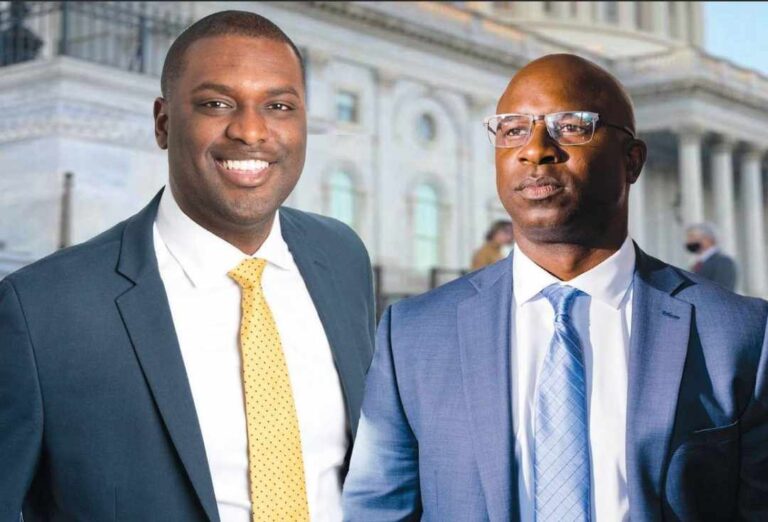
Today, Congressman Jamaal Bowman, Ed.D. (NY-16) held a roundtable “Healing Breakfast: Fighting Antisemitism and Hate”, on fighting hate and antisemitism in our New York community and across the country. It was attended by over 60 members of the community and held in the White Plains district office.
He released the following statement in response:
“I am incredibly grateful to be in community with so many thoughtful people today for the first of many upcoming conversations on the work we can do together to fight against hatred, bigotry, and antisemitism. It was an honor to gather a group of almost entirely Jewish constituents during this time of global and local crisis, as hate and bigotry rise to levels we’ve never wanted to imagine. Despite the fear and trauma felt in our community, it was inspiring that over 60 constituents showed up on such short notice. Having these community conversations is so important to us, and we want to hear from everyone. They are also difficult to do…showing up to listen and learn knowing that not everyone will agree with you is the hard work of building our democracy. This is exactly what our district did today. It is also how peace begins with us: civil and rigorous dialogue face-to-face. I hope we can continue to bring that to future community conversations as we fight antisemitism and hate in this district and beyond.
It was inspiring to engage with our neighbors who began the day protesting. We engaged and most of them joined our roundtable. Unfortunately, we did need to change locations due to an initial encounter with an overly aggressive protester. But it was heartwarming to see them enter the conversation even with their frustrations and concerns. Constituents continue to inspire me and it was an honor to listen to everyone who attended.
Like I said, this is the first of many conversations that I plan to have so we can do the work on the ground to build our community up, fight against hatred and bigotry in all of its forms, and center our shared humanity. My job in Congress and why I was elected is to lead with compassion and provide moral leadership to this district, and that’s exactly what I’m going to continue to do.”
We featured some of our endorsements: Omayra Andino for Tuckahoe Mayor, Darryl Taylor and Josh Gaccione For Tuckahoe Village Trustees and New Rochelle City Council Candidates Kwamain Dixon (District 3), and Shane Osinloye (District 4) on the People Before Politics Show, Episode 384 – BW Endorsement Show Part One, Sunday, October 29th. Check out part two, Monday, November 6th, at 6-8PM. As promised on the show, here is Black Westchester’s complete Westchester County Candidate Endorsement List.
Westchester County Legislator Endorsements:
Black Westchester’s support spans across Westchester County, with endorsements for County Legislator positions as follows:
District 1: Colin D. Smith
District 2: Erika Lang Pierce
District 4: Vedat Gashi
District 5: Benjamin Boykin II
District 6: Nancy E. Barr
District 7: Catherine F. Parker
District 8: Jewel Johnson
District 9: Emiljana Ulaj
District 10: Judah J. Holstein
District 11: Terry A. Clements
District 12: David T. Imamura
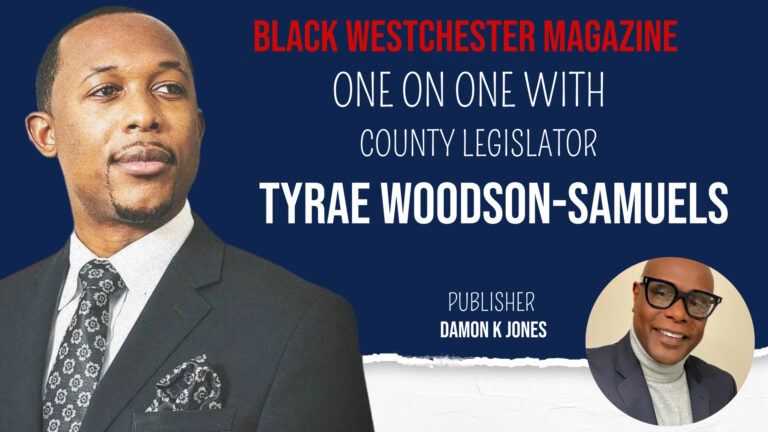
District 13: Tyrae Woodson-Samuels
District 14: David Tubiolo
District 15: James M. Nolan
District 16: Shanae V. Williams
District 17: Jose Alvarado
Black Westchester’s endorsement of County legislators’ positions underscores its belief in the candidates’ ability to address the distinctive challenges faced by Westchester County residents.
Supreme Court Justice 9th Judicial District Endorsements:
In a notable addition to their endorsements, Black Westchester Magazine proudly supports the following Supreme Court Judge candidates:
Francesca E. Connolly
Charley Wood
Rolf M. Thorsen
Larry J. Schwarts
City Court Judge Endorsements:
Black Westchester is endorsing candidates for the position of City Court Judge in Mount Vernon and Yonkers:
Mount Vernon: Tamika A. Coverdale
Yonkers: Arthur J. Doran III and Karen T. Beltran
Municipal Mayor, Council, and Town Clerk Endorsements:
Black Westchester support extends to candidates seeking mayoral, municipal council positions, and town clerk roles in various Westchester County locations:
New Rochelle Mayor:
Yadira Ramos-Herbert
New Rochelle Council:
District 1: Martha L. Lopez
District 4: Shane Osinloye
District 3: Kwamain L. Dixon
Yonkers Mayor:
Mike Spano
Yonkers City Council:
District 1: Deana Robinson
District 3: Tasha Diaz
District 5: Michael B. Breen
Mount Vernon City Council:
Derrick Thompson
Jaevon Boxhill
Greenburgh Town Board:
Gina R. Jackson
Beatrice Joy Harber
Tuckahoe Mayor:
Omayra Andino
Tuckahoe Village Trustee:
Darryl Taylor
Josh Gaccione
Pound Ridge Town Board:
Namasha H. Schelling
Pelham Mayor:
Chance W. Mullen
Tarrytown Mayor:
Karen Brown
Peekskill Mayor:
Vivian Cyndi McKenzie
These are the Black Westchester-endorsed candidates.
Mainstream media is still talking about who won the 2020 Presidential race, who is running in 2024, and what party controls Congress. But BW wants to let you know that local elections are just as important as national elections because they decide so many things that will affect us in our daily lives. From public transit to school quality, the list can go on and on, even down to how clean the water is when you brush your teeth every day.
Local elections are the place where many decisions that impact members of a town or community are made. Voting in local elections also means that your vote will count a lot more. With an average of one in five voters participating in local elections, decisions can really be swayed by just one vote, so every vote does truly count.
So to everyone reading this, we encourage everyone to Get Up, Get Out, and VOTE!
For several years now, I have known Greenburgh Town Clerk Judith A. Beville and have known her to be a beautiful, pleasant, and well-dressed woman. I have defended her, and she has defended me at Town Board meetings.
I first ran for office in 2018, and after that run, I joined the Westchester Black Women’s political caucus. Our mission is to get black women elected to political office. I was lovingly mentored by Hon. Alfreda Williams, Hon. Jewel Williams-Johnson, Lisa Maria Nero, Hon. Eddie Mae Barnes, Jerrice Epps, Colby Jenkins, OJ Yizar, Gertie Tippett, Marilyn Gee, and so many others. We are a fellowship of women who make it our mission to get black women elected into office and support them while there.
I do not know why Hon. Judith ran against Hon. Alfreda many years ago, but I do know support for black women getting elected to political office comes from members of our caucus, and Hon. Alfreda Williams leads in those efforts. During my historic campaign against Paul Feiner, a 32-year incumbent and my being the only and first black woman to do so, I was not supported by Hon. Judith Beville as either a church sister nor did she support the historic campaign many members galvanized on as a caucus member. Our caucus mission is to get black women elected to office.
On Monday night [October 30, 2023], the Westchester Black Women Political Caucus and the NAACP White Plains Greenburgh Chapters held a candidate forum, and the following question was asked: What is the process of a resolution passed by the Town Board and how are resolutions made into law?
I, as a moderator, as well as many in the audience, could not clearly decipher that process based on answers from any elected official. The question was asked specifically of the Town Clerk candidates and both were asked to follow up with their answers. We are in receipt of one response from Lisa Maria Nero, President of the Westchester Black Women Political Caucus Greenburgh/White Plains chapter and the Democratically endorsed candidate for Greenburgh Town Clerk, and this is her answer emailed to committee members from both organizations that organized the candidate forum held on Monday, October 30.
“I would like to clarify the difference between resolutions and Local Laws and how they are adopted and filed. The process of sending resolutions from a town board to the Secretary of State for execution can vary depending on the specific procedures and requirements of the state and town.
I further researched that the Greenburgh Town Board generally adopts more than 600 resolutions and about a dozen Local Laws each year. Specifically, Greenburgh Town Board resolutions are not filed with New York State because NYS action is not needed to enforce them. However, please note that this process varies in each town and village in NYS. Town Clerks in NYS process agendas and resolutions and maintain those records in their office; unfortunately, by necessity, this has not been the case in the Town of Greenburgh in recent years.
To ensure their accuracy, completeness, and proper processing, Town Board resolutions have increasingly been handled by Town Council staff and then filed in final form with the Town Clerk, Town Attorney, and the department initiating the resolution. An example of an adopted Town Board resolution appears on the home page of the NAACP White Plains/Greenburgh Branch website under “BLM RESOLUTION.” NAACP branch members approached the Town Board with wording for the resolution, which was discussed by branch members and the Town Board, amended/strengthened by mutual consent, and adopted over the very vocal objection of Town Clerk Judith Beville at a televised Town Board meeting. To emphasize their unanimous support of the resolution, the document was lengthened to legal size and each Town Board member signed in the added space at the bottom. Signatures are not typical on resolutions but, due to the vocal opposition trying to disrupt the approval, signatures were added for emphasis of the Town Board standing with the White Plains/Greenburgh Branch in support of Black lives.
Local Laws are very different from resolutions in that timely processing with the Secretary of State is required for their enforcement. As noted, this varies with each town within the state. The Town Clerk, once the Town Board adopts a Local Law at a meeting, is solely responsible for certifying, stamping, and filing the Local Law with the Secretary of State within 20 days of adoption before the Local Law can be enforced. A 20-day clock should start for the Clerk when sitting on the dais and recording a Local Law was adopted and then the Clerk needs to ensure it is actually filed within 20 days.
Unfortunately, for example, a Local Law adopted in June 2018 was not filed with NYS until two years later, rendering the property tax-related law not enforceable against several developments, which has resulted in all Greenburgh property taxpayers (including in the six villages) paying higher property taxes, cumulatively more than $1,200,000 per year, every year, in perpetuity. Dobbs Ferry school district residents were particularly hit hard by the Clerk’s failure to timely file the Local Law, but all taxpayers are affected.
Respectfully Submitted, “
As a constituent and PAC chair for the caucus and former civic engagement chair of the NAACP, I have not received this level of clarity, and I have asked this question of several town-elected officials.
Based on our President’s submission, our next question will be what laws are passed each year and where that information is kept, as we will continue to advocate for the Town government to be made more transparent and for our representatives to lead in that effort.
SLEEPY HOLLOW, NY – Last week, Republican Mike Lawler “proudly” voted for Mike Johnson to be Speaker of the House. Mike Johnson has a deplorable history of supporting anti-LGBTQ+ policies, including criminalizing gay sex and calling homosexuality “inherently unnatural” and a “dangerous lifestyle.” Today, Mondaire Jones, who made history in 2021 as the nation’s first openly gay Black member of Congress, alongside the Human Rights Campaign, LGBTQ Victory Fund, and Equality PAC, strongly condemned Mike Lawler for his support of a right-wing extremist as Speaker of the House. With votes like this, it’s no wonder Roll Call and Daily Kos have named Mike Lawler the second-most vulnerable Republican in the House.
“It is absolutely despicable that Mike Lawler voted for Mike Johnson to be Speaker,” Mondaire Jonessaid. “Mike Johnson built a legal career in Louisiana opposing the basic civil rights and civil liberties of the LGBTQ+ community. Last fall, he even introduced a national “Don’t Say Gay” bill. Johnson is an election denier who was an architect of House Republican efforts to overturn the 2020 election, and he is an extremist who supports a national abortion ban and wants to cut Social Security and Medicare. Lawler’s vote makes clear that while he likes to masquerade as a moderate on television, he is a reliable vote for the extreme MAGA Republicans. Lawler’s vote for Johnson does not represent the values of the Lower Hudson Valley, and I am determined to oust him from Congress next November and give New Yorkers the representation they deserve. It’s time to end Republican chaos in Washington and get back to work to lower costs for Lower Hudson Valley residents, protect Social Security and Medicare, stop Republicans from banning abortion, and get assault weapons off our streets.”
“Mike Lawler’s vote for the most anti-equality Speaker in history is a stain on his already troubling record and yet another example of how out-of-touch he is with the people of NY-17,” said HumanRights Campaign President Kelley Robinson. “Speaker Johnson is an election-denying, anti-LGBTQ+ extremist who has built a career on trying to erase our community from society—and Lawler gave his agenda a stamp of approval last week. The people of NY-17 deserve a leader who reflects their values, not a politician willing to hand the keys of government to the MAGA fringe.”
“Mike Johnson prides himself on discrimination and hatred for LGBTQ+ people, dedicating most of his career to opposing our basic rights. He introduced a federal “Don’t Say Gay” bill, is the current sponsor of three national abortion bans, is against marriage equality and wants to ban lifesaving gender-affirming care. By casting his ballot for Rep. Johnson, Representative Mike Lawler has made his anti-LGBTQ, anti-choice views very clear. Polling shows voters favor pro-equality and pro-choice legislation—these extremist votes will undoubtedly have consequences on Election Day,” SeanMeloy, Vice President of Political Programs at the LGBTQ Victory Fund, said.
“The House GOP has not only elected as Speaker one of the most extreme members of Congress but also one of the most bigoted. And Mike Lawler’s vote to elect Mike Johnson proves that he is not the moderate he portrays himself to be. If Mike Lawler was interested in standing up for civil rights and individual freedoms, he would have flatly rejected Johnson’s nomination. Instead, he paved the way for Johnson, leading to the most homophobic Speaker ever elected in history. New Yorkers can’t trust Lawler to fight for them. That is why it is critical we elect Mondaire Jones to Congress,” Jeff Larivee, Executive Director of Equality PAC, stated.
Jones and Lawler may face off in one of the most competitive races of the 2024 cycle, but first Jones has to face off with MaryAnn Carr and Liz Whitmer Gereghty in the Democratic primary. Cook Political Report, Inside Elections, and Sabato’s Crystal Ball all rate the New York congressional race as a “toss-up.”
In recent county contract negotiations with the Westchester County Correction Officers Association (COBA), the George Latimer administration offered a mere 2-year deal, providing a 3% increase for 2020 and another 3% for 2021, totaling just 6%.
However, County Executive George Latimer’s statement on the Westchester County website claims that the agreement with the District Attorney’s Investigators PBA aligns with other union agreements. This contract spans five years, from 2020 to 2024, with increases as follows: 3% in 2020, 3% in 2021, 2% in 2022, 2% in 2023, and 2.75% in 2024.
The question arises: Why have the hardworking correction officers been overlooked for 2022, 2023, and 2024? What explanation does the George Latimer Administration have for this?
We must raise a clear and compelling question: Why are hardworking Correction Officers being neglected? Westchester County proudly touts its Department of Correction as the only nationally accredited county law enforcement department by the American Correction Association (ACA). Meanwhile, the County Police do not have national accreditation from the Commission on Accreditation for Law Enforcement Agencies, Inc. (CALEA). These facts demand an explanation for why the Latimer Administration would disregard dedicated Correction Officers.
Adding insult to injury, as per the County Executive’s own police review report, Westchester County Correction Officers are not only better trained than County Police in de-escalation and Mental Health observation but are still being denied the same respect as other unions with fair wages.
To be crystal clear, during the COVID-19 pandemic, while most county departments were conducting Zoom meetings from home, County Police were largely inactive, and District Attorney Investigators stayed home due to closed courts. The undeniable reality is that the entire county government shut down, with one exception—the county jail.
In stark contrast, Westchester County Correction Officers diligently reported to work each day during the pandemic inside a jail with inadequate ventilation. They frequently endured exhausting 16-hour shifts, five days a week, often sacrificing precious time with their families. These officers knew they’d be away from home for a grueling 16 hours every day of the week.
This is the gratitude George Latimer offers to Correction Officers who sacrificed so much during COVID-19 and continue to face COVID-19 challenges in 2023. Quarantines persist in county jail housing areas, and officers continue to wear masks to protect against this deadly virus.
There exists a glaring lack of respect for a department that has historically employed more Black men than any other civil service department in the County. Moreover, the Department of Corrections has a track record of promoting Black individuals up to the commissioner level. Despite celebrating this advancement in Black leadership, the County fails to recognize the same value regarding the salaries of their white counterparts in other county departments.
The county’s statement claims commitment to the unions and public safety, with confidence in reaching an agreement with the Correction Officers’ Benevolent Association and the Superior Officers Association by the end of next week. However, offering Correction Officers a two-year contract won’t suffice. We see through this disrespect.
This disingenuous disparity raises severe concerns about equality and fairness within the County. Hardworking and highly-trained Corrections Officers deserve equitable treatment and compensation for their invaluable contributions to the community. The County must address this issue transparently and rectify the pay discrepancy to demonstrate proper respect and appreciation for the Corrections Officers’ dedication and professionalism.
If George Latimer genuinely believes in equality, it is hypocrisy to use contract negotiations to perpetuate inequity and bias against better-trained, predominantly Black and Brown Correction Officers while favoring other primarily white unions.
This serves as a clear warning to county elected officials. Westchester County Corrections boasts the largest law enforcement union in the county, with close to 750 members, and there are more retirees than active in the New York Metro area. We will not tolerate disrespect from elected officials who have never worked in jail and disregard our sacrifices and hard work. We are prepared to take action at the ballot box at the next County Executive election rather than tolerate continued disrespect.
Greenburgh Democratic Committee-endorsed candidate for Greenburgh Town Clerk Lisa Maria Nero drops by Black Westchester, Wednesday, November 1, 2023, to tell why she thinks she is the best candidate for the job.
Marriage is a complex journey that involves two individuals with unique backgrounds and personalities coming together. A healthy and successful marriage often hinges on adopting a “marriage mindset” or a “we mindset,” which prioritizes the well-being of the relationship as a whole. In this essay, we explore the significance of this mindset and its key aspects that contribute to a strong and enduring marital union.
Contrary to some mainstream media messages that promote a “single mindset” over a marriage mindset, focusing solely on personal interests in a marriage can lead to various complications and challenges.
While it’s important for individuals in a marriage to maintain their individuality and pursue personal interests, an exclusive focus on personal needs and desires can hinder the relationship’s growth and health. Here are some complications that may arise from having a single mindset in marriage.
A single mindset, where personal interests take precedence over the partnership, can lead to a cascade of complications in a marriage. These include poor communication, a lack of collaboration, escalated conflicts, emotional disconnect, and neglected relationship needs. When spouses prioritize their desires over the relationship, misunderstandings and conflicts become more frequent, emotional bonds weaken, and critical aspects of the marriage, such as emotional, physical, and intimacy needs, may be disregarded.
Here are some complications that may arise from a single mindset in marriage:
Communication Breakdown: A single relationship mindset may result in poor communication between spouses. When individuals prioritize their personal interests over the relationship, they may be less inclined to engage in open and effective communication. Failure to communicate can lead to misunderstandings, conflicts, and emotional distance between partners.
Lack of Collaboration: In a single relationship mindset, spouses may be less likely to collaborate on important decisions or shared responsibilities. They may make unilateral choices without considering the impact on their partner or the relationship. This lack of collaboration can lead to feelings of exclusion and resentment.
Conflict Escalation: When both partners or one focuses solely on their own needs and desires, conflicts may escalate more easily. Disagreements can become heated and adversarial as each spouse defends their interests. Finding common ground or compromise can lead to persistent conflict and a deteriorating relationship.
Emotional Disconnect: A single relationship mindset may create an emotional disconnect between spouses. When personal interests take precedence, emotional support and connection may wane. Emotional disconnect can lead to feelings of loneliness and dissatisfaction within the marriage.
Neglected Relationship Needs: A partnership mindset recognizes the importance of prioritizing the relationship’s needs. In contrast, a single relationship mindset may lead to spouses failing the emotional, physical, and intimacy needs of the marriage. Neglecting these needs can erode marital satisfaction and lead to feelings of neglect or unhappiness.
Resentment and Frustration: Over time, a spouse with a single mindset may feel frustrated and resentful if they perceive their partner is not reciprocating their efforts or prioritizing the marriage. This resentment can create a toxic atmosphere in the marriage.
Infidelity: In many cases, individuals with a single relationship mindset may be more susceptible to infidelity. If they feel unfulfilled within the marriage and prioritize personal desires, they may seek emotional or physical satisfaction outside the relationship. Infidelity can be highly detrimental to the marriage and may lead to divorce.
Such an approach can also negatively impact children in the marriage, leading to emotional distress and confusion. In contrast, a partnership mindset that prioritizes the well-being of the relationship as a whole is essential for a healthy and fulfilling marriage.
A marriage mindset revolves around the idea that the relationship is a shared endeavor requiring both individuals to participate in its growth and sustenance actively. This mindset transcends the limitations of a “single mindset,” which primarily focuses on individual needs and desires.
Critical Aspects of a Marriage Mindset
Open and Effective Communication: A cornerstone of a partnership mindset is open and effective communication. Couples prioritize meaningful conversations, expressing thoughts, feelings, and concerns honestly and respectfully. This fosters understanding, empathy, and connection, enabling couples to navigate conflicts and make informed decisions.
Shared Goals and Aspirations: Partners in a partnership-oriented marriage establish shared goals, such as raising a family, financial stability, and future planning. These objectives provide a sense of purpose and direction, allowing couples to work together toward a shared vision.
Willingness to Compromise and Adapt: A partnership mindset involves a readiness to compromise and adapt. Partners understand the importance of adjusting personal preferences to maintain relationship harmony and prevent unnecessary conflicts.
Emotional Support and Connection: Emotional support and connection are vital. Partners create a nurturing environment where they can express emotions, vulnerabilities, and joys. This emotional bond strengthens marital connection, fostering intimacy and trust.
Shared Responsibilities: Sharing responsibilities within the household, childcare, and other aspects of married life is crucial. Couples work together to manage daily affairs, ensuring a balanced distribution of tasks and preventing one partner from feeling overwhelmed.
In addition to benefiting the spouses involved, a married mindset positively impacts children within the family unit. Children learn valuable lessons about healthy relationships, emotional security, conflict resolution, empathy, self-esteem, and positive expectations of relationships from their parents’ interactions and marital dynamics.
A marriage mindset is crucial for a strong and enduring union. It fosters effective communication, shared goals, adaptability, emotional support, and responsibilities. Contrasting with a single mindset, which can lead to complications and challenges, a partnership-oriented approach contributes to a fulfilling and harmonious marriage that benefits both spouses and the well-being of their children. Recognizing the importance of a marriage mindset and actively cultivating it is essential for building a lasting marital bond that prioritizes the relationship’s well-being.
If you encounter challenges related to your mindsets within your relationship, seeking counseling is always advisable.
In recent years, marriage within the Black community has faced substantial challenges, with high divorce rates casting a shadow on the promise of enduring love and commitment. While the complexities of modern relationships cannot be solely attributed to divorce rates, these statistics undeniably shape the landscape of Black marriages and the survival of Black communities.
The Stark Divorce Statistics
The numbers concerning divorce rates among Black couples are alarming. Multiple studies reveal that the divorce rate among Black marriages in the United States surpasses that of other racial and ethnic groups. This stark reality has sparked discussions about why Black unions appear to be more susceptible to dissolution and how this affects the presence or absence of love within these relationships.
The Path to Healing and Growth
Embarking on the journey of counseling is not a sign of weakness but rather an act of courage and commitment to your relationship. It’s an investment in your future together, a way to rekindle the love that brought you together in the first place.
In the quest to strengthen Black Love, it’s crucial to acknowledge and confront a challenging reality: Black couples are among the least likely to seek counseling despite having one of the highest divorce rates. The hesitation to seek professional help can be attributed to various factors, including cultural stigma, historical mistrust, and the need for broader awareness.
Seeking counseling when you feel your relationship needs help is a pivotal chapter in the story of Black Love. It’s a proactive step toward understanding, healing, and growth. By embracing professional guidance, you can overcome obstacles, reignite the flames of love, and build a relationship that thrives in the face of life’s challenges. Remember, there is strength in seeking help, and it can lead to a happier and more loving partnership.
Shifting the Focus
It’s crucial to recognize that not all Black couples in happy marriages possess a secret formula for sustaining their bliss. They didn’t necessarily hail from perfect families or enjoy flawless childhoods, and their compatibility isn’t the sole driver of their marital satisfaction. Even shared values and goals do not guarantee relationship success. Instead, Black Love thrives on the smaller, everyday habits that wield considerable influence.
Rather than dwelling on the detrimental habits that can fracture Black marriages, let’s spotlight the constructive habits that keep them strong. Here are five essential habits for a fulfilling marriage:
Benefit of the Doubt: Extend the benefit of the doubt to your spouse in every circumstance, even when they inadvertently hurt you emotionally. It’s natural for couples to encounter moments of anger, insecurity, and miscommunication. By believing in your partner’s good intentions, you can navigate these challenges more positively, avoiding personalization and recognizing that their actions were likely unintentional.
Daily Compliments: Cultivate the habit of offering sincere compliments to your spouse each day. Compliments not only boost your partner’s self-esteem but also create a more positive atmosphere within your relationship. These heartfelt affirmations can have a lasting impact, making your spouse feel deeply valued and understood.
Quality Time: Prioritize quality time spent together. Carving out moments for each other is essential for building a harmonious relationship. Regularly dedicating a few hours each week to connect, communicate, and share intimate moments strengthens the foundation of your marriage.
Express Gratitude: A simple “thank you” can work wonders in expressing appreciation and making your partner feel respected and cherished. In many cases, demonstrating gratitude can be even more powerful than saying, “I love you.”
Focus on Strengths: Shift your focus away from weaknesses and flaws and instead concentrate on your partner’s positive qualities and values. Embracing this perspective empowers both partners and enhances their sense of well-being and significance in the relationship.
Building Lasting Happiness
Happily, married couples didn’t arrive at their joyful unions by chance. They built their happiness through consistently practicing these supportive habits and seeking professional help if needed. By incorporating these habits into your own marriage, you can strengthen Black Love and create a satisfying, enduring partnership. You possess all the tools to craft a fulfilling marriage rooted in love and commitment.