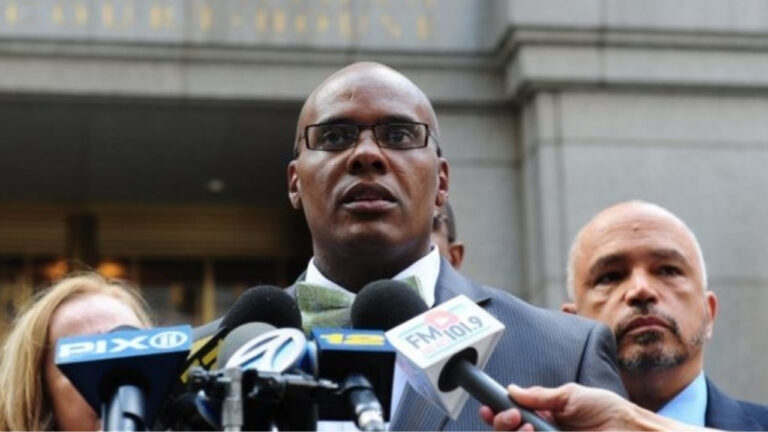
Black Westchester’s People Before Politics” with Damon K. Jones and AJ Woodson tackles urgent local issues. This episode focuses on the Westchester Black Community’s outrage over NYS Attorney General Tish James’ decision not to prosecute a New Rochelle police officer involved in the killing of an unarmed Black man experiencing a mental health crisis.
Join hosts Jones and Woodson as they dive deep into this controversial case with guests including former County Legislator Damon Maher, and Civil Rights Attorney Mayo Bartlett.
Tune in for an important discussion on police accountability, mental health response, and justice in our community.
Black Westchester presents the People Before Politics Radio Show every Sunday night, 6-8 PM, simulcasting live on Facebook, X (formerly Twitter), LinkedIn, Instagram, and YouTube and archived on BlackWestchester.com. Giving you that Real Talk For The Community since 2014.
To support the Black Westchester and the People Before Politics Radio Show, which provides the News With The Black Point Of view and gives you the real talk for the community for free, make a donation via PayPal at www.PayPal.me/BlackWestchesterMag. In the words of Ray Charles, “One of these days, and it [might not be] long, You’re gonna look for [us], and [we’ll] be gone.” Support independent, Black-free media!
In the ever-evolving world of health and wellness, Nourishcore’s Vita Health Nutrition line is making waves with its innovative approach to daily supplements. Their latest offering? A range of delicious and nutritious gummies designed for those who struggle with traditional pills or are seeking a more convenient way to maintain their health regimen
A Gummy for Every Need
Vita Health Nutrition understands that different bodies have different needs. That’s why they’ve developed a diverse lineup of gummy supplements, each targeting specific aspects of health and wellness:
Apple Cider Vinegar: Known for its potential benefits in weight management and digestion.
Turmeric: A powerful anti-inflammatory and antioxidant.
Multivitamin: Covering your daily essential vitamins and minerals.
Vita Immunity: Boosting your immune system for overall health.
Fiber: Supporting digestive health and regularity.
Ashwagandha: An adaptogen that may help manage stress and anxiety.
The Gummy Advantage
For many, swallowing pills can be a daily struggle. Vita Health Nutrition gummies offer a palatable alternative without compromising on nutritional value. These gummies are:
Easy to take
Great-tasting
Fast-acting
Convenient for on-the-go lifestyles
Early Access Opportunity
Excited to try these innovative supplements? Nourishcore is offering an early purchase option for their Vita Gummies. This gives health-conscious consumers the chance to be among the first to incorporate these tasty supplements into their daily routines.
Sign Up for Updates
Stay informed about Vita Health Nutrition’s latest products and offers by signing up for their newsletter. You’ll receive:
Exclusive deals
New product announcements
Health and wellness tips
Early access to limited releases
Conclusion
Vita Health Nutrition gummies represent a delicious intersection of convenience and health. Whether you’re looking to support your immune system, manage stress, or simply ensure you’re getting your daily vitamins, there’s a Vita gummy designed to help you stay on track with your health and wellness goals. With the added benefit of early access through Nourishcore, there’s never been a better time to explore the world of nutritional gummies.
In an era of instant messages and social media posts, the ancient wisdom of Proverbs 18:13 resonates with profound importance:
“He who answers before listening – his folly and shame.” PROVERBS 18:43
This timeless insight strikes at the heart of effective communication, particularly in our intimate relationships. It serves as a crucial reminder of the power of genuine listening in a world that often prioritizes quick responses and constant self-expression.
The digital age has dramatically reshaped our communication landscape. Social media platforms have conditioned us to engage in one-way communication, often without expecting thoughtful dialogue, broadcasting our thoughts in brief posts and tweets. This culture of constant sharing has led to decreased attention spans, validation-seeking behaviors, and the creation of echo chambers that limit our exposure to diverse perspectives.
Our habit of quick responses, honed through countless online exchanges, can breed misunderstandings and conflicts in our romantic relationships. A hastily sent text message, lacking nuance or context, can be easily misinterpreted. What might have been a minor miscommunication can quickly escalate into a significant disagreement, creating emotional distance and resentment that accumulates over time. These conflicts, born from our digital communication habits, can crack the foundation of trust and understanding that love requires to flourish. It’s a wake-up call to the negative impact of our digital habits on our relationships, urging us to reconsider our communication strategies.
Perhaps most insidiously, the tendency towards surface-level interactions that characterize much of our online behavior can prevent the deep, meaningful conversations essential for love from deepening and maturity. We may engage in shallow exchanges with our partners, mirroring our digital communications, rather than diving into the profound discussions that foster true intimacy and connection. This superficiality can leave both partners feeling unfulfilled, yearning for a more profound bond but unsure how to bridge the gap in a world that increasingly values brevity over depth.
The importance of effective communication in nurturing love cannot be overstated. When we genuinely listen before responding, we create a foundation of respect and value for our partner’s thoughts and feelings. This fosters a safe space for vulnerability and honest expression, which is essential for deepening love.
At the heart of this practice lies active listening—giving our full, undivided attention to our partner. This means setting aside our devices, maintaining eye contact, and truly focusing on the person before us. As we listen, we must resist the urge to formulate responses prematurely. Instead, our goal should be to immerse ourselves in our partner’s perspective, striving to understand their thoughts and feelings as if they were our own.
To deepen our understanding, we should ask thoughtful, clarifying questions. These inquiries serve a dual purpose: they demonstrate our engagement and ensure we correctly interpret our partner’s message. By seeking clarification, we value accuracy and genuine comprehension over quick assumptions.
Once our partner has finished speaking, we should embrace moments of reflection. This pause allows us to process what we’ve heard and formulate more empathetic, considered replies. In doing so, we honor the complexity of human emotion and the importance of the conversation at hand.
We should appreciate our partner’s willingness to share as we engage in these conversations. By acknowledging the value of their openness, we reinforce the importance of honest, vulnerable communication in our relationship.
Finally, we must be willing to reciprocate this vulnerability by sharing our thoughts and feelings openly. This mutual exchange of emotional honesty invites a more profound connection, fostering an environment of trust and intimacy. It’s a reassurance that by opening up, we can strengthen our bond and create a safe space for honest communication.
By applying these principles, we create an environment where love can flourish. Effective communication allows us to navigate challenges together, celebrate joys more fully, and continually deepen our understanding of each other. It enables us to build a resilient, adaptable, and ever-growing love.
As we navigate the complexities of modern relationships, let’s challenge ourselves to truly listen – to hear not just the words but the emotions, needs, and intentions behind them. Doing so opens the door to a more profound, satisfying, and enduring love.
In every conversation with our partner, we have the opportunity to apply the wisdom of Proverbs 18:13. By listening before we speak, we nurture the soil in which love grows, creating deeper connections, fostering empathy, and building a relationship that can withstand the tests of time and the distractions of the digital age.
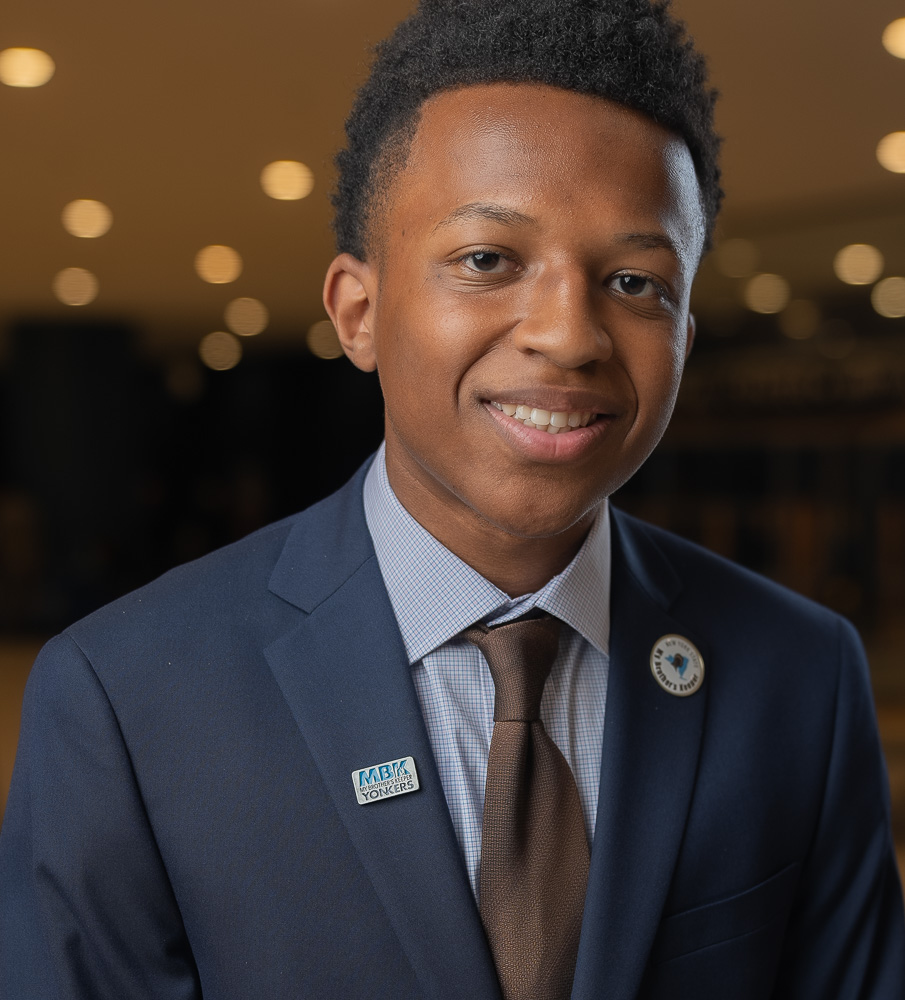
Three years ago, my mom excitedly told me about a program called My Brother’s Keeper (MBK), a nationwide initiative from the Obama Foundation aimed at empowering young men of color.
At first, I wasn’t interested. At all. Like many teenagers, I saw it as just “extra work,” another commitment on top of school and my budding photography and videography business. But my mom had that knowing look in her eyes–that look moms give that just screams, “You know, I was your age once. I know you, and I know this will be great for you.” She insisted I give it a try, so I did.
And honestly, it was one of the best decisions I’ve made.
My school’s MBK chapter wasn’t very active at the time, but my assistant principal took a liking to me and encouraged me to apply for a leadership position within MBK. It was a chance to step up and help shape MBK’s impact at our school and in our community. The idea of being a leader sounded pretty cool, so I went for it.
For me, one of the most impactful aspects of MBK was the sense of belonging it fostered. It’s great to be surrounded by people who look like you. But more than that, it’s the relationships, the connections you gain. Just within my first month, I found myself at a senior send-off breakfast, volunteering as an MBK brother. I was there early, and to my surprise, so was the Mayor of Yonkers, Mike Spano! We ended up just chatting, and talking about life. He shared his stories about growing up, and I talked about things in Yonkers, such as the school system–we had a great back-and-forth. He was just a regular, normal guy, but also, just casually, the mayor of our city! It was that moment when I realized this program can really open doors, and introduce you to important, unexpected people to build your network.
I walked through that door towards my dreams, my future. That door led me straight to an internship at Yonkers Public Schools.
The internship was eye-opening. It gave me a glimpse into the actual day-to-day work I might do in my future communications career, specifically in public relations. I’m learning that a career in communications isn’t all glitz and glam. There’s a lot of behind-the-scenes work involved, from paperwork to making phone calls. It really has been a huge help in exposing me to the professional world and giving me a hint of what to expect in my future.
I’m so glad I took a risk and went for this internship. Especially at this age, you don’t always get opportunities like this to work in such a professional environment. For me, it’s the opportunity and also the networking. You have to introduce yourself to new people. I now understand that there’s a lot more handshaking as an adult than I expected, but those hands can help you along the way. Five years down the road, once I graduate, I can come back here and possibly get a job or reach out to the incredible people I’ve met along the way.
It’s honestly offered a great preview of what adult life is like. It’s a nine-to-five position, so I’ve had to adjust to being dedicated every day, getting to the office at a certain time and leaving at a certain time. It’s been a learning experience, but it’s good to have that experience. I’ve also learned how to dress and carry myself professionally. Like I said before, there’s a lot of shaking hands which means making a good impression, so no cursing or slang. It actually helped me become a better communicator.
Beyond just professional development, one of the most valuable skills I gained was public speaking. Before MBK, the thought of speaking in front of a crowd terrified me. But as a fellow, I was expected to represent the program at the event. It’s good that they force you to get out of your comfort zone. Over time, I grew more comfortable and confident, and now I genuinely enjoy public speaking. It’s like MBK provided me with the mentorship and support I needed to find my voice.
One of the most memorable moments from my internship was when I went to a local park with my boss, Akeem, to photograph a food giveaway. Yonkers Public Schools had partnered with a councilwoman to give out free meals to kids during the summer. Seeing the kids’ smiles as they received their lunches and knowing that I was part of something that made a difference in my community was a powerful experience. It reminded me that the work we do, no matter how small it may seem, has a real impact on people’s lives.
I’m immensely grateful to my mom for pushing me toward MBK and for MBK for pushing me towards leadership and this internship. The skills I’ve acquired extend far beyond the classroom. They’ve taught me professionalism, networking, the importance of being outgoing and social, and even basic things like how to tie a tie!
These moments taught me two things. One: Take advantage of every opportunity you get. And two: Internships are like a sneak peek into your future. A peek through that door. So if you get the chance, go for it. You’ll learn so much, and it might even lead to something amazing down the line.
Looking back on my journey, from MBK to my internship, I realize how much I’ve grown. It’s been a transformative experience, and I’m excited to continue learning and evolving as I enter this new chapter of my life. Next up: Freshman year at Pace University, where I’ll be studying communications. I can’t wait to see where this path takes me.
Cameron Williams is a freshman at Pace University, studying communications with the goal of pursuing a career in public relations. The Yonkers native is passionate about cars, photography, and videography, having started his own professional photography business at a young age. In high school, Cameron joined My Brother’s Keeper, where he took on a leadership role that led to valuable opportunities, including an internship with Yonkers Public Schools.
Through MBK, Cameron developed key skills in public speaking, networking, and professional communication, which have helped shape his aspirations. He credits MBK and his internship experience for helping him grow both personally and professionally, giving him a glimpse into his future career and the confidence to chase his dreams.
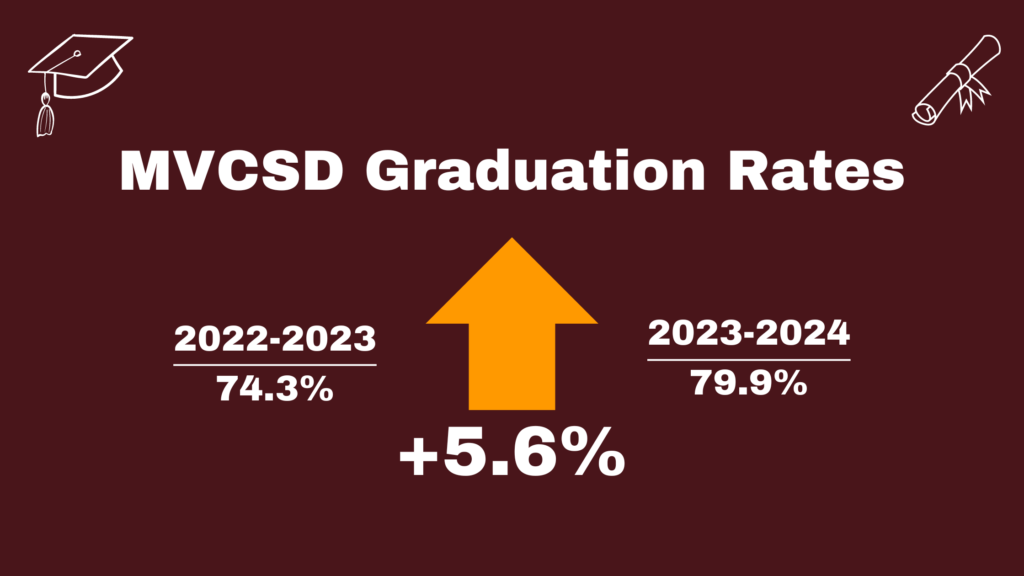
The Mount Vernon City School District’s 2023-2024 graduation rate climbed to a level not seen in more than two decades. The projected graduation rate – 79.9% – increased 5.6 percentage points over the previous year. The District utilized data to provide feedback for targeted progress monitoring and intervention to make this increase possible. Targeted monitoring and intervention also allowed faculty and staff to foster a connection with students to help them succeed.
Graduation rates will become official when the New York State Education Department releases its numbers.
Mount Vernon High School registered its highest graduation rate since 2000, with 82.7% of students graduating. Denzel Washington School of the Arts graduated 93.5% of its students and Mount Vernon STEAM Academy had a graduation rate of 90.7%.
Rebecca Turner Academy graduated seven of its 37 students for a 21.9% rate. Most of these students would not have graduated had they not had the opportunity to attend RTA. 436 students graduated from the District in total.
“This graduation rate improvement is a source of great pride for the District, and it shows that we are on the right track academically,” said Acting Superintendent Dr. K. Veronica Smith. “Through intense data-management, personalized instruction, and the commitment of our teachers and staff, we were able to do something as a District that has not been accomplished in decades. We are not going to stop here, and we will work persistently to continue this trend. Our goal is always for every student in Mount Vernon to receive a diploma, and we have made tremendous progress toward that goal.”
Assistant Superintendent for Pupil Personnel Services Dr. Marie Gaboton-Swift presented the graduation rates at the Board of Education meeting on Tuesday, September 17, 2024.
She credited much of these improvements to data monitoring and implementing interventions with students based on data. During Dr. Smith’s tenure as Associate Superintendent of Pupil Personnel Services, the District began monitoring seniors before June, and that has continued and expanded.
Throughout the District, data is used heavily in how programs are implemented and changed. There are targeted performance monitoring, intervention and data analysis and monitoring. This use of data gives administrators and teachers a firm understanding of what needs to be done to further improve.
At the root of this growth was a combined effort of the four high school principals, their teams and teachers, the Pupil Personnel Services Department, and the Technology Department.
“The other thing that we have done is we have had targeted intervention,” said Dr. Gaboton-Swift. “We are trying to be very purposeful with after school credit recovery with Saturday school Regents prep. We also have target progress monitoring, even at the District office with transcript reviews for grades nine through 12, which was started by Dr. Smith.”
The District has put an emphasis on social-emotional learning (SEL) as well. Most counselors have interns, provided for by the Mercy HEART Grant. The interns provide additional staff to handle tasks in the office, and counselors can spend more time focusing on students.
Mount Vernon High School, which has been utilizing coordination of services teams (COST), has been a major factor in the District’s graduation rate improvements. The school’s graduation rate is typically below the District level, but it is above the District rate of 79.9% for 2023-2024.
The COST system is similar to the Multi-tiered System of Support (MTSS) that is used in other schools. Principal Dr. Pauline Pearce and Assistant Principal Tiffany Izzo joined Dr. Gaboton-Swift to explain how they made advancements at their school.
“In those teams we look at the data,” said Ms. Izzo. “We pull data on attendance, trends in attendance, academics and SEL. We collected a lot through talking to the teachers and talking to our support staff that are part of that team. In that team, we really worked on reaching out to the individual students in a very personalized way that was focused on where their attendance was going, what do they need to graduate and where we were seeing their grades going.”
The coordination of services teams consist of faculty and staff from the school that work together to ensure that students are making the progress they need to graduate. If a student needs to go to counseling, get extra afternoon help or make a call, safety monitors are helping them as members of the support team. Each grade level at MVHS has their own support team led by an assistant principal.
“At the New Mount Vernon High School, we are indeed building community because there is not one stakeholder in that school who is not participating in all of the initiatives that we have put in place,” said Dr. Pearce. “We are all working together for the betterment of our children, and we are extremely, extremely proud of the work that we are doing.”
Mount Vernon High School takes a personalized approach to rewarding students in order to keep them motivated. Students receive rewards for their grades and attendance, which are the two biggest factors in a student’s success. One reward that seniors can earn this year is the ability to eat off-campus for lunch.
Meticulous data-keeping has also allowed the District to reduce graduation rate discrepancies seen in past years. For example, if a student moved to a new school district but was discharged improperly, they were counted as a drop-out. This negatively impacted graduation rates, and it has been corrected with new registration and discharge processes and training.
Through data analysis, personalized plans for students and committed teachers, the District has been able to make steady improvements to its graduation rates over the last several years.
Leaving aside for now the AG’s debatable conclusion that no successful homicide case of any kind could be brought before a Westchester County judge and jury, there are several questions that should have been asked, in a 14-month investigation, to better understand how an initial minor incident spiraled so badly out of control and how this sort of situation can be averted in the future.
For example, what were the words and sense of urgency in the 911 dispatch that Det. Conn heard? Could the AG release the audio of that dispatch and the related call from the storekeeper? Given Mr. Garris’s bizarre behavior described at the store, was there a referral to the Project Alliance mobile mental health unit by the dispatcher? Did any of the three officers stop at least a moment to consider calling in that unit or other backup in view of Mr. Garris’s size and his strangely flat affect? Did they all give themselves the time and distance necessary to think that through?
Some of us on the County Police Reform and Reimagining Task Force had talked about retention and sharing of data, gathered from prior encounters or from discussions with family members or neighbors, regarding people with known psychiatric/behavioral issues. Is that information being gathered by police departments? Were there available previous notes on Mr. Garris’s condition readily available? On family or other support network nearby that could have been brought in before the situation escalated?
Det. Conn says that he had encountered Mr. Garris just minutes before the store incident and thought that his expression was “vacant” and that he was “on drugs.” (And the report says an autopsy showed marijuana and PCP toxicity, although the levels aren’t revealed.) Shouldn’t that have been all the more reason to consider de-escalation rather than rushing first to physically overwhelm him?
On that fateful and hot late afternoon in July, Det. Conn was on a “special overtime traffic detail,” which is a common feature around all the new building construction and infrastructure work in New Rochelle. How many consecutive hours had he been working before the incident? How many hours had he logged the seven days before? Thirty days before? May an officer’s fatigue and/or lack of patience may have been fatal to a citizen and possibly to himself and his fellow officers? There are strict federal and state rules on truck drivers’ consecutive driving hours. Are there similar rules or contract terms relating to police officers and how are they enforced?
As the report indicates, other officers responded to the “10-13”. It may be helpful to hear: (a) what they saw; (b) what they discussed among themselves about what happened; (c) how the situation could have been handled differently; and (d) what they would later report about the incident. Were any or all of those others interviewed? What do their BWCs tell us about what they all discussed in the immediate aftermath of the shooting?
The AG’s report apparently forecloses the possibility of a criminal trial, although I suppose the local DA could pick up the case or the Feds could do so on a civil rights violation theory. But a large monetary judgment or settlement in a civil case against the City, which involves a less onerous burden of proof for the grieving family of the deceased citizen, looms as a distinct possibility. Also, the AG’s report is not a determination of any particular officer’s ability to continue to perform the role of a police officer in this City, which is likewise governed by a different standard of proof and is currently in the purview of the Police Commissioner alone.
And, to repeat, we need to figure out how to make the future better. The AG has some useful recommendations but we need to insure that we have specific improvements — in terms of hiring, training, tactics and procedures — demanded by the public in the City of New Rochelle. For that, we need a strong, independent civilian board of police oversight and accountability.
Here are some thoughts from a person with over 25 years of experience as a big-city “line prosecutor,” District Attorney and State Attorney General:
“If there aren’t serious consequences for police brutality in our justice system, what kind of message does that send to police officers? And what kind of message does it send to the community?
Public safety depends upon public trust….It depends on a justice system that is steeped in the notions of objectivity and impartiality…
“But if Black and brown people are more likely to be stopped, arrested, and convicted than their white counterparts…when egregious use of deadly force is not met with consequence, is it anywonder that the very credibility of these public institutions is on the line?” – Sen. Kamala Harris, The Truths We Hold (2019)
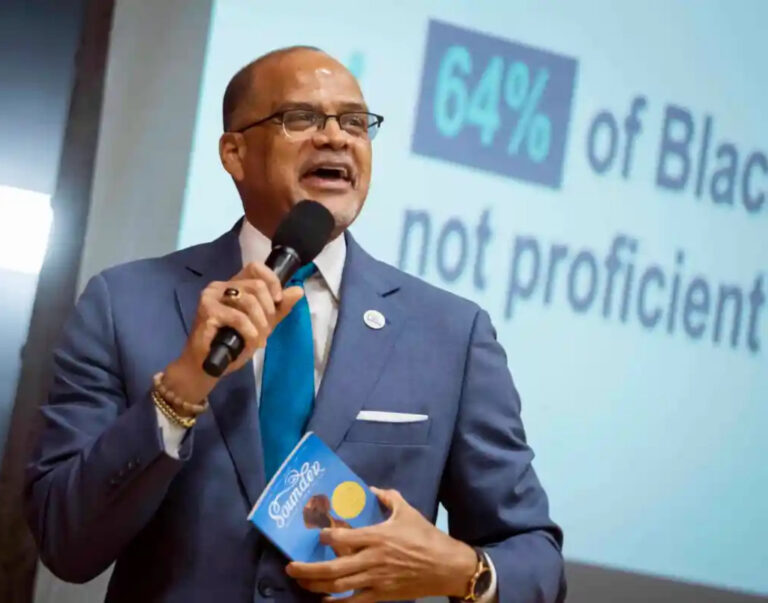
On Tuesday, September 17th I had the opportunity to tune into NYC Schools Chancellor David Banks’ “State of the Schools” address, and let me tell you, the man came with a vision. We’re talking about a clear, bold blueprint for the future of education in this city—a plan rooted in resilience, innovation, and, most importantly, the diversity that makes New York City what it is. This wasn’t your typical “we’ve done this and that” speech.Banks was laying down the foundation for something new, something reimagined.
Banks kicked things off by talking about the “building blocks” of education. You know—the essentials that should be in place for any system to work: academics, safety, and civic engagement. And after the madness of the pandemic, you could feel him when he said there’s no going back to the way things were. He made it plain: “We needed a fresh, reimagined approach,” and Banks is all about building strong foundations for our kids.
The big gems of his plan are the NYC Reads and NYC Solves programs. NYC Reads is already expanding into over 840 elementary schools, and it’s designed to boost literacy across the board. Meanwhile, NYC Solves is focused on math, already hitting up 400 high schools and 100 middle schools to help students get more confident with their problem-solving skills. And here’s the kicker—starting right now, every single 3-K and Pre-K student across the city will be learning from the same top-tier curriculum. That means no matter where you live, every kid is getting the same opportunity. Banks called it “unprecedented in NYC,” and he’s right. It’s a game-changer for making sure all our kids start on equal ground.
But Banks didn’t just focus on academics. He went deep into some real issues, like the rise of antisemitism in schools. Banks wasn’t afraid to address it head-on, talking about his testimony before Congress earlier this year and calling out the disturbing incident at Hillcrest High, where students went after a teacher for supporting Israel. He made it crystal clear that NYC schools are supposed to be safe for every single student, no matter their race, religion, or background.
Then Banks dropped some major news about what’s coming for the 2024-2025 school year. He’s launching HBCU Early College Prep in Southeast Queens, where students can earn an Associate’s degree—for free—while still in high school. Let that sink in. This is huge for Black and brown students who’ve been looking for opportunities to level up. And if that wasn’t enough, Banks is also expanding Bard Early College in the South Bronx and Central Brooklyn, giving more students access to accelerated academic programs. The man is making moves!
Banks touched on how artificial intelligence is going to start showing up in classrooms, and he wasn’t just talking tech for tech’s sake. He wants AI to be used to create personalized learning experiences for students and to give teachers more insight into how their kids are doing. But Banks is no fool—he knows AI can’t replace the human element of teaching. He’s making sure that while AI is helping streamline things like transportation and enrollment, it’s not going to take away from the power teachers have in the classroom.
Throughout his speech, Banks highlighted the need for cultural competence in the school system. He knows NYC is a melting pot of cultures, and education needs to reflect that. He talked about how important it is for every student to feel seen and respected, no matter where they come from or what their background is. His vision for NYC schools is one where inclusivity is at the core, where every student learns in a space that celebrates and honors the rich diversity of this city.
David Banks wasn’t just giving a status update. This was a forward-thinking look at how NYC’s schools are about to level up. His vision is rooted in equity, inclusivity, and innovation. He’s building something that’s going to prepare these kids not just for tomorrow, but for the next decade and beyond. And in a city that’s all about bouncing back and pushing forward, you already know this kind of leadership is exactly what NYC’s school system needs.
David Banks is doing more than keeping up with the times—he’s shaping the future. And for New York City? That’s exactly what we need.
A group of Haitian-Americans alarmed by the recent and unfounded attacks on Haitian immigrants in Springfield, Ohio, have launched Haitians for Harris. The group joins several other self-identifying groups that have launched in support of the campaign of Vice President Kamala Harris as she seeks the presidency along with her running mate, Governor Tim Walz of Minnesota, candidate for Vice President.
In addition to voter education; where to vote, how to register, and absentee and mail-in balloting information, the group will infuse general education and information about Haiti, its role on the world stage and the many who came here in search of a better life and those who have risen to prominence in the arts, politics, sports, education, and the sciences. The group will also encourage members to donate to and volunteer for the Harris/Walz campaign.
“We could not pass up the opportunity to educate people about their Haitian-American neighbors and to get Haitians to come together for a good cause”, said Liz Johnson, a founding member. “Haitians and Haitian-Americans have greatly contributed to the United States. We have also been terribly impacted by the game of political football that has played out since Haitians declared their independence in 1804. We thank everyone who contributed to raising awareness of the plight of Haiti, Haitians, and Haitian-Americans!”
HAITIANS FOR HARRIS V3 – 1
Haitians for Harris is a grassroots campaign formed out of an imperative to refocus the attention of the electorate to helping Vice President Kamala Harris and Governor Tim Walz win the White House in November. Too many people, including the media have allowed themselves to be led down a rabbit hole of rumors – which has caused considerable harm – not just for the people of Springfield, Ohio, but throughout the Haitian diaspora. Haitians for Harris plan to refocus by contributing helpful voter information as well as history and facts about Haitians and Haitian-Americans, which number in the hundreds of thousands in the U.S. The group will also encourage members to donate to and volunteer for the Harris/Walz campaign.
Inna Lillahi wa Inna Ilaihi Raji’oon. ‘Indeed we belong to Allah, and indeed to Him we are returning’. [The Noble Qur’an, 2:156].
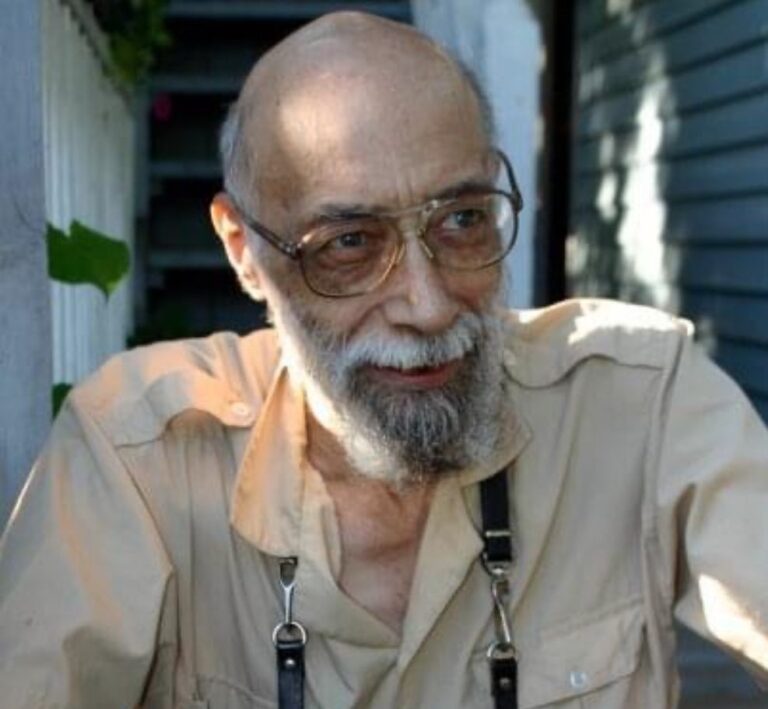
Omar Abdul Kharem returned to the Creator on September 11, 2024, at the age of 97. He was born in New York City on August 16, 1927, the son of Isabelle O’Neil and Sidney Grant. He spent much of his life living in Manhattan, the Bronx, Queens, and Brooklyn, eventually settling in Yonkers. He was surrounded by art, theater, and music, with household visitors the likes of Fats Waller, as well as many other artists.
As a young man, while in service for the Army Air Force segregated unit, Omar traveled the United States during segregation, as well as serving in the Pacific. This experience had a profound and lasting effect on him. While on the island of Guam, he began to study music and learned to play the clarinet. Once discharged he continued his studies at the Hartnett School of Music in NYC, also studying the Conga drum. Music, from his childhood introduction through his later studies, would remain a lifelong love and influenced his work as a jazz musician and composer.
In the late 1950s, Mr. Kharem became interested in photography, which became his major focus, though music remained ever-present in his life. He spent many years working as a freelance photographer. His work has been published in The New York Times, The Village Voice, Panorama Magazine, on album covers, and many publications of the work of African American photographers.
Having many friends in the then thriving Jazz world Mr. Kharem had a unique opportunity to perform with and photograph some of America’s great Jazz musicians as they improvised and played in clubs, lofts, and other venues. He photographed John Coltrane, Max Roach, Art Blakey, Ron Carter, Betty Carter, Archie Shepp, Alice Coltrane, Charles Moffett, Jackie McLean, Lee Morgan, Don Cherry, Ornette Coleman, Eddie Mathias, Billy Harper and many others. The list is long.
His love for music and photography enhanced each other. When he turned 90 years old Omar and his jazz band finally recorded many of his own original beautiful straight-ahead jazz compositions he wrote over half a century ago. He was honored when, back in the day, John Coltrane performed one of his original compositions at a club.
Influenced by Cartier-Bresson, Al Hicks, Eugene Smith, and Gordon Parks, photography became a true art for Mr. Kharem. His black-and-white images documenting NYC during the 1950s, ’60s, and ’70s evoke another time, another era which urge you to look further into the subject before you. Whether it’s a portrait of someone young or old, a candid street scene, or a shadow falling on a building, the power of his imagery is always thought provoking. Omar worked with Gordon Parks, both men pioneering African American artists, who documented civil rights, poverty and African American culture through photography and other artistic expressions.
Mr. Kharem’s work has been exhibited at galleries and museums throughout NYC, including The Studio Museum of Harlem, The Metropolitan Museum of Art, Red Ring Gallery, The Blue Door, The Brooklyn Museum, MINT, The Middle Collegiate Church Gallery, The 4th Street Photo Gallery, Kenkeleba Gallery, Hey Check This Out Gallery, The Jazz Forum, among many others. Again, the list is long.
In his personal life, Omar was a very unique and interesting person. With most people, with whom he interacted, Mr. Kharem offered the knowledge and insight he had gained through his life experiences and personal study. Often this knowledge pertained to the value of quality art and creativity, political awareness around issues of racial injustice in society, and deep philosophical explorations about the nature of time and reality. He was a deep thinker. He was also imaginative. He loved science fiction and all kinds of books on various topics. He loved language too, and spoke English Spanish, and much Arabic. Omar studied Islam and accepted Islam as his faith early in life.
His creativity had few limits. In addition to his more known endeavors of photography and Jazz composition, Omar rode his bike throughout the City and climbed trees in the parks. He also wrote poetry, and worked on inventing his own language at one point!
Omar was a very humorous man, known to make funny faces and “mess with people” with joking and wordplay. He had a loud and hearty laugh that equaled his smiling eyes. He enjoyed sweet things, quiet conversation, old movies, and tennis. Omar lived simply and was never focused on material possessions or notoriety. He was a one-of-a-kind individual who did not have predictable personality traits and did not assimilate into standard cultural behavior patterns. He was always his true self and unique. He had a strut like no other and was always, hands down, the coolest cat in the room.
There were so many decades of change during Omar’s almost century-long life and he experienced so much. He was loved by so many and has left us with the gift of his vision, for us to see what he saw during his life through his photography and through his music. He will be greatly missed and we will celebrate his time in this world and all that he gave to everyone he encountered.
Omar Kharem leaves behind many family and friends.
Mary Grant (deceased), Marion Bunce-Kharem, Linda Mendelson, his children, Haroon Kharem (Audrey Kharem), Mohammad Kharem, Nafisa Kharem, Leila Kharem (Percy Thomas), and Ahmed Kharem (Christina Kharem). Omar’s legacy includes many Grandchildren, Great Grandchildren, and Great Great Grandchildren: Omar Kharem (Tanya Kharem) & children Mary (Kiara) Destiny (Londynn and Logan). Jeremiah Kharem & children: Shamiah, Maia, Jeremiah Jr, Daniel Kharem (Sarah Tempson-Kharem) and their children Nasir, Adrian, Malachi, Maliah, Kelli Chappelle (Mitchell Chappelle) and their children Alanna, Xavier and Khalil, Chloe Wozniak (Max Katzenberg) and their children David and Liev Ian Wozniak, Fiona Wozniak and Sean Wozniak, Jasmine Brumley-Taub (Brett DiPillo) Li Mansur Kharem, Maya Kharem, and Amal Kharem.
And those who believed and whose descendants followed them in faith – We will join with them their descendants, and We will not deprive them of anything of their deeds’. [The Noble Qur’an, 52:21]
We pray Allah reunites us with our loved ones in His Eternal Gardens of Paradise. By the will of Allah, we shall all meet again. Ameen.
The family of Kenneth Chamberlain Sr. has issued a scathing statement following a grand jury’s decision not to indict Detective Steven Conn in the shooting death of Jarrel Garris in New Rochelle, New York.
In their statement, the Chamberlain family expressed deep disappointment with the outcome, drawing parallels to their own experience and the broader pattern of police violence cases across the nation. They criticized the familiar refrain of “insufficient evidence” used to justify the lack of charges against officers involved in fatal shootings.
The family took aim at what they describe as a “universal playbook” used by officers to justify their actions, particularly the claim of fearing for one’s life. In this case, they noted Detective Conn’s assertion that he needed to protect himself and others. However, the Chamberlains argue that video evidence contradicts this narrative, showing the detective “approaching and escalating the situation, not retreating or de-escalating.”
The statement also lambasted the recommendation by the Attorney General’s office for the New Rochelle Police Department to upgrade its training and policies on use of force. The family dismissed this as “nothing more than an insult – a slap in the face of justice.”
Broader criticisms were leveled at the New York Attorney General’s office, with the family accusing it of consistently failing to hold law enforcement accountable. They urged voters to remember this pattern of inaction when the Attorney General seeks re-election.
The Chamberlain family’s statement concludes with a call to action, asserting that systemic injustices will persist unless there is a demand for accountability at all levels of the justice system.
This case has reignited debates about police accountability and the effectiveness of grand juries in cases involving law enforcement officers. As community tensions rise, local officials and activists are calling for increased transparency in the investigation process and a reevaluation of police use-of-force policies.
STATEMENT FROM THE FAMILY OF KENNETH CHAMBERLAIN SR.
Once again, another family hears the heartbreaking, all-too-familiar words of countless victims of state-sanctioned violence: “After an exhaustive investigation, the grand jury has determined there is not sufficient evidence to charge the officer.” This time, it’s the family of Jarrel Garris. The officer’s playbook is universal, with rehearsed language designed to justify any act of violence: “I feared for my life,” it was a very fluid situation or in this case, Detective Conn’s claim that he needed to protect himself and others. But the truth is plain to see the video reveals the detective approaching and escalating the situation, not retreating or de-escalating.
The rule of law, which should serve as the foundation of a fair society, is non-existent here. This officer was not held to the same standard that we, as citizens, are bound to follow. The Attorney General’s recommendation that the New Rochelle Police Department “upgrade its training and policies” regarding the use of force is nothing more than an insult a slap in the face of justice. Year after year, the New York Attorney General has failed to hold law enforcement accountable, and we must remember this failure when she seeks re-election. The systemic injustices will only persist if we do not demand accountability at every level.