Washington, D.C. – As the Atlantic hurricane season rages on, FEMA is facing mounting criticism for allocating significant funds to the migrant crisis while warning of insufficient resources to assist hurricane victims. Homeland Security Secretary Alejandro Mayorkas recently revealed that the Federal Emergency Management Agency (FEMA) lacks the necessary funds to support disaster relief efforts for the remainder of the season, sparking controversy and a political showdown.
Funding Crisis and Migrant Spending
The announcement has raised alarms, especially in the wake of Hurricane Helene, which claimed over 200 lives in the Southeast. FEMA’s financial predicament has drawn scrutiny due to its allocation of over $1.4 billion towards the migrant crisis since 2022. In 2023 alone, $640.9 million was funneled to aid state and local governments dealing with the surge of asylum seekers.
Critics, particularly from the Republican Party, argue that these funds should have been reserved for disaster relief, especially as hurricane victims struggle to recover. The debate underscores tensions over federal spending priorities, with questions being raised about whether resources should focus on domestic needs, such as natural disaster recovery, or humanitarian efforts like managing the migrant crisis.
FEMA’s Financial Breakdown
FEMA has directed funds to two major programs: the Emergency Food and Shelter Program and the Shelter and Services Program, the latter of which was authorized in late 2022 to provide additional support to communities hosting asylum seekers. The Department of Homeland Security (DHS), which oversees FEMA, has defended these expenditures, emphasizing that the money for migrant care comes from distinct, Congressionally-approved sources and cannot legally be reallocated for disaster relief.
The revelation has ignited a fierce political backlash, particularly among Republicans. Texas Governor Greg Abbott has demanded the immediate redirection of migrant funds to support hurricane recovery efforts. Congressman Jim Jordan (R-Ohio) has gone further, accusing the Biden administration of neglecting hurricane victims in favor of migrant care. Several other Republican lawmakers have labeled the administration’s spending decisions as “treasonous” and an “America Last” policy.
Biden Administration’s Response
President Biden has acknowledged the severity of the hurricane crisis, calling on Congress to provide additional resources. FEMA has also initiated efforts to help victims by distributing $750 grants for groceries, with $4 million already provided in direct assistance. However, these actions have not quieted critics who argue that more substantial aid is urgently needed.
A National Debate
The controversy spotlights a broader national debate over federal spending priorities. With the hurricane season still in full swing and FEMA warning of a funding shortfall, many are questioning whether humanitarian obligations, like addressing the migrant crisis, should take a back seat to domestic disaster relief.
As the administration faces increasing pressure to reconsider its budget allocation, the challenge remains how to address both the ongoing migrant crisis and the ever-growing demand for disaster response resources.
The situation presents a stark dilemma for policymakers as they grapple with how best to balance competing priorities within limited financial constraints. With lives at stake on both fronts—domestic and humanitarian—this debate is far from over.
Process Matters: Court Refuses to Revive Dismissed Case
Mount Vernon, NY — In a decisive ruling dated Tuesday, October 1, 2024, Mount Vernon City Court Judge Lyndon D. Williams denied the prosecution’s motion to reargue in the case of People of the State of New York vs. Jonathan Davis, affirming the court’s earlier dismissal of the charges
The defendant had been charged with one count of Harassment in the Second Degree. The case was originally dismissed in a Decision and Order dated Thursday, May 23, 2024, after the court determined that the prosecution failed to meet its legal obligations under New York’s discovery and speedy trial laws.
Specifically, the court found that the People’s Certificate of Compliance—required to confirm all evidence has been properly shared with the defense—was “illusory,” and that the Statement of Readiness was invalid. As a result, the case was dismissed pursuant to CPL § 30.30, which requires prosecutors to be trial-ready within a strict statutory timeframe.
In seeking reargument, prosecutors contended they had exercised due diligence in obtaining and disclosing evidence and argued that less severe remedies than dismissal could have been applied. But the court rejected those claims, finding no basis to overturn its original decision. The ruling emphasized that prosecutors failed to demonstrate they had met the required standard of diligence in securing and providing discoverable materials, including information related to witnesses.
Judge Williams further reinforced that under CPL § 30.30, the burden is on the prosecution to be trial-ready within the statutory timeframe, and failure to do so mandates dismissal—regardless of whether the defense can show prejudice.
With the motion denied, the dismissal stands, sending a clear message about the importance of compliance with discovery laws and procedural timelines in Mount Vernon’s courts.
Grammy and Emmy award-winning and Oscar-nominated, “Queen of Hip-Hop Soul,” Mary J. Blige announced her 2025 “The For My Fans Tour” on Monday, September 30th, with special guests NE-YO and Mario. The tour comes on the heels of her new album “Gratitude,” released on Friday, November 15th. Blige will release her new studio album, “Gratitude,” through her own Beautiful Life Productions and in partnership with 300 Entertainment. In August, she dropped the first single off the album, “Breathing” featuring Fabolous.
The tour and album are a celebration of the love and gratitude that Mary has towards her life, family, friends, and her beloved fans. Produced by Live Nation, the 27-city tour kicks off on January 30th at Greensboro Coliseum in Greensboro, NC making stops across North America in Atlanta, Los Angeles, New York, and more before wrapping up in Boston, MA at TD Garden on April 14th.
The tour included three dates in the Tri-State Area, Sunday, April 6th in Newark, NJ at the Prudential Center, Thursday, April 10th in New York City at Madison Square Garden, and Friday, April 11th in Elmont, Long Island, NY at the UBS Arena. See the full list of tour dates in the photo below.
“I am so excited to kick off this tour. I have amazing fans and am so grateful for all of the love and support they have given me throughout the years,” said the Yonkers native. “This tour is for them, and I cannot wait to be able to travel to all these cities and see everyone. I am in such a place of immense gratitude and peace at this moment, so also having the chance to release my new album “Gratitude” on November 15th ahead of this tour is really special to me.”
Tickets will be available starting with the artist presale beginning Tuesday, October 1st. Additional presales will run throughout the week ahead of the general on-sale beginning Friday, October 4th at 10 AM local time at LiveNation.com.
Over 400 people gathered at the Glen Island Harbor Club in New Rochelle to celebrate the 30th Anniversary of Sister To Sister International (STSI) Thursday night. STSI Founder & CEO Dr. Cheryl Lynn Brannan and her team set the bar with this elegant gala. The night was both a celebration and a call to action. STSI has been a beacon of hope and a catalyst for change for over 30 years.
“As the founder of Sister to Sister International (STSI), I am thrilled to share that our recent 30th Anniversary Gala was a tremendous success,” Dr. Brannan shared. “During the Gala, we posthumously recognized beloved past leaders and celebrated our STEAM Sistah alumni who have excelled in various STEM and STEAM careers. We fondly refer to these current and future leaders as “our receipts” exemplifying our investment in the next generation and legacy.”
Photos by Black Westchester
Honorees included Co-host of The View and NY Times Best Selling Author Sunny Hoston, New Rochelle Mayor Yadira Ramos-Herbert, STSI International Ambassador To Africa Yedidah T. Yehudah, Nonprofit Westchester Executive Director Jan Fisher, Grantmakers For Girls Of Color (G4GC) Vice President Maheen Kaleem, Esq., St. Johns Riverside Hospital President & CEO Ron Corti, and CNBC Senior Personal Finance Correspondent Sharon Epperson. STSI Inaugural Board Member the Honorable Pearl C. Quarles and Co-founders Jeanette L. Ray and Rose Taylor were honored posthumously.
News 12 Westchester Reporter Ms. Carol Wilkinson served as the spectacular gala’s Mistress Of Ceremonies and NYS Senate Majority Leader Andrea Stewart-Cousins greeted everyone. Brother Arthur Muhammad (DJ I-Slam) entertained the audience on the ones and twos.
Photos by Joy Malone Photography
Dr. Brannan’s dedication and visionary leadership have transformed lives and communities. Attendees included County Executive George Latimer, Deputy CE Ken Jenkins, NYS Senator Shelley Mayer, Westchester County Democratic Committee Chair Suzanne Berger, Westchester County Board Of Elections Democratic Commissioner Tajian Nelson, County Legislator Terry Clements (District 11 – New Rochelle, Pelham, Pelham Manor), Yonkers Mayor Mike Spano, Peekskill Mayor Vivian C. McKenzie, Westchester Black Women’s Political Caucus President Angela Davis Farrish, Westchester Community Health Center CEO Judith Watson, Greenburg Councilwomen Gina Jackson, Former Mount Vernon Councilman J. Yuhanna Edwards, Westchester Children’s Association (WCA) Executive Director Allison Lake, and too many others to name, who came out to celebrate Dr. Brannan and STSI who’s singular focus is to educate and advocate for the advancement of Black Women, women of color, girls, and their families locally and globally. STSI Is On The Move!!!
Sister to Sister International, Inc. (STSI) is a non-profit and non-governmental organization that aims to connect, advance, and strengthen women, girls, and families of African descent worldwide by linking them to available resources.
The organization achieves this goal through education, advocacy, and by promoting African culture. One of our primary objectives is to develop healthy lifestyles among our members. They focus on Health and Wellness, Education, and Global Affairs to achieve this. To support their objectives, we organize health symposia and campaigns, personal and professional development workshops, and seminars, fundraisers to enable charitable contributions and student scholarships, global briefings, communications & academic enrichment programs for youth, and publish periodic newsletters and a news flash to promote advocacy and information sharing.
STSI also engages in dialogue with legislators on key issues affecting women and families, supports UN conferences, networks with women from all over the world, and collaborates with partners to advance their causes.
Welcome to Black Westchester presents The People Before Politics Radio Show Episode 409. Our guest this week is Dr. Mauvareen Beverley, an Award-Winning Executive Level Physician, Patient Engagement and Cultural Competence Specialist, Author, and Professional Speaker. Dr. Beverley discussed her new book, “9 Simple Solutions to Achieve Health Equity: A Guide for Healthcare Professionals and Patients.”
Nine Simple Solutions to Achieve Health Equity: A Guide for Healthcare Professionals and Patients, launched on Juneteenth—celebrating the end of slavery in 1865 and is also her Birthday!
“I truly believe my book is a game-changer that will shift the focus from health disparity to health equity for all, with a special emphasis on the African American/Black population. Inside, you’ll find sustainable, innovative concepts like the “Bridge Team” and transformative “Stop in My Tracks” moments inspired by real patient stories, leading to practical, boots-on-the-ground solutions,” Dr. Beverley shared.
Dr. Mauvareen Beverley is an executive-level physician, with 20 years of experience advocating for improving patient engagement and cultural competence for all populations, especially African Americans. She developed and implemented the first Care Management Program at NYC H+H with a focus on individuals with SCD and the Elderly Black Population. She implemented the 1st Sickle Cell Support Group and a transition process from adolescent to adult care. She is currently the Physician Advisor to Westchester Sickle Cell Outreach (WSCO). As AVP, and Physician Advisor for NYC Health + Hospitals, she sponsored the first Conference on Improving the Health of the Elderly Black Population. For more information about Dr. Beverley or to purchase her book, visit her website, and follow her on LinkedIn.
Black Westchester presents the People Before Politics Radio Show every Sunday night, 6-8 PM, simulcasting live on Facebook, X (formerly Twitter), LinkedIn, Instagram, and YouTube and archived on BlackWestchester.com. Giving you that Real Talk For The Community since 2014.
To support the Black Westchester and the People Before Politics Radio Show, which provides the News With The Black Point Of view and gives you the real talk for the community for free, make a donation via PayPal at www.PayPal.me/BlackWestchesterMag. In the words of Ray Charles, “One of these days, and it [might not be] long, You’re gonna look for [us], and [we’ll] be gone.” Support independent, Black-free media!
11 nonprofits supported with state funds met to discuss the success of anti-violence initiatives following a DCJS report indicating a 28 percent decrease in statewide gun violence.
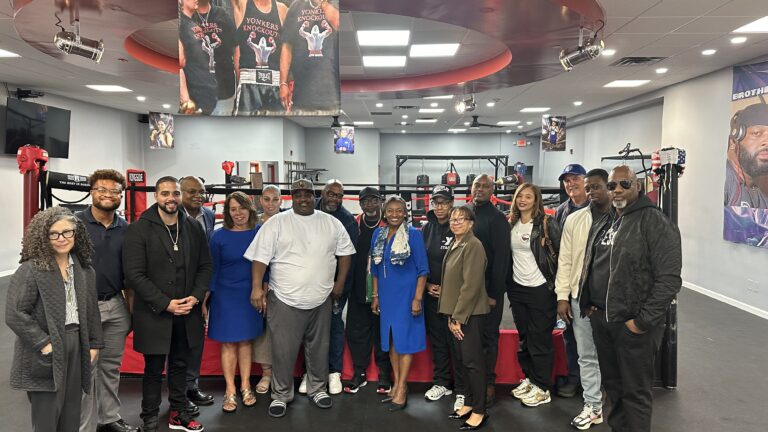
New York State Senate Majority Leader Andrea Stewart-Cousins met with nearly a dozen nonprofit organizations on Wednesday at the Brother 2 Brother Yonkers Knockouts Boxing Studio in Yonkers for a roundtable discussion on how multidisciplinary approaches have been reducing violence and creating a safer New York for all.
“We’re seeing significant progress towards our public safety goals, thanks to the efforts of law enforcement and our community partners – not just here in Yonkers and Westchester, but across New York State,” Majority Leader Stewart-Cousins said.
At Wednesday’s roundtable, Sen. Stewart-Cousins touted a report from the Division of Criminal Justice Services indicating New York has seen a significant statewide decline in gun violence of 28 percent in 2024, with Yonkers seeing a decrease of 56 percent, according to data collected through the New York State Gun Involved Violence Elimination (GIVE) initiative.
Sen. Stewart-Cousins who represents a significant portion of Yonkers, the Town of Greenburgh, and the Town of Mount Pleasant in the 35th NYS Senate District said Wednesday that she recognizes the importance of well-funded law enforcement agencies in the fight against crime, and the key role community organizations play at the local and regional level in further advancing strategies to combat violence and address its root causes in our communities. Sen. Stewart-Cousins, a longtime supporter of violence prevention initiatives in Westchester and across New York State, has been instrumental in securing millions in state funding for dozens of local organizations that are helping make communities safer. Wednesday’s roundtable participants were just some of many who have received funding thanks to Sen. Stewart-Cousins.
Organizations in attendance included African American Men of Westchester, Brother 2 Brother 914, CLUSTER, Grandpas United, the PeaceMobile Team, Ruff Ryders to the Rescue, Warburton, Woodworth and Ravine, Inc., YMCA Yonkers, YWCA Yonkers, and 914 United.
Representatives from participating organizations detailed a host of strategic programming initiatives that reach a diverse audience across Westchester, from children to seniors, across a myriad of disciplines including civil service and criminal justice programs, mental health crisis intervention services, and “credible messenger” programs which provide positive role models and resources for the community. Speakers had the opportunity to speak about their unique programs to fight against violence, and report to Sen. Stewart-Cousins on how their organization is using state funding she delivered to advance those objectives.
“What the Senator brings to us with state funding, is the ability to turn an idea into reality. You can have the best idea in the world but eventually you’re going to need support to turn that idea into a reality, and that’s what Sen. Stewart-Cousins does for us,” said Warburton, Woodworth and Ravine, Inc. director Dwayne Cloud.
Sen. Stewart-Cousins said one of her major takeaways from the roundtable was that participating organizations demonstrated a keen interest in building and maintaining relationships and partnerships with each other.
“So many of the programs and services these organizations provide are complementary and even intersecting, and today’s roundtable not only serves to help share useful information, but also lays the groundwork for new and expanded partnerships and initiatives for the future, and I’m proud to have facilitated this discussion,” Sen. Stewart-Cousins said.
Wednesday’s roundtable was held at Brother 2 Brother 914’s Yonkers Knockouts Boxing gym at 29 S Broadway in Yonkers. Brothers John and Darrell Morrison, the founders and executives of Brother 2 Brother, thanked Sen. Stewart-Cousins for her support.
“Because the Senator has helped us with funding, our community organizations can do so many things,” Brother 2 Brother 914 director John Morrison said. “We’d like to thank the Majority Leader for letting us host today’s event. It was a great event, and all the community leaders came together to say how much we love doing the work that we do.”
“Representation isn’t just about seeing yourself on a screen. It’s about seeing yourself in the divine.”
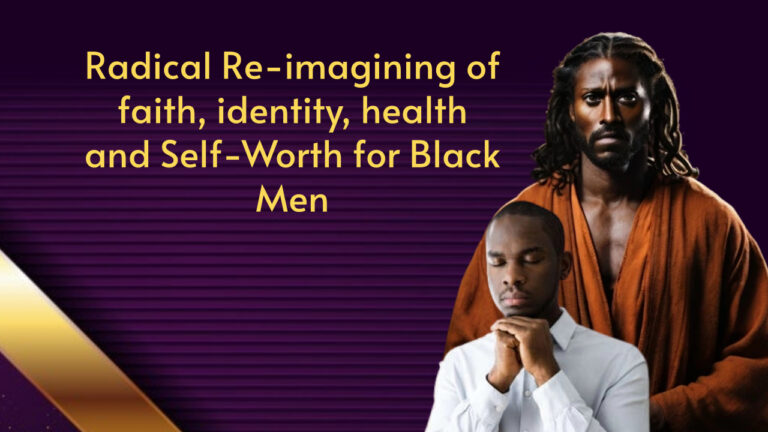
These words, spoken by theologian Dr. James Cone, encapsulate a powerful idea that can potentially transform Black men’s lives across America and beyond. In a world where European depictions have long dominated religious iconography, the concept of a Black Jesus offers a radical reimagining of faith, identity, and self-worth for Black communities, particularly Black men.
It’s important to acknowledge that many people argue that Jesus’s race doesn’t matter, focusing instead on his message and teachings. This perspective emphasizes the universality of Jesus’s love and the idea that his spiritual significance transcends physical appearance. As the Apostle Paul wrote, “There is neither Jew nor Gentile, neither slave nor free, nor is there male and female, for you are all one in Christ Jesus” (Galatians 3:28).
While this view has merit in highlighting the inclusive nature of Jesus’s message, it can inadvertently dismiss the genuine impact that representation has had on Black men since slavery. In a world where whiteness has long been associated with divinity and moral authority, asserting that race doesn’t matter can sometimes serve to maintain the status quo of White Supremacy rather than challenge it. Challenging these oppressive narratives can inspire change and motivate our communities.
The importance of a Black Jesus isn’t about excluding others from Jesus’s teaching or claiming racial superiority. Instead, it’s about creating space for Black people, especially Black men, to see themselves reflected in the highest form of spiritual embodiment their faith tradition offers. When we talk about a ‘Black Jesus ‘, we are not referring to a Jesus who is Black in the modern sense of the term, but rather a Jesus who is more accurately depicted as a person of color, given his life’s historical and geographical context.
This article explores how viewing Jesus as Black can positively impact Black men’s mental and physical health, self-respect, and relationships with Black women. By reclaiming the image of divinity, we open doors to healing and empowerment and ignite a sense of spiritual growth that has too long been closed.
Historical Context
The interpretation of Jesus Christ within the context of Black history has been complex and multifaceted. For centuries, Black men have grappled with conflicting depictions of Jesus, often presented in ways that served the interests of white supremacy and perpetuated systems of oppression. The misinterpretation of Jesus as a means of subjugating Black men from slavery to today is a stark example of how religious iconography has been used to maintain power structures. The empowering narrative of resistance and liberation embraced by figures like Nat Turner and James Cone underscores the need to reevaluate religious iconography.
To understand the significance of a Black Jesus, we must first delve into the historical context. Jesus of Nazareth lived in the Middle East, a region known for its diverse population. While the Bible doesn’t provide a detailed physical description of Jesus, it does offer some clues. In the Book of Revelation, John describes Jesus as having feet ‘like burnished bronze’ and hair ‘like wool’ (Revelation 1:14-15), descriptions that align more closely with African features than the pale-skinned, blue-eyed Jesus that has become standard in Western art.
Jesus was a Black Palestinian, which can be understood through historical and scriptural evidence. In Matthew 21:10-11, when Jesus entered Jerusalem, the city was stirred, and people asked, “Who is this?” The crowd responded, “This is Jesus, the prophet from Nazareth in Galilee.” Nazareth, a significant Palestinian city, is important in Christianity as Jesus’ childhood home.
Historically, the region of ancient Palestine, where Jesus lived, was home to diverse peoples, many of whom were African and Middle Eastern descent. Given the geographical and cultural context, Jesus was likely darker-skinned and more reflective of the area’s Indigenous people at that time. If you look closely at news reports today, you will see people in Palestine who look like they can be from 125th Street in Harlem, Peachtree Street in Atlanta, or Woodward Avenue in downtown Detriot.
The Importance of Representation
The power of seeing oneself reflected in revered figures cannot be overstated. Psychological studies have consistently shown that positive representation can boost self-esteem, increase a sense of belonging, and even improve performance in various areas of life. When it comes to religion—a deeply personal and influential aspect of many people’s lives—this representation becomes not just crucial but a validation of one’s identity and worth. The importance of a Black Jesus in transforming the lives of Black men cannot be underestimated in this context.
For Black men, who often face a barrage of negative stereotypes and limited positive representation in media and society, seeing a Black Jesus can be particularly impactful. It offers a counter-narrative to the often-destructive images presented in popular culture, providing a model of strength, compassion, and divinity that looks like them.
Impact on Mental and Physical Health
The mental health challenges facing Black men in America are well-documented. From the trauma of systemic racism to the pressure of navigating a society that often views them with suspicion, Black men face unique stressors that can take a significant toll on their psychological well-being.
In this context, the image of a Black Jesus can be a powerful source of comfort and strength. It provides a spiritual figure who understands their struggles on a profound level and represents the pinnacle of human virtue and divine love. This representation can help alleviate feelings of alienation and unworthiness that often contribute to mental health issues.
Moreover, faith has long been recognized as a coping mechanism for dealing with stress and trauma. A 2018 study published in the Journal of Religion and Health found that religious belief and practice were associated with better mental health outcomes among Black Americans. By fostering a more personal connection to Jesus through racial representation, Black men may find more incredible solace and resilience in their faith.
Fostering Self-Respect
Perhaps one of the most significant impacts of seeing a Black Jesus is the potential for increased self-respect among Black men. In a society that often devalues Black lives and bodies, the idea that the divine could be embodied in a Black form is revolutionary. It challenges the internalized racism that many Black men struggle with and offers a new paradigm for self-perception. This newfound self-respect can empower Black men and instill a sense of self-assurance.
By identifying with a Black Jesus, Black men can see themselves as inherently worthy of love, respect, and admiration. When seen through this lens, Jesus’s teachings—his compassion, his stand against injustice, his ultimate sacrifice—take on new meaning. They become abstract moral lessons and a blueprint for Black masculine strength and virtue.
This renewed sense of self-respect can have far-reaching effects. It can motivate personal growth, inspire community leadership, and provide the confidence to challenge systemic inequalities. Dr. Martin Luther King Jr. once said, “God is not interested merely in the freedom of black men, and brown men, and yellow men; God is interested in the freedom of the whole human race.” Seeing Jesus as Black doesn’t diminish his universal message – it amplifies it, making it more accessible and personal for Black men.
Black Masculinity through Jesus Christ
In an age of pervasive Black emasculation—evident in our fractured Black culture, discriminatory workplaces, biased American institutions, and even within our own families—embodying the characteristics of a divine Black masculine through Jesus Christ has become paramount. The concept of a Black Jesus offers not just a spiritual anchor but a powerful reframing of Black masculinity that speaks directly to the complex, often oppressive realities of Black men’s lives in America.
Many Black men have distanced themselves from traditional churches, finding them disconnected from the harsh experiences of navigating a racist society. While conventional portrayals of Jesus emphasize love and forgiveness, these attributes alone feel insufficient in the face of systemic oppression. Black men need to connect with a divine figure who understands their struggles and embodies power, dominion, and the strength to overcome adversity.
A Black Jesus provides this multifaceted representation, serving as a blueprint for reclaiming Black masculine identity. He is not merely a symbol of passive compassion but a model of strength in the face of oppression. This image presents a vision of manhood that encompasses both gentle and powerful aspects of masculinity—a crucial counterpoint to societal attempts to strip Black men of their dignity and authority.
In this reimagining, Black Jesus embodies strength through compassion, power through service, and leadership through sacrifice. Crucially, he demonstrates righteous anger against injustice and is unafraid to overturn tables when confronted with corruption. This complex portrayal validates the full range of emotions and experiences Black men face, from nurturing gentleness to justified rage against systemic racism.
In a society that often caricatures Black men as aggressive, hypersexual, or emotionally distant, this nuanced image of Jesus forcefully challenges toxic stereotypes. It offers a vision of manhood that is simultaneously strong and nurturing, assertive and empathetic, forgiving yet uncompromising in the face of wrongdoing. Seeing these multifaceted qualities in a divine figure who looks like them can be profoundly liberating and empowering for Black men.
This reimagining of masculinity through a Black Jesus can help Black men embrace a more holistic and healthy sense of self, countering the emasculation they face in various spheres of life. It encourages them to value both their physical strength and emotional depth, their individual achievements and community responsibilities. Moreover, it provides a spiritual framework for understanding and actively resisting the injustices they face, offering both solace and motivation for transformative action.
By connecting with this multifaceted image of Jesus, Black men can find a faith that not only resonates with their lived experiences but also empowers them to navigate and challenge the oppressive realities they face. In workplaces where their authority is often undermined, a Black Jesus model encourages confidence and assertiveness. Institutions that seek to diminish their worth reinforce their inherent dignity and divine nature. Even within families, where societal pressures may strain traditional roles, this concept of divine Black masculinity offers a blueprint for loving leadership and emotional presence.
Ultimately, embracing the characteristics of a divine Black masculine through Jesus Christ is not just a spiritual exercise—it’s a radical act of self-affirmation and cultural reclamation. It offers Black men a powerful tool to combat the pervasive emasculation they face, providing a model of strength, dignity, and divine authority that is desperately needed in these challenging time.
Improving Relationships with Black Women
The impact of a Black Jesus extends far beyond individual self-perception; it can positively transform Black men’s relationships, particularly with Black women. This transformation becomes even more profound when we consider that many Black men and women have grown up without solid and loving relationships with their fathers. The absence of a positive male role model can profoundly affect one’s ability to form healthy relationships and self-image.
In this context, the image of a Black Jesus takes on additional significance. For those who have lacked a nurturing father figure, Jesus can serve as a divine representation of unconditional love, guidance, and support. Seeing this figure as Black, rather than the traditionally depicted white Jesus, can radically alter how Black individuals view themselves and their worthiness of love and respect.
Jesus’s teachings emphasize respect, love, and equality – principles that are crucial for healthy relationships but are often challenged by societal pressures and stereotypes about Black masculinity. By embracing a spiritual role model who not only embodies these principles but also shares their racial identity, Black men may find it easier to reject toxic notions of masculinity that can harm their relationships. The compassion and emotional openness demonstrated by Jesus in the Gospels provide a counter-narrative to the often-restrictive expectations placed on Black men in American society.
The concept of a Black Jesus offers a powerful tool for transformation in the lives of Black men. By reclaiming divinity in their image, Black men can find new mental and emotional strength sources, foster greater self-respect, and build healthier community relationships.
As we grapple with racial justice and equality issues in our society, the image of a Black Jesus reminds us of the radical inclusivity at the heart of the Christian message. It challenges us to see the divine in every face, to fight against systemic oppression, and to create a world where every person can recognize their inherent worth.
Today, the image of a white Jesus continues to be challenged and deconstructed by Black theologians, artists, and activists who seek to reclaim Jesus’ identity as a person of color. By embracing a Black Jesus, Black men are reclaiming their own identity and agency, rejecting the oppressive narratives that have sought to diminish their humanity. Through the lens of a Black Jesus, Black men find inspiration and empowerment to resist systems of oppression, advocate for justice, and affirm their worth and dignity as children of God.
The misinterpretation of Jesus as a submissive, passive figure has been a tool of oppression used to subjugate Black men throughout history. However, figures like Nat Turner and the emergence of Black Liberation Theology have challenged this narrative, offering a vision of Jesus as a liberator and advocate for the oppressed. By reclaiming the narrative of Jesus and embracing a Black Jesus, Black men find empowerment and liberation, affirming their humanity and agency in the face of systemic injustice.
Eric Adams indictment unsealed: New York mayor charged in campaign contribution scheme
A 57-page five-count federal indictment unsealed on Thursday morning has charged Mayor Eric Adams with 5 felony counts including bribery, wire fraud, and accepting improper campaign contributions.
Adams is specifically charged with bribery, solicitation of illegal foreign campaign contributions, wire fraud and conspiracy to commit wire fraud — charges that expose the mayor to significant prison time if convicted.
“Everyone who knows me knows that I follow campaign rules and I follow the law,” Mayor Adams said at a press conference outside Gracie Mansion surrounded by dozens of supporters and faith leaders including Hazel Dukes, President of the NAACP New York State Conference, after the indictment was unsealed in U.S. District Court in Manhattan. See Adams’ full press conference below.
The mayor said that he was not surprised by the indictments, and vowed to continue his mayoral duties. He said people should question the federal officials who orchestrated Thursday’s events when asked if he believed the investigation was political.
The mayor is accused of taking illegal campaign contributions and bribes from foreign nationals in exchange for favors that included helping Turkish officials get fire safety approvals for a new diplomatic building in the city.
U.S. Attorney Damian Williams says Adams engaged in “long-running” corruption involving bribes from foreign nationals dating back nearly a decade.
Speaking at a news conference at his Manhattan office, Williams detailed the allegations of bribery and illegal campaign contributions. Williams also said the investigation continues and more people “will be held accountable.” (See Williams full press conference below).
The indictment says a “senior official in the Turkish diplomatic establishment” facilitated illegal campaign donations to Adams, and also arranged for the mayor and his companions to receive free or discounted travel on Turkey’s national airline, which is owned in large part by that country’s government, to France, China, Sri Lanka, India, Hungary and Turkey.
In September 2021, the indictment alleges, the Turkish official told Adams “that it was his turn to repay” that official by pressuring the New York City Fire Department to facilitate the opening of a new Turkish consulate building, which is 36-stories-tall, “without a fire inspection, in time for a high-profile visit by Turkey’s president.”
“At the time, the building would have failed an FDNY inspection,” the indictment says.
Adams “did as he was instructed,” and an FDNY official “was told that he would lose his job if he failed to acquiesce,” the indictment says.
The building then opened as requested, according to the indictment.
“I look forward to defending myself and defending the people of this city, as I’ve done throughout my entire professional career,” Adams said outside Gracie Mansion while flanked by supporters, after the indictment was unsealed in U.S. District Court in Manhattan.
The indictment says Adams, a 64-year-old former police captain, received more than $10 million in public matching funds for campaign contributions by using so-called straw donors in the United States to hide the fact that he was accepting foreign campaign contributions, (see entire indictment below).
After news of the indictment broke, a growing number of elected officials and other political figures in New York also called on Adams to step down, among them city Comptroller Brad Lander and state Sen. Zellnor Myrie, who are both running for mayor next year, and former Comptroller Scott Stringer, who is weighing a run for City Hall. City council members including Tiffany Cabán, Alexa Avilés, Shekar Krishnan, Lincoln Restler, Chris Banks and Bob Holden have also called on Adams to resign.
Congresswoman Alexandria Ocasio-Cortez also called for Adams’ resignation Wednesday night after the indictment was announced. Ocasio-Cortez said that after the resignation of several city officials, including the police commissioner, “I do not see how Mayor Adams can continue governing New York City. “For the good of the city, he should resign,” Ocasio-Cortez said.
Several protesters clashed with Mayor Eric Adams’ supporters at the press conference after his federal indictment was unsealed. “He deserves to be in handcuffs … he made the city dirty,” the hecklers shouted. The demonstrators called Adams “corrupt” and an “embarrassment to black people” as NAACP president Hazel Dukes attempted to defend Adams.
Eric Adams vowed he would not resign, saying the charges are ‘based on lies.’ He also emphasized that he will continue to lead the city.
If Adams is forced out of office or resigns before his first term in office ends, he will be succeeded by New York City Public Advocate Jumaane Williams as acting mayor and would need to hold an election within 80 days.
House Minority Leader Hakeem Jeffries, D-N.Y. is the Democratic leader of the U.S. House and a New Yorker.
“Like every other New Yorker and American, Eric Adams is entitled to the presumption of innocence. That principle is central to the administration of justice in the United States of America,” Jeffries said in a statement. “A jury of the Mayor’s peers will now evaluate the charges in the indictment and ultimately render a determination. In the meantime, I pray for the well-being of our great City.”
In recent years, high-profile police shootings have shaken public confidence in the ability of our justice system to hold law enforcement accountable. The issue of who investigates and prosecutes these cases has become a focal point for advocates, policymakers, and concerned citizens alike. In New York State, the Attorney General (AG) currently serves as the special prosecutor in cases involving police shootings of unarmed civilians. While this setup may seem logical, it is not without significant flaws. To restore and strengthen public trust, it’s time to change the system: the power to appoint an independent prosecutor should move from the Attorney General to the Governor’s office.
The rationale for this shift is clear. While the AG’s office undoubtedly plays a critical role in upholding the law, the fact that the Attorney General is an elected official introduces an inherent conflict of interest. This conflict lies not in personal bias or lack of capability, but in the pressures of political accountability and the need to maintain public favor for re-election. When an elected official, even one as capable as the AG, investigates cases involving law enforcement, there will always be a shadow of doubt: Are political considerations influencing the investigation? Could the outcome be swayed by a desire to maintain relationships with powerful police unions or other political forces? Public confidence demands that these questions be put to rest—and that can only happen with a truly independent special prosecutor, appointed by the Governor, who is free from electoral concerns.
Independence Over Politics
The Attorney General’s role as both a law enforcer and an elected official creates a tension that is impossible to ignore. Even if the AG conducts a fair and unbiased investigation, the perception of potential political influence can undermine public trust in the outcome. In a democracy, perception often carries as much weight as reality. The appearance of independence is just as important as actual impartiality when it comes to restoring faith in the justice system.
The appointment of an independent special prosecutor by the Governor would eliminate the direct political pressures that elected officials face. Unlike the AG, who must balance their prosecutorial duties with the demands of electoral politics, an independent prosecutor could focus solely on the facts and the law, unencumbered by political calculations. This would send a powerful message to the public: that justice is being pursued with integrity, free from external pressures.
Specialization and Focus
Another key advantage of shifting the power of appointment to the Governor lies in the ability to choose a prosecutor with specific expertise and focus. Independent prosecutors appointed on a case-by-case basis can be selected for their particular experience in handling complex investigations, including those involving police misconduct. The AG’s office, while well-resourced, handles a wide range of legal duties, from consumer protection to environmental enforcement. By contrast, an independent prosecutor appointed solely for the purpose of investigating a police shooting can devote undivided attention to the case.
This singular focus ensures that the prosecutor is not juggling multiple political or legal obligations. Instead, they are tasked with thoroughly investigating the specific incident, reviewing evidence, and determining whether charges should be brought without distraction or competing interests.
Conflict of Interest Concerns
While the AG is independent of local district attorneys, the office still maintains ongoing relationships with law enforcement agencies throughout the state. The AG’s office often works closely with these agencies on a variety of cases, which can lead to an inherent conflict of interest. How can the same office that defends law enforcement in some matters also be expected to hold officers accountable in others? Even when the AG’s office acts with full integrity, the close relationship with law enforcement presents a conflict that may erode public trust.
An independent prosecutor, by contrast, would not be subject to these same relationships or entanglements. They would come to the case with fresh eyes and no prior working relationship with the officers or departments under investigation. This distance is crucial for ensuring that the investigation is seen as impartial and untainted by any previous alliances or cooperation.
Public Trust and Transparency
The central goal of any investigation into police shootings must be to pursue justice and truth, but public perception is critical. As protests in cities across the nation have shown, there is a deep and widespread mistrust of the current systems in place to investigate police misconduct. If the public does not believe in the impartiality of the investigation, the result will be continued unrest and further erosion of trust in our institutions.
By appointing an independent prosecutor from outside the AG’s office, we can take a meaningful step toward rebuilding that trust. A special prosecutor chosen by the Governor—someone who has no political stake in the outcome—would demonstrate a commitment to transparency and accountability. Such an appointment would signal that the state is serious about holding law enforcement accountable, regardless of political or institutional relationships.
Conclusion: A Path Forward
The time has come to reconsider how New York handles investigations into police shootings. The current system, which places the Attorney General in the role of special prosecutor, is flawed—not because of any failure on the part of the AG’s office, but because of the inherent conflicts that come with being an elected official.
By shifting the responsibility of appointing independent prosecutors to the Governor, we can ensure that these sensitive and critical investigations are handled with the impartiality, focus, and transparency that the public deserves. New York should seize this opportunity to lead the way in reforming how we hold law enforcement accountable, ensuring that justice is served, and that the public can once again trust the institutions sworn to protect them.
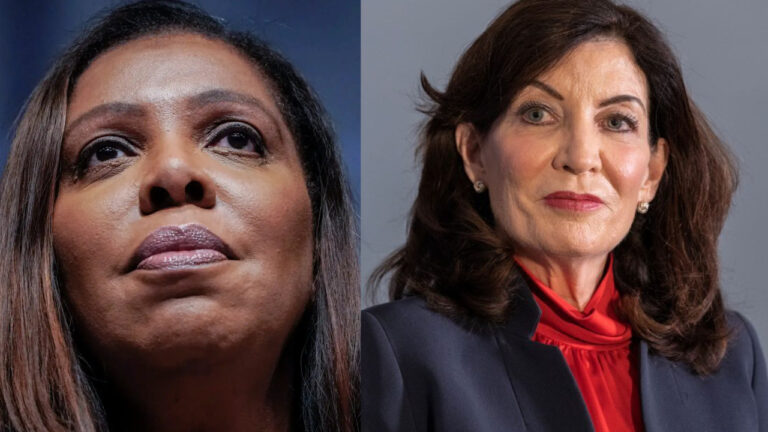
The recent report from the New York State Attorney General Tish James (see below), Office of Special Investigation (OSI) sheds critical light on the fatal shooting of Mr. Garris by Detective Conn.
According to the OSI’s findings, the circumstances leading to Mr. Garris’s death raise significant concerns about the proportionality of the force used. The report details that, despite claims from Detective Conn that Mr. Garris was attempting to seize Officer Bird’s firearm, other evidence, including Officer Bird’s testimony, contradicts this narrative.
The OSI’s investigation highlights that less lethal alternatives were available, and the threat level perceived by Detective Conn did not warrant the use of deadly force. These findings prompt a necessary reexamination of how and when police officers are justified in using lethal measures, mainly when dealing with individuals who may be in vulnerable states.
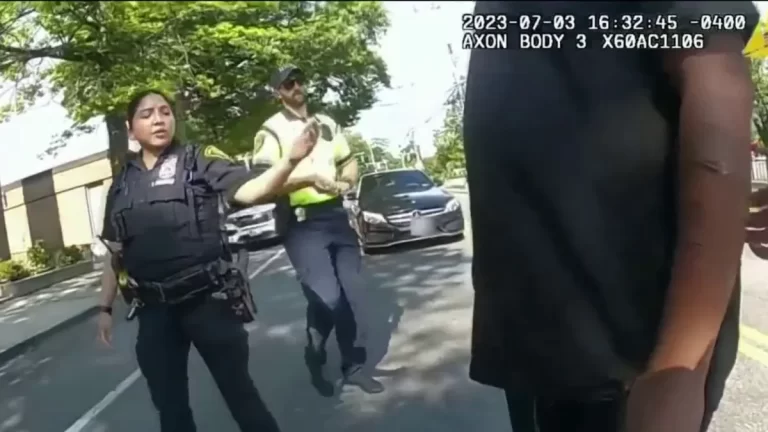
First, let’s consider the testimony of Officer Bird, who was directly involved in the struggle with Mr. Garris. Officer Bird clarified that Mr. Garris did not attempt to grab her firearm. Yes, her holster’s hood was down, but this doesn’t imply that her weapon was ever in imminent danger of being taken. She explained that her holster required multiple deliberate actions to remove the firearm, actions that never occurred during the encounter. Furthermore, despite Detective Conn’s frantic shout of “gun,” Officer Bird did not see one. The absence of any clear and present danger significantly undercuts the narrative that Mr. Garris was about to seize a weapon. This raises a troubling question: What exactly did Detective Conn perceive as a lethal threat?
It is particularly troubling that Officer Bird or Officer Chavarry, or both, had recently completed training in de-escalation techniques at the Westchester County Police Academy, specifically for handling mental health crises. Officer Chavarry even told Detective Conn, “He’s good,” indicating that the situation was under control. Yet, for reasons unknown, Detective Conn disregarded their assessments and escalated the situation. We are left wondering why Detective Conn, despite having two officers on the scene and at least one with relevant training, failed to follow their lead in handling Mr. Garris.
The use of deadly force requires the presence of an immediate and overwhelming threat. No weapon was visible in control of Mr. Garris in this case, and neither Officer Bird nor Officer Chavarry was in danger of losing their lives. While it is true that Mr. Garris resisted arrest, resistance—especially from someone who appeared disoriented and possibly experiencing a mental health crisis—does not justify escalating to the most extreme measure of lethal force.
Law enforcement officers should be trained to de-escalate situations, use force proportionately, and reserve deadly force for when lives are at imminent risk. In this instance, Mr. Garris’s non-compliance has been misinterpreted as a direct threat rather than a challenge that could have been managed without deadly force.
It’s crucial to consider the missed opportunities for de-escalation in this case. Detective Conn’s command to ‘Taser him’ indicated his belief that a non-lethal option was appropriate. However, instead of allowing the situation to de-escalate or ensuring the Taser could be used effectively, the situation tragically escalated to gunfire. This sudden decision to shoot seems premature, especially given the lack of clear evidence that Mr. Garris was about to harm anyone. These missed opportunities underscore the urgent need for policy changes to ensure that non-lethal methods are considered.
Moreover, Officer Bird’s command of “Stop, Steve, stop” reveals an important nuance. While she couldn’t recall the precise reason for saying it, the phrase suggests an effort to de-escalate the struggle or coordinate with Detective Conn. At that moment, there was likely a chance to regroup, refocus, and control the situation without lethal force. Instead, that opportunity was lost.
Finally, Detective Conn’s prior encounter with Mr. Garris should have led to a different approach. Having interacted with him before, Detective Conn believed Mr. Garris might have been under the influence of drugs or experiencing a mental health crisis. This understanding should have guided the officers toward de-escalation and caution, not violence. Instead, the situation took a fatal turn that, in hindsight, seems tragically avoidable.
Yet, for reasons not fully explained in their report, Attorney General Tish James and her office have declined to bring charges against Detective Conn. This decision leaves a troubling gap in accountability, especially when the facts of the case strongly suggest that Mr. Garris’s death could have been avoided. While the Attorney General’s office may have refused to act, the responsibility to correct this injustice now rests with New Rochelle’s law enforcement officials and elected representatives. They can address this issue by removing Detective Conn from his duties. Failing to do so would send a dangerous message that unjustified deadly force can go unpunished.
Ultimately, Mr. Garris’s noncompliant and physically resistant behavior did not present the imminent danger that justifies a lethal response. The facts paint a picture of an encounter where deadly force was not only unnecessary but preventable. This incident should serve as a stark reminder of the need for restraint in policing, especially when dealing with individuals who may be vulnerable due to mental health or substance-related issues. It’s a regrettable situation that demands corrective action.
Unfortunately, this incident is not isolated for the city of New Rochelle and its police leadership. There has been a troubling pattern and practice of officers using massive or deadly force in situations that did not warrant it. The shooting of Mr. Garris is part of a more significant issue within the New Rochelle Police Department, where excessive force seems to be more of a norm than an exception. When will there be a fundamental shift in mindset and policy changes to address this deeply ingrained culture of overreaction? The time for reform is long overdue, and the leadership of New Rochelle must take decisive steps to ensure this type of tragedy never happens again.
The shooting of Mr. Garris should prompt all of us, including law enforcement, to reflect intensely on when and why deadly force is used. If we are serious about building trust between the police and the communities they serve, we must hold officers to the highest standard regarding the sanctity of human life. Mr. Garris deserved a chance for his life to be preserved—not taken in an instant due to overreaction. This incident underscores the critical importance of this issue and the need for immediate action.New Rochelle officials can still right this wrong by taking swift action. Dismissing Detective Conn of his duties as a police officer would be crucial to rebuilding trust and ensuring accountability in policing practices. Without such action, the community will question whether justice is served when the badge is involved.