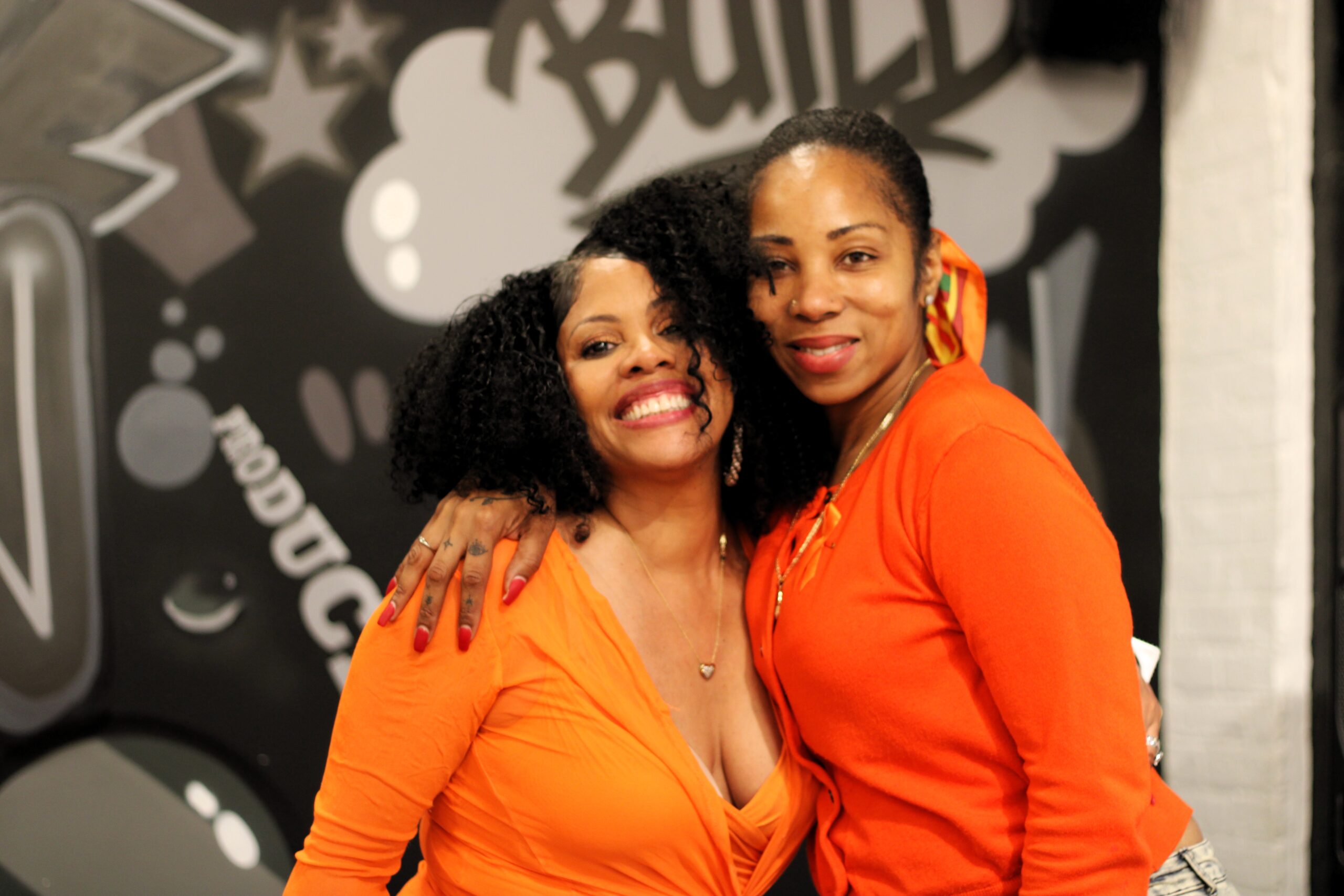
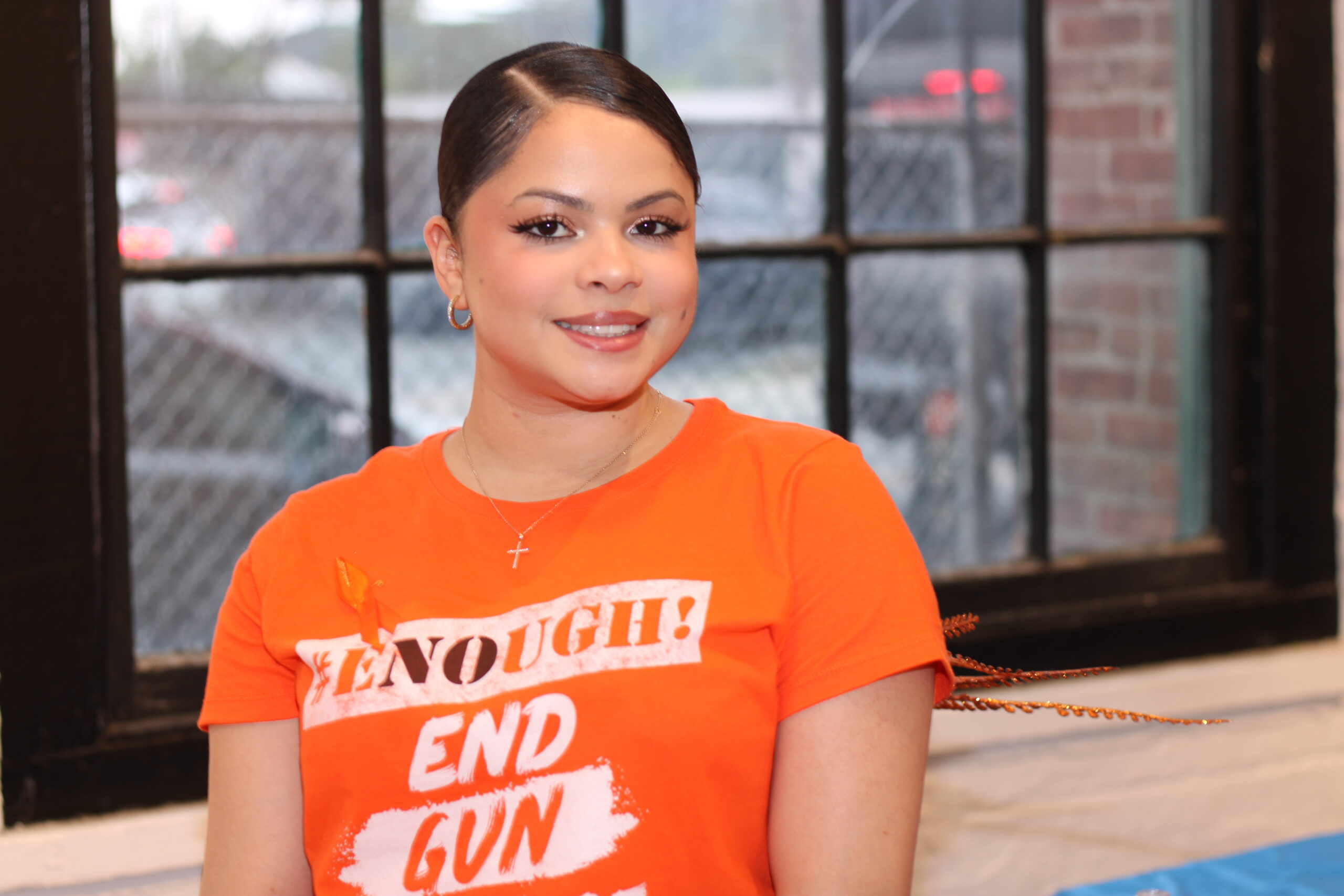
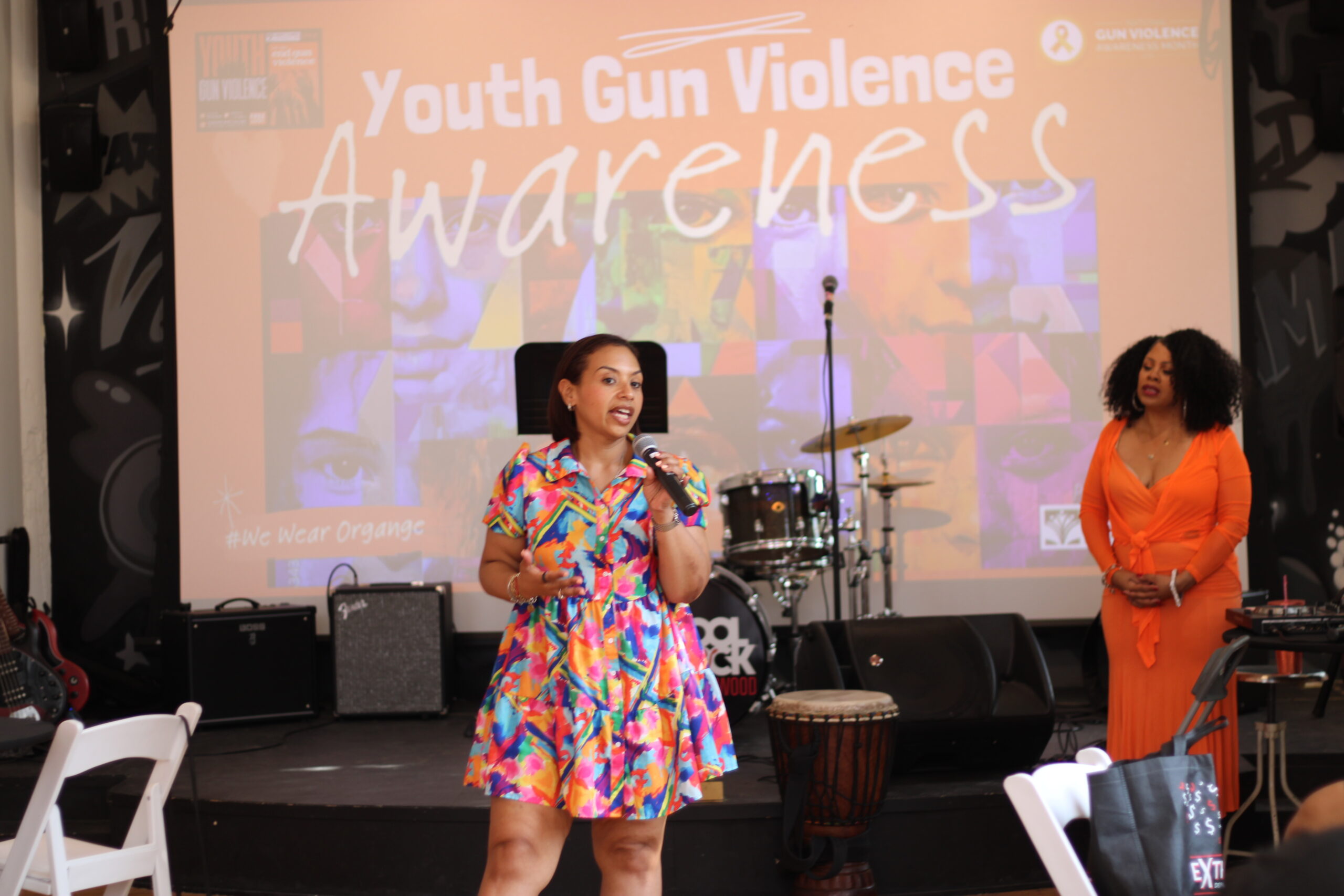
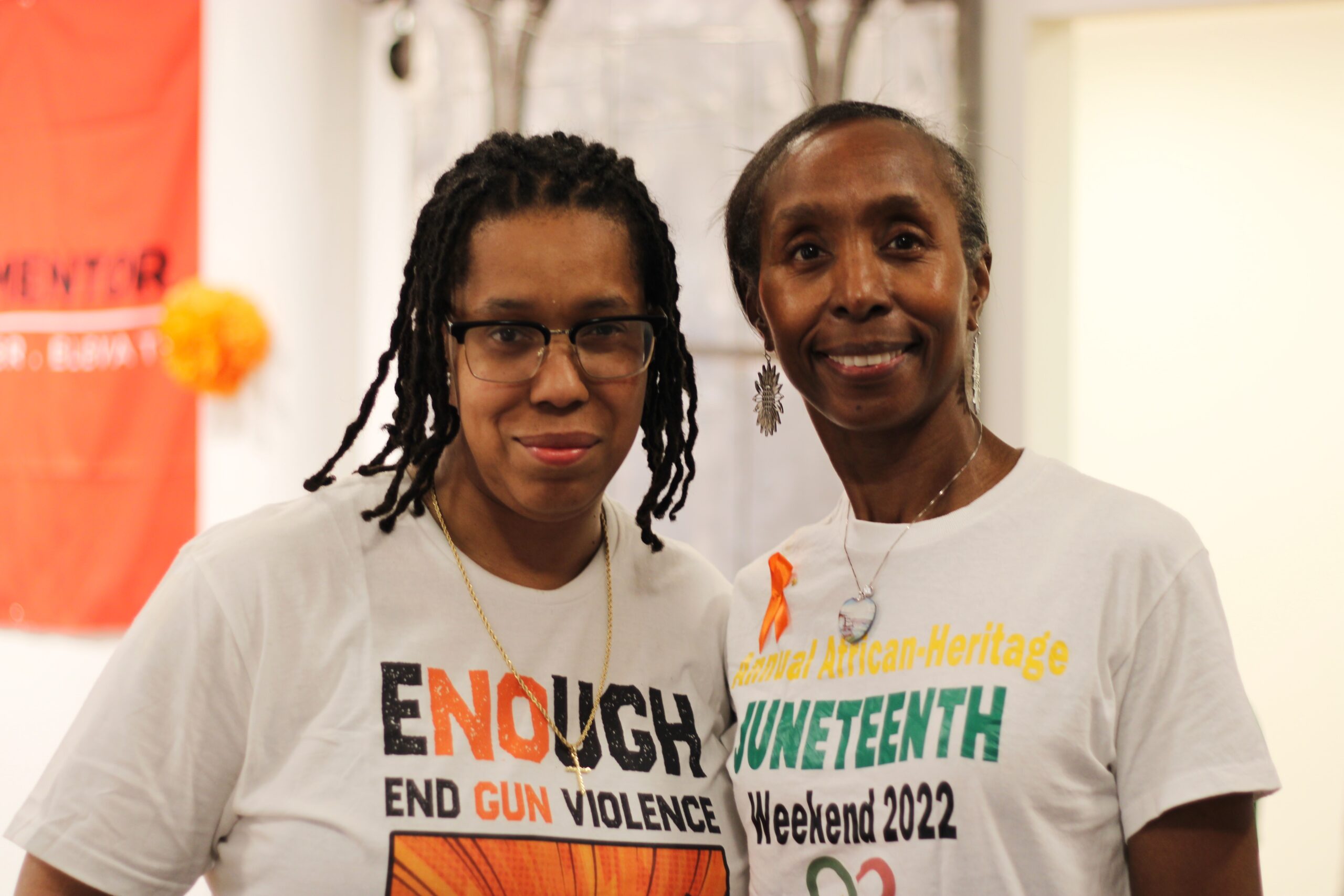
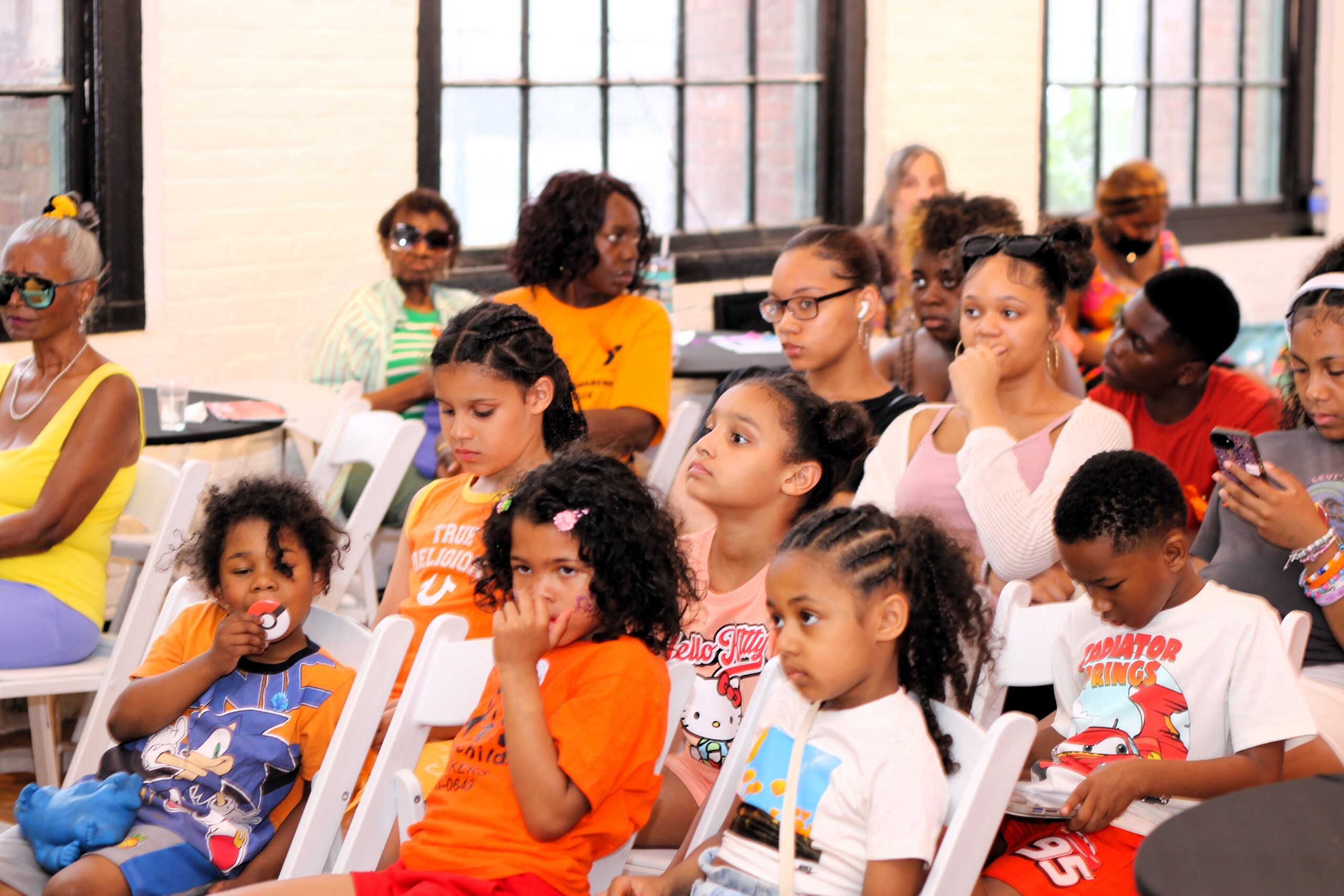
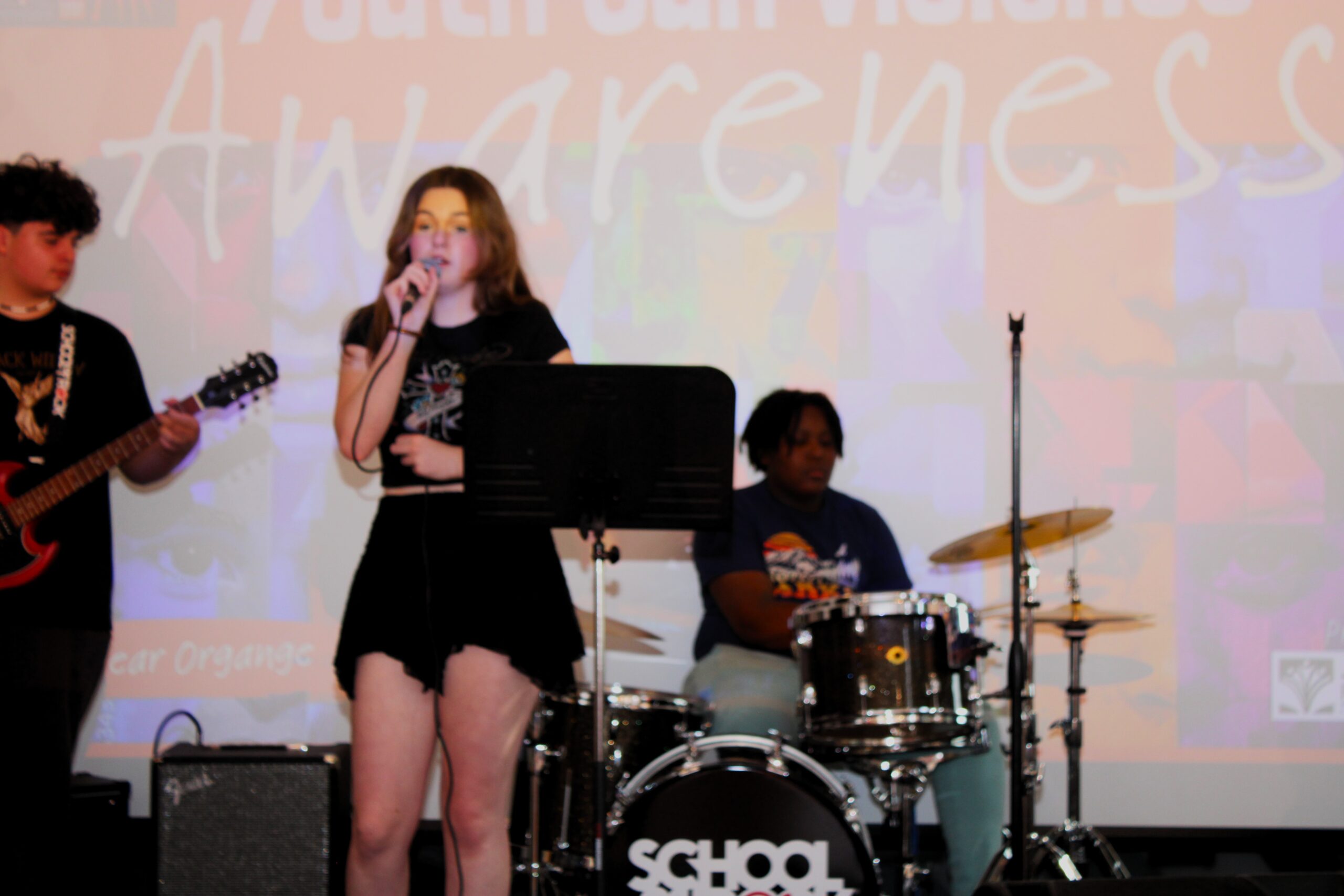
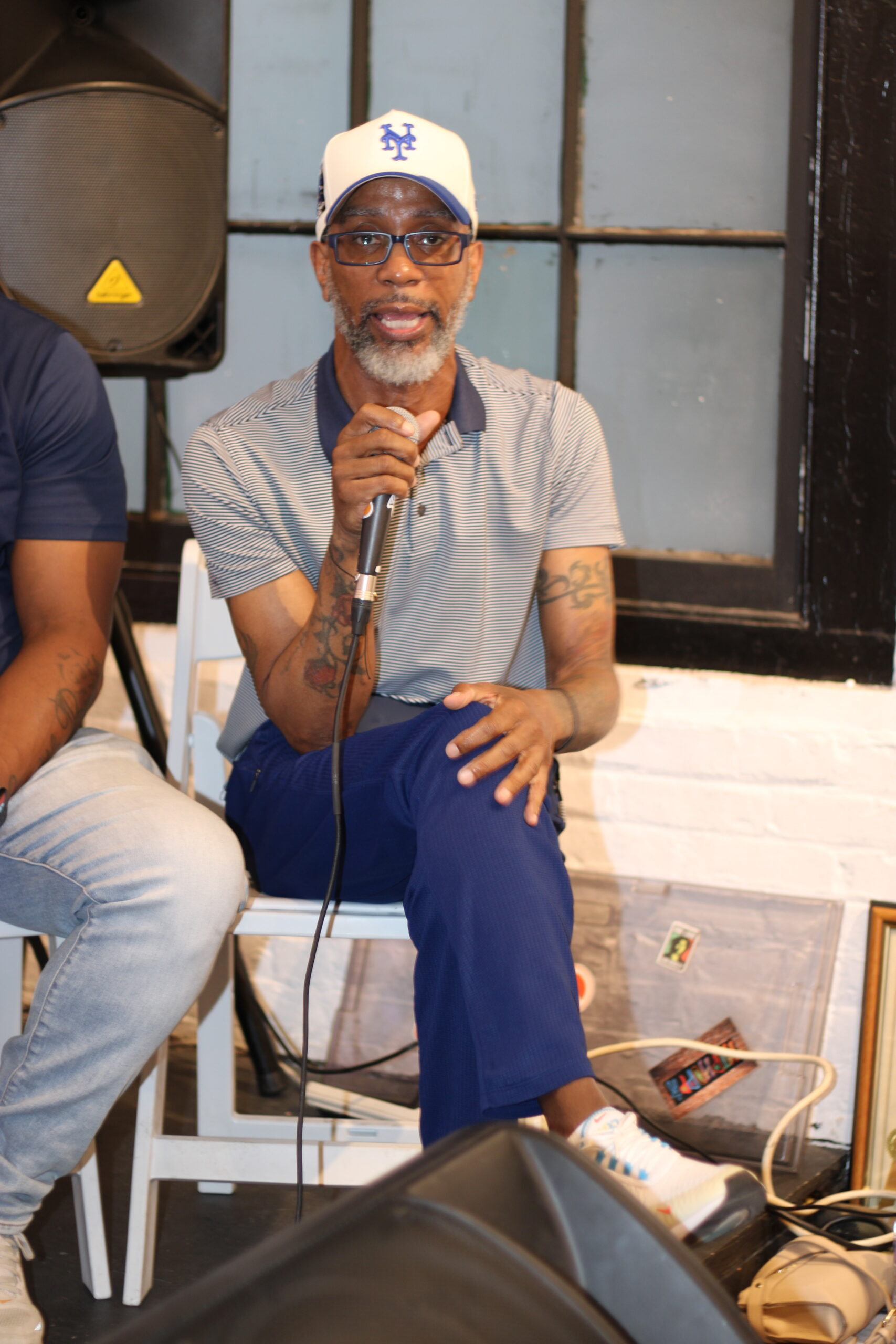
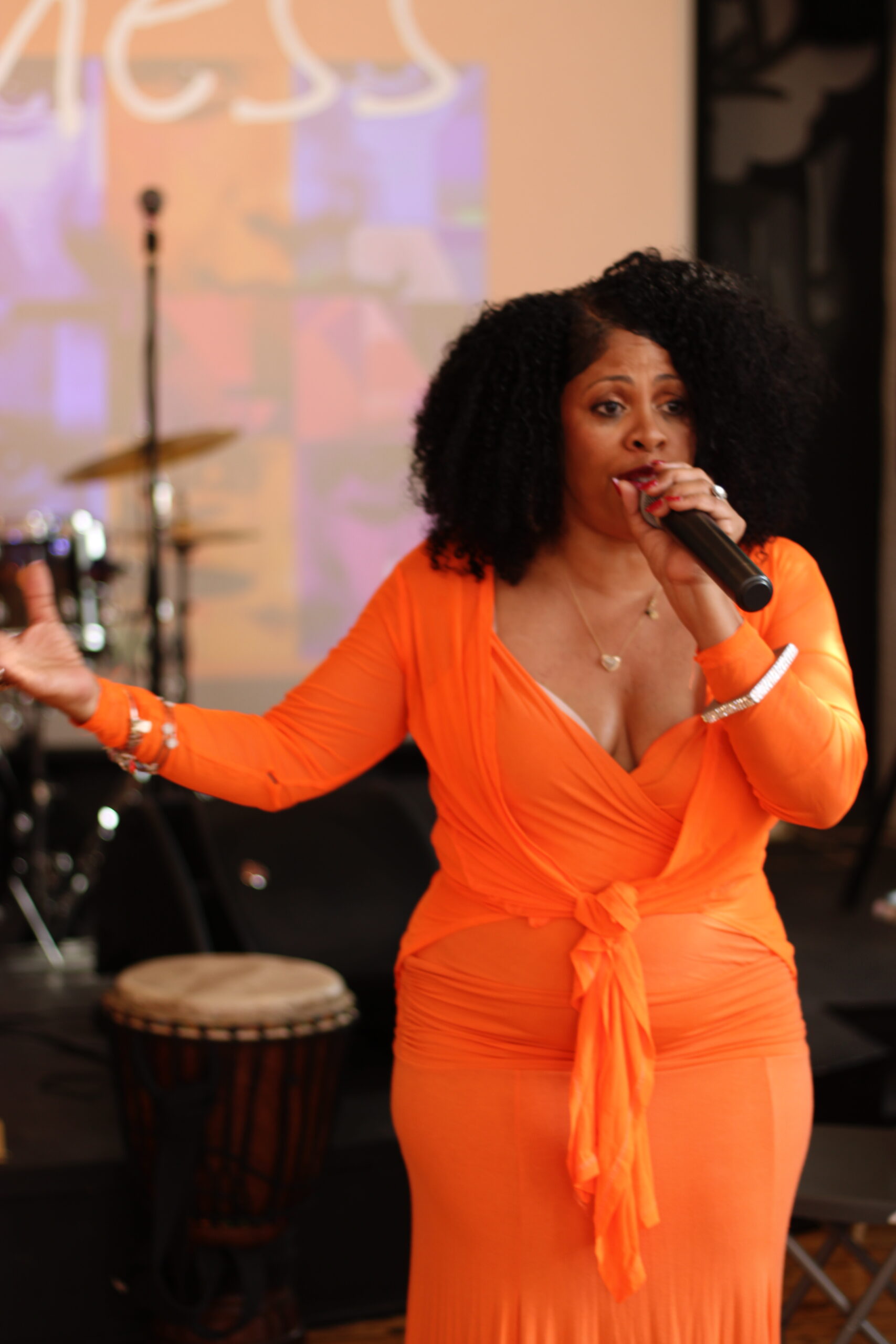
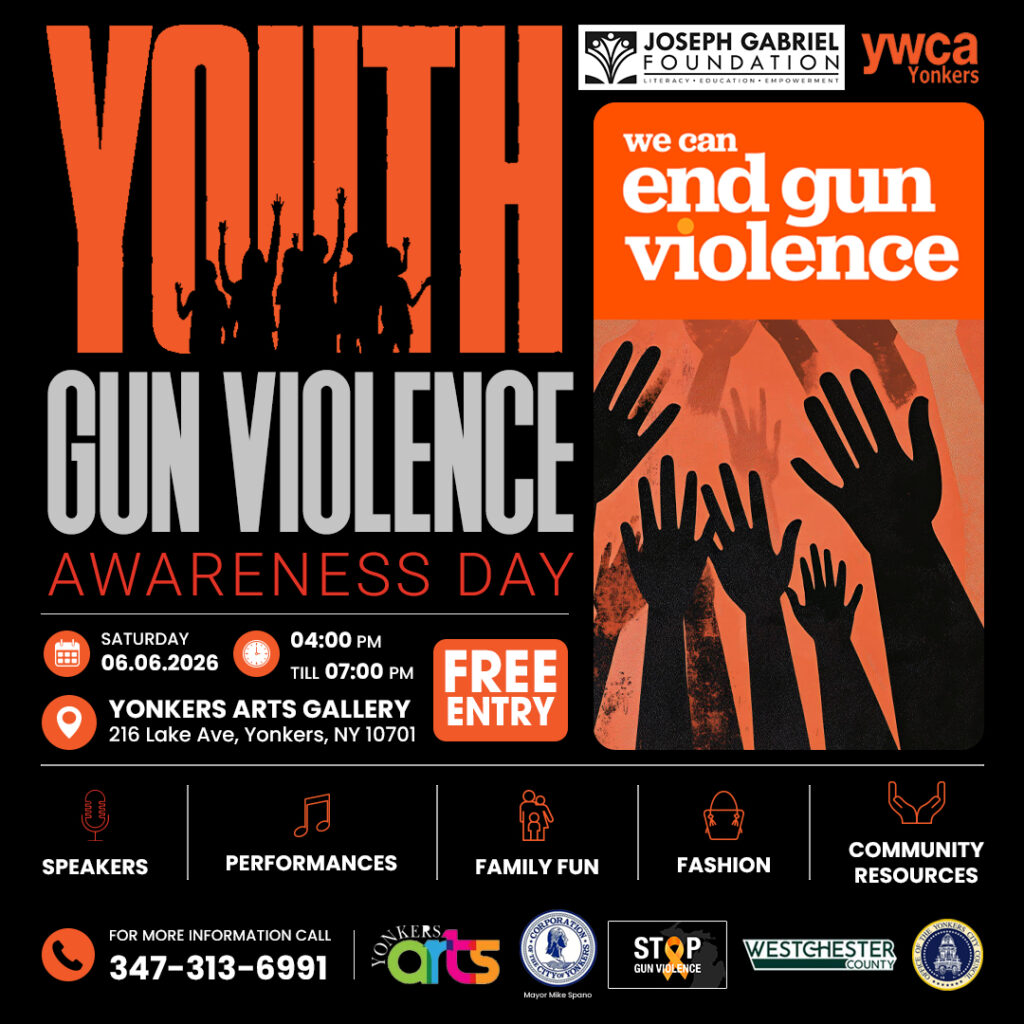
The Joseph Gabriel Foundation, in partnership with Yonkers YWCA and the YMCA SNUG Anti-Gun Violence Unit, recently hosted a Youth Violence Prevention Forum focused on addressing the growing impact of gun violence on young people and communities. The event brought together youth, community leaders, educators, law enforcement representatives, advocates, and residents for an important conversation on prevention, intervention, mentorship, and creating safer neighborhoods for future generations.
The month of June represents various causes, and one of them is National Gun Violence Awareness Month.
For decades, the YWCA of Yonkers has been one of the main organizations in Westchester County at the Forefront of Community Advocacy against gun violence!!
On Saturday, June 6th, this artistic and informative event was held at Yonkers Arts Gallery, located at 216 Lake Ave in Yonkers.
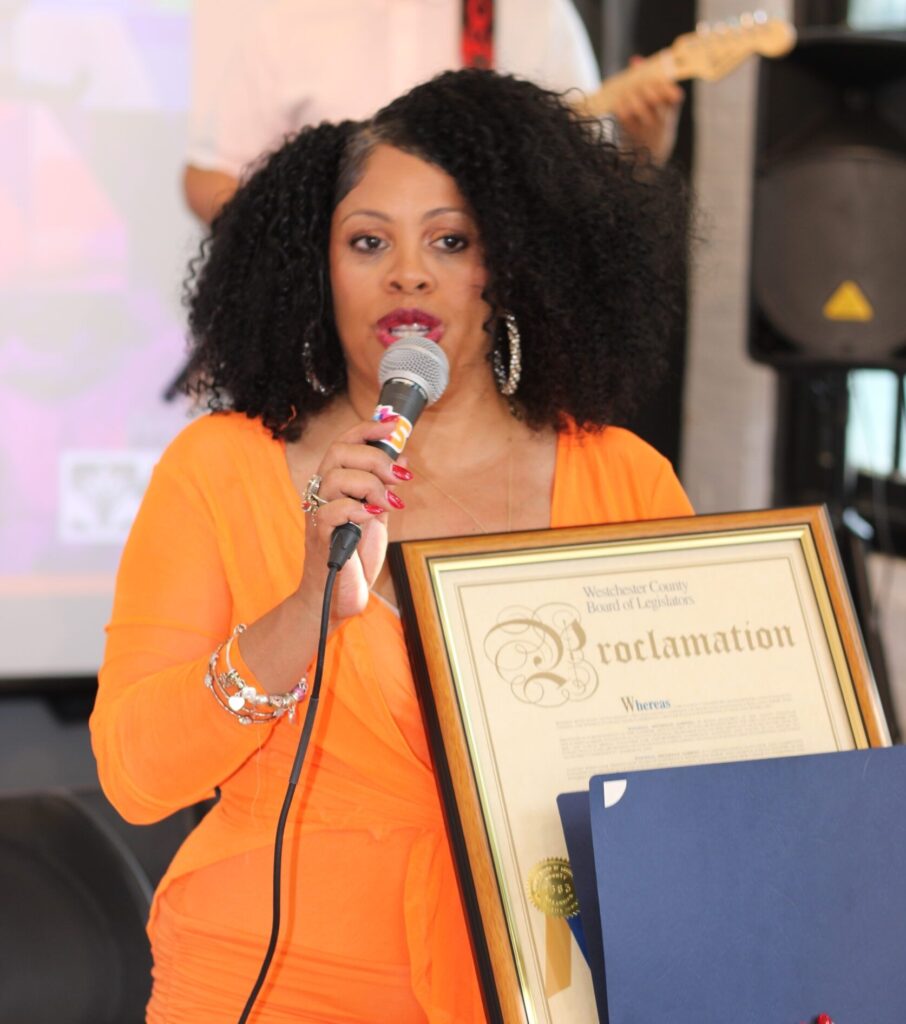
The MC & Organizer, Michelle Gabriel, President of the Joseph Gabriel Foundation, reminded everyone at the event,
“All over the world, young people are really caught in the gap of gun violence, and we need to come together as a community. No matter what color or race, because a bullet has no color. It can be aimed at anyone”.
Yonkers City Councilwoman Tasha Diaz spoke about her personal experience with gun violence. The free event included music (live music by The School of Rock), a dynamic panel discussion featuring nine community leaders, law enforcement, and community groups that offered instructional materials and food. 12 News’ Carol Wilkinson kindly covered the event.
Organizers emphasized that ending gun violence requires a collective community effort that includes families, schools, faith-based organizations, law enforcement, and local stakeholders working together. By providing young people with resources, support systems, and opportunities, the forum aimed to inspire positive change and empower the next generation to become part of the solution in building a safer Yonkers.
It was clear based on the narrative at this event that gun violence is a National problem that is Preventable through collective community advocacy and involvement!!
The Heart of New York Beats in Westchester: Knicks Rally for Historic Game 4 Victory
I am officially out of adjectives to describe these New York Knicks during this historic playoff run.
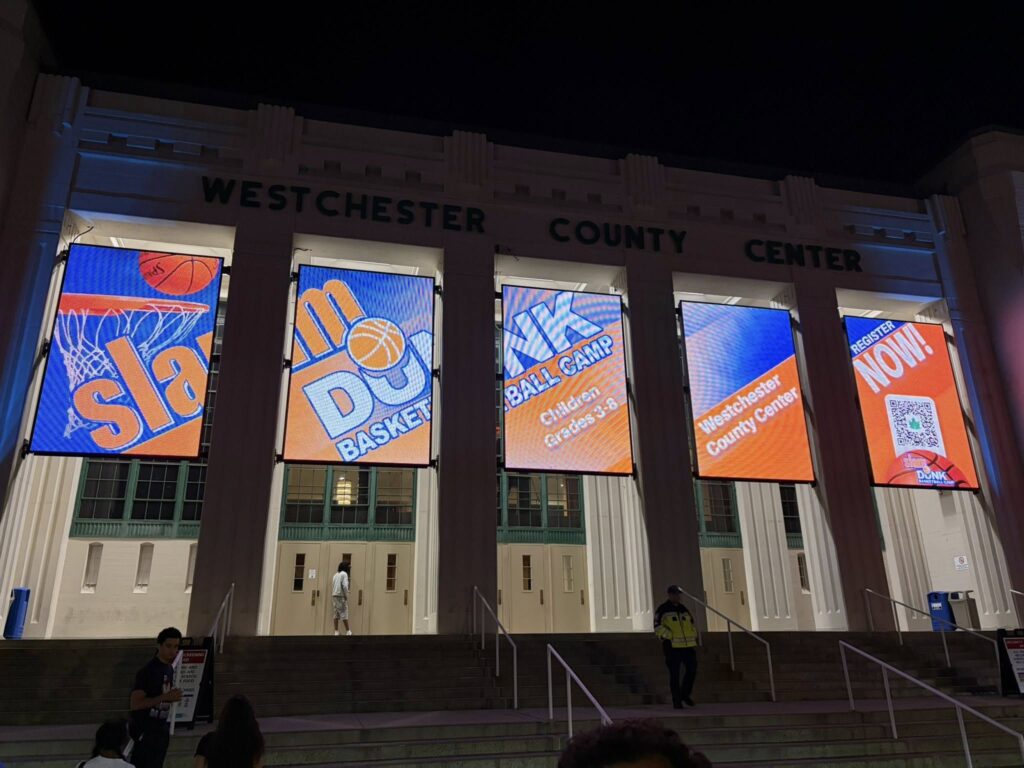
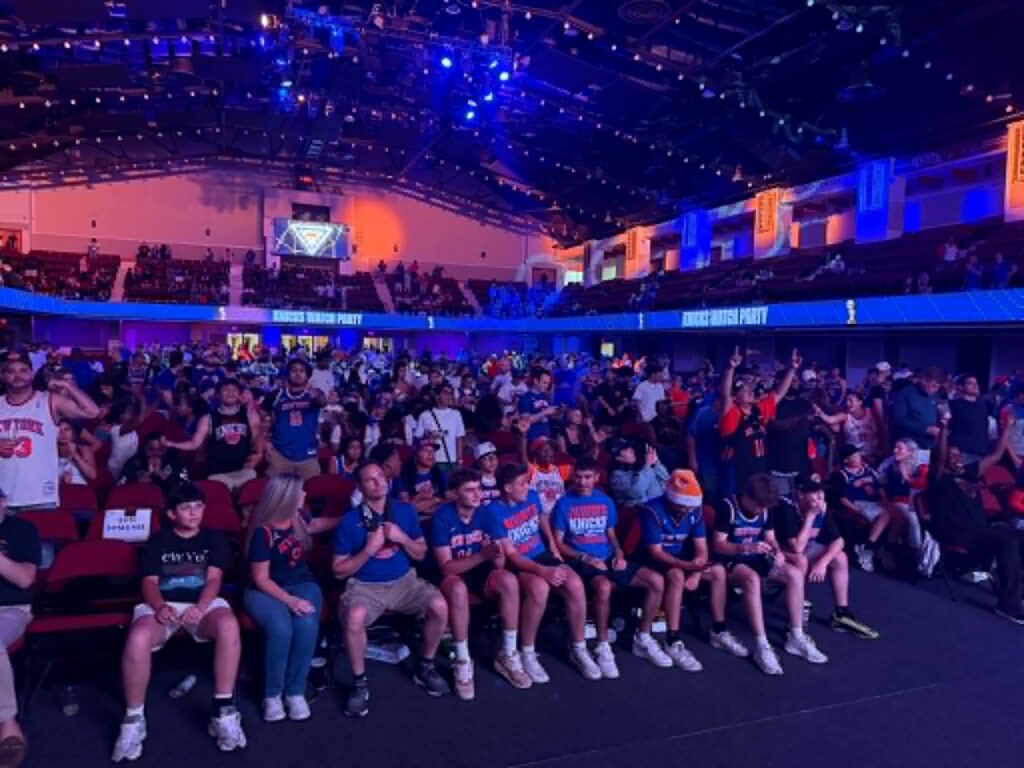
On Wednesday night at The Westchester County Center (home of the Westchester Knicks), thousands of fans gathered to watch Game 4 of the 2026 NBA Finals, and what we witnessed will be talked about for generations. They will make an ESPN 30 For 30 documentary about this NBA Finals game. Just when it appeared the Knicks were on the verge of letting a pivotal game slip away, they once again showed the resilience, toughness, and championship heart that have defined this magical postseason journey.
As the deficit grew, the energy inside The County Center shifted from excitement to concern. A large portion of the crowd left at halftime, but for the majority who stayed, no one gave up, and most importantly, neither did the Knicks. Possession by possession, stop by stop, basket by basket, New York clawed its way back into the game before completing one of the most remarkable comebacks in NBA Finals history.
The Knicks’ historic Game 4 comeback was reminiscent of one of the greatest comebacks in sports history—Muhammad Ali’s stunning victory over George Foreman in the 1974 “Rumble in the Jungle.”
For much of Wednesday night’s game, the Spurs appeared to be in complete control, much like the younger, stronger Foreman seemed destined to overpower Ali. But just as Ali absorbed Foreman’s punishment while patiently waiting for the right moment to strike, the Knicks weathered every Spurs run without panic. They bent, but they never broke.
Then came the rally.
Like Ali exploding off the ropes in the eighth round and shocking the boxing world, the Knicks suddenly turned the game on its head. What had looked like a certain defeat transformed into an unforgettable victory as New York delivered blow after blow down the stretch, leaving the Spurs stunned and Knicks fans across the country in disbelief.
The difference, of course, is that Ali only needed one night to shock the world. The Knicks still have one more round to go. The championship belt is within reach, but just like Ali understood before the final bell rang in Zaire, the fight isn’t over until the job is finished.
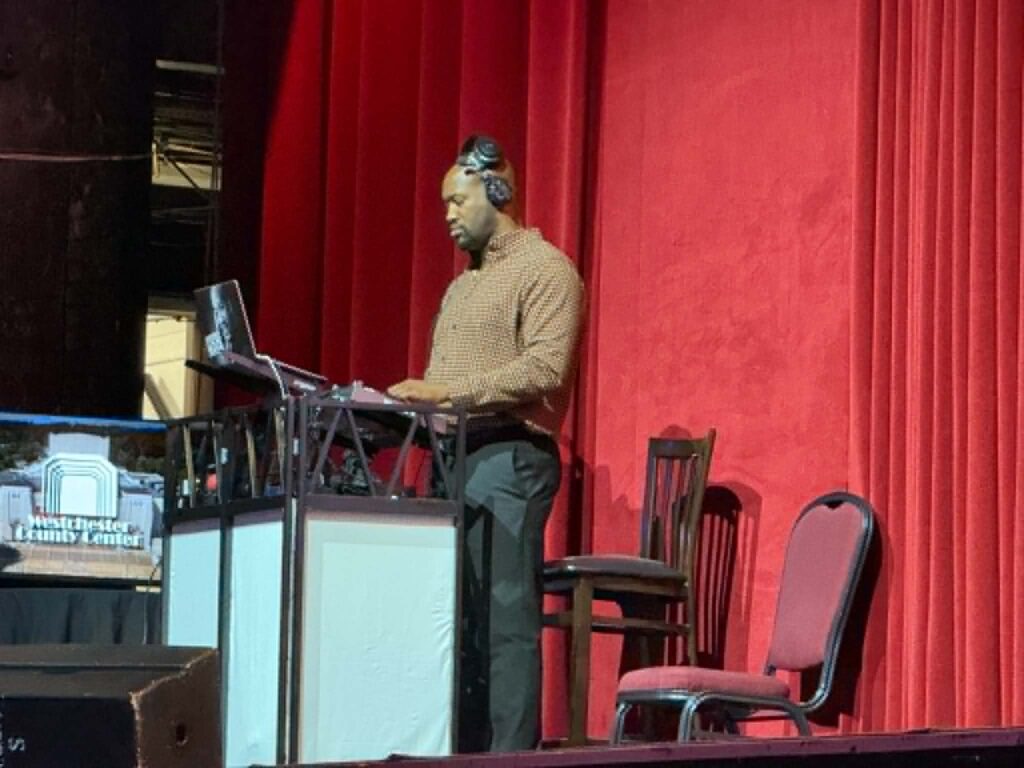
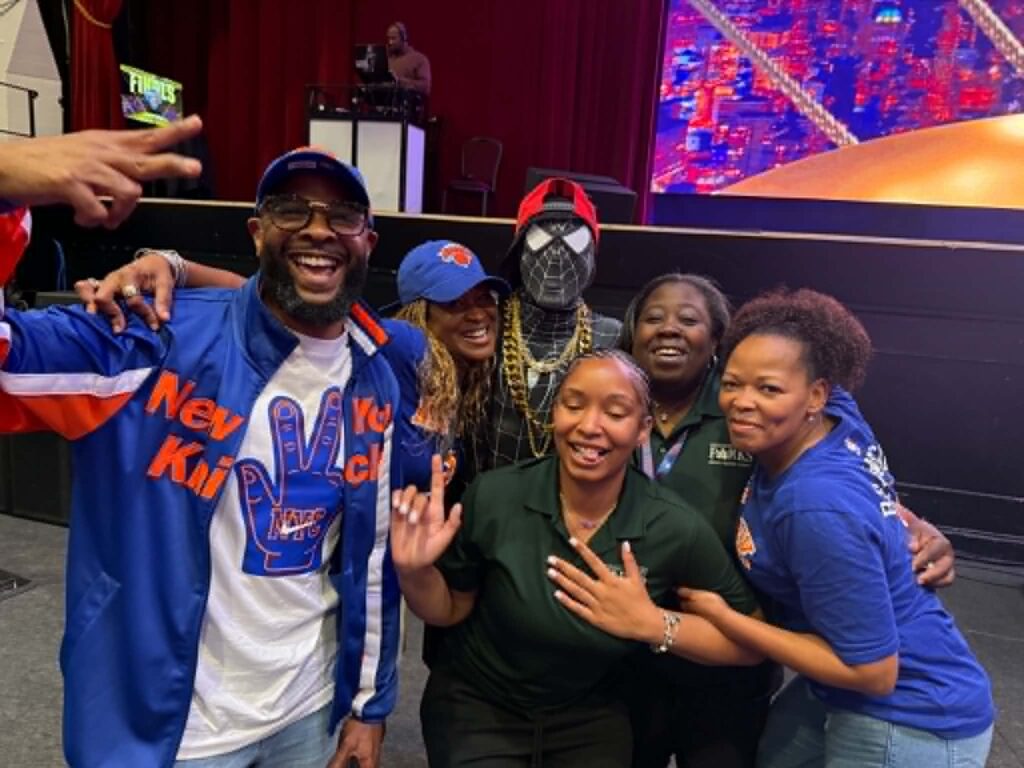
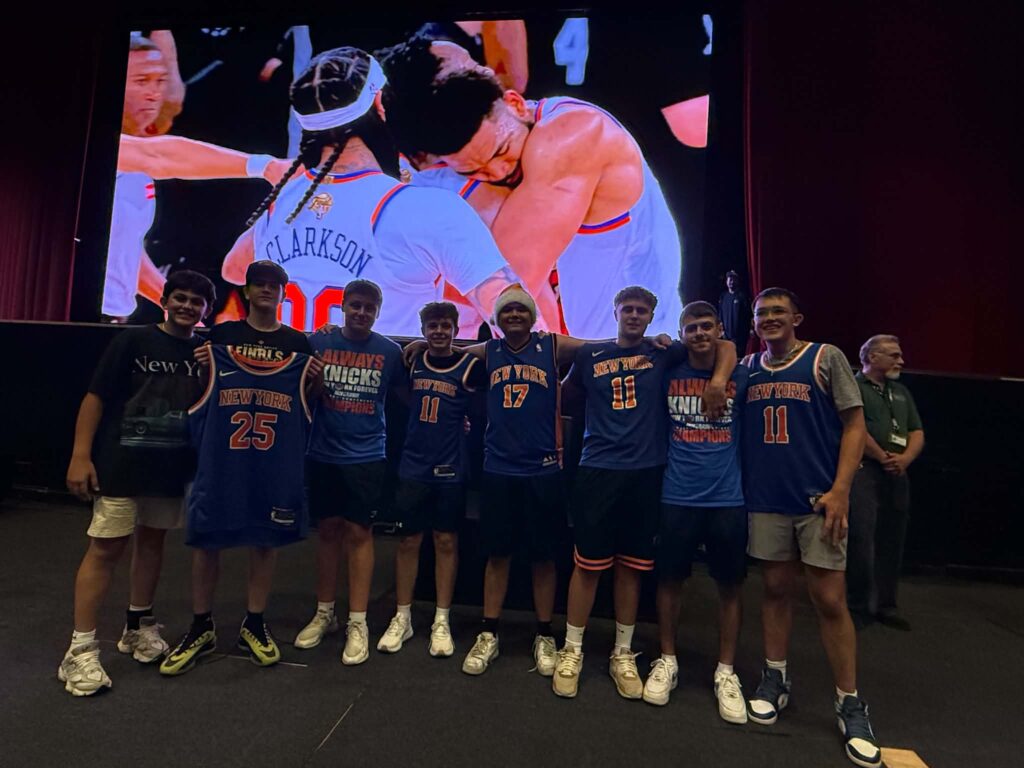
When the final buzzer sounded, the crowd erupted. Strangers hugged, high-fived, and celebrated together as if they had just witnessed a miracle. From Yonkers to Mount Vernon, New Rochelle to White Plains, Greenburgh to Peekskill, Westchester County was united by a moment that reminded everyone why Knicks basketball means so much to this region. And DJ Noodle Noo (former Peekskill Mayor Andre Rainey) kept the crowd hype. While I was frustrated from watching an ugly first half, he kept me, and everyone else, amped up playing great music during the commercials.
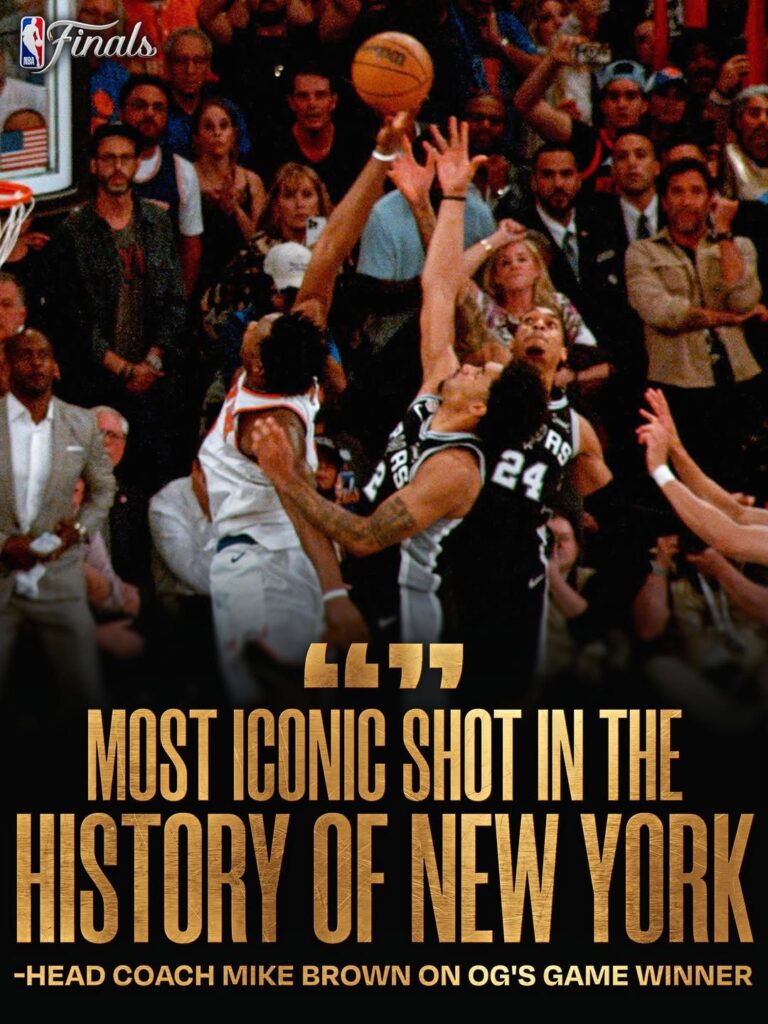
If I’m honest, the PTSD of being a lifelong Knicks fan was kicking in. But this team continues to do what so many Knicks teams before them could not: turn adversity into opportunity and pressure into performance. With every comeback, every clutch shot, and every defensive stand, and that putback by OG with 1.2 seconds left, they are moving one step closer to bringing New York its first NBA championship since 1973.
For lifelong Knicks fans who have endured decades of heartbreak, disappointment, and near misses, Wednesday night’s comeback felt like more than just another playoff victory. It felt like destiny.
But as great and historic as Wednesday night was, and while Knicks fans all across New York State are celebrating like the championship has already been won, the job is absolutely not done yet. The celebration inside The Westchester County Center, courtesy of County Executive Ken Jenkins, was unlike anything many fans had ever experienced. Every big shot was met with deafening cheers, every defensive stop brought fans to their feet, and when the Knicks completed their historic comeback, the building erupted into pure bedlam. For a few moments, it felt like Westchester had become Madison Square Garden North.
Yet when the excitement settles, and the confetti remains only in our imaginations, the reality is simple: the Knicks still have one more game to win.
On Saturday night, the Knicks will head back to Texas with an opportunity to finish what they started and bring home the franchise’s first NBA Championship since 1973. That’s the ultimate goal. Not a historic comeback. Not a 3-1 series lead. Not headlines or celebrations. A championship.
Still, no one can blame Knicks fans for enjoying this moment. After decades of heartbreak, near misses, rebuilding years, and countless jokes at their expense, New York basketball fans are finally seeing a team that refuses to quit, no matter the circumstances. This group has shown resilience, toughness, heart, and belief throughout this remarkable playoff run.
And if the reaction Wednesday night was any indication, Westchester is celebrating just as hard—if not harder—than fans in New York City and outside Madison Square Garden. Knicks fever has taken over the county.
One more win.
That’s all that stands between this team and basketball immortality.
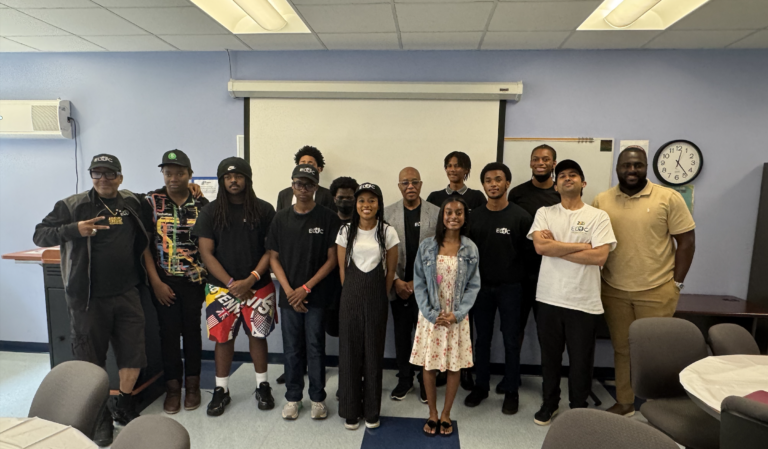
The Environmental Leaders of Color (ELOC) proudly celebrated the accomplishments of its Artificial Intelligence Program graduates during a special Certificate Recognition Ceremony. The event recognized students who successfully completed the organization’s AI training program and highlighted the program’s purpose: preparing students to apply artificial intelligence with skill, creativity, and responsibility.
The ceremony marked more than the completion of a course. It represented a significant milestone for students who invested their time, energy, and creativity in learning one of the most transformative technologies of the 21st century, as evidenced by their final projects and demonstrations. More importantly, it underscored the value of building practical AI skills through focused training and hands-on achievement.
Family members, educators, mentors, and community leaders gathered to recognize the graduates’ hard work and dedication as each student received a certificate acknowledging their successful completion of the ELOC Artificial Intelligence Program and their showcased projects.
“These certificates represent more than attendance,” organizers explained. “They represent commitment, innovation, perseverance, and a willingness to embrace the future, reflected in the work students completed throughout the program.”
Throughout the program, students explored the fundamentals of artificial intelligence, learned how emerging technologies are reshaping industries, and developed practical skills applicable to education, business, environmental sustainability, entrepreneurship, and workforce development, including hands-on practice with AI tools.
A highlight of the graduation showcase was the presentation of student-created AI projects, including examples that addressed real-world challenges, offered innovative solutions, and developed new ideas designed to improve communities and expand opportunities.
The projects reflected the program’s mission of preparing students not only to understand technology but also to become leaders who use it responsibly and effectively. Together, they showed why the program matters: it gives students the tools to turn learning into action.
As artificial intelligence continues to influence nearly every sector of society, programs like ELOC’s AI Initiative are helping ensure that diverse voices are represented in the development and application of future technologies, as demonstrated by the graduates’ projects.
For many graduates, the ceremony symbolized the beginning of a new journey rather than the end of one. Armed with new knowledge and practical experience, students leave the program better prepared to compete in a rapidly evolving digital economy, with certificates and completed projects to show their progress.
ELOC leaders emphasized that access to technology education is critical for creating pathways to economic empowerment, workforce development, and community advancement. Their message was clear: this training helps turn opportunity into long-term impact.
“The future belongs to those who prepare for it today,” one presenter remarked during the ceremony. “These students are not waiting for the future to arrive—they are helping to build it.”
The Certificate Recognition Ceremony served as a reminder that education, innovation, and opportunity remain powerful tools for creating positive change. As graduates crossed the stage to receive their certificates and present their work, they also took an important step toward becoming the next generation of innovators, problem-solvers, and leaders. The ceremony’s message was unmistakable: ELOC is helping students build the future through AI learning.
The Environmental Leaders of Color congratulate all graduates of the 2026 Artificial Intelligence Program and look forward to seeing how they use their talents, creativity, and knowledge to make an impact in their communities and beyond.
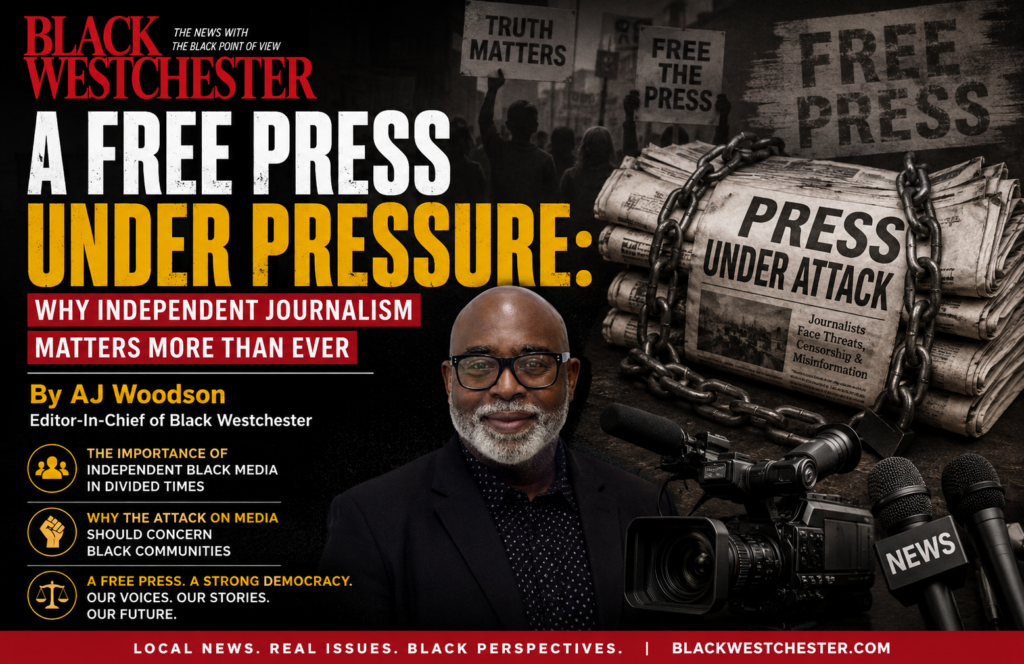
The Importance Of Independent Black Media In Divided Times: Why The Attack On Media Should Concern Black Communities
“There is no more essential ingredient than a free, strong, and independent press to our continued success in what the Founding Fathers called our ‘noble experiment’ in self-government.”
Those words were written by President Ronald Reagan during National Newspaper Week in 1983. More than four decades later, they remain as relevant as ever.
I saw this quote in an editorial titled “A Free Press on the Chopping Block” by Kareem Abdul Jabbar on his Substack, “Kareem Takes on the News.” He asked the question, “What happens to self-government when we decide a free press isn’t worth the trouble to defend?” That’s a question every American should be asking right now. The more I thought about it, the more I realized that this question goes to the heart of one of the greatest challenges facing our democracy today. It is also what inspired this edition of “Real Talk by AJ Woodson.”
Like Kareem’s article, I begin with President Reagan’s words because the defense of a free press should transcend politics. Unfortunately, we are living in a time when almost everything is viewed through a partisan lens. Americans increasingly get their news from ideological silos and echo chambers, consuming information that confirms what they already believe while tuning out anything that might challenge their perspective. Social media algorithms reward outrage, cable news rewards division, and too often, facts are judged not by their accuracy but by whether they support a particular political narrative. In this environment, independent journalism becomes more important—not less. The role of a free press is not to tell people what they want to hear. It is to provide the information they need to make informed decisions as citizens.
Whether you lean left, right, or somewhere in between, a free press is not a Democratic value or a Republican value—it’s an American value. And if we fail to defend it, we may discover too late what we’ve lost. It made me realize the natural bridge in the Reagan quote and how it relates to the arguments I have been making for years about the importance of independent Black media and local journalism.
There’s an old saying in the Black community: when America gets a cold, Black folks get the flu. If that’s true—and history suggests it often is—then the current climate surrounding the media should raise alarm bells for every independent Black news outlet in America. If major news organizations with national audiences, billion-dollar corporations behind them, and teams of lawyers are being attacked, discredited, and challenged for simply doing their jobs, what does that mean for smaller independent Black-owned outlets that have always had to fight for resources, access, and sustainability? Black media have never had the luxury of taking press freedom for granted. We have always had to fight to tell our own stories, challenge official narratives, and give voice to communities that were too often ignored or misrepresented by mainstream media.
The Black Press was born out of necessity. Long before diversity initiatives and corporate commitments to inclusion, Black newspapers were documenting lynchings, exposing injustice, covering civil rights struggles, and telling the stories that mainstream media refused to tell. That mission remains just as important today. If independent journalism is weakened, marginalized communities are often the first to lose their voice and the last to have their concerns heard. That’s why defending a free and independent press is not simply about protecting journalists—it’s about protecting the public’s right to know and ensuring that all communities, especially those historically overlooked, continue to have a seat at the table.
The United States was founded on the principle that an informed citizenry is essential to a functioning democracy. The First Amendment protects freedom of the press because the Founding Fathers understood that government accountability depends on the public having access to accurate information, diverse viewpoints, and independent journalism, both nationally and locally. A free press is not the enemy of democracy; it is one of democracy’s most important safeguards.
Today, however, independent media faces challenges unlike any in modern history. Journalists are increasingly being labeled as enemies, dismissed as partisan actors, harassed online, threatened for doing their jobs, and subjected to growing political attacks. At the same time, economic pressures have devastated local news organizations, creating “news deserts” in communities across the country where citizens have fewer sources of reliable information about the issues affecting their daily lives.
The danger is not simply that journalists are under attack. The greater danger is that public trust in facts, evidence, and independent reporting is being eroded. When citizens lose confidence in credible sources of information, misinformation, disinformation, and propaganda rush in to fill the vacuum. Democracy cannot function effectively when facts become optional, and truth becomes a matter of political preference.
Unfortunately, we are witnessing this erosion of trust right here in Black communities like Mount Vernon. Increasingly, people are choosing information that confirms what they already believe rather than information that challenges them to think critically. Social media posts are treated as fact. Rumors spread faster than verified reporting. Personal feelings often carry more weight than documented evidence. Too many people have become comfortable dismissing journalism they disagree with as “fake news” while accepting unverified claims that support their existing opinions.
What’s even more troubling is that we are often contributing to the very problem we claim to be concerned about. We share stories without reading them. We circulate rumors without verifying them. We attack the messenger instead of addressing the facts. We amplify misinformation because it fits our preferred narrative and ignore evidence when it does not. In doing so, we become participants in the erosion of truth rather than defenders of it.
As someone who has spent years reporting on Mount Vernon and Westchester County, I understand that people will not always agree with our coverage. That’s healthy. Debate is healthy. Accountability is healthy. But disagreement should never replace facts, and opinion should never replace evidence. A community cannot solve its problems if it cannot first agree on reality.
The greatest threat to independent journalism may not be politicians, corporations, or outside forces. It may be our growing willingness as a society to abandon objective facts in favor of information that simply makes us feel good or validates our existing beliefs. Once truth becomes negotiable, everyone loses. And historically, Black communities have paid a higher price than most when truth is ignored, suppressed, or distorted.
This is especially concerning for local journalism. National headlines often dominate the conversation, but local reporters are the ones attending school board and library board meetings, covering city halls, investigating government spending, reporting on public safety, and amplifying the voices of everyday residents. When local journalism weakens, transparency suffers, and communities become less informed about decisions that directly affect their lives.
As the Editor-in-Chief of Black Westchester, I understand firsthand the importance of independent media. Our responsibility is not to protect politicians, political parties, corporations, or special interests. Our responsibility is to inform the public, ask difficult questions, seek the truth, and hold those in power accountable, regardless of who they are.
A free press does not exist to make people comfortable. It exists to make sure the public is informed.
That is why attacks on independent journalism should concern every American, regardless of political affiliation. Whether you are conservative, liberal, independent, or somewhere in between, the right to receive accurate information and the freedom of journalists to report the truth are fundamental to our democracy.
Ronald Reagan understood that in 1983. The Founding Fathers understood it in 1787. The question for our generation is whether we understand it today.
If we truly value democracy, we must value the institutions that help protect it. A free, strong, and independent press is not a luxury. It is a necessity. And in today’s political climate, defending it may be more important than ever.
One of the most important questions in public policy is not whether a proposal sounds compassionate, inclusive, or progressive. The more important question is whether it strengthens or weakens the institutions upon which society depends. Throughout history, nations have risen and fallen not simply because of economic policy or military power, but because of the strength or weakness of their cultural institutions. Among those institutions, none is more important than the family.
The family is the first school, the first government, the first economic unit, and the first place where values are transmitted from one generation to the next. Long before a child encounters a teacher, a politician, a police officer, or an employer, that child encounters a mother and a father. For this reason, any public policy that alters society’s understanding of motherhood, fatherhood, and family deserves serious examination.
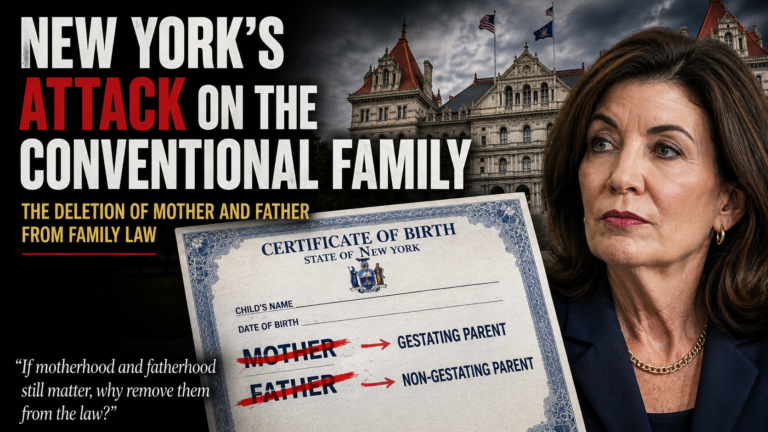
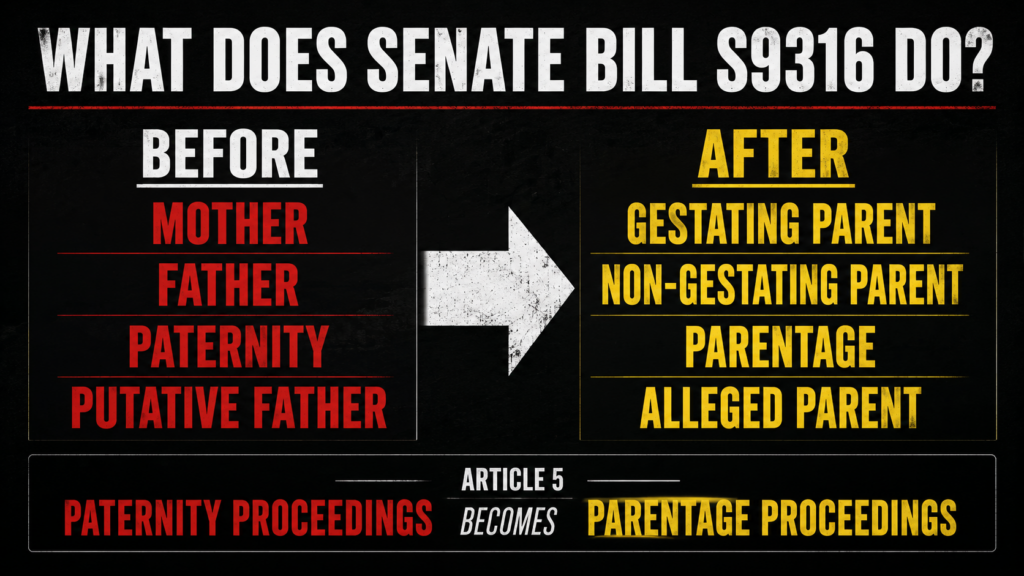
This is why New York Senate Bill S9316 should concern every citizen, regardless of political affiliation. The legislation replaces references to “mother,” “father,” and “paternity” throughout portions of New York Family Court Law with terms such as “gestating parent,” “non-gestating parent,” “parent,” and “parentage.” The bill also changes Article 5 of the Family Court Act from “Paternity Proceedings” to “Parentage Proceedings” and removes legal definitions of mother and father that have existed in New York law for generations.
Supporters of the legislation argue that these changes simply modernize legal language and make family law more inclusive. Perhaps that is their intention. However, public policy should not be evaluated solely on intentions. It should be evaluated on consequences. Before embracing any significant change, citizens should ask a simple question: What problem is being solved?
For generations, New York law recognized mothers and fathers as distinct legal and social realities. Those terms were universally understood. They reflected biological relationships, family responsibilities, and social expectations that formed the foundation of family life. Today, lawmakers are replacing those terms with language that is increasingly bureaucratic and clinical. A father becomes a non-gestating parent. A mother becomes a gestating parent. The issue is not whether those new terms can be defined. The issue is why the old terms needed to be removed.
This question becomes even more important when viewed against the backdrop of family instability. For decades, policymakers, educators, clergy, and community leaders have discussed the consequences of fatherlessness, declining marriage rates, and household fragmentation. Entire industries of research have examined the importance of parental involvement in the lives of children. While no family structure guarantees success, there is overwhelming evidence that children generally benefit when responsible mothers and fathers actively participate in their upbringing.
This reality is particularly relevant in Black America. For generations, Black leaders have spoken about the consequences of family breakdown. They have discussed absent fathers, declining marriage rates, and the weakening of institutions that once reinforced personal responsibility and community stability. Whether one agrees with every diagnosis offered over the years is not the point. The point is that countless leaders have argued that stronger communities require stronger families. If that is true, it is reasonable to ask whether removing the language of motherhood and fatherhood from law advances that goal or undermines it.
The larger concern is not merely the language itself. The larger concern is the philosophy behind it. Laws are rarely isolated acts. They reflect a worldview. They communicate assumptions about society and human nature. When government removes the legal distinctions between mothers and fathers, it is making a statement about whether those distinctions remain important enough to preserve. Supporters may insist that nothing substantial has changed, but if nothing substantial has changed, why was the change necessary in the first place?
History teaches that cultural institutions are often weakened gradually rather than suddenly. Rarely does society announce that it intends to dismantle an institution. Instead, the process begins by redefining terms, altering assumptions, and changing the language through which people understand reality. Over time, what was once considered foundational becomes optional. What was once considered essential becomes interchangeable. Eventually, society forgets why those institutions existed in the first place.
One of the most troubling aspects of this debate is the silence from many of the very institutions that have historically defended the family. For generations, the Black church stood at the center of community life. Black pastors spoke boldly about issues affecting Black families, whether those issues involved civil rights, education, poverty, crime, or economic opportunity. The church understood that spiritual leadership required engagement with the issues shaping the lives of its members.
Yet as New York lawmakers move to remove the legal definitions of mother and father from family law, many pastors remain silent. This silence is difficult to understand because family is not a peripheral concern within Christianity. Family is foundational to the biblical worldview. Before there was a church, there was a family. Before there was a nation of Israel, there was a family. Before there was civil government, there was a family. Scripture consistently presents the family as one of God’s primary institutions for transmitting faith, values, and responsibility across generations.
Throughout the Bible, God works through families. Abraham was called to build a family. Israel was organized around families. Parents were instructed to teach their children. Fathers were given responsibilities. Mothers were given responsibilities. Marriage was treated as sacred. The health of the family was inseparable from the health of the community. In many respects, faith itself was preserved through the family structure. If family is foundational to faith, then legislation that redefines the language of family should concern every church leader, every pastor, and every believer.
This concern becomes even more significant when viewed through the lens of Scripture. Genesis 1:27 states, “So God created man in his own image, in the image of God created he him; male and female created he them.” The Fifth Commandment instructs believers to “Honour thy father and thy mother.” Ephesians 6:4 specifically addresses fathers, saying, “And, ye fathers, provoke not your children to wrath: but bring them up in the nurture and admonition of the Lord.” Throughout Scripture, God consistently speaks in terms of fathers and mothers, male and female, husband and wife. These distinctions are not presented as social inventions. They are presented as part of God’s created order.
This raises a question that every believer should consider carefully. When God’s law consistently recognizes fathers and mothers, but man’s law increasingly replaces those terms with gender-neutral alternatives, are we witnessing a godly progression or an ungodly departure from God’s design? When government removes language that Scripture repeatedly affirms, should Christians remain silent simply because the change is presented as modern or inclusive?
These questions are not motivated by hostility toward anyone. They arise from a concern about consequences. Strong societies require strong families. Strong families require clear responsibilities, clear expectations, and clear identities. When government begins altering the language through which society understands those relationships, citizens have every right to ask where that path ultimately leads.
The debate surrounding Senate Bill S9316 is therefore much larger than a dispute over terminology. It reflects competing visions of family, society, and human identity. One vision sees motherhood and fatherhood as foundational institutions that deserve explicit recognition because they perform distinct and irreplaceable functions. The other increasingly views those distinctions as unnecessary and seeks to replace them with broader, more flexible language.
The people of New York must decide which vision they believe will produce stronger families, stronger communities, and a stronger society. Because at the end of the day, no amount of political language can substitute for the institutions that hold civilization together. The future of New York will depend less on the sophistication of its legal terminology than on the strength of the families raising the next generation. Before lawmakers redefine motherhood and fatherhood, they should first explain how doing so will make those families stronger.
Until they can answer that question convincingly, skepticism is not only reasonable. It is necessary.
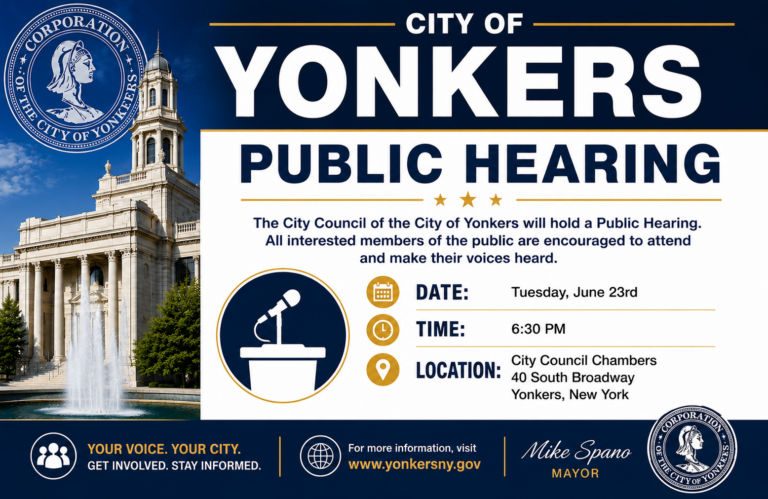
Notice is hereby given, pursuant to law, that the City Council of the City of Yonkers, New York, will hold a Public Hearing on Tuesday, June 23rd at 6:30 PM in the City Council Chambers, 40 South Broadway, Yonkers, New York, on the following resolution, to wit:
PROPOSED GENERAL ORDINANCE
A GENERAL ORDINANCE AMENDING CHAPTER 43 OF THE CODE OF THE CITY OF YONKERS ENTITLED “ZONING” BY AMENDING SECTION 43-33(J)(2) OF THE ZONING ORDINANCE OF THE CITY OF YONKERS AS IT RELATES TO FRONT YARD SETBACKS FOR THROUGH LOTS AS DEFINED IN THE CODE
Anyone wishing to speak may sign up on the night of the hearing at the hearing site. Each speaker shall be permitted three minutes, and speakers shall be called in the order in which they have signed up. Said hearing may be adjourned from time to time as necessary. Further information may be obtained at the City Clerk’s office, City Hall, 40 South Broadway, Yonkers, New York, and on the City’s Website.
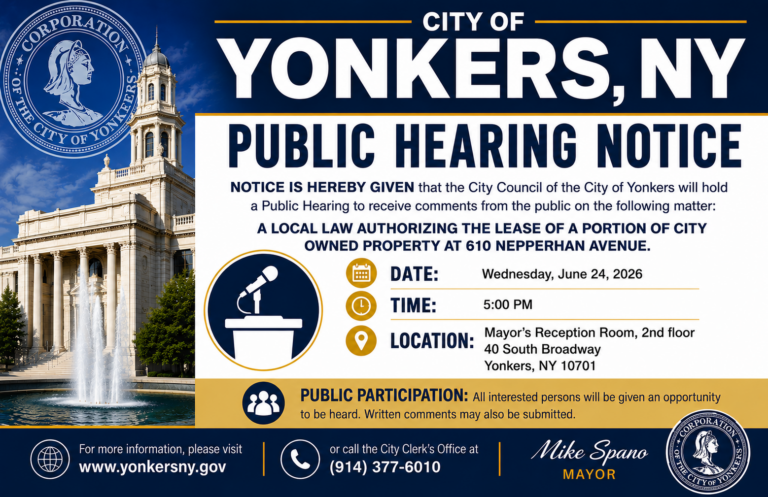
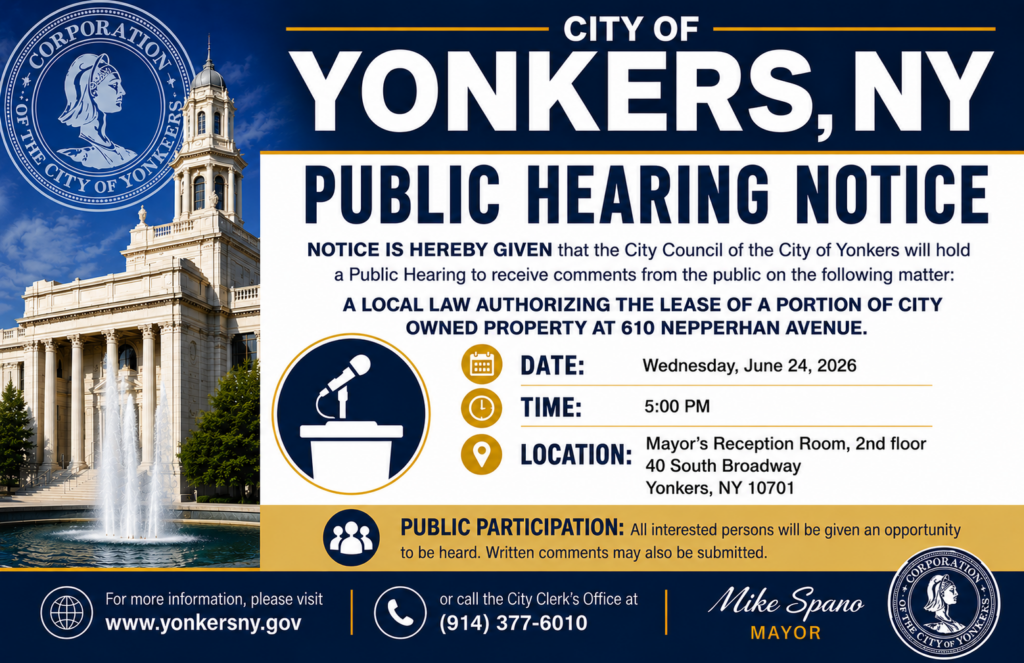
Notice is hereby given, pursuant to law, that the Mayor of the City of Yonkers, New York, will hold a Public Hearing on Wednesday, June 24, 2026, at 5:00 pm, Mayor’s Reception Room, 2nd floor, 40 South Broadway, Yonkers, New York, to hear all interested parties and citizens regarding the adoption of the following Local Law, to wit:
A LOCAL LAW AUTHORIZING THE LEASE OF A PORTION OF CITY-OWNED PROPERTY AT 610 NEPPERHAN AVENUE
Said hearing may be adjourned from time to time as necessary. Further information, including access to a copy of said proposed local law, may be obtained at the City Clerk’s office, City Hall, 40 South Broadway, Yonkers, New York, and on the City’s Website.
The ordinance, a summary of which is published herewith, has been adopted on May 29, 2026, and approved by the Mayor on June 4, 2026, and the validity of the obligations authorized by such ordinance may be hereafter contested only if such obligations were authorized for an object or purpose for which the CITY OF YONKERS, in the County of Westchester, New York, is not authorized to expend money or if the provisions of law which should have been complied with as of the date of publication of this Notice were not substantially complied with, and an action, suit or proceeding contesting such validity is commenced within twenty days after the publication of this Notice, or such obligations were authorized in violation of the provisions of the constitution.
Vincent E. Spano, City Clerk City of Yonkers, New York
SPECIAL ORDINANCE 31-2026
BOND ORDINANCE OF THE CITY OF YONKERS, NEW YORK AUTHORIZING FUNDING FOR VARIOUS CAPITAL PROJECTS INCLUDED IN THE SCHOOLS FACILITIES MANAGEMENT PLAN FOR THE BOARD OF EDUCATION, AS AMENDED; STATING THE ESTIMATED MAXIMUM COST THEREOF IS $17,300,000; APPROPRIATING SAID AMOUNT THEREFOR; AND AUTHORIZING THE ISSUANCE OF BONDS OF SAID CITY IN THE PRINCIPAL AMOUNT OF NOT TO EXCEED $17,300,000 TO FINANCE SAID APPROPRIATION
The bonds are authorized to finance various capital projects included in the School Facilities Management Plan for the Board of Education, as amended.
The amount of obligations to be issued is not to exceed $17,300,000.
The period of usefulness associated with the construction of improvements to various school buildings and the sites thereof is thirty (30) years.
Pursuant to the provisions of Section 17 of the Special Local Finance and Budget Act of the City of Yonkers, constituting Chapters 488 and 489 of the Laws of 1976 of the State of New York (herein called the “Act”), the City is authorized and directed to include the pledge and agreement of the State of New York (herein called the “State”) contained in said Section 17 of the Act, in the ordinance, and the Act provides that upon payment for the bonds or notes by the original and all subsequent holders thereof the inclusion of such pledge and agreement shall be deemed conclusive evidence of valuable consideration received by the State and City for such pledge and agreement and of reliance upon such pledge and agreement by any holder and that any action by the State contrary to or inconsistent with the provisions of such pledge and agreement shall be void.
A complete copy of the Bond Ordinance summarized above shall be available for public inspection during normal business hours at the office of the City Clerk, 40 South Broadway, Yonkers, New York 10701.
Notice is hereby given, pursuant to law, that the Mayor of the City of Yonkers, New York, will hold a Public Hearing on Wednesday, June 24, 2026 at 5:10 pm, Mayor’s Reception Room, 2nd floor, 40 South Broadway, Yonkers, New York, to hear all interested parties and citizens regarding the adoption of the following Local Law, to wit:
A LOCAL LAW AUTHORIZING THE CONVEYANCE OF CITY PROPERTY KNOWN AS 607 WARBURTON AVENUE, 579 WARBURTON AVENUE, AND PART OF 583 WARBURTON AVENUE REAR
Said hearing may be adjourned from time to time as necessary. Further information, including access to a copy of said proposed local law, may be obtained at the City Clerk’s office, City Hall, 40 South Broadway, Yonkers, New York, and on the City’s Website.
The ordinance, a summary of which is published herewith, has been adopted on May 29, 2026, and approved by the Mayor on June 4, 2026, and the validity of the obligations authorized by such ordinance may be hereafter contested only if such obligations were authorized for an object or purpose for which the CITY OF YONKERS, in the County of Westchester, New York, is not authorized to expend money or if the provisions of law which should have been complied with as of the date of publication of this Notice were not substantially complied with, and an action, suit or proceeding contesting such validity is commenced within twenty days after the publication of this Notice, or such obligations were authorized in violation of the provisions of the constitution.
Vincent E. Spano, City Clerk City of Yonkers, New York SPECIAL ORDINANCE 32-2026
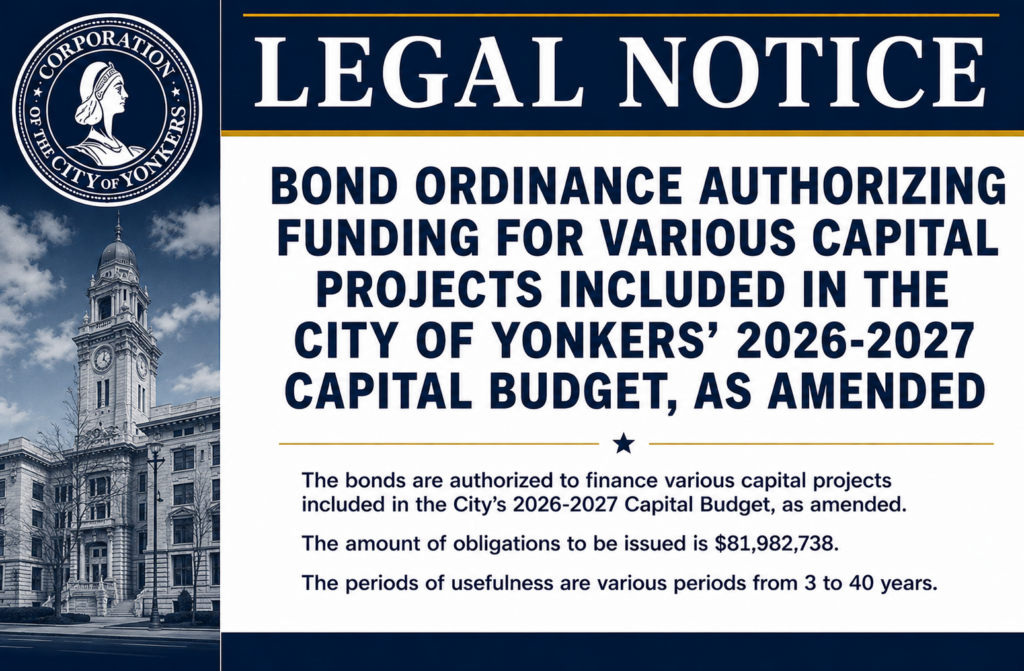
BOND ORDINANCE OF THE CITY OF YONKERS, NEW YORK AUTHORIZING FUNDING FOR VARIOUS CAPITAL PROJECTS INCLUDED IN THE CITY’S 2026-2027 CAPITAL BUDGET, AS AMENDED; STATING THE TOTAL ESTIMATED MAXIMUM COST THEREOF IS $81,982,738; APPROPRIATING SAID AMOUNT THEREFOR; AND AUTHORIZING THE ISSUANCE OF BONDS OF SAID CITY IN THE PRINCIPAL AMOUNT OF NOT TO EXCEED 81,982,738 TO FINANCE SAID APPROPRIATION
The bonds are authorized to finance various capital projects included in the City’s 2026-2027 Capital Budget, as amended.
The amount of obligations to be issued is $81,982,738.
The periods of usefulness are various periods from 3 to 40 years.
Pursuant to the provisions of Section 17 of the Special Local Finance and Budget Act of the City of Yonkers, constituting Chapters 488 and 489 of the Laws of 1976 of the State of New York (herein called the “Act”), the City is authorized and directed to include the pledge and agreement of the State of New York (herein called the “State”) contained in said Section 17 of the Act, in the ordinance, and the Act provides that upon payment for the bonds or notes by the original and all subsequent holders thereof the inclusion of such pledge and agreement shall be deemed conclusive evidence of valuable consideration received by the State and City for such pledge and agreement and of reliance upon such pledge and agreement by any holder and that any action by the State contrary to or inconsistent with the provisions of such pledge and agreement shall be void.
A complete copy of the Bond Ordinance summarized above shall be available for public inspection during normal business hours at the office of the City Clerk, 40 South Broadway, Yonkers, New York 10701.