Like communities across Westchester, the Town of Greenburgh faces an urgent and growing need for affordable housing. Barry McGoey, Democratic candidate for Town Supervisor, understands that meeting this moment requires more than good intentions. It requires a thoughtful, townwide strategy that expands opportunity, protects current residents, and moves affordable housing from promise to progress.
Barry believes the first step must be a comprehensive needs assessment specific to Greenburgh. That assessment should identify the types of housing our community truly needs and guide smarter zoning, targeted investments, and responsible planning. His approach is rooted in balance: affordable housing should be created throughout the Town, not concentrated in any one neighborhood.
He is equally committed to protecting residents who already call Greenburgh home. Barry will work to preserve existing affordable units and prevent displacement caused by redevelopment. No resident should be pushed out of their community because of Town-supported projects. Growth must strengthen neighborhoods, not uproot them.
Barry also recognizes that housing policy must confront longstanding inequities. He will review zoning, permitting, and code enforcement practices that may limit homeownership opportunities for people of color and families historically excluded from wealth-building. His solutions include expanding down payment assistance, supporting accessory dwelling units, and creating pathways for families to build generational wealth.
To accelerate responsible development, Barry will collaborate with the Town Board to encourage developers and property owners to exceed minimum affordability requirements. He will also pursue innovative partnerships with county, state, and federal agencies, including land acquisition, infrastructure investment, adaptive reuse, and supplemental financing tools.
Greenburgh has waited long enough for a housing strategy that is fair, practical, and forward-looking. Please join me in supporting Barry McGoey for Town Supervisor.
The primary election is this Tuesday, June 23. Early voting continues at Greenburgh Town Hall through Sunday, June 21.
Alfreda A. Williams Former Vice Chair, Westchester County Board of Legislators Former Town Clerk, Town of Greenburgh
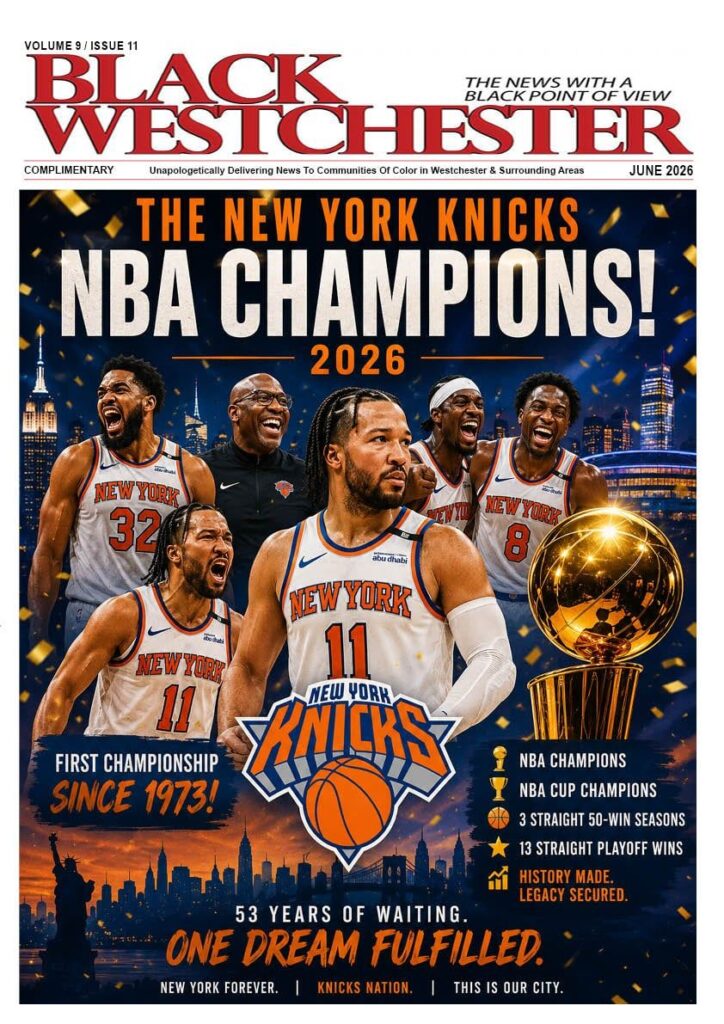
In this issue, we celebrate the New York Knicks winning the 2026 NBA
Championship. The first championship in 53 years since 1973. I personally waited 43 years for this day. I was only seven in 1973, and I started seriously following the Knicks in 1983, watching Bernard King, before the draft of Patrick Ewing. So I could not miss the opportunity to celebrate the New York Knicks, because everything is Orange & Blue Skies right now.
As always, we would like to take this time to thank all the readers, listeners, supporters, sponsors, contributors, and advertisers for their support in our effort to deliver the “News With The Black Point Of View” since 2014. We are always looking for writers, photographers, and interns. Email BlackWestchesterMag@gmail.com to inquire.
Send us your feedback, let us know what you think of this issue. Let us know subjects/topics you would like to see us cover in the future, and send your letters to the editor to BlackWestchesterMag@gmail.com.
I am a former three-term Greenburgh Town Councilman, current Fairview District Leader, and Chairman of the Greenburgh Housing Authority Board.
One of the reasons I did not run for office again after serving three consecutive four-year terms is that I don’t think anyone should hold office for decades. And I think we are fortunate at this juncture to have an opponent running for Town Supervisor worthy of the challenge – endorsed Democratic candidate Barry McGoey.
Internal management at Town Hall needs to be drastically improved. Fortunately, we have extremely competent Department heads who all hold the best interests of the Town in the forefront. I believe Barry’s fire department and union experience will make him a much better manager than incumbent Paul Feiner has been.
Not to mention Barry’s education and experience in accounting. With that background and experience, I think he will conceive better budgets, be more fiscally responsible, and maintain our AAA bond rating.
I also believe Barry will be able to work cooperatively with the rest of the Town Board because he knows how to cultivate relationships with his peers. It’s clear that the current Town leadership is at odds. It will be good to see them in synch and looking ahead and after us, rather than arguing amongst themselves and “kicking the can down the road.”
A recent Op-Ed in Black Westchester, an AJ Woodson publication, says a lot about racial equity in Greenburgh – and Fairview specifically – and challenges both candidates. Yet it contains incorrect assertions. For example, it asserts that Fairview carries an “Urban Renewal District” designation dating to the 1960s, but as a member of the Town Board, I helped repeal that designation in 2016.
Barry has met with Fairview District Leaders, most recently at a meet and greet at the Greenburgh Housing Authority, and he met with the Parkway Gardens/Homes Civic associations on June 15. I have canvassed with Barry in Fairview. He cares about voters across the Town, including those of us who live in Fairview.
I will vote for Barry in the primary election on June 23, and I encourage you to vote for him as well. Early voting is from June 13 – 21.
S. Ken Jones, Esq.
Have an opinion on an issue affecting our community? Submit a Letter to the Editor. To submit a Letter to the Editor for consideration, please email your submission to BlackWestchesterMag@gmail.com. Letters should include the writer’s full name, municipality of residence, and contact information for verification purposes. Black Westchester reserves the right to edit submissions for clarity, length, grammar, and style.
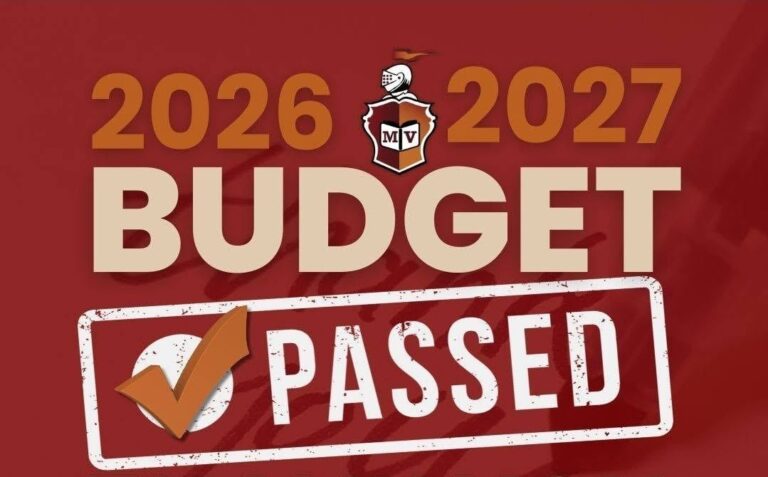
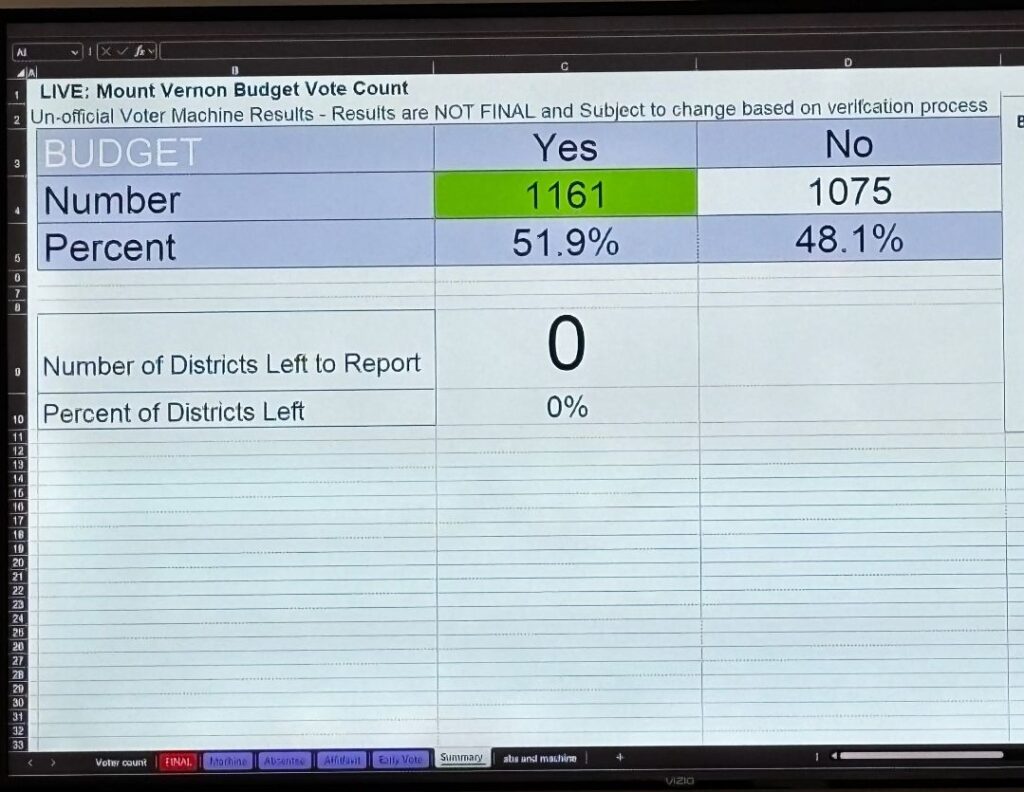
MOUNT VERNON, N.Y. — Mount Vernon voters approved the revised $275,542,563 budget for the Mount Vernon City School District’s 2026-27 school year on Tuesday, allowing the district to avoid a contingency budget and move forward with its educational and operational priorities. The spending plan passed by a narrow margin, 1,161 to 1,075, with voter turnout surpassing that of the initial budget vote held in May.
The approval came less than a month after voters rejected the district’s original $276.2 million budget proposal on May 19. Following that defeat, district officials reviewed their options, revised the spending plan, and returned to voters with a reduced budget that preserved student programs and services while lowering the proposed tax levy increase. The revised proposal was placed before voters in a June 16 revote and ultimately earned community approval.
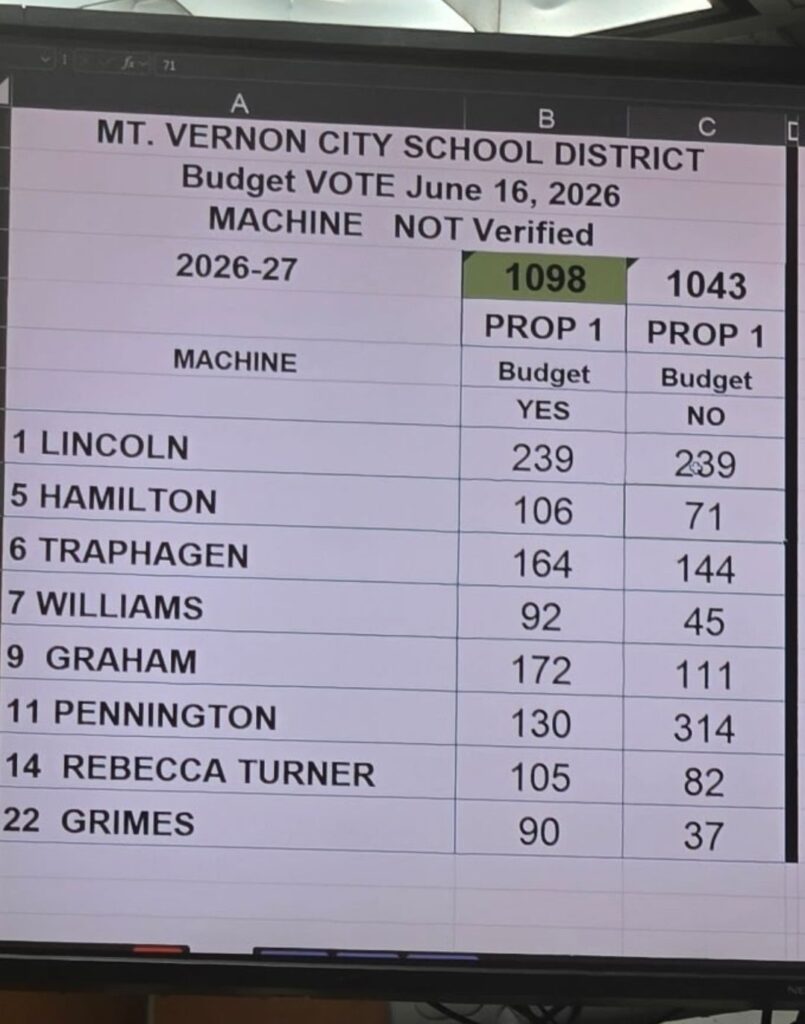
Support for the budget was strongest at most voting locations across the city, with the proposal carrying every school except Pennington School. Voters at the Northside polling site overwhelmingly rejected the budget by a margin of 314 to 130. Meanwhile, voting at the city’s other Northside location, Lincoln Elementary School, resulted in a rare deadlock, with 239 votes in favor and 239 votes against the spending plan.
The votes in favor were +55 (1098- 1043), and then the last 97 absentee votes had to be counted. They came in 59 for to 32 against. The total count was 1161 in favor to 1075 against.
The approved spending plan includes a 1.50% tax levy increase and is funded through a combination of property taxes, state and federal aid, and other local revenue sources. The revised budget was developed after voters rejected the district’s original proposal, which carried a 1.99% tax levy increase.
District officials said in a statement that they “reduced the budget following the initial defeat while working to preserve student programs and services. Approval of the revised budget allows the district to avoid a contingency budget, which would have required deeper spending reductions and could have negatively impacted educational opportunities for students.”
Superintendent Dr. Demario Strickland thanked residents for their support and participation in the process.
“We appreciate every voter who took the time to make their voice heard. This budget reflects an investment in the students of Mount Vernon and helps ensure that our schools can continue providing the opportunities and resources our children deserve,” Dr. Strickland shared with Black Westchester.
Kathie Brewington, President of the Mount Vernon NAACP Branch #2161, who advocated for the passing of the budget, also thanked voters and members of the Mount Vernon branch.
“I would like to extend my sincere thanks to the members of the Mount Vernon NAACP for your dedication, commitment, and unwavering support of the children of our community. Your willingness to stand up, speak out, and advocate for quality education demonstrates the true spirit of service. To everyone who took the time to vote, thank you for putting our children first. Regardless of the outcome, your participation shows that you care about the future of Mount Vernon and the opportunities available to our young people. Our children deserve a community that believes in them, invests in them, and fights for their success. Thank you for making your voice heard and for helping to shape a brighter future for the next generation. Together, we stand for our children, our schools, and our community,” Mrs. Brewington shared with Black Westchester.
Not everyone was pleased with the budget passing. We reached out to a few of those in opposition to the budget for feedback on the budget passing, but we were unable to get quotes before publishing.
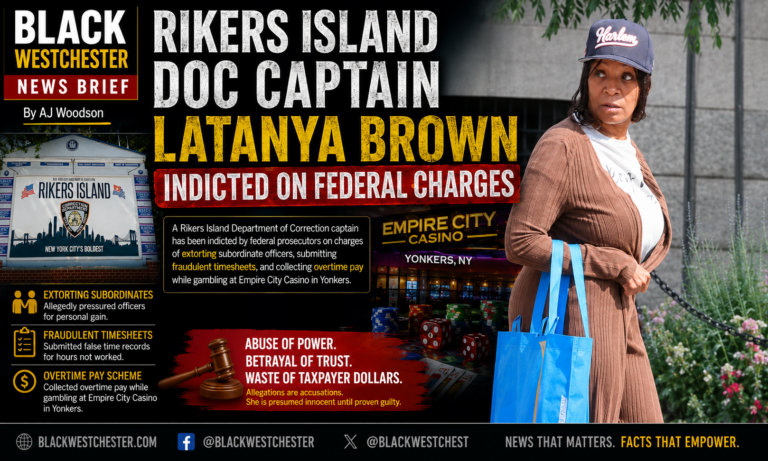
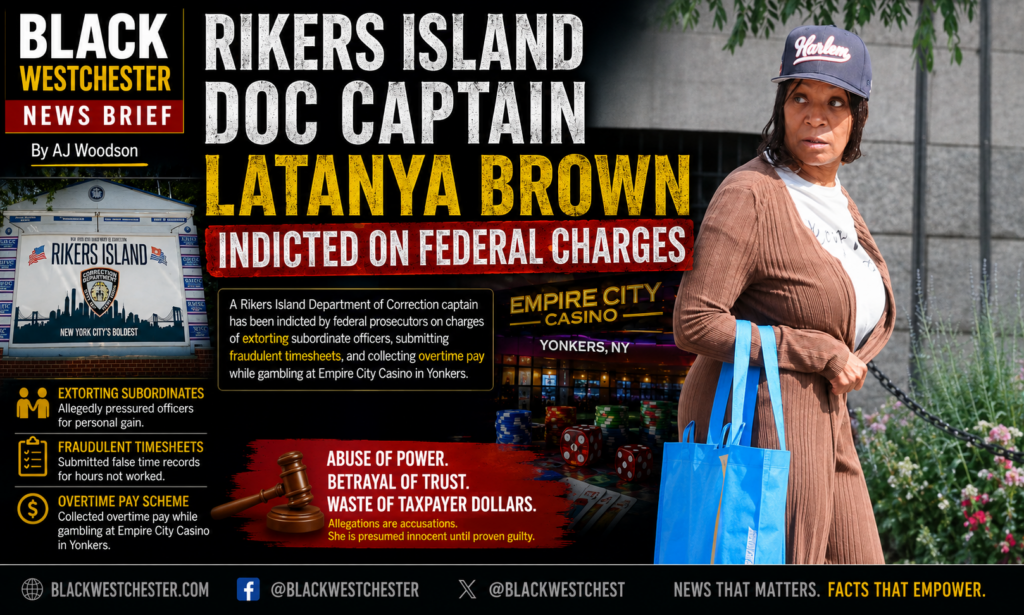
Federal Prosecutors Charge Rikers Captain Latanya Brown Indicted For Fraud, Extortion, and Overtime Theft
A Rikers Island correction captain has been indicted on federal charges, Thursday, June 11th, accusing her of extorting subordinate officers, submitting fraudulent timesheets, and collecting overtime pay while allegedly gambling at Empire City Casino in Yonkers in 2024 and 2025.
Federal prosecutors allege that Captain Latanya Brown, a supervisor with the New York City Department of Correction, orchestrated a scheme that allowed her to collect overtime compensation for hours she did not work. According to the indictment, Brown allegedly claimed she was performing official duties while spending time at Empire City Casino and other locations unrelated to her employment.
Prosecutors further allege that Brown used her position of authority to pressure subordinate correction officers into surrendering overtime opportunities and other benefits for her personal gain, including allegedly squeezing her underlings by threatening to block requests to change shifts or take vacation days unless she got gifts like a Louis Vuitton bag or a ride to Yonkers’ Empire City Casino.
Joseph Nocella, Jr., United States Attorney for the Eastern District of New York; James C. Barnacle, Jr., Assistant Director in Charge, Federal Bureau of Investigation, New York Field Office (FBI); and Nadia I. Shihata, Commissioner, New York City Department of Investigation (DOI), announced the indictment and arrest.
“As alleged, the defendant brazenly abused her authority as a law enforcement supervisor to steal taxpayer money and terrorize her subordinates by shaking them down for money, expensive gifts, and chauffeuring her to run personal errands, including trips to a casino while she was on duty,” stated United States Attorney Nocella. “Our Office will vigorously prosecute corrupt government officials who betray the public’s trust, and where applicable, as in this case, seek forfeiture of ill-gotten funds.”
As alleged in the indictment, Brown has been employed by the DOC since October 2001 and has held the rank of Captain since July 2007. Between approximately July 2024 and November 2025, Brown was assigned to Rikers Island’s Facility Operations Department as a DOC supervisor. Between approximately November 2025 and December 2025, Brown was assigned to New York State courthouses located in the Bronx. As a Captain, Brown supervised other correction officers and was responsible for approving employee requests for shift-schedule changes, overtime shifts, and vacation time. In 2024 and 2025, Brown regularly threatened to withhold approvals for shift changes, overtime shifts, and vacation time requests for her officers unless they agreed to pay her money, buy luxury items for her, and/or perform personal errands for her. For example, in December 2024, Brown forced several officers to buy an expensive Louis Vuitton bag for her. When Brown made her demand, she made statements to the DOC officers implying, in sum and substance, that their shift assignments, overtime shifts, and vacation time would be in jeopardy unless they purchased the luxury item. Additionally, on numerous occasions, Brown forced officers to drive her while on duty for non-work-related purposes, such as visits to restaurants, bars, and a casino.
“Captain Latanya Brown allegedly abused her rank and strong-armed her subordinates to support her lavish lifestyle. The FBI is determined to aggressively pursue and hold accountable government officials who steal American taxpayer dollars while engaging in corrupt misconduct for personal enrichment,” stated FBI Assistant Director in Charge Barnacle.
In 2024 and 2025, Brown received more than $250,000 in regular pay and more than $400,000 in overtime pay. However, on more than 100 occasions during this time period, Brown submitted documentation to the DOC claiming that she had worked the entirety of regular and overtime shifts, when in fact she actually arrived to work several hours late or left work several hours early on those occasions. On some occasions, when Brown left her assigned posting early, she did so to spend time at the Empire City Casino in Yonkers, New York. For example, on November 21, 2024, Brown claimed in documentation submitted to the DOC to have worked from 5:00 a.m. until 9:31 p.m. on Rikers Island. However, Brown was not at Rikers Island during the entirety of that shift and instead arrived at the casino that day at approximately 2:34 p.m. Nevertheless, Brown was compensated by the DOC as if she had worked her full shift and at least seven hours of overtime.
“As a New York City Correction Captain, this defendant was entrusted with great authority, including over those she supervised. Instead of setting the example by upholding the highest standards of integrity and fairness, as charged, this Correction Captain allegedly used her power to extort luxury gifts, money, and personal favors from her subordinates in exchange for approving overtime, schedule changes, and vacation time,” stated DOI Commissioner Shihata. “The indictment also charges that on more than 100 occasions in 2024 and 2025, the defendant allegedly collected thousands of dollars in regular and overtime pay for hours she did not work — coming to work late and leaving her post early, including to go to a casino. I thank the U.S. Attorney’s Office for the Eastern District of New York and the New York Office of the FBI for their continued partnership in protecting taxpayer funds and holding public employees accountable.”
The charges in the indictment are allegations, and the defendant is presumed innocent unless and until proven guilty. If convicted, Brown faces up to 20 years in prison.
The government’s case is being handled by the Office’s Public Integrity Section. Assistant United States Attorneys Andrew Grubin and Andrew Wang are in charge of the prosecution with assistance from Paralegal Specialist Johnson Peow.
Westchester County Board of Legislators Honors Caribbean American Excellence Through Service and Leadership
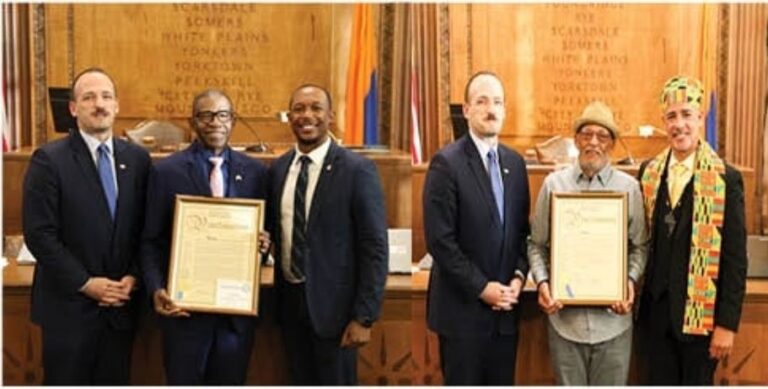
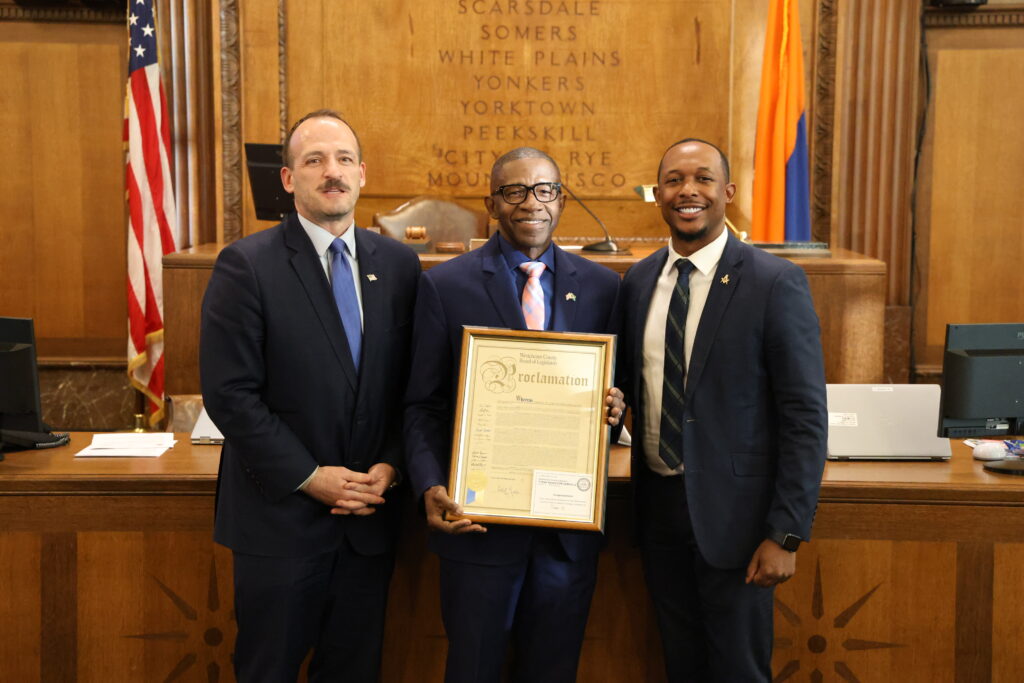
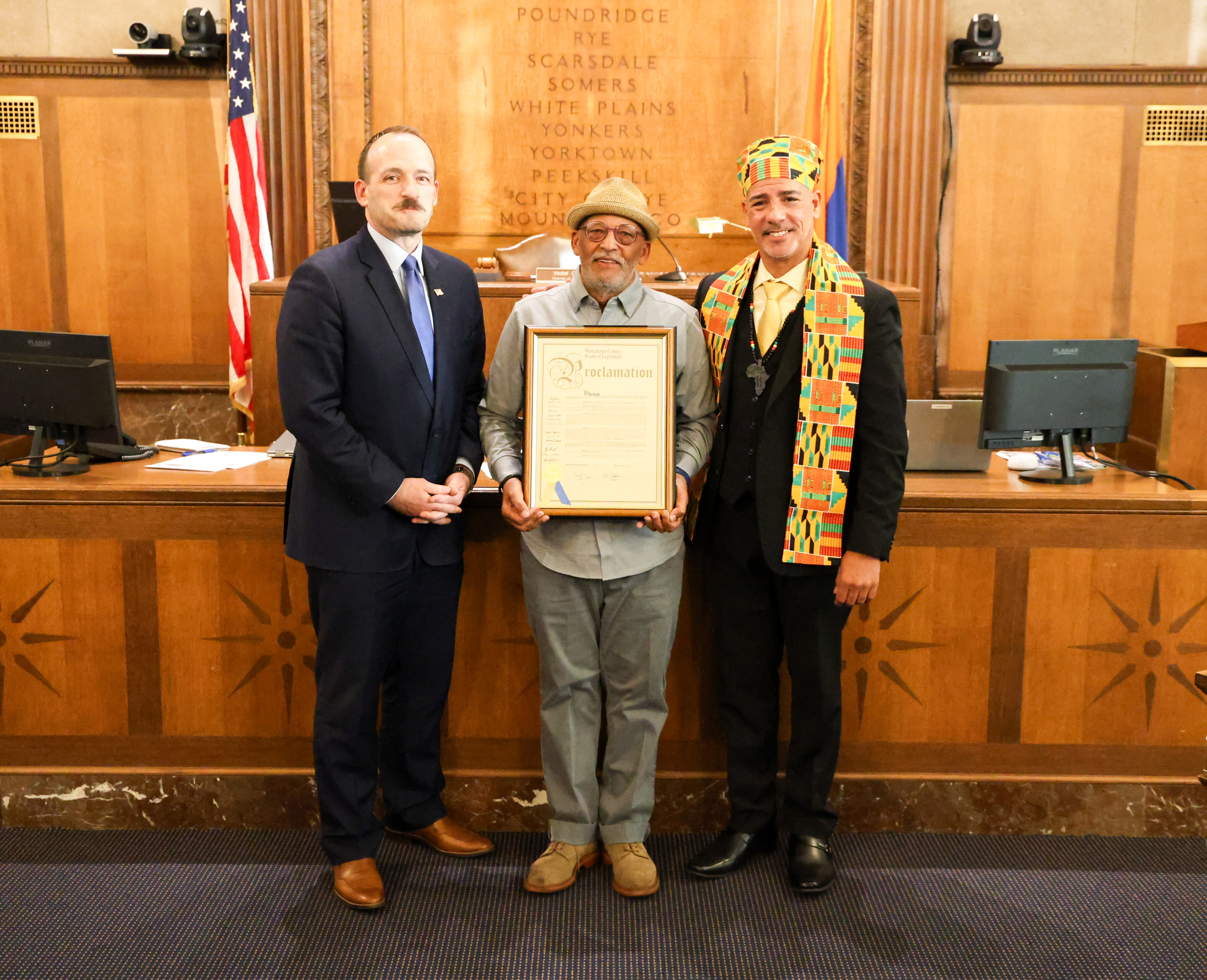
WHITE PLAINS, N.Y. — The Westchester County Board of Legislators celebrated Caribbean American Heritage Month, Monday, June 16th, by honoring two distinguished community leaders whose decades of service have left an indelible mark on Westchester County. Judge Lyndon Williams and Coach Rupert “Ted” Bitter were recognized with proclamations for their outstanding contributions to public service, mentorship, education, and community empowerment
“This month, we celebrate the rich traditions and impact of Caribbean Americans, who have shaped our communities in countless ways. Judge Lyndon Williams and Coach Ted Bitter exemplify this proud legacy through lives dedicated to service and leadership. Judge Williams built an extraordinary career serving the people of Westchester as a 12-year member of the Board of Legislators, Mount Vernon City Council President, respected attorney, and City Court Judge. Likewise, Coach Ted’s journey reflects a lifetime of commitment to public duty, from his military service in Vietnam to decades of mentoring young athletes and building community with the Westchester Striders and the BeanRunner Café. Through their accomplishments and commitment to others, these remarkable men have left an enduring mark on Westchester,” said Chairman Vedat Gashi (D–New Castle, Ossining, Somers, Yorktown), who convened the ceremony.
Lyndon Williams, who was born in Georgetown, Guyana, immigrated to the United States as a teenager. He served on the Mount Vernon City Council and the Westchester County Board of Legislators before becoming a Mount Vernon City Court Judge. Williams dedicated his career to advancing opportunities for residents throughout the county.
“Judge Lyndon Williams’s journey from Georgetown, Guyana to a distinguished career in law, public service, and the judiciary exemplifies the values of hard work, integrity, and community leadership. Through decades of service, he has dedicated himself to expanding opportunities for others, particularly young people, leaving a lasting impact on Westchester County and beyond. His story reflects the profound contributions Caribbean Americans continue to make in strengthening our communities and our nation,” Legislator Tyrae Woodson-Samuels (D–Mount Vernon) shared with Black Westchester.
Coach Rupert “Ted” Bitter, originally from Kingston, Jamaica, came to the United States at age 16 and volunteered to serve his adopted country in the U.S. Army, including combat service in Vietnam. Following a successful career in banking, he devoted himself to mentoring young athletes and helping shape the lives of countless young people through sports and community engagement.
“Ted Bitter represents the very best of Caribbean heritage in Westchester: service, perseverance, cultural pride, and a deep commitment to community. As a veteran, coach, mentor, small business owner, and friend, Ted has spent his life lifting others up—especially young people—and helping create spaces where culture, music, discipline, and belonging can thrive. I am proud to recognize him during Caribbean Heritage Month and grateful for all he has given to Peekskill and to Westchester County,” said Legislator Colin D. Smith (D–Cortlandt, Peekskill, Yorktown).
During the celebration, both honorees reflected on the importance of service, leadership, and giving back to the community. Williams encouraged young people to become active participants in shaping their future, while Bitter emphasized the values that guided his life’s journey: dedication, determination, discipline, and desire. Their stories served as powerful reminders of the contributions Caribbean Americans continue to make to Westchester County and beyond.
The ceremony highlighted not only the accomplishments of two exceptional individuals but also the rich cultural heritage, resilience, and commitment to excellence that Caribbean Americans have brought to communities throughout Westchester County for generations. Family members, friends, elected officials, and community leaders joined in celebrating the honorees and their lasting legacies of service.
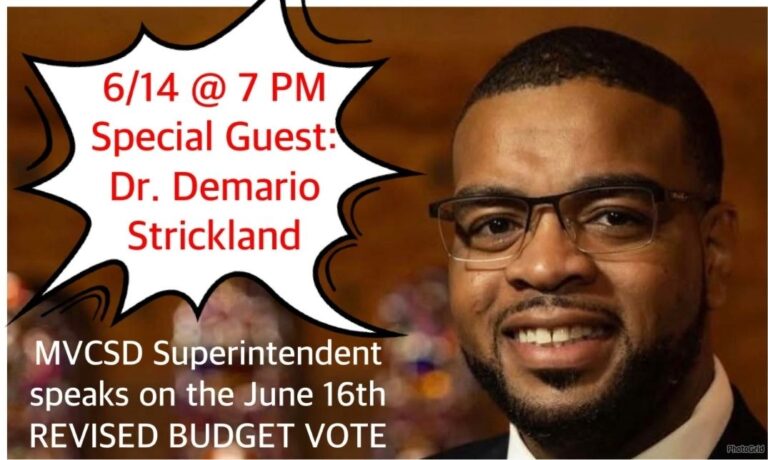
On the Sunday, June 14th episode of Black Westchester Presents People Before Politics Radio, Mount Vernon City School District Superintendent Dr. DeMario Strickland joins the show to discuss the upcoming June 16th Budget Revote and address several issues and concerns important to students, parents, educators, taxpayers, and the broader Mount Vernon community.
During the conversation, Dr. Strickland explained what’s at stake in the budget revote, discussed the district’s financial priorities, and answered questions regarding the impact the proposed budget could have on educational programs, staffing, student services, and the future of the school district. He will also address concerns raised by community members and provide insight into the district’s ongoing efforts to improve educational outcomes and strengthen public confidence in the Mount Vernon City School District.
Just in case you missed the interview live, you can view it in its entirety below…
The Dog Lives Forever: Yonkers Honors DMX With Street Renaming Ceremony
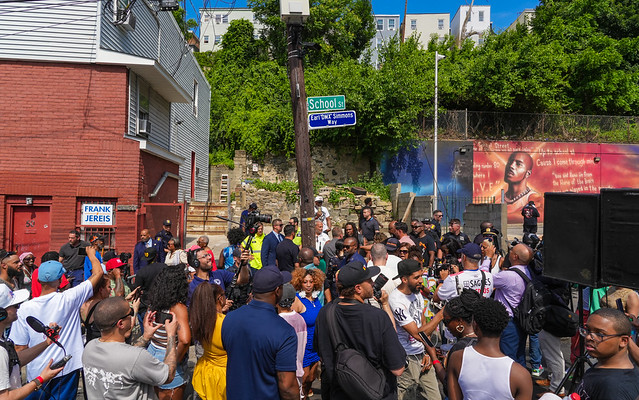
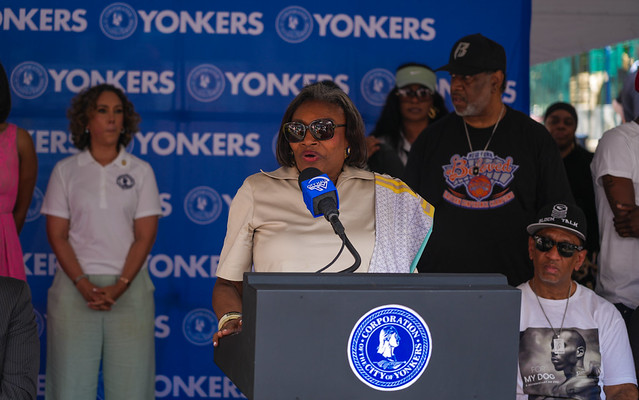
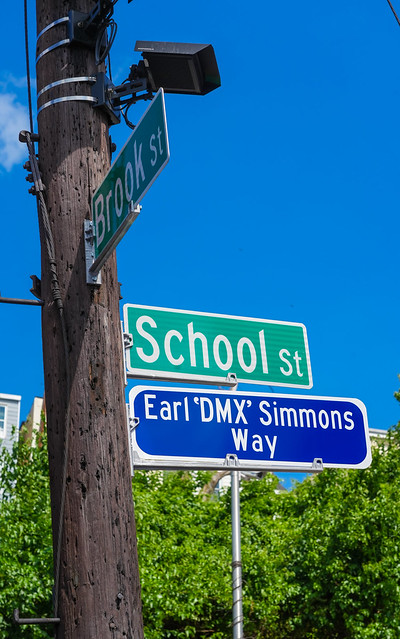
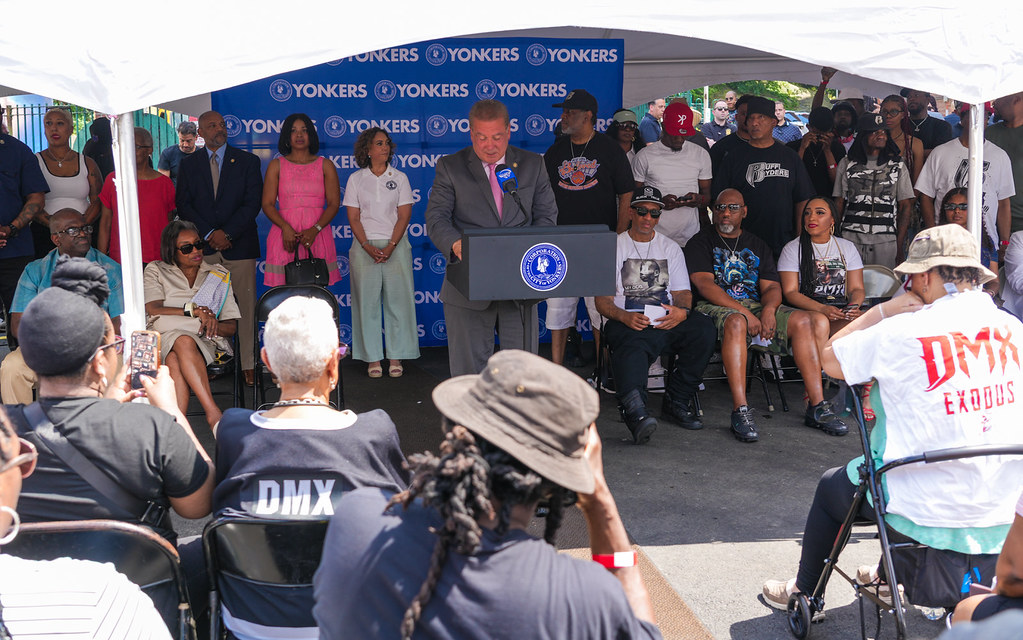
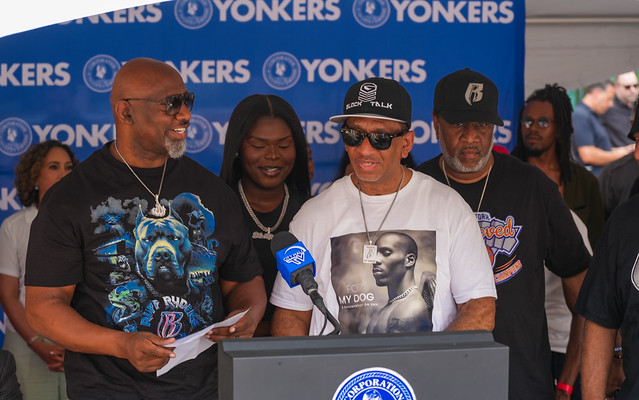
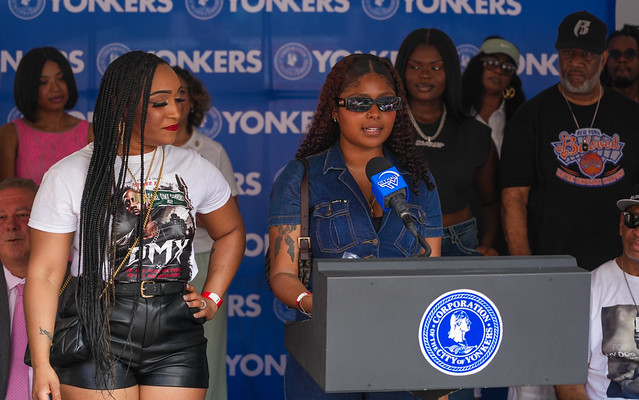
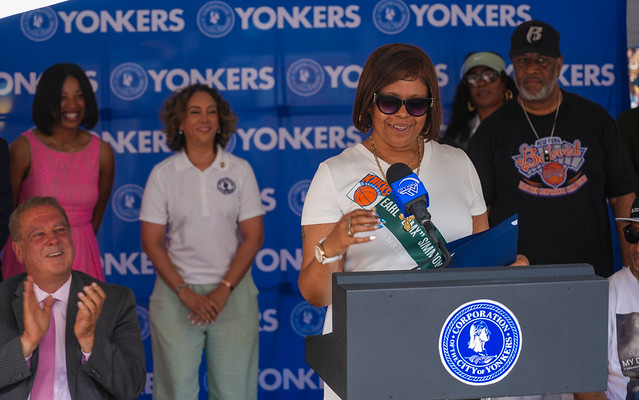
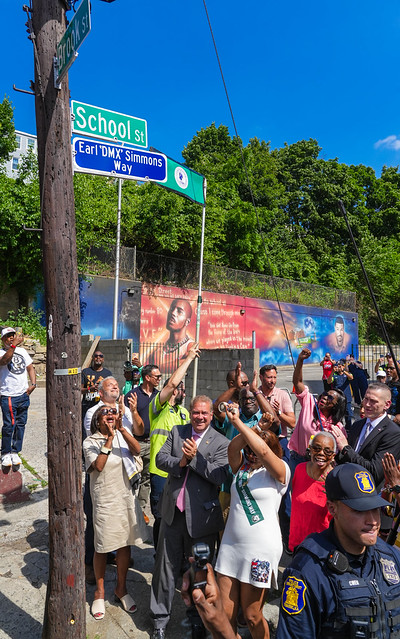
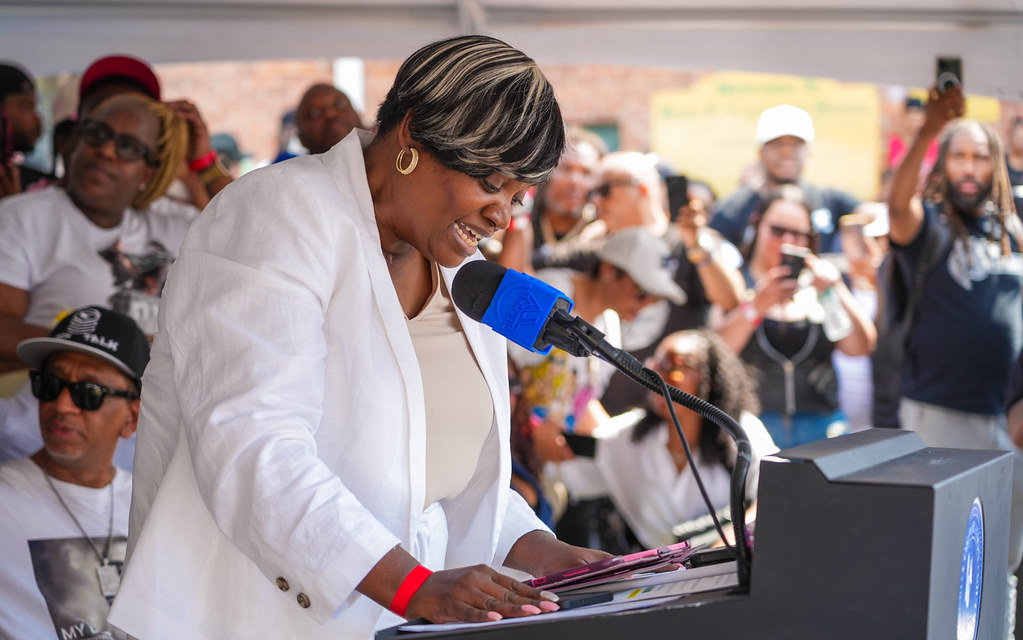
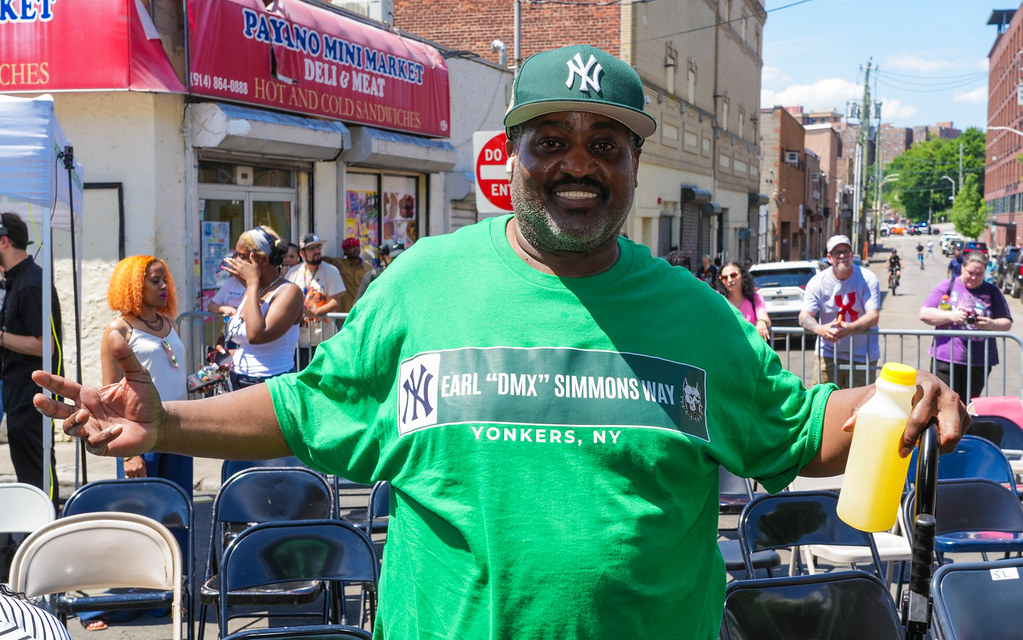
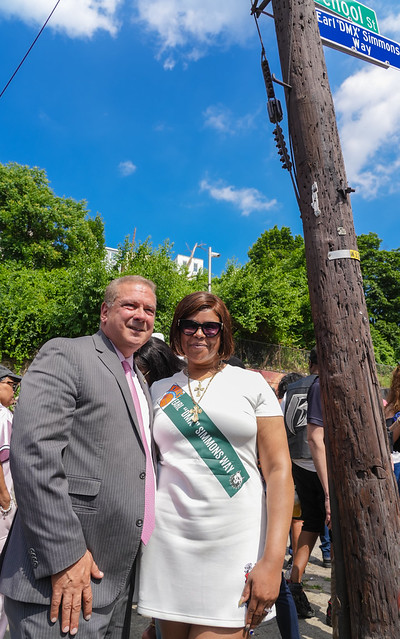
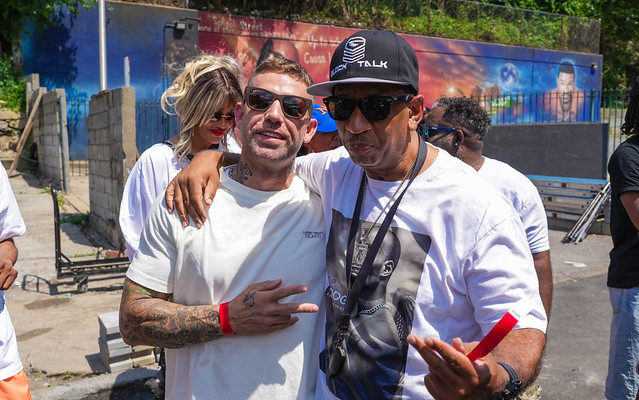
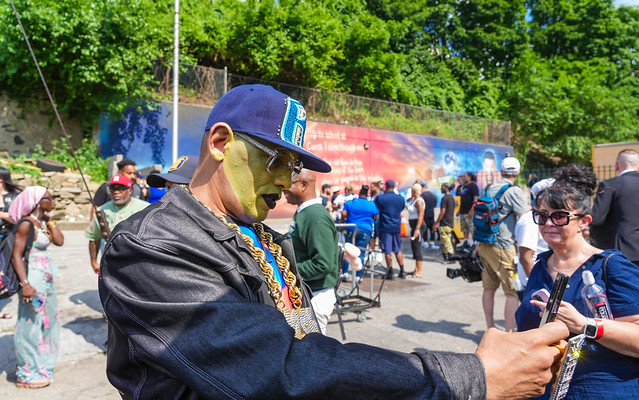
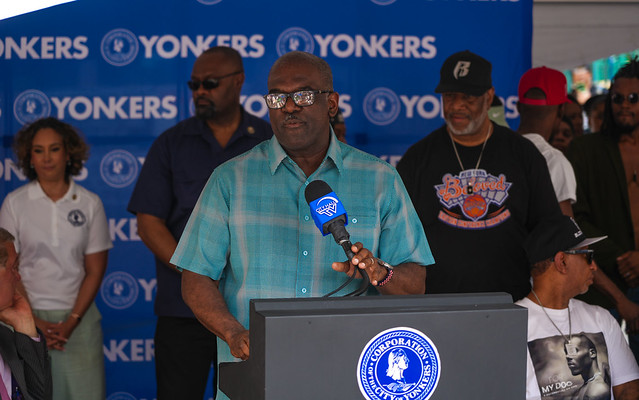
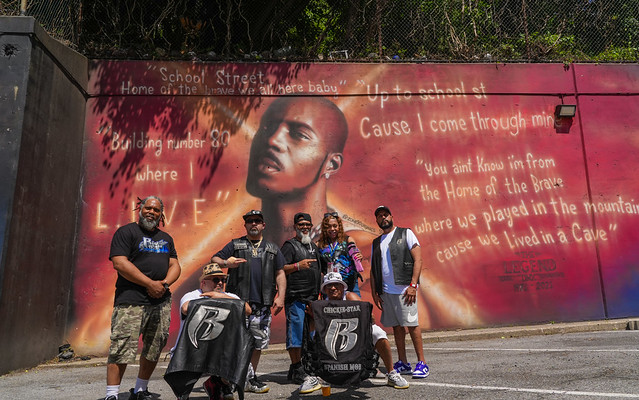
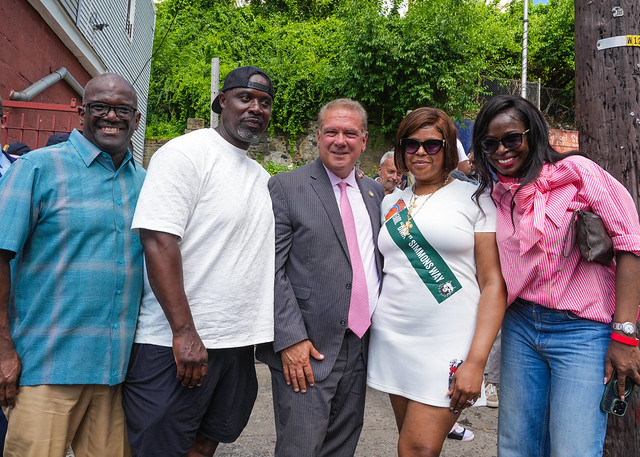
Yonkers Mayor Mike Spano and the City of Yonkers honored the life and legacy of Yonkers native Earl “DMX” Simmons with the ceremonial renaming of the corner of School Street and Brook Street as “Earl ‘DMX’ Simmons Way,” Friday, June 12th. Mayor Spano was joined by NYS Senate Majority Leader Andrea Stewart-Cousins, Westchester County Executive Ken Jenkins, Yonkers Councilwoman Tasha Diaz, who has represented District 3, who sponsored and spearheaded the Street Renaming, and the rest of the Yonkers City Council, Desiree Lindstrom and Sasha Simmons, the DMX Estate co-administrators, and Darrin “Dee” & Joaquin “Waah” Dean, Ruff Ryders co-founders. City of Yonkers Deputy Director of Communications Lisa Reyes was the emcee of the presser.
“Today was a great day for the City of Yonkers, especially the School Street Community. With today’s street renaming, we were able to make sure DMX’s name is embedded into the fabric of Yonkers,” Councilwoman Diaz shared with Black Westchester.
“We are remembering our neighbor DMX, who never lost his connection to this community. Can’t say that about everybody else that’s come through here, but you can say that about Earl, right? Always found a way to come back home. In 2016, he returned home to host the first Hip-Hop concert in Westchester County, bringing people together through music and celebrating a culture that has shaped generations. I had the good fortune of knowing DMX when he was, like I said, when he came back here and he volunteered. That’s something that I’ll never forget…” Mayor Mike Spano shared with the crowd.
Throughout the ceremony, speakers reflected on X’s impact not only as an artist but as a father, friend, philanthropist, and man of faith. Known for his raw honesty and emotional vulnerability, DMX’s music resonated with fans who saw their own pain, challenges, and triumphs reflected in his lyrics. His influence extended far beyond Hip-Hop, touching people from all walks of life who connected with his message of perseverance, redemption, and hope.
Ruff Ryders founders Dee and Waah Dean spoke about DMX’s enduring legacy and the profound impact he had on the culture. Together, they helped build one of the most influential movements in Hip-Hop history, introducing the world to an artist whose unmistakable voice, electrifying performances, and authentic storytelling would forever change the genre. More than two decades after his rise to fame, DMX’s music continues to inspire new generations of fans around the globe.
“Me and my family, we’ve been here from day one with DMX, working with him unconditionally. Today is more than a street naming. Today is a celebration of a Son of Yonkers whose voice, spirit, and legacy continue to inspire people around the world. Earl DMX Simmons never forgot where he came from. These streets shaped him, challenged him, and ultimately helped create one of the most authentic and influential artists hip hop has ever known. Through his music, his faith, and his struggle, X gave voice to those who felt unheard and hope to those who felt forgotten. For the Ruff Ryders, X was more than an artist. He was our brother, our leader, in the heart of the movement that changed music culture forever. His impact extended far beyond records and awards. He touched lives through his honesty, his generosity, and his unwavering love for his community. By renaming his street in the honor of DMX, we ensure that future generations would know his story…” Waah shared with the crowd.
“I want to thank everybody for coming out. I mainly want to thank Mike Spano, the mayor. Appreciate you very much. And the entire council for making this happen. I especially want to thank Tasha Diaz, the councilwoman responsible for making this happen cuz you made this happen. We know you made this happen. So we appreciate you, and a big thanks to the council whip, Deana, who is the main one who helped me make this happen. So, I want to thank Deana. And I want to thank X’s fiancée, Desiree, the entire Ruff Rider family, and all his close friends and loved ones, his children, and everybody that believed in him and the whole community, because anybody that knew X, knew he was one of a kind,” Dee added.
As the street sign bearing his name was unveiled, the moment served as a reminder that while Earl Simmons may have become a global icon, he will always be Yonkers’ favorite son. Now, every person who passes through the intersection of School Street and Brook Street will be reminded of the life and legacy of a man who proudly carried the city on his back and whose influence continues to be felt long after his passing. For Yonkers, “Earl ‘DMX’ Simmons Way” is more than a street name—it’s a permanent tribute to a legend who made sure the world knew exactly where he came from!
A psychiatrist and minister on why Black men carry their health alone, and the three questions that change it.
Patient stories are composites; identifying details have been changed.
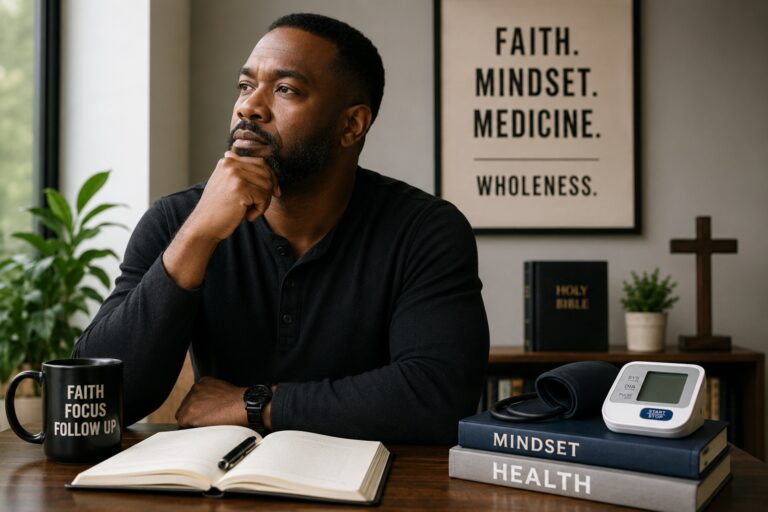
Sunday morning service is in full swing. John is in his usual seat. Head bowed, eyes closed, hands raised, body swaying. He feels different this morning, less tense and less tight than he did at home. His blood pressure on waking was the usual, 167/98. And, as usual, he was dragging around, feeling anxious and downcast for no reason. But now in church, he feels much better, more alert, energized by the praise and worship. He senses that his prayer is finally being answered and that healing is happening for him. What the worshipper cannot see is the rest of it. John, a 45-year-old entrepreneur, has been putting off medication and following up with any provider for months, preferring to tough it out and trust that the Lord will heal his high blood pressure.
But when he got home that afternoon, he began feeling lousy again. Sad. Tired. Anxious. Withdrawn. His wife took his blood pressure: 164/97. When she asked him about getting help, he gave his usual answer. “I’ll think about it.”
John is by no means alone. In my practice, I see lots of Black men who fit this profile. They have a medical condition or a mental health issue that is inadequately addressed or treated. These men are not negligent or cavalier in my view. Quite the opposite. For the most part, they are acutely aware of their vulnerability but find it challenging to make sense of and override generations of social messaging, cultural conditioning, and historical mistreatment. It does not surprise me, as a Black male psychiatrist, ordained minister, and mental performance consultant to professional sports teams, that men like John choose self-protection and autonomy first, even when it potentially compromises their clinical care.
There is nothing inherently wrong with the choices these men make, and they are not making them alone. The systems around them shape the decision, too. I have spoken to plenty of men like John who lean on prayer the way they were taught to, in places of worship that were, for generations, the one place in their lives that never turned them away. That matters. A man does not choose faith over medicine in a vacuum. He chooses the institution that has always received him over the ones that have not. Others have told me of their disdain for mental health services after a negative therapy experience that had no cultural fit, or how they avoid medical care because of treatment atrocities and disparities, current and historical. And there is real value in the religious practice itself. A 2022 study published in the Journal of the American Heart Association found that Black Americans with higher levels of religious involvement tended to have better cardiovascular health behaviors, including diet, smoking, and blood pressure. Other research suggests that spiritual practice can also ease anxiety and depression, though that is a separate body of work from the heart findings.
So when men like John go with one of these systems, or none of them, here is what they may be leaving on the table.
What the church is doing for John
Faith is doing real work in that sanctuary, and I would never tell him otherwise. The music, the room full of people moving together, the permission to close his eyes and stop performing for a couple of hours, his body reads all of it. His shoulders come down. His breathing settles. The dread that trailed him out of the house in the morning loosens its grip. None of that is imaginary. Hope has a chemistry, and when a man believes healing is on the way, his body can begin behaving as though it is.
The trouble shows up later, in the parking lot, when the feeling becomes the whole plan. John walked out lighter, but the disease was still at work the whole time, his pressure still sitting at 164 over 97. The relief he felt was true, but so was the number. Nobody had ever shown him how to address both.
Getting a man to want care is half the work. The other half is whether the care is there when he turns to look for it.
I have seen faith carry men through diagnoses that no medicine could comfort, hold a man steady through a prognosis no prescription could soften, and give him a reason to keep showing up. I have also seen the same faith become the reason a man puts off the appointment that would have caught something while it was still small. It is the same asset working two very different ways, and what separates them is usually whether anyone ever gave the man permission to pray and follow up in the same week.
The story under the story
Beneath the faith, there is a quieter layer, and in my experience, it does more damage than it gets blamed for. It is the story a man tells himself about what his body is even capable of. Medicine has a clumsy pair of words for this: placebo and nocebo, the idea that belief alone can move real things like dopamine, pain, blood pressure, and immune responses. We like to talk about the hopeful direction, but I worry more about the other one. When a man has heard his whole life that stress is just part of being a Black man, and he repeats it often enough, it stops sounding like a complaint and starts working like an instruction. And the body, which has been listening for months and years, tends to oblige.
The athletes I work with taught me how literal this can be. Everything physical they do sits on top of a belief about who they are, and the body delivers, more often than not, what the identity expects of it. So when a man has spent forty-five years braced for endurance, with recovery never once offered to him as something he was allowed to expect, that bracing can become its own kind of ceiling. The shift I am after with men like John is small to say and enormous to live. It is moving from just getting ready for the next blow to genuinely expecting to get better.
Why the distrust makes sense
Then there is medicine, which John keeps at arm’s length, and his reasons are good. Tuskegee is not ancient history to a man whose grandfather was alive for it, and the distrust it seeded is not a relic either. Hard to imagine but Black patients are still undertreated for pain today and given less medication than white patients for the same injuries— a pattern researchers have traced in part to false beliefs about biological differences that some medical trainees still hold. So, when John thinks of the cousin who got waved out of an emergency room, or the one therapist he tried who had clearly never sat with anyone who looked like him, he is not reaching back into history but describing the present reality. The numbers support his instinct. Researchers estimate that only about one in four Black men seek treatment when they are dealing with anxiety or depression. His guardedness is earned.
The hard part is that the very thing protecting him, keeping the system at a distance, is also what keeps him from the version of that system that has finally learned to treat him well. Culturally competent, integrated care exists now, where a man can find it and afford it.
The men who need it most are often the last through its door.
Three rooms that don’t talk
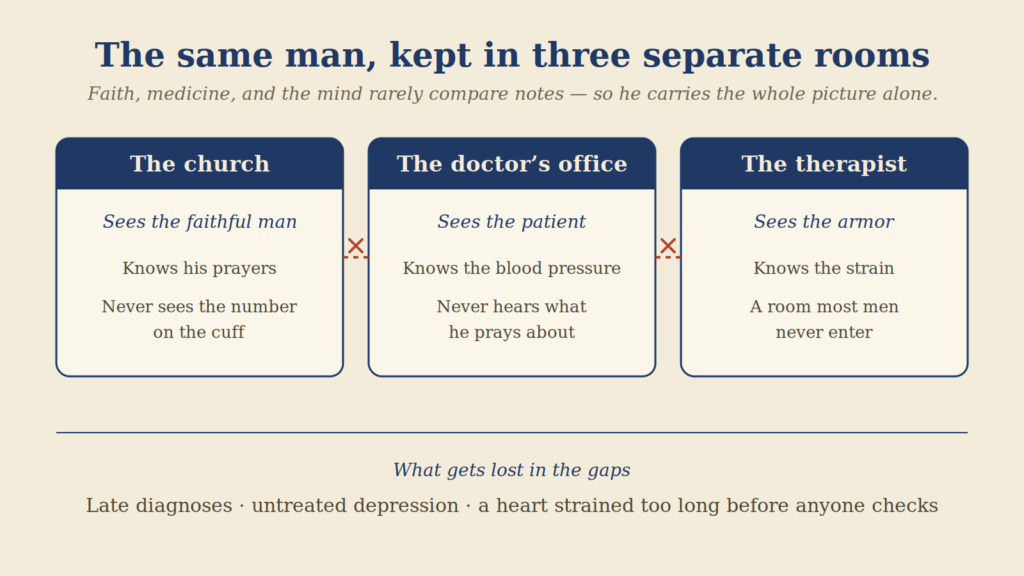
Here is the piece that troubles me most, because it is structural— and nobody built it on purpose. I like to call it the three rooms do not talk to each other. John’s pastor has no idea what his blood pressure is. His doctor has no idea what he prays about on Sunday. And the therapist, if he ever saw one, never met either of the other two. So John does what most of us do when the rooms are kept separate. He brings a different version of himself into each one: the faithful man on Sunday, the capable provider at work, the one who never lets a doctor see him sweat. We have a name for the figure he is performing. The Strong Black Man has saved a great many lives and quietly cost a great many, too.
The cost is rarely dramatic.
It looks like a diagnosis arriving a few years late, a depression nobody ever said out loud, a heart that had been working too hard for too long before anyone thought to check.
How it usually goes
The John I am describing is a composite, details changed and privacy protected, but the arc is one I have watched play out more times than I can count, and it tends to move in an order that surprises people.
Faith moved first. It did not move by getting smaller. It moved when a deacon John trusted, a man who had been through his own version of it, told him plainly that asking for help was one of the truest uses of his faith, never a betrayal of it. That gave John permission to be honest in his own body for the first time in years.
The mindset shifted next, and more slowly. We spent real time on the story he was telling himself. The day it cracked open was the day he stopped describing his blood pressure as a sentence he was serving and started calling it something that could change.
Medicine came last, which is almost always the order. By the time John let me reconnect him to his PCP, he had already done the harder work. The medication brought the pressure down. The harder thing, the low mood that had trailed him for years, eased more slowly, but it eased. What he noticed first was not the number on the cuff. It was that he had stopped bracing, that the mornings he used to dread were much lighter–and he liked that new feeling a lot.
When yes isn’t enough
I want to be honest about this—not every man who gets to yes finds a door. I have watched men do the hard inside work, decide they were ready to be helped, and then run into a six-month waitlist, a provider an hour and a half away, a practice that took everyone’s insurance but theirs. I have come to understand that wanting care is only half of it. Whether the care is actually there when a man turns to look for it is the other half, and for too many men it still is not.
Three questions to ask yourself
If you are a man reading this, or you love one, here are three questions. I would rather you sit with them than rush them.
The first is about your faith. What do I really believe is possible for my body? Not what I hope for out loud. What I expect when no one is listening.
The second is about our story. What am I telling myself about needing help, and where did I learn it? This one usually has a face attached, a father, a coach, a pulpit.
The last is the simplest but might be the hardest. When did I last let a professional help me at all, and what would it take to do it once more?
None of these are accusations. For a lot of Black men, asking them out loud is already an act of courage, because needing support is the one thing many of us were raised to treat as a liability. Myself included.
June is Men’s Health Month, which feels like the right time to say this plainly. The men I have watched get well did not out-hustle their conditions. They stopped keeping faith, mindset, and medicine in separate rooms. The faith gave them a reason to want to be here for it. The work on their own minds turned that wanting into something they expected. And medicine, once they let it in, gave the expectation something to stand on. Pull any one of the three, and the other two start to wobble.
None of this is as simple as deciding to. So if you are a man who gets to yes and does not know where to turn, one place to start is findahealthcenter.hrsa.gov, which lists community health centers that serve patients regardless of ability to pay. It is a door. The rest of the work, building enough of these doors that no man has to drive ninety minutes to one, belongs to all of us. I have seen it happen. Black men everywhere deserve all three, and they deserve to stop being asked to choose. What John noticed first was that he had set the weight down. That is the plain, unfamiliar relief I want for every man still carrying it: the chance to do the same.
Derek H. Suite, M.D., is a board-certified psychiatrist who specializes in sports psychiatry and consults with major sports franchises in basketball, football, hockey, and soccer. Dr. Suite is the founder of Full Circle Health, host of The SuiteSpot podcast, and is currently at work on a book titled Sleep as Performance Medicine. His clinical work integrates mindfulness, sleep medicine, and performance psychiatry.
Dr. Suite is a regular contributor to Black Westchester Magazine.
Cities Of Mt Vernon, Yonkers, and New Rochelle Among Communities Cited in Lawsuit Challenging County Surveillance Cameras
A newly filed class-action lawsuit is challenging what plaintiffs describe as one of the largest and most invasive vehicle surveillance systems in the nation, alleging that the Westchester County Police Department has spent years collecting and storing detailed information on millions of drivers without legislative authorization or adequate privacy protections.
The lawsuit, filed Tuesday, June 9th, in Westchester County Supreme Court, names Westchester County, the Westchester County Department of Public Safety, Commissioner Terrance Raynor, and Chief James Luciano as defendants. The plaintiffs contend that the County’s extensive Automated License Plate Reader (ALPR) network operates as a “dragnet surveillance system” that violates the privacy rights of residents and motorists who travel throughout Westchester County. (see lawsuit in its entirety below)
According to the complaint, the system consists of hundreds of cameras strategically placed throughout the county that record every passing vehicle 24 hours a day, seven days a week. The technology allegedly captures license plate numbers, vehicle characteristics, travel locations, dates and times, and in some cases may even record images of drivers and passengers.
The lawsuit claims the surveillance program has grown into one of the largest vehicle tracking systems in the United States. Plaintiffs allege that in 2024 alone, the network collected more than 264 million vehicle records, with more than 99 percent of those records having no connection to criminal investigations.
At the heart of the lawsuit is the argument that Westchester County is collecting and storing detailed travel histories of law-abiding residents for years at a time. The complaint alleges that the County retains the information in a searchable database for at least two years, allowing law enforcement agencies to reconstruct an individual’s movements, routines, associations, and activities.
“The information collected in this dragnet amounts to a digital dossier on the comings and goings of millions of people,” the lawsuit states.
The plaintiffs include community advocates, educators, retirees, and activists who allege their vehicles have been recorded hundreds or even thousands of times while traveling to work, religious services, political events, medical appointments, protests, and other lawful activities.
Particularly troubling to the plaintiffs is the allegation that surveillance cameras are heavily concentrated in communities along the Westchester-Bronx border, including Mount Vernon, Yonkers, and New Rochelle. The lawsuit argues that these deployments disproportionately impact Black and Latino communities and reinforce historical patterns of over-policing and surveillance.
The complaint also raises concerns about data sharing. According to the lawsuit, information collected by the surveillance network is accessible not only to local law enforcement agencies but also to federal agencies, including the FBI, DEA, and Immigration and Customs Enforcement (ICE). Plaintiffs argue that there are few meaningful safeguards governing who can access the data, how it is used, or how long it is retained.
Another major issue raised in the lawsuit is the use of artificial intelligence-powered analytics. The complaint alleges the County utilizes software capable of identifying travel patterns, associations between vehicles, and so-called “suspicious” travel routes. Plaintiffs contend there is little public transparency regarding how these AI tools operate or whether they have been independently evaluated for accuracy and bias.
Beyond constitutional concerns, the lawsuit argues that the County lacks legal authority to operate such an expansive surveillance system. Plaintiffs claim neither the Westchester County Board of Legislators nor the New York State Legislature has expressly authorized the collection and retention of vehicle data on such a massive scale.
The lawsuit seeks a court order declaring the surveillance system unconstitutional and unauthorized under New York law, as well as an injunction preventing the County from continuing its current operations.
The filing comes amid growing national debates over privacy rights, police surveillance technologies, facial recognition systems, and the expanding role of artificial intelligence in law enforcement. Supporters of surveillance technologies often argue they help solve crimes and locate stolen vehicles, while critics contend that mass data collection threatens civil liberties and disproportionately impacts communities of color.
As of press time, Westchester County officials had not publicly responded to the allegations contained in the lawsuit.
The case is expected to draw significant attention from civil rights advocates, privacy organizations, elected officials, and residents throughout Westchester County as questions about public safety, government oversight, and constitutional rights continue to take center stage.
For many Westchester residents, the lawsuit raises a simple but profound question: How much surveillance is too much in the name of public safety?