Home Blog Page 129

Mount Vernon’s Rai Benjamin Wins 400m Hurdles at U.S. Olympic Team Trials

Rai Benjamin, a 2015 Mount Vernon High School graduate and Olympic silver medalist, beat his own meet record for the 400m hurdles at the United States Olympic track and field trials on Sunday, June 30, 2024. He ran the hurdles in 46.46 seconds, beating his meet record of 46.83 seconds from the U.S. Olympic trials in 2021.

The UCLA Bruin alumnus Rai Benjamin has punched his ticket to the 2024 Paris Olympic Games, placing first in the 400m hurdle finals at the U.S. Olympic Team Trials in Eugene, Ore., Sunday. Benjamin posted a meet record and world-leading time of 46.46 at Hayward Field (see video below).

Benjamin was a three-time New York State Public High School Athletic Association champion at MVHS. The Mount Vernon native also ran track and field at the University of Southern California and the University of California, Los Angeles.

Benjamin won the silver medal in his first Olympic Games in 2021 in Tokyo, and now he will try to achieve gold in Paris, with the Olympics beginning on Friday, July 26. While he was able to beat his Olympic trials record, Benjamin gave his race a “C-plus” and will look to improve on his time on the big stage.

Rai Benjamin, born in the Bronx on July 27, 1997 and raised in Mount Vernon is a professional hurdler and sprinter specializing in the 400 m and 400 m hurdles. He is the second fastest man in history in the 400 m hurdles with a personal best time of 46.17 s. Benjamin won silver medals at his first Olympic Games in 2021 and at the World Championships in 2019 and 2022 in the men’s 400 m hurdles, and gold medals in the 4 × 400 m relay in 2019 and 2021.

In college, Benjamin ran for the UCLA Bruins and then the USC Trojans, where in early 2018 he was part of the team that set the world best time in the indoor 4 × 400 m relay with a time of 3:00.77. At the time, his relay split time of 44.35 s was the fastest ever recorded in an indoor race. In June of the same year he also helped set the NCAA record in the same event but outdoors, and ran what was at the time the second fastest 400 m hurdles race of all time in 47.02 s.

Rai Benjamin, a 2015 Mount Vernon High School graduate, just after completing his second year participated at the 2013 World Youth Championships held in Donetsk, Ukraine. He wanted to run for the USA, since he was born in New York, but in Donetsk he represented Antigua and Barbuda in the 400 m hurdles.

He won the 2015 New York Indoor State meet with a national-leading time of 33.17 in the 300 meters. He was a three-time New York State Public High School Athletic Association champion in the 400m hurdles. Benjamin won a silver medal in the 400 meters at the 2015 CARIFTA Games. He was the 2015 New Balance 400-meter hurdles national champion. He was the fastest 2015 prep time in the United States in the 400m hurdles with a time of 49.97, fastest 400 m indoor time in the country with a 46.59 and the third fastest outdoor time 46.19.

In 2017, the IAAF suspended all transfers of allegiance, meaning Benjamin could not represent the United States until transfers were reinstated in summer 2018. In October 2018, Benjamin’s transfer request was approved, allowing him to represent the United States abroad and compete in USATF Championship events.

At the 2018 Meeting Areva in Paris, he ran 19.99 in the 200 meters to take .65 of a second off his previous personal best. He became the 72nd person to break 20 seconds, in what is perhaps his third best event on the track.

At the 2019 Mt. SAC Relays, that year at El Camino College in Torrance, California, Benjamin joined his training partner and previous college teammate, Michael Norman running the 400 meters. Benjamin ran his personal best of 44.31, the 50th best time in history behind Norman’s 43.45, which turned out to be the fastest 400 run in the 2019 season and tied him as the 4th fastest of all time.

Benjamin won the silver medal in his first Olympic Games in 2021 in Tokyo, and now he will try to achieve gold in Paris, with the Olympics beginning on Friday, July 26. While he was able to beat his Olympic trials record, Benjamin gave his race a “C-plus” and will look to improve on his time on the big stage.

PBP Radio Episode 399 – Primary Aftermath: Black Voters, AIPAC, and the Democratic Landscape

Black Westchester Magazine presents the People Before Politics Radio Show Episode 399 with Damon K Jones, AJ Woodson and Robert Baskerville with special guest Jennifer Cabrera the Vice Chair of the Westchester-Putnam Chapter of the New York Working Families analyze the recent Democratic Primary results. The panel will discuss: The outcome of the Primary Elections, AIPAC’s influence on congressional races, Low Black voter turnout and its implications, The current political standing of Black Americans

You do not want to miss this in-depth discussion on these crucial topics.

Black Westchester presents the People Before Politics Radio Show every Sunday night 6-8PM, streaming live on Facebook, X (formerly Twitter), LinkedIn, Instagram and YouTube and archived on BlackWestchester.com. Giving you that Real Talk For The Community since 2014.

To support the Black Westchester and the People Before Politics Radio Show, that provides the News With The Black Point Of view and gives you the real talk for the community for free, make a donation via PayPal at www.PayPal.me/BlackWestchesterMag. In the words of Ray Charles, “One of these days, and it [might not be] long, You’re gonna look for [us], and [we’ll] be gone.” Support independent, Black-free media!

As always, you can follow us on Facebook, InstagramLinkedIn, and YouTube

Contributions and Donations can be made via PayPal.

Dollars vs. Democracy: How Financial Disparities Threaten Black Political Power in Westchester

Mount Vernon, the beating heart of Black Westchester, stands at a critical crossroads. With Blacks comprising 80% of its population, this city has long been the barometer for Black cultural and political consciousness in the region. Yet, in a recent Congressional District 16 election, a mere 6,000 out of 30,000 registered Democrats voted – a staggering display of political disengagement. This alarming statistic isn’t just about Mount Vernon; it’s a wake-up call for Black America. As Mount Vernon’s political voice falters, so does the political power of Blacks in Westchester County.

Those who seek to marginalize Mount Vernon for personal gain understand this all too well: a politically awakened Mount Vernon could ignite a transformation across the entire region. The time has come for Mount Vernon to reclaim its role as the cultural, economic, and social hub for Black Westchester – for when Mount Vernon rises, all of Black Westchester will stand tall.

Historically, the Black church has been a cornerstone of voter mobilization in African American communities. Through initiatives like “Souls to the Polls,” which transports congregants from Sunday services directly to voting sites, churches have played a crucial role in increasing voter turnout. They’ve served as hubs for civic education, voter registration drives, and community organizing. Pastors have used their influence to advocate for political engagement, often framing voting as a collective responsibility. During overt voter suppression, churches were instrumental in helping members overcome obstacles to voting. However, the absence of these robust mobilization efforts in Mount Vernon and throughout District 16 is deeply troubling.

In this election, it was evident that the district’s first Black congressman’s lack of traditional church-led engagement contributed to a broader decline in political participation, voter turnout, and, ultimately, Black political power in the region. The failure to leverage these historically effective methods has left a void in civic engagement, posing significant challenges for Black voter representation, any type of Black political agenda and influence in Westchester politics.

While many other ethnic groups practice block voting – setting aside their differences to rally around shared issues – in Westchester, Black communities often struggle to present a unified front. This disunity provides an advantage to those who may not have the genuine interests of Black people at heart beyond securing their votes. The stark contrast between the political engagement of different communities is alarming: in the same congressional district, Jewish voters galvanized 6,000 absentee ballots – equal to the total votes cast in Mount Vernon. This disparity should serve as a wake-up call to Black voters across the county and the nation.

Political disillusionment also ranks high among factors reducing participation. Many in the Black community feel their votes don’t translate into tangible improvements in their daily lives. This sentiment is exacerbated by a lack of competitive races and inadequate civic education, leading some to question the value of their participation.

Practical barriers play a role, too. Inconvenient polling locations, limited voting hours, and lack of transportation can make voting a logistical challenge for many. Moreover, in communities where economic struggles are prevalent, taking time off work to vote can be a luxury some cannot afford.

Perhaps most critically, the issue of political funding creates a cycle that disadvantages Black communities. With many African American neighborhoods ranging from middle class to poor, residents often lack the means to make substantial political donations. This financial constraint can lead to less attention from politicians, fewer resources allocated to the community, and policies that may not adequately address local needs.

The recent election between George Latimer and Congressman Jamaal Bowman in Westchester County starkly illustrates this disparity. AIPAC reportedly spent an unprecedented $20 million on this congressional race, mounting what many observers described as one of the most divisive and controversial campaigns in Westchester’s political history, with accusations of racist and Islamophobic tactics.

This level of spending is far beyond the reach of most community-based organizations. According to The Lever, AIPAC’s funding comes from substantial donations, with most pledges ranging between $100,000 to $200,000 and around 20 donors contributing between $500,000 and $2 million. Such financial firepower can easily drown out the voices of less affluent communities, including many Black neighborhoods, as we saw in the Latimer and Bowman race.

This financial imbalance presents a significant challenge to fair representation and equitable policy-making. When outside organizations can pour millions into local races, it raises serious questions about the true nature of democratic representation and the ability of less affluent communities to have their interests fairly considered in the political process.

This situation creates a problematic cycle: Low political engagement among Black residents leads to reduced representation in local government. This results in fewer resources and policies that benefit the Black community, which in turn further discourages political participation. Westchester’s Black leaders and organizations should recognize this issue. However, it appears they have overlooked it, possibly prioritizing personal alliances, grant funding, and job opportunities instead of addressing this cycle of disengagement, underrepresentation and lack of govermental resorces to their communities.

Breaking this cycle is crucial, but it requires addressing multiple fronts simultaneously. Enhancing civic education, removing practical barriers to voting, and finding ways to amplify community voices despite financial limitations are all vital steps. However, perhaps the most critical need is for greater unity within the Black community. By setting aside internal differences and focusing on shared concerns, Black voters could significantly increase their political influence.

Mount Vernon’s crisis lays bare the rot at the core of our nation’s political system. This isn’t just a local issue—it’s a damning indictment of our failed democracy. Until Black communities forge an unbreakable alliance, weaponizing their votes with laser-focused precision, and until we burn down the corrupt political machine that caters solely to the wealthy elite, true representation will remain a cruel illusion. This sham democracy, propped up by parasitic Black gatekeepers who feast on division, spits in the face of our ancestors who bled and died for the very freedoms we’re now denied. Without immediate, revolutionary action, we’re not just accepting a counterfeit democracy—we’re actively betraying our children, condemning them to a future where their voices are silenced, their rights are trampled, and their potential is crushed under the boot of a privileged minority. The time for half-measures and empty promises is over. We must reclaim our power now, or risk losing it forever.

The Westchester political landscape reveals a troubling trend: Black leaders and pastors are being co-opted by pro-Israel interests, lured by financial incentives and political expediency at the expense of the Black community’s needs. This betrayal of grassroots priorities has fractured Black political power, leaving it impotent in the face of systemic challenges.

The devastating consequences of this sellout were laid bare in the recent election cycle. Two qualified Black candidates – one vying for Congress, the other for Westchester District Attorney – both with proven track records of championing civil rights, police accountability, and the interests of marginalized communities, were left floundering without cohesive support.

This failure stems directly from the absence of a unified, unapologetically pro-Black agenda. Instead of rallying behind candidates who genuinely represent their constituents’ interests, too many Black leaders have allowed themselves to be bought off, prioritizing external agendas that do little to address the pressing needs of their own community.

The result is a neutered Black political voice in Westchester, unable to effectively advocate for critical issues like economic empowerment, educational equity, and criminal justice reform. Until Black leadership realigns its priorities and presents a united front, the community will continue to be exploited and its political potential squandered.

When galvanized around a shared vision, the Black vote wields transformative power – it’s time to unleash its full force. However, unity alone isn’t enough. We must ruthlessly expose and challenge the gatekeepers and sellouts who betray any genuine Black political agenda. There’s no room for compromise: either you’re for us or against us. The Black community must confront and dismantle the stranglehold that well-funded interest groups exert over local elections.

This fight demands aggressive grassroots organizing, relentless fundraising, and unyielding political pressure. It requires flooding every level of government with candidates who refuse to compromise on core community issues. We’re not fighting for a bag of gold from Caesar or a meaninless seat at the table – we’re fighting for our children’s right to true democracy and self-determination. The path forward is clear: build an unbreakable coalition, pool resources, and wage an uncompromising campaign to reclaim political power. Expose the traitors, elevate true leaders, and accept nothing less than full representation. Anything less is a betrayal of future generations. The time for half-measures and appeasement is over – only a revolution in Black political engagement will suffice or it is over for any Black politics of substance in Westchester County.

PUBLIC ADVISORY: Closure of Hudson River Beaches Due to Elevated Bacteria Levels

0

Just as the summer swimming season gets underway, closure of Hudson River beaches due to elevated bacteria levels continues. After a second round of testing that came back positive for enterococcus bacteria, the Westchester County Department of Health has closed Croton Point Park Beach in Croton-on-Hudson and Philips Manor Beach in Sleepy Hollow, through the weekend. The beach samples collected exceeded the maximum level of enterococcus bacteria as outlined by the sanitary code.

Both beaches are temporarily closed on Friday. A third test will be performed on Monday, July 1. If these subsequent samples meet the required safety standards, the beaches will be reopened at that time. If the enterococcus bacteria level remains high, the beaches will remain closed and will undergo further testing.

Residents and visitors are encouraged to visit the Westchester County website for the latest updates on beach closures and reopening schedules. The County remains committed to maintaining high standards of environmental health and safety across its recreational facilities.


**AVISO PÚBLICO**
CIERRE DE PLAYAS DEL RÍO HUDSON DEBIDO A NIVELES ELEVADOS DE BACTERIAS

El cierre de las playas del río Hudson debido a niveles elevados de bacterias continúa. Después de una segunda ronda de pruebas que resultaron positivas para la bacteria enterococo, el Departamento de Salud del Condado de Westchester ha cerrado las playas de Croton Point Park y Philips Manor durante el fin de semana. Las muestras de agua de las playas superaron el nivel máximo de bacterias enterococo según lo estipulado por el código sanitario.

Ambas playas están cerradas temporalmente. Se realizará una tercera prueba el lunes 1 de Julio. Si estas muestras posteriores cumplen con los estándares de seguridad requeridos, las playas serán reabiertas en ese momento. Si el nivel de bacterias enterococo sigue siendo alto, las playas permanecerán cerradas y se someterán a más pruebas.

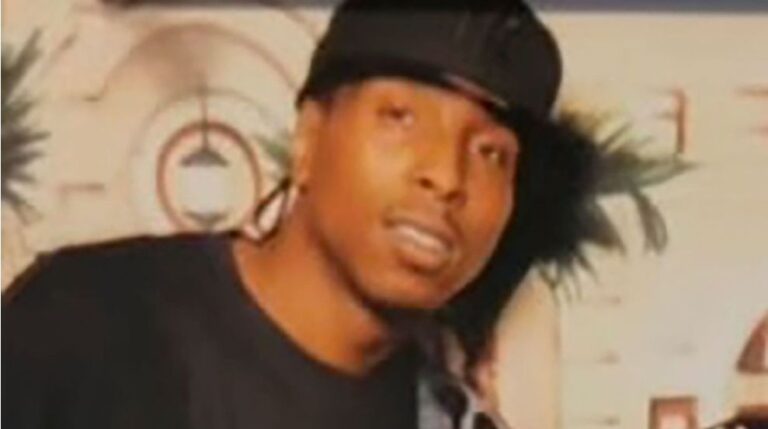
Candlelight Vigil July 3rd To Mark The One Year Anniversary of The Murder Of Jarrell Garris By NRPD Detective Steven Conn

1

On Wednesday July 3rd at 6 pm there will be a march from St. Catherine A.M.E. Zion Church (19 Lincoln Avenue) where Jarrell CeeTwo Garris was murdered in front of by New Rochelle Police Detective Steven Conn to the New Rochelle Police Department (475 North Ave #2). All are welcome to come voice their opinions on this situation and other police and community interactions.

“I will also address the fact that at least 3 police officers are on paid leave for a year which is not the way we want our tax pay dollars spent due to Police misconduct and overzealousness We want the Police, mayor and city council to explain how this officer has violated their code of conduct and is still employed and undisciplined. No other profession would you still be employed so come out speak up,” Jarrell’s cousin Rodney Bynum shared with Black Westchester.

On July 3 2023 the life of Jarrell CeeTwo Garris was taken from us. Come out this Wednesday July 3 to honor his life. At St. Catherine African Methodist Episcopal Church, at 6pm, in front of the church where his life was cut short, in front of the church he was baptized as a child. They will light candles and release balloons and walk to the New Rochelle Police to assemble peacefully and ask for accountability for their and their colleagues actions

Raymond ‘C2’ Fowler appeared on Black Westchester’s People Before Politics Radio Show, joining Damon K. Jones and AJ Woodson on Sunday, February 4, 2024, to talk about his fight for justice and accountability for the death of his son, Jarrell Garris at the hands of New Rochelle Detective Steven Conn.

On Monday, July 3, 2023, the day before this country celebrates its independence, 37-year-old Jarrell Garris was shot and killed by New Rochelle Police Detective Stephen Conn, after allegedly stealing some fruit.

On July 5, 1852, Frederick Douglass explained what the Fourth of July means to an African American, “a day that reveals to him, more than all other days in the year, the gross injustice and cruelty to which he is the constant victim. To him, your celebration is a sham; your boasted liberty, an unholy license; your national greatness, swelling vanity; your sounds of rejoicing are empty and heartless; your denunciations of tyrants, brass-fronted impudence; your shouts of liberty and equality, hollow mockery; your prayers and hymns, your sermons and thanksgivings, with all your religious parade, and solemnity, are, to him, mere bombast, fraud, deception, impiety, and hypocrisy—a thin veil to cover up crimes which would disgrace a nation of savages. There is not a nation on the earth guilty of practices more shocking and bloody, than are the people of these United States, at this very hour. . . .”

Garris died a week later, on Monday, July 10, 2024, and twelve months later, his family is still demanding justice. Still waiting for a response from New York Attorney General Tish James, while the officers responsible for his death sit at home on administrative leave with pay.

172 years after Frederick Douglass uttered the words above, Garris’s family is still reminded of “the gross injustice and cruelty to which [Black People are still] the constant victims. Reminded of “boasted liberty,” “an unholy license,” and how the “shouts of liberty and equality” of the Fourth of July are a “hollow mockery.”

The New York State Attorney General’s Office of Special Investigation is currently conducting an investigation into the death of Jarrell Garris, who died on July 10, 2023 after an encounter with law enforcement in New Rochelle, Westchester County on July 3, 2023.

Twelve months later, Raymond Fowler and his family still have not seen the boasted liberty that is celebrated every July 4th, and the celebration of the holiday will always be a sham, as Douglass described. Mr. Fowler exclusively shares his loss last summer and his unrelenting quest for justice and accountability of his son.

Come out to stand with and support the family and they continue to demand justice for the summary execution of Jarrell.

Cacace Wins Westchester Democratic Primary

0

Retired judge Susan Cacace won the Democratic primary for Westchester district attorney Tuesday night defeating Civil Rights Attorney William O. Wagstaff. She served 19 years on the bench as a Westchester County judge. She was widely seen as the front-runner after Democratic leaders picked her in February to replace Mimi Rocah, who decided not to seek a second term and endorsed Cacace on June 13th.

“I think Westchester needs someone who can make it safer,” said Cacace in an interview with News 12 last year. “I feel like I have the most experience

Cacace, who stepped down as a Westchester County judge in the fall in hopes of running the office where she began her legal career, defeated Wagstaff 60% to 30%, according to unofficial results from the Westchester Board of Elections. That was close to the 61-30 advantage she enjoyed during early voting.

About an hour after the polls closed, Cacace showed up to a gathering of supporters at Underhills Crossing, restaurant, located at 74 Pondfield Rd. in Bronxville. They cheered for her and urged her to speak louder, one yelling, “Talk with your DA voice”.

Cacace faces Republican candidate John Sarcone in the November General Election on Tuesday, November 5th. As of now, Wagstaff who was running to be Westchester’s first Black District Attorney, holds the Working Families line on the ballot. According to the NYWFP, Wagstaff has the opportunity to appear or decline to appear on the NYWFP line in the general election. As of publishing he has not made a decision.

Cacace acknowledged the battle won was not the end of the war. “The voters of Westchester have spoken and hopefully they will vote the same way in November,” she told the crowd. The winner will be the fourth DA in Westchester in nine years.

New York Senate Majority Leader Stewart-Cousins Honored by 9th Judicial District’s LGBTQ Access to Justice Committee

(Rockland County, NY) — New York Senate Majority Leader Andrea Stewart-Cousins was honored by the 9th Judicial District’s LGBTQ Access to Justice Committee with the LGBTQ Community Distinguished Leadership Award on Tuesday, June 12 (Senator Stewart-Cousins delivering remarks – pictured above). The ceremony also celebrated fellow honorees, retired Judge Michael Sonberg and the LGBTQ Division of Legal Services of the Hudson Valley.

“The Pride Justice Awards is an impactful annual tradition in the Ninth Judicial District. Our honorees this year highlight meaningful contributions to the judiciary’s ongoing and important mission of expanding access to justice for the LGBTQ+ community,”  said Judge David Fried, 9th Judicial District Pride Justice Awards’ Planning Committee Chair. “Senate Majority Leader Andrea Stewart-Cousins’ strong efforts and achievements, over many decades, to empower the voices of LGBTQ+ people in the halls of justice made her the perfect recipient for this year’s LGBTQ+ Access to Justice Distinguished Leadership Award.”

Judge David Fried and Senator Stewart-Cousins [Black Westchester]

“I am deeply honored to accept the LGBTQ Community Distinguished Leadership Award, and I thank the 9th Judicial District LGBTQ Access to Justice Committee for this award,” Senator Stewart-Cousins shared with Black Westchester. “This recognition is a testament to the progress New York State has made towards becoming a more welcoming and inclusive place. 

Senator Stewart-Cousins was recognized for her leadership in passing some of the most significant LGBTQIA+ bills since marriage equality was signed into law in 2011. This includes the Gender Expression Non Discrimination Act (GENDA), banning conversion therapy for minors, eliminating the “gay panic” and “trans panic” defenses,  lifting the ban on surrogacy and legalized gestational surrogacy, restoring eligibility for state programs and benefits for LGBTQIA+ veterans, and creating a suicide prevention task force for LGBTQIA+ youth.

“My conference has always been proud allies of the LGBTQIA+ community, and we will continue to stand up to intolerance and the forces seeking to erase our progress,” said Senator Stewart-Cousins.

With Robert Voorheis and Hon. Michael Sabatino, who nominated Senator Stewart-Cousins and presented the award [Black Westchester]

Senator Stewart-Cousins is also proud to have provided more than $151,000 in funding last year for the LGBTQ Division of Legal Services of the Hudson Valley to continue its outstanding work in the region.

The 9th Judicial District LGBTQ Access to Justice Committee, co-chaired by Hon. James L. Hyer and Hon. David Fried, plays a pivotal role in advocating for equality and justice within the judicial system. Their recognition of Senator Stewart-Cousins underscores her significant contributions to advancing LGBTQIA+ rights and representation in New York.

Senator Stewart-Cousins’ receipt of the LGBTQ Community Distinguished Leadership Award highlights her dedicated efforts and the legislative advancements achieved under her leadership, further solidifying New York’s status as a national leader in LGBTQIA+ rights and equality.

Senate Majority Leader Andrea Stewart-Cousins represents a significant portion of Yonkers, the Town of Greenburgh, and the Town of Mount Pleasant in the 35th NYS Senate District. On December 17, 2012, she was elected Senate Democratic Leader. Stewart-Cousins is the first woman in history to lead a conference in the New York State Legislature.

How White Supremacy Triumphed in Westchester’s Congressional Race as Black Leaders Stood By

The recent congressional race for District 16, between incumbent Jamaal Bowman and challenger George Latimer, has set new precedents in campaign financing. AIPAC and other Republican-funded PACs spent over 20 million to unseat the first Black Congressman in CD16, highlighting complex racial dynamics, community leadership, and voter engagement issues.

Congressman Jamaal Bowman, the district’s first Black Congressional Representative, faced a campaign that allegedly employed concerning tactics, including racial stereotyping, divisive rhetoric, and exclusionary messaging. The massive financial backing from AIPAC and other groups adds another layer to the race, highlighting the influence of national and international issues on local politics.

The campaign against Congressman Jamaal Bowman reportedly employed a range of controversial tactics that raised concerns about racial messaging and divisiveness. These included alleged racial stereotyping, with claims that Bowman “only represented Black people,” undermining the ability of Black politicians to represent diverse constituencies. Visual manipulation was also reportedly used, with campaign literature allegedly darkening Bowman’s face, a tactic historically employed to make Black candidates appear more “threatening.” Using phrases like “Black Justice” to describe Bowman’s platform seemed designed to frame racial equity as exclusionary.

In general, the use of dog whistles to appeal to racial biases or prejudices is indeed a tactic that has been employed in various political contexts, including by those who hold or appeal to white supremacist ideologies. This approach can be used to mobilize certain voter bases without explicitly stating racist views. As Black people who are descendants of segregation and Jim Crow, we should not have forgotten what racism looked like and should have recognized the tactics of the Latimer campaign.

The failure to widely acknowledge and confront these tactics is particularly concerning, given the Black community’s historical experience with systemic racism. Our ancestors endured the brutalities of slavery, the oppression of Jim Crow laws, and the struggles of the Civil Rights Movement. This collective memory should have equipped us with a keen awareness of even subtle forms of racial manipulation in political discourse, but we failed.

Furthermore, there were implications that Arab and Muslim communities “don’t belong” in the district, serving to marginalize these groups. Latimer’s failure to appear before the combined NAACP chapters located in the 16th congressional district, could be interpreted as indifference to organizations associated with Black civil rights and gives the impression he doesn’t care what Black people think or have to say. It shows a lack of respect and gives the middle finger to the Black Community. If this was any other group he respected he would have made arrangements or offered to appear before them to hear their concerns and answer their question when he allegedly felt better the next day. Collectively, these tactics appeared to exploit racial anxieties and prejudices, potentially exacerbating community divisions and undermining principles of inclusive representation.

The apparent silence from much of Westchester’s Black leadership in the face of these contentious campaign tactics represents a concerning shift in community advocacy. This lack of public disagreement, particularly from Black pastors, marks a significant departure from the Black church’s historical role as a pillar of civil rights activism and community representation. Such silence could have far-reaching implications for the future of civil rights and equity in the Black communities of Westchester County. It potentially signals a weakening of traditional support systems that have long been crucial in confronting racial injustice and promoting Black interests.

This shift may erode trust in established leadership, leaving a vacuum in advocacy that could slow progress on critical issues affecting the Black community. Young activists and community members might feel unsupported or disillusioned, potentially decreasing civic engagement. The absence of solid and unified voices against divisive political tactics could also encourage those who employ such strategies, making it harder to combat racial stereotyping and discrimination in future political discourse.

Moreover, this situation may reflect a broader challenge in adapting civil rights advocacy to contemporary political landscapes. As issues become more complex and intertwined with national and international concerns, local Black leadership may struggle to navigate these waters effectively. We now see a fragmentation of advocacy efforts and a dilution of the Black community’s political power.

Ultimately, the lack of vocal opposition from Black leaders to these campaign tactics may signify a critical juncture for civil rights advocacy in Westchester. It underscores the urgent need to rejuvenate grassroots organizing, reevaluate leadership responsibilities, and develop new strategies to champion equity and justice effectively in an evolving political environment. The future of civil rights and equity within Black and Brown communities in Westchester may depend on how the community responds to this apparent leadership vacuum. Without a new wave of activism or necessitating a reimagining of how Black communities advocate for their interests in the political arena, Black people have lost in Westchester.

The unprecedented spending in this race raises questions about the impact of money in politics, mainly when directed at removing a representative of a historically underrepresented group. This financial onslaught was reportedly coupled with an expectation of low Black voter turnout based on a perceived lack of engagement from community leaders and what’s been described as a conditioning of young people to deprioritize voting and political participation.

The dynamics of this Congressional race in Westchester County reveal deep-seated issues beyond the surface-level debates about foreign policy. While some news outlets focused on Israel-related matters, the core of this contest was fundamentally about white power and resource allocation in a historically segregated county..

Westchester has long maintained rigid racial and socioeconomic boundaries, with Black and brown residents confined to specific areas despite their achievements and community involvement. The county’s power structure often grants limited influence to minority leaders rather than allowing them to wield genuine authority.

Disturbingly, some Black leaders seemed more comfortable aligning with pro-Israel stances than advocating for their own community’s interests. This highlights a critical disconnect between leadership and the pressing needs of Black constituents.

The Black community’s inability to unite effectively stems from a lack of genuine brotherhood, sisterhood, and collective vision. Many fail to see beyond immediate personal concerns to recognize the broader issues at stake: inadequate representation, persistent economic disparities, and limited political influence that could drive meaningful change for all.

The failures to elect a Black District Attorney in 2024 and the challenges in re-electing the district’s first Black Congressman are stark indicators of the ongoing hurdles facing the community. These setbacks underscore the deep-rooted systemic issues and the urgent need to reevaluate political strategies and community engagement in Westchester’s Black population.

This congressional race in Westchester is a stark wake-up call for the Black community. It highlights the urgent need for us to strengthen our collective bonds, cultivate more effective and responsive leadership, and develop a unified vision that truly represents our interests and needs. The million-dollar question: Are they listening?

The outcome of this election underscores the persistent racial and economic inequities deeply embedded in Westchester’s political landscape. These systemic barriers continue to shape our lived experiences and limit our political power despite the achievements of individual Black electeds.

We must create a shared vision that addresses our unique challenges and aspirations. Consistent, strategic political action and civic participation are also essential. If we fail to take these crucial steps, we risk perpetuating a system where white supremacy maintains its grip on power and resources. Every election where we don’t unite and mobilize effectively allows regressive forces to solidify their control.

The stakes are too high for complacency or disunity. By coming together, supporting genuine advocates for our community, and persistently pushing for substantive change, we can begin to dismantle the structures that have long marginalized us in Westchester and beyond.

This race transcends a single election outcome, a pivotal moment for Black political power and economic equity in our country. We must heed this wake-up call and take decisive action, or risk watching white supremacy triumph repeatedly. Even when we see a Black candidate pushed to the political forefront, we must critically examine who they serve and represent.

Our collective future hinges on our ability to unite, mobilize, and effect real change in the face of entrenched opposition. We can no longer afford to be complacent or divided. The stakes are too high, and the consequences of inaction are too severe.

We must scrutinize who occupies positions of power and how they use that power. Are our elected officials genuinely advocating for the interests of the Black community, or are they beholden to other interests that may conflict with our needs? This level of critical engagement is essential to ensure that our political representation translates into tangible improvements in our lives.

In closing one has to ask the question, did Congressman Jamaal Bowman actually fail the Black community or has the Black Community fail Congressman Bowman when he needed us?

JAMAAL BOWMAN IS THE LEADER THE DEMOCRATIC PARTY NEEDS NOW MORE THAN EVER

GOP-funded AIPAC spends record-breaking numbers in assault on our democracy

In a race that AIPAC’s Super PAC spending made the most expensive House primary election ever, Congressman Jamaal Bowman came shy of fending off their $15 million Republican-funded challenge to elect the House’s newest Joe Manchin. Bowman’s Republican-backed opponent welcomed over $15 million from AIPAC’s Super PAC and more than $2 million from a Crypto Super PAC – greenlighting what was widely seen as a historic assault on our democracy at the expense of New York voters.

Alexandra Rojas, Executive Director of Justice Democrats, released the following statement:

“Jamaal Bowman is one of the most transformational leaders of our generation. He has become a force in American politics who, alongside the rest of the Squad, has changed the trajectory of the Democratic Party and the urgency we expect from our elected leaders. We recruited Jamaal to run for Congress in 2020 because his life’s work has been deeply rooted in serving his community – as a loving father, husband and community leader serving children and working families as a principal and leading advocate for public education in NYC for over 15 years.  Now, he is one of the only members of Congress with the courage to fight for all people, stand up to right-wing, corporate interests like AIPAC, and not back down even in the face of historic spending against him. We could not be more proud of his courage, his commitment to justice, and the sacrifice he has made for all of us in our progressive movement to better understand what it’s going to take to overcome this corporate takeover of our democracy.

“Let us be clear: Jamaal Bowman and the movement behind him are such a threat to right-wing power, to Republican megadonors, and to AIPAC’s influence in Congress that they had to spend over $17 million to defeat us. This race for AIPAC – the single largest outside group spending in Democratic primaries – is so much bigger than re-electing a Congressman. It is part of their final attempts to stop a rising tide of a new generation of voters and leaders who refuse to stay silent in the face of injustice at home or abroad. They know they are losing the war of public opinion, as Democratic voters nationwide stand up for Palestinians rights and lives and call out AIPAC’s right-wing funding, and so they have no choice but to overwhelm, confuse, and depress voters with $15 million to buy a seat in Congress. It is up to us as a progressive movement and Democratic Party to stand up and change this system that sacrifices voters for megadonors.” 

Justice Democrats recruited Jamaal Bowman ahead of his first successful primary election against AIPAC’s biggest champion and 20+ year career politician and former House Foreign Affairs Committee Chairman Eliot Engel in 2020. Since then, AIPAC’s lobby has put a target on Bowman’s back, desperate to defeat a member of Congress that not only stands up for Palestinians rights and lives, but threatens the bottom lines of AIPAC’s billionaire donors by leading on policies from Medicare for All and a Green New Deal to raising taxes on billionaires—positions Bowman’s opponent refused to advocate for. 

This race was not a referendum on Israel-Palestine policies nor was it an intra-party debate between the so-called left and center. This race was wholly about diverse, working-class, progressive power against Republican megadonors and the right-wing interests that are threatened from having a Congressman Jamaal Bowman in Washington DC. In fact, Congressman Bowman’s policies on Israel-Palestine are overwhelmingly popular with Democratic voters, including support for a permanent ceasefire, support for conditioning military funding to the Israeli government, and believing Israel’s actions in Gaza amount to a genocide. AIPAC is  aware that their policy positions on their “single issue” are deeply out of step with Republican voters, which is exactly why they avoid running television ads about it despite their unlimited warchest. 

In total, AIPAC spent over $17 million in this race and bundled over $2.4 million for George Latimer—a substantial amount of which came from Republican donors. In fact, through AIPAC’s historic spending this election cycle, they have become the single largest source of Republican donations in Democratic primaries. AIPAC raised more money for George Latimer than any other candidate this cycle, becoming Latimer’s largest source of donations, and spending more in NY-16 than they have ever spent in an election. 

This level of spending does not come from a position of power, but from a position of great weakness and desperation. AIPAC knows it has already lost the war of public opinion and support, being exposed as a right-wing lobby funded by Republican interests. Now, it is desperate to put all its resources into individual battles like these to silence other members of Congress who would otherwise stand with the majority of Democratic voters in supporting a permanent ceasefire, conditioning military funding to Israel and supporting Palestinian and Israeli human rights alike . But their path forward is set, AIPAC will soon become our generation’s NRA—moving further and further from a veneer of bipartisanship to unconditionally support right-wing extremism until they become a right-wing pariah rejected by the whole of the Democratic Party.

Next is Cori Bush’s election, where their Super PAC has already spent $1.8TK million using the exact same strategy – disinformation, lies, and avoiding talking about Israel. It’s time for the Democratic Party to make clear that no Super PAC that is spending $15 million in a single race is welcome in our democracy—let alone funded by anti-abortion, pro-insurrection Republican interests.

City School District & City of New Rochelle Hosting Job Fair on Tuesday

0

JOB FAIR ALERT!

The City of New Rochelle and the City School District of New Rochelle are hosting a job fair on Tuesday, from 1 p.m. to 5 p.m., in the rotunda at New Rochelle City Hall (515 North Avenue).

Organizers say that attendees will be able to apply and ask questions about the job openings directly to the city and school district Human Resources teams.

The job fair will feature a variety of employment opportunities open to New Rochelle, Westchester County, and New York State residents, including:

  • police officer
  • sustainability coordinator
  • operations manager
  • assistant city engineer
  • registered professional nurses (hourly)
  • food server (hourly)
  • school crossing guard
  • general school aides (hourly)
  • lunch monitors (hourly)
  • special ed aides (hourly)
  • laborer (full-time/hourly)
  • cleaners

Everyone is encouraged to participate.

Learn more about jobs in the City of New Rochelle and the New Rochelle School District here or contact Human Resources by calling 914-654-2168 or emailing civilservice@newrochelleny.com