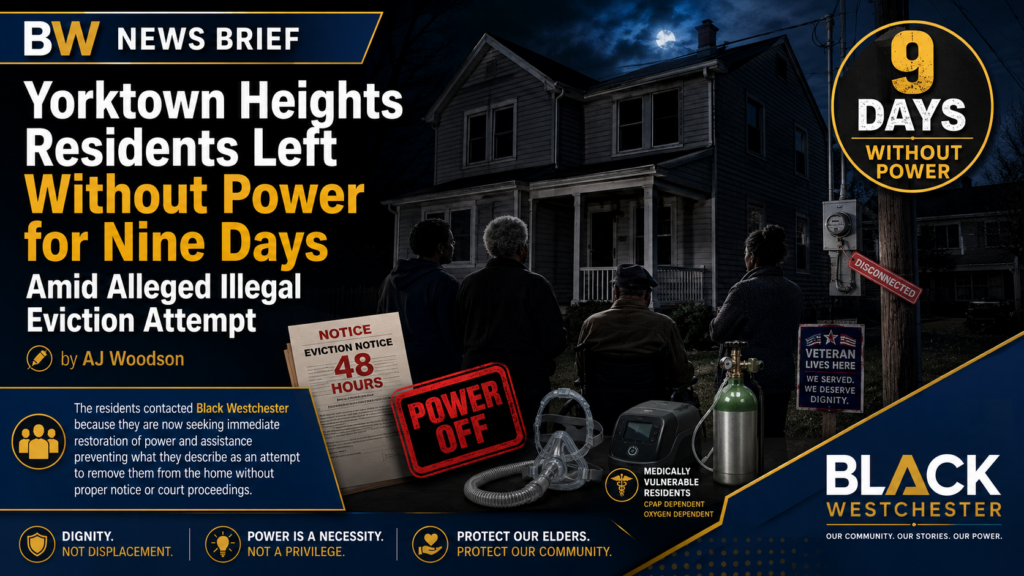







YORKTOWN HEIGHTS, NY — Residents of a Yorktown Heights home, including at least two military veterans and occupants with serious medical conditions, say a new property manager is attempting to force them from the residence without going through the legal eviction process.
The occupants of 164 Phyllis Court say the property manager introduced themselves on Friday, July 24, and presented them with a letter giving them 48 hours to leave the property. According to the residents, the manager also attempted to raise each occupant’s monthly rent by $500.
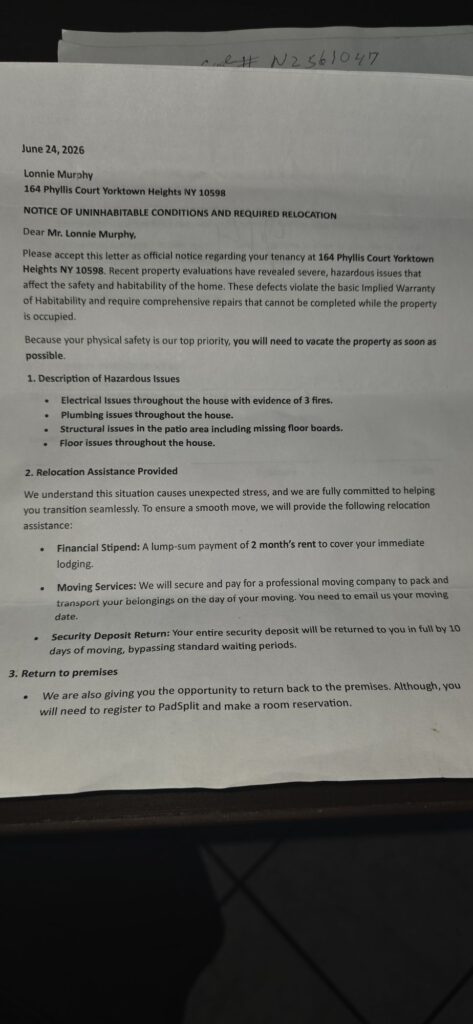
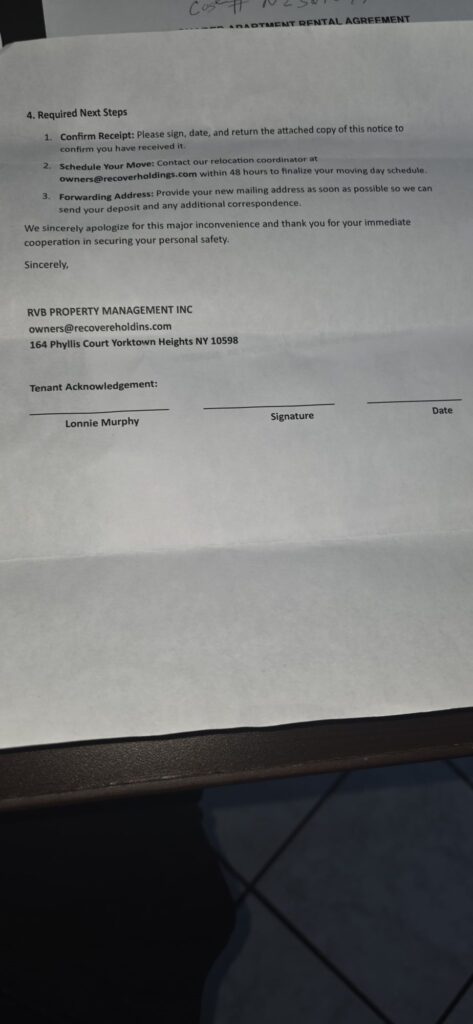
The letter they received (above) calls out dangerous and hazardous conditions, the tenants claim are not true, and says their house has never been inspected by the local Building Department, Fire Department, or other local and state agencies—including local Health Departments, Code Enforcement Officers, and Housing Preservation or-quasi-municipal housing agencies—the authorities that can deem a dwelling hazardous, dangerous, or unfit for human habitation or condemn a property or issue vacate orders. They just received this letter. Three days later, on Monday, July 27, the electricity to the home was shut off.
Under New York law and Westchester County guidelines, a property management company cannot legally give you a letter demanding you move out in 48 hours. In New York, an eviction requires a formal court process, and a tenant can only be removed after a judge signs a warrant and a sheriff or marshal carries it out
According to Legal Assistance of Western New York, Inc.® (LawNY®), landlords or property managers cannot lock you out, shut off utilities, or remove your property without going through the court system first, regardless of what a letter or lease states. It is a class A misdemeanor for anyone to evict you illegally by changing the locks, padlocking the doors, taking out your furniture or property, removing the door of the apartment or house, or turning off the electricity or water. Doing, or threatening to do, anything else that keeps you out of your house or apartment (Real Property Actions and Proceedings Law Section 768).
As of Wednesday, August 5, the residents have reportedly been without electricity for nine days. They maintain that everyone living in the home was current on their rent when the power was disconnected. Again, I reiterate, a 48-hour letter is illegal because landlords and property managers cannot force you out using letters, threats, changing the locks, or shutting off utilities.
Among those affected are 60-year-old Lonnie Murphy, who has lived in the house for approximately three years and depends on a CPAP machine while sleeping, and 71-year-old Antonio Avellanet, a veteran living on a fixed income who requires an oxygen machine and is undergoing chemotherapy and radiation treatment. Avellanet also takes 17 pills at night.
The residents are desperately seeking intervention and some measure of compassion as the prolonged loss of electricity threatens their health and ability to remain safely inside the home, in addition to not being able to use the stove to cook or be able to store food and medicine in the refrigerator to live.
Murphy reportedly has an Apnea-Hypopnea Index, or AHI, score of 103.3, meaning he experiences an average of more than 100 complete or partial breathing interruptions during each hour of sleep. That amounts to a disruption approximately every 35 seconds and falls within the category of severe sleep apnea.
A standard CPAP machine must be connected to an electrical outlet or a compatible external battery source to operate throughout the night. Without the machine, Murphy’s airway can repeatedly collapse while he sleeps, potentially causing dangerously low oxygen levels, severe sleep disruption, and increased cardiovascular stress.
As of publication, Wednesday night will mark Murphy’s ninth consecutive night without access to his CPAP machine.
Murphy’s physician, Dr. Stanley Abraham, DO of NYPMG–Hudson Valley Pulmonology, provided a letter explaining the medical necessity of restoring electricity to the residence.
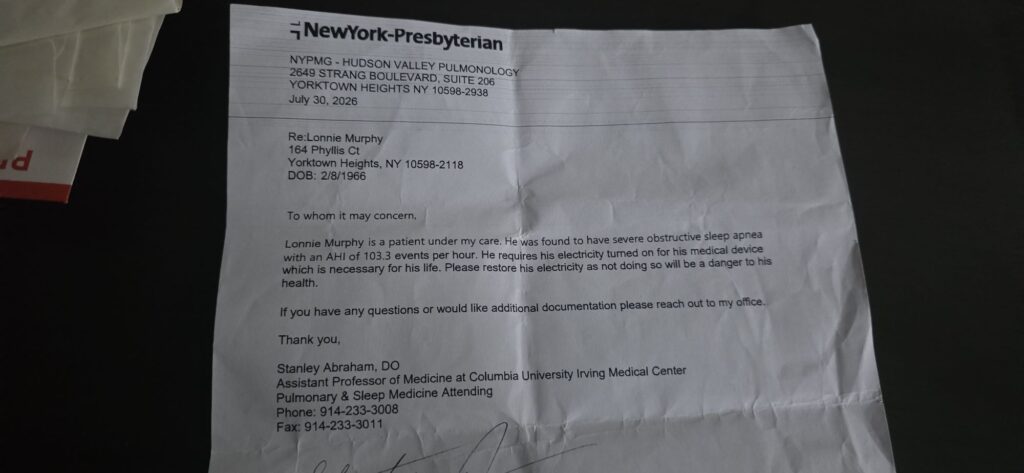
Murphy also contacted Con Edison seeking emergency assistance. Representatives responded to the property but discovered that the home’s electric meter is serviced by NYSEG, not Con Edison. Meanwhile, the physician’s letter documenting Murphy’s urgent medical need for electricity appears to have had no impact on the property management company. As of publication, the power remains off.
The letter also mentions relocation assistance, including a lump sum payment of two months’ rent and providing moving services, but the tenants do not trust it.
The residents contacted Black Westchester because they are now seeking immediate restoration of power and assistance preventing what they describe as an attempt to remove them from the home without proper notice or court proceedings.
Black Westchester will continue following this developing situation as the residents seek emergency assistance and answers from the property manager, utility provider, and local officials.