


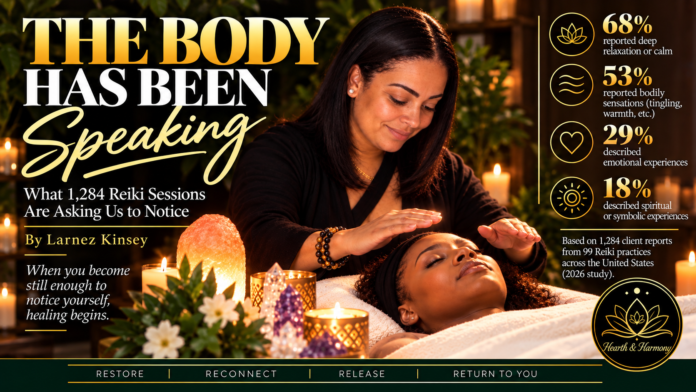





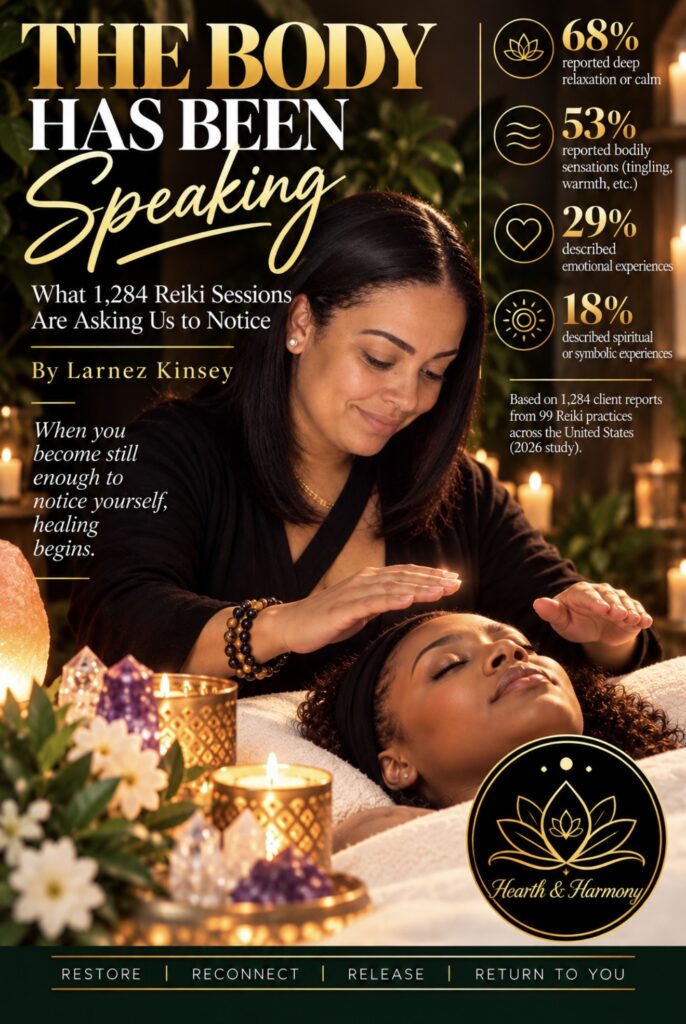
68 percent reported deep relaxation or calm. 53 percent reported bodily or somatic sensations. 29 percent described emotional experiences. 18 percent described spiritual or symbolic experiences. Those numbers come from an analysis of 1,284 client reports collected through 99 Reiki practices across the United States.
In 2026, researchers returned to those 1,284 sessions with another question: Were the things people experienced during Reiki associated with changes in how they felt afterward?
The findings were intriguing. Positive emotions during Reiki were associated with higher reported well-being and reduced anxiety. Bodily sensations, including warmth and tingling, were associated with greater pain relief. Emotional release was also associated with improved well-being through reductions in anxiety. The study identified associations rather than proving that Reiki caused those changes, an important distinction when talking about complementary wellness practices.
As a Reiki Master Teacher, I read those findings differently than someone encountering Reiki for the first time.
Because I have been in the room.
I have watched someone arrive carrying their entire week in their shoulders. Phone still in their hand. Jaw tight. Breathing shallow. Apologizing because they are running late while still answering somebody else’s text as I am trying to give them permission to finally stop.
Sometimes I think that is the part of healing we do not talk about enough.
Some people have become so accustomed to being needed that receiving care feels unfamiliar.
What Happens When Nobody Needs Anything From You?
There is a moment I have witnessed during Reiki that is difficult to capture in a photograph. It happens after the talking stops and the phone has been placed somewhere out of reach. The body is finally still. There is no meeting to facilitate, child calling your name, employee waiting for an answer, family member needing something fixed or community crisis requiring you to become the strong one again.
For once, nobody needs anything from you.
At first, the body does not always know what to do with that.
Some people fidget. Some swallow repeatedly. Some take several minutes before their breathing changes. Then slowly, something softens. The fingers that were curled begin to open. The shoulders sink a little deeper. The forehead smooths. The breath that had been living somewhere around the collarbone begins traveling farther down.
Sometimes I notice a tear slide quietly toward someone’s ear.
They are not sobbing. They may not even know why they are crying.
And I do not rush over and assign meaning to it.
I let the tear belong to them.
Because every sensation does not need somebody standing over you telling you what it means. Sometimes your body simply needs permission to experience itself.
Warmth, Tingling, Tears and Stillness
People frequently ask me, “What am I supposed to feel during Reiki?”
My answer is always some version of this: You do not have to feel anything for me.
An earlier analysis of the 1,284 client reports found a wide range of experiences. Deep relaxation and calm were the most common, followed by bodily sensations and emotional experiences. Some clients described spiritual or symbolic experiences, while smaller groups reported changes involving symptoms, perception, sleepiness, or breathing.
There was no single Reiki experience.
And there should not be.
One person may feel warmth in their hands. Someone else may notice tingling in their feet. Another person may cry. Someone may see colors or experience something they understand spiritually. Somebody else may fall asleep so deeply that when I gently let them know the session has ended, they open their eyes looking like they forgot where they were for a second.
Another person may feel nothing dramatic whatsoever.
All of those experiences belong in the room.
Your body does not have to put on a spiritual performance to prove that you are healing.
Maybe We Have Become Strangers to Our Own Bodies
We spend enormous amounts of time living from the neck up. Thinking, planning, responding, anticipating, remembering, fixing, scrolling, working, worrying about what has already happened while preparing ourselves for what might happen next.
Meanwhile, the body has been communicating all day.
The headache you keep working through. The jaw you did not realize you were clenching until somebody told you to relax it. The shoulders sitting somewhere near your ears. The stomach that tightens when a particular name appears on your phone. The exhaustion that somehow survives eight hours of sleep. The breath you have been holding without realizing you were holding it.
For people who have spent years being everybody else’s emergency contact, the body can become something we drag behind us rather than somewhere we actually live.
That is what interests me about this research.
Not because I need a study to validate every spiritual belief I hold, but because researchers are beginning to pay closer attention to what people report experiencing when they finally become still enough to notice themselves.
Maybe the question is not whether we can explain every sensation.
Maybe the first question is why so many of us have become strangers to our own bodies.
Especially the Strong Ones
I think about the woman who knows everybody’s appointment but keeps postponing her own.
The community leader whose phone starts ringing before she has brushed her teeth.
The mother sitting in the driveway for five extra minutes because she knows the moment she walks through that door, somebody will need something.
The caregiver who can tell you exactly how everyone else is feeling but has not asked herself that question in months.
The advocate who can walk into somebody else’s crisis calm, prepared, and resourceful, then goes home and realizes she has no idea how to turn herself off.
The entrepreneur answering emails from bed with one eye barely open because something inside her still believes every message deserves an immediate response.
The healer who knows exactly how to create safety for everybody else and then sits alone at night realizing she has been carrying her own grief in silence.
Sometimes these are the people who struggle most when I ask them to simply receive.
Not because they do not want peace.
Because receiving requires surrendering control long enough to discover how tired you actually are.
And sometimes that realization comes with tears.
Science and Spirit Do Not Have to Compete
I welcome research on Reiki. I want larger studies, stronger controls, replication, and researchers willing to ask difficult questions about what contributes to the experiences people report.
I also believe spiritual practice deserves honesty.
There are things I experience spiritually that I hold as sacred. There are things research can measure. Those conversations can sit beside one another without either pretending to be the other.
I can practice Reiki deeply while remaining curious about what science may eventually discover. I can honor what somebody experiences without diagnosing the sensation. I can witness someone crying without telling them exactly where those tears came from. I can practice energy work while recognizing that Reiki is complementary wellness care, not a replacement for appropriate medical or mental health treatment.
To me, that does not diminish Reiki.
It respects the person lying on my table.
Come Back Into Your Body
Maybe you are reading this with your shoulders tight right now.
Drop them.
Unclench your jaw. Let your hands rest instead of gripping the phone. Take one slow breath without trying to accomplish anything with it.
Notice where your feet are.
Notice your hands.
Notice whether there is anywhere in your body quietly asking for your attention.
You do not have to fix it.
Just notice.
Healing does not always arrive as some dramatic breakthrough. Sometimes it is quieter. Sometimes it is the moment you realize your shoulders have dropped. Sometimes it is noticing that your hands are no longer clenched. Sometimes it is hearing yourself exhale and realizing you cannot remember the last time you took a breath that deep.
Sometimes the first act of restoration is realizing how long you have been holding your breath.
An Invitation From Hearth & Harmony NYC
At Hearth & Harmony NYC, I create space for people who spend so much of their lives holding everything and everyone else together.
You do not have to arrive polished. You do not have to know how to meditate. You do not have to understand Reiki. You certainly do not have to walk through the door pretending everything is fine.
Come tired.
Come curious.
Come carrying the week.
Come if you have spent so much time caring for everybody else that you are not quite sure what receiving care feels like anymore.
Through Reiki, intentional breath, meditation, grounding, and restorative practices, my work creates an opportunity to slow down, reconnect with your body, and experience care without having to perform for it.
Maybe you have spent years being the person everybody calls.
Maybe your phone never stops.
Maybe you cannot remember the last time somebody asked what you needed and actually waited long enough to hear the answer.
This is your invitation to find out.
You spend enough of your life being available to everybody else.
Maybe it is time to become available to yourself.
For Reiki sessions, restorative wellness experiences, workshops, and collaborations, contact Larnez Kinsey, Reiki Master Teacher, Hearth & Harmony at Hearthandharmonynyc@gmail.com.