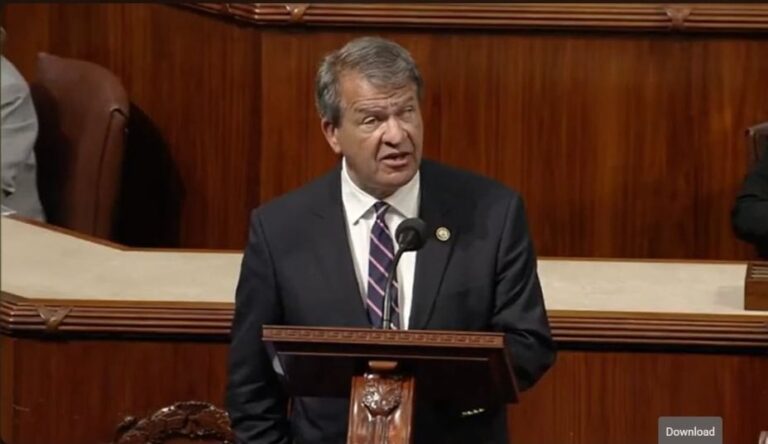
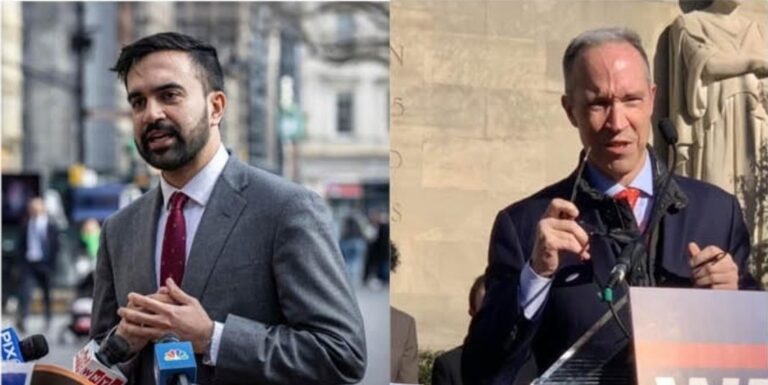
Congressman George Latimer (NY-16) released the following statement after he voted against rescinding funding, which is already law, for public broadcasting and life-saving foreign aid:
“This rescissions package reflects the extreme and out-of-touch DOGE agenda. It slashes civilian aid to Ukraine and Eastern European allies, strips access to basic family planning for 48 million women worldwide, and eliminates the U.S. contribution to UNICEF. It even eliminates funding for public broadcasting, jeopardizing PBS Kids, local public TV and radio, and the emergency alert systems communities rely on during natural disasters.
Republicans call these cuts ‘savings,’ but this is funding they voted for in the bipartisan Continuing Resolution. This isn’t about fiscal responsibility. It’s about imposing a harmful, ideological agenda at home and abroad. It is an agenda that will destroy America.”
The recissions bill pulls back $9 billion in funding Congress already voted on and President Trump signed into law this year. The measure cuts $1.1 billion from the Corporation for Public Broadcasting, which provides funding for NPR and PBS. It cuts another $8 billion from foreign aid, including funding for USAID and programs promoting global health and refugee assistance.
On Wednesday, the Mount Vernon Charter Review Commission held a meeting to vote on adopting their final report in the Council Council Chambers. A majority of the commission voted against adopting the final report, so the proposed revision will not appear on the November ballot for Mount Vernon voters to consider.
“A majority of the Commission (8/7) voted against adopting the final report. Four of those people spoke at length about their reasons; three others have pretty consistently agreed with those positions, although two of the three have not been as vocal. I’m uncertain about the reasons of the 8th person,” Charter review Commission Chair Tamala Boyd shared with Black Westchester. “Without the final report, which must be presented to the clerk with the ballot questions, there was nothing for the ballot. So the Commission’s work is basically done, save some clean up items. The Commission will expire by operation of law on Election Day, since this will be the second General Election since its creation.”
The Mount Vernon Charter Review Commission is composed of (15) fifteen members who must reside in the City of Mount Vernon, New York, and are appointed by the Mayor and the City Council.
The Commission was tasked to prepare a report of its work and conclusions and make its recommendations for revision or amendment to the existing Charter directly to the residents of the City, in either one proposed ballot question or a series of questions, through the City Clerk, who shall be responsible for assuring that these questions are properly and timely available for consideration at a referendum to be held on the next scheduled general election day. For a full description, please see § 268 Charter Commission
Black Westchester is told next steps will include the mayor looking at some of the other proposals and recommendations that could be moved forward and adopted by the city council.
Stay tuned to Black Westchester for more on this developing story as more details become available.
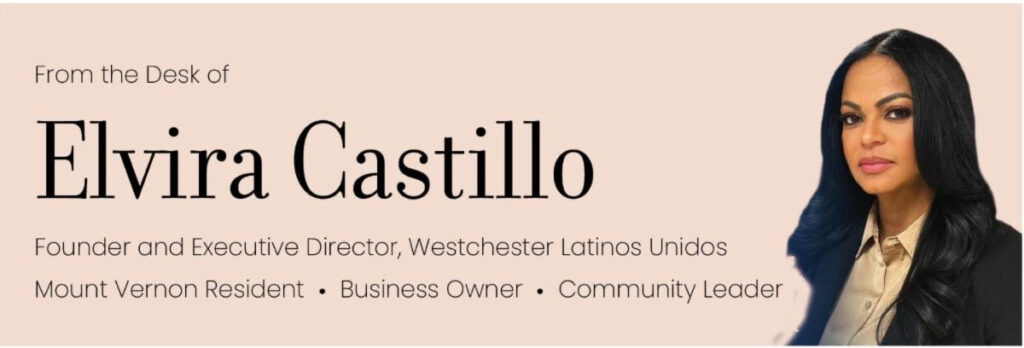
Westchester Latinos Unidos Founder and Executive Director Elvira Castillo wrote a strongly worded letter, Tuesday, July 15th, to Charter Review Committee Chairwoman Tamala Boyd expressing her disappointment in the committee’s lack of Latino stakeholders being contacted for their input in the proposed charter revision.
Black Westchester obtained a copy. In the letter, Castillo states that “The broader Latino community, a significant and growing segment of Mount Vernon, was systematically excluded from this process. This is not merely a missed opportunity; it is a violation of democratic principles and, arguably, a breach of New York State law. From the outset, the Commission failed to engage in meaningful outreach to the city’s Latino residents. Despite being urged by members of your own voting committee to do so, there was: No Spanish-language outreach, No town halls or engagement events in predominantly Latino neighborhoods, and No outreach through trusted Latino organizations or community leaders.”
Mount Vernon, like other municipalities in Westchester County, has a significant and diverse Latino community, with strong representation from various countries, particularly Brazil and other Latin American nations. Organizations like Westchester Latinos Unidos work to empower and support the Latino population in the area, providing resources and fostering community engagement. This organization focuses on social well-being and education within the Latino community, offering various initiatives and support services. The Hispanic Seventh-Day Adventist Mission and the Spanish Central Mount Vernon SDA Church provide spiritual guidance and community outreach to the Latino population. Organizations like Family Services of Westchester and Family Ties of Westchester offer support groups and services in Spanish, catering to the needs of Latino families and individuals.
Despite the efforts of the aforementioned groups and organizations, Castillo feels the Charter Review Committee “failed to engage in meaningful outreach to the city’s Latino residents.”
“Although it was initially communicated that outreach had occurred across the entire community via mail to all zip codes, this claim is demonstrably false. We now understand that there were no mailing and outreach efforts were limited, inconsistent, and geographically insufficient, and particularly with respect to Latino residents and other communities of color,” Castillo continued.
This is not the first time such complaints have been raised in Mount Vernon. A significant challenge in Mount Vernon, similar to other communities with a growing Hispanic/Latino population, is the reported lack of sufficient outreach to this community. This lack of outreach contributes to barriers in accessing essential services and programs designed to help residents. Many governmental programs operate only in English, creating a barrier for Spanish-speaking and other non-English speaking Latino residents trying to understand and access public information, program enrollment, and support services.
Then there is the digital divide: While many organizations are utilizing digital platforms for outreach, many Latino families are smartphone-dependent and may lack consistent internet access, potentially impacting their ability to receive information and engage with services that rely solely on online communication.
There have long been calls for efforts to improve outreach and address these challenges, which can include strategies such as employing bicultural and bilingual staff, utilizing various communication channels beyond just the internet and social media, and partnering with trusted community organizations and leaders to build trust and facilitate access to resources.
Our leaders cannot claim to represent all residents and truly serve the entire community until issues like these are addressed!
You can read Castillo’s letter in its entirety below:
Dear Commission Members and Fellow Mount Vernon Residents,
I write today not only as a concerned citizen but also as a lifelong advocate for equity, inclusion, and justice within our public institutions. My name is Elvira Castillo, and I serve as the Founder and Executive Director of Westchester Latinos Unidos, a leading advocacy organization supporting Latino communities throughout Westchester and New York State. I am a long-time Mount Vernon resident, a local business and property owner, a municipal zoning expert, and a member of the Mount Vernon Zoning Board. I am also a proud mother and grandmother who, through my housing work, represents more than 500 families on the South Side of Mount Vernon. And yet, despite my civic contributions and longstanding community involvement, neither I or other key Latino stakeholders were ever contacted by the Charter Revision Commission for input. The broader Latino community, a significant and growing segment of Mount Vernon, was systematically excluded from this process. This is not merely a missed opportunity, it is a violation of democratic principles and, arguably, a breach of New York State law.
From the outset, the Commission failed to engage in meaningful outreach to the city’s Latino residents. Despite being urged by members of your own voting committee to do so, there was:
No Spanish-language outreach
No town halls or engagement events in predominantly Latino neighborhoods
No outreach through trusted Latino organizations or community leaders
Although it was initially communicated that outreach had occurred across the entire community via mail to all zip codes, this claim is demonstrably false. We now understand that there were no mailing and outreach efforts were limited, inconsistent, and geographically insufficient, and particularly with respect to Latino residents and other communities of color.
Let me be clear: now that this glaring omission has come to light, the appropriate remedy is not a rushed, retroactive attempt at damage control. It is not acceptable to consult with legal counsel only now to revise or refine documents after key decisions have already been made. It is not acceptable to begin engaging Latino communities only after proposals have been voted on or submitted for ballot inclusion. It is too late to correct an exclusion after the harm has occurred.
This process must restart from the beginning, with authentic, inclusive outreach and serious and wide-ranging public engagement. Anything less perpetuates the harm, undermines public trust, and exposes the process to further legal and ethical scrutiny.
It is deeply concerning that individuals who recently relocated to Mount Vernon from places such as Seattle, Germany, and Philadelphia were given seats at the table, while deeply rooted Latino leaders and stakeholders were entirely excluded. This is not to assign blame to any individual commissioner, but rather to identify a collective failure of process. We have always welcomed newcomers to Mount Vernon, and will continue to do so, yet it is vital for those with lifelong investment and lived experience in our communities to have significant input in deciding the future of this city.
Under the New York State Language Access Law, effective July 1, 2022, state agencies that provide direct public services are required to:
Provide oral interpretation services in any language for Limited English Proficient (LEP) individuals
Translate vital documents into the twelve most spoken non-English languages in New York State, including Spanish
Develop and publish a Language Access Plan and designate a coordinator to ensure compliance
While this law does not formally apply to local government bodies such as municipal charter review commissions, its standards reflect a broader commitment to equitable public access. Given the significant implications of charter reform, failure to voluntarily uphold these principles—especially in a city with a large LEP population—raises serious concerns about fairness, transparency, and inclusive governance. We recognize the need for reform. However, reform without representation is not reform, it is regression. We call on each member of the Commission who believes in fairness, transparency, and democratic governance to:
Vote NO on advancing the current proposals
Publicly acknowledge that key communities — including the Latino community — were not engaged
Reopen the charter process with comprehensive community participation from day one
One can only imagine how differently this process might have unfolded if someone on the Charter Commission with, say, significant municipal legal expertise — someone perhaps with a résumé stacked with public sector experience, regulatory acumen, and executive leadership in city governance — had chosen to apply even a fraction of that training during deliberations. But perhaps when appearances suggest that the outcome is pre-determined, legal acumen becomes inconvenient. In this case, it seems expertise wasn’t absent — it was simply ignored.
Mount Vernon deserves better. Our Latino families, workers, business owners, and civic leaders are vital to the city’s fabric. We cannot — and will not — be excluded from decisions that shape our government, our homes, our families, and our future.
Sincerely,
Elvira Castillo
Founder and Executive Director, Westchester Latinos Unidos
Mount Vernon Resident, Business Owner, and Community Leader
The letter was cc’d to the Mount Vernon Charter Review Committee Members, Mount Vernon City Council, Mayor Shawyn Patterson-Howard, Comptroller Darren Morton, Assemblyman J. Gary Pretlow, NYS Senator Jamaal Bailey, County Legislators Tyrae Woodson-Samuels & David Tubiolo, Hon. Lyndon D. Williams, Chairman of Westchester County Charter Review Commission, Westchester County Executive Ken Jenkins, Congressman George Latimer.
Mayor Thomas urges Mount Vernon to delay charter proposals, fix the process, and return stronger in November 2026.
Former Mayor Richard W. Thomas released a statement calling for a pause in the Charter Revision process until November 2026 to give the residents time to rebuild the process with proper staffing, clear rules, ethical disclosures, a public website, and real opportunities for residents to weigh in.
“Mount Vernon deserves a Charter Revision process that’s open, ethical, professional, and truly shaped by the people. Right now, it’s not,” Thomas said. “Rushing ahead now, without transparency or trust, risks writing changes into law that do not reflect our community’s best interests, or prepare us for the real financial challenges ahead. Before we rewrite the Charter, let’s pause and rebuild the process.”
You can read Mayor Thomas’ full statement below;
“Mt. Vernonites, My Friends, My Neighbors,
I come to you today not as someone standing on the sidelines, but as the former Mayor of Mount Vernon, the very person who first empaneled the Charter Revision Commission because I believed deeply that our city’s biggest problem was politics. And I still believe that the solution to Mount Vernon’s problems is to detox City Hall of politics and replace it with systems that work for everyday people.
But let me also be clear: process matters. How we do things is just as important as what we do.
In New York City, the Charter Revision Commission is supported by a team of over 30 full-time professionals. They have clear rules, established procedures, dedicated staff, a robust website, public records, and a transparent system of ethics disclosures that protect the integrity of their work and reassure taxpayers that decisions are being made above board.
Unfortunately, here in Mount Vernon, we have taken a very different and frankly troubling approach. We have a Charter Revision Commission that is moving forward without rules, without procedures, without required ethics disclosures, without a website, without adequate staff support, and critically, without meaningful opportunities for the public to comment at its meetings. The last meeting I watched in dismay as Commissioners and Advisory Board members were close to throwing blows.
Just as bad, if not worse, one survey conducted on these proposed changes found that just 0.6% of residents in the 10551 zip code participated. That is not public engagement. That is a fig leaf. And this is why Jesus cursed the fig tree… because it flowered before producing fruit for the people. This is fitting because the proposed charter revision proposals seem to come from a poisonous tree.
That’s why I’m urging the Charter Revision Commission to pause and not put this up for a vote in November 2025. Stop this rushed process. Restart it with proper rules, staffing, budget, and genuine public input. This will empower truly transformative work, re-engaging residents to tackle real issues throughout next year. Then, after these careful reforms are in place, we can achieve the Charter Revision goal of voting on meaningful policy priorities in November 2026.
Even Dr. Martin Luther King, standing at the head of thousands marching across the Edmund Pettus Bridge, chose to turn back when he realized his people weren’t yet ready for what lay ahead. There is no shame in pausing. In fact, sometimes it is the most courageous thing we can do.
Let us use this time to rebuild trust in the process.
Reinstating the Commission with proper staffing and resources.
Establishing a clear calendar that invites more ideas, more surveys, and more resident-led solutions.
Setting up a robust website and publishing all proposals, minutes, and reports online so no one has to find out what is being decided for them by downloading a document off a third party site.
Instituting ethical disclosure requirements, like New York City’s, to ensure every member’s private interests are fully transparent before they reshape the very foundations of our local government.
Because we have big challenges ahead. Washington is already signaling that massive federal funding may dry up, forcing cities like ours to rethink how we protect home values, maintain infrastructure, and fund parks, senior programs, and public safety. Mount Vernon homeowners deserve options that unlock their equity and keep neighborhoods strong. Imagine giving parents the power to have their school tax dollars follow their child, a true home rule idea that could raise property values and give kids better educational outcomes. Whether we pursue that or not, it is just one of many ideas we need on the table.
We also need to think about how to eliminate our unconstitutional Board of Estimate and give the City Council a stronger voice for taxpayers. How to introduce neighborhood budgets tied to capital plans that actually fix sidewalks, sewers, streets, and get rats out of our lives, so we are not all stuck dodging potholes and waiting until the next election cycle for help.
But we cannot solve these problems with a process that feels rushed, opaque, or compromised. Right now, there is simply not enough evidence that this process has met the standard of transparency or ethical integrity that the people of Mount Vernon deserve.
That is why I am asking the Charter Revision Commission:
Pause. Regroup. Do not rush to vote on these proposals now.
Instead, vote to re-establish the Commission with a proper structure, clear rules, ethics disclosures, a professional team, and a robust plan for true community engagement.
Because the future of Mount Vernon is not just about what is written in our Charter. It is about whether people trust the process that wrote it.
As President Obama often reminded us, “democracy does not require uniformity.” But it does require a basic sense of mutual respect. And my faith is real, as scripture has taught me, and life tests created a testimony that I can share is that God’s delays are not his denials. Sometimes the pause is exactly where the groundwork gets laid for an even greater victory ahead.
So let us take a moment. Let us do it right.
For our homeowners. For our kids. For our seniors. For pets and rescue animals. For everyone who wants Mount Vernon to rise up to its highest promise.
Because if we get the process right, we can get the outcomes right, together.”
Local unions appear to be pushing back as well against the proposed Mount Vernon Charter Revisions. In a letter sent out early Wednesday afternoon, Ernie Richardson – President, Local 107, FDMV, and Robert Richardson of Teamsters Local 456 are encouraging the report to be voted against.
“We are not seeking favoritism; we are seeking fairness, transparency, and respect. The men and women we represent dedicate their lives to Mount Vernon. They deserve to have a seat at the table—not to be left in the dark while decisions that affect their livelihoods and communities are made behind closed doors. This proposal, in its current form, is incomplete, unexamined, and unworthy of adoption. For the sake of democratic accountability, fiscal responsibility, and labor justice, we urge you to vote NO,” the letter states. See the letter in its entirety below:
As the union president of Local 107, Mount Vernon Firefighters Union, and a representative of the unions that support and sustain Mount Vernon’s essential services—those who keep our city clean, functioning, and safe—we write to express our collective and unequivocal opposition to the adoption of the Charter Review Final Report in its current form.
Despite public claims of inclusiveness and community engagement, the process undertaken by this Commission has glaringly failed to involve Mount Vernon’s labor unions in any meaningful or substantive way. Most notably, there has been no consultation with Local 107, firefighters uion members risk their lives daily to protect this city. These are the individuals who run into burning buildings when others are running out. Excluding them from discussions about the structure of city government is not only a policy failure; it is a profound insult to Mount Vernon’s Bravest. Many of our firefighters live in the city they serve, and their voices are indispensable in shaping decisions that will impact public safety, emergency response coordination, and municipal accountability. Their exclusion from the charter review process is a slap in the face to those who have dedicated their lives to protecting this community.
Including firefighters in municipal restructuring efforts—such as charter revisions—is essential. Fire departments are foundational components of city operations, and changes in government structure can directly affect chain of command, emergency response funding, collective bargaining, and long-standing operational protocols. In cities across the country, fire unions have rightfully insisted on a seat at the table during charter reviews to ensure that any governmental transition does not compromise public safety or labor protections. Mount Vernon must do the same.
In addition to ignoring the firefighters, there has been no direct outreach to the leadership or members of Teamsters Local 456, which represents the dedicated personnel in our Department of Public Works, sanitation services, Recreation Department, water department and public safety—including certain employees within the police and fire departments. No communication has been made with CSEA, which represents hundreds of school and municipal employees. Likewise, there has been no engagement with 1199SEIU or the New York State Nurses Association (NYSNA), who serve our city’s healthcare needs and represent a substantial portion of Mount Vernon’s workforce.
A government cannot responsibly restructure itself while excluding the very individuals who make its operations possible. The proposal to transition from a strong mayoral system to a city manager model was developed and advanced:
Without any financial impact study available to the public
Without a clear implementation or transition plan
Without an assessment of how current collective bargaining agreements will be maintained or renegotiated
Without identifying who would serve as the city’s chief bargaining authority under the new structure—or seeking any input from unions on whether this is acceptable
This level of opacity is not just disappointing; it is dangerous from both a labor and fiscal standpoint. The proposal threatens to upend years of progress in labor relations and jeopardize job security for countless city employees.
Authority Shift: The power to negotiate labor contracts may move from an elected official to an unelected administrator, introducing ambiguity and potential delays in contract negotiations, grievance procedures, and arbitration enforcement.
Privatization & Reclassification Risks: City manager systems are often used to justify outsourcing and departmental reorganization—moves that weaken unions, eliminate positions, and erode the quality of public services.
Disruption of Legal Norms: Without a structured transition plan, it is unclear how Memoranda of Understanding (MOUs), grievance timelines, and arbitration clauses will be honored or enforced.
Loss of Institutional Trust: Our unions have built longstanding, constructive relationships with city leadership. Transferring decision-making to a new, disconnected administrator risks turning those partnerships into adversarial relationships.
The Commission has not answered a critical question: How will existing union contracts be honored during and after this transition?
From Westchester County to Albany, organized labor has long stood against opaque efforts to undermine public sector workers and weaken democratic accountability.
Teamsters Local 456 has fought vigorously to protect frontline workers across Mount Vernon, Yonkers, and New Rochelle from privatization and anti-union policy shifts.
In the 1970s and 1980s, fire and DPW unions nationwide resisted city manager schemes that prioritized fiscal expediency over worker protections and community welfare.
In New York City, unions rightly warned that Mayor Giuliani’s 1990s privatization efforts would harm working-class communities, especially Black and Latino families. Those warnings came true.
Today, this proposal in Mount Vernon shows similar red flags: exclusion, haste, lack of transparency, and disregard for labor rights.
We strongly urge this Commission to:
Vote NO on the current version of the final report.
Restart the charter review process—this time with robust and meaningful participation from labor unions.
Commission a full fiscal and legal impact study before recommending any structural government changes to the voters. This study must be provided to all Mount Vernon residents, stakeholders, and unions well in advance of any Commission vote.
We are not seeking favoritism; we are seeking fairness, transparency, and respect. The men and women we represent dedicate their lives to Mount Vernon. They deserve to have a seat at the table—not to be left in the dark while decisions that affect their livelihoods and communities are made behind closed doors. This proposal, in its current form, is incomplete, unexamined, and unworthy of adoption. For the sake of democratic accountability, fiscal responsibility, and labor justice, we urge you to vote NO.
The Rescissions Act of 2025 has stirred outrage in some corners of Black leadership. Many are decrying the billions in foreign aid cuts to Africa, the Caribbean, and global health programs. But let’s stop and ask the uncomfortable question no one in these circles wants to raise: why were we funding global development before we fixed our own house?
America’s inner cities are bleeding — not from foreign wars, but from neglect, broken schools, economic dependency, and moral confusion. We don’t need another USAID roundtable. We need functioning school boards, fathers in homes, land ownership, business financing, and the restoration of discipline and dignity in our communities. Yet when federal dollars were flowing, many Black nonprofits chased grants tied to global missions while the Black neighborhoods they came from remained in economic ruins.
Let’s be clear: this bill doesn’t cut food stamps, housing, or Medicaid. It doesn’t touch school funding or job programs. It stops writing checks to international organizations while Black Americans still can’t get a mortgage in their own zip code. If anything, this is a long-overdue course correction. But instead of embracing this pivot, too many so-called Black leaders are lamenting the loss of contracts tied to foreign aid dollars — dollars that rarely translated into tangible gains for our people here at home.
This is the same class of leaders who show up for press conferences but not policy. They manage the system but never change it. They celebrate symbolic diversity at the UN while ignoring the structural disrepair in Detroit, Newark, or the South Side of Chicago.
And yes — we say we want to buy real estate in Ghana, and that’s nice. But let’s be honest: how can any country in Africa truly respect us when we don’t even control our own economy here in America? From our culture to our fashion to our music, our greatest assets are owned and monetized by others. Meanwhile, too many Black boys and girls are homeless right here in Westchester County. The spiritual optics of return mean little if we’re unwilling to fight for shelter, safety, and sovereignty for our own children first. Until we build power at home, any talk of pan-African connection is just performance
And while we’re on it: how is it that we’re mobilizing for migrants — many of whom have over 1 million final deportation orders — yet we are not mobilizing to demand vocational education, safe streets, and safe parks for our own children? How did our priorities get so upside down?
This is not selfishness. It’s wisdom. Just like on an airplane when they tell you: put your oxygen mask on first before assisting others. If we can’t breathe — financially, educationally, spiritually — how can we possibly save anyone else?
In 2025, we can’t keep blaming racism for everything when we’re still pumping over $1.5 trillion a year into the very system we claim oppresses us. At some point, the blame shifts from the system to our choices within it. No educated consumer continues to spend money where they’re disrespected, underserved, and exploited. Yet we do it proudly — celebrating brands that mock us, voting for parties that ignore us, and enriching industries that give nothing back. Power doesn’t come from protest — it comes from ownership. Until we redirect our spending toward institutions that reflect our values, we’re not being oppressed — we’re volunteering.
Enough.
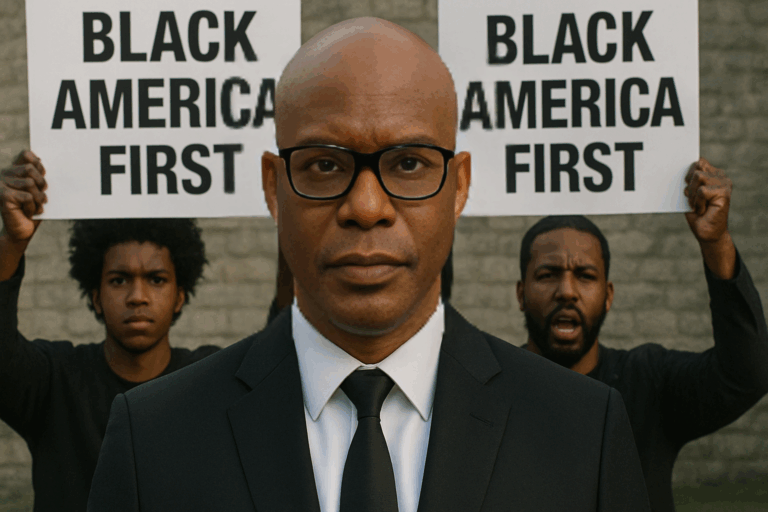
This is a moment for moral clarity. The message should be simple: Black America first. Not in rhetoric — in results. Our children should not be the last to read, the last to be hired, and the first to be aborted or incarcerated while our leaders fund mission trips and photo ops abroad.
Foreign solidarity is admirable, but misplaced when it comes at the expense of our survival. Let other nations build their institutions. We have to rebuild ours.
The money is moving. The federal government is shifting. The question is: will we shift with it — or remain chained to an outdated nonprofit-industrial complex that teaches us to fight for inclusion, but never control?
Black America doesn’t need more global gestures. We need focused, principled, disciplined leadership that puts our communities first — in housing, in education, in health, in economics, and in spirit.
If you’re a Black leader and your primary concern is how this bill affects your global grant pipeline, maybe it’s time to ask yourself who you’re really serving.
Emotional Politics — Logical Failure is the book you need.
In this bold and unfiltered work, Damon K. Jones delivers the hard truths many are afraid to say out loud: Black America has been loyal to a system that has failed to deliver. We’ve mastered symbolism but forfeited strategy. We show up to vote, but not to fund. We speak out, but rarely build. And the result? Speeches instead of solutions. Visibility instead of victory.
This book is not about left or right. It’s about logic over emotion. Power over performance. It’s a call to wake up, re-strategize, and use our political currency with purpose.
If you’re tired of being used, overlooked, and sold out—this book is your blueprint for change. Your voice is powerful. Your vote is valuable. But your money, your mindset, and your political clarity are what will make the difference.
Read the book. Share the message. Challenge the tradition. And let’s finally start getting what we pay for.
In a society where transparency is lauded as a democratic virtue, the ongoing saga surrounding the Epstein files exposes a disturbing reality: when political calculations override truth, the public pays the price. What began as a pursuit of justice has devolved into a partisan blame game where both parties jockey for advantage, while the central issue—accountability—remains unresolved.
Let’s dispense with illusions. The American people were told Jeffrey Epstein’s death ended the matter. That Ghislaine Maxwell’s conviction closed the book. But as evidence continues to surface, and court documents hint at names shielded from scrutiny, the question isn’t whether there’s more to uncover—it’s why so many are invested in keeping it hidden.
Consider the current landscape. The Department of Justice recently claimed there is no “client list” and doubled down on the narrative that Epstein acted alone. Speaker Mike Johnson, a staunch conservative and Trump ally, broke ranks and called for full disclosure. Yet, despite having the majority, House Republicans blocked a vote to release the documents. Why?
Because power protects itself. Not by accident—but by design.
In classic political fashion, we are watching a managed response to a metastasizing crisis. Democrats, smelling opportunity, now demand transparency, but where was this urgency when they controlled Congress? Republicans, meanwhile, say they are the party of law and order, yet balk when disclosure might implicate their allies. This isn’t oversight—it’s theater.
The Epstein case has become a mirror, not just of elite misconduct, but of institutional cowardice. Our justice system, once believed to be blind, is now squinting selectively. Political leaders are calculating which names might surface and how that affects poll numbers—not whether victims receive justice.
We must not lose sight of first principles. Justice is not partisan. Truth is not subject to polling data. And trust in government cannot coexist with selective transparency.
What’s at stake here is larger than Epstein. This is about whether the law applies equally, or only to the nameless and powerless. If the powerful can exploit children and walk free because they have the right connections, then we are not a nation of laws—we are a nation of legal fictions.
There is a reason people no longer believe the government. It isn’t because of internet conspiracies or fringe media. It’s because when given the chance to be honest, our institutions chose political expediency instead.
A free society cannot function when its leaders are more loyal to party than to principle. As Thomas Sowell has often observed, “It is hard to imagine a more stupid or more dangerous way of making decisions than by putting those decisions in the hands of people who pay no price for being wrong.”
The Epstein case is no longer just a scandal—it’s a test. A test of whether our leaders fear truth more than corruption. A test of whether public servants will serve the people or their patrons. And most critically, a test of whether the American public will demand answers—or just move on.
The truth doesn’t go away just because it’s inconvenient. But justice will—if we allow it.
Emotional Politics — Logical Failure is the book you need.
In this bold and unfiltered work, Damon K. Jones delivers the hard truths many are afraid to say out loud: Black America has been loyal to a system that has failed to deliver. We’ve mastered symbolism but forfeited strategy. We show up to vote, but not to fund. We speak out, but rarely build. And the result? Speeches instead of solutions. Visibility instead of victory.
This book is not about left or right. It’s about logic over emotion. Power over performance. It’s a call to wake up, re-strategize, and use our political currency with purpose.
If you’re tired of being used, overlooked, and sold out—this book is your blueprint for change. Your voice is powerful. Your vote is valuable. But your money, your mindset, and your political clarity are what will make the difference.
Read the book. Share the message. Challenge the tradition. And let’s finally start getting what we pay for.
The New York City Campaign Finance Board announced that independent NYC Mayoral Candidate Jim Walden was one of only two candidates in the race for New York City Mayor to receive a new round of public matching funds, on Tuesday, July 15th. This new match drives the former prosecutor’s growing campaign to a total cash on hand of over $1.3 million. Walden says he plans to “continue to build a groundbreaking independent campaign that rejects corruption and special interests.”
Queens Assemblymember Zohran Mamdani also raked in a huge wave of campaign donations and secured another $1 million in public matching funds for the general election. Mamdani’s June to July haul is his biggest score to date. It included 69 donations of $2,100, the maximum allowed in the public financing system, totaling more than $144,000. Mamdani has made a point of highlighting the extraordinary number of small donations he’s received and criticizing Cuomo for the tens of millions of dollars in outside money wealthy donors have spent promoting him.
The Campaign Finance Board program provides $8 for every $1 donated to a candidate by a New York City resident, up to the first $250.
Adams and Cuomo Strike Out on Matching Funds.
With only 16 weeks until the final contest on November 4, Mayor Eric Adams, who skipped the primary in the wake of a federal criminal indictment and its extraordinary cancellation by President Donald Trump’s Justice Department, lost his chance to continue pleading for public funds from the Campaign Finance Board as an independent candidate.
After his staff cheered a court ruling they believed would help fill his campaign coffers, Adams was denied millions of public matching money, the latest setback to his arduous independent reelection campaign. During Tuesday’s meeting, the Campaign Finance Board declined to disburse $3.4 million, stating that the campaign has not yet given the oversight body the information and records it needs to complete its investigation into potential wrongdoing from his first campaign four years ago.
“The board investigation is ongoing,” said board chair Frederick Schaffer, adding the cache of documents remaining “outstanding.” Mayor Adams’ campaign has failed to qualify for matching funds,” he continued.
Additionally, former Governor Andrew Cuomo, who had initially been considered the frontrunner in the Democratic primary but was beaten handily by Democrat Mamdani, did not get any matching funds because he did not request them. After spending the whole almost $8 million primary spending maximum, Cuomo ceased fundraising in May. He was unclear for weeks about whether he planned to run in November on a third-party line he had put up after losing to Mamdani by 12 points on June 24th.
On Monday, Cuomo jumped back into the race in a 90-second video announcement, and on Tuesday his spokesman, Rich Azzopardi, said he planned to begin fundraising again immediately. “Unless you’ve been living under a rock, you probably know that the Democratic primary did not go the way that I hoped,” Cuomo said in a video, featuring him looking relaxed in a park and shaking hands around Manhattan.
“Today, we are proud to be one of only two only candidates for Mayor awarded public matching funds. It puts our surging, independent campaign at the top of the heap when it comes to one essential factor: integrity,” Walden shared with Black Westchester. “While my extreme, indicted and despised opponents continue to get support from special interests, our innovative campaign continues to be supported by working New Yorkers of all backgrounds who believe that I am the only candidate who can fix, defend, and unite our great city and save us from the extremists, partisans, and crooks. This latest filing again illustrates that we are running a truly independent, unifying, people-powered campaign that all New Yorkers can trust.”
In the June 24th Democratic Primary, Mamdani defeated Adrienne Adams, Speaker of the New York City Council (2022–present) from the 28th district (2017–present), Selma Bartholomew, educator, Michael Blake, former state assemblymember from the 79th district (2015–2021), candidate for Public Advocate in 2019, and candidate for New York’s 15th congressional district in 2020, Andrew Cuomo, former Governor of New York (2011–2021) and U.S. Secretary of Housing and Urban Development (1997–2001), Brad Lander, New York City Comptroller (2022–present), Zellnor Myrie, state senator from the 20th district (2019–present), Paperboy Prince, artist and perennial candidate, Jessica Ramos, state senator from the 13th district (2019–present), Scott Stringer, former New York City Comptroller (2014–2021) and candidate for mayor in 2021, and Whitney Tilson, hedge fund manager.
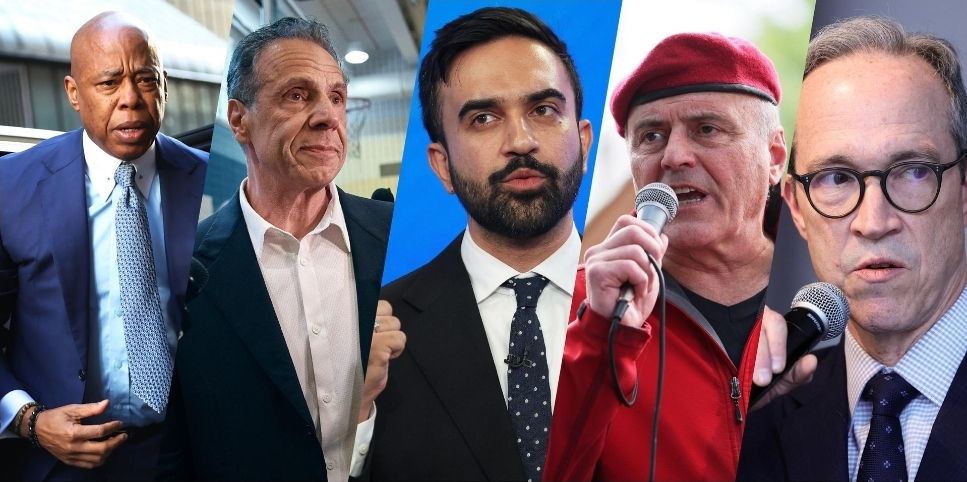
NYC Mayoral Candidates L-R: Eric Adams, Andrew Cuomo, Zohran Mamdani, Curtis Sliwa, and Jim Walden.
And Then There Were Five
The election for the mayor of New York City is scheduled for Tuesday, November 4, 2025. Incumbent Eric Adams, who was elected as a Democrat, is seeking re-election to a second term as an independent. He is being challenged by Democratic state assemblyman Zohran Mamdani, Republican activist Curtis Sliwa, Independent former governor Andrew Cuomo, and Independent, first-time candidate and former prosecutor Jim Walden.
Stay tuned to Black Westchester for more on the 2025 NYC Mayoral race. We interviewed Jim Walden, Sunday, July 13th, and are extending an invitation to the other four candidates to appear on People Before Politics Radio.
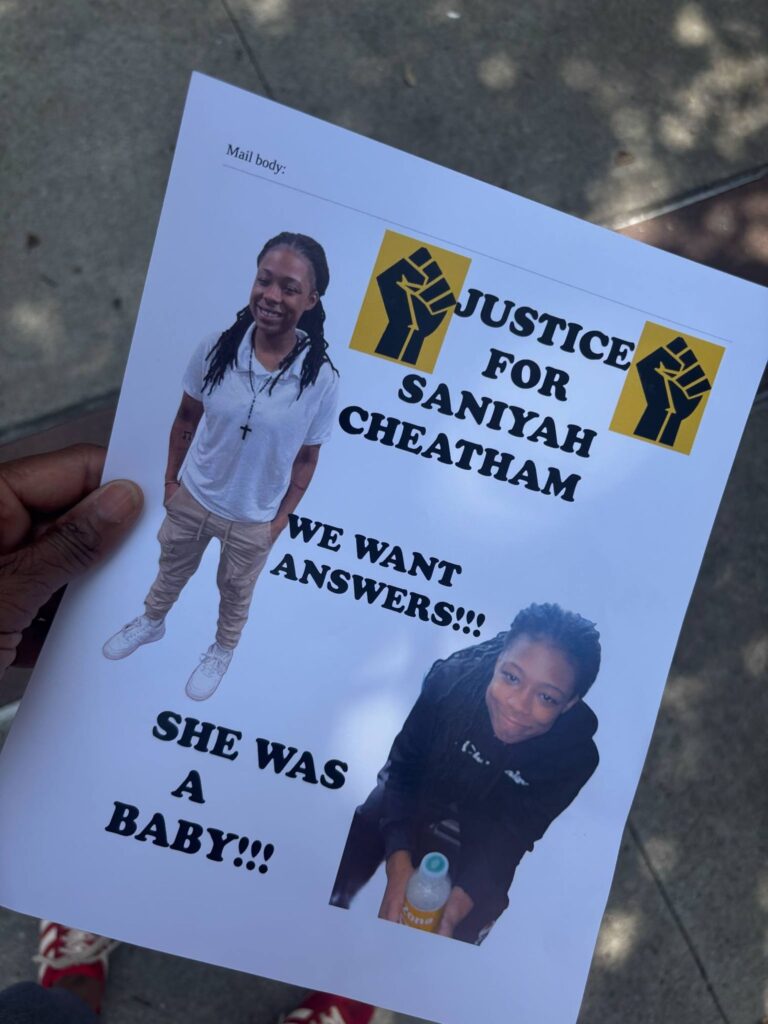
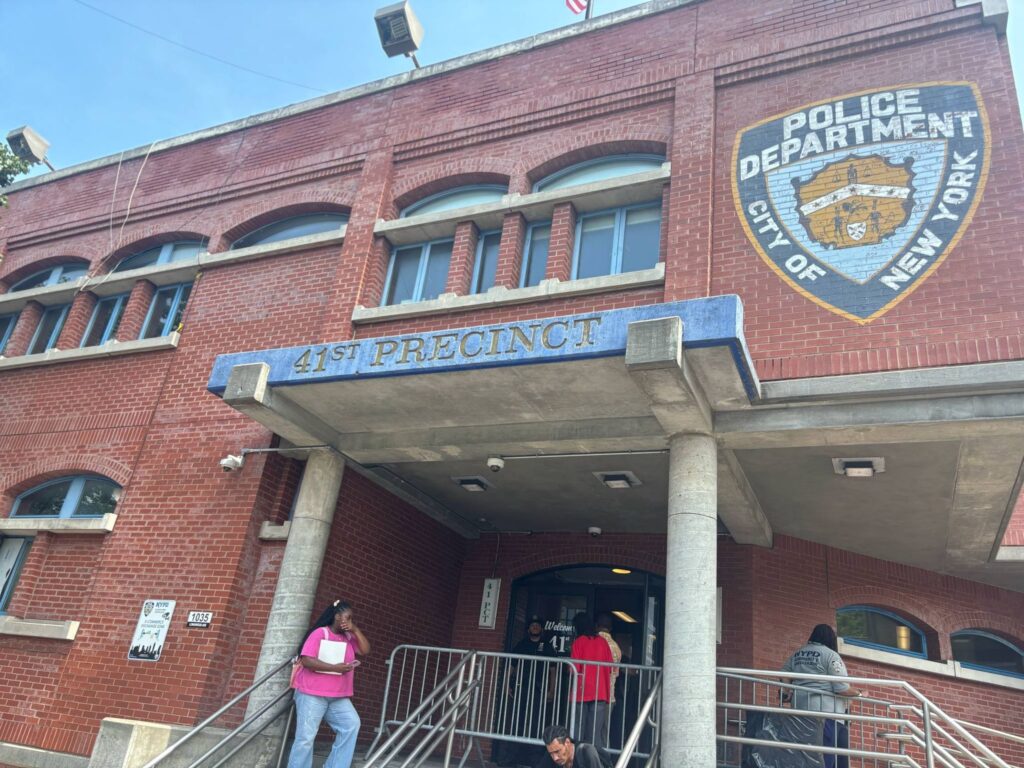
An 18-year-old college student, Saniyah Cheatham, tragically passed away by suicide while in the custody of the New York Police Department (NYPD) on July 4th. This heartbreaking incident has sparked renewed concerns about the treatment of women, particularly Black women, in police custody. Last Friday night, Cheatham, a student at Bronx Community College, was taken into custody after a dispute with a friend.
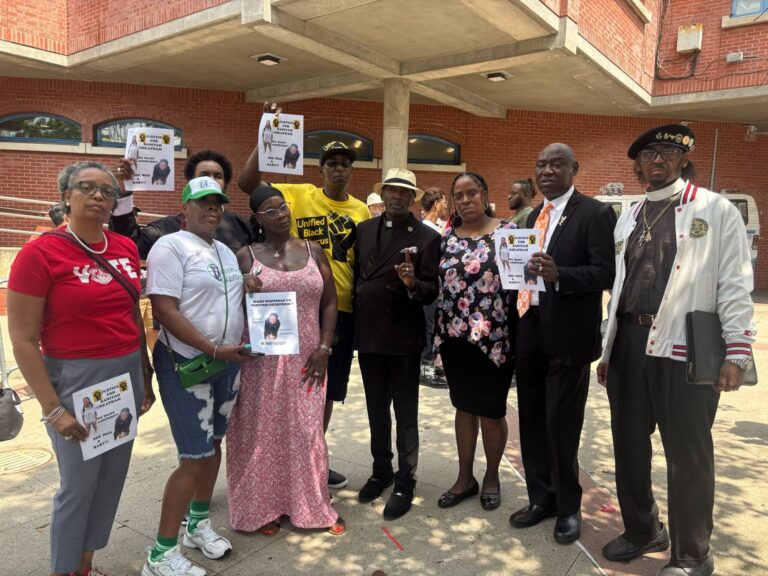
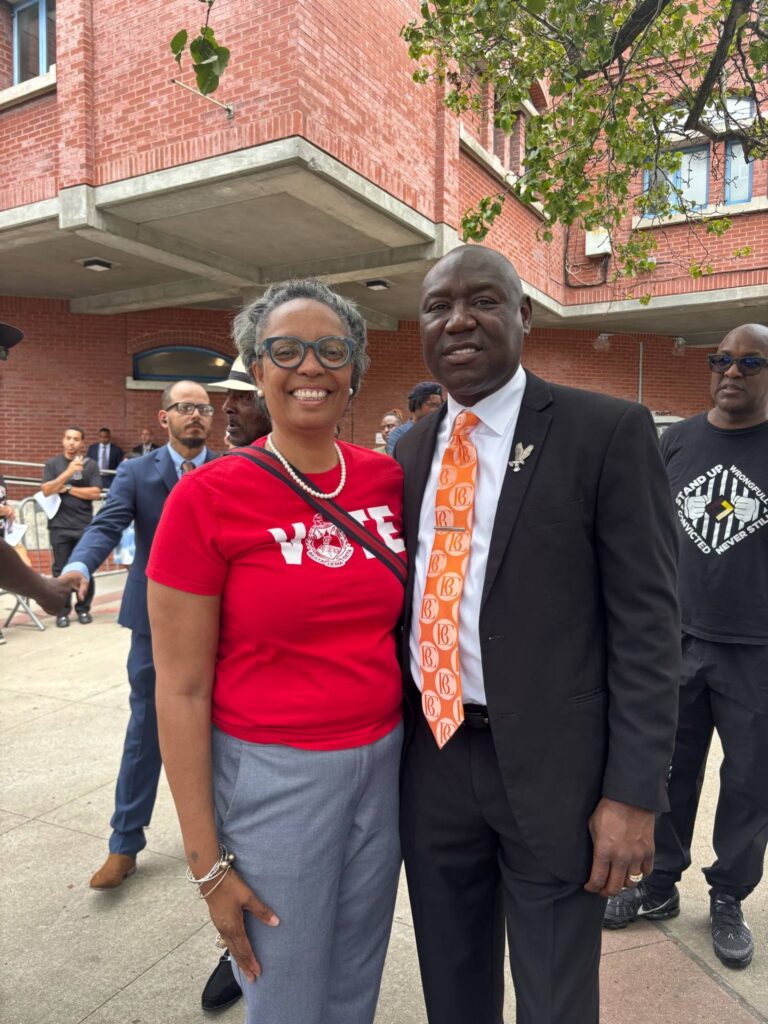
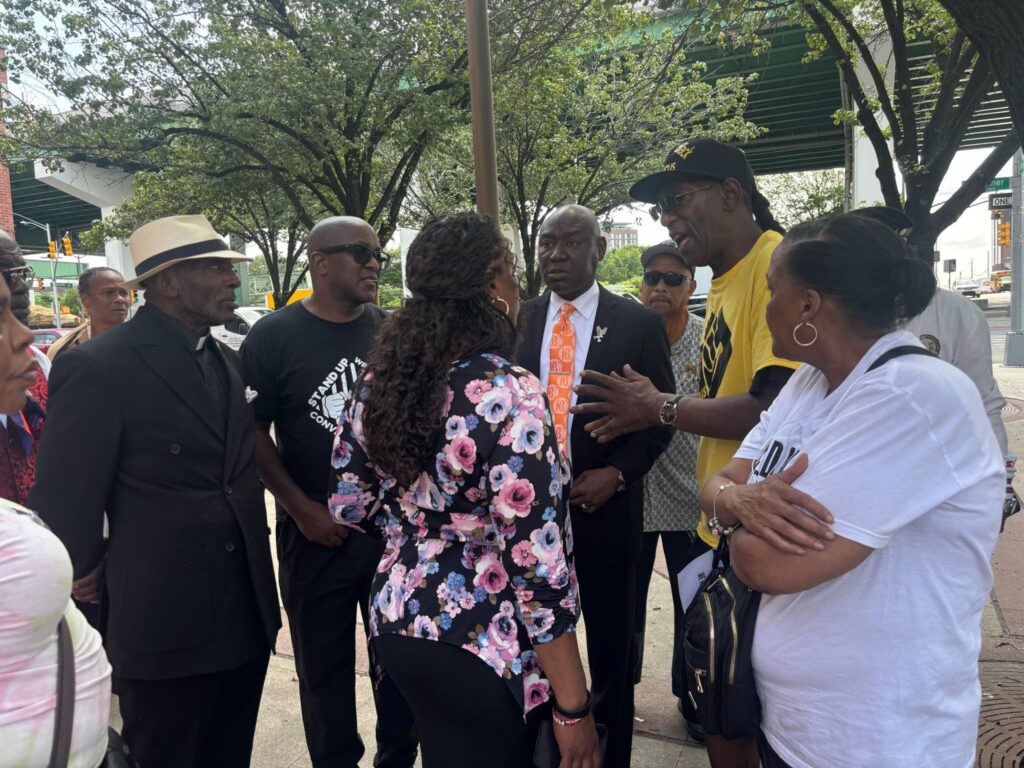
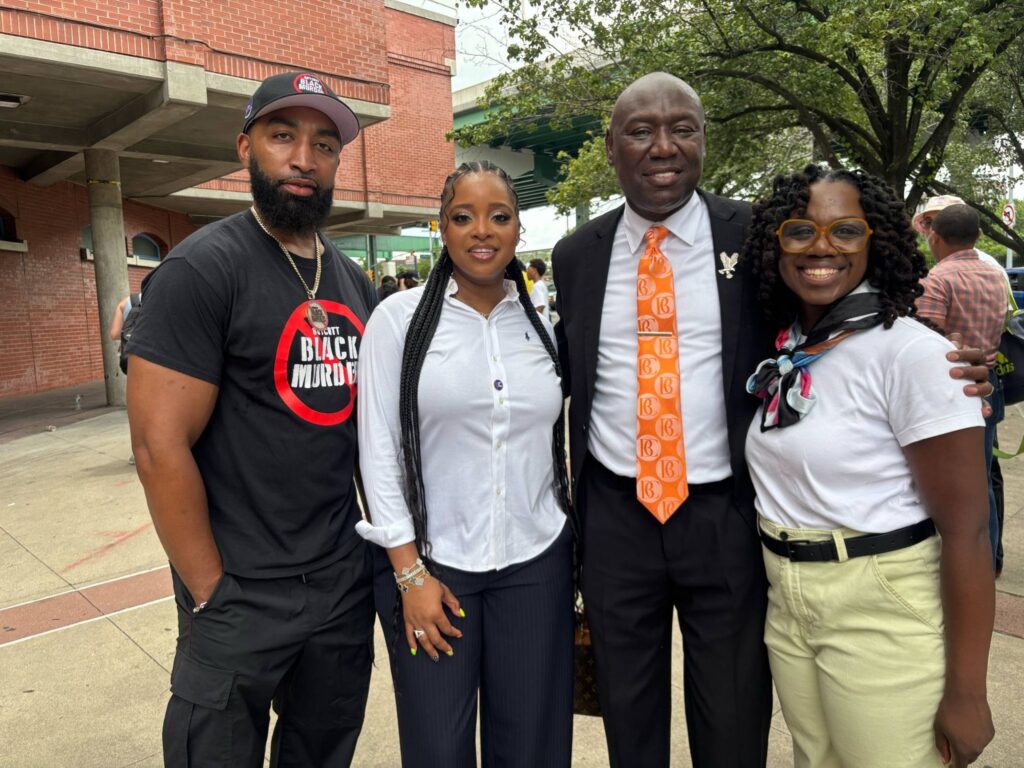
She was then brought to the 41st Precinct stationhouse in the Bronx, where she later lost her life. The NYPD has yet to release surveillance footage or provide detailed reports on the incident. While police sources confirmed Cheatham’s death as a suicide, her family is questioning the official narrative and demanding complete transparency. Ben Crump, a prominent civil rights attorney representing the Cheatham family, held a press conference outside the 41st Precinct on Monday, July 14th.
Crump expressed the urgent need for answers, stating, “There are too many unanswered questions. We demand that the NYPD release all video footage and provide a full accounting of what happened in that precinct.” Cheatham’s death has drawn painful comparisons to past cases involving Black women who tragically lost their lives in police custody under controversial circumstances.
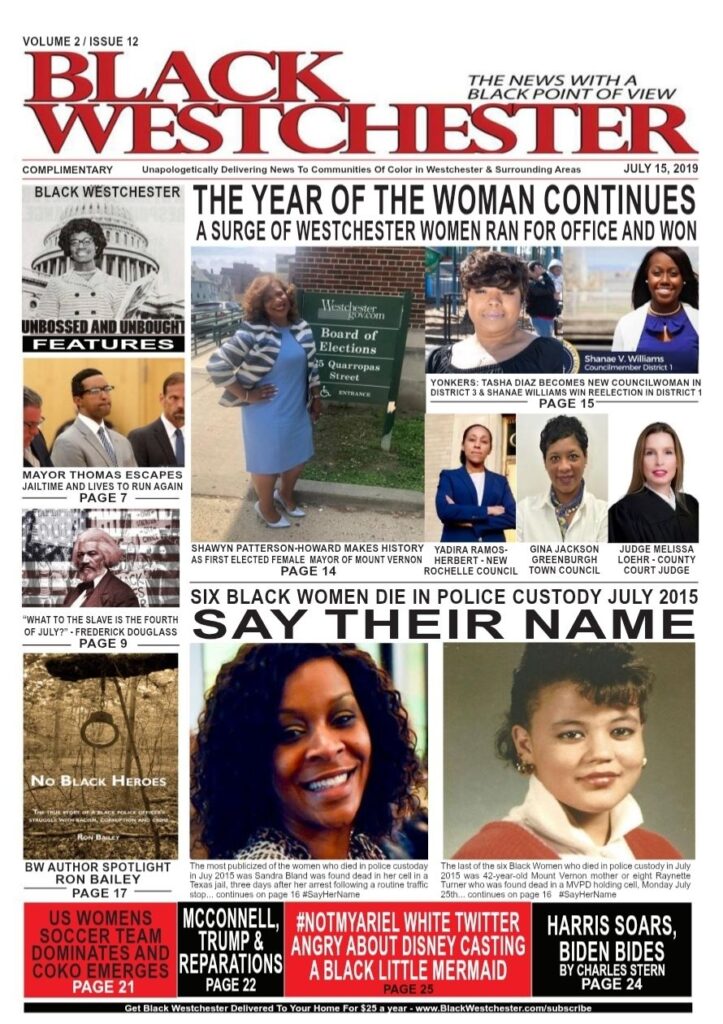
In August 2015, Raynette Turner, a mom of eight from Mount Vernon, tragically passed away in a holding cell after being arrested for shoplifting. This heartbreaking incident occurred just weeks after a series of similar cases involving Black women, including Sandra Bland in Texas, Kindra Chapman in Alabama, Joyce Curnell in South Carolina, and Ralkina Jones in Ohio, all in July of that year. These cases sparked national protests and played a crucial role in New York Governor Andrew Cuomo’s 2015 executive order. This order established the state attorney general as a special prosecutor to investigate police-related deaths.
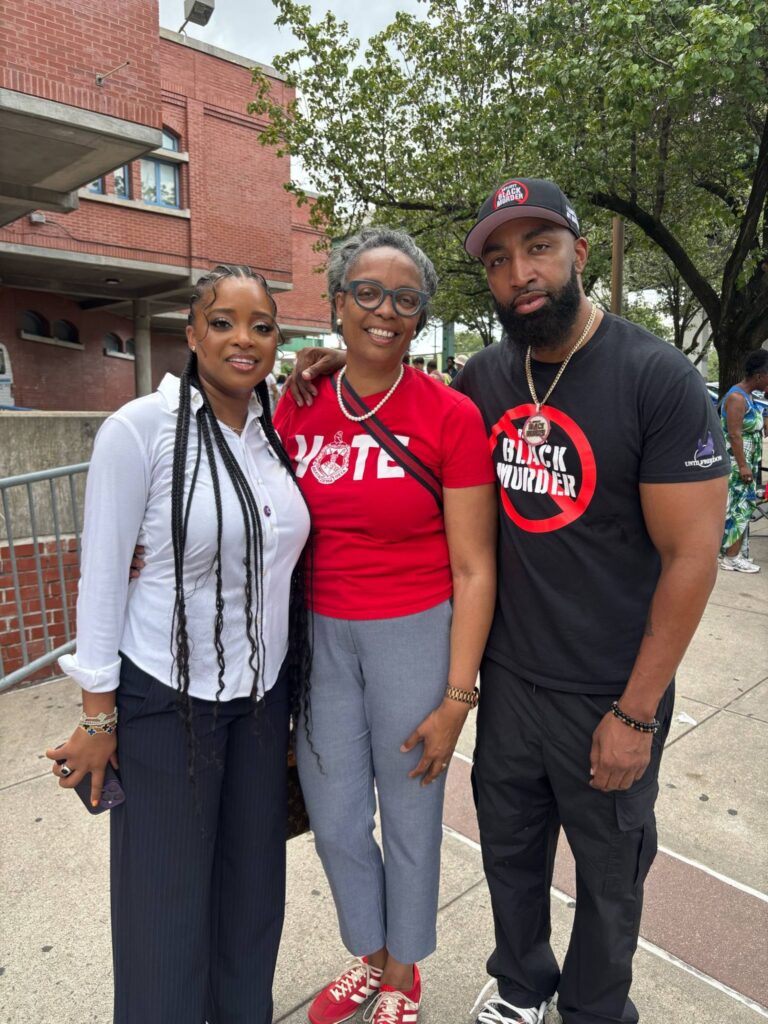
Activists from Until Freedom are now urging Governor Kathy Hochul and NYPD Commissioner Jessica Tish to honor the memory of Sandra Bland, Kindra Chapman, Joyce Curnell, Ralkina Jones, Raynette Turner, Saniyah Cheatham, and all those affected by these tragedies. They are demanding an independent investigation and the immediate release of all surveillance footage from the night of Cheatham’s death.
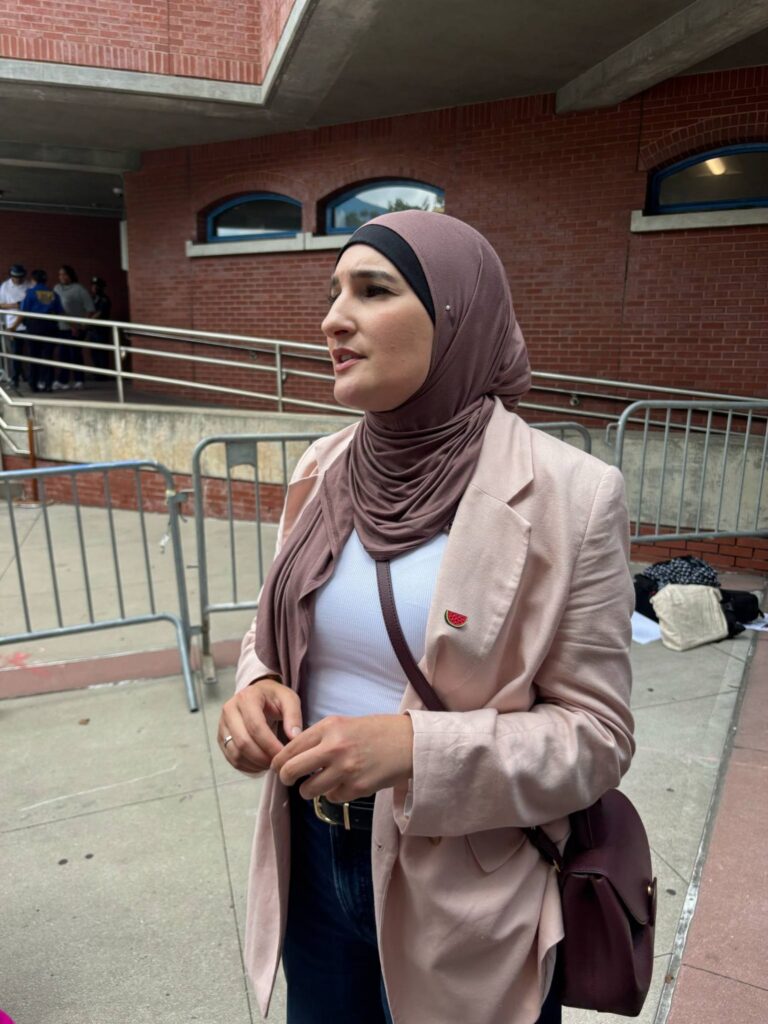
Founders and leaders like Tamika D. Mallory, Mysonne Linen, Linda Sarsour, and Angelo Pinto, Esq. are committed to the cause. They have a proven track record of two decades of collective work in criminal justice reform, gun violence prevention, immigrant rights, and cultural engagement. A family supporter passionately expressed, “Saniyah’s name deserves to be heard. Her story needs to be told. We can’t let her become another statistic, another young Black woman whose life ended behind locked doors without answers.”
Advocates are also urging the public to reach out to Governor Hochul’s office and NYPD headquarters. They are demanding accountability and transparency in custodial deaths and pointing to legislation like the Prison Omnibus Bill and other reforms that aim to prevent similar tragedies from happening again.
Cheatham’s death has reignited the Say Her Name movement, a campaign dedicated to raising awareness about Black women affected by state violence. If you are seeking answers or want to take action, here are the contact details: NYPD headquarters at 646-610-5000 and Governor Hochul’s office https://www.governor.ny.gov/content/governor-contact-form
Say Her Name: Sandra Bland, Kindra Chapman, Joyce Curnell, Ralkina Jones, Raynette Turner, and Saniyah Cheatham.
The IRS recently announced that pastors should be able to openly endorse political candidates from the pulpit without risking their churches’ tax-exempt status. While some might celebrate this as “free speech” or “religious liberty,” we need to be clear: this is a direct, coordinated attack on Black power, spiritual, economic, and communal.
To some, this might sound like expanding religious freedom. But for those of us who truly understand how power and influence operate in this country, especially for Black people, this is a red flag waving right in our faces.
Since 1954, the Johnson Amendment has acted as a guardrail, preventing churches from turning into campaign offices. For Black communities, this separation was critical. Our churches have never just been places to worship; they’ve been strategy centers, hubs for economic empowerment, and safe havens where we could dream and build without interference. Our churches are, and have always been, the heart of our liberation movements.
This new IRS stance isn’t just a policy shift
It’s an open invitation for political actors to hijack our pulpits and funnel our spiritual influence straight into their campaigns. It’s no coincidence this comes at the same time we’re seeing DEI rollbacks, corporations pulling back on promises to Black businesses, and Project 2025 gaining momentum behind closed doors.
Project 2025 is a conservative roadmap designed to transform America into a theocratic, nationalist state, one where religion doesn’t just guide personal values but dictates public policy and power structures. Weakening the Johnson Amendment clears the way for churches, especially Black churches, to become political megaphones instead of moral compasses.
The Black church has always been a sanctuary of resistance and survival. During the Civil Rights Movement, our churches held strategy meetings, funded economic cooperatives, and built local power without ever selling their souls to a single candidate. Our moral clarity and independence have always been our shield.
When I spoke with Rev. Dr. W. E. Scott, Associate Minister at St. James A.M.E. Church, he reminded me that while faith and ethics should inform our politics, inviting churches to formally endorse candidates opens the door to corruption and exploitation. Churches aren’t supposed to become extensions of campaign war rooms; they’re meant to be sanctuaries for building community ethics and empowering collective care. He stressed that although the Johnson Amendment technically still stands, this IRS shift blurs lines and emboldens churches to act recklessly. This is exactly what some want: confusion, manipulation, and new ways to undermine independent Black leadership.
We also cannot ignore the economic impact
Our churches have always been at the center of Black economics, hosting pop-up markets for Black vendors, circulating money within the community, and pushing us to “Buy Black” as an act of survival and self-determination. Once a church starts endorsing candidates, that sacred trust is at risk. The same pulpit that encourages you to support a local Black business on Saturday might stand up on Sunday and tell you to vote for a candidate actively working against Black economic equity.
When I asked white pastors for their perspectives, I didn’t receive any replies.
Rev. C.J. Rhodes of Mount Helm Baptist Church put it clearly: turning the pulpit into a campaign stop doesn’t just divide, it strips pastors of their prophetic voice, the very voice meant to hold power accountable. Once a pastor endorses a candidate, they are no longer free to challenge that politician when their actions harm the community.
Minister and theologian Kacey Venning made it plain when she told me that turning the pulpit into a platform for political endorsements risks trading our prophetic voice for partisan power. The Black church was never meant to be a tool of the state. It was built to be the heartbeat of Black liberation, a place to organize, resist, and rise.
We have to connect the dots
The same forces pushing Project 2025 are the same ones behind corporate DEI retreats and economic boycotts. They want to control how we spend, how we worship, how we vote, and ultimately, how we live. It’s all connected. They are coming for every institution we have built to protect ourselves and push our liberation forward.
I say this not just as a Black woman or a business owner. I say this as a Black thought leader and economic strategist committed to protecting every layer of our collective power. I am the voice sounding the alarm so that we see this for what it is: a strategic dismantling of Black independence and a direct play for our souls and our dollars.
These moves are not random. They are deliberate steps in a bigger plan to erase independent Black power, undermine Black economics, and hijack Black liberation theology for political gain. That’s why I keep saying: all roads lead back to the same plan. Whether it’s corporations abandoning DEI, Project 2025 trying to fuse church and state, or attacks on Black economic initiatives, it’s all about dismantling every layer of power we have left.
Here’s what we need to do right now:
If you are part of a church, talk to your leadership today. Ask for transparency and a commitment to keep the pulpit free from political endorsements.
If you’re a Black business leader, understand the risk this poses to your customer relationships and community trust. Start having these conversations with your networks now.
And if you are committed to Black liberation in any form, know that this is not the time to be silent or passive. We must educate, organize, and protect what our ancestors built.
They want to buy our votes, co-opt our dollars, and compromise our faith. But they can’t buy what we refuse to sell.
Stay alert. Stay sovereign. Stay ready.
About The Author: Nikki Porcher is a 2x Thought Leader of The Year and founder of the award-winning organization Buy From A Black Woman. She’s made it her mission to empower, educate, and inspire Black Women Business Owners; and to raise awareness for the need to support and #BuyFromABlackWoman.