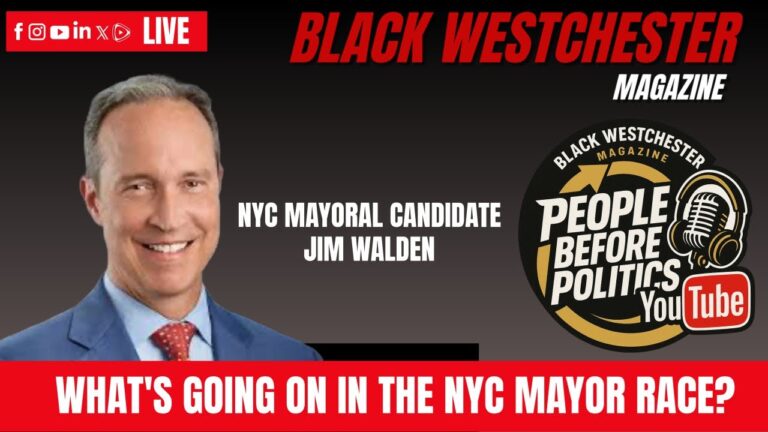
On Sunday, July 13th, Black Westchester interviewed Jim Walden, who is running to be Mayor of New York City in the upcoming 2025 New York City mayoral election as an independent candidate.
“When former prosecutor Jim Walden entered the New York City mayoral race last fall – uncommitted to running as a Democrat or Republican – it looked like he might have a shot at being the most prominent independent candidate in the race. That, on its own, would still be a very narrow road to City Hall. But instead, Walden is now one of three independent candidates in November. The other two? Incumbent Mayor Eric Adams and ex-Gov. Andrew Cuomo,” City & State Magazine wrote, Friday, July 11th.
Jim Walden, a former prosecutor, is running for NYC Mayor on a platform that calls for better government efficiency and spending (see interview below).
In a country where even cereal boxes are politicized, you’d think the disappearance of over 300,000 migrant childrenwould spark national outrage. But instead of a moral reckoning, we get collective silence. No marches. No press conferences. No hashtags. Why? Because telling the truth would offend the narrative too many people are emotionally and politically invested in.
If 300,000 children disappeared from gated communities in Connecticut or private academies in California, the FBI would be involved, the media would be in crisis mode, and Hollywood would already be filming the dramatization. But when it’s vulnerable, brown, undocumented children—some trafficked, others placed with strangers, many never heard from again—our country looks the other way.
According to multiple federal audits and immigration court records, over 291,000 unaccompanied minors were released without even being given a date to appear in immigration court (TRAC Reports, 2025). More than 85,000 children are now completely unreachable by the Department of Health and Human Services (New York Times, 2023). Nearly 32,000 never showed up for their scheduled hearings (AP Fact Check, 2024).
Let’s be clear: we don’t know where these children are. And yet nobody in power seems to care enough to find out.
Consider this: the same activists and politicians who protest the enforcement of immigration laws are quick to defend the rights of 1.4 million individuals with final deportation orders—people who have exhausted all due process and still refuse to leave (Washington Post, April 2025). There are lawsuits. Lobbying campaigns. “Abolish ICE” chants. Presidential platforms built on stopping deportations.
But when it comes to 300,000 missing children—many underage, many trafficked, many likely in dangerous situations—those same voices are eerily silent. No rallies. No viral videos. No congressional sit-ins. Selective outrage isn’t justice—it’s theater.
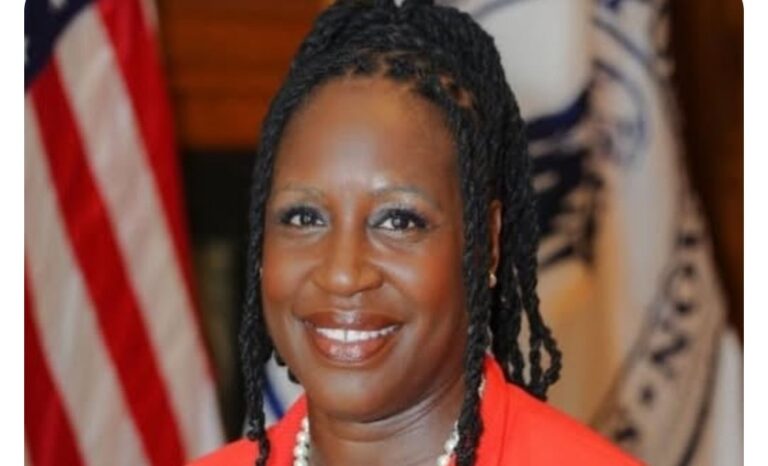
Where is New York Attorney General Letitia “Tish” James? She’s spent years chasing headlines—from Donald Trump’s finances to social media grandstanding about reproductive rights. But she hasn’t said a single word about the thousands of migrant children missing right here in New York.
There’s been no investigation from her office. No call to examine fake sponsors. No demand for oversight. Apparently, when there’s no political score to settle, there’s no incentive to care.
And it’s not just her. Local DAs, federal prosecutors, and so-called progressive law enforcement leaders across the country have all turned a blind eye. They claim to fight for the vulnerable, but when the victims are undocumented children—children with no vote and no voice—they vanish from the agenda just like they vanished from the system.
Ironically, the only prominent Democrat to raise the alarm has been New York City Mayor Eric Adams, who publicly criticized the Biden administration for losing track of migrant children and burdening cities with a crisis of federal origin (Politico, 2023). He warned it would “destroy New York City.” You’d expect the media to follow up. Maybe even investigate. But instead?
Crickets.
Why? Because Adams violated the unspoken rule: you’re not allowed to tell the truth if it makes open-border policy look bad.
Thomas Sowell once said, “There are no solutions. There are only trade-offs.” That’s the point most Americans miss.
Yes, you can have an open-door immigration policy. Yes, you can claim to be compassionate. But the trade-off—the actual result—has been missing children, human trafficking, and mass exploitation.
A nation that can’t even track the children it “rescues” is not noble. It is negligent. Compassion without competence is cruelty. And this cruelty is being done in your name.
So the question isn’t just Where are the children?
It’s also: Where are the prosecutors? Where are the activists? Where are the cameras? Where is the accountability?
And most damning of all: Why are 1.4 million people with final deportation orders more protected by this system than the missing children who were supposed to be cared for?
Until someone is forced to answer that, don’t talk to me about justice. Not when it disappears faster than the children do.
Emotional Politics — Logical Failure is the book you need.
In this bold and unfiltered work, Damon K. Jones delivers the hard truths many are afraid to say out loud: Black America has been loyal to a system that has failed to deliver. We’ve mastered symbolism but forfeited strategy. We show up to vote, but not to fund. We speak out, but rarely build. And the result? Speeches instead of solutions. Visibility instead of victory.
This book is not about left or right. It’s about logic over emotion. Power over performance. It’s a call to wake up, re-strategize, and use our political currency with purpose.
If you’re tired of being used, overlooked, and sold out—this book is your blueprint for change. Your voice is powerful. Your vote is valuable. But your money, your mindset, and your political clarity are what will make the difference.
Read the book. Share the message. Challenge the tradition. And let’s finally start getting what we pay for
Black Westchester presents The People Before Politics Radio Show, hosted by AJ Woodson and Damon K. Jones. The week we dive deep into the heart of New York City politics with two dynamic guests: Independent hopeful NYC Mayoral candidate Jim Walden, a former federal prosecutor and reform advocate, and Latina Brown, a bold Bronx political strategist and grassroots activist. We’ll be discussing the future of leadership in NYC, the challenges facing working-class communities, and what real political accountability looks like. From City Hall to the Bronx streets, this is the conversation you don’t want to miss.
People Before Politics Radio, Giving You Real Talk For The Community Since 2014!
Black Westchester presents the People Before Politics Radio Show every Sunday night, 6-8 PM, simulcasting live on Facebook, X (formerly Twitter), LinkedIn, Instagram, and YouTube, and archived on BlackWestchester.com. Giving you that Real Talk For The Community since 2014.
To support the Black Westchester and the People Before Politics Radio Show, which provides the News With The Black Point Of view and gives you the real talk for the community for free, make a donation via PayPal. In the words of Ray Charles, “One of these days, and it [might not be] long, You’re gonna look for [us], and [we’ll] be gone.” Support independent, Black-owned, Free Media!
Subscribe, hit the notification bell, and join the conversation this Sunday. At Black Westchester, we always put People Before Politics!
Longtime Greenburgh resident Colby Jenkins addressed the Greenburgh Town Board on Wednesday, July 9th, highlighting a unique initiative at the farmers market she founded and oversees: offering free food to all visitors. Parents of small children will also be able to get free diapers.
“This season, we’re doing something truly very special, we are launching a farmer’s market to give access to those who may or may not be struggling to come and receive up to $25 of free produce. This will help families’ growing needs in our town. The fresh fruits and produce will come from the funds that we will receive from different initiatives we have applied for. We want to thank our legislator, Jewels Williams Johnson, along with our Assemblywoman MaryJane Shimsky and our NYS Senate Majority Leader Andrea Stewart-Cousin, who is helping us to make funds available so we can bring this produce to the town of Greenburgh. We are also working with Black Farmers United, as well as some other farmers who are looking for space here so they can help us to grow some produce to give out,” Colby Jenkins said discussing rebuilding the Greenburgh Farmers Market and what they will have to offer at the Town Board Meeting (see video below).
“Colby Jenkins spoke at the Greenburgh Town Board meeting on July 9th. She expects the market to start offering this service every other week beginning in mid-August. She is asking the Town Board for permission to place a shed at the Kitty Land park in back of 90 Manhattan Ave so they can store their items- table, chairs, tents, and everything they need to operate the Farmer’s market,” Town Supervisor Paul Feiner shared with Black Westchester. “What a great initiative. Special thanks to Senator Andrea Stewart-Cousin and Assemblywoman MaryJane Shimsky for helping the market with financial support from NYS so they can offer this to families – many of whom were not able to afford the prices at a farmers market.”
Colby Jenkins is the president of Dare To Be Different Westchester. They address local food insecurity and help bridge the lack of access to community resources in Greenburgh. They started the Greenburgh Farmer’s Market, where the organization provides free giveaways (backpacks, diapers, toy drive, turkeys) and tabling for various community resources.
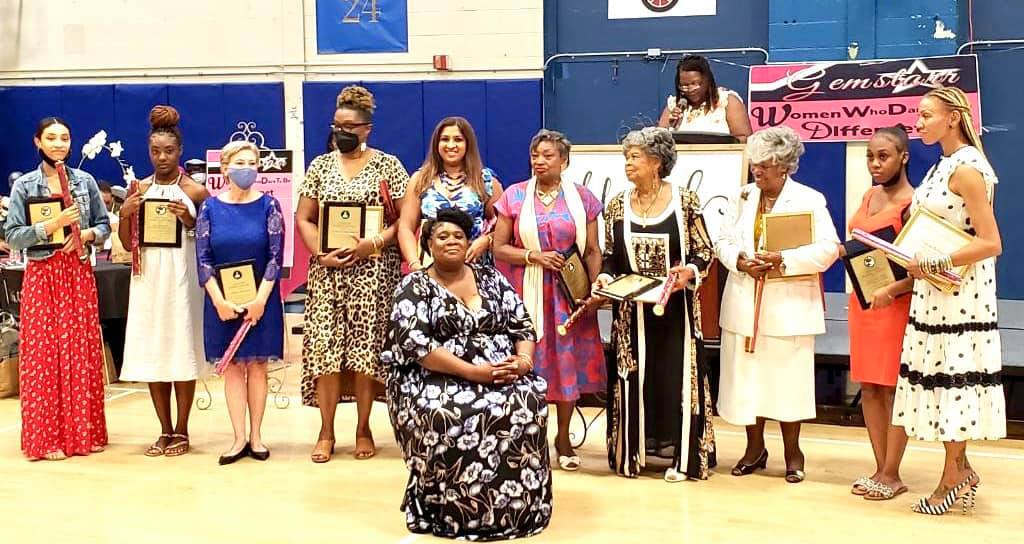
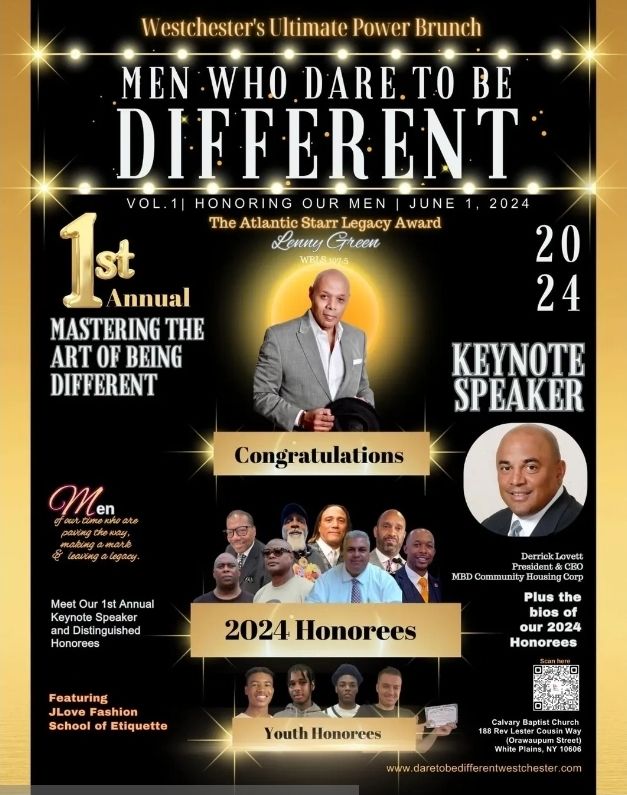
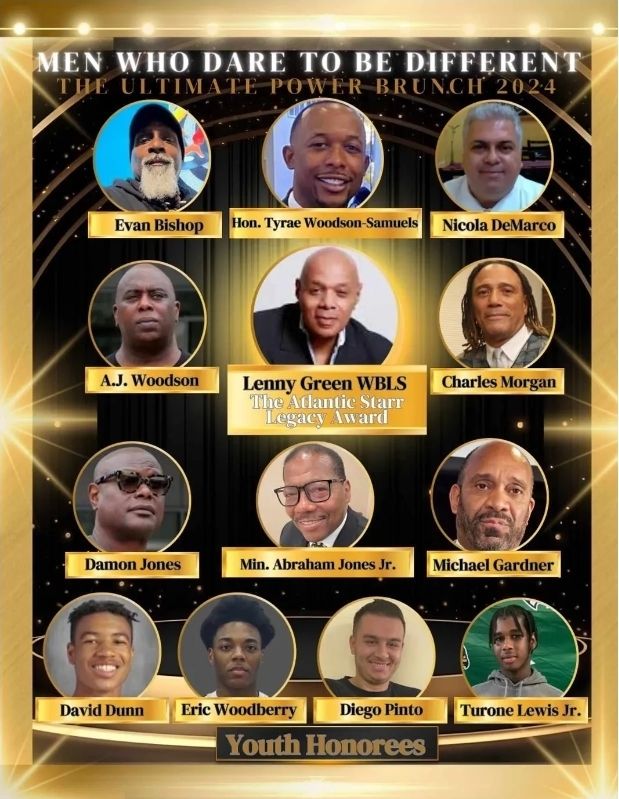
Dare To Be Different Westchester has also hosted an annual Women’s History Month Gala for the past eleven years, honoring women who dare to be different every day and excel in several professional careers. They also host their started their Annual Westchester’s Ultimate Power Brunch – Men Who Dare To Be Different in June 2024, honoring individuals who challenge societal norms and expectations, embracing their unique qualities and passions.
The Greenburgh Farmers Market, located in Fairview, Greenburgh, NY, is a community farmers market that supports local farms and businesses, offering fresh produce, baked goods, and other items. It’s situated on Manhattan Ave, near the intersection with Elm Street.
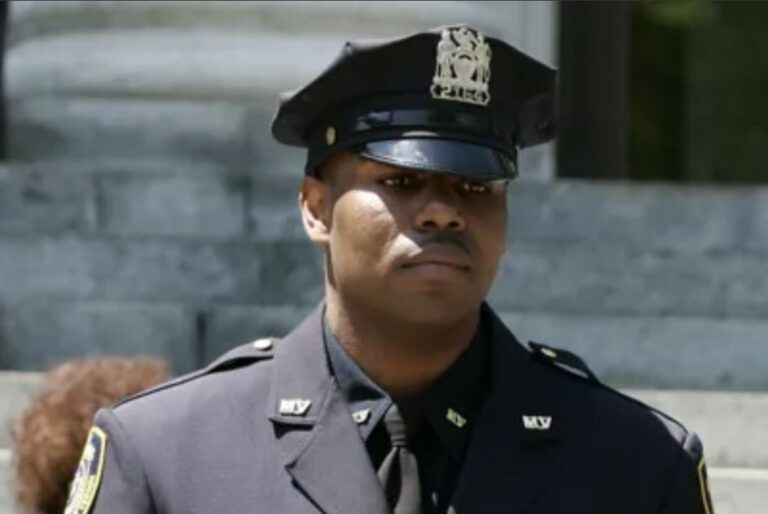
A former Mount Vernon police sergeant, 46-year-old Mario Stewart, is set to spend six months in federal prison for using excessive force, according to the U.S. Attorney’s Office. Prosecutors say Stewart used a Taser seven times over several minutes on a man having a mental crisis.
United States Attorney for the Southern District of New York, Jay Clayton, announced that Mario Stewart, a Sergeant with the Mount Vernon Police Department (“MVPD”), was sentenced by U.S. District Judge Kenneth M. Karas to six months in prison. While working as a Sergeant for the MVPD in 2019, Stewart used excessive force against an individual experiencing a mental health crisis, tasing him seven times over the course of several minutes, in violation of the Victim’s rights under the U.S. Constitution.
“New Yorkers depend daily on the women and men of law enforcement,” said U.S. Attorney Jay Clayton. “We trust them to keep us safe, to act in line with their training, and to respect our individual rights. This trust, earned over decades, is essential to our way of life. When a law enforcement officer breaches that trust, we are all affected. Yesterday’s sentencing was about protecting the trust between our communities and our police departments.”
According to the Indictment, court filings, and statements made in court:
On or about March 26, 2019, Stewart was employed as a Sergeant with the MVPD. Stewart was assigned to the MVPD’s Emergency Services Unit, which is responsible for, among other things, responding to individuals who are experiencing mental health crises. On that day, Stewart and six other MVPD officers received a call to assist the Victim in Mount Vernon, New York, as the Victim was experiencing a mental health crisis.
At the scene, Stewart and the other MVPD officers restrained the Victim, handcuffing his hands behind his back and securing his legs in a restraint bag in preparation to transport the Victim for medical assistance. When the MVPD officers were unable to pull the restraint bag over the Victim’s chest because the Victim was holding onto one of the bag’s straps, Stewart directed the Victim to release the strap. Stewart then deployed his taser seven times on the Victim. During each of Stewart’s taser deployments, the Victim remained lying on the ground, handcuffed with his hands behind his back and his legs secured in the restraint bag. Stewart’s actions caused bodily injury to the Victim, including extreme pain.
In pronouncing Stewart’s sentence, U.S. District Judge Kenneth M. Karas stated that a prison sentence was necessary “to send a clear message” to law enforcement that “even though your job is really hard, and even though you protect us every day and you have to make really tough decisions, there are still times where you have to yield to authority, and where the line is clear, you cannot cross it. . . . The people of Mount Vernon have to know that they will not be themselves victims of their law enforcement officers.”
Stewart, 46, of Brooklyn, was sentenced Wednesday after pleading guilty in January to depriving an individual of his civil rights by using excessive force against a 20-year-old civilian in 2019. He worked several more years before retiring in 2023.
In addition to the prison term, Stewart was also sentenced to six months of home confinement upon his release.
Mr. Clayton praised the outstanding investigative work of the Federal Bureau of Investigation and thanked the Westchester County District Attorney’s Office and the MVPD for their assistance with the investigation.
The case is being handled by the Office’s Civil Rights Unit in the Criminal Division. Assistant U.S. Attorneys Sam Adelsberg and Jared Hoffman are in charge of the prosecution.
There has been a lot of discussion, rumors, email blasts, social media posts, and comments about the proposed Charter Review Commission report for 2024–2025 and the amendments that they are asking the people of Mount Vernon to vote on in the November election. I’ve witnessed a lot of false information, smear campaigns, attacks on members of the charter revision committee, and accusations against the City Council, Mayor Shawyn Patterson-Howard, and others who are allegedly attempting to thwart the proposed revisions in order to retain their power. At this point, the residents and voters are unsure of what is true, what is not, and who and what to believe.
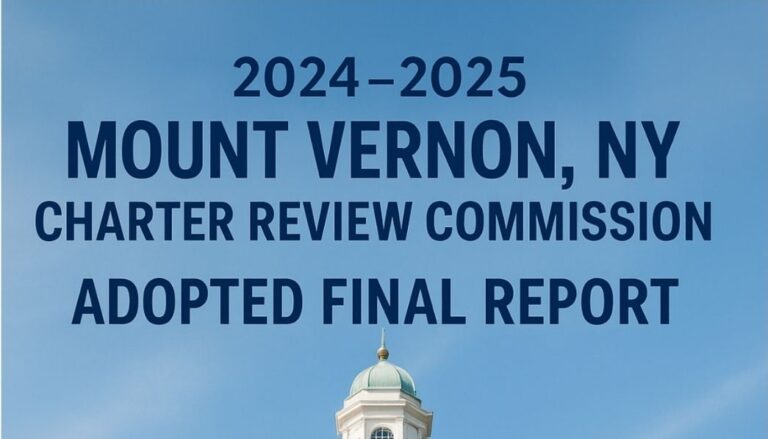
Let’s start here first. For individuals who would like to read the proposed Charter Review Commission report for themselves, Black Westchester has obtained a copy (see below for the complete report). The Charter Review Commission will not vote on it until Wednesday, July 16, 2025; therefore, even though it is named the Adopted Final Report, it cannot yet be adopted as final yet. Second, why does the report’s cover image not feature a photo of Mount Vernon City Hall? No one could go outside and snap a picture or look up a photo of Mount Vernon, NY City Hall online, so I’m not sure where they found that picture but to put it on the cover of the report is either lazy or shows they do not care enough to have the correct picture on the cover.
And lastly, there has been a lot of talk about a survey that was shared on social media and on the city website, but only 300-plus people (which included some of the commission members themselves) of the 41,000-plus registered voters filled out the survey. I am not sure what the commission did to inform the community, but 300 out of 41,000 people shows they did not do a good job of getting the word out. How are we asking the residents to vote on this in November when only 0.73% of the registered voters in the City of Mount Vernon filled out the survey?
One of the things the commission could have done, and it would have been free, was to contact Black Westchester to help spread the news on our website and by making an appearance on our weekly radio show, People Before Politics Radio. They could have also spent a few dollars to boost their social media post to target resident in the city so it would show up in their timelines.
These are only some recommendations. Several residents have contacted Black Westchester to let us know they were unaware of or had not seen the study. It begs the question: Did they really make an effort to contact every voter in every section of the city, given that they felt confident enough to use a survey with only 0.73% of registered voters participating? According to their own statements at the Thursday, July 10th Charter Revision Forum in City Hall, which was hosted by Councilman Derrick Thompson, only one zip code was adequately represented. The other zip codes are very badly represented, with one Mount Vernon zip code not being represented at all.
So, first and foremost, below is the 320-page report from the commission.
Here are key bullet points from the Mount Vernon Charter Review Commission Final Report (2024–2025):
🗳️ Ballot Questions & Major Proposals
Ballot Question #1: Transition to Council-Manager Government
Shifts executive power from the elected Mayor to a professionally appointed City Manager.
The mayor becomes the presiding officer of the City Council and ceremonial leader.
Board of Estimate and Contract abolished; its functions reassigned to the City Manager and the Council.
Takes effect January 1, 2028 (after the current Mayor’s term ends). Note: This is a blending of the powers of the Executive Branch (The Mayor) and the Legislative Branch (The City Council)
Note: This is a blending of the powers of the Executive Branch (The Mayor) and the Legislative Branch (The City Council). The principle of “equal branches of government” refers to the idea that the legislative, executive, and judicial branches of a government should be independent and have roughly equal power, preventing any one branch from becoming too dominant. The same can be said for the elected Comptroller, which is dealt with in ballot question #2. This is often achieved through a system of checks and balances, where each branch can limit the power of the others.
Ballot Question #2: Appointed Commissioner of Finance
Replaces elected Comptroller with an appointed, credentialed Commissioner of Finance.
Commissioner accountable to City Manager (if Ballot #1 passes) or Mayor (if not).
Board of Estimate and Contract also abolished under this plan.
Takes effect January 1, 2030 (after next Comptroller term).
Note: Again, turning the Comptroller from an elected position (by the people) into an appointment (by the city council) removes that independence and opens the door to the very abuse the revision is supposed to be protecting the residents from.
📋 Executive Summary Highlights
The Commission aims to modernize government, enhance accountability, and improve services.
Proposals reflect best practices and lessons from interviews, research, and other cities.
Voters will decide on changes in the November 4, 2025, general election.
🔍 Background
The commission is required by the 2019 Charter amendment, mandating review every 5 years.
Comprised of diverse Mount Vernon residents and legal/technical advisors.
Supported by National Civic League and Marks DiPalermo Wilson LLP for legal and governance expertise.
👥 Public Outreach
Three-phase process: education, community forums, and ongoing outreach through 2025.
Mixed in-person and virtual engagement; virtual forum viewed over 500 times.
A public survey was conducted to assess resident views.
Note: 300-plus people out of 41,000 registered voters of the City of Mount Vernon (0.73%) filled out the survey. Not a great representation of residents’ views, I’m just saying.
🧑⚖️ Commission Structure
15 commissioners, supported by an advisory board, legal counsel, and consultants.
Subcommittees reviewed specific Charter sections (Finance, Governance, HR/Social Services, Public Works).
Interviews were conducted with officials from New Rochelle, Baltimore, Baton Rouge, and others.
🧩 Subcommittee Results
Finance: Rejected tax cap and lien amendment proposals. Found Charter already sufficient for budget rules.
Governance: Advanced proposals for Council-Manager and appointed Finance Commissioner. Rejected term limits and non-partisan elections.
HR/Social Services: No formal proposals advanced.
Public Works: Identified fragmentation and called for structural/code improvements, not Charter amendments.
📚 Legal Basis
Proposals authorized by NYS Municipal Home Rule Law §36 and the NYS Constitution.
Charter amendments require public referendum approval.
🧭 Future Considerations
Non-partisan primaries.
Model City Charter adoption.
Mandatory referendum to exceed property tax cap.
Hybrid district/at-large City Council election system.
So why did I feel it was important to share all of this? Simply. This is potentially a seismic shift in the structure of the city of Mount Vernon’s government. Is it good or bad? It will be up to you to decide. The Charter Review Commission would like Mount Vernon to have a City Manager and an appointed Comptroller, which can change how our city truly operates / functions. More importantly, you, the resident, will be required to vote on these proposed revisions that you had very little input on.
The Mount Vernon Charter Review Commission is composed of (15) fifteen members who must reside in the City of Mount Vernon, New York, and are appointed by the Mayor and the City Council. The members are Tamala Boyd, Chair, David Rogers, Vice Chair, Kareen Bell, Secretary, Rosia Blackwell – Lawrence, Brian Dwyer, Anitra Hadley, Mary Kingsley, Susan Lally, Eileen Lambert, Delores Lopes, Erin McGarry, Geeta Morris, Kevin Morrison, Haley Pilgrim, and Monica L. Whiting – Hogans. Charter Review Commission meetings, minutes, and agenda can be found here, the 7th board or commission listed on the page. The commission also has an advisory board that includes individuals not selected as commission members, as well as current and former elected officials, who will contribute ideas and identify areas for charter revision.
Because this affects all of you and your families, Black Westchester is not urging anyone to support or oppose the proposed charter revisions. Instead, the goal of sharing this information is to hopefully increase your knowledge, so you can ask the right questions and make better decisions at the polls. We can not blame the state of the city on just our leaders, elected officials, commission, and board members; you have a very vital role to play as well. I have said countless times, politics is a participatory sport. You, as a citizen, resident, and registered voter, have an active role to play in shaping your government and society. That participation is crucial for a healthy democracy and goes beyond just voting. It includes contacting elected officials and, in this case, the charter review commission members, and engaging in public discourse and holding your leaders accountable. It includes showing up and being counted at city council, school board, and library board meetings (many of which are livestreamed so you can watch at home or listen to in your car on your way home), participating in things like surveys for charter revisions, and doing everything you can to be informed. We are all busy, but you can always contact the city clerk, city council members, district leaders, etc, and find out what’s going on in your city
While I put most of the onus on this commission for not doing a great job getting the word out, how good of a job are you doing to stay informed and be engaged? If you are not part of the solution, you are part of the problem, and you cannot continue to complain on social media when you are not doing your part!!!
There is a phrase I use a lot: “You can lead a horse to water, but you can’t make it drink.” It is a proverb that means you can provide someone with an opportunity or the resources to do something, but you cannot force them to take advantage of it or to be successful. It highlights the idea that ultimately, individuals must be willing and motivated to act on their own. So while I hold our elected officials and leaders’ feet to the fire, I would be a hypocrite if I didn’t hold the residents of the city equally accountable.
You have the information, at least enough to make you ask questions and seek answers from your leaders, so what are you going to do with it?
Mount Vernon’s leaders want to rewrite the rules, but refuse to fix the habits. That’s not reform — that’s misdirection.
There’s growing momentum to revise the city charter. On the surface, structural reform sounds like progress. But in practice, it often becomes a distraction from the deeper problem. The truth is simple: it’s not the charter that has failed Mount Vernon — it’s who the city continues to elect to operate it.
You can draft new rules and reorganize the structure of government all you want, but if the same ethically compromised individuals remain in control, the results will be the same—just repackaged under a different title. Among the reforms being considered is the shift to a city manager model, where a hired professional would run daily operations. Another is the proposal to move to district-based council elections instead of at-large seats was rejected by the commission. Both deserve attention, but neither will solve the core issue unless the political culture changes. However, the most dangerous proposal now gaining traction is the idea of removing the public’s right to elect the city comptroller and making that position an appointment. That is not reform. That is a guaranteed gateway to cronyism, nepotism, and the unchecked consolidation of power.
The comptroller is the city’s fiscal watchdog. Currently elected by Mount Vernon residents, the comptroller is accountable only to the people, not to any political figure. The job is to provide an independent check on how taxpayer money is spent—overseeing budgets, contracts, and payroll with a critical eye. Turning this role into an appointment removes that independence and opens the door to abuse. Appointees are not accountable to the public. They are loyal to the person or political machine that gave them the job. And in a city where political favors, insider dealings, and donor-driven decisions are already common, this move would virtually guarantee that the watchdog becomes a lapdog.
The danger becomes even clearer when considered alongside the fact that Mount Vernon’s City Council is still elected at-large. That means a single political group can effectively dominate every seat. Without shifting to district-based elections, which would allow for more equitable and geographically grounded representation, there is no true check on consolidated political power. Now add in the influence of political operations like Rise Up Mount Vernon PAC—an organization that appears to help shape who gets elected, fund campaigns, and promote a narrow slate of candidates. If that same network can influence the mayor’s office, shape the council, and now appoint both the city manager and the comptroller, the people of Mount Vernon will have lost every meaningful point of access to their government.
This is how good intentions result in bad political outcomes. What begins as an effort to increase efficiency ends as a blueprint for eliminating accountability. Mount Vernon’s history already proves this lesson, time and again. Mayor Ernest Davis pleaded guilty to a federal conviction for tax evasion but defiantly rejected calls for his resignation in 2014. Davis’ successor, Mayor Richard Thomas, campaigned on transparency and youth leadership, only to plead guilty to misusing campaign funds and resign in disgrace in 2019. Thomas’ Corporation Counsel, Lawrence Porcari, was convicted of public corruption charges and sentenced to prison. The current administration faces lawsuits and potential public scrutiny over alleged campaign finance violations, the political use of public employees, and close ties to developer-connected donors—all. At the same time, the city has given its residents no plan to address the DOJ report of its police department violating its residents’ rights.
A flawed city charter caused none of these failures. They were caused by poor decisions at the ballot box. The problem is not structural. It is cultural. And the public is not blameless. Too often, Mount Vernon voters reward loyalty over leadership, personality over qualifications, family affiliations, and empty rhetoric over measurable results. Leaders are elected because they are familiar—not because they are competent. This allows dysfunction to become tradition, and allows political insiders to present “reform” proposals that only deepen their control.
Some defenders of these changes will argue that professionalism matters more than elections. That hiring an “expert” for the comptroller role is better than leaving it up to voters. But professionalism without independence is worthless. An expert who reports to a political insider is no longer a watchdog—he or she becomes a shield for corruption. In the real world, qualifications mean little if your job depends on who you’re willing to protect. Expertise is only as valuable as the integrity behind it.
For a city that’s constantly claiming to be financially strapped, Mount Vernon already pays the mayor a $200,000 salary—making it one of the highest-paid mayors in Westchester County. Now, under the proposed charter changes, the city wants to add a second executive-level salary, paying a city manager another $180,000 to $220,000, plus benefits, severance protections, and possibly relocation assistance. Meanwhile, the elected mayor—still drawing a full salary—would be reduced to a ceremonial figurehead with little executive power. The public pays twice, and gets less in return. This is a city that can barely fix its parks, can’t keep basic services running consistently, and has few functioning programs for its children and youth. City departments are under-resourced, infrastructure is crumbling, and residents are paying more but getting less. Yet somehow, the priority has become adding another six-figure salary to an already bloated city hall. That’s not reform—it’s institutionalized foolery. You don’t fix dysfunction by expanding government overhead. You fix dysfunction by voting incompetent leadership out—which, sadly, Mount Vernon just can’t seem to get the hang of doing.
A City Without Wards Is a City Without Balance
In a city as diverse and economically divided as Mount Vernon, electing all City Council members at-large creates an uneven playing field where political machines and donor-funded campaigns dominate citywide races. This system dilutes local voices and often leaves entire neighborhoods without true representation. By shifting to a ward or district-based model, each community would elect its own councilmember—someone who lives in, understands, and answers directly to the people of that specific area. Districts decentralize power, make campaigns more accessible to real grassroots candidates, and reduce the influence of political PACs that bankroll citywide slates. If Mount Vernon wants government that reflects the will of the people—not just the will of those with resources—then fair, geographically based representation is not optional. It’s foundational.
How Mount Vernon Residents Can Legally Change the City Charter
If Mount Vernon’s leadership won’t initiate real reform, residents have the legal right to do it themselves through a petition-driven charter change. Here’s how the process works under New York State law:
Draft the Proposal Residents must clearly write out the proposed change to the charter. This can be:
A specific amendment (e.g., switching to district-based council elections, keeping the comptroller elected)
A proposal to form a Charter Revision Commission, which could recommend broader reforms
Prepare a Legally Compliant Petition The petition must include:
The exact wording of the proposed charter change
A clear statement of purpose
Signature fields with printed name, signature, full address, and date
Collect Signatures from Registered Voters You must collect valid signatures from at least 5% of Mount Vernon’s registered voters, or 15,000, whichever is less.
Mount Vernon has about 41,000 registered voters, so approximately 2,050 valid signatures are needed
Only registered voters in Mount Vernon can sign
Submit the Petition for Review Submit the completed petition to the City Clerk or Board of Elections.
This must be done well before the general election, typically no later than 4 months prior to November
Verification of Signatures The city will review the petition to:
Confirm signatures are valid
Ensure the wording complies with legal standards
Legal challenges may be filed during this stage, so clarity matters
Put It on the Ballot Once approved, the proposal must be placed on the next general election ballot.
A simple majority vote by the public determines whether the change is adopted
Implement the Change If voters approve the proposal, the city must implement the charter amendment or create the charter commission as outlined in the petition.
Important Note on Charter Commissions:
If a charter revision commission is appointed by the City Council or the mayor, there is no legal guarantee that it will act in the public’s best interest—or even act at all. In many cases, appointed commissions have delayed action, avoided substantive reform, or failed to meet critical deadlines. But in Mount Vernon’s case, the issue wasn’t inaction—it was omission. The commission produced a proposal, but left out one of the most vital accountability reforms: converting City Council elections from at-large to district-based representation. That omission isn’t a minor oversight—it protects the current power structure by allowing the same political networks to continue dominating every seat. When commissions are appointed by the very people who benefit from the status quo, they can become tools of preservation, not instruments of change.
When that happens, the public gets the appearance of reform without any results — and the opportunity for change is lost until the next election cycle. That’s why the direct petition process is the most powerful and reliable tool Mount Vernon residents have. It allows citizens to bypass political games and take charter changes straight to the ballot, where voters — not politicians — decide the future of their city.
Bottom line: If the people don’t drive the reform, the reform won’t happen.
If Mount Vernon truly wants reform, it must begin with restoring accountability—not removing it. That means keeping the comptroller elected and independent. That means restructuring the council into real districts, so each neighborhood has a voice. That means demanding transparency from political PACs and campaign finance operations that operate behind the scenes. And most of all, it means voters must change how they think, how they research, and how they vote.
Mount Vernon doesn’t need fewer elections. It needs better elections. Better candidates.And better-informed voters. If the city continues to elect the same individuals, it will continue to receive the same results. And if it removes the few remaining checks on power for the people, it won’t be reform—it will be political foreclosure.
The solution isn’t to silence the public. It’s to wake it up.
Emotional Politics — Logical Failure is the book you need.
In this bold and unfiltered work, Damon K. Jones delivers the hard truths many are afraid to say out loud: Black America has been loyal to a system that has failed to deliver. We’ve mastered symbolism but forfeited strategy. We show up to vote, but not to fund. We speak out, but rarely build. And the result? Speeches instead of solutions. Visibility instead of victory.
This book is not about left or right. It’s about logic over emotion. Power over performance. It’s a call to wake up, re-strategize, and use our political currency with purpose.
If you’re tired of being used, overlooked, and sold out—this book is your blueprint for change. Your voice is powerful. Your vote is valuable. But your money, your mindset, and your political clarity are what will make the difference.
Read the book. Share the message. Challenge the tradition. And let’s finally start getting what we pay for.
Yonkers Mayor Mike Spano announced on Monday, July 7t,h his appointment of community member and job readiness trainer Effie Phillips as the City’s new Community Advancement and Recruitment Officer. Phillips will serve as a strategic advisor on equity-related hiring practices and strategies to attract, hire, and retain a diverse municipal workforce.
“In Yonkers, equity and inclusion are not just values—they are action steps,” said Mayor Spano. “I am confident Effie’s expertise as a job readiness trainer and active community volunteer will continue to diversify Yonkers’ talented workforce and best reflect the community in which we serve.”
Phillips will work closely with the Mayor’s Office, Human Resources, department leaders, and community stakeholders to ensure equity is embedded throughout the City’s recruitment and community outreach efforts.
“I knew I always wanted to make a difference in Yonkers. This opportunity, working alongside Mayor Spano and his team, will make that possible. Yonkers, let’s continue to be the change we want to see in the world!” Effie Phillips stated.
Effie Phillips joins the City of Yonkers with 20 years of case management experience with job placement, human resources and community program oversight. Recently, Phillips served as an Election Inspector Coordinator for the Westchester County Board of Elections, where she trained poll inspectors and monitored human resource information and documentation.
Previously, she worked for U.S. Congressman Eliot Engel in which she managed constituent services and local issues for the Congressional district. Additionally, Phillips was a case manager and job readiness trainer for the Urban League of Westchester and Westhab.
As a community leader, Phillips is the Vice President of the National Council of Negro Women-Hudson Valley Section, a lifetime member of NAACP, Yonkers Branch and member of the Yonkers African American Heritage Committee. Phillips attended Mercy College where she studied Organizational Management.
WHITE PLAINS, N.Y. – Westchester County District Attorney Susan Cacace announced that Tairon Drake, 30, of Yonkers, was indicted on multiple felony charges for allegedly attacking his former partner inside their home, in front of their two children.
Drake was charged with the following crimes:
Aggravated Criminal Contempt (D felony, 2 counts)
First-Degree Criminal Contempt (E felony, 11 counts)
Criminal Obstruction of Breathing or Blood Circulation (A misdemeanor, 1 count)
Third-Degree Assault (A misdemeanor, 2 counts)
Endangering the Welfare of a Child (A misdemeanor, 3 counts)
He was arraigned on the charges on Tuesday, July 8th, before Judge Susan Capeci, where he pleaded not guilty. Judge Capeci, who is the Supervising Judge of the Supreme Court (Civil Matters), set bail at $10,000 cash/$100,000 insured bond/$150,000 partially secured bond.
“Research shows that women who experience strangulation or obstruction of breathing are far more likely to be killed by their intimate partner later on. That is why it is critical for law enforcement to intervene at this stage,” DA Cacace shared.
“Protecting and supporting domestic violence survivors is among the highest priorities for my administration. There is no safe harbor for abusers in Westchester County.”
As alleged in an earlier-filed felony complaint, on May 1, 2025, at their Yonkers home, Drake placed both hands around his former partner’s neck and applied pressure, verbally threatening to kill her. The next day, he is alleged to have slapped their then-9-year-old child across the face, splitting open her lip.
Each of these alleged acts is further alleged to have been committed in violation of an order of protection that had been issued against the defendant, for the benefit of his former partner and their children, in connection with a prior criminal case.
The investigation is being conducted by the Yonkers Police Department. The case is being prosecuted by Assistant District Attorney Morgan Helfman of the Special Prosecutions Division.
The charges against the defendant are merely accusations, and the defendant is presumed innocent unless and until proven guilty.
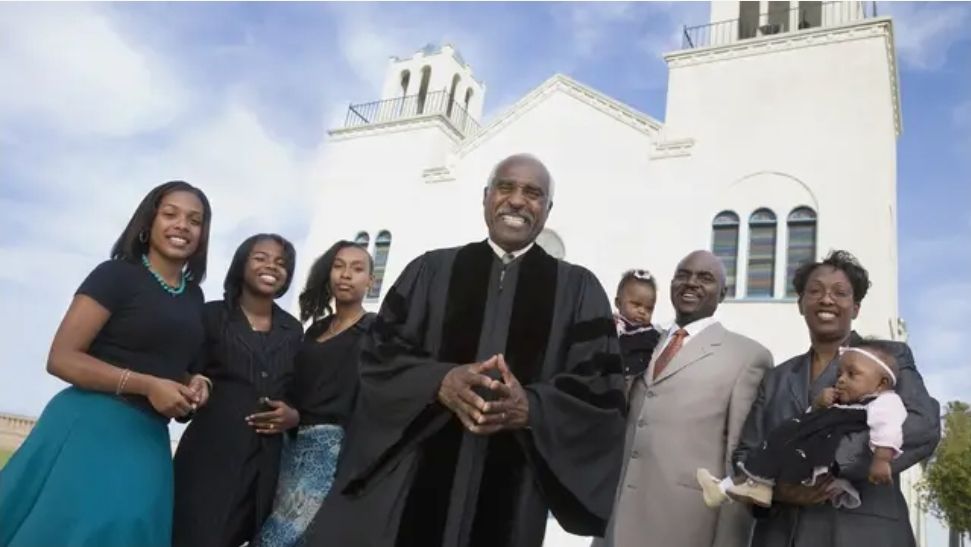
Churches and houses of worship can now endorse political candidates to their congregations without losing their tax-exempt status.
Let’s be real. This isn’t just a policy change.
It’s a quiet power grab, dressed in scripture and subtle language.
They’re calling it a “family discussion,” but we know what it is:
a legalized pipeline from the pulpit to the polls.
Because when the government says religious endorsements aren’t “campaigning,” what they’re really saying is:
“Preachers, go ahead and push candidates during your sermon. We won’t tax you for it.”
That means a pastor can name-drop their favorite Senate hopeful right after the benediction and still pass the collection plate tax-free.
But this isn’t about freedom of speech.
It’s about strategic manipulation, disguised as divine authority.
Let’s Be Clear About the Setup
This ruling came out of a lawsuit filed by two churches in Texas and a Christian broadcasting group.
Their goal?
To open the floodgates for political endorsements in sacred spaces, without triggering the Johnson Amendment, a decades-old law that barred nonprofits from politicking.
And the IRS gave them exactly what they wanted.
Now, churches have been given a greenlight to do what other nonprofits still legally can’t: endorse candidates with no consequences.
No oversight.
No donor disclosures.
No accountability.
And all while collecting tax-deductible donations.
That’s not just a loophole.
That’s a playbook.
Why This Hits Different in Our Communities
Let’s not act brand new.
The Black church isn’t just a place of worship; it’s a cultural cornerstone.
It’s where we organize, educate, heal, and mobilize.
So when the IRS tells churches, “it’s okay to endorse,” what they’re really doing is weaponizing trust.
Because who do people still believe when the world is burning?
Their pastor.
Their imam.
Their spiritual anchor.
But now, that trusted voice could be echoing the interests of a political campaign, one that may not even serve the people in the pews.
And the scariest part?
It’s all legal now.
The Real-World Impact
Let’s run some numbers:
1 in 4 Black girls will be sexually assaulted before 18.
Black maternal mortality is 3x higher than white women.
Over 60% of Black youth attend underfunded schools.
Gun violence is the #1 killer of Black children in America.
So the question becomes:
Who benefits when churches endorse candidates who vote against our survival?
We’ve already seen how political agendas creep into sermons:
Telling congregants not to support reproductive justice.
Telling them “tough on crime” is gospel.
Telling them to trust systems that have failed us for centuries.
This ruling gives those agendas room to grow and now, nobody’s watching.
Spiritual Gentrification is Real
This is how it starts.
Take a sacred space. Introduce a subtle shift. Wrap it in tradition. Monetize the influence. And act like it’s always been that way.
They’re not trying to separate church and state.
They’re trying to merge them strategically, under the table, with a tax-free seal of approval.
And what happens when candidates start courting churches like they do influencers?
We risk our pulpits becoming platforms.
Our praise becoming propaganda.
Our faith being flipped into someone else’s funnel.
What Do We Do Now?
We stay woke in the pews.
We ask our leaders the hard questions:
Who are they aligning with?
Who benefits from that alignment?
And are our communities actually being served or simply being swayed?
Because this isn’t
just about politics.
It’s about protection.
Protection of our sacred spaces.
Protection of our right to uncoerced faith.
Protection of the people who walk through those doors looking for God, not a campaign.
Final Word: The Pulpit Isn’t For Sale
This IRS ruling might be legal but that don’t make it righteous.
Because the truth is:
Faith isn’t supposed to be a funnel for votes.
It’s supposed to be a force for freedom.
So while candidates are out here trying to cozy up to clergy, we better remember who the real power belongs to:
The people. The pews. The prophets, not the politicians.