Home Blog Page 5

Hezekiah Walker, Jennifer Holliday, and Le’Andria Johnson Will Perform At Lehman Center for the Performing Arts

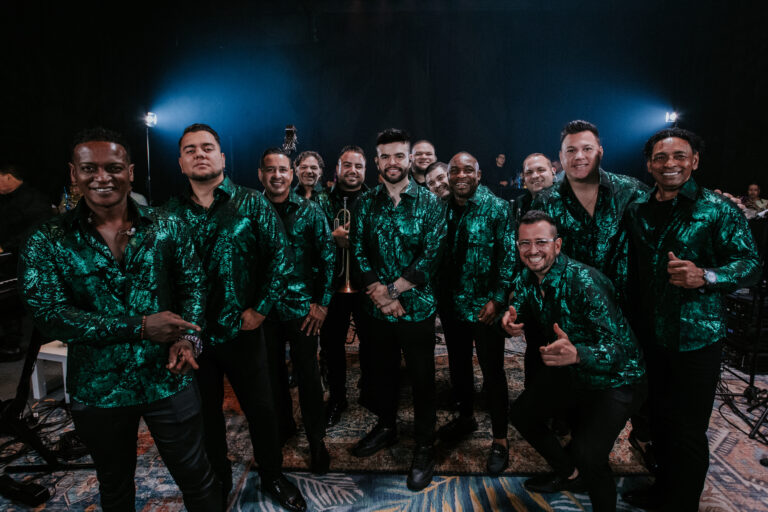
McDonald’s Gospelfest is coming back to Lehman Center for the Performing Arts on Saturday, April 11, 2026, with performances from legendary artists Hezekiah Walker, Jennifer Holliday, and Le’Andria Johnson​. This unforgettable evening promises to uplift hearts and stir souls with the power and passion of world-class gospel music. Audiences can expect electrifying performances, inspiring messages, and the joyous spirit that makes this celebration a must-see event for gospel lovers of all generations.   

Lehman Center for the Performing Arts is on the campus of Lehman College/CUNY at 250 Bedford Park Boulevard West, Bronx, NY 10468. Tickets for McDonald’s Gospelfest on April 11, 2026 at 8 PM (VIP $110, $75, $65, $50, $45) can be purchased by calling the Lehman Center box office at 718-960-8833 or 718-960-8835 in Spanish (Monday through Friday, 10 am–5 pm, and beginning at 4 pm on the day of the concert), or through online access at https://www.lehmancenter.org/events/mcdonalds-gospelfest. Lehman Center is accessible by the #4 or D train to Bedford Park Blvd. and is off the Saw Mill River Parkway and the Major Deegan Expressway.

Hezekiah Walker, the “Pastor of Hip Hop,” is a Grammy Award-winning gospel pioneer who blends faith and contemporary musical styles to reach global audiences. Walker, a Brooklyn native and the creator of the Love Fellowship Crusade Choir, helped reshape contemporary gospel music with his albums “I’ll Make It” and “Oh Lord We Praise You.”In 2019, his hit song “Every Praise” won the title of Gospel Song of the Decade on Billboard. He continues to be a prominent voice in ministry, community outreach, and spiritual inspiration with two Grammy victories and more than 10 nominations. Most recently, he announced that he and Virginia Union University would work together to create the nation’s first institution of its sort, the Hezekiah Walker Institution for Gospel Music.

Jennifer Holliday, renowned for her powerhouse voice and commanding stage presence, skyrocketed to fame with her iconic, TONY Award-winning portrayal of Effie Melody White in the smash Broadway musical Dreamgirls. Discovered at age 17 while singing in her Houston church choir, she has built a legendary career spanning stage and music, earning 2 GRAMMY Awards for her unforgettable performances of “And I Am Telling You I’m Not Going” and Duke Ellington’s “Come Sunday.”

Le’Andria Johnson is an American gospel singer and songwriter from Palatka, Florida, and is known for winning Season 3 of Sunday Best, BET’s gospel competition, in 2010She garnered rapid success with her debut album, “The Awakening of Le’Andria Johnson.” In 2012, Johnson won GRAMMY for Gospel/ Contemporary Christian Music Performance. Her hit singles include “Better Days”, “Jesus”, and “Sooner or Later.” 

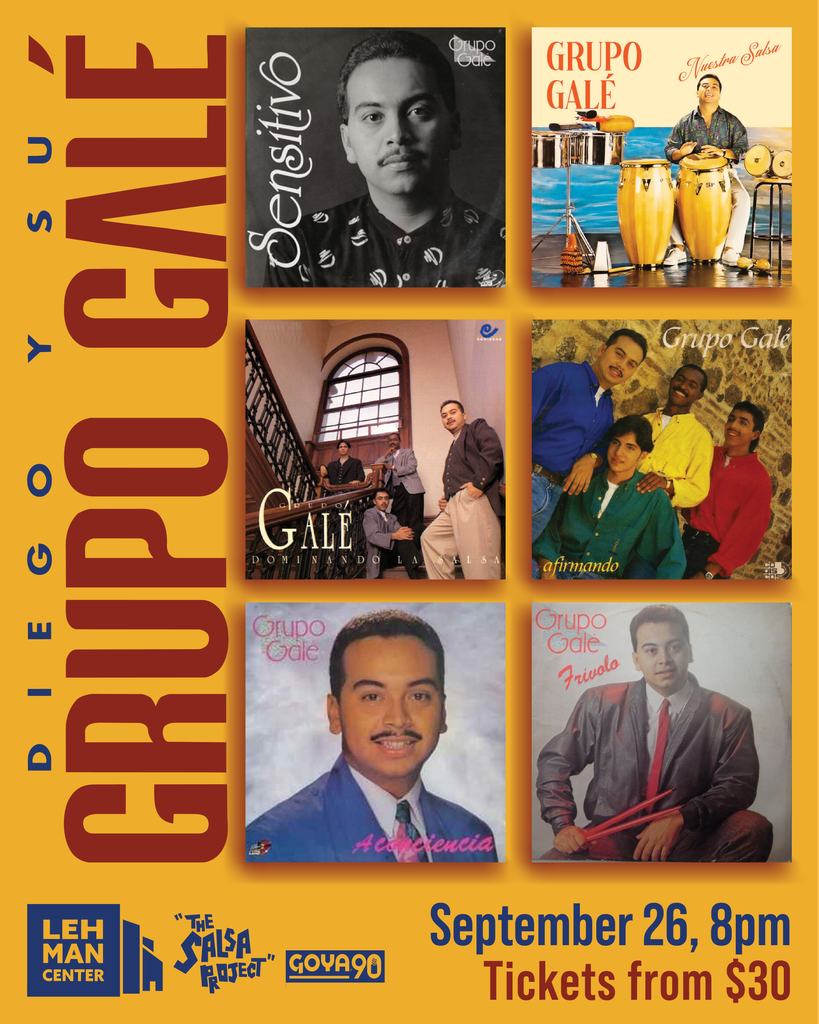
Lehman Center for the Performing Arts, Inc. is supported, in part, by public funds through the New York City Department of Cultural Affairs in partnership with the New York City Council and the Bronx Delegation. Additional funding is provided by the New York State Council on the Arts with support from the office of the Governor and the New York State Legislature. We are thrilled to share that Goya Foods has agreed to renew their sponsorship for this season, which will help Lehman Center expand our reach to the community. In addition, we have secured funding from the Howard Gilman Foundation to help grow our programming. The 2025-2026 anniversary season is also made possible through sponsorships by Havana Café, Friends of Lehman Center, and our cherished audience members.

A Crime That Destroys Black Wealth While New York Looks Away

There is a category of crime in New York that does not rely on force, yet produces consequences just as permanent.

It is called deed theft.

It operates through paperwork. A fraudulent signature is filed, ownership is transferred, and by the time the real owner discovers what happened, the property is often already sold or leveraged. The system does not stop the transaction. It records it.

That distinction explains the outcome.

In New York City alone, more than 3,500 deed theft complaints were reported between 2014 and 2023, according to the New York City Department of Finance. Earlier reporting from the New York State Attorney General’s Office identified roughly 3,000 complaints within a separate four-year period, with nearly half concentrated in Brooklyn. These figures, drawn from different timeframes, point to the same conclusion. The problem is persistent and concentrated.

When a crime can be repeated at scale, the core issue is the system that permits such repetition, not just individual criminals. Highlighting this shifts focus to systemic flaws that require policy reforms.

New York has already acted. In November 2023, Governor Kathy Hochul signed legislation making deed theft a defined criminal offense and strengthening prosecution tools. Additional reforms in 2024 expanded enforcement authority and extended the time victims have to challenge fraudulent transfers.

That legislation appears to be progress on paper, but in practice, it exposes the system’s limitations, underscoring the need for more effective structural reforms to prevent deed theft.

Criminal penalties do not prevent a transaction that is already permitted from going through. Deed theft is often carried out through shell entities, false identities, and individuals who are difficult to trace or recover damages from after the fact. By the time a case is prosecuted, the property has often changed hands again, or the financial value has already been extracted. Punishment, in this context, does not restore ownership. It acknowledges loss.

That system in New York still accepts documents without confirming identity, which disempowers owners and allows ownership to change without their knowledge.

A system that allows the damage first and the response later will produce a consistent result.

Fraud will occur. Recovery will be uneven. Losses will concentrate among those least equipped to reverse them.

That pattern is already visible.

State and city agencies recognize that deed theft disproportionately impacts Black homeowners, elderly residents, and communities of color, emphasizing the urgent need for policy changes to protect these vulnerable groups.

This is not a coincidence. It is structured.

For many Black families, the home represents the majority of accumulated wealth. When access to capital is historically limited, wealth becomes concentrated in a single asset. When that asset is taken, the loss is not partial. It is total.

This is how wealth is erased.

There are real examples that make this clear. In Brooklyn, elderly homeowners have had properties transferred out of their names without their knowledge, only discovering the fraud after eviction or foreclosure proceedings began. In one reported case, a 90-year-old man lost a home he had owned for decades after a fraudulent deed transfer enabled others to take out large loans against the property. Years of ownership were undone through a few fraudulent filings.

The role of the state must be examined through outcomes, not statements.

Leadership has not been absent from this issue. Under Letitia James, the Attorney General’s office launched the Protect Our Homes initiative in 2020, created a deed theft complaint system, supported legislation, and pursued prosecutions tied to fraudulent schemes. These actions reflect recognition of the problem.

But recognition is not resolution.

The initiatives advanced by the Attorney General’s office, like the laws passed by the state, are primarily structured around response. They increase the ability to investigate, prosecute, and unwind fraud after it occurs. They do not fundamentally alter the conditions that allow fraudulent deeds to be recorded in the first place.

That is the gap.

A complaint system responds after suspicion arises. Enforcement responds after a scheme is identified. A prosecution responds after the property has already been transferred, leveraged, or sold.

None of these actions stops the initial transfer.

The current recording process lacks meaningful identity verification, eroding trust and enabling fraudulent transfers before owners are aware.

That means the system, including the Attorney General’s approach, remains reactive.

A reactive system does not prevent loss. It manages it.

If the mechanism of the crime remains unchanged, then enforcement becomes a cycle. Fraud occurs. A case is brought. Another fraud occurs. Another case is brought.

That is not deterrence. That is maintenance.

Even the prevention programs that do exist have faced inconsistent funding and limited reach, reinforcing the reality that the system is not designed to intervene at the point where fraud actually occurs.

The solution is not theoretical. It is structural.

New York already has partial models that show what is possible. The city’s ACRIS Property Alert System allows homeowners to receive notifications when documents are recorded against their property. That system acknowledges the risk, but it operates after the filing has already occurred.

Other jurisdictions have implemented stronger safeguards, including identity verification requirements and pre-recording confirmation processes for high-risk transactions.

New York can do the same.

Before any deed is recorded, identity verification should be required and tied directly to the current legal owner of record, using secure confirmation methods rather than relying solely on submitted documents. A mandatory notification and short holding period before final recording would allow disputes to be raised before ownership changes.

This would not eliminate fraud.

Implementing verification would protect homeowners by changing the conditions that allow deed theft to thrive.

A system that currently allows instant transfer based on paperwork would become one that requires verification, introduces delay, and increases the likelihood of detection. Fraud depends on speed, anonymity, and low resistance. Remove those conditions, and you reduce both the opportunity and the incentive.

Right now, the system favors speed of recording over security of ownership.

That choice has consequences.

For those who believe they may be victims, the response must be immediate. Reports can be filed with the New York State Attorney General’s Office, local district attorneys, and county clerks. New York City homeowners can also report suspected fraud through the Department of Finance and enroll in property alert systems to monitor activity tied to their property. Time matters. Delay benefits the fraud.

New York cannot claim to protect homeowners while maintaining a process that allows ownership transfers without sufficient verification. It cannot claim to address racial wealth disparities while allowing a mechanism that disproportionately strips wealth from Black communities.

The results are already visible.

Homes lost.

Wealth erased.

Communities changed.

The question is not whether the state is aware.

The question is whether this is a failure of awareness or a failure of correction.

The Amendment That Forgot Who It Was Written For

The 14th Amendment was born in the ashes of slavery. It has since been borrowed by nearly everyone except the people it was meant to protect.

When the Supreme Court recently heard arguments about birthright citizenship, the justices spent considerable time debating domicile, allegiance, and the finer points of 19th-century common law. What received almost no serious attention was the blunt historical fact sitting at the center of the entire controversy: the 14th Amendment was written for Black Americans. Specifically, it was written for the descendants of enslaved people who had been declared non-persons by the very government now debating the reach of its protections.

This is not a matter of interpretation. It is a matter of record. The Amendment was a direct response to Dred Scott v. Sandford (1857), in which the Supreme Court ruled that Black people, free or enslaved, could never be citizens of the United States. The framers of the 14th Amendment said so explicitly on the floor of Congress. Senator Trumbull, the principal author of the Civil Rights Act of 1866, the Amendment’s legislative predecessor made clear the singular purpose: to establish the citizenship of freed slaves and close the door on any future government that might try to strip it away.

That door has not stayed closed. It has simply been widened to let in almost everyone else.

A provision designed to put Black citizenship beyond the reach of hostile governments has become the legal foundation for a debate that rarely mentions Black Americans at all.

Within decades of the Amendment’s ratification, corporations were invoking its Equal Protection Clause more successfully than the Black Americans it was written to protect. By the late 19th century, while Black citizens were being systematically disenfranchised, lynched, and driven from economic life with legal impunity, the Amendment stood largely silent for them — and loudly active for business interests. This is not a coincidence. It is a pattern.

The pattern has repeated itself with disciplined consistency. The Civil Rights Act of 1964, driven into existence by the blood and sacrifice of the Black freedom movement, was extended to cover sex discrimination — an addition inserted by opponents who believed it would sink the bill. The protections that Black Americans marched, bled, and died to secure became an umbrella under which many others sheltered, sometimes leaving the original occupants standing in the rain. Affirmative action programs, conceived to address the specific, documented, centuries-long economic suppression of Black Americans, became general diversity initiatives. Fair housing laws remain on the books while the Black homeownership gap persists at levels that would have been recognizable to someone living in 1968.

Now the 14th Amendment, written in the wreckage of the Confederacy, ratified to make citizens of people who had been legally classified as property, is the centerpiece of a debate about whether the children of undocumented immigrants should receive birthright citizenship. Both sides invoke the Amendment with confidence. Neither side spends much time asking what the men who wrote it would have thought about that application.

It is worth asking what it means when every group can claim the protections of a law except the group whose suffering made that law necessary.

To be clear about what this argument is not saying: extending constitutional protections broadly is not inherently wrong. A law that protects human dignity should protect it consistently. But there is a difference between principled extension and systematic deflection — and the history of legislation aimed at Black Americans has been characterized far more by the latter than the former.

The question that no one in that Supreme Court chamber asked is the one most worth asking: if the 14th Amendment was specifically designed to prevent any government from determining the citizenship of Black Americans, why have Black Americans had to fight — repeatedly, expensively, and often unsuccessfully — to claim its protections in the 157 years since its ratification? The Amendment did not fail because its text was weak. It failed because the institutions charged with enforcing it found other priorities.

There is a distinction worth making that almost no one in these debates will make. An immigrant who builds wealth in America retains options that a descendant of American slavery does not. Capital is portable. A family that accumulates resources here can return to a home country where that capital commands considerably more. In this framework, citizenship functions as an instrument — a means of access to the world’s largest economy, with the exit door left open.

The numbers make this concrete. The United States is the world’s largest source of outbound remittances. According to World Bank data, Americans sent approximately $79 billion abroad in 2022 alone — capital earned inside the American economy, transferred to strengthen households and communities in other countries. Mexico received over $62 billion from the United States in 2024. India received an estimated $129 billion globally, with the United States as its largest single source. In several countries, remittance inflows from the United States exceed 20 percent of national GDP. The wealth-building capacity of American citizenship is being actively converted into prosperity in dozens of other nations — by people who retain the legal and cultural infrastructure to receive it.

Birth tourism is the logical extreme of this calculation — and it surfaced directly during the Supreme Court arguments. Chief Justice Roberts asked the government’s attorney whether he had data on how common the practice was. The response cited media reports estimating 1.5 million birth tourists from China alone, and noted that by 2015 there were reportedly 500 companies operating inside China whose sole business was bringing pregnant women to the United States to give birth and return home — children born as American citizens, raised entirely abroad, with no meaningful connection to the country whose founding tragedy made their citizenship possible. Roberts then asked the question that should have stopped the entire room:

CHIEF JUSTICE JOHN ROBERTS — ORAL ARGUMENT, 2025

“Having said all that, you do agree that has no impact on the legal analysis before us?”

When Sauer suggested the world had changed since the 19th century, Roberts replied: “It’s a new world. It is the same Constitution.” He is correct, constitutionally. But that answer also reveals what the legal framework refuses to reckon with, that the same Constitution written to remedy one specific, historic wrong is now being applied in ways its framers never imagined, serving interests they never considered, while the people they were actually thinking about remain the least served by it.

Descendants of enslaved people have no equivalent calculation available to them. The deliberate and systematic destruction of African language, tribal identity, and geographic origin during centuries of slavery did not leave a homeland to return to. There is no remittance economy for people whose connection to any other country was severed before their ancestors could document it. There is no village back home where accumulated American dollars stretch further. There is no family network abroad waiting to receive a wire transfer that will build a house or fund a school. The exit door that remains open for so many others was bricked shut centuries ago, not by choice, but by the same institution whose aftermath the 14th Amendment was written to address.

This is not a complaint. It is a structural fact, one that makes the question of who benefits from American citizenship protections considerably more specific than the current debate pretends. When the descendants of slaves invoke the 14th Amendment, they are invoking the only country they have ever had, the only country their ancestors were permitted to build, and the only country that has any legal or moral obligation to them rooted in what was actually done to them on its soil. That is a different relationship to citizenship than the one being debated in the current case. It deserves to be named as such.

The current birthright citizenship debate is a legitimate constitutional question. But it is being conducted as though the 14th Amendment arrived from nowhere a general philosophical statement about human belonging rather than a precise legal remedy for a specific historical atrocity. When we forget who a law was written for, we should not be surprised when they are the last to benefit from it.

History does not grade on intention. It grades on outcome. The outcome here has been consistent enough, for long enough, that calling it accidental requires a determined refusal to look at the evidence.

He Was Waived — But Still Paid: What the Jaden Ivey Situation Actually Reveals

When news broke that Jaden Ivey was waived by the Chicago Bulls following public comments tied to his religious beliefs, the reaction was immediate.

Some called it punishment for faith. Others called it accountability.

Read: When Faith Becomes “Detrimental”: What the Jaden Ivey Situation Reveals About Modern Sports

But neither side is asking the most important question.

What actually happened?

Because in a system driven by contracts, policy, and business interests, the answer is not found in emotion. It is found in outcomes.

Jaden Ivey was waived. That part is clear.

But he did not lose his money.

His contract, like many in the NBA, is guaranteed. That means he continues to be paid even after being removed from the roster. The system that allowed his removal is the same system that protects his income.

That is not a contradiction. That is structure.

And that structure tells a more important story than the headlines.

If this were truly a case of economic punishment for religious expression, the outcome would reflect that. Loss of salary. Loss of financial security. A clear economic consequence tied directly to belief.

That did not happen.

What did happen is something more precise.

A private organization made a decision about its brand, its locker room, and its public image. The league operates in a space where corporate partnerships, fan perception, and internal culture all carry financial weight. When a player’s public statements are seen as conflicting with that environment, the organization responds.

Not emotionally. Financially.

But the same system that enables that response is governed by contracts negotiated in advance. Agreements that do not change in response to public controversy. Agreements that protect players from losing everything in moments like this.

So what we are witnessing is not a system punishing belief.

We are witnessing a system balancing risk.

The team removes the player to control brand exposure. The contract protects the player from financial collapse. Both actions exist at the same time because both are built into the structure of the league.

This is why clarity matters.

Because when narratives replace facts, the conversation shifts away from reality. “Fired for faith” becomes the headline, but it does not describe the full picture. And incomplete information leads to incomplete conclusions.

That does not mean there is no pressure.

There is cultural pressure. There is public backlash. There are expectations placed on athletes about what they can say and how they say it. Those pressures are real, and they can shape careers over time.

But pressure is not the same as outcome.

And if we are going to have an honest conversation about faith, speech, and consequence in professional sports, we have to start with what actually happens—not what it feels like is happening.

Because systems do not operate on feelings.

They operate on incentives, contracts, and decisions that protect business interests on both sides.

The Bulls made a business decision.

The contract protected the player.

And the public reaction turned it into something else entirely.

That gap between perception and reality is where most people lose the story.

But it is exactly where the truth is.

No Kings III Rally – Yonkers/Hastings: And The People Showed Up Anyway

2

Let’s go ahead and be clear: when you name something “No Kings,” you’re already setting a tone.

You’re saying this isn’t about hierarchy. This isn’t about who’s above who. This is about people showing up, standing side by side, and reminding everybody where power actually lives.

And on Saturday, March 28, 2026, at 12:00 noon, that’s exactly what happened.

A little over 1,000 residents gathered across two locations, Warburton and Odell Avenue in Yonkers, and Warburton and Spring Street in Hastings-on-Hudson, for the third iteration of the No Kings Rally, co-sponsored by Concerned Families of Westchester (CFOW), NAACP-Yonkers Branch, NYCD16/15-Indivisible, and Safeguarding Democracy.

What stood out wasn’t just the turnout.

It was how people arrived.

Not rushed. Not scattered. Just steady. Conversations already in motion. Signs are being adjusted with care. People greeted each other like they understood they were part of something shared before anything officially began.

Two Spaces, One Movement

Each location held its own energy, songs, chants, rally cries, but there was already a connection between them.

photo by Jim Metzger photography

Two starting points.

One direction.

As both groups moved toward the roundabout, the rhythm stayed consistent. Footsteps in sync without trying. Conversations continuing mid-stride. A collective movement that didn’t need instructions to stay aligned.

When both groups met, there was no dramatic pause.

No announcement marking the moment.

Just a seamless merge.

As if the space had already been prepared for everyone to arrive together.

The Soundtrack Carried the Message

At the roundabout, the music took over, not as background, but as reinforcement.

Public Enemy’s Fight the Power moved through the crowd with familiarity.

Freedom by Beyoncé featuring Kendrick Lamar carried weight that landed differently across the space.

Bob Dylan’s Blowing in the Wind added reflection.

Marvin Gaye’s What’s Goin’ On grounded the moment in something deeper.

The songs didn’t interrupt the rally.

They framed it.

Organized With Intention

The rally was co-sponsored by Concerned Families of Westchester (CFOW), NAACP-Yonkers Branch, NYCD16/15-Indivisible, and Safeguarding Democracy, with coordination led by Joel Feldman.

Event staff, four representatives from each organization, were visible through custom tags and moved through the space with purpose.

They guided without controlling.

Supported without interrupting.

Held the structure in place while allowing the experience to remain open and participatory.

Setting the Tone

The rally opened with a welcome and purpose led by Kisha Skipper and Eileen O’Connor, followed by acknowledgments of co-sponsors and remarks from John Baer and Sue McAnanaama.

The message remained clear and consistent:

  • Defend Democracy
  • No War
  • Fight Back
  • Solidarity / Unity
  • Community

No extra language. No confusion.

Just direction.

Kisha Skipper Held the Moment Together

And then there was the part that doesn’t always get named.

Because hosting is visible.

But holding a space like this?

That’s something else entirely.

Kisha Skipper didn’t just guide the program, she maintained its rhythm.

Facilitating an open mic with more than 30 speakers requires presence on its own. But doing that while relaying real-time directives from local police, ensuring both engagement and safety, requires awareness that extends beyond the microphone.

The transitions stayed smooth.

The energy stayed consistent.

The space remained both structured and open.

That balance doesn’t happen by accident.

The People Were the Center

More than 30 speakers stepped forward.

Not curated for polish.

Curated for truth.

People of all ages, races, ethnicities, and communities took the mic.

Senior voices like Joanne Robinson Bottcher.

Youth voices like Jonas Baer, grandson of Safeguarding Democracy leader John Baer.

And Thomas Hoffman, a Holocaust survivor, whose testimony brought a stillness that didn’t need to be explained.

Each voice added to the shape of the day.

Presence Over Position

Elected officials joined, offering brief remarks and standing with the crowd:

Senator Andrea Stewart-Cousins.

Senator Shelley Mayer.

County Legislator David Imamura.

Yonkers City Council Member Corazon Pineda-Issac.

Greenburgh Town Board Member Ellen Hendrix.

Ardsley Trustee Barry McGoey.

They participated.

They stood alongside.

They remained part of the space, not separate from it.

Music, Reflection, and Closing Moments

As the rally continued, the tone shifted.

Live music, with guitars and a trumpet, played by Howard, Phillip, and Aaron, introduced a more reflective pace.

“This Land is Your Land” was shared across voices.

A brief moment of silence followed, honoring service members on active duty and their families.

The silence held.

Then it transitioned.

Kory Skipper-Miller led “When the Saints Go Marching In,” and the closing carried forward rather than closing out.

No Kings. Just People.

By the end, the movement slowed but didn’t stop.

People lingered. Conversations continued. The space remained active even as the program concluded.

Because what took place wasn’t just a rally.

It was a collective presence.

A little over 1,000 people standing, moving, and speaking with shared purpose.

No crowns.

No thrones.

Just people.

And that’s the kind of power that doesn’t need a crown.

Reparations, Representation, and Results: A Question of Political Priorities

When Pramila Jayapal argued that immigrants harmed by aggressive immigration enforcement policies, including individuals within Somali communities, should receive compensation, she was making a case grounded in government accountability. The principle was clear. When the government causes harm, there should be a remedy.

At the same time, she has not been a leading sponsor of H.R. 40, a bill that does not even authorize payments but proposes a commission to study the long-term effects of slavery and discrimination on Black Americans.

Taken together, these positions raise a broader question about systemic barriers. Why does compensation seem more actionable in some policy contexts, while in others, especially those involving Black Americans’ history, it remains in prolonged study and debate?

A Policy That Never Arrives

H.R. 40 has been introduced repeatedly since the late 1980s. Its purpose is limited and procedural. It would establish a commission to examine the enduring effects of slavery, segregation, and systemic discrimination, and to propose potential remedies.

Despite decades of introduction, shifting political majorities, and increased national attention to racial justice, the bill has never become law.

From an outcomes-based perspective, that raises a fundamental question.

How does a policy with decades of advocacy and consistent electoral support fail to pass even its earliest stage?

Political Support vs. Political Outcomes

For decades, Black Americans have remained one of the most politically loyal voting blocs in the United States, with roughly 85 to 90 percent supporting Democratic candidates in national elections. That level of consistency suggests not just preference, but expectation that political support will translate into policy outcomes.

Yet voting patterns alone do not determine legislative success. Laws require majorities in both chambers of Congress, alignment within parties, and often a threshold high enough to overcome procedural barriers such as the Senate filibuster.

The filibuster is a major obstacle, requiring 60 votes in the Senate to pass most legislation. This procedural barrier has repeatedly blocked bills with majority support from becoming law, creating a structural ceiling for legislation like H.R. 40, regardless of House backing.

This shifts the issue from one of stated support to one of strategy.

Signals from Leadership

Leadership priorities matter, particularly when they involve decisions about which issues receive sustained political capital.

Barack Obama governed with Democratic majorities early in his presidency and successfully advanced major legislative priorities, particularly in healthcare and economic recovery. 

Reparations were not among them, nor were executive tools used to elevate the issue.

Similarly, Kamala Harris has supported studying reparations but has stopped short of advocating for a clearly defined, race-specific policy framework. This reflects a broader pattern in national leadership, where acknowledgment does not consistently translate into legislative urgency.

At the state level, similar patterns can be observed. Wes Moore vetoed a Maryland reparations bill that would have established a commission to study the issue and issue a formal apology. The bill did not mandate payments, but focused on examination and acknowledgment. The veto, even in that limited form, highlights a recurring frustration that reparations efforts often stall early, emphasizing the need for strategic persistence.

The Jayapal example is not dispositive on its own. Members of Congress vary widely in influence and focus. However, it illustrates a recurring perception. Compensation tied to more immediate policy harms can be framed as urgent and actionable. Compensation tied to long-standing historical injustice remains more often procedural and deferred.

The Broader Policy Pattern

One explanation often offered is that broad, universal policies such as healthcare expansion, economic stimulus, and social programs benefit Black Americans indirectly and therefore serve as a substitute for targeted policies like reparations.

There is evidence that these policies have produced measurable benefits. Following the Affordable Care Act, uninsured rates among Black Americans declined significantly, and poverty rates fell during periods of economic growth.

However, long-term structural indicators suggest more limited progress. The median wealth of Black households remains a fraction of that of white households, often estimated at roughly one-tenth. Black homeownership rates remain significantly lower and have not fully recovered from the 2008 financial crisis. Black Americans also experience disproportionately high rates of homicide victimization.

These outcomes suggest that while universal policies can improve baseline conditions, they have not substantially closed structural gaps rooted in historical inequality.

A Question of Consistency

This leads to a central analytical question.

The U.S. government has, at times, enacted policies that directly addressed harms experienced by specific groups. The Civil Liberties Act of 1988 provided financial compensation and a formal apology to Japanese Americans interned during World War II. These targeted remedies demonstrate that addressing specific harms with concrete actions is possible, encouraging belief in similar approaches for Black Americans.

These examples demonstrate that targeted remedies are not without precedent.

Given that, the question becomes clear.

Why has a similarly targeted approach not advanced in the case of Black Americans, despite the scale and documentation of the harm?

Patience and Political Reality

For many Black Americans, the repeated introduction of H.R. 40 without passage reinforces a familiar message. Wait.

Wait for the right political moment. Wait for a broader consensus. Wait for conditions to align.

From an outcome’s perspective, waiting without measurable progress raises concerns about whether the issue is being deferred rather than actively pursued.

Reevaluating Strategy

An outcomes-focused approach requires moving beyond alignment and toward strategy.

If the filibuster is a primary barrier, one path is to pursue reform or its elimination. Another is to build a coalition large enough to overcome it. If neither is being actively pursued, then the likelihood of legislative success remains low regardless of rhetorical support.

Accountability can also take more concrete forms. Voters can evaluate candidates based not only on stated support, but on sponsorship, legislative prioritization, and efforts to advance policy through committees or broader bills. Advocacy can shift toward measurable commitments, including timelines and coalition-building strategies.

There is also the question of political leverage. Consistent voting patterns provide influence within a party, but they may also reduce pressure to deliver specific outcomes. At the same time, shifting or withholding that support carries risks, including reduced influence and unintended policy consequences.

A results-oriented analysis must weigh both sides of that equation.

Conclusion: From Support to Strategy

The debate over reparations is not only about historical acknowledgment. It is about whether political support can be translated into policy under real institutional constraints.

The debate over reparations is no longer about raising awareness; it is about translating political support into concrete policy action within institutional limits. The key challenge now is execution, not acknowledgment.

That requires clearer answers to practical questions. What legislative path exists, given the constraints of the Senate? Is filibuster reform part of that path? What actions are elected officials taking beyond statements of support? And what forms of political pressure are most likely to produce measurable results?

Until those questions are addressed with concrete strategies, the gap between support and outcomes is likely to remain.

Earth Month Is Not a Moment, It Is a Movement

April is recognized as Earth Month, but for the Environmental Leaders of Color (ELOC), this is not about recognition. It is about responsibility.

Because environmental issues do not appear once a year, they are lived with every day in the communities we come from. Poor air quality, polluted waterways, aging infrastructure, and waste mismanagement are not distant concerns. They directly impact our health, our neighborhoods, and our economic stability.

That is why ELOC does not approach Earth Month as a symbolic campaign. It treats it as a continuation of work that is already in motion.
ELOC was created with a clear mission to educate, empower, and develop young leaders who understand environmental challenges and are prepared to solve them. This is not about awareness alone. It is about building the capacity to take action and produce measurable outcomes in the communities that need it most.

That distinction matters because awareness without action does not change conditions.

Through initiatives like the Don’t Strain Your Drain campaign, ELOC students have demonstrated what real leadership looks like. They identified a problem that often goes unnoticed, improper cooking oil disposal, and turned it into a community-wide effort to educate residents and businesses. The impact goes beyond cleaner drains. It reduces pressure on local infrastructure, helps protect waterways, and improves public health outcomes.

This is what Earth Month should represent.

Earth Month should also prompt a more serious conversation about outcomes.
Why do the same communities continue to face the worst environmental conditions? Why are policies often discussed without measurable improvements in the neighborhoods most affected? Policymakers can help by implementing data-driven policies and investing in community-led solutions, ensuring environmental justice is a priority.

ELOC addresses that gap directly.

By combining environmental education with leadership development, ELOC is creating a pipeline of young people who are not only informed but prepared to lead. Students are learning to identify problems, organize solutions, and engage their communities to produce real change.

This is not theoretical work. It is a practical preparation for leadership.
Environmental justice is not just about protecting the planet. It is about protecting people. It is about ensuring that our communities are included in the decisions that shape sustainability, infrastructure, and public health.

It is about ownership.

This Earth Month, ELOC is calling on the community to move beyond passive support by volunteering, donating, or mentoring youth-led initiatives, which helps expand solutions that are already making an impact.

Because movements are not built on moments, they are built on consistent action. Your ongoing support keeps this work alive and effective.
ELOC is building that action every day.

The responsibility now is whether the community chooses to be part of it. Together, we can create lasting change and take pride in our collective efforts.

2026 Mt Vernon State Of The City Address

Mount Vernon Mayor Shawyn Patterson-Howard delivered her 2026 State of the City Address on Monday, March 31, 2026, in the City Council Chambers, outlining what she says are gains in infrastructure, public safety, economic development, and public health, and the progress made over the past six years. She presented a bold vision for the future of Mount Vernon.

“We’re moving from a decade from fixing what’s broken to a decade of building what’s next,” Mayor SPH shared with those in attendance.

Patterson-Howard, who is in the middle of her second term as Mayor, says a priority of hers is to expand the tax base through development, rather than raising taxes.

For development, she says the city is working to grow both development and ownership opportunities, like condos and co-ops.

The Life and Legacy of Bob Law and the Power of Independent Black Radio

There are voices you remember because they were popular. And then there are voices you remember because they were necessary. Bob Law’s legacy exemplifies the latter, emphasizing his vital role in Black media.

For decades, Bob Law did more than host a radio show; he built a platform where Black thought could exist without permission. At a time when mainstream media often filtered, softened, or ignored Black perspectives, his work on Night Talk created something rare: a space where truth could be spoken plainly, debated honestly, and challenged intellectually.

That is what made him influential. Not just the microphone, but what he chose to do with it.

Independent Black radio, as Bob Law practiced it, was never about entertainment alone. It was about ownership of narrative. It was about refusing to let others define the problems or the solutions facing Black communities. His show became what many described as a “political classroom,” where listeners were not treated as consumers, but as thinkers.

That model matters more than ever today.

Because when the media is dependent, the message becomes compromised. Sponsors influence tone. Political alliances shape coverage. Algorithms reward emotion over substance. And in that environment, truth becomes negotiable.

Bob Law rejected that structure.

He understood something that too many still ignore: if you do not own your platform, you do not control your voice, which should inspire your audience to feel empowered to take control of their own narratives.

That belief didn’t just stay on the airwaves; it translated into action. For many of us coming up in media, Bob Law was not a distant figure. He was accessible. He was instructive. And in my case, he was a mentor.

Bob Law gave me a platform in Harlem, placing me in rooms that mattered. Churches, community forums, and spaces where real conversations were happening about police reform, crime, and violence. He didn’t just introduce me—he validated my voice in front of the people. And that matters.

That opportunity was meaningful, but the validation he gave me made me feel truly seen and valued, which I hope inspires others to seek and offer similar recognition.

I will always be thankful for him giving me that opportunity.

As far as radio, he taught me something even more important. He taught me that my voice was valuable—not because it was popular, but because it was necessary. That independent Black radio had to be exactly that: independent, Black, and uncompromising on the issues that affect our families and our community.

He didn’t believe in soft language when hard truths were required. He didn’t believe in waiting for permission to speak about issues already affecting our lives. And he didn’t believe in building platforms that answered to anyone other than the people they were meant to serve.

That message stayed with me.

Because what he was really saying was this: without independent media, there is no independent thought. And without independent thought, there is no independent community.

Today, as we look at the current media landscape, his warnings feel less like opinion and more like a diagnosis. Too many platforms claim to speak for Black America while operating within systems that limit what can actually be said. Too many voices are amplified not because they are right, but because they are acceptable.

Bob Law built something different.

He built a space where being correct mattered more than being comfortable.

His influence on Black independent radio is not measured simply by ratings or reach. The number of people measures how he pushed them to think for themselves. The number of platforms he inspired to exist outside of controlled narratives. The number of conversations he forced that others were afraid to have.

And for those of us who were fortunate enough to learn from him, his legacy is personal.

He didn’t just leave behind broadcasts. He left behind a blueprint.

Build your own platform.

Control your own message.

Speak truth, even when it costs you.

That is the standard he set.

And now the responsibility shifts.

Because the question is no longer what Bob Law did.

The question is no longer what Bob Law did but who is willing to carry his principles forward to sustain independent Black media and thought.

Many of us stand on his shoulders. His absence will be felt, but the task remains: to continue building and defending independent Black media in his honor.

The Shift Happens Here: Women, Wealth, and the Power of Showing Up

0

On March 21st, at 1:30 in the afternoon, I walked into a suite on Taxter Road in Elmsford and before a single word was spoken, you could feel it sitting in the room.

Not hype. Not noise. Just intention.

The kind that settles into your chest quietly.

There were women smoothing out notebooks on their laps, adjusting bags at their feet, leaning in close to one another in low conversations that sounded like truth-telling:

“I’m trying to fix my credit.”

“I want to start something, I just don’t know where.”

“I’m tired of feeling behind.”

You could hear vulnerability before you ever heard a microphone.

And that’s what made the space different.

When Brandie Williams-El stood up and said, “I Choose Me,” it didn’t echo like a slogan, it landed like a realization. A few women nodded slowly. One woman exhaled like she had been holding her breath all week. Another sat still, eyes fixed, like she was measuring what it would actually cost her to finally choose herself.

Because choosing yourself isn’t just a statement, it’s a disruption.

Then Roxanne Brown stepped in with the numbers, and you could feel the shift immediately. Pens started moving. Screens lit up. A woman two rows over whispered, “That explains a lot,” under her breath. The statistics didn’t just inform, they confronted. They pulled things out of the shadows that many women had been navigating silently.

Kimberly Greenidge brought something softer, but no less powerful.

Relief.

She spoke about debt freedom in a way that didn’t carry shame. And you could feel it, shoulders easing, posture changing. A woman in the back started nodding before Kimberly even finished her point, like she had been waiting to hear that it wasn’t too late. That she wasn’t too far gone.

Because for many women, debt isn’t just numbers, it’s weight. Emotional, mental, generational.

Then came Gisell Rivera, and the room grew still in a different way.

Wills. Trusts. Income protection.

You could almost feel people sitting with thoughts they hadn’t wanted to face. A quiet kind of accountability filled the space. Because loving your family isn’t just about showing up today, it’s about preparing for the day you can’t.

And that truth? It sat heavy, but necessary.

By the time Sonyalis Marrone spoke, something had shifted again, but this time, it was focus.

Not excitement for the sake of it, but clarity.

Women leaned forward. Phones came out again, but now it was notes, not just pictures. You could almost see ideas becoming decisions. That space between “I’ve been thinking about it” and “I’m actually going to do it” started to close, right there in real time.

What made this gathering powerful wasn’t just the information.

It was the honesty.

No one came in pretending to have it all together.

No one was performing success.

This was a room full of women being real about where they were and open about where they wanted to go.

And when it ended, nobody rushed out.

Chairs scraped slowly against the floor. Small circles formed. Conversations deepened instead of ending. Numbers were exchanged with intention, not obligation. You could hear it in the tone, people weren’t networking, they were connecting.

Because something had shifted.

Not loudly.

Not all at once.

But enough.

Enough for a woman to go home and look at her finances differently.

Enough to ask a question she’s been avoiding.

Enough to start something she’s been postponing.

Enough to choose herself, maybe for the first time.

And if you’ve ever felt like you’re figuring it out alone, you’re not.

Rooms like this exist.

Spaces like this matter.

And the next time one opens, you might want to be in it.

If you’re ready to stop just thinking about it and actually take a step, get connected:

Sally Pinto

1-888-294-6164 – Socasiopinto@primerica.comhttps://therealhowmoneyworks.com/us/sally_ocasio-pinto

Because the information is there.

The support is there.

The only question left is, are you ready to walk into the room?