Home Blog Page 135

Mamaroneck Mayor Sharon Torres Exposes Alleged Corruption in WESTHAB Housing Project, Shaking Westchester County Village

At a recent village board meeting, Mamaroneck Mayor Sharon Torres ignited intense debate over the proposed Hunter Tier lot affordable housing development, raising serious concerns about the project’s approval process. This controversy unfolds against a backdrop of longstanding scrutiny faced by predominantly white communities in Westchester County for their lack of affordable housing.

Mayor Torres presented a series of emails and communications dating back to 2021 that suggested a potentially unethical relationship between village officials and the preferred developer, Westhab (WAB).

Key points raised by Mayor Torres included:

  1. As early as July 2021, WESTHAB had identified the Hunter Tier lot as their preferred site, well before the RFP process began.
  2. The RFP was allegedly tailored to favor WESTHAB, including language that gave preference to developers who had previously worked in the village.
  3. Emails revealed that some village officials were eager to push the project through before changes in board composition.
  4. WESTHAB was involved in the process from site selection through to the present, raising questions about fairness in the bidding process.

Mayor Torres emphasized that while affordable housing is a critical issue, the process for this particular project appeared flawed and potentially unethical. She stressed that these concerns were not an argument against affordable housing itself, but rather about the integrity of the approval process.

“Every single person on this board, and that includes me, we do understand there’s a crisis with affordable housing,” Mayor Torres stated. “That’s not what’s under fire here. It’s whether or not the process for this RFP was ethical, unethical, or even worse.”

The revelations have added to existing community divisions over the project. Many residents had previously expressed concerns about the speed and transparency of the development process, often contrasting it with the pace of other village priorities.

This situation is particularly sensitive given the history of affordable housing issues in Westchester County. For years, predominantly white communities in the county have been under scrutiny for their lack of affordable housing options, leading to accusations of exclusionary practices and even legal challenges. The current controversy in this village highlights the ongoing struggle to balance the need for affordable housing with concerns about proper procedures and community input.

As the controversy unfolds, Mayor Torres promised to share more information as it becomes available. The situation highlights the challenges faced by local governments in addressing housing affordability while maintaining public trust and following proper procedures.

The village board will likely face increased scrutiny and calls for transparency as they navigate this contentious issue in the coming weeks and months. Mayor Torres’s outspoken stance on this matter suggests a potential shift in the village’s approach to the Hunter Tier lot development and possibly future affordable housing projects. It also underscores the broader challenges Westchester County communities face in addressing longstanding affordable housing deficits while ensuring fair and transparent development processes.

UN Court Condemns Israel: Occupation Ruled Illegal, Demands Immediate Withdrawal

In a landmark decision, the International Court of Justice (ICJ) has declared Israel’s occupation of Palestinian territories unlawful. The court, the United Nations’ highest judicial body, called for an immediate end to Israeli settlement construction and a swift conclusion to the 57-year occupation.

The non-binding ruling, delivered on Friday, criticized Israel’s policies in the West Bank and East Jerusalem, including the expansion of settlements, annexation of land, and discriminatory practices against Palestinians. The court’s 15-judge panel stated that these actions render “Israel’s presence in the occupied Palestinian territory unlawful.”

Israel, which has long viewed UN institutions as biased, did not send legal representation to the hearings. However, it submitted written comments asserting that the court’s intervention could hinder peace efforts and fails to address Israeli security concerns.

The decision comes amid heightened tensions in the region, with Israel engaged in a devastating military campaign in Gaza following a Hamas attack in October 2023. In a separate case, the ICJ is also considering allegations of genocide against Israel in its Gaza operations.

Palestinian officials welcomed the ruling, seeing it as a vindication of their long-standing complaints about Israeli occupation. The Palestinian Foreign Minister had previously accused Israel of apartheid during court hearings in February.

The territories in question – the West Bank, East Jerusalem, and Gaza Strip – were captured by Israel during the 1967 Middle East war. Palestinians seek these areas for an independent state, while Israel considers the West Bank “disputed territory” and has annexed East Jerusalem, a move not recognized internationally.

Over 700,000 Israeli settlers now reside in these areas, with the current Israeli government actively supporting settlement expansion. The international community largely views these settlements as illegal or as obstacles to peace.

While the ICJ’s ruling is not legally binding, experts suggest it could further isolate Israel internationally and strengthen calls for boycotts and sanctions against the country. It may also encourage more nations to recognize Palestinian statehood.

ICC Arrest Warrant Requests

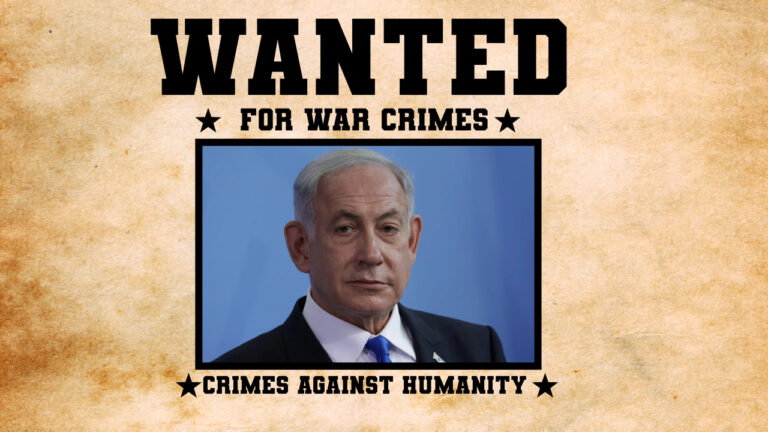
In a dramatic escalation, ICC prosecutor Karim Khan announced in May that he had requested arrest warrants for Israeli Prime Minister Benjamin Netanyahu, his defense chief, and three Hamas leaders over alleged war crimes. Khan stated there were reasonable grounds to believe these individuals “bear criminal responsibility” for war crimes and crimes against humanity committed during the ongoing conflict in Gaza.

Background and Implications

The territories in question – the West Bank, East Jerusalem, and Gaza Strip – were captured by Israel during the 1967 Middle East war. Palestinians seek these areas for an independent state, while Israel considers the West Bank “disputed territory” and has annexed East Jerusalem, a move not recognized internationally.

Over 700,000 Israeli settlers now reside in these areas, with the current Israeli government actively supporting settlement expansion. The international community largely views these settlements as illegal or as obstacles to peace.

While the ICJ’s rulings are not legally binding, and the ICC faces challenges in enforcing arrest warrants, these developments could further isolate Israel internationally and strengthen calls for boycotts and sanctions against the country. They may also encourage more nations to recognize Palestinian statehood and increase pressure for a resolution to the long-standing conflict.

As these legal battles unfold on the international stage, the world watches to see how they will impact the Israeli-Palestinian conflict and the prospects for lasting peace in the region.

Unlocking Opportunities with AI Education – By AI Erik

2

So, one of the reasons why I wanted to write this article is to talk about the importance of unlocking opportunities via Artificial Intelligence (AI). According to recent statistics white families hold a medium wealth of $287,000 while black families hold only $45,000. Hispanic families $61,000 and Asian families have the highest median wealth of $553,000. In the next six to seven years the job market is expected to undergo a dramatic transformation. It’s projected that 97,000,000 jobs will be created and most of those jobs will be driven by advancements in technology and particularly Artificial Intelligence (AI). Also note that 85,000,000 existing jobs may be lost due to automation from Artificial Intelligence. This is one of the reasons why I try to get people to learn Artificial Intelligence (AI), so they can understand this is going to affect the job market in future jobs heavily.

So as far as Black and Hispanic communities I think it’s a must that we learn to embrace AI and educate ourselves so we can have careers that could be a pivotal Strategy to bridge the wealth gap. So being that white households currently hold a disproportionately large share of the nation’s wealth, initiatives to increase representation in high growth high paying AI related jobs are essential for us to be a part of. If Blacks and Hispanics can secure a significant portion of those 97,000,000 new jobs that’s coming and at least aim for 30 to 35%, it could mark a substantial step forward towards a new economic equality.

I want to give you an example on how Artificial Intelligence (AI) can enhance us by trying to close the wealth gap. By 2045 there’s going to be $500 billion that’s going to be generated from Gen. AI and that wealth creation can cost black households in the United States $43 billion each year. Black people make up 13% of all households in the U.S.A  but we only get back 5% of the share of U.S.A household wealth. Now the problem with that is by 2045 five $100 billion will be generated from Gen. AI and  $70 billion of that will go to or is projected to go to black households. But because we’re not getting the 13 percent like we’re supposed to be getting, we’re only going to get out of that $70 billion, $27 billion. That means $43 billion is going to go to who? and that’s yearly. So, one of the things we have to do is figure out why are we only getting back 5% when we make up 13% and then we have to understand Artificial Intelligence (AI) is going to be very important and it’s going to play a major role in us trying to close this wealth gap.

So in conclusion the need for Artificial Intelligence (AI) education training is not just about staying current with technological trends, it’s a crucial tool for economic empowerment by empowering our kids for the future job markets and strive for significant representation in AI roles that’s right now under represented from our communities. We can leverage these opportunities to improve our economic standings and work towards closing the wealth gap. That’s the whole thing for me, trying to close this wealth gap. We have to invest in AI education, it is an investment that is more equitable and prosperous for all.

AI Erik

AIErik.com

PBP Radio Episode 401 – Celebrating Life & Legacy of Herman Keith

Black Westchester presents the People Before Politics Radio Show Episode 401 with Damon K. Jones and AJ Woodson.

The Honorable Herman Keith’s legacy as Westchester’s first African-American County Legislator cannot be overstated. In an era fraught with challenges, he shouldered the immense responsibility of breaking barriers and paving the way for future generations of Black leaders in local politics. His unwavering dedication and perseverance in the face of adversity opened doors that had long been closed, forever changing our county’s public service landscape.

Mr. Keith’s life was a testament to resilience’s power and representation’s importance. His groundbreaking election and subsequent years of service not only transformed the political arena in Westchester but also inspired countless individuals to pursue careers in public service. The sacrifices he made, the challenges he overcame, and the progress he championed have left an indelible mark on our community’s history.

A pillar of strength in Westchester County and his beloved Yonkers, the Honorable Herman Keith leaves behind a legacy that transcends his years in office. His tireless advocacy, dedicated public service, and commitment to equality have set a standard of excellence that will continue to guide and inspire for generations to come… (read more)


Black Westchester presents the People Before Politics Radio Show every Sunday night 6-8PM, streaming live on Facebook, X (formerly Twitter), LinkedIn, Instagram and YouTube and archived on BlackWestchester.com. Giving you that Real Talk For The Community since 2014.

To support the Black Westchester and the People Before Politics Radio Show, that provides the News With The Black Point Of view and gives you the real talk for the community for free, make a donation via PayPal at www.PayPal.me/BlackWestchesterMag. In the words of Ray Charles, “One of these days, and it [might not be] long, You’re gonna look for [us], and [we’ll] be gone.” Support independent, Black-free media!

As always, you can follow us on Facebook, InstagramLinkedIn, and YouTube

Contributions and Donations can be made via PayPal.

Cannabis and Holistic Black Healthcare Educational Seminar

On Tuesday, July 9th, 2024, at 7:00 PM EST, Sustainable Processing Solutions hosted a groundbreaking Healthcare Leadership in Cannabis Educational Seminar, shedding light on the intersection of cannabis and holistic Black healthcare. Held online via Facebook Livestream, the event featured a panel of distinguished speakers, including the Honorable Tremaine Wright, Chairwoman of the New York State Office of Cannabis Management Cannabis Control Board; Sephida Artis-Mills, National President of the United Empowerment Party; Ashley Wynn-Grimes, RN, Founder of Cannabis Nursing Solutions; and Kebra Smith-Bolden, RN, Founder of CannaHealth. Although Mount Vernon Mayor Shawyn Patterson-Howard was unable to join due to a last-minute conflict, the seminar provided rich insights and valuable perspectives.

Co-moderated by Paul Presendieu, Co-Founder of Sustainable Processing Solutions, and AJ Woodson, Editor-In-Chief of Black Westchester Magazine, the seminar served as a progressive dialogue on the crucial role of cannabis in holistic Black healthcare.

Chairwoman Tremaine Wright opened the discussion with a powerful statement on patient care: “This is about patient care and addressing the needs of our people. How do we allow people to care for themselves and do the things that are best suited for them and their own success?” Chairwoman Wright emphasized the need for a patient-centered approach in healthcare, especially within Black communities.

Sephida Artis-Mills highlighted the cultural barriers and stigmas surrounding cannabis in Black and Brown communities. “In Black and Brown communities, the stigma culture surrounding cannabis is a barrier to residents being able to see cannabis through the understanding of medicinal benefits. The way cannabis could be recommended for multiple conditions shows the multifaceted value it brings to healthcare,” Artis-Mills stated, underscoring the importance of education and awareness in shifting perceptions.

Kebra Smith-Bolden, RN, addressed the lack of accessibility to medical cannabis services in Black neighborhoods. “When we speak of communities of color, according to the National Institute of Health, a lot of medical cannabis services are not in Black neighborhoods, and therefore are not readily accessible. I started CannaHealth to place these services directly in communities of color in Connecticut through practitioners that look like them,” said Smith-Bolden. Her initiative, CannaHealth, aims to bridge the gap and provide essential healthcare services within these communities.

Ashley Wynn-Grimes, RN, focused on health equity and community awareness. “The conversation as a whole is about health equity, and being able to become aware as a community on what it means to be healthy. What am I eating, is it nourishing my body and do I have access to alternative treatments for true healing? Black and Brown people were tested on to build our healthcare system, resulting in a lack of trust in services combined with trauma from the war on drugs,” Wynn-Grimes shared, highlighting the historical context that continues to impact trust in the healthcare system.

The seminar successfully fostered an informative and engaging discussion on the critical intersection of cannabis and holistic healthcare in Black communities. Sustainable Processing Solutions’ event not only raised awareness but also encouraged a deeper understanding of the multifaceted benefits of cannabis in promoting health equity. 

For more updates on future seminars and events, stay tuned to Black Westchester Magazine and Sustainable Processing Solutions.

Derickson Lawrence Fires Counsel To Lead In Post Trial Phase And To File Motion For New Trial

Black Westchester has learned that Derickson Lawrence, 67, FinTech CEO from the City of Mount Vernon severed his relationship from his Counsel of Record. Lawrence was recently convicted on an 11-count indictment of fraud by a jury in Norfolk, Virginia, on March 22, 2024, and was awaiting sentencing on July 19, 2024.

The Honorable John A. Gibney, Jr., presiding United States District Judge and E.D. of Virginia over the case United States of America vs. Derickson Lawrence, granted Lawrence’s motion to change course in representation, and more importantly, granted Lawrence Pro Se status.

Lawrence immediately moved to continue his sentence hearing and then moved for authorization to file a motion for a new trial. Both requests were granted by Judge Gibney. The new sentencing date has been set for September 27, 2024.

The defendant and the process remain at the mercy of the district court. The next steps by Lawrence in his role as Pro Se, will determine the procedural outcome and the ultimate results of his motions in the United States of America vs. Derickson Lawrence.

CD-16 Congressional Candidate Derickson Lawrence announcing his candidacy, Saturday, march 5, 2015 in front of the historic St. Paul’s Church in Mount Vernon [Black Westchester]

Lawrence is a former congressional candidate for the NY 16 Congressional District, former Chair of Westchester County Crimestoppers. Lawrence also led the Mount Vernon charter revision commission in 2019 and had previously helped lead Westchester’s charter revision effort.

Stay tuned to Black Westchester for more on this developing story!

PBP Radio Episode 400 – Black Independent Media Matters

Join hosts Damon K. Jones and AJ Woodson for a landmark episode of “People Before Politics” as we celebrate our 400th show! In this special installment, we reflect on the vital role of Black independent news and radio in our communities. We’ll discuss: The journey of Black Westchester Magazine and our show Why representation matters in media Challenges faced by Black-owned media outlets Success stories and impactful moments from our past 399 episodes The future of Black independent journalism Tune in as we honor this milestone and reaffirm our commitment to putting people before politics. Your voices, your stories, your community – always at the forefront.

Don’t forget to like, subscribe, and share to support independent Black media! #BlackWestchester #PeopleBeforePolitics #BlackMedia #IndependentJournalism

Black Westchester presents the People Before Politics Radio Show every Sunday night 6-8PM, streaming live on Facebook, X (formerly Twitter), LinkedIn, Instagram and YouTube and archived on BlackWestchester.com. Giving you that Real Talk For The Community since 2014.

To support the Black Westchester and the People Before Politics Radio Show, that provides the News With The Black Point Of view and gives you the real talk for the community for free, make a donation via PayPal at www.PayPal.me/BlackWestchesterMag. In the words of Ray Charles, “One of these days, and it [might not be] long, You’re gonna look for [us], and [we’ll] be gone.” Support independent, Black-free media!

As always, you can follow us on Facebook, InstagramLinkedIn, and YouTube

Contributions and Donations can be made via PayPal.

Skilled Trades: A Promising Path for Black Youth and Community Prosperity

In the face of America’s growing skilled labor shortage, an often overlooked opportunity for economic advancement is emerging—one that could particularly benefit Black youth and communities. As a longtime advocate for financial empowerment in Black communities, we should seriously consider promoting vocational careers in trades like plumbing and electrical work.

Recent data paints a stark picture of the current labor market. The U.S. is projected to be short 550,000 plumbers by 2027. Employment of electricians is expected to grow twice as fast as the average for all occupations through 2032. These shortages spell opportunities for those willing to pursue these careers.

For many Black youth, the traditional path of a four-year college education has become a financial burden rather than a stepping stone. Student loan debt disproportionately affects Black graduates, often delaying or derailing their ability to build wealth. In contrast, vocational training for trades typically costs less and takes less time, allowing for quicker entry into the workforce with minimal debt.

The earning potential in these fields is significant and far exceeds the current average earnings for Black men. Last year, master plumbers saw their median pay rise to $82,700, marking a 21% increase from the previous year. Certified electricians earn even more, with annual salaries ranging from $74,000 to $143,500. These figures are especially notable compared to the average salary of Black men, which is only $43,000 per year or $828 per week. Additionally, a Black man with a bachelor’s degree earns an average of $55,000 annually, while a Black man with a master’s degree earns an average of $72,000 annually.

These stable, well-paying trade jobs are always in demand and can’t be outsourced. They offer a clear path to financial stability and potentially a middle-class lifestyle or beyond. For many Black youth, pursuing a career in plumbing or electrical work could mean nearly doubling their expected income compared to the current average.

Moreover, these trades provide a ladder for advancement. As workers gain experience and certifications, their earning potential continues to grow. The jump from an entry-level position to a master plumber or senior electrician can significantly boost income, opening doors to homeownership, investment opportunities, and the ability to build generational wealth.

This stark contrast in earning potential underscores the opportunity that careers in the trades present for economic advancement in Black communities. By promoting these vocational paths, we’re not just talking about jobs – we’re talking about a tangible way to address income inequality and create a more secure financial future for Black families.

Moreover, trades offer a clear path to entrepreneurship. With experience, a plumber or electrician can start their own business, creating jobs within their community and building generational wealth – a crucial factor in addressing the racial wealth gap.

However, this is about more than just individual success. When more Black youth enter these fields, entire communities can benefit. Local Black-owned plumbing and electrical businesses can serve their communities, keeping money circulating locally and potentially hiring other community members.

It’s perplexing that many school districts in predominantly Black communities haven’t more actively incorporated vocational training into their curricula, especially given the clear economic benefits. While financial constraints are a real challenge for many districts, schools are obligated to prepare students for productive futures – including presenting a range of viable career paths.

Schools may inadvertently limit their students’ future economic prospects by not adequately exposing them to these opportunities. Vocational training could provide a direct path to stable, well-paying jobs that are always in demand, and as I said before, they can’t be outsourced.

Incorporating vocational education doesn’t mean abandoning college preparation. Instead, it’s about expanding options and ensuring all students know the various paths to financial stability and success. Schools should strive to produce graduates who are not only academically prepared but also equipped with practical skills that can lead to immediate employment opportunities.

Of course, promoting trade is not a panacea for all economic challenges facing Black communities. We must continue to address systemic inequalities and discrimination in all fields. The goal isn’t to limit options but to expand them, ensuring Black youth know all potential paths to success.

To make this opportunity a reality, we need action on multiple fronts. High schools should bolster their vocational programs, providing students with hands-on experience and information about trade careers. Community organizations can partner with trade unions and businesses to create apprenticeship programs and mentorship opportunities. We must also work to ensure these fields are welcoming and free from discrimination.

Some might argue that promoting trades for Black youth could reinforce harmful stereotypes or limit aspirations. But we do our youth a disservice by not fully informing them of all viable paths to economic stability and success. College is a fantastic option for many, but it’s not the only route to a prosperous future.

We must be open to multiple solutions as we grapple with persistent economic disparities. The skilled labor shortage presents a unique opportunity that could lead to individual financial stability, thriving Black-owned businesses, and more robust, economically resilient communities.

It’s time we recognized the potential of skilled trades as a powerful tool for economic empowerment in Black communities. By promoting these careers, we’re not closing doors but opening new ones—doors that could lead to a more prosperous and equitable future for Black youth and the communities they call home.

Former Westchester County Legislator Herman Keith Passes Away at 88

With profound sorrow and deep respect, we announce the passing of the Honorable Herman Keith, former County Legislator and trailblazer, on June 22, 2024. At the age of 88, Mr. Keith’s courageous battle with Alzheimer’s disease came to an end, leaving our community bereft of a true pioneer and champion of justice.

The Honorable Herman Keith’s legacy as Westchester’s first African-American County Legislator cannot be overstated. In an era fraught with challenges, he shouldered the immense responsibility of breaking barriers and paving the way for future generations of Black leaders in local politics. His unwavering dedication and perseverance in the face of adversity opened doors that had long been closed, forever changing our county’s public service landscape.

Mr. Keith’s life was a testament to resilience’s power and representation’s importance. His groundbreaking election and subsequent years of service not only transformed the political arena in Westchester but also inspired countless individuals to pursue careers in public service. The sacrifices he made, the challenges he overcame, and the progress he championed have left an indelible mark on our community’s history.

A pillar of strength in Westchester County and his beloved Yonkers, the Honorable Herman Keith leaves behind a legacy that transcends his years in office. His tireless advocacy, dedicated public service, and commitment to equality have set a standard of excellence that will continue to guide and inspire for generations to come.

To honor this remarkable leader and pay our respects, a memorial service will be held on July 20 at 11 am at Community Baptist Church, 160 North Broadway, Yonkers, NY. Let us come together to celebrate the life and achievements of a man who reshaped our community and whose influence will be felt for years.

From Military Service to Community Leadership

Originally from Alabama, Keith was a United States Army veteran who attained the rank of 1st Lieutenant. After relocating to Yonkers, he worked as an Engineer for Perkin Elmer Optical Company and later as an Underwater Research Scientist at Columbia University. Keith’s career later shifted towards community development, where he managed programs for the Yonkers Community Development Agency and the Haitian Refugee Assistance Program.

Pioneering Civil Rights Advocate

As president of the Yonkers Branch of the NAACP, Keith led a landmark desegregation lawsuit against the City of Yonkers. His efforts were instrumental in establishing equal access to quality integrated education and fair housing opportunities for all residents.

In 1983, Keith made history as the first African-American elected to the Westchester County Board of Legislators. During his 12-year tenure, he served as Minority Whip and Minority Leader, earning respect from colleagues and constituents alike for his open-mindedness and commitment to public service.

Keith’s legislative achievements were numerous, including the South Africa Divestment Bill, the Banks Community Reinvestment Act, Youth Employment Job Training Programs, Health Care Initiatives, the Invest in Kids Program, and JobSTAR.

Champion for Youth and Community Development

Beyond his political career, Keith was a passionate advocate for the positive development of young African-American males. He frequently spoke at schools, civic organizations, and religious institutions, promoting self-worth and positive self-image.

In his later years, Keith founded Hudson River Consulting Group, providing valuable consulting services in development and construction. His expertise and extensive network proved invaluable to businesses seeking funding, grants, and loans.

A Lasting Legacy

Keith is survived by his wife, Gail Adams, and five children. His community involvement extended to numerous boards and committees, including the Nepperhan Community Center, Black Democrats of Westchester, and the Yonkers Community Action Program.

His influence reached national media, with appearances on the Donahue Show, McNeil Lehrer Newshour, and Nightline. Keith also served as a consultant for various projects, including the City of Yonkers Police & Firefighter Recruitment Program and the Westchester County Waterfront study.

The Honorable Herman Keith’s passing closes a transformative chapter in Westchester County’s history. His enduring legacy shines brightest through the lives of young people, especially young Black men, for whom he was a tireless advocate and inspiration. Keith personified Black excellence – intelligent, eloquent, and influential in both appearance and speech. His commanding presence in positions of power and authority set a powerful example for young Black men of my era, offering a vivid illustration of what they could aspire to become. Keith’s life and career provided a crucial model of success and leadership at a time when such examples were sorely needed.

Mr. Keith’s unwavering dedication to uplifting youth was the cornerstone of his public service. He recognized that the future of our community rested in the hands of its young people, and he devoted himself to ensuring they had the tools, opportunities, and confidence to succeed. His frequent appearances at schools, civic organizations, and religious institutions were not mere formalities but passionate calls to action, encouraging young Black men to embrace their self-worth and envision a future without limits.

Through his groundbreaking achievements as the first African-American County Legislator, Mr. Keith didn’t just open doors—he built a bridge for future generations to cross. His courage in facing and overcoming systemic barriers served as a living example to young Black men that they too could aspire to positions of leadership and influence..

Though he may no longer walk among us, the Honorable Herman Keith’s spirit of service, his unyielding commitment to equality, and his fierce advocacy for youth empowerment endure. His life stands as a testament to what can be achieved through perseverance, integrity, and a dedication to community. For generations to come, young people in Westchester County, especially young Black men, will find in Mr. Keith’s story the inspiration to pursue their dreams, challenge injustice, and work tirelessly for the betterment of their communities.

Black Westchester celebrates the life & legacy of the Honorable Herman Keith of Episode 401 of the People Before Politics Radio Show, Sunday, July 13th. He was a true Black Westchester Legend!

Mount Vernon’s Jordan Runcie-Hubbard Will Be On Power Book II: Ghost Friday, July 5th

Mount Vernon native Jordan Runcie-Hubbard will appear in Power Book II: Ghost this Friday, July 5th. We caught up with Jordan for a quick exclusive interview to talk about appearing on the crime drama thriller television series created and produced by Courtney A. Kemp in collaboration with Curtis “50 Cent” Jackson and what else he has been up to since we last saw him.

The multi-talented Jordan has also added the title author to his impressive resume.

Jordan is also the Creator/Writer of a comic book called “Mount Valorous” which he describes as “a Shonen-style baseball manga.” He plans to develop the comic book into an aminated series.

Book description: Jaden Harris, an ambitious, competitive baseball player, dreams of being the Legendary 5-Tool Player. His only barriers to success are his genetic makeup and the legacy of his father, Malcolm Harris, one of the greatest players to ever grace the field. Despite his impressive career, a cloud of suspicion has loomed over Malcolm ever since rumors of artificial tools arose. Jaden faces the burden of this stigma as he takes his final shot at the Sunset League tryouts after a dismal showing last year. With the help of his best friend, Myles, Jaden is determined to prove that he can make it professionally and clear his family name.

For more information or to purchase the book visit the website and follow him on IG

Jordan joined the crew of Black Westchester presents the People Before Politics Radio Show, on Sunday, January 21, 2018 where he shared his journey through the Mount Vernon City School District educational system as well as his potential athletic career. He discussed how he entered the entertainment industry landing national commercial ads with Bud Light, Subway and more! On that episode we also had the Evelyn Collins & the cast of The Lion King Jr. from Denzel Washington School of Performing Arts.

Pictures of Jordan are with Caroline Chikezie who plays Noma Asaju is one of the two main antagonists of Power Book IIGhost (top left), Michael Ealy who plays Detective Don Carter from Power Book II: Ghost (top middle), former NY Mets Manager Terry Collins (top right) and with Kim Khardashion (American Horror Story).

Power Book II: Ghost is approaching its midseason finale for its final 10-episode run and also stars Yonkers native Mary J. Blige who plays Drug Queenpin Monet Stewart Tejada the Matriarch of the Tejada family. The show became the first spinoff in the Power franchise since the original series ended in 2020, and according to Starz, season 4 attracted 6.5 million multiplatform viewers during its debut week. 

The Starz crime drama features Michael Rainey Jr. as Tariq St. Patrick, son of James St. Patrick — aka Ghost — a drug lord and businessman. Tariq kills his father in the first series, only to morph into a version of his father who also lives a duality: Ivy League college student and narcotics dealer. For three seasons, viewers have watched him try to earn his inheritance by completing school, only to plunge himself into a life of crime. He’s essentially Ghost 2.0. 

Season 4 will be broken into two parts, with the premiere’s arrival on the 10th anniversary of Power. The show picks up with Tariq and Brayden (played by Gianni Paolo) scrambling after kicking off a war or two against Noma, the Tejadas and Effie. Betrayed and out of options, the two have to come up with a plan. 

To make things more complicated, Det. Don Carter (played by Michael Ealy) arrives on the scene looking to take down Tariq and anyone who’s backing him. That goes for federal agent Angel Young, who’s related to Paz and Angela Valdes. Will Tariq and his loved ones make it out unscathed? 

They say you can tell a tree by its fruits, shout to Jordan’s mom Traci Runcie-Williams who has 4 sons, Tyler who started his own clothing line, Myles who is a barber working toward owning his own shop and also has a clothing line, Ryan who appeared in Barbershop – The Next Cut which also featured Michael Rainey Jr who plays Tarik in Power Book II: Ghost and then there is Jordan an Author, Entrepreneur, Specializing in Comic Book and Screenplay writing, who will appear in Power Book II: Ghost this Friday, July 5th.

Brenda L. Crump and her children (left) Ryan and his mother Traci (right)

Forget what you heard, Money-Earnin’ Mount Vernon STILL got it going on!

[Black Westchester’s Mistress of Information Brenda L. Crump contributed to this spotlight on Jordan]