



Written by Derek H. Suite, MD, MS, with editorial contributions from Taiwo Alonge, MD, MPH
Author’s note: The child, the school record, and the surrounding circumstances are a composite drawn from clinical and community experience. Identifying details have been changed, and dialogue has been reconstructed.
It was about three in the morning when my phone rang. I happened to be awake. It was a pastor, a great friend of mine, someone I am very close to. He apologized over and over for calling so late. It was not the first time he had called me at this hour, so I smiled a little and told him it was all right.
He was worried about a 12-year-old boy in the congregation who had been expressing what the pastor called dark thoughts. When I asked him what he meant by dark, he said it was hard to describe, but he quickly added that the boy had never said that he wanted to hurt himself. He was just down on everything, especially on himself. He did not make the basketball team and now was saying he was no good at sports. Everything he said seemed to end up with the feeling that something was wrong with him.
Over the past two or three days, the pastor had noticed that the boy seemed different. Something about the way he had said good night a few evenings earlier did not sit right with him. He could not explain it any better, but said it troubled his spirit and was now keeping him awake at night.
The pastor had just gotten off the phone with the boy’s parents. He said they had checked on him and, though he seemed fine to them, they would continue checking on him through the night. The boy had acted out before and was seen by a mental health provider, but no received no diagnosis. The pastor wondered whether he was overreacting. He cared deeply about everyone in his congregation and knew that sometimes he carried their problems home with him. Still, he told me he would never have called at that hour in the morning unless something felt wrong.
I asked whether he believed the boy was safe. He said the boy was home with his parents; they were watching him, and he had not said anything directly about hurting himself. “But I just can’t sleep, doc,” he told me. “I feel like the Spirit of the Lord is telling me something might happen.” We prayed together, and I told him not to wait until morning. We needed to act on what he was hearing even though neither of us could name it yet.
Over the years, I have wrestled with that part of the call. What the pastor heard may not have been something formal or clinical. He was hearing something underneath what the boy was saying. The fact that there was no diagnosis was true, but it did not answer the question he was asking. It did not settle his spirit, and when I thought about it more, it troubled mine as well.
I knew from my training and from what I had seen over the years that “I’m fine,” or “he looks fine,” doesn’t always tell us enough, particularly with Black youth.
A federal report to Congress examined non-Hispanic Black and White youth ages 10 to 17 who died by suicide from 2014 through 2017. Compared with White youth, Black youth were less likely to have a known mental health problem, a documented depressed mood, a known history of suicidal thoughts or plans, or a history of mental health treatment. Although the report measured what was documented, it could not tell us what these young people had experienced privately.
The same report found that, among these young people who died by suicide, Black youth were more likely to have experienced a crisis during the two weeks before their death, maybe an argument or family conflict. A prior suicide attempt was also recorded slightly more often: 23 percent, compared with 21 percent of White youth. That can look contradictory at first. A prior attempt could be somewhere in the history, and the record could still show no known suicidal thinking, diagnosis, or treatment. The report does not show how those histories overlapped in individual children.
Contact with a provider only tells us that an encounter occurred. It doesn’t tell us whether somebody asked the right questions, in the right way, and understood the answer when it came. Even when a provider asks the right questions, a child may not disclose what he is thinking. Stigma and mistrust may make it harder for some Black youth to talk openly. A child may also feel disconnected from a provider who does not understand his racial, ethnic, or cultural experience.
The fact that this boy had been evaluated and had no diagnosis meant only that no diagnosis had been made.
His age caught my attention. He was only 12. Still young enough that most adults would hear disappointment about basketball, some acting out, and a few dark comments and think that he was just having a hard time or misbehaving. Not that his life could be in danger. We tend to think of suicide as occurring later in the teenage years.
When researchers examined deaths from 2001 through 2015, they found that Black children ages five to 12 died by suicide at nearly twice the rate of White children the same age. Among teenagers ages 13 to 17, the Black rate was about half the White rate. Later data showed the broader pattern was changing, with the suicide rate among Black youth ages 10 to 17 rising by 144 percent from 2007 to 2020. Although these studies covered different periods and overlapping ages and are not a continuous set of numbers, they leave me with the same concern that by the time we begin paying closer attention, some Black children may have already been struggling for years.
That question about what had gone unrecognized was on my mind in a school meeting. His folder was almost three-quarters of an inch thick and so little in there was clinical. Mostly attendance printouts, two cafeteria incident reports, and a referral form with the word “defiant” written as the presenting concern. And someone had underlined it twice and added an exclamation point. A school folder is not a clinical chart, and its contents alone could not tell me what care he had received.
He sat with his hood up and answered most questions with one syllable. When his grandmother began talking about the death in the family and her voice cracked, he put his hand on her back without turning his head. That small movement told me more about him than much of what was in the folder. He was grieving, but grief in a Black boy does not always look like sadness. It may present as irritability, silence, missed school, or a refusal to answer another adult’s questions. These responses are not unique to Black children. Those behaviors may be read as attitude and be met with discipline, which generates administrative papers while the clinical record stays thin, except possibly for an occasional diagnosis of oppositional defiant disorder or conduct disorder.
In a retrospective study of 1995 through 1998 records from one hospital, Black adolescents ages 12 to 18 were diagnosed with conduct disorder more often than White adolescents. The study did not establish why or whether those diagnoses were accurate, so I am still working through that. My concern is what can happen when a description such as “defiant” matters more than the question of what the behavior means. If a child later dies by suicide, someone may open the file, find no history of depression or suicidal thinking, and mistake the absence of documentation for evidence that the distress was never there.
Families are often left with the question of what they missed. But it’s not on them, in my mind. The records raise another question: what happened after they brought the child through the door? In one study of young people ages 10 to 24 across nine health systems, 88 percent of those who died by suicide had been seen somewhere in the health system during the previous year, and 42 percent had been seen during the month before their death. The study was not limited to Black youth. The contact was there. Those figures do not tell us whether care continued. Even after emergency treatment for deliberate self-harm, fewer than half of Medicaid-covered young people ages 10 to 19 who were discharged to the community in another study received outpatient mental health follow-up within 30 days. In an interview published by Pew, researcher Michael Lindsey noted that follow-up was lower for Black youth than for White youth.
A family can recognize that something is wrong, make the appointment, sit in the emergency room and leave with instructions, and still lose the connection between one part of the system and the next. That is difficult to explain simply as a lack of concern at home. The problem can be what happens (or doesn’t happen) between one door and the next.
Many crises still begin outside a clinic. They happen in a pastor’s office, after practice with a coach, or in the barber’s chair when a young person says something that does not sound quite right. Pastors, coaches, and barbers do not need a diagnosis before they act. Like my pastor friend, they need to take the change seriously, stay with the young person, and help make the call.
Families should know that the signal may be a behavior change, not only sadness. It could be something as straightforward as different sleep patterns, withdrawal, sudden anger, giving things away, or a way of saying good night that leaves you uneasy. Contrary to popular belief, asking straightforwardly, “Are you thinking about suicide?” does not plant the idea. It may give the child permission to answer honestly. At school, words such as “defiant” or “oppositional” should raise a clinical question before they become only a disciplinary issue.
None of this guarantees that we will recognize every child in time. We have lost young people even when people cared and tried to do the right things. What I can offer is somewhere to begin. Stay with the child while getting help, and make sure firearms, medications, and other potential means of self-harm are secured. Call or text 988 at any hour. In Westchester, call the Crisis Prevention and Response Team at 914-925-5959 for 24-hour telephone support and in-person community evaluations seven days a week.
If someone is in immediate danger, call 911. Don’t wait until tomorrow.
Before we hung up that night, the pastor told me he had already been sitting with this for three hours and almost did not call because he thought a doctor might tell him he was overreacting. There was a diagnosis that night, and the person who noticed a change was moving by spirit and had nearly talked himself out of trusting what he felt.
What stays with me is how close he came to deciding that there was not enough to call about and what that could have meant for this young boy.
ABOUT THE AUTHORS
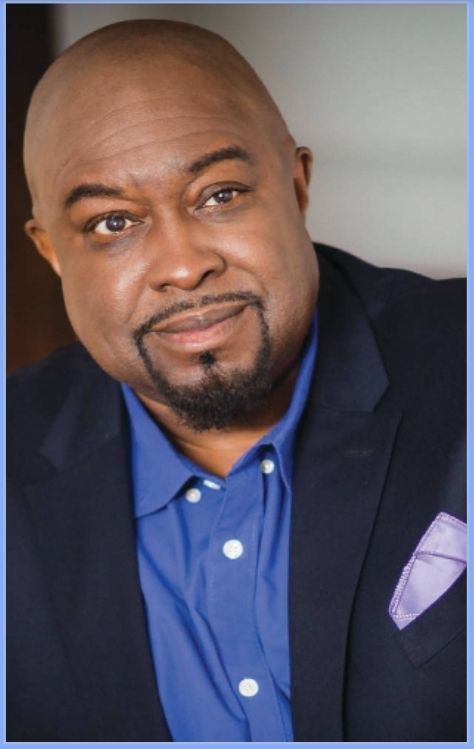
Derek H. Suite, MD, MS, is board-certified by the American Board of Psychiatry and Neurology and the American Board of Sports & Performance Psychiatry. He is the Founder and CEO of Full Circle Health, an award-winning, multidisciplinary, holistic mental health practice established in 1999. He is a regular health and wellness contributor to Black Westchester Magazine and hosts the weekly podcast The SuiteSpot.
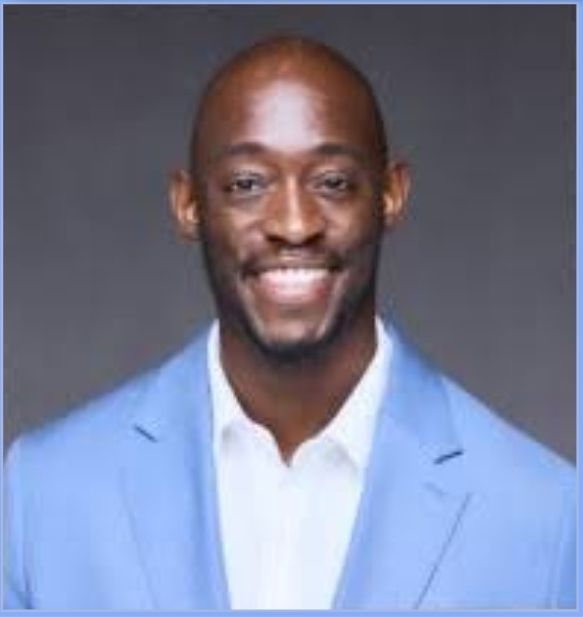
Taiwo Alonge, MD, MPH, is a board-certified psychiatrist who works with children, adolescents, and adults. His work brings together child and adolescent mental health, community care, and health equity. He earned his medical and public health degrees at Columbia University, trained in psychiatry at Yale, and completed child and adolescent subspecialty training at New York-Presbyterian across the Columbia and Weill Cornell Medical Centers in New York City.