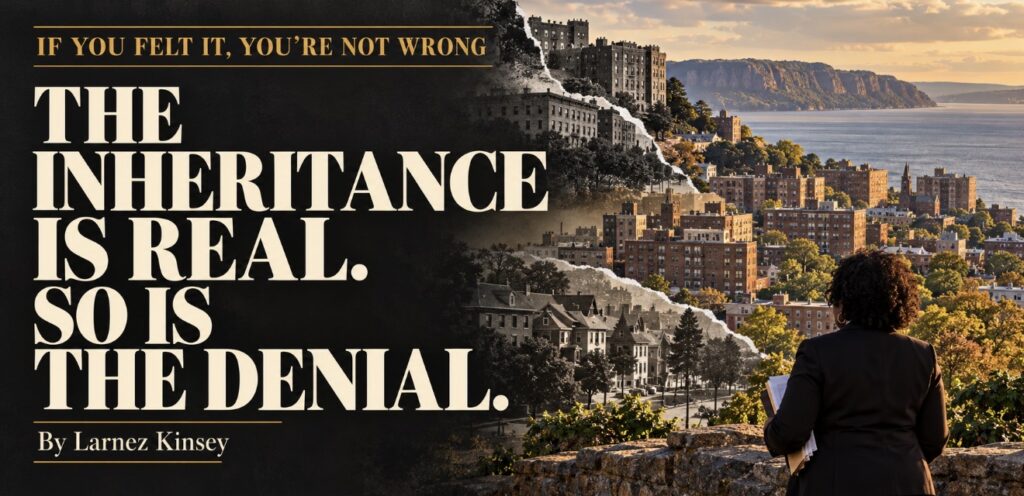





What bothers me is the expectation that we will explain racism gently enough for the people benefiting from it to remain comfortable. You bring the history, identify the decision, and describe the consequences. Somehow, you end up reassuring somebody about their character while your original question sits there unanswered.
Dick Gregory understood how to make a contradiction follow you home. In a 2010 interview, he observed that wealthy White people would hire a nanny to change their baby’s diaper while walking their own dog and picking up its waste. You laugh, then start thinking about labor, intimacy, and status. How do people value the person entrusted with their child’s most vulnerable needs?
Think about the caregiver who knows which cry means hungry, where the medicine is, and which blanket settles the child. Someone trusted with those details can still have little authority over their own working conditions. Dependence and respect do not always travel together.
A line attributed to Paul Mooney presses on another contradiction: “White people don’t want to be criticized for what their ancestors did, but they sure as hell hold onto the profits their ancestors left.” Inheritance matters when the property transfers. Why does it become irrelevant when we ask how the property accumulated?
“I wasn’t there” answers a question about presence. It does not answer a question about benefit. In the Federal Reserve’s 2022 Survey of Consumer Finances, median White family wealth was approximately $285,000, compared with approximately $44,900 for Black families. These national figures do not explain every household. They establish an inequality that deserves more than a lecture about working harder.
Here in Yonkers, the institutional history is close enough to touch. In 1985, a federal court found that the city had intentionally segregated its public schools and housing for more than 40 years. The city had deliberately concentrated virtually all of its public and subsidized housing in southwest Yonkers to maintain residential segregation. Families lived inside the consequences of decisions made through public authority.
So when somebody says we keep bringing race into everything, I want to ask when race was removed from the arrangement. A court ruling establishes responsibility. Repair requires changes people can experience.
They say opinions are like assholes: everybody has one, and they usually stink. But not everybody has an institution or a system with the power to spread that stink through somebody else’s life. When prejudice has access to a budget, a housing decision, a hiring policy, or a school assignment, it can make people live with its consequences.
That is why I care about racial literacy. We need language to identify who made the decision, what rule justified it, who benefited, and who absorbed the harm. Otherwise, we stay occupied with whether someone seems nice while their authority goes unexamined.
White psychopathology, as I am discussing it, is a critical framework for examining socially protected denial, domination, and contradiction. Whiteness refers here to a historically constructed system of racial power. This is not a diagnosis of White individuals, and mental illness should not become shorthand for cruelty.
Kehinde Andrews’s 2016 article, “The Psychosis of Whiteness,” examines how films can diminish Black agency and distance Britain from slavery’s brutality. Dante King also uses the language of pathology to critique racial power and its institutional foundations. Their arguments prompt a question: What must disappear from the story for the powerful to remain innocent?
The psychiatric debate is distinct. In a 2002 Western Journal of Medicine exchange, Harvard psychiatrist Alvin F. Poussaint argued that certain extreme racist beliefs could involve delusional symptoms. That was a position within a professional debate, not proof that all racism is mental illness.
A 2025 review by India Francis-Crossley and colleagues examined seven reviews covering 23 studies and 40,300 participants. Five reviews directly examined discrimination and psychosis, and all found a positive association. However, review quality was low or critically low, and most studies were cross sectional, leaving causation unresolved. This research concerns people experiencing discrimination; it does not clinically validate white psychopathology.
For me, those distinctions sharpen the question of responsibility. What conduct are institutions tolerating, and what happens to the people expected to endure it?
Imagine a resident arriving at a public meeting with a folder of records. They arranged child care, found transportation, and waited through the agenda. They explain their concern. The response focuses on whether they sound angry. The folder stays closed.
Later, sitting in the car with the engine off, they replay the exchange. Maybe they should have smiled. Maybe they should have used a softer word. I resent an arrangement that leaves people rehearsing how to make their mistreatment easier for somebody else to hear.
History exposes an even more intimate contradiction. Historian Emily West documents how enslaved Black women cared for and sometimes breastfed White children while their own motherhood was exploited and controlled. A racial order could declare a woman inferior while depending on her body to nourish its children.
Her care was needed. Her freedom was denied. That contradiction continued because the arrangement served those holding power. Understanding it requires examining more than individual attitudes.
As a Black and Puerto Rican woman born on Staten Island and living in Yonkers, I want our conversations about New York culture to reach beyond celebration. We can love the food, music, and language while asking who owns the spaces, controls the resources, and gets heard when appreciation gives way to disagreement.
A familiar face does not settle those questions. Shared identity matters to me. I still want to know what someone does with the authority they hold. Community connection should make accountability possible, not make scrutiny feel disloyal.
Huey P. Newton connected power to defining social phenomena and acting to change them. That is what I want racial literacy to make possible: document the conduct, examine the rule, and identify who can change it.
You cannot celebrate what came down through the family and then insist that the history stopped at the funeral. And you cannot ask a community to move forward while refusing to examine what still shapes its opportunities.
Subscribe for more conversations about racial literacy and community power. In the comments, share one question you wish an institution would answer. Keep private details private. Tell us what accountability would look like.
Care reveals itself through attention and action. I want public leadership judged by what it funds, protects, and responds to. Now I understand the meaning of the statement, “It’s a dog eat dog world.” When human needs remain unanswered, it can feel like we live in a society where the people running our government care more about their dogs than us. Things that make you go hmmm.
Want to learn more? Read Andrews’s analysis, King’s framework, Poussaint’s argument, and the 2025 racism and psychosis review. The medical papers are archived by the National Library of Medicine; they are not official NIH positions.
For historical context, consult the Federal Reserve’s wealth findings, Yonkers desegregation record, West’s research, Gregory’s interview and Newton’s writings.