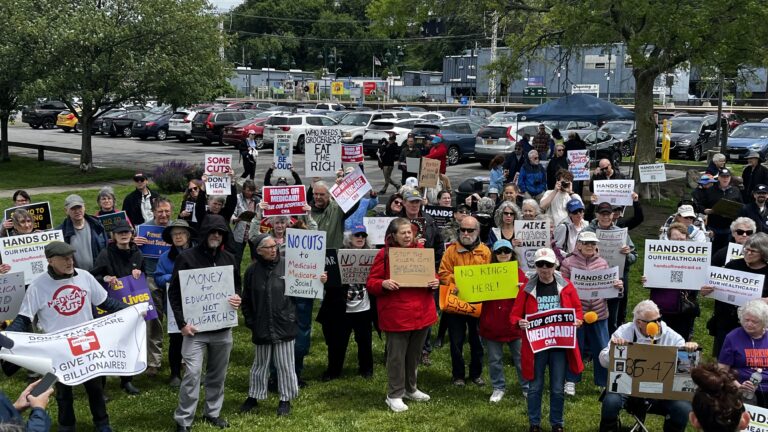
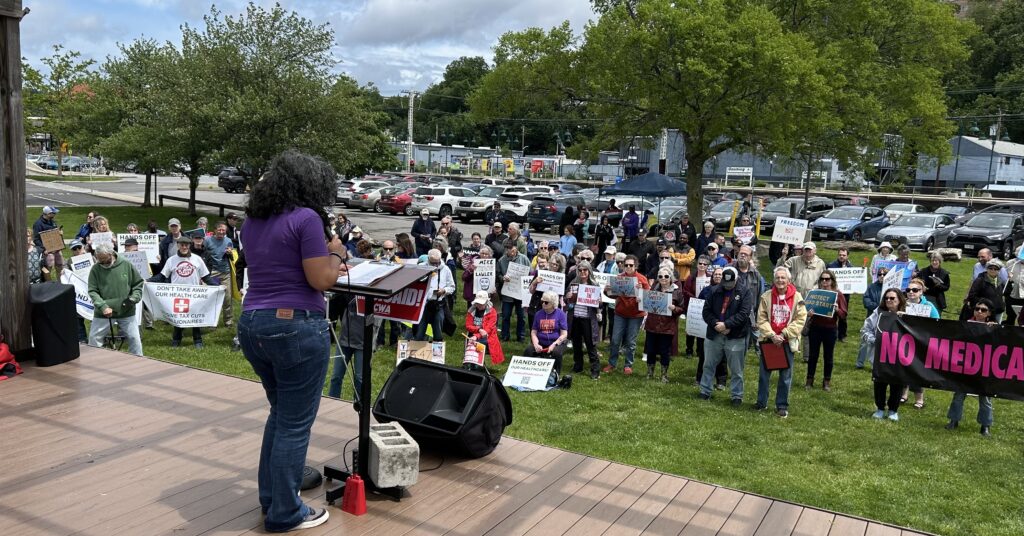
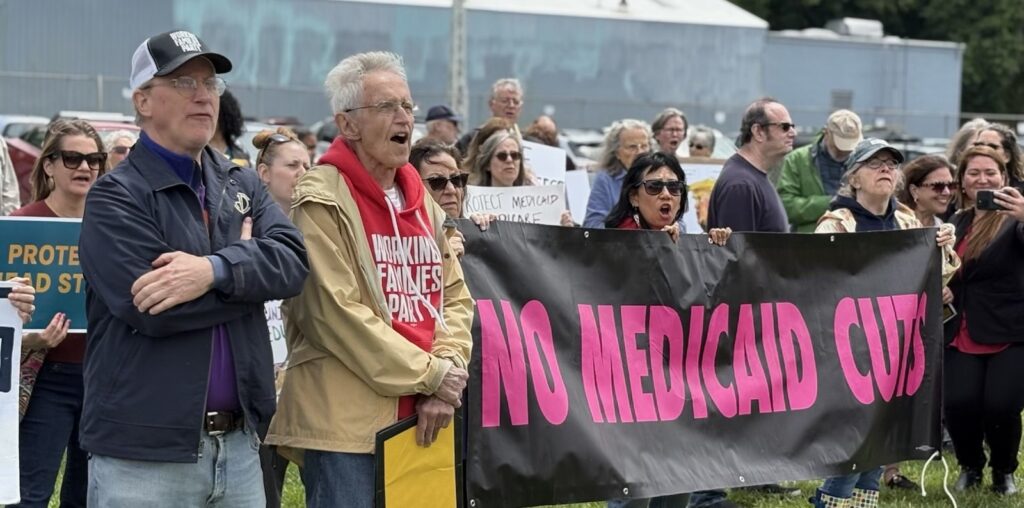
100+ constituents of Rep. Mike Lawler (NY-17) protested the roughly $700 billion in cuts to Medicaid
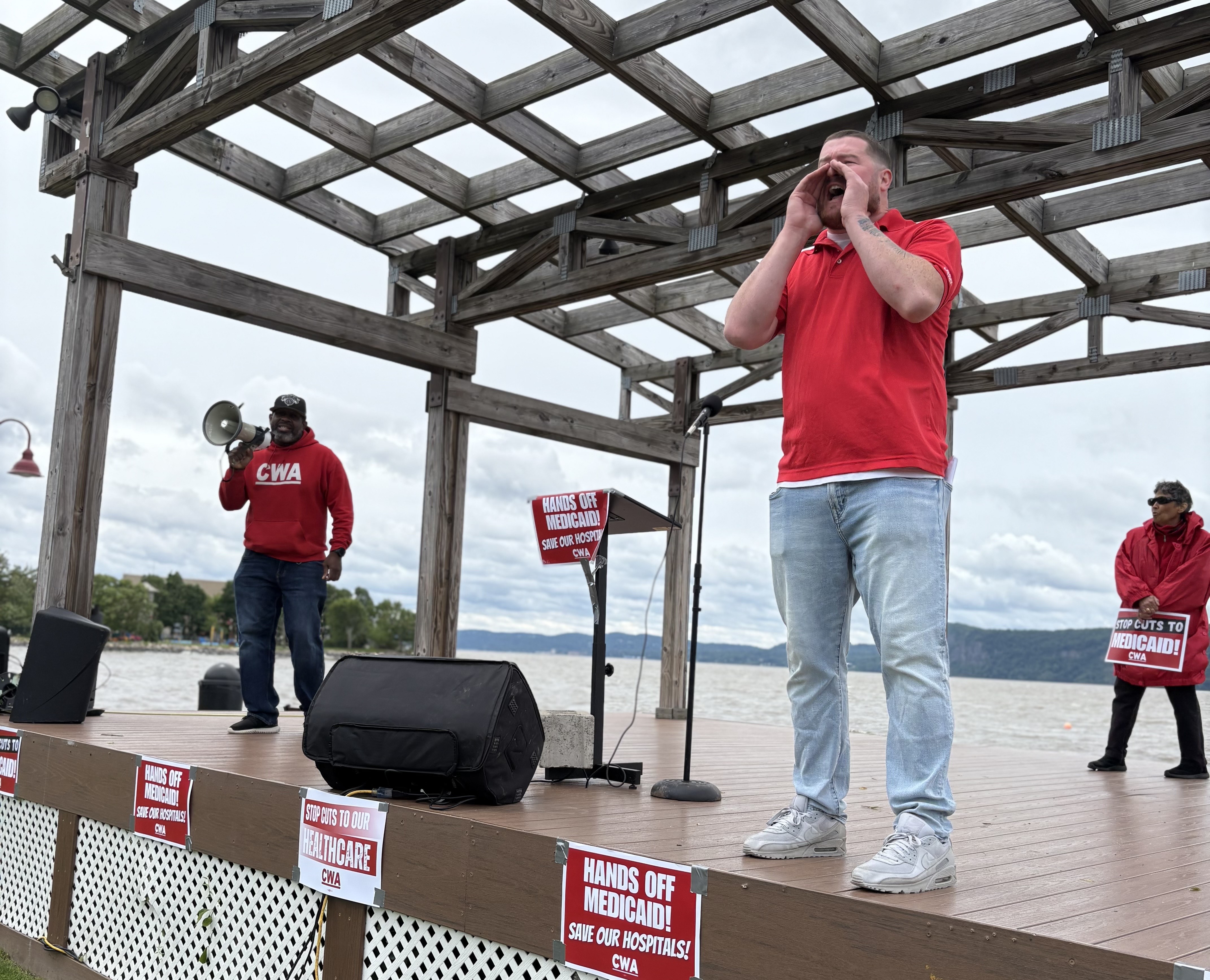
OSSINING, NY—Over a hundred local labor and community leaders rallied at Louis Engel Waterfront Park on Saturday in protest of the roughly $700 billion in cuts to Medicaid under the GOP’s budget plan.
Last month, House Republicans—including Rep. Mike Lawler—voted for a budget that would push millions of people off their health care, while handing massive tax breaks to corporations and the ultra-wealthy.
The rally was kicked off by Emily Feiner, who was forcibly removed from Rep. Lawler’s town hall in Somers recently. “When authoritarianism and the oligarchs come for your democracy: do not comply,” said Feiner, a social worker based in Nyack.
She was followed by Ossining Mayor Rika Levin, Ossining Supervisor Liz Feldman, State Assemblymember Dana Levenberg, Westchester County Legislator Emiljana Ulaj, as well as representatives from the Westchester-Putnam Central Labor Body, New York State United Teachers, 1199 Service Employees International Union (SEIU), Communication Workers of America (CWA), Make the Road Action, CCoHOPE, and the Westchester-Putnam Chapter of the Working Families Party.
“The ugly legislation that the House passed last month is not just a massive transfer of wealth from the poor to the ultra-rich; it is also a massive attack on public health. This bill would cut coverage for millions and undermine our healthcare system while simultaneously gutting environmental protection, virtually ensuring higher rates of asthma, cancer, and other pollution-related illnesses. It would also cause New York State to lose billions of dollars in federal funding while at the same time being burdened with huge new administrative costs,” said Assemblymember Dana Levenberg (AD-95). “This legislation is unconscionable and cannot be allowed to pass. I urge the Senate to reject it.”
“Cuts to public services don’t just affect numbers on a budget sheet—they affect real people, real families, and real futures right here in Ossining. Whether it’s our schools, healthcare, libraries, veterans, senior and youth programs, it’s detrimental to all of us,” said Ossining Mayor Rika Levin. “Use your voice and vote for those that build communities, not defund them.”
“The so-called ‘One Big Beautiful Bill’ cuts billions from healthcare—there’s nothing beautiful about it. Mike Lawler voted twice to gut the lifeline that holds our hospitals together. That’s a damn shame,” said Alex Pierre, 1199SEIU Member Political Organizer and Patient Care Partner at Good Samaritan Hospital in Suffern. “Medicaid cuts are a direct attack on the people who rely on Medicaid, not just for doctor’s visits, but for daily survival. We cannot allow Lawler and his ilk in Washington to balance the budget on our backs.”
“Medicaid cuts to New York will cost the state tens of thousands of good middle-class healthcare jobs. Hospitals will lay off nurses along with other patient-facing technologists just to make up for the billions of dollars lost in Medicaid reimbursements. Yet that won’t be enough, they will also increase costs for private insurance, which employers will pass on to workers as increased premium co-shares and co-pays,” said Joe Mayhew, CWA Local 1103 Secretary/Treasurer. “Rep. Mike Lawler needs to understand the billions of dollars in cuts in Medicaid he has voted for three times now will affect all New Yorkers not just those on Medicaid.”
“If this country can afford tax breaks for the ultra-wealthy, if we can spend billions on bombs and border walls, then we can afford textbooks without torn pages, roofs that don’t leak, and enough computers for every child. We can afford funding for special education, which provides support to students who are struggling with math and reading, and we can afford to fund ongoing training for our teachers,” said Samantha Rosado-Ciriello, President of the Yonkers Federation of Teachers and NYSUT Board Member.
“Our communities deserve so much better than Medicaid and SNAP cuts. When families have access to quality health care and good hospitals, we’re all better off,” said Jennifer Cabrera, Chair of the Westchester-Putnam Chapter of the Working Families Party. “But Rep. Mike Lawler wants to take that all away—all so he can hand more tax breaks to people like Elon Musk. These aren’t the values of NY-17.”
Community and labor groups plan to continue to draw attention to the threatened cuts to Medicaid, Medicare, and SNAP under the GOP’s reconciliation package.
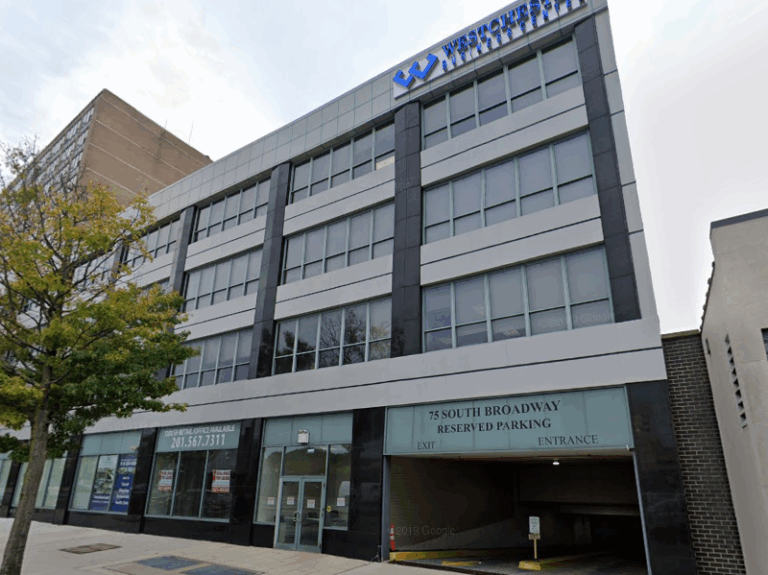
The Social Security Administration (SSA) permanently closed the White Plains Office of Hearings Operations located at 75 South Broadway in White Plains, on May 31st. The closure is due to the landlord not renewing the lease, and the Trump administration has no plans to open a new hearing office. This office served as the only hearing office in the Hudson Valley region (which comprises Westchester, Putnam, Dutchess, Orange, Ulster, and Sullivan Counties), impacting residents who may now have to travel further for hearings. Residents who rely on this hearing office will now have to travel further to access in-person services, potentially to offices in the Bronx, lower Manhattan, Albany, New Jersey, or New Haven, Connecticut.
Westchester County Executive Ken Jenkins previously called out Acting Social Security Commissioner Leland Dudek in early May, for his total disregard of the people of Westchester County, after Dudek rejected a second offer from the County and US Congressman George Latimer to use County space for the Social Security Administration’s (SSA) White Plains Hearing Office.
“We start this week with fewer services for the people of Westchester County due to the Social Security Administration (SSA) and the Department of Government Efficiency (DOGE)’s decision to close the Social Security Office in White Plains. We offered them space in a County office building at a reduced rate. I have been vocal—I’ve spoken with both Congressman George Latimer and Congressman Mike Lawler—explaining how detrimental this closure will be for our area. We will continue fighting for the people of Westchester County, but the federal government has made it clear: they do not care about cutting services or the harm this decision will cause,” County Executive Ken Jenkins shared in a statement to Black Westchester on Monday, June 2nd. “If the SSA were truly interested in saving money, they would have accepted the County’s offer for a much more affordable space. Let’s be clear—closing this SSA office isn’t about saving money, finding fraud, or rooting out waste. This is about denying people their benefits—not explicitly, but by omission. For those who are disabled or elderly, we all know they won’t be able to travel an hour or more to sort out and fight for the benefits they’ve earned. Travel is a luxury not everyone can afford—and the federal government knows that. Their message is bold and cruel: starve.”
Some members of Congress, including Sen. Kirsten Gillibrand, Rep. Mike Lawler (CD-17), and Congressman George Latimer (CD-16), have expressed concerns about the closure and have asked the SSA to reconsider its decision or find an alternative location.
Judges and staff from the White Plains office have been reassigned to other local hearing offices, according to the Social Security Administration (.gov). The White Plains, N.Y., Office of Hearing Operations clears more than 2,000 disability benefits cases each year and currently has a backlog of 2,000 pending cases.
Black Westchester presents People Before Politics Radio special Virtual Judicial Candidate Forum. Listen directly from the individuals seeking to serve on the bench in Mount Vernon City Court, Westchester County. This is your opportunity to learn where the candidates stand on judicial philosophy, courtroom management, ethics, experience, and fairness—without political spin or partisan bias. The two candidates running in the June 24th Democratic Primary are Judge Peter Davis (incumbent) and City Council President Danielle Browne.
Candidates will answer questions about:
– Judicial temperament and community insight
– Trial and courtroom experience
– Legal interpretation and precedent
– Leadership and ethical accountability
– Public trust and transparency in the justice system
🕒 Debate Format: Each candidate will have 2 minutes to answer each question, followed by 1-minute rebuttals, and 2-minute opening and closing statements. Audience comments are disabled to maintain neutrality and integrity.
📌 Why it matters: Judicial races often receive less attention than high-profile elections—but these judges make decisions that directly impact lives, families, and communities. Don’t miss this chance to make an informed vote.
🗳️ Election Day is June 24, 2025. Early Voting will be held from Saturday, June 14, 2025, through Sunday, June 22, 2025.
✅ Make sure you’re registered and ready to vote.
People Before Politics Radio, Giving You Real Talk For The Community Since 2014!
Black Westchester presents the People Before Politics Radio Show every Sunday night, 6-8 PM, simulcasting live on Facebook, X (formerly Twitter), LinkedIn, Instagram, and YouTube, and archived on BlackWestchester.com. Giving you that Real Talk For The Community since 2014.
To support the Black Westchester and the People Before Politics Radio Show, which provides the News With The Black Point Of view and gives you the real talk for the community for free, make a donation via PayPal. In the words of Ray Charles, “One of these days, and it [might not be] long, You’re gonna look for [us], and [we’ll] be gone.” Support independent, Black-owned, Free Media!
Subscribe, hit the notification bell, and join the conversation this Sunday. At Black Westchester, we always put People Before Politics!
Welcome to the Sunday, June 1, 2025, episode of Black Westchester presents People Before Politics Radio
People Before Politics Radio, Giving You Real Talk For The Community Since 2014!
Black Westchester presents the People Before Politics Radio Show every Sunday night, 6-8 PM, simulcasting live on Facebook, X (formerly Twitter), LinkedIn, Instagram, and YouTube, and archived on BlackWestchester.com. Giving you that Real Talk For The Community since 2014.
To support the Black Westchester and the People Before Politics Radio Show, which provides the News With The Black Point Of view and gives you the real talk for the community for free, make a donation via PayPal. In the words of Ray Charles, “One of these days, and it [might not be] long, You’re gonna look for [us], and [we’ll] be gone.” Support independent, Black-owned, Free Media!
Subscribe, hit the notification bell, and join the conversation this Sunday. At Black Westchester, we always put People Before Politics!
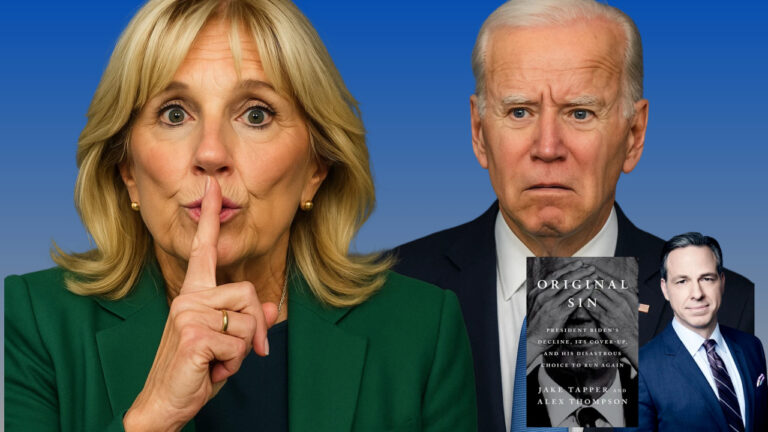
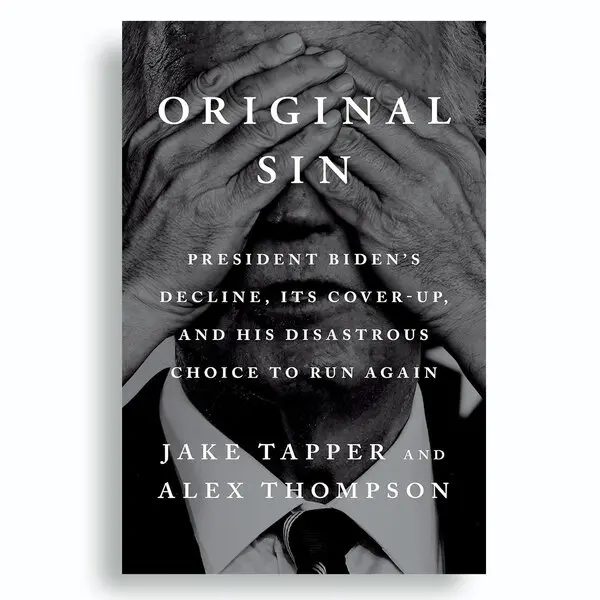
It is becoming increasingly difficult to ignore the truth: America may have lived through one of the most significant presidential cover-ups in modern history. The revelations in Original Sin, the explosive book by Jake Tapper and Alex Thompson, pull the curtain back on a White House that knew—at the highest levels—that President Joe Biden was not cognitively fit to lead, yet moved mountains to hide it from the American people.
This is not about partisanship. It is not about whether one supports Democrats or Republicans. It is about transparency, trust, and the dangerous precedent that has now been set for executive power. If the claims in Tapper’s book are true, then we are not just dealing with a president in decline—we are dealing with an administration, a political party, and a complicit media ecosystem that enabled and protected that decline at the expense of the nation.
According to the book, top aides, family members, and donors witnessed clear signs of President Biden’s deterioration: memory lapses, disorientation, and physical frailty so severe that the use of a wheelchair was discussed as a backup plan. These weren’t isolated incidents. They were ongoing and well known inside the West Wing. Yet instead of sounding the alarm, those around the president closed ranks. They covered for him. And in doing so, they misled the American people during a time when global conflict, economic instability, and political division demanded clarity, not concealment.
It’s not just the alleged deception that’s troubling—it’s the justification for it. Biden was framed as “the only one who could beat Trump,” and that logic became the moral permission slip for everything that followed. The truth was buried beneath polling data and media spin, and anyone who questioned the president’s mental acuity was labeled disrespectful, partisan, or worse.
Now we learn that even after disastrous public performances—like the 2024 debate where Biden visibly struggled to complete thoughts—party insiders still rallied behind him. It took public outcry and collapsing approval numbers for Biden to withdraw from the race, but by then the damage was done. The Democratic Party entered the 2024 election with a nominee they knew wasn’t capable of finishing the job, and they did so by design.
The media doesn’t escape blame either. Tapper’s own admission—that reporters ignored the signs and avoided tough questions—should force a reckoning in journalism. If our press corps is unwilling to press for answers when power is in question, then they are no longer the watchdogs of democracy—they are its decorators, keeping appearances polished while truth rots underneath.
There are echoes of Watergate here, but in some ways, this is worse. Watergate was about the abuse of power to protect a president from political fallout. This is about knowingly presenting an unfit leader to the world, risking national security and public trust, just to preserve a political agenda.
If we allow this to go unanswered, we are signaling to every future president, party official, and media executive that truth is optional, and that power is the ultimate priority. That cannot be the lesson history takes from this moment.
Congress must continue its investigation. Medical records, communications, and testimony should be brought before the public. Not out of spite, but out of necessity. The people have a right to know who was really running the country—and why they were told otherwise.
We must also ask deeper questions about how we choose our leaders, how we hold them accountable, and whether our institutions are truly designed to serve the people or merely protect those in power.
In the end, this is not just a story about Joe Biden. It’s a story about us.
Will we demand the truth, or will we settle for the illusion?
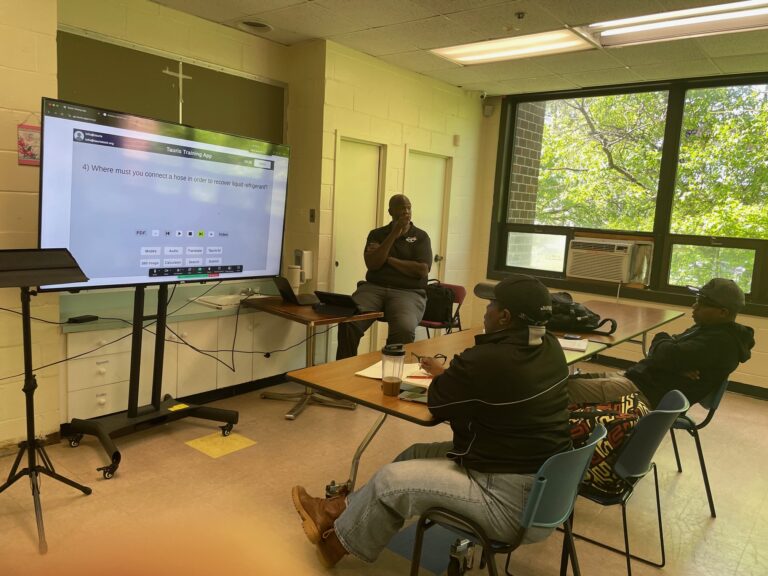
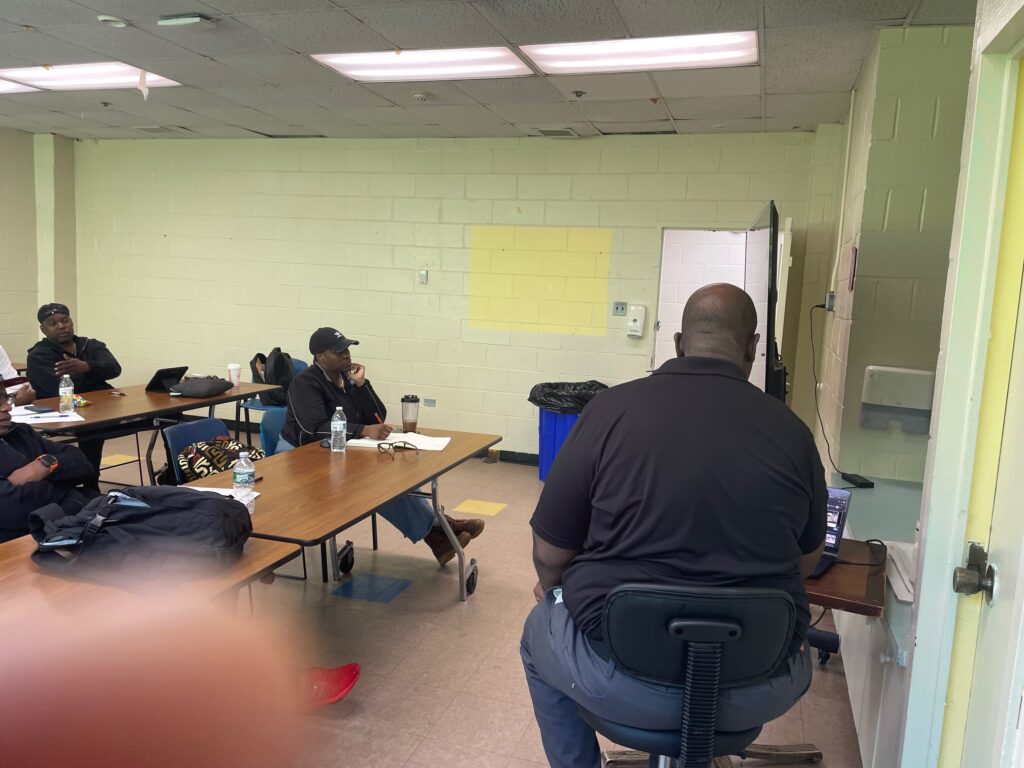
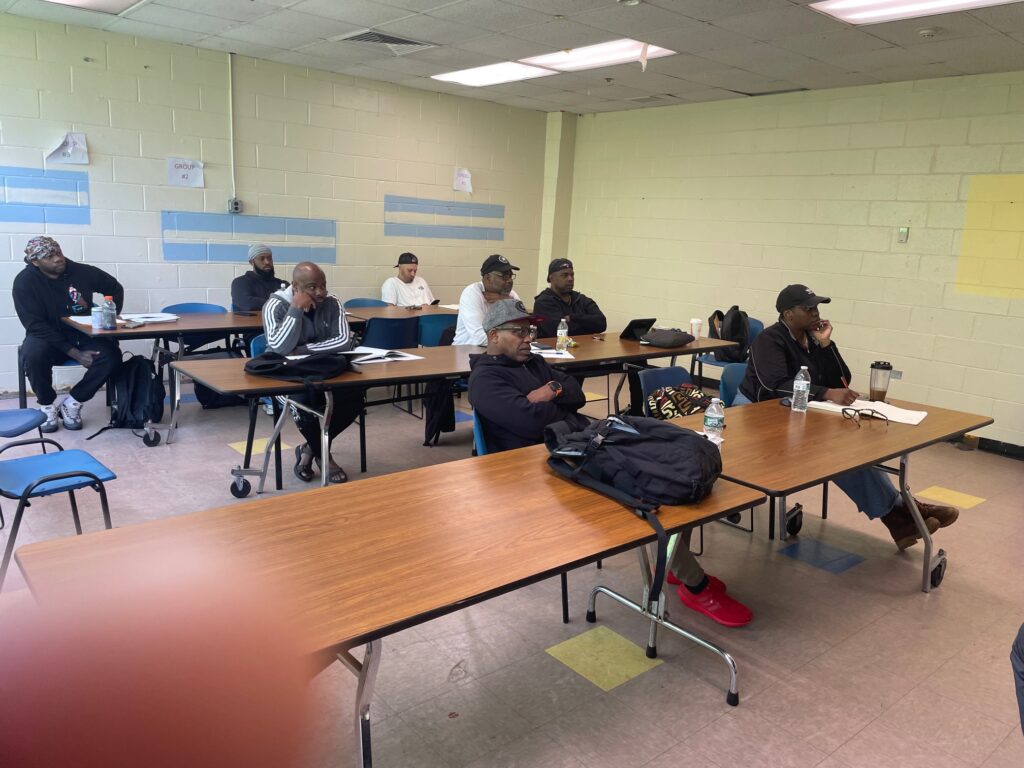
In a significant step toward workforce development and environmental sustainability, thirteen residents from Mount Vernon and New Rochelle have successfully completed a six-week training program on air-source heat pumps, offered by Comrie Enterprises in partnership with Tauris Tech. The initiative is part of the NYSERDA-funded “Adopt Clean Energy” campaign, subcontracted through the Urban League of Westchester.
The program, held at the Dole Center in Mount Vernon, was designed to equip participants with critical skills for entry into the growing clean energy sector. Each graduate earned the highly valued 608 EPA Certification, positioning them for employment in heating, ventilation, and air conditioning (HVAC) roles within the green energy economy.
“Training local residents to work in clean energy is more than workforce development—it’s a pathway to economic empowerment and environmental justice,” said a spokesperson for Comrie Enterprises, a Mount Vernon-based energy consulting firm.
The training, developed in collaboration with Queens-based Tauris Tech, combined online resources, educational videos, and in-person instruction to accommodate diverse learning styles. Despite limited funding, which allowed only thirteen of the sixty-one applicants to participate, the program delivered a comprehensive experience culminating in a graduation ceremony on May 17, 2025. Graduates will now be invited to a dedicated job fair hosted by Tauris Tech to connect them directly with potential employers in the industry.
Beyond its training efforts, Comrie Enterprises is also co-developing 20 South 2nd Square, formerly known as Library Square, on the site of the old Mount Vernon Y. The project is part of a larger vision to blend community revitalization with clean energy solutions. As part of the development, Comrie has ensured a commitment to offering future clean energy training programs within the new facility.
This effort aligns with Governor Kathy Hochul’s recent $1 billion statewide investment in clean energy job creation, announced in January 2025. The initiative aims to lower energy costs, reduce pollution, and create thousands of green jobs across New York State.
Comrie Enterprises and Tauris Tech praised the graduates for their dedication and resilience. “These students represent the future of our energy workforce,” said a representative from Tauris Tech. “They are now equipped with the tools to make an impact—not just in their own lives, but in the sustainability of our communities.”
As New York accelerates its clean energy transition, programs like this serve as a blueprint for how local partnerships can drive opportunity, innovation, and long-term community benefit.
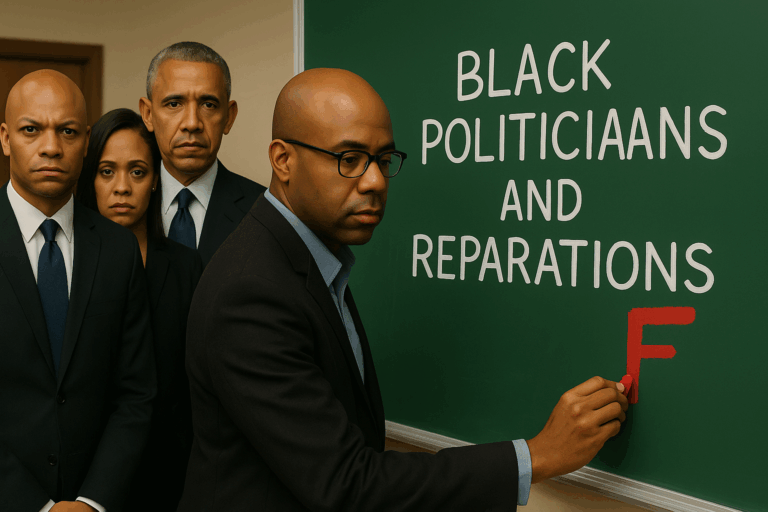
In 1989, Congressman John Conyers had the foresight and courage to formally introduce H.R. 40, igniting a national conversation about reparations for the descendants of American slaves. He understood that until America acknowledged the damage it had done — through its laws, its institutions, and its systems — true justice would remain out of reach. For decades, Conyers reintroduced the bill, session after session, laying the groundwork for a national reckoning. But since then, Black politics and Black leadership have dropped the ball. What should have been built into a movement for repair and redress has been reduced to a political sideshow — weakened by cowardice, coopted by careerism, and abandoned by many of the very leaders who were supposed to carry the torch forward.
Let’s be clear from the start: a bill to study reparations is not a win. It’s not justice, it’s not repair, and it’s certainly not the payout or restitution that Black Americans are owed. But in the slow-moving machinery of American politics, a study bill is often the first formal step to policy. It’s a launchpad, not a landing.
So when Black elected officials can’t even support that step? That’s not just negligence — it’s betrayal.
Take Maryland Governor Wes Moore. The first Black governor of his state, the pride of a so-called progressive movement. And yet, when given the opportunity to sign a bill to study reparations — not pay them, just study them — he vetoed it. Claimed it was duplicative. Said it wasn’t necessary. Even worse, the bill also called for a formal apology from the state of Maryland for its role in slavery — and he vetoed that too. The first Black governor of a state that once held slaves couldn’t even say the government owed Black people an apology. Translation? He didn’t want to carry the political weight.
And this isn’t new. When President Barack Obama had a Democratic House and Senate, he didn’t move H.R. 40 an inch. He had the power, the votes, and the historical moment. Instead, we got race-neutral speeches and respectability politics while LGBTQ rights advanced at record speed. Rainbow lights lit up the White House, but the lights stayed off on the issue of reparations.
Let’s call it what it is: selective courage.
Democrats are comfortable promoting diversity. But when it comes to justice — especially Black justice in the form of wealth transfer, land return, or debt repayment — they run for cover. Why? Because reparations make their white donor base nervous. Because America can handle diversity, but not accountability.
This same cowardice is mirrored in our Black institutions. Go look at the website of the African American Mayors Association. Not one mention of reparations. Not one plank in their mission. These are leaders of Black-majority cities across America, cities built on the backs of displaced, disenfranchised, overpoliced Black bodies. And they still won’t touch the issue.
What about the Congressional Black Caucus? The supposed vanguard of Black policy? There’s no dedicated policy workshop, no legislative war room, no serious investment in advancing reparations at the national level. Just empty gestures and safe language.
Meanwhile, grifters and influencers online have figured out how to monetize anti-reparations rhetoric. Black voices, parroting conservative talking points, mocking the idea of reparations to appease white audiences and collect checks. They sell out their own lineage for likes, followers, and a paycheck — while pretending to speak for “real Black people.”
Let’s stop pretending.
The failure to move reparations forward is not because America doesn’t understand what happened to Black people. The laws are there. The redlining maps exist. The wealth gap data is undeniable. The harm is proven.
What’s missing is political will — especially from the very Black leaders we put in place to fight for us.
And now, H.R. 40 has become nothing more than a political talking point. Democrats invoke it to claim they’re “trying,” knowing full well they don’t control the House or the Senate and that it will never even get to the floor. That’s not strategy — that’s gaslighting. It’s a total disrespect to the legacy of John Conyers, who originally introduced H.R. 40 in 1989 and reintroduced it every session until his retirement in 2017, not as a gimmick, but as a moral obligation. His vision has been hijacked and reduced to performative politics.
We saw this same dance play out with Vice President Kamala Harris. In an early interview, she stated clearly that she would not support reparations. It wasn’t until she faced backlash during her presidential campaign that she began to backpedal, offering vague support under political pressure. But the damage was done. What’s worse is that even after this obvious flip-flop, many Black supporters jumped to defend her, dismissing concerned Black voters who demanded clarity and courage on reparations. Instead of pressing her to stand firm, they protected her silence — as if symbolism was more important than substance.
All of this while Black Americans continue to support the Democratic Party by over 90%. We deliver elections. We show up. We stay loyal. And yet, we can’t get the party to show courage on reparations — not even for a study. That’s not just political cowardice; it’s a slap in the face.Black Americans continue to support the Democratic Party at over 90%. We play a crucial role in delivering elections by consistently showing up and demonstrating our loyalty. Yet, despite this unwavering support, we are unable to get the party to take a stand on reparations, not even for a mere study. This isn’t just a lack of political courage; it feels like a slap in the face.
And let’s be clear: this is not about making white people pay. It’s about making the government pay — here’s why. From the beginning, it was the government — not just individuals — that codified Black oppression into law. Let’s be specific:
Slavery was legal under the U.S. Constitution until 1865. It was not just permitted — it was protected.
The Fugitive Slave Act (1793 and 1850) criminalized freedom, requiring free states to return escaped enslaved people.
Black Codes were passed immediately after the Civil War to reestablish control over newly freed Black Americans.
Plessy v. Ferguson (1896), a Supreme Court ruling, legalized racial segregation under “separate but equal.”
Redlining, formally backed by the federal government through the Home Owners’ Loan Corporation (HOLC)and Federal Housing Administration (FHA), denied Black families access to homeownership and generational wealth.
Urban renewal policies in the 1950s–70s demolished thriving Black neighborhoods for highways and commercial development.
Mass incarceration laws, including the Anti-Drug Abuse Act of 1986 and 1994 Crime Bill, disproportionately targeted Black communities.
Discriminatory GI Bill implementation after WWII denied Black veterans access to benefits widely given to white veterans.
This isn’t about guilt — it’s about legal, legislative, and judicial decisions that produced generational harm. The same government that enacted laws, enforced policies, and built systems designed to systematically oppress the descendants of American slaves. Reparations isn’t about guilt. It’s about accountability. It’s about justice.
So no, a study bill is not a victory. But it’s a gatekeeper in a rigged political process. If Black elected officials won’t even open that gate, they’re not leading us — they’re managing our silence.
We don’t need symbolism. We need spine. We don’t need panels. We need policy. And we don’t need more excuses from Black faces in high places who are too scared to say the one truth that matters:
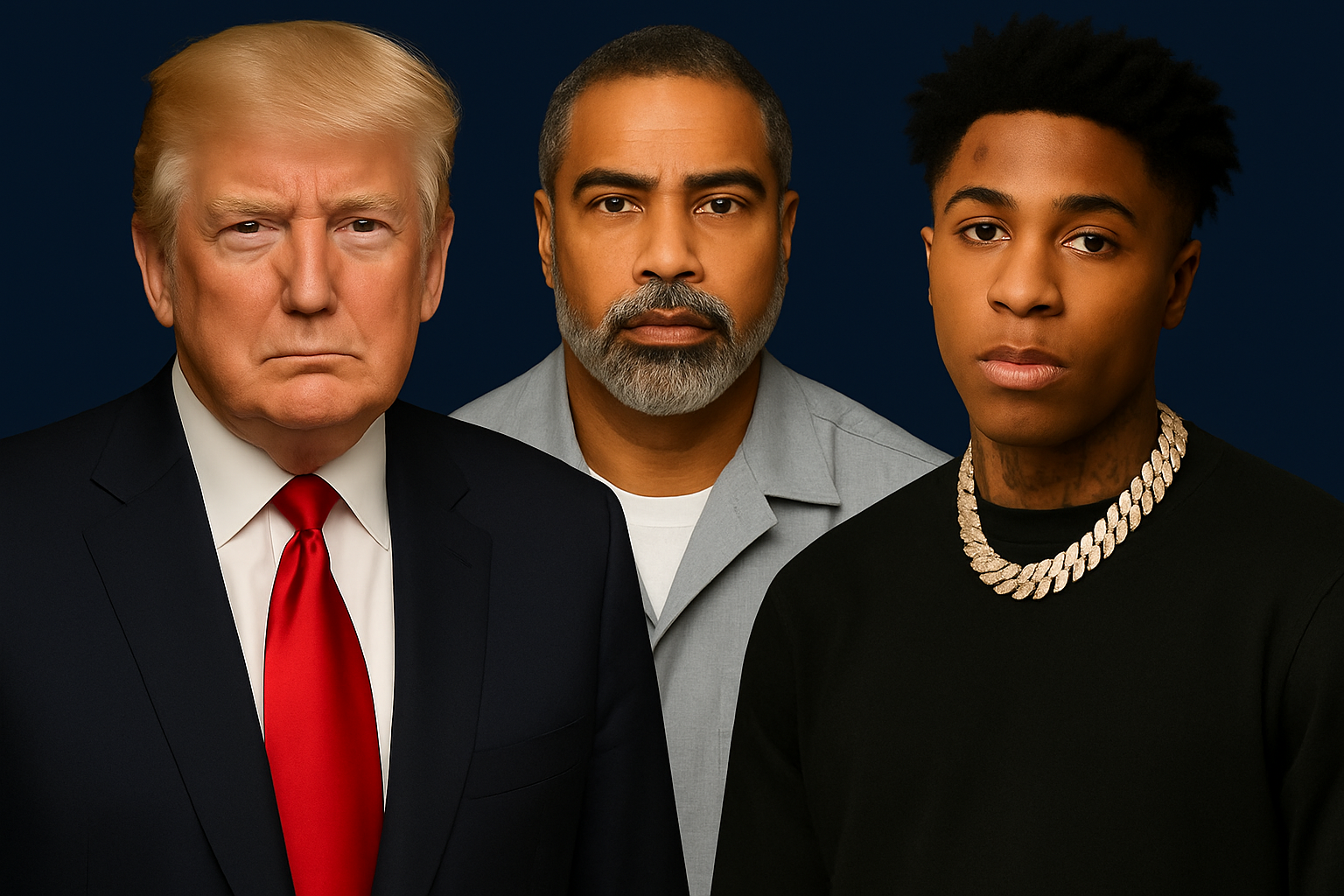
In a historic and symbolic move, former President Donald Trump appointed Alice Marie Johnson, the first Black woman to serve as a federal clemency advisor, his official “Pardon Czar.” Johnson, a criminal justice reform advocate who was granted clemency by Trump in 2018 after serving over two decades for a nonviolent drug offense, now leads the charge in reviewing clemency requests and advising on one of the most powerful tools of the presidency: the pardon.
Her appointment stands as a milestone for criminal justice reform and representation at the highest levels of executive decision-making. It reflects Trump’s ongoing effort to frame clemency as both a matter of justice and political will, particularly in cases involving long, controversial sentences handed down to Black Americans.
This broader shift in approach set the stage for two of the most attention-grabbing clemency decisions in Trump’s second term: the full pardon of rap artist NBA YoungBoy and the commutation of federal sentences for Chicago gang figure Larry Hoover.
NBA YoungBoy: A Pardon and a Clean Slate
Kentrell DeSean Gaulden, better known as NBA YoungBoy, was serving a 23-month sentence for federal gun charges stemming from arrests in Louisiana and California. Though released to house arrest earlier this year, he still faced prescription fraud charges and remained under legal scrutiny.
Trump’s pardon wiped Gaulden’s record clean and restored his ability to tour and travel freely. The rapper issued a public statement following the announcement:
“I want to thank President Trump for granting me a pardon and allowing me to keep building — as a man, father, and artist.”
YoungBoy is set to launch a national tour in fall 2025, marking a significant turnaround in his career and public image.
Larry Hoover: A Partial Win in a Long Fight
While NBA YoungBoy walks free, Larry Hoover’s story is more complicated. Once the leader of the Gangster Disciples, Hoover has been in prison since the 1970s, serving both a 200-year state sentence for murder and six federal life sentences for continuing to operate a criminal enterprise from behind bars.
Trump’s commutation only affected federal convictions, meaning that Hoover will remain in Illinois state custody in the foreseeable future. Nonetheless, his legal team views the move as critical to achieving his release.
Hoover’s case has long drawn the attention of celebrities like Kanye West and Drake, who co-headlined a 2021 benefit concert titled “Free Larry Hoover.” The commutation offers renewed hope to his supporters while reigniting debate over whether clemency should extend to individuals with violent pasts who claim rehabilitation.
Reform or Strategy?
By combining Alice Johnson’s historic appointment with these high-profile clemency decisions, Trump has returned the conversation around redemption, justice, and political power to the national spotlight. Supporters see a genuine effort to reform a broken and biased justice system. Critics argue that it’s a calculated move aimed at strengthening Trump’s image among Black voters and in pop culture.
A Growing Divide in Black Politics
Perhaps most revealing is how these actions are reshaping Trump’s image within Black communities. While many establishment Black leaders and elected officials continue to paint Trump as a threat to civil rights and democracy, a growing number of everyday Black Americans, particularly younger generations, are rethinking that narrative.
For some, it’s not about personality but policy and outcomes. They see Trump doing things that decades of Democratic leadership failed to deliver: pushing economic opportunity zones, highlighting criminal justice reform, and now, issuing clemency to Black Americans caught in a system long viewed as unjust. The shift isn’t uniform, but it’s enough to spark conversations—and concern—among traditional Black political circles.
As one observer put it, “Trump may not be the Black community’s choice—but he’s increasingly becoming their challenge to the status quo.”
Bottom Line: With the appointment of Alice Marie Johnson, the pardons of NBA YoungBoy and Larry Hoover, and the growing split in how Trump is viewed across the Black political spectrum, it’s clear that the conversation is changing. Whether seen as justice or strategy, Donald Trump is forcing Black America to reexamine power, not just who holds it, but how they use it.
In 1989, Congressman John Conyers had the foresight and courage to formally introduce H.R. 40, igniting a national conversation about reparations for the descendants of American slaves. He understood that until America acknowledged the damage it had done — through its laws, its institutions, and its systems — true justice would remain out of reach. For decades, Conyers reintroduced the bill, session after session, laying the groundwork for a national reckoning. But since then, Black politics and Black leadership have dropped the ball. What should have been built into a movement for repair and redress has been reduced to a political sideshow — weakened by cowardice, coopted by careerism, and abandoned by many of the very leaders who were supposed to carry the torch forward.
Let’s be clear from the start: a bill to study reparations is not a win. It’s not justice, it’s not repair, and it’s certainly not the payout or restitution that Black Americans are owed. But in the slow-moving machinery of American politics, a study bill is often the first formal step to policy. It’s a launchpad, not a landing.
So when Black elected officials can’t even support that step? That’s not just negligence — it’s betrayal.
Take Maryland Governor Wes Moore. The first Black governor of his state, the pride of a so-called progressive movement. And yet, when given the opportunity to sign a bill to study reparations — not pay them, just study them — he vetoed it. Claimed it was duplicative. Said it wasn’t necessary. Even worse, the bill also called for a formal apology from the state of Maryland for its role in slavery — and he vetoed that too. The first Black governor of a state that once held slaves couldn’t even say the government owed Black people an apology. Translation? He didn’t want to carry the political weight.
And this isn’t new. When President Barack Obama had a Democratic House and Senate, he didn’t move H.R. 40 an inch. He had the power, the votes, and the historical moment. Instead, we got race-neutral speeches and respectability politics while LGBTQ rights advanced at record speed. Rainbow lights lit up the White House, but the lights stayed off on the issue of reparations.
Let’s call it what it is: selective courage.
Democrats are comfortable promoting diversity. But when it comes to justice — especially Black justice in the form of wealth transfer, land return, or debt repayment — they run for cover. Why? Because reparations make their white donor base nervous. Because America can handle diversity, but not accountability.
This same cowardice is mirrored in our Black institutions. Go look at the website of the African American Mayors Association. Not one mention of reparations. Not one plank in their mission. These are leaders of Black-majority cities across America, cities built on the backs of displaced, disenfranchised, overpoliced Black bodies. And they still won’t touch the issue.
What about the Congressional Black Caucus? The supposed vanguard of Black policy? There’s no dedicated policy workshop, no legislative war room, no serious investment in advancing reparations at the national level. Just empty gestures and safe language.
Meanwhile, grifters and influencers online have figured out how to monetize anti-reparations rhetoric. Black voices, parroting conservative talking points, mocking the idea of reparations to appease white audiences and collect checks. They sell out their own lineage for likes, followers, and a paycheck — while pretending to speak for “real Black people.”
Let’s stop pretending.
The failure to move reparations forward is not because America doesn’t understand what happened to Black people. The laws are there. The redlining maps exist. The wealth gap data is undeniable. The harm is proven.
What’s missing is political will — especially from the very Black leaders we put in place to fight for us.
And now, H.R. 40 has become nothing more than a political talking point. Democrats invoke it to claim they’re “trying,” knowing full well they don’t control the House or the Senate and that it will never even get to the floor. That’s not strategy — that’s gaslighting. It’s a total disrespect to the legacy of John Conyers, who originally introduced H.R. 40 in 1989 and reintroduced it every session until his retirement in 2017, not as a gimmick, but as a moral obligation. His vision has been hijacked and reduced to performative politics.
We saw this same dance play out with Vice President Kamala Harris. In an early interview, she stated clearly that she would not support reparations. It wasn’t until she faced backlash during her presidential campaign that she began to backpedal, offering vague support under political pressure. But the damage was done. What’s worse is that even after this obvious flip-flop, many Black supporters jumped to defend her, dismissing concerned Black voters who demanded clarity and courage on reparations. Instead of pressing her to stand firm, they protected her silence — as if symbolism was more important than substance.
All of this while Black Americans continue to support the Democratic Party by over 90%. We deliver elections. We show up. We stay loyal. And yet, we can’t get the party to show courage on reparations — not even for a study. That’s not just political cowardice; it’s a slap in the face.
And let’s be clear: this is not about making white people pay. It’s about making the government pay — here’s why. From the beginning, it was the government — not just individuals — that codified Black oppression into law. Let’s be specific:
Slavery was legal under the U.S. Constitution until 1865. It was not just permitted — it was protected.
The Fugitive Slave Act (1793 and 1850) criminalized freedom, requiring free states to return escaped enslaved people.
Black Codes were passed immediately after the Civil War to reestablish control over newly freed Black Americans.
Plessy v. Ferguson (1896), a Supreme Court ruling, legalized racial segregation under “separate but equal.”
Redlining, formally backed by the federal government through the Home Owners’ Loan Corporation (HOLC)and Federal Housing Administration (FHA), denied Black families access to homeownership and generational wealth.
Urban renewal policies in the 1950s–70s demolished thriving Black neighborhoods for highways and commercial development.
Mass incarceration laws, including the Anti-Drug Abuse Act of 1986 and 1994 Crime Bill, disproportionately targeted Black communities.
Discriminatory GI Bill implementation after WWII denied Black veterans access to benefits widely given to white veterans.
This isn’t about guilt — it’s about legal, legislative, and judicial decisions that produced generational harm. The same government that enacted laws, enforced policies, and built systems designed to systematically oppress the descendants of American slaves. Reparations isn’t about guilt. It’s about accountability. It’s about justice.
So no, a study bill is not a victory. But it’s a gatekeeper in a rigged political process. If Black elected officials won’t even open that gate, they’re not leading us — they’re managing our silence.
We don’t need symbolism. We need spine. We don’t need panels. We need policy. And we don’t need more excuses from Black faces in high places who are too scared to say the one truth that matters:
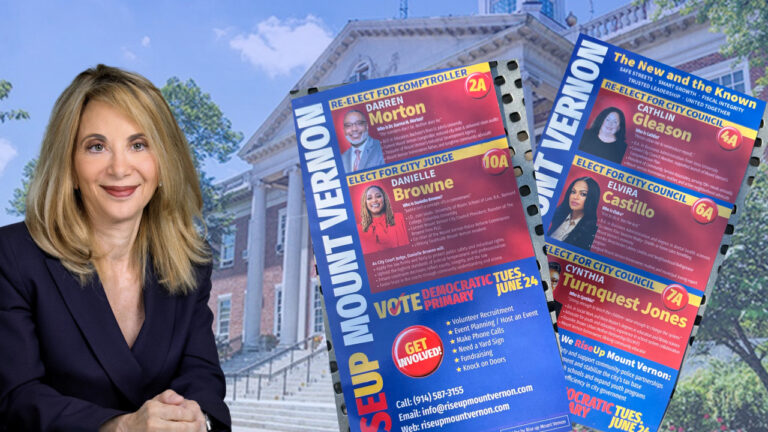
This article is a follow-up to our investigation into the Rise Up Mount Vernon candidate line. This controversial and registered political operation has raised legal and ethical questions about transparency, accountability, and outside influence. What we’ve now uncovered deepens the concern: a major developer bankrolling candidates through this questionable political line and donating across the county to both sides of the political equation.
In a time when local politics are more influential than ever, few things reshape a community faster than a developer with deep pockets—and strategic donations. The recent revelation that Rella Fogliano, owner of a private development company, donated $25,000 to Rise Up Mount Vernon is a story with implications far beyond a single city election.
This isn’t just about Mount Vernon. It’s about how a single development firm has managed to embed itself into the political machinery of Westchester County, donating to the who’s who of local politics across city lines and ideological divides. And now, after giving to the Mount Vernon Democratic City Committee, that same donor is funding a candidate line that’s running against the very committee it once supported.
MacQuesten Development owns the property at 130 Mount Vernon Avenue in Mount Vernon, NY. The building has become a financial burden on taxpayers due to an excessive number of police calls and its long-standing history of housing individuals with mental health issues, placing additional strain on the city’s police department
It raises a critical question: What happens when private developers bankroll both sides of local politics?
Fogliano’s company, MacQuesten Development, has been involved in major regional development projects, including the 17-story, 189-unit building at 22 South West Street in Mount Vernon. While these developments aim to address affordable housing needs, the intersection of her political contributions and development interests raises questions about the influence of such donations on local policy decisions.
To be clear, the donations discussed here were made by Rella Fogliano in her personal capacity, not directly from MacQuesten Development, LLC. That legal distinction matters, and we acknowledge it. However, it does not reduce the potential influence such contributions carry. When a major developer personally donates tens of thousands of dollars to political committees and candidate slates across a county, the result is the same: increased access, expanded influence, and the ability to quietly shape public outcomes.
But what does it say when you give $30,000 to the Mount Vernon Democratic City Committee in 2023 and 2024, then turn around and finance an opposing candidate line in 2025? Some will say, “That’s just how politics works.” Others will say, “That’s how you control your interests in poor cities like Mount Vernon—by backing candidates focused on low-income development and securing tax breaks, while quietly steering the politics that enable those deals.”
Mount Vernon is no stranger to the influence of big money in politics. One of the most notorious examples is Joseph Spezio, a wealthy sanitation executive turned political donor, who eventually became Deputy Police Commissioner without any prior law enforcement experience. Spezio donated heavily to top Democrats and Republicans in Westchester, using his financial influence to penetrate City Hall and the Mount Vernon Police Department. As Black Westchester previously uncovered, Spezio was also a former federal informant, which only came to light after he had already embedded himself in the city’s highest circles of power. His unchecked influence helped destabilize the city government and ultimately contributed to former Mayor Richard Thomas’s unfortunate and premature resignation.
Spiezio’s rise and reign should be a cautionary tale of what happens when money, not merit, drives political appointments, and private agendas override the public good.
A Pattern of Influence
Verified Contributions: A Matter of Public Record
According to filings with the New York State Board of Elections, Rella Fogliano has made substantial personal contributions to political entities throughout Mount Vernon and Westchester County. The public record confirms donations totaling $30,000 to the Mount Vernon Democratic City Committee—$20,000 in 2023 and $10,000 in 2024—before her reported funding of a competing political group line in 2025. According to Democratic insiders in Mount Vernon, it was Kenny Plummer who negotiated the 2023 donation to the Democratic Party on behalf of Mayor Shawyn Patterson-Howard. There have also been questions surrounding Plummer’s actual residency—specifically, how he continues to serve as a District Leader when he reportedly no longer resides in Mount Vernon and instead lives in White Plains. According to New York State Public Officers Law § 3, public officers must reside within the political subdivision they serve, and failure to meet this requirement could lead to the position being declared vacant. Furthermore, Election Law § 2-110 mandates that district leaders must reside within the Assembly District they represent, making this a possible legal violation. The consequence for non-compliance includes removal from office and potential further legal review.
Plummer’s conduct raises additional concerns. In 2012, the New York State Joint Commission on Public Ethics (JCOPE) found that Plummer, as president of DiRA Consulting, violated the Lobbying Act by failing to register and submit required bimonthly lobbying reports while lobbying for real estate projects in Mount Vernon. He admitted to the violations and paid a $2,000 penalty. Now, he is allegedly acting again as an unlicensed lobbyist to secure state funding for development projects, which could constitute further violations of state lobbying and ethics laws.
These figures were not disclosed anonymously or filtered through an LLC; they were made in Fogliano’s name, reinforcing the visibility of her political reach.
While these contributions are legal and filed appropriately, the pattern they form across election cycles is cause for concern. Such concentrated financial influence demands public scrutiny in politically vulnerable cities like Mount Vernon, where special interests often overshadow community voices.
Rella Fogliano’s donations aren’t isolated. Campaign finance records show a pattern of financial support to city officials, committee chairs, and mayoral candidates across Westchester. These contributions don’t just buy goodwill but access, attention, and often silence.
Notably, this developer hasn’t just focused on Mount Vernon. Records show donations reaching state and local authorities, including Westchester County Executive Ken Jenkins and even District Attorney Susan Cacace. When a private donor has the financial bandwidth to contribute to both administrative and judicial campaigns, it blurs the line between civic participation and coordinated influence. These contributions widen the developer’s access to the very institutions meant to check and balance one another.
In cities like Mount Vernon—majority-Black, working-class, and historically under-resourced—this kind of influence is especially troubling. Local elections should be about community priorities, not development deals. When big money comes in, accountability goes out.
Undermining the Democratic Process
In New York, while it’s legal to contribute across political lines, this practice raises red flags when the same donor undermines their prior recipients. It sends a message that elections can be steered—not by the will of the voters—but by strategic payouts. In low-turnout municipal elections, where a few thousand dollars can sway results, this tactic is especially potent and dangerous.
What makes the Mount Vernon case particularly alarming is the dual role this donor is playing: giving to the City Committee and now funding a line of candidates running against it. That’s not just influence—that’s political destabilization.
Political destabilization can be caused by major donors or PACs donating to both sides because it can undermine public trust in the political process and create a sense of corruption, as it suggests a lack of commitment to specific ideological positions. This can also lead to the perception that political campaigns are primarily influenced by money rather than by voter preferences, further eroding faith in the system. You can’t claim to support party structure and then turn around and fund efforts to dismantle it. That kind of maneuver not only creates division but also undermines the legitimacy of the electoral process. Simply put, it makes voters wonder: Who’s really choosing our leaders—the People or the Donors?
The Hidden Cost of Development
When developers shape the political landscape, the community pays the price. Zoning boards shift. Affordable housing becomes a buzzword instead of a promise. Public land and policy become commodities.
This isn’t about being anti-development. It’s about being pro-transparency and pro-accountability. If you want to influence politics, be honest about your role. Don’t hide behind candidate lines and registered political groups.
Mount Vernon and all Westchester residents deserve to know who’s really funding their elections—and what those donors expect in return.
Because when developers write the checks, they usually get to write the rules too. Large donors and special interest groups can contribute significantly more to campaigns than average voters, directly or through super PACs and other independent groups. According to some studies, political officials may be more inclined to prioritize topics and policies supported by big donors over other concerns, especially if they are very dependent on them.
Transparency isn’t optional—it’s foundational to democracy. Residents, journalists, and public officials alike must demand clear answers and traceable money if we are to protect the voice of the people over the purse strings of the powerful. According to some studies, political officials may be more inclined to prioritize topics and policies supported by big donors over other concerns, especially those heavily reliant on large donors to win elections and stay in office.
This should be a wake-up call to the people of Mount Vernon. The attempt to dismantle the Mount Vernon City Committee’s influence comes at a time when the city is preparing to auction off over 500 properties in June. This kind of political maneuvering, tied to concentrated donor interests, reflects a broader pattern Mount Vernon has seen before. The influence that developers have had on Mount Vernon politics for decades has not only shaped infrastructure, school systems, and public service delivery—but has eroded the moral and ethical values of public life. This is more than a land sale; it’s a moment of reckoning for who gets to control the future of the city.
How can our seniors—those on fixed incomes—or a working family living on Third and Third, ever hope to compete with this level of financial influence? They can’t. And they shouldn’t have to. As highlighted by recent public campaign filings with the New York State Board of Elections (NYSBOE), the disparity is not just economic—it’s systemic. I’ve always said, if you want to know who your politicians are really working for, don’t listen to their speeches—read their donor reports. These reports are public records for a reason.
The average voter cannot write five-figure checks, host fundraisers for sitting judges, or bankroll political slates. When donors like Rella Fogliano are allowed to fund both the party and its challengers in back-to-back cycles, it strips away any illusion of neutrality in local governance. While her contributions are legally permissible, the ethical implications cannot be ignored.
In Mount Vernon and across Westchester County, we must ask ourselves: Are we building communities—or selling them off one deal at a time? The answer lies not in the promises made during campaigns, but in the names listed on the donation ledgers.