There are moments in American politics that cut through the noise—not because of who’s speaking, but because of what’s being said. President Donald J. Trump’s unveiling of the Make America Healthy Again (MAHA) report is one of those moments, and for Black America, it deserves serious attention.
For decades, our communities have been at the epicenter of every major public health crisis—diabetes, hypertension, obesity, asthma, mental illness, and prescription drug dependency. While politicians on both sides have offered slogans and photo ops, none have made a comprehensive, actionable move like this: rethinking food policy, reining in pharmaceutical prices, and calling out the systemic overmedication of our children. Like him or not, Trump is the first president to put the full weight of the federal government behind these issues in this way.
The MAHA report is not just about “making America healthy”—it’s about finally confronting the forces that have been making Black America sick.
Let’s start with food. We’ve long known that low-income, urban Black neighborhoods are flooded with ultra-processed foods, sugary drinks, and chemical-laced snacks. What most people don’t realize is that this toxic diet is often subsidized by taxpayer-funded programs like SNAP. Under the MAHA initiative, states are now being encouraged—and empowered—to remove junk food and soda from food stamp eligibility. That’s not “paternalism,” as critics will say—it’s policy with purpose. If we’re serious about reversing disease in our community, we need to stop funding what’s killing us.
The stakes are real. According to the CDC:
Nearly 50% of Black adults have high blood pressure, the highest rate of any racial or ethnic group in the U.S.
1 in 5 Black adults lives with diabetes, and many more remain undiagnosed.
Black Americans are 1.3 times more likely to be obese than white Americans.
Black youth are more than twice as likely to be diagnosed with type 2 diabetes compared to their white peers.
Black maternal mortality is three times higher than that of white women—often linked to diet, chronic illness, and lack of access to proper care.
Next, look at what MAHA says about children. The report states plainly: “It’s common sense that overmedicating kids is dangerous.” In our public schools, particularly those in Black communities, it’s not uncommon to see boys as young as six labeled with behavioral disorders and placed on medication before they ever see a counselor. Black children are more likely to be misdiagnosed or overmedicated than their white peers, and yet less likely to receive consistent therapeutic care.
The MAHA report doesn’t just acknowledge this—it challenges it, pushing for a return to real inquiry, real solutions, and a culture that prioritizes mental wellness over pharmaceutical dependency.
But the most explosive part of Trump’s speech came when he addressed Big Pharma directly. He didn’t mince words. “We were subsidizing the whole world,” he said, referring to how the U.S. has paid up to 10 to 13 times more than other countries for the same drugs. His solution: Most Favored Nation pricing. In plain terms, the U.S. will only pay what the cheapest country pays for medicine.
For Black seniors, single mothers, and working-class families trapped in the cycle of unaffordable prescriptions, this could mean a 50% to 89% drop in drug costs. That’s not hypothetical—it’s transformative. Especially when you consider that over 45% of Black Americans rely on public insurance (Medicaid or Medicare), and prescription drugs represent a significant monthly expense for Black households.
Critics will focus on the politics. But politics is not our priority—outcomes are. For far too long, Black health has been treated as an afterthought, a campaign soundbite, or worse, a partisan weapon. Trump’s MAHA report doesn’t ask for permission from lobbyists. It doesn’t pretend that food deserts and Medicaid overuse are accidental. And it doesn’t shy away from naming names.
Is it perfect? No. Does it need pressure from the public to ensure it’s implemented fairly and fully? Absolutely. But it’s a start—and more than that, it’s a shift. A shift from lip service to legislative action. From dependency to prevention. From being ignored to being prioritized.
Black America cannot afford to let personal distaste for a politician override our assessment of the policy. We didn’t vote for diabetes. We didn’t vote for our children to be medicated into silence. We didn’t vote to pay 13 times more for medicine than people in Canada or France. But we did vote for change—and here it is, whether we expected it from this administration or not.
The challenge now is to engage it. Shape it. Demand that this plan serve us—not just in theory, but in practice. Because if the government is finally ready to make America healthy again, we need to make sure that includes Black America, too.
When you think nothing can add more confusion and dysfunction, Mount Vernon leadership never disappoints. It is more than a procedural formality—it is a reflection of unity, trust, and accountability. It is earned through engagement with community stakeholders, district leaders, and voters who expect candidates to uphold not only shared values but a commitment to the party structure that represents them. When Democratic-endorsed candidates choose to also run on another political line, it is more than just a strategy—it is a betrayal of the party’s unity, its delegates, and its process.
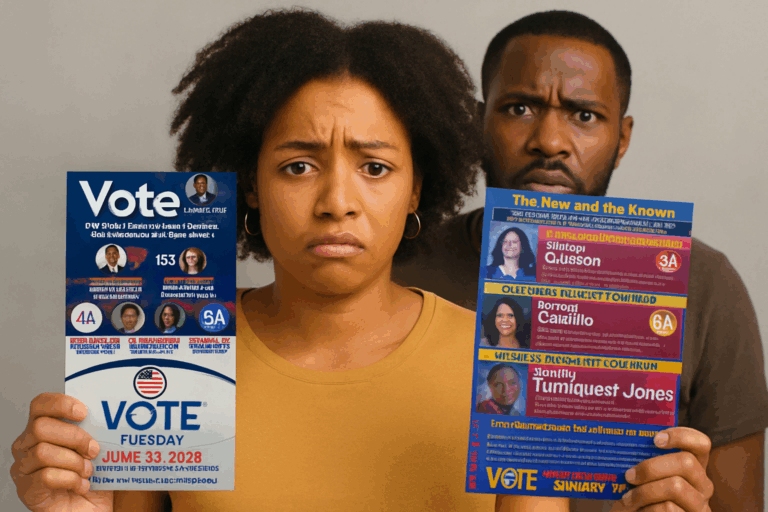
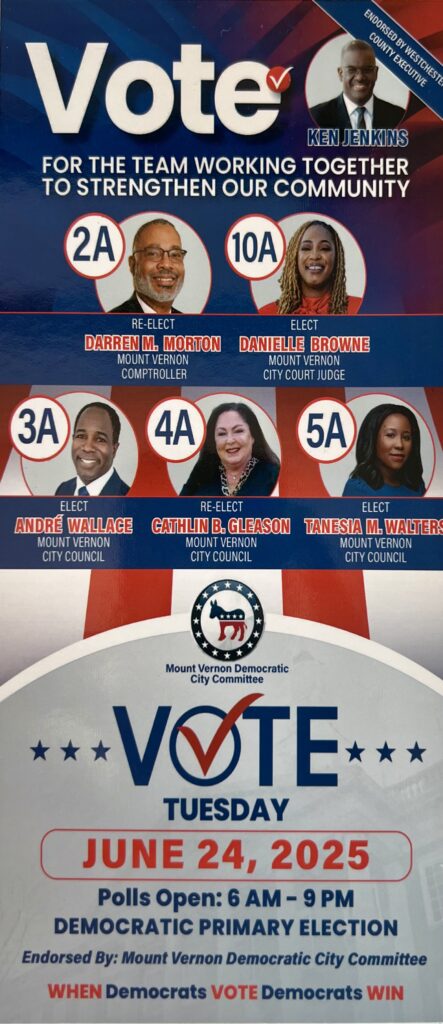
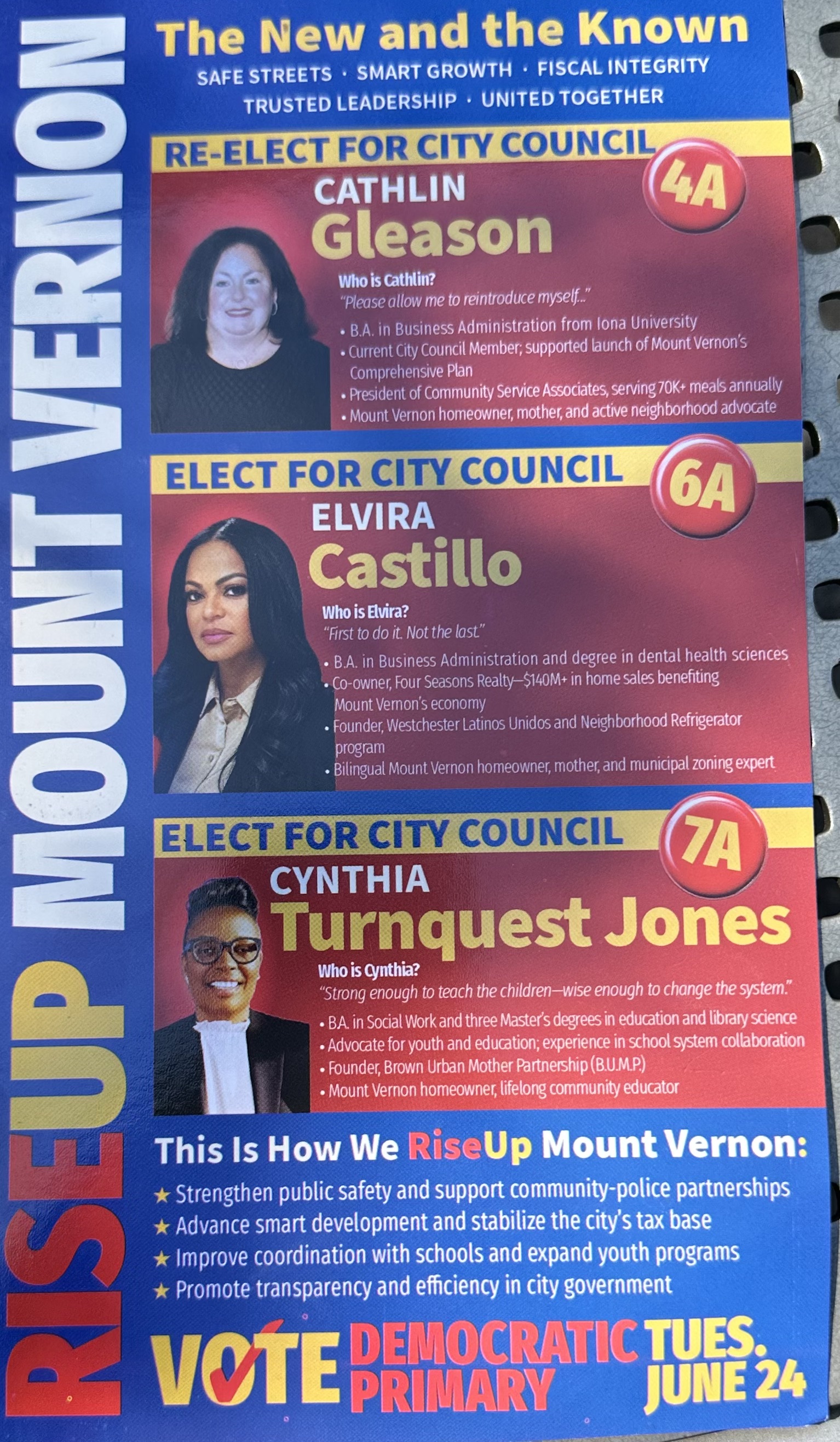
Recent developments have made this betrayal even more troubling. Candidates such as Danielle Browne (for City Judge), Cathlin Gleason (for City Council), and Darren Morton (for Comptroller) According to print material from Rise Up Mount Vernon, an entity that, according to reports, does not legally exist as a registered political committee with the New York State Board of Elections.
Darren Morton reach out to Black Westchester immediately and sent this statement:
I was made aware of this campaign literature has given the impression that I am part of a political ticket other than the one officially endorsed by the Mount Vernon City Democratic Committee. I want to be absolutely clear: I am not a part of any other ticket.
I am proudly running for Comptroller as a candidate endorsed by the Mount Vernon City Democratic Committee, which includes the following candidates: Caitlin Gleason – City Council, Andre Wallace – City Council, Teneisa Walters – City Council, Danielle Browne – City Judge.
I am committed to serving the people of Mount Vernon with transparency, accountability, and integrity. Any suggestion otherwise is misleading and does a disservice to the voters and the democratic process.
Thank you for your continued support and for being engaged in shaping the future of our city.
This raises serious legal and ethical concerns. Under New York Election Law, any organization that raises or spends funds to influence elections must register as a political committee and file financial disclosures. “Rise Up Mount Vernon” has not done so, yet it has been actively campaigning, endorsing candidates, and distributing political mailers—including during the recent school board elections. There have also been complaints circulating on social media that churches have conducted robocalls and sent out mass emails in support of specific candidates. This not only violates New York State Election Law but may also trigger violations under federal law, particularly if tax-exempt religious institutions are engaging in partisan political activity, which is prohibited under the IRS code for 501(c)(3) organizations.
Even more troubling is that the Mayor of Mount Vernon has appeared on campaign flyers endorsing school board candidates backed by Rise Up Mount Vernon—an unregistered political entity. This kind of visible alignment by an elected executive with an unregistered group further erodes public trust and signals normalization of behavior that disregards state and federal law.
These actions, if verified, represent a broader pattern of lawlessness and disregard for campaign finance transparency. They appear to violate Election Law §14-100 and §14-126, which require registration, reporting, and transparency from any political entity involved in electoral influence, and could also draw scrutiny from the IRS and the U.S. Department of Justice for potential abuse of nonprofit status or election interference. If Rise Up Mount Vernon is, a registered political committee or authorized campaign organization, then it should have no problem producing the paperwork to prove it. Let the public see the registration documents and the list of donors. Until then, voters and investigators have every reason to question the legitimacy and legality of its involvement, which requires registration, reporting, and transparency from any political entity involved in electoral influence.
If confirmed, these actions could subject the individuals involved—including both the organization and any candidates running under its banner—to civil penalties or even criminal liability. These violations can be reported not only to the New York State Board of Elections but also to the Westchester County District Attorney’s Office, which has the authority to investigate and prosecute election law infractions.
Moreover, the financial activity surrounding Rise Up Mount Vernon—whose sources of funding remain undisclosed and unregulated—amounts to the use of dark money. Political mailers and campaign support funded by an unregistered group with no transparent financial reporting violate the principles of fair elections. When voters cannot see who is paying to influence their choices, the entire democratic process is compromised. The presence of dark money not only erodes trust but gives unfair advantage to candidates who are willing to bypass the rules to gain power. This kind of covert funding undermines democratic transparency and should not be ignored. The flow of untraceable money influencing local elections should be thoroughly investigated by the Westchester County District Attorney or, if necessary, by the U.S. Department of Justice to determine whether campaign finance laws or broader anti-corruption statutes have been violated.
Candidates such as Danielle Browne, who is currently serving as a City Council member, in the opinion of many Mount Vernon residents, should never have received the endorsement for City Judge. That endorsement came at the expense of sitting Judge Peter Davis, a highly qualified legal professional with years of courtroom experience and a distinguished record as a former Westchester County Assistant District Attorney. Overlooking Judge Davis not only sidelined judicial experience and public trust but also raised serious concerns about how political favors are prioritized over qualifications in Mount Vernon’s endorsement process. What’s more, Danielle Browne’s decision to turn her back on the party endorsement by running on an additional slate or political ticket against a sitting judge with deeper experience than her own reflects not just political calculation, but a troubling lack of integrity and character. It reveals a willingness to undermine institutional stability and party unity in pursuit of personal ambition. That is not what Mount Vernon needs in a judge.
This is not the first time Councilwoman Cathlin Gleason has disregarded the will of the Democratic Party. The saying goes, “Fool me once, shame on you; fool me twice, shame on me.” What’s equally concerning is that the Mount Vernon City Committee Chair would allow this kind of behavior a second time, despite past betrayal. But ultimately, it speaks to the character and integrity of the candidate herself. When an individual repeatedly puts personal ambition over party unity and public trust, it’s no longer a strategic misstep—it’s a pattern of disrespect.
Beyond legality, this conduct reflects a deeper issue: a disregard for the process that Democratic voters participated in when they trusted their party to vet and endorse candidates. When those same candidates then appear on ballots under alternative, unregistered lines, it confuses voters, fractures the party base, and undermines the committee’s credibility. It also encourages factionalism and sets a dangerous precedent where future candidates may feel free to disregard the party structure altogether.
Running against the party is part of the democratic process—I support that wholeheartedly. However, I cannot support lobbying the Democratic Party for its endorsement, only to then align with a different political group once that endorsement is secured. That’s not strategy—that’s deception. It undermines the trust of party leadership, district leaders, and the very voters who expect transparency and consistency. If you’re going to run against the party, then run against the party. But don’t seek the party’s blessing only to betray it. That kind of duplicity reflects a troubling lack of character and forces voters to ask: where do you really stand, and who are you really loyal to?
It’s the integrity of the democratic process in Mount Vernon. Suppose we allow political opportunism to override structure and tolerate election law violations under the guise of strategy. In that case, we risk collapsing the institutions designed to bring order, unity, and transparency to local governance.
If party unity is to mean anything in Mount Vernon, then we must defend it—not only with words, but with standards. That begins with calling out actions that disrespect the party, its delegates, and the law.
The question now is: What is the Mount Vernon Democratic City Committee Chair going to do? The City Chair has several clear and urgent options. They can publicly revoke endorsements from candidates who have undermined the party by running on additional lines. They can initiate a full review of district leaders to ensure they live in the districts they represent. The Chair can also demand accountability from unregistered political fronts like Rise Up Mount Vernon by calling for public disclosure of “Dark Money” funding sources and legal registration documents. A letter should be immediately sent to the Westchester County District Attorney’s Office for apparent violations of Election Law §14-100 and §14-126. These actions would send a powerful message that the party takes integrity seriously.
If Rise Up Mount Vernon is engaging in political activities without proper registration and disclosure, and if churches are participating in political campaigns, these actions may constitute violations of federal laws. Such violations undermine the integrity of the electoral process and erode public trust. It is imperative for the appropriate authorities, including the FEC and the IRS, to investigate these matters to ensure compliance with federal laws and regulations.
If the Chair fails to act, then technically, there is no functioning party. A party without rules or consequences is not a party at all—it is a political brand ripe for hijacking. Anyone can create a name, run candidates, and tear apart what little structure remains. Without leadership and enforcement, the Democratic Party in Mount Vernon becomes nothing more than a hollow label—one that invites chaos and self-interest to replace unity and accountability.
Black Westchester reached out to Mount Vernon Democratic City Committee (MVDCC) Chair Mary Graves before publishing this editorial, and only one of the three candidates mentioned sent a statement. The MVDCC may be putting out its statement; if they do, we will share that with you as well.
Black Westchester will continue to follow this closely. If serious legal violations come to light and local authorities fail to take appropriate action, as Publisher of Black Westchester, I will consider informing Pam Bondi and the U.S. Attorney General to ensure accountability within the political and justice systems.
Full disclosure: an organization that the writer of this editorial is a part of publicly announced its support for Judge Peter Davis. However, this criticism is not political—it is ethical. It is rooted in the belief that integrity, transparency, and respect for process must matter more than personal connections or calculated endorsements.
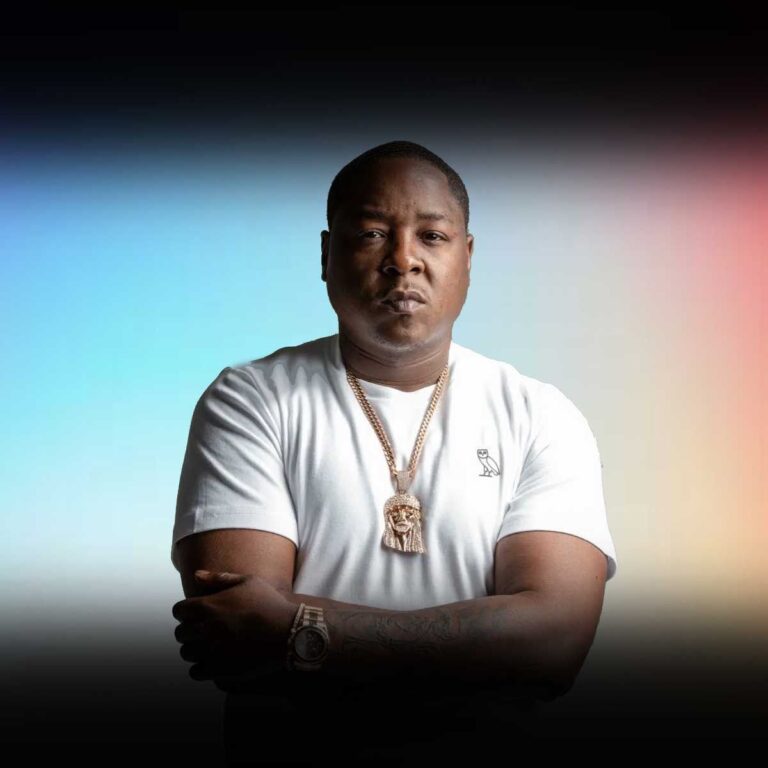
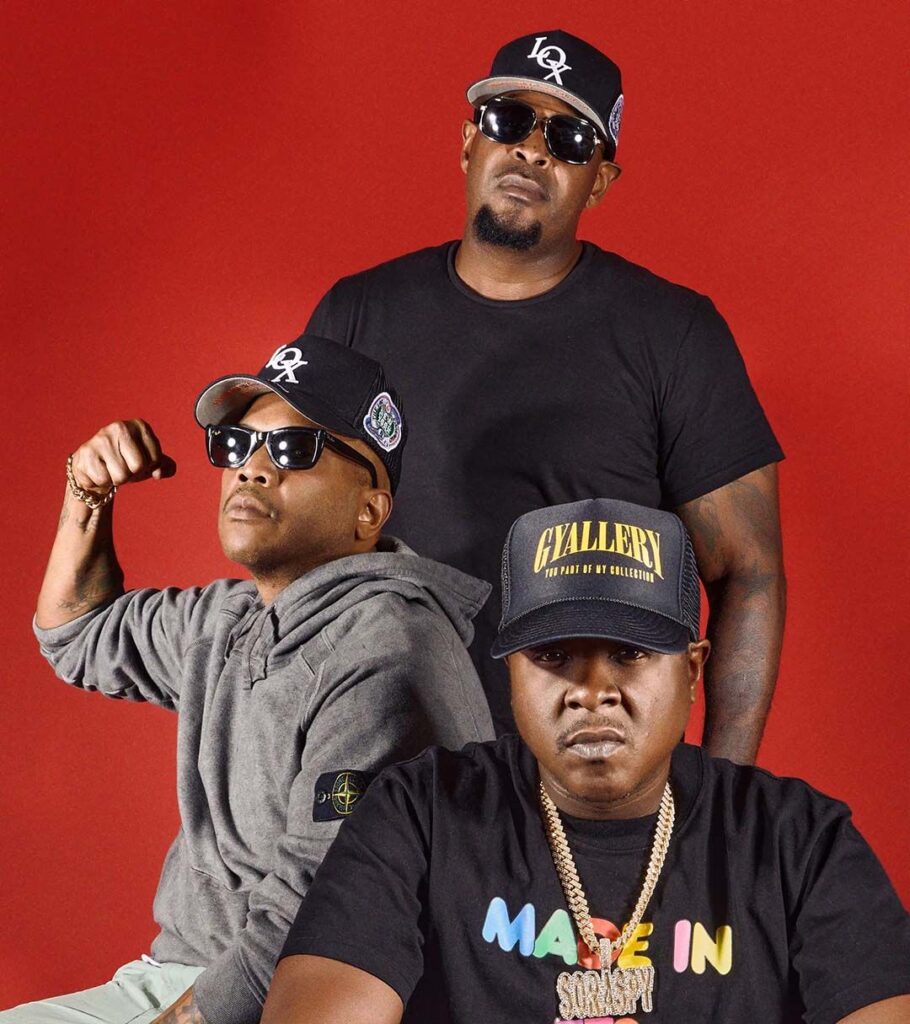
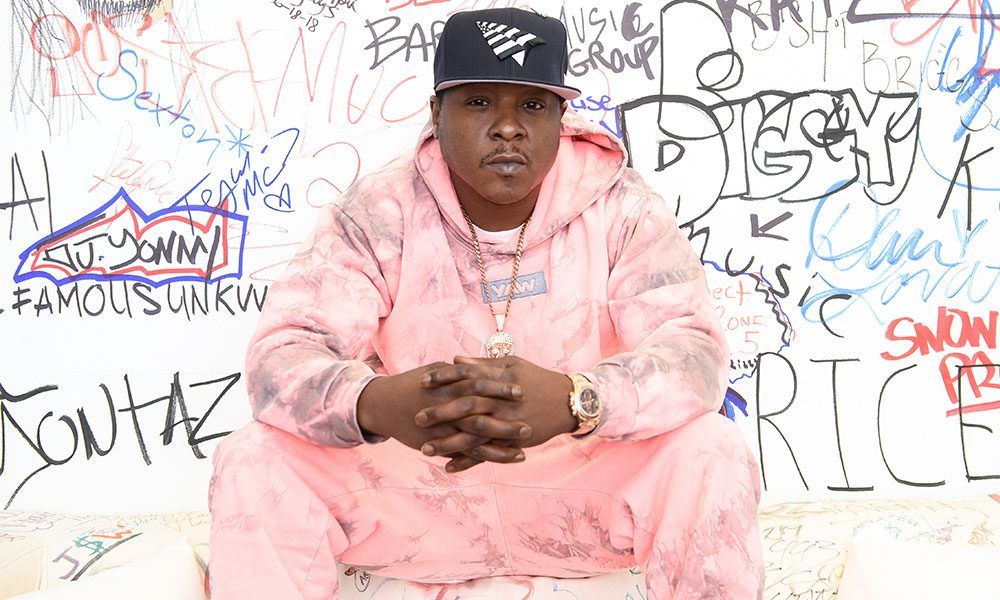
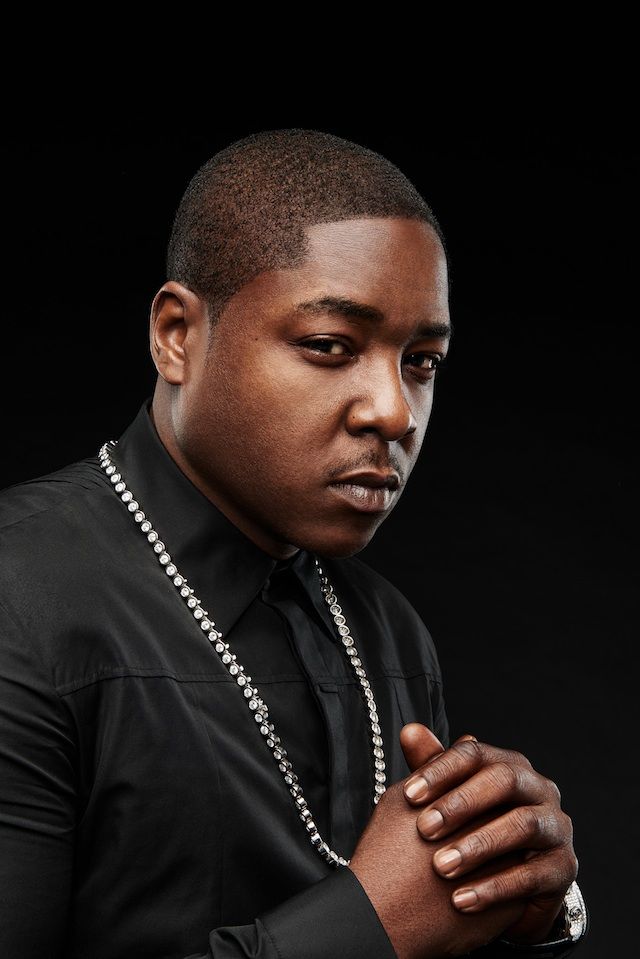
On his 50th birthday, May 27, 2025, Jason “Jadakiss” Phillips stands as a towering figure in hip-hop—a rapper with a razor-sharp lyrical edge, a cultural cornerstone for over three decades, and a community pillar whose impact extends well beyond the studio. From his humble beginnings in Yonkers to global acclaim, Jadakiss’s journey is one of resilience, evolution, and dedication—not only to his craft but to the people around him.
Jadakiss burst onto the scene in the early 1990s as a prodigious teenage talent, earning a name in freestyle circles before co-founding The Warlox with fellow Yonkers natives Styles P and Sheek Louch. The group eventually became The LOX. Jadakiss continued to be an undeniable force in the rap game, revered for his gritty authenticity, punchline mastery, and commanding delivery.
Across a career spanning more than 30 years, Jadakiss has amassed a formidable discography. His 1999 solo debut Kiss of Death cemented his reputation as one of hip-hop’s elite lyricists. In 2004, he released two fan-favorite tracks—“Still Feel Me” and the politically charged “Why,” which questioned social injustices and remains a powerful cultural touchstone. His motivational anthem “Can’t Stop Me,” released in 2009, and last year’s collaboration “Money” with Uncle Murda, further showcased his staying power in an ever-evolving industry.
Yet, Jadakiss’s legacy extends beyond music. Over the years, countless fans and friends have attested to the rapper’s quiet generosity. Whether offering financial support for birthdays, sponsoring creative endeavors, or simply showing up for those in need, he has built a reputation as a benefactor—one who remains deeply rooted in the same community that raised him. His humility and loyalty have become just as legendary as his bars.
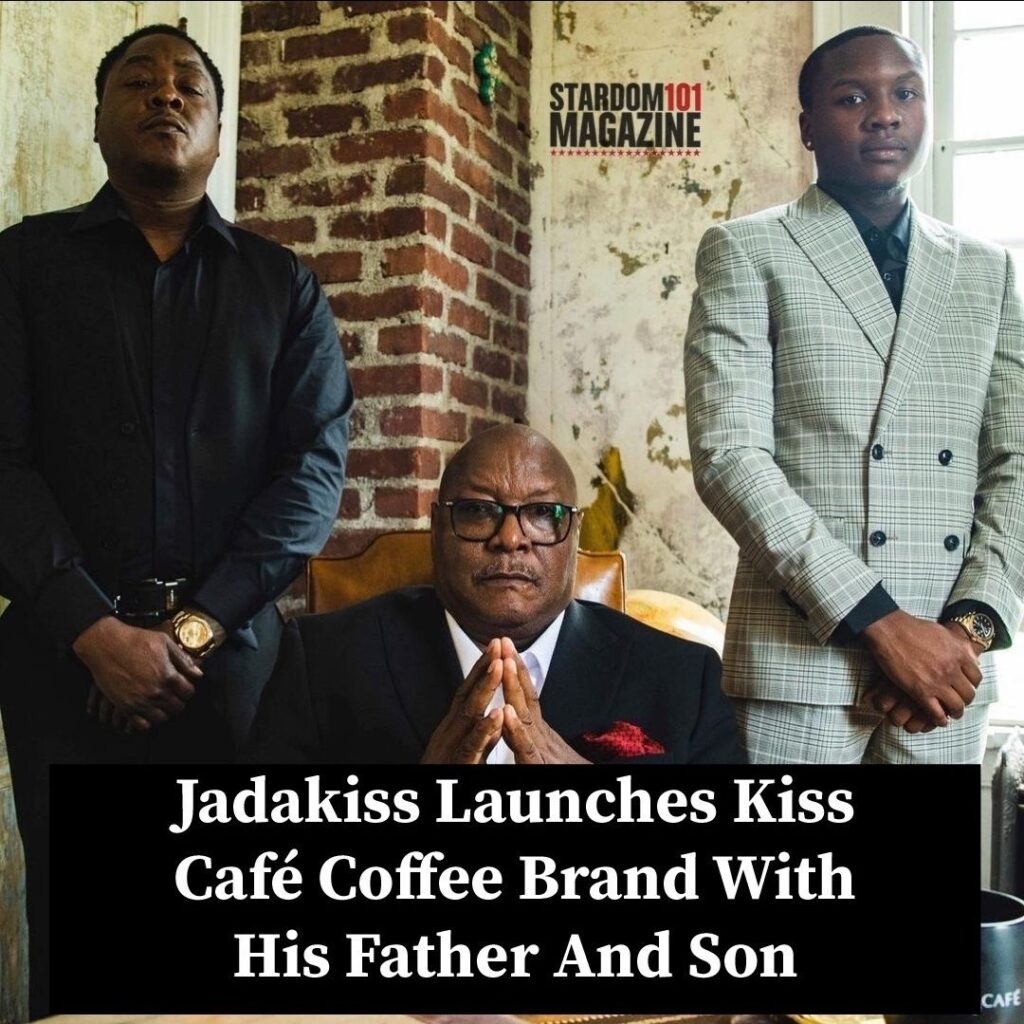
Outside of his music career, Jadakiss is thriving as an entrepreneur with several business ventures, such as Juices For Life, located at 211 Nepperhan Ave, with his partner-in-rhyme, Styles P. Recently, along with his father, Bob Phillips, and son Jaewon Phillips, he launched a coffee company called Kiss Café in 2022. The company is a family venture, built on Bob’s 40 years of experience in the coffee industry and Jaewon’s familiarity with roasting and distribution. The company’s mission is to connect with the growing community of coffee lovers by delivering the freshest and most flavorful blends of coffee-based products to the market.
Now, as he turns 50, Jadakiss is not merely being celebrated for his lyrical genius but for the values he represents: perseverance, loyalty, and a relentless commitment to both art and uplift. In a genre often preoccupied with flash and bravado, Jadakiss has remained a consistent voice of grit and truth.
This milestone is more than a birthday—it’s a tribute to a man who helped define an era, mentored a generation, and gave back without expecting fanfare.
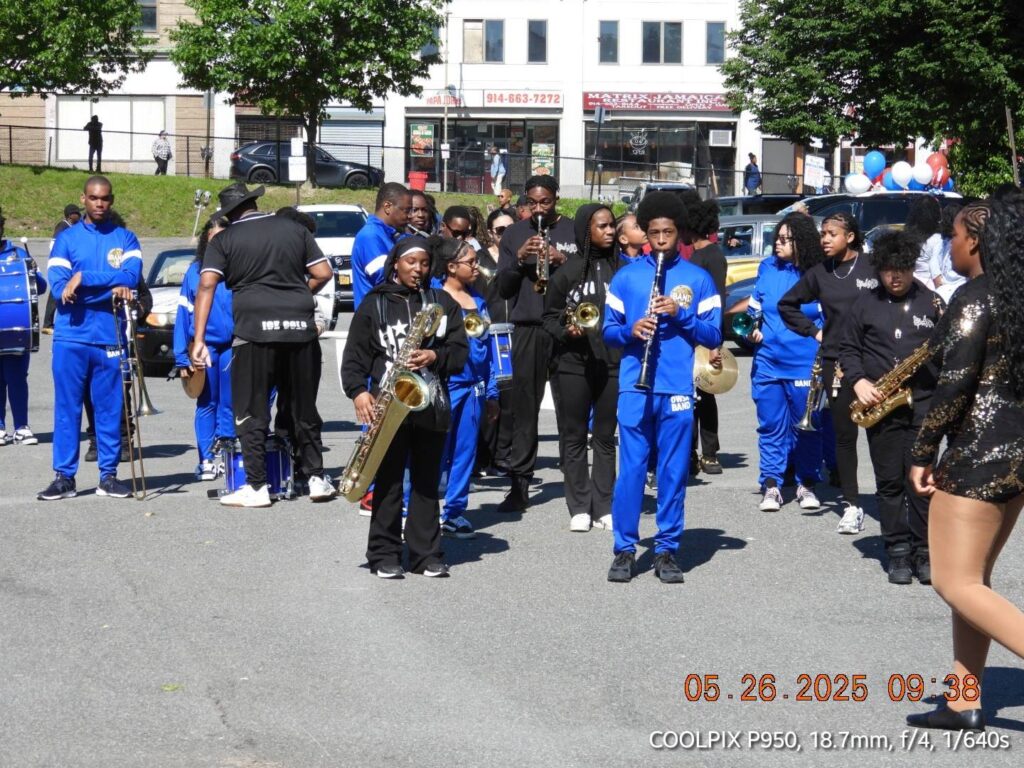
Photo above by Dennis Richmond, Jr., the Parking Lot of Foodtown of Mount Vernon Supermarket
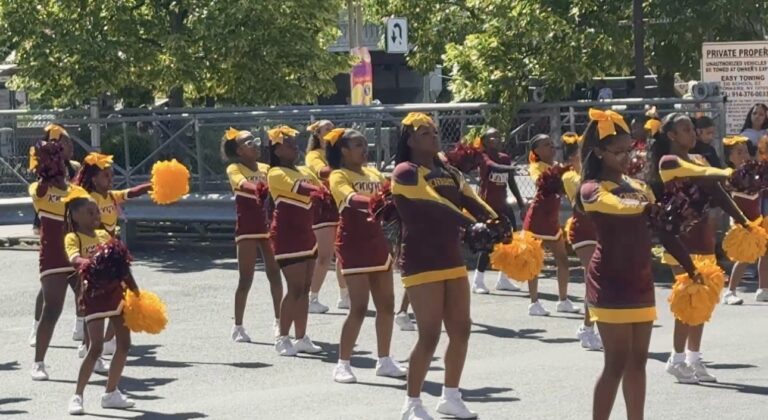
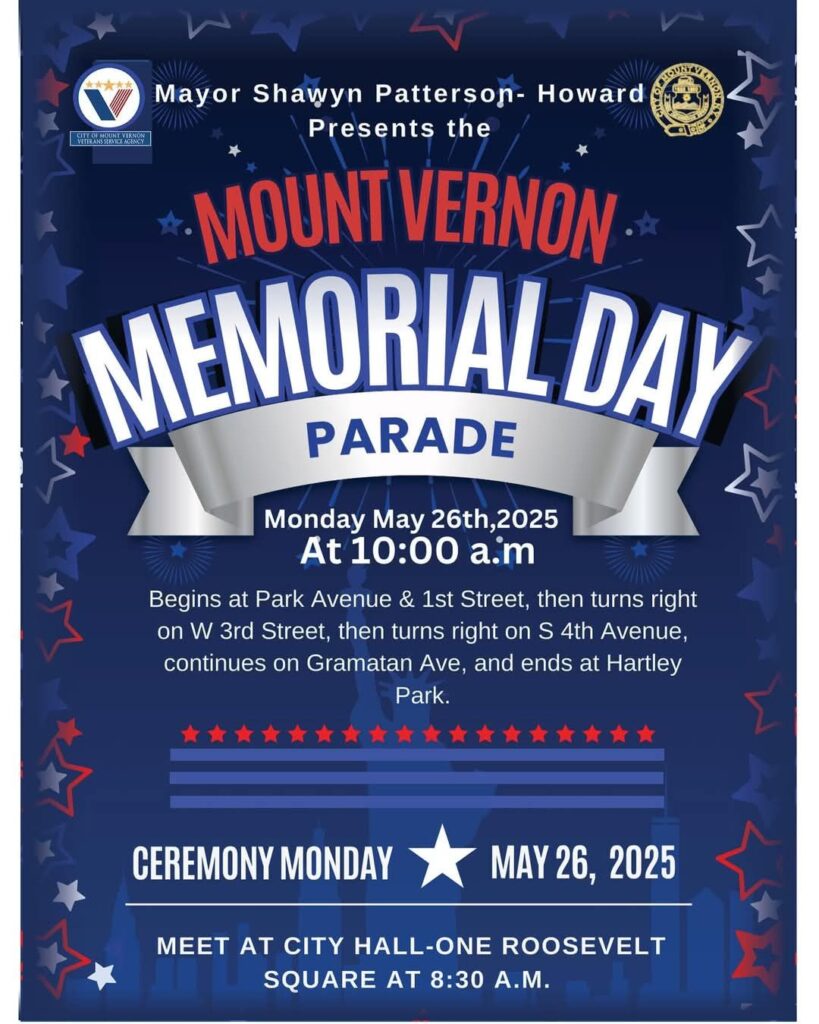
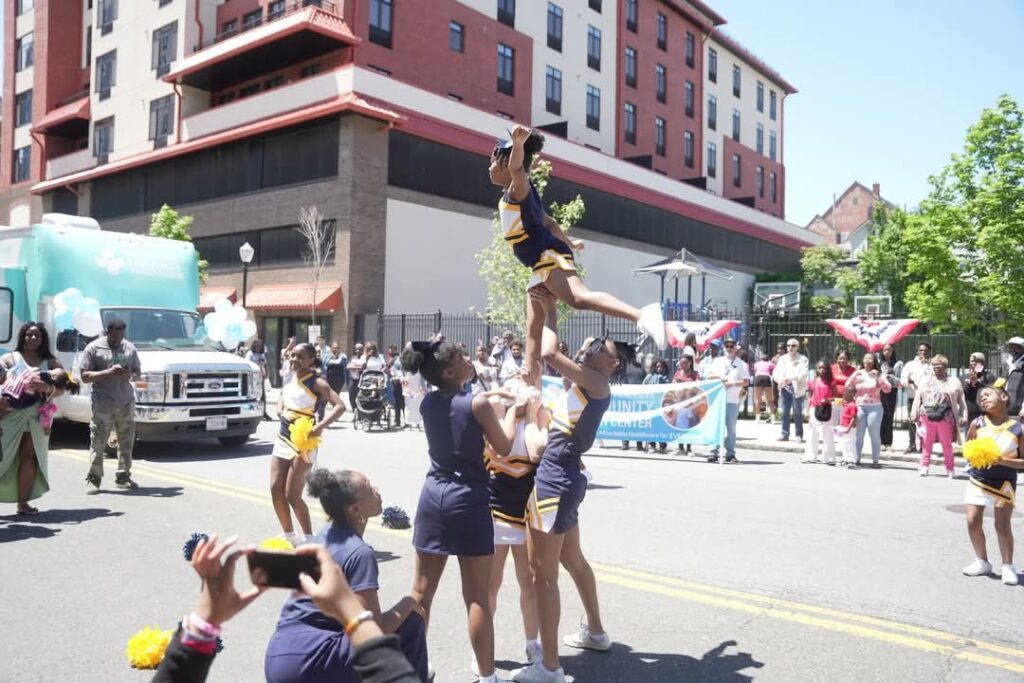
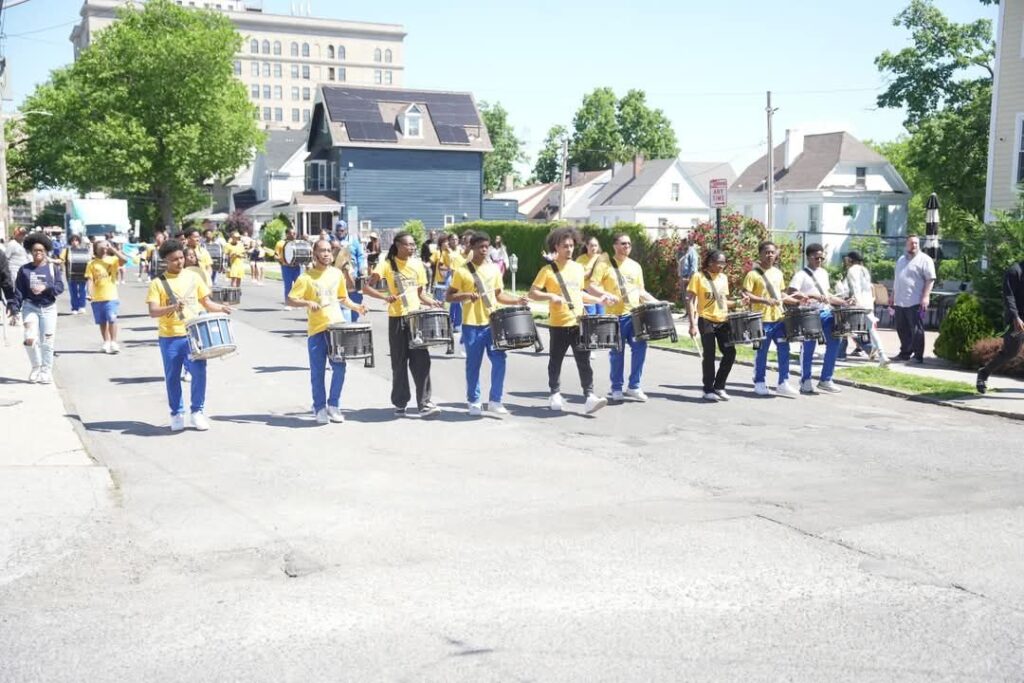
If you were anywhere near North 3rd Avenue, East Prospect Avenue, or even Hartley Park around 9:30 AM this Memorial Day, you likely felt the electric energy before you even saw it.
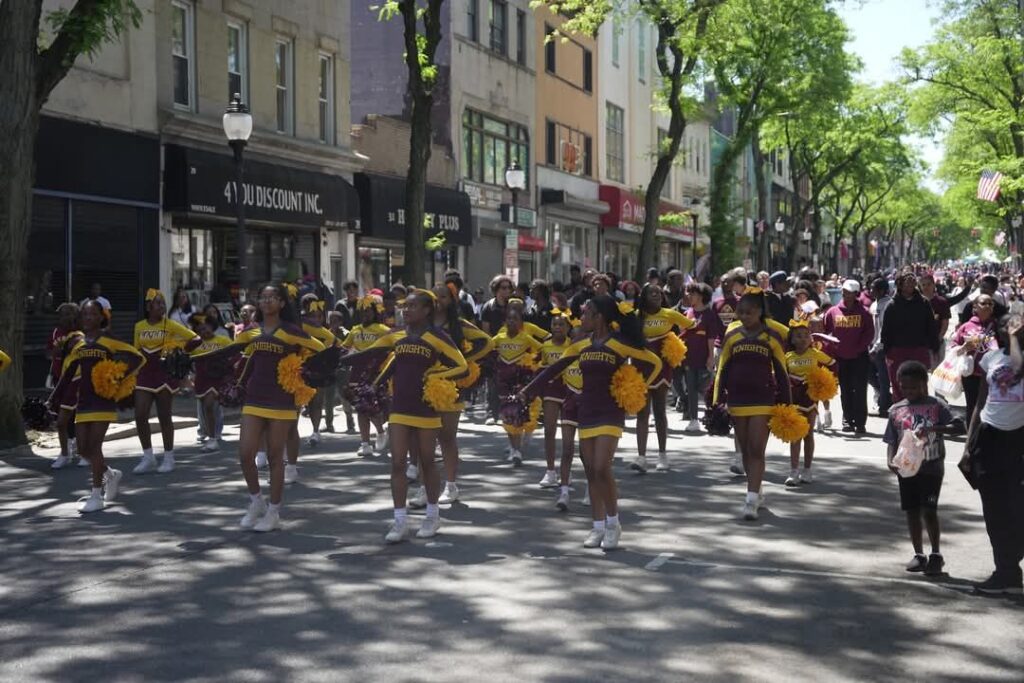
Drumbeats—bold, rhythmic, and full of purpose—echoed through the streets as young adults led a vibrant display of talent, unity, and pride. Under the spirited leadership of Coach Mekiyah Knox, cheerleaders from across multiple schools brought energy and enthusiasm, captivating everyone from early risers to casual passersby. The scene was electric: drums rolling, pom-poms flying, and cheers ringing through the heart of Mount Vernon.
A crowd gathered—caregivers, friends, teachers, and proud onlookers—all drawn in by the sheer spirit and joy these young performers radiated. It wasn’t just a performance; it was a statement. These young people weren’t just here, they were rewriting what community looks like.
“It’s something that’s positive and something that the community needs more of,” said Coach Knox.
In a time when the narrative around young people can often focus on challenges, today’s showcase was a powerful reminder of something greater: when given the stage, our youth don’t just perform—they inspire.
My Global History and Language Arts students approached me and spoke with me after they finished performing. The event was great.
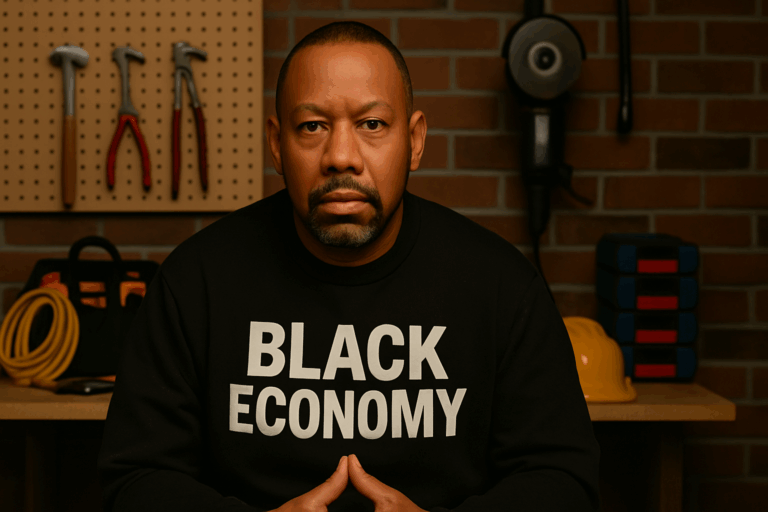
America is facing a labor crisis. Over 800,000 skilled trade jobs—such as electricians, plumbers, HVAC technicians, and construction workers—are currently open and unfilled. These aren’t minimum-wage positions. These are high-paying, high-demand careers that don’t require a college degree—just training, certification, and the willingness to work with your hands.
These are the same kinds of jobs that built the Black middle class.
And yet, we’re not in line to fill them.
Why? Because we gave up the tools—and with them, we gave up the wealth.
There was a time, not long ago, when Black Americans dominated the trades. We built our own homes, churches, and schools. We worked as mechanics, masons, carpenters, and electricians. These trades didn’t just provide income—they built independence. They gave Black families the means to own property, send their children to school, and escape the cycle of poverty.
But then we made a critical mistake. We forgot how the Black middle class was actually built.
Somewhere between the late 1970s and today, we embraced a dangerous message: that skilled labor was inferior. We told our children to aim higher—meaning college—without questioning whether college would offer them a return on that investment. It was Black professionals, educators, and political voices who pushed the narrative that “a degree is the only way out.”
What it led to was predictable: a generation saddled with student debt, holding degrees with no job prospects.
Liberal arts majors with no clear market value. Sociology graduates working in retail. Black youth who were pushed away from trades and into institutions that sold them dreams and handed them bills.
Meanwhile, schools stripped out vocational education. Auto shops were closed. Woodshops were replaced with computer labs. Welding, plumbing, and electrical training vanished from public school curriculums—especially in Black communities.
We didn’t just abandon the trades. We turned our backs on the very engines that built generational wealth.
Today, the U.S. Bureau of Labor Statistics projects the following annual job openings:
Electricians: 80,200
Plumbers: 43,300
HVAC Technicians: 42,500
Construction Workers: 663,500 That’s 829,500 jobs—many paying $60,000 to $100,000 annually, with no college degree required.
Yet we are nowhere near prepared to take advantage of this.
This isn’t just an economic oversight—it’s a strategic failure.
If you can’t build your community, you don’t own your community. If you can’t fix your own infrastructure, you stay dependent. And if your youth are trained for an economy that doesn’t exist, the result is generational stagnation.
We keep asking why we don’t own anything—but the answer is right in front of us: we stopped building.
Meanwhile, immigrant communities are quietly dominating these trades. They’re wiring houses, laying pipes, installing AC units, and walking away with both income and equity—while we stay focused on political symbolism and cultural gestures.
It’s time for a reset.
We must reintroduce trade training in schools. We must organize Black-led apprenticeships, cooperatives, and certification programs. And we must break the stigma that tells our youth that working with your hands is “less than.”
Because in truth, a skilled tradesman can do something many of our so-called “educated” can’t: produce something of value without waiting for permission.
The economy is not biased toward degrees—it is biased toward supply, demand, and competence. Right now, the demand is high. The pay is good. And the opportunity is real.
If we don’t respond to that, we won’t just be poor—we’ll be obsolete.
This is The Black Economy, and this is the bottom line: When we gave up the tools, we handed over the wealth. But it’s not too late to pick them back up.
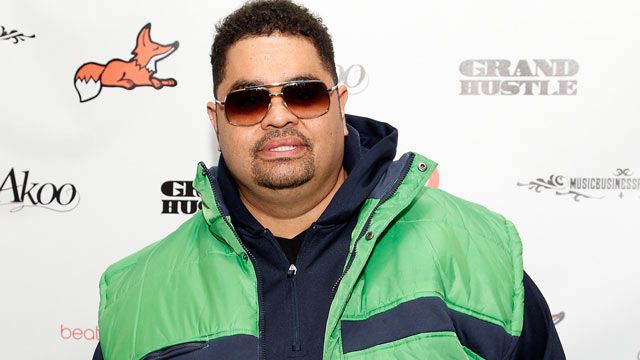
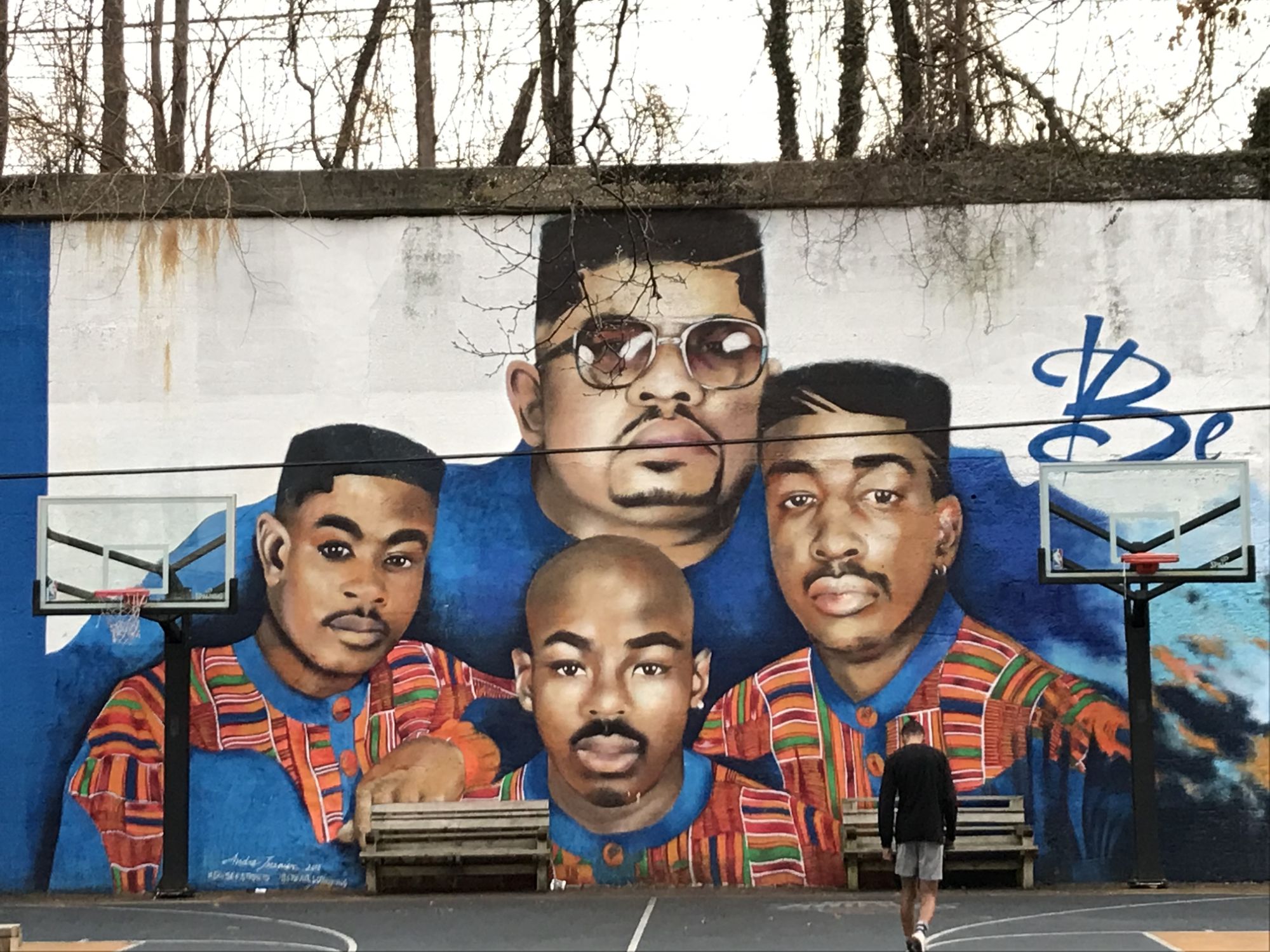
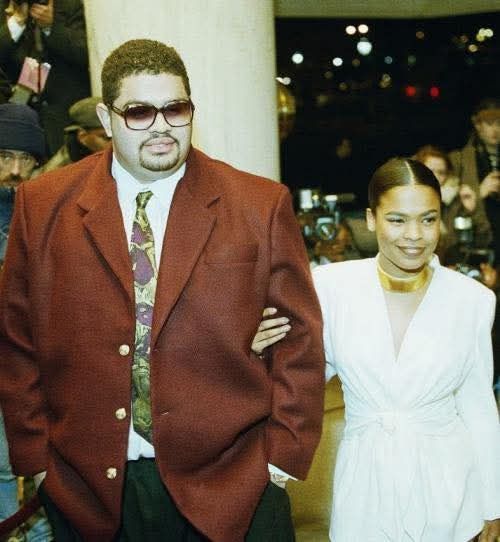
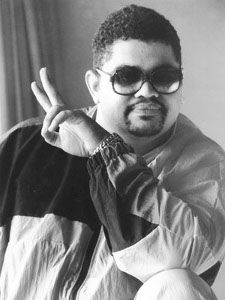
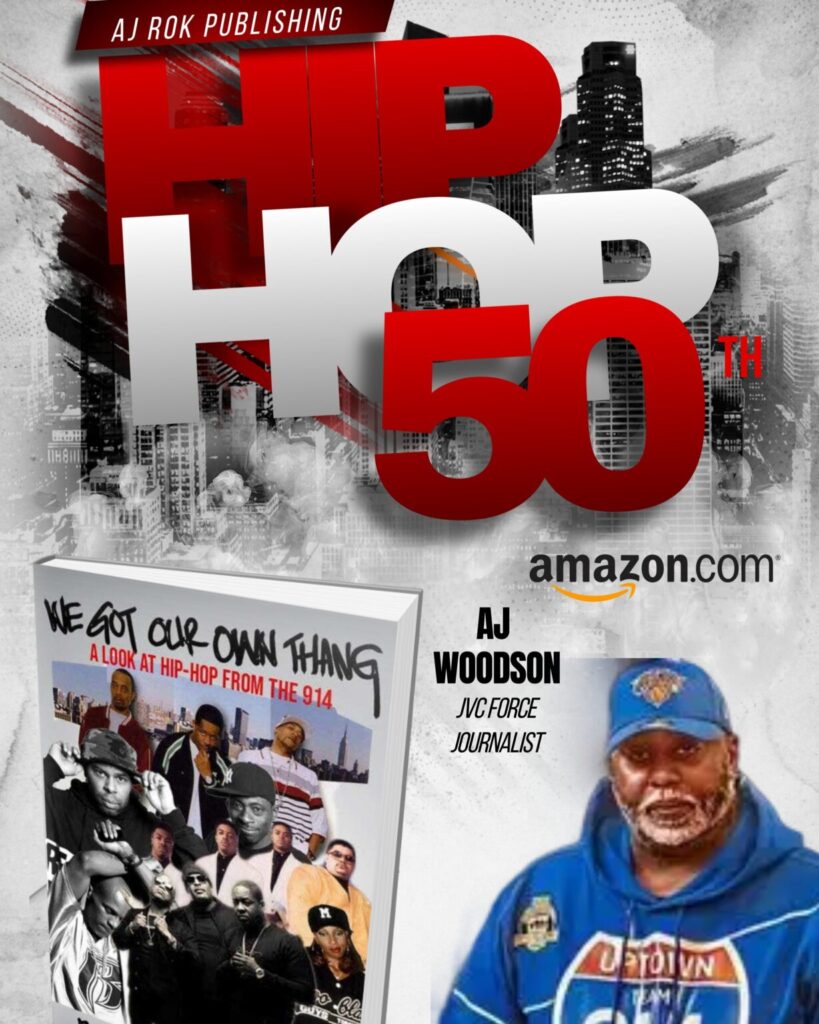
On Saturday, May 24th, Heavy D would have been 58 years old. In 1967 he was born in Mandeville, Jamaica. In the early 1970s his family moved to Mount Vernon where he was raised. So, in celebration of one of Mount Vernon’s favorite sons, I share this excerpt from my book, We Got Our Own Thang—A Look At Hip-Hop From The 914, aptly named after one of his songs.
You cannot discuss music from the 914 without including the Overweight Lover, Hip-Hop legend Heavy D. During the course of his 25-plus-year career, the larger-than-life entertainer was a superstar in every sense of the word. But even so, the brother doesn’t always get the props he deserves for how important he was to Hip-Hop and how many people he touched, inspired, and put on.
Pete Rock, easily one of the greatest Hip-Hop producers of all time, sparked a recent discussion surrounding the lack of recognition Heavy D has received as Hip-Hop celebrates its 50th birthday. He advocated for his older cousin and expressed his disappointment that Hev is left out of the conversation altogether in some of these Hip Hop 50 tributes.
“I respect absolutely NONE of this talk about 50 years of Hip-Hop that does not include HEAVY D and the Boyz,” the Chocolate Boy Wunda wrote in an IG post.
“He KICKED DOWN the door and paved a way for A LOT OF MOTHERF****RS!! I think his smoothness and humbleness make people forget his impact and relevance in the music business. I NEED EVERYONE WHO AGREES (ESPECIALLY EVERYBODY FOR MONEY EARNING MOUNT VERNON!!) TO REPOST AND SHARE SO WE CAN GET HEV A PROPER TELEVISED TRIBUTE for his achievements and contributions to the game,” he added.
“After Pete sent that out, everybody started including stuff, music, or language on their social media platforms to include Hev,” Floyd Myers, Heavy D’s older brother, shared with me. “Even pictures with the collages, Hev wasn’t in there.”
Artists and fans chimed in and agreed with Pete. Snoop Dogg immediately agreed in the comments, writing, “Facts. Big. Tyme.” Queen Latifah chimed in, “Heav was my friend. Put us on his tour and showed us what rocking a crowd was About!!! Love to him his family and his Whole Crew!!!!”“Bruh Heavy D was huge in joining Reggae & Hip-Hop together. It’s sad how humans quickly forget,” another fan wrote. Marlon Wayans added, “I concur,” while actor Omari Hardwick wrote, “1000%. As special as they come! Who happened to be a dear bro of mine like yourself? And who btw….was 1 of the few Hip-Hop artists who could equally bring that gift to screen. A very strong actor.” “I also agree with you my brother … that folk (especially in our culture) who make things look easy while equally possessing humility….usually get overlooked & undervalued. Heav was special & I know he’s smiling with pride & humility at this powerful post from you Rock!” he added.
Platinum-selling Jamaican legend Super Cat also reposted Rock’s post.
“Mi friend and #icon the late great Heavy D #theoverweightloversinthehouse,” he captioned the post. The post has received support from a throng of artists and actors who knew or worked with Heavy D or those influenced by his music, including Rohan Marley, Lloyd Banks, and many others.
Like I started, there is no way to do a book about music from the 914 without celebrating the Overweight Lover.
“Hev was the beginning of the middle school, he wasn’t old school, he’s not the new school, but he was the beginning of the middle school,” Floyd shared.
As the first group on Andre Harrell’s Uptown Records, Hev helped kick off a new brand of Hip-Hop Soul that would become known as New Jack Swing.
Before the success of acts like Guy, Mary J. Blige, and Jodeci, it was Heavy D & The Boyz that were the cornerstone of Uptown Records. In fact, rapper-turned-Record Executive Andre Harrell departed from Def Jam and launched Uptown largely off the potential of Heavy D. Hev was instrumental in the structure of the Uptown roster including getting Al B Sure a deal and getting Andre Harrel to hire fellow Mount Vernonite, Sean ‘Puff Daddy’ Combs as an intern and you know where that led. Diddy went on to create Bad Boy Records and Sean John.
Hev touched so many people with his cool spirit and influenced a lot of rappers like Fat Joe. When DJ Felli Fel asked Joe when he was in Los Angeles during an interview, about Joe’s influences, he responded, “My two idols are KRS One, Boogie Down Productions and LL Cool J” But Felli Fel said what I meant was, and Joe cut in “influence me to make big hits, LL Cool J and Heavy D. So Heavy D made me feel good to be a big man and dress fly and make that kinda music for the ladies…”
Legendary emcee Kool Moe Dee who rapped alongside Heavy D and several other NY rappers in ‘Self Destruction,’ talked about how when every rapper were very competitive talking about “I’m the biggest, I’m the baddest, I’m the greatest, Heavy D just wanted to have fun,” on Astrid In The ATL on Peachtree TV. “His position was I’m just here to enjoy and for you to enjoy, so his whole approach to the equation to me changed the direction of a lot of what Hip-Hop was going through.”
Director Bart Phillips paid tribute the life and legacy of Heavy D with a documentary in 2012 after he passed called, “The Life Of Heavy D – Be Inspired,” featuring stories and artists like Will Smith, Queen Latifah, MC Lyte, Mary J. Blige, Chuck D, Marley Marl, Al B. Sure, Doug E. Fresh, actress Kim Fields and his older brother Floyd and others who all paint pictures with words of how important and influential Heavy D was to the music industry as a well-respected artist, friend and businessman.
“I don’t know too many people who have touched so many people’s lives in such a consistent way for so long. Hev had a heart this big, and it was always love whenever you saw him. It was like a big hug, and you felt the love in the hug. Hev was just lovable like that…” Queen Latifah says in the documentary that she interviewed with some of Heavy’s closest friends. I believe you can still catch the documentary on Amazon Prime, I caught it on YouTube as I was writing this chapter.
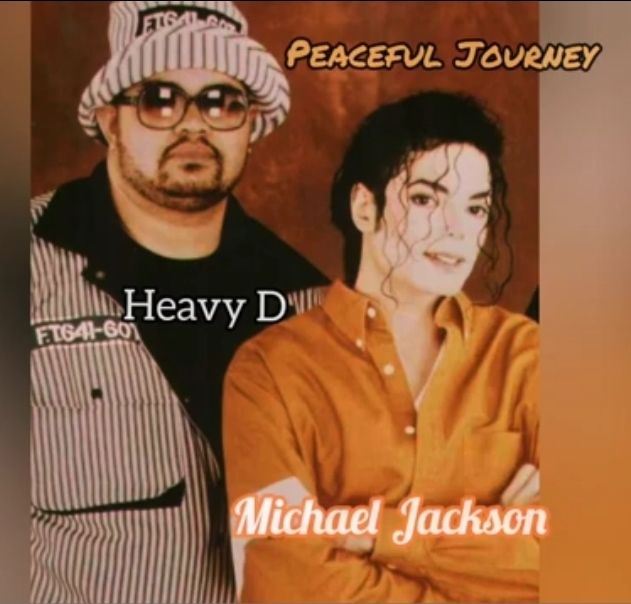
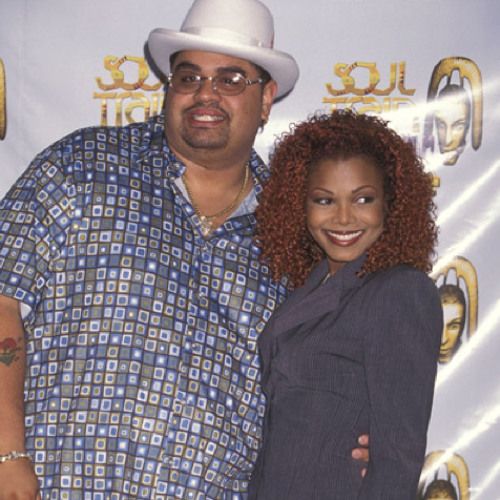
Heavy D is the only rapper (and possibly the only artist, period, whose last name is Jackson) to have worked with both of the Jackson superstars. He worked with Michael Jackson – The King of Pop (Jam) and his sister Janet – Ms. Jackson is ya nasty (Alright) – arguably two of the most influential entertainers of the modern era.
He traded verses with both Biggie and Tupac over a bubbly sample of Barry White’s ‘You’re The One I Need,’ on Grand Puba’s “Let’s Get It On,” and went on to perform the theme song for the Keenen Ivory Wayans created sketch comedy television series, In Living Color. And yo, who else could have Kool G Rap on a song called “Don’t Curse” also featuring some of the dopest wordsmiths at the time, Grand Puba, CL Smooth, Big Daddy Kane, Pete Rock, and Q-Tip!
In the mid-90s, he became the President of Uptown Records. Then he caught the acting bug and went to collect countless credits for his contributions in both television and film.
Get up, party people, listen to this rap ‘Cause I’m about to go down and put my town on the map MC Heavy D, delighted you’ll be learnin About the place where I rest, Money earnin’ Mount Vernon
The year was 1985 when Heavy D walked into Rush Management without an appointment in hopes of walking out with a record deal. Russell Simmons wasn’t interested, but he caught the attention of Andre Harrell. Shortly after Harrell left Def Jam, he launched his own label, and his first order of business was to sign Heavy D. Hev put both Mount Vernon and Uptown Records on the map.
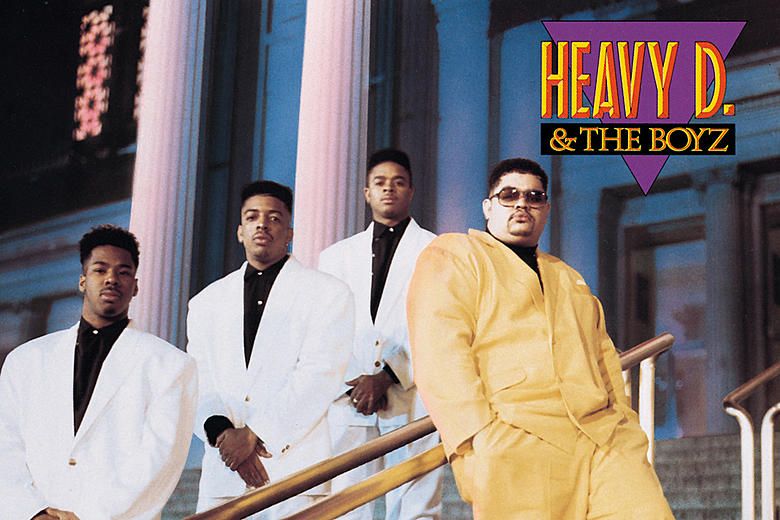
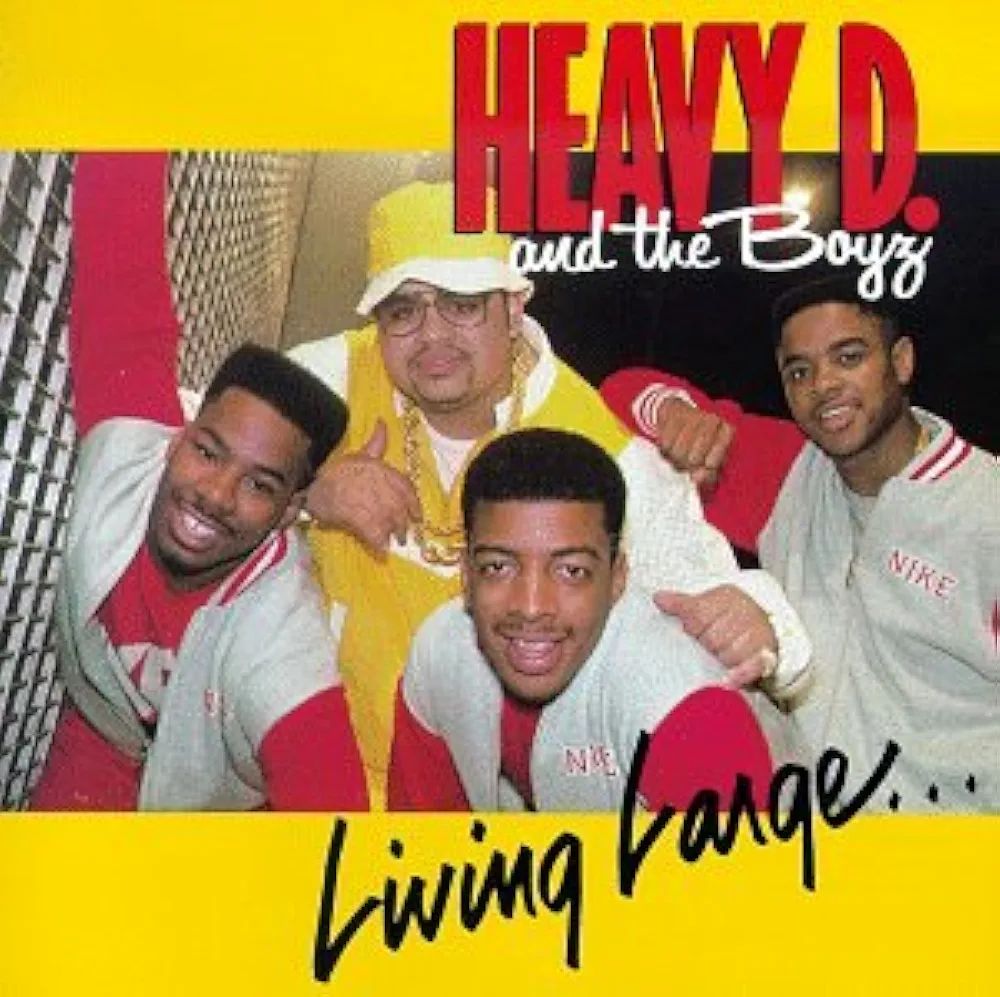
Heavy D & the Boyz were the first group signed to Uptown Records, with Heavy D as the frontman and only rapper. Eddie F was his business partner in the group, a DJ, and one of the producers. The other two members, T-Roy and G-Wiz, were the dancers.
Their debut, ‘Living Large,’ was released in 1987. The album was a commercial success; his sophomore endeavor, ‘Big Tyme’, was a breakthrough that included four hits. “Trouble T. Roy” died at age 22 in a fall on July 15, 1990, in Indianapolis. Dixon’s death led to a tribute on the follow-up platinum album, ‘Peaceful Journey.’ Pete Rock & CL Smooth created a tribute to Trouble T. Roy called “They Reminisce Over You (T.R.O.Y.)” which is regarded as a Hip-Hop classic by everyone’s standards.
They reminisce, the reminisce… I reminisce for a spell, or shall I say think back…
I reminisce so you never forget this The days of way-back, so many bear witness the fitness
Take the first letter out of each word in this joint Listen close as I prove my point T to the R the O-Y,
Despite being devastated by the loss of his best friend, Hev got back out there and rocked the crowd and saw the tour through to the end, as many people told me and as I saw in numerous documentaries and interviews. Even though it would be understandable if he bowed out for the rest of the remainder of the tour or even for a few shows, he continued to take the stage night after night and gave it his all because that’s how he was. He felt he owed it to the fans; he had committed to the shows and was going to fulfill his commitment. He was the type of person who, after suffering a personal loss, would still give his all to the audience. Hev completed the tour when many others would have given up or merely have just gone through the motions, and he gave the fans everything he had. That’s Heavy D!
Heavy D may be gone, but his hometown will never let him be forgotten and will be forever grateful for how he represented Money-Earning Mount Vernon, no matter where in the world he was.
On Saturday, May 22, 2016, hundreds gathered at the newly renamed Heavy D & The Boys Park (formerly known as Lorraine Park) to celebrate the life and legacy of Mount Vernon’s favorite son, Dwight “Heavy D” Myers.
A month later, the Mount Vernon Public Library hosted a very special reception in honor of the Dwight Arrington Myers Hip-Hop Collection housed at the library on Thursday, June 30th.
In honor of Hip-Hop legend and Mount Vernon native, Jamaican-born record producer, singer, actor, Heavy D, the Mount Vernon Public Library has acquired a collection of books, music CDs, DVD’s and multimedia materials that share the history of Hip-Hop and its global influence.
“I got my SAG card, baby. I’m an actor” – Common (Break My Heart)
It seems like Hip-Hop is a gateway to onscreen fame. Judging by the prolific number of rap artists who have also dabbled in film and TV acting, it seems today’s biggest hip-hop artists are truly multihyphenates. Artists from the 9-1-4 are no different. Several Westchester artists, like Hev showed they can do more than just appear on soundtracks accompanying movies and simply provide music for background sound on television as they make appearances on both the big and small screen as actors.
His musical background actually was his ticket into the TV industry. By way of producing the opening theme for the 1990s-’94 TV series In Living Color. To be more specific, comedian Tommy Davidson says that Heavy D “had the brilliance to come up with the line that summed up our historic show on its opening night.” ‘What’s mine is yours, what’s yours is mine.’”
He always had acting aspirations of his own. Heavy D’s career in television began in the mid-1990s, with guest appearances on episodes including Tales from the Crypt and Living Single, when he played Darryl, a friend of Kim Fields’ character Regine. His most notable role was appearing with Tobey Maguire and Michael Caine in the Oscar-nominated movie, The Cider House Rules in 1999. In a cast that also included Erykah Badu, he played Peaches. After that, he had a steady acting career, appearing in films and television shows including Tower Heist, in which he portrayed a security guard, and Law & Order: SVU, among others.
He also made his off-Broadway theatrical debut in 1996, starring in the one-act play Riff Raff (written and directed by Laurence Fishburne), which earned him a Drama Desk Award nomination for Outstanding Featured Actor In A Play.
His TV credits include, A Different World (1989), The Fresh Prince of bel Air (1990), Booker and tales From The Crypt in 1992, a recurring role on Roc (1993), a recurring role on Living Single (1994-1996), Waynehead (1996), Martial Law (1999), For The Love (2000), a recurring role on Boston Public (2000-2003), The Tracy Morgan Show (2003-2004), Yes Dear (2005), a recurring role on Season 1 of Bones (2005), Are We There Yet (2011) and Law & Order: Special Victims Unit (2011).
He also appeared in movies such as Who’s The Man (1993), New Jersey Drive (1995), B*A*P*S (1997), The Deli (1997), Life (1999), The Cider House Rules (1999), a short called Next Afternoon in 2000, Big Trouble (2002), Black Listed (2003), Dallas 362 (2003), Larceny (2004), Step Up (2006), Tower Heist (2011), H4 (2012).
Everyone who ever met him has Nuthin But Luv for Heavy D, and he will always be Mount Vernon’s favorite son!
Above are a few excerpts of my book ‘We Got Our Own Thang—A Look At Hip-Hop From The 914.’ Cop a copy or two today on Amazon for $30.00, or you can order an autographed copy directly from me Via Venmo @AJ-Woodson-2 or PayPal, or CashApp $MrAJWoodson, add $5 for postage and make sure you email me your mailing address, MrAJWoodson@gmail.com.
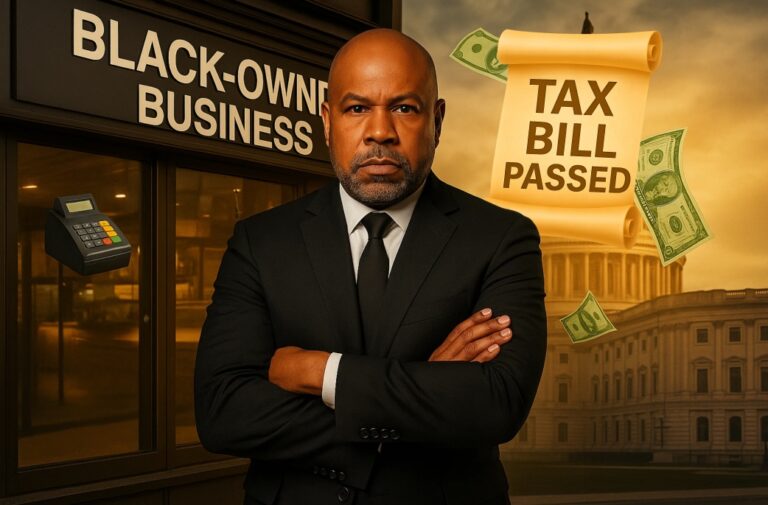
While social media argues over who wrote the bill and which party “won,” Black business owners need to hear something different: this bill is not just a headline. It’s a signal. And if you’re caught up in the noise, you’re going to miss the opportunity.
The One Big Beautiful Bill Act is already being spun as a gift to the rich and a curse to the poor. But the truth lies in the fine print — and buried within are tools Black entrepreneurs can use, if we stop reacting emotionally and start planning strategically.
Let’s be clear: this bill wasn’t crafted with Black communities in mind. It slashes food programs, imposes stricter work requirements, and chips away at public support systems many Black families rely on. But while the front door is closing on dependency, a back door is opening for builders — especially those in business, skilled trades, and cooperative investment. This isn’t about what’s fair. This is about what’s real.
Here’s what’s actually in the bill that matters for Black business owners:
First, the bill eliminates federal income tax on overtime and tips. That means many working-class Americans will immediately see more take-home pay. For Black-owned businesses that employ hourly or tipped workers — in restaurants, transportation, retail, or healthcare — this improves worker morale and retention without raising payroll costs.
Second, the bill expands deductions for equipment, vehicles, technology, and startup costs. If you’re in construction, deliveries, landscaping, media, beauty, or trades, this means you can deduct more up front instead of over several years. That’s cash flow relief, and it gives you room to grow, reinvest, or pay down debt faster.
Third, the bill revives and enhances Opportunity Zones — giving investors significant tax breaks for developing in low-income areas. But these zones aren’t automatic benefits. They favor the prepared. If we don’t organize to buy land, develop properties, and invest collectively, this program will once again be used to gentrify our neighborhoods instead of rebuild them.
Fourth, there’s a lesser-known provision that allows tax deductions for sound recording and production. That includes music, podcasting, studio development, and digital content. This directly benefits Black creatives — artists, producers, influencers, educators — who treat their work as a legitimate business and invest in infrastructure.
Fifth, the bill expands Health Savings Accounts. For self-employed individuals and small business owners, this means you can contribute more tax-free money to cover medical costs. It’s especially useful for entrepreneurs who lack traditional health insurance and need flexible, tax-advantaged care options.
Sixth, there are new tax benefits tied to trades and small manufacturing. If you’re in skilled labor, apparel production, food preparation, or small-scale logistics, this bill lowers the tax burden and encourages reinvestment in local production — which is exactly the kind of economy Black America needs to rebuild.
And finally, the bill allows businesses to deduct more for employee education and job training. If you’re a business owner hiring young workers, or if you’re planning to upskill your team, you can now do so with more tax advantages — and that creates a direct incentive to grow our workforce from within our own community.
This article does not ignore the political debate over cuts to Medicaid and Medicare — those concerns are real and deserve scrutiny. But while that fight continues, we must deal with another truth: if Black businesses grew from the current 2 percent of all employer firms to even 9 or 10 percent, we could transform the condition of Black communities overnight.
We could create jobs for our own people. We could fund our own healthcare. We could build retirement plans from within our own enterprises. We could shift from surviving off the system to sustaining our own.
This isn’t about Democrats or Republicans. It’s about seeing that Washington is moving from welfare to workfare — from dependence to production. And while others are stuck in the noise, Black business owners must focus on position. Because this bill doesn’t care about our outrage — it rewards our readiness.
Yes, the cuts are real. But so are the openings. The question is: will we waste time arguing about who passed the bill, or will we use the parts that help us build?
Pharaoh isn’t feeding us anymore. But if you’ve read the Scriptures, then you know — that’s always when God told His people to move.
Now is that moment.
Start the LLC. Get the trade license. Train your youth. Invest with your community. Buy the block back.
Not because they gave us power. But because we were never meant to ask for it in the first place.
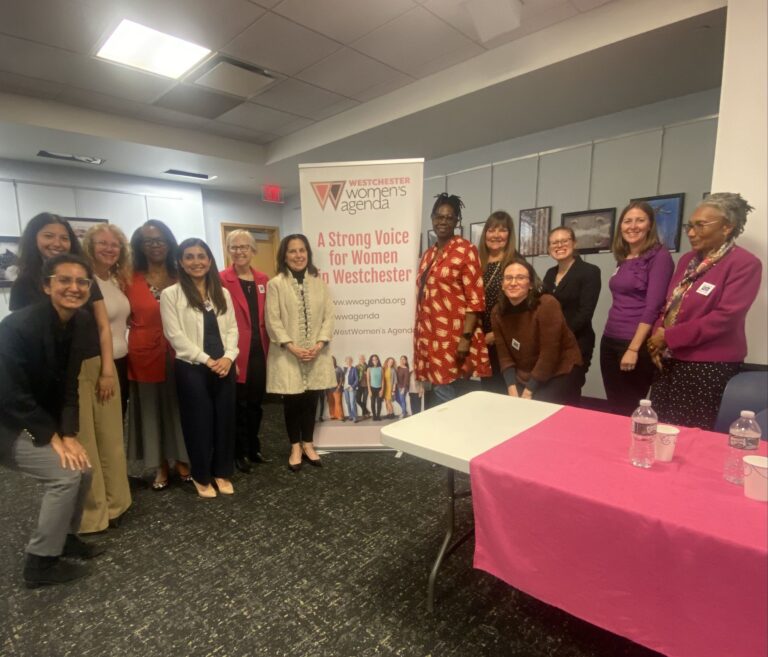
On a Thursday evening at the Greenburgh Public Library, a portal opened—because the Westchester Women’s Agenda didn’t just host an event. They created a space for spiritual strategy.
The theme?
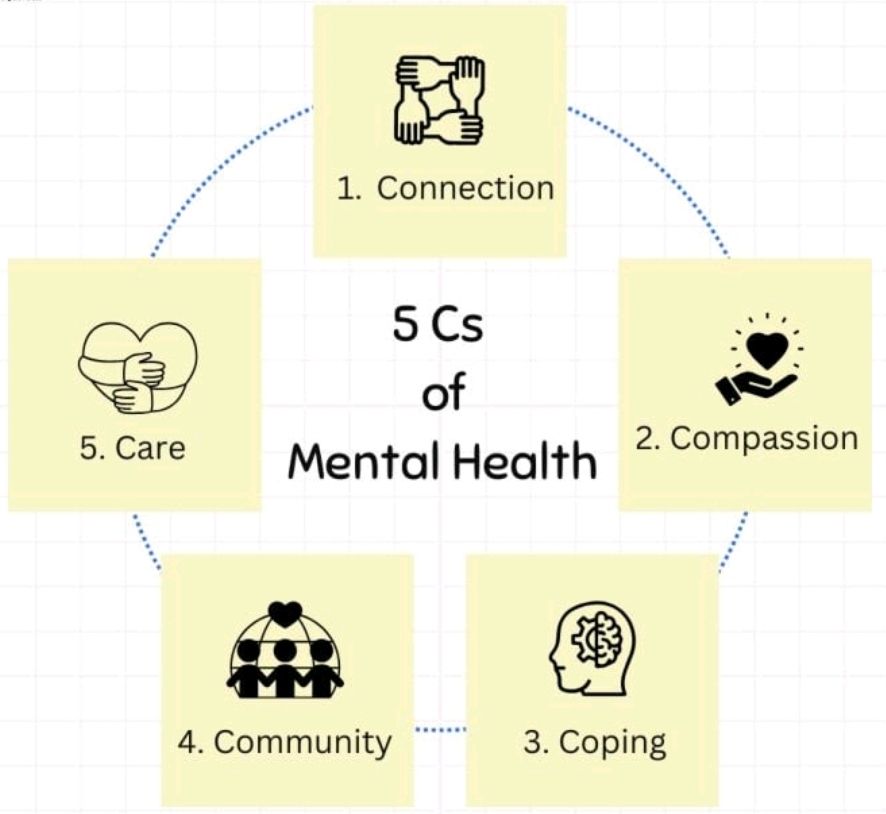
Coping. Compassion. Connection. Community. Care.
But those weren’t bullet points.
They were invocations.
They were mirror words—the kind that don’t just inform, but undress you in the best way.
They pulled the real you into the light and asked: Are you caring for her?
Coping – Kacing Morabito-Grean
She didn’t enter the room. She anchored it.
Kacing didn’t tell us how to cope—she showed us what it feels like to be safe enough to feel.
She brought us home to our bodies with her tone, her breath, her grounded presence.
She reminded us that true coping doesn’t always look strong. Sometimes it looks like softness.
And soft is sacred.
Compassion – Kym McNair
Kym came through like a priestess with a poetic tongue.
She didn’t teach compassion—she embodied it.
She took us through a timeline of Black girlhood, womanhood, and motherhood…
All the selves we’ve carried, all the selves we’ve hidden.
She gave us permission to go back and gather what trauma told us to forget.
Her voice wasn’t loud—but it echoed.
Connection – Kathleen O’Connor
Kathleen brought up the reminder that space is medicine.
That connection isn’t just about proximity—it’s about access.
Access to quiet. To green. To stillness.
In a world that won’t stop moving, she gave us a way to stand still and still feel held.
Community – Katie Pfeifer
Katie? She gave us fire in the form of structure.
She reminded us that community is built—it doesn’t just exist.
And that showing up for others is a kind of healing practice.
She turned “helping” into belonging.
Care – Dr. Leah Susser
Dr. Susser walked in with the receipts.
She made space for complexity—reproductive health, psychiatry, gendered pain—all of it.
She’s not just treating patients. She’s building systems of care that are precise, personal, and powerfully overdue.
Then came the soul witnesses:
Georgie D’Avanzo—a truth teller who didn’t perform healing. She offered it.
Her story was raw, and in that rawness, she handed us something rare: unfiltered hope.
Marie Considine, MPA, repped NAMI Westchester with grounded clarity—reminding us that without advocacy and infrastructure, healing is a luxury. She’s making it right.
And holding it all with grace and precision?
Dr. Sabina Bera—whose moderation was more like alchemy.
She pulled the gold out of every speaker with care, not control.
Her questions weren’t prompts—they were doorways.
Here’s the truth: This was more than a panel.
It was a collective remembering.
It was unlearning burnout as a badge.
It was learning to be witnessed in your whole humanity.
The room felt like church, therapy, revolution, and exhale—all at once.
So let me say this for those who keep asking where the healing is happening:
It’s happening right here.
In libraries turned sanctuaries.
In rooms where Black and brown women are trusted with the mic—and the moment.
In circles where silence is sacred, and stories are currency.
And if you missed it?
I say this with love:
Don’t miss the next one.
Because this kind of healing? This kind of clarity?
Mayor Spano Appoints Former City Councilwoman & Community Leader, Lorraine Lopez, To Yonkers Board Of Education
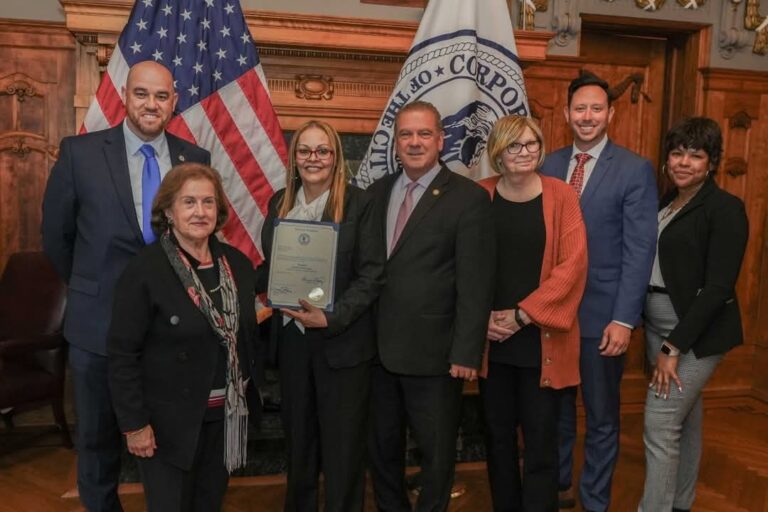
Mayor Mike Spano today swore in former Yonkers City Councilmember and community leader Lorraine Lopez to the Yonkers Board of Education. As trustee of the Yonkers Board of Education, Lopez is part of a nine-member Board, which is the official policy-making body of the School District.
“As we continue to provide our students with the best education possible, I am proud to appoint Lorraine to the Board of Education as she brings a dynamic and diversified connection to the Yonkers community,” said Mayor Spano. “As a former Councilmember and active community member, her experience and leadership will be valuable assets to our District and our students.”
Elected the first female Hispanic Councilmember in 1999, Lopez has served as a longtime Yonkers community advocate. For nearly ten years, Lopez served as the Special Assistant to the Mayor with Constituent Services, where she assisted constituents with various education, housing, quality of life, and social services assistance. Lopez has volunteered with numerous Yonkers non-profits, benefitting Yonkers students, families, and minorities, including the YMCA, Yonkers Alliance of Latino & Immigrant Services, D.A.R.E. Inc., and the Habitat for Humanity Family Selection Committee. Currently, Lopez is a board member for the Hudson Valley Legal Services Executive Committee and the Justice Center for the Hudson Valley.
“I am deeply honored that Mayor Mike Spano has appointed me to serve as a Yonkers Board of Education Trustee,” said Lorraine Lopez. “I commit to amplifying diverse student voices, fostering educational environments for both students and staff, and ensuring every child has equitable opportunities to thrive. Our students’ successes are for the betterment of our community’s future.”
Board of Education President Dr. Rosalba Corrado Del Vecchio noted, “On behalf of the Board of Education, I warmly welcome Lorraine Lopez to our governance team. Her extensive background in public service and community advocacy will strengthen our shared mission of delivering the highest quality education for every child in Yonkers. We look forward to the insight and leadership she will bring to our work.”
Superintendent of Yonkers Public Schools Aníbal Soler, Jr., commented, “Lorraine Lopez brings a wealth of public service experience and an unwavering commitment to our Yonkers community. As a former City Councilmember, longtime advocate, and grandparent of a Yonkers Public Schools student, she offers a unique and deeply personal perspective. Her voice will be invaluable as we work together to implement our District’s strategic plan, which is grounded in empowerment, advancement, and excellence.”
Lorraine Lopez replaces Trustee Kevin Cacace, fulfilling the remainder of his term expiring in May 2029.
Mayor Spano added, “I want to extend my deepest gratitude to Kevin Cacace for his dedicated years of service to the Board of Education, who served our City and our students with loyalty, professionalism, and distinction.”
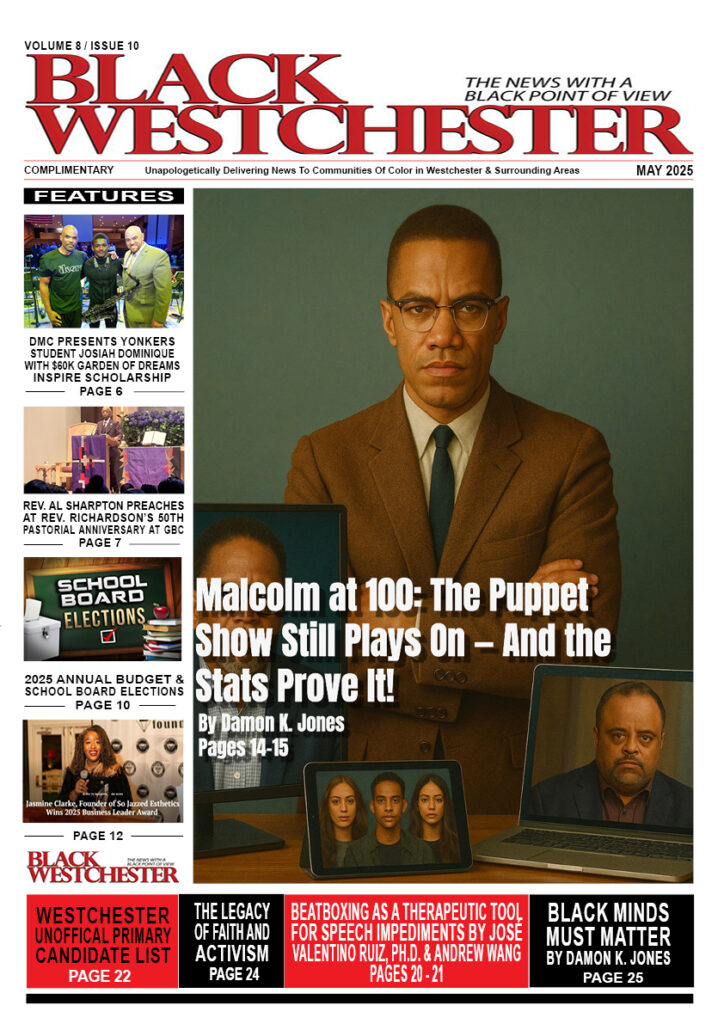
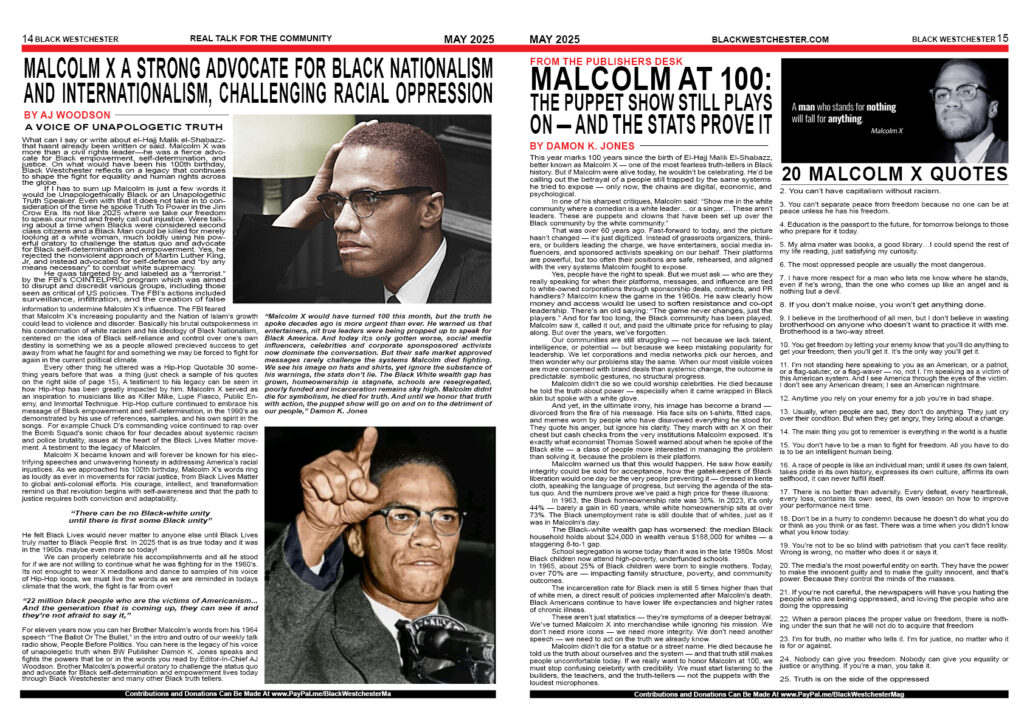
This year marks 100 years since the birth of El-Hajj Malik El-Shabazz, better known as Malcolm X — one of the most fearless truth-tellers in Black history. But if Malcolm were alive today, he wouldn’t be celebrating. He’d be calling out the betrayal of a people still trapped by the same systems he tried to expose — only now, the chains are digital, economic, and psychological.
In one of his sharpest critiques, Malcolm said: “Show me in the white community where a comedian is a white leader… or a singer… These aren’t leaders. These are puppets and clowns that have been set up over the Black community by the white community.”
That was over 60 years ago.
Fast-forward to today, and the picture hasn’t changed — it’s just digitized. Instead of grassroots organizers, thinkers, or builders leading the charge, we have entertainers, social media influencers, and sponsored activists speaking on our behalf. Their platforms are powerful, but too often their positions are safe, rehearsed, and aligned with the very systems Malcolm fought to expose.
Yes, people have the right to speak. But we must ask — who are they really speaking for when their platforms, messages, and influence are tied to white-owned corporations through sponsorship deals, contracts, and PR handlers? Malcolm knew the game in the 1960s. He saw clearly how money and access would be used to soften resistance and co-opt leadership. There’s an old saying: “The game never changes, just the players.” And for far too long, the Black community has been played. Malcolm saw it, called it out, and paid the ultimate price for refusing to play along. But over the years, we’ve forgotten.
Our communities are still struggling — not because we lack talent, intelligence, or potential — but because we keep mistaking popularity for leadership. We let corporations and media networks pick our heroes, and then wonder why our problems stay the same. When our most visible voices are more concerned with brand deals than systemic change, the outcome is predictable: symbolic gestures, no structural progress.
Malcolm didn’t die so we could worship celebrities. He died because he told the truth about power — especially when it came wrapped in Black skin but spoke with a white glove.
And yet, in the ultimate irony, his image has become a brand — divorced from the fire of his message. His face sits on t-shirts, fitted caps, and memes worn by people who have disavowed everything he stood for. They quote his anger, but ignore his clarity. They march with an X on their chest but cash checks from the very institutions Malcolm exposed. It’s exactly what economist Thomas Sowell warned about when he spoke of the Black elite — a class of people more interested in managing the problem than solving it, because the problem is their platform.
Malcolm warned us that this would happen. He saw how easily integrity could be sold for acceptance, how the gatekeepers of Black liberation would one day be the very people preventing it — dressed in kente cloth, speaking the language of progress, but serving the agenda of the status quo.
And the numbers prove we’ve paid a high price for these illusions:
In 1963, the Black homeownership rate was 38%. In 2023, it’s only 44% — barely a gain in 60 years, while white homeownership sits at over 73%.
The Black unemployment rate is still double that of whites, just as it was in Malcolm’s day.
The Black-white wealth gap has worsened: the median Black household holds about $24,000 in wealth versus $188,000 for whites — a staggering 8-to-1 gap.
School segregation is worse today than it was in the late 1980s. Most Black children now attend high-poverty, underfunded schools.
In 1965, about 25% of Black children were born to single mothers. Today, over 70% are — impacting family structure, poverty, and community outcomes.
The incarceration rate for Black men is still 5 times higher than that of white men, a direct result of policies implemented after Malcolm’s death.
Black Americans continue to have lower life expectancies and higher rates of chronic illness.
These aren’t just statistics — they’re symptoms of a deeper betrayal. We’ve turned Malcolm X into merchandise while ignoring his mission. We don’t need more icons — we need more integrity. We don’t need another speech — we need to act on the truth we already know.
Malcolm didn’t die for a statue or a street name. He died because he told us the truth about ourselves and the system — and that truth still makes people uncomfortable today. If we really want to honor Malcolm at 100, we must stop confusing celebrity with credibility. We must start listening to the builders, the teachers, and the truth-tellers — not the puppets with the loudest microphones.