Home Blog Page 57

Purpose Will Cost You Friends — And That’s OK

In a culture obsessed with popularity, we rarely talk about what it costs to truly walk in your purpose.

Not your passion — your purpose. Because while passion feeds the ego, purpose feeds the soul. And when you finally answer that higher calling, don’t be surprised when the phone stops ringing, the group chats go silent, and the invitations stop coming.

That’s not betrayal. That’s alignment.

Too many people confuse growth with arrogance. They think just because you’re no longer available for dysfunction, you think you’re better. But the truth is, purpose demands a level of clarity and peace that drama can’t survive in. When you finally decide to live intentionally — to pray more, plan more, heal, and build — the atmosphere shifts. And people either rise with you… or fall off.

Both are necessary.

We have to stop mourning relationships that were never built to go the distance. The painful reality is this: everyone who started with you won’t finish with you. That doesn’t make them enemies. It just means they weren’t equipped for the next level of your life. Elevation will expose who was attached to the version of you that needed validation, not vision.

Even Jesus had to walk alone. In the Garden of Gethsemane, when the pressure was at its highest, the people closest to Him fell asleep. That wasn’t coincidence — it was confirmation. Purpose is never a group project.

We don’t talk enough about the loneliness that comes with becoming. Social media tells you to “cut people off,” but rarely does it explain the emotional toll of walking alone. The truth is: healing is messy. Growth is isolating. And purpose will always demand separation before elevation.

But don’t let the silence fool you. You’re not being punished — you’re being positioned.

If you’re in a season where your circle is shrinking, and you’re questioning why it feels like you’re losing everyone around you — consider this: maybe God is making room. Maybe He’s clearing the noise so you can hear His voice. Maybe the people you’re crying over are the very people who would’ve talked you out of your destiny.

Purpose requires obedience, not popularity. And sometimes, choosing the call on your life means losing the crowd around your life.

But that’s OK.

Because what’s ahead of you — clarity, impact, peace, legacy — will always be worth more than what’s behind you.

Support the Mission — Feed Your Mind, Fuel the Movement

Books by Damon K. Jones

Looking to go deeper on your journey of healing, purpose, and power?

Support the 28-Day Health & Wellness Challenge by purchasing transformational books by Damon K. Jones—a respected wellness coach, spiritual advisor, and community leader. His works empower Black families through health, faith, masculine leadership, and cultural restoration.

Each book is written with one mission in mind: To help you reclaim your power—mind, body, and spirit.


🔥 Featured Titles:

📖 The 28-Day Health & Wellness Challenge
Your official companion guide—daily routines, holistic practices, and practical strategies for real-life transformation.

📖 God Is In Your Vegetables
A spiritual and nutritional call to return to God’s design for food, healing, and sacred living.

📖 Jesus and Divine Black Masculinity
A groundbreaking guide on how Black men can reclaim spiritual leadership and divine purpose modeled by Christ.

📖 The Health Mindset: 6 Pillars of Health and Wellness
Master the six key foundations of lifelong wellness—from mental clarity to physical vitality.

📖 The Book of Black Love
A cultural and spiritual journey into restoring love, trust, family, and sacred connection in the Black community.

📖 The 53 Building Blocks to Divine Masculinity
A bold and practical guide for men committed to leading, protecting, and building with strength and integrity.

📖 The Empowering Benefits of Detoxing, Cleansing, and Eating Clean
Learn how detoxing and clean eating are more than a trend—they are tools of liberation, mental clarity, and divine health.

📖 The Black Tax Pivot: How to Survive and Thrive Under the Trump Tax Cuts
Understand the new economic terrain and how to reposition your family with financial strategy and sovereignty.


💡 Why It Matters:

Every book purchase helps fund:

✔️ Free health and wellness programming
✔️ Culturally grounded community education
✔️ The fight for health equity and Black media independence


🛒 Read. Transform. Support the Mission.

👇🏾 
Click here to shop the full library of books by Damon K. Jones

The Real Election Interference Wasn’t from Russia — It Was from Washington

For nearly a decade, Americans were told that Russia stole the 2016 election. The media said it. Intelligence officials signed off on it. And for four years, that narrative served as the foundation to delegitimize a sitting president. But with the release of the House Intelligence Committee’s newly declassified July 2025 report, the question isn’t whether Russia interfered. It’s who really interfered in our democracy—and why.

The report confirms that there was no verified intelligence showing Vladimir Putin preferred Donald Trump. The so-called “evidence” was manufactured inference, not fact. And yet it was used to trigger surveillance, public mistrust, and the most politically motivated investigation in modern history.

President Trump has now accused Barack Obama of “treason,” charging that the entire Russia probe was a calculated effort to derail his presidency before it began. Hillary Clinton, whose campaign helped fund the Steele dossier, has also been tied to what Trump calls “clear proof” of a coordinated effort to deceive the American public. Tulsi Gabbard, now serving as Director of National Intelligence, has echoed these concerns. In a recent White House briefing, she referred Obama to the Department of Justice for what she called “overwhelming evidence” of a fabricated intelligence narrative designed to delegitimize Trump.

Obama’s office has dismissed these claims as “ridiculous distractions.” But what’s not disputed—even by bipartisan bodies like the 2020 Senate Intelligence Committee—is that the Russia story was never about altering votes. It was about shaping perception. The influence campaign was real. But the collusion narrative? That came from inside our own government.

Gabbard’s declassified 44-page report provides more than just a rehashing of the past. It offers documentation that top intelligence officials—John Brennan, James Clapper, James Comey—helped shape an assessment that Russia favored Trump, despite no verified evidence supporting that conclusion. The narrative wasn’t born from intelligence—it was born from political inference dressed up as classified insight.

The report also reveals that Russia claimed to have compromising information on Hillary Clinton. U.S. intelligence picked up chatter suggesting Russian officials believed she was medically unfit to serve and allegedly reliant on tranquilizers. Whether true or not, this information wasn’t used in public discourse, weaponized by foreign actors, or inserted into official assessments.

Why not?

Because Hillary Clinton didn’t win.

If Russian intelligence had truly wanted to interfere, releasing that information could have been explosive. But when the final ballots were counted and she wasn’t the incoming president, the incentive to expose her vanished. In strategic terms, there’s no point in burning political ammunition on someone who holds no power. Her loss made the alleged kompromat irrelevant.

And that’s what makes the double standard so revealing.

While unverifiable claims about Trump were pushed to the public and cited in federal surveillance requests, potentially credible concerns about Clinton were buried. Intelligence wasn’t judged by its reliability—it was judged by its usefulness. They didn’t suppress Clinton’s vulnerabilities because they didn’t exist. They suppressed them because they no longer served the narrative.

The report also references a now-infamous email that former National Security Advisor Susan Rice sent to herself on Inauguration Day—documenting a White House meeting where President Obama instructed officials to handle the Russia investigation “by the book.” Critics view this not as routine recordkeeping but as a strategic memo to legally insulate the administration from what was, in effect, a politically driven operation. Rice was also among those who requested the unmasking of Trump transition officials, further underscoring how national security tools were deployed with political precision.

Meanwhile, the Department of Justice has received referrals for potential criminal wrongdoing by former Obama-era officials. Whether those referrals lead to prosecutions or are dismissed as political retaliation is secondary to the point: the machinery of government was used to interfere in an election, and the people responsible walked away with book deals and cable news contracts.

This wasn’t about protecting democracy. It was about controlling it.

The intelligence community was never supposed to operate as a partisan tool. But what the report reveals is a systemic abuse of power, justified under the guise of national security. If that power can be turned on a president, it can be turned on any citizen.

What matters now isn’t whether Trump was treated unfairly. What matters is whether we still live in a constitutional republic or an administrative state where intelligence officials make political decisions behind closed doors, and the public is expected to accept their conclusions without question.

The real threat to democracy was never just Russian trolls. It was the people in Washington who believed their power was above the will of the voters.

And now, we see many Democratic politicians shouting about oligarchy—about dark money, elite control, and the erosion of democracy. But when the dealings and deception come from within their own party, suddenly the outrage disappears. Let’s call a spade a spade. If we’re going to protect democracy, we need to call balls and strikes, no matter whose team is at bat.

Westchester Health Dept. Issues Heat Advisory for Friday

0

Westchester County Health Department Shares Heat Advisory; Vulnerable Residents Urged to Limit Time Outdoors and Avoid Strenuous Activity

The National Weather Service has issued a Heat Advisory for Westchester County on Friday, July 25, from 11 a.m. to 8 p.m. During this time, heat and humidity may make outdoor temperatures feel as high as 105 degrees. While some relief is expected overnight, Saturday afternoon temperatures are forecasted to remain in the low 90s.

The Westchester County Health Department advises residents to:

  • Stay hydrated by drinking plenty of water – Drink plenty of water, even if you don’t feel thirsty, and stay away from alcoholic or caffeinated beverages. Construction workers and others who do lots of physical activity or work outdoors should be conscious of keeping hydrated while on the job. Make sure pets have access to fresh drinking water that is clean and cool.
  • Avoid strenuous outdoor activity and overexertion – Reduce or refrain from strenuous physical activities until the coolest time of the day. At-risk populations such as older people, children, and pregnant women should stay in the coolest place available, which may not necessarily be indoors. (Maybe it’s in the local pool!)
  • Check on vulnerable family members, friends, and neighbors – If you know someone who is at risk of heat-related health issues, make sure they are well cared for and in a safe and cool place. Don’t leave children or pets unattended in hot cars.
  • Eat light. Go for cool, easy-to-digest foods like fruit, salads or even fruit salad. If you are bringing food somewhere, make sure to put it in a cooler or include ice packs, as meat and dairy products can spoil in the heat.
  • Go somewhere cool. Spend some time in an air-conditioned place, whether that’s home, the library, a mall or other public spaces. You can search for your nearest local emergency cooling center by county at the New York Department of Health website. Ensure pets have access to shady spots when outdoors, or keep them inside.
  • Ensure pets and outdoor animals have access to shade and fresh water – Residents are also reminded never to leave children or pets in a closed vehicle, as temperatures inside can rise to dangerous levels within minutes.

Extreme heat and humidity will significantly increase the potential for heat-related illnesses, particularly for those working or participating in outdoor activities.

Heat exhaustion and heat stroke are the two primary heat illnesses in the United States. Heat cramps can also occur if the body is not properly hydrated during extreme weather events. Any heat-related illnesses, mainly heat exhaustion and heat stroke, can happen at any temperature above 90 degrees.

The Occupational Safety and Health Administration also recommends scheduling “frequent rest breaks in shaded or air-conditioned environments” when doing work outdoors.

If you lack air conditioning at home, you may visit a designated cooling center. ​​


en Español

El Departamento de Salud del Condado de Westchester comparte un aviso sobre el calor; Se insta a los residentes vulnerables a limitar el tiempo al aire libre y evitar actividades extenuantes

El Servicio Meteorológico Nacional ha emitido un aviso de calor para el condado de Westchester el viernes 25 de julio, de 11:00 a. m. a 8:00 p. m. Durante este periodo, el calor y la humedad podrían provocar una sensación térmica de hasta 40 °C. Si bien se espera algo de alivio durante la noche, se pronostica que las temperaturas del sábado por la tarde se mantendrán en torno a los 32 °C.

El Departamento de Salud del Condado de Westchester recomienda a los residentes:

  • Manténgase hidratado bebiendo abundante agua.
  • Evite las actividades extenuantes al aire libre y el esfuerzo excesivo.
  • Controle a sus familiares, amigos y vecinos vulnerables.
  • Asegúrese de que las mascotas y los animales al aire libre tengan acceso a sombra y agua fresca.

También se recuerda a los residentes que nunca deben dejar a niños ni mascotas en un vehículo cerrado, ya que la temperatura en el interior puede alcanzar niveles peligrosos en cuestión de minutos.

Si no tiene aire acondicionado en casa, puede acudir a un centro de refrigeración designado .

Good Trouble, On Purpose: Yonkers Rallies for John Lewis with Power, Poetry & Policy By Larnez Kinsey

2

The Setup

Thursday, July 17, 2025 – 6:30 PM – Van der Donck Park, Yonkers
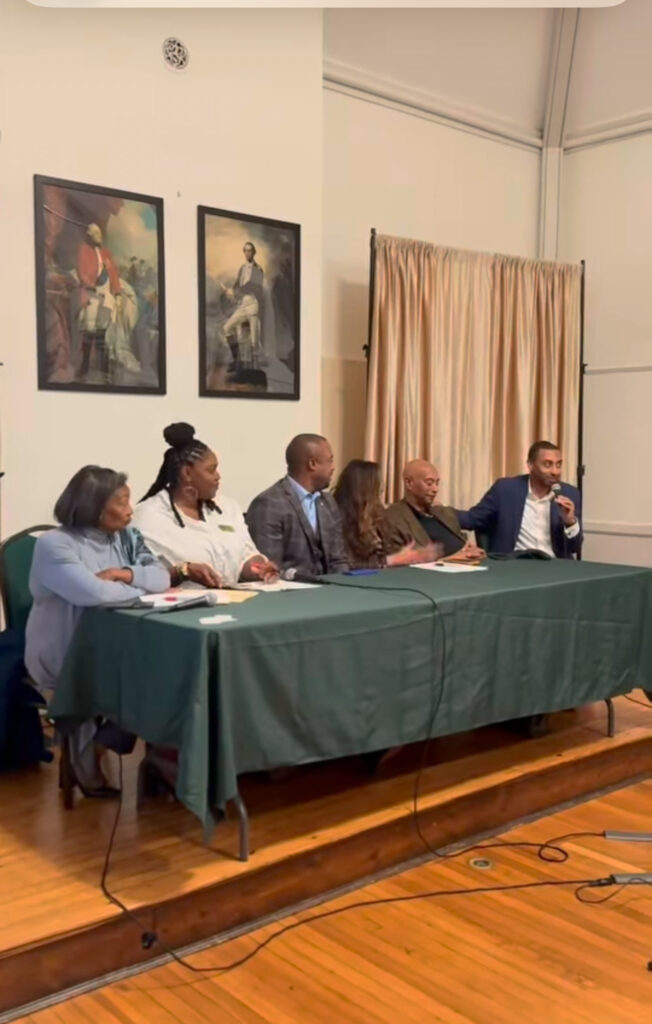
Beneath the open skies of Van der Donck Park, beside the Hudson and just steps from the Yonkers Riverfront Library, over 175 people gathered not for a performance, but for a purpose. The Good Trouble Rally for Justice was part of a national series honoring the life and legacy of Congressman John Lewis, a giant of the Civil Rights Movement whose legacy continues to push us toward truth, action, and transformation.

Organized by the NAACP Yonkers Branch #2188, under the leadership of President Kisha Skipper, in partnership with NYCD 16/15 Indivisible and co-founder Eileen O’Connor, this event wasn’t just a call to remember, it was a call to reignite.


A Run of Show Like No Other

This wasn’t a program with clear lines between “youth” and “electeds.”
It was a beautifully blended composition, a communal rhythm where elders and emerging voices moved in seamless harmony.

From the very first words, the audience was held in sacred space, opened by Rev. Margaret Fountain-Coleman, who grounded the event with an invocation that called in our ancestors and challenged us to move with intention.


Youth Voices: The Synthesizer of the Night

The young people weren’t here to fill time; they were here to speak truth. And they did that with clarity, conviction, and culture.

  • Kory Skipper-Miller, just 10 years old, started the engine. With a voice already known across social media for his powerful advocacy, he reminded us that youth activism isn’t waiting, it’s already here.
  • Destiney Bella Kinsey, 11 years old, filmmaker, co-director of “Rise & Stop Bullies,” told us what time it is: “Clean your lens. Adjust your glasses.” Her words sliced through bias like sunlight through fog.
  • Dana Peña, 17, on her way to Baruch College to study Political Science, stood fully in her purpose: “Community starts with us.” Not when we’re older. Not when we’re asked. Now.
  • Alexander Hall, also 17 and a proud member of Groundwork Hudson Valley, carried it home: “We’re here because we can make a tangible impact in real time, at any age.”

These four didn’t open the evening; they orchestrated it. Their words weren’t warmups; they were the movement.


Building with Elected Officials

While U.S. Congressman George Latimer was unable to attend in person, he sent a representative who stood in solidarity with the community and reaffirmed his commitment to public safety, equity, and youth-led transformation.

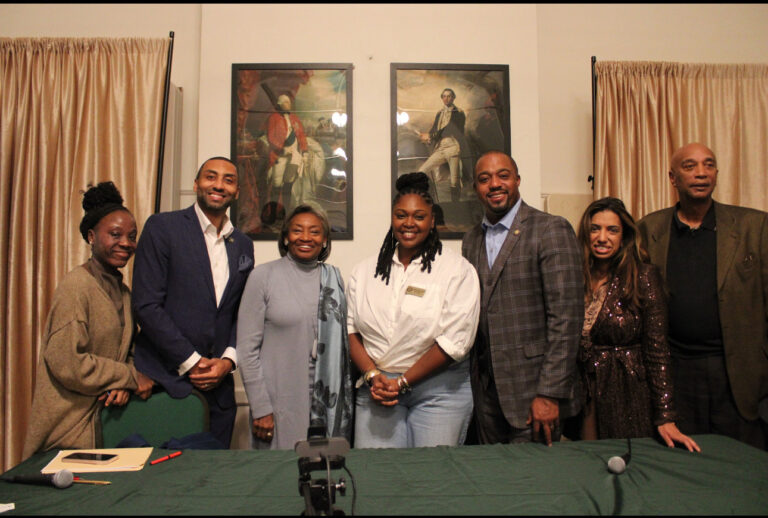
The evening also featured appearances from:

  • NY Senate Majority Leader Andrea Stewart-Cousins
  • State Senator Shelley Mayer
  • Assembly Member Nader Sayegh
  • Westchester County Executive Ken Jenkins

They didn’t just take the mic. They stood in the moment.
They bore witness.
They heard the challenge.

And then… Joanne Robinson-Boettcher stepped forward.
A longtime NAACP leader, truth-teller, and community force, her words didn’t just inspire, they ignited.

She didn’t give a speech. She gave us an assignment:

“Speak up. Speak out. And let them know you represent us. We are the reason they have money in the bank. Only you can make the difference. Your voice is to be heard, right here, right now, and forever.”

With conviction ringing through every syllable, she reminded us that our presence is power, and our silence is no longer an option. That wasn’t motivation, that was mobilization. You could feel the crowd shift. This was the moment where inspiration became instruction.

Community champions like Mujahadeen Muhammed, Steven Siebert, and Diana Sanchez followed with ground-level truth, reinforcing what Joanne made clear: we’re not just residents, we’re the reason. And we have every right to rise, speak, and shift this city.


My Offering: Good Trouble, On Purpose

As a poet, mother, healer, and someone who moves daily through the underbelly of systems designed to forget people, I carry stories that don’t always get told, but always need to be heard. I wasn’t born in Yonkers, but this city has wrapped me in love like family. It felt only right to offer this poem as both reflection and fuel, for the elders who still fight, the youth who won’t wait, and the communities who keep daring to rise. Good Trouble lives in us. And it was an honor to speak it into this soil.


Good Trouble, On Purpose By Larnez Kinsey

They don’t silence us ‘cause we loud…
They silence us ’cause we light.
‘Cause when we speak,
the truth got teeth.
It bites.
It builds.
It breaks chains.
And it doesn’t beg for permission to breathe.

See…
Good Trouble isn’t rebellion.
It’s ritual.
It’s resurrection.
It’s the grandbabies of the Black Panthers
and the prayers of Puerto Rican abuelitas
still rising like incense through project hallways.

Good Trouble is sacred.
Like the hands of a mother who still shows up
with a busted heart
and a bag of snacks
for every child that ain’t hers,
but is.

‘Cause in YO?
We don’t wait to be called community.
We become it.

This isn’t noise.
This is North Broadway blues
turned battle cry.
This is nods on the 6 bus
and side-eyes that say “I see you.”
This is Harriet in our heartbeat
and Baldwin in our bones.

This is not protest,
This is prophecy.
This is what happens
when kids from School 13
start testifying truth
with chalk on concrete
and elders at Grace Baptist
still pray with fire in their throats.

Good Trouble is knowing.
Knowing you were never meant to just survive.
You were born to disturb the waters.
To speak when silence feels safe.
To heal out loud,
in spaces they swore we were too broken to bless.

We are not broken.
We are beacons.
We are not shadows.
We are scripture.
Living.
Breathing.

We are our ancestors’ sacred psalms,
moving through concrete and memory.

So let ‘em look confused.
Let ‘em call us radical.
We just remind ‘em
we were never supposed to wait our turn
we were meant to turn the table.

Because this isn’t just resistance.
This is remembrance.
This is Grandmas with gold teeth and gospel grit.
This is corner store prophets
and healing in the garden plots.
This is tambourines in council meetings.
This is Black girl joy in a system built for our silence.

So no,
We won’t sit quiet.
We baptize sidewalks with our stories.
We speak names they tried to bury.
We walk in rooms they boarded up
and leave ‘em blessed and broken open.

We are not the echo.
We are the origin.
The storm.
The psalm.
The reason your grandmama still hums at the stove
like freedom is so close.

This ain’t chaos,
This is calibration.
This ain’t noise,
This is new alignment.
We the sound of the shift.
The breath of the bridge.
The Good Trouble
they prayed would never come.

But here we are.
On purpose.
Unbought.
Unbossed.
And undeniably divine.
On mission.
And right on time.


From This Moment to Many More

If you weren’t at Van der Donck Park that evening, know this: exactly what was needed happened. You were with us in spirit. The energy is now travelling, moving through fingers typing, pens writing, voices rising in living rooms and schools.

This is the lull before the leap. The recalibration before the march. The meditation before the movement. And Yonkers? You showed up & showed out. With rhythm. With legacy. With purpose.


Final Word

This rally, this reckoning, was never about what ended.
It was always about what begins.

Yonkers didn’t just honor John Lewis;
Yonkers embraced his question:
“If not us, then who? If not now, then when?”

And the beautiful truth, here on these streets, is:
verging toward good trouble doesn’t wait.
Because good trouble made this city.
And this city, she claimed us back.
On purpose. In purpose.
In sweet, sacred sync.

Lawler Announces He Will Run For Reelection Instead Of Challenging Hochul For Governor.

0

Congressman Mike Lawler announced on Wednesday that he will now be running for a third term in New York’s 17th District in the 2026 midterms, forgoing a bid for New York governor.

“After months of deliberating over this and really working through it, I’ve decided the right thing to do for me and my family, and my district is to run for reelection,” Rep. Lawler said. “My seat was determinative of control of the House back in 2022 and again in 2024,” he added.

Lawler had been considering a gubernatorial run, among the Republicans looking to challenge incumbent Gov. Kathy Hochul in next year’s statewide election. But he said in an interview Wednesday morning that he intends to stay in the House representing the 17th Congressional District.

According to multiple sources, Lawler, who previously stated he was the best candidate to take on Governor Hochul, met with President Donald Trump last week for about an hour in the Oval Office, in a not-so-subtle attempt to clear the field for upstate Rep. Elise Stefanik to get the GOP nomination. Trump and Lawler discussed his seat as key to keeping the House of Representatives red.

“While I fundamentally believe I am best positioned to take on Kathy Hochul and offer New Yorkers a real choice for Governor, I have made the decision to run for re-election to the House and continue the important work I’ve been doing over the past two and a half years,” Lawler shared in a statement with Fox News Digital Wednesday morning.

In making his rounds in the media after his announcement, Lawler couldn’t resist taking a shot at Hochul

“There’s no question Kathy Hochul is the worst governor in America,” Lawler told “Fox and Friends.” “But after months of deliberating over this and really working through it, I’ve decided the right thing to do for me and my family, and my district is to run for reelection. My seat was determinative of control of the House back in 2022 and again in 2024. I’m one of only three Republicans that won a seat that Kamala Harris also won. Keeping the House majority is critical if we are going to continue to move this economy in the right direction.”

Lawler has been a growing star among New York Republicans since the former assemblyman defeated powerful incumbent Rep. Sean Patrick Maloney (D-NY) in 2022. Lawler was the only New York Republican re-elected in 2024 — and won in a district also carried by Kamala Harris.

Epstein Is a Distraction. The Real Question Is: Who Killed Dr. King?

As headlines swirl with rumors about Jeffrey Epstein’s “client list,” the American public is once again being led into the media circus of speculation, memes, and political baiting. But let’s be clear: the Epstein drama, as salacious and disturbing as it may be, has become a convenient distraction from a much more consequential truth—one the federal government has tried to bury for over 50 years: Who really killed Dr. Martin Luther King Jr.?

On July 21, 2025, the Trump administration declassified over 230,000 pages of files related to Dr. King’s 1968 assassination. These documents included long-sealed FBI memos, CIA records, and details from the covert MURKIN investigation. This move came under Executive Order 14176, signed in January, mandating the release of documents related to the assassinations of MLK, JFK, and RFK.

What those files reveal isn’t just of historical interest—they are evidence of a coordinated, state-sanctioned campaignto surveil, discredit, destabilize, and ultimately eliminate one of the most powerful voices for justice in American history. This wasn’t passive observation. It was strategic warfare. And now that the files are public, we must go further. We need to know the names—the specific individuals in the CIA, FBI, or any elected office who signed off on the plan to neutralize Dr. King. Who gave the orders? Who authorized the surveillance? Who coordinated the psychological operations? And ultimately—who made the call to kill him?

The same FBI that now postures as a guardian of civil rights once labeled Dr. King a threat to national security. He was stalked, wiretapped, psychologically harassed, and sent anonymous blackmail letters urging him to commit suicide. This wasn’t the work of fringe racists. This was the United States government. And the question that still haunts these files is whether the government or its proxies were directly involved in King’s death.

Yet the mainstream media’s response to the release of these records? Minimal. Tepid. Evasive.

Instead, they pivot back to Jeffrey Epstein—an admitted sex trafficker whose suicide conveniently closed the case just before trial. They replay old photos of Trump at Mar-a-Lago, repeat tired speculation, and treat the phrase “Epstein client list” like a hashtag rather than a legal reality.

Let’s pause right here.

Even Epstein’s own lawyers have stated there was never a formal client list. The Department of Justice, under both Democratic and Republican administrations, has confirmed this in writing. And just this week, Trump’s former lawyer Michael Cohen—his enemy, not his ally—stated publicly that in 11 years of working side-by-side with Trump, he never once saw or heard the name Jeffrey Epstein. Not in the office. Not on the phone. Not in Trump’s world.

If Trump were on some client list, you can be sure it would’ve been leaked, weaponized, and plastered on CNN by now. The media had no problem slandering Trump with half-truths and anonymous sources for seven straight years. But suddenly they’re protecting the integrity of redacted court filings?

The Epstein spectacle has become a distraction masquerading as accountability. It’s political theater. Meanwhile, the actual documents proving the government’s psychological warfare and surveillance on a peaceful civil rights leader barely make the news crawl.

We’ve waited decades for transparency, and when it finally arrives, the country changes the channel. Why? Because the real truth is more uncomfortable than any island scandal.

Bernice King herself called for the release of the Epstein files—but we must be cautious not to fall into the trap of moral equivalence. The destruction of Black leadership through COINTELPRO, the suspicious circumstances around Dr. King’s death, and the ongoing suppression of truth are not tabloid stories. They are the foundation of distrust in this country’s institutions.

The public deserves full disclosure—not just about Epstein, but about the assassination of Dr. King, the government’s role, and why it took over 50 years to admit what many Black Americans already knew in their bones.

Let’s stop chasing shadows and start demanding truth.

The question isn’t just who Epstein trafficked.
It’s who silenced the dream.

Emotional Politics — Logical Failure is the book you need.
In this bold and unfiltered work, Damon K. Jones delivers the hard truths many are afraid to say out loud: Black America has been loyal to a system that has failed to deliver. We’ve mastered symbolism but forfeited strategy. We show up to vote, but not to fund. We speak out, but rarely build. And the result? Speeches instead of solutions. Visibility instead of victory.
This book is not about left or right. It’s about logic over emotion. Power over performance. It’s a call to wake up, re-strategize, and use our political currency with purpose.
If you’re tired of being used, overlooked, and sold out—this book is your blueprint for change. Your voice is powerful. Your vote is valuable. But your money, your mindset, and your political clarity are what will make the difference.
Read the book. Share the message. Challenge the tradition. And let’s finally start getting what we pay for

The Statue of Liberty’s Hidden Truth: Originally Designed to Signify the Abolition of Slavery

In celebrating the life & legacy of the late Malcolm Jamal-Warner, my cousin Michelle shared a clip of a podcast, hosted by Malcolm Jamal-Warner & Candace O. Kelley called Nah: In Case You Missed It. The episode shared with me was titled “The Hidden Truth About the Statue of Liberty.” The featured guest, Dr. Joy DeGruy talks about how she visited the Statue of Liberty (Liberty Enlightening the World) on the behest of her good friend Floyd V. Myers and expressed that most people do not know that the Statue was originally created to symbolize the end of slavery. “The broken chains at her feet tell a hidden story—one that America tried to erase.”

She explained that what most people do not know, especially since it’s not taught in school, is that the Statue of Liberty features broken shackles and chains at her feet, symbolizing the end of slavery and the abolishment of bondage in the United States. While many associate the statue with immigration, her original design and symbolism focus on emancipation from slavery. The broken chains, though subtle, were intended as a powerful statement by the statue’s designer, Frédéric-Auguste Bartholdi, and his French abolitionist collaborators, to celebrate the end of slavery after the American Civil War. 

Dr. DeGruy, author of “Post Traumatic Slave Syndrome: America’s Legacy of Enduring Injury and Healing” spoke of seeing the original design for the Statue of Liberty in France, which included broken chains and shackles in her left hand. However, this design was changed before the statue was completed, and the chains and shackles were placed at her feet instead. (The episode is available to watch below).

In 1865, Édouard de Laboulaye, a French political intellectual, activist, and staunch abolitionist, was a strong supporter of Abraham Lincoln and the Union cause during the American Civil War. He admired Lincoln’s leadership and the ideals of freedom and democracy that the United States represented, particularly after the abolition of slavery. He proposed gifting the United States with a statue honoring the centennial of America’s independence, the abolition of slavery, and the long-standing friendship between the two nations. French sculptor Auguste Bartholdi supported Laboulaye’s idea and, in 1870, began designing the globally recognized statue, “Liberty Enlightening the World.”

The sculptor, Frédéric-Auguste Bartholdi, intended to represent this with broken chains and shackles in her left hand. The decision was made to move the broken chains to her feet, and her left hand was given a tablet instead. This was done, in part, to make the statue more palatable to a wider audience and to avoid reopening old wounds from the Civil War era. The sculptor compromised by placing the broken shackles and chains at the statue’s feet, hidden beneath her robes, as a subtle nod to emancipation while avoiding overt confrontation. 

Bartholdi was told the inclusion of overt symbols of emancipation would be seen as potentially reopening wounds from the Civil War and Reconstruction, and faced resistance from American financiers who were crucial for funding the statue’s pedestal

While there has been some pushback to the claim, I am reminded of the quote, “History is written by the victors,” which reflects the idea that those who win a conflict or achieve power often control the narrative of the past, shaping how events are remembered and interpreted. 

Let’s look at the time. The pedestal of the Statue of Liberty was completed in April 1886, and finally, on October 28, 1886, President Grover Cleveland oversaw the dedication of the Statue of Liberty in front of thousands of spectators. Just 21 years after the Civil War, which was fought in the United States from 1861 to 1865.

On June 19, 1865, Major General Gordon Granger arrived in Galveston, Texas, and announced the end of slavery in the state, fulfilling the Emancipation Proclamation, which had been initially issued two and a half years earlier on January 1, 1863. Issued by President Abraham Lincoln, it was a presidential proclamation that declared the freedom of slaves in Confederate territory during the American Civil War.

So the idea that the sculptor, Frédéric-Auguste Bartholdi, intended to represent and symbolize the end of slavery with broken chains and shackles in her left hand, but a decision was made by Americans in power at the time to move the broken chains to her feet, and her left hand was given a tablet instead, was done, in part, to make the statue more palatable to a wider audience and to avoid reopening old wounds from the Civil War era, is not that farfetched.

A quick Google search will show various websites making the same claim, including opinion editorials and letters to the editor published by the New York Times, Liberty’s Broken Shackles, Like Toes, Are Hard to See in 1999, and New Statue of Liberty Museum Illuminates a Forgotten History in 2019.

On The New York Historical Society’s History with David Rubenstein, Rubenstein explores the history and evolving symbolism of the Statue of Liberty in his series “Iconic America: Our Symbols and Stories,” which includes a New York Historical Society segment. The series examines the statue’s origins, its representation of liberty and immigration, and its connection to American values and conflicts. A related “History Minute” video from the New-York Historical Society delves into the hidden chains at the statue’s feet, symbolizing the nation’s struggle for racial equality, (see video below).

Meanwhile, as expected, other websites are claiming to debunk what they write off as a myth. But one thing that cannot be hidden, no matter how hard they try, they can not erase the fact that there are shackles at the base of the statue on her leg as she appears to be stepping forward out ofthe bondage of slavery. Like the toes of the statute, there is an attempt to hide the broken shackles under her long, flowing robe, but if you look hard enough, you can still see them.

In Ken Burns’ 1985 PBS documentary, The Statue of Liberty, the film explores the history of the statue, including its symbolism of freedom and refuge for immigrants. The documentary notes that Bartholdi, the sculptor, originally planned to incorporate broken chains in the statue’s left hand, but they were ultimately replaced with a tablet. However, the broken chains and shackles were moved to the statue’s feet to symbolize emancipation and freedom, according to the Statue of Liberty — Ellis Island Foundation

While the statue was a gift from France, American financiers influenced the final design by requesting the removal of chains held in her hand, replacing them with a tablet. The focus on immigration, highlighted by the poem “The New Colossus” added later, has often overshadowed the statue’s original purpose as a symbol of emancipation. 

The reason most people do not know of the original intention of the the statute symbolizing the end of slavery is because not only is that not taught but the shackles and chains at her feet are not easily visible to visitors on Liberty Island because the Statue stands on a 154 foot tall pedestal, which effectively obscure the broken chains at her feet. But as Dr. Joy DeGruy eloguently stated, these are “the lies we were told and [here is] the truth that sets us free.”

We are in the process of extending an invitation for Dr. Joy DeGruy to appear on an upcoming episode of Black Westchester presents People Before Politics Radio to delve deeper into the topic.

Brett Hankison, Former Kentucky Officer Who Shot & Killed Breonna Taylor Sentenced To 33 Months In Prison

The sentence was a sharp rebuke to the Trump administration, which had requested he serve only one day behind bars.

The lawyer for Breonna Taylor’s family announced Monday that former Kentucky police officer Brett Hankison, who blindly fired 10 bullets into her home (three of which traveled into an adjacent unit) during a botched raid in 2020, has been sentenced to almost three years in prison.

On March 13, 2020, the 26-year-old emergency medical technician was shot and died during a failed narcotics raid that the Louisville Metro Police Department had approved. Last November, Hankison, 46, a Louisville detective at the time, was convicted of deprivation of rights under color of law during the execution of a search warrant on her home that led to the tragedy.

Hankison will not report directly to prison, with U.S. District Judge Rebecca Grady Jennings saying during Monday’s sentencing hearing that the Bureau of Prisons will decide when his sentence begins, according to The Associated Press. His prison sentence will be followed by three years of supervised probation.

The Justice Department had requested in a sentencing memo following Hankison’s conviction that he be sentenced with time served, which would be just one day in prison, followed by three years of supervised release.

District Judge Rebecca Grady Jennings, who handed down the sentence, criticized prosecutors for making a “180-degree” turn in their approach to the case and said political factors appeared to have influenced them. Jennings said during the hearing that a sentence of no prison time for Hankison “is not appropriate,” according to The Associated Press.

His first trial on those charges ended in a mistrial in 2023. In November, a second federal jury convicted Hankison of violating Taylor’s civil rights but acquitted him of violating the rights of her neighbors. 

Taylor’s mother, Tamika Palmer, several other family members, and Kenneth Walker, her boyfriend at the time, all spoke in court to ask the judge to impose the maximum penalty.

“A piece of me was taken from me that day. You have the power to make today the first day of true accountability,” Palmer told the judge.

Speaking to reporters outside the courthouse Monday, Taylor’s mother, Tamika Palmer, said U.S. District Judge Rebecca Grady Jennings “did the best she could with what she had to work with.”

“There was no prosecution in there for us,” she told reporters.” There was no prosecution in there for Brianna.”

Asked whether the sentence represented justice, Palmer said: “We got something. I don’t think it was a fair sentencing, but it was a start.”

In a brief statement to the court, Hankison apologized to Taylor’s family and friends and said he would have acted differently if he had known about issues with the preparation of the search warrant that led police to Taylor’s home that night.

“I never would have fired my gun,” he said.

Civil rights attorney Ben Crump, who helped Taylor’s family secure a $12 million wrongful death settlement against the city of Louisville, had called the department’s recommendation “an insult to the life of Breonna Taylor and a blatant betrayal of the jury’s decision.”

Crump was at Monday’s hearing and said he had hoped for a longer sentence but was “grateful that (Hankison) is at least going to prison and has to think for those 3 years about Breonna Taylor and that her life mattered.”

Afterward, before a crowd outside the courthouse, Crump sounded a familiar chant: “Say Her name.” The crowd yelled back: “Breonna Taylor!” And he and other members of Taylor family’s legal team issued a subsequent statement criticizing the Justice Department.

“While today’s sentence is not what we had hoped for –– nor does it fully reflect the severity of the harm caused –– it is more than what the Department of Justice sought. That, in itself, is a statement,” the statement said.

When Compassion Becomes Complicity: The Price of Sanctuary Policies in the Real World

A federal officer lies in a New York City hospital—shot in the face and arm by a man who never should have been on our streets. His name is Miguel Francisco Mora Nunez, an illegal migrant with multiple arrests, active warrants, and a deportation order that was never executed. He is the product not just of poor individual choices—but of policy failure at every level of government.

And now, that failure has drawn a line in the sand.

New York City Mayor Eric Adams condemned the violence, calling it an example of a “broken criminal justice system” and acknowledging that violent migrants are “tarnishing” the image of those seeking the American Dream. But what Adams didn’t do—couldn’t bring himself to do—was name the very sanctuary policies that kept this shooter protected. The ones his own administration supports. The same policies that tied the hands of law enforcement and released a known public danger back into the community—multiple times.

Homeland Security Secretary Kristi Noem, joined by federal border and ICE officials, had no such hesitation. “Sanctuary cities,” she said bluntly, “are sanctuaries for criminals. Hard stop.” And for once, the rhetoric matched reality.

Mora Nunez had been arrested four times in New York and Massachusetts for assault, robbery, kidnapping, and intimidation. At every turn, local policies shielded him from ICE enforcement. These aren’t isolated flaws—they are the logical result of a system that values political optics over public safety. When police are prohibited from coordinating with federal agencies on deportation detainers, when jails become revolving doors, and when violent crime is excused in the name of social justice, the public pays the price.

Mayor Adams is trying to walk a tightrope—blaming “bad migrants” while preserving the political sanctity of New York’s sanctuary status. But in doing so, he avoids the hard truth: You cannot denounce violence while continuing to protect the violent from consequences. You cannot uphold justice while denying federal agents access to jails where repeat offenders await trial. And you cannot claim to care about your community while enabling policies that let career criminals prey on it.

This is not a debate about immigration. It’s a debate about enforcement. The United States welcomes legal immigrants every day. But when ideology trumps law, and when empathy becomes an excuse for inaction, the cost is measured not in votes, but in victims.

As federal agents prepare to “flood the zone” in sanctuary cities, including New York, some will cry foul. But the louder question—the one echoing from hospital rooms, street corners, and grieving families—is this: How many more people must be hurt before we stop shielding criminals in the name of compassion?

Mayor Adams said the system is broken. He’s right. But the break began when we replaced law with leniency, and justice with justification. It’s time to fix it. Not with slogans. Not with press conferences. But with policy.

Because no officer—on duty or off—should ever have to take a bullet for a bureaucracy’s failure.

📘 “Tolerance Is for Cowards”
A Blueprint for Extended Policing & Community-Led Public Safety

By: Damon K. Jones
33-Year Law Enforcement Veteran | Advocate | Community Reformer


This isn’t another opinion piece—it’s a frontline truth from a Black man who wore the badge, saw the failures, and is calling for change.

✅ Exposes the political cowardice behind bad policing
✅ Challenges Black leadership and silence in the ranks
✅ Introduces a bold strategy: the Extended Policing Strategy (EPS)
✅ A must-read for officers, policymakers, activists, and citizens ready to act—not just talk


🔗 Get the book today 
📍 Bulk orders available for community forums, police academies, and workshops
📩 Book Damon K. Jones to speak: www.damonkjones.com or contact Black Westchester Magazine 

The Platform Obama Never Used: Why Black Boys Still Wait for Masculine Leadership

The crisis facing Black boys in America isn’t a lack of representation—it’s a lack of masculine, spiritual structure. They are not failing because they aren’t exposed to diversity. They are failing because they aren’t rooted in discipline, purpose, and divine leadership. And the unfortunate truth is this: the man who had the greatest platform to speak to that crisis refused to do so.

Barack Obama could have used his presidency—and his post-presidency influence—to restore the cultural image of the Black man: not as a caricature, not as a stereotype, but as a leader, builder, and protector. Instead, he consistently elevated narratives that had little to do with the unique challenges facing Black boys.

Read: The Silent Crisis: Deprived Masculinity is a Mental Condition Among Black Men

Take his recent comments on Michelle Obama podcast, youtube show, where he said:
“One of the most valuable things I learned as a guy was I had a gay professor in college… who became one of my favorite professors… and would call me out when I started saying stuff that was ignorant. You need that… to show empathy and kindness. And by the way, you need that person in your friend group so that if you then have a boy who is gay or non-binary or what have you, they have somebody that they can go, okay…”

This was during a discussion on fatherhood and male mentorship—a moment that could have been used to speak directly to the needs of fatherless Black boys, or to the restoration of Black male responsibility. But instead, the conversation veered toward identity politics. Again.

It’s not that diversity doesn’t matter. It’s that Black boys are not getting what they need. They don’t need to be softened. They don’t need emotional validation at the expense of structure. They need to be taught how to be fathers, husbands, protectors of the community, and defenders of the faith. And for that, they need masculine role models—not token symbolism, not inclusion narratives, but real men who embody spiritual authority, economic stability, and moral conviction.

Read: The Mental Health Crisis Among Black Men Is a Crisis of Dependency, Lost Masculinity and Purpose

In my 33 years in law enforcement—working at the Westchester County Department of Corrections—I’ve seen this problem up close. Time after time, when programs are brought in to speak to incarcerated Black men or at-risk youth, it’s not Black men doing the talking. It’s white women. Or Black women. Well-meaning, yes—but missing the point. Then, when a woman tries to speak directly to these boys, they call it “mansplaining.” But you wouldn’t need to “mansplain” if you had men talking to the boys. The scriptures teach us: Iron sharpens iron. That’s the problem—we’ve removed iron from the process. We’ve ousted Black men from mentoring, training, and correcting Black boys. And Obama’s repeated remarks reflect that same agenda—one that undermines masculine leadership by replacing it with emotional messaging.

When Black men didn’t support Kamala Harris during the 2020 primary, he labeled them sexist and misogynistic, ignoring the reality that many of us are looking for policy, not pageantry. We want political solutions that strengthen our ability to lead families, run businesses, and protect our neighborhoods. Instead, we were dismissed as a problem for simply demanding to be seen.

And now they wonder why they’re losing men—especially Black men. It’s not because we’re anti-gay. It’s not because we’re misogynistic. It’s because our masculinity is never affirmed, never prioritized, never respected. In fact, it’s treated like a threat to be managed. And that message—repeated over and over—has done real damage to the mental, spiritual, and psychological development of our boys. They’re growing up in a world that tells them they’re dangerous by nature, and disposable by design. And no one seems to care.

Read: Why are Black Men Invisible and missing from the National Health Care Agenda

In Jesus and the Divine Black Masculinity, I make it clear: masculinity isn’t a flaw to be fixed—it’s a calling to be fulfilled. Our standard isn’t set by entertainers, influencers, or sanitized political slogans. It’s set by Jesus. A man of unwavering discipline, moral clarity, spiritual authority, and sacrificial leadership. He didn’t compromise truth to be accepted. He didn’t shrink back to avoid offense. He stood, spoke, built, and bore the weight of responsibility. That’s the example our boys need. And if we truly claim to follow Christ, then why aren’t we training our young men to be like Him?

Obama had the chance to be that kind of leader. He chose instead to be liked. But we can’t afford to follow that path. Because if we don’t raise our boys in the image of God, the world will raise them in the image of dysfunction—and then monetize their confusion.

This isn’t about exclusion. It’s about restoration. It’s about calling Black men back to their God-given identity—not to please culture, but to rebuild it.

🔥 Black Men, It’s Time to Reclaim the Blueprint. 🔥
The world is confused about manhood—but Jesus wasn’t.

📖 Jesus and Divine Black Masculinity by Damon K. Jones is not just a book—it’s a spiritual blueprint for men who are tired of being told who they are by broken systems, failed culture, and empty politics.

This book is for the man ready to:
✔ Lead with purpose
✔ Provide with power
✔ Protect with love
✔ Walk in divine order

If you’re a Black man, father, mentor, or leader—this is the book you’ve been waiting for.
If you’re raising or guiding young Black boys—this is the foundation they need.

💥 Stop chasing validation. Start walking in your calling.
💥 Stop surviving. Start building.

➡️ Order your copy of Jesus and Divine Black Masculinity on Amazon today.
Step into the role God designed you to lead.