One of the most consistent obstacles to progress isn’t lack of opportunity—it’s the refusal to outgrow outdated thinking. In a culture where emotional storytelling is often prioritized over productive results, many individuals remain trapped—not by external barriers, but by their own attachment to the past. This includes both their pain and, perhaps more dangerously, their past successes.
There is no shortage of people who believe they’ve “made it” simply because they have more than someone else. But being relatively better off is not the same as realizing your potential. In fact, past victories often become the excuse for future complacency.
Progress Is Forward-Minded, Not Rearview-Minded
Clinging to failure as identity is destructive. But clinging to victory can be equally damaging when it becomes a crutch instead of a foundation. A trophy shelf is not a blueprint. And too often, people overestimate the value of where they are because they compare it to where someone else isn’t.
But your standard should never be another person’s lack—it should be your own potential left untapped.
This kind of thinking—“I’m doing better than most”—is precisely what keeps people from becoming great. It fosters entitlement, erodes discipline, and breeds stagnation.
Many people remain surrounded by friends, environments, and ideologies that reinforce a fixed identity. Some are celebrated within their circles for doing “just enough,” and that praise becomes a ceiling. But elevation requires friction. If no one around you is challenging your current level, then you’re not in a growth environment—you’re in a comfort zone.
And comfort zones are where dreams go to die.
If your friends cannot hold you accountable to higher standards, they are not partners in your success—they are participants in your delay.
Complacency Masquerading as Contentment
There is a widespread tendency to confuse being “grateful” with being stagnant. Gratitude should inspire action, not replace it. Just because you’re not where you used to be doesn’t mean you’re where you’re supposed to be.
The enemy of excellence is not always failure—it’s often the satisfaction of being slightly above average.
People who live off their past accomplishments rarely build anything new. They substitute memory for momentum and mistake being “better than before” for being the best version of themselves. Meanwhile, time keeps moving—and so do the opportunities they no longer qualify for.
In economics, what matters is not what you once earned—but what you’re producing now. The same is true in life. Yesterday’s wins don’t exempt you from today’s work. In fact, the higher your past achievements, the greater your responsibility to keep building.
Progress requires present action—not past applause.
If you’re still talking about what you did five years ago, you’re already behind. Greatness isn’t achieved by beating others—it’s achieved by beating the version of yourself that was satisfied too soon.
Your past may have shaped you. But only forward thinking will elevate you. Let go of what’s behind—good or bad—and start building what’s next.
President Trump’s signing of the GENIUS Act — a landmark bill to regulate U.S.-backed stablecoins — has sent shockwaves through financial markets, crypto circles, and policy think tanks. For Black America, the question is not whether this is “historic” legislation — the question is whether the outcomes will matter more than the optics.
In the logic of Thomas Sowell, good intentions are cheap; consequences are everything.
The GENIUS Act lays out a framework requiring that all stablecoins be 100% backed by U.S. dollars or similar safe assets. It sets up licensing systems, regulatory clarity, consumer protections, and dual state-federal oversight. The political class calls it a breakthrough. But breakthroughs are only as useful as the people prepared to use them.
Let’s be honest: the communities least likely to benefit from this new digital currency law are those who’ve been left behind by every other financial innovation before it — and that includes large segments of Black America. Without ownership, this legislation becomes little more than another tool to expand the influence of Big Tech and Big Banks under the guise of innovation and inclusion.
If Black entrepreneurs, banks, or fintech startups don’t already have the legal firepower and capital required to launch federally compliant stablecoins, then who will dominate this space? JPMorgan. PayPal. Meta. Google. The usual suspects. The ones who already dictate how our communities bank, shop, borrow, and — increasingly — think.
What’s more troubling is the quiet consolidation of economic power this bill accelerates. As more systems go digital and more payments rely on blockchain-backed coins, the communities that are unbanked, underbanked, or digitally illiterate — disproportionately Black — will fall further behind. They won’t just be left out of innovation; they’ll be priced out of participation.
This is why we must change how we view finance and money in Black culture. Our leaders have failed us. Our pastors have failed us. Finance is not a foreign concept — it is foundational to scripture. King David understood it. King Solomon mastered it. The Proverbs 31 woman knew how to assess goods and conduct trade. Wealth, land, stewardship, debt, equity — these are all biblical principles. Yet we’ve failed to teach them through our faith traditions. We spiritualized poverty and ignored prosperity. And now, as the world pivots to digital assets, real-time transactions, and borderless economies, we are behind — again.
That’s not to say this law offers no opportunity. For those with foresight, discipline, and resources, the GENIUS Act could mark the beginning of a new era. Black-owned financial institutions could explore issuing their own compliant stablecoins. Community investors could pool capital in new, blockchain-secured cooperatives. And cities with high Black populations could use this regulation to power new forms of peer-to-peer banking, credit unions, and remittance systems.
But that would require a culture shift. It would require moving from protest politics to production economics. It would require financial literacy over emotional symbolism, and capital investment over perpetual complaint.
More importantly, it would require us to stop confusing regulation with redemption.
There’s a long pattern in American politics: a new law is passed with great fanfare, and Black America is told it’s a “game changer.” The real game doesn’t change because the same people keep holding the ball. The GENIUS Act, like welfare reform, education funding, or the Civil Rights Act before it, won’t change the balance of power if we don’t control the institutions that shape outcomes.
If Black leaders want this moment to matter, they must stop chasing seats at someone else’s table and start building our own. Technology is just a tool. Stablecoins are just code. But power — economic power — comes from ownership, not access.
Trump’s bill gives us rules. It doesn’t give us wealth. That part is still up to us.
Emotional Politics — Logical Failure is the book you need. In this bold and unfiltered work, Damon K. Jones delivers the hard truths many are afraid to say out loud: Black America has been loyal to a system that has failed to deliver. We’ve mastered symbolism but forfeited strategy. We show up to vote, but not to fund. We speak out, but rarely build. And the result? Speeches instead of solutions. Visibility instead of victory. This book is not about left or right. It’s about logic over emotion. Power over performance. It’s a call to wake up, re-strategize, and use our political currency with purpose. If you’re tired of being used, overlooked, and sold out—this book is your blueprint for change. Your voice is powerful. Your vote is valuable. But your money, your mindset, and your political clarity are what will make the difference. Read the book. Share the message. Challenge the tradition. And let’s finally start getting what we pay for.
Download the Free eBook: The Black Tax Pivot: How to Survive and Thrive Under the Trump Cuts
In this bold and urgent guide, discover how the latest tax reform can become a turning point for Black America — not a setback. The Black Tax Pivot: How to Survive and Thrive Under the Trump Cuts breaks down the Trump tax cuts in plain language and shows how strategic thinking, entrepreneurship, local control, and financial literacy can transform our communities from consumers to producers. This is not just about taxes — it’s about reclaiming economic power, ending generational poverty, and building a future we control. Whether you’re a working professional, small business owner, pastor, or parent, this free eBook is your blueprint for navigating change with vision and purpose. Download now and learn how to play the game — or get played.
In July 2025, President Trump signed the HALT Fentanyl Act, a bipartisan measure that permanently classifies fentanyl-related substances as Schedule I drugs and imposes a mandatory minimum sentence of 10 years for possession of 100 grams or more. It was hailed as a necessary step in fighting a deadly epidemic that has claimed over 100,000 lives annually. On the same day, Trump declared Mexican drug cartels to be foreign terrorist organizations.
But when the headlines fade and emotions cool, we’re left with a policy that feels eerily familiar: tough talk, harsh penalties, and no real investment in prevention. This isn’t a new direction—it’s the 1994 Crime Bill in a new suit.
That infamous crime bill, authored by then-Senator Joe Biden and signed into law by President Bill Clinton, promised to restore order during a wave of crime and drug addiction. Instead, it laid the foundation for mass incarceration, devastated Black and Brown communities, and widened the gap between punishment and justice. Today, some of the same voices that now claim to champion equity were instrumental in building the very system they now pretend to oppose.
Let’s look at the facts.
Fentanyl is a synthetic opioid that has killed tens of thousands. But who is using it the most? Data shows the highest overdose rates are among white Americans, particularly in rural and suburban communities. Yet, overdose deaths among Black men aged 35–54 have skyrocketed, especially in cities like Philadelphia, St. Louis, and Chicago.
And still, the HALT Fentanyl Act provides no new funding for addiction treatment, mental health care, or community-based recovery programs. It simply revives the old “lock them up” model that has failed us for 40 years.
What makes this even more dangerous is Trump’s simultaneous declaration labeling Mexican cartels as foreign terrorist organizations. That raises a critical question: Will the U.S.-based gangs that work with these cartels now be designated as domestic terrorists? Because the truth is, Mexican cartels don’t operate in isolation. Their supply chains run straight through American neighborhoods via long-standing partnerships with domestic gangs.
And yes, some of those gangs are Black.
Groups like the Gangster Disciples, Vice Lords, and Black P. Stones in cities like Chicago, and even subsets of the Bloods and Crips in California and New Jersey, have established drug distribution relationships with cartels like Sinaloa and CJNG. These aren’t ideological alliances—they are economic partnerships. The cartels supply bulk fentanyl, heroin, and cocaine; these gangs distribute them locally. These American crews are the street-level arm of a transnational criminal enterprise.
This bill will directly impact Black communities just like the 1994 Crime Bill did—only this time, the consequences may be worse. From a law enforcement perspective, once individuals or groups are officially labeled domestic terrorists, the rules of engagement change. We’re no longer talking about local policing or narcotics units. We’re talking about federal counterterrorism task forces—and potentially even military involvement. Surveillance laws, detention protocols, and prosecutorial powers all expand dramatically under terrorism classifications.
And here’s the million-dollar question: Will many in Black communities welcome it?
We can’t pretend otherwise—because in neighborhoods across the country, these gangs have held a stranglehold on daily life for decades. They’ve driven up homicides, intimidated witnesses, recruited children, and erased any sense of safety. Despite the endless press conferences and community task forces, the influx of illegal guns into Black communities—most often used by these same criminal gangs—has not been stopped. Local police departments are overwhelmed or politically restrained, and elected officials have failed to deliver real solutions. In that vacuum, some residents have begun to think it may be time for federal agencies to use different tactics. For families who’ve buried their children, for seniors who live in fear, and for parents trying to raise kids between gunfire and grief, the idea of a heavier federal hand doesn’t feel like overreach—it feels like long-overdue relief.
But the question isn’t whether intervention is needed—it’s what kind of intervention will bring real change without repeating the failures of the past. Because when terrorism laws are turned inward, the danger is not just that we crush gangs—it’s that we crush communities alongside them. History has shown us what happens when the federal government goes to war in Black neighborhoods with a broad brush and no exit strategy.
The logic behind the HALT Act mirrors the same flawed thinking that drove the 1994 Crime Bill: punish the supplier, ignore the addicted, and criminalize the conditions that create demand in the first place. It is policy based on optics, not outcomes.
If we were serious about stopping the fentanyl crisis, we’d pair targeted law enforcement with massive investments in education, health care, economic opportunity, and addiction recovery. But seriousness isn’t the goal. Political performance is.
Real reform isn’t about appearing tough—it’s about being effective. And effectiveness requires nuance, investment, and accountability. The HALT Fentanyl Act offers none of that.
So let’s stop pretending this is progress. It’s a policy rerun. And just like before, it’s Black America who will be asked to pay the price for everyone else’s political theater.
📘 “Tolerance Is for Cowards” A Blueprint for Extended Policing & Community-Led Public Safety
By: Damon K. Jones 33-Year Law Enforcement Veteran | Advocate | Community Reformer
This isn’t another opinion piece—it’s a frontline truth from a Black man who wore the badge, saw the failures, and is calling for change.
✅ Exposes the political cowardice behind bad policing ✅ Challenges Black leadership and silence in the ranks ✅ Introduces a bold strategy: the Extended Policing Strategy (EPS) ✅ A must-read for officers, policymakers, activists, and citizens ready to act—not just talk
🔗 Get the book today 📍 Bulk orders available for community forums, police academies, and workshops 📩 Book Damon K. Jones to speak: www.damonkjones.com or contact Black Westchester Magazine
By Damon K. Jones, NY Representative of Blacks in Law Enforcement of America
Assemblyman Zohran Mamdani represents a new wave of lawmakers pushing a radical shift in criminal justice—one that centers on closing jails, eliminating cash bail, and minimizing the use of incarceration altogether. His rhetoric is polished, his language is morally charged, and his proposals are marketed as progressive solutions to a broken system.
But stripped of slogans and soundbites, his agenda reveals a dangerous void: a complete lack of structure, accountability, or outcomes-based thinking.
Let’s deal with facts. The justice system is far from perfect. But the answer to dysfunction is not abandonment—it’s discipline.
According to NYPD CompStat, felony assaults have climbed to a 24-year high, with 29,417 reported citywide incidents in 2024—up 5% from the previous year. The surge is particularly evident in precincts covering areas like Harlem, East Flatbush, and parts of the Bronx—communities that are already disproportionately impacted by systemic neglect. NYPD officials have pointed to a 146% increase in repeat felony assault offenders since 2018, linking much of the rise to New York State’s 2020 bail reform law, which severely limited judicial discretion to hold defendants based on their risk to public safety.
In Queens, small business owners continue to report weekly incidents of organized shoplifting, often involving the same individuals who face little to no consequence. Nationally, the National Retail Federation estimates retail theft losses at over $112 billion annually, with much of that driven by coordinated theft rings operating in urban commercial corridors. When repeat offenders are released without supervision, intervention, or accountability, the justice system doesn’t just fail victims—it creates a revolving door of harm that destabilizes the very communities reformers claim to protect.
We are already seeing this play out under New York State’s bail reform, where the absence of structured accountability has led to measurable increases in crime and repeat offenses, particularly in the very communities these reforms claim to protect.
When Mamdani calls for releasing more people from jail without a scalable system of supervision, intervention, or reentry, he’s not solving injustice. He’s shifting the burden of risk onto communities—particularly working-class Black and Brown neighborhoods that already bear the weight of public policy failure.
Before pushing this agenda, did Mamdani sit down with the mothers of murder victims in the Bronx or East Flatbush? Did he speak with Harlem seniors who’ve been assaulted and robbed in buildings with broken locks and no police presence? Has he listened to the Black and immigrant-owned business owners in Queens who are being robbed repeatedly while prosecutors turn a blind eye? Or is he simply echoing the talking points of protest profiteers—those who show up for cameras when police are involved, but disappear when a child is gunned down in a housing project courtyard?
As someone who has championed public safety reform for over three decades, I ask these questions of every policymaker who claims to care about Black communities. And too often, they have no answers. Because they haven’t engaged with the people most affected, their policies deliver nothing but bad outcomes for those who are rarely invited to the table—and yet always pay the highest price.
This is the fundamental problem: too many of these policies are crafted in echo chambers—by people insulated from the consequences of their ideas. They don’t live in public housing. They don’t depend on corner stores that have been robbed three times this month. They don’t walk their kids to school past open-air drug markets or navigate buildings without security patrols.
The removal of cash bail isn’t inherently wrong. But when it’s implemented without a risk-assessment framework—like the Arnold Public Safety Assessment used in other jurisdictions—what you create is not equity, it’s exposure. Exposure to violence. Exposure to repeat victimization. Exposure to a government that now prioritizes ideology over safety.
And while Mamdani touts decarceration as moral progress, there is nothing moral about telling a mother her son’s killer was released without bail because the legislature decided incarceration is no longer justifiable. There’s nothing progressive about building a system that prioritizes political narratives over human life.
I’ve lived reform. I’ve stood up against bad police, challenged abusive systems from the inside, and risked my career to speak the truth. I’ve walked through grieving communities, stood beside mothers of homicide victims, and demanded accountability not only from officers—but from the institutions that failed to protect them.
This is not politics for me. This is lived experience—decades of it. I’m not speaking from an ideological script; I’m speaking from the street, from the courtroom, from the community.
Real reform isn’t just subtractive. It requires building. That means mental health services that intervene before a crisis becomes a crime. It means job training and placement programs that give people real second chances. It means community-based accountability structures—not just defunded police—but neighborhood-based violence interrupters who are trained, paid, and evaluated for results. These are models that have worked in cities like Newark, NJ and Richmond, CA—not by removing systems but by restructuring them with standards.
In contrast, Mamdani’s approach is not built for sustainability. It’s built for applause.
There is a clear distinction between restorative justice and indiscriminate decarceration. One seeks to repair the system with measurable goals. The other operates on blind trust that simply releasing people—without treatment, supervision, or job pathways—will somehow produce safety and fairness. That belief is not just naïve. It’s negligent.
And there are legal implications. Every citizen has the right to equal protection under the law—including protection from foreseeable harm. When the state knowingly releases high-risk offenders without mechanisms of accountability, it raises serious questions about the government’s failure of duty. We don’t just need new laws—we need enforceable oversight.
If the aim is justice, then the standard must be outcomes—not intentions. Does the policy reduce violence? Does it strengthen community trust? Does it create stability? If the answer is no, then it is not justice—it’s just politics.
Our communities don’t need empty gestures. They don’t need activists and legislators chasing ideological purity at the expense of real-world harm. They need systems that function. They need order with dignity, discipline with compassion, and public safety that is proactive—not performative.
This is bigger than Mamdani. This is about a growing class of elite policymakers and foundation-funded activists who speak the language of liberation but legislate disorder. They use the pain of poor Black and Brown communities to experiment with policies they’ll never have to live under. That’s not justice. That’s abandonment.
In the end, it’s not about whether Mamdani means well. It’s about whether his policies keep people safe.
New York State Bail Reform Impact Analysis New York State Association of Chiefs of Police. “Bail Reform and Repeat Offenders: Data Trends 2020–2024.” March 2024. https://www.nychiefs.org
New York Post – Repeat Offenders and Bail Reform Tracy, Thomas. “NYPD Blames Bail Reform for Spike in Repeat Offenders.” New York Daily News, January 2024. https://www.nydailynews.com
New York City Small Business Testimonies on Organized Theft NYC Council Oversight Hearing on Retail Crime. “Testimonies from Queens Small Business Owners.” NYC Council Committee on Public Safety. November 2023. https://council.nyc.gov/committees/public-safety
📘 “Tolerance Is for Cowards” A Blueprint for Extended Policing & Community-Led Public Safety
By: Damon K. Jones 33-Year Law Enforcement Veteran | Advocate | Community Reformer
This isn’t another opinion piece—it’s a frontline truth from a Black man who wore the badge, saw the failures, and is calling for change.
✅ Exposes the political cowardice behind bad policing ✅ Challenges Black leadership and silence in the ranks ✅ Introduces a bold strategy: the Extended Policing Strategy (EPS) ✅ A must-read for officers, policymakers, activists, and citizens ready to act—not just talk
🔗 Get the book today 📍 Bulk orders available for community forums, police academies, and workshops 📩 Book Damon K. Jones to speak: www.damonkjones.com or contact Black Westchester Magazine
In Mount Vernon, a lawsuit filed by local resident and former candidate Bill Schwartz raises troubling questions about the way elections are being conducted—and even more troubling questions about how they’re being protected.
According to Schwartz, data from the June 2025 Democratic Primary reveals a sudden spike of over 9,600 new voter IDs in just over a year—a 30% increase. He further claims that some registered “active” voters were born before 1905. Others, he says, have been dead for decades. Meanwhile, he alleges that thousands of legitimate voters were removed from the rolls, had their party affiliations changed, or experienced unexplained alterations to their voter ID numbers.
Whether these claims hold up in court remains to be seen. But what cannot be denied is this: the Westchester County Board of Elections has refused to answer key questions, declined to accept legal service by email, and—according to the petitioner—delayed or partially fulfilled multiple records requests. That’s not how a transparent public agency operates. That’s how an unaccountable one avoids scrutiny.
And we should talk about who sent that email, because it gets right to the heart of the problem. Commissioner Tajian Nelson wears three political hats: she’s the Democratic Commissioner at the Westchester County Board of Elections, the Secretary of the Westchester County Democratic Committee, and the Corresponding Secretary of the Mount Vernon Democratic City Committee. That means the same person responsible for maintaining fair and impartial elections is also holding partisan leadership roles at both the county and city level. This is not just poor judgment—it’s a textbook conflict of interest. And it speaks to a broader pattern: the people overseeing elections are too often the same ones benefitting from their outcomes. That’s not oversight. That’s consolidation of power.
Schwartz, who was on the ballot in the June primary, says the sitting mayor used public funds to promote her own political slate—targeting challengers like him. If true, it would represent a clear violation of city, state, and federal law. But regardless of the outcome of that separate legal case, the implication is serious: if public institutions are being used to tilt elections, then fair elections cease to exist.
This lawsuit isn’t just about one race or one neighborhood. It’s about whether the people of Mount Vernon—and by extension, voters everywhere—are being asked to participate in a process that’s already compromised.
According to the suit, affidavits have been submitted by residents who say they encountered errors at polling sites or discovered they were no longer listed as voters at all. Others allegedly reported names of deceased family members still marked “active” on voter rolls. If these stories are accurate, they’re not anecdotal—they’re structural. And they demand more than excuses.
But rather than answer these concerns with transparency, Schwartz says the Board of Elections has responded with delay, denial, and procedural roadblocks—rejecting email service, ignoring basic FOIL timelines, and refusing to disclose basic information about how the rolls are updated.
When a public agency behaves this way, it raises a fundamental question: What are they trying to hide?
The lawsuit seeks a forensic audit of the voter rolls, machine tallies, and ballot records. It demands a written explanation of voter roll maintenance procedures, and a freeze on further changes to voter IDs or party affiliations until the November election is secured. These are not extreme demands. They are minimal expectations in a functioning democracy.
But this is where the silence becomes deafening. Because if the allegations are as serious as they appear, where is the Westchester County District Attorney, Susan Cacace? The misuse of public funds, systemic election mismanagement, and the possibility of voter roll manipulation are not just political problems—they’re potential criminal violations. The DA’s office has a duty to uphold the law, not just prosecute street crime. When those in government violate election law, that is public corruption. And when that corruption touches the ballot, it undermines the very foundation of representative government.
The issue here isn’t ideology—it’s infrastructure. A clean, lawful election process should not require litigation. And a Board of Elections that treats voter integrity concerns as a nuisance is unfit to administer a single precinct, let alone an entire county.
The greater danger is normalization. When voters are told to accept dysfunction as business as usual, the line between democracy and theater begins to blur. Mount Vernon cannot afford that. Westchester County cannot afford that. And the state of New York should not tolerate it.
If Schwartz’s allegations are unfounded, the Board should welcome the chance to disprove them with evidence. If they are legitimate, then immediate action is required to protect the sanctity of future elections.
In either case, silence is not an acceptable answer.
This lawsuit may not change what happened in June, but it could determine whether what happens in November is fair, lawful, and worthy of public trust.
And that, above all, is what’s at stake.
Emotional Politics — Logical Failure is the book you need.
In this bold and unfiltered work, Damon K. Jones delivers the hard truths many are afraid to say out loud: Black America has been loyal to a system that has failed to deliver. We’ve mastered symbolism but forfeited strategy. We show up to vote, but not to fund. We speak out, but rarely build. And the result? Speeches instead of solutions. Visibility instead of victory.
This book is not about left or right. It’s about logic over emotion. Power over performance. It’s a call to wake up, re-strategize, and use our political currency with purpose. If you’re tired of being used, overlooked, and sold out—this book is your blueprint for change. Your voice is powerful. Your vote is valuable. But your money, your mindset, and your political clarity are what will make the difference.
Read the book. Share the message. Challenge the tradition. And let’s finally start getting what we pay for.
Rumors have swirled in the boxing world for years about a potential clash between two legends—Clarissa Shields, the self-proclaimed “GWOAT” (Greatest Woman of All Time), and Laila Ali, the undefeated daughter of boxing icon Muhammad Ali. But now, that fantasy matchup may finally be on the verge of becoming reality.
In a recent video, Shields and her team made a public, on-camera offer to Ali: $15 million and a venue to settle the debate once and for all.
“We got the $15 million,” Shields declared. “Let’s make a fight between me and you. The best versus the best. The GWOAT versus Muhammad Ali’s daughter, Laila Ali. Let’s make it happen.”
Her team confirmed the offer is backed by Win Records and that major venues—Cowboy Stadium and T-Mobile Arena—are ready to host the bout.
“Most importantly,” said Win Records’ Ruben Branson, “we have the $15 million. Let’s make this fight happen.”
Shields wasn’t bluffing. She brought receipts. And she’s calling on Laila to live up to the number she threw into the ring herself.
Ali previously said she wouldn’t even entertain a comeback unless someone put $15–20 million on the table. “Unless somebody calls me and says they have it, we’re not even going to have a conversation,” she said. “I’m not trying to come back and fight, but if someone offered that kind of money, I would actually have to think about it.”
Well, the offer has been made. Now the ball is in Laila’s court.
And if that weren’t enough to stir the pot, drama from outside the ring entered the conversation. A relative of Laila Ali, appearing in the video, voiced some personal motivations for wanting to see her in the ring with Shields.
“I want her to whoop Laila’s ass,” she said bluntly. “Her mama was with my husband—it’s payback time.”
Despite the emotional charge, she clarified there’s no hatred—just unfinished business.
“I love her. I love all of them. But she’s going down.”
When asked whether she thought Ali would accept the challenge, she was candid:
“She 40 years old now. But once we put money on the table, she’ll come out of the woodwork. Look at Tyson. Money talks.”
And in boxing, it always has.
Shields, who remains one of the most decorated boxers of her generation, has never shied away from high-stakes challenges. This isn’t just a fight—it’s a cultural moment. A once-in-a-lifetime showdown between two undefeated champions with legendary lineages and reputations on the line.
All the pieces are in place. The purse is real. The stage is set.
Now the world waits to see if Laila Ali will finally step back into the ring.
We live in an era where public announcements often camouflage the real motives behind corporate behavior. Former President Donald Trump’s recent claim that he convinced Coca-Cola to switch from high-fructose corn syrup (HFCS) to cane sugar made headlines and stirred public interest. But this isn’t just symbolism—it’s a trade-off. Coca-Cola and similar companies aren’t suddenly health-conscious; they’re adjusting their strategy in response to the growing political and regulatory pressure brought on by Trump’s Health and Human Services Secretary, Robert F. Kennedy Jr.
Nutritionally, switching from HFCS to cane sugar does nothing significant. Both sweeteners contribute to obesity, insulin resistance, and type 2 diabetes. The difference in composition—55% fructose in HFCS vs. 50% in cane sugar—is negligible in terms of public health outcomes. A 12-ounce Coke still contains nearly 40 grams of sugar, enough to exceed the American Heart Association’s daily limit for added sugars. The calorie count doesn’t change, nor does the metabolic response. So why the pivot?
The answer lies in market pressure, not medical concern. Soda companies are reading the writing on the wall. RFK Jr., through the “Make America Healthy Again” initiative, is pushing an aggressive campaign to restrict what can be purchased with SNAP (food stamp) benefits. Under his leadership, several states—Indiana, Arkansas, Iowa, Idaho, Nebraska, and others—have submitted waivers to the USDA to ban the purchase of soda and candy with SNAP. Nebraska’s waiver has already been approved, and more are expected to follow. West Virginia is the First State to commit to Holistic healing. This shift threatens billions in revenue for companies whose products are heavily consumed by low-income households.
These corporations understand that RFK’s policy isn’t just a passing trend. It’s a structural change in how government programs interact with public health. For decades, taxpayers have indirectly funded the soda industry through SNAP benefits, all while footing the bill for the long-term medical consequences in the form of Medicaid spending and public hospital costs. RFK’s approach cuts through that contradiction: if a product contributes to chronic disease, it should not be subsidized by public dollars. That’s not punishment—it’s fiscal and moral responsibility.
Critics call it paternalism. They say it limits freedom of choice. But as Thomas Sowell would remind us, “There are no solutions, only trade-offs.” The freedom to consume is not the same as the right to demand government funding for that consumption. If we don’t allow SNAP to be used for cigarettes or alcohol, why should soda get a pass?
What we’re witnessing isn’t just a fight over ingredients—it’s a recalibration of incentives. Trump’s cane sugar claim may earn cheers from consumers nostalgic for “real Coke,” but it’s RFK Jr.’s policies that are forcing soda companies to adapt. The public health fight is no longer just about education or awareness. It’s about removing perverse incentives and holding corporations accountable to new economic realities.
This is what real reform looks like. Not just headlines, but hard choices. Not just applause lines, but fiscal discipline. If America is going to turn the corner on diet-related disease, it won’t be because Coke tastes slightly different. It will be because leaders like RFK Jr. had the courage to change how we spend public money—and because companies, finally, are realizing that staying in business means getting on the right side of that change.
📘 FREE EBOOK DOWNLOAD — THE MAHA REPORT: MAKE BLACK AMERICA HEALTHY AGAIN Want to know how states are finally fighting back against toxic food, environmental racism, and corporate health neglect?
The MAHA Report: Make Black America Healthy Again breaks down the policies, exposes the problems, and gives YOU the tools to take action.
✅ Learn how MAHA is transforming health policy in Black communities ✅ See what your state is (or isn’t) doing ✅ Find out how to push for real change
Download your FREE copy now and join the movement for health justice. Because health isn’t just personal—it’s political. And it’s time we take it back.
For decades, America has treated health care like a response unit—rushing to patch up what poor food, polluted environments, and preventable diseases have already broken. But under the leadership of HHS Secretary Robert F. Kennedy Jr., the Make America Healthy Again (MAHA) initiative is flipping the script. Instead of managing sickness, MAHA is about building wellness. And it’s gaining traction in states that are tired of watching their people get sicker while industries profit off of ignorance, additives, and empty calories.
Eight states—including Indiana, Utah, Arkansas, and West Virginia—have already adopted MAHA policies. From removing soda and candy from SNAP benefits to banning toxic food dyes in school cafeterias, these states are making a bold, unapologetic move: they’re saying health begins with what we consume.
And they’re right.
For too long, we’ve ignored the link between diet and disease. Nearly 50% of adults in the U.S. suffer from at least one chronic illness. Obesity, diabetes, heart disease—these are not accidents. They’re symptoms of a broken system where fast food is cheap, real food is expensive, and entire communities are fed lies and preservatives instead of nutrients.
This is especially true for Black communities.
Black Americans are disproportionately impacted by nearly every major chronic illness—hypertension, diabetes, heart disease, stroke. We live in food deserts, not by choice, but by design. In far too many cities, our neighborhoods are saturated with fast food chains and corner stores, while grocery stores and fresh produce are miles away.
These aren’t coincidences. They’re consequences of decades of policy neglect, environmental racism, and corporate exploitation. And for too long, national health initiatives have ignored these realities. MAHA is the first real pivot we’ve seen in years that acknowledges the root cause and puts action behind the rhetoric.
In Black communities, the consequences of poor nutrition aren’t just physical—they’re generational. Kids fed ultra-processed food show higher rates of behavioral issues, learning difficulties, and early-onset obesity. Seniors face compounding illness with little access to preventative care. And while we spend over $1.5 trillion annually as Black consumers, we are rarely offered healthy options in our own neighborhoods.
MAHA challenges that by targeting the industries profiting off our illness and pushing states to ban harmful chemicals that are still legal in U.S. food—chemicals banned in most of Europe. It demands truth in labeling, medically tailored meals, and the return of food as medicine—not profit.
This is not about policing what we eat. It’s about protecting our right to live.
Critics may call this a “nanny state” approach. But let’s be honest—what we’ve had until now is a neglect state approach. We’ve let corporations market disease-causing products to our children and called it liberty. MAHA says: enough.
The data backs it up. Pilot programs in Massachusetts and North Carolina that provide medically tailored meals through Medicaid have seen dramatic reductions in hospitalizations and emergency visits. When we invest in food, we reduce suffering. When we treat nutrition like policy—not charity—we build equity.
Black America can no longer afford to be on the menu instead of at the table.
If we’re serious about liberation, it starts with legislation—nutrition policy that protects us, not poisons us. Clean water, clean food, and honest labels should not be luxuries. They should be human rights. With MAHA, we finally have a federal health framework that’s attacking root causes, not just symptoms.
Let’s push our state legislatures to follow this path. Let’s demand our neighborhoods receive the same level of care, oversight, and nutritional integrity as the wealthiest zip codes. Health is not just personal—it’s political. And Make America Healthy Again might be the first serious step toward reclaiming what has been stolen from us: our well-being, our dignity, and our future.
📘 FREE EBOOK DOWNLOAD — THE MAHA REPORT: MAKE BLACK AMERICA HEALTHY AGAIN Want to know how states are finally fighting back against toxic food, environmental racism, and corporate health neglect?
The MAHA Report: Make Black America Healthy Again breaks down the policies, exposes the problems, and gives YOU the tools to take action.
✅ Learn how MAHA is transforming health policy in Black communities ✅ See what your state is (or isn’t) doing ✅ Find out how to push for real change
Download your FREE copy now and join the movement for health justice. Because health isn’t just personal—it’s political. And it’s time we take it back
While headlines across the country scream about massive food stamp cuts and families being thrown off assistance, let’s be clear about one thing: New York is not a doom-and-gloom scenario when it comes to public help. The game has changed, yes—but that doesn’t mean the help is gone. What it means is this: if you’re willing to show up, do your part, and engage with the system, you can keep your benefits and even move toward something better.
The New Rules—What Changed?
Under the federal “One Big Beautiful Bill Act,” signed into law on July 4, 2025, able-bodied adults ages 18 to 55 without disabilities must now complete 80 hours per month (about 20 hours per week) of work-related activity to stay eligible for SNAP.
That doesn’t mean you need a full-time job. That doesn’t mean you need to be on someone’s payroll. It means you need to be involved in something productive—work, training, community service, volunteering, or education.
If you’re doing that, you won’t lose your benefits.
So Why Are People Losing SNAP?
Because they’re not connecting with the programs. Because the rules changed fast, and many weren’t told. Because paperwork gets lost, or people don’t respond to notices.
And yes—because some choose not to engage.
According to the Fiscal Policy Institute, about 281,000 New Yorkers will immediately lose benefits and another 400,000+ are at risk, many of them because they’re unaware of how to comply or don’t know what’s available.
But here’s what isn’t being said loud enough:
There are dozens of ways to meet the 80-hour requirement—and New York will help you do it.
What You Can Do Right Now
If you’re on SNAP or close to someone who is, here’s what matters:
Contact your local HRA or county DSS immediately. Ask for an Employment & Training referral.
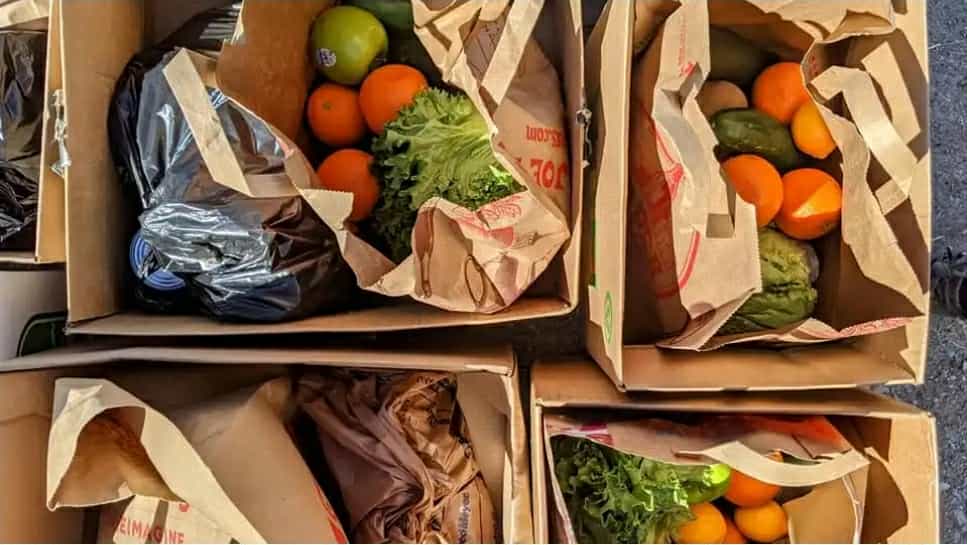
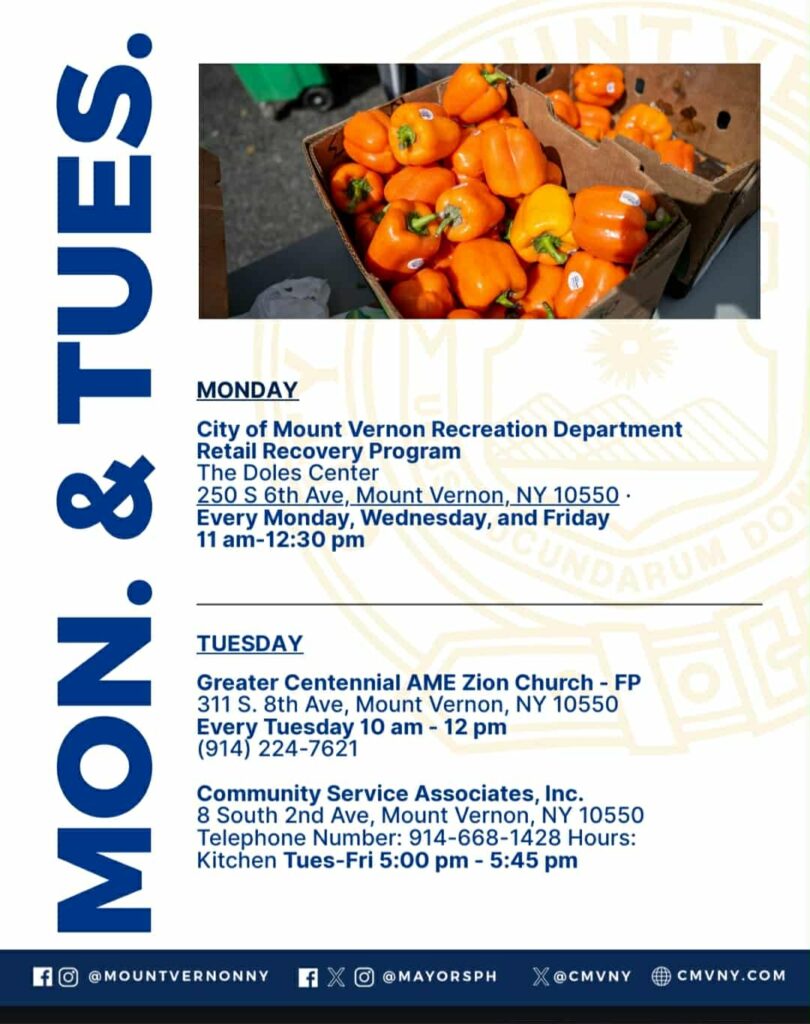
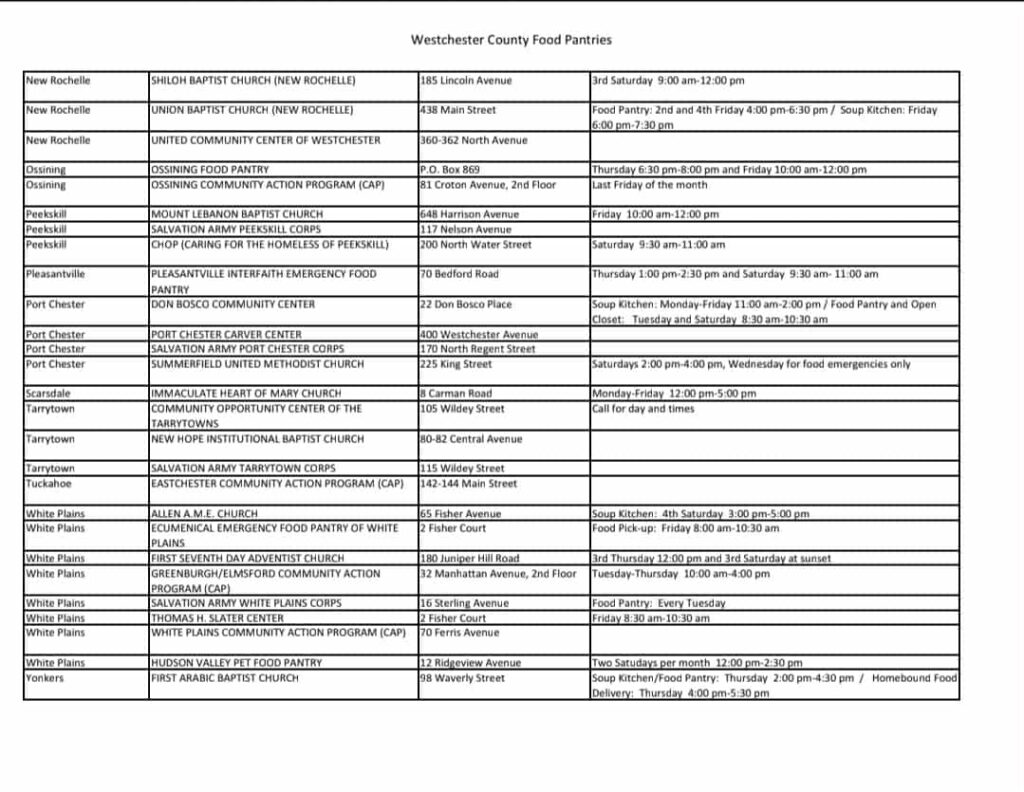
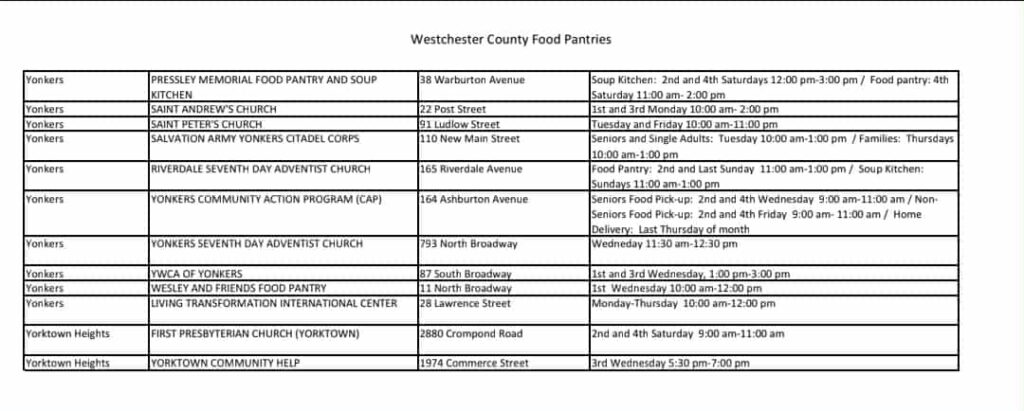
You can volunteer at a nonprofit, church, food pantry, or local organization.
You can join a job training or education program.
You can split hours across multiple activities—like 10 hours volunteering, 10 hours training.
And if you’re struggling with transportation, child care, or work-related expenses—New York State provides support services like MetroCards, child care vouchers, work clothes, and more.
If something blocks you—tell your caseworker. You may qualify for a temporary exemption.
This Isn’t Just a Requirement—It’s an Opportunity
Is this system perfect? No. Does it make it harder for people to coast? Yes. But if you step into it with intention, it can actually be a turning point.
You’ll build structure. You’ll get connected to people and opportunities. You’ll gain skills. You’ll access child care and transportation. Most importantly, you’ll keep your food security in place while moving toward independence.
Don’t Wait for Help—Get in Position to Receive It
Too many in our community are reading the headlines and giving up. But this moment calls for clarity, not panic.
New York didn’t abandon us. But it is asking us to be accountable.
This is the message we need to spread: SNAP is still here. Help is still here. But if you want to eat, you’ve got to move your feet.
Need Help?
Call NYC HRA Info Line: 718-557-1399
Visit your local county DSS office
Search: “SNAP E&T Provider near me”
Reach out to local churches, community centers, or workforce nonprofits
Joy Reid’s recent interview with Piers Morgan was more than a media clash—it was a case study in what happens when emotional narratives replace objective logic, and identity politics overrides policy outcomes.
Reid condemned Donald Trump’s immigration policies as “fascist” and “racist,” yet when pressed on Barack Obama’s record—over three million deportations, more than any president in U.S. history—she dismissed it entirely, saying, “I don’t know and don’t care.” Under Trump, it’s oppression. Under Obama—who deported more migrants than any other president and was dubbed the “Deporter-in-Chief” by immigration activists—it’s a moral compromise. The action is the same, but the judgment depends on who does it. That’s not a political standard—it’s a political shield.
She then defended the presence of sexually explicit books in public schools—books with scenes involving incest and sex toys—while refusing to answer whether that content is age-appropriate. Instead of setting a standard, she attacked the people raising the question. In her view, if a book wins awards or includes LGBTQ themes, the content is beyond criticism. That’s not logic—it’s ideology without limits.
The same pattern repeated when confronted with her own homophobic blog posts. First she denied them, then blamed hackers, then claimed responsibility without admitting authorship. For someone who demands accountability from others, her own record remains wrapped in ambiguity.
Perhaps the most revealing moment came when she claimed her MSNBC show was canceled not because of a nearly 47% drop in ratings, but because “white viewers” didn’t like her views. When performance fails, it’s easier to blame bias than face the data. But at some point, grievance loses its persuasive power.
And when Piers Morgan pointed out that Donald Trump had increased his support among Black voters in 2024—especially among Black men—Reid flatly denied it. She insisted the numbers were unchanged, despite exit polls showing otherwise: Trump’s Black male support rose from about 12% in 2020 to 18–20% in 2024, and his overall Black vote share increased to nearly 15%. That’s not noise—that’s movement. Reid’s denial isn’t just factually wrong—it reflects a deeper refusal to engage with the reality that many Black voters are rethinking their political allegiances in light of real-world outcomes.
This is where Reid’s emotional politics collapse under the weight of logic. Piers Morgan, who is not a U.S. citizen but lives in the country on a legal visa after going through the proper immigration process, rightly questioned why others shouldn’t be expected to do the same. His challenge to Joy Reid revealed something deeper: she wasn’t talking to the majority of voters anymore—she was speaking to the activist class. But as elections keep proving, politics driven by minority identity interests at the expense of majority needs leads to failure. You can’t build power on a coalition of grievance when the majority wants results.
I say this out of genuine love for Joy Reid—not to attack, but to remind us all that we must move forward. Our communities cannot afford to stay stuck in emotional rhetoric and political loyalty while our conditions worsen. Black America holds over $1.5 trillion in annual spending power—yet far too little of that circulates within our own neighborhoods. The more urgent conversation isn’t about defending political parties or pundit platforms—it’s about how we can make that money work for us. Ownership, investment, entrepreneurship, and institutional building must become the priority. Emotional politics won’t close the wealth gap—economic discipline and strategic vision will.
In modern politics, this is a critical distinction. The public wants safe neighborhoods, affordable housing, good schools, and honest leadership. When leaders talk past those needs—choosing instead to moralize, deflect, and perform—they don’t mobilize a base, they alienate one.
As I argue in Emotional Politics and Logical Failure in Black Politics, we must move away from personality-driven narratives and toward principles rooted in outcomes. We can acknowledge that racism exists, but we must also recognize that racism is not a license for poor leadership, shifting standards, or policy failure. The country is asking for results—not moral theater.
Joy Reid’s contradictions were not an anomaly. They were a mirror reflecting the dysfunction of an emotional, fragmented political culture. And if we don’t change course, we’ll keep losing—not just elections, but credibility.
Emotional Politics — Logical Failure is the book you need. In this bold and unfiltered work, Damon K. Jones delivers the hard truths many are afraid to say out loud: Black America has been loyal to a system that has failed to deliver. We’ve mastered symbolism but forfeited strategy. We show up to vote, but not to fund. We speak out, but rarely build. And the result? Speeches instead of solutions. Visibility instead of victory. This book is not about left or right. It’s about logic over emotion. Power over performance. It’s a call to wake up, re-strategize, and use our political currency with purpose. If you’re tired of being used, overlooked, and sold out—this book is your blueprint for change. Your voice is powerful. Your vote is valuable. But your money, your mindset, and your political clarity are what will make the difference. Read the book. Share the message. Challenge the tradition. And let’s finally start getting what we pay for.