Home Blog Page 43

Only Christopher We Acknowledge Is Wallace

For generations, students across the United States were taught a simple story: Christopher Columbus discovered America. You know. “In 1492, Columbus sailed the ocean blue.” Textbooks, songs, and national celebrations repeated this idea so often that many people accepted it without question. However, as we continue to grow as a nation and think more deeply about history, it is important to examine both sides of this story—especially as educators and role models for young people.

On one side, Columbus has long been celebrated as a brave explorer. Most Europeans in the 1400s did not know the Americas existed, at least from their point of view. When Columbus sailed across the Atlantic Ocean and reached the Caribbean, it opened the door to global exploration, trade, and cultural exchange. His voyage changed world history forever. Because of this, many people credit him with “discovering” a new world and beginning what would become the United States. For many years, schools honored him, cities were named after him, and he became a symbol of courage.

However, that is not the full story.

The other side of the argument—and the side that historians and scholars now strongly recognize—is that Columbus did not actually “discover” a land that was already home to millions of Indigenous people. Native American nations, such as the Taino, Cherokee, Iroquois, Lakota, and many others, lived across the continents for thousands of years before Columbus arrived. They had their own languages, governments, trade systems, religions, and rich cultures. To say Columbus “discovered” America ignores their long and complex history. It also ignores the teaching of the Asiatic Blackman.

Columbus’s arrival also led to to tremendous harm. Historical records show that Indigenous people were enslaved, forced to convert to Christianity, and suffered from diseases brought by Europeans. Entire communities were destroyed. This darker part of history has often been left out of classroom lessons, but young people deserve the truth.

So which side should we teach? As an educator and mentor to young people in my family, it is my responsibility to teach both. History is not just about memorizing names and dates—it is about hearing every voice, even the ones that were silenced.

Hip-Hop and Rap Icon Jay Z once said in his song “Oceans” with Frank Ocean, “Only Christopher we acknowledge is Wallace.” This quote has become powerful in conversations about Columbus. Jay Z is referring to Christopher Wallace, also known as The Notorious B.I.G., a legendary rapper from Brooklyn. By saying this, Jay Z challenges the idea that Columbus should be the most celebrated “Christopher” in American history. Instead, he might be suggesting that we honor people who represent truth, culture, and resilience.

Jay-Z’s quote may encourage people to question the traditional story of Columbus. Should we continue to celebrate him, or should we recognize the Indigenous people who were already here and the pain they experienced?

The answer is not about erasing history—it is about telling it accurately.

When we teach our scholars and families, we must tell the complete story: Columbus’s voyages did change the world, but Indigenous nations were here long before he arrived. True history is not one-sided. It includes achievements and harm, courage and consequence.

Only when we teach both sides can we build a future that values truth, respect, and understanding for everybody who helped shape America.

State of Emergency Declared Across NYC, Long Island, and Westchester County as Nor’easter Approaches

A powerful nor’easter is bearing down on the Tri-State region, prompting New York Governor Kathy Hochul to declare a state of emergency across New York City, Long Island, and Westchester County. The storm is expected to bring high winds, coastal flooding, and heavy rain throughout the region starting late Sunday night into Monday.

Governor Hochul announced that the emergency declaration will allow the state to mobilize additional resources, coordinate with local governments, and pre-position emergency crews to respond swiftly to any flooding or power outages. “This storm has the potential to create hazardous conditions across much of our state,” Hochul said in a statement. “We are urging all New Yorkers to stay home if possible, especially in coastal and low-lying areas.”

Impact on Local Communities

Local officials in Westchester County have already begun preparing for the worst. County Executive George Latimer said the county’s Emergency Operations Center has been activated, and sandbag stations are open in several municipalities. Residents living near waterways such as the Bronx River, Saw Mill River, and Hudson shoreline are being urged to take precautions.

In New York City, Mayor Eric Adams announced that Department of Sanitation crews are clearing storm drains, and emergency shelters will be available for anyone displaced by flooding. The MTA is on alert for possible service disruptions, particularly along the Metro-North lines that run through coastal Westchester.

Columbus Day Parade Canceled

Because of the storm and public safety concerns, the 81st Annual Columbus Day Parade in Manhattan has been canceled — a rare move in its decades-long history. Organizers cited high wind warnings and the likelihood of heavy rain as the primary reasons for the decision. The parade, which typically draws tens of thousands of spectators, will instead hold a brief virtual commemoration later this week.

Officials Urge Preparedness

Emergency officials are advising residents to secure outdoor items, charge phones and backup power devices, and have an emergency plan ready. Drivers are being warned to avoid flooded roadways and stay tuned to local news for updates.

“This isn’t just a passing rainstorm,” said Hochul. “It’s a dangerous weather system, and we want every New Yorker to take it seriously.”


Community Resources:

Cupcake Cutie Boutique Marks 10-Year Anniversary: A Sweet Legacy of Family, Faith & Black Excellence in Mount Vernon

Located at 8 South 6th Avenue in Mount Vernon, Cupcake Cutie Boutique has been baking joy for a decade — and this month, the beloved Black-owned, women-owned bakery celebrates its 10th Anniversary. What started as a home kitchen dream between a mother and daughter has risen into a full-fledged family legacy that embodies faith, creativity, and community.

Founded by Detective Montika Jones and her daughter Miesha Stokely, Cupcake Cutie Boutique officially opened its doors in 2015 after years of late-night baking, word-of-mouth orders, and neighborhood love. From the beginning, the pair built their brand on more than frosting and flavor — they built it on purpose. Their mission has always been simple: to deliver not just desserts, but love, joy, and empowerment — one cupcake at a time.

“Cupcake Cutie is more than a bakery — it’s a story of faith, family, and legacy,” said Damon K. Jones, Publisher of Black Westchester Magazine. “Montika and Miesha have shown what it means to build something beautiful that inspires others to dream bigger.”

Miesha’s baking journey began at home, crafting cupcakes and cakes for family and friends. As word spread and demand grew, her mother Montika — a Mount Vernon detective and community pillar — stepped in to help her daughter turn that passion into a business. By 2015, Cupcake Cutie Boutique became one of the city’s standout small businesses, representing the power of family collaboration and Black entrepreneurship.

Over the past decade, the boutique has weathered challenges familiar to many small business owners — including the pandemic — yet never stopped serving the community. From birthdays to weddings to baby showers, Cupcake Cutie has sweetened life’s milestones with creativity and consistency. Their menu includes everything from classic and infused cupcakes to custom cakes, cake pops, and milkshakes, all handcrafted with care. The bakery also offers dessert table setups for events, adding an elegant and flavorful touch to any celebration.

In the summer of 2025, Miesha and Montika expanded their vision with Cupcake Cutie on Wheels. This mobile dessert truck brings their signature treats directly to neighborhoods, pop-up events, and festivals across Westchester County and beyond. The bright, inviting truck represents mobility, innovation, and growth — spreading the same love and sweetness that made the storefront a local favorite. It’s also a symbol of how the brand continues to evolve, reaching new generations and new communities.

Behind the counter, you’ll often find not only Montika and Miesha, but Miesha’s five-year-old daughter, Maisarah — the next generation of bakers and dreamers. For this family, Cupcake Cutie isn’t just a business; it’s a living example of legacy, perseverance, and the belief that family dreams can build empires.

Cupcake Cutie Boutique’s reputation extends beyond Mount Vernon. Customers across the region rave on Yelp about the bakery’s freshness, creativity, and customer service. One reviewer wrote, “Everything is always fresh and well prepared.” Another praised the boutique for its attention to detail and welcoming atmosphere. The business has also been featured on Black Restaurant Weeks, an initiative spotlighting exceptional Black-owned culinary establishments across the country — a testament to Cupcake Cutie’s growing influence and consistency.

For more information, visit 8 South 6th Ave, Mount Vernon, New York 10550, or call / (914) 530-5536.

The Age of Obsolescence: What AI Means for the Next Generation of Worke By Dr. Diana Williams

The timeline is compressed. A skill valuable today could be automated next quarter. A degree earned in 2025 could be irrelevant by 2028.

The Great Wealth Divide

As AI transforms work, it’s creating one of history’s most dramatic wealth transfers. This wealth isn’t flowing to workers—it’s concentrating among AI company owners, investors, and major shareholders.

Companies like OpenAI, Google, Microsoft, and NVIDIA have seen valuations soar. Modern AI companies achieve massive valuations while employing thousands, not hundreds of thousands. In the 1960s, General Motors employed over 600,000 workers. Today’s AI companies create similar value with a fraction of the workforce—and that value flows to a tiny shareholder group, not a broad workforce.

This creates a vicious cycle. As AI eliminates jobs, fewer people have wages to spend. Meanwhile, investment returns flow to those already wealthy enough to own significant shares. The middle class erodes as the pathway to economic security through work becomes unavailable. The stock market reaches new highs while median wages stagnate and job security evaporates.

Without intervention, a small elite will own the AI systems generating wealth while vast populations lack meaningful employment. This isn’t just economics—it’s a recipe for widespread poverty and social instability.

What Can New Graduates Do?

While AI will fundamentally change the job market, it won’t eliminate human value entirely—at least not yet. Success requires strategic thinking, adaptability, and understanding AI itself.

The most important step graduates can take is learning about AI—not just using it, but understanding how it works, its capabilities and limitations, and how to work alongside it. Those who understand AI will design implementations, identify limitations, and find complementary roles.

AI literacy is becoming as fundamental as computer literacy was in the 1990s. Graduates should develop skills AI struggles to replicate: complex human interaction, ethical reasoning, creative problem-solving requiring real-world understanding, and work requiring physical presence in unpredictable environments.

Graduates should become “AI-enhanced” professionals—managing AI tools, interpreting outputs, handling edge cases, providing human judgment clients value. A lawyer using AI for research but providing strategic thinking. A designer using AI for concepts but applying aesthetic judgment.

Multiple career changes aren’t just likely—they’re inevitable. Continuous learning becomes mandatory. The ability to quickly acquire skills, pivot to new industries, and reinvent oneself will be more valuable than any specific expertise.

The Imperative of AI Education

AI education is critical for everyone, regardless of age or career stage. High school students have a unique opportunity to prepare before entering the job market. Programs like Environmental Leaders of Color (ELOC) in Mount Vernon are leading the way, offering a free year-long Technology and the Environment Program for high school students. This early AI literacy—understanding both technology and its environmental and social implications—gives young people crucial advantages for future decisions.

These aren’t just technical courses—they’re survival training for the AI age. Students gaining this knowledge in high school can make informed decisions about college majors, career paths, and skill development. Communities investing in AI education for youth will better weather coming changes.

Conclusion: Navigating the Age of Obsolescence

The word “obsolescence” will define much of the next decade. Technologies, business models, skills, and career paths will become obsolete. This is uncomfortable, frightening, and unprecedented in scale and speed.

But obsolescence doesn’t mean the end of human economic participation—it can mean transformation. The question is whether we’ll navigate wisely or stumble blindly.

For new graduates, the path forward requires clear eyes about challenges, strategic AI literacy development, and willingness to adapt. The old promise that degrees guarantee careers is broken. Success will come from capabilities, not credentials; from creating your own path, not following prescribed ones; from understanding and leveraging AI, not avoiding it.

The future belongs to those evolving as quickly as technology itself. For the class of 2025 and beyond, that evolution starts now. It starts with understanding that the world your parents entered no longer exists. It starts with accepting that obsolescence is not a fate to fear, but a condition to navigate.

The age of obsolescence is here. The question isn’t whether we’ll face it—we will. The question is whether we’ll face it prepared.

For more information about the Environmental Leaders of Color free AI program for high school students, don’t hesitate to contact https://eloc.earth/

This article was written by Dr. Diana Williams and assisted by AI. It took the human author 2 hours to create the storyline and edits, while the machine took less than 3 minutes to develop two versions.

— 

Dr. Diana Williams

Acting Executive Director

Tish James Indicted By Grand Jury Of Bank Fraud Charges

A federal grand jury in Virginia has indicted New York Attorney General Letitia “Tish” James on one count of bank fraud and one count of making false statements to a financial institution.

In Virginia, a federal grand jury indicted Democratic New York State Attorney General Letitia James on Thursday, after one of Trump’s US attorneys, Lindsey Halligan, personally presented the case to the grand jury. James has been at odds with President Donald Trump. Her indictment on mortgage-related charges follows a case brought against the former F.B.I. director James Comey.

James denies wrongdoing and calls the indictment “baseless,” characterizing it as politically motivated retribution related to her previous litigation against Donald Trump.

“This is nothing more than a continuation of the president’s desperate weaponization of our justice system. I am not fearful — I am fearless,” James said in a video statement posted on X. “We will fight these baseless charges aggressively, and my office will continue to fiercely protect New Yorkers and their rights.”

The five-page indictment accused Ms. James of falsely claiming in loan documents that she would use a home she purchased in Norfolk, Va., as a secondary residence while allegedly using it as an investment property, thereby securing more favorable mortgage terms. Prosecutors estimate she saved roughly $18,933 over the life of the loan as a result of the alleged misrepresentation. The indictment was presented by Lindsey Halligan, newly appointed U.S. Attorney for the Eastern District of Virginia, who personally brought the case before the grand jury.

Read the full indictment below.

Tish James Indicted By Grand Jury O Bank Fraud Charges by BLACK WESTCHESTER MAGAZINE

Her legal team, led by Abbe Lowell, has pledged to vigorously contest the charges.

Several critics point to the timing and method of the indictment, noting that James has been a prominent adversary of Trump and has been involved in high-stakes civil suits against him, including New York State Democratic Committee Chairman Jay S. Jacobs.

“The indictment of Attorney General Tish James is nothing less than political retribution by a vindictive felon who happens to occupy the White House,” Jacobs shared with Black Westchester.  

Former Gov. Andrew M. Cuomo of New York who previously asked the state’s Supreme Court to investigate James for publishing a report claiming he sexually assaulted multiple women during his tenure, condemned James’s indictment as a manipulation of the law “to advance political agendas,” though he did not mention her by name in his statement. It was an investigation by James’s office that found that Cuomo had sexually harassed several women, a scandal that led to his resignation as governor in 2021.

Cuomo is now running for mayor of New York City, and James has opposed his candidacy. Cuomo said in his statement, “Whether it comes from the right or the left, from prosecutors or politicians, the politicization of law enforcement is dangerous and corrosive.”

Black Westchester has been covering this case since the allegations first surfaced.

James is scheduled to make her initial court appearance on October 24, 2025, in Norfolk, Virginia.

Note: An indictment is an accusation of a crime, and the defendant is legally presumed innocent until the government proves their guilt beyond a reasonable doubt. The indictment itself is not evidence and does not mean the defendant is guilty; rather, it is the formal statement of the charges against them.

Tish James Indicted: From Prosecutor to Defendant — Black Westchester’s Ongoing Investigation Comes Full Circle

Federal prosecutors have officially indicted New York Attorney General Letitia “Tish” James on charges reportedly connected to mortgage fraud, marking a stunning turn in the career of one of the most powerful figures in New York politics, according to the Associated Press. But for readers of Black Westchester, this development didn’t come as a surprise.

Read: New York Attorney General Letitia James indicted on fraud charge, AP source say

For nearly a year, Black Westchester has been reporting extensively on the questionable financial disclosures and property dealings involving James’ Norfolk, Virginia home — the same property now central to the federal indictment. Our investigative coverage, featuring analysis by white-collar crime expert Sam Antar, exposed serious inconsistencies in James’ mortgage filings, property classifications, and sworn financial statements.

According to Antar’s findings, James signed an affidavit declaring the Norfolk property as her principal residenceto secure a $219,780 mortgage from Annac Home Mortgage, co-owning the property with her niece. Yet, public records show she never relocated to Virginia, as required by the loan terms, and she failed to disclose the propertyon her state ethics filings for both 2023 and 2024. Federal investigators now allege that this omission constitutes a material misrepresentation — one that could rise to the level of mortgage fraud.

Antar also identified multiple “phantom mortgages” — loans James reported on her state financial disclosures that don’t exist in official public databases. These included unrecorded mortgages tied to her Brooklyn brownstone at 296 Lafayette Avenue, where records show discrepancies in both property classification and mortgage registration. In one case, Antar discovered the original certificate of occupancy classified the building as a five-family dwelling, but James reported it as a four-unit residence — a critical distinction that could have allowed her to qualify for federal residential loan programs 

Antar summarized the pattern succinctly:

“Real mortgages hidden, phantom loans reported, property use misrepresented, and disclosures altered across multiple years.”

He also raised the question of why certain mortgages were never recorded — suggesting that avoiding New York’s steep mortgage recording tax may have been a motivating factor.

In addition, Antar’s review of her filings between 2020 and 2025 revealed that income sources vanished, while unverified liabilities appeared in their place. These discrepancies, combined with her use of unrecorded loans, prompted questions about whether James violated federal statutes on false statements (18 U.S.C. §101) and mail and wire fraud (18 U.S.C. §§1341, 1343), as well as New York State Public Officers Law §73 regarding financial ethics.

What makes this indictment even more politically charged is the hypocrisy it exposes. While Letitia James was spearheading high-profile fraud cases against Donald Trump — accusing him of inflating property values to gain favorable loans — her own filings allegedly reflected the same violations she publicly condemned.

Her attorney, Abby Lel, reportedly told federal investigators that James never intended to occupy the Virginia property, contradicting her signed affidavit to the lender. If true, either the mortgage application was fraudulent or her state disclosures were — but both cannot be true.

Adding to the intrigue, the James case remained under seal Thursday, making it impossible to assess what evidence prosecutors currently have. But as was the case with the Comey charges, the prosecution followed a strikingly unconventional route. The Trump administration recently removed Erik Siebert, the veteran prosecutor who had overseen the investigation for months but resisted pressure to file charges, and replaced him with Lindsey Halligan— a White House aide and former Trump personal lawyer who has never worked as a federal prosecutor.

For Black Westchester, this story underscores why independent Black media must hold even our own leaders accountable. Representation without integrity is not progress. When those we elevate to fight injustice become the subjects of investigation, it reveals how deeply politics has corrupted our sense of moral clarity.

The same Attorney General who preached about “equal justice under the law” now faces that very principle herself. And while some may see this as a partisan takedown, we see it as a long-overdue test of truth — one that no amount of political spin can erase.

As this case unfolds, Black Westchester will continue to follow the facts, not the party line. Justice must remain blind — even when the accused once stood at the podium.

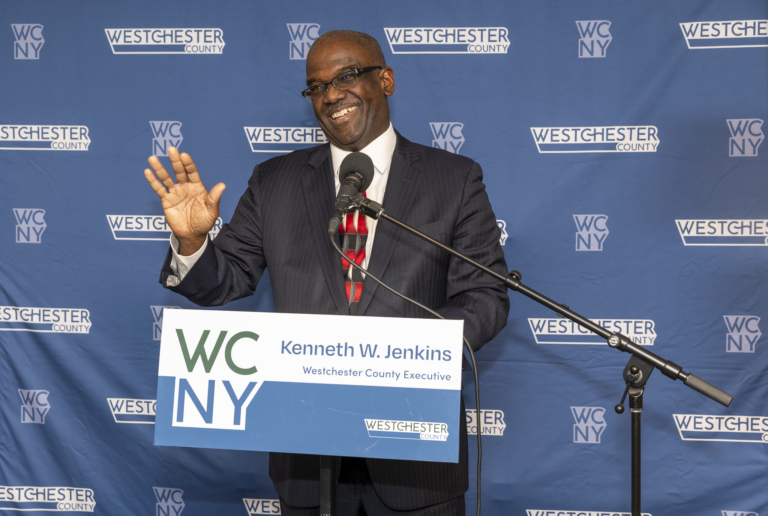
“That’s Not How It Happened”: Jenkins Rebuts Rocah’s Account

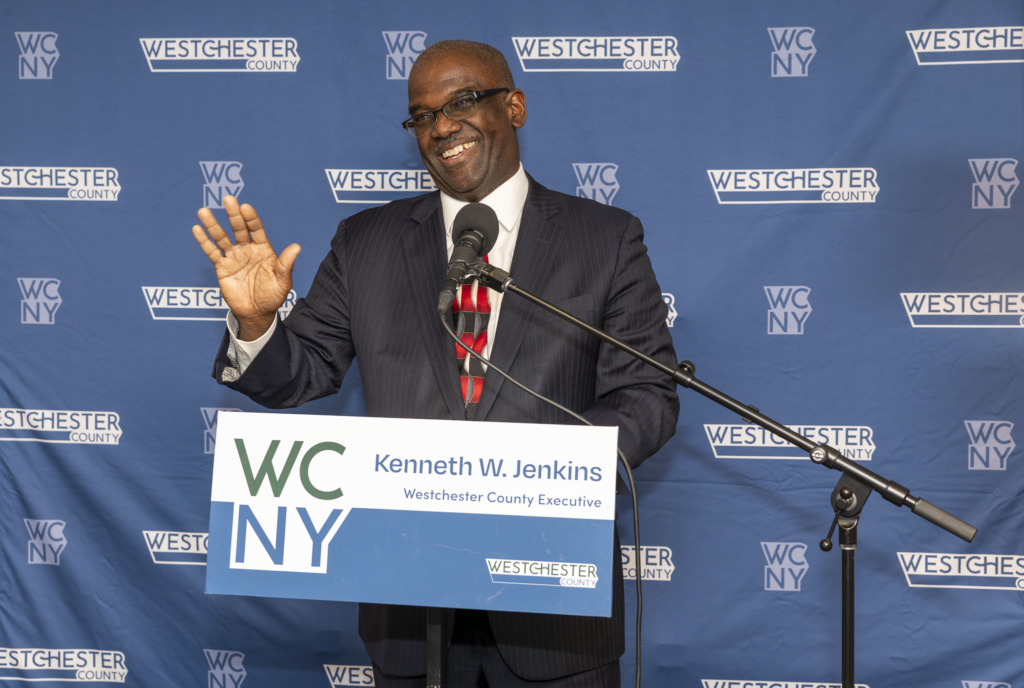
Ken Jenkins, now Westchester County Executive, has issued a direct rebuttal to a moment that former District Attorney Mimi Rocah used as an emblem of political pressure on the DA’s office. Rocah, in a wide-ranging interview with Preet Bharara, described an early-career exchange with a senior county official after a law-enforcement press conference — an exchange she says prompted her to tell the caller, “I’m not on your team.” Jenkins says that the caller was him, and his explanation of the conversation sharply contradicts Rocah’s framing.

Read: The County Protects Its Brand — Not Its People: Former DA, Mimi Rocah, Explains Why

Below is Jenkins’s statement in full, provided to Black Westchester:

In the transcript of the recording, Mimi Rocah states that I was angry because she had not invited me and other elected officials to participate in her press conference on guns.

First and foremost, I was not angry. I was not concerned about being there; at that time, I was an appointed official, not an elected official. What I did speak to DA Rocah about was why the Mayors, the Chief Elected Officers of the cities DA Rocah stated this initiative was for were angry because she failed to communicate with the Mayors before asking an appointed Police Chief or Police Commissioner to attend a press conference. I did state that those elected officials appoint those Police officials and report to their appointing authority — not to the District Attorney. From what I recall of the conversation, DA Rocah seemed to understand why those Democratic Mayors may be upset. I am sure I stated that those Mayors, all Democrats, would want to support the District Attorney. I thought District Attorney Rocah appreciated the insight and would follow up with those individuals. I recall hearing that all the Mayors appreciated the District Attorney’s call, and that all the Mayors stated they did not need to be part of the press conference.

Jenkins’ account: coordination, not confrontation

Jenkins lays out three key points: he denies being angry; he stresses his status at the time as an appointed deputy rather than an elected official; and he frames his comments as a concern for the mayors whose police chiefs or commissioners were invited to the event. Jenkins says he emphasized that police chiefs are appointed officials who report to their appointing authorities and that his call was about communication and protocol, not political pressure.

To support that claim, Jenkins points to contemporaneous coverage of the Aug. 3, 2021, event. Local reporting and the DA’s own materials described the launch as a county-and-federal initiative to coordinate data, intelligence, and prosecutorial strategy against gun and gang violence — and identified the Real Time Crime Bureau and participating law-enforcement leaders pictured at the event. Jenkins argues those facts undercut the notion that the call was an expression of partisan reproach.

Rocah’s version: an emblem of pressure

Rocah used the exchange — and her reply, “I’m not on your team” — as a vivid example of what she characterized as persistent political pressure on the DA’s office. In her interview, she described attempts by outside parties to influence case decisions, staffing, and office priorities, and she framed the press-conference call as an early instance of elected officials or political actors inserting themselves into prosecutorial affairs.

Jenkins’ account stated plainly

Jenkins said the call was strictly procedural — not a rebuke — and that he was calling out of concern for Rocah’s relationships with local leaders. He told her the mayors would reasonably expect to be consulted before their appointed police chiefs or commissioners were asked to appear at a county-coordinated event, and he framed his comments as protocol and communication, not politics. From his perspective, the exchange was routine intergovernmental coordination in a multi-jurisdictional county: a deputy making sure the DA’s office had checked with the chief elected officers whose departments were involved.

What contemporaneous records show

Jenkins cites the Lohud story and local TV coverage (including News12) that reported on the program as an interagency effort to improve information-sharing and prosecute repeat offenders. The DA’s own statements and social posts at the time described participating county and municipal law-enforcement officials and the county’s authorization for the DA to use the Real Time Crime Bureau space. Those primary materials are what Jenkins holds up as corroboration of his account.

A clearer way to understand what’s at stake

This exchange between Mimi Rocah and Ken Jenkins is more than a clash of memories — it’s a lesson in how county politics actually works. Politics isn’t only headlines or personalities; it’s incentives, routines, and relationships — and yes, sometimes honest misunderstandings. For the public’s sake, elected officials should act independently and put constituents before party choreography.

Surviving the Shutdown: How Black America Can Stand Together When Washington Fails

The U.S. government shutdown that began on October 1, 2025, has left nearly a million federal workers without pay and millions of Americans uncertain about when they’ll receive critical government assistance. For Black families, the stakes are exceptionally high. Federal jobs and aid programs have long been a bridge to stability and upward mobility in communities where private-sector opportunity remains limited. When the government shuts down, that bridge weakens — and survival becomes the priority.
If you depend on any form of government program — SNAP, WIC, Medicaid, Section 8, or Social Security — this is not a time for panic, but for preparation and connection. The following steps can help protect your household and strengthen your community during the shutdown.


First, secure your essentials immediately. Check your EBT or WIC balance, and stock up on durable foods like beans, rice, oats, and frozen vegetables. If you run short, local organizations such as Feeding Westchester, community churches, and neighborhood pantries are available to help. They often receive donations and emergency supplies during shutdowns.


Second, communicate early with your landlord or mortgage provider. If you rely on Section 8 or other HUD housing assistance, inform them that your benefits may be delayed. Most landlords and banks will work with tenants or homeowners who provide documentation and stay proactive rather than silent. HUD-certified housing counselors can also advocate for you and negotiate extensions if needed.


Third, stay on top of your healthcare coverage. Medicaid, Medicare, and ACA marketplace plans will continue to cover existing enrollees, but delays may occur for renewals or new applications. Keep a printed copy of your insurance card, medical prescriptions, and doctor’s contact information. For affordable care during disruptions, contact community clinics such as Open Door Family Medical Center or Westchester Community Health Center, which provide sliding-scale services regardless of insurance status.


Fourth, protect your finances. Call creditors, car lenders, and utility companies to explain your situation. Many have hardship programs that can pause payments without penalties during a shutdown. If you’re a federal employee or contractor, your local credit union may offer short-term, zero-interest loans to hold you over until pay resumes. Avoid payday lenders — their high-interest loans often turn a short-term crisis into long-term debt.
Fifth, strengthen your community network. When the government fails, the community must rise. Connect with your church, sorority, fraternity, or neighborhood association to share resources, meals, and transportation. Even small acts of cooperation — watching one another’s children, sharing food, or helping elders with errands — build resilience.
Finally, stay informed and engaged. The shutdown is a political crisis, but it’s also a reminder that survival and sovereignty go hand in hand. Know who represents you in Congress, and demand answers. The same energy we use to protest injustice must also be directed toward protecting economic stability and holding leaders accountable.
The shutdown may be temporary, but the lessons must be permanent. Black America cannot afford to depend on a system that repeatedly weaponizes our livelihoods for political games. This moment calls for unity, planning, and independence — principles that have always carried our people through hardship. Use this season not only to survive but to prepare for greater self-reliance when the system fails again.

The Lie of Return: Netanyahu’s False Narrative and the Erasure of African Hebrews

When Israeli Prime Minister Benjamin Netanyahu declared that modern Jews in Israel are “the descendants of the ancient Israelites described in the Bible,” he wasn’t speaking truth—he was protecting power. His statement wasn’t historical; it was political. It was the continuation of a long tradition of European leaders rewriting scripture to justify control of land, identity, and faith.

Netanyahu’s own bloodline tells the real story. His family name was originally Mileikowsky, and his ancestors were Polish Ashkenazi Jews who migrated from Warsaw, Poland, to British-controlled Palestine in the 1920s. There is no historical or genetic evidence connecting Netanyahu’s lineage to the ancient Israelites of the Bible or to the African origins of the Hebrew people. His ancestry is European, not Afro-Asiatic. His heritage belongs to the line of converts, not the covenant.

The ancient Israelites were people of color—Afro-Asiatic tribes rooted in Africa and the Near East, descended from Abraham, Isaac, and Jacob. Genesis and Exodus make their origin unmistakable. Abraham’s journey began in Ur, in the African-Asian corridor. Jacob’s descendants became a nation in Egypt. Exodus 2:19 records that Moses was mistaken for an Egyptian, while Numbers 12:1 tells us that he married an Ethiopian woman. Even the Messiah’s early years were spent in Africa—Matthew 2:13–15 describes how Joseph and Mary fled with Jesus into Egypt for safety. These are not the stories of Europeans; they are the stories of an African and Semitic people.

Archaeological and linguistic evidence supports this truth. Early Hebrew inscriptions discovered in the Sinai Peninsula and Canaan are written in Proto-Semitic scripts derived from Egyptian hieroglyphs. The people of the region were dark-skinned and shared customs, diets, and languages connected to African civilizations. The Hebrew identity was inseparable from its African environment—politically, culturally, and biologically.

Modern Israeli leaders, however, have built a national mythology rooted not in archaeology but in ideology. The majority of Jews living in Israel today are Ashkenazi, descended from communities that developed in Eastern and Central Europe over the past thousand years. Many historians trace the spread of Ashkenazi Judaism to the Khazar Empire, a Turkic kingdom in the Caucasus that adopted Judaism between the 8th and 9th centuries. Genetic research confirms that most Ashkenazi Jews possess a blend of Southern European and Slavic ancestry, with only a minor trace of ancient Near Eastern lineage. In short, they are European converts to a Middle Eastern faith—not the biological descendants of Israel’s original tribes.

Netanyahu’s personal history fits that pattern precisely. Born to Polish parents and raised in a family that Hebraized its name to “Netanyahu,” he represents a lineage of European migrants who adopted Hebrew names and narratives to establish legitimacy in the Middle East. It’s not a sin to convert or migrate—but it is a deception to claim ancient bloodline while dismissing the African roots of the people whose faith one inherited.

This distortion serves a clear purpose. By presenting European Jews as the “true Israelites,” Israel’s political establishment claims divine right to the land and recasts Palestinians—and all others—as foreigners. This is not about covenant; it’s about control. Billions of dollars in U.S. aid and Western political protection depend on this sacred narrative remaining unquestioned. If truth ever replaced propaganda, the moral foundation of modern Zionism would crumble.

Meanwhile, the Beta Israel of Ethiopia, the Lemba of South Africa, and the Igbo of Nigeria—African peoples who have preserved ancient Hebrew customs for centuries—are treated as outsiders by the very state that claims to represent Israel’s rebirth. These communities observe dietary laws, circumcision on the eighth day, Sabbath rest, and covenantal marriage traditions. Yet when Ethiopian Jews migrated to Israel in the 1980s and 1990s, they were met with racism, segregation, and even reports of forced sterilization. The hypocrisy is staggering: those with the oldest Hebrew practices are rejected, while those with the newest claims are revered.

The Bible never grants land or lineage by political inheritance; it grants it by obedience to God. Deuteronomy 7:6 reminds Israel that its chosen status was not because of blood, but because of covenant faithfulness. Psalm 68:31 declares, “Princes shall come out of Egypt; Ethiopia shall soon stretch out her hands unto God.” Scripture and history agree—Africa was never outside of the story; it was the foundation of it.

Netanyahu’s Polish ancestry doesn’t disqualify his faith, but it does expose his falsehood. He is not a descendant of the Israelites of Egypt or the prophets of Judah. He is a product of European history, not African covenant. His claim to biblical descent is as artificial as the state narrative that sustains it.

The truth is that Israel’s original children were Black and Brown, scattered across Africa and the diaspora long before modern borders were drawn. Their story was not erased by time—it was buried under politics. To uncover it is not to hate anyone; it is to honor the God of truth who commands His people to remember their origins.

Yet, what may be even more troubling than Netanyahu’s distortion is the silence of those who know better—particularly among Black pastors and faith leaders. Too many pulpits remain quiet out of fear of being labeled “anti-Semitic.” But that fear is misplaced, because people of color are Semitic people. The descendants of Shem include the ancient Hebrews, Arabs, Ethiopians, and other Afro-Asiatic nations. To speak truth about who the Israelites were is not hate—it is history.

Jesus Himself was a Palestinian Jew, born in Bethlehem, raised in Nazareth, and rooted in a land that was African and Semitic—not European. Our silence in the face of lies is not peace—it is betrayal. When we refuse to defend the historical Jesus, we betray the spiritual mission He lived and died for: truth, justice, and liberation.

Silence may protect reputations, but it cannot protect truth. And if we, as people of faith, continue to let others define our history, they will continue to define our destiny.

The real Israel did not come from Warsaw—it came from the womb of Africa. The covenant began under the African sun, written not in European bloodlines but in divine purpose. And no speech, no myth, and no prime minister can change that fact.

References

Scriptural References

  • Genesis 15:13 (KJV) – “And he said unto Abram, Know of a surety that thy seed shall be a stranger in a land that is not theirs, and shall serve them…”
  • Exodus 2:19 (KJV) – “An Egyptian delivered us out of the hand of the shepherds…”
  • Numbers 12:1 (KJV) – “And Miriam and Aaron spake against Moses because of the Ethiopian woman whom he had married.”
  • Matthew 2:13–15 (KJV) – “…flee into Egypt, and be thou there until I bring thee word: for Herod will seek the young child to destroy him.”
  • Acts 7:22 (KJV) – “And Moses was learned in all the wisdom of the Egyptians, and was mighty in words and in deeds.”
  • Psalm 68:31 (KJV) – “Princes shall come out of Egypt; Ethiopia shall soon stretch out her hands unto God.”
  • Deuteronomy 7:6 (KJV) – “For thou art an holy people unto the LORD thy God: the LORD thy God hath chosen thee to be a special people unto himself…”

Historical and Academic References

1. African and Afro-Asiatic Origins of the Israelites

  • Keita, S. O. Y., & Boyce, A. J. (1996). “Geographic Patterns of Human Crania Discrepancy: The Evidence from the Ancient Nile Valley.” American Journal of Physical Anthropology.
  • Redford, Donald B. (1992). Egypt, Canaan, and Israel in Ancient Times. Princeton University Press.
  • Diop, Cheikh Anta. (1974). The African Origin of Civilization: Myth or Reality. Chicago Review Press.
  • Ben-Jochannan, Yosef A. (1993). Africa: Mother of Western Civilization. Black Classic Press.

2. Ethnography and Linguistics of Early Hebrews

  • Kitchen, Kenneth A. (2003). On the Reliability of the Old Testament. Eerdmans.
  • Greenberg, Joseph H. (1963). The Languages of Africa. Indiana University Press.
  • Gardiner, Alan. (1957). Egyptian Grammar: Being an Introduction to the Study of Hieroglyphs. Griffith Institute.

3. European and Khazar Ancestry of Ashkenazi Jews

  • Koestler, Arthur. (1976). The Thirteenth Tribe: The Khazar Empire and Its Heritage. Random House.
  • Ostrer, Harry. (2012). Legacy: A Genetic History of the Jewish People. Oxford University Press.
  • Behar, Doron M. et al. (2010). “The Genome-Wide Structure of the Jewish People.” Nature, 466(7303), 238–242.
  • Elhaik, Eran. (2013). “The Missing Link of Jewish European Ancestry: Contrasting the Rhineland and Khazarian Hypotheses.” Genome Biology and Evolution, 5(1), 61–74.

4. Zionist Hebraization and European Migration to Palestine

  • Shlaim, Avi. (2014). The Iron Wall: Israel and the Arab World. Penguin Books.
  • Pappe, Ilan. (2004). A History of Modern Palestine: One Land, Two Peoples. Cambridge University Press.
  • Segev, Tom. (2000). One Palestine, Complete: Jews and Arabs Under the British Mandate. Henry Holt & Co.
  • Sand, Shlomo. (2009). The Invention of the Jewish People. Verso Books.

5. African Jewish Communities (Beta Israel, Lemba, Igbo)

  • Parfitt, Tudor. (1993). The Lost Tribes of Israel: The History of a Myth. Phoenix.
  • Parfitt, Tudor. (2000). Journey to the Vanished City: The Search for a Lost Tribe of Israel. Vintage.
  • Falola, Toyin, & Heaton, Matthew M. (2010). A History of Nigeria. Cambridge University Press.
  • Levine, Donald N. (2014). Greater Ethiopia: The Evolution of a Multiethnic Society. University of Chicago Press.

6. Racial and Political Theology in Modern Israel

  • Massad, Joseph A. (2006). The Persistence of the Palestinian Question. Routledge.
  • Said, Edward W. (1979). The Question of Palestine. Vintage Books.
  • Finkelstein, Norman. (2003). Image and Reality of the Israel-Palestine Conflict. Verso Books.
  • Khalidi, Rashid. (2020). The Hundred Years’ War on Palestine. Metropolitan Books.

7. Europeanization and Whitewashing of Biblical Figures

  • Snow, Edward. (1988). Inside Bruegel: The Play of Images in Children’s Games. North Point Press.
  • Goldenberg, David M. (2003). The Curse of Ham: Race and Slavery in Early Judaism, Christianity, and Islam.Princeton University Press.
  • Finney, Paul Corby. (1994). The Invisible God: The Earliest Christians on Art. Oxford University Press.

Modern Context and Commentary

  • Netanyahu, Benjamin. (2024, September). Interview Statement: “The Jews in Israel are the descendants of the ancient Israelites described in the Bible.” [Public broadcast transcript].
  • UN Human Rights Council Reports on Racial Discrimination in Israel and Occupied Palestinian Territories (2020–2024).
  • Haaretz (2023). “The Myth of Jewish Purity: What Israel’s DNA Studies Actually Reveal.”
  • Al Jazeera (2024). “African Hebrews in Israel: Still Treated as Outsiders.”

When Black Male Entertainers Defend Manhood, They Get Labeled the Enemy

“When I talk about masculinity, they call it hate.” This line, echoing the frustration of 50 Cent in a recent interview, encapsulates the cultural climate we’re navigating. Every time a prominent Black man courageously discusses the state of manhood—about the confusion, weakness, and lack of direction being fed to young boys—the media is quick to brand it as toxicanti-gay, or homophobic. The headlines drown out the message, and the conversation that could help rebuild families and strengthen communities gets lost in the noise.

What 50 Cent and other outspoken Black men are saying isn’t rooted in hate; it’s rooted in keen observation. They witness a culture that ridicules fatherhood, confuses boys about identity, and rewards emotional instability over discipline. They visit schools where boys are penalized for being assertive, homes where leadership is labeled as control, and entertainment where manhood is treated like a social disease. They see young men growing up with no blueprint for what a responsible, principled man looks like—and they’re sounding the alarm before it’s too late.

To be clear, 50 Cent and Snoop Dogg are far from perfect messengers. Their hip-hop careers have not been all gravy when it comes to how Black men have been portrayed in music. For decades, both helped shape a culture that often glorified violence, objectified women, and confused dominance with leadership. Those contradictions can’t be ignored. Yet even with that history, the issue they’re speaking on now cannot be denied. Their message—that masculinity is under attack, that young Black boys are growing up without moral or masculine direction—still rings true. Sometimes truth comes from flawed voices, but that doesn’t make the truth any less real.

Even within the influential sphere of Hollywood, voices are echoing the same concerns. Anthony Mackie, the Black actor now embodying the role of Captain America in the Marvel Cinematic Universe, boldly stated that there is “an attack on masculinity.” His words, not those of a political commentator, but a leading figure within Disney, a corporation often criticized for its portrayal of alternative lifestyles, carry significant weight. Mackie’s voice, situated at the heart of the entertainment industry, has the potential to shape the perceptions of our children.

And they’re not alone. Parents across the country are pushing back against the steady introduction of sexual identity and relationship themes into children’s programming. Cartoons once made for kids are now being used to normalize debates adults can barely agree on. Faith-based groups, community leaders, and educators have all raised concerns that these companies are not reflecting diversity—they’re directing it. The same entertainment industry that dismisses talk of masculine values seems fully invested in redefining childhood itself.

This is where control over narrative becomes critical. With Ellison’s recent acquisition consolidating BET, CBS, MTV, and Nickelodeon under one corporate roof, a single gatekeeper now decides which Black stories are “safe” to air and which ones disappear. When one company owns the outlets that shape Black culture, news, and entertainment, it also owns the perception of what’s acceptable for Black audiences to think, say, or feel. That’s not progress—it’s programming.

The men being criticized—whether rappers, actors, or fathers—are not fighting against representation; they’re fighting for responsibility. They want to see boys grow into disciplined men, not confused consumers. They want families restored, not replaced by trends. Absolute masculinity isn’t about control or aggression—it’s about order, protection, and service. It’s about teaching boys that strength is moral, not violent; that self-control is power, not weakness.

A society that ridicules those virtues cannot produce men of virtue. The media, instead of engaging the substance of what these men are saying, chooses the easy story—the moral outrage, the viral headline. But outrage doesn’t raise sons. Hashtags don’t build households. And demonizing Black men who call for strength only ensures another generation grows up without it.

If we truly aspire to foster healthy conversations about gender, identity, and equality in America, we must stop penalizing men for discussing discipline, duty, and leadership. The issue isn’t that too many are talking about masculinity—it’s that too few are allowed to. Until we can have that discussion without censorship or caricature, the headlines will keep shouting “hate” while our boys grow up lost in confusion. Let’s strive for a balanced narrative on masculinity that encourages open, respectful discussions and positively influences perceptions.

The truth is simple: masculinity isn’t the enemy. The absence of it is.