New Rochelle, NY — October 2, 2025. The Westchester Section of the National Council of Negro Women (NCNW) marked its 70th anniversary with an inspiring celebration at the Greentree Country Club in New Rochelle, recognizing a decade-spanning legacy of service and sisterhood. The milestone event honored at least ten organizations and individuals who have made outstanding contributions to education, health, and community empowerment across Westchester County.
Among this year’s distinguished honorees was Environmental Leaders of Color (ELOC), a Mount Vernon–based nonprofit that continues to lead the charge in promoting environmental education and sustainable development in underserved communities. ELOC received the Dr. Thelma Daley Environmental Award, one of the organization’s highest honors.
ELOC: Leading the Way in Environmental Justice and Equity
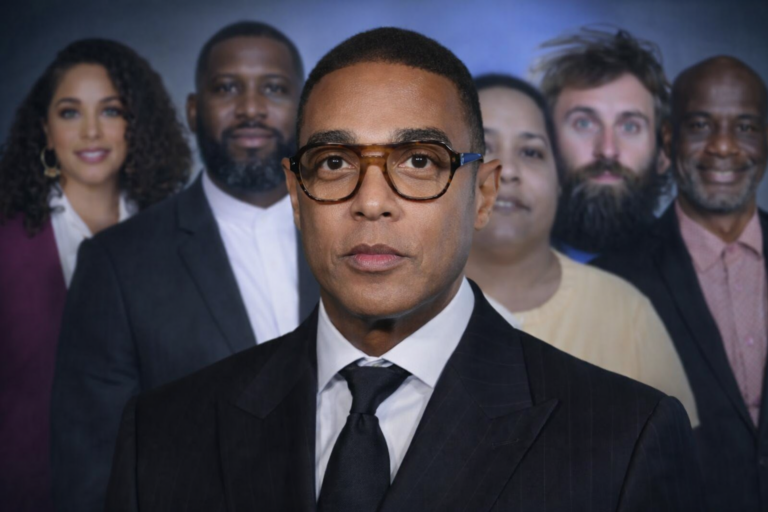
Accepting the award on behalf of ELOC were Dr. Diana K. Williams, Executive Director, and Marvin Church, Associate Director. Dr. Williams—a respected dentist and MBA holder—has led ELOC’s mission to educate, empower, and equip young people to become future leaders in environmental and technological innovation.
“This award is a testament to the power of education and faith in action,” Dr. Williams shared. “It reflects the dedication of our 609 graduates, the tireless work of our staff, and the belief that environmental justice is not separate from civil rights—it is at the heart of them.”
Mr. Church, a long-standing advocate for green workforce development and clean energy initiatives, emphasized the importance of inclusion in both environmental and emerging AI fields. “We’re building a future where those most impacted by pollution are also leading the solutions,” he said.
Honoring Dr. Thelma Daley’s Legacy
The award is named after Dr. Thelma Daley, who is a trailblazer in education and civic leadership whose life’s work embodied empowerment and progress. The Dr. Thelma Daley Environmental Award honors individuals and organizations that advance sustainability, innovation, and justice—particularly within communities of color.
A Call to Continue the Work
The 70th Anniversary Gala united community leaders, policymakers, educators, and advocates around a shared vision of progress and purpose. It was not just a night of recognition—but a call to action to support the next generation of changemakers who are tackling environmental, economic, and health disparities head-on.
ELOC expressed its heartfelt gratitude to NCNW for the honor, reaffirming its commitment to advancing environmental equity and sustainable opportunity throughout Westchester County.
“We thank the NCNW Westchester Section for recognizing our mission and legacy,” ELOC stated. “Together, we’re proving that environmental justice is community justice.”
Netflix finds itself in the crosshairs of controversy again — this time, not for password sharing crackdowns or price hikes, but for what some critics see as a deliberate push of transgender themes in children’s programming.
The uproar ignited after Dead End: Paranormal Park, an animated series featuring a transgender lead character, gained visibility on the platform. Soon after, other youth-targeted content, including Strawberry Shortcake: Berry in the Big City, drew criticism for including LGBTQ+ characters. The backlash escalated when billionaire Elon Musk called on his millions of followers to cancel their Netflix subscriptions, framing the issue as an attack on children and family values.
The Boycott Movement
Across social media, hashtags like #CancelNetflix have gained momentum. Conservative commentators and parent groups argue that children’s media should not be the arena for sexual identity debates, accusing Netflix of“indoctrination.” Some subscribers claim they have already canceled, while others are demanding corporate accountability.
Counting the Cost: Billions on the Line
This isn’t just a culture war — it’s also affecting Wall Street. Following Musk’s call for boycotts, Netflix shares fell between 1 and 2 percent in a single trading session, wiping out an estimated $15–17 billion in market value. Reports also suggest a noticeable spike in subscription cancellations, though Netflix itself has not confirmed these numbers.
Still, financial analysts warn that these market shocks are often short-lived. Netflix weathered a similar storm during the 2020 backlash against ‘Cuties,’ and many investors believe that long-term subscriber churn is unlikely to be catastrophic. However, the sell-off demonstrates that even cultural debates can have real financial consequences for billion-dollar corporations.
What It Means for Black America
For Black families, the controversy raises more profound questions. Who decides what values our children are taught through the media? Should we leave that decision to corporations in Silicon Valley and Hollywood, or should we take more responsibility for shaping cultural content in our households?
Historically, Black America has battled for representation on screen, fighting against stereotypes that painted us as criminals, maids, or comic relief. Now, as new cultural agendas flood children’s programming, the question is whether a new fight over identity politics is overshadowing our fight for visibility.
The Black community must also confront the economic angle. Our children are heavy consumers of streaming content. If we don’t build our own platforms, we are at the mercy of billion-dollar companies deciding what images and values dominate the screen. Meanwhile, Black-owned streaming platforms, children’s book publishers, and production studios struggle to get the same attention or support.
Beyond Netflix: The Need for Black-Owned Online Platforms
This moment is bigger than Netflix. It’s about building Black-owned online platforms that can deliver programming shaped by our values, our stories, and our vision for the next generation. If families don’t feel represented or respected on mainstream platforms, the answer cannot be limited to outrage. It must also be ownership. Just as we encourage people to “Buy Black,” we must also encourage them to “Watch Black.”
Black Westchester has long argued that without institution-building — whether in politics, media, education, or business — our community will always be reacting to someone else’s agenda instead of setting our own. Netflix is just the latest example.
The Bottom Line
Whether you cancel Netflix or keep your subscription, the deeper challenge is what we allow into our homes and into our children’s minds. The real boycott we need is against passivity — against allowing others to shape the moral compass of our community.
The fight is not just about trans kids’ shows. It’s about control, responsibility, and the future of Black families.
The principle of free speech is enshrined in the First Amendment of the United States Constitution. In America, we are justifiably proud of our right to express our views, speak for or against various issues, openly agree or disagree with one another, or tell our elected officials how we feel about the job they’re doing.
Public libraries are a cornerstone of our society’s commitment to public education, personal enrichment, free speech, and the democratic exchange of ideas. The American Library Association (ALA), which is the largest membership association in the library industry, has the following statement about Intellectual Freedom on its website: “ALA actively advocates and educates in defense of intellectual freedom—the rights of library users to read, seek information, and speak freely as guaranteed by the First Amendment. Intellectual freedom is a core value of the library profession, and a basic right in our democratic society.” (Emphasis mine.) ALA’s Library Bill of Rights urges libraries to resist censorship and cooperate with those who resist the abridgement of free expression.
Shockingly, the Mount Vernon Public Library (MVPL) seems to have forgotten the cherished library principles of intellectual freedom and free speech; it is the first, and only, public library in Westchester County to turn its back on the First Amendment. In a September 12th notice posted on the library’s website, MVPL announced that it will suspend the period of public expression at its regular meetings until further notice: https://mountvernonpubliclibrary.org/public-expression-notice-2025/
The library board will vote on a resolution to implement this censorship of free speech at a special meeting scheduled for Monday, September 22nd, at 4:30 pm, when many members of the community are working and unable to attend. MVPL’s bylaws include a period of public expression, and public expression has been allowed at the library’s regular meetings for many decades. The current board, Director, and Treasurer have recently been questioned by the public about some serious concerns, including:
∙ A controversial bond proposal for the purchase of a 120-year-old single-family residence for $1.7 million;
∙ The library exceeded its annual budget by more than $600,000 in 2023-2024, and more than $500,000 in 2024-2025;
∙ Frequent violations of the Open Meetings Law;
∙ The decision to appoint MVPL’s Treasurer and Chief Account Clerk as bank signers in violation of the need for checks and balances to safeguard public funds;
∙ A one-day program devoted to honoring Rapper DMX, costing $23,000; and an improper re-vote for Board of Trustees Vice President that took place at a special meeting on July 21, 2025.
Censorship of the public is wrong, especially by a taxpayer-funded institution. Public expression allows a community to hold its leaders accountable. When the board chooses to suspend public comment, it gives the impression that they may be trying to shield impropriety from public scrutiny. If you disagree with the board’s decision, please join me in contacting the Mount Vernon Public Library’s leadership team:
Timur Davis, Library Director – timurd@mvplibrary.org
Jay Vosler, Treasurer – treasurer@mvplibrary.org
Hope Marable, President – Trustee4@mvplibrary.org
Kim Harper, Vice President – Trustee5@mvplibrary.org
The board will hold its postponed regular meeting on Wednesday, September 24th, at 6:30 pm at the Mount Vernon Public Library, 28 S. First Avenue, Mount Vernon, NY, in the Community Room.
The ability for people to speak freely at library board meetings is not just a courtesy; it is a fundamental part of our democratic process and a core value of the library. Inform Director Davis and the board that, if the library truly values the public’s input, as stated in the posted notice, they will reverse course and allow the people to speak.
Thank you for standing up for the First Amendment.
Westchester Children’s Association (WCA) will host their Annual Advocacy Breakfast in October with the theme: “Advocacy in the Time of Change.” The Kathryn Wasserman Davis Child Advocacy Lecture will be delivered by keynote speaker Damali Peterman, Esq, Author, specialist in conflict management and negotiation. The event will take place on Tuesday, October 21 at 8:00 AM at the Harrison Meadows Country Club, located at 123 North Street in Harrison, NY. Tickets are $75 per person and can be purchased at this link.
With the release of her new book, Be Who You Are to Get What You Want, Damali Peterman, Esq., will discuss how to be an authentic advocate for yourself, your neighbors and your community, especially in times and circumstances when advocacy seems difficult or impossible.
“Every fall, WCA gathers parents, educators, community members, government officials, and other key stakeholders to address a pressing issue affecting children. This year we are focusing on being an advocate for yourself and others in the current challenging climate. We are sure that everyone who attends will walk away with information and insight to help them feel enlightened and empowered,” stated Adam Rabinovitch, newly appointed Executive Director of WCA.
Event Details:
Topic: Advocacy in the Time of Change
Speaker: Damali Peterman, Esq, Author, specialist in conflict management and negotiation
Date: Tuesday, October 21, 2025
Time: 8:00 AM – 11:00 AM
Location: Harrison Meadows Country Club, 123 North St, Harrison, NY 10528
About Westchester Children’s Association: Westchester Children’s Association (WCA) is a multi-issue, child advocacy nonprofit that works to ensure that every child in Westchester is healthy, safe, and prepared for life’s challenges, regardless of race or zip code. Since 1914, WCA has been the leading independent voice for Westchester’s children by identifying their needs, making those needs known to the public, and ensuring those needs are met through advocacy and mobilization efforts. For more information about Westchester Children’s Association, visit their website at www.wca4kids.org.
If you asked a teenager at Yonkers High School where their school ranks, you’d hear pride: 585th nationally, scoring 96.73%. Just a few miles south in Mount Vernon, the story is shameful. Mount Vernon High School ranks between 13,427 and 17,901 nationally, with less than a 25% score. Mount Vernon STEAM Academy is ranked 10,471, at just 41.5%. These aren’t just numbers. They are the visible proof of educational apartheid in Westchester County. While some schools thrive, Black-majority districts like Mount Vernon and Peekskill languish at the bottom. For Black parents and residents across this county, this must be a wake-up call. Our children are not getting the education they deserve, and if we don’t demand change, we are complicit in their failure.
The divide could not be clearer:
Yonkers High School – Ranked 585 nationally, 96.73% score (very strong).
Lincoln High School – Ranked 4,285, 76.06% score (mid-level performance).
Saunders Trades & Technical High School – Ranked 6,049, 66.21% score (average performance).
Roosevelt High School – Ranked 11,507, 35.72% score (low performance).
Gorton High School – Ranked 10,016, 44.05% score (low performance).
White Plains High School – ranked 3,989th, with a score of 77.72%.
New Rochelle High School – ranked 4,758th, scoring 73.42%.
Woodlands (Greenburgh) – ranked 4,838th, with a score of 72.97%.
These schools, while not in the elite tier of Scarsdale or Bronxville, are steady, competitive, and provide a real pathway to higher education.
Now compare those results to predominantly Black communities:
Mount Vernon High School – at the very bottom of the rankings, between 13,427 and 17,901, registering below 25%.
Mount Vernon STEAM Academy – ranked 10,471, with a score of 41.5%.
Peekskill High School – also at the very bottom of the rankings, under 25%.
Elmsford’s Alexander Hamilton High School – ranked 8,794th, with a score of just 50.87%.
The disparities are not marginal — they are gaping. In one Westchester school district, students compete with the best in the nation; in another, just a few miles away, children are statistically locked out of opportunity before they ever set foot in a college admissions office.
The disparities are not the fault of our children. They are symptoms of structural inequities. New York has one of the most inequitable school funding systems in the country, disproportionately shortchanging districts that serve Black, Brown, and low-income students. Westchester’s zoning practices only deepen the divide, creating school district borders that wall off resources along racial and economic lines. Mount Vernon itself has been flagged as being under “severe fiscal stress” by state oversight agencies, a condition that bleeds into every corner of its schools, from teacher retention to extracurricular opportunities. Yet the state has failed to intervene in any meaningful way. Meanwhile, districts like Scarsdale or Bronxville maintain elite status because their funding is protected, their infrastructure is maintained, and their parents demand accountability. The political dysfunction in cities like Mount Vernon only makes matters worse. School boards are too often dominated by infighting, mismanagement, and misplaced priorities. Instead of focusing on curriculum, teacher support, and facilities, too many administrators and politicians have treated education as another opportunity for patronage and personal ambition. The result is visible in the rankings — systemic neglect and political failure have translated directly into lost futures for Black children.
The cost of underperforming schools is not just measured in test scores. It plays out in fewer scholarships earned, fewer college seats secured, and fewer pipelines to trade programs or technology careers. It drags down property values in Black-majority cities like Mount Vernon and Peekskill. It leads to higher unemployment, deeper poverty, and a growing cycle of disenfranchisement that begins not in adulthood, but in the classroom. It also plays out in the lack of economic development. If we as adults are failing to teach our children, then we are failing the Black businesses of tomorrow. We cannot be blind to the correlation between the fact that only two percent of businesses in Westchester are Black-owned and the reality that so many of our students are graduating without even the basic skills needed to survive. Educational failure and economic weakness are directly connected, and unless we address one, the other will continue to wither.
Black residents of Mount Vernon, Peekskill, Elmsford, and beyond must stop treating poor education as normal. Our children’s futures cannot be collateral damage in the games of politicians or the inertia of state funding formulas. We have to hold school boards accountable and demand transparency in budgets, hiring, and curriculum. We need coalitions of parents who will organize, attend meetings, and refuse excuses. We must push Albany to overhaul the formulas that consistently disadvantage poor and Black districts. Without systemic reform, no amount of local effort will be enough. Equally important, we cannot allow the political dysfunction that has crippled Mount Vernon for decades to keep distracting us from the true issue. Children’s futures must come before the ambitions of mayors, trustees, and political operatives. And beyond demanding reform, we must invest in our children directly through tutoring, mentorship, and afterschool programs that supplement what the schools are failing to provide.
There is reason for hope. Yonkers High proves that even in diverse, urban settings, schools can excel with the right leadership and investment. White Plains demonstrates how a mixed-income district can deliver consistent, stable results. The lesson is clear: when communities demand excellence and leadership delivers, the children rise to the challenge. But hope without responsibility is worthless. Black Westchester must refuse to accept that our children are destined to be last. As Malcolm X once said, “Education is the passport to the future, for tomorrow belongs to those who prepare for it today.” Right now, our children are being denied that passport. The question is whether we as parents, residents, and leaders will fight to put it back in their hands. This is not just about education policy. It is about survival. A community that accepts failing schools accepts a failing future.
References: The Education Trust–New York: New York ranks near bottom of states in analysis of school funding disparities (2023). The Century Foundation: How Zoning Drives Educational Inequality: The Case of Westchester County (2019). NY Senate District Report: Mount Vernon City School District – Severe Fiscal Stress (2024). Alliance for Quality Education NY: The Impact of Funding Discrepancies on Educational Opportunities: Peekskill vs. Scarsdale(2018). US News Best High Schools Rankings – Mount Vernon, Peekskill, Yonkers, New Rochelle, White Plains, Greenburgh, Elmsford (2025).
Nearly 300,000 Black women have exited the American labor force in the past three months, according to a recent MSNBC article. Much of the coverage has focused on federal job cuts, the dismantling of DEI programs, inflation, and student loan debt. But what has been less discussed is the devastating downstream effect: the connection between Black women’s economic displacement and the rising rates of food insecurity—particularly among children.
The Invisible Cost of Exit
When Black women lose access to stable jobs, entire households and communities suffer. Black women are often primary breadwinners and caretakers. The sudden loss of income doesn’t just disrupt their personal career trajectory; it undermines the economic stability of families. For children, this instability manifests directly and measurably: empty refrigerators, missed meals, and declining health outcomes. Food insecurity isn’t just about hunger—it is about developmental setbacks, chronic stress, and diminished educational performance.
Systemic Barriers That Compound the Crisis
The reasons behind Black women’s mass labor exodus are structural, not individual. Dr. Kecia M. Thomas has written about the “pet to threat” phenomenon: when Black women shift from being celebrated as assets to being perceived as threats to organizational culture. Research confirms that 36% of Black women have left jobs because they felt unsafe, and that working in predominantly white teams increases attrition while decreasing promotion opportunities. These workplace inequities limit long-term career advancement and restrict access to stable, high-paying jobs—the very jobs that allow families to thrive and children to avoid hunger.
Meanwhile, the dismantling of corporate DEI programs—including employee resource groups (ERGs), mentorship pipelines, and sponsorship opportunities—has further widened the “network gap.” Research shows that 70% of professionals get hired through someone they know. Black women, already underrepresented in leadership, now have fewer pathways to expand their networks, leading to reduced access to career mobility and economic security.
Children Caught in the Crossfire
The ripple effects of workforce exits are stark. Children in households where parents—particularly mothers—experience job loss are more likely to face food insecurity. Studies consistently show that children who experience food insecurity struggle academically, are at greater risk for behavioral health challenges, and often face long-term health disparities. For Black children, whose mothers disproportionately bear the brunt of these systemic inequities, the stakes are life-defining.
This is not just an economic issue; it is a social justice crisis. Every time a Black woman is pushed out of the workforce due to systemic inequities, her child’s ability to thrive is compromised.
A Call to Action
Policy leaders, corporate executives, and community organizations must confront this crisis head-on. That means protecting and expanding DEI initiatives that give Black women a fair chance at career advancement. It means investing in safety nets—like SNAP, school meal programs, and childcare subsidies—that ensure children don’t go hungry when household incomes falter. And it means acknowledging that labor policies are not just about workforce participation, but about the health and well-being of the next generation.
Food insecurity is a preventable crisis. But prevention begins with ensuring that Black women—who are holding up families, classrooms, hospitals, and boardrooms—are not forced out of the labor force by systemic bias and policy neglect. When we protect Black women’s place in the workforce, we safeguard children’s futures.
In her wide-ranging interview with Preet Bharara, read Rocah’s testimony through a simple framework: follow the incentives, watch the outcomes. This isn’t personality theater — it’s a case study in how the incentives built into county government produce predictable results. When budgets, appointments, and political favors create leverage, the consequences — who gets investigated, which cases are prioritized, and which inquiries stall — follow inevitably. Rocah’s account is practical evidence, not melodrama.
Rocah took the DA’s job to enforce the law. She left because the institutional incentives pushed her toward politics. When the people who control budgets, appointments, and endorsements also expect deference, you do not get an impartial system — you get a system that rewards those who play by the power rules and punishes those who treat public duty as a separate obligation.
Look at the trade-offs. If a prosecutor must return to county legislators every time she wants to shift money or staff, those legislators hold leverage. Leverage creates influence. Influence creates favors. Once favors and protections enter the picture, outcomes — who is prosecuted, which cases are prioritized, which investigations live or die — are shaped less by evidence and more by relationships. This is not theory; it’s the arithmetic of incentives.
Now watch the cost. Every dollar, investigator, or hour spent protecting insiders or placating power brokers is a dollar, investigator, or hour not spent on neighborhood violence prevention, cold-case work, community outreach, or thorough public-integrity probes. Those losses aren’t abstract. They mean fewer detectives in Black neighborhoods, slower or stalled corruption inquiries, and families waiting longer — sometimes forever — for justice. The people who suffer most are the ones who can’t trade favors for protection: people with low incomes, the unstructured policing policies, and communities of color. This is the stark reality of the injustice perpetuated by the system.
Please put it in human terms: when a mother in Mount Vernon watches a suspect booked on other charges but never sees her son’s murder fully and properly pursued, it’s reasonable for her to conclude she’s a victim of county politics. When elected officials are accused of stealing public funds and no full, transparent investigation follows — or when allegations of serious misconduct involving a mayor are downplayed or ignored — the public doesn’t shrug these off as isolated problems. They see patterns. They see a system that protects its brand while taxpayers pay the cost. That perception is not paranoia; it’s the logical outcome of incentives that favor insiders.
Rocah’s account also illustrates how optics often outweigh outcomes in county practice. A straightforward press conference with federal partners becomes political because party actors view every platform as their own. Neutral law enforcement acts are turned into theater. The result: announcements are watered down, delayed, or converted into photo opportunities — and public safety suffers.
Don’t be soothed by party labels. Institutions respond to incentives regardless of rhetoric. If both parties benefit from the same levers — such as budgets, patronage, and candidate selection — blaming one side alone misses the point. The outcome is the same: insiders eat well; outsiders get boxed out.
It also puts a hard spotlight on the new DA, Susan Cacace. Are her office’s staffing moves, budget requests, and public appearances being run through the same “team” calculus Rocah describes — subtle tests of loyalty, approval-seeking, and quiet accommodation? We don’t know the answer yet, but the question itself is urgent: if the pattern Rocah describes is the norm rather than the exception, then Westchester’s justice system ceases to function as a neutral arbiter and instead becomes a political mouthpiece. That possibility should worry every resident who expects the law to serve the public, not preserve a party brand.
What does that mean for Black people in Westchester? It means skepticism toward comforting narratives that ask us to “trust the system” without looking at results. These narratives often include assurances that the system is fair and just, or that the authorities are doing everything they can. High crime, city-official corruption, questions about the Board of Elections, and stalled investigations aren’t separate mysteries — they are interconnected outcomes of a system that protects itself. Rocah’s testimony explains why we so often don’t see real justice when power is at stake.
This is not a call to marches or a list of reforms. It’s a call to think clearly: note who benefits, note who pays the costs, and judge the system by outcomes, not promises. Mimi Rocah has provided us with precise data on how incentives influence outcomes in Westchester. If we care about absolute safety and genuine accountability, we start there — with the facts and the outcomes they produce. Let’s be determined to hold the system accountable for the results it delivers.
Why Westchester’s political culture made it harder to be an independent District Attorney
Former Westchester County District Attorney Mimi Rocah didn’t leave office because she grew tired of prosecuting. She left because she refused to play politics. In a wide-ranging conversation with Preet Bharara — the former U.S. Attorney for the Southern District of New York — Rocah delivered a blunt indictment of the political pressures that press on the DA’s office: forces she says eroded independence, warped prosecutorial priorities, and turned basic management into near-constant combat. Her account offers a rare, uncomfortable window into how county-level power actually works in Westchester.
The first clash: “I’m not on your team”
Early in her tenure Rocah organized a joint task force on guns and gangs with federal partners — a law-enforcement press conference, not a campaign event. She says a senior county official called, furious that electeds hadn’t been invited, and told her she wasn’t being a “team player.” “I’m not on your team,” Rocah replied — a line that captures her stance and, more important, why the local political class bristled. That phone call, she says, came from Ken Jenkins — now Westchester County Executive, but at the time serving as Deputy County Executive — and the exchange exposed how quickly ordinary law-enforcement decisions can become political litmus tests in Westchester.
The party pecking order — and what it costs to jump the line
Rocah’s 2019 primary victory over an incumbent rattled a system that runs on expected loyalties. Party insiders, she said, still expect candidates to “earn” their turn by doing neighborhood tasks — passing out literature, mailing for the machine, waiting in line. That calculus discounts actual governing experience and rewards obedience to the party cadence. Once in office, Rocah says, that resentment hardened into suspicion: she was perceived not as a partner but as a threat to the existing order.
She recounts meetings with party leaders who assumed a continued “relationship” about priorities while she sat as DA. Rocah refused; in their world that was an affront. In hers it was a boundary between law and politics. The collision has consequences: when the party’s network expects deference, independence looks like insubordination.
Pressure campaigns: favors, “suggestions,” and the casualness of influence
Rocah describes how elected officials treated the DA’s office like another lever to be tugged. Some urged investigations into political opponents; others texted to request “consideration” for friends facing prosecution. The striking fact wasn’t the intensity of the asks, but how casual they were — as if it were normal for politicians to request favors from the county’s chief prosecutor. “What surprised me the most was how much people who have nothing to do with law enforcement or the DA’s office would try to influence decisions of mine about cases, about the running of the office…,” she says. That normalization is the rot.
The budget choke point: politics by other means
If the press-conference dust-ups show culture, the budget reveals structure. Unlike city DAs who receive and manage an internal pot of funds, Westchester’s DA must return to county legislators every time she wants to reallocate staff or shift lines. “We had to go back to our board of legislators, to our county government, every time we had a change we wanted to make,” Rocah said — a condition that hands political actors a lever they can use to shape who gets resources and which priorities get staffed.
That dynamic, she warns, turns fiscal process into political leverage. A DA who wants to build out public-integrity work or pursue investigations that implicate local office-holders can find the money stalled or questioned by the very people who might be under scrutiny. When budget approval becomes a gate, independence becomes performative.
No DOI, thin ethics infrastructure — and the perception problem
Westchester lacks a civilian Department of Investigation comparable to New York City’s DOI — an independent investigative arm that can take on corruption and administrative misconduct. The county’s newer Board of Ethics, Rocah notes, has few investigators and limited capacity; it has even outsourced probes to outside counsel. That leaves most integrity work to the DA’s office, magnifying the perception — fair or not — that anti-corruption work is partisan. The result: every referral is a potential political grenade.
Guardrails she built — and why they weren’t enough
Rocah tried to draw lines. She pledged not to accept police union endorsements or contributions and declined donations from anyone with a matter pending before her office, returning funds where conflicts later arose. She built a conviction-review unit that exonerated the wrongly convicted — a reminder that prosecutorial power can harm and it can heal. Yet after three-and-a-half years of fighting to keep politics out of day-to-day decisions, she could not imagine re-entering the campaign machine while sitting in the chair. “I did not feel comfortable jumping back into the political side of it,” she told Bharara. Her choice to step away crystallized at a large October 2023 party event when, emotionally raw, she realized: “I cannot do this.”
Why this interview matters for the Westchester community
When we watch open corruption and unethical behavior from local politicians — especially in a county long dominated by one party — Rocah’s perspective is uniquely damning because it comes from inside the house. She shows plainly why the system protects the structure, not the individual: silence is rewarded, independence punished, and the common instruction is to “stay quiet and it will all pass.” Rocah’s words shine light on the rot in Westchester politics, but that light doesn’t automatically fix a system that’s set up to preserve itself.
Republicans and Democrats, she implies, draw from the same power well. In practice the instruction for ambitious officials is simple and brutal: play the game and you’ll eat well; don’t, and you’ll be boxed out and replaced. That is Westchester politics at its finest — and it is why exposing the problem does not mean the problem will be solved.
The worst new question Rocah’s testimony forces: what about Susan Cacace?
The worst part of Rocah’s account is what it forces Westchester to consider next: what is the current DA, Susan Cacace, going through right now? Is she already feeling the quiet pressure Rocah described — the budget leash, the whispered “suggestions,” the expectation of deference from party actors? Cacace, who now leads the office, brings decades of experience as a prosecutor, judge, and defense attorney to the role — but experience doesn’t inoculate someone from structure. If Rocah’s experience is the rule rather than the exception, this is not merely one DA’s personal story; it is a county system that chews up officials who refuse to play along.
Mimi Rocah walked into public service believing she could draw lines between law and politics. She left convinced the county’s political machine would not respect those lines. Her account doesn’t end with indictments or reform plans; it ends with a question that Westchester residents should not shrug off. If the system protects itself, who protects the public?
The forced takeover of TikTok by U.S. investors aligned with pro-Israel interests has been sold to the public as a “national security measure” to keep Americans safe from China. But when you peel back the layers, it becomes clear: this isn’t about protecting our data. It’s about controlling our minds. And for Black America, the implications are especially dangerous.
The messengers: Jimmy Dore and Max Blumenthal
This warning doesn’t come from the political establishment. It comes from Jimmy Dore, a comedian turned political commentator known for exposing bipartisan corruption, and Max Blumenthal, a veteran investigative journalist and editor of The Grayzone, who has long documented U.S. and Israeli disinformation campaigns. Both argue that Washington’s TikTok deal was never about China. It was about silencing dissent on Gaza and preserving U.S. support for Israel at a moment when younger Americans—including Black youth—are increasingly skeptical.
From “China threat” to “Israel safeguard”
The U.S. government justified the takeover of TikTok as a way to protect Americans from Chinese surveillance. Yet the restructuring handed the platform to Oracle, run by billionaire Larry Ellison—one of the most prominent financial backers of Israel. Dore and Blumenthal emphasize Ellison’s deep ties to Prime Minister Benjamin Netanyahu. Ellison has hosted Netanyahu at tech events, praised Israel as a model for startups and military innovation, and funded pro-IDF charities. His son, David Ellison, has been linked to projects advancing Israel’s narrative abroad. In other words, TikTok’s algorithm—the heartbeat of what videos trend—is now in the hands of a company run by Netanyahu’s close ally.
Paid influence and propaganda pipelines
This isn’t speculation. Documents show that Israel has been paying influencers up to $7,000 per post as part of a campaign called the “Esther Project.” Managed by Bridge Partners, an American firm working with Israel’s Foreign Ministry, the campaign budgeted $900,000 in just six months to flood TikTok and Instagram with pro-Israel content. At the same time, Netanyahu’s office has signed a $45 million ad contract with Google to spread narratives denying famine in Gaza. Blumenthal points out that this isn’t isolated—it’s part of a broader media consolidation strategy: Ellison’s bid to influence Paramount and CBS News, and the recruitment of pro-Israel editors like Barry Weiss. When you combine algorithm control, paid influencers, and multi-million-dollar ad buys, you get more than bias. You get an information ecosystem engineered to enforce conformity.
This takeover happens against the backdrop of an escalating humanitarian crisis in Gaza. Since October 7, the Israeli military campaign has killed thousands of civilians, including journalists, doctors, and children. Entire neighborhoods have been reduced to rubble, food shortages have tipped into famine, and UN officials have accused Israel of collective punishment. Around the world, including in Black America, outrage has grown over images of bombed hospitals and refugee camps.
On TikTok, young users circulated raw, unfiltered footage of Gaza’s devastation—challenging the sanitized narratives of mainstream media. That is precisely what the takeover seeks to stop. Dore and Blumenthal argue that TikTok was “too effective” at letting people see Gaza’s suffering, and that threatened to fracture U.S. support for Israel. Netanyahu himself reportedly told a group of influencers, “We have to take over TikTok to stop this revolt.”
Even figures once aligned with pro-Israel lobbying began to speak out. Conservative commentator Charlie Kirk, who had been a paid spokesperson for pro-Israel lobbyists, admitted that his view of Netanyahu’s influence changed as he realized the extent of Israel’s grip on U.S. foreign policy. That kind of shift underscores how undeniable the perception of Netanyahu’s power has become.
At the same time, polling showed a stark generational divide. Americans under 30 increasingly opposed Israel’s war in Gaza, with many saying the assault on civilians was unjustifiable. This growing resistance among youth—cutting across race and party lines—is precisely why Israel and its allies see TikTok as a “problem” to be solved.
Why this hits Black America harder
Black voices have long depended on alternative platforms to bypass media gatekeepers—from the Black press to hip-hop to social media. TikTok and Instagram became crucial tools for amplifying police brutality, housing injustice, and demands for reparations. Now, with algorithms retrained by Ellison’s Oracle and influencers paid to drown out dissent, the danger is clear.
If Black America hasn’t noticed, TikTok has already become a battleground. Increasingly, there has been an anti-reparations rhetoric even from Black influencers, echoing the same talking points as Charlie Kirk and other pro-Israel scripted voices. They tell us reparations are “divisive” or “unrealistic,” even as Washington sends $8.3 billion every year to Israel without debate. The hypocrisy is glaring: billions for a foreign nation are “justified,” but justice for the descendants of slavery is portrayed as unreasonable.
Grassroots voices can be silenced. Propaganda posing as authenticity can overwhelm feeds. Surveillance can be normalized, especially through Ellison’s promotion of AI-powered policing and drones. And free thought can be engineered, as young Black users never even see dissenting ideas and instead are fed an algorithm designed to manufacture conformity.
Freedom of speech vs. freedom of thought
Free speech means the right to say what you believe. Free thought means the right to encounter ideas and shape your own conclusions. The TikTok takeover undermines both. For Black America, this is not just a foreign-policy issue—it’s a civil-rights issue. If they can silence Palestinian voices and distort Gaza’s reality, they can just as easily engineer what the nation sees and hears about Black America.
The bottom line
Jimmy Dore and Max Blumenthal argue that the TikTok deal is nothing less than a digital coup—handing one of the world’s most powerful platforms to political allies of Netanyahu, at the very moment Gaza’s civilian suffering is sparking outrage across the globe. For Black America, the warning is urgent: the fight for free speech is not abstract. It’s about whether our truths—about reparations, police violence, economic injustice, and liberation—will survive in an information ecosystem being bent to serve someone else’s agenda.
If Israel can rewrite Gaza’s story through TikTok, then America can rewrite ours.
Key References & Sources
PressTV report: “Israel paying influencers $7,000 per post in propaganda campaign: Report”
This is the headline source for the claim that Israel is paying social-media influencers up to $7,000 per post as part of a coordinated effort. Press TV
The article describes a $900,000 budget, 14–18 influencers, and invoicing via an American firm (Bridge Partners). Press TV
It also references a $45 million Google ad campaign by Netanyahu’s office to push pro-Israel messaging denying famine in Gaza. Press TV+1
PressTV report: “New war zone: Netanyahu admits weaponizing social media, influencers in narrative battle”
This supports the assertion that Netanyahu has explicitly treated social media as a “weapon” in his narrative war, especially in the U.S. context. Press TV
Reuters / mainstream reporting on the TikTok divestiture and Oracle’s role
Reuters reports that Oracle, Silver Lake, and MGX are among the group acquiring ~50 % of TikTok US under the new deal. Reuters
Reuters also covered Trump signing an executive order to finalize the TikTok sale, with details about the algorithm being retrained and U.S. control. Reuters
Reuters describes that Oracle is among the firms enabling TikTok to continue in the U.S. under U.S.-controlled ownership. Reuters
Additional Reuters coverage discusses the structure of the deal: U.S.-based board, U.S. investors holding ~80 % stake, Chinese shareholders retaining a minority stake. Reuters+1
The Guardian / other outlets on Oracle’s role and the algorithm licensing
The Guardian describes how Oracle will house U.S. user data and license TikTok’s recommendation algorithm as part of the deal. The Guardian
Israel’s secret influencer campaign
The Jerusalem Post published a report titled “Israel’s secret influencer campaign exposed,” detailing contracts up to $900,000 and pricing schedules. The Jerusalem Post
Other corroborating sources
Al Mayadeen’s English edition also picks up the influencer payout story, citing the Responsible Statecraft investigation. Al Mayadeen English
A Breakingviews commentary in Reuters notes that ByteDance may retain a role in the new U.S. TikTok entity via licensing and revenue rights, complicating the divestiture narrative. Reuters
U.S. appeals court and constitutional / legal context
Reuters reported that a U.S. federal appeals court upheld a law forcing TikTok’s sale or ban. Reuters
The Supreme Court case TikTok, Inc. v. Garland (2025) is also relevant for legal precedent around forced divestiture and First Amendment arguments.
When Bend the Arc Jewish Action endorsed Queens Assemblyman Zohran Mamdani for New York City mayor on September 26, 2025, the move was hailed as a historic first. Within 72 hours, the organization launched professional fundraising campaigns and training events, signaling the start of a powerful new chapter in progressive organizing.
But according to forensic investigative accountant Sam Antar—the same whistleblower who exposed Attorney General Letitia “Tish” James’s mortgage corruption scandal—this endorsement is not merely political. It is the visible tip of a multi-million-dollar financial machine designed to convert charitable dollars into political power through a carefully engineered circular funding scheme.
Sam Antar’s Breakthrough: Charitable to Political Conversion
Antar’s investigation, built on years of IRS Form 990 analysis and nine separate whistleblower submissions, traces more than $13 million in financial flows from George Soros’s Foundation to Promote Open Society into Bend the Arc: A Jewish Partnership for Justice (501(c)(3)), the charitable arm of Bend the Arc.
From there, the money moves into Bend the Arc Jewish Action (501(c)(4)), the political advocacy arm where Alex Soros—George Soros’s son—serves as founding chair. Both organizations share the same CEO, the same address, and even cost-sharing agreements for staff, creating what Antar describes as “a revolving door of charitable dollars dressed up as political independence.”
“When you strip away the paper trails and focus on the numbers, you see the same money leaving, returning, and leaving again—without ever changing the debt balance,” Antar explained. “That’s not charity. That’s engineered political finance disguised as nonprofit work.”
The Smoking Gun: Balance Sheet Math
The forensic accounting breakthrough came when Antar compared Bend the Arc’s IRS filings across multiple years:
2021 – Bend the Arc (c3) reported a $1,533,698 loan to its (c4). The same amount appeared as “accounts receivable.”
2022 – The (c4) “repaid” $1,636,274. But instead of reducing the receivable, the ending balance increased to $1,636,274—an impossibility under normal accounting rules.
2023 – The receivable still stood at $1,538,473—virtually unchanged from the original “loan” two years earlier.
Antar’s conclusion: these were not legitimate loans or repayments. Instead, grant money was being cycled in a circle to keep a permanent receivable on the books while political operations ran off the inflows.
“The balance sheets don’t lie. If repayments were real, the receivable should go down. It never does. That’s irrefutable evidence of circular funding,” Antar said.
The Five-Step Machine Antar Uncovered
Antar’s broader investigation identifies a five-step tax arbitrage framework:
Donor Contributions – Wealthy donors give to a 501(c)(3) charity and claim a tax deduction.
Foundation Pass-Throughs – The funds move through charitable entities controlled by aligned leadership.
Charitable-to-Political Transfer – Money shifts to 501(c)(4) organizations that can legally do unlimited political work.
PACs and Campaign Support – The 501(c)(4) money then flows to political committees and candidate support.
Policy Feedback Loop – Elected officials push policies favorable to the funding network.
For donors, this is a tax-financed shortcut to political power. A $1 million gift to a 501(c)(4) brings no tax deduction. But by running it through a 501(c)(3), the donor still gets $1 million into politics plus a $370,000 tax write-off.
Antar calls this “democracy subsidized by taxpayers without their consent.”
Mamdani’s Mayoral Endorsement in Context
Why does this matter now? Because Bend the Arc’s September 26 endorsement of Mamdani illustrates how these financial machines activate.
Day 1 (Sept 26): Bend the Arc endorses Mamdani.
Same day: A fundraising page appears, driving donor money toward the campaign.
Within 72 hours: A professional campaign training event is live on Mobilize.us.
To ordinary voters, this looks like grassroots momentum. Antar’s investigation shows it is actually pre-existing infrastructure funded by years of circular charitable-to-political transfers.
Pattern Across Six Channels
The Bend the Arc pipeline is what Antar calls Channel 6 in his master investigation of coordinated networks. Across six channels, he has traced over $25 million in flows using the same method:
Shared executives and addresses across c3/c4 affiliates
Contradictory IRS disclosures about staff sharing
Circular funding patterns that keep debts static
Political outcomes consistently advancing aligned candidates
Each channel reinforces the others, creating a systematic machine for turning charity into politics.
The Regulatory Gap
Antar warns that current campaign finance laws leave voters blind to this activity. Under New York City rules, 501(c)(4) political spending is not treated as a traditional campaign contribution.
This means:
Voters never see Soros-linked millions in Mamdani’s finance reports.
Donors get taxpayer-subsidized political spending.
Organizations maintain the appearance of independence while sharing CEOs, addresses, and staff.
*“It’s not illegal in the technical sense,” Antar notes. “But it is a system designed to exploit gaps in tax and campaign law, hiding political money under the cloak of charity.”
Democracy on the Books
Sam Antar’s investigation into Bend the Arc and the Mamdani endorsement reveals more than clever accounting—it exposes how financial engineering now underwrites political campaigns in New York and beyond.
The persistence of the $1.5 million receivable across three years despite repayments is not an error. It is, in Antar’s words, “a circular machine built to maintain the appearance of independence while funneling charitable dollars into politics.”
With six channels and more than $25 million traced so far, the question is no longer whether these networks exist—it is whether voters, regulators, and taxpayers are willing to confront the fact that the boundaries between charity and politics have been deliberately erased.