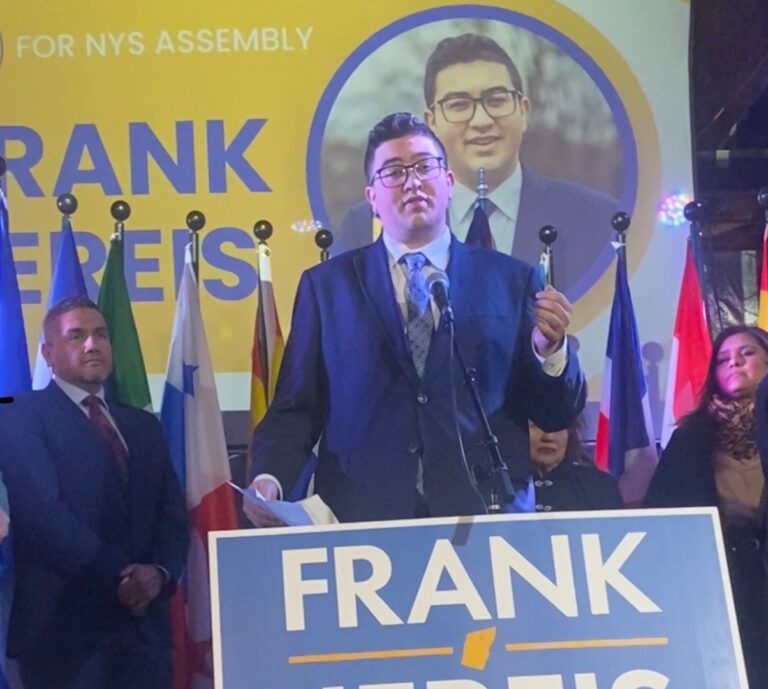
New York politics has always been a tug-of-war between ambition and arithmetic. But with the rise of Zohran Mamdani, that tension has reached a boiling point. The newly elected New York City mayor built his campaign on a populist promise to “make the rich pay their fair share,” yet his agenda is already reshaping the political landscape far beyond the five boroughs—forcing Governor Kathy Hochul to walk a dangerous tightrope between fiscal restraint and progressive pressure.
The Ideological Crossfire
Mamdani’s victory is a signal of the growing influence of Democratic Socialists in New York politics. His sweeping platform—rent freezes, free public transit, expanded childcare, and universal housing protections—sounds attractive to working-class voters who’ve felt left behind. But every promise has a price tag. To fund such a vision, the state would need billions of new dollars, and the only well deep enough to reach is the wealthy and corporations.
Governor Hochul knows that. The question isn’t whether she believes in fairness—it’s whether she’s willing to risk the exodus of business and capital that often follows aggressive tax hikes. As governor of one of the most heavily taxed states in America, Hochul has repeatedly stated that she will not raise state income taxes “at this time.” Still, the political pressure is mounting.
The Economics of Popular Politics
Mamdani’s “tax the rich” message plays well in soundbites and rallies, but the math tells a different story. The top 1% of earners already pay nearly half of all state income taxes in New York. When those high-earners relocate to Florida, Texas, or North Carolina—states with lower taxes and fewer regulations—it leaves the middle class and small businesses holding the bag. That’s not theory; that’s what happened after similar tax pushes in 2018 and 2021, when the state comptroller documented a noticeable out-migration of high-income residents.
And while it’s easy to frame “the rich” as faceless billionaires, many of the people in that bracket are doctors, entrepreneurs, and small-business owners—especially in counties like Westchester. These are the very people who hire, invest, and sustain the local tax base. When they leave, local governments either cut services or raise taxes on those who remain.
The Political Trap
Governor Hochul’s challenge is that she now faces a left flank more vocal and organized than ever. Mamdani’s momentum has energized activists who see Hochul as a centrist obstacle rather than a pragmatic leader. But if Hochul caves to their demands and raises taxes, she risks alienating moderates, suburban voters, and the business community that fuels the state’s economic engine. If she resists, she risks being branded as anti-progressive and losing control of her own party.
This is the Mamdani Factor—the gravitational pull of far-left ideology on New York’s political center. It’s a movement that defines compassion through spending and morality through redistribution. Yet, in practice, it risks turning New York into an unaffordable, economically stagnant state that punishes production while rewarding dependency.
The Stakes for Black and Working-Class Communities
For Black and Brown communities, the debate isn’t academic—it’s existential. Every time the cost of doing business goes up, so does the barrier to entry for minority entrepreneurs. Every time property taxes rise, more working-class families are priced out of homeownership. And when corporations downsize or relocate, it’s low-income workers—often people of color—who lose the most.
We don’t need higher taxes to build equity; we need better management, accountability, and economic empowerment. A truly progressive state doesn’t just redistribute wealth—it creates pathways for people to build their own.
The Bottom Line
Governor Hochul stands at a crossroads. She can either allow the Mamdani Factor to redefine New York’s economic identity or reaffirm a balanced approach that attracts business while protecting working families. New York doesn’t need more ideology; it needs outcomes. If “taxing the rich” becomes the only vision, the rich will simply leave—and the poor will still be here, paying for promises that never came true.
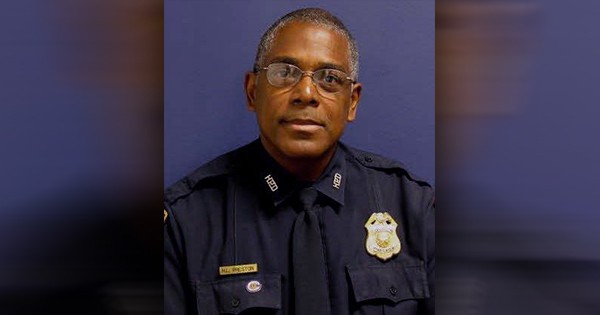
When Houston’s Police Officers’ Union posted, “NYPD, are you disgusted with the election of Zohran Mamdani? Join us!”—it wasn’t just a trolling post. It was a political signal. Within 24 hours of New York City electing its first openly socialist mayor, one of America’s largest police unions in Texas openly invited disillusioned NYPD officers to pack up and head south. That’s not a small gesture. It’s a declaration of how deep the cultural divide in America’s law enforcement and politics has become.
This wasn’t some rumor on social media. The Houston Chronicle, Newsweek, and Police1.com all confirmed the post. The union highlighted what it sees as the Texas advantage: higher pay, affordable homes, supportive leadership, and a police chief “who is a retired Texas Ranger, not a politician.” They used humor to make a point—but also drew a line between cities that back their police and those that, in their view, don’t.
Let’s be real. Zohran Mamdani ran his campaign by calling the NYPD racist, corrupt, and overfunded. He promised to redirect resources toward social programs and “community care.” That message resonated with progressive activists but alienated rank-and-file officers who already feel vilified. Now, Houston is capitalizing on that tension. The timing couldn’t be more precise: one day after the election, Texas sent a public invitation for New York’s cops to come work where they’re “respected.”
But the story is bigger than one social-media post. It speaks to a nationwide shift—a reverse migration of skilled professionals leaving blue states for red ones. We’ve seen it in business, construction, and healthcare. Now, law enforcement may be subsequent. While Mamdani talks about “reimagining public safety,” southern cities are offering NYPD officers relocation bonuses, lower taxes, and lower mortgage rates. That’s not ideology—that’s economics.
Zohran Mamdani’s repeated statements labeling the entire NYPD as racist and his long-standing goal to “defund the police” may win applause from progressive activists, but it’s a disaster for retention inside the department. Officers who already feel politically targeted and unsupported have little incentive to stay under leadership that openly disrespects them. That’s where Houston sees an opening. With its own force 1,200 officers short, Houston Police is seizing the moment—actively recruiting experienced NYPD cops who want to work in a city that pays better, taxes less, and publicly supports its police. What Mamdani calls reform, Houston calls opportunity.
The Money Talks: Why Cops Are Listening to Houston
Let’s break this down by the numbers. A rookie officer in New York City starts at around $60,000 a year. In Houston, that same officer would begin at $81,600—before overtime, bonuses, or shift differentials. Over five years, both departments can reach into six-figure territory, but here’s the catch: in Texas, there’s no state income tax. In New York, officers lose nearly 10% of their paycheck between city and state taxes alone. That’s a pay cut just for wearing the same badge in a different zip code.
Then there’s the cost of living.
In New York City, the average rent for a one-bedroom apartment hovers near $3,300 a month. In Houston, it’s roughly $1,300. The median home price in NYC sits at over $750,000, while Houston’s average is about $330,000. Translation: the same officer’s salary in Houston buys a home, a yard, and a retirement plan—while in New York, it barely buys time.
Add to that lower property taxes, cheaper gas, affordable groceries, and minimal commuting costs, and the financial math becomes undeniable. Even if the NYPD matched Houston’s base pay tomorrow, officers in Texas would still take home more real income because the government takes less of it.
So when Houston’s police union says, “Join us,” they’re not just talking about a paycheck—they’re talking about quality of life. They’re offering officers what every working professional wants: respect, stability, and the chance actually to keep what they earn. That’s not politics—that’s economics. And it’s the kind of logic that explains why so many working-class people, Black and white alike, are quietly heading south.
The Broader Shift: Black Middle Class on the Move
This trend isn’t just about cops. It mirrors what’s already happening with Black middle-class families and small business owners who are leaving New York, California, and Illinois for states like Georgia, Texas, and Florida. They’re not running from diversity—they’re running from dysfunction. They’re tired of being over-taxed, over-regulated, and under-represented. They’re looking for opportunity, ownership, and breathing room.
For decades, our leaders told us to stay loyal to the same political machine while our neighborhoods lost schools, contracts, and safety. Now the results are catching up. You can’t build wealth where policies punish success. You can’t make safety where leadership treats law enforcement as the enemy. And you can’t create freedom where every dollar you earn is taxed before you even see it.
Houston’s open invitation to the NYPD is more than a recruitment post—it’s a snapshot of America’s new migration map. Talent, discipline, and ambition are all heading to places that value work over rhetoric. That should make every mayor in the North take notice, especially those who think ideology can replace economics.
Because, as always, people vote with their feet—and their feet are moving south.
As the government shutdown entered another week, Senate Majority Leader Chuck Schumer made what he called a reasonable offer: extend the Affordable Care Act (ACA) for one more year while Congress works on a bipartisan plan to make improvements.
But Donald Trump countered with something far more disruptive. In a social-media post, he proposed cutting out the middleman — the “money-sucking insurance companies” — and giving the money directly to the people so they can buy their own healthcare, and have money left over.”
Schumer’s plan represents government continuity. Trump’s proposal represents economic rebellion. The question is: which one actually helps the American people?
Inside the Senate Showdown
The Senate debate that followed exposed how political this fight really is. During a heated exchange, Schumer defended his plan as protecting working-class Americans:
“We can fix what the gentleman said in negotiation,” he said, “but don’t hurt people who are paying thousands more than they can afford. We care about average working people — not billionaires.”
But after Schumer left the floor, Senator Bernie Moreno of Ohio clarified what had just happened. He reminded the chamber — and the country — that Democrats still hadn’t produced a written proposal anyone could read, and that their temporary extension would continue Biden-era ACA subsidies with no income cap.
In his words:
“This money does not go to people on Obamacare. This is a check written from the federal government to the wealthiest insurance companies on the planet.”
That exchange captured the core of the divide: Democrats say they’re protecting the poor; Republicans say the system mainly protects insurance corporations and the wealthy. And both are partially right.
The ACA’s Built-In Flaws
Before we decide who’s right today, we can’t forget that the ACA itself — including its most significant problems — was created by Democrats when they passed the bill in 2010. From expiring subsidies to high premiums and limited networks, these weren’t outside manipulations; they were written into the law.
Democrats sold the ACA as a permanent fix, but built it on temporary funding and corporate partnerships. Now, fifteen years later, those same flaws are being extended yet again — instead of repaired.
The Case for Direct Payments: Restoring Consumer Power
Trump’s idea taps into frustration shared across party lines. Under the ACA, Washington sends subsidy checks straight to insurance companies — guaranteeing their profits while limiting your choices.
If the government redirected that money to individuals instead, Americans could buy coverage that fits their needs, not what’s dictated by corporate networks. Supporters say that kind of direct competition could drive prices down and quality up — just like other industries that opened to market forces.
The Risks and Realities
Healthcare isn’t a simple market. Prices aren’t transparent, emergencies aren’t optional, and sick people cost more. Without guardrails, insurers could still find ways to deny care or overcharge.
But protecting people with preexisting conditions doesn’t have to vanish. Congress could require any plan receiving federal funds to cover everyone, regardless of illness or history. That keeps one of the ACA’s most humane elements while shifting control of the money to the consumer — not the corporation.
The Real Issue: Who Controls the Health Dollar
Trump’s proposal exposes a more profound truth: it’s never really about who pays — it’s about who profits.
Whether the check comes from taxpayers, insurers, or employers, the same medical-industrial complex cashes in: hospitals, drug makers, and administrative networks that feed off political contributions. Until Congress addresses inflated pricing and monopoly control, moving money around won’t heal the system.
For Black America: Dependency vs. Empowerment
For Black Americans, this debate isn’t abstract. The ACA expanded coverage but failed to close health-outcome gaps. Costs still crush working families.
If done right, direct payments could empower our communities to prioritize mental health, maternal care, and preventive medicine — the areas where the system fails us most. But empowerment only works with transparency, oversight, and education. Otherwise, we trade one dependency for another.
Between Reform and Rhetoric
Trump’s idea deserves serious consideration — not because it’s perfect, but because it forces Washington to confront the truth that both government and corporations have failed to deliver affordable healthcare.
The honest answer lies in transparency, competition, and accountability — not partisan theater.
And while the rhetoric continues, let’s not ignore the facts: Democrats have now voted fifteen times against a clean continuing resolution to reopen the government. This debate can and should happen while Americans are back to work.
Families shouldn’t suffer or miss paychecks while politicians argue about who cares more about people experiencing poverty.
Cutting out the middleman sounds good — but only if the patient, and the taxpayer, don’t end up paying the price.
On the evening of November 6, 2025, at 6:00 p.m., I attended an affordable-housing forum in Yonkers that promised to bring clarity to a crisis shaping life for so many Westchester families. It was held in the large community room on the second floor of the Riverfront Library, sunlight fading into the Hudson as the room filled with both hope and hesitation.
Dozens of organizers from across Westchester County gathered, clipboards and questions in hand. Among them sat only a handful of Yonkers residents, the very people whose daily lives are most defined by housing costs and displacement. I also saw housing advocates for the disabled, whose quiet presence reminded us that accessibility is as much a part of affordability as rent or zoning.
The evening began with gratitude. Moderator Ron Abad, CEO of Community Housing Innovations, opened by acknowledging Kisha D. Skipper, president of the Yonkers Branch NAACP, whose leadership continues to tie equity to action. He spoke of partnership and shared responsibility. The applause was sincere; the optimism, genuine.
The panel included:
George Asante, Director of the Westchester County Office of Housing Counsel (OHC)
Angela Davis-Farrish, Executive Director of The Southeast Bronx Community Organization Development, Inc. (SEBCO); former Executive Director of the New Rochelle Municipal Housing Authority (NRMHA); and Countywide President of the Westchester Black Women’s Political Caucus
Tim Foley, CEO of The Building & Realty Institute and Member of Welcome Home Westchester
Brendan McGrath, Esq., General Counsel of the Municipal Housing Authority for the City of Yonkers (MHACY)
Samantha Valencia, Vice President of Property & Asset Management at Westhab
Shanae Williams, Westchester County Legislator (via Zoom)
Together, they explored the intersection of policy, development, and affordability. Angela Davis-Farrish centered the human reality:
“We can’t talk affordability without talking access. The people who make Westchester run, teachers, health workers, home aides, should be able to live here too.”
George Asante spoke briefly about the Good Cause Eviction law, noting its potential to provide some level of protection for tenants facing displacement. Yet for many in the room, the explanation raised more questions than it answered: how would it actually work, and who would it truly protect?
Because while the topic was housing, the heart of the matter was home.
Complex terms, “developer opt-outs,” “Affordable Housing Trust Fund,” “Housing Needs Assessment”, floated through the room without translation. When one resident asked how these policies affect working families, the answer was polite but abstract.
And there were no Yonkers elected officials present. Not one. For a city-centered forum, that absence hung heavy.
That absence hit differently when you remember history. As Karen, Vice President of the Yonkers Branch NAACP, reminded attendees, this moment echoes a larger accountability gap. She called for follow-up and notification to the Hudson River Community Association (HRCA), NAACP, and Indivisible regarding the 2006 Anti-Discrimination Center Fair Housing lawsuit filed against Westchester County while Andrew Spano was County Executive.
That federal case exposed how the county had failed to meet its fair-housing obligations and perpetuated segregation through zoning and development practices. Nearly two decades later, the question remains: How many new affordable housing units have actually been built throughout the county?
Because it’s not just about numbers, it’s about whether Westchester has truly learned from that lawsuit or simply built taller walls with different names.
Looking around, I saw the faces of those who keep the city alive, seniors with folders of eviction paperwork, mothers balancing childcare with note-taking, young renters leaning forward, hungry for clarity. We came seeking relief, not rhetoric. As one attendee whispered, “We were reminded that the work is still ours to do.”
As someone who has spent a decade as a Crisis Management Specialist within New York State Corrections, I’ve seen how systems respond under pressure and how people are often left to navigate those systems without translation or empathy. That perspective made this moment in Yonkers feel all too familiar: people searching for understanding in spaces that weren’t designed for them to fully belong.
The forum wasn’t without purpose; it just missed its translation. Policy needs people, and people need language they can understand. Without that, the conversation turns to performance.
One attendee captured it best:
“Developers and agencies can sign all the community agreements they want, but it’s the residents who live with the results. You can’t assess what’s broken if you’re not close enough to see the cracks.”
That truth stayed with me. It’s why I keep showing up, as a writer, advocate, and witness. Because real progress doesn’t start in conference rooms; it starts in community rooms, where the people still believe their presence matters.
Yonkers doesn’t need more forums about the people. It needs forums with the people, where questions meet translation, and expertise meets empathy.
Until policy becomes accessible, transparent, and participatory, these conversations will keep circling the same questions: Who gets to stay? Who gets to build? And who, ultimately, is the conversation really for?
Because in Westchester, patriotism isn’t performance.
It’s participatory, an act of listening, learning, and leading collectively.
The Cultural Lens We Need
True collaboration takes more than panels; it takes translation. As someone who’s spent years bridging the language between policy and people, I believe Yonkers has an opportunity to model something new: a culturally fluent approach to housing and civic engagement.
Our city is filled with voices that can guide how information is shared, how trust is built, and how accountability becomes community culture. If we want inclusive outcomes, we need inclusive communication, and that begins with inviting the community into the process, not just to witness it.
Because until Yonkers learns to see through a cultural lens, its best ideas will keep missing the very people they were meant to serve.
Reporter’s Reflection
As the forum ended and we stepped out into the November night, the air was sharp with cold and the city lights shimmered against the Hudson. I watched residents drift toward the parking lot, still talking, still questioning, still hopeful. The library windows glowed behind us like a beacon, but it struck me how many of our brightest ideas stay trapped behind glass. Until the rooms where we meet reflect the people we serve, transparency will remain a word, not a practice.
Candace Owens has done something the mainstream media said couldn’t be done — she beat them at their own game. Her self-titled podcast, Candace, has now been ranked #1 in the world for “Downloads & Views Per Episode,”according to analytics firm Podscribe. The show averages a staggering 3.6 million downloads and views per episode, placing her ahead of long-established industry giants.
Whether you agree with her politics or not, the numbers don’t lie. Owens has built one of the largest independent media audiences in the world — without a network, a newsroom, or corporate backing. That means something much bigger than just bragging rights. It signals that the old system of information control is collapsing.
The Gatekeepers Lost the Keys
For decades, legacy outlets like CNN, MSNBC, and The New York Times dictated what voices got heard. But Owens’s rise — drawing millions every day from a studio she controls — proves those days are over. She bypassed the gatekeepers entirely.
She didn’t need a producer, an editor, or a corporate board to approve her message. She built a direct line to her audience — and that connection is worth more today than any cable contract. The gatekeepers still think they can silence voices by ignoring them, but what happens when millions of people are already tuned in somewhere else?
The Billion-Dollar Networks Got Outworked
Owens’s reach — 3.6 million per episode — outpaces the average nightly ratings of most major cable news shows. That’s not just impressive; that’s revolutionary. She’s one creator with a mic and a message outperforming entire studios with multimillion-dollar budgets.
Traditional networks are finding out the hard way that money doesn’t buy authenticity. People follow what feels real. Owens speaks directly, unfiltered, and unapologetically. You don’t have to agree with her to understand why that matters. Viewers are tired of polished propaganda. They want truth — raw, unscripted, and human.
Authenticity Is the New Currency
The audience shift isn’t about ideology; it’s about trust. Candace Owens’s success is less about being conservative and more about being consistent. That’s what people respond to.
Corporate media still operates like it’s 1995 — chasing advertisers and managing narratives instead of connecting with people. But audiences can sense manipulation, and they’re walking away. In today’s attention economy, authenticity is the new currency — and Owens is cashing in.
The Business Model Has Flipped
Owens’s rise shows how the old advertising-driven system has crumbled. She doesn’t answer to sponsors or network executives. Her loyalty is to her audience, not a corporate hierarchy.
That independence gives her what most journalists no longer have — freedom. She can speak without fear of being canceled, fired, or censored. And when freedom becomes profitable, that’s a shift mainstream media can’t compete with.
This Is the Era of Media Sovereignty
When one woman can pull millions of daily listeners without the help of any major network, that’s not just a win — that’s a paradigm shift. Owens’s success proves that power has moved from institutions to individuals. The microphone now belongs to those willing to speak truth to systems, not repeat the systems’ talking points.
The Lesson for Black Media
Candace Owens may not represent every voice in the Black community, but her success offers a blueprint that every independent outlet should study. She built her platform on consistency, authenticity, and independence — three things that don’t require mainstream approval.
That’s precisely the model we’re building through Black Westchester Magazine and Nior News Network: Black-owned, independent, and unbought. The same digital tools that made Owens a global force are available to us. What’s missing is not access — it’s collective strategy and execution.
If a single creator can reach over three million people a day, imagine what happens when Black media moves in unison with that same energy and independence.
The message is clear: the gatekeepers are finished — and the future belongs to whoever owns their voice.
When the people of New York elected Letitia James, they hoped she would bring both compassion and accountability to the state’s highest law-enforcement office. She promised to fight for the voiceless, protect the vulnerable, and bring justice where it had too often been denied. Yet under her watch, a disturbing pattern has emerged—one that reveals not just tragic outcomes but a complete failure of leadership.
From New Rochelle to Buffalo, and now with the death of Daniel McAlpin, New York’s top cop has presided over case after case where mentally ill or emotionally distressed men were shot and killed by police. Each time, her office reviewed the incident, issued a lengthy report, and concluded the same way: prosecutors “could not disprove justification beyond a reasonable doubt.” Each time, officers walked free. Each time, another family buried their loved one without justice.
A Systemic Pattern — and a Familiar Excuse
The most recent case, the killing of Daniel McAlpin, shows in detail how broken the system truly is. McAlpin’s mother called 911 in September 2022 for help, not harm. Her son was having a mental-health crisis. He was delusional but nonviolent. He asked officers to leave so he could “stay calm.”
Instead of mental-health professionals, an armed tactical team entered his home with AR-15 rifles and Tasers. Within minutes, McAlpin lay dead on his floor. The Attorney General’s Office later ruled the killing justified because the trooper “could not be disproven” in his claim that he feared for his life.
That decision was not based on evidence of necessity — it was based on the lowest legal standard possible. The AG’s report acknowledged that the trooper had not received any mental-health crisis training since 2016, yet the Attorney General made no recommendations to address that statewide deficiency.
This same pattern played out in New Rochelle, where Jarrel Garris, a 37-year-old Black man, was shot and killed in 2023 during an encounter with police. Officers claimed Garris had grabbed another officer’s gun — a claim the bodycam footage directly contradicted. On the recording, you can clearly hear the female officer saying, “My gun is here,” while pointing to her holster. Despite that evidence, no charges were filed — not even for manslaughter.
The message this sends is chilling: an officer can make a fatal mistake, contradict the evidence, and still be shielded from accountability — while a family is left shattered and a life is gone. Cops are not trained to make fatal mistakes and walk away; they are trained to protect life. Yet under Letitia James’ watch, fatal mistakes have been justified as policy.
A Failure of Oversight from the Top Cop
The greatest failure here is not just that people died — it’s that the Attorney General has refused to lead.
Letitia James is the top law enforcement officer in New York State. When the same operational deficiencies recur again and again — lack of crisis-intervention training, absence of mental-health professionals on scene, escalation rather than negotiation — it is her responsibility to correct them.
Her office has the authority to do more than close cases. It can issue binding recommendations to the Governor, the Division of Criminal Justice Services, and the State Police. It can call for mandatory crisis-intervention training for every officer in New York. It can advocate for legislation requiring mental-health specialists to accompany police on all wellness calls.
But perhaps the biggest missed opportunity came after the murder of George Floyd in 2020, when then-Governor Andrew Cuomo issued an executive order requiring every police department in New York State to conduct a comprehensive review of its policies on use of force and submit those reports to the Attorney General’s Office. The directive stated that the AG would compile those findings and release a statewide set of best practices for the use of force and deadly force.
Those recommendations were never issued. Under Letitia James’ leadership, the promise of statewide reform died in her office. Instead of using that mandate to create standardized training, accountability systems, and crisis-intervention protocols, she allowed the moment to fade into political silence.
And under her watch, more mentally ill men have been killed by officers untrained in mental-health de-escalation. It seems her office found it more popular to talk about Donald Trump than to make sure families calling for help during a mental-health crisis could trust that properly trained officers would show up — not executioners with badges.
Selective Justice and Political Comfort
Letitia James has built her public reputation on high-profile political cases — lawsuits against Donald Trump, corporate investigations, and national headlines that bolster her image as a tough prosecutor. But when it comes to state violence against the poor, the mentally ill, or the Black, her office has remained silent or deferential.
It’s a disturbing double standard. She has the energy to chase Wall Street, but not to challenge the culture of force that exists in her own backyard. Her unwillingness to recommend change — not just in policing, but in policy — shows where her priorities truly lie: in political safety, not public safety.
The Real Cost of Silence
Behind every one of these “justified” killings is a grieving family who did everything right. They called for help. They trusted the system. They believed that in the State of New York, compassion still counted for something. Instead, they got body bags, press releases, and a justice system that treats the mentally ill as disposable.
Daniel McAlpin’s mother said it best: “The attorney general’s decision sends a troubling message to families across New York: when someone needs help, they may instead face force.”
That message is echoed in every Black and brown household caring for a loved one with mental illness. They know the risk. They know the system’s indifference. And they know that when tragedy strikes, no one in power will be held accountable.
The Importance of Competent Leadership
We cannot keep electing leaders who talk about justice but do nothing to deliver it. The lives of New Yorkers depend on competent leadership that values training, accountability, and compassion.
When families call 911 during a mental-health crisis, they should not have to fear that their loved one will end up dead. We cannot imagine the fear of a mother watching officers surround her child, hoping for help and praying it doesn’t end in bullets. That is the reality too many families live with in this state.
The only way to change that reality is through the ballot box — by demanding that our leaders fight for justice not only when it’s popular, but when it’s necessary. New Yorkers deserve leaders who will protect the vulnerable, not justify their deaths.
Until that day comes, the silence from our top cop will continue to echo louder than her title.
When Zohran Mamdani burst onto New York’s political scene with promises of rent freezes, free buses, and a war on billionaires, he presented himself as the people’s champion — a man of the working class taking on the establishment. However, a closer look at the money trail, rather than the message, reveals a different narrative.
Behind the seemingly noble slogans of socialism and equity, a web of sophisticated financing is at play. This network, connecting nonprofit foundations, political action groups, and billion-dollar donors, reveals a different narrative. It’s not a revolution of the poor against the rich, but rather the rich sponsoring a revolution that never truly challenges their interests.
Black Americans must start researching who funds a candidate instead of being swept up by emotion, personality, or slogans that sound good in the moment. Political decisions built on feelings rather than facts always come with a cost — and that cost is usually paid by the very communities most loyal to the system. Every campaign promise, every “movement for the people,” and every speech about equity must be traced back to its financial source. Because money is policy. The one who funds the candidate sets the agenda, and the one who votes without researching becomes a spectator to decisions made in someone else’s interest. Logic must replace emotion, and accountability must replace loyalty — or Black America will continue to mistake symbolism for progress and personality for power.
The Illusion of Grassroots Power
Mamdani’s campaign was branded as grassroots — a “movement powered by small donors.” Yet public filings with the New York City Campaign Finance Board tell a more complex story.
By March 2025, Mamdani had raised over $8 million, far surpassing most rivals. He boasted thousands of small contributions, but disclosure records show a heavy concentration of out-of-state money and several large institutional contributions routed through political action committees (PACs) and affiliated nonprofits.
One PAC — the Unity and Justice Fund, linked to CAIR — moved about $100,000 in support of his campaign. Another — the Working Families Party PAC — bundled additional contributions from out-of-state networks.
According to Forbes, two billionaire donors, Elizabeth Simons and Tom Preston-Werner, contributed through independent committees supporting Mamdani. These are not working-class donors; they are members of the same economic class he rails against.
The Soros Connection: Following the Money
In a meticulous analysis presented on The Publisher’s Desk, forensic accountant Sam Antar unravels the intricate financial channels that link George Soros’s Open Society Foundations to a network of nonprofits. These nonprofits, in turn, provide field and campaign support for Mamdani, painting a complex picture of his financial backing.
Here’s how that pipeline allegedly works:
Charitable donations flow to a Soros-backed 501(c)(3) foundation, such as Open Society or Bend the Arc Jewish Action.
That 501(c)(3) then grants money to its sister 501(c)(4) — the political arm allowed to engage in advocacy and “issue-based” campaigning.
The 501(c)(4) then endorses candidates, provides canvassing, and mobilizes voters — all without the transactions appearing as direct campaign expenditures.
Antar described it as an “incestuous relationship — not just in money, but in management,” pointing out that Alex Soros, George’s son, has chaired both entities. Funds move back and forth as grants and loans, sometimes even on the same day.
On paper, each transaction may appear legal. But as Antar put it, “When you look at the behavior, not the paperwork, it shows a coordinated network that blurs the line between charity and politics.”
Invisible Money and the Tax Loophole Game
Under IRS rules, a 501(c)(3) charity cannot participate in partisan politics. However, when such an organization gives money to a 501(c)(4) “social-welfare” group — and that 501(c)(4) engages in electioneering — the chain becomes difficult to trace.
This allows major donors to convert tax-deductible charity dollars into political influence.
A direct political donation offers no tax break. But a donation to a foundation that funnels money through sister nonprofits allows a wealthy donor to claim a deduction while indirectly funding campaigns.
That is what Antar calls “tax arbitrage” — influence at a discount.
And in Mamdani’s case, that invisible money flowed through several channels, making it almost impossible for voters to see who was really footing the bill for his “grassroots” revolution.
When the Anti-Capitalists Take Capital
For someone who insists he wants to “tax the rich” and make the wealthy “pay their fair share,” Mamdani’s donor pool reads like a Wall Street directory.
Real-estate professionals — including figures tied to the same development firms blamed for New York’s affordability crisis — appear in his filings.
He accepted contributions from executives in the very industries his platform condemns.
And foreign contributions — at least $13,000 worth — were flagged by regulators as possibly illegal and are still under review.
He tells voters that businesses are the enemy, but it’s the business class — the very rich, he claims, he’ll make “pay” — that funds his campaigns. That is not reform. That is political theater financed by the same investors who profit from both sides of the debate.
This is not a movement detached from money; it is a movement powered by elite money, laundered through activism.
The Mamdani Campaign is not unique. It represents a national model in which the same donor class that funds establishment Democrats also funds their ‘progressive challengers.’ The intent is not ideological purity; it’s market diversification.The Mamdani campaign is not an isolated case. It represents a national model where the same donor class that funds establishment Democrats also backs their ‘progressive challengers.’ This isn’t about ideological purity; it’s about market diversification, a systemic issue that needs to be addressed.
Billionaires like Soros, Simons, and other heirs of significant fortunes hedge their political bets by investing in both wings of the same bird.
They fund moderates and radicals alike — because influence, not ideology, is the goal.
As Thomas Sowell once wrote, “The real problem isn’t that politicians lack compassion; it’s that they lack consequences.” The donor class ensures that no matter which message wins, the money stays in control.
This pattern mirrors the political theater of Barack Obama — the original “people’s candidate.”
When Obama took office in 2009, he was hailed as the symbol of change — a historic breakthrough, a Black family in the White House, and a promise of racial progress. Yet, beyond the symbolism, the data tells another story:
The median wealth of Black households collapsed during Obama’s presidency — falling from about $10,700 before the Great Recession to just $1,700 by 2013, according to the Institute for Policy Studies.
White household wealth, by contrast, rebounded, growing roughly 6% between 2007 and 2013, while Black wealth dropped 75% (National Community Reinvestment Coalition).
The Black-White wealth ratio shrank from 6.4% in 2007 to 2.4% in 2016 (Pew Research Center).
Obama’s presidency proved that representation without reform changes optics, not outcomes.
The same illusion now returns in Mamdani’s campaign — a progressive face funded by elite money, promising transformation while preserving the same economic hierarchy.
Why This Matters to Black New Yorkers
For Black New Yorkers, this isn’t just about campaign finance — it’s about political return on investment.
For decades, Black voters have given the Democratic Party their most consistent support. In this last mayoral cycle, Black voters made up roughly 40 percent of Mamdani’s total vote. Yet the communities delivering those votes are the same ones still facing rising crime, poor schools, and disappearing homeownership.
This is why we get nothing. You cannot run a multi-billion-dollar campaign for the largest political platform in the world outside of the presidency and still pretend it’s grassroots. There’s nothing revolutionary about a movement financed by the same elite interests that already run the city.
Mamdani’s rhetoric may sound like it fights for people with low incomes, but his campaign economics prove it answers to power.
And until Black voters connect campaign financing to the everyday realities in their neighborhoods — taxes, housing, jobs, safety — they will continue to invest loyalty where there is no measurable return.
Political dependency without economic power is a trap.
When billionaire foundations handpick who “represents” the people, they’re not empowering the Black community — they’re managing it.
Conclusion: Follow the Money, Not the Message
There’s nothing inherently illegal about Mamdani’s fundraising structure. What’s troubling is the contradiction — a movement built on anti-elite rhetoric but sustained by elite resources.
The lesson is simple:
When billionaires fund both sides of a political argument, it isn’t democracy — it’s strategy.
Mamdani’s rise shows that the revolution has investors.
And now that he’s been elected — chosen by people’s passions and emotions — the political reality begins. He must serve those to whom he truly owes his victory.
And it’s not you, the voter.
It’s the donor class.
Because when the rich finance the resistance, the only thing being overthrown is transparency.
When government fails, the people pay the price — this time, in cancelled flights, stranded travelers, and another unnecessary blow to the economy. The Federal Aviation Administration’s announcement to cut air traffic by up to 10 percent across 40 major U.S. markets is more than a technical adjustment. It’s a clear sign that our nation’s essential systems — from transportation to healthcare — have become hostages in a political tug-of-war.
This 10 percent reduction, triggered by the ongoing federal government shutdown that began October 1, 2025, isn’t about safety alone. It’s about politics. Air-traffic controllers, many of whom are now working without pay, are being stretched to the breaking point as the FAA acknowledges growing fatigue and staffing shortages.
The shutdown didn’t just “happen” — legislative votes show the impasse is political. Senate Democrats have voted no fifteen times to reopen the government, rejecting multiple funding bills passed by the House. Each “no” vote wasn’t just a stand against policy — it was a decision that prolonged the suffering of millions of working Americans.
Economic Turbulence for Working Americans
A 10 percent reduction in air traffic might not sound huge on paper. Still, it translates into thousands of canceled flights, lost wages for airport staff, delayed shipments, and billions in economic losses. The Congressional Budget Office estimates the shutdown has already cost the U.S. economy between $7 billion and $14 billion, shaving up to 2% off GDP growth in the final quarter of 2025. The travel industry alone is losing roughly one billion dollars every week — a direct hit to local economies, hotels, small businesses, and workers.
For minority-owned businesses and urban hubs like New York, Atlanta, and Chicago — where travel and trade are economic lifelines — the impact is even more severe. Fewer flights mean fewer customers, fewer contracts, and fewer opportunities. Once again, Black and Brown communities that depend on service-sector and travel-related jobs are feeling the brunt of Washington’s dysfunction.
And it’s not just travelers. Airlines are scaling back staff hours, vendors are losing contracts, and airports are watching revenues plummet. The FAA’s decision may be grounded in safety concerns, but it reflects a more profound truth: when Washington shuts down, working people get locked out.
The Political Cost of Convenience
Air travel isn’t just transportation — it’s symbolic of America’s promise of opportunity. But today, it’s being rationed like a political favor. Politicians who can’t balance budgets or pass bipartisan solutions are punishing mobility itself.
The average traveler, whether they’re trying to visit family or close a deal, is caught in the crossfire of a political standoff. It’s a situation where everyday Americans, just like you, bear the brunt of the burden. What’s more, according to multiple reports, Senate Democrats have repeatedly voted (at least 13 times) to block funding bills to reopen the government. Their argument? These bills didn’t include the necessary healthcare and subsidy provisions.
So, it’s not just a shutdown and its consequences. It’s not just a ‘partisan fight’. It’s a decision made through repeated votes that are prolonging the impasse, and that’s a cause for concern.
Time to De-Politicize the Basics
Some systems are too vital to be weaponized — air travel is one of them. America’s infrastructure, airspace, and mobility shouldn’t hang in the balance of partisan brinkmanship. Whether you’re red or blue, rich or working class, your ability to move freely should never depend on who’s winning the argument of the week.
The FAA’s 10 percent cut should be our wake-up call. When politics takes over the runway, democracy loses its lift.
I wouldn’t have believed the day would come when a Black man in Westchester would be the stewarding voice of governing for change. Is it perfect? Not at all. Is there still more work to do? Absolutely. But how we get it done — and the mindset behind the intention — is what separates Ken Jenkins from Zohran Mamdani.
Jenkins’ historic victory as Westchester’s first Black County Executive marks a turning point not only for the county but for what effective leadership looks like in modern New York. His approach stands in sharp contrast to the fiery Democratic Socialist politics of New York City’s Mayor Elect, Zohran Mamdani, whose rhetoric champions rebellion but often overlooks results. Together, they represent two opposite ends of New York’s political spectrum — one grounded in competence and civility, the other in confrontation and ideology. Ken Jenkins governs like a builder—Zohran Mamdani campaigns like a protester. One manages reality; the other performs revolution.
When Jenkins took the stage on election night, he didn’t make promises of sweeping social transformation or poetic metaphors about toppling systems. He spoke of budgets, public housing, teamwork, and results. “Competent, stable leadership beats chaos and drama every time,” he said — a quiet but powerful declaration that responsibility is more substantial than rhetoric.
Mamdani’s speeches, in contrast, are crafted for movement energy — invoking Eugene Debs, poetic imagery, and revolutionary symbolism. “Knuckles scarred with kitchen burns… These are not hands that have been allowed to hold power.” It’s stirring language. But what happens when those slogans meet the complex reality of running a city, balancing a budget, or building affordable housing? Passion without practicality turns into paralysis.
There’s also the difference that only time can teach. Ken Jenkins has spent more than 18 years in politics, serving as a Westchester County Legislator, Board Chairman, and Deputy County Executive before taking the county’s top job. Zohran Mamdani, at just 34 years old, represents the next generation of political activism — passionate, articulate, but still untested. Experience brings perspective, and perspective delivers outcomes. Jenkins has lived long enough in public service to know that governing is not about applause lines — it’s about measurable results. Mamdani, like many young progressives, still measures success by how loudly people cheer, not by what policies actually work. In the real world, outcomes matter more than intentions.
Jenkins’ philosophy of leadership is grounded in stewardship — managing systems that serve people, not manipulating emotions that divide them. His consistent focus on results and people in Westchester, without getting distracted by the noise, instills a sense of security. We govern every day, he says, and that’s the difference between someone who runs a county and someone who rails against it.
Mamdani’s brand of Democratic Socialism depends on confrontation — the rich versus the poor, tenants versus landlords, the people versus power. It thrives on division because its survival depends on dissatisfaction. But communities can’t thrive in constant conflict. Jenkins’ brand of politics, built on stability, fiscal discipline, and coalition-building, actually delivers improvements people can see and feel. He doesn’t sell rebellion; he delivers results.
While Mamdani romanticizes equality through redistribution, Jenkins demonstrates empowerment through accountability. The socialist model expands government control in the name of fairness but often crushes the entrepreneurial spirit that built Black economic power in the first place. Jenkins’s results-driven leadership shows that growth, not grievance, sustains communities.
For Black New Yorkers especially, this contrast matters. Mamdani’s politics preaches “power to the people,” but Jenkins actually practices it by proving that local control, fiscal responsibility, and trust-based governance work. He represents a generation of leadership that still believes in self-determination over dependency — the same philosophy that built the Black middle class and the small business economies that once defined our neighborhoods.
Before thanking his campaign team, Jenkins honored his parents, his wife, and his children. That wasn’t sentimentality — it was strategy. Family is structure, and structure is strength. Mamdani’s politics looks to revolution; Jenkins’ politics looks to restoration. That difference is more than rhetorical — it’s cultural. One speaks the language of rebellion, the other the language of responsibility.
New York doesn’t need another protest politician — it needs problem-solvers. It requires leaders who can govern, not grandstand. Mamdani’s poetic vision may light up rallies, but it doesn’t light up streets, balance budgets, or lower property taxes. In a state where working people already carry the heaviest burden of regulation, taxation, and rising costs, his model would only push more families and small businesses out of New York altogether. His confrontational approach could drive investment away and accelerate the migration already underway — with residents heading upstate or down south in search of affordability, opportunity, and stability.
In contrast, Jenkins’ governing style — steady, disciplined, and results-oriented — has the potential to turn Westchester, particularly areas like White Plains, into the new Manhattan for business growth and innovation. Many CEOs and corporate leaders already call Westchester home, and with a focused plan for economic development, workforce training, and small-business inclusion, that growth could directly benefit Black residents and entrepreneurs. Jenkins’ leadership model doesn’t just retain wealth; it creates pathways for participation, proving that competent governance can make prosperity local again.
Ken Jenkins’ model works because it’s grounded in results, not ideology. He is a steward of systems — someone who governs with the understanding that progress takes patience, precision, and partnership. His practical approach to governance reassures us that we are on the right path to progress. Mamdani’s vision may inspire a moment, but Jenkins’ kind of leadership sustains a movement.
If Black America and New York alike are serious about real progress, they must choose competence over chaos, results over rhetoric, and stewardship over slogans. The revolutionaries might win applause, but the reformers win the future. This choice empowers us to take responsibility for our future and the progress we
want to see.
As Thomas Sowell said, “There are no solutions, only trade-offs.” Jenkins understands that truth — Mamdani refuses to. And in the end, the leader who manages trade-offs builds a legacy, while the one who trades slogans fades into history.
Ken Jenkins didn’t just make history in Westchester. He reminded New York that real power doesn’t come from protest or poetry. It comes from governance that works.
Cute. But before we start singing happy birthday, let’s see who’s writing the guest list.
The Coalition’s Front Row of Power
Turning Point USA — a youth group that treats civics like a campaign rally.
Hillsdale College — the “we don’t need federal funding because we don’t do diversity” campus.
The Heritage Foundation — the blueprint factory for conservative policy since 1973.
Eagle Forum — founded by Phyllis Schlafly, who fought for women’s rights while cashing a speaker’s fee.
Job Creators Network — corporate power dressed up as “small business freedom.”
Do your research on who leads these organizations and what they push.
Spoiler: it’s not cultural inclusion, it’s curated nostalgia.
That’s not civics. That’s PR with a pledge of allegiance.
America, the Ex Who Wants You Back, With Conditions
This whole “patriotic education” rollout feels like that ex who pops back up, talking about,
“Hey, big head, I’ve changed.”
But every time you ask for accountability, she changes the subject.
The Department of Education is dropping $160 million into new civics and history grants for programs that “advance patriotic education.”
They say they’re doing it because only 41 percent of young people say they “love America.” (Inside Higher Ed)
But love isn’t the problem, gaslighting is.
Young people aren’t apathetic. They’re awake.
They see police budgets go up while school budgets go down.
They see their grandparents priced out of the neighborhoods they built.
They see their history reduced to a month and their humanity reduced to a statistic.
They don’t hate America; they just see her clearly.
And clarity isn’t unpatriotic; it’s healing.
Westchester Is the Curriculum
If you want to study civics, you don’t need to sit through a panel in D.C., hop a train north to Westchester.
Because here, we don’t talk about citizenship, we practice it.
The Real Civic Classrooms of Westchester
Yonkers NAACP —teaching power, policy, and protest since 1938.
Hudson Link for Higher Education in Prison — turning cells into college classrooms.
WESPAC Foundation — building multi-racial, multi-faith coalitions for justice.
ArtsWestchester —where murals and music are civic textbooks.
African American Men of Westchester — raising leaders who don’t wait for permission to serve.
Urban League of Westchester County — strengthening Black business and housing through policy and action.
MLK Institute for Nonviolence — training neighbors to turn conflict into community.
This is what patriotism looks like when it gets its hands dirty.
No photo ops. No hashtags. Just healing and hard work.
Who Tells the Story Shapes the Soul
The Washington Post says the coalition leans almost entirely conservative.
The Times of India confirms it — not a single partner from the culture state-space of New York, which some say is the largest melting pot in the world.
And that right there is the problem.
How are you gonna talk about teaching America without including the classroom that is America?
New York, where 180 languages collide on a subway ride, where one bodega line holds five continents of story, where protest and prayer share the same sidewalk.
We are the case study of coexistence, the syllabus of struggle, and the thesis on triumph.
Leaving us out of a civics coalition is like writing a cookbook without seasoning.
You can eat it, but it’s bland, baby.
Receipts & Reality Checks
$160 million — Federal money targeted for “patriotic education.” (Whiteboard Advisors)
40 + organizations — nearly all conservative or faith-based. (ed.gov)
41 % of youth — say they “love America,” a stat used to justify this program. (insidehighered.com)
50-state tour — a patriotic roadshow with plenty of flags but few facts. (yourvalley.net)
Meanwhile, New York’s been teaching civics on a budget of love, not lobbying.
Call to Action: Teach the Whole Truth
Westchester doesn’t need a reminder to love America.
We need America to remember who loves her.
We’ve been doing the work:
building coalitions, feeding families, registering voters, restoring dignity.
If America 250 really wants to renew patriotism, then come study with us.
Sit in on a Yonkers NAACP meeting.
Visit a Hudson Link graduation at Sing Sing.
Walk through a community garden where healing and civics grow side by side.
Until then, don’t preach patriotism without practice.
Don’t teach freedom without feedback.
Final Word
The slogan says, “Know America. Love America.”
Okay, but let’s also Know NYC, Know Yonkers. Know Mount Vernon. Know Ossining. Know New Rochelle. Know Port Chester.
Know the hands that built the bridges and the hearts that keep holding this country accountable.
Every star on that flag still flickers over unfinished business.
Every stripe was stitched by someone who believed we could do better.
America doesn’t need a facelift; she needs a family meeting.
And if she’s ready to face herself,
New York’s already holding the light.
References & Sources
U.S. Department of Education – “U.S. Department of Education, AFPI, TPUSA, Hillsdale College, and Over 40 National and State Organizations Launch America 250 Civics Coalition.” (September 17, 2025). ed.gov press release
Inside Higher Ed – “ED Wants Grants to Advance ‘Patriotic Education.’” (September 19, 2025). insidehighered.com
Washington Post – “Education Department Partners with Conservative Groups for Civics Programming.” (September 17, 2025). washingtonpost.com
Times of India – “US Education Department Taps 40 Conservative Groups in Nationwide Push for Patriotism and Civic Knowledge.” (September 2025). timesofindia.indiatimes.com