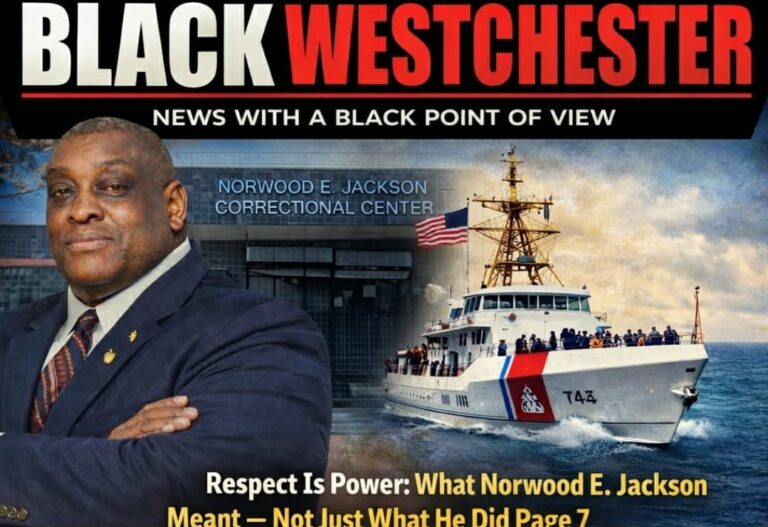
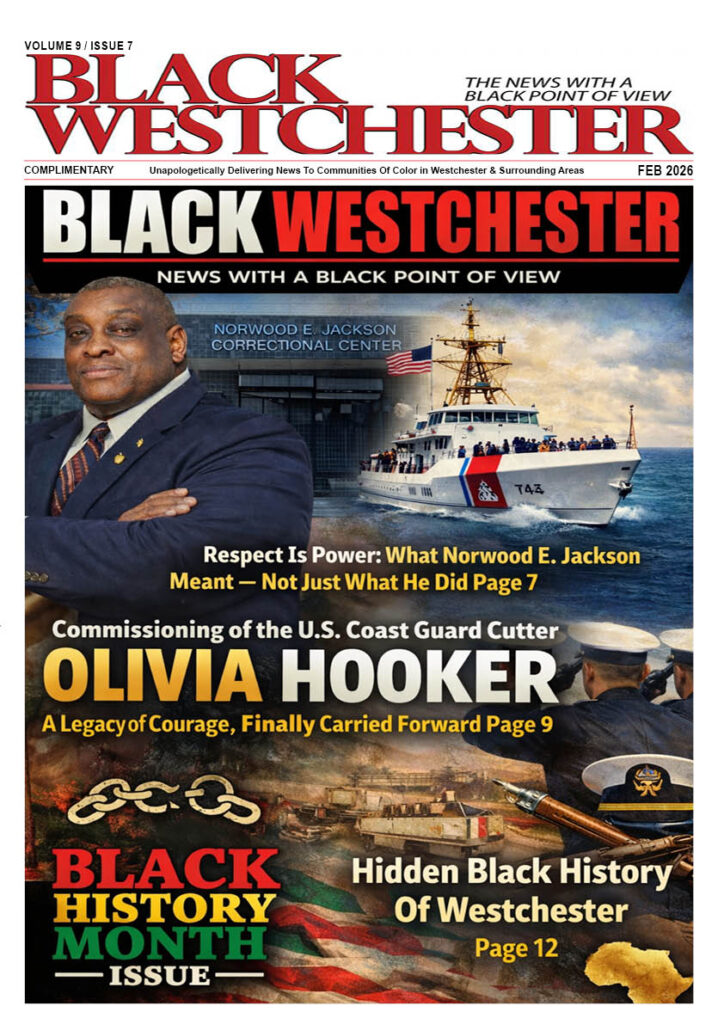
Welcome to our February 2026 – Black History Month Issue. We dedicate this issue to Norwood E. Jackson, a trailblazing criminal justice leader who became the first African-American Commissioner of the Westchester County Department of Correction in April 1987. Following his death while in service in 1995, the correctional facility in Valhalla was named the Norwood E. Jackson Correctional Center in his honor. And Dr. Olivia Hooker, the first African-American woman to serve in the Coast Guard (1945), who had a 154-foot U.S. Coast Guard Sentinel-class Fast Response Cutter commissioned on Jan. 22, 2026, in Pascagoula, Mississippi named in her honor.
As usual the pages of this issue are fact-filled with great moments in Black History in Westchester County and the surrounding areas.
As always, we would like to take this time to thank all the readers, listeners, supporters, sponsors, contributors, and advertisers for their support in our effort to deliver the “News With The Black Point Of View” since 2014. We are always looking for writers, photographers, and interns. Email BlackWestchesterMag@gmail.com to inquire.
Send us your feedback, let us know what you think of this issue. Let us know subjects/topics you would like to see us cover in the future, and send your letters to the editor to BlackWestchesterMag@gmail.com.
Peace and Blessings AJ Woodson, Editor-In-Chief and Co-Owner
Every political era has its governing instinct. Ours is paternalism.
Not the crude paternalism of segregation or overt exclusion, but a more refined version — one that speaks the language of compassion while quietly reinforcing hierarchy. It promises protection, which subtly shifts responsibility away from communities and onto external authorities. It expands programs. It signals moral awareness. Yet too often, it substitutes supervision for sovereignty and spending for structural empowerment.
This is the new paternalism in American politics.
Its defining characteristic is not hostility but presumption. It frames communities — particularly Black communities — primarily through vulnerability while reserving authority, expertise, and institutional control for elite leadership, reinforcing existing hierarchy and subtly maintaining power imbalances.
The pattern is consistent. A disparity is identified. A historical injustice is invoked. The rhetoric centers on harm. The policy response expands administration and oversight. Opposition is framed as indifference. Success is measured by spending and moral positioning rather than measurable upward mobility.
Intent becomes the shield. Outcomes become secondary.
Consider public remarks that reveal this mindset.
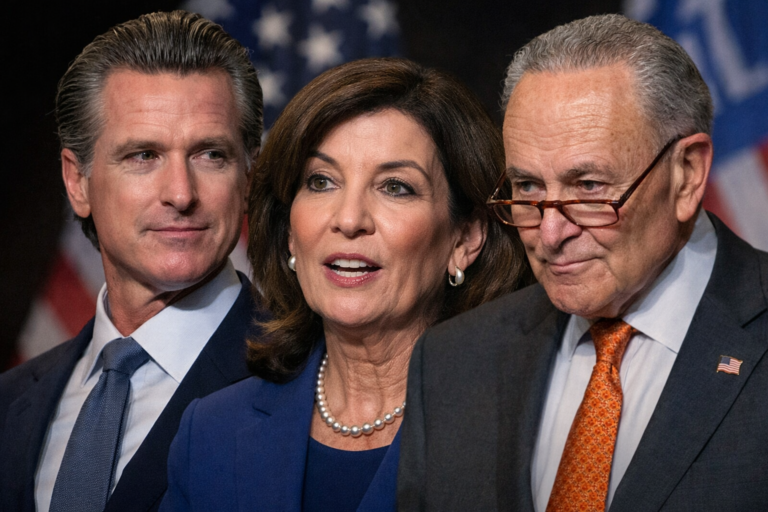
When New York Governor Kathy Hochul suggested that young Black children in the Bronx “don’t even know what the word computer is,” the issue was not whether digital disparities exist. It was the framing. According to the U.S. Census Bureau, over 90% of households in New York City report having access to a computer or smartphone. Access gaps may exist in broadband quality, but the suggestion of unfamiliarity revealed an instinct to describe deficiency rather than logistical disparity.
When California Governor Gavin Newsom sought to connect with an Atlanta audience by referencing his low SAT score and difficulty reading speeches due to dyslexia, the debate centered on his intent. But the deeper question remains: why is limitation the bridge? Why is the connection framed downward rather than upward? When relatability is built on lowered expectations rather than elevated standards, hierarchy becomes subtle yet visible.
The voter identification debate exposes the same rhetorical pattern. After the Supreme Court upheld voter ID laws in Crawford v. Marion County Election Board (2008), opponents frequently described such measures as “Jim Crow 2.0.” Senate Majority Leader Chuck Schumer used that phrase, and others equated identification requirements to a poll tax.
Those comparisons carry enormous historical weight. Jim Crow represented legalized segregation and violent disenfranchisement. Poll taxes were explicit financial barriers designed to prevent Black citizens from voting.
Policy debates over access to documentation are legitimate. But nationally, the overwhelming majority of American adults possess some form of government-issued photo identification. A 2023 survey from the University of Maryland’s Critical Issues Poll found that approximately 94% of Black respondents reported having a valid photo ID, framing identification as broadly inaccessible, risks implying incapacity rather than debating administrative efficiency.
Immigration rhetoric provides another example.
In recent years, some activists have compared ICE to slave patrols — invoking the enforcement bodies of the antebellum South that captured escaped enslaved people. The analogy is emotionally powerful. But structurally, slave patrols were instruments of chattel slavery within a racial property system. ICE is a federal immigration enforcement agency created in 2003 under statutory immigration law.
One may debate enforcement priorities, due process, detention standards, or labor market impacts. But equating immigration enforcement to slave patrols collapses distinct legal frameworks into a symbolic trigger. And when messaging suggests immigration enforcement is inherently “coming for Black America,” it blurs constitutional status. Black Americans are not migrants subject to removal proceedings. We are a foundational citizen population whose constitutional claims predate modern immigration policy.
The common thread across these examples is not overt racism. It is a presumption.
Elite institutions define the problem. Elite institutions define the solution. Elite institutions retain authority. Communities are positioned as recipients of protection rather than agents of development.
That is the new paternalism.
The illusion of progress emerges when moral language replaces measurable advancement.
After decades of progressive governance in major American cities, the outcome indicators remain mixed.
Black homeownership, for example, stood at approximately 44% in 2023, compared to over 72% for White households, according to U.S. Census data. The Black-white homeownership gap remains wider today than it was in 1968 when the Fair Housing Act was passed.
On education, National Assessment of Educational Progress (NAEP) data from 2022 showed that only 17% of Black 8th graders scored proficient in math nationally. Literacy proficiency rates show similar disparities.
On wealth, Federal Reserve Survey of Consumer Finances data indicate that the median wealth of Black households remains a fraction of that of White households, despite decades of anti-poverty programming and expanded social spending.
On public safety, FBI Uniform Crime Reports consistently show that violent crime disproportionately impacts Black communities — both in victimization rates and geographic concentration.
Spending has increased. Bureaucracies have expanded. Rhetoric has intensified. Yet durable sovereignty remains uneven.
Compassion without capital formation does not produce independence. Protection without ownership does not produce power. True progress depends on measurable outcomes that foster real agency.
History contradicts the fragility narrative. Black Americans built businesses under segregation, founded colleges under exclusion, established banks without federal guarantees, and shaped global culture without institutional guardianship. The record demonstrates capacity.
The question is whether modern political rhetoric strengthens that legacy or subtly undermines it by centering on permanent vulnerability.
Disparities exist. Structural barriers have existed. But when political incentives reward leaders for amplifying harm rather than cultivating sovereignty, dependency becomes politically useful. A supervisory class expands. Authority remains centralized. Communities remain managed.
This is the illusion of progress: visible compassion paired with stagnant sovereignty.
The real divide in American politics is not left versus right. It is dependency versus development.
Development requires measurable gains in ownership, literacy mastery, safety, capital formation, and institutional control. It requires elevating standards rather than lowering them. It requires treating citizens as builders rather than clients, fostering hope and empowerment.
Protection is not power.
And progress that does not produce sovereignty-measurable gains in ownership, literacy, safety, and institutional control-is not progress at all.
References
U.S. Census Bureau, Current Population Survey, Housing Vacancy and Homeownership Report (2023).
U.S. Census Bureau, American Community Survey, Computer and Internet Use in the United States.
National Assessment of Educational Progress (NAEP), Mathematics and Reading Assessments (2022).
Federal Reserve Board, Survey of Consumer Finances (2019–2022).
Federal Bureau of Investigation, Uniform Crime Reports, and Crime Data Explorer.
University of Maryland Critical Issues Poll (2023), Voter Identification Possession Data.
Supreme Court of the United States, Crawford v. Marion County Election Board, 553 U.S. 181 (2008).
Westchester County Executive Ken Jenkins provides an update on current weather conditions, Monday afternoon [see video below].
Westchester County is extending the complete road ban until 6 pm tonight, February 23. The road ban is being implemented due to hazardous winter weather conditions, including heavy snowfall and wind. Roads are closed to all but essential travel (police, fire, EMS, utility/public works, media, and hospital/medical personnel).
For real-time updates about the travel ban and Bee-Line service alerts, click here.
Heavy snowfall and strong winds have created treacherous driving conditions. Roads are closed to all except essential workers who should carry their license and ID at all times.
Bee-Line Bus and Paratransit Service Bee-Line buses and Paratransit Service are suspended for the remainder of Monday, February 23, and will resume on Tuesday, February 24.
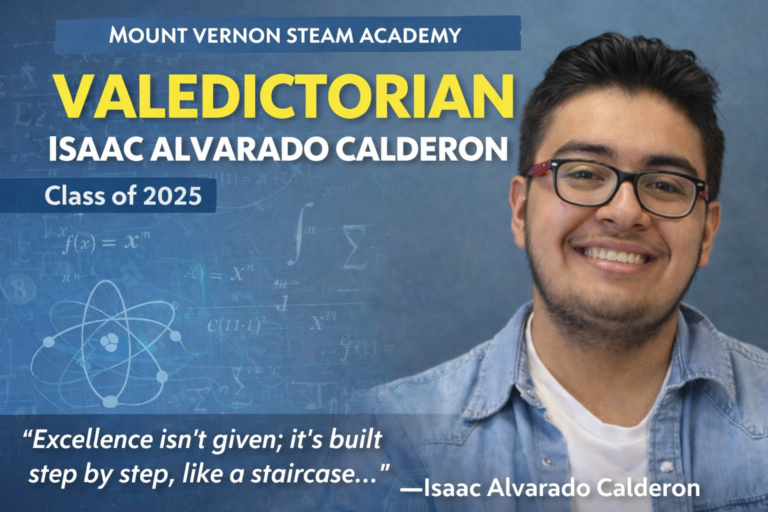
Mount Vernon STEAM Academy has named Isaac Alvarado Calderon as the Class of 2025 valedictorian, recognizing his exceptional academic achievement, merit, and relentless passion for learning. Isaac graduates with an extraordinary cumulative grade point average of 103.
Since the eighth grade, Isaac has maintained an unbroken streak on the Principal’s Honor Roll, never earning below a 90 in any marking period. His commitment to excellence extends far beyond the classroom. Whether studying independently or mentoring peers, Isaac consistently challenges himself to grow intellectually and personally.
One of his most impressive accomplishments came when he realized his school did not offer Calculus II. Rather than accept the limitation, Isaac taught himself the curriculum. He took the initiative to advocate for himself, successfully convincing both the administration and his math teacher to allow him to sit for the AP Calculus II exam — an achievement he considers one of his proudest moments.
Isaac’s senior year course load included several rigorous Advanced Placement classes: AP Calculus, AP Literature and Composition, AP Government and Politics, and AP Biology. These courses not only challenged him academically but also positioned him to earn college credits upon successful completion of the exams. His favorite class was AP Calculus with Ms. Jacobs.
“It’s just so complex,” Isaac said. “It’s so beautiful. I love the fact that math is built like a staircase — a big staircase — where you can’t understand one part if you haven’t learned the previous parts.”
Outside of academics, Isaac nurtures a wide range of interests. He enjoys drawing, playing video games, coding, and game development. His passion for technology led him to participate in a coding competition hosted by Environmental Leaders of Color. During the contest, Isaac learned programming languages such as Python and created his own platform game. He tied for first place, earning a $100 prize. Mayor Shawyn Patterson-Howard matched the award, bringing his total winnings to $200.
Isaac has also dedicated himself to serving others. Over the past three years, he has volunteered as a tutor in Spanish, AP Chemistry, and Calculus. This year, tutoring became a two-way learning experience, as helping others reinforced his own mastery of calculus in preparation for his AP exam. He even spent hours tutoring students remotely from around the world.
“It completely helped,” Isaac said. “Tutoring refreshes all that knowledge.”
Isaac applied to several prestigious institutions, including Binghamton University, Rochester Institute of Technology, Rensselaer Polytechnic Institute, Loyola University, Columbia University, and Cornell University. He ultimately accepted an offer from the New York Institute of Technology, where he received a $40,000 per year scholarship to study electrical engineering.
Looking ahead, Isaac is eager to expand his intellectual horizons, pursue research opportunities, and build relationships with like-minded peers. After earning his degree, he plans to become a licensed electrical engineer in New York State and help his parents launch an electrical services company.
He credits his parents for shaping his discipline and vision. His stepfather, an engineer for the Ecuadorian Navy, inspired his interest in engineering, while his mother’s expertise in business administration instilled in him strong financial management and life skills.
“She has taught me so many life lessons — how to make proper choices and manage finances,” Isaac said. “I thank both of them for leading me to who I am right now.”
Isaac Alvarado Calderon represents the very best of Mount Vernon — discipline, initiative, service, and vision. His story is a reminder that excellence is not given; it is built step by step, like the staircase he admires in mathematics.
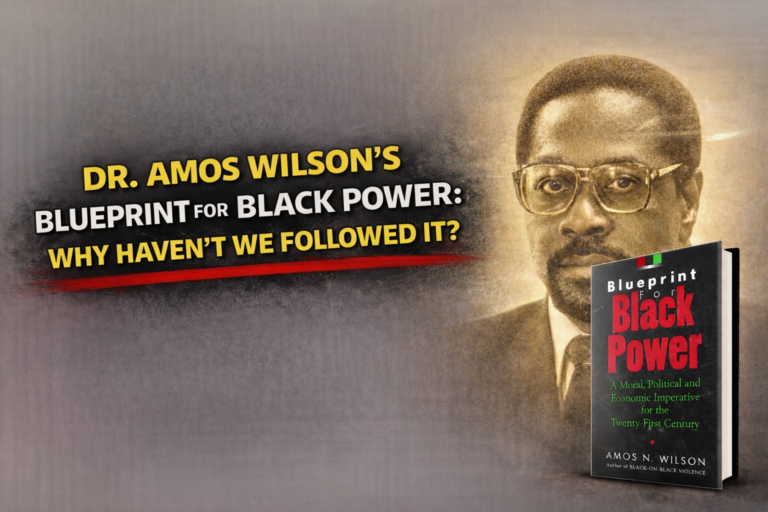
Black History Month often celebrates faces, moments, and symbolic firsts. However, it rarely examines why outcomes remain unchanged despite decades of representation. Dr. Amos Wilson did not confuse symbolism with success. He argued that progress should be measured by power—who controls institutions, owns resources, and enforces outcomes. By that measure, much of modern Black politics has fallen short.
Wilson was explicit:
“This whole struggle is about power—not loving one another and those kinds of things.” Dr. Amos Wilson
That statement alone puts him at odds with today’s political language, which is filled with moral appeals but lacks leverage. Wilson’s core argument was clear and testable: racism isn’t mainly about attitudes; it’s about power disparities. When one group controls resources like capital, education, law, culture, and enforcement, inequality persists regardless of intent. Moral language doesn’t eliminate structural advantages. Outcomes do. Nowhere is this clearer than in Black America’s economic behavior. Black Americans make up about 2 percent of employer-owned businesses in the United States, yet Black consumer spending is expected to hit $2.6 trillion annually.
These two facts cannot be explained without some context. A group controlling trillions in spending but owning almost none of the production, distribution, or finance is not truly empowered economically — it is exploited.Wilson warned about this exact contradiction decades ago. He asked why Black people protest for jobs while simultaneously creating jobs for others through consumption. “
We are a job-creating people… and yet we are begging for jobs. We are begging for what we are already making.” Dr. Amos
WilsonThis is not just rhetoric; it is economic logic. Spending without ownership distributes wealth outward. When consumption mainly goes to non-Black corporations, banks, retailers, and entertainment conglomerates, it bolsters the very systems that politically, culturally, and economically dominate Black communities. Wilson made the relationship unmistakable:
“They cannot have what they have unless we are who we are.” Dr. Amos Wilson
Modern Black politics seldom addresses this reality. It praises spending power as if spending alone equates to power. Wilson rejected that misconception. Spending is leverage only when it is organized, disciplined, and connected to ownership. Otherwise, it is a dependency hidden as influence.
Dr. Amos Wilson also warned Black America against assuming that all Black people share the same historical interests, values, or political agendas simply because of shared skin color. He argued that Black Americans, forged under slavery and Jim Crow, developed a distinct political consciousness rooted in survival within a hostile system, while many Black immigrants arrived with different cultural orientations, incentives, and relationships to American power structures. Wilson cautioned that grouping these groups into a single political category weakens Black Americans’ ability to pursue collective power, as groups with different experiences often seek different outcomes.
In practice, he argued, imported Black elites can be used to dilute the political claims of Black Americans descended from slavery—particularly around labor, housing, education, and reparative justice—by presenting themselves as “proof” that systemic barriers do not exist. Wilson’s point was not about exclusion but about clarity: a people cannot build power if they do not first define who they are, what history shaped them, and what agenda serves their long-term survival.
Today’s leadership focuses on inclusion, equity, and representation. Wilson emphasized ownership, control, and building institutions. The difference isn’t just for show—it’s based on facts. Representation has gone up. Median Black wealth has not. Consumer spending has surged. Business ownership has not. Voting loyalty remains high. Economic influence, however, remains low.Wilson warned against mistaking proximity for power:
“Trying to integrate and merge with our enemies is not going to solve our problem… it is a fantasy that has kept us from taking care of business for far too long.”Dr. Amos Wilson
Sitting at a table you do not own does not change who sets the menu—or who collects the profits. Modern Black politics often substitutes protest for power. Protest can reveal injustice, but without building lasting institutions, it fades away. Wilson asked the question that most leaders avoid: What is left after the march ends? His answer was straightforward—without institutions, pressure has nowhere to go.
He stated it plainly:“If you are not thinking in terms of nationhood, then you are not thinking seriously about being liberated.” Dr. Amos Wilson
Nationhood, in Wilson’s framework, was not a separatist fantasy—it was economic coherence. It meant aligning spending, education, culture, and politics toward group survival and power. Wilson also rejected the idea that systems respond to conscience. They respond to incentives. A political bloc that votes predictably, consumes indiscriminately, and owns little has no negotiating position. Loyalty without leverage is not a strategy; it is surrender. Perhaps Wilson’s most uncomfortable truth concerned consciousness. He argued that consciousness is not merely an abstract philosophical concept but a practical instrument of power. Consciousness influences spending habits. Spending habits shape ownership. Ownership determines freedom. As he explained:
“The most practical thing you can have is a good theory… a good concept organizes the world and organizes one’sapproach to the world.”Dr. Amos Wilson
Modern Black politics tries to regulate systems while ignoring consumer behavior. Wilson knew this ensured failure. Hewarned that when culture is surrendered, it becomes a weapon against its creators:
“When you let another people take over your music, your symbols, your rhythm, they will use your own instruments against you.”Dr. Amos Wilson
Theresult is what we see today: trillions spent, little owned; influence claimed, little enforced.Black history isn’t just a record of suffering—it’s also a record of strategy when progress was made. Wilson belongs to that tradition. He forced a reckoning that modern politics still sidesteps
“Power is not sinful. Without power, there is no life.”Dr. Amos Wilson
If Black politics continues to prioritize recognition over control, consumption over ownership, and rhetoric over tangible results, it will keep producing the same outcomes—regardless of how many seats are filled or slogans are chanted. Wilson warned us.
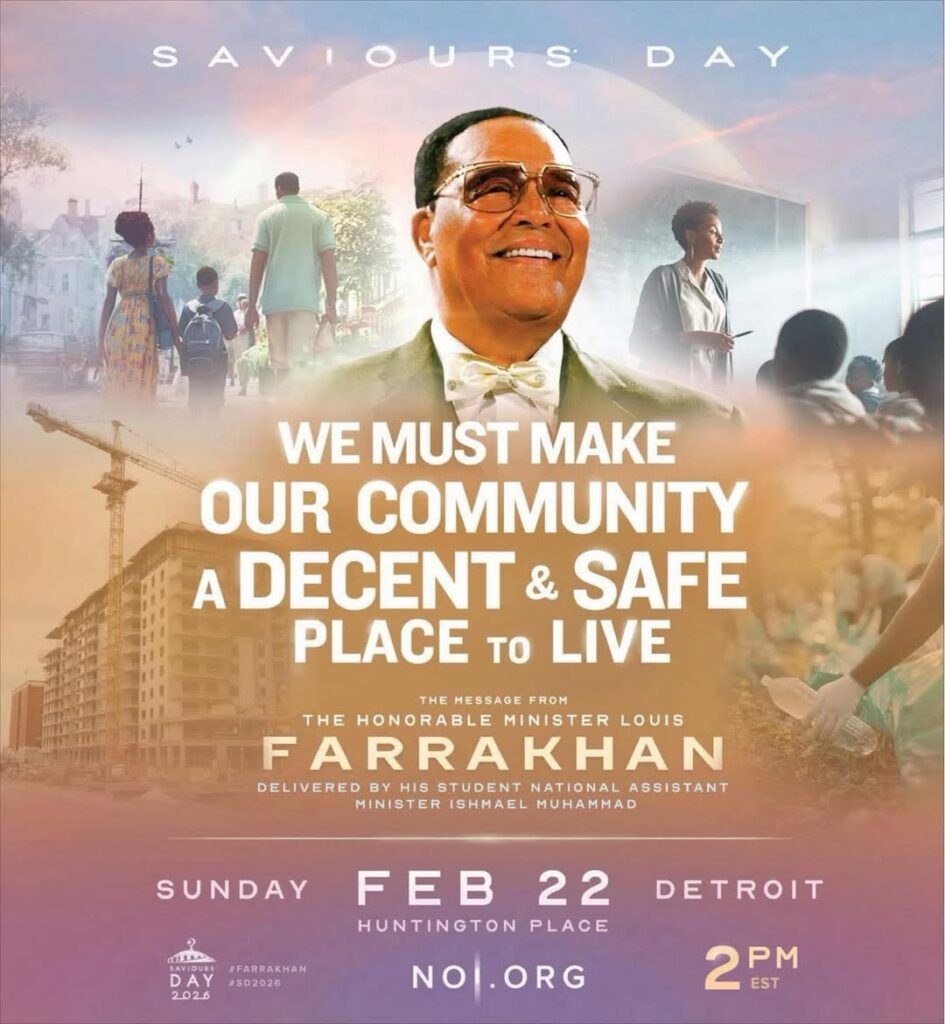
Every year, Saviours’ Day serves as the annual gathering of the Nation of Islam — a moment of spiritual reflection, organizational direction, and community recommitment. This year’s theme, “We Must Make Our Community a Decent Place to Live,” strikes at the heart of a teaching that has defined the Nation of Islam since its modern rise in 1930: self-improvement as the foundation of community transformation.
The theme is not abstract. It is practical. It reflects the long-standing message of the Most Honorable Elijah Muhammad, who taught that freedom is not granted — it is built. That dignity is not requested — it is established. And that no people can rise who refuse to discipline themselves economically, morally, and socially.
To make a community “decent” requires more than political slogans. It requires order, safety, economic circulation within the community, respect between men and women, care for children, and cleanliness of streets, homes, and hearts. For decades, the Nation of Islam has emphasized ownership of businesses, agricultural development, strong family structure, personal discipline, and education rooted in self-knowledge. These teachings were never centered on waiting for government rescue. They were centered on internal reform first.
For decades, the keynote address at Saviours’ Day has been delivered by the Honorable Minister Louis Farrakhan, who rebuilt the organization in 1977 after its transition under Warith Deen Mohammed. The Saviours’ Day speech traditionally outlines the organization’s analysis of the social, political, and economic conditions affecting Black America and the broader world. It is not merely ceremonial; it is directional. It evaluates the times and challenges the community to respond with discipline and unity.
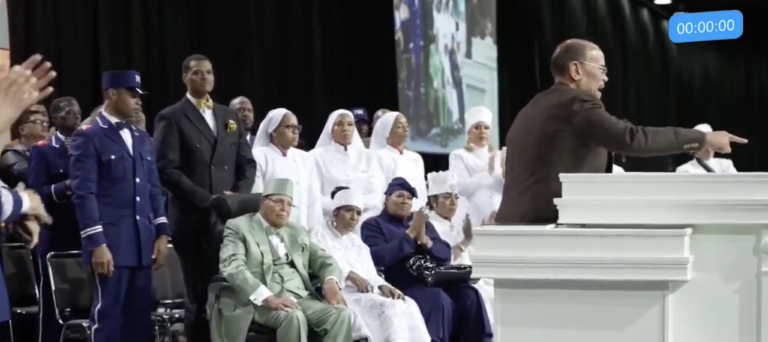
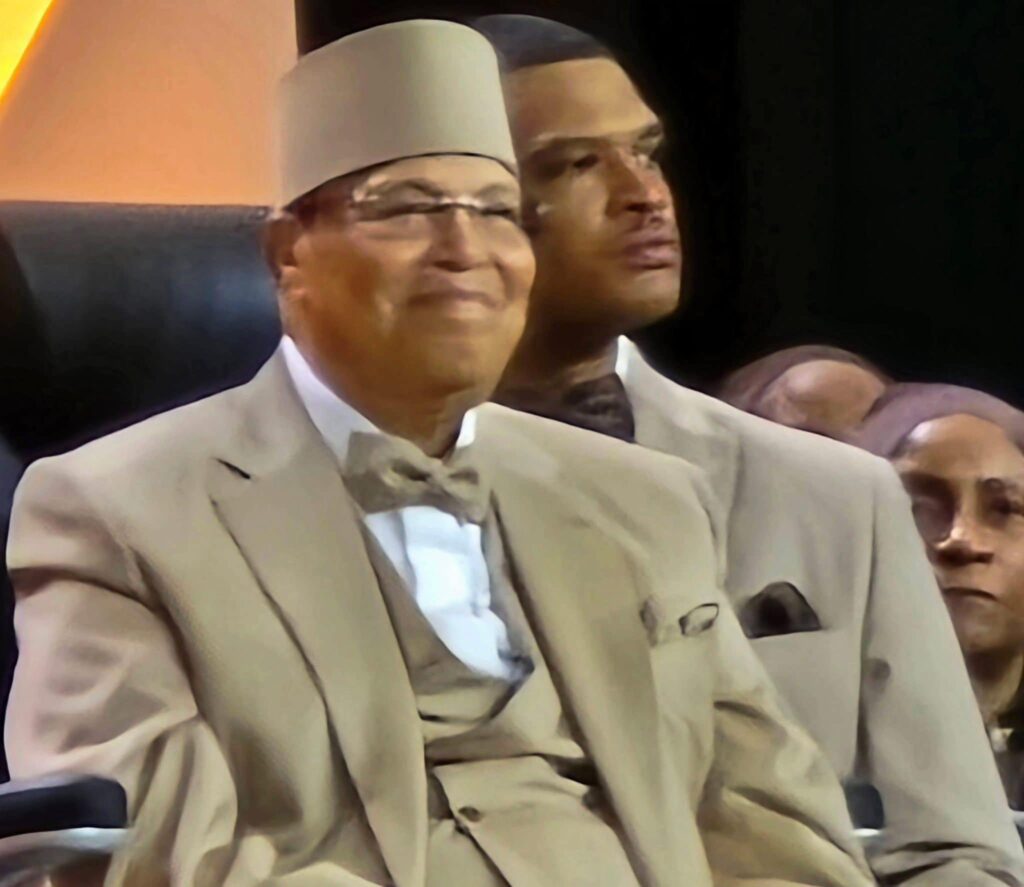
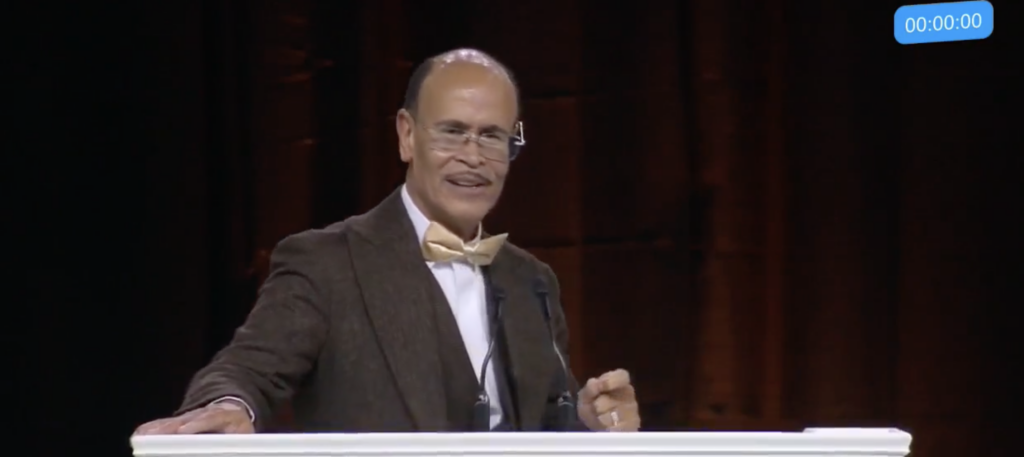
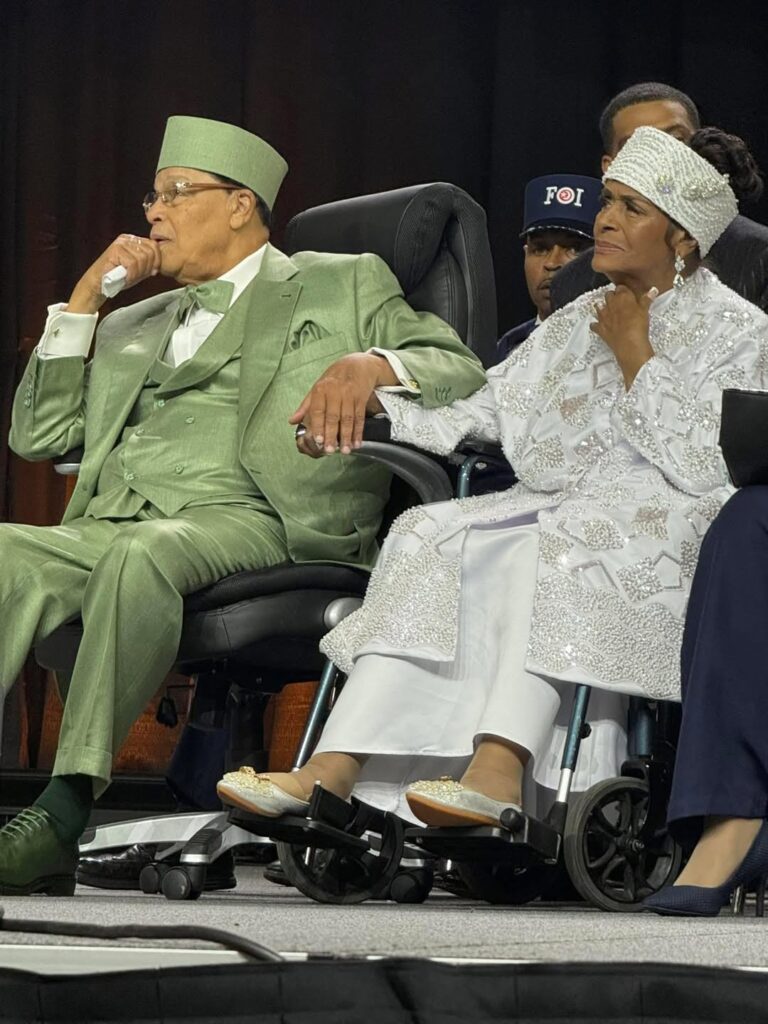
This year’s keynote address was delivered by Student Minister Ishmael Muhammad, marking a powerful generational moment at Saviours’ Day. As he spoke, the Honorable Minister Louis Farrakhan sat to the side, watching proudly as the next generation stepped forward to carry the message. The image itself reflected continuity — a passing of strength, discipline, and responsibility — signaling that the mission to uplift and fight for Black America is not ending, but advancing.
The Most Honorable Elijah Muhammad consistently taught that economic independence is the key to real freedom. A community that does not produce for itself will always depend on those who control production. While modern politics often promotes expanded programs and broader state involvement, the Nation of Islam’s message has long been that permanent dependency weakens initiative, weakens family structure, and weakens community cohesion.
A “decent place to live” is therefore not simply crime-free. It is economically active. It is morally grounded. It is culturally confident. It is a place where elders are respected, fathers are present, mothers are honored, and children are trained with purpose. It is a place where businesses thrive because the community supports them intentionally, not because of outside grants or temporary subsidies.
Saviours’ Day 2026 serves as a reminder that transformation does not begin in distant political offices. It begins in neighborhoods. It begins in homes. It begins with personal conduct and collective responsibility. The theme calls for accountability — not accusation. If our neighborhoods are unsafe, we must organize to correct it. If our dollars leave the community immediately, we must redirect them. If our schools fail our children, we must supplement and rebuild.
The central message remains consistent with the teachings that have defined the Nation of Islam for nearly a century: freedom is inseparable from self-sufficiency. To make our community a decent place to live is to reject chaos, reject corruption, reject exploitation, and replace them with structure, discipline, ownership, and faith.
Saviours’ Day is not only a commemoration. It is a recommitment — to build, to discipline, to organize, and to uplift. And according to the teachings of the Nation of Islam, that responsibility begins with us.
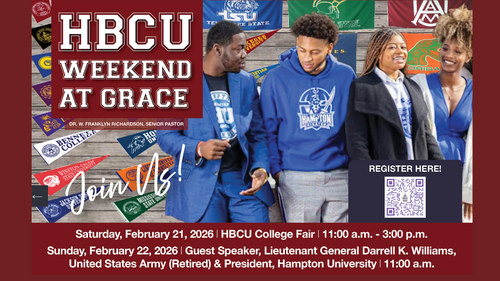
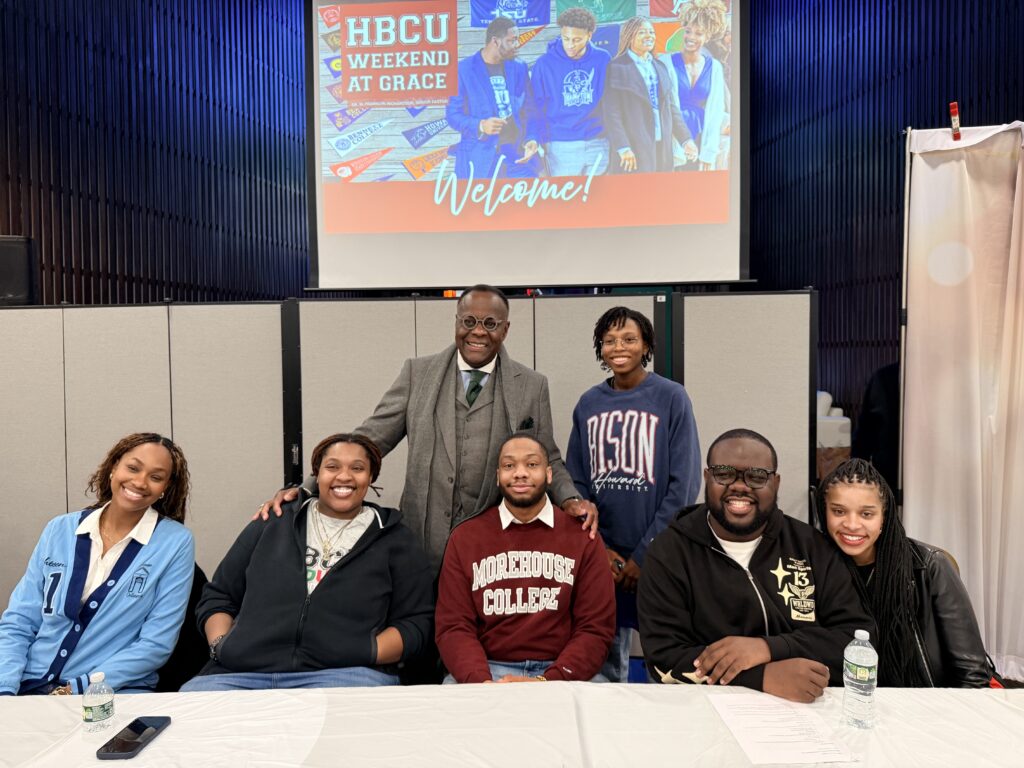
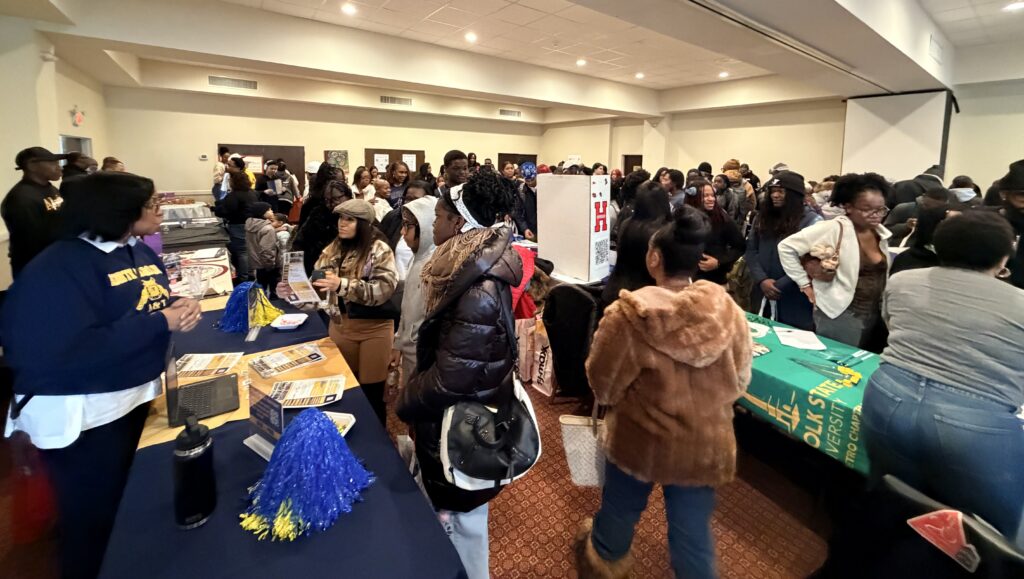
Grace Baptist Church felt different that weekend. Not just busy. Not just full. But purposeful. From the moment the doors opened, the energy of legacy, ambition, and love for our children filled every hallway and handshake. The second annual Grace HBCU Weekend wasn’t just an event; it was a reminder to our young people of who they are and where they come from.
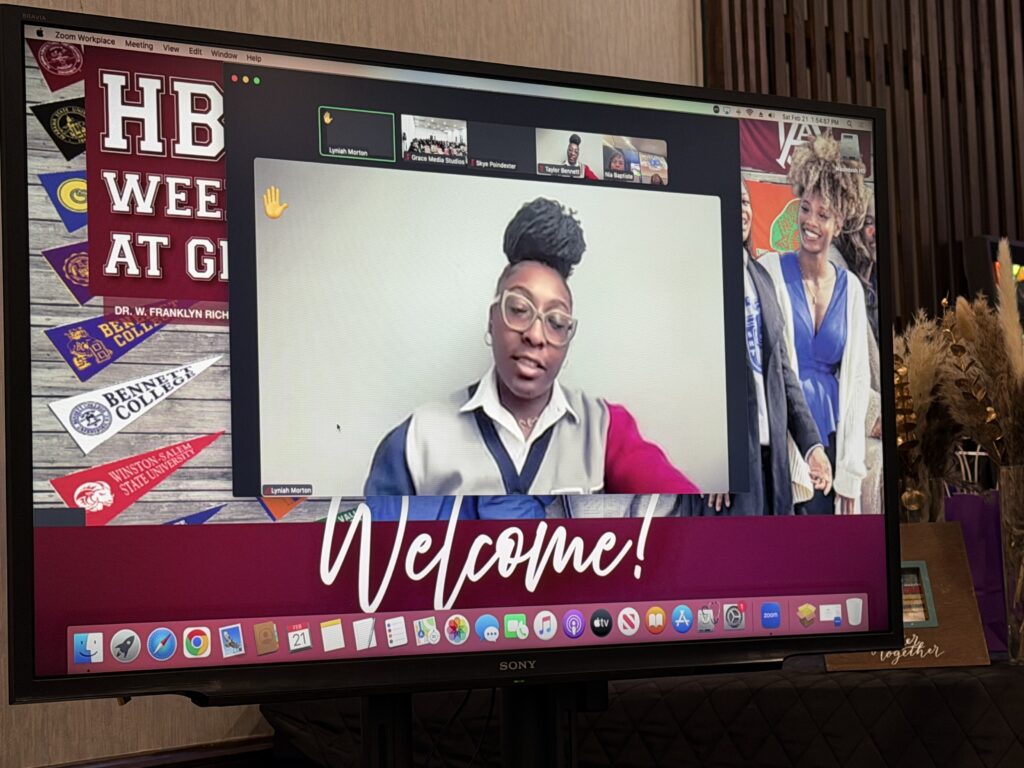
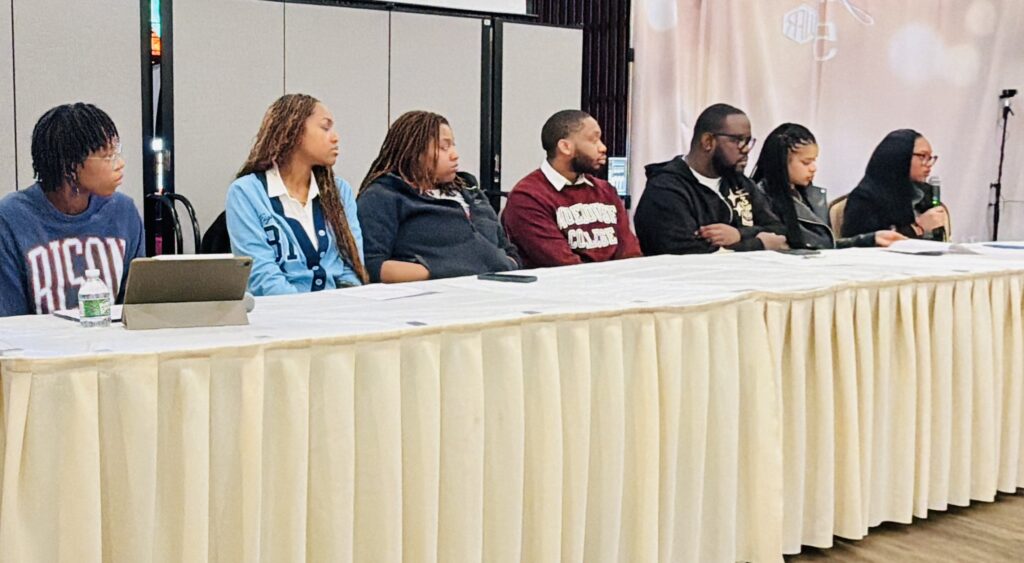
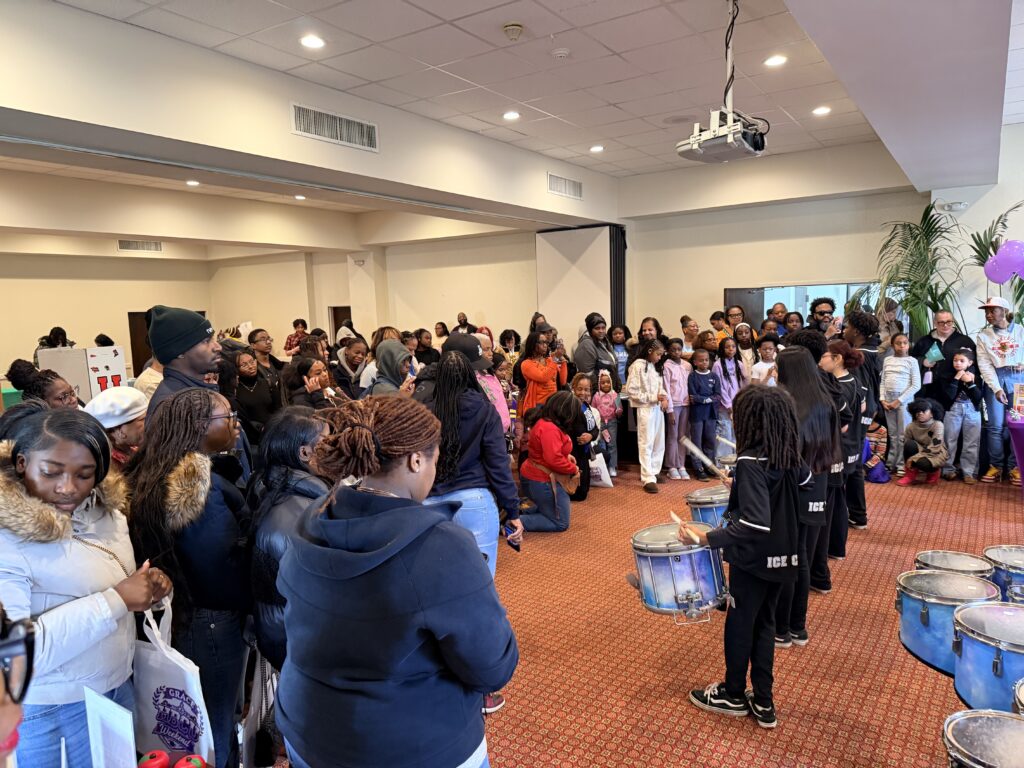
Saturday, February 21, 2026, set the tone. The sanctuary transformed into a bridge between dreams and opportunity. More than 25 HBCUs showed up, not just with brochures, but with belief. Parents leaned in with hope in their eyes. Students lit up when someone finally said, “Yes, you belong here.” The Ice Cold Experience Drumline shook the room like a heartbeat, reminding everyone that culture is power. The Financial Aid panel broke down barriers, and the Young HBCU Alumni spoke truth about resilience, identity, and survival with grace.
Young Alumni Panel from L to R. Moderator: Nia Baptiste, Howard U., Cayla Ross, Spelman College, Sydney Edwards, Fayetteville State U., Owen Burnside, Morehouse, Jonathan Mathieu, Virginia Union, Nia Fears, Clark-Atlanta U., Laylah Wilson, Norfolk State U. [Black Westchester]
You could feel that this weekend was carefully held, envisioned by Rev. Dr. W. Franklyn Richardson and brought to life by Dr. Candace Phaire, Deacon Clinton Myke, and Sakai Brown. This wasn’t programming for show. This was people who understood that representation isn’t symbolic, it’s necessary.
Rev Dr. W. Franklyn Richardson with the Young Alums [Black Westchester]
Sunday sealed it.
HBCU Sunday and Youth Sunday weren’t performances; they were affirmations. The pews became a runway of pride, Divine Nine letters, school colors, Black power statements stitched into fabric and spirit. Every outfit told a story. Every smile carried possibility. When the drumline performed again, it felt ceremonial. Like a declaration: Yes. This is who we are. This is where we’re going.
The Ice Cold Experience Drumline [Black Westchester]
I didn’t just attend Grace HBCU Weekend.
I witnessed investment.
I witnessed community choosing its future out loud.
I witnessed elders planting seeds and youth standing tall enough to receive them.
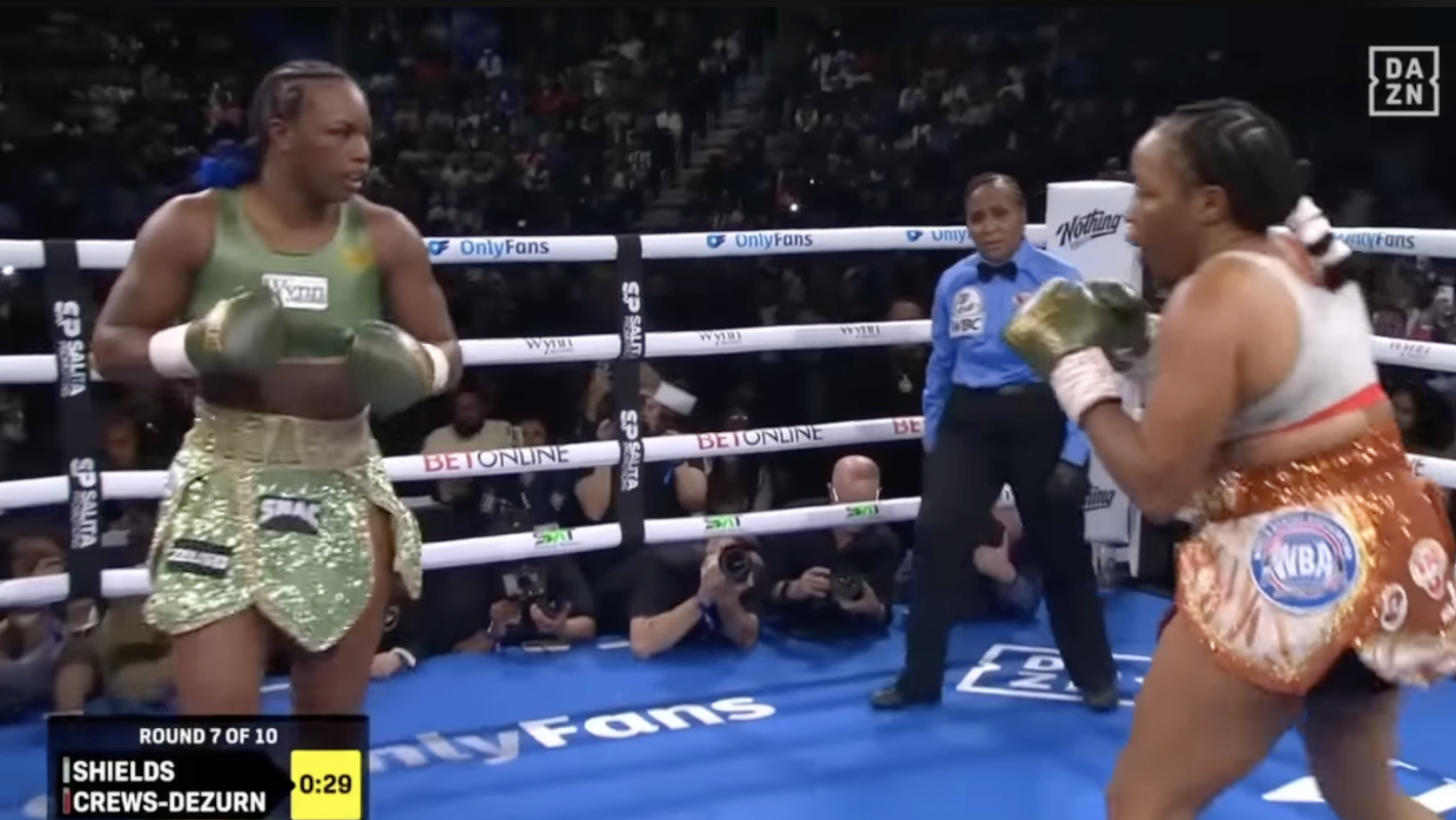
Before the first punch of the main event was even thrown, the building felt like a major cultural event. The crowd stood for the anthems, with Wind Records artist Passion performing “Lift Every Voice and Sing,” followed by Grammy-nominated R&B gospel powerhouse Kelly Price leading the U.S. National Anthem. From that point on, it was clear this night wasn’t built to feel small.
Then the ringwalks started.
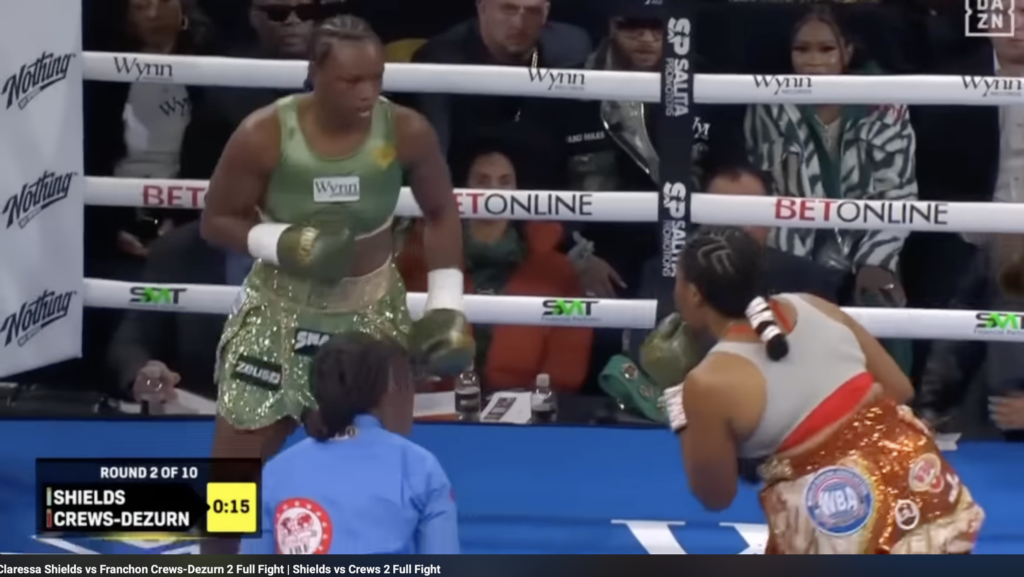
Baltimore’s Franchón Crews-Dezurn, the “Heavy Hitting Diva,” entered as the challenger. Flint’s own Claressa Shields entered as the defending, undefeated, undisputed heavyweight champion. The arena welcomed the world to Little Caesars Arena in Detroit for a 10-round championship fight broadcast on DAZN and promoted through a partnership that blended boxing, business, and culture: Salita Promotions and Win Records, along with 313 Presents and sponsors including Zeus Network.
And when the bell rang, they didn’t waste a second.
A Fast Start That Looked Like a Flashback
Commentary noted it immediately: the opening exchanges resembled their first fight from a decade ago. Both women came out throwing with real intent. Big overhand rights. Heavy exchanges in the center. Crews-Dezurn applied pressure early and forced Shields to make quick decisions.
But the difference, as the broadcast team pointed out, was Shields’ precision. Ten years later, she wasn’t just trading. She was picking spots, timing shots, and making the kind of adjustments champions make when the opponent is still dangerous.
The Story of the Fight: Shields’ Speed, Output, and Control
As the rounds developed, the pattern became hard to ignore.
Crews-Dezurn would fire three, and Shields would answer with five, six, sometimes eight punches in return. The announcers repeatedly pointed to Shields’ hand speed and work rate at this weight, calling her unusually fast for the division and noting how difficult it is for most heavyweights to match that pace.
A major tactical point came up over and over: Crews-Dezurn’s best moments started with her jab. When she used it, she could set up the right hand and interrupt Shields’ rhythm. When she drifted away from it or got pulled into extended exchanges, Shields’ speed advantage turned those moments into point-piling combinations.
The broadcast also highlighted Shields’ balance and base, noting she stayed under herself while throwing long combinations, which kept her able to defend and continue punching without falling in. That was one of the biggest differences in the fight: Shields could maintain form at high volume, while Crews-Dezurn often had to reset after bursts.
Body Work, Momentum, and a Champion’s Gas Tank
By the middle rounds, Shields’ body attack became a theme. The commentary repeatedly called out her slip-left-hook-to-the-body sequence, describing it as “a thing of beauty.” Those shots mattered because they didn’t just score. They drained.
As the fight progressed, the team noted Crews-Dezurn’s body language changing. Shields still looked fresh. Crews-Dezurn was still game, still tough, still landing here and there, but the energy gap widened. One score update during the broadcast had Shields outlanding her by a wide margin, and the judges’ tone at ringside reflected what the crowd could see: Shields was taking control with activity, accuracy, and pace.
The atmosphere played a role too. Between rounds, the arena drums could be heard, and the broadcast noted the “homefield advantage” feel in Detroit. It sounded different. It moved different. Shields wasn’t just fighting in front of a crowd. She was performing in front of her city.
Scorecards Tell the Tale
After 10 rounds, the announcement was definitive.
All three judges scored the bout 100–90, a unanimous decision for the winner and still the undefeated, undisputed heavyweight champion of the world, Claressa Shields.
Whether you felt Crews-Dezurn stole a round or two with grit and pressure, the official verdict left no debate: Shields owned the night.
Shields After the Win: Respect, Honesty, and the Drive for More
In the in-ring interview, Shields didn’t pretend it was easy.
She called Crews-Dezurn tough, credited her power, and said she had to “take her time” and be “tricky.” She spoke about needing to time the jab because Crews-Dezurn may be shorter, but “she’s longer,” and when that jab comes, the right hand follows.
Shields also said she “almost had her out” around round seven, and admitted she wasn’t punching enough in rounds seven through nine by her own standard, saying she plans to go back to camp, get in better shape, and keep chasing knockouts, even though she can win these fights unanimously.
Then she addressed what many people were talking about: the weigh-in incident and the tension between teams. Shields said the chaos was out of her and Crews-Dezurn’s control, and if she could do it over, she wouldn’t even have pushed her because she didn’t want the aftermath. She spoke with real love about Crews-Dezurn, recalling a moment when she was struggling before a fight and Crews-Dezurn was there for her.
That’s the part you don’t always see in promotion. Two competitors with history, conflict, and respect all at once.
Culture Meets Championship: The Win Records Connection
One of the loudest signals from this event is that women’s boxing is building more than fights. It’s building platforms.
Promoter remarks post-fight credited Papoose as a key bridge in connecting Win Records and Salita Promotions, framing the night as boxing, culture, hip-hop, and world-class championship energy coming together. That matters because it reflects what Detroit witnessed: not just a title fight, but a full production that treated women’s boxing like main-event business.
Crews-Dezurn: Tough, Proud, and Still Standing
Crews-Dezurn also got the mic, and she sounded like exactly what she calls herself: a diva with grit.
She shouted out Baltimore, Virginia, and D.C. supporters, told Detroit not to “act stank” because they love her too, and congratulated Shields while making it clear she’s still willing to run it back. She even joked she might need to bandage the other knee and wear an ankle brace next time, but she’s still here to push the sport forward.
And that may be the real takeaway.
You can lose a fight and still elevate the event when you come to fight for real. Crews-Dezurn did that. Shields did more than that.
What This Night Means for Women’s Boxing
The commentary at the end captured the larger point: women’s boxing has come a long way since their first fight, which helped spark this era. The moment Shields paused during her walkout and took in the crowd said it all. It was the look of someone realizing the impossible is now normal.
A sold-out arena. A main event built around women. A performance that blended skill, toughness, and showmanship. Detroit didn’t just watch Claressa Shields defend titles.
Detroit watched women’s boxing prove it belongs on the biggest stage.
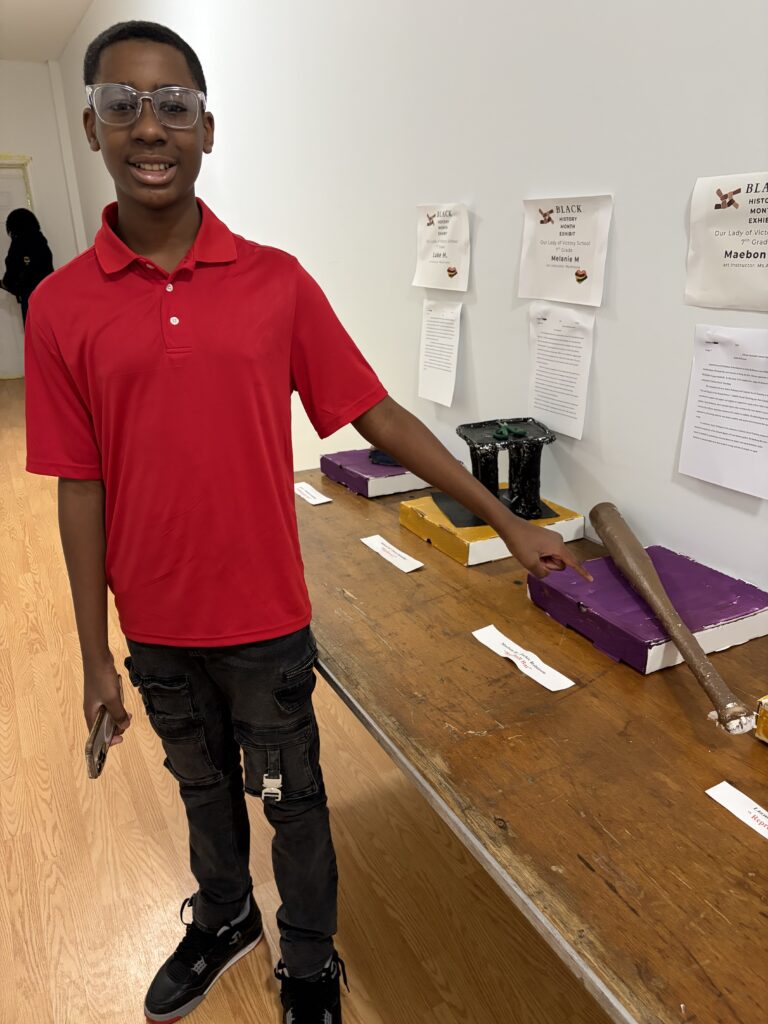
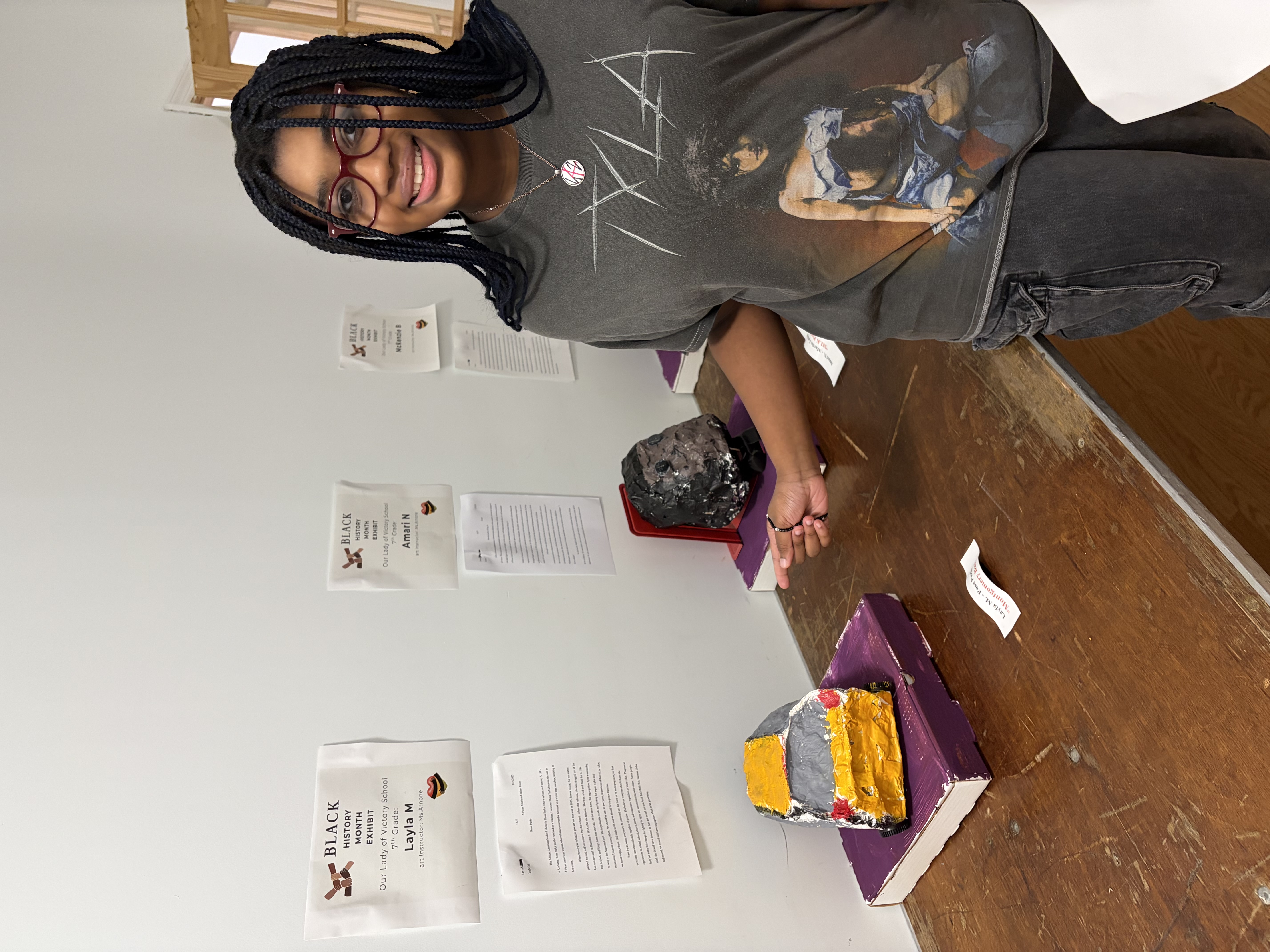
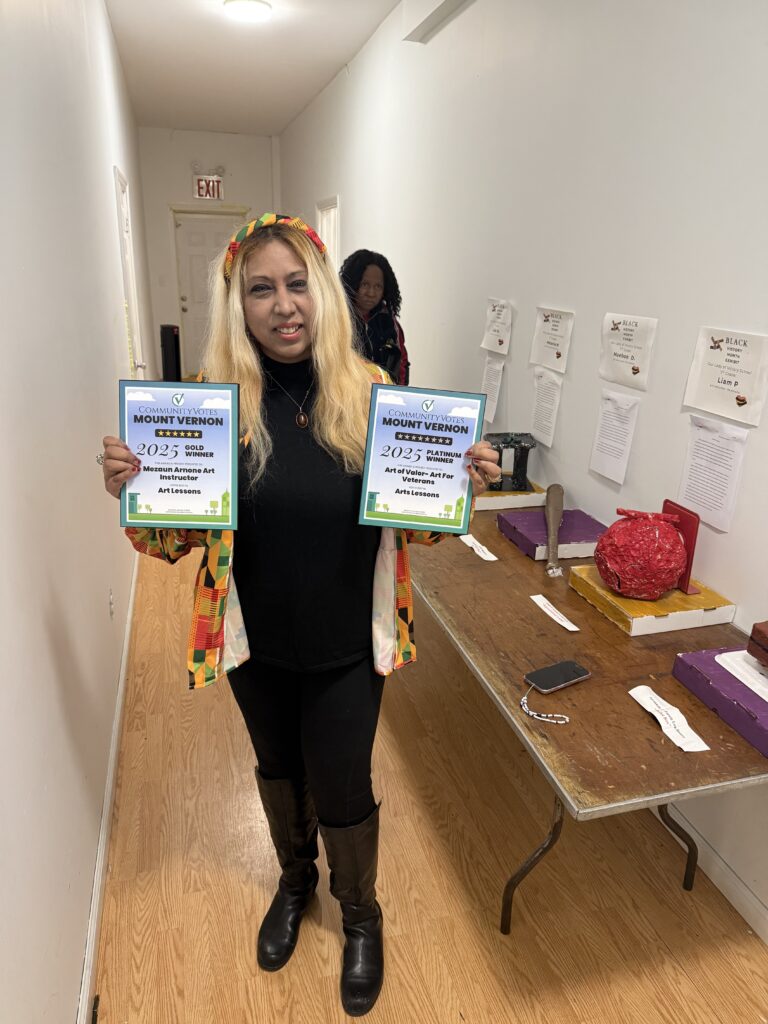
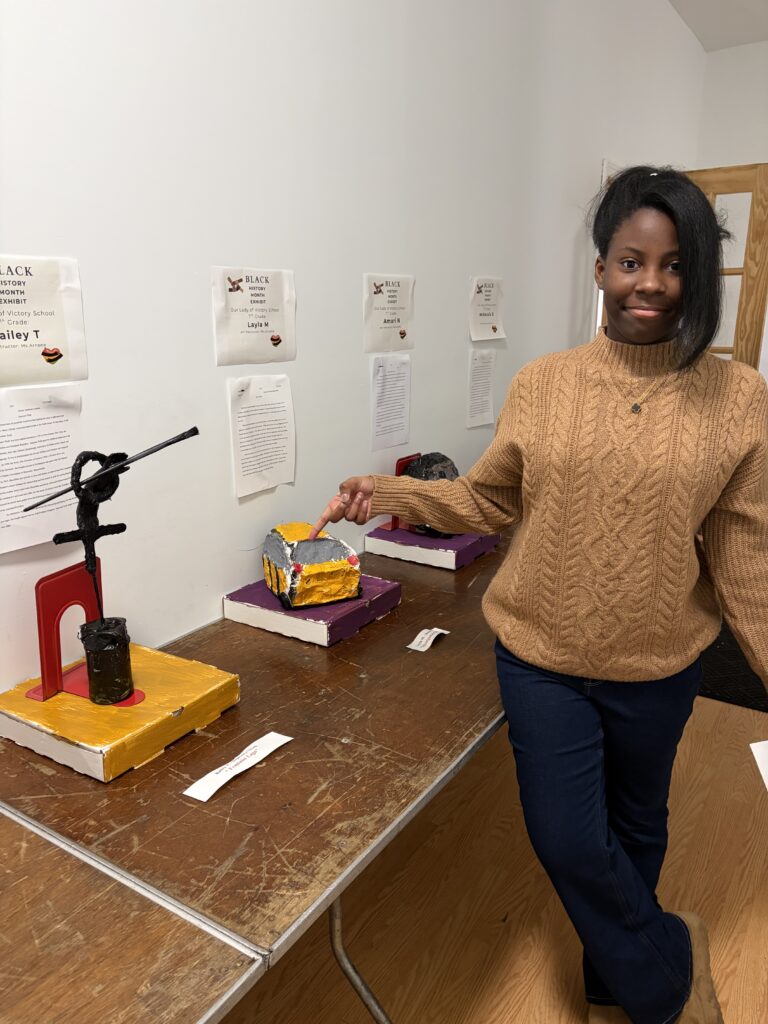
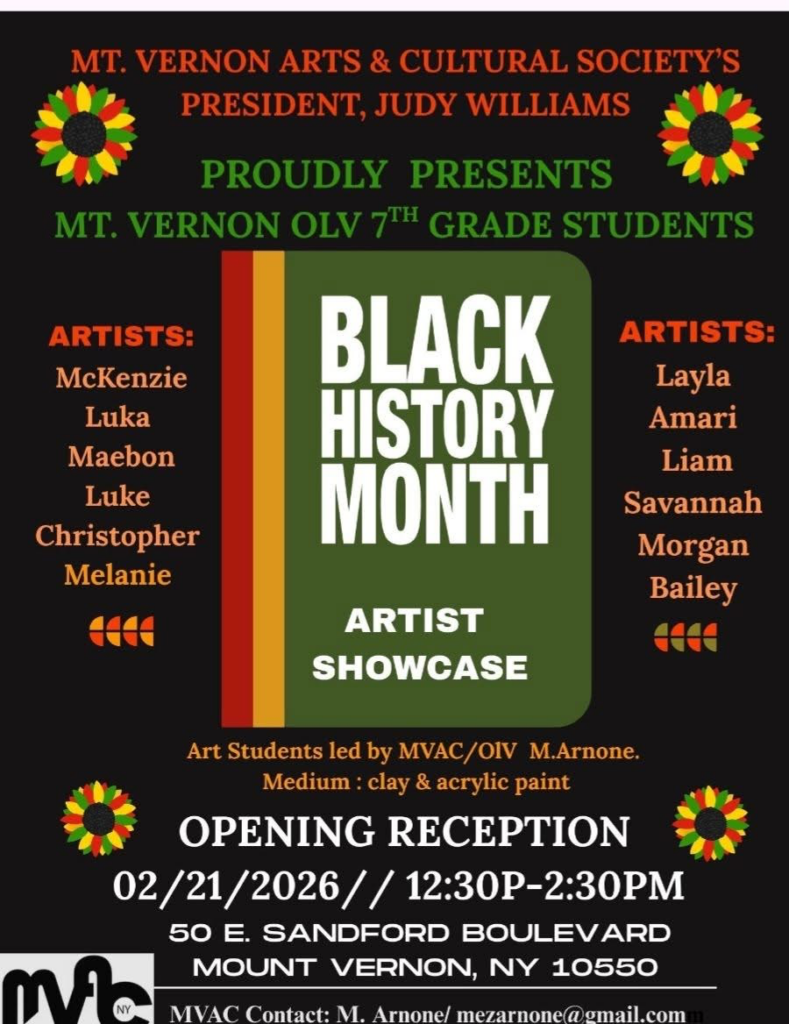
On Saturday, February 21, 2026, the Mt. Vernon Arts & Cultural Society (MVACS), A.K.A. Mt. Vernon Arts Council did more than host an exhibition; it demonstrated what cultural stewardship looks like in action.
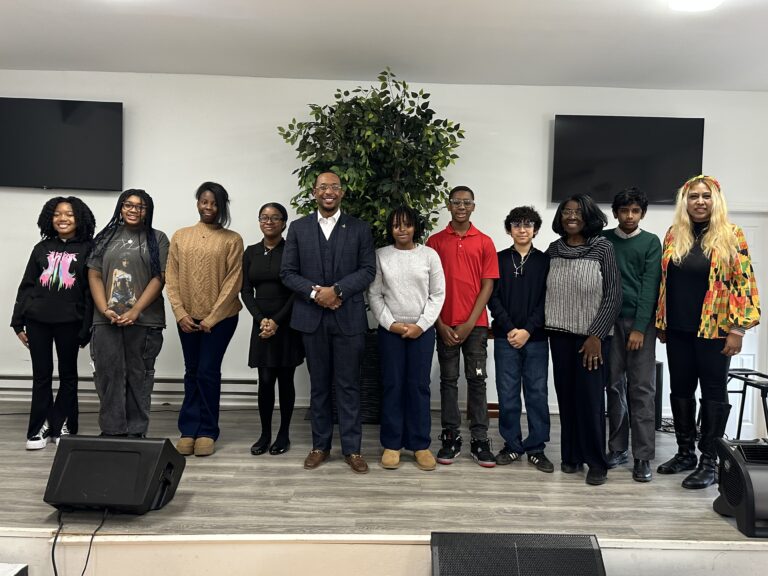
Under the leadership of President Judy Williams, the Society proudly presented the Mt. Vernon OLV 7th Grade Black History Month Artist Showcase, transforming 50 E. Sandford Boulevard into a living classroom where scholarship, artistry, and civic consciousness converged.
This was not a ceremonial nod to Black History Month. It was intentional programming designed to build confidence, critical thinking, and cultural literacy.
At the heart of this showcase was award-winning art instructor Mezaun Arnone, whose disciplined, student-centered approach shaped every piece in the room. Arnone, recently voted Mount Vernon Gold Winner for Art Instructor and Art Lessons and recipient of Platinum Art Valor for Art for Veterans arts lessons, leads her students through a rigorous STREAM curriculum, integrating Science, Technology, Reading, Engineering, Art, and Math through project-based learning.
Students are not simply handed materials. They research. They sketch. They engineer structure. They sculpt in clay. They refine their work in acrylic paint. Twice a week, Arnone teaches them how to build with their hands and articulate with their minds.
And during the opening reception, that articulation took center stage.
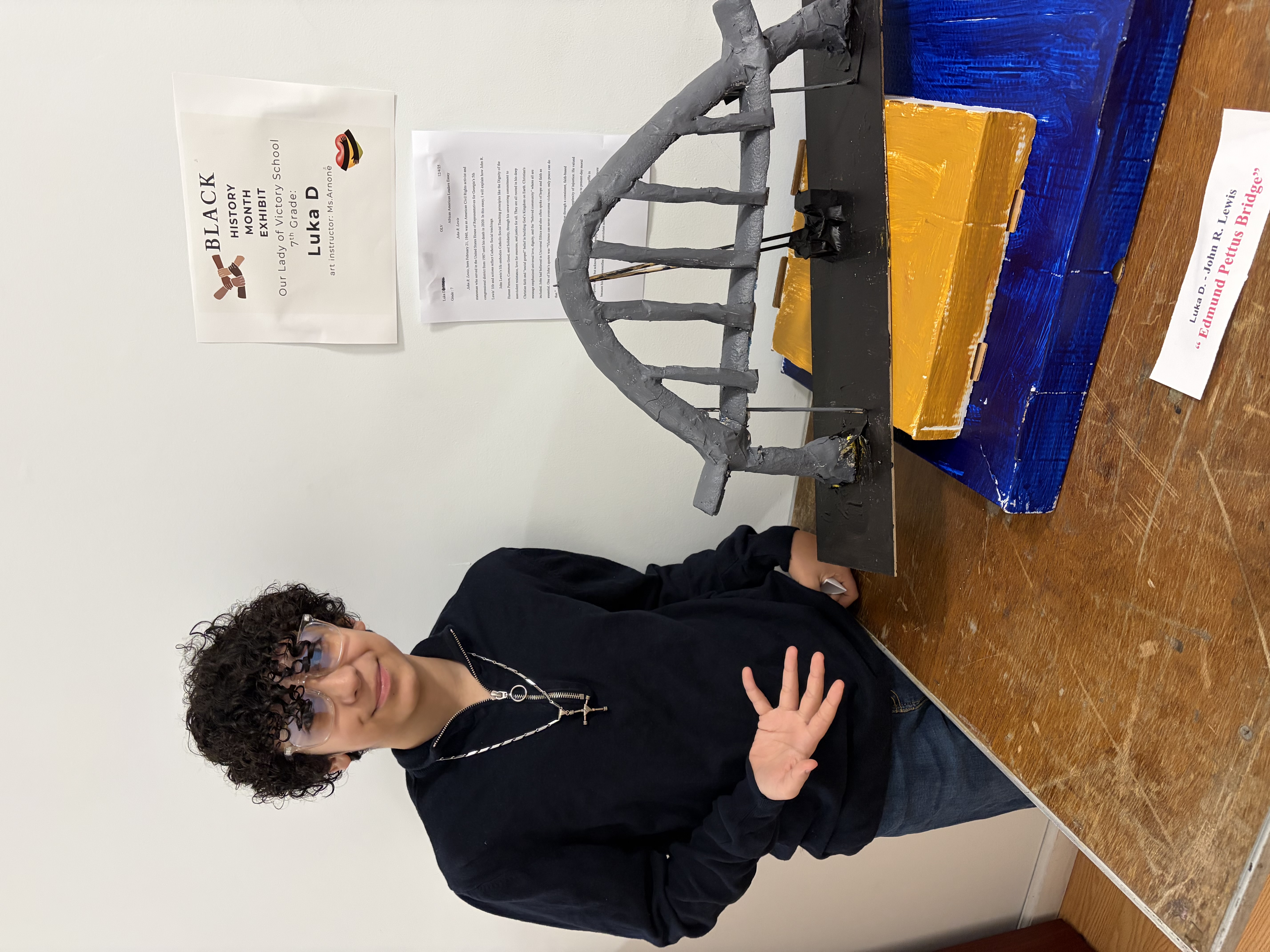
Each student stood beside their work and explained their historical research, artistic symbolism, and creative process. The spotlight moved intentionally through the lineup:
Luka presented John R. Lewis and the Edmund Pettus Bridge, symbolizing courage under fire and the cost of crossing toward justice.
Maebon honored Jackie Robinson with a sculpted baseball bat, representing both athletic excellence and the weight of integration.
Layla interpreted Rosa Parks and the Montgomery Bus, capturing the quiet resistance that ignited a national movement.
Morgan constructed Thurgood Marshall’s gavel and base, a reminder that justice is argued, defended, and built.
Savannah created a Fannie Lou Hamer ballot box, democracy sculpted into tangible form.
Melanie honored Pierre Toussaint, highlighting service, entrepreneurship, and philanthropy.
Bailey sculpted Sojourner Truth, strength and fearless truth-telling embodied.
Christopher represented Francis Cecil Sumner, one of the first Black psychologists, honoring intellectual leadership and mental health scholarship.
Liam created a symbolic tribute to Gordon B. Hancock, recognizing the power of academic thought and public advocacy.
Amaru painted a portrait of Dr. Martin Luther King Jr., capturing both resolve and reflection.
Luke H. interpreted Frederick Douglass’ autobiography, literacy as liberation molded into clay.
Mckenzie sculpted Dorothy M. Day’s Fist of Power, blending faith with activism in a bold, expressive form.
The room held more than artwork. It held research, intention, and voice.
By hosting this showcase, the Mt. Vernon Arts & Cultural Society reaffirmed its role as a cultural anchor in the city, creating platforms where youth scholarship meets public recognition. The Society understands that arts education is not enrichment; it is infrastructure. It shapes how young people see themselves in history and how they imagine their role in the future.
Westchester County Legislator Tyrae Woodson-Samuels concluded the program by thanking each student individually and offering words of encouragement to students and parents alike. His remarks underscored the civic significance of the afternoon, these students were not just participating in an art show; they were practicing public leadership.
What unfolded that day was evidence of what happens when institutional support meets instructional excellence. Through Mezaun Arnone’s leadership and the Mt. Vernon Arts & Cultural Society’s commitment to cultural programming, students were given more than supplies. They were given a stage.
And stages build confidence.
The Mt. Vernon Arts & Cultural Society continues to expand opportunities for youth, artists, veterans, and families throughout the city. Programs like this Black History Month showcase are possible because of community investment and partnership.
Residents interested in supporting future initiatives, attending upcoming events, or volunteering are encouraged to connect with the Mt. Vernon Arts & Cultural Society and become part of the work.
Because when we invest in our cultural institutions, we invest in our children.
And on February 21, Mount Vernon saw what that investment looks like.
The Mt. Vernon Arts & Culture Society (MVACS) is a non-profit organization serving as the arts and culture council for the City of Mount Vernon. The society focuses on supporting local artists, musicians, and writers while promoting community development through creative initiatives. For more information on MVACS, visit their website.
The kind that makes you sit in your car afterward a little longer.
The kind that follows you home.
The kind that tap you on the shoulder days later like, “Yeah… that mattered.”
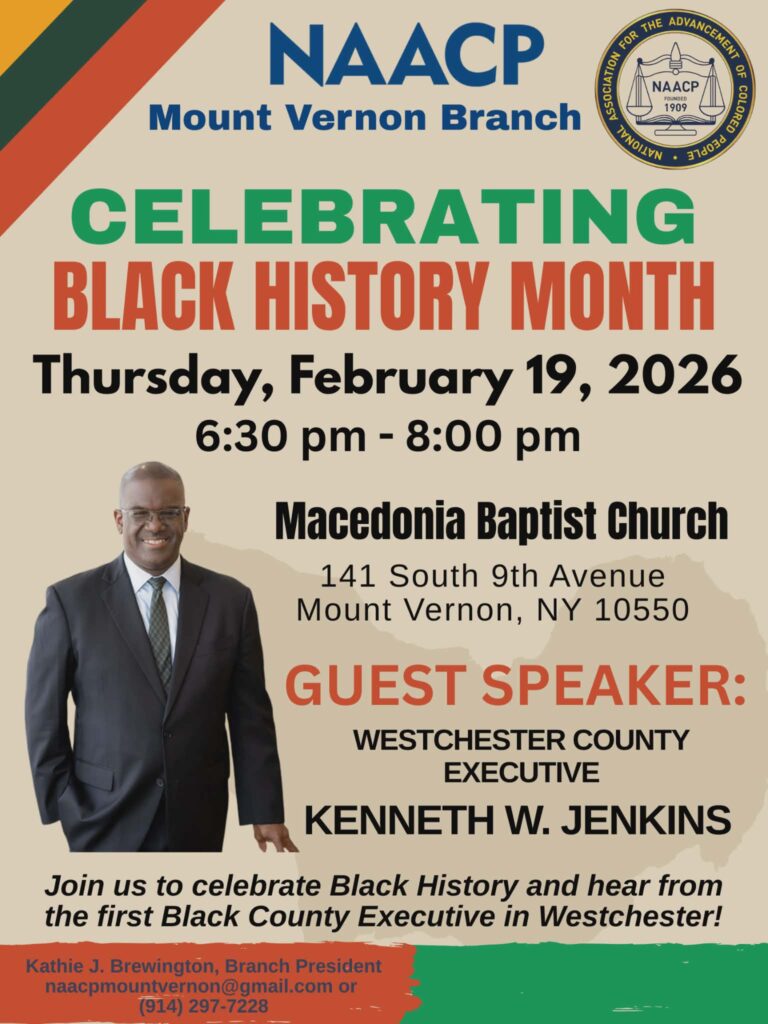
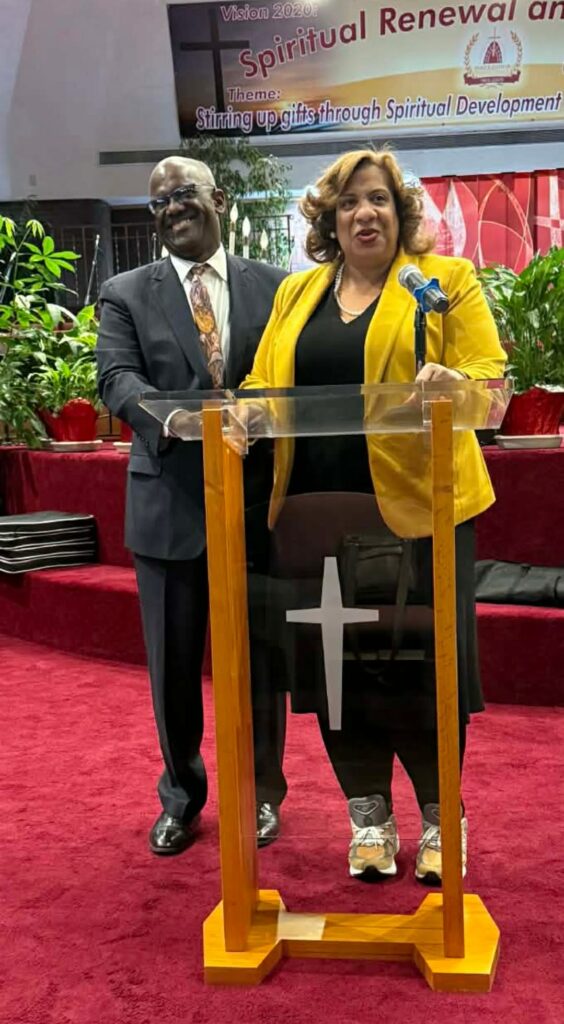
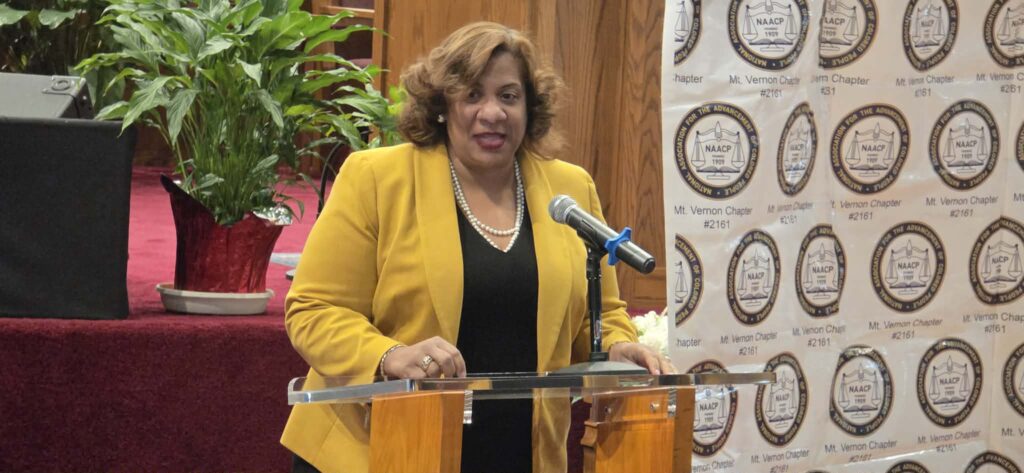
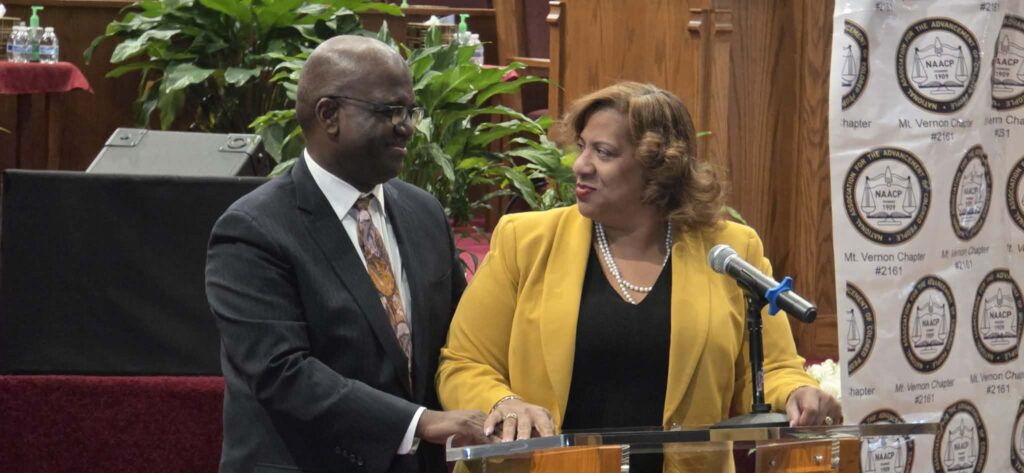
February 19, 2026, at Macedonia Baptist Church in Mount Vernon was that kind of night.
Not flashy.
Not performative.
Not “look at us” energy.
It was “remember who you are” energy.
And that’s rare.
Before the Program Even Started, We Broke Bread
Before a microphone was lifted…
Before anyone took the stage…
Before the first official word was spoken…
We ate together.
We broke bread.
Plates were passed.
Smiles were exchanged.
Conversations flowed easily in the hall.
People who hadn’t seen each other in months caught up.
New faces were welcomed.
Elders were served first.
Laughter echoed softly through the hallway.
And that mattered.
Because community doesn’t start at the podium.
It starts in shared spaces,
in small conversations,
in warm greetings,
in familiar voices calling your name.
That moment in the hall set the tone.
We weren’t just attending an event.
We were gathering.
Before Anyone Spoke, the Room Was Already Talking
By the time people took their seats, the room was alive.
Elders greeting each other with both hands.
Young people straightened up when they realized this wasn’t background noise.
Community leaders and elected officials leaned in close, whispering ideas, plans, intentions.
Coats were folded neatly.
Programs were passed down the pew.
Smiles exchanged like, “Yeah… I’m glad I came.”
The atmosphere wasn’t rushed.
It was deliberate.
Like everybody subconsciously agreed:
Tonight deserves our full attention.
Kathy Brewington Didn’t Just Open the Program, She Set the Standard
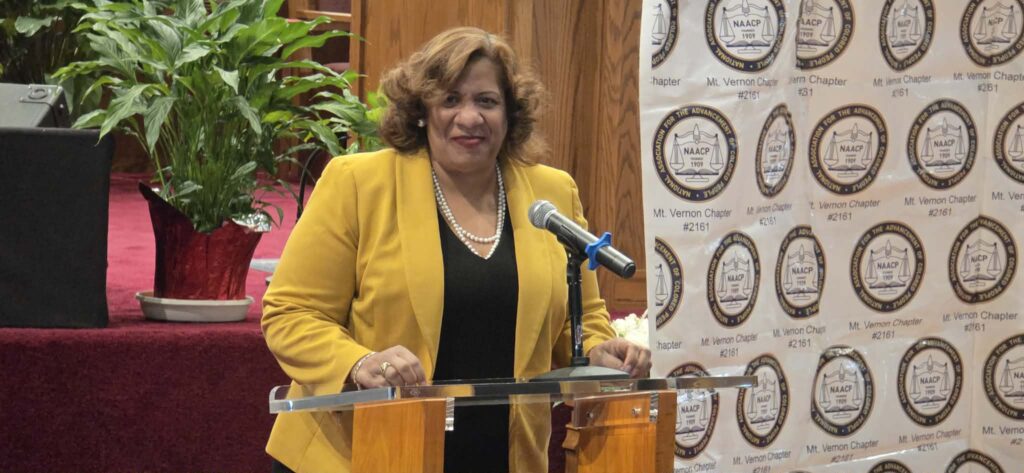
When Kathie Brewington stepped up, she didn’t raise her voice.
She didn’t need to.
Her presence already had authority.
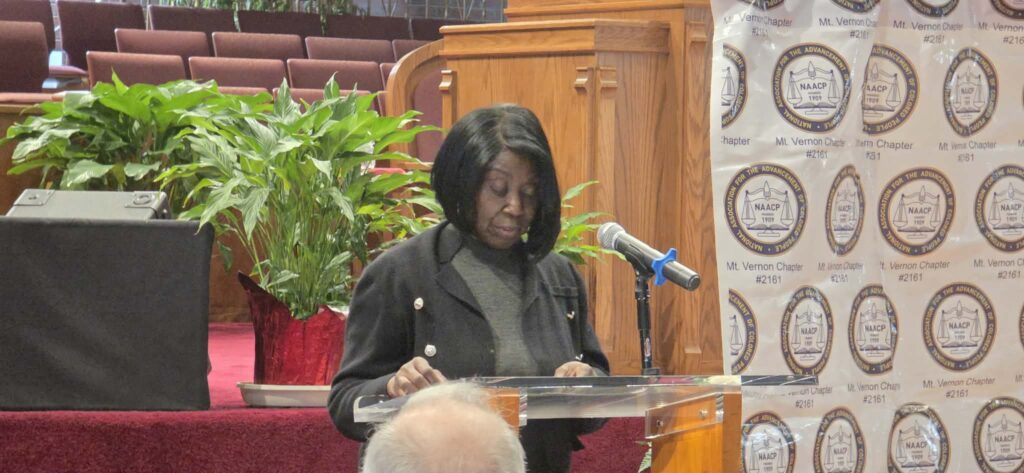
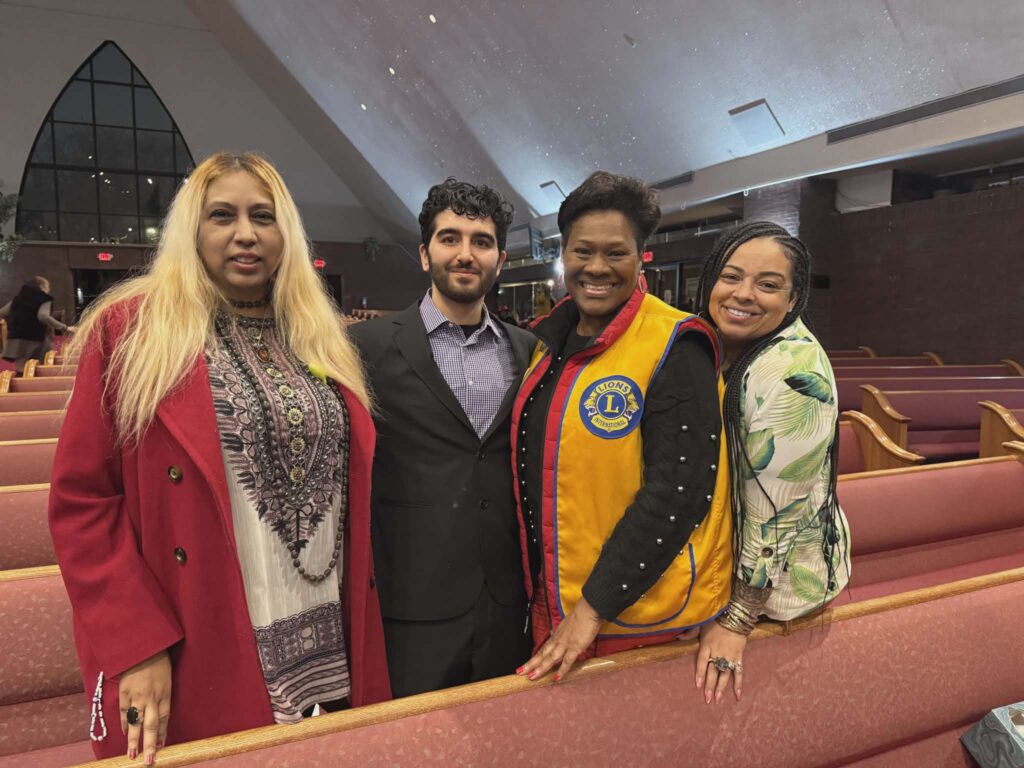
She welcomed everyone with warmth and clarity and took time to recognize the leadership in the room, especially Nicole Hines, NAACP Regional Director for the Mid-Hudson/Westchester region. She also acknowledged the elected officials in attendance, members of the Yonkers NAACP, and leadership from the Ann Sullivan Lions Club of White Plains.
That recognition mattered.
Because strong movements honor the people doing the work.
She reminded us why the NAACP still matters.
Why membership matters.
Why consistency matters.
Why support matters.
Participation matters.
Not when it’s trending.
Not when it’s convenient.
All the time.
Her words felt like accountability wrapped in love.
Like:
“We’re building something. Are you helping… or just watching?”
When Faith Shifted the Atmosphere
Then Minister Andre Coleman began the invocation.
And listen.
The room changed.
Phones went down.
Bodies settled.
Side conversations disappeared.
Drawing from Psalm 9:1–4, he reminded us:
“God is in charge.”
Simple sentence.
Heavy impact.
In a world that constantly tries to destabilize Black people emotionally, spiritually, and politically, that reminder felt grounding.
Like the room exhaled together.
Honoring the Shoulders We Stand On
A moment of silence was held for Rev. Jesse Jackson.
And it wasn’t rushed.
It wasn’t awkward.
It was sacred.
It held decades of sacrifice, organizing, and courage.
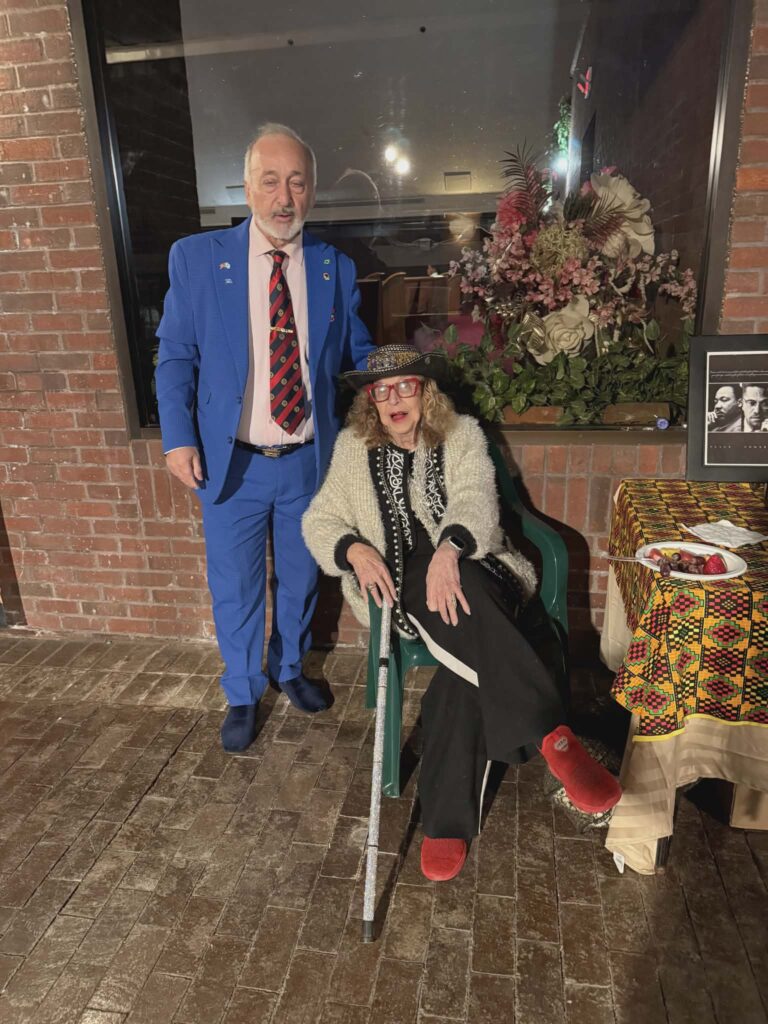
Oscar Brizuela-President of the Mount Vernon Lions Club & Dr. Rosemary J. Uzzo [Black Westchester]
And seeing Dr. Rosemary J. Uzzo, 90 years old, in the front pew, still present, still invested, was its own sermon.
That is what commitment looks like.
Not seasonal.
Not situational.
Lifelong.
Kaitlyn Smith Didn’t Perform. She Affirmed.
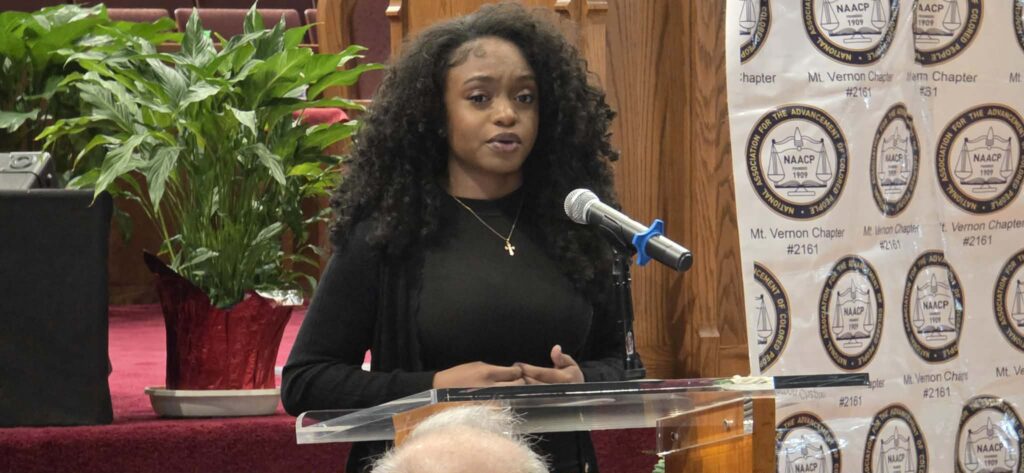
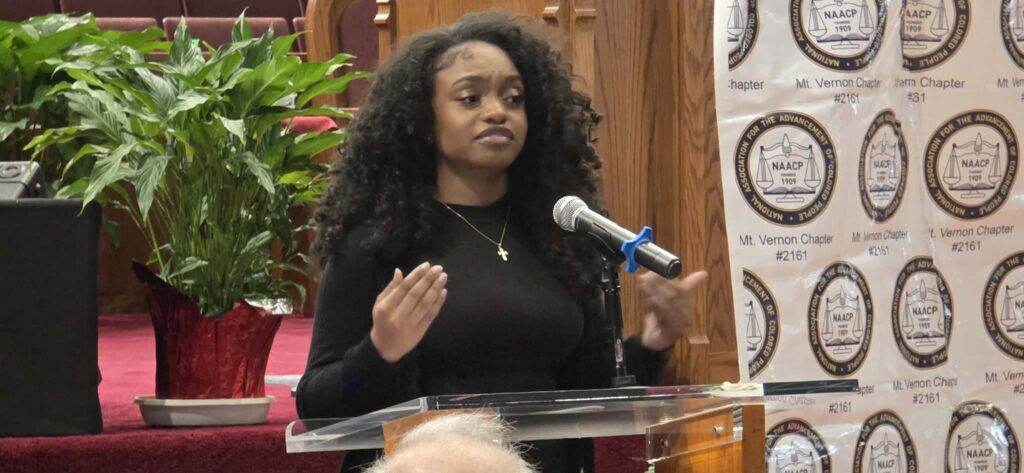
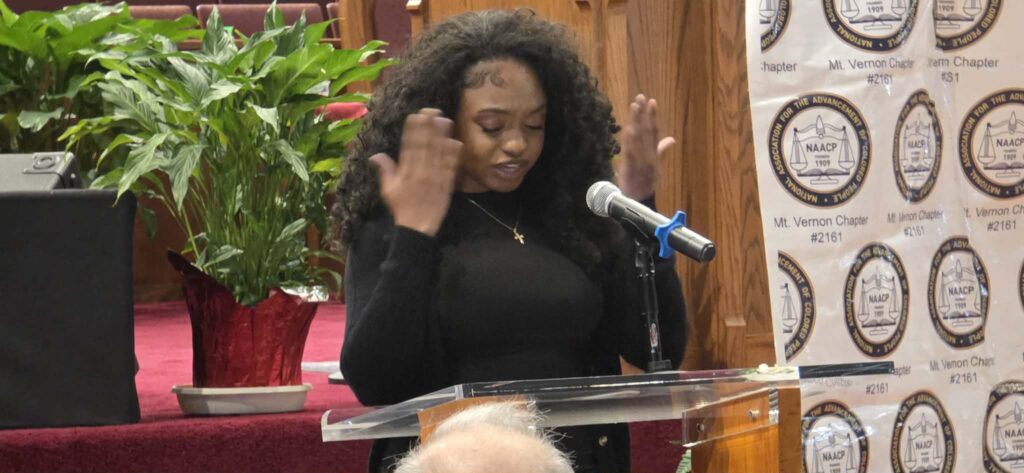
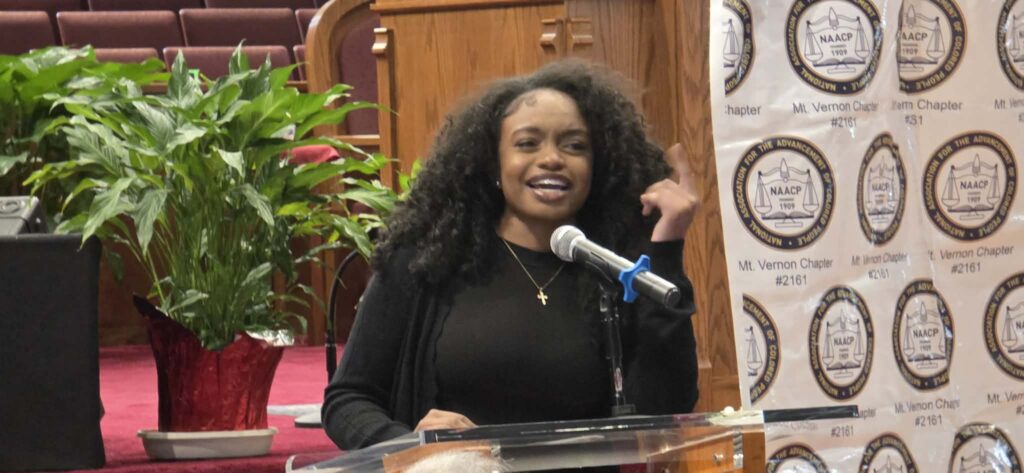
Kaitlyn Smith, Mount Vernon Poet Laureate [Black Westchester]
Then Kaitlyn Smith stepped forward.
Calm.
Centered.
Unshaken.
She sang “Lift Every Voice and Sing” like she understood every lyric was a responsibility.
Then she spoke.
“Our hair is joy.”
“I love you, Black boy.”
And suddenly, the room softened.
Mothers leaned in.
Elders nodded.
Teenagers looked up.
She wasn’t reciting poetry.
She was speaking healing.
She was planting confidence.
She was reminding young Black people, out loud, that they are worthy of love, protection, and celebration.
That is nation-building work.
When the Room Expanded Beyond Mount Vernon
Mayor Shawyn Patterson-Howard connected our local experience to the global Black story.
Mount Vernon Mayor Shawyn Patterson-Howard [Black Westchester]
Africa.
Brazil.
The diaspora.
She reminded us that Mount Vernon is part of something older than borders and stronger than systems.
You could feel people sit up straighter.
Prouder.
More connected.
Kenneth Jenkins Came With Truth , And AJ Woodson Held the Space
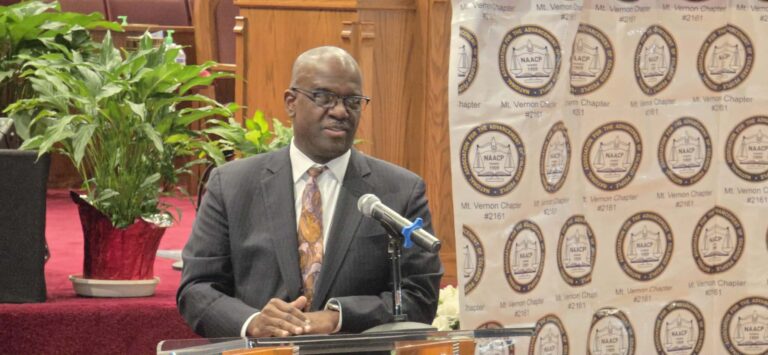
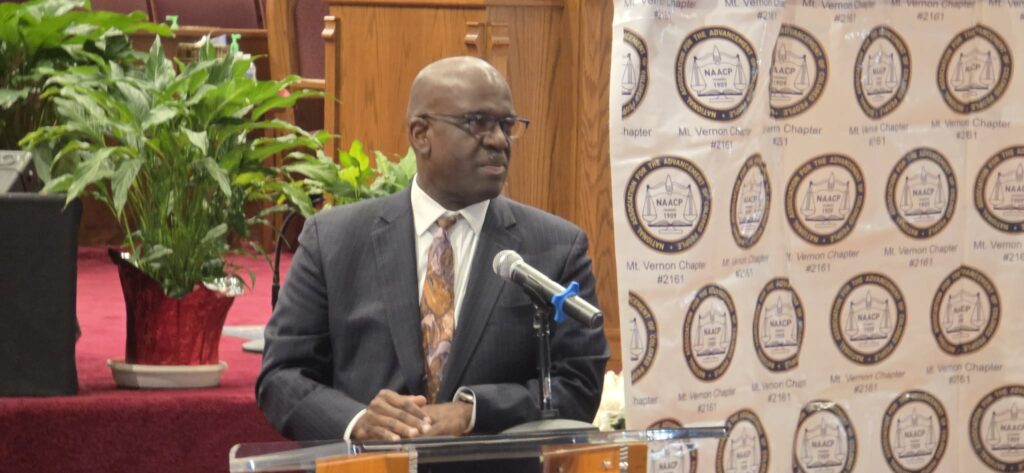
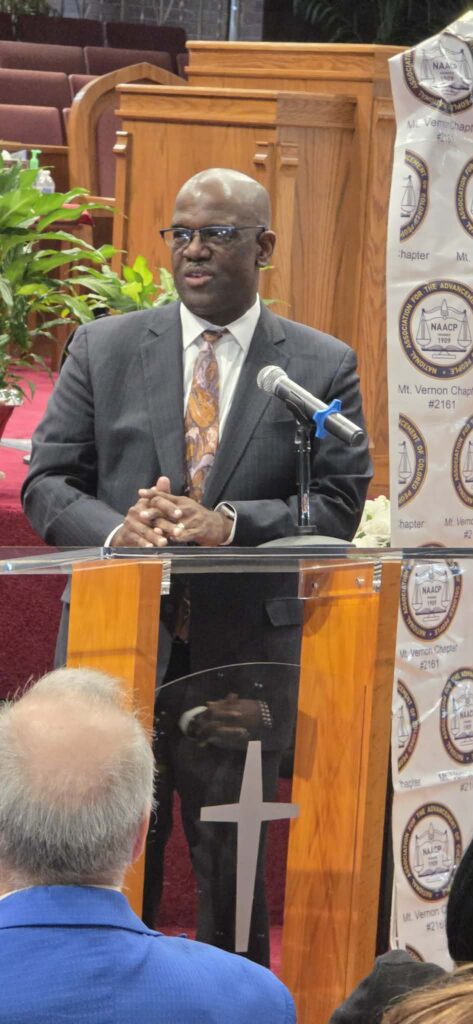
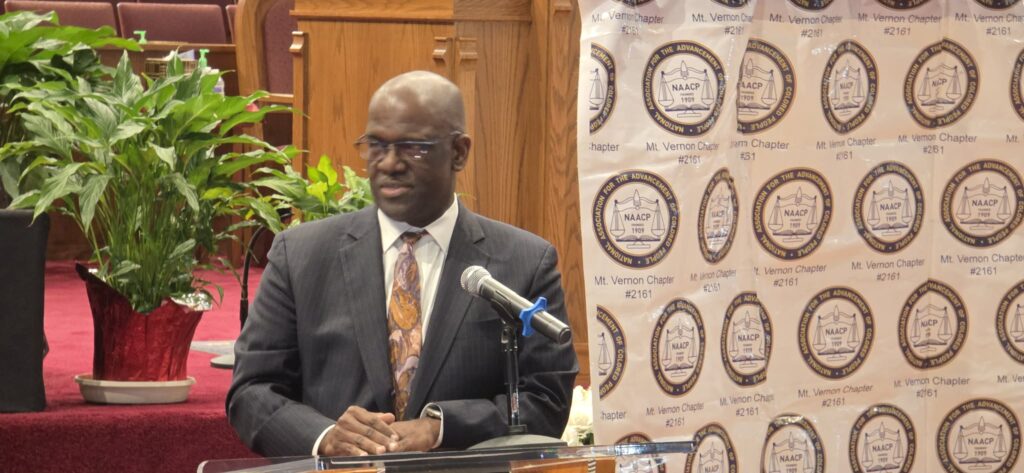
Then Westchester County Executive Kenneth Jenkins took the microphone.
No fluff.
No pandering.
Just truth.
“History is trying to be erased.”
That landed.
Then he shared the numbers.
42,000 registered voters.
About 6,200 participants.
Silence.
Because now we weren’t just celebrating.
We were confronting ourselves.
“You can’t agitate and legislate.”
Translation:
Being loud without being active is ineffective.
Being angry without being organized is wasted energy.
During the Q&A, AJ Woodson, Vice President of the Mount Vernon NAACP, served as moderator, guiding the conversation with clarity, respect, and purpose.
He made sure the dialogue stayed focused, meaningful, and rooted in solutions.
It wasn’t just talk.
It was strategy.
It was vision.
It was responsibility.
Kenneth Jenkins challenged us to turn passion into participation.
To turn complaints into commitments.
To stop spectating our own future.
When It Was Over, Nobody Wanted It to Be
When the program ended, nobody rushed out.
People stayed.
Talking.
Laughing.
Planning.
Exchanging numbers.
Hugging.
Strangers became collaborators.
Neighbors became partners.
It felt like watching a community recharge itself in real time.
Like something had been restored.
Days Later, It Was Still With Me
The next day, I thought about Kaitlyn’s voice.
Later, I heard Kenneth’s words in my head.
Then Kathy’s message resurfaced.
That’s when I realized:
That night didn’t end.
It embedded.
What That Evening Really Was
It wasn’t just a Black History Month program.
It was:
A mirror.
A reminder.
A responsibility.
A reset.
It reminded us that Black history isn’t something we visit once a year.
It’s something we live.
In how we vote.
In how we organize.
In how we support institutions.
In how we pour into youth.
In how we honor elders.
In how we show up.
From breaking bread in the hall to engaging in real civic dialogue, the Mount Vernon NAACP created a space where Black excellence wasn’t performative.
It was intentional.
And once you’ve been in a room like that…
You recognize it when it appears again.
You start valuing it differently.
You start making space for it.
Because spaces like that don’t happen by accident.

![Westchester County Exec Ken Jenkins Gives Afternoon Weather Briefing [Mon, Feb 23rd]](https://blackwestchester.com/wp-content/uploads/2026/02/99270ca0-58b7-45df-a09e-682cd990308f-768x427.jpg "Westchester County Exec Ken Jenkins Gives Afternoon Weather Briefing [Mon, Feb 23rd]")
![The Ice Cold Experience Drumline [Black Westchester]](http://blackwestchester.com/wp-content/uploads/2026/02/IMG_6709-1024x768.jpeg "Where Legacy Meets Purpose: Inside Grace HBCU Weekend 12")