Home Blog Page 13

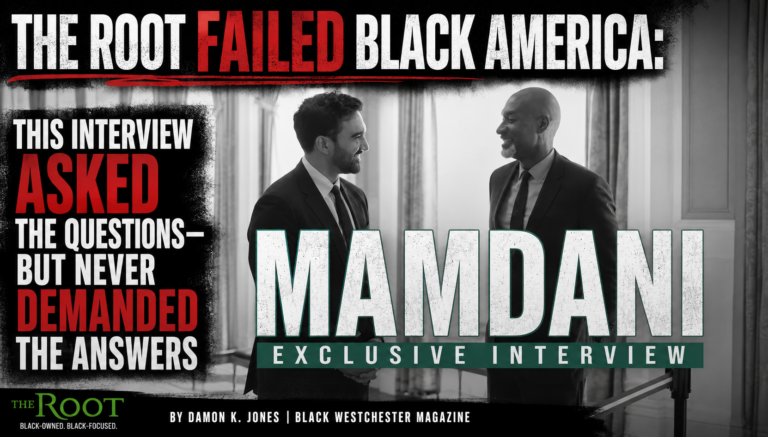
Mamdani Meets With Trump: From State of the Union Protests to Oval Office Negotiations

New York — Only days after Democratic lawmakers staged visible protests during President Donald Trump’s State of the Union address, New York City Mayor Zohran Mamdani traveled quietly to Washington to meet with the same president in the Oval Office. This meeting’s political and fiscal implications highlight the ongoing tension between public rhetoric and actual governance responsibilities.
For years, leading voices within the Democratic Party have described Trump not merely as a policy opponent but as a threat of historic proportions. The language has often been existential rather than procedural. Voters who supported him were frequently portrayed not simply as mistaken but as complicit in something dangerous. Engagement was framed as normalization. Cooperation was treated as a compromise of principle.

Read: The State of the Union: What it Means to Black America


Yet governance operates under constraints that rhetoric does not.

Mamdani’s reported discussions centered on housing affordability and economic pressures in New York City. Those problems cannot be solved with applause lines. They involve federal tax credits, HUD allocations, infrastructure funding, regulatory waivers, and administrative discretion. A mayor may campaign on ideology, but he governs within fiscal realities and institutional dependencies. Federal authority still matters.


There is also the financial context. New York City is carrying significant fiscal strain, in part due to the prolonged cost of managing the migrant crisis — including emergency housing, shelter operations, and associated services. Billions have been spent maintaining temporary accommodations and support systems. Whatever one’s view of immigration policy, the budgetary burden is real. When a city absorbs large-scale migration without matching federal reimbursement, deficits expand, and trade-offs intensify. In that environment, meetings with the federal executive are not symbolic; they are financial.


What remains unclear are the conditions attached to any potential cooperation. President Trump has been explicit in his position on immigration enforcement and border policy. If federal resources are directed toward housing, questions naturally follow about eligibility, criteria, and whether funds are tied to enforcement. These policy questions carry significant fiscal and social consequences that directly impact New York City’s budget and priorities.


If federal housing support expands under this administration, it could foster hope for NYC’s recovery, making citizens feel optimistic about future aid. It is reasonable to ask whether such support would prioritize citizen households, work-authorized migrants, or broader shelter populations. It is equally reasonable to ask what policy concessions, if any, accompany federal assistance. In politics, funding rarely comes without expectation.


This meeting, therefore, is not surprising from a governance standpoint. Unsurprisingly, a city leader facing affordability pressures and fiscal strain would seek federal leverage. What is notable is the contrast between years of moral condemnation and the practical necessity of negotiation.


If a political figure is truly viewed as an existential danger, reconciling engagement becomes difficult. If he is portrayed as uniquely unfit, cordial meetings invite scrutiny. The issue is not whether leaders should speak across party lines. In a constitutional system, they must. The issue is the degree of moral absolutism used in public discourse compared to the flexibility exercised in institutional practice.


During the State of the Union, elements of the Democratic caucus chose symbolic resistance. Within days, one of the most visible progressive municipal leaders chose strategic engagement. This does not necessarily reveal hypocrisy. It reveals structure. Campaigning rewards clarity and intensity. Governing demands calculation and compromise.


Supporters will argue that securing federal support for a strained city justifies the meeting. That argument stands or falls on results. Critics will question whether years of existential rhetoric were overstated if functional partnership remains possible.


In the end, outcomes will serve as a measure of leadership and accountability. If New York secures measurable fiscal relief, housing stability, or infrastructure support without compromising core municipal interests, the meeting will be seen as pragmatic leadership. Conversely, if the city’s debt deepens or federal aid comes with restrictive conditions, the episode will be judged more critically.
Voters would be wise to look past the theater and examine the terms. In public life, the true measure is not how leaders speak but the obligations they assume and the tangible results they deliver, especially in terms of fiscal and policy outcomes that affect the city’s future.

The State of the Union: What it Means to Black America

Trump’s 2026 State of the Union was confident, forceful, and built around a single narrative: America is strong again. But speeches are not the measure of progress. Outcomes are. For Black America, the only meaningful evaluation of any administration is whether material conditions improve in measurable ways, inspiring hope for real change.


Political rhetoric is emotional. Economic reality is numerical.
Throughout the address, President Trump described falling inflation, rising markets, stronger borders, and declining crime. Some of those claims have been challenged or qualified by independent analysis. That is less important than the underlying test: do Black households feel sustained relief in rent, groceries, utilities, transportation, and healthcare? Are savings increasing? Is debt decreasing? Are assets accumulating? Focusing on real results builds trust in the evaluation.


If economic strength does not translate into stronger balance sheets for working families, the claim of a “golden age” becomes symbolic rather than structural.
Housing was one of the more significant economic themes. The president emphasized limiting large institutional investors from buying single-family homes and framed lower mortgage costs as a way to improve affordability. For Black families, homeownership remains the most reliable pathway to building wealth. However, black homeownership continues to trail White homeownership by a wide margin due to barriers like credit access, lending standards, and appraisal practices. Any policy that meaningfully increases access to entry-level housing must address these structural barriers to truly impact long-term wealth trajectories.


But restricting corporate buyers does not automatically create ownership. Housing supply, lending standards, appraisal practices, and down-payment capital determine who ultimately purchases property. Ownership builds equity. Access without acquisition builds nothing.


The president also highlighted tax provisions such as eliminating taxes on tips and overtime. These policies benefit households whose income structure includes those earnings. For families without those income categories, the direct impact is limited. Policy effectiveness depends on who qualifies and who benefits, not how loudly it is announced.


Another economic tool mentioned in the speech was the creation of “Trump Accounts” for children — tax-advantaged investment accounts seeded with initial funding and designed to grow over time. The branding is political. The structure is financial. Early capital formation is one of the most powerful wealth-building mechanisms in market economies. When assets begin compounding at birth or early childhood, even modest contributions can grow significantly over eighteen years.


For Black America, this is not symbolic. One of the largest structural barriers to wealth has been the absence of early capital accumulation. If these accounts are broadly accessible and families make consistent contributions, they can become meaningful assets by adulthood — potentially supporting higher education, business formation, or first-time homeownership — empowering communities to shape their futures.


But an account without deposits produces minimal impact. Capital formation requires participation and discipline. The opportunity exists only if it is used strategically.


Public safety was presented as a pillar of national renewal. Violent crime disproportionately harms Black communities. Sustained reductions in victimization represent real progress. However, enforcement models must be judged by long-term data, not short-term declarations. Crime reduction that increases trust and stability is productive. Enforcement that increases friction without lasting improvement is not. The metric is neighborhood-level safety over time.


One of the most controversial moments of the address came when the president declared an end to DEI. The reaction was predictable. The more serious question is whether DEI, as practiced over the past decade, has produced measurable gains in Black ownership, control of capital, or executive authority.
Corporate America expanded diversity departments, training programs, and public commitments. Yet Black ownership of major firms did not surge. Executive representation moved incrementally. The racial wealth gap did not narrow substantially. Symbolic inclusion expanded more visibly than structural power.
That does not mean that all diversity-related mechanisms were ineffective. Enforceable anti-discrimination protections and transparent procurement systems can generate real economic access when tied to measurable benchmarks. But symbolism is not structural reform. Programs that do not produce ownership, capital accumulation, or durable advancement do not alter economic standing.


If the removal of symbolic DEI is accompanied by policies that expand capital access, entrepreneurship, housing acquisition, and retirement accumulation, the net effect could be neutral or positive. If oversight disappears without structural replacement, access contracts will be without increasing power. The difference lies in implementation.


On voting policy, the president advocated voter identification and proof-of-citizenship requirements. Polling has consistently shown that a majority of Black Americans support some form of voter identification requirement. Public opinion is more nuanced than partisan narratives suggest.


The decisive issue is design. Identification systems that are accessible, affordable, and administratively straightforward function as procedural safeguards. Systems that introduce costly documentation barriers or bureaucratic complexity disproportionately burden working-class voters. Structure determines consequence.


Healthcare affordability was another central claim. The president described dramatic reductions in prescription drug costs and healthcare expenses. Some of those assertions have been disputed. The meaningful test is empirical. Are premiums declining? Are out-of-pocket expenses lower? Is access to care expanding? Black communities experience disproportionate rates of chronic disease. Healthcare policy must be evaluated based on measurable affordability, not rhetoric.


The broader framework of the speech reflects a shift toward enforcement, nationalism, and market-based incentives. Whether that shift benefits Black America depends on whether it increases ownership, strengthens household finances, reduces victimization, and expands durable economic opportunity.
Political allegiance is not a metric. Asset growth is.


The relevant questions remain constant. Are Black households accumulating wealth? Are neighborhoods experiencing sustained safety improvements? Is homeownership rising? Are families less dependent on fragile systems and more anchored in capital ownership?


This is not a promotion of President Trump. It is not a campaign document. It is not partisan advocacy.


It is a logical examination of where structural incentives may produce measurable gains — and where they may not — for Black America.
Political loyalty has never built wealth. Emotional reaction has never reduced crime. Party identification has never closed a wealth gap. Only structure, incentives, and disciplined participation do that.


Every administration presents openings. Every administration presents risks. The responsibility of Black America is not to attach itself emotionally to personalities, but to analyze power dispassionately.


Where policies expand ownership, capital formation, home acquisition, safer neighborhoods, and household stability, those openings should be used strategically.


Where policies restrict access, concentrate power, or fail to produce measurable gains, they should be opposed with equal discipline.


The standard does not change with the party.


Does it increase Black ownership?
Does it strengthen Black balance sheets?
Does it reduce vulnerability?
Does it expand long-term independence?
If yes, it deserves engagement.

If no, rhetoric is irrelevant.
Logic over loyalty.
Outcomes over optics.
Power over symbolism.
History does not remember applause.
It records results.

Community, Care, and Receipts: What Really Happened at “Taste Of” in Yonkers

0

Everybody loves to talk about “supporting Black businesses.”

Everybody loves to say “health is wealth.”

Everybody loves to post a flyer during Black History Month.

But support is not a slogan.

Support is logistics.

Support is resources.

Support is showing up.

Support is staying late.

Support is making sure the ones doing the work get recognized.

And that’s why what happened that afternoon at Farma Cares’ “Taste Of” launch inside Yonkers Arts mattered.

Because this wasn’t vibes.

This was intention.


The Space Felt Grounded From the Start

Walking in that afternoon, you could feel it.

No distractions.

No noise competing for attention.

No unnecessary extras.

Just presence.

Just purpose.

Just focus.

The room was calm but energized.

Conversations were thoughtful.

Connections were real.

Organizers moved with clarity.

Volunteers moved with care.

Elders observed with pride.

Young creatives documented like they knew something important was happening.

That’s not accidental.

That’s community discipline.


Farma Cares Did More Than Host

Let’s give credit where it’s due.

Farma Cares didn’t just “put on” an event.

They built a container.

A container for conversation.

For culture.

For health.

For economic empowerment.

They understood that plant-based wellness in Black communities isn’t about trends.

It’s about access.

It’s about longevity.

It’s about reclaiming control over our bodies and our futures.

That’s leadership that doesn’t need noise to be powerful.


Real Collaboration Looks Like This

The strength of the afternoon came from alignment.

The Yonkers NAACP brought legacy and advocacy into the room.

We Art One brought creativity and culture, and created a live portrait during the event, capturing the spirit of the moment in real time.

Paint moving.

Colors blending.

Energy transferring.

Art witnessing community.

And Yonkers Arts provided the physical and cultural home for it all.

This wasn’t scattered effort.

This was synergy.


The Food Was the Foundation

Now let’s be clear.

There was one vendor feeding the community that afternoon.

And that was Aunts et Uncles.

One table.

One mission.

One standard.

They weren’t just serving plates.

They were serving heritage.

Caribbean influence.

Plant-based intention.

Sustainability rooted in culture.

Every bite carried meaning.

Not just flavor.

Nourishment that honored where we come from and where we’re going.


Giving Flowers to the Builders

And let’s talk about recognition.

Because the owners of Aunts et Uncles didn’t just feed the room.

They fed consistency.

They fed culture.

They fed community.

So when they received their proclamation, it felt right.

It felt earned.

It felt like years of early mornings, late nights, and pouring back into community, were finally being honored out loud.

That moment said:

“We see what you’ve built.

And we value it.”

And that matters.


Leadership Was Present, Not Performative

Lakisha Collins-Bellamy was there.

She acknowledged the work.

She showed support.

She respected the space.

Her presence represented recognition and support.

And that’s important.

Not ownership.

Not authorship.

Just showing respect for work that was already happening and letting the community remain at the center.


Proclamations That Carried Weight

When Andrea Stewart-Cousins read the state proclamations, she let the words land.

She honored the moment.

Then, the Office of Mike Spano added City recognition.

And Deana R. Norman was there, present and attentive, showing real support for the work happening in the room.

She listened.

She engaged.

She respected the moment.

And that mattered.


When BurnHard Got His Flowers

And then there was Scott Bernard.

When he received his proclamation, he got emotional.

His voice caught.

His eyes filled.

He paused.

You could see years of unseen work rising to the surface.

The doubt.

The grind without guarantees.

The faith it takes to build something for your community with limited resources.

Nobody rushed him.

That moment was allowed to breathe.

Because it wasn’t about paper.

It was about acknowledgment.


The Panel Was Honest

The conversation on that stage wasn’t theoretical.

It was lived.

The panel explored:

  • Building businesses without safety nets
  • Choosing passion while trying to survive
  • Healing generational trauma
  • Learning how to rest
  • Learning how to ask for help

No pretending.

No posturing.

Just truth.

And the room held it with care.


What “Taste Of” Really Means

The “Taste Of” series isn’t about samples.

It’s about ecosystem.

It’s about making sure:

Wellness is accessible.

Art is respected.

Black entrepreneurs are sustained.

Community voices are amplified.

It’s about making sure the ones doing the work don’t feel isolated.


What I Took With Me

I left that afternoon with:

The smell of spices lingering.

The image of paint drying on a live portrait.

The sound of applause that felt genuine.

The sight of a community feeding itself, literally and spiritually.

That gathering wasn’t flashy.

It was focused.

It was grounded.

It was real.

And that’s how lasting change happens.

Not loud.

Not performative.

Intentional.

Collaborative.

Rooted.

Together.

This was just the beginning.

If you felt the power, purpose, and possibility of “Taste Of” and want to be part of what’s coming next, now is the time to lean in.

The second part of this series is on the way, and it’s building on everything that was started here.

To learn more, get involved, or stay connected, reach out to Farma Cares through farmacares.org.

Because community doesn’t grow by accident.

It grows when people show up, stay engaged, and invest in what matters.

Environmental Leaders of Color (ELOC) Announces National Academic Opportunity for Westchester Students

0

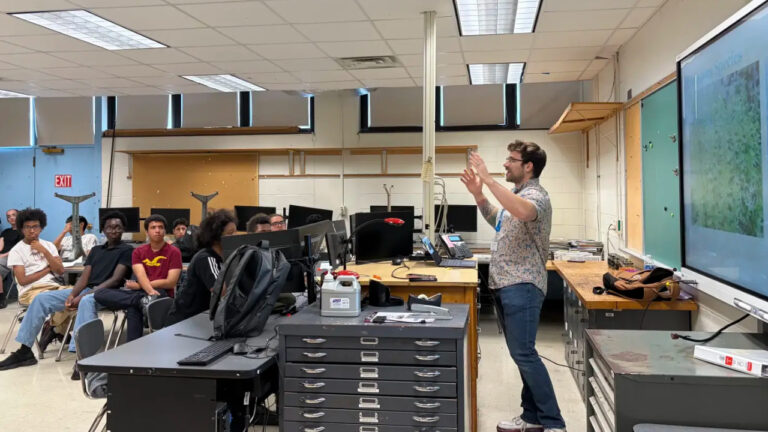
Westchester County, NY — February 20, 2026 — Environmental Leaders of Color (ELOC), under the leadership of Board Chair Talbert Thomas, is sharing an important national academic opportunity for high-achieving high school seniors throughout Westchester County.

The opportunity was brought to ELOC by Board Member Dr. Keith C. Norris, MD, PhD, Professor of Medicine at the University of California, Los Angeles (UCLA). Dr. Norris is an internationally recognized clinician, scientist, and health policy leader whose work focuses on chronic kidney disease research and advancing health equity. A graduate of Howard University College of Medicine, Dr. Norris highlighted the program as an exceptional pathway for students seeking an HBCU college experience and an accelerated track toward careers in Medicine or Dentistry.

The competitive program is open to eligible students nationwide and is designed to support academic excellence while preparing future healthcare leaders.

Eligibility Requirements

To qualify, students must meet the following criteria:

• Minimum GPA of 3.5 on a 4.0 scale
• Minimum SAT score of 1310 or ACT score of 28
• Current high school senior

The application deadline is March 30, 2026.

ELOC is encouraging qualified Westchester County students and their families to review the program details and apply as soon as possible. The organization is also asking educators, guidance counselors, and community leaders to help spread the word so that eligible students do not miss this opportunity.

Students can access the application here:
https://tnstateu.az1.qualtrics.com/jfe/form/SV_0esrq6x0Fz3m0Iu

“ELOC is committed to ensuring that students in Westchester County are aware of transformative academic opportunities,” said Board Chair Talbert Thomas. “We encourage families, educators, and community leaders to help us spread the word so that qualified students can take full advantage of this opportunity.”

About Environmental Leaders of Color (ELOC)

Environmental Leaders of Color (ELOC) is dedicated to advancing environmental justice, leadership development, and educational access across the region. Through academic outreach, workforce training, and environmental programming, ELOC works to equip the next generation with the tools needed to lead and succeed.

For more information, visit www.eloc.earth.

Media Contact:
Dr. Diana K. Williams, MBA, DDS
Executive Director
Environmental Leaders of Color (ELOC)
diana@eloc.earth

Could More Snow Be On The Way As Blizzard Clean-up Commences [UPDATED]

0

Just when you thought it was safe, Mother Nature is not finished making this a February to remember. I, for one, after shoveling snow throughout the day on Monday, do not want to see any additional snow. but before we discuss any more snow, just how much snow did we receive in the region?

Some spots on Long Island and in New Jersey recorded two and a half feet or more. My Strong Island home of Central Islip may have gotten the most of anywhere in the region, with 31 inches overall. In Westchester, Greenville recorded 24.1 inches, Hartsdale recorded 24 inches, Ossining 23.2 inches, Irvington 23 inches, Yorktown Heights 22.2 inches, Valhalla 21.2 inches, Woodlawn 20 inches, my hometown of Mount Vernon recorded 18.1 inches, White Plains 18 inches, New Rochelle 15.6 inches, and Yonkers and Pelham Manor each recorded 16.0 inches, just to give you an idea of what we are dealing with.

But while Monday’s blizzard has moved out, and the cleanup is only just underway, the National Weather Service (NWS) predicts the Lower Hudson Valley hasn’t seen the last of the snow for the week. Snow is expected to fall again on Wednesday, February 25th, between 4 and 10 a.m., according to NWS. There won’t even be an inch of accumulation in Westchester and Rockland, but one to two extra inches are anticipated in Brewster.

Wednesday is predicted to see temperatures of about 40 degrees, which could quickly melt further snow in places where there has been little accumulation. Temperatures could feel like the 20s and 30s, though, depending on wind chill levels. Temperatures could fall to about 28 degrees on Wednesday night.

Residents of the Lower Hudson Valley may witness further light snowfall beginning after 1 p.m. on Thursday and lasting into the evening, although none of the three counties are predicted to see accumulation of more than an inch. The sky appears to be mostly sunny, with highs of about 37 degrees.

However, I do have some positive news to share. Forecasts as of midnight February 25, 2026, indicate that although more light snow and a wintry mix are predicted to produce more minor accumulations through Thursday, snow in Westchester is predicted to evaporate gradually during the week due to rising temperatures.

The weather is predicted to be sunny from Friday, February 27th, through Sunday, March 1st, with temperatures ranging from 27 to 41 degrees.

The National Weather Service says there is a 30% chance of snow during the day on Monday, March 2, but a greater accumulation is not probable.


School districts are prioritizing staff and student safety over the Wednesday morning bell due to the aftermath of the massive snowstorm and the threat of further snow. As of midnight, a growing list of Hudson Valley schools have decided to delay the start of classes or cancel the school day entirely. This list will be updated here throughout Wednesday morning.

  • Amani Public Charter School: 2-hour delay
  • Arlington CSD: 2-hour delay
  • Beacon CSD: 3-hour delay
  • Bedford CSD: 3-hour delay (updated)
  • Blind Brook-Rye UFSD: 2-hour delay
  • Brewster CSD: 2-hour delay
  • Briarcliff Manor UFSD: 2-hour delay
  • John S. Burke Catholic HS: 2-hour delay
  • Byram Hills CSD: 2-hour delay
  • Carmel CSD: remote learning (updated)
  • Chapel Field Christian Schools: 3-hour delay
  • Chapel School: delayed start to 9:30 a.m.
  • Chappaqua CSD: 3-hour delay (updated)
  • Charter School of Educational Excellence: remote learning
  • Chester UFSD: 2-hour delay
  • The Clear View School: 2-hour delay
  • Cornwall CSD: 2-hour delay
  • Croton-Harmon UFSD: 2-hour delay
  • Dover UFSD: 3-hour delay
  • Dutchess BOCES: 3-hour delay
  • East Ramapo CSD: 2-hour delay
  • Eldred CSD: 2-hour delay
  • Ellenville CSD: closed (updated)
  • Fallsburg CSD: 3-hour delay (updated)
  • Florida UFSD: 2-hour delay
  • Garrison UFSD: 2-hour delay
  • Goshen CSD: 2-hour delay
  • Greenburgh CSD: 2-hour delay
  • Greenwood Lake UFSD: 2-hour delay
  • The Hackley School: 2-hour delay
  • Haldane CSD: 2-hour delay
  • The Harvey School: 2-hour delay
  • Hawthorne Cedar Knolls UFSD: 2-hour delay
  • Hendrick Hudson SD: 2-hour delay
  • Highland CSD: 3-hour delay
  • Highland Falls – Fort Montgomery CSD: 2-hour delay
  • Hyde Park CSD: 3-hour delay
  • Intellectus Preparatory Charter School: remote learning
  • Iona Preparatory School: 2-hour delay; classes will begin at 10 a.m.
  • Irvington UFSD: 2-hour delay
  • Katonah-Lewisboro UFSD: 2-hour delay
  • John F. Kennedy Preparatory School/St. Mary’s Academy: 2-hour delay
  • Kingston CSD: closed (updated)
  • Lakeland CSD: 2-hour delay
  • Mahopac CSD: 3-hour delay (updated)
  • Manhattanville University: campus closed until 5 p.m.; remote learning
  • Margaretville CS: 2-hour delay
  • Marlboro CSD: 2-hour delay
  • Middletown ECSD: 2-hour delay
  • Middle Way School: 3-hour delay
  • Millbrook CSD: 3-hour delay
  • Minisink Valley CSD: 2-hour delay
  • Mizzentop Day School: 2-hour delay
  • Monroe-Woodbury CSD: 3-hour delay (updated)
  • Mount Pleasant CSD: 3-hour delay (updated)
  • Mount Saint Mary College: 2-hour delay
  • Mount Vernon CSD: 2-hour delay
  • Newburgh ECSD: 2-hour delay
  • New Paltz CSD: 2-hour delay
  • New York School for the Deaf: closed (updated)
  • North Rockland CSD: 2-hour delay
  • North Salem CSD: 2-hour delay
  • Nyack Adult Education BOCES: 2-hour delay
  • Nyack Public Schools: 2-hour delay
  • Onteora CSD: 3-hour delay
  • Orange-Ulster BOCES: 2-hour delay
  • Ossining UFSD: 2-hour delay
  • Our Lady of Lourdes HS: 2-hour delay
  • Pace University: Pleasantville campus closed; remote learning
  • Pawling CSD: 3-hour delay
  • Peekskill CSD: 2-hour delay
  • Pine Bush CSD: 3-hour delay
  • Pine Plains CSD: 3-hour delay
  • Pleasantville UFSD: 2-hour delay
  • Pocantico Hills SD: 2-hour delay
  • Port Jervis CSD: 2-hour delay
  • Poughkeepsie CSD: 2-hour delay
  • Poughkeepsie Day School: 2-hour delay
  • Putnam-Northern Westchester BOCES: 2-hour delay
  • Putnam Valley CSD: 3-hour delay (updated)
  • Red Hook CSD: 3-hour delay
  • Rhinebeck CSD: 2-hour delay
  • Rockland CSD: 3-hour delay (updated)
  • Rockland-West Nyack BOCES: 2-hour delay
  • Rondout Valley CSD: remote learning with 2-hour delay (updated)
  • Rye CSD: 2-hour delay
  • St. Augustine School: 3-hour delay (updated)
  • Saugerties CSD: remote learning (updated)
  • Somers CSD: 3-hour delay (updated)
  • South Orangetown SD: 2-hour delay
  • Spackenkill UFSD: 3-hour delay
  • Suffern CSD: 2-hour delay
  • SUNY Ulster: Stone Ridge/Kingston Center classes before 9:45 a.m. canceled; Staff code Orange from 6 a.m.-10 a.m.
  • Tabernacle Christian Academy: 2-hour delay
  • Taconic Hills CSD: closed (updated)
  • Tarrytown SD: 2-hour delay; no a.m. BOCES
  • Thornton-Donovan School: delayed start to 10:30 a.m.
  • Tri-Valley CSD: 3-hour delay (updated)
  • Tuxedo UFSD: 2-hour delay
  • Ulster BOCES: closed (updated)
  • Upton Lake Christian School: 3-hour delay
  • The Ursuline School: classes delayed to 10:15 a.m.; the school will open at 9:15 a.m.
  • Valhalla UFSD: 2-hour delay
  • Valley Central SD: 3-hour delay
  • Wallkill CSD: 3-hour delay
  • Wappingers CSD: 2-hour delay
  • Warwick Valley CSD: 2-hour delay
  • Washingtonville CSD: 2-hour delay
  • Webutuck CSD: 3-hour delay
  • Yonkers Public Schools are closed on Wednesday, February 25, 2026, due to the impact of a recent blizzard
  • Yorktown CSD: 2-hour delay

Stay warm, stay safe, and stay tuned to Black Westchester, as this page will be updated as more information comes in


BW February 2026 Black History Month (Digital Edition)

0

Welcome to our February 2026 – Black History Month Issue. We dedicate this issue to Norwood E. Jackson, a trailblazing criminal justice leader who became the first African-American Commissioner of the Westchester County Department of Correction in April 1987. Following his death while in service in 1995, the correctional facility in Valhalla was named the Norwood E. Jackson Correctional Center in his honor. And Dr. Olivia Hooker, the first African-American woman to serve in the Coast Guard (1945), who had a 154-foot U.S. Coast Guard Sentinel-class Fast Response Cutter commissioned on Jan. 22, 2026, in Pascagoula, Mississippi named in her honor.

As usual the pages of this issue are fact-filled with great moments in Black History in Westchester County and the surrounding areas.

As always, we would like to take this time to thank all the readers, listeners, supporters, sponsors, contributors, and advertisers for their support in our effort to deliver the “News With The Black Point Of View” since 2014. We are always looking for writers, photographers, and interns. Email BlackWestchesterMag@gmail.com to inquire.

Send us your feedback, let us know what you think of this issue. Let us know subjects/topics you would like to see us cover in the future, and send your letters to the editor to BlackWestchesterMag@gmail.com.

Peace and Blessings
AJ Woodson, Editor-In-Chief and Co-Owner

The New Paternalism in American Politics and the Illusion of Progress

Every political era has its governing instinct. Ours is paternalism.

Not the crude paternalism of segregation or overt exclusion, but a more refined version — one that speaks the language of compassion while quietly reinforcing hierarchy. It promises protection, which subtly shifts responsibility away from communities and onto external authorities. It expands programs. It signals moral awareness. Yet too often, it substitutes supervision for sovereignty and spending for structural empowerment.

This is the new paternalism in American politics.

Its defining characteristic is not hostility but presumption. It frames communities — particularly Black communities — primarily through vulnerability while reserving authority, expertise, and institutional control for elite leadership, reinforcing existing hierarchy and subtly maintaining power imbalances.

The pattern is consistent. A disparity is identified. A historical injustice is invoked. The rhetoric centers on harm. The policy response expands administration and oversight. Opposition is framed as indifference. Success is measured by spending and moral positioning rather than measurable upward mobility.

Intent becomes the shield. Outcomes become secondary.

Consider public remarks that reveal this mindset.

When New York Governor Kathy Hochul suggested that young Black children in the Bronx “don’t even know what the word computer is,” the issue was not whether digital disparities exist. It was the framing. According to the U.S. Census Bureau, over 90% of households in New York City report having access to a computer or smartphone. Access gaps may exist in broadband quality, but the suggestion of unfamiliarity revealed an instinct to describe deficiency rather than logistical disparity.

When California Governor Gavin Newsom sought to connect with an Atlanta audience by referencing his low SAT score and difficulty reading speeches due to dyslexia, the debate centered on his intent. But the deeper question remains: why is limitation the bridge? Why is the connection framed downward rather than upward? When relatability is built on lowered expectations rather than elevated standards, hierarchy becomes subtle yet visible.

The voter identification debate exposes the same rhetorical pattern. After the Supreme Court upheld voter ID laws in Crawford v. Marion County Election Board (2008), opponents frequently described such measures as “Jim Crow 2.0.” Senate Majority Leader Chuck Schumer used that phrase, and others equated identification requirements to a poll tax.

Those comparisons carry enormous historical weight. Jim Crow represented legalized segregation and violent disenfranchisement. Poll taxes were explicit financial barriers designed to prevent Black citizens from voting.

Policy debates over access to documentation are legitimate. But nationally, the overwhelming majority of American adults possess some form of government-issued photo identification. A 2023 survey from the University of Maryland’s Critical Issues Poll found that approximately 94% of Black respondents reported having a valid photo ID, framing identification as broadly inaccessible, risks implying incapacity rather than debating administrative efficiency.

Immigration rhetoric provides another example.

In recent years, some activists have compared ICE to slave patrols — invoking the enforcement bodies of the antebellum South that captured escaped enslaved people. The analogy is emotionally powerful. But structurally, slave patrols were instruments of chattel slavery within a racial property system. ICE is a federal immigration enforcement agency created in 2003 under statutory immigration law.

One may debate enforcement priorities, due process, detention standards, or labor market impacts. But equating immigration enforcement to slave patrols collapses distinct legal frameworks into a symbolic trigger. And when messaging suggests immigration enforcement is inherently “coming for Black America,” it blurs constitutional status. Black Americans are not migrants subject to removal proceedings. We are a foundational citizen population whose constitutional claims predate modern immigration policy.

The common thread across these examples is not overt racism. It is a presumption.

Elite institutions define the problem. Elite institutions define the solution. Elite institutions retain authority. Communities are positioned as recipients of protection rather than agents of development.

That is the new paternalism.

The illusion of progress emerges when moral language replaces measurable advancement.

After decades of progressive governance in major American cities, the outcome indicators remain mixed.

Black homeownership, for example, stood at approximately 44% in 2023, compared to over 72% for White households, according to U.S. Census data. The Black-white homeownership gap remains wider today than it was in 1968 when the Fair Housing Act was passed.

On education, National Assessment of Educational Progress (NAEP) data from 2022 showed that only 17% of Black 8th graders scored proficient in math nationally. Literacy proficiency rates show similar disparities.

On wealth, Federal Reserve Survey of Consumer Finances data indicate that the median wealth of Black households remains a fraction of that of White households, despite decades of anti-poverty programming and expanded social spending.

On public safety, FBI Uniform Crime Reports consistently show that violent crime disproportionately impacts Black communities — both in victimization rates and geographic concentration.

Spending has increased. Bureaucracies have expanded. Rhetoric has intensified. Yet durable sovereignty remains uneven.

Compassion without capital formation does not produce independence. Protection without ownership does not produce power. True progress depends on measurable outcomes that foster real agency.

History contradicts the fragility narrative. Black Americans built businesses under segregation, founded colleges under exclusion, established banks without federal guarantees, and shaped global culture without institutional guardianship. The record demonstrates capacity.

The question is whether modern political rhetoric strengthens that legacy or subtly undermines it by centering on permanent vulnerability.

Disparities exist. Structural barriers have existed. But when political incentives reward leaders for amplifying harm rather than cultivating sovereignty, dependency becomes politically useful. A supervisory class expands. Authority remains centralized. Communities remain managed.

This is the illusion of progress: visible compassion paired with stagnant sovereignty.

The real divide in American politics is not left versus right. It is dependency versus development.

Development requires measurable gains in ownership, literacy mastery, safety, capital formation, and institutional control. It requires elevating standards rather than lowering them. It requires treating citizens as builders rather than clients, fostering hope and empowerment.

Protection is not power.

And progress that does not produce sovereignty-measurable gains in ownership, literacy, safety, and institutional control-is not progress at all.

References

U.S. Census Bureau, Current Population Survey, Housing Vacancy and Homeownership Report (2023).

U.S. Census Bureau, American Community Survey, Computer and Internet Use in the United States.

National Assessment of Educational Progress (NAEP), Mathematics and Reading Assessments (2022).

Federal Reserve Board, Survey of Consumer Finances (2019–2022).

Federal Bureau of Investigation, Uniform Crime Reports, and Crime Data Explorer.

University of Maryland Critical Issues Poll (2023), Voter Identification Possession Data.

Supreme Court of the United States, Crawford v. Marion County Election Board, 553 U.S. 181 (2008).

Westchester County Exec Ken Jenkins Gives Afternoon Weather Briefing [Mon, Feb 23rd]

0

Westchester County Executive Ken Jenkins provides an update on current weather conditions, Monday afternoon [see video below].

Westchester County is extending the complete road ban until 6 pm tonight, February 23. The road ban is being implemented due to hazardous winter weather conditions, including heavy snowfall and wind. Roads are closed to all but essential travel (police, fire, EMS, utility/public works, media, and hospital/medical personnel).

For real-time updates about the travel ban and Bee-Line service alerts, click here.

Heavy snowfall and strong winds have created treacherous driving conditions. Roads are closed to all except essential workers who should carry their license and ID at all times.

Bee-Line Bus and Paratransit Service
Bee-Line buses and Paratransit Service are suspended for the remainder of Monday, February 23, and will resume on Tuesday, February 24.

Mount Vernon STEAM Academy Names Isaac Alvarado Calderon Class of 2025 Valedictorian

0

Mount Vernon STEAM Academy has named Isaac Alvarado Calderon as the Class of 2025 valedictorian, recognizing his exceptional academic achievement, merit, and relentless passion for learning. Isaac graduates with an extraordinary cumulative grade point average of 103.

Since the eighth grade, Isaac has maintained an unbroken streak on the Principal’s Honor Roll, never earning below a 90 in any marking period. His commitment to excellence extends far beyond the classroom. Whether studying independently or mentoring peers, Isaac consistently challenges himself to grow intellectually and personally.

One of his most impressive accomplishments came when he realized his school did not offer Calculus II. Rather than accept the limitation, Isaac taught himself the curriculum. He took the initiative to advocate for himself, successfully convincing both the administration and his math teacher to allow him to sit for the AP Calculus II exam — an achievement he considers one of his proudest moments.

Isaac’s senior year course load included several rigorous Advanced Placement classes: AP Calculus, AP Literature and Composition, AP Government and Politics, and AP Biology. These courses not only challenged him academically but also positioned him to earn college credits upon successful completion of the exams. His favorite class was AP Calculus with Ms. Jacobs.

“It’s just so complex,” Isaac said. “It’s so beautiful. I love the fact that math is built like a staircase — a big staircase — where you can’t understand one part if you haven’t learned the previous parts.”

Outside of academics, Isaac nurtures a wide range of interests. He enjoys drawing, playing video games, coding, and game development. His passion for technology led him to participate in a coding competition hosted by Environmental Leaders of Color. During the contest, Isaac learned programming languages such as Python and created his own platform game. He tied for first place, earning a $100 prize. Mayor Shawyn Patterson-Howard matched the award, bringing his total winnings to $200.

Isaac has also dedicated himself to serving others. Over the past three years, he has volunteered as a tutor in Spanish, AP Chemistry, and Calculus. This year, tutoring became a two-way learning experience, as helping others reinforced his own mastery of calculus in preparation for his AP exam. He even spent hours tutoring students remotely from around the world.

“It completely helped,” Isaac said. “Tutoring refreshes all that knowledge.”

Isaac applied to several prestigious institutions, including Binghamton University, Rochester Institute of Technology, Rensselaer Polytechnic Institute, Loyola University, Columbia University, and Cornell University. He ultimately accepted an offer from the New York Institute of Technology, where he received a $40,000 per year scholarship to study electrical engineering.

Looking ahead, Isaac is eager to expand his intellectual horizons, pursue research opportunities, and build relationships with like-minded peers. After earning his degree, he plans to become a licensed electrical engineer in New York State and help his parents launch an electrical services company.

He credits his parents for shaping his discipline and vision. His stepfather, an engineer for the Ecuadorian Navy, inspired his interest in engineering, while his mother’s expertise in business administration instilled in him strong financial management and life skills.

“She has taught me so many life lessons — how to make proper choices and manage finances,” Isaac said. “I thank both of them for leading me to who I am right now.”

Isaac Alvarado Calderon represents the very best of Mount Vernon — discipline, initiative, service, and vision. His story is a reminder that excellence is not given; it is built step by step, like the staircase he admires in mathematics.

Black Power Is Not a Feeling: What Amos Wilson Got Right—and Today’s Black Politics Still Misses

Black History Month often celebrates faces, moments, and symbolic firsts. However, it rarely examines why outcomes remain unchanged despite decades of representation. Dr. Amos Wilson did not confuse symbolism with success. He argued that progress should be measured by power—who controls institutions, owns resources, and enforces outcomes. By that measure, much of modern Black politics has fallen short.

Wilson was explicit:

“This whole struggle is about power—not loving one another and those kinds of things.” Dr. Amos Wilson

That statement alone puts him at odds with today’s political language, which is filled with moral appeals but lacks leverage. Wilson’s core argument was clear and testable: racism isn’t mainly about attitudes; it’s about power disparities. When one group controls resources like capital, education, law, culture, and enforcement, inequality persists regardless of intent. Moral language doesn’t eliminate structural advantages. Outcomes do. Nowhere is this clearer than in Black America’s economic behavior. Black Americans make up about 2 percent of employer-owned businesses in the United States, yet Black consumer spending is expected to hit $2.6 trillion annually

These two facts cannot be explained without some context. A group controlling trillions in spending but owning almost none of the production, distribution, or finance is not truly empowered economically — it is exploited.Wilson warned about this exact contradiction decades ago. He asked why Black people protest for jobs while simultaneously creating jobs for others through consumption.

We are a job-creating people… and yet we are begging for jobs. We are begging for what we are already making.”  Dr. Amos 

WilsonThis is not just rhetoric; it is economic logic. Spending without ownership distributes wealth outward. When consumption mainly goes to non-Black corporations, banks, retailers, and entertainment conglomerates, it bolsters the very systems that politically, culturally, and economically dominate Black communities. Wilson made the relationship unmistakable:

“They cannot have what they have unless we are who we are.” Dr. Amos Wilson

Modern Black politics seldom addresses this reality. It praises spending power as if spending alone equates to power. Wilson rejected that misconception. Spending is leverage only when it is organized, disciplined, and connected to ownership. Otherwise, it is a dependency hidden as influence.

Dr. Amos Wilson also warned Black America against assuming that all Black people share the same historical interests, values, or political agendas simply because of shared skin color. He argued that Black Americans, forged under slavery and Jim Crow, developed a distinct political consciousness rooted in survival within a hostile system, while many Black immigrants arrived with different cultural orientations, incentives, and relationships to American power structures. Wilson cautioned that grouping these groups into a single political category weakens Black Americans’ ability to pursue collective power, as groups with different experiences often seek different outcomes.

In practice, he argued, imported Black elites can be used to dilute the political claims of Black Americans descended from slavery—particularly around labor, housing, education, and reparative justice—by presenting themselves as “proof” that systemic barriers do not exist. Wilson’s point was not about exclusion but about clarity: a people cannot build power if they do not first define who they are, what history shaped them, and what agenda serves their long-term survival.

Today’s leadership focuses on inclusion, equity, and representation. Wilson emphasized ownership, control, and building institutions. The difference isn’t just for show—it’s based on facts. Representation has gone up. Median Black wealth has not. Consumer spending has surged. Business ownership has not. Voting loyalty remains high. Economic influence, however, remains low.Wilson warned against mistaking proximity for power:

“Trying to integrate and merge with our enemies is not going to solve our problem… it is a fantasy that has kept us from taking care of business for far too long.” Dr. Amos Wilson

Sitting at a table you do not own does not change who sets the menu—or who collects the profits. Modern Black politics often substitutes protest for power. Protest can reveal injustice, but without building lasting institutions, it fades away. Wilson asked the question that most leaders avoid: What is left after the march ends? His answer was straightforward—without institutions, pressure has nowhere to go.

He stated it plainly:“If you are not thinking in terms of nationhood, then you are not thinking seriously about being liberated.” Dr. Amos Wilson

Nationhood, in Wilson’s framework, was not a separatist fantasy—it was economic coherence. It meant aligning spending, education, culture, and politics toward group survival and power. Wilson also rejected the idea that systems respond to conscience. They respond to incentives. A political bloc that votes predictably, consumes indiscriminately, and owns little has no negotiating position. Loyalty without leverage is not a strategy; it is surrender. Perhaps Wilson’s most uncomfortable truth concerned consciousness. He argued that consciousness is not merely an abstract philosophical concept but a practical instrument of power. Consciousness influences spending habits. Spending habits shape ownership. Ownership determines freedom. As he explained:

“The most practical thing you can have is a good theory… a good concept organizes the world and organizes one’sapproach to the world.”  Dr. Amos Wilson

Modern Black politics tries to regulate systems while ignoring consumer behavior. Wilson knew this ensured failure. Hewarned that when culture is surrendered, it becomes a weapon against its creators:

“When you let another people take over your music, your symbols, your rhythm, they will use your own instruments against you.” Dr. Amos Wilson

Theresult is what we see today: trillions spent, little owned; influence claimed, little enforced.Black history isn’t just a record of suffering—it’s also a record of strategy when progress was made. Wilson belongs to that tradition. He forced a reckoning that modern politics still sidesteps

“Power is not sinful. Without power, there is no life.” Dr. Amos Wilson

If Black politics continues to prioritize recognition over control, consumption over ownership, and rhetoric over tangible results, it will keep producing the same outcomes—regardless of how many seats are filled or slogans are chanted. Wilson warned us.

The numbers prove him right.

And Black History deserves the honesty to say so.