



As Westchester Looks Toward Its 2027 Budget, Nonprofits Are Preparing for Greater Demand, Federal Policy Changes, and Harder Choices
All Words by Larnez Kinsey – All Photos by Hillary Millman, Executive Director of Association of Development Officers (ADO)
The government has a remarkable way of giving a cut a respectable name. A cost shift. An eligibility change. An administrative adjustment. A reduction in federal expenditures. Those phrases sound clean in a budget document, but they sound very different when you are standing in a food pantry trying to figure out how you are going to feed your family. Government calls it policy. You call it groceries.
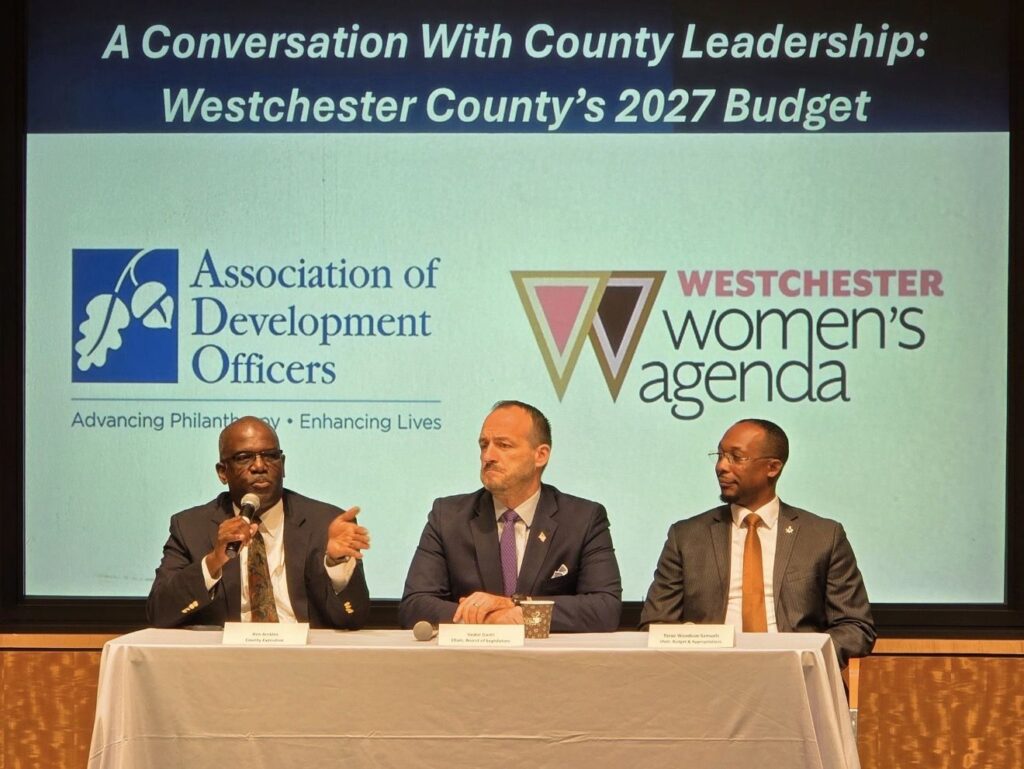
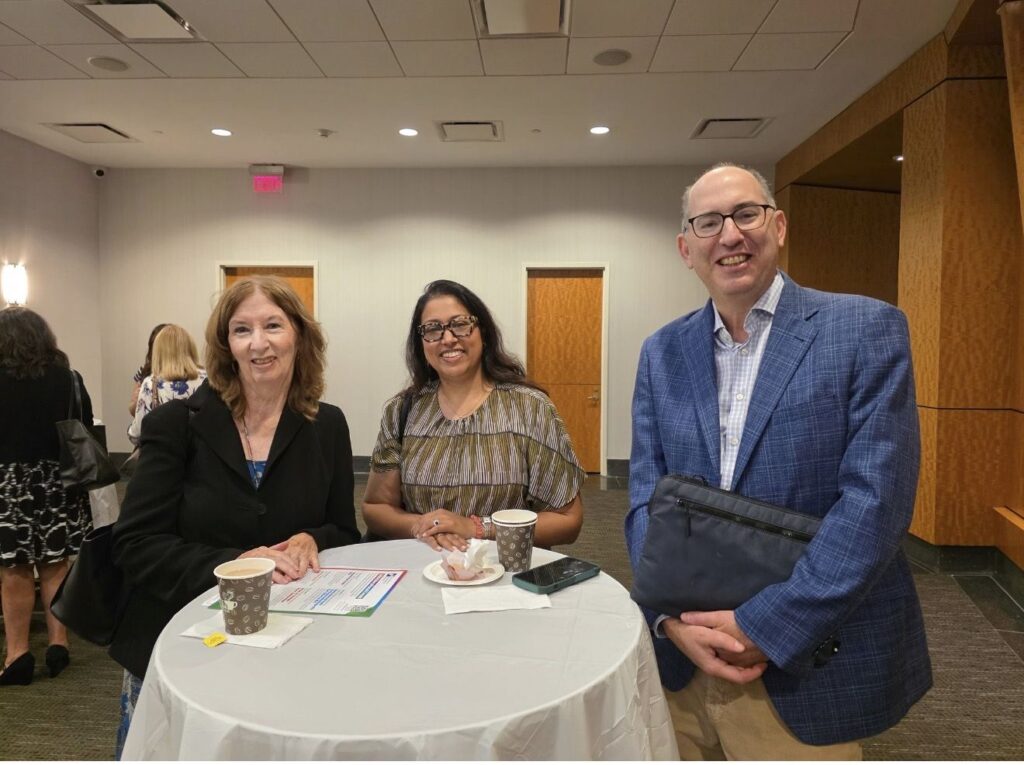
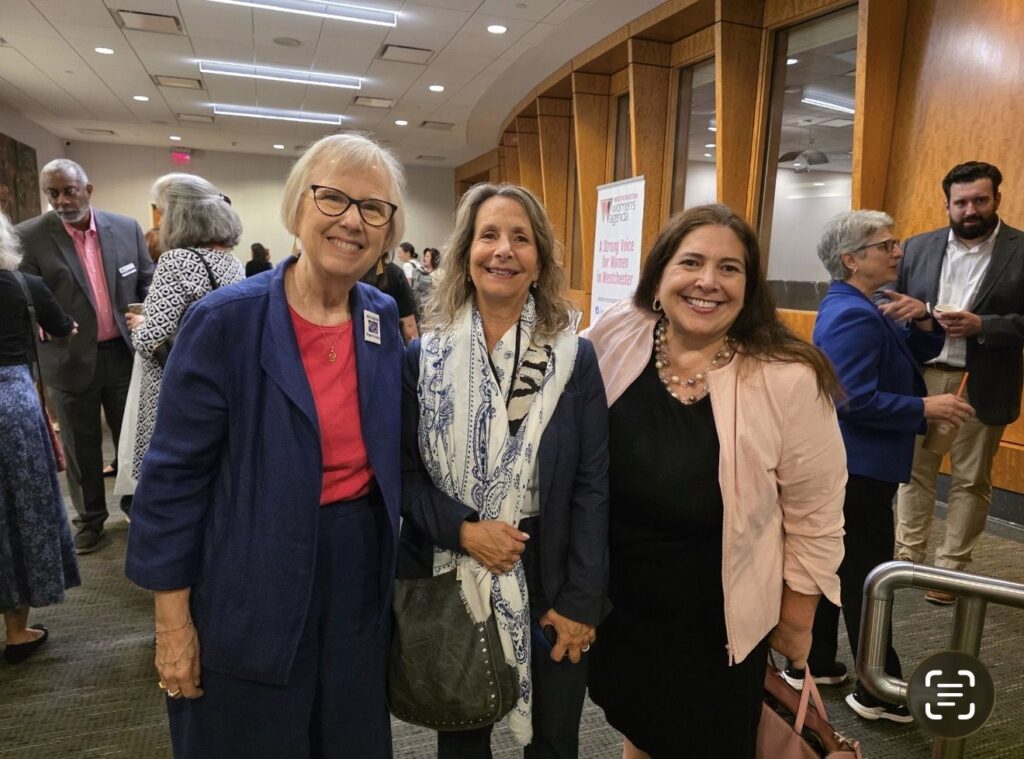
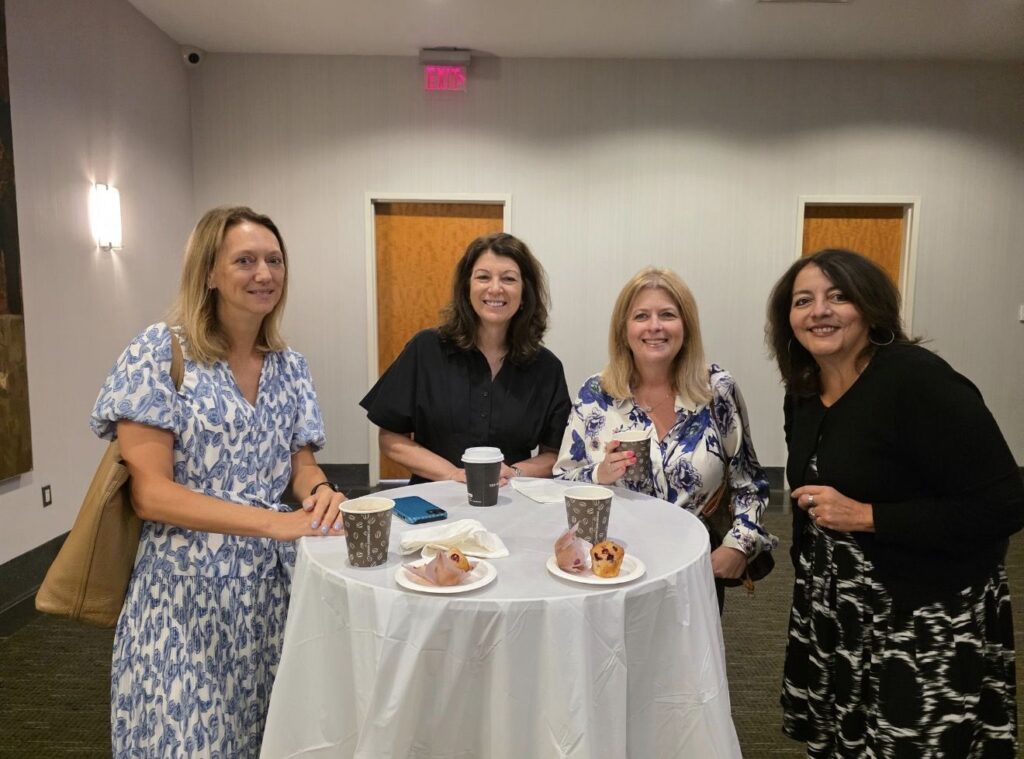
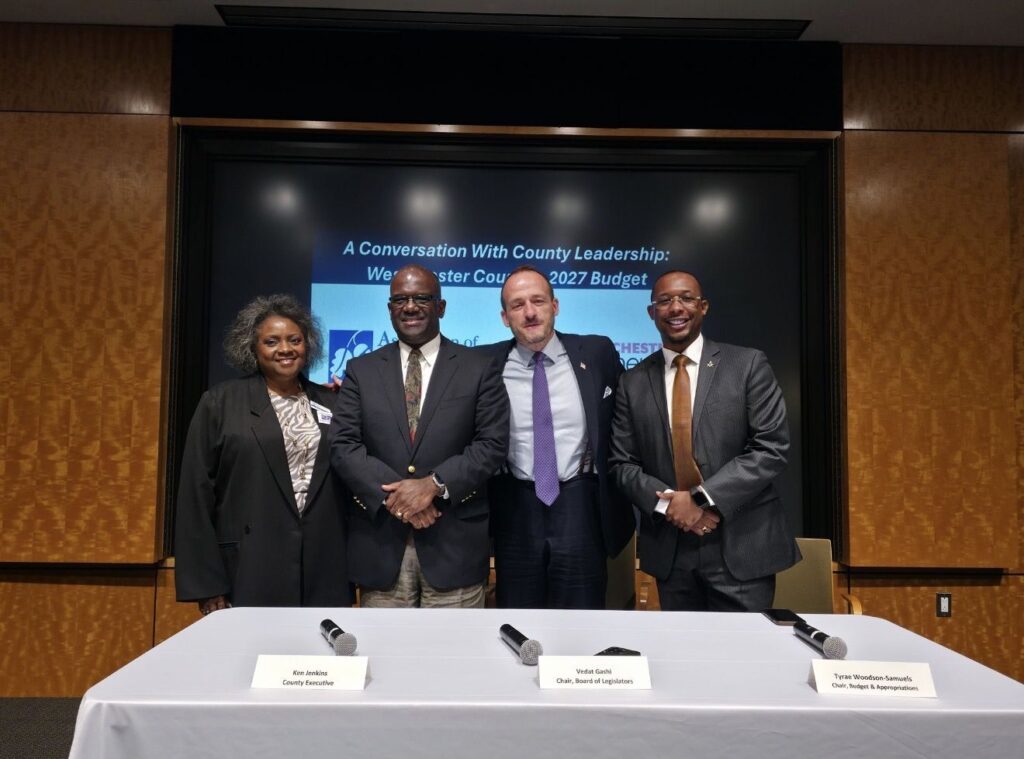
That was what stayed with me after attending “Westchester’s 2027 Budget: A Conversation with County Leadership” on September 18 in White Plains, co-sponsored by the Westchester Women’s Agenda (WWA) Public Policy Committee and the Association of Development Officers (ADO). The organizations created space for nonprofit leaders to sit directly with Westchester County Executive Kenneth W. Jenkins, Board of Legislators Chairman Vedat Gashi, and Budget & Appropriations Committee Chair Tyrae Woodson-Samuels to discuss the pressures facing the nonprofit sector as Westchester looks toward its 2027 budget. Rising demand, operating costs, and uncertainty surrounding public and private funding were not side conversations. They were the reason for bringing these sectors into the same room.
The numbers explain why that conversation matters. The Congressional Budget Office projects that the 2025 federal reconciliation law will reduce federal SNAP spending by approximately $211 billion through 2035 through provisions expected to reduce participation and average benefits while shifting additional costs to states. The law also expanded work requirements and increased states’ share of SNAP administrative expenses from 50 percent to 75 percent.
A federal government can reduce an expenditure on paper. It cannot eliminate the human need attached to it. A family with less money for food still has to eat. A resident experiencing housing instability still needs somewhere to sleep. Eventually, some of that pressure reaches food pantries, churches, shelters, and community organizations.
Jenkins spoke about Westchester’s work around SNAP, recertification, and communication with residents, while also addressing food insecurity, homelessness, and shelter capacity. What stood out was the recognition that there is no magical pot of money waiting to replace every resource that becomes constrained. When funding shifts at one level of government, somebody further down the line has to confront the consequences.
That is where we need to stop using the word “partner” so casually. We call nonprofits community partners when we need them to feed families, mentor children, support survivors, train workers, and reach residents government sometimes struggles to reach. Partnership cannot mean handing those organizations more human need while expecting them to absorb the cost. They have payroll, rent, insurance, technology expenses, and employees with families of their own. Compassion does not exempt anybody from an electric bill.
There is accountability on the nonprofit side too. Jenkins raised the importance of organizations working together and making limited resources go further. Collaboration, shared services, and reducing unnecessary duplication should be part of the conversation. But efficiency cannot become a polite word for abandonment. Working smarter does not manufacture resources that do not exist.
What WWA and ADO created was more than another nonprofit meeting. They created an opportunity for organizations seeing community needs up close to speak with county officials responsible for making difficult fiscal decisions. That kind of access matters, but its value will ultimately be measured by what happens after everybody leaves the room.
As I listened, I kept thinking about another federal conversation happening right now: the Community Reinvestment Act. Before leaving, I personally invited County Executive Jenkins to participate in the African American Chamber of Commerce of the Hudson Valley’s CRA Comment Lab. If county leaders are preparing for tighter public resources, I want them in the room while communities still have an opportunity to influence another important part of the community-investment system.
CRA is not SNAP, and bank investment cannot replace government benefits. But the Community Reinvestment Act addresses how federally regulated banks help meet credit needs in their communities, including low- and moderate-income neighborhoods. Federal regulators are currently considering changes to CRA regulations, and the official public-comment deadline is October 13, 2026.
That deadline matters. Westchester nonprofits, chambers, housing advocates, small-business organizations, and residents have an opportunity to tell federal regulators what community investment looks like from the ground. If we are discussing how communities will withstand increasing economic pressure, then we need to understand the major systems through which resources reach them, not just the county budget.
Westchester’s 2027 budget conversation also has to move beyond organizations simply saying they need more money. Which programs are preventing residents from reaching a crisis? Where are services being duplicated? What government requirements consume nonprofit resources without improving outcomes? Where could an investment today prevent a more expensive intervention tomorrow?
Nonprofits should bring receipts. If your pantry served 600 households last year and 850 this year, document it. If your waiting list doubled, show it. If reimbursement delays create cash-flow problems, explain the impact. If an investment in prevention keeps residents from entering a far more expensive emergency system, demonstrate the return. Government should bring its receipts too. When leaders say resources are limited, residents deserve to understand how priorities are being determined and which investments are producing measurable results.
The county budget process and the federal CRA rulemaking are separate conversations involving different laws, responsibilities, and resources. But both lead to a question communities should ask before somebody else answers it for us: Who gets invested in?
That question matters across Westchester, especially where nonprofits may be one grant away from cutting a program while receiving more calls from residents asking for help. The next year cannot simply be about surviving federal policy changes. It has to be about identifying resources, removing barriers to accessing them, demanding measurable outcomes, and ensuring communities are present when investment decisions are made.
The most expensive point to discover that the safety net has a hole is after somebody has already fallen through it. Washington can change the rules. Albany can inherit new obligations. Westchester can establish its priorities. Banks can determine where capital flows. Nonprofits can collaborate and innovate. But none of those institutions can budget human need out of existence. If we already know the pressure is coming, waiting for families to reach crisis may be the most expensive decision of all.