Home Blog Page 73

Amani Charter School Wins K-4 Expansion, Set to Double Size in 2025

With Approval from the New York State Department of Education, Amani Public Charter Will Expand to Grades K-4

Mt. Vernon, NY – On Monday, May 5, the Board of Regents’ P-12 Education Committee voted to approve the expansion of Amani Public Charter to include kindergarten through 4th grade. This is in addition to the school’s existing grade 5 through 8 configuration. The first class of kindergartners and first-graders will begin in Fall 2025.

There were mixed reactions from Mount Vernon residents when they heard about the proposed expansion of Amani Charter School. Kathie Brewington, President of the Mount Vernon Chapter of the NAACP, wrote a letter to the New York State Education Department in strong opposition to the expansion. The Mount Vernon City School District offices held two public hearings on Thursday, February 13th, on proposals for change to two of the city’s two charter schools. A proposal at the legally required hearing is to expand student enrollment at Amani Public Charter School from the current grades 5th through 8th, to eventually add grades K through 4th for the coming school year. Debra Stern, Executive Director and Founder of Amani Public Charter School, even appeared on the February 23rd episode of People Before Politics Radio to address the proposed expansion and take questions from the audience.

Final approval of the proposed changes was entirely up to the New York State Department of Education. Residents were waiting to hear what the NYS Dept of Ed would decide. Well, the wait is over; last week, they voted to approve the expansion.

According to a statement sent to Black Westchester, this decision guarantees that even more deserving young children in Mount Vernon will access the high-quality, holistic educational and extracurricular program offered at Amani. Debra Stern, Executive Director and Founder of Amani Public Charter School, issued the following statement following news of the approved expansion:

“Since our founding 15 years ago, Amani’s mission has been rooted in one simple truth: every student, regardless of their zip code, deserves access to free, quality education that fosters their whole being and puts them on a path to success. By expanding our school to K-4, we will create even more opportunities for the youngest generation of scholars in our community. We are deeply grateful to the Board of Regents for approving our expansion, and we look forward to working in close collaboration.  

Since Amani’s first graduating class in 2011, the school has served over 1,000 students, creating avenues for exploration in academics, athletics, and the arts for each young scholar that comes through our doors. By offering our curriculum alternatives beginning in kindergarten, Amani will provide a unique opportunity to address achievement gaps in Mt. Vernon youth and build a stronger academic foundation. 

Parents or guardians in Mt. Vernon who are interested in having their student attend Amani should visit the school, go online at www.amanicharter.org/apply, or attend a registration event to secure your child’s enrollment at Amani Public Charter School.

Registration Event Dates: 

  • May 14, 2025 3:00 pm to 6:00 pm 
  • May 22, 2025 4:00 pm -5:30 pm
  • June 14, 2025 Noon – 2:00 pm

Founded in 2010 by Dr. Debra Stern and Charles Stern, Amani Public Charter School is a transformative educational institution serving grades 5-8 in Mount Vernon, New York. The name “Amani” – meaning “peace” in Swahili – reflects our commitment to creating a nurturing environment where students can thrive academically and personally. They believe in providing robust opportunities for all students, creating a school where chess classes coexist with basketball, where rigorous academic preparation aligns with music and the arts.. Their “Amani Family” culture empowers students to take academic risks and pursue excellence.

Trump’s Middle East Strategy Isn’t About Loyalty—It’s About Leverage

If you’re looking for sentimentality or symbolic gestures, you won’t find them in Donald Trump’s second-term foreign policy—especially not in the Middle East. What you will find is a transactional recalibration rooted in one question: What do we get out of this?

It’s a question Washington hasn’t asked nearly enough. For decades, America has signed blank checks to foreign allies, policed distant borders, and absorbed trade imbalances that weaken its own economy. Trump’s approach isn’t based on ideology—it’s based on leverage, cost-benefit analysis, and putting American interests first.

Israel remains a key strategic ally, but under Trump’s second term, it’s being treated as an ally—not an untouchable sacred cow. Despite the U.S. sending nearly $4 billion in annual military aid under a 10-year agreement, Israel reportedly asked Trump for tariff exemptions and additional economic concessions.

Trump’s response was blunt: “You’re already getting billions. The U.S. is paying nothing more.” That wasn’t anti-Israel—it was pro-American taxpayer. It was the application of the same logic used in renegotiating NATO contributions, NAFTA, and the U.S.-China trade imbalance: no more paying twice.

Adding fuel to the fire, Trump’s trust in Israeli leadership was further strained by revelations that former National Security Advisor Mike Waltz had engaged in unauthorized communications with Prime Minister Benjamin Netanyahu. According to reports, Waltz was in backchannel talks with Israeli officials about possible military action against Iran—without the president’s approval. These conversations directly contradicted Trump’s stated aim of avoiding new Middle East wars and instead seeking economic stability and leverage-based diplomacy.

When the news broke, Trump immediately fired Waltz, seeing it as not just insubordination, but a deliberate attempt to sabotage his foreign policy. The fallout deepened the rift between Trump and Netanyahu, reinforcing Trump’s belief that even close allies must be handled with discipline, not deference.

Perhaps the most perplexing chapter of Trump’s Middle East playbook is Gaza. On one hand, he has declared that he wants Palestinians to be free. On the other, his proposal to “take over” Gaza and transform it into a Middle East Riviera—potentially involving forced relocation—has drawn fierce criticism for being both vague and volatile.

The complexity deepens when you factor in that a significant number of Muslim Americans supported Trump in 2024, largely in protest of the Biden administration’s handling of the war in Gaza. Many believed Trump would de-escalate the conflict and stand up to Netanyahu. Now, those same voters are watching with confusion as Trump’s unorthodox style leaves more questions than answers.

He says he wants peace. He says he wants Palestinians to be free. But what does freedom mean under a U.S.-imposed redevelopment plan that may displace millions? So far, he hasn’t said clearly. And that lack of clarity is leaving Muslim Americans—who made a calculated bet on Trump as a disruptor—uncertain about what they actually voted for.

Still, Trump is doing what most politicians won’t: forcing a conversation on results rather than ritual. Whether his Gaza plan is naive or visionary, it reflects a shift away from symbolic diplomacy and toward blunt economic engineering—whether the region is ready or not.

While Israel is asking for more, Saudi Arabia is offering more—in the form of a $1 trillion investment package in defense, infrastructure, and AI. Trump is pursuing nuclear cooperation with the Kingdom without making it contingent on recognizing Israel, breaking from previous U.S. policy.

Why? Because Trump sees direct, measurable benefit. He’s not interested in preserving outdated diplomatic rituals when new alliances serve American jobs, manufacturing, and geopolitical strength better.

Trump’s new push for a nuclear deal with Iran also reflects transactional realism. Unlike previous administrations, he’s not betting on goodwill. He’s demanding a complete dismantling of uranium enrichment in exchange for economic relief. That’s not diplomacy through optimism—it’s negotiation through pressure.

And unlike the Obama-era deal, Trump’s approach refuses to sideline Israel’s security concerns—but also refuses to let them dictate U.S. leverage at the bargaining table.

Donald Trump isn’t playing checkers in the Middle East. He’s playing chess—and he’s refusing to make moves just because they “look good” or preserve status quo relationships.

He’s telling allies, including Israel: If you’re already getting billions in military aid, don’t expect tariff breaks too. If you want American support, show us the economic return. If you want to avoid war, end it before January.

Critics will call it cold or transactional. But in a world of rising debt, broken alliances, and endless conflict, what America needs is exactly this kind of realism. The logic is simple: If the outcome doesn’t serve the American people, it’s not worth the cost.

State of Emergency: The Arrest of Newark Mayor Ras Baraka | State v Federal Power

In a striking political moment with implications for immigration policy and states’ rights, Newark Mayor Ras Baraka was arrested on May 9, 2025, outside the Delaney Hall ICE detention facility in New Jersey (see video below). Baraka, a prominent Democratic figure and current gubernatorial candidate, was among elected officials and activists protesting the reopening of the privately operated detention center, which recently resumed operations under a federal contract despite opposition from state and local leaders.

According to Homeland Security Investigations (HSI), Baraka was taken into custody after allegedly trespassing on federal property and refusing multiple requests to vacate the premises. Authorities stated that Baraka attempted to join members of Congress—Bonnie Watson Coleman, LaMonica McIver, and Rob Menendez—who were seeking access to inspect the facility. Unlike the congressional delegation, Baraka was not granted entry, and officials argued he crossed into restricted territory.

The arrest has sparked a fierce backlash in New Jersey. Governor Phil Murphy called the incident “a disgrace,” emphasizing that the state passed legislation in 2021 banning private immigration detention centers. “This facility is not only out of step with our values but arguably in violation of state law,” Murphy stated. New Jersey Attorney General Matt Platkin added, “Peaceful protest should not be met with handcuffs, especially when it concerns matters of moral and legal urgency.”

Supporters of Baraka view the arrest as a heavy-handed response to a legitimate protest. They argue that Baraka was exercising his right to peacefully demonstrate and was acting in line with New Jersey’s legal stance against the privatization of immigration enforcement. Critics of private prisons have long accused facilities like Delaney Hall—run by GEO Group—of prioritizing profit over humane conditions, with little transparency or accountability.

However, federal officials maintain that the Delaney Hall facility operates under legal jurisdiction granted by federal contract and that local or state preferences cannot override immigration enforcement protocols. An ICE spokesperson noted that the facility helps alleviate overcrowding and improve logistical efficiency in processing undocumented migrants. “Interference with federal operations cannot be tolerated, regardless of one’s political position or elected office,” the agency said in a statement.

The broader issue reflects a growing national rift between state and federal governments over immigration enforcement, private detention centers, and the boundaries of local autonomy. While New Jersey law may prohibit such facilities, the federal government retains the authority to enforce immigration laws and contract with private entities for detention services. Legal experts suggest that the dispute may soon land in federal court, testing the limits of state sovereignty versus federal supremacy.

Baraka was released hours after his arrest and vowed to continue opposing the facility’s presence in Newark. “We will not stand by while this unjust institution operates in the heart of our city,” he told supporters. “Newark is not a dumping ground for policies we never asked for and do not support.”

As the election season heats up, the incident is likely to galvanize both supporters and opponents of Baraka’s platform. Whether seen as a courageous stand or an unnecessary political stunt, the arrest has elevated a local protest into a flashpoint of national debate—one that blends immigration policy, states’ rights, and the role of civil disobedience in the age of federal privatization.

Check out the Sunday, May 11th episode of Black Westchester presents The People Before Politics Radio Show for an independent, unapologetic voice discussing this story and other news, politics, culture, health, and justice from the Black perspective. From local issues to national conversations, we speak truth to power and amplify the voices of our community.

New York’s political elite quietly pass a $10 million legal slush fund to shield themselves from federal investigations—on the taxpayers’ dime

In a stunning display of self-interest masquerading as governance, New York State lawmakers quietly approved a $10 million taxpayer-funded legal defense fund for elected officials under federal investigation. Baked into the state’s bloated $254 billion budget, this provision allows politicians—many of whom are facing credible allegations of misconduct—to make the public pay for their private legal battles. This isn’t governance. It’s legalized grift.

At the root of this scandal lies a deeper truth: corruption festers when one political party holds unchallenged control for too long. In such an environment, loyalty replaces accountability, transparency gives way to entitlement, and the people’s money becomes a piggy bank for political survival. In New York, where one party dominates nearly every lever of state power, the system is no longer being used to serve the people—it’s being used to shield the powerful from the consequences of their own misconduct.

Case in point: New York Attorney General Letitia James is now reportedly under federal investigation for questionable real estate transactions involving not one, but two properties—one in Virginia and another in Brooklyn. According to forensic fraud expert Sam Antar, who spoke exclusively with Black Westchester, James allegedly acquired the Virginia property. Mortgage filings raise serious legal and ethical concerns. Similar patterns of potential misrepresentation and irregular filings have emerged in the Brooklyn property case. Antar uncovered documentation suggesting that material facts may have been concealed or falsified in mortgage applications tied to both properties. These documents are now under federal scrutiny and, if verified, could constitute mortgage fraud.

WATCH: Sam Antar interview and Legal opinion by Jonathan Newton Esq.

And yet, thanks to this new legal defense fund, James—or any other official under investigation—could request to have her legal bills covered by taxpayers, so long as the alleged misconduct is deemed “reasonably related” to her duties. Who makes that decision? The Attorney General’s office or the Governor’s counsel—meaning political insiders under scrutiny get to decide whether taxpayers should finance their defense.

Let’s be clear: how is allegedly committing mortgage fraud on personal real estate holdings an act of governance? It’s not. These are private transactions, carried out for personal gain, and they fall completely outside the scope of public service. Yet somehow, state leaders believe the public should bear the financial burden of defending these actions. It’s a slap in the face to every New Yorker—especially those struggling to stay housed themselves.

While state officials protect themselves with taxpayer dollars, Black communities across New York State continue to suffer from systemic neglect. In cities like Buffalo, Mount Vernon, and Rochester, students are crammed into overcrowded classrooms with outdated textbooks and failing infrastructure. Neighborhoods continue to battle rising gun violence and the trauma that follows, yet mental health services remain underfunded and inaccessible. Families are still living in food deserts, with few grocery options beyond overpriced convenience stores. Public housing continues to crumble, and the dream of homeownership feels more distant with each passing year.

Ten million dollars could have been used to address any of these urgent problems. It could have supported youth programs, expanded trauma counseling, funded community gardens and nutrition programs, repaired aging schools, or boosted homeownership opportunities for Black families. Instead, that money now sits in a legal war chest for Albany elites looking to avoid accountability.

Not everyone in government supports this travesty. Senator Michael Gianaris of Queens has tried to hold the line. He introduced Senate Bill S2454, aimed at prohibiting taxpayer reimbursement for legal defenses funneled through campaign or political accounts. His efforts reflect a desire to restore both ethical integrity and fiscal responsibility. But Gianaris is clearly outnumbered, surrounded by a political establishment more committed to shielding itself than protecting the public.

Sadly, we won’t hear a word from Black leaders. The pastors will stay silent from their pulpits, unwilling to confront power when it wears the same political jersey. The local civil rights organizations will remain preoccupied with ceremonial marches and symbolic awards, ignoring the real policy betrayals happening before us.

They’ve placed party above people, loyalty above truth, and personal access above collective accountability. That’s why our neighborhoods remain locked in poverty, ravaged by violence, overlooked in education, and ignored in economic investment. They’ve traded in advocacy for alignment, and in doing so, they’ve allowed the very conditions harming us to deepen, all while claiming to represent us. And if you dare to question them, they’ll reflexively point to “racist Trump” as if invoking his name justifies everything their own party is doing wrong. But that is still no excuse to use our tax dollars to defend public officials under federal investigation. Aren’t we taxed enough in New York already? We pay some of the highest taxes in the country, and instead of funding better schools, safer neighborhoods, or affordable housing, that money is now being used to protect powerful people from the consequences of their own alleged corruption. That’s not leadership. That’s betrayal dressed in party colors.

This is the end result of one-party rule. With no meaningful opposition to hold them accountable, those in power legislate in secrecy, protect their own, and use public funds to defend against personal scandal. The system has become closed, cynical, and self-sustaining. Corruption isn’t being hidden—it’s being written into law. And worse, it’s being protected by those who look like us but no longer speak for us.

If New Yorkers—especially Black New Yorkers—want real change, it will not come from the same machine that just handed itself legal immunity. It will require a new political consciousness. It will demand civic pressure, electoral competition, and leadership that remembers who it works for.

This budget is not just an insult. It is a warning. In a state where power has gone unchallenged for far too long, the rot is no longer creeping. It is full-blown—and funded by you.

BREAKING NEWS: MAYOR BARAKA ARRESTED

According to authorities, Ras Baraka, the mayor of Newark, was taken into custody on Friday afternoon for allegedly trespassing into an ICE facility in New Jersey, where he has been protesting its opening this week, a federal prosecutor said.

“The Mayor of Newark, Ras Baraka, committed trespass and ignored multiple warnings from Homeland Security Investigations to remove himself from the ICE detention center in Newark, New Jersey this afternoon,” Alina Habba, the Interim U.S. Attorney for the District of New Jersey, posted on X.

According to Kabir Moss, Spokesperson for Ras Baraka for Governor Campaign, Mayor Baraka was brought to an ICE field office located at 620 Frelinghuysen Ave. in Newark.

“We are actively monitoring and will provide more details as they become available,” Moss shared with Black Westchester. 

According to the Associated Press, Witnesses said the arrest came after Baraka attempted to join three members of New Jersey’s congressional delegation, Reps. Robert Menendez, LaMonica McIver, and Bonnie Watson Coleman, attempting to enter the facility. When federal officials blocked his entry, a heated argument broke out, according to Viri Martinez, an activist with the New Jersey Alliance for Immigrant Justice. It continued even after Baraka returned to the public side of the gates.

“There was yelling and pushing,” Martinez said. “Then the officers swarmed Baraka. They threw one of the organizers to the ground. They put Baraka in handcuffs and put him in an unmarked car.”

In a statement, the Department of Homeland Security said that the lawmakers had not asked for a tour of the facility, contrary to witnesses’ accounts. The department said further that as a bus carrying detainees was entering, “a group of protestors, including two members of the U.S. House of Representatives, stormed the gate and broke into the detention facility.”

Advocates Demand Immediate Release of Newark Mayor Ras Baraka

“No sitting mayor of an American city should be arrested for trying to inspect an immigration facility in their jurisdiction. ICE detention facilities are subject to inspection and oversight by elected officials. But in today’s climate, federal immigration enforcement has been emboldened by the callous and lawless actions of the Trump administration to the point of responding to that oversight with this reckless and irresponsible action. The arrest of Newark Mayor Ras Baraka is a step much too far. We demand the immediate release of Mayor Baraka, and for those responsible for this decision to be held accountable,” Murad Awawdeh, President and CEO, New York Immigration Coalition, said in a statement sent to Black Westchester.

“ICE’s arrest of Newark Mayor Ras Baraka is a dangerous assault on our collective rights. This is not just an attack on Mayor Baraka, but an attack on the people of Newark. Until Freedom stands in solidarity with Mayor Baraka. We demand accountability and an end to these unjust actions by the Trump administration and the agents carrying out his agenda. Our communities will not be intimidated, and we will not back down in the face of oppression,” said Angelo Pinto, Co-Founder, Until Freedom.

The New Jersey chapter of the Council on American-Islamic Relations (CAIR-NJ) also condemned the detention of Mayor Baraka, and demanded his immediate release

“Mayor Baraka’s detention is an affront to free speech and the right to protest,” said CAIR-NJ Executive Director Selaedin Maksut. “His actions were in defense of the Constitution and the rights of immigrants. We stand in solidarity with him and demand his immediate release. The Delaney Hall facility has long raised serious legal and ethical concerns, including its lack of proper municipal approvals and transparency. No facility that deprives people of their liberty should be allowed to operate in violation of local laws and without community oversight. Mayor Baraka was standing up for lawful governance, and for that, he should be commended— not criminalized.”

CAIR-NJ, whose mission is to protect civil rights, enhance understanding of Islam, promote justice, and empower American Muslims, calls on federal authorities to respect the First Amendment rights of all individuals and urges the immediate release of Mayor Baraka. They also called for a full investigation into the conditions at Delaney Hall and the legality of its operations.

No charges have been made public.

Stay tuned to Black Westchester for more on this developing story!

NFL Players Association Honors Yonkers Students with Scholarships

1

Former NFL Players and Local Leaders Award $3,000 Scholarships to Yonkers Students

Yonkers, NY – Yonkers Public Schools, My Brother’s Keeper (MBK) Yonkers, and My Sister’s Keeper (MSK) Yonkers partnered Thursday with the NFL Players Association (NFLPA) Players Chapter of NY & NJ and Athletes for Vets to celebrate two outstanding student leaders with $3,000 scholarships supporting their academic futures.

The ceremony, held at Saunders Trades and Technical High School, brought together students, families, educators, and NFL alumni to celebrate leadership and achievement.

Mohammad Baker (MBK Yonkers) and Vanessa Aguilar (MSK Yonkers) were each awarded $3,000 scholarships in recognition of their academic success, leadership qualities, and commitment to community involvement. The scholarships are awarded to one male and one female high school student-athlete who demonstrate academic achievement, leadership skills, and strong promise for future career goals, and who plan to attend a university, college, or two-year institution that does not offer athletic scholarships.

Baker, a standout athlete in football, baseball, and track and also serves as President of the Veterans Club and Vice President of SkillsUSA. He plans to continue his academic and leadership journey at the City College of New York (CUNY).

Aguilar shines in soccer and flag football and serves as Treasurer of the National Honor Society. She also competes with SkillsUSA, continuing to build her leadership skills beyond the field. Aguilar plans to continue her education at the Fashion Institute of Technology (FIT).

The students were presented with their scholarship awards by Dereck Faulkner, former Philadelphia Eagles wide receiver and President of the NFLPA NY & NJ Chapter, along with several additional chapter members who joined to celebrate their achievements.

“It’s an honor to recognize these young leaders for their hard work and dedication,” said Faulkner. “As athletes, we understand the value of discipline, education, and character – and we’re proud to support the next generation as they build bright futures beyond the field.”

The ceremony also featured remarks from Yonkers Public Schools Superintendent Aníbal Soler, Jr., and MBK Yonkers Executive Director Dr. Jason Baez, who praised the students’ leadership and the strength of community partnerships.

“We are proud to recognize the achievements of Mohammad and Vanessa, two students who embody leadership, resilience, and the spirit of Yonkers,” said Superintendent Soler. “Partnerships like these show our young people what’s possible when community and opportunity come together.”

“Our students have what it takes to lead in every field, and today’s celebration is another reminder that they are seen, valued, and supported,” said Dr. Baez. “This scholarship supports Mohammad’s journey and serves as an example for all our young men that their dreams are within reach – which is at the heart of MBK Yonkers’ mission.”

Throughout the afternoon, students, educators, and NFLPA members reflected on the broader impact of investing in youth leadership. The event highlighted the importance of providing tangible support and mentorship opportunities to help students succeed in college, careers, and beyond.

Gamma Xi Zeta Chapter of Zeta Phi Beta Sorority, Incorporated Hosts 62nd Annual FinerWomanhood Scholarship Luncheon Celebrating Black Voices in Music and Leadership

The Gamma Xi Zeta Chapter of Zeta Phi Beta Sorority, Incorporated, the oldest sorority in Westchester County, hosted its 62nd Annual Finer Womanhood Scholarship Luncheon on Saturday, April 26, 2025, from 11:00 AM to 4:00 PM at the prestigious VIP Country Club in New Rochelle, New York. 

This year’s luncheon theme, “Rhythms of Change: Celebrating Black Voices in Music and Leadership,” honored the powerful intersection of artistic expression and civic impact within the community. The event spotlighted local leaders and musical talents who embody these ideals and continue to uplift Westchester County through service, creativity, and advocacy. 

Honorees included: 

– Kenneth W. Jenkins, Deputy County Executive, Westchester County 

– Andre Rainey, Community Leader and Former Mayor of Peekskill 

– Derrick Thompson, Councilman, City of Mount Vernon 

– Antoine Dolberry, Acclaimed Musical Director and Performer 

– James Farley, Keyboardist Extraordinaire 

– Shelidah Dupree, Zeta of the Year 

Since its chartering in 1948, Gamma Xi Zeta has spent nearly 77 years dedicated to scholarship, service, sisterhood, and finer womanhood. Through our scholarship initiatives and community outreach, we remain committed to empowering future generations and celebrating the legacy of excellence within our community. 

It was an afternoon of inspiration, recognition, and uplifting entertainment as they honored those making a difference in Westchester County and beyond.

MV NAACP & Greater Centennial A.M.E. Zion Church Host School Board Candidate Forum

Dozens of residents gathered at Greater Centennial A.M.E. Zion Church, located at 312 S 8th Ave, Mt Vernon, for the MV NAACP and Greater Centennial hosted the 2025 Mount Vernon City School District School Board Trustees Candidates Forum on Thursday, May 8th.

The seven candidates running are Adriane Saunders, Lorna Kirwan, Orville Gayle, Sakai Brown, Chara Gladden, Erica Peterson, and Randolf Scott (listed in order as they appear on the ballot). The forum was moderated by Rev. Stephen W Pogue, pastor of Greater Centennial, and MV NAACP Executive Committee member Andre Coleman. MV NAACP President Kathie Brewington gave final words before the crowd dispersed.

You can see the full forum in the video below.

This was the first of several school board forums. The next will be hosted by the Mount Vernon PTA Council on Tuesday, May 13th, from 6 to 7 PM at Graham School, located at 421 East Fifth Street (see flyer below).

The Budget Vote and School Board Election will take place on Tuesday, May 20, 2025, with polls open from 7 a.m. to 9 p.m. This will also include the election of Mount Vernon Public Library Board Trustees as well. Candidates and voting locations can be found below.

School Board Candidates (three seats available)
1A – Adriane Saunders,
2A – Lorna Kirwan
3A – Orville Gayle
4A – Sakai Brown
5A – Chara Gladden
6A – Erica Peterson
7A – Randolf Scott

Public Library Board Candidates (two seats available)
1A -Cynthia Crenshaw
2A – Jonathan Davis
3A – Cynthia Dickerson
4A – Tamara Stewart
5A – Hudson Trader

The annual budget vote for the fiscal year 2025-2026 by the qualified voters of the Mount Vernon City School District, Westchester County, New York, will be held at:

Voting Locations
Lincoln School, 170 East Lincoln Ave. (ED # 1)
Cecil H. Parker School, 461 South 6th Ave. (ED # 4)
Hamilton School, 20 Oak St. (ED # 5)
Traphagen School, 72 Lexington Ave. (ED # 6)
Edward Williams School, 9 Union Lane (ED # 7)
Graham School, 421 East 5th St. (ED # 9)
Rebecca Turner Academy, 625 4th Ave. (ED # 14)
Pennington School, 20 Fairway (ED # 11)
Mount Vernon Honor Academy (Formerly Holmes School), 195 North
Columbus Ave. (ED # 17)
Grimes School, 58 South 10th Ave. (ED # 22)

Rev Stephen Pogue (moderator), MV NAACP President Kathie Brewington and Andre Coleman (moderator)

For more information or to become a member of The NAACP – Mount Vernon, NY Branch #2161, follow them on Facebook.

Debt Denial Is a Slap in the Face to Black America

During a recent hearing on trade policy, Rep. Gregory Meeks mocked the idea that America’s trade deficits constitute a “national emergency.” He pointed out—almost smugly—that the U.S. has run deficits for over four decades, and since neither Republican nor Democratic presidents have called it an emergency, it must not be one. But that’s not logic—that’s willful complacency. And it’s unacceptable coming from someone who claims to represent working-class communities, particularly Black Americans, who’ve borne the brunt of this economic mismanagement.

If your family or business operated at a deficit for 40 straight years, you wouldn’t call it “normal”—you’d call it a financial crisis. So why do politicians like Meeks get to shrug off a $34 trillion national debt like it’s a policy footnote?

This is not just political laziness—it’s dangerous hypocrisy. Because while Meeks lectures about congressional procedure and constitutional process, what legislation has he passed to reduce the debt? What serious proposal has he introduced to bring jobs back, cut spending, or reduce the structural deficit that is bleeding this country dry?

The truth is, there is none.

Search his legislative record. You’ll find committee statements, soundbites, and symbolic resolutions—but you will not find a single serious piece of legislation from Rep. Meeks aimed at reducing the national debt, reforming entitlement spending, renegotiating trade, or eliminating wasteful programs. There is no blueprint. There is no roadmap. There is only excuse-making dressed up as statesmanship.

And what is he proposing now? Nothing. No plan, no urgency—just partisan shots at Trump and vague claims that tariffs should be left to Congress. That’s not leadership. That’s retreating behind procedure to avoid taking responsibility.

Let’s be clear: when the U.S. spends more than it produces and relies on imports to feed its consumer addiction, that is not economic strength—it’s economic dependency. Persistent trade deficits, especially those that erode domestic industries, represent more than numbers on a spreadsheet. They mean shuttered factories, gutted communities, and lost opportunity—especially in cities where Black America once thrived through manufacturing and industrial jobs.

This is not a defense of Donald Trump. It is a direct indictment of the hypocrisy that lives in the heart of the Democratic Party. You cannot claim to stand with working people while defending policies that destroy the very industries that used to sustain them. You cannot claim to be an advocate for equity while defending a debt-driven, globalist framework that has helped erase Black middle-class progress.

It’s even more insulting when that message comes from a Black elected official who knows the reality on the ground. When a politician like Rep. Meeks dismisses decades of national debt as “nothing new,” he is effectively saying that Black communities should continue living with economic decline. That’s not representation. That’s betrayal.

And if $34 trillion in debt—growing faster than our economy—is not a national emergency, then what is? If the people in charge don’t see it as a problem, they should not be anywhere near the reins of power.

The American people see the game. They know both parties are guilty of overspending, underdelivering, and blaming each other instead of fixing anything. But the insult lands harder when the politician smiling on the hearing floor is supposed to understand the stakes for communities like ours.

There is no virtue in normalizing dysfunction. There is no courage in defending failure. There is no logic in pretending decades of red ink are “just how things work.”

And there is no excuse for a Black lawmaker to defend policies that are financially suffocating the very people he claims to represent.

If Meeks has no plan to reduce the debt, no legislation to reform trade, and no willingness to call this what it is—a generational crisis—then he has no business holding public office.

Because if this isn’t an emergency, then we might as well stop pretending we have a government that works at all.

Trump’s UK Trade Deal: What It Actually Means for Black America”

When politicians announce trade deals, they typically speak in grand, abstract terms—“historic,” “groundbreaking,” “mutually beneficial.” But as with most government actions, the rhetoric rarely aligns with results. President Trump’s newly announced trade agreement with the United Kingdom is no exception. The only question that matters is this: What are the actual consequences for working-class Black Americans?

To answer that, we must strip away the sentiment and examine the incentives, trade-offs, and downstream effects—because good intentions do not guarantee good outcomes.

Lower Tariffs—Who Benefits?

The centerpiece of this trade deal is a reduction in tariffs on British exports—steel, aluminum, and automobiles. Advocates say it will help consumers by lowering prices, but that narrative conveniently ignores the other side of the equation: American producers, especially in the industrial heartlands where Black workers still depend on manufacturing jobs to feed their families and build a future. Cities like Detroit, Cleveland, and Chicago are filled with skilled Black welders, machinists, and auto workers—people whose livelihoods are directly threatened by this type of policy.

So what does tariff relief really mean? It means foreign goods undercutting American-made products once again. It means rewarding consumption over production. We are right back to where we were when Bill Clinton championed NAFTA and Barack Obama pushed the Trans-Pacific Partnership—back to a time when the political elite sold off the backbone of working-class America for cheap goods and global prestige. This deal follows the same logic, just repackaged in a different political wrapper.

We’re watching America relapse into being a nation addicted to imports, acting like a consumer crackhead, while our own factories sit idle. That’s great news for British manufacturers and multinational retailers—but it’s a gut punch to Black communities that have already suffered the consequences of globalization without ever seeing the promised benefits.

And now the question becomes: How will Trump respond when the American auto sector starts to feel the sting? Is there a real plan to protect U.S. workers and reinvest in domestic industry—or was this just another bluff? If there’s no follow-through, then this isn’t about strengthening America—it’s about repeating history. And we already know how that ends: with the working class, especially Black America, left holding the bag.

The Digital Tax Distraction

The deal includes a promise from the UK to reevaluate its digital services tax, which hits U.S. tech giants like Amazon and Meta. The usual narrative is that this move will “strengthen innovation.” But again, whose innovation?

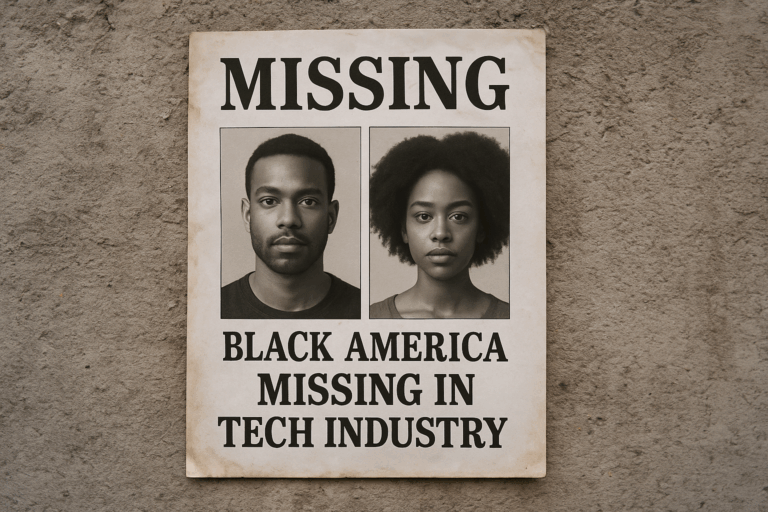
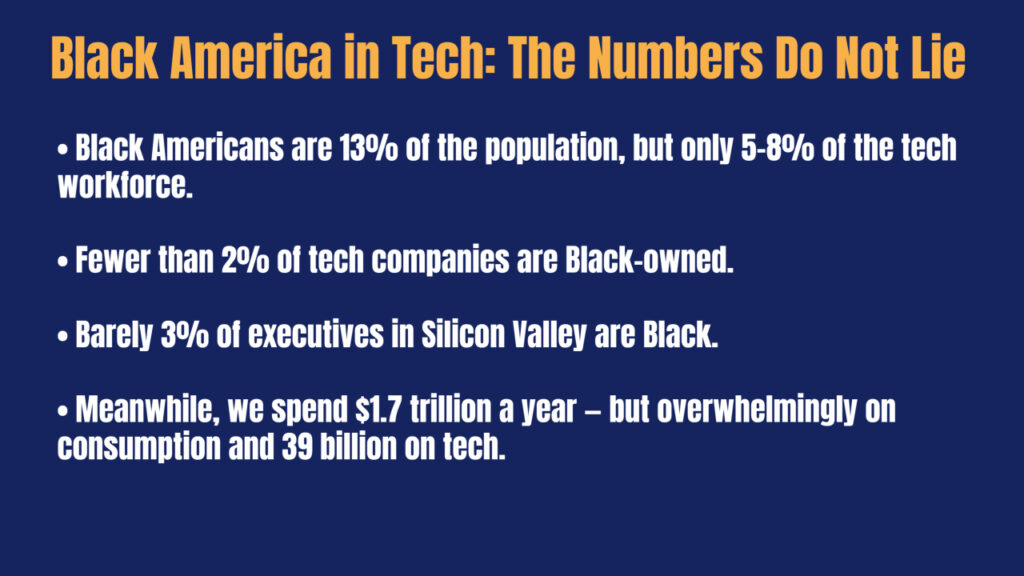
None of this addresses the reality that Black tech entrepreneurs remain shut out of access to venture capital, global partnerships, and platform dominance. Cutting taxes for Big Tech may help their stock price, but it does nothing to close the digital divide or build a Black digital economy. Without deliberate inclusion, the benefits flow up the ladder—not across or down.

Agriculture and Food Quality—A Market Signal

The UK held its line against importing U.S. agricultural products like hormone-treated beef and chlorine-washed chicken. British regulators see them as low-quality, high-risk. Meanwhile, those same products flood American grocery stores, especially in low-income, predominantly Black communities.

The implication is clear: The very foods other countries won’t feed their citizens are being sold to us. That’s not racism—it’s market logic. If there’s a segment of the population that doesn’t push back, they will be the dumping ground for what others reject. Until there’s a market response—like community-supported agriculture, co-ops, and support for Black farmers—there’s no incentive for that to change.

Trade Without Infrastructure Is Just Optics

In theory, free trade opens opportunities for exports, business expansion, and job growth. But in practice, that only happens when domestic businesses are positioned to take advantage of new markets. Black-owned businesses are rarely in that position. We lack access to capital, international logistics, export knowledge, and federal contract access. So, a trade deal—no matter how large—is meaningless without a local economic base that can plug into it.

This is where the real policy failure lies. No trade deal will lift Black America without prior investment in the skills, capital access, and enterprise systems that allow us to compete. A door being open means nothing if you don’t have the shoes to walk through it.

If the UK deal results in lower prices for a handful of consumer goods, it may be marginally helpful to the average households. But if it also accelerates job loss in Black industrial hubs, increases reliance on unhealthy food imports, and deepens our absence from the global economy, then its net effect is negative.

Economic policy must be measured not by how it sounds on cable news—but by whether it changes the conditions on the ground for ordinary people. Black America must ask: are we players in this trade—or are we just spectators?

?