The Shooting of Charlie Kirk: The High Price of Political Theater
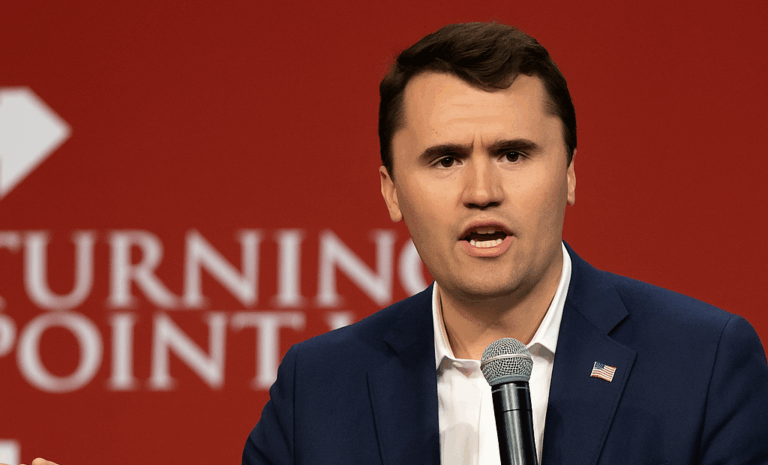
Charlie Kirk, founder of Turning Point USA, was shot in the neck while speaking at Utah Valley University on September 10. He now lies in critical condition. A suspect is in custody. That is the fact. But the fact behind the fact is this: politics in America has ceased to be about persuasion, and has instead become about vilification.
When you spend years reducing politics to moral crusades—painting opponents not as wrong but as evil—you should not be surprised when some take that logic to its conclusion. If your adversary is evil, then what limit exists on how you can treat them? The step from demonization to violence is not a leap. It is a slide.
Lessons From History
We have been here before. Representative Steve Scalise was nearly killed at a congressional baseball game. Paul Pelosi was beaten with a hammer. Gabrielle Giffords was shot at a constituent event. Each time, the country clutched its pearls, then quickly returned to the same poisonous rhetoric that fuels this cycle. The outcome is predictable: fewer public events, tighter security, and a public more afraid to participate in the civic life of its own country.
The Real Cost of Escalation
Free speech becomes conditional. If the price of speaking is risking your life, then fewer will speak.
Politics becomes performance. Leaders no longer argue about ideas but instead about how to frame opponents as existential threats.
Citizens lose twice. First, by being denied honest debate. Second, by inheriting the chaos when debate turns to violence.
Beyond Left and Right
This is not about Charlie Kirk’s ideology. It is about whether political disagreements will be settled with words or weapons. Today it is Kirk. Tomorrow it may be someone on the other side. Once you normalize violence as politics, there is no stopping point.
The Question That Matters
Are we going too far? The answer is not found in emotions but in outcomes. What is the outcome of a society where political disagreements bring gunfire? Fewer voices. Less freedom. More fear. The American republic cannot function on that foundation.
The choice is clear: either politics returns to persuasion, or it will continue down the road to intimidation. And intimidation, once it becomes the common currency of politics, will not stop at the campus tent where Charlie Kirk was shot. It will spread to every arena of American life.
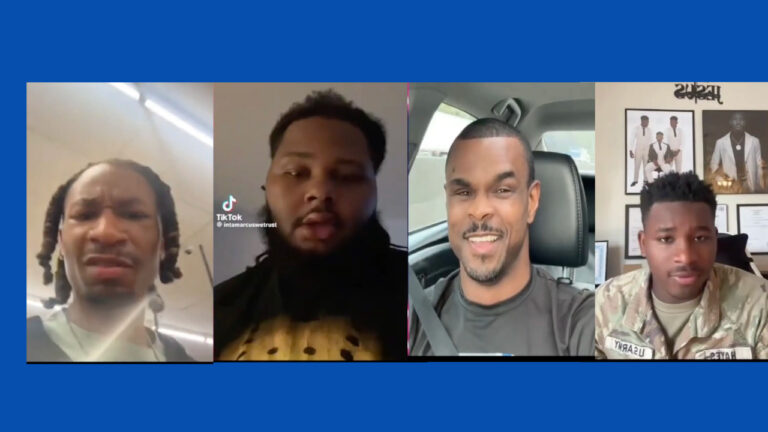
When viral videos of Chicago gang members warning President Trump not to send the National Guard began circulating online, it didn’t take long for those with real battlefield experience to respond. Soldiers and veterans across the country flooded social media to remind these young men of a truth they seemed to forget: the streets are not the same as war.
On TikTok and Instagram, self-proclaimed gang members boasted that Chicago was “different” and that their “switches” would make the National Guard regret stepping into the city. The bravado may have impressed some, but for combat veterans it was pure ignorance.
“I was a sniper in Iraq and Afghanistan—I have zero fear of Chicago thugs,” one veteran wrote. Another added, “More bravado than brains. You’ve never seen your squad turned into a pink mist by a 105mm shell. The government doesn’t even have to fight you directly. They can cut food, water, power—and watch you fold.”
Others mocked the idea of handguns against military technology. “That’s like showing up to a missile show with Nerf guns,” one comment read.
Warnings From Black Soldiers
Perhaps the strongest responses came from Black soldiers themselves, who pleaded with young men not to fall into a trap.
“Please don’t think you can intimidate the U.S. military,” one serviceman said in a viral clip. “We can pinpoint your weapons stash in seconds. We have drones, homing missiles, and precision that you’ve never seen. Don’t confuse street war with actual war.”
Another soldier reminded gang members that even the National Guard—often deployed in times of unrest—is still highly trained. “We defend this country from enemies foreign and domestic. Threatening us doesn’t make you look strong, it makes you look foolish.”
A Dangerous Distraction
For many veterans, the larger concern is not bravado—it’s the consequences. They argue that the gang threats play directly into Trump’s hands, giving him justification to crack down harder.
“This is exactly what Trump wants,” one former Marine commented. “Give him a reason and you’ll see martial law faster than you think.”
Others stressed the hypocrisy of gang members picking a fight with soldiers while remaining silent about crime in their own neighborhoods. “You couldn’t handle Venezuelan gangs with machetes,” one veteran noted. “But now you want to take on the U.S. Army?”
The consensus among veterans and active-duty soldiers was clear: this is not a fight gangs can win, and pursuing it would only bring destruction on their own people.
“Gang life ends in two ways—prison or death,” a veteran concluded. “But taking on the military guarantees both. Don’t mistake recklessness for power. Chicago doesn’t need more body bags; it needs leadership and real solutions.”
Artificial Intelligence is present in every part of our lives—phones, jobs, and doctors’ offices. It’s more than a buzzword for Black communities: it’s a tool with the potential to close longstanding health gaps and save lives.
We know the story—hospitals closing in Black neighborhoods, long waits, insurance woes. AI-powered telehealth and symptom checkers can’t fix everything, but they help. If you’ve got a phone, you’ve got a lifeline. That means earlier warnings for diabetes, hypertension, or stroke—conditions that hit us hardest. Early detection saves lives, and AI makes that easier.
Personal Health That Speaks to Us
One-size-fits-all care never worked for us. AI can tailor guidance to your specific diet, stress levels, and family history. It reminds us to watch our salt intake, manage stress, and drink water—small habits that add up to longevity. Imagine an app that counts steps and knows the risks facing Black America. That’s the personalization we need.
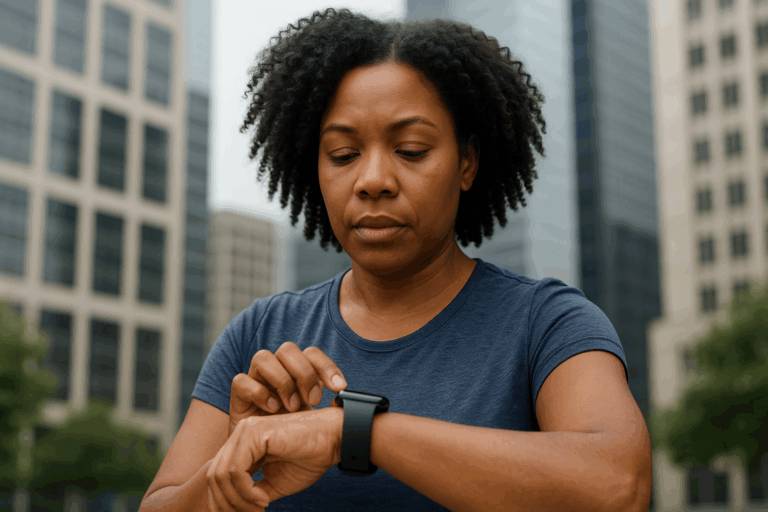
And now, with smartwatches and fitness trackers, we don’t even need to wait for a doctor’s visit to get vital health information. Our watches can monitor heart rate, sleep patterns, oxygen levels, and even detect irregular rhythms that could signal serious issues. For Black communities disproportionately affected by heart disease and hypertension, that kind of real-time monitoring is a game-changer.
We don’t talk about mental health enough. Too many suffer in silence. AI-powered chat tools and mood trackers aren’t therapy, but they lower the barrier to help. They offer a private, stigma-free way to check in daily. That first step can lead to real help—and that’s progress.
Protecting Ourselves from Misinformation
Our communities are too often targeted with misleading health advice. AI, when done well, can empower us by pointing to real answers. The difference between rumor and fact can mean healing or harm.
Community-Level Change
On a larger scale, AI can track the health of entire neighborhoods—showing where asthma is rising due to poor air quality, or where diabetes is prevalent because grocery stores are scarce. That data can fuel our fight for resources and give our leaders no excuse to look the other way.
We’ve seen the flip side, too. AI trained on biased data has already shortchanged Black patients—forcing us to be “sicker” before we get equal treatment. Chatbots have repeated racist medical myths. Even mental health AI has missed signs of depression in Black users because it wasn’t trained on how we speak.
That’s why, moving forward, we can’t just sit back and hope AI gets it right. We have to demand it. Demand inclusive data. Demand transparency. Demand equity.
AI won’t solve every health disparity. But used with accountability, it empowers us: to manage wellness, advocate for care, and build stronger communities.
It’s up to us: Will we demand AI serves our needs, or let others decide? Let’s challenge tech, advocate for inclusivity, and shape the future of Black health together.
The future of Black health is in our hands. Act now—advocate, get involved, and help lead the change toward fair, personalized care for our communities.
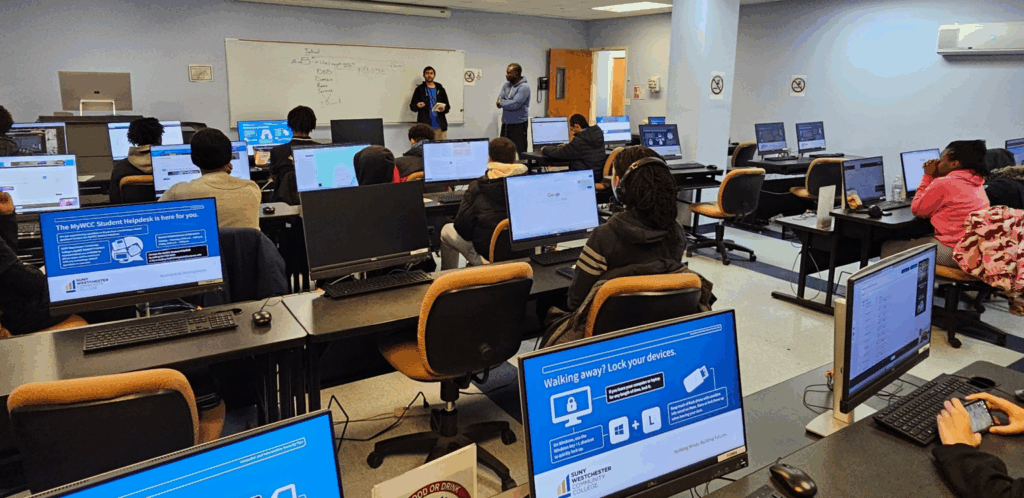
Mount Vernon is stepping into the future — and our children need to be ready. Environmental Leaders of Color (ELOC) has launched the second year of its Advanced Computer Science Program, this time with a bold new focus on Artificial Intelligence (AI).
AI isn’t science fiction anymore. It’s the driving force behind everything from self-driving cars to voice assistants, medical breakthroughs to financial tools. The jobs of tomorrow will demand AI knowledge — and the students who master these skills today will be the ones shaping, leading, and hiring in the years ahead.
Why AI Matters for Our Kids
The future of work is changing rapidly. Careers in technology, healthcare, finance, entertainment, transportation, and nearly every other field will be transformed by AI. For Black and Brown students in Westchester, access to AI education isn’t optional — it’s essential. If our children don’t learn how to build and manage these systems, they risk being left behind while others design the future.
Just recently, President Trump hosted a private dinner with the titans of Silicon Valley — the CEOs of Apple, Google, Microsoft, Nvidia, and OpenAI. It was a table where trillions of dollars in investments and the future of global technology were being discussed. But something was glaring: not a single Black person was in that room. Not because the dinner was racist, but because we don’t have enough Black leaders in tech at that level. That reality must change — and it starts with programs like this one.
📍 Location: Westchester Community College – Mount Vernon Annex, 17 S. Fifth Avenue, Mount Vernon, NY 🗓 Fall Semester: September 20 – December 13, 2025 (Saturdays, 9 am – noon) 🗓 Spring Semester: January – June 2026
Classes run on Saturday mornings, making the schedule manageable while delivering deep, hands-on training in computer science and AI.
Who Can Apply?
The program is open to high school students in grades 9–12 who want to secure their place in the future economy.
Program Highlights
Learn cutting-edge AI and computer science skills
Courses taught by industry professionals
Work on real-world projects
Build a network of mentors and peers in tech
Gain exposure to career pathways and college opportunities
Securing the Future
This isn’t just a class — it’s a pathway to power. Students will walk away with more than knowledge; they’ll leave with confidence, networks, and career direction in one of the most critical industries of the 21st century.
If we want our children to have a seat at the table in the digital economy, the time to act is now. The future is being built in AI — and this program gives our students the power to be builders, not bystanders.
When it comes to politics, slogans often carry the day. New York politicians boast of being the “film capital of the East Coast,” promising jobs, tourism, and cultural prestige. To back that promise, taxpayers are on the hook for more than $1 billion in film and TV subsidies in 2025—a figure that raises both eyebrows and fundamental questions.
The Logic Behind Subsidies
The logic offered by lawmakers is straightforward: Hollywood jobs are good jobs, and without subsidies, productions will flee to states like Georgia, Louisiana, or even Canada. To keep the cameras rolling in New York, the state dangles tax credits and incentives to producers.
But what does the math show? For every dollar taxpayers spend, the state recoups roughly 30 cents in economic return. That means for every episode of Saturday Night Live or FBI: Most Wanted subsidized with millions in credits, New Yorkers are essentially paying a premium to be entertained.
If this were a private investment, no rational investor would accept such a return. Yet in the world of politics, spending other people’s money can always be spun as “investment.”
The Outcome for Taxpayers
The outcome is simple: taxpayers shoulder the burden while major media conglomerates—companies worth billions—collect the benefits. NBC, CBS, and streaming giants like Netflix and Amazon do not need help from a working-class homeowner in the Bronx or a small business owner in Mount Vernon. Yet those are precisely the people underwriting this subsidy scheme through their tax dollars.
And here lies the most significant flaw:$1 billion in taxpayer money does not equal $1 billion in jobs created. Independent studies show the state pays upward of $65,000–$75,000 per job “created” or “supported.” By comparison, investing in infrastructure, healthcare, or small business development would generate more jobs per dollar spent and deliver longer-lasting returns to communities. Subsidies may create headlines about “tens of thousands of jobs,” but the cost per job makes this one of the most inefficient economic development programs in the state.
For Black New Yorkers, the effect of these billion-dollar subsidies is not even apparent. The state requires diversity plans from film and TV productions, but it does not release public data showing how many Black workers actually get hired. That means communities most in need of economic opportunity cannot even measure whether they are sharing in the jobs and income these programs are supposed to generate. Without transparency, taxpayers in Black neighborhoods are left footing the bill for subsidies that may benefit wealthy corporations, while having no guarantee that any of the promised jobs or contracts reach their communities.
The Broader Lesson
The lesson here is not limited to film subsidies. It’s about the political logic that prioritizes headlines over hard numbers. Elected officials measure success by how many ribbon-cuttings they can attend, not by whether taxpayers see value in return.
The outcome is predictable: more subsidies, more spending, and fewer resources left for the issues that determine whether New Yorkers can afford to stay in their own state.
Final Thought
If we want logic to guide policy, the question isn’t whether Hollywood should film in New York—it’s whether New Yorkers should be forced to pay Hollywood to do it. By that measure, the subsidies are less about job creation and more about political theater, staged at taxpayer expense.
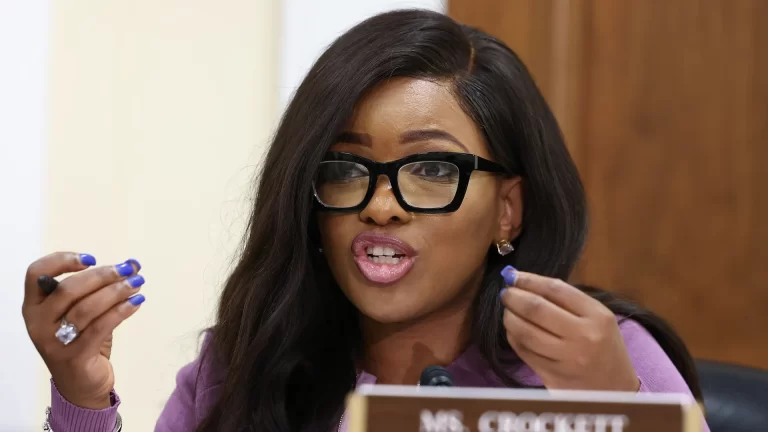
When Representative Jasmine Crockett stated that “law enforcement is there to solve crimes, not prevent them,” she may have unintentionally revealed a particular perspective—one sometimes seen among officials who speak confidently, but without always considering the broader context, historical precedent, or potential outcomes.
The difference between solving crimes and preventing them is not a matter of semantics. It is the difference between protecting citizens and abandoning them to a life of victimhood. Solving a murder does not bring the victim back. Solving a burglary does not erase the trauma of a home invasion. To suggest that law enforcement is not meant to prevent crime is to suggest that society must first accept victimization before government can act. That is dangerous thinking.
What makes Crockett’s comment even more troubling is her position as a lawyer. For someone trained in the law, she should be aware of Sir Robert Peel’s foundational Principles of Policing—the very philosophy that shaped modern law enforcement in democratic societies. Peel’s first principle was clear: “The basic mission for which the police exist is to prevent crime and disorder.” Prevention is not a secondary role—it is the very essence of policing. To deny that is to deny the foundation of public safety itself.
History and common sense shows the opposite of Crockett’s claim. When law enforcement maintains a visible presence, engages with the community, and addresses issues early, crime is deterred before it occurs. That does not mean police alone can solve all social problems, but it does mean their role is not simply to arrive after the fact and fill out reports. Every crime prevented means fewer victims, stronger communities, and less trauma for families.
We need to make something clear: Black people do not hate police. What we want is good, professional policing in our communities. And providing that is the responsibility of the people we elect into office. In too many Black communities across this nation, those leaders have failed to deliver. As someone who served 33 years in law enforcement, I have sat with families shattered by gun violence and senseless killings. I have seen the tears, the devastation, and the lives that have been forever changed. So to hear someone with a national platform—an attorney and a politician—suggest that law enforcement has no responsibility to prevent such tragedies is more than disappointing. It explains why our communities remain in their current condition: because too many of our leaders do not truly understand the reality of public safety.
The danger of an anointed mindset is that it sometimes elevates rhetoric over results. For some, crime prevention may sound “harsh”—as if it infringes on the rights of would-be criminals. However, to ordinary citizens who live with the daily reality of unsafe streets, prevention is not abstract—it is a matter of survival.
Crockett’s comments raise important concerns about how public safety is understood among some policymakers. These remarks suggest a possible focus on managing rather than preventing crime, treating violence as a challenge to be addressed rather than avoided when possible. This perspective can inadvertently leave citizens with a greater burden as the semantics of the debate are debated.
The truth is simple. Law enforcement exists to both prevent and solve crime. To reduce their role to one of solving crimes after the damage is done is to reduce citizens to collateral damage in someone else’s social experiment.
The ultimate test of any policy is not how it sounds, but what it produces. Leaders who dismiss prevention in favor of reaction are not protecting communities—they are abandoning them. And when politicians speak this way, they show us whose safety really matters to them.
This is why it’s essential for Black communities to consider candidates’ qualifications and stances on policy, rather than relying solely on shared identity or rhetoric. We need leaders who understand policy, deliver results, and genuinely address the needs of Black America. Otherwise, we risk perpetuating a cycle where words matter more than real progress.
It’s not just blue light. From “popcorn brain” to neighborhood noise, Dr. Derek Suite uncovers the hidden forces keeping Black communities awake at night–and how to fight back.
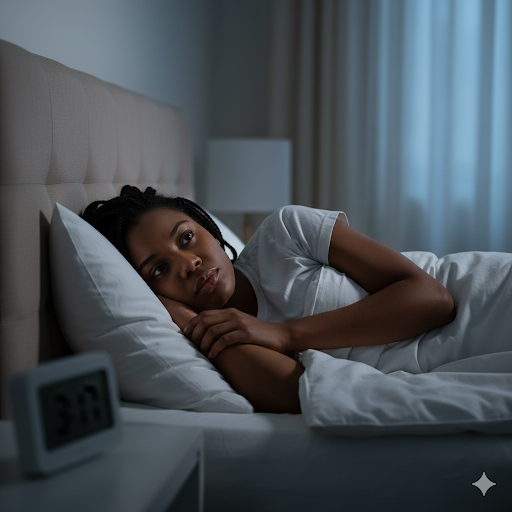
Three clients told me the same thing last week: “I’m doing everything right, but I still feel exhausted.” They had blackout curtains, consistent bedtimes, cool bedrooms -all the sleep hygiene basics. Yet they were dragging themselves through their days, wondering what they were missing.
Here’s what they didn’t know: the real sleep thieves weren’t in their bedrooms. They were hiding in their phones, their neighborhoods, and their family responsibilities, systematically sabotaging their rest in ways they never suspected.
You can spend 8 hours in bed and emerge feeling like you never slept at all when your nervous system never gets permission to power down fully. Your Phone Is Hijacking Your Sleep (And It’s Not Just Blue Light)
Everyone talks about blue light keeping you awake. That’s real, but it’s not the biggest problem. The real sleep thief? What Harvard researchers call “popcorn brain” – that feeling when your mind won’t stop jumping from one thought to another after scrolling through your feeds.
Why Doomscrolling Destroys Your Sleep: You know that cycle, right? You’re exhausted, you get in bed, then you scroll through news and social media “just for a few minutes.” But here’s what’s happening inside your body: all that negative content is pumping stress hormones through your system. Dr. Aditi Nerurkar at Harvard found that your cortisol and adrenaline can stay elevated for hours after scrolling.
Your brain treats that constant stream of crisis information like real danger. So even though you’re lying in your safe bedroom, your nervous system is still scanning for threats instead of powering down for restoration.
Here’s the crazy part: just 30 minutes of evening scrolling can cut your deep sleep by over a third. That’s the difference between waking up refreshed or feeling like you got hit by a truck.
Even Silent Phones Mess With Your Sleep: Think putting your phone on silent fixes the problem? Not quite. Research from UC San Francisco found that people who sleep with phones nearby – even in airplane mode – have higher stress hormone levels all night long. Your brain knows that phone is there, waiting to buzz with the next hit of information.
Your Neighborhood Is Stealing Your Sleep (Even When You Think You’re Used to the Noise)
You might think you’ve adapted to city sounds – the traffic, sirens, your upstairs neighbors. But your brain hasn’t adapted at all. A massive study following over 28,000 people for five years found that neighborhood noise directly messes with how well you sleep, regardless of how good your sleep habits are.
Why City Sounds Keep You Tired: Even when you think you’re sleeping through noise, your brain is actually staying partially alert all night. Traffic, construction, sirens – these unpredictable sounds keep your brain’s listening centers on guard, ready to decide if that noise is something you need to worry about.
The research shows that even small increases in nighttime noise systematically reduce your deep sleep. For people living in dense urban areas, this creates sleep debt that just keeps building up over time.
The Safety Factor No One Talks About: Here’s something that surprised me in my practice: how safe you feel in your neighborhood directly affects how deeply you sleep.
Dr. Chandra Jackson’s research found that in neighborhoods where people feel less secure, brain scans actually show more activity in threat-detection areas even during sleep.
When your environment doesn’t feel completely safe, your brain stays partially on guard all night. It can’t fully switch into restoration mode because it’s still monitoring for potential problems.
The Sleep Problem No One Talks About: When You’re Always “On Call”
If you’re caring for aging parents, listening for kids, or managing multiple family responsibilities, this one’s for you. Millions of Americans carry what I call the “caregiver sleep penalty” -and most don’t even realize it’s happening.
You know that feeling when even in your sleep, part of you is listening? Listening for your teenager to come home safely, for your parent to call out if they need help, for any family crisis that might need your immediate attention.
This isn’t just being a light sleeper. Research shows that people in chronic caregiving roles get significantly less restorative sleep even when they’re in bed for a full eight hours. Your sleep efficiency drops to levels you’d see in people with actual sleep disorders.
Here’s what’s happening: when your brain maintains that partial alertness for potential family needs, it blocks your transition from light sleep into the deep restoration phases.
You’re physically in bed, but your nervous system never gets the all-clear to fully power down.
Figure Out What’s Stealing Your Sleep
Instead of guessing, here’s how to identify your specific sleep thieves: Track Your Digital Habits: Notice the connection between evening screen time and how you feel the next day. Pay attention to whether news consumption affects how long it takes you to fall asleep.
Monitor Your Environment: Keep a simple log of noise patterns and sleep quality. Note whether you sleep better on quieter nights or when you feel safer. Recognize Your Vigilance Patterns: Identify what responsibilities require you to stay alert at night. Notice if work stress or family worries follow you into sleep.
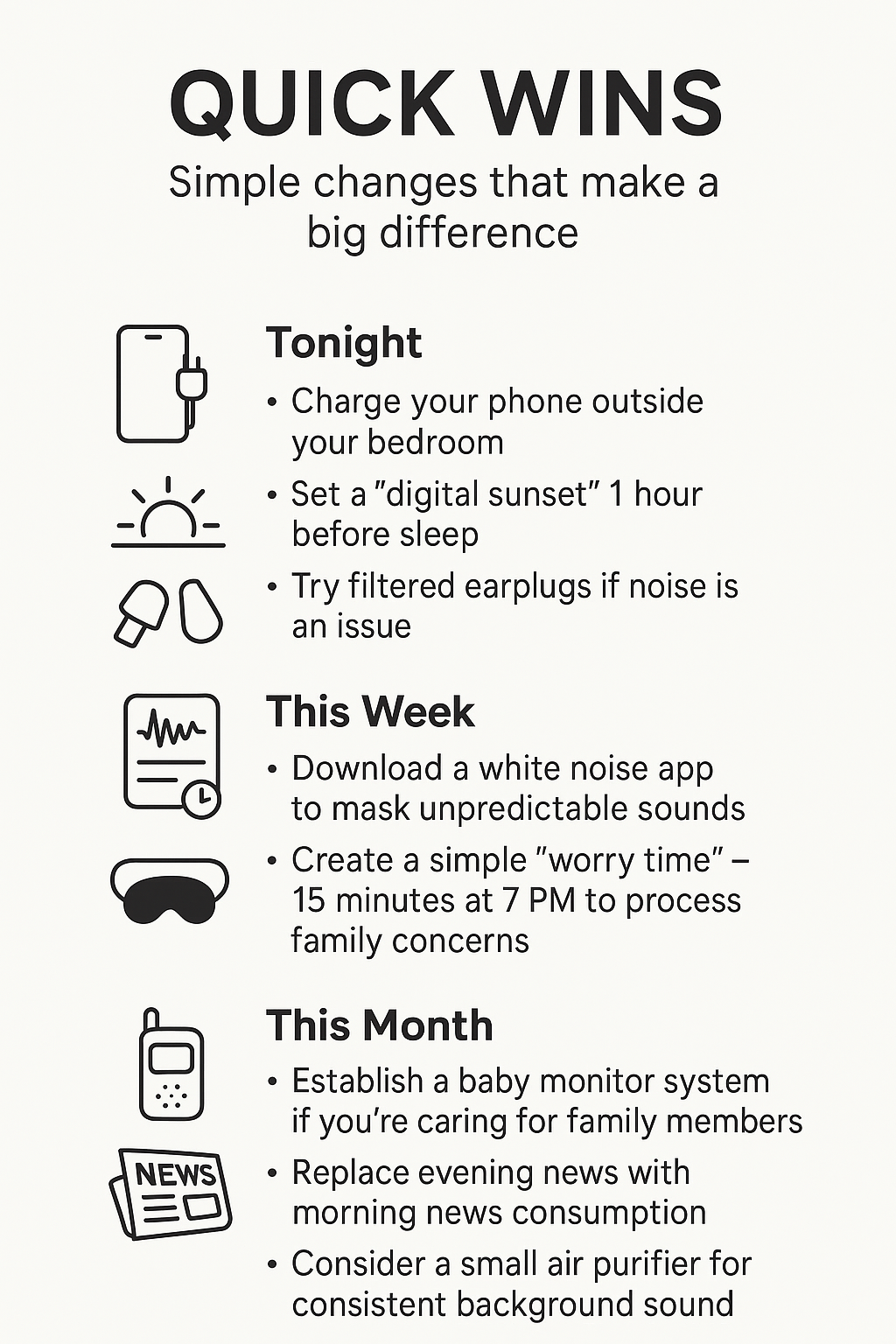
What Actually Works: Real Solutions for Real Life Based on your specific sleep disruptors, here’s what actually helps: For Digital Overwhelm: Complete device shutdown 60 to 90 minutes before sleep. Charge all devices outside your bedroom. Replace evening news with morning information gathering. Use an old-fashioned alarm clock instead of your phone.
For Environmental Chaos: White noise machines mask unpredictable sounds. Blackout curtains plus eye masks give you complete darkness control. Strategic use of filtered earplugs blocks random noise while still letting you hear true emergencies.
For Chronic Vigilance: Set up technology solutions for legitimate monitoring needs – baby monitors, medical alert systems. Create a designated “worry time” to process family concerns outside of sleep hours. Try progressive muscle relaxation to signal safety to your nervous system.
Linda’s Sleep Breakthrough Linda from White Plains, who I’ve been working with on her sleep issues, had been struggling with fragmented sleep for months despite perfect sleep hygiene. Her tracker showed she was getting only 25 minutes of deep sleep per night. Once we identified her specific disruptors – -evening news scrolling and hypervigilance about her teenage kids – everything changed.
She moved her phone charger to the kitchen, installed filtered earplugs that let her hear real emergencies but blocked street noise, and created a simple check-in system with her teens. Within three weeks, her deep sleep doubled.
“I didn’t realize how many things were quietly stealing my sleep,” Linda told me. “Now I actually wake up feeling rested for the first time in years.”
When to Get Professional Help Some sleep problems need more than lifestyle changes. See a healthcare provider if you experience persistent sleep disruption despite addressing environmental factors, loud snoring with breathing pauses, excessive daytime sleepiness that affects work or safety, or sleep problems with mood changes.
Critical point: Never accept dismissive responses about sleep concerns. Sleep disruption has measurable causes and evidence-based treatments. Quality sleep is a medical necessity, not a luxury.
Your Sleep Defense Plan The most effective approach treats sleep protection like an active defense system. Your sleep quality depends on identifying and neutralizing the specific forces undermining your restoration.
The hidden sleep thieves – digital overstimulation, environmental chaos, and chronic vigilance – operate predictably. Once you identify them, they can be systematically defeated with targeted strategies that restore your nervous system’s ability to fully power down and rebuild.
Quality sleep isn’t about creating perfect conditions. It’s about creating enough safety and consistency for your brain to trust that deep restoration is possible.
Derek H. Suite, M.D., is a board-certified psychiatrist, a Columbia University faculty member, and the founder of Full Circle Health, a comprehensive mental health practice serving the tri-state area since 1999. For questions about this monthly column, please email info@fullcirclehealthny.com
Next in the Series: When Sleep Goes Wrong: Recognizing and Treating Common Sleep Disorders”- Understanding when disruption becomes disorder and how to get proper help.
Medical Disclaimer: This article is for educational purposes only and does not replace medical consultation. Always consult your healthcare provider if you have concerns about sleep disorders or persistent sleep disruption.
When President Trump signed the One Big Beautiful Bill Act (OBBB) on July 4, 2025, it was framed as fiscal reform. But for millions of families—especially Black and Brown households—it forces a devastating choice: buy school supplies or put food on the table.
The law reshapes the Supplemental Nutrition Assistance Program (SNAP), extending work requirements for able-bodied adults up to age 64, narrowing caregiver exemptions to only those with children under 14, and removing protections for homeless individuals, veterans, and youth aging out of foster care (National Agricultural Law Center, 2025). For communities of color—already experiencing food insecurity at nearly double the rate of white households (USDA, 2024)—these cuts are a direct hit.
The timing could not be worse. More than 300,000 Black women have left or been forced out of the workforce this year, the result of federal layoffs, DEI rollbacks, and persistent inequities (Houston Chronicle, 2025; The Week, 2025). These women are the backbone of many households. Reducing SNAP access while unemployment among Black women rises ensures that hunger will spread across entire families.
Consider the ripple effect: Black veterans facing higher unemployment, Latino youth leaving foster care, and unhoused individuals of color—all denied vital food support. Grandparents raising teenagers, a reality in many Black and Brown families, are now excluded simply because their dependents are older than 13. Instead of strengthening families, the law punishes them for surviving.
To make matters worse, OBBB slashes state flexibility. Previously, states could waive SNAP time limits when jobs were scarce. Now, only areas with unemployment above 10 percent qualify (Investopedia, 2025). That ignores the reality of underemployment, unstable hours, and workplace discrimination that make stable jobs elusive for Black and Latino workers. Meanwhile, Alaska and Hawaii receive special exemptions—a carveout that sends a cruel message to urban Black and Brown communities on the mainland: you’re on your own.
The fallout is predictable. Food banks in Newark, Detroit, Houston, and Los Angeles will strain under rising demand. Parents will face impossible decisions—pencils or pasta, notebooks or nourishment. This isn’t reform. It’s hunger by design.
Congress and the administration must act. Restore exemptions for veterans, foster youth, and the homeless. Expand caregiver protections to reflect family realities. Return waiver flexibility to states. And require federal agencies to publish race-disaggregated data on who loses access to food. Without these steps, the OBBB will be remembered not as fiscal discipline, but as a law that starved America’s most vulnerable communities.
Food is not optional—it is the foundation for learning, labor, and dignity. Until policymakers grasp that, Black and Brown families will continue to face an unconscionable question no parent should have to answer: school supplies or food.
Eric Adams has devoted decades to public service — from his years as an NYPD officer fighting for reform inside the department, to his time as Brooklyn Borough President, and now as mayor of the nation’s largest city. That long record of service deserves respect. While it is important to appreciate his contributions and intent to address the city’s challenges, respect for a man’s past cannot blind us to the reality of his present. With poll numbers hovering between 7 and 10 percent and a plague of alleged corruption hanging over his administration, Adams’s decision to stay in the 2025 mayoral race raises tough questions about leadership, accountability, and the future of New York City.
Polls Don’t Lie
Campaigns live or die on momentum, and the numbers show Adams’s support has collapsed. In 2021, he was swept into office as the candidate of experience and order. Today, he trails badly behind Zohran Mamdani, Andrew Cuomo, and even Curtis Sliwa. For a city of eight million people, a base of single-digit support is not a foundation for victory — it’s a warning sign. However, Adams’s ongoing efforts demonstrate his continued commitment to public service. Combine that with the drumbeat of investigations and allegations, and it’s no wonder voters are signaling they are ready to move on.
Between Service and Scandal
No one can deny Adams’s resilience. His life story — a working-class kid from Queens rising through the ranks to the mayoralty — is inspiring. Resilience has enabled him to focus on reform and city improvement despite being surrounded by distractions. Yet, resilience cannot erase the distractions created by a steady stream of alleged misconduct tied to his administration. What should have been a term focused on reform and results has too often been consumed by press conferences denying wrongdoing. Pushing forward in a race with little path to success risks turning a legacy of service into a cautionary tale of how scandal overshadows substance.
A Plague of Alleged Corruption
A cloud of alleged corruption has taken Adams off his path and turned his mayoralty into a distraction. Despite these challenges, Adams has continued to work on key city issues. Instead of steady leadership, headlines about investigations and scandals have overshadowed policy and progress. Meanwhile, the city still faces urgent challenges: housing affordability, crime, migrant integration, and budget shortfalls. The people who once placed their trust in Adams deserve a mayor fully focused on governance, not one consumed by defending himself and a struggling campaign.
The Party Problem
Adams’s decline is not isolated; it reflects the New York Democratic Party’s historical treatment of strong Black leaders. Since entering the Senate, Adams was seen as an outsider, never fully supported by the party. His administration’s issues are similar to those of past mayors. The difference is that others received political cover, while Adams faced harsher standards and less support. This hostility reflects party politics as much as performance.
A Final Word
Eric Adams has earned a place in New York’s public service history. But history will also judge whether he knew when to step aside. Leadership means knowing which battles to fight—and when stepping away best serves those you vowed to protect.
If Adams wants his legacy defined by service instead of scandal and party rejection, he needs to consider not just what he could lose, but what the city could gain by moving forward. Ultimately, his long-standing commitment to public service should remain a central part of how his leadership is remembered.
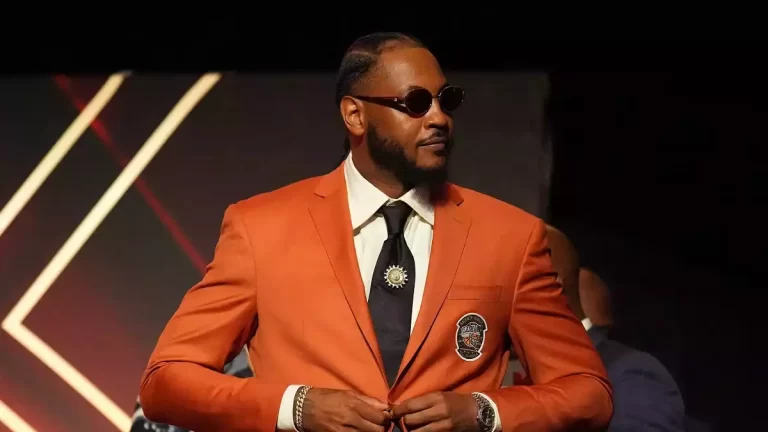
SPRINGFIELD, MA — In a moment destined for headlines across Gotham and beyond, Carmelo Anthony, New York City’s own NBA icon, has officially been inducted into the Naismith Memorial Basketball Hall of Fame as part of the Class of 2025.
The announcement of Anthony’s long-awaited honor came earlier at the NCAA Final Four in San Antonio, a fitting venue considering his storied collegiate legacy with Syracuse University—including a national championship and Most Outstanding Player award in 2003.
A Career Defined by Scoring, Grit, and Global Impact
Anthony’s 19-season NBA journey cemented him as one of the most prolific scorers in league history. He amassed an impressive 28,289 points, boasting a career average of 22.5 points per game, and earned 10 All-Star selections along the way.
New Yorkers remember Anthony best for his electric run with the Knicks—particularly the night he lit up Madison Square Garden with a 62-point game, setting team and venue scoring records. His arrival in the city in 2011 injected new life into the franchise, and he became an enduring fan favorite.
Internationally, Anthony further burnished his legacy by earning three Olympic gold medals with Team USA and being part of the 2008 “Redeem Team,” which revitalized American basketball on the global stage.
Though he never captured an NBA championship, the sum of Anthony’s achievements—college glory, Olympic dominance, and scoring prowess—ensured a first-ballot induction into the Hall.
A Family Moment: Passing the Torch to the Next Generation
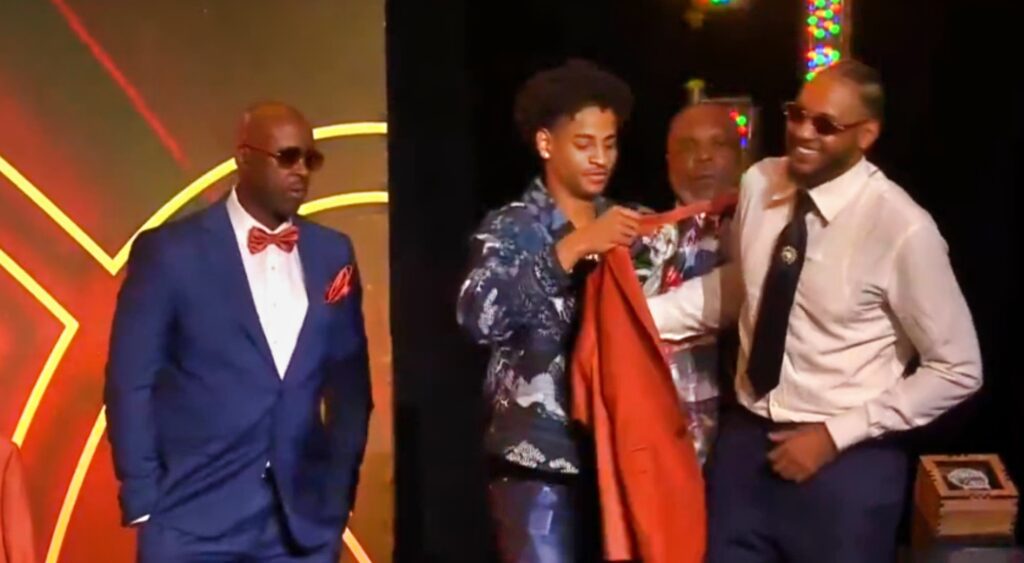
The emotion of the occasion went beyond Anthony’s own legacy. His son, Kiyan Anthony—a rising basketball talent committed to Syracuse—stepped on stage to present his father with the Hall of Fame jacket and ring. In a heartfelt tribute, Kiyan spoke of his father’s work ethic, legacy, and the deep bond that now intertwines them through sport.
Joining Basketball’s Elite Class of 2025
Carmelo Anthony’s enshrinement comes alongside an impressive cohort of inductees including Hall of Famers Dwight Howard, Sue Bird, Maya Moore, Sylvia Fowles, Coach Billy Donovan, and the 2008 U.S. Olympic “Redeem Team.” The ceremony will be held over September 5–6, 2025, at Mohegan Sun, culminating at the Hall in Springfield, Massachusetts.
Why the Enshrinement Matters
Homegrown Hero: Born in Brooklyn and raised in Baltimore before rising to stardom at Syracuse, Anthony’s career has come full circle—earning enshrinement that resonates with fans across New York and beyond.
Scoring Legend: As a scoring machine with clutch moments and memorable performances, Anthony’s induction acknowledges an illustrious offensive legacy that spanned high school courts to global competition.
Cultural Impact: His induction cements a narrative about basketball’s global reach and the influence of Olympic success—and underscores the Hall’s recognition of international contributions in shaping the game.