Welcome to Elevation Nation with Tasha Young, where insight meets elevation. In this episode, Tasha dives deep into the symbolism, cultural undertones, and spiritual layers hidden within Ryan Coogler’s provocative new film, Sinners, starring Michael B. Jordan. This isn’t just another movie breakdown—Tasha unpacks the deeper narrative around duality, judgment, generational trauma, and redemption that Sinners explores through its visually gripping and emotionally charged storytelling. What is Coogler really saying about society, masculinity, and morality? And why is this film resonating so powerfully with audiences—especially in the Black community? Whether you’re a film buff, a spiritual seeker, or just curious about what’s beneath the surface, this episode will leave you thinking—and questioning.
Mount Vernon Resident Sues to Halt Library Bond Over Alleged Illegal Vote
Mount Vernon Resident Challenges Legality of Library Bond Resolution in Court
Mount Vernon, NY – May 7, 2025 — A local taxpayer has taken legal action on Monday, May 5th, to stop a $1.7 million bond referendum tied to a controversial real estate acquisition of the childhood home of author E.B. White, who wrote “Charlotte’s Web” and other classic children’s books, located at 101 Summit Ave, by the Mount Vernon Public Library, claiming the authorizing resolution was adopted in violation of state law.
Axel Ebermann, a homeowner and taxpayer of Mount Vernon, filed a verified petition (see full document below) in the New York State Supreme Court, Westchester County, under Article 78 of the Civil Practice Law and Rules (CPLR). Acting pro se, Ebermann alleges that the Mount Vernon Public Library’s Board of Trustees approved Resolution 099-24 without a lawful quorum during its January 7, 2025, meeting.
Mount Vernon Resident Challenges Legality of Library Bond Resolution in Court by BLACK WESTCHESTER MAGAZINE on Scribd
According to the petition, the resolution authorizes the acquisition of property at 101 Summit Avenue, Mount Vernon, and would be funded by a $1.7 million bond referendum added to the Mount Vernon City School District’s May 2025 budget ballot. However, Ebermann argues that only two trustees were physically present at the meeting, with a third joining remotely via Zoom. This, he claims, violated state law requiring a minimum physical quorum of three members for a public body to take official action.
Efforts to cure the procedural defect at a later meeting on January 15, 2025, were unsuccessful, with no valid vote taken since, according to Ebermann.
The petition alleges that despite being aware of the flawed vote, the Library and the School District moved forward with the referendum. The School District’s decision to proceed appears to have resolved a separate lawsuit the Library filed against it in April 2025, which demanded the referendum be placed on the budget ballot. In that lawsuit, the Library asserted it had “done all that is legally required” to initiate the bond vote.
Ebermann disagrees, arguing that the procedural violations render the resolution invalid and that moving forward with the referendum without a lawful vote misuses public funds and undermines transparency. His petition seeks a court order to annul Resolution 099-24, halt any related actions, and award legal costs under Public Officers Law § 107(2).
“The law requires strict adherence to open meeting procedures for a reason,” Ebermann said in his filing. “Taxpayers should not bear the burden of decisions made in violation of those laws.”
The case highlights ongoing concerns about governance and transparency in the City of Mount Vernon’s local institutions. No hearing date has been announced, and the respondents have yet to file a formal response.
We reached out to Peter E. Brill of the Brill Legal Group, who represented the Mount Vernon Public Library Trustees in their lawsuit against the Mount Vernon City School District last month. If he responds, we will update the article.
Stay tuned to Black Westchester for more on this developing story!
REAL ID Deadline Hits: Travel Delays, Technical Glitches, and Concerns for Black Americans
Today marks the full enforcement of the REAL ID Act, a federal law requiring Americans to present a REAL ID-compliant driver’s license or approved alternative documentation to board domestic flights and access certain federal buildings. While intended as a post-9/11 security upgrade, the rollout has triggered widespread confusion, delays, and concerns, particularly for Black Americans who historically face greater challenges in accessing government documentation.
According to the TSA, travelers without a REAL ID will still be allowed to fly but will be subjected to additional screening. This may lead to longer wait times, missed flights, and frustration at airport security. TSA has urged passengers to arrive earlier than usual to accommodate these added procedures.
The technical side of the rollout hasn’t gone smoothly either. In states like New Hampshire, TSA scanners have failed to read newly issued REAL IDs, forcing agents to manually verify travelers’ documents. Reports from The US Sun and The Verge note delays as long as 40 minutes per person due to equipment malfunctions—adding another layer of dysfunction to an already strained system.

Alternative Forms of Identification
For those still without a REAL ID, options remain. Valid U.S. passports, military IDs, and Enhanced Driver’s Licenses (EDLs) from states such as Michigan, New York, Minnesota, Vermont, and Washington are still accepted for domestic air travel and entry into federal facilities.
Disproportionate Impact on Black Americans
Beneath the surface of administrative hiccups lies a more systemic concern. Black Americans are more likely to be affected by the REAL ID requirements due to historical and structural inequities. For example, older Black citizens born at home during segregation—especially in the South—often lack official birth certificates, a core requirement for obtaining a REAL ID.
Janette Gantt Palmer, a 76-year-old retired postal worker from Florida, was denied a REAL ID because her birth was never officially recorded. Despite decades of government employment and holding previous licenses, she is now effectively locked out of the system.
Economic disparities and limited access to transportation also play a role. According to Capital B News, 21% of Black adults do not possess a valid driver’s license compared to just 8% of white adults. Organizations like VoteRiders and Black Voters Matter have sounded the alarm, warning that REAL ID could functionally restrict mobility, civic access, and employment for many in Black communities.
Historians also point out that government-issued identification systems have long been tools of racial and social control in America. From passbooks during slavery to Jim Crow-era voting laws, ID requirements have often been weaponized to monitor and restrict the movement of Black people.
What I Don’t Like About the Debate
What I don’t like about the current debate is how white liberals often frame Black people as helpless. Yes, there are racial barriers and real bureaucratic challenges—especially for older citizens or those born under discriminatory systems. But that doesn’t mean we’re incapable. The narrative that Black folks can’t manage paperwork, appointments, or documentation without external hand-holding is just another form of paternalism. We need real solutions, not saviorism. What we require is equity of access, accountability from the system, and the assumption that Black Americans are fully capable when given fair and functional opportunity.
What Sticking to the Basics Can Teach You About Youth Health
When people think about health, they often imagine long routines, complicated food plans, or keeping
up with the latest advice. But doing the basics (again and again) can teach you more than following a
long list of tips. It’s not always about adding new habits or doing more. Sometimes, it’s about seeing
what happens when you do less but stay consistent.
Basic habits bring things into focus. They show how your body responds without all the extras. You start
to notice how you feel after meals, how movement fits into your day, and what routines actually help.
This kind of clarity doesn’t come from chasing perfect results. It shows up when things are simple and
repeatable.
Simple Meals Work Just Fine
Eating the same few meals for a full week might sound dull, but it gives you space to notice what food
actually does for you. You’re not trying to cook something new every day. You’re not looking up recipes
or wondering if a certain food is “better.” Instead, you’re sticking with meals you know and like.
This kind of routine also gives you a good moment to add small things that support your day. For example, if you’re having the same oatmeal with fruit each morning, it’s easy to remember to take a vitamin D capsule right after. Or maybe you keep your magnesium supplement next to your dinner plate. It’s not there to make up for anything or cover a gap—it just fits into the pattern. When it comes to supplements, turning to brands like USANA Health Sciences can support your wellness routine.
Water Starts the Day
Drinking water first thing in the morning doesn’t need a big reason behind it. It can just be something
you do to start your day. You don’t need to track the ounces or count how many glasses you’ve had. You
just wake up, walk into the kitchen, and drink a glass of water. Doing the same thing every morning helps you get into a rhythm without planning too much. Over time,
it becomes something you notice when it’s missing.
No Screens While Eating
Leaving your phone out of the kitchen doesn’t sound like a big move, but it can show a lot about how
and why you eat. Without a screen in front of you, you’re not scrolling or watching something while you
eat. You’re just eating. You might start to notice how fast or slow you chew, how full you feel, or even
what the food tastes like. Those details get lost when your attention is somewhere else.
This shift isn’t about doing it “the right way.” When you take the screen away, you might realize how
often food becomes background noise for whatever’s happening on your phone. Removing that habit
can help reset your connection to eating without needing a diet plan or new rule.
Wear What Moves with You
Wearing the same comfortable clothes for movement takes away a lot of pressure. You’re not dressing
for a gym photo, a class, or anyone’s approval. You’re wearing what helps you move—maybe it’s an old
t-shirt and joggers, maybe it’s whatever you were already wearing around the house. That shift in focus
helps you stop thinking about how movement looks and start focusing on how it fits into your day.
When you wear the same clothes for walking, stretching, or just doing a few chores, movement
becomes part of regular life and not something you dress up for.
Ditch the Data for a Bit
Using an old-school notebook or nothing at all to track habits can change how you see your daily
routine. Without apps and reminders telling you what to do, you rely more on what you actually feel.
You’re not checking stats. You’re paying attention to whether something feels worth repeating.
This kind of break from numbers gives you space to figure out what matters to you. It keeps things real
and grounded, especially when everything else in your life already feels tracked or timed.
Boring Meals Are a Wake-Up Call
Eating the same three meals every day might sound repetitive, but it shows you something interesting.
You start to notice how much of your food choices come from ads, habits, or outside influences. When
meals stop changing, your cravings start to quiet down, or they get louder. Either way, you see what’s
actually driving them.
You’re not giving anything up. You’re just stepping out of all the outside noise for a bit. That short pause
helps you reset and recognize what you actually enjoy, not what’s been sold to you. Once you’ve done
it, even for a few days, your decisions feel more like yours.
Try Someone Else’s Routine
Swapping routines with a friend or partner for just one day sounds small, but it can highlight what’s actually working in your current setup. Maybe their plan includes a morning walk, or they skip snacking in the afternoon. You get to try those changes without committing to them in the long term.
This isn’t about comparison. It’s more about using someone else’s routine to look at yours with fresh
eyes. Some habits you try might stick. Others might feel off. But the point is to shake up the usual
rhythm and see what still makes sense when everything shifts slightly.
Do the Bare Minimum
Stripping a habit down to its simplest version helps you see what’s useful without needing it to be
impressive. Instead of a 30-minute workout, try five minutes of movement. Instead of a full food plan,
just prep one meal. Doing less on purpose teaches you what parts actually matter.
When you stop trying to make every habit look complete, you start to focus on what you’re actually
doing. That five minutes might not look like much, but it’s still movement. That one meal might be basic,
but it’s still homemade. These small versions show you what’s worth keeping without sacrificing extra
effort.
Keep It Low-Effort
Choosing to keep your health habits low-effort isn’t lazy, but it’s practical. Let’s say you’re making a sandwich instead of a full recipe, walking around the block instead of hitting the gym, and going to bed at a regular hour without trying to “perfect” your routine. Such choices let you stick with things longer.
You don’t need a complicated plan to feel steady. Low effort doesn’t mean low quality. The more your habits feel like something you can do on a regular day, the more likely they are to keep showing up.
When you drop the pressure to do everything right, the basics show you what actually works. It’s not
about adding more but seeing what sticks when things are simple. That’s where the real learning
happens. It’s not fancy, but it’s honest. And sometimes, honesty is all you need.
Trump Announces 2027 NFL Draft in D.C., Champions Stadium Revival and National Unity Through Football
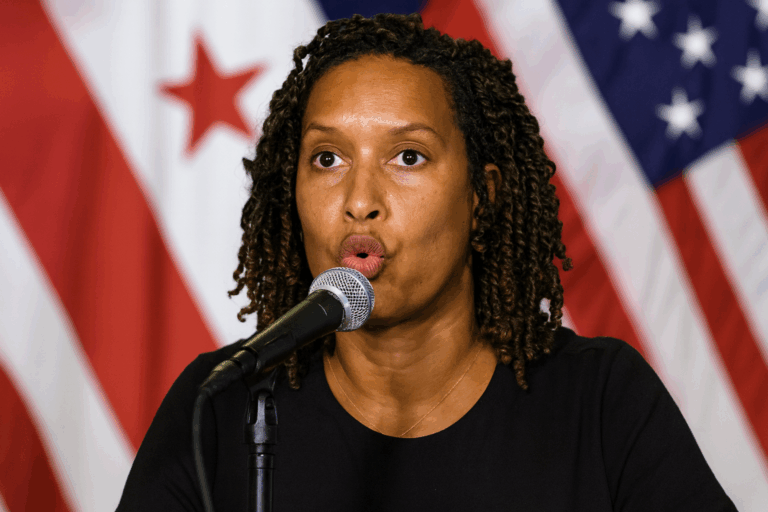
In a sweeping announcement from the White House, former President Donald Trump revealed that Washington, D.C., will host the 2027 NFL Draft — marking a historic first for the nation’s capital and igniting plans for a massive football revival in the city’s heart. Standing alongside NFL Commissioner Roger Goodell, Washington Commanders owner Josh Harris, and D.C. Mayor Muriel Bowser, Trump hailed the event as a win for sports fans and a powerful symbol of American renewal and unity.
“This is a very big deal,” Trump began. “The 2027 NFL Draft will be held on the National Mall — and I don’t think there’s ever been anything like that. It’s going to be beautiful, something nobody else will ever duplicate.” He predicted the three-day event could draw more than one million visitors, generating significant economic activity for local hotels, restaurants, and small businesses.
The announcement also highlighted a broader partnership between city officials and the Commanders to revive professional football in the District. A new 65,000-seat stadium is set to be built on the site of the long-dormant RFK Stadium, a project Trump enthusiastically praised. “It sat there for years. And I said, ‘They’re not talking about the best site — that’s the best site there is.’”
NFL Commissioner Goodell echoed Trump’s excitement, noting that previous drafts have drawn hundreds of thousands of fans. “In Green Bay we had over 600,000. In Detroit, almost 800,000. In D.C., we expect over a million,” Goodell said. “This will not just be an event — it will show the world how far the nation’s capital has come.”
Mayor Bowser, visibly energized, described the draft and stadium as economic game-changers. “Sports have helped us transform neighborhoods,” she said. “This draft will fill hotel rooms, support our restaurants, and bring Americans from all 50 states to experience our beautiful city.”
The press event, while focused on the NFL, served as a platform for Trump to connect broader themes: urban renewal, public safety, job creation, and national pride. He pointed to declining crime in D.C., improved relations with city leadership, and an ongoing commitment to make the capital “safe, clean, and beautiful.”
Beyond sports, Trump fielded questions on a variety of topics, including the film industry, immigration, and foreign policy. He reaffirmed his plan to incentivize self-deportation for undocumented immigrants and hinted at tariffs on foreign-subsidized film productions. He also revisited his opposition to the Nord Stream pipeline and emphasized the importance of law and order, teasing a potential revival of Alcatraz as a symbol of strength.
Closing the event, Commanders owner Josh Harris presented Trump with a custom “Commander” jersey, calling him “the ultimate Commander.” Trump, with a nod to his real estate past, concluded, “This is the greatest site anywhere in the world for something like this… and we’ll try and make the dream come true.”
From the gridiron to geopolitics, Trump used the moment to stake a claim: that football, like America, is best when bold, unapologetic, and built on home turf.
Sinners Raised the Stakes—Now Marvel’s Blade May Never Rise

When Ryan Coogler’s Sinners hit theaters, it didn’t just land—it detonated. What some expected to be another genre experiment turned into a cinematic phenomenon. Starring Michael B. Jordan in dual roles as morally complex twin brothers, the film offered a gripping spiritual thriller draped in Southern Gothic aesthetics and underlined by themes of judgment, legacy, and internal war. But the brilliance of Sinners didn’t stop at box office numbers or critical acclaim—it exposed something deeper. It laid bare just how far behind Marvel’s long-delayed Blade reboot really is.
More than five years after announcing Mahershala Ali as the new Blade, Marvel has yet to deliver on its promise. A project once met with applause has now turned into a case study in developmental mismanagement. In contrast, Coogler’s Sinners arrived fully formed, timely, and devastatingly effective. It didn’t just entertain—it moved people. It sparked dialogue in churches, barbershops, classrooms, and among the very audience Marvel claims to understand. And that’s the problem: while Sinners connected on every level, Blade now looks like an outdated promise from a studio struggling to understand its present, let alone shape its future.
The original Blade film, led by Wesley Snipes, was a cultural milestone. It predated the Marvel Cinematic Universe and proved that a Black superhero could command the box office. But that was 1998. The terrain has shifted. Audiences have matured. Cultural appetites have changed. What Blade once represented—a rarity in a sea of white-led comic book films—is no longer enough to carry it forward. Representation alone doesn’t satisfy. People want depth. They want complexity. They want the kind of storytelling Sinners delivered without apology.
Timing, too, has turned against Marvel. The repeated delays and scrapped scripts have killed momentum. What should have been a triumphant return for a beloved character has become a cautionary tale. Coogler filled the void left by Marvel’s indecision. And he did it with a film that offered more than cool weapons and special effects. Sinners is both myth and mirror. It confronts the human condition. It delves into duality, spiritual trauma, and generational reckoning—territory Marvel rarely dares to enter. The twins Jordan portrays are not heroes or villains. They are reflections. Wounded, calculating, righteous, flawed. They are the embodiment of a higher-tier narrative, one that transcends capes and catches the conscience.
While Marvel busies itself with interconnected timelines and cameo reveals, Sinners chooses introspection. It gives audiences a single, focused story—no multiverse distractions, no sequel bait, no franchise bloat. That kind of self-contained power resonates more than any Easter egg could. And in an age of MCU fatigue, where even devoted fans admit to feeling overwhelmed and underwhelmed simultaneously, Sinners reminded us what cinema looks like when it’s unafraid to stand alone.
The cultural credibility that Coogler brings to the table is another weight Marvel cannot match. With Fruitvale Station, Creed, and Black Panther, Coogler has earned a trust that’s rare in Hollywood. He tells Black stories without diluting them. His characters are not written for a general audience—they are written truthfully, and the world adjusts. Marvel, for all its resources, has not earned that same trust. Its approach to Black characters often feels engineered by committee. It lacks the intimacy, the urgency, the purpose.
There’s also the undeniable reality that Sinners delivered something Mahershala Ali may now struggle to match. That’s no slight against his talent—he’s a phenomenal actor. But Michael B. Jordan’s performance as the two brothers in Sinners is a cinematic statement. It’s not just a dual role—it’s a psychological ballet. It’s a testament to the evolution of Black male characters in film: layered, broken, authoritative, vulnerable. In comparison, Blade’s stoic vampire hunter risks looking one-dimensional. Without radical reinvention, Marvel’s Blade will appear less like a savior and more like a relic.
And then there’s the bigger issue: Black cinema has moved on. It’s no longer waiting for permission. It’s no longer content with seeing itself squeezed into franchises designed decades ago by people who didn’t imagine us at all. Sinners is original. It is authored, not manufactured. That distinction matters. Because while Blade hunts fictional vampires, Sinnersslays the real ones—shame, grief, rage, guilt. That’s the kind of catharsis people pay to experience.
So can Marvel still salvage Blade? Perhaps. But the cultural moment has shifted. The bar has been raised. And that bar now wears a red fedora and carries the name Sinners. Marvel once taught audiences how to see superheroes. Now it may have to learn how to tell a story again—from Coogler.
And as far as the audience goes, we’ve already chosen. We don’t need another reboot. We need another revelation.
They Fly to El Salvador But Ignore Black Boys Dying at Home
On a recent segment of CNN’s NewsNight, political commentator Shermichael Singleton did something rare in mainstream media: he spoke plainly and unapologetically about facts the Democratic establishment would rather you ignore. At the center of the debate was Abrao Garcia, a man with alleged ties to the transnational gang MS-13, whose deportation under Donald Trump has become a flashpoint for liberal outrage. Singleton reminded the panel that a judge ruled in 2019 that Garcia had credible gang affiliations — based on evidence from a Prince George’s County gang unit — and yet Democrats are fighting tooth and nail to bring him back.
What’s more disturbing than the political acrobatics required to defend such a position is the moral hypocrisy it reveals. As members of Congress fly to El Salvador to plead the case of a man tied to a violent organization, they remain silent on the ongoing injustices happening in Black communities right here in America. You won’t find them in the Bronx standing beside Andre Brown, a Black man whose 1999 murder conviction was recently vacated after he served 23 years in prison. Instead of letting justice take its course, Democratic Bronx District Attorney Darcel Clark is now appealing that decision, fighting to send this man back to prison.
Let that sink in: the same political party that marshals national resources to defend an alleged MS-13 affiliate, a judge ruled in 2019 that Garcia had credible gang affiliations, is actively working to re-convict a Black man whose case was vacated by a Judge. Where is the outrage? Where are the same voices shouting about due process and fairness?
And what about Sincere Jazmin, a 14-year-old boy gunned down in broad daylight in Queens? No press conference. No national campaign. His death, like the lives of too many Black boys, was quietly buried — not just in the ground, but in the conscience of the political class that claims to fight for justice.
Read: Where is the Outrage When a Black Child Dies?
Ana Navarro, posturing as the conscience of the panel, tried to reframe the conversation by invoking slavery, saying undocumented immigrants “are not the same as Black people who were brought here against our will.” She’s right — they’re not. But if Navarro truly cared about the legacy of slavery, she wouldn’t use it to deflect scrutiny from a criminal case while ignoring modern-day injustice faced by the descendants of enslaved people.
The selective outrage exposes a political machine more invested in optics than outcomes. It’s easy to fly to El Salvador and show compassion. It’s harder to stand in the South Bronx and explain why a man who served 23 years in prison is being targeted by a Democrat DA for re-prosecution. One is performative. The other is justice.
Shermichael Singleton spoke truth on that panel. He didn’t rely on feelings — he relied on court records, law enforcement files, and legal history. And still, he was talked over, minimized, and dismissed. Because truth has no place in a political culture built on selective compassion.
This is not about denying rights to immigrants. It’s about demanding that Black Americans — especially our boys and men — finally receive the equal protection of the law they were promised after emancipation but have never fully received.
If Democrats can organize resources, media campaigns, and diplomatic visits for a deportation case, they can certainly find the time to speak up for Andre Brown, for Sincere Jazmin, and for every other Black family still waiting for the system to work for them.
But they don’t. And that silence? That’s not just hypocrisy. It’s betrayal.
PBP Radio – Sunday, May 4, 2025 – Beyond Reasonable Doubt” Where Justice, Race, And Power Collide
Welcome to Black Westchester Presents: People Before Politics — where we tackle the stories that matter before the spin. In this powerful episode, Damon K. Jones and AJ Woodson are joined by two dynamic guests: Jonathan Newton, a defense attorney and activist, and Sam Antar, a former white-collar criminal turned financial fraud investigator.
Together, they unpack three explosive legal cases that are dominating headlines and shaking public trust. We take a hard look at the overturned conviction of Andre Brown in the Bronx, dissect the growing legal firestorm surrounding Sean “Diddy” Combs, and examine the controversial actions and motivations behind New York Attorney General Letitia James. Are these moves driven by justice—or political agenda? Are we witnessing accountability—or carefully crafted narratives?
With sharp legal insight from Newton and forensic financial analysis from Antar, this episode pulls back the curtain on how power, prosecution, and public perception collide. This isn’t about gossip—it’s about the truth behind the courtroom doors and the broader implications for Black America.
People Before Politics Radio, Giving You Real Talk For The Community Since 2014!
Black Westchester presents the People Before Politics Radio Show every Sunday night, 6-8 PM, simulcasting live on Facebook, X (formerly Twitter), LinkedIn, Instagram, and YouTube, and archived on BlackWestchester.com. Giving you that Real Talk For The Community since 2014.
To support the Black Westchester and the People Before Politics Radio Show, which provides the News With The Black Point Of view and gives you the real talk for the community for free, make a donation via PayPal. In the words of Ray Charles, “One of these days, and it [might not be] long, You’re gonna look for [us], and [we’ll] be gone.” Support independent, Black-free media!
Subscribe, hit the notification bell, and join the conversation this Sunday. At Black Westchester, we always put People Before Politics!
As always, you can follow us on Facebook, Instagram, LinkedIn, and YouTube
Contributions and Donations can be made via PayPal.

Black Marriage: The Forgotten Key to Economic Power
Title: Black Marriage: The Forgotten Key to Economic Power
In the ongoing national discourse on closing the racial wealth gap, we hear endless chatter about reparations, diversity initiatives, and government programs. Yet somehow, one of the most basic building blocks of economic success—marriage—has been conveniently left out of the conversation. This omission is not accidental. It reflects a broader trend of political rhetoric that favors symbolism over substance and grievance over responsibility.
Let us consider the facts. According to 2023 U.S. Census and American Community Survey data compiled by BlackDemographics.com and Wirepoints.org, Black married-couple families had a median household income of $94,493. In stark contrast, Black single mothers earned just $34,544, and unmarried Black men averaged around $31,000 annually. That’s not a marginal difference—it’s a structural gap with lifelong consequences. Income influences where a family lives, whether they can purchase a home, how much they save, and what opportunities they pass to their children.

But don’t expect these facts to be emphasized in panel discussions on systemic racism. Why? Because they shift the focus from institutional blame to personal choices—and that is political kryptonite in today’s culture of victimhood.
Those who profit from perpetual outrage have no interest in promoting stable Black families. Politicians need voters who are dependent on programs, not independent through strong households. Media personalities need clickbait narratives of oppression, not the quiet strength of married Black parents raising children with structure, values, and long-term planning.
Historically, the Black community understood this. In the 1960s, nearly 80% of Black children were born to married parents. Today, over 70% are born outside of marriage. This isn’t just a statistic; it is a profound economic—and cultural—loss. Prior generations of Black Americans, despite facing the open hostility of Jim Crow laws, prioritized marriage, ownership, and education. What they lacked in government aid, they made up for in community cohesion and family commitment.
Contrast that with today’s cultural norms that romanticize dysfunction and glorify “baby mama” culture while mocking the very institutions—like marriage—that offer the most proven route to stability. And when the predictable consequences follow—lower incomes, fractured homes, and diminished opportunity—we are told to blame capitalism, white supremacy, or the criminal justice system. This is not logic. It is ideological sleight of hand.
No, marriage is not a panacea. And yes, economic policies, employment discrimination, and mass incarceration have all played a role in destabilizing the Black family. But if we are to speak seriously about Black economic empowerment, then we cannot ignore the role of the Black man as husband and father, nor the economic multiplier effect of a two-parent household. This is not about shaming single mothers or denying systemic challenges—it is about restoring priorities based on logic, not slogans.
The data is clear: when Black men marry, stay present, and raise families, their household income rises, their children perform better academically, and their neighborhoods tend to stabilize. These are not anecdotes; they are repeatable, scalable outcomes rooted in timeless truths.
Black economic revival will not come from another round of programs that incentivize broken homes, nor from politicians who talk equity but never mention marriage. It will come from rebuilding what we allowed to be broken: the family. If you want to see Black wealth grow, stop looking at Washington and start looking at the wedding altar.
The real revolution is not in the protest signs—it’s in the vows we stopped taking.
Retired Police Lieutenant Nick Mastrogiorgio Launches Campaign for Mount Vernon City Council with Backing from National Black Law Enforcement Organization
Mount Vernon, NY — With a promise to restore transparency, accountability, and responsible leadership to Mount Vernon, retired Police Lieutenant and lifelong resident Nick Mastrogiorgio has officially entered the race for City Council. Running as a Democrat in the June 2025 primary, Mastrogiorgio says he’s stepping up to fill a leadership vacuum that has left many residents disillusioned and overburdened by mismanagement and rising taxes.
A fourth-generation Mount Vernon native, Mastrogiorgio draws from a deep legacy of public service. His great-grandfather built the family’s home on Terrace Avenue more than a century ago, and generations of Mastrogiorgios have served the city since—from public works and education to law enforcement and city administration.
“I’m not a politician. I’m a public servant,” Mastrogiorgio said in an interview. “I’ve spent my life fighting for fairness and public safety. Now I’m fighting to give power back to the people of Mount Vernon.”
Mastrogiorgio, who served as President of the Mount Vernon Police Benevolent Association during his time on the force, has built a reputation as both a law enforcement leader and a community advocate. He is known for confronting difficult issues within the police department and city government, often challenging what he calls “a culture of dysfunction and self-interest.”
His campaign has already received a major boost with an endorsement from Blacks in Law Enforcement of America, a respected national organization that advocates for transparency, justice, and reform in policing. Damon K. Jones, the group’s New York Representative, offered a strong endorsement, citing Mastrogiorgio’s track record of confronting corruption and promoting accountability.
“Nick Mastrogiorgio is the kind of leadership Mount Vernon needs right now,” Jones said. “I worked alongside him as PBA President and saw firsthand his commitment to public safety and accountability. He wasn’t afraid to challenge incompetence—whether in police leadership or city politics. With his experience and integrity, Nick has what it takes to bring real change to City Hall.”
Beyond his public safety credentials, Mastrogiorgio is also a small business owner. He founded MastroTek, a company that provides web design, IT support, and digital marketing to small businesses throughout Westchester County. He previously worked as a financial consultant at Citibank and holds Series 7, Series 63, and Life/Health Insurance licenses.
If elected, Mastrogiorgio has pledged to work as a full-time councilman—declining outside employment to focus solely on city business. His policy platform focuses on six core areas:
- Curbing property tax increases and demanding fiscal discipline
- Reforming PILOT (Payment In Lieu of Taxes) agreements that often shift the burden to residents
- Supporting a fully staffed and well-equipped public safety department
- Promoting inclusive economic development that benefits the entire city, not just developers
- Investing in youth programming to prevent crime and create opportunity
- Issuing weekly reports to residents detailing council activities and explaining every vote
Mastrogiorgio has been especially critical of the current City Council’s decision to raise taxes while voting to increase their own salaries. “That’s not leadership,” he said. “That’s self-dealing. The residents deserve better.”
With a platform centered on restoring trust and delivering practical solutions, Mastrogiorgio says his campaign is about one thing: putting Mount Vernon residents first.
“This isn’t about party politics,” he said. “This is about doing the work, telling the truth, and showing up every single day for the people of this city.”
The Democratic primary for Mount Vernon City Council will take place in June 2025.
For more information about Nick Mastrogiorgio’s campaign, visit www.nickformv.com.