Home Blog Page 47

The Taboo No One Wants to Face: Race as a Smokescreen for Foreign Influence

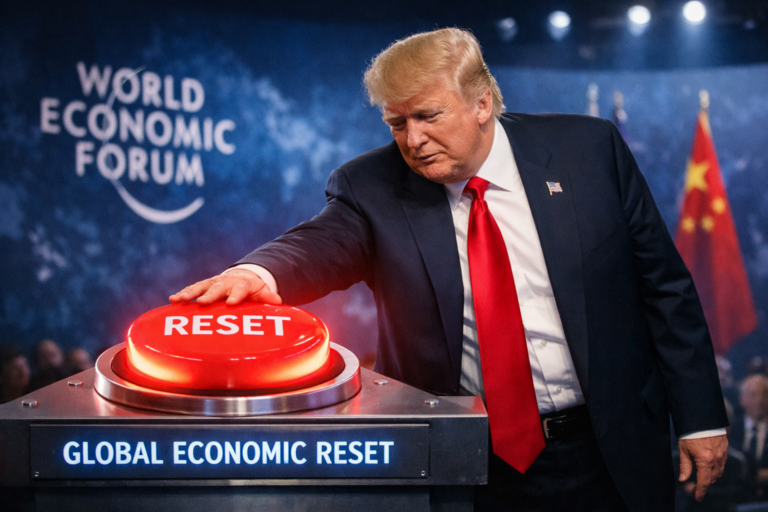
America has no shortage of debates about race. Turn on the television and you will be told that the nation is split between “anti-white” leftists and “racist” conservatives. Democrats and Republicans feed this cycle like an assembly line. One side builds a narrative of systemic racism; the other counters with a story of white victimhood. Both make a living keeping the public angry at each other. But while America is busy fighting over race, a deeper reality goes unexamined: the degree to which foreign money and foreign influence control our politics.

When Candace Owens questioned whether Charlie Kirk had been pressured or even blackmailed by pro-Israel donors, the knives came out. She was accused of antisemitism, opportunism, even betrayal. Yet strip away the headlines, and the substance of her question remains legitimate: are American political leaders free to speak, or are they constrained by donor money tied to foreign interests? Owens may have lacked proof for the specifics she alleged about Bill Ackman. But the broader reality she pointed to is undeniable. Pro-Israel political action committees and billionaires pour tens of millions into both parties. Candidates who cross them find their campaigns defunded, their reputations smeared, and their character questioned. If this is all nonsense, then why have figures as high as Prime Minister Benjamin Netanyahu felt compelled to make public statements about it? On Newsmax, Netanyahu dismissed as “insane, absurd, so stupid, so ridiculous” the growing claims online that Israel had a hand in Kirk’s death. But even that wasn’t the end of it. Tucker Carlson, speaking in conversation about Kirk’s legacy, blasted foreign leaders—Netanyahu included—for trying to hijack Kirk’s murder to advance their own causes. Carlson called it “disgusting” and “literally untrue” to claim that Kirk lived for Israel’s agenda, reminding audiences that while Kirk loved Israel, he opposed another endless war in the Middle East. That kind of pushback is rare, and it tells us that Owens’ questions struck deeper than critics would admit.

Kirk himself lived this contradiction. On his show he admitted that “some of the largest financiers of left-wing anti-white causes have been Jewish Americans.” At his Turning Point USA conference, Tucker Carlson asked directly whether Jeffrey Epstein was running a Mossad blackmail operation. And when Kirk went on Megyn Kelly’s show, he confessed that after platforming Israel’s critics, he was hit with “thousands of tweets and text messages” condemning him as a bad person. Notice what is happening here. A conservative leader who repeatedly declared “I love Israel, I want Israel to win” was not judged on his support for the country, but on his willingness to host a conversation. For that, his moral character was put on trial.

This is where race enters the picture—not as a solution, but as a distraction. On the left, racial politics justifies why Israel’s critics are silenced: anyone pushing back must be racist, bigoted, or hateful. On the right, racial politics is redirected into outrage over DEI, which has been a shield for policies that white people mostly benefited from, layered on top of a Civil Rights Act that has ignored Black people’s rights while being used to fight for gay men to play in women’s sports and use women’s bathrooms. Either way, Americans are pitted against each other on racial terms, while the deeper issue—foreign lobbying, foreign aid, and foreign leverage—is quietly preserved. Do people even know how entrenched pro-Israel money is in our politics? While misinformed Black people argue endlessly about race, the United States sends $3.8 billion of our tax dollars every year to a foreign country for war, while at home we face failing schools, high crime, a housing market that locks working families out of ownership, and a mental health crisis devastating Black communities. Yet no matter which party is in power, there is always bipartisan agreement that Israel gets its billions, even if our own communities go without.

The real divide in America is not between Black and White, or liberal and conservative. It is between a nation where citizens govern themselves and a nation where foreign donors and lobbies script the play while we argue over skin color. Kirk, for all his faults, brushed against this forbidden truth. I am not God, so I do not judge. But I believe each of us is here for a reason, and as Kirk’s political star rose, so did his awareness of the messy, manipulative money that drives it all. I have long said there is no God in politics, and Kirk was beginning to see that for himself. Owens took it further, and the fury directed at both of them proves the point: once you step across the invisible line around Israel and its donor network, you are branded untouchable—not because you are wrong, but because you dared to pull back the curtain.

Read: This Is Not Black America’s Fight: It’s a Struggle Between White Liberals and White Conservatives

In a recent article, I wrote that “this is not Black people’s fight.” The questions Candace Owens raised, and the defensive answers offered by powerful figures, prove why. The struggle here is not between Black and White Americans—it is over whether foreign interests dictate our future while we are distracted by the politics of race.

Facts matter more than feelings, and the fact is this: until Americans, Black or White, stop letting race be the bait that keeps us distracted, we will never deal with the hook—foreign influence that dictates our politics while we fight each other.

Gov. Hochul’s Endorsement of Zohran Mamdani: What It Really Means for Black New Yorkers

Governor Kathy Hochul’s endorsement of Zohran Mamdani for New York City mayor is being celebrated as a bold move by progressives. But before anyone applauds, Black New Yorkers ought to ask a simple question: what exactly does this mean for us—and what will it cost?

Political endorsements are easy. They cost nothing and promise nothing. For decades, Black New Yorkers have been showered with speeches, slogans, and symbolic gestures from the Democratic Party. What we have not been given are outcomes—safer neighborhoods, better schools, stronger businesses, or healthier families. Hochul’s embrace of Mamdani is no different. It signals allegiance to the progressive wing of her party, but it does not guarantee a single measurable improvement for the people who have carried Democrats into office election after election.

The problems are not mysterious. They are visible every day:

  • Housing: Black families are hardest hit by rising rents and evictions. Will more rent regulations build housing, or will it strangle supply and drive landlords out of the market—leaving fewer options for the very people progressives claim to help?
  • Education: Black boys in New York continue to fall behind in reading and math. For years, the left has run New York’s schools, but the results for Black children remain stagnant. Mamdani’s brand of politics may bring more ideology, but will it bring higher test scores or better literacy?
  • Public Safety: Mamdani has openly supported letting more people out of jail. The problem is not the slogan—it’s the reality. Rikers Island houses one of the largest populations of mentally ill inmates in America. Releasing people without treatment or supervision is not compassion. It is negligence. And the neighborhoods most likely to bear the brunt of that negligence are Black neighborhoods already struggling with crime. Left-wing reforms have been tried for years, but they have done little to make our streets safer.
  • Economics: Black-owned businesses make up less than 2 percent of all businesses in the state. Despite endless promises of “equity,” Democratic economic policies have done little to expand ownership, wealth, or access to capital for Black New Yorkers. Meanwhile, campaign finance in New York runs on donations of $5,000, $10,000, even $50,000 from major corporations and developers—money that shapes policy while Black entrepreneurs remain locked out.

The record is plain. Left-wing policies in New York have done little to improve Black education, Black economics, or Black public safety. Yet politicians continue to campaign as if promises are enough, and too many of our leaders continue to deliver votes without demanding results.

Hochul’s endorsement is a calculation, not a commitment. It strengthens Mamdani’s appeal to progressive white liberals and younger activists who dominate media narratives. But the math of elections in New York City still runs through Black voters. If our priorities are ignored in favor of ideological experiments, the result will be familiar: we supply the votes, others reap the benefits.

The question is not whether Mamdani can win. The question is whether Black New Yorkers will win anything if he does. That depends on what we demand: real strategies to expand Black homeownership and business ownership, clear plans to raise education outcomes measured in reading and math—not rhetoric—balanced safety reforms that protect civil rights while protecting neighborhoods from crime and untreated mental illness, and health policies that deal directly with chronic disease and mental health in our communities.

Until those questions are answered, Hochul’s endorsement is just another chapter in a long book of political promises made to Black New Yorkers—and rarely kept.

Westchester Faces Legionnaires’ Outbreak: How to Prevent the Spread

Westchester County, NY — Officials have confirmed a Legionnaires’ disease outbreak that has left two people dead and at least 37 residents sick across the county. The victims were from White Plains and New Rochelle.

Health authorities say this summer’s hot, humid weather created the perfect breeding ground for Legionella bacteria, which can multiply in cooling towers, plumbing systems, and fountains. The disease spreads when people inhale contaminated water droplets and often strikes older adults and those with weakened immune systems.

Preventing Future Cases

Public health experts stress that Legionnaires’ disease is preventable with the right precautions:

  • Maintain Building Water Systems: Cooling towers, HVAC systems, and hot tubs must be cleaned and disinfected regularly.
  • Control Water Temperatures: Keep hot water above 120°F and cold water below 68°F to limit bacterial growth.
  • Flush Stagnant Water: Unused pipes and faucets should be run regularly to keep water moving.
  • Properly Treat Pools & Spas: Ensure chlorine or bromine levels are maintained to kill bacteria.
  • Install Filters Where Needed: In high-risk facilities, filtered taps and showers can reduce exposure.
  • Follow Health Regulations: Property owners must comply with state cooling tower inspection laws to prevent outbreaks.

Community Guidance

Residents are advised to monitor symptoms like cough, fever, and shortness of breath, and to seek medical care immediately if they arise. Early treatment with antibiotics can save lives.

Officials remind the public that the disease is not spread person-to-person, and with vigilance, Westchester can both control this outbreak and prevent future ones.

This Is Not Black America’s Fight: It’s a Struggle Between White Liberals and White Conservatives

0


When you cut through the noise of today’s politics, you quickly see one truth: the loudest fights in America are not about Black people—they are between white liberals and white conservatives.

White liberals position themselves as champions of the oppressed, while white conservatives claim to defend tradition and order. Yet Black America remains at the bottom, regardless of which side wins. Their talk of “justice” and “freedom” seldom brings measurable progress to our communities.

For liberals, Black America’s struggles are moral leverage for broader agendas. For conservatives, we’re a cautionary tale to push back on liberal policies. Neither side equips us for independence. We are spoken of, not spoken to.

The Opportunity Cost of Distraction

The tragedy is how we get pulled into their battles. I see more focus on figures like Charlie Kirk than on failing schools, Black suicide rates, business losses, family breakdown, or health gaps in our community. These life-and-death issues are sidelined by arguing over which white faction is worse.

We say racism holds us back, but we overlook our dependency. Black America spends $1.7 trillion yearly, mostly outside our own community. We discuss oppression, but don’t ask why we lack business ownership and economic control.

No community should embrace hate speech — but we must be honest about how the term is often weaponized. If that’s the standard, then I’m no different to white people than Charlie Kirk is to Black people: someone saying what they don’t want to hear. That doesn’t make it hate. Too often, what gets branded as “hate” is nothing more than inconvenient truth or uncomfortable criticism.

I go beyond a simple soundbite or a quote tossed on Facebook — I look at the full context. The main problem is this: when we get called out on our failures by people outside our community, we are quick to let liberal white voices convince us it’s “hate speech.” That’s the trap. If all we’ve got to hang on to in 2025 is labeling criticism as hate, then Black America is in worse condition than ever.

If everything is racism, when do we take responsibility for fixing our problems? Our schools and neighborhoods are mostly run by Black officials. If white people are not managing or tearing down our communities, when do we admit the responsibility is ours? When do we stop supporting leaders who do nothing, only to let critics point at our failures?

I don’t want to hear “we’re working on it.” I’m almost 60, and if that’s the answer, we’re not moving forward. The saddest part? Black people in the 30s, 40s, and 50s lived with more dignity and stronger communities under real racism than we do now—despite having more resources and opportunity today.

History Repeats Itself

In the 1960s, liberals used the Civil Rights Movement to expand government programs, weakening family and community ties. Conservatives in the 1970s used “law and order” rhetoric to gain power through Black crime statistics. The language changed, but Black America remained dependent and neither side built our independence.

Malcolm X warned us clearly: “The white liberal is the worst enemy to America, and the worst enemy to the Black man. The white liberal has perfected the art of using the Negro as a pawn.” His warning was not about personal hatred—it was about political manipulation. Sixty years later, we still see the same playbook.

When you strip away the rhetoric and look only at outcomes, the picture is plain. Neither liberal nor conservative dominance has delivered what Black America needs: strong families, thriving businesses, safe streets, and ownership of the institutions that shape our destiny. Speeches do not build wealth. Promises do not educate children. Marches do not create ownership.

Our True Battle

Our fight is not left versus right—it is independence versus dependency. It is ownership versus tokenism. It is building institutions that will outlast us, instead of aligning ourselves with whichever white faction offers better rhetoric in a given election cycle. Black America’s survival depends on refusing to be pawns in someone else’s struggle and focusing instead on measurable progress in our own.

The Bottom Line

The clash between white liberals and white conservatives will rage on—it is about who holds the reins of American power. But it is not our fight. Our responsibility is to step off their battlefield and build our own economy, our own schools, and our own future. Anything less is choosing distraction over destiny.

“But thou shalt remember the Lord thy God: for it is he that giveth thee power to get wealth.” — Deuteronomy 8:18
“Blessed is the man that walketh not in the counsel of the ungodly… But his delight is in the law of the Lord; and in his law doth he meditate day and night.” — Psalm 1:1–2

Independence is not just an economic choice — it is a spiritual mandate. God has already blessed us with the resources. The question is whether we will finally use them to build for ourselves.

The Hypocrisy of Mental Health Policy and the Cost to Black America

According to the World Health Organization, over one billion people worldwide are living with mental health conditions such as depression and anxiety. That number should stop anyone in their tracks. But in Black America, the weight is heavier, and the hypocrisy in how policymakers and advocates have responded is too glaring to ignore.

One in five Black adults lives with mental illness. Only one in three ever receives treatment. Suicide has become the third leading cause of death among Black youth. These are not abstract statistics. They represent our families, our communities, and our future.

Yet for decades, New York State and others systematically closed psychiatric hospitals and eliminated mental health beds. The promise was that “community-based care” would take their place. It never happened. Instead, jails became the new mental health institutions. Rikers Island is now one of the largest psychiatric facilities in the country. Nearly half of the people incarcerated there live with a mental health condition. Families pleaded for treatment, not jail cells. Policymakers and advocates largely looked the other way.

Fast forward to 2025. President Trump signs an executive order that pushes civil commitment for those with severe mental illness, substance abuse, or homelessness. The order ties federal funding to enforcement of bans on urban camping and open drug use and moves away from “Housing First” toward programs requiring treatment or sobriety.

The reaction was immediate. Civil rights and disability groups denounced it as authoritarian. They warned of abuses of due process. They called it dangerous. Their concerns are not without merit. Involuntary treatment carries real risks. But where was this outrage when mental health patients—disproportionately Black and Brown—were funneled into jail cells instead of hospital beds?

That is the hypocrisy. When hospitals closed, there was silence. When Rikers Island filled with the mentally ill, there was silence. When Black families collapsed under the weight of untreated trauma, there was silence. But when Trump signed an order, suddenly, it was a national emergency.

The truth is that neither approach solves the crisis. Closing hospitals without providing community care pushed people into prisons. Mass civil commitment without safeguards risks abuse and mistrust. Both fail Black America, which is consistently over-policed and under-treated.

If we are serious about solutions, they must involve investment in community-based treatment centers, culturally competent providers who understand the Black experience, preventive programs for youth, and real mental health infrastructure that does not depend on police and prisons. Anything less is another cycle of hypocrisy that leaves our people paying the highest price.

Over one billion people worldwide are struggling with mental health. Black America carries that burden in ways few want to admit. But we can no longer wait on a hypocritical system to heal us. Wellness and resilience must start with us—in our homes, our churches, our barbershops, and our community centers.

Because when we heal the mind, we heal the community. And until that happens, both the silence of yesterday and the outrage of today will continue to fail us.

How Black Children Are Faring in Reading By Dennis Richmond, Jr., M.S.Ed.

Over the past three years, Black boys in New York have continued to face significant challenges in reading, with performance lagging behind both the state’s White students and national benchmarks. With 2026 approaching, people can no longer place the blame solely on COVID.

According to the National Center for Education Statistics (NCES), in 2024, eighth-grade Black students in New York scored an average of 248 on the NAEP reading assessment, compared to 265 for White students—a 17-point gap. The state’s overall average score was 257, which matched the national average that year. In fourth grade, NCES reported that Black students in New York averaged 200, while White students averaged 223, reflecting a 23-point gap.

When looking at proficiency, NCES data from 2024 show that only 21% of Black eighth-graders in New York reached the Proficient or Advanced levels in reading, compared to 37% of White eighth-graders. For fourth grade, the divide was similar: just 17% of Black students were Proficient or above, while 37% of White students met that level. These figures place New York’s Black boys well below both their in-state peers and the national averages.

The Education Trust–New York added further context in a 2025 report, finding that 55% of Black fourth-graders and 42% of Black eighth-graders scored below the Basic level in reading. This shows that, despite years of attention, disparities remain deeply entrenched.

Comparisons with other states suggest that New York’s overall averages are not extreme, but its racial gaps remain among the widest. It is worth noting that NCES highlighted in 2024 that New York’s overall eighth-grade average (257) was statistically similar to about 40 other states.

The National Assessment Governing Board reported that between 2022 and 2024, fourth-grade reading scores for Black students declined by 8 points nationwide. The Manhattan Institute echoed this finding, describing a “historic low” in literacy for students of color. New York’s stagnant or declining scores mirror these national struggles, but its persistent racial gap stands out.

In sum, Black boys in New York continue to trail their peers in reading, with little progress made over the past three years. To change this narrative, caregivers must ensure that their children are reading at home. It is imperative to the future of our society that they do. Educators must also prioritize targeted literacy techniques rather than relying too heavily on programs. Culturally responsive instruction is equally essential.

The Shooting of Charlie Kirk: The High Price of Political Theater

The Shooting of Charlie Kirk: The High Price of Political Theater

Charlie Kirk, founder of Turning Point USA, was shot in the neck while speaking at Utah Valley University on September 10. He now lies in critical condition. A suspect is in custody. That is the fact. But the fact behind the fact is this: politics in America has ceased to be about persuasion, and has instead become about vilification.

When you spend years reducing politics to moral crusades—painting opponents not as wrong but as evil—you should not be surprised when some take that logic to its conclusion. If your adversary is evil, then what limit exists on how you can treat them? The step from demonization to violence is not a leap. It is a slide.

Lessons From History

We have been here before. Representative Steve Scalise was nearly killed at a congressional baseball game. Paul Pelosi was beaten with a hammer. Gabrielle Giffords was shot at a constituent event. Each time, the country clutched its pearls, then quickly returned to the same poisonous rhetoric that fuels this cycle. The outcome is predictable: fewer public events, tighter security, and a public more afraid to participate in the civic life of its own country.

The Real Cost of Escalation

  • Free speech becomes conditional. If the price of speaking is risking your life, then fewer will speak.
  • Politics becomes performance. Leaders no longer argue about ideas but instead about how to frame opponents as existential threats.
  • Citizens lose twice. First, by being denied honest debate. Second, by inheriting the chaos when debate turns to violence.

Beyond Left and Right

This is not about Charlie Kirk’s ideology. It is about whether political disagreements will be settled with words or weapons. Today it is Kirk. Tomorrow it may be someone on the other side. Once you normalize violence as politics, there is no stopping point.

The Question That Matters

Are we going too far? The answer is not found in emotions but in outcomes. What is the outcome of a society where political disagreements bring gunfire? Fewer voices. Less freedom. More fear. The American republic cannot function on that foundation.

The choice is clear: either politics returns to persuasion, or it will continue down the road to intimidation. And intimidation, once it becomes the common currency of politics, will not stop at the campus tent where Charlie Kirk was shot. It will spread to every arena of American life.

Soldiers and Veterans Respond to Chicago Gangs’ Threats Against the National Guard

When viral videos of Chicago gang members warning President Trump not to send the National Guard began circulating online, it didn’t take long for those with real battlefield experience to respond. Soldiers and veterans across the country flooded social media to remind these young men of a truth they seemed to forget: the streets are not the same as war.

On TikTok and Instagram, self-proclaimed gang members boasted that Chicago was “different” and that their “switches” would make the National Guard regret stepping into the city. The bravado may have impressed some, but for combat veterans it was pure ignorance.

“I was a sniper in Iraq and Afghanistan—I have zero fear of Chicago thugs,” one veteran wrote. Another added, “More bravado than brains. You’ve never seen your squad turned into a pink mist by a 105mm shell. The government doesn’t even have to fight you directly. They can cut food, water, power—and watch you fold.”

Others mocked the idea of handguns against military technology. “That’s like showing up to a missile show with Nerf guns,” one comment read.

Warnings From Black Soldiers

Perhaps the strongest responses came from Black soldiers themselves, who pleaded with young men not to fall into a trap.

“Please don’t think you can intimidate the U.S. military,” one serviceman said in a viral clip. “We can pinpoint your weapons stash in seconds. We have drones, homing missiles, and precision that you’ve never seen. Don’t confuse street war with actual war.”

Another soldier reminded gang members that even the National Guard—often deployed in times of unrest—is still highly trained. “We defend this country from enemies foreign and domestic. Threatening us doesn’t make you look strong, it makes you look foolish.”

A Dangerous Distraction

For many veterans, the larger concern is not bravado—it’s the consequences. They argue that the gang threats play directly into Trump’s hands, giving him justification to crack down harder.

“This is exactly what Trump wants,” one former Marine commented. “Give him a reason and you’ll see martial law faster than you think.”

Others stressed the hypocrisy of gang members picking a fight with soldiers while remaining silent about crime in their own neighborhoods. “You couldn’t handle Venezuelan gangs with machetes,” one veteran noted. “But now you want to take on the U.S. Army?”

The consensus among veterans and active-duty soldiers was clear: this is not a fight gangs can win, and pursuing it would only bring destruction on their own people.

“Gang life ends in two ways—prison or death,” a veteran concluded. “But taking on the military guarantees both. Don’t mistake recklessness for power. Chicago doesn’t need more body bags; it needs leadership and real solutions.”

AI and Black Health: Turning Risk Into Reward

0

The Promise of Technology

Artificial Intelligence is present in every part of our lives—phones, jobs, and doctors’ offices. It’s more than a buzzword for Black communities: it’s a tool with the potential to close longstanding health gaps and save lives.

We know the story—hospitals closing in Black neighborhoods, long waits, insurance woes. AI-powered telehealth and symptom checkers can’t fix everything, but they help. If you’ve got a phone, you’ve got a lifeline. That means earlier warnings for diabetes, hypertension, or stroke—conditions that hit us hardest. Early detection saves lives, and AI makes that easier.

Personal Health That Speaks to Us

One-size-fits-all care never worked for us. AI can tailor guidance to your specific diet, stress levels, and family history. It reminds us to watch our salt intake, manage stress, and drink water—small habits that add up to longevity. Imagine an app that counts steps and knows the risks facing Black America. That’s the personalization we need.

And now, with smartwatches and fitness trackers, we don’t even need to wait for a doctor’s visit to get vital health information. Our watches can monitor heart rate, sleep patterns, oxygen levels, and even detect irregular rhythms that could signal serious issues. For Black communities disproportionately affected by heart disease and hypertension, that kind of real-time monitoring is a game-changer.

We don’t talk about mental health enough. Too many suffer in silence. AI-powered chat tools and mood trackers aren’t therapy, but they lower the barrier to help. They offer a private, stigma-free way to check in daily. That first step can lead to real help—and that’s progress.

Protecting Ourselves from Misinformation

Our communities are too often targeted with misleading health advice. AI, when done well, can empower us by pointing to real answers. The difference between rumor and fact can mean healing or harm.

Community-Level Change

On a larger scale, AI can track the health of entire neighborhoods—showing where asthma is rising due to poor air quality, or where diabetes is prevalent because grocery stores are scarce. That data can fuel our fight for resources and give our leaders no excuse to look the other way.

We’ve seen the flip side, too. AI trained on biased data has already shortchanged Black patients—forcing us to be “sicker” before we get equal treatment. Chatbots have repeated racist medical myths. Even mental health AI has missed signs of depression in Black users because it wasn’t trained on how we speak.

That’s why, moving forward, we can’t just sit back and hope AI gets it right. We have to demand it. Demand inclusive data. Demand transparency. Demand equity.

AI won’t solve every health disparity. But used with accountability, it empowers us: to manage wellness, advocate for care, and build stronger communities.

It’s up to us: Will we demand AI serves our needs, or let others decide? Let’s challenge tech, advocate for inclusivity, and shape the future of Black health together.

The future of Black health is in our hands. Act now—advocate, get involved, and help lead the change toward fair, personalized care for our communities.

Unlock Your Future in Tech: ELOC Launches AI Program for Westchester Students

0

Mount Vernon is stepping into the future — and our children need to be ready. Environmental Leaders of Color (ELOC) has launched the second year of its Advanced Computer Science Program, this time with a bold new focus on Artificial Intelligence (AI).

AI isn’t science fiction anymore. It’s the driving force behind everything from self-driving cars to voice assistants, medical breakthroughs to financial tools. The jobs of tomorrow will demand AI knowledge — and the students who master these skills today will be the ones shaping, leading, and hiring in the years ahead.

Why AI Matters for Our Kids

The future of work is changing rapidly. Careers in technology, healthcare, finance, entertainment, transportation, and nearly every other field will be transformed by AI. For Black and Brown students in Westchester, access to AI education isn’t optional — it’s essential. If our children don’t learn how to build and manage these systems, they risk being left behind while others design the future.

Just recently, President Trump hosted a private dinner with the titans of Silicon Valley — the CEOs of Apple, Google, Microsoft, Nvidia, and OpenAI. It was a table where trillions of dollars in investments and the future of global technology were being discussed. But something was glaring: not a single Black person was in that room. Not because the dinner was racist, but because we don’t have enough Black leaders in tech at that level. That reality must change — and it starts with programs like this one.

Read: Black America Missing in Tech: The Empty Chair at Trump’s Dinner

Program Details

📍 Location: Westchester Community College – Mount Vernon Annex, 17 S. Fifth Avenue, Mount Vernon, NY
🗓 Fall Semester: September 20 – December 13, 2025 (Saturdays, 9 am – noon)
🗓 Spring Semester: January – June 2026

Classes run on Saturday mornings, making the schedule manageable while delivering deep, hands-on training in computer science and AI.

Who Can Apply?

The program is open to high school students in grades 9–12 who want to secure their place in the future economy.

Program Highlights

  • Learn cutting-edge AI and computer science skills
  • Courses taught by industry professionals
  • Work on real-world projects
  • Build a network of mentors and peers in tech
  • Gain exposure to career pathways and college opportunities

Securing the Future

This isn’t just a class — it’s a pathway to power. Students will walk away with more than knowledge; they’ll leave with confidence, networks, and career direction in one of the most critical industries of the 21st century.

Apply Now – Limited Spots Available

📧 Email: contactus@eloc.earth
📱 Phone: 914-901-3562 x703
🌐 Website: www.eloc.earth

If we want our children to have a seat at the table in the digital economy, the time to act is now. The future is being built in AI — and this program gives our students the power to be builders, not bystanders.