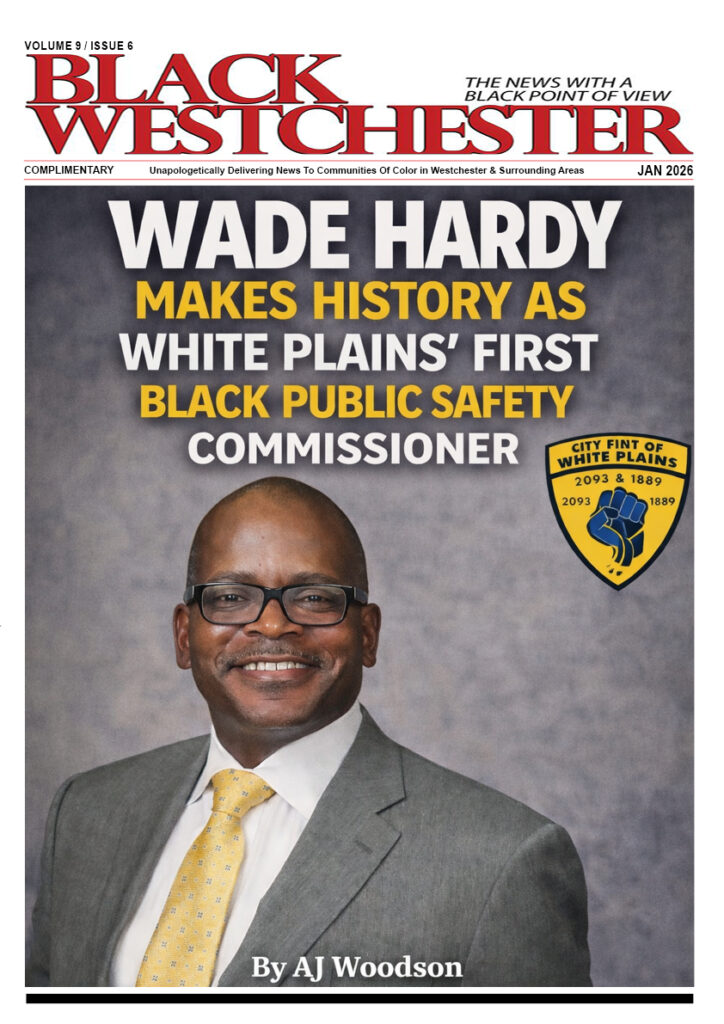
The October 2025 issue of Black Westchester Magazine delivers hard-hitting journalism and unapologetic commentary on the issues shaping Black America today. From local Westchester politics to national policy debates, this edition shines a light on the intersections of race, power, and accountability that mainstream media often ignores.
Inside, readers will find investigative reports exposing the hidden forces influencing our communities, in-depth features on health and wellness, and bold op-eds calling for political clarity and economic sovereignty. We highlight voices that challenge the status quo, honor those building institutions of empowerment, and confront the failures of leadership—both locally and nationally.
More than a magazine, Black Westchester continues its mission: informing, educating, and mobilizing our community for real change. The October issue is not just about what’s happening—it’s about what must be done.
When Daniel Patrick Moynihan released his report in 1965, he was immediately condemned as a racist. Black leaders, activists, and preachers accused him of attacking his own community by pointing out that the rise of fatherless homes posed a greater threat to Black progress than racism itself. At the time, the out-of-wedlock birth rate among Black Americans stood at 25 percent. Today it has climbed past 70 percent. The voices that once drowned Moynihan out with charges of racism are silent now that the problem has grown nearly three times worse.
This silence is not accidental—it is convenient. In the decades since Moynihan’s warning, civil rights laws outlawed formal discrimination, affirmative action policies expanded access to schools and jobs, and trillions of dollars in anti-poverty programs poured into Black communities. The promise was that these measures would close gaps, uplift families, and finally break the cycle of generational poverty. Yet the outcome is undeniable: the family, the very cornerstone of stability, has grown weaker, not stronger.
The reality goes beyond racism. Racism was brutal in the 1940s, 1950s, and 1960s, when segregation, housing discrimination, and limited job access were common. But during those decades, Black families were more intact than they are today. Marriage rates were higher, fathers were more present, and children were more likely to grow up with two parents under one roof. If racism were the determining factor, then family breakdown should have been most severe during those years of open and legalized discrimination. Instead, it has worsened in the decades of expanded rights, greater opportunity, and larger government support.
The more complicated truth is that bad policies and destructive cultural shifts did more damage than Jim Crow ever could. Welfare programs designed as safety nets encouraged dependency and replaced fathers with government checks. Public housing and food subsidies made it easier to survive without the stability of marriage, while simultaneously discouraging the pursuit of ownership and independence. Popular culture, once anchored in church, family, and community pride, began to glamorize irresponsibility, promiscuity, and violence. Responsibility was replaced by indulgence. Fathers were replaced by bureaucracy. And through it all, leaders who once thundered against Moynihan for daring to sound the alarm looked away as the very outcomes he predicted became reality.
The issue before us now is not whether racism exists—of course it does, and of course it still shapes many aspects of American life. The real question is whether racism alone can explain the collapse of the Black family. The evidence is clear: it cannot. What we are living with is the legacy of choices, incentives, and cultural decline. And the refusal to confront this truth has been as damaging as the problem itself. Until leaders and communities accept that responsibility, marriage, and cultural renewal matter more than promises, subsidies, and slogans, the decline will continue. Progress cannot be built on dependency. It cannot be outsourced to Washington.
It cannot be delegated to activists or politicians. It must be rebuilt in the home, in the community, and in the culture. That was Moynihan’s warning sixty years ago, shouted down as racism at the time. Today, the silence of his critics tells us everything. What he saw as a looming danger has become our present crisis. The family is broken, and without restoring it, no law, no program, and no leader will deliver the future we were promised.
By late morning on Sunday, September 21, 2025, Adam Clayton Powell Jr. Boulevard was already doing what it has done for generations, holding memory in plain sight. Folding chairs lined the sidewalks like punctuation marks. Drums tested the air before the first banner ever appeared. Elders claimed their corners early, not out of habit, but out of stewardship.
This was the 56th Annual African American Day Parade, and from the first note to the last float, it was clear: Harlem wasn’t trying to impress anyone. It was honoring itself.
Fifty-Six Years Is Not a Moment, It’s Muscle Memory
For more than half a century, the African American Day Parade has arrived every third Sunday in September with the same quiet insistence: we are still here, and we still know who we are. That kind of consistency isn’t ceremonial. It’s cultural discipline.
This year’s theme, “Education is Our #1 Priority,” wasn’t confined to banners or speeches. It was visible in posture, precision, and presence. In the marching bands that moved like classrooms in formation. In the educators and principals walking the route not as honorees seeking applause, but as pillars being recognized by a community that knows their labor intimately.
Education here wasn’t theoretical. It was embodied.
When the Street Becomes the Curriculum
As the parade moved north along Adam Clayton Powell Jr. Boulevard, the street transformed into a living syllabus. Youth drumlines demonstrated focus earned through repetition. Dance teams showed what discipline looks like when joy is allowed to coexist with rigor. Community organizations from more than a dozen states marched as if Harlem were home because on this day, it was.
Nearly 900,000 people were expected, yet the atmosphere resisted anonymity. The crowd spoke back. Applause traveled in waves. Elders nodded in recognition. Children pointed with certainty. This wasn’t passive spectatorship; it was collective participation.
Celebrities appeared, as they do. But the rhythm never shifted for them. Harlem doesn’t pause its truth for proximity to fame.
The Weekend Was Designed With Intention
The parade was only one chapter. The day before, the Get Involved Literacy, Health, and Culture Celebration at Adam Clayton Powell Jr. Plaza grounded the weekend in care. Free health services, accessible panels, live performances, and meaningful giveaways made the theme tangible.
This was education beyond the classroom, education that acknowledged bodies, access, and lived realities. A reminder that learning doesn’t exist without wellness, and celebration doesn’t last without support.
Investment Without Spectacle
True to its legacy, the parade continued its commitment to the future by awarding scholarships through the Abe & Lucinda Snyder Scholarship Fund. No grandstanding. No inflated announcements. Just intentional investment in students still shaping the next chapters of Black American life.
It was a quiet moment, met with sustained applause. The kind that understands what’s at stake.
Harlem as Archivist
As the afternoon stretched toward evening and the last organizations passed, the energy didn’t dissipate; it settled. People lingered. Conversations continued. Nobody rushed to dismantle what had been built in the street.
Because Harlem had done what it always does when it is allowed to be whole: it preserved memory without freezing it, honored legacy without sanitizing it, and reminded the nation that Black culture is not an event, it is infrastructure.
This was not a performance.
It was a remembering.
And for 56 years now, Harlem has been consistent about one thing:
Congress is preparing to debate a bill that Democrats say will protect free speech. The target is government intimidation. Under the proposal, federal officials would be barred from using regulatory threats to pressure networks, journalists, or entertainers into silence. On paper, it looks like a safeguard against abuse of power. In reality, it exposes how little protection legislation can offer once politics, economics, and employment collide.
The recent suspension of Jimmy Kimmel makes the problem plain. His remarks about Charlie Kirk led to affiliate stations pulling his show. The FCC chairman had already warned of “consequences” for networks, a threat that carried no legal order but plenty of weight. That is the kind of political pressure this bill claims to prevent. Yet even if the FCC had remained silent, affiliates still faced two other realities: economic decline and the leverage employers always hold over employees.
Free speech is not just a matter of government restraint. Market incentives and workplace rules also shape it. A law may stop regulators from bullying networks, but it cannot stop viewers from leaving, advertisers from pulling dollars, or bosses from enforcing contracts. The Constitution may protect speech from Washington, but it does not protect it from economics or employment.
Free speech is easier to defend in theory than in practice. The Constitution bars the government from silencing speech, but it does not stop officials from threatening consequences that make companies police themselves. When the FCC chairman warned of “consequences” after Jimmy Kimmel’s comments about Charlie Kirk, no paperwork was filed, but the message was clear. Fear can be as effective as censorship.
But politics alone do not explain why affiliates acted so quickly. Economics does. Charlie Kirk has a large and loyal following, and networks are aware of how fragile advertiser relationships can be. Viewers can disappear overnight, and sponsors with them. For affiliates, the risk of angering Kirk’s base meant gambling with millions in revenue.
Late-night television itself is also in decline. Nielsen data show all three network 11:35 p.m. shows—CBS’s The Late Show, NBC’s The Tonight Show, and ABC’s Jimmy Kimmel Live!—down 70 to 80 percent in the key 18–49 demographic since 2015. That year Colbert replaced Letterman, Fallon succeeded Leno, and Kimmel moved into the late slot. By 2018, the decline was undeniable. Advertisers spent $439 million on late-night TV that year; by 2024, half that amount. For affiliates already squeezed by shrinking audiences and shrinking ad dollars, one controversy was not just a political risk — it was a financial accelerant to a business already collapsing.
There is another overlooked reality. Free speech is not free when you are an employee. Jimmy Kimmel may be a household name, but he is still an employee of Disney. His contract, like most contracts, has morality clauses and escape hatches designed to protect the company’s brand. The First Amendment does not shield workers from their bosses. Teachers, nurses, police officers, factory workers, or journalists all face the same truth: if your words cost the company money, your job can be gone by Monday.
So when Kimmel was suspended, three forces converged. Politics created fear of regulatory punishment. Economics magnified the danger of audience loss in a shrinking market. Employment rules gave the company the final authority to silence him in the name of brand protection. Each of these forces alone would have been enough. Together, they made suspension inevitable.
The proposed free speech bill may restrain political intimidation, but it cannot repeal economics or employment contracts. A law may stop an FCC chairman from threatening networks, but it cannot prevent advertisers from walking away or employers from protecting their bottom line. For ordinary Americans, that is the real lesson.
Teachers have lost jobs for Facebook posts. Nurses have been fired for speaking out about hospitals. Police officers have been pulled for job duties. Journalists have been dismissed for tweets that offended advertisers. In each case, politics, economics, and employment combined to decide what kind of speech survived. The Constitution may promise free speech, but in practice, it survives only when it carries no cost. Once it does, the marketplace — and your employer — will remind you that freedom always has a price.
Donald Trump rose to power with a clear promise: “America First.” It was bold, simple, and resonated with millions tired of watching politicians spend elsewhere as the country weakened.
But promises and slogans mean nothing if the results tell a different story. And the results today look less like “America First” and more like “Israel First.”
In Trump’s current term, more than $12 billion in U.S. military aid has already been approved for Israel—American tax dollars sent overseas while our schools crumble, families drown in debt, and Black businesses can’t get the support they need. That’s not America First.
Every dollar for another nation’s security is a dollar not spent rebuilding our own communities. Israel grows stronger while working-class Americans, especially Black Americans, are left weaker. This is the harsh reality of America’s foreign aid priorities.
How does this keep happening, no matter who’s in office? The answer is simple: AIPAC. The American Israel Public Affairs Committee is one of the most powerful lobbies in Washington. They pour millions into campaigns, pressure lawmakers, and make sure no politician — Democrat or Republican — steps out of line when it comes to sending money overseas.
It’s the oldest game in politics: concentrated benefits and dispersed costs. AIPAC and its donors get the concentrated benefits. The costs are spread so thin across 330 million taxpayers that most people don’t realize how much they’re paying. But for Black America, the cost is very real — less investment in our neighborhoods, fewer opportunities for our businesses, and a government that tells us to be patient while it writes blank checks abroad.
Trump supporters wanted an end to costly foreign aid and a focus on rebuilding America. Instead, foreign entanglements multiplied. Weapons deals, endless aid—under “America First” the actions show a foreign-first agenda. The results are unmistakable: Americans get nothing in return.
And let’s not forget how Trump regained power. He won in large part because Joe Biden and Kamala Harris failed to pull Israel back when the Gaza war intensified. Many voters were disgusted with the way the White House gave Israel a blank check while ignoring the cries for a ceasefire and turning a deaf ear to civilian deaths. That failure opened the door for Trump. Yet now, as president, the right is beginning to see what many feared: when it comes to Israel, Trump is no different than Biden and Harris. The money still flows, the bombs still fall, and America’s priorities are still somewhere overseas instead of here at home.
And this isn’t just about Trump or Biden. It goes back further — to Clinton, and even more sharply to Barack Obama. Obama, as the first Black president, had a historic opportunity to empower Black America. Instead, he empowered the same pro-Israel lobbyists who have dictated U.S. foreign policy for decades. Black communities received soaring speeches and symbolic representation, but the tangible outcomes — economic development, reparations, strong schools, and real ownership — never materialized. Obama’s presidency proved the point: even with a Black face in the White House, the priorities still served the lobbies, not the people.
Here’s the uncomfortable truth: Black America has missed this hustle. We get caught up in emotional politics—race-baiting, gestures, party loyalty—while our money gets played. We cheer for speeches and symbolism but overlook billions leaving for Israel, Ukraine, and elsewhere as our schools fail, our health lags, and our businesses struggle. Black leadership won’t question aid to Israel, fearing charges of anti-Semitism—even as Israel targets Christians and Muslims in Gaza. Where are leaders like Al Sharpton and Jamal Bryant questioning billions for Israel? They prefer DEI policies, which haven’t delivered for Black people, over confronting the reality: billions go abroad while our neighborhoods are neglected. Pro-Israel money keeps Black leaders and influencers quiet on Israel aid and on reparations.
If we don’t demand real results now, our tax dollars will continue to fund everyone else’s future. “America First” stays empty words, Black America stays ignored, and our reality won’t change without direct action.
I keep coming back to a moment in American history most people have never been taught: when the Black Panthers sat down with poor white southerners and called them brothers in the same struggle.
It was the late 1960s in Chicago. Fred Hampton, only 21 years old, was leading the Illinois chapter of the Panthers. Across the table sat the Young Patriots, white migrants from Appalachia — some fresh out of Kentucky and Tennessee, carrying the baggage of Confederate flags and southern poverty. By every measure, they were supposed to be enemies. But Hampton saw what others wouldn’t: the same system that kept Black families trapped in Chicago’s ghettos was also oppressing poor white families who had come north looking for work.
Alongside Puerto Rican activists, they formed what became known as the Rainbow Coalition. They established free health clinics. They fed children. They organized tenants. They advocated against police brutality. And for a moment, those barriers of race and region mattered less than the shared reality of poverty and neglect.
That was too much for the powers that be. Within months, Hampton was dead — assassinated in his bed in a raid by Chicago police working hand-in-hand with the FBI. The Rainbow Coalition was smeared, infiltrated, and destroyed. Not because it failed, but because it was working.
And here we are in 2025, and the pattern remains unchanged. White Democrats continue to keep Black voters in check by warning of racism and fascism around every corner. Republicans maintain the loyalty of poor white voters by stoking fears of immigrants and “woke culture.” The words may be new, but the outcome is the same: the two largest groups of struggling Americans are too busy fighting each other to realize that both parties are collectively exploiting the country.
Which brings me to the question that keeps nagging me: if the Panthers and the Patriots were alive today, do you think they’d stay silent about the trillions of U.S. tax dollars leaving this country? Do we really believe they wouldn’t be calling out the billions flowing to Israel, Ukraine, and defense contractors while poor Black neighborhoods and poor white towns fall apart right in front of us?
That’s the point. They didn’t have to agree on everything to see the big picture. They didn’t see eye to eye on race. They didn’t erase their differences. But they understood the establishment. They knew the government that militarized police in Black neighborhoods was the same one that left Appalachia in ruins. They knew their survival depended on standing together against the powers above them, not fighting each other at the bottom.
And yet, by 2025, we have lost that habit of dialogue. We don’t sit face-to-face in union halls, church basements, or community centers anymore. Instead, we scroll through our feeds as algorithms shove outrage into our faces. We’ve allowed political gangs and media corporations to define our enemies — not by results, but by slogans.
Meanwhile, the money continues to flow — but not into our neighborhoods, out of them. Bridges fall apart. Schools shut down. Hospitals close. Families drown in debt. And the same establishment that failed us all tells us to keep blaming each other.
The truth is, the biggest threat to those in power has never been Russia, China, or terrorism. It has always been ordinary Americans realizing they share more in common with each other than with the politicians who manipulate them. That’s why Hampton was killed. That’s why King was silenced when he started the Poor People’s Campaign. That’s why Malcolm was taken out after he called for global solidarity.
The question is whether we remember. Whether we have the courage to look beyond the slogans and fearmongering, and to see that the real enemy isn’t across town or across the aisle. It’s above us.
Division is their weapon. Dialogue is our strength. And history has already shown us what happens when we dare to use it.
New York City is preparing to do something no other major American city has dared: elect an openly admitted socialist as mayor. Zohran Mamdani, a proud member of the Democratic Socialists of America, has surged to the top of the polls with the backing of both progressive activists and establishment Democrats like Governor Kathy Hochul. For New York’s political class, this is celebrated as a sign of bold, forward-looking leadership. For the rest of America, it is a warning siren.
To many New Yorkers, Mamdani represents a promise: rent freezes, higher taxes on the wealthy, expanded public housing, and more government intervention in everyday life. But symbolism matters. This is not a council seat in a progressive district — this is America’s financial capital, home to Wall Street, sending the message that capitalism itself is under indictment.
That may feel like progress to Manhattan activists or Brooklyn renters, but in the suburbs of Pennsylvania, the towns of Wisconsin, and the farms of Georgia, it reads as something very different: proof that the Democratic Party has embraced extremism.
The National Divide: Capitalism vs. Socialism
Poll after poll shows the same story: capitalism still holds a majority of American support. Gallup reports that 54% of Americans have a favorable view of capitalism, while only 39% view socialism positively. Among Democrats, the numbers flip — socialism polls better than capitalism — but Democrats don’t win elections with their base alone.
What sells in New York City is poison in swing states. Rent freezes and wealth taxes sound appealing in the boroughs, but they are electoral suicide in places where small business owners, homeowners, and working families already feel crushed by government intrusion.
The Backlash Ahead
A Mamdani win will not stay in New York. Republicans across the country will seize on it to brand the entire Democratic Party as the Socialist Party of America. Every vulnerable House Democrat, every Senate candidate in a tight race, will have to answer for the fact that their party crowned a socialist in the nation’s financial capital.
And what will Democrats offer in response? If history is any guide, not policies, not outcomes — but the tired language of accusation: “fascism” and “racism.” Yet these slogans have diminishing returns. Voters facing inflation, high rents, crime, and failing schools are less interested in hearing what Republicans are called and more interested in what Democrats have delivered.
The Black Southern Voter: The Democrats’ Biggest Problem
Democrats have long relied on Black voters as the backbone of their coalition. Without heavy Black turnout, especially in the South, the party cannot win national elections. But here is the problem: the very voters Democrats depend on most are not clamoring for socialism.
In the Bible Belt and across swing states like Georgia, North Carolina, and Florida, Black voters lean more moderate. They are church-going, rooted in family values, and skeptical of government overreach. While polls show that younger Black voters flirt with socialism in theory, the reality is that older Black voters — the ones who actually vote consistently — favor capitalism over socialism.
Morning Consult data makes this clear: only 13% of Black voters over 45 wanted the U.S. to move toward socialism, compared with one-third of younger Black voters. In Southern counties where the Black church remains the strongest institution, socialism is not seen as salvation — it’s seen as a threat to faith, family, and small business ownership.
This is the Democrats’ biggest problem. They cannot win without the Black vote, but the Black vote they rely on is not interested in the socialism being normalized in New York. If Democrats continue to embrace Mamdani-style politics, they risk alienating the very voters who have carried them to victory for decades.
Hollow Ground: Democrats and the Youth Vote
The irony is that while younger voters say they are more open to socialism, Democrats are losing them in practice. Democratic registration has fallen in New York by hundreds of thousands in the past four years. That is not the mark of a growing movement; it is the mark of a party that excites headlines but not turnout.
Meanwhile, conservatives like Charlie Kirk have proven that younger voters are not locked into the Democratic camp. His campus movement has shown that with direct engagement, the same voters who cheer for socialism online can just as easily be mobilized against it. Democrats may win Brooklyn, but they are bleeding in battlegrounds.
The Bigger Picture for America
This is why New York matters. A Mamdani victory is not a local curiosity — it is a national signal. It tells voters in the rest of America that Democrats have chosen socialism over capitalism, ideology over practicality. It tells swing voters in Michigan, Nevada, and Arizona that the party of Roosevelt and Kennedy has become the party of radical experimentation.
And in midterm elections, where turnout is lower and swing districts decide control of Congress, that signal could be devastating. What energizes progressives in New York will repel moderates across the Midwest. What feels like victory in the city could be the very reason Democrats lose the House, the Senate, and beyond.
If Zohran Mamdani wins in New York City, it will be hailed as a triumph for the progressive movement. But the real effect may be very different. For the rest of the country, it will be proof that Democrats have crossed the line into socialism — and they will push back hard.
Elections are not won with hashtags, slogans, or ideological purity. They are won with outcomes that improve people’s lives. If Democrats continue down this road, relying only on calling their opponents fascists and racists, they will find that the rest of America has already made its choice — and it won’t be socialism.
Gallup. Image of Capitalism Slips, Socialism Steady in U.S. (August 2025). Retrieved from news.gallup.com
Pew Research Center. Black Americans view capitalism more negatively than positively, but express hope in Black businesses. (March 2023). Retrieved from pewresearch.org
Pew Research Center. Modest declines in positive views of socialism and capitalism in U.S. (September 2022). Retrieved from pewresearch.org
Morning Consult. Younger Black Democratic voters more open to socialism than older generations. (2020). Retrieved from pro.morningconsult.com
Marist Poll. New York City Mayoralty Poll: September 2025. Retrieved from maristpoll.marist.edu
Politico. Mamdani takes lead in New York City mayor poll. (September 2025). Retrieved from politico.com
CBS News. NYC mayoral race poll: Mamdani leads with focus on cost of living. (September 2025). Retrieved from cbsnews.com
New York Post. Democratic enrollment drops in NY from 2020–2024 in ominous election sign. (December 2024). Retrieved from nypost.com
When Jimmy Kimmel joked about the death of Charlie Kirk, it was not an exercise in constitutional free speech. It was the speech of an employee, paid by ABC, which Disney owns. And in business, every action has costs.
Free Speech vs. Employment
Much of the public debate has been clouded by a fundamental misunderstanding. Many are framing Jimmy Kimmel’s suspension as an “attack on free speech.” That is simply not true — and misrepresenting it that way does the community a disservice.
The First Amendment protects citizens from government censorship. It prevents Washington from arresting you for criticizing elected officials or banning you from publishing opinions. But it does not guarantee anyone a nationally televised platform, nor does it shield an employee from consequences at work.
The government did not silence Jimmy Kimmel. He was disciplined by his employer — ABC, owned by Disney — because his words created business liabilities. That distinction matters. Just as an employee at a small business can be fired for insulting customers or violating company policy, so too can a television host be removed when his behavior threatens ratings, advertising, and public trust.
Calling this a “free speech issue” muddies the waters and distracts from the real lesson: this is an employment and business matter. Treating it otherwise not only spreads confusion, but also prevents us from having an honest conversation about accountability in the workplace — whether in a corner store or on late-night television.
The Bottom Line
Charlie Kirk had over 20 million followers. Mocking his death was not only tasteless — it was reckless from a business standpoint. Disney executives had to weigh three immediate risks:
Declining Viewership: Affiliates who rely on ratings have no incentive to air a show that alienates a large portion of the audience.
Advertiser Pullback: Sponsors will not risk their brands being associated with remarks seen as cruel or insensitive.
Regulatory Scrutiny: When the FCC chair publicly criticizes your program, the possibility of hearings or fines becomes a real threat.
Disney had no incentive to keep subsidizing a host whose words jeopardized revenue and long-term trust.
Standards and Morality
There is also a broader cultural question to ask: When did we decide that a television talk show was the proper venue to degrade a man’s death? Disagreeing with someone politically is one thing; mocking their murder is another. Whatever one thinks of Charlie Kirk’s politics, a late-night monologue is not the place to belittle tragedy.
Like any employee, television hosts work under contracts that typically include morals clauses. These clauses exist to protect companies from reputational harm when an employee behaves in a way that shocks the public conscience. Kimmel’s misstep was not merely a lapse in taste — it was a violation of professional responsibility.
The Power of Affiliates
This is the part many observers overlook: Disney doesn’t directly beam ABC into every American living room. That job belongs to local affiliates — hundreds of independently owned stations across the country that sign agreements to carry ABC programming.
For these affiliates, ratings are survival. If a show drives viewers away, the affiliate loses ad revenue, which hurts not only Disney but also the local station’s bottom line. That’s why Nexstar, one of the largest affiliate owners, announced it would pre-empt Jimmy Kimmel Live! “for the foreseeable future.” Sinclair soon followed, demanding an apology and restitution.
Once affiliates rebel, the math is brutal. Without affiliates broadcasting the program, there is:
No Distribution: The show doesn’t reach households in key markets.
No Audience: Viewership collapses when stations refuse to carry it.
No Revenue: Advertisers won’t pay for airtime that never reaches customers.
In other words, once affiliates walk away, the national show is finished. Disney could keep producing Jimmy Kimmel Live! in theory, but with no affiliates to air it, the show becomes a product without shelves — like cereal that supermarkets refuse to stock.
Disney’s Statement
ABC, in a statement on behalf of Disney, confirmed that Jimmy Kimmel Live! would be “pre-empted indefinitely.”While the company did not spell out every factor that went into the decision, the wording made clear that the show was being pulled from the schedule without a set return date. Reports also indicated that Disney executives — including CEO Bob Iger and Disney Entertainment co-chair Dana Walden — met directly with Kimmel to assess the damage, but ultimately concluded the show could not continue under the circumstances.
Economics Over Ideology
Television hosts are not independent truth-tellers standing above the marketplace. They are employees whose worth is measured in audience size and advertising dollars. If they attract viewers, they stay. If they drive people away, they go. The incentives are economic, not ideological.
The Larger Point
The Kimmel affair is not about censorship. It is about accountability. Words have consequences — especially when spoken on national television. No corporation will risk its bottom line to defend a joke that alienates millions, threatens advertising contracts, and invites regulatory scrutiny.
For all the talk about free speech, the real lesson is about responsibility. In the marketplace, speech that builds trust and draws viewers is rewarded. Speech that drives customers, affiliates, and advertisers away is punished. That is not politics. That is business.
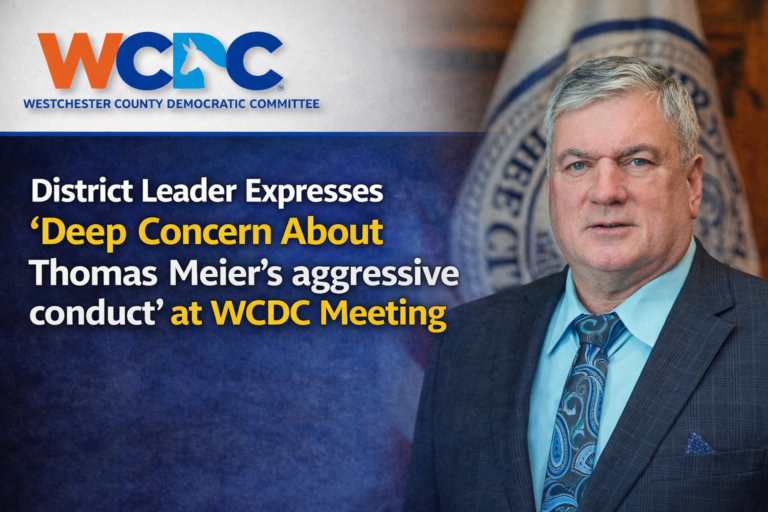
The rift inside New York’s Democratic Party just got deeper. Jay S. Jacobs, the longtime chair of the New York State Democratic Committee, has made it clear: he will not endorse Zohran Mamdani in the race for New York City mayor. This refusal comes despite Governor Kathy Hochul’s controversial move to throw her support behind Mamdani, signaling a major fracture between the party’s progressive and establishment wings.
Why Jacobs Said “No”
Jacobs has long been critical of the party’s left flank, warning that progressive figures like Mamdani push policies that alienate working- and middle-class voters. His refusal to endorse is more than a personal disagreement—it is a political message. Jacobs is signaling to donors, elected officials, and party loyalists that Mamdani’s platform is too radical and too risky in a state already bleeding residents and struggling with public safety concerns.
Hochul’s Gamble
Governor Hochul’s endorsement of Mamdani shocked many within her own party. Critics argue that she has “played herself,” lending credibility to a candidate who has openly defied the party establishment and pushed ideas like decarceration and expansive housing reforms with little concern for how they impact communities on the ground.
Jacobs’ rejection of Mamdani serves as a direct rebuke of Hochul’s gamble. It exposes the tension between a governor seeking to court the left for political survival and a party chair trying to preserve the party’s viability in the eyes of everyday voters.
The Stakes for Black and Brown Communities
For Black New Yorkers, the divide is not just about ideology—it’s about outcomes. Policies supported by Mamdani, such as releasing more individuals from Rikers Island without adequate mental health services in place, raise real questions about public safety. Communities already dealing with gun violence, retail theft, and a fragile local economy could be the ones paying the price if progressive experiments fail.
Meanwhile, Hochul and other Democratic leaders have done little to deliver tangible improvements in education, housing affordability, and economic opportunity for Black and Brown families. Jacobs’ refusal to endorse Mamdani shines a light on this failure, and it forces voters to ask: who is truly working for us?
A Party at War with Itself
Jacobs’ move is a public warning shot. The Democratic Party in New York is at war with itself—between the far-left voices demanding ideological purity and the establishment trying to hold onto a shrinking base. This is not just political drama; it is about whether New York can govern effectively in a time of crisis.
As voters watch this play out, one thing is clear: the fractures inside the Democratic Party are no longer behind closed doors. They are on full display, and the communities that need real solutions the most are caught in the middle.
Farmers markets have always been more than just a place to buy fruits and vegetables—they are the heartbeat of a community. They connect local growers directly with residents, strengthen local economies, and promote healthier lifestyles by giving families access to fresh, seasonal, and often organic produce.
The Greenburgh Farmers Market, powered by Dare to Be Different, is a shining example of how a market can transform a community. By creating a welcoming space where neighbors gather, this market not only supports small farmers and vendors but also educates the community about the value of sustainable eating. Shoppers know where their food comes from and can meet the people who grow it—a connection that fosters trust and appreciation for the land.
In addition to fresh produce, the Greenburgh Farmers Market features locally made goods, wellness products, and cultural foods that celebrate diversity. It is more than shopping—it’s an experience that encourages families to eat better, spend locally, and take pride in community-driven growth.
Supporting markets like Greenburgh’s is an investment in both health and community. As Dare to Be Different reminds us, embracing fresh food and local business is not just a choice—it’s a lifestyle that helps us all thrive.