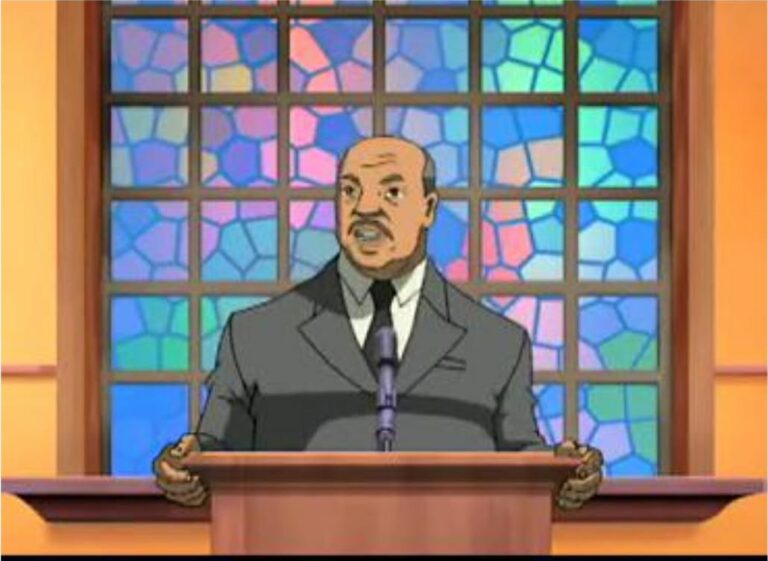
I’m sitting here watching the ninth episode of the first season of The Boondocks, titled ‘The Return Of The King,’ which aired January 15, 2006. The episode tackles the concept of what if MLK were alive today, how disgusted and downright disappointed he would be with how things are now.
In the episode, Huey Freeman narrates an alternate version of history in which Martin Luther King Jr. survived his assassination attempt on the balcony of the Lorraine Motel in Memphis, Tennessee, on April 4, 1968, but fell into a 32-year coma, awakening in October 2000.
Aaron McGruder the show’s creator, dealt with MLK, seeing how some of the streets named after him were the most violent, his disgust with BET, and the videos and music we see and hear all day, just to name a few of the issues it dealt with.
I sat there watching this episode, left with a big What If????
What if Dr. Martin Luther King Jr. were still alive today???
How would he have dealt with the government’s slow response and the rebuilding of New Orleans??
Where would we be if he were still alive today? What would he think of the current state of Hip Hop What would he think of today’s lyrics What would he think of the ways things are after the sacrifices he and others made for advancements, that today’s youth don’t take advantage of or even care in some cases???
What would he think of our current leaders who would rather play it safe than speak out on the atrocities faced by those in our inner cities? And how the preachers, teachers, and politicians continue to water down his legacy by turning him into a peaceful dreamer?
What happens when the youth wait for a leader and one never comes- what do they do, where do they turn???
When do we stop sitting still, celebrating the civil rights movement of the 60’s, and reminiscing, and step up to the plate and deal with our current situations we are facing.
As the title of Kevin Powell’s book ask “Who Will Take The Weight?”
How would MLK utilize this new technology age, we are in to get the word out and educate the youth and his people?
Big up to Aaron McGruder and company for addressing the topic.
Like the Boondocks, I pray this editorial is thought-provoking. How do u think it would be if he were alive today?
What would be different??? Inquiring minds wanna know!!!
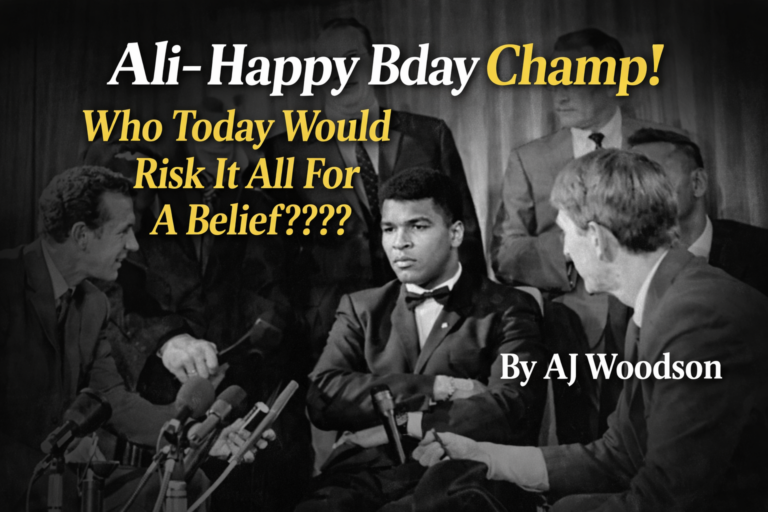
On Saturday, January 17, 2026 The Greatest Of All Time, Muhammad Ali, would have been 84 years old. He may have fought professionally for 21 years, won the world heavyweight title three times, and paid a heavy physical price for his labours, but Ali was so much more than that.
Muhammad Ali’s greatness extends far beyond his legendary boxing skills because he was a courageous activist, a symbol of freedom and equality, a cultural icon who spoke truth to power, and a humanitarian who stood for his principles even when it cost him his prime years, making him a global inspiration for his fight for justice and self-belief.
It still remains an unequivocal point of view that Ali was the most charismatic sportsman of all-time and retains a place in the hearts of millions. Ali was not only one of the greatest to ever lace up a pair of boxing gloves, but an individual who gave up the best years of his career because of a belief.
Which brings me to the point of this editorial, What Superstar Athlete would give up the best years of their career today for what they believe?
When you look at today’s superstars, best boxers right now, consistently topping pound-for-pound lists, include Terence Crawford, Oleksandr Usyk, and Naoya Inoue, and heavyweights like Tyson Fury, NBA stars like LeBron James, Nikola Jokić, Giannis Antetokounmpo, Shai Gilgeous-Alexander, Kevin Durant and Stephen Curry, NFL quarterbacks Lamar Jackson, Josh Allen, and returning MVP Patrick Mahomes, C.J. Stroud, Jared Goff, and Jalen Hurts and [insert superstar athletes here]. Who would be willing to fight for their beliefs even at the point of jail time and loss of the right to do what they do at the height of their career?
I’m sure some will name Pat Tillman, the former Arizona Cardinals safety who left football to become an Army Ranger, who was killed in southeastern Afghanistan in April 2004. While that was a very brave and patriotic move, and I in no way want to undermine the importance of that, but he wasn’t a superstar, a champion, a household name.
What superstar athlete today would give it all up? Ali was stripped of his championship title and denied the right to fight and earn a living doing what he does. But he would not go to war to fight against someone he didn’t perceive as an enemy. He also would not denounce the Nation of Islam when the government tried to get him to. He even threw his 1960 Olympic Gold Medal in the Ohio River in disgust at this country’s actions.
Here are just some of the key aspects of his impact outside the ring:
Civil Rights Activist: Ali was a vocal advocate for civil rights and a powerful voice against racial injustice, challenging the status quo and inspiring others to embrace individuality.
Vietnam War Protester: His refusal to be drafted, citing his religious beliefs and opposition to fighting for a country that denied Black people equal rights, led to him being stripped of his title and facing years out of the sport, a sacrifice that solidified his heroic image.
Cultural Icon: Ali’s charisma, showmanship, and powerful words made him a beloved figure for both celebrities and the common person, bridging gaps and becoming a symbol of peace, freedom, and equality.
Humanitarian: He used his platform to help others, engaging in charitable acts, working to free hostages, visiting the sick, and supporting underprivileged children, demonstrating a deep commitment to humanity.
Champion of Conviction: He refused to compromise his beliefs, even when it meant significant personal loss, teaching the world the power of conviction and identity, notes YouTube.
Ali still appeared at major events, like the 1996 Olympics, and even as far back as 1991, he put his life on the line by going to Saddam Hussein and asking him to release American prisoners. Not to mention when he went to Iran years earlier, when President Carter and the United States Government couldn’t negotiate the release of the hostages, Ali went and was successful.
Muhammad Ali risked his career, freedom, and legacy by refusing the Vietnam War draft in 1967, citing his religious beliefs as a Muslim and opposition to the war, famously saying, “I ain’t got no quarrel with them Viet Cong”. This led to him being stripped of his World Heavyweight Boxing Championship title, losing millions in earnings, banned from boxing from 1967 to 1970, missing his prime years in the ring, convicted of draft evasion (though later overturned by the Supreme Court), he faced a potential five-year prison sentence and a $10,000 fine after his conviction for draft evasion.
Don’t forget the public backlash he faced. He endured intense criticism and controversy, though he also gained immense respect for his stance.
Yet he stood ten toes down on his principles of faith and justice, becoming a powerful symbol of resistance and was unapologetically Black!
Even when the Nation of Islam, the same religious group that anointed him Muhammad Ali, disavowed him for his style of active resistance, according to Dave Zirin’s A People’s History Of Sports In The United States. Jackie Robinson, who was larger than life for breaking Major League Baseball’s (MLB) color barrier on April 15, 1947, ripped Ali for disappointing black war veterans, and by and large, black soldiers agreed with Robinson: Ali was being too radical.
“He’s hurting, I think, the morale of a lot of young Negro soldiers over in Vietnam,” Robinson said. “And the tragedy to me is, Cassius has made millions of dollars off of the American public, and now he’s not willing to show his appreciation to a country that’s giving him, in my view, a fantastic opportunity.”
But to Ali, that “fantastic opportunity” was a death sentence, and moreover, representative of the white aristocracy’s use of poor, often Black Americans to fight the war for them.
“The government had a system where the rich man’s son went to college, and the poor man’s son went to war,” Ali said.
His courageous stand cemented his legacy as not just a great athlete but a moral icon who used his platform for profound social change.
Sure, some athletes speak up today, but other than Colin Kaepernick, whose decision to kneel during the national anthem in 2016 to protest racial injustice and police brutality, which resulted in significant personal and professional risks, ultimately leading to the end of his NFL career. And Kyrie Irving, who is seen by some as a transcendent talent who consistently takes risks, both professionally and personally, often jeopardizing his own stability and team success for his beliefs or desires. The list ends there. Even in those situation they weren’t stripped of championships and didn’t risk spending years in jail.
All things considered, Ali’s enormous career sacrifice and the values it represented spread throughout the nation, and no athlete has had such a profound societal impact since. Professional athletes still speak out admirably on social issues fifty years after Ali said he had no conflicts with the Viet Cong. LeBron James, for example, wore a “I Can’t Breathe Shirt” in December 2014 to support protests for Eric Garner, but they don’t truly face the same risks as Ali.
Even LeBron James said Muhammad Ali is “the GOAT” not because of what he did in the ring but because of what he stood for outside it.
“Today I can sit and go to China and make trips to China and all over the world, and people know my name and know my face,” James said to ESPN. “I give all credit to Muhammad Ali because he was the first icon.”
In that ESPN article, James further makes my point that not every athlete is driven to take a stand on social and cultural issues the way Ali did — but that Ali’s work serves as motivation for James to continue to speak out and be active in the community.
Instead of risking their jobs for their activism, today’s brand-focused, businesslike athletes typically opt to make decorative political statements with T-shirts, playing gear, and social media posts.
What superstar athlete today would put it all on the line for what they believe? Holla back
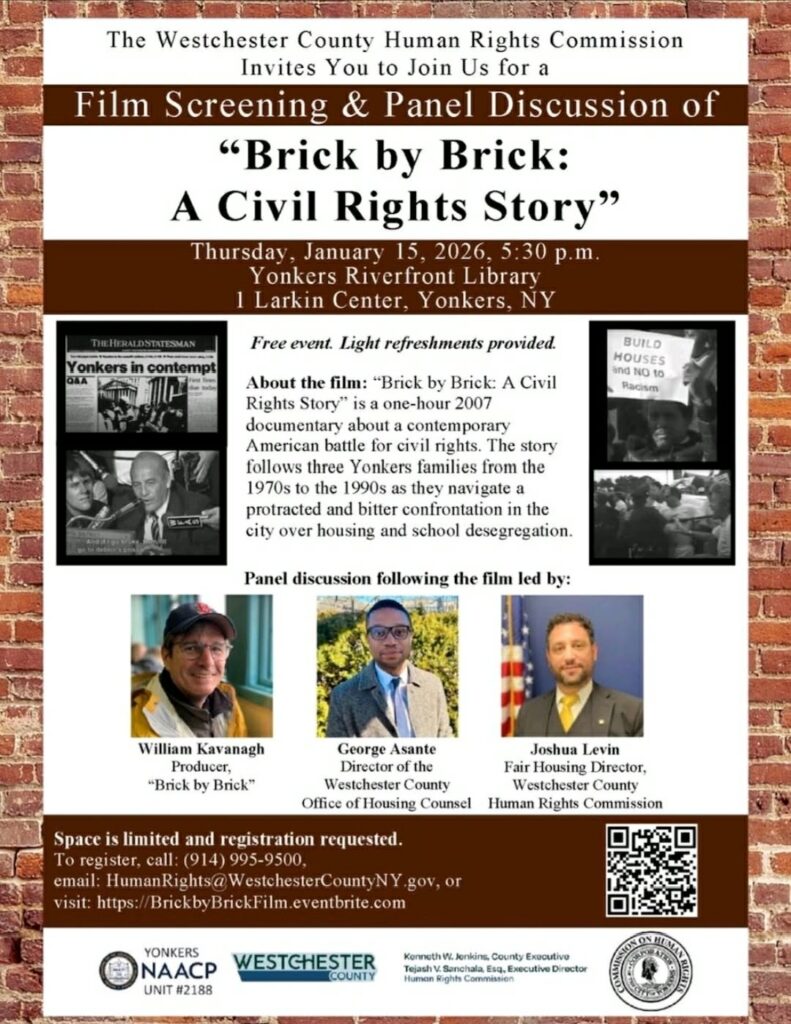
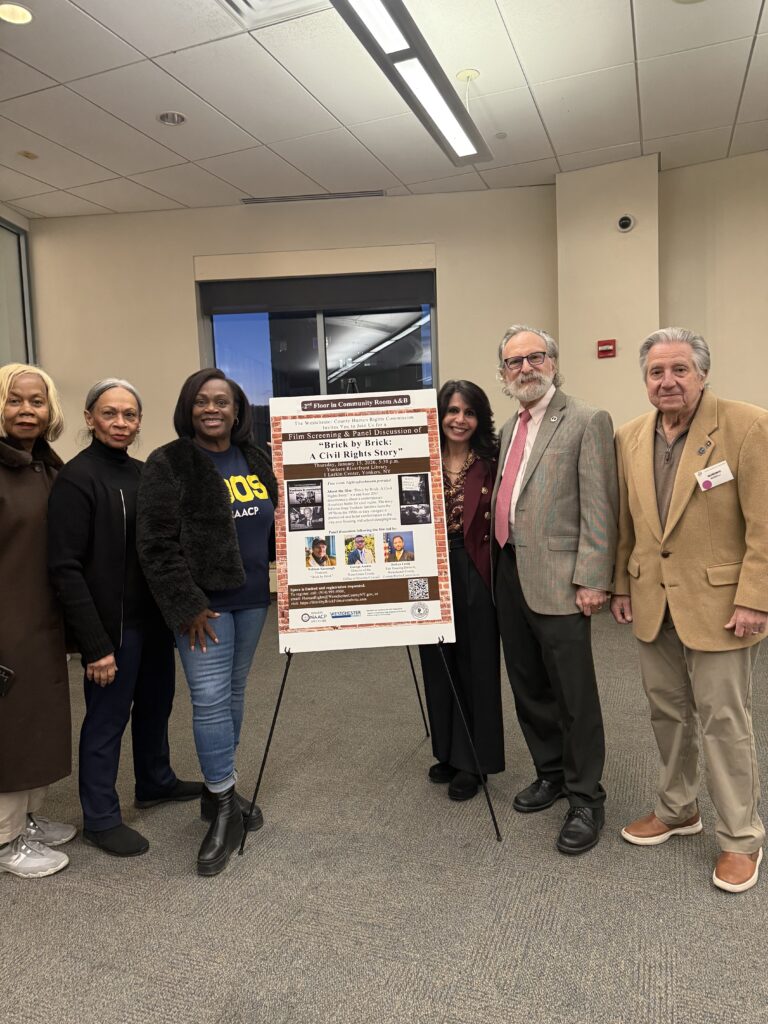
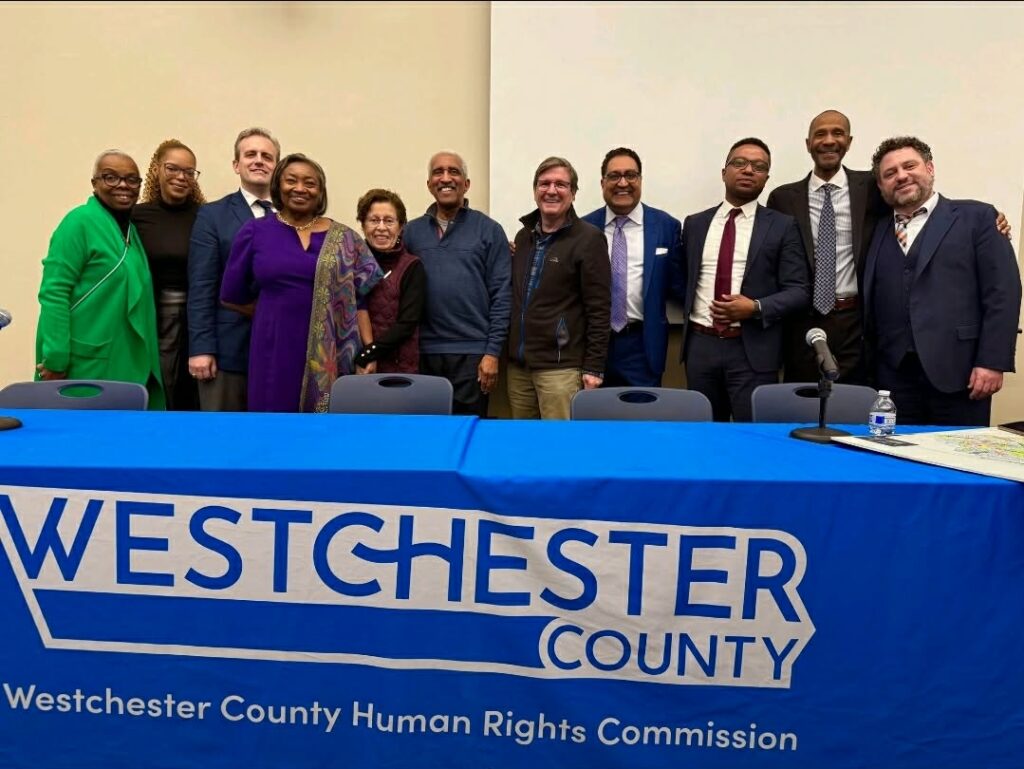
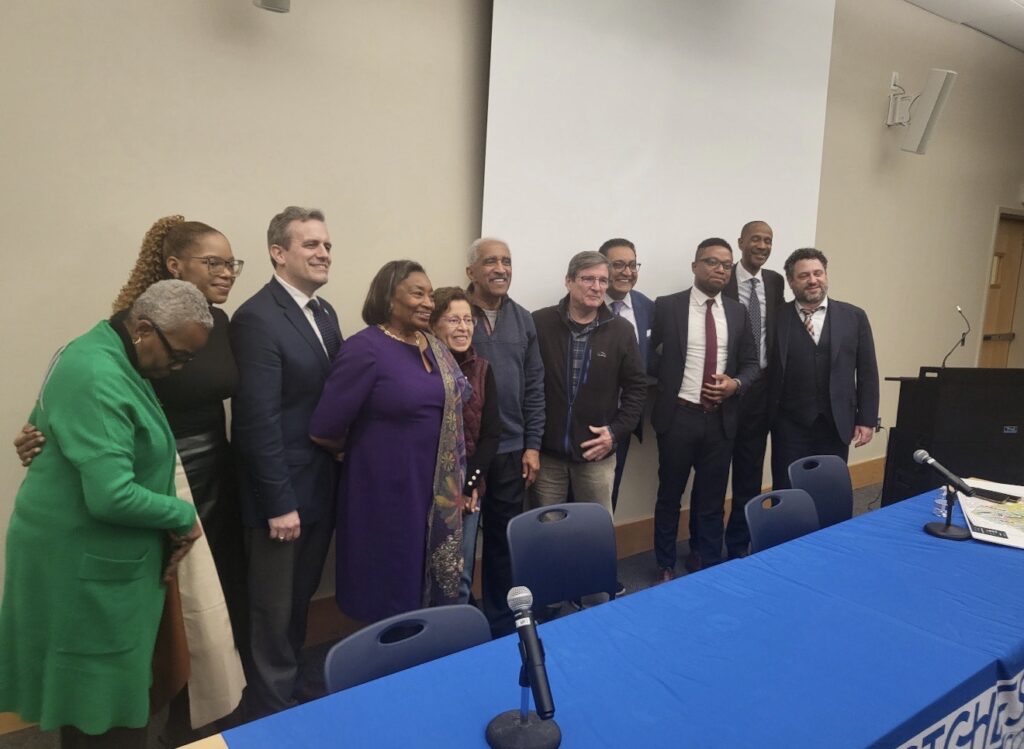
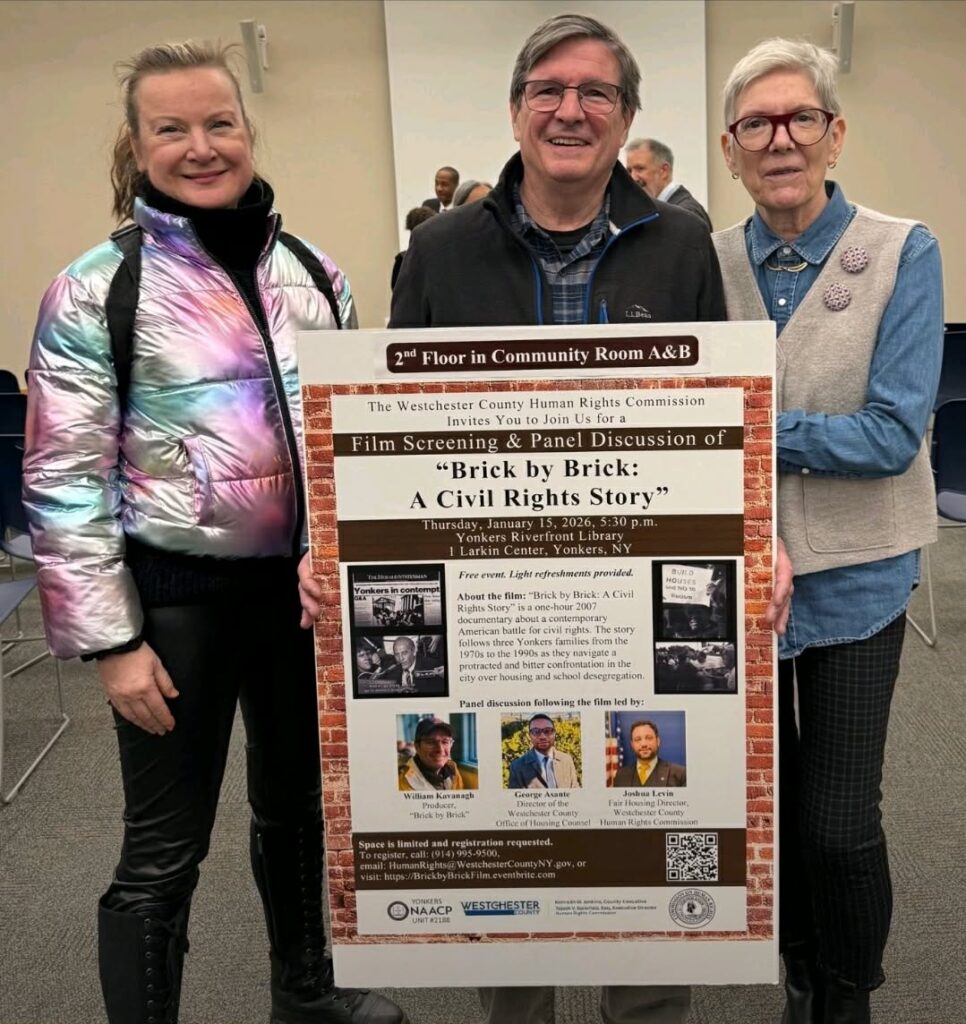
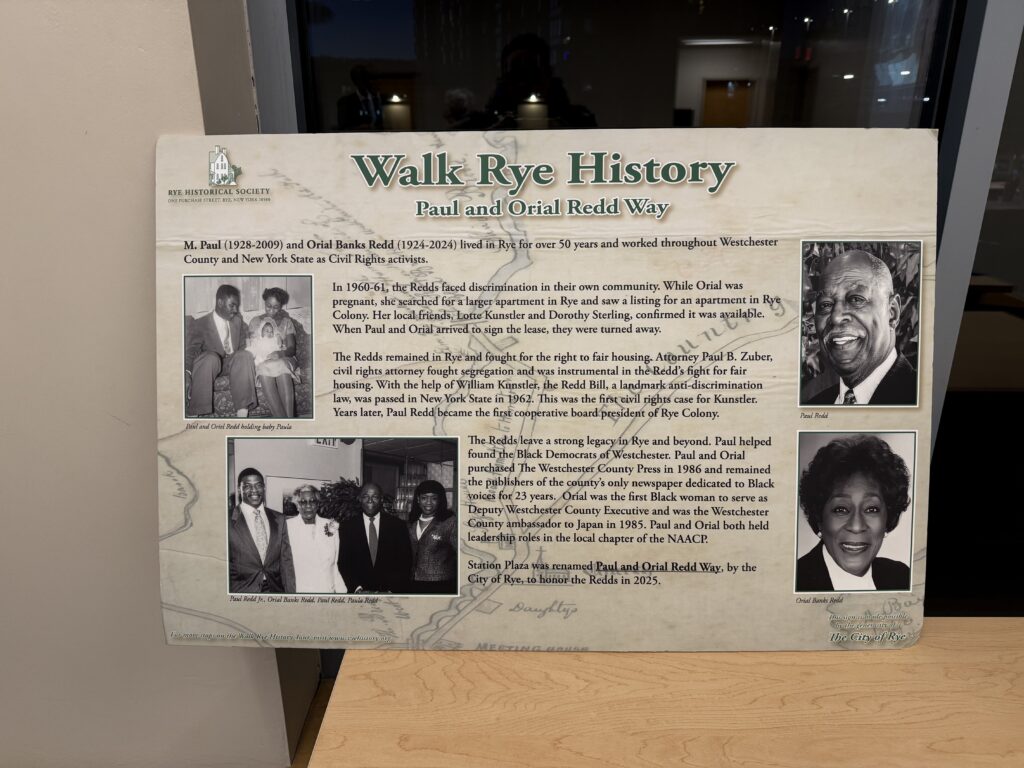
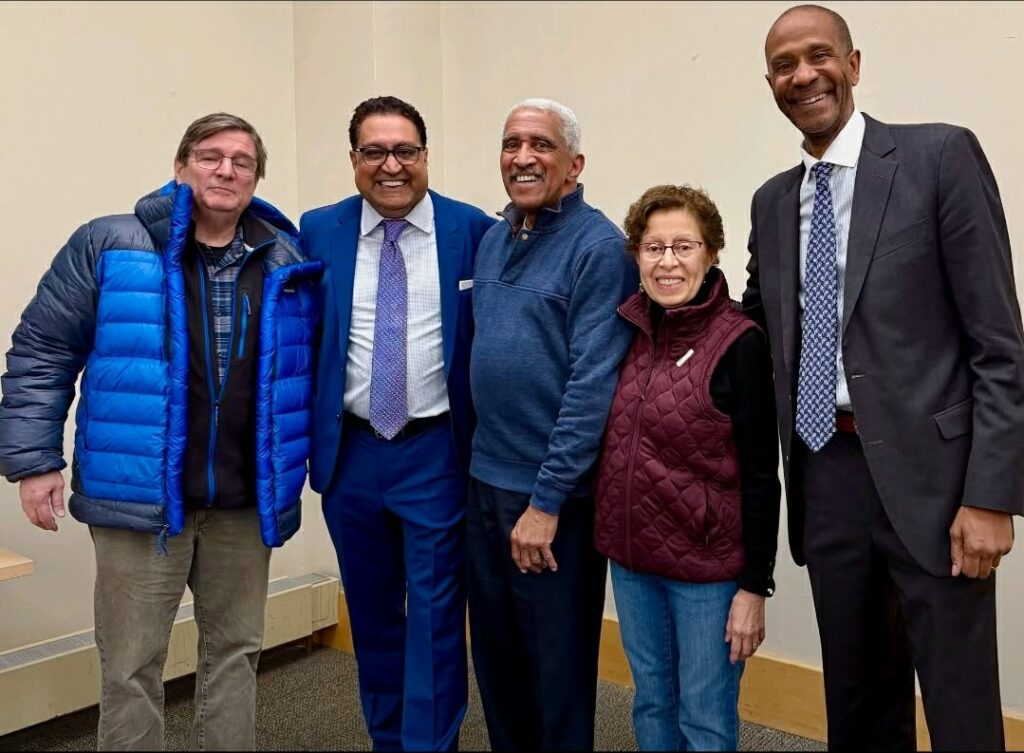
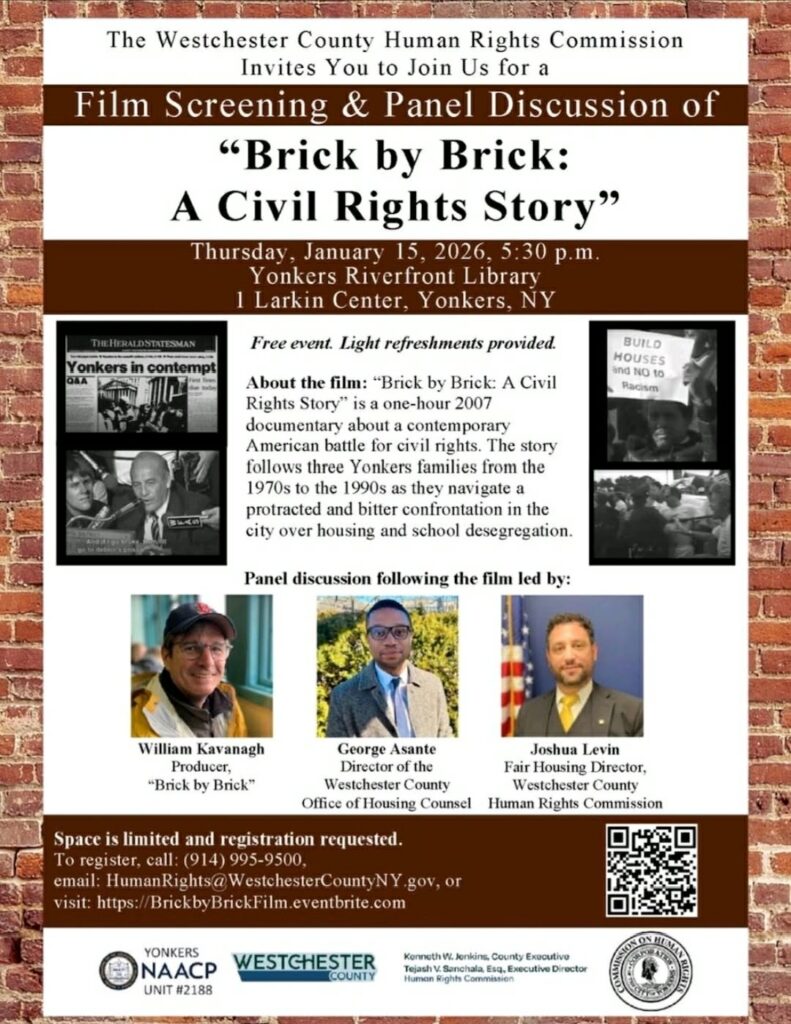
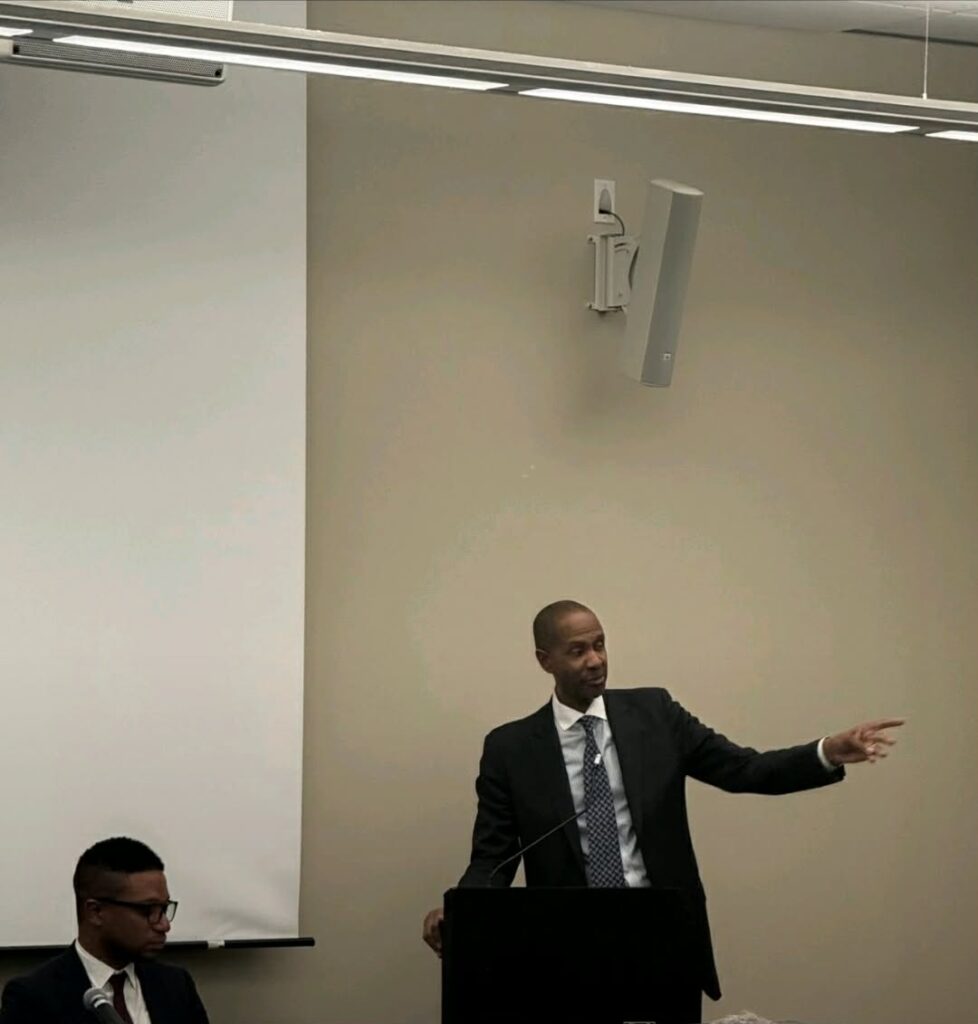
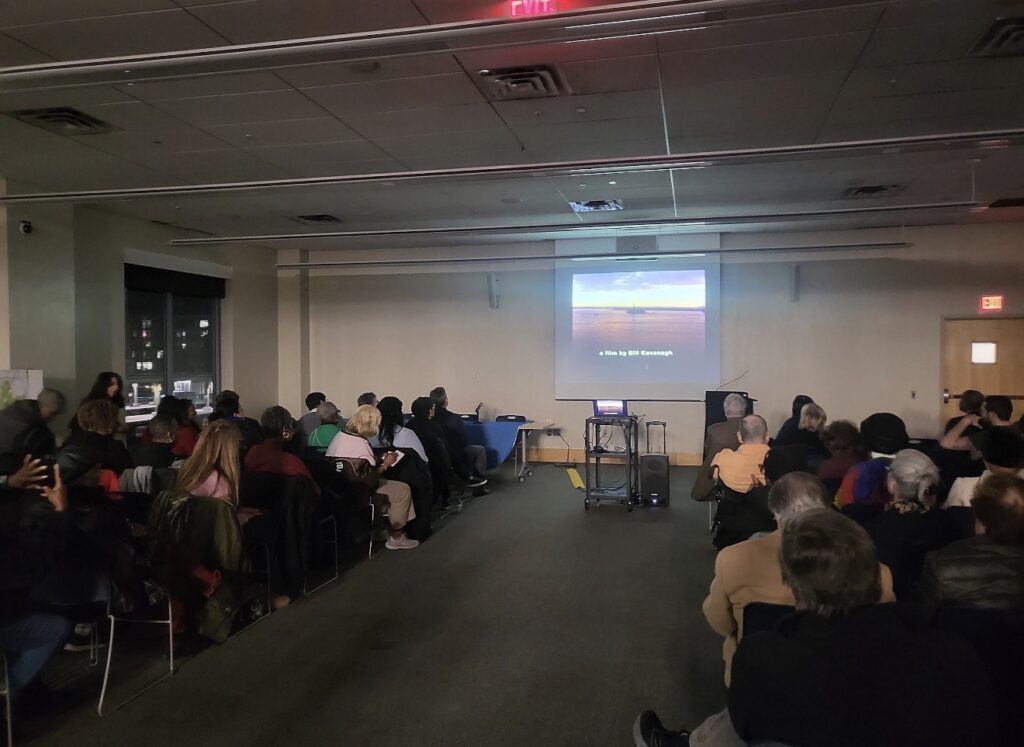
On January 15, 2026, at 5:30 p.m., the Yonkers Riverfront Library didn’t just host a film screening; it hosted a reckoning.
If you walked into that room expecting a tidy ending to the civil rights story, you came seeking closure in a space where accountability has yet to arrive. What you encountered instead was a mirror. A time machine. And a reminder that Westchester often calls injustice “history” when the work of reckoning feels too close.
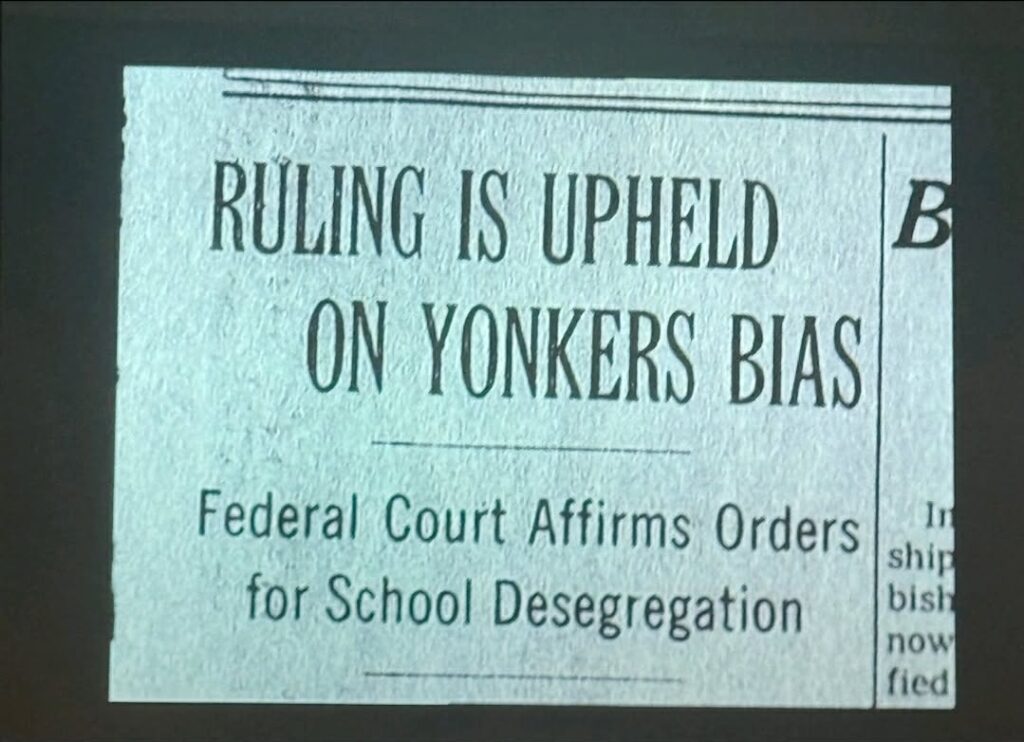
The event was sponsored by the Westchester County Human Rights Commission and the NAACP Yonkers Branch. The evening centered on a screening of “Brick by Brick: A Civil Rights Story,” a documentary that traces Yonkers’ prolonged and bitter fight for desegregation housing and education from the 1970s through the 1990s.
And before anyone could get cozy thinking, “Oh, that was back then,” the evening made one thing painfully clear: the “then” IS Now. It just learned how to speak in policy memos instead of protest chants.
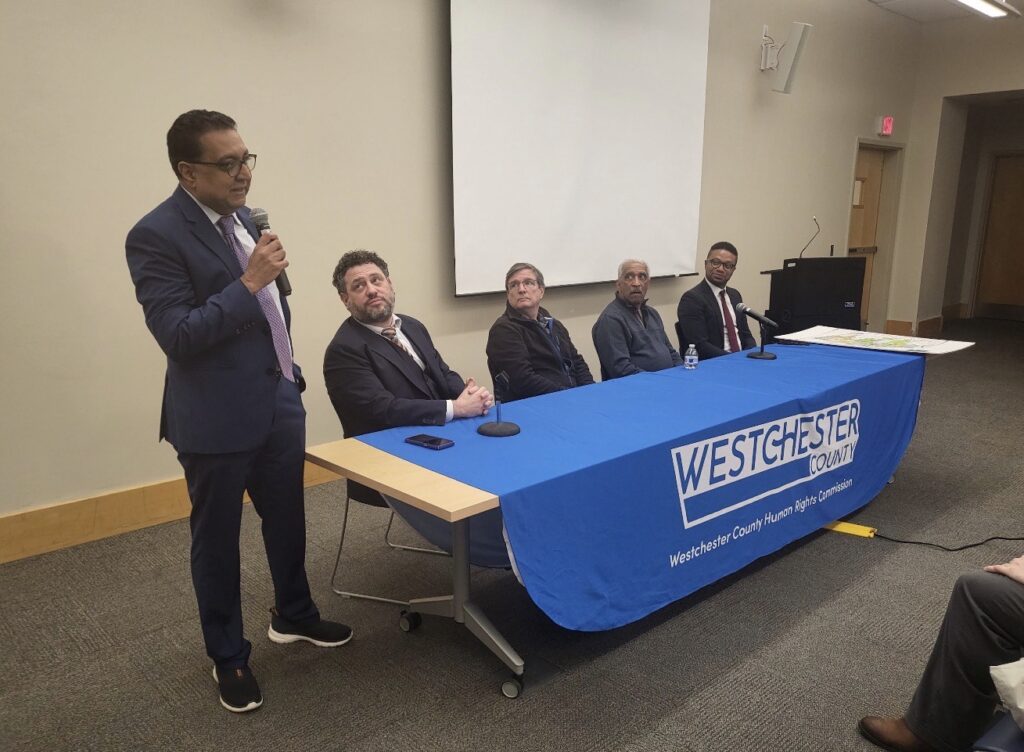
Tejash Sanchala of the Westchester County Human Rights Commission opened the program by grounding the room in why this story still matters, not as nostalgia, but as unfinished business. It was Sanchala who also made clear that Majority Leader Andrea Stewart-Cousins is, quite literally, the “Mother of the Westchester County Human Rights Commission.” Institutions don’t appear out of thin air. Someone has to fight for them, fund them, defend them, and keep them alive when political will gets shaky.
This wasn’t simply a screening. It was a shared understanding in the room that policy only moves when people refuse to let it stand still.
Kisha D. Skipper, President of the NAACP Yonkers Branch, one of the sponsors of the program, stepped fully into that moment. Not just supporting, but naming the ecosystem. She acknowledged fellow NAACP leaders who have been consistently active in housing justice initiatives: Janice Griffith of White Plains/Greenburgh and Aisha Cook of New Rochelle. Because movements don’t happen in silos and erasure thrives when we pretend that they do.
Kisha also made it clear that the Yonkers NAACP was not adjacent to this history; it was integral to it. She reminded the audience that the movement documented in Brick by Brick did not unfold without organized resistance and sustained advocacy from the Yonkers NAACP.
The film itself features Winston Ross, a pioneering President of the Yonkers NAACP from 1971 to 1978 and former Westchester Regional Director, whose leadership helped shape the city’s response to housing segregation during one of its most volatile chapters. By naming that legacy aloud, Kisha bridged past and present, reinforcing that today’s advocacy is not a reinvention, but a continuation of work built brick by brick by leaders willing to confront power directly.
Majority Leader Andrea Stewart-Cousins echoed that sentiment, affirming the critical role the Yonkers NAACP has played then and now. She noted that the branch’s work has never wavered, only evolved and emphasized that under Kisha D. Skipper’s leadership, the Yonkers NAACP continues to meet today’s housing and human rights challenges with the same clarity, resolve, and moral urgency that defined its earlier work.
Also present were the people who show up when the cameras aren’t rolling: Michael Sabatino, Director of the Yonkers Human Rights Commission, and Michelle Sayegh, its Secretary. NY State Majority Leader Andrea Stewart-Cousins was in attendance, alongside representatives from her office Symra Brandon former Westchester County Legislator and Director of Community Affairs for Stewart-Cousins, Anne Willis and Jacob Weitzman, representative for Senator Shelley Mayer, Christine Fils- Aime, representative for Assemblyman Nader Sayegh, Chandra Sookdeo, and representative for Councilwoman Corazón Pineda-Isaac’s, Leslye Oquendo-Thomas.
Translation: this room mattered.
The panel itself reflected the many lanes this fight has traveled, legal, personal, political, and cultural.
William Kavanagh, producer of Brick by Brick, reminded the audience that the film was never meant to be a victory lap. It was documentation. A warning. A record of what happens when communities are forced to litigate their humanity brick by brick while institutions opposing them wait comfortably for exhaustion to do the work.
George Asante, Director of the Westchester County Office of Housing Counsel, grounded the conversation in present-day enforcement, pointing to how the legacy of segregation continues to shape where money flows, where it doesn’t, and who is expected to absorb the consequences quietly.
Then there was Gene Capello and when Gene spoke, the room leaned in.
Capello appears in the documentary, but during the panel he did something more important than narrate the past. He invited the audience to borrow his lens.
He posed a question that cut through policy language and landed squarely in the body:
“What’s more important than where you live?”
And then he answered it.
Where you live determines the opportunities you discover and the ones you never even get close enough to imagine.
Capello helped found FairHousingJustice.org, an organization rooted in that truth. Because housing isn’t just shelter, it’s access. It’s stability. It’s whether banks see you as “investable” or invisible.
Before moving on, Gene paused to acknowledge someone sitting quietly in the audience, his wife, Doris Capello. He shared that she never left his side during the fight. Not through the legal battles. Not through the exhaustion. Not through the moments when pushing forward would have been easier to abandon. Doris, he said, was his fuel, the reason he kept pushing when the resistance felt relentless.
It was a reminder that movements aren’t powered by individuals alone. They’re sustained by unseen labor, by partnership, by the people who hold the weight when the spotlight isn’t theirs.
And the data backed Gene’s lens.
During the discussion, it was noted that most evictions in Yonkers occur in the 10701 zip code, one zip code absorbing a disproportionate share of displacement while other areas remain insulated.
That’s not coincidence. That’s design.
The panel addressed banking inequalities that mirror old redlining maps, where red-coded neighborhoods still experience disinvestment, while blue-coded areas enjoy an abundance of capital. Money flows freely where risk is perceived as low, and dries up where communities have long been labeled expendable.
This is how people lose homes without missing payments.
This is how instability becomes normalized.
This is how entire neighborhoods are treated as temporary.
And it’s not just local.
Racial covenants, once explicit, now disguised, still echo across the country, shaping who gets to keep their home, who gets pushed out, and who is forced to rebuild again and again without ever being allowed to settle.
Joshua Levin, also a panelist, spoke from another critical vantage point. While not featured in the documentary, he was actively engaged in housing and civil rights battles during the period when the film was developed and released. As he reflected on that era, the realization was unavoidable: today’s housing fights don’t feel like distant descendants of the past.
They feel familiar.
Different language.
Same delays.
Same resistance to equity dressed up as “process” and “procedure.”
What the panel ultimately made clear is that Yonkers and Westchester more broadly, is still negotiating with a history it has yet to fully resolve.
We didn’t just watch a documentary. We time-traveled. And when we came back to 2026, the buildings looked newer, the branding looked softer but the systems were standing in the same place.
The question now is whether moments like this stay in libraries or move into legislation.
And more specifically, whether the current administration is willing to do what equity actually requires: build decent-quality, truly affordable and low-income housing east of Sawmill River Road, not just where it’s politically convenient, but where it disrupts the crimson lines segregation was designed to protect.
Fair housing cannot remain concentrated west of those crimson lines that have dictated opportunity for generations. If access to stability, quality schools, green space, and economic mobility continues to stop at Sawmill Road, then we are not correcting history, we are maintaining it with better language.
This is the work in front of us.
Not studies.
Not symbolism.
Construction. Commitment. Political courage.
That’s the uncomfortable truth Brick by Brick leaves you with.
Progress isn’t linear. Justice isn’t guaranteed. And history doesn’t repeat itself, it just waits for us to get tired.
The real question isn’t whether Yonkers has changed.
It’s whether we’re finally ready to finish what people before us started or if we’re going to keep applauding stories about courage while avoiding the courage it takes to disrupt what still benefits from inequality.
Because brick by brick doesn’t just describe how injustice was built.
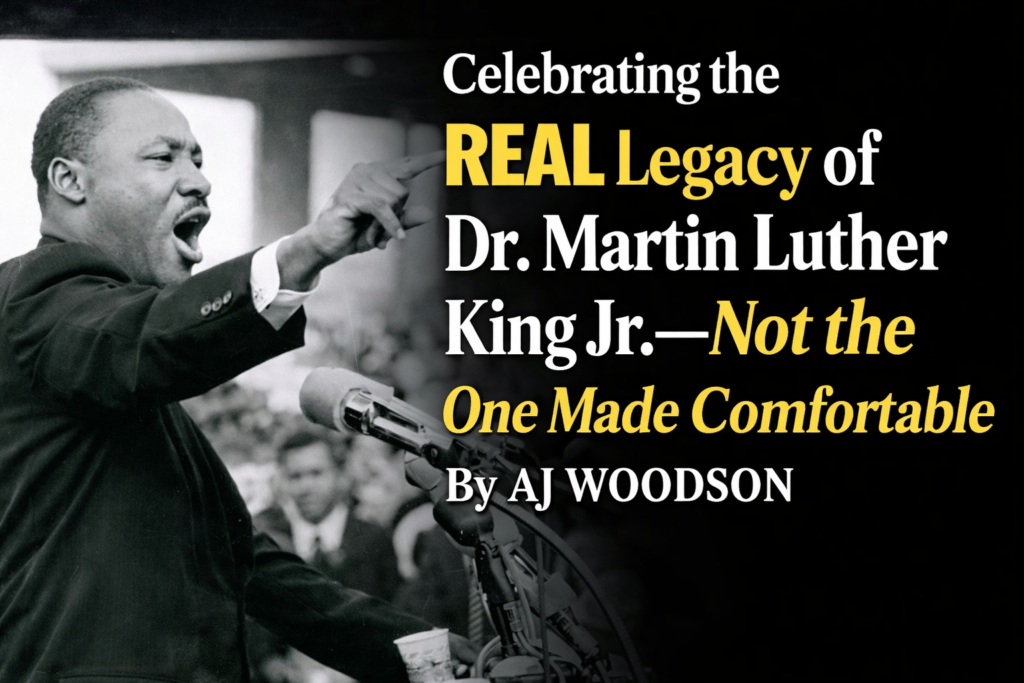
Every January for his birthday and February for Black History Month, Americans gather to honor Dr. Martin Luther King Jr. with phrases taken neatly from context, speeches shorn of discomfort, and a depiction of the man made palatable enough to offend no one. We are reminded that he had a dream, that he believed in peace and that love could overcome hatred. What we are rarely reminded of is that Dr. King was considered dangerous in his day by the powers to be, surveilled and labeled a terrorist by the federal government, denounced and condemned by the mainstream mostly white press, and assassinated while organizing the poor.
That whitewashing of history is not an accident. It is a strategy.
In his latter years, Dr. King greatly broadened his focus to confront poverty and economic inequality. He culminated the multiracial Poor People’s Campaign demanding jobs and income for all. To bring oppressed communities together and demand economic justice, and he advocated for systemic improvements. He believed that economic justice was the next stage of the fight for equality, reparations, contending that poverty was the main cause of societal inequality and that as long as adventures like Vietnam continued to attract men, skills, and money, America would never devote the necessary resources to the rehabilitation of its impoverished.
In his “Beyond Vietnam – A Time to Break Silence” speech on April 4, 1967 at Riverside Church in New York City when he was named co-chairperson of Clergy and Laymen Concerned About Vietnam, Dr. King spoke out against the Vietnam War and to “recapture the revolutionary spirit” of social justice in America.
This is the speech they NEVER share every January and February because it goes against their narrative of Dr King being a peaceful dreamer who believe in non-violence. But Rev. Martin Luther King Jr. knew the political consequences of speaking out against the Vietnam War − and he did it anyway.
“They got money for war, but can’t feed the poor,” Tupac spat in 1993 on his hit single Keep Ya Head Up.
Dr King challenged the government asking that very question, 26 years earlier. How could a nation spend so much money on a war, King asked, when it could not feed or protect its own people?
…and I knew that America would never invest the necessary funds or energies in rehabilitation of its poor so long as adventures like Vietnam continued to draw men and skills and money like some demonic destructive suction tube. So, I was increasingly compelled to see the war as an enemy of the poor and to attack it as such.
Perhaps a more tragic recognition of reality took place when it became clear to me that the war was doing far more than devastating the hopes of the poor at home. It was sending their sons and their brothers and their husbands to fight and to die in extraordinarily high proportions relative to the rest of the population. We were taking the black young men who had been crippled by our society and sending them eight thousand miles away to guarantee liberties in Southeast Asia which they had not found in southwest Georgia and East Harlem. And so we have been repeatedly faced with the cruel irony of watching Negro and white boys on TV screens as they kill and die together for a nation that has been unable to seat them together in the same schools. And so we watch them in brutal solidarity burning the huts of a poor village, but we realize that they would hardly live on the same block in Chicago. I could not be silent in the face of such cruel manipulation of the poor.
Ten days after the Beyond Vietnam speech, in another speech rarely shared, at Stanford University titled “The Other America,” Dr. King addresses race, poverty and economic justice. (At various times in 1967 and ’68 he gave slightly different versions of “The Other America” to other audiences.) Here, he expounds on his nonviolent philosophy and methodology.
And I use this subject because there are literally two Americas. One America is beautiful for situation. And, in a sense, this America is overflowing with the milk of prosperity and the honey of opportunity. This America is the habitat of millions of people who have food and material necessities for their bodies; and culture and education for their minds; and freedom and human dignity for their spirits. In this America, millions of people experience every day the opportunity of having life, liberty, and the pursuit of happiness in all of their dimensions. And in this America millions of young people grow up in the sunlight of opportunity.
But tragically and unfortunately, there is another America. This other America has a daily ugliness about it that constantly transforms the ebulliency of hope into the fatigue of despair. In this America millions of work-starved men walk the streets daily in search for jobs that do not exist. In this America millions of people find themselves living in rat-infested, vermin-filled slums. In this America people are poor by the millions. They find themselves perishing on a lonely island of poverty in the midst of a vast ocean of material prosperity.
The version of Dr. King most often presented today is a neutralized King—one stripped of his radical critique of American power, capitalism, militarism, and racial hierarchy. But I say to truly celebrate his REAL legacy requires us to move beyond comfort of rewritten force-fed history and confront what he actually stood for—and what he was fighting against.
Dr. King Was Not a Symbol—He Was a Threat
Dr. King was more than just a civil rights activist calling for desegregation by the late 1960s. He had turned into a moral insurgent challenging the foundations and fundamentals of American culture. He publicly denounced the Vietnam War and referred to the US as “the greatest purveyor of violence in the world today.” He criticized capitalism for creating both crippling poverty and outrageous wealth. He demanded not charity, but justice.
For this, he was vilified.
Major newspapers accused him of undermining national unity. Politicians distanced themselves. Even some civil rights allies urged him to “stay in his lane.” The FBI labeled him a subversive, wiretapped him, and attempted to destroy him psychologically. None of this fits the Hallmark version of Dr. King we are taught to celebrate.
Don’t get it twisted “The Dream” Was Never Colorblindness. Perhaps the most abused part of Dr. King’s legacy is the idea that he dreamed of a “colorblind” America—one where race no longer mattered and everyone simply got along. That framing ignores his actual words and intent. Dr. King did not argue that America should ignore race. He argued that America must repair the damage racism caused. He supported policies that today would be labeled “radical,” “divisive” or even “Liberal”: fair housing laws, labor protections, guaranteed income, and massive public investment in marginalized communities. He understood that equality without equity is a lie.
Let’s be real, Dr. King’s Fight Was Economic as Much as It Was Racial. At the time of his death, Dr. King was organizing the Poor People’s Campaign—a multiracial movement aimed at confronting poverty, wage exploitation, and economic injustice. He was in Memphis supporting striking sanitation workers, men who carried signs reading “I Am a Man” because the system refused to recognize their humanity. This was not accidental symbolism. Dr. King understood that racism and economic exploitation were intertwined. He believed civil rights victories meant little if people remained poor, housing insecure, and disposable.
That is why he demanded a guaranteed income. That is why he challenged corporate power. That is why he frightened those in power.
Even many of our Black Elected Officials and Black Pastors today run with the watered down narrative of Dr. King as a peaceful dreamer, because the Real Dr. King Still Makes America Uncomfortable.
“Justice too long delayed is justice denied” was not a polite suggestion—it was an indictment.
The reason the real Dr. King is rarely taught is simple: his message still threatens the status quo.
A King who demands racial repair challenges power. A King who condemns militarism questions empire. A King who criticizes capitalism disrupts profit. A King who sides with workers unsettles wealth.
So America keeps the dream—and buries the demands.
To all our Teachers, Preachers and Politicians I say Honoring Dr. King Means More Than Quoting Him
To truly honor Dr. Martin Luther King Jr. is not to repost his words once a year while ignoring the conditions he fought against they other 364 days. It means asking uncomfortable questions about whose lives are still undervalued, whose labor is still exploited, and whose suffering is still normalized.
It means recognizing that the struggle he gave his life for is unfinished.
Dr. King did not die for a holiday. He died for a transformation.
And if we are serious about honoring his legacy, we must stop celebrating the version of him that makes us feel good—and start confronting the one who demanded we do better.
Because the real tribute to Dr. King is not remembrance.
It is resistance.
Let’s celebrate the REAL Dr. Martin Luther King Jr., today. January 15, 2026 would have been his 97th birthday! Let’s not just celebrate the day off, lets continue the work. Let’s not let his legacy be watered down and whitewashed! Continuing the work he lived and died for is the best way to celebrate Dr. King and honor his legacy and that’s REAL TALK!
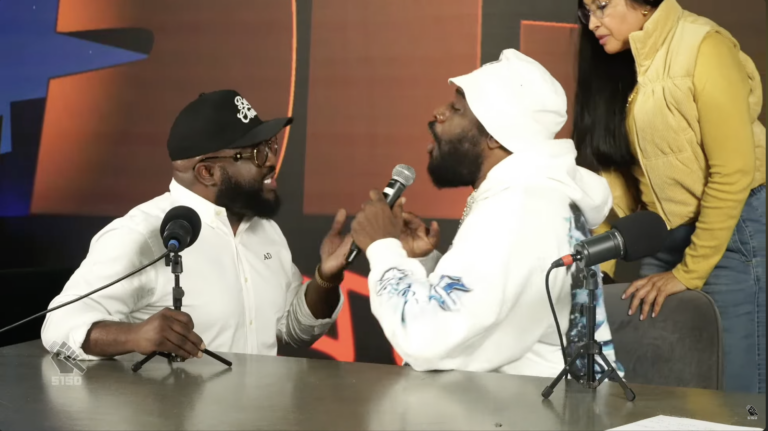
The most revealing part of the Corey Holcomb–Anton Daniels exchange was not the shouting, the near physical escalation, or the viral tension. It was the method. A conversation that began with serious questions about slavery, power, Christianity, political legitimacy, and strategy collapsed the moment the debate stopped being about outcomes and became a contest of masculinity.
That collapse was not accidental.
Black political discourse increasingly follows a predictable pattern: real issues are introduced, moral positions are staked out, and then the conversation is emotionally redirected until dominance replaces analysis, highlighting how communities stay stuck while conversations trend.
This is how communities stay stuck while conversations trend.
In my view, Anton did not want to have those conversations with Corey on the actual subject matter—at least not on Corey’s terms. Rather than engage deeply on history, institutional power, or Black political identity, he reframed the exchange entirely. Like a “Professor X” move, he redirected the energy of the room. Instead of debating facts, definitions, or historical context, the conversation was made emotionally charged on Corey’s own platform. Once emotion replaced inquiry, the original topics became impossible to resolve—not because they lacked merit, but because they no longer mattered.
You don’t have to win an argument if you can control the atmosphere.
Who crossed the line—and why the debate ended there
It’s clear: Anton was disrespectful first. He introduced the first sexually degrading, manhood-challenging language directed personally at Corey. Up to that point, the exchange—while tense, loud, and confrontational—was still a debate. Once that threshold was crossed, it ceased to be one.
In any serious debate, the moment you abandon argument for insult, you have technically lost. Insults are not evidence. They are not logical. They are what people reach for when persuasion fails. At that point, the goal is no longer to prove a position—it is to assert dominance.
Once a debate turns into a test of manhood, outcomes disappear.
Anton’s move did something else that must be stated plainly: it put Corey in an impossible position on his own show.
If Corey chose not to address the insult, he would have lost credibility with his audience. In Black male culture, silence in the face of direct disrespect—especially face-to-face—is read as acceptance or weakness—his authority as host and as a man would have been questioned in real time.
If Corey chose to address it, he risked being framed as emotional or out of control, allowing critics to claim he “lost control of the show” rather than acknowledging that the show was disrupted.
That is not an accident. That is a trap.
Addressing it was not a loss of control. It was the enforcement of a boundary, demonstrating discernment and accountability. The loss of control occurred the moment the debate shifted from ideas to insults, highlighting the importance of leadership qualities in maintaining substantive dialogue.
Once a host is forced to defend his dignity rather than moderate a discussion, the debate has already been derailed. The audience may remember the tension, but the substance is gone.
Understanding how emotional hijacking works is crucial because it forces the target to choose between credibility and composure, which can undermine rational discussion and cloud judgment.
Identity escape and the cost of avoiding substance.
That same avoidance appears in Anton’s claim that he is not Black, that “Black is a construct,” and that he identifies as Christian first. On the surface, this sounds philosophical. In practice, it functions as an escape hatch.
A construct is not the same as a fiction. Money is a construct. Borders are constructs. Citizenship is a construct. Race, in America, is a legal and political construct that has governed who could own property, who could vote, who could access education, and who could receive protection under the law. Calling Blackness a construct does not make its consequences imaginary. It makes them measurable.
Declaring “I’m not Black” while engaging in debates about Black outcomes dismisses the historical reality that Blackness—constructed or not—has been the organizing category for law, policy, and exclusion in this country. Recognizing this context fosters responsibility in understanding Black political issues.
There is also a more profound contradiction embedded in claiming Christianity while refusing to recognize Blackness. Christianity does not exist outside of history, embodiment, or description. Scripture does not present Christ as abstract or colorless. Revelation describes Christ returning with feet like burned brass and hair like lamb’s wool. These are not modern political metaphors; they are biblical descriptions.
To claim Christianity while dismissing Blackness as unreal or irrelevant is to ignore Christianity’s own text selectively. If one rejects Blackness while affirming a faith whose central figure is described in unmistakably non-European terms, a serious question follows: what Christ is being accepted? A Christ whose physical description is denied is a Christ who will not be recognized when He returns.
Christianity without historical and scriptural honesty is not transcendence. It is avoidance.
This matters beyond this exchange.
Anton is publicly known for arguing that Black people do not need reparations. That position may be sincerely held, but it is often advanced without historical grounding. What is rarely acknowledged is that the earliest arguments for reparative justice did not emerge from modern liberal politics. They were advanced by Black conservatives and Republicans during Reconstruction, who framed reparations as a question of property, labor theft, and lawful restitution—not victimhood.
To dismiss reparations responsibly, one must understand their origins, who promoted them, and why they failed to become enforceable policy, emphasizing that certainty without context is performance, not conviction.
Heat versus strategy
The same dynamic appeared in the voting argument. Corey’s claim—that voting often functions as theater within a system controlled by entrenched power—reflects a real and widespread frustration. Anton’s counterclaim—that disengagement guarantees capture by insiders, especially at the local level—is also grounded in reality. These positions are not mutually exclusive. Systems can be captured and still produce different outcomes depending on participation.
But instead of interrogating that tension—when voting works, when it doesn’t, and what complementary strategies are required—the conversation collapsed into moral judgment. “Suckers” versus “ignorant.” Identity versus dominance. Heat instead of strategy.
This is the cost of emotional hijacking. Once the room is charged, no one follows up. No one demands definitions. No one traces cause and effect. The audience is entertained, but the hard questions die quietly.
Leadership is not proven by who can talk the loudest or control the room. It is proven by who can accurately define the problem, honestly understand the history, and propose solutions that can be tested in the real world. Masculinity performance produces none of that.
Until Black political debate moves away from dominance rituals and back toward logic, history, and measurable outcomes, we will keep having loud conversations that change nothing. And the people watching—looking for answers, not adrenaline—will keep paying the price.
This debate also teaches us something more profound that we can no longer afford to ignore: there is a difference between podcast leaders and leaders who are actually in the streets with the people. There is a difference between those who talk about issues for clicks and those who live with the consequences of those issues every day. There is a difference between comedians who use their platforms to open hard conversations and men who use their lives to tear down real strongholds—economic, spiritual, political, and social.
We can learn from all of them. But we must also learn to be discerning.
In an age driven by likes, views, algorithms, and followers, visibility is often mistaken for leadership. Volume is confused with wisdom. Confidence is confused with truth. And emotional performance is rewarded more than accuracy or accountability. That is how false leaders thrive—not because they are evil, but because they are amplified.
The responsibility does not rest only on those speaking. It rests on those watching. If we continue to reward heat over substance, dominance over discipline, and personality over outcomes, we will keep elevating voices that excite us but do not equip us.
Authentic leadership does not need to resort to emotional hijacking to win a debate. It does not need to test manhood to establish authority. And it does not fear history, truth, or accountability. In times like these, discernment is not optional—it is survival.
Let me tell you what peace actually looks like because it’s not just a word we put on posters and then forget how to practice once the folding chairs come out.
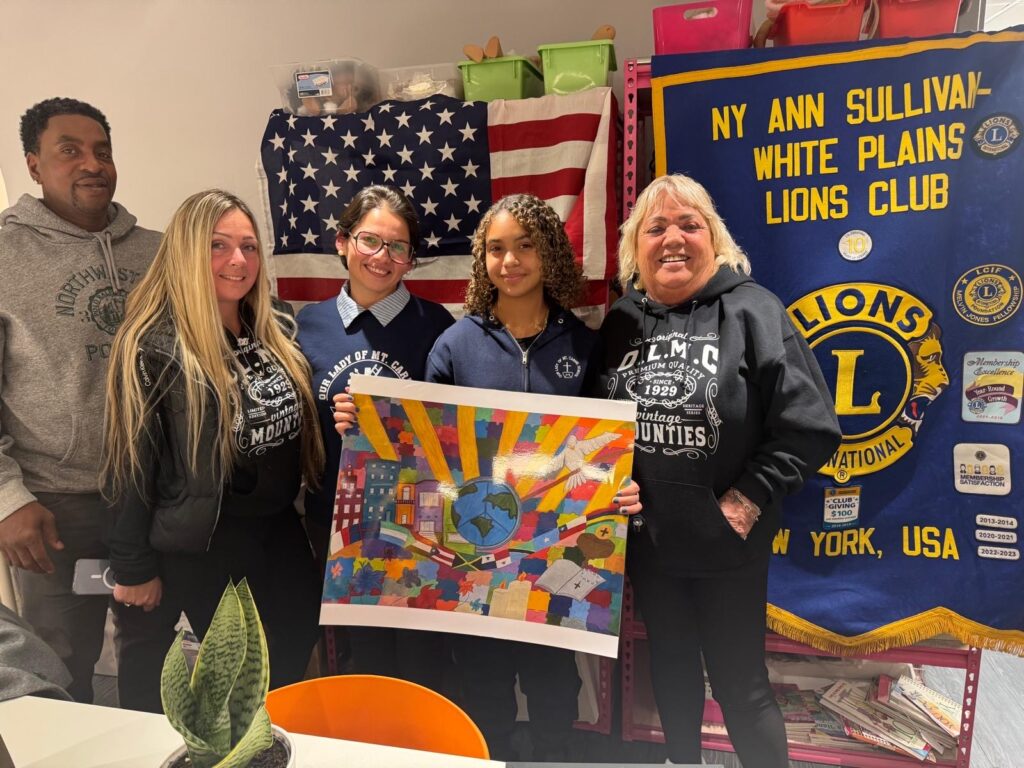
On January 13, 2026, peace was embodied by a young girl standing in her brilliance, accompanied by her mother, Krystal Sarno, her father, Floyd Prince, and her grandmother, all by her side. Not hovering. Not overshadowing. Simply present, anchoring the moment with the kind of quiet support that tells a child, you don’t have to carry this alone.
Their closeness mattered. You could feel it in the way Amberae stood, steady, grounded, unrushed. This wasn’t a solo moment. It was a family one. A reminder that when young people are affirmed publicly, it means more when the people who poured into them privately are there to witness it.
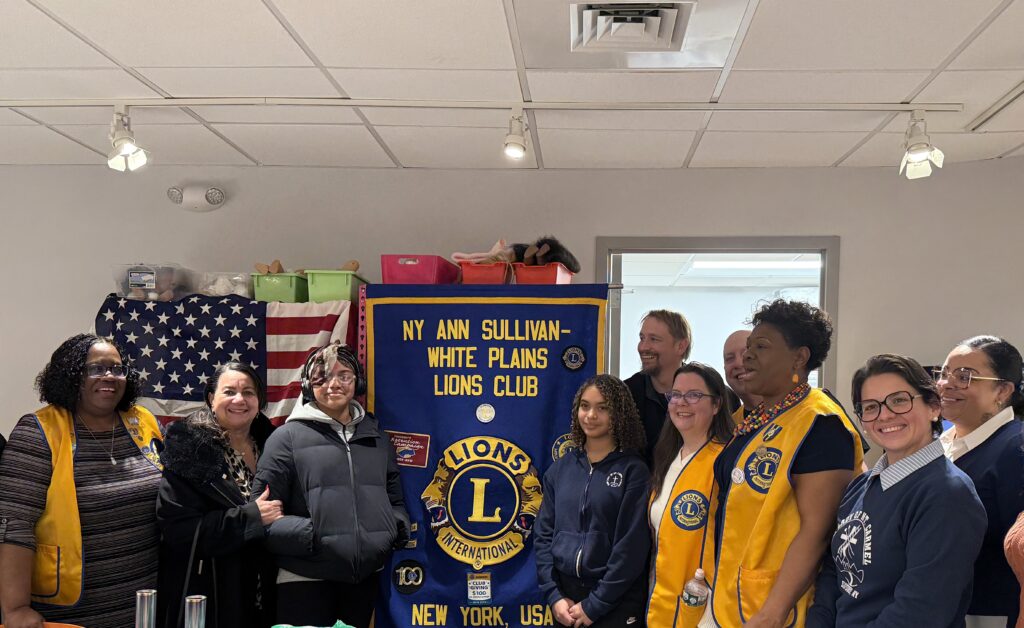
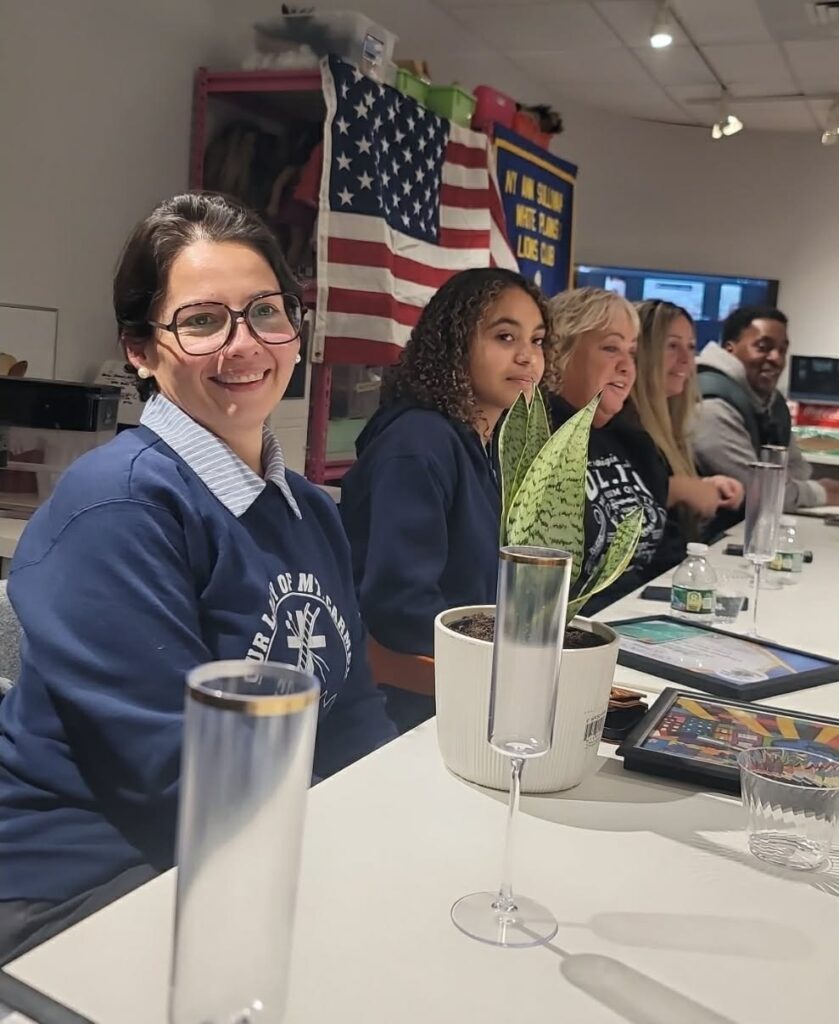
From 6:30 to 7:30 PM, inside Yes She Can Inc. on Church Street in White Plains, the New York Ann Sullivan–White Plains Lions Club did something that shouldn’t feel rare, but still does: they slowed down long enough to center a child, her voice, and the village that sustains her.
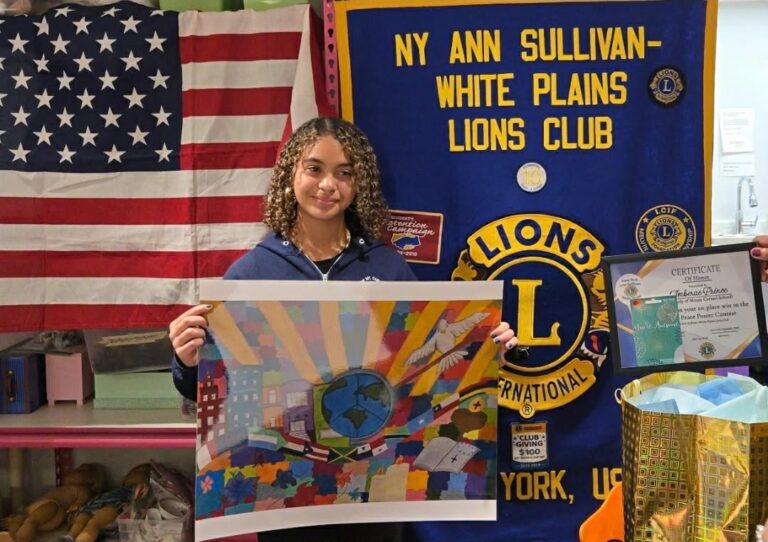
The evening celebrated Amberae Prince, a student from Our Lady of Mount Carmel School, whose artwork was selected as the club’s top Peace Poster and went on to place 4th at the district level in the Lions Clubs International Peace Poster Contest.
Let’s be clear, fourth in a district-wide competition is not “almost.” It’s earned. It’s discipline meeting imagination. It’s choosing to stay with an idea when it would be easier to rush to the finish.
That truth was named out loud by Mrs. Donna Chiavegatto, and she didn’t offer generic praise. She spoke in specifics, the kind that tells a young person, I see how you work. She lifted up Amberae’s focus, the way she stayed with her vision instead of rushing it. Her determination, the quiet resolve to revise and refine without losing heart. And her creativity, not just in colors or composition, but in how thoughtfully she translated the idea of peace into something you could feel, not just see.
You could watch those words land. Not bounce off. Not get minimized. Amberae received them. And that’s how confidence is built, when an adult names your process, not just your outcome.
That affirmation didn’t happen in a vacuum. Lorraine Rodriguez, EdD, Principal of Our Lady of Mount Carmel School, was present in the room. Not sending support from afar. Not delegating the moment. Showing up. Standing alongside her student, her educator, and the family. Leadership showing up like that says, this matters.
The circle widened even further.
Evelyn Santiago, Councilwoman for the City of White Plains, and Jeremiah Frei-Pearson, Council Member, were there, not for optics, not for a soundbite, but to celebrate. To sit in the room and witness youth excellence without needing the microphone. That presence matters because peace isn’t just what we ask children to imagine; it’s what adults are willing to show up for.
The evening also paused to honor legacy. January 13 marks the 147th birthday of Melvin Jones, the founder of Lions Clubs International. A reminder that service is not transactional. It’s inherited. Practiced. Passed forward. From one generation to the next.
That sense of continuity showed up within the club itself as well, with recognition of William Borfitz, whose past leadership helped create the conditions for nights like this. The work didn’t begin here, and it won’t end here. It moves because people carry it.
That same spirit flowed through the reflections shared by Lions Club leadership, including Lion President Myrna Peart and Lois Campbell, Secretary, who spoke openly about how difficult it was to choose just one poster from so many thoughtful and powerful submissions. That honesty mattered. It reminded everyone, especially the young people in the room, that excellence doesn’t stand alone. It lives among other excellence. It’s strengthened by community, not diminished by comparison.
What stayed with me wasn’t the certificates or the applause. It was the care. The pacing. The intention. A room full of adults, family members, educators, community leaders, and elected officials, saying with their presence and their words: your focus matters, your determination matters, your creativity matters.
That’s peace.
Peace isn’t passive.
Peace is practiced.
Peace is protected.
Peace is witnessed.
Sometimes peace looks like policy.
Sometimes it looks like protest.
And sometimes, on January 13, 2026, in White Plains, it looks like a young artist standing tall, surrounded by family, affirmed by her teacher’s careful words, supported by her principal’s presence, grounded in legacy, and celebrated by a community that truly understood the assignment.
For families like mine, Puerto Rico is not a headline.
It’s a grandmother’s voice that still lives in the ear.
It’s land that remembers footsteps even when people are forced to leave.
It’s a place where policy doesn’t stay on paper, it shows up in bodies, kitchens, and decisions about whether you can afford to stay where your people are buried.
And for those of us who are Newyorican, raised between boroughs and beaches, English dominant, Spanish remembered, Spanglish fluent, the connection doesn’t require perfect language. As soon as your feet hit the ground, the soul remembers. The heat. The rhythm. The familiarity that arrives before translation ever does.
So when the word “escalation” starts trending again, I don’t hear urgency.
I hear familiarity.
Because what’s happening right now isn’t new.
It’s just being said out loud again.
⸻
When the Empire Moves, the Islands Feel It First
Recent reports that the U.S. seized a Venezuelan oil tanker sent ripples across the Caribbean. Analysts call it geopolitics. Island communities call it a warning.
History has taught them to.
For Puerto Rico, military escalation has never been theoretical. It has been lived. Vieques still carries the toxic legacy of more than 60 years of U.S. Navy bombing exercises, an era that left the island contaminated with heavy metals and unexploded ordnance. Multiple studies and investigations have documented elevated cancer rates among Vieques residents compared to the rest of Puerto Rico, long after the bombs stopped falling.
That’s not ancient history.
That’s memory, confirmed by data, carried by bodies.
So when people hear that the U.S. is reportedly ordering a full year of food supplies for troops stationed in Puerto Rico, the concern isn’t conspiracy. It’s pattern recognition. It’s knowing that Puerto Rico has often been treated as a staging ground, not a sovereign community whose consent matters.
For Newyoricans especially, those taught to love the island from afar, that realization lands heavily. It carries the quiet fear that decisions are being made about our homeland while we’re expected to stay grateful and silent.
⸻
PS 63: When Information Gets Restricted, Power Gets Nervous
That fear sharpens with PS 63, a legislative move that fundamentally alters Puerto Rico’s transparency laws.
On paper, it’s framed as administrative efficiency. In practice, it doubles the amount of time government agencies have to respond to public records requests and expands what officials are allowed to withhold.
Let’s be clear: transparency laws exist because corruption thrives in the dark.
More than 50 journalism, civil rights, and press-freedom organizations publicly opposed PS 63, warning that the law weakens oversight at a moment when public trust is already fragile. When response times stretch, investigations stall. When information becomes harder to access, accountability softens.
For Puerto Rico, still navigating colonial governance structures, federal oversight, and austerity, this isn’t a minor policy tweak. It’s a narrowing of public sightlines.
And for Newyorican families like mine, it echoes something familiar: how many decisions about Puerto Rico’s future have already been made far from the people who carry it in their blood and memory.
⸻
Land Under Pressure, People Under Strain
At the same time, protected lands like El Yunque are facing increased risk as mega-projects advance across eastern Puerto Rico. Development is marketed as opportunity, but opportunity for whom?
Puerto Rico’s economy has grown more slowly than much of Latin America and the Caribbean, while residents continue to face some of the highest electricity costs under U.S. jurisdiction, a result of the island’s heavy dependence on imported fossil fuels. For families already stretched thin, those costs are not abstract, they’re monthly decisions between stability and sacrifice.
This is how structural pushout works.
Not with eviction notices but with electric bills that don’t make sense, grocery totals that don’t match wages, and land deals that quietly shift ownership away from the people who have stewarded it for generations.
When families leave, it’s framed as migration.
Rarely is it named for what it is: displacement under economic pressure.
For Newyoricans watching from New York, this becomes a double loss, watching a homeland strain while knowing return gets harder each year.
⸻
Why This Feels Personal Because It Is
For me, this isn’t analysis from a distance. This is family history intersecting with current policy.
Puerto Rico is where my people are from. Being Newyorican means living in the in-between, where English files the paperwork, Spanish arrives in fragments, and the soul carries the full story intact.
Lineage doesn’t require fluency.
It requires presence.
That’s why every conversation about transparency, militarization, land use, and economic strain isn’t abstract; it’s ancestral.
It’s the difference between a place being home
or being reduced to an asset.
⸻
Because Escalation Isn’t a Moment, it’s a Pattern
Escalation isn’t just tanks or seizures or headlines.
It’s when information becomes harder to access.
It’s when land becomes easier to sell than to protect.
It’s when people are told to trust systems that keep asking them to look away.
Puerto Rico doesn’t need less scrutiny right now.
It needs more light. More listening. More accountability.
And for families like mine and for Newyoricans everywhere, protecting Puerto Rico isn’t political theater.
It’s remembering who we come from.
Even when the language is mixed.
Even when distance complicates the return.
The soul already knows.
And we refuse to let it be erased by policy written in the dark.
Notice is hereby given, pursuant to law, that the City Council of the City of Yonkers, New York, will hold a Public Hearing on Tuesday, January 27, at 6:30 PM in the City Council Chambers, 40 South Broadway, Yonkers, New York, on the following resolution, to wit:
PROPOSED RESOLUTION
A RESOLUTION OF THE YONKERS CITY COUNCIL TO HONOR THE FAMILY AND COMMUNITY’S REQUEST TO HONORARILY RENAME PROSPECT STREET JAMES EDWARD DEGREE WAY
Anyone wishing to speak may sign up on the night of the hearing at the hearing site. Each speaker shall be permitted three minutes, and speakers shall be called in the order in which they have signed up. Said hearing may be adjourned from time to time as necessary. Further information may be obtained at the City Clerk’s office, City Hall, 40 South Broadway, Yonkers, New York, and on the City’s Website.
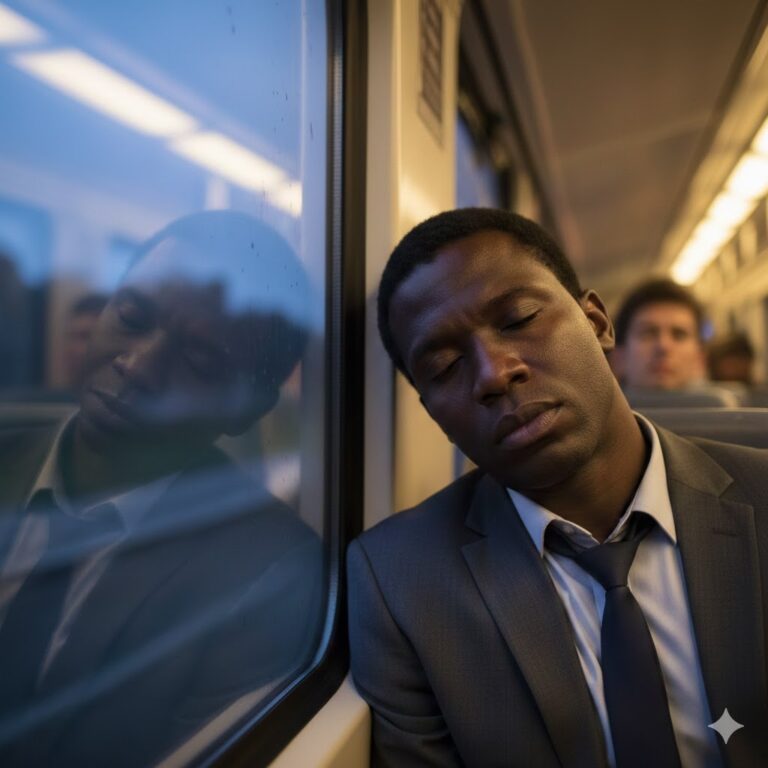
We all know what it feels like to be tired. But there’s a different kind of fatigue that lingers even when you technically should feel rested. The kind of fatigue that makes everything feel harder than it should. The fatigue we’ve learned to push through, ignore, or explain away because we honestly don’t have language for it.
What I want to discuss this month is the deeper fatigue. The kind that settles into your bones and clouds your thinking and makes you wonder why you don’t feel like yourself anymore.
Understanding What Fatigue Actually Is
At its simplest, fatigue is your body’s way of telling you that your internal resources are running low. It’s a protective signal, like a fuel gauge warning you before the tank hits empty. But fatigue doesn’t show up in just one way. It can be physical, showing up as heaviness in your limbs and a body that doesn’t want to move. Or, it can be cognitive, as foggy thinking, forgetfulness, and trouble concentrating. And it can also be emotional, and manifest as a short fuse, a low mood, or a feeling of detachment from things you usually care about.
What makes fatigue tricky is that these dimensions talk to each other. When our body is exhausted, our thinking suffers and when our mind is depleted, our body feels heavier. That’s because they share the same pathways, the same stress hormones, the same inflammatory signals. You can’t draw a clean line between them because they’re part of one interconnected system.
So, when someone tells me they feel “mentally fatigued,” I presume it’s both physical and mental, until we can sort it out.
When Fatigue Becomes Chronic
Short-term fatigue is normal. It’s your body doing its job, asking for rest so it can recover. But when fatigue becomes a constant companion, something deeper is happening. Chronic fatigue is a physiological state with real consequences for how you think, feel, and function. It is associated with dysregulated stress hormones, increased inflammation throughout the body, changes in immune function, and even structural shifts in the parts of the brain responsible for attention and emotional regulation.
What often goes unspoken is that mental fatigue is just as real and just as costly as physical fatigue, but it rarely gets the same respect.
The Fatigue Nobody Talks About
Physical fatigue is easy to legitimize. You ran a race, you moved furniture, you worked a double shift. There’s a clear cause and a socially acceptable reason to rest.
Mental fatigue is different.
There’s no sweat, no sore muscles, nothing to point to that explains why you’re so depleted. So we dismiss it. We tell ourselves we shouldn’t be this tired because we didn’t really do anything.
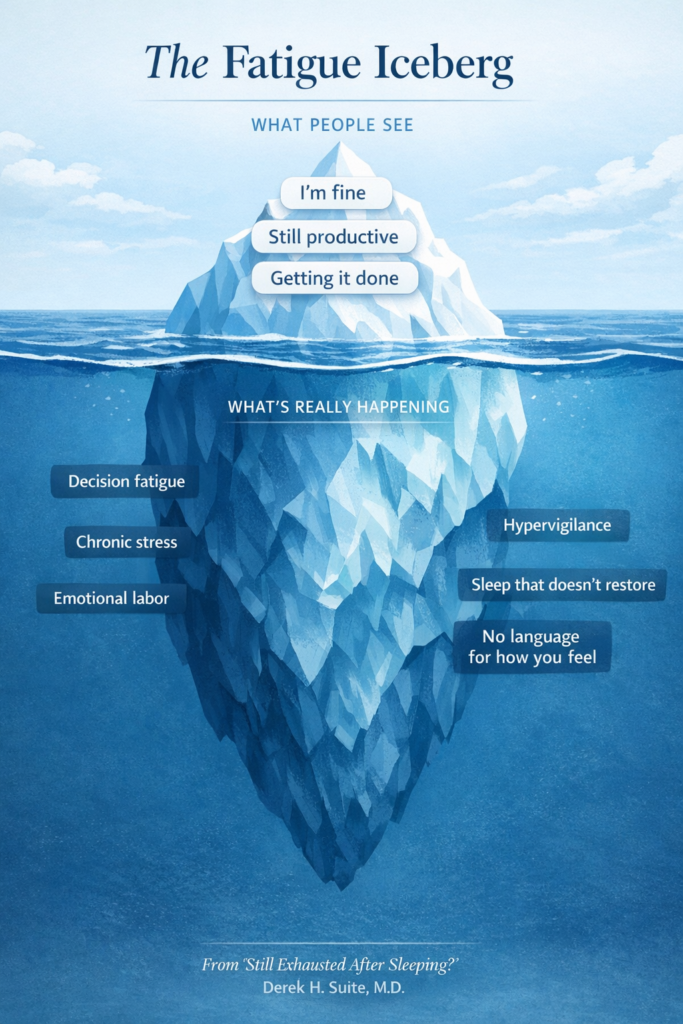
But mental fatigue often comes from sustained effort that doesn’t look like effort. It comes from making decisions all day, from carrying worry in the background, from managing emotions and relationships and logistics, from being “on” when you’d rather retreat. It can also come from the kind of cognitive and emotional labor that never makes it onto a to-do list but draws on your reserves just the same.
Research shows that mental fatigue impairs reaction time, judgment, and emotional regulation just as much as physical exhaustion. The effects are measurable and significant. And yet we’ve been taught to push through it, to treat it as a character flaw rather than a signal worth heeding.
The Subtle Signs Worth Noticing
The obvious markers of mental fatigue are hard to miss. You can’t concentrate, you’re irritable, you keep forgetting things. But often the signs are quieter than that, and if you’re not paying attention, you’ll miss them until the deficit is deep.
You might notice that small decisions feel strangely heavy, that choosing what to make for dinner or how to respond to an email takes more effort than it should. You might find yourself avoiding things you normally enjoy, and dragging yourself through the day, not because anything is wrong but because you just don’t have the bandwidth. Conversations might start to feel like work. You might be quicker to snap at people, more easily frustrated by minor inconveniences.
There might even be a vague sense of dread or flatness (a blah feeling) that you can’t quite name or explain. Ever feel that way?
One of the most telling signs of fatigue is when sleep stops refreshing you. You get your hours, but you wake up feeling like you never quite rested. That’s often a signal that the fatigue runs deeper than what a single night of sleep can fix.
Why This Hits Some of Us Harder
Mental fatigue doesn’t land equally, and I want to speak directly to the experience of people in communities who carry weight that rarely gets acknowledged.
Beyond the ordinary demands of work and family, some of us move through the world with an extra layer of effort that stays invisible. There’s the fatigue that comes from constantly reading the room, adjusting how you speak and present yourself depending on the environment. There’s the vigilance of being highly visible in spaces where you feel like you’re always being evaluated. There’s the mental energy spent navigating situations where you’re not sure if what just happened was what you think it was, and whether it’s worth saying anything, and what the cost might be if you do.
That kind of ongoing alertness is exhausting even when nothing happens. The body stays ready, the mind stays scanning, and the toll accumulates whether or not there’s a specific incident to point to.
Our communities also carry deep traditions of strength and perseverance, and those traditions are genuinely valuable. But they can become a trap when they leave no room for honesty about how depleted you are.
When rest feels like weakness and struggle becomes an identity, fatigue has nowhere to go. It just builds quietly until something breaks.
There are also practical barriers that make recovery harder. When access to care is limited, when trust in the healthcare system has been earned the hard way, when you’re managing multiple jobs or caregiving across generations, when financial stress is constant, the advice to practice better sleep hygiene can feel disconnected from real life.
Any honest conversation about fatigue has to account for the fact that rest requires resources that aren’t evenly distributed.
The Fatigue That Hides in Busy
I want to name something I see often in my work, including with high performers who seem to have everything together. Some of the most exhausted people don’t look tired at all. They look busy, accomplished, always in motion. But underneath the productivity is a motor running on fumes.
This kind of fatigue hides in plain sight because output masks depletion. The person keeps achieving, keeps saying yes, keeps showing up, and nobody thinks to ask if they’re okay because they seem like they’re thriving. Sometimes they don’t even know to ask themselves, because slowing down feels more frightening than continuing to push.
If you recognize yourself in this, I want you to know that your fatigue is real even if no one can see it. Productivity is not proof of wellness.
The Screens in Our Pockets
I would be leaving out a major piece of the puzzle if I didn’t talk about how our relationship with technology and information has changed the fatigue landscape.
Our nervous systems evolved to respond to threats in our immediate environment. A rustling in the bushes, a predator nearby, a conflict within the tribe. Those systems are now being activated by a constant stream of global crises, political conflict, tragic news, and outrage, all delivered through a small device we carry with us everywhere.
The brain doesn’t distinguish very well between a threat in your living room and a threat on a screen. It activates the same stress response either way. So when you scroll through headlines about disasters, violence, and injustice, your body responds as if those dangers are present and immediate. That chronic low-grade activation contributes to fatigue in ways most people never connect.
What makes this worse is that most of us reach for our phones precisely when we’re tired, thinking we’re giving ourselves a break. But scrolling through social media is cognitively demanding. The constant novelty, the quick judgments, the comparisons, the emotional micro-reactions to each piece of content, all of this draws on mental resources rather than restoring them.
It feels like rest but functions like work.
And then there’s the particular fatigue of measuring your life against the curated highlight reels of everyone else’s. That background hum of not being enough, not doing enough, not looking or achieving or living the right way, is its own quiet tax on your reserves, before you are even aware of it.
What Helps
So what does the science say about recovering from this kind of fatigue? Not just managing it or pushing through it, but genuinely restoring yourself.
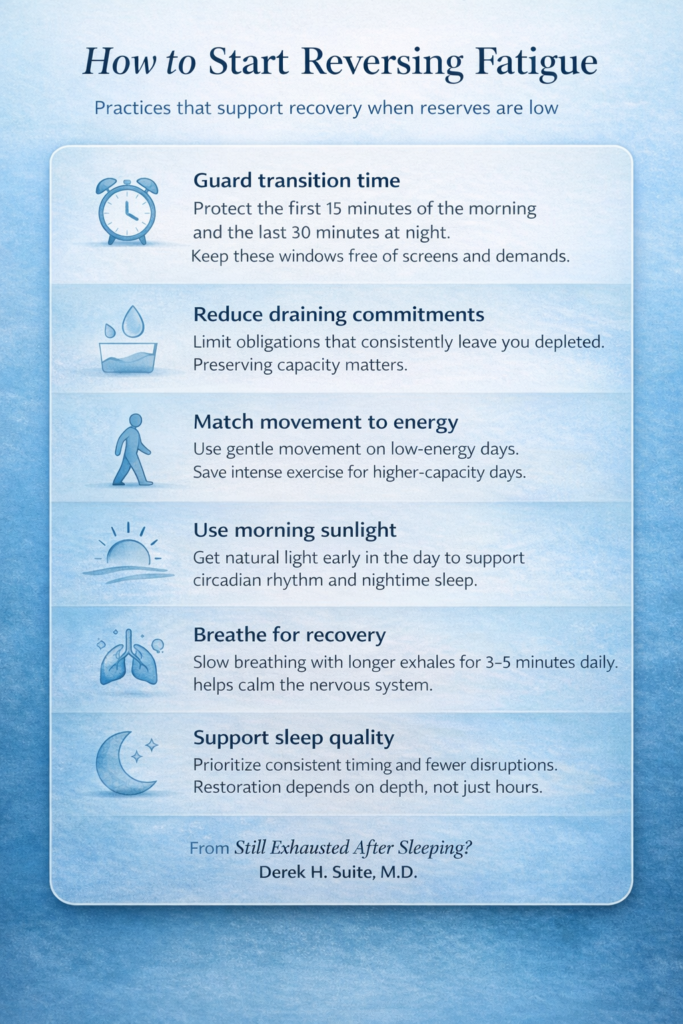
The first thing worth understanding is that sleep quality matters more than sleep quantity. You can spend eight hours in bed and still wake up unrested if your sleep architecture is fragmented. Alcohol, late-night screens, and irregular schedules all disrupt the deep sleep and REM cycles where real restoration happens.
Protecting the consistency and quality of your sleep is more important than obsessing over hitting a specific number of hours.
The second thing is that your brain doesn’t restore itself through passive rest. Research on cognitive fatigue shows that doing something with low mental demand but active engagement, like taking a walk, cooking a meal, working with your hands, or listening to music, restores executive function better than simply collapsing in front of a screen. Your mind needs a different channel, not just an off switch.
Breathing is one of the most powerful and underutilized tools we have. Slow, controlled breathing with a longer exhale than inhale directly activates your parasympathetic nervous system and lowers cortisol. This is physiology, not wellness fluff. Even three to five minutes of intentional breathing can shift your body from a stress state to a recovery state, and you can do it anywhere without anyone knowing.
Getting natural light early in the day helps anchor your circadian rhythm and regulate melatonin timing. If your fatigue includes a persistent feeling of being off or sluggish no matter how much you sleep, morning light exposure can help recalibrate your internal clock.
Movement helps with fatigue over the long term, but it has to be calibrated to your current state. When you’re already depleted, intense exercise can dig the hole deeper. Gentle movement when reserves are low, more vigorous activity when you have capacity, is the wiser approach.
And finally, boundaries are not a luxury or a sign of selfishness. They’re a biological intervention. Every obligation, every decision, every social demand draws on finite cognitive resources. Saying no to things that drain you is how you protect the organ that runs everything else.
Men, Women, and the Shape of Exhaustion
Fatigue doesn’t look the same in everyone, and some of the differences between how men and women experience it are worth naming.
Women’s energy levels and sleep quality are directly influenced by hormonal cycles in ways that are still underrecognized, even by healthcare providers. Fluctuations in estrogen and progesterone affect not just mood but also how restorative sleep is. Perimenopause and menopause bring additional shifts that can make fatigue feel relentless and unpredictable.
Research also consistently shows that women carry more of what gets called cognitive household labor, meaning the mental tracking of schedules and needs and logistics and emotional caretaking that runs constantly in the background. This invisible load contributes to mental fatigue even when the visible task list looks balanced.
Men experience fatigue too, but they often interpret and express it differently. Mental fatigue might show up as physical restlessness, boredom, irritability, or a vague sense that something is wrong without being able to name it. Men are more likely to push harder when they’re depleted rather than slowing down, and more likely to externalize exhaustion as frustration with their circumstances rather than recognizing it as an internal state that needs attention. By the time fatigue gets acknowledged, the deficit is often significant.
For the Skeptic in the Room
If some part of you is reading this and thinking it sounds like BS, I understand. We’re taught to push through, to treat tiredness as weakness, to believe that rest is earned only after the work is done.
But here’s what the science shows: mental fatigue changes how your brain functions in measurable ways. Reaction time slows, judgment suffers, and emotional regulation weakens. This is physiology, documented in study after study.
You wouldn’t try to run a marathon on a sprained ankle and call it toughness. So why do we treat a depleted mind any differently?
Ignoring mental fatigue doesn’t make you stronger. It just means the bill comes due later, and usually with interest.
Permission to Take This Seriously
If you’ve read this far, my guess is that some part of this resonates with you. Maybe you’ve been carrying a fatigue you couldn’t quite explain or didn’t feel entitled to claim. Maybe you’ve been waiting for permission to admit that you’re running on empty.
Consider this that permission.
Another way of thinking about this is to understand that your fatigue is valuable information that you must no longer ignore. It’s your body and mind telling you something true about the load you’re carrying and the resources you have left. The people who learn to take that information seriously, honestly and without shame, are the ones who sustain health, wellbeing and sustained performance for the long haul. In sports, it can be the invisible difference between who wins and who loses. Period.
The good news here is that you don’t need a complete life overhaul or to become a different person with better habits and a perfect morning routine. You just need to start being honest with yourself about how you feel, and to make one or two small moves in the direction of recovery.
Protect one window of time, even if it’s just the first fifteen minutes after you wake up (don’t reach for the phone) or the last thirty minutes before you sleep (stop scrolling). Try letting one thing go that’s been draining you more than it’s been giving or taking a few slow breaths when you notice the tension building. Step outside and let daylight reach your eyes every morning. If nothing else, put the phone down for an hour during the day—or an hour earlier than usual.
These are small reclamations, but, trust me, they add up. And they’re far more sustainable than grand resolutions that collapse because they asked too much of someone who was already depleted.
The Long View
We’re not going to solve the larger forces that contribute to fatigue in our communities through individual choices alone. But we can start by telling the truth about what we’re carrying and refusing to pretend that exhaustion is just a motivation problem or a character flaw.
Your goals and ambitions and responsibilities aren’t going anywhere. But you’ll meet them better and sustain longer, if you stop treating yourself like a machine that should be able to run indefinitely without maintenance. I have seen athlete and high perfumers make one or two minor adjustments to improve fatigue and achieve surprising results.
Rest is the foundation that makes everything else possible, not the reward for finishing.
So, let’s make it a priority starting now.
Derek H. Suite, M.D., is a guest health contributor for Black Westchester Magazine, who spends much of his time thinking about how people cope under pressure. His work sits at the crossroads of psychiatry, performance, and recovery, with a particular focus on sleep and the small, often overlooked factors that make a real difference when things matter most. He’s currently working on a book about recovery and execution under pressure and hosts The Suite Spot, a podcast that blends science and soul to explore what it means to perform well in real life.
Let’s be honest for a moment, this weekend carries weight.
Not the kind you post about.
The kind you feel when the quotes start circulating, and your body reacts before your mind does.
Because MLK Weekend doesn’t arrive in a vacuum. It shows up in the middle of unfinished mornings, unresolved emails, systems that still haven’t caught up to the language being used to describe them.
And a lot of us feel it quietly.
We read the quotes.
We hear the speeches.
We nod at the right lines.
But something inside us pauses.
Because even in the celebration, there’s a disconnect we’ve learned not to ignore. A sense that the words are moving faster than the work. That justice is being referenced more than it’s being practiced.
And here’s the thing most people don’t realize or don’t sit with long enough:
A lot of people don’t even know his real name wasn’t Martin.
He was born Michael.
Michael King Jr.
That detail alone should slow us down.
Because somewhere along the way, we got so comfortable quoting him that we stopped knowing him. We polished the name. Sanitized the legacy. Turned a living, breathing, complicated man into a symbol we could repost without changing anything.
Michael became Martin.
The man became a monument.
The work became a weekend.
And MLK Weekend has a rhythm now.
It sounds like carefully selected quotes floating through emails and timelines.
It looks like institutions are congratulating themselves for remembering.
It feels like justice being acknowledged, without being rehearsed.
What most people don’t know or choose not to hold is that even the name change was about alignment. About identity. About choosing something larger than comfort. And that theme followed him his entire life.
He didn’t just say justice.
He reorganized his life around it.
Which is why this weekend can feel heavy for people who live closest to the gaps.
Because cultural competence that stops at the press release isn’t competence at all. It’s a costume. It’s pronunciation without practice. It’s fluency in language paired with illiteracy as a consequence.
“They celebrate the words, not the work.”
You feel that truth when you read a glowing MLK post from an institution that still hasn’t returned your email.
When you see “equity” capitalized in statements, but not funded in budgets.
When Dr. King is praised for being peaceful, while the systems he disrupted remain untouched.
They quote the dream.
They ignore the disruption.
And here in Westchester, that contradiction doesn’t hide well.
Every MLK Weekend, statements roll out, emotionally correct, carefully worded, visually diverse. Commitments to listen. Promises to do better. Acknowledgments of “hard conversations.”
Then Monday comes.
And neighborhoods still wait longer.
Families still receive delayed answers.
Structural change still moves at a pace that feels suspiciously familiar.
Cultural competence isn’t knowing which quote to post.
It’s knowing what must change after the quote.
It’s understanding that Michael, before he was Martin, was inconvenient. That he was surveilled. He was criticized more harshly toward the end of his life than at the beginning. He was asking questions about power, capitalism, and militarism that many institutions still avoid today.
Which is why his legacy keeps getting softened.
Because it’s easier to honor a version of him that never demands receipts.
But people who feel the disconnect aren’t bitter.
They’re perceptive.
They know when acknowledgment is being used as a substitute for action.
They know when “honoring the legacy” is code for postponing accountability.
They know when cultural competence is being treated like a branding exercise instead of a responsibility.
This isn’t cynicism.
It’s discernment.
And discernment is a form of respect, for yourself, and for the truth.
So when MLK Weekend arrives, and the quotes start circulating, some of us aren’t looking to be inspired.
We’re listening for alignment.
We’re watching for movement.
We’re paying attention to what changes when the weekend ends.
Because Michael didn’t become Martin, so he could be remembered politely.
He changed his name.
He challenged systems.
He accepted discomfort.
And honoring that legacy means doing more than repeating his words.
It means asking whether our institutions are brave enough to carry his work forward or whether they’re still more comfortable celebrating the name than confronting the demands that came with it.
That difference isn’t academic.
It’s lived.
Community Reminder
This column was created with one purpose: to empower our community.
And when we say community, we mean to come together and unify.
We mean sharing information, naming patterns, and building understanding across neighborhoods, so no one is left carrying these realities alone.
This is not about blame.
It’s about clarity.
Because when we are informed, we are aligned.
And when we are aligned, we are better positioned to impact our communities in ways that are meaningful, practical, and lasting.