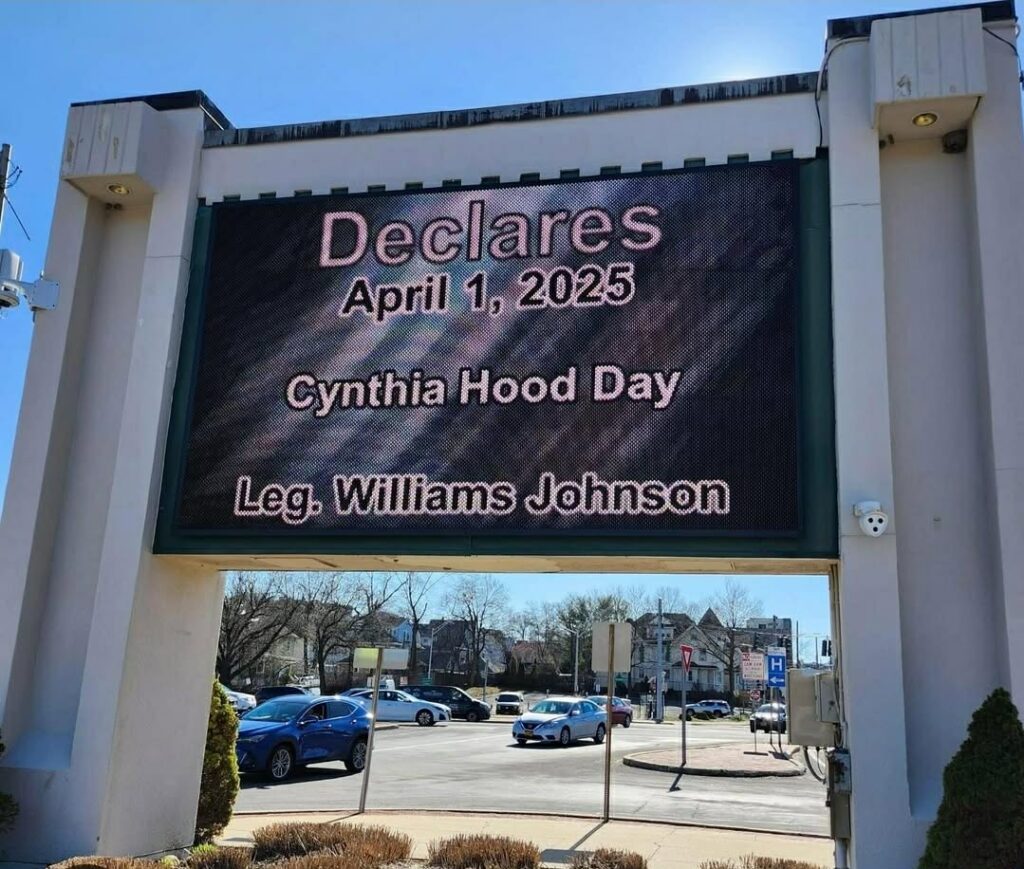
On this day in Black History, on March 14, 2005, Detective Cynthia J Hood was promoted to the Rank of Sergeant, making her the first and only female of African American descent ever in the history of the City of White Plains Police Department to hold this position.
Cynthia J. Hood shattered the glass ceiling several times, the first time in 2003 when she was appointed the first African American Female Detective, then again in 2005 when she was promoted to the first African American female Sergeant and as the first African American Detective Sergeant in the history of the White Plains Police Department.
Cynthia J. Hood started her career in law enforcement on November 17, 1986, when she first joined the City of White Plains Police Department and was sworn in as a Police Officer.
She held various positions throughout her career, working in the Patrol Division, Traffic Division, Undercover Narcotics Unit, Minority Recruiting, and Administration. She was chosen to be a member of the department’s first Bike Patrol Unit, where she completed extensive training with the New York City Police Department. This was the beginning of her historical career with the White Plains Police Department, as she is proud to have been the FIRST female assigned to this unit. She has had an abundance of training and was certified by the New York City Police Department’s Detective Bureau as a Sex Crimes and Child Abuse Investigator. She also showed her expertise on the shooting range, receiving a marksmanship award for exceptional firearms skills.
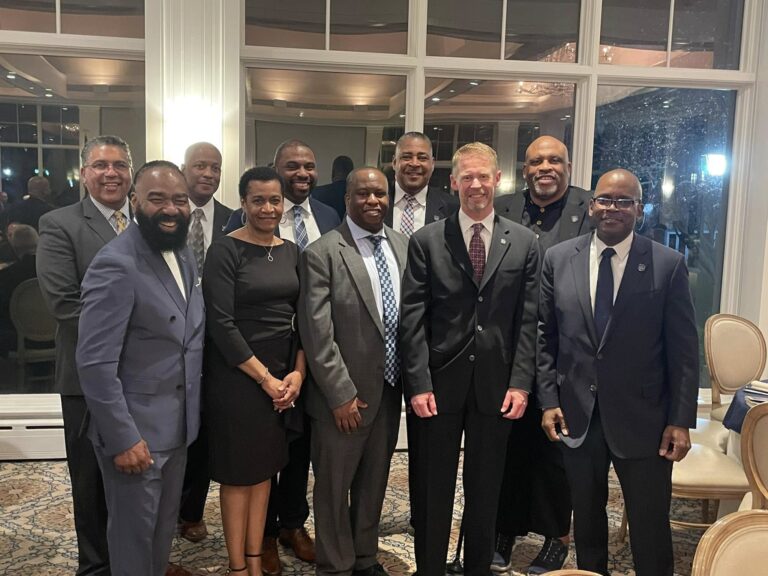
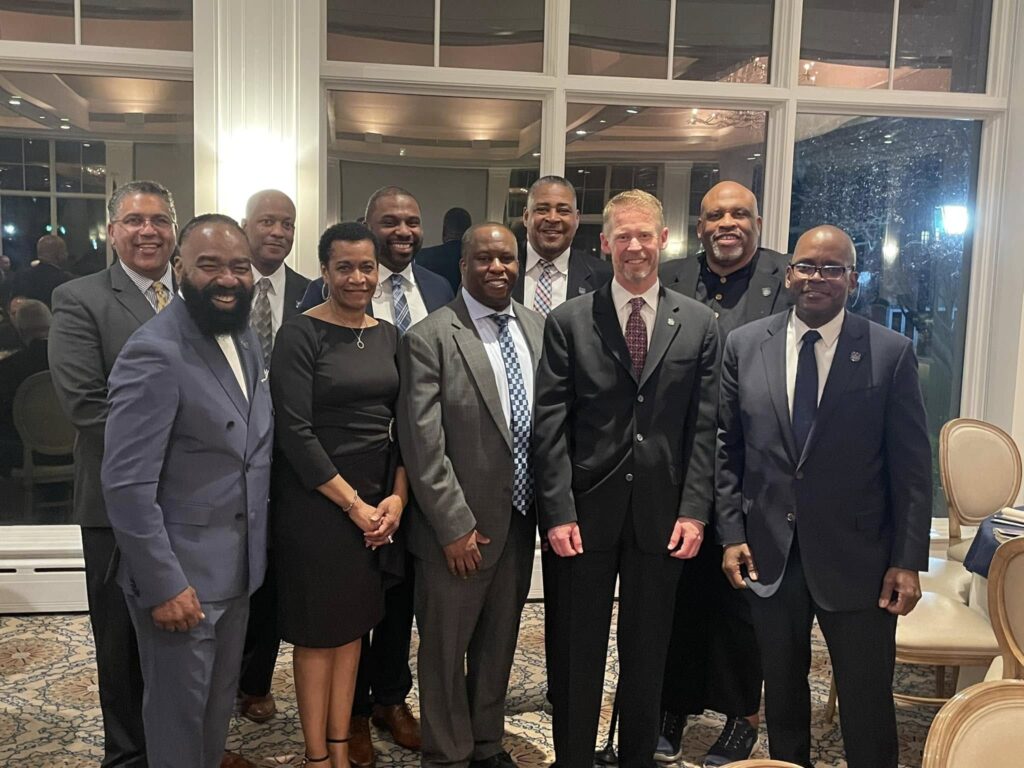
Otis Cruz, NR Police Commissioner Neil Reynolds, WRGA President Paul Hood, Cynthia Hood, Steve Sexton, David A. Gibson, Howard Tribble, Daymon S Yizar, and I had the opportunity to engage with our friend and new WCCOPA President Erik Grutzner at the Westchester County Chiefs of Police Association Annual Installation & Dinner Gala, April 26, 2024
On December 8, 2003, she was appointed to Detective 3rd grade, becoming the Department’s FIRST African American female promoted to this position. After a short assignment as a Patrol Supervisor, she was transferred to the Detective Division, where she was assigned to the Victim’s Services unit.
On March 13, 2005, she was promoted to the Rank of Sergeant. This promotion, as well as her Detective appointment, was historically significant because she is the first and only female of African American descent ever in the history of the City of White Plains Police Department to have held both of these positions. It would be 17 years later before another African American female would be promoted to Sergeant.
As a Detective Sergeant, she was assigned to the Community Advocacy and Strategic Initiatives Division (CASI), where she supervised the Victim Services Unit, working with crime victims and victims of Domestic Violence. One of the highlights of her career and supervising this unit was collaborating with a team of 9 agencies, allowing her to develop and implement the White Plains Police Department’s Reentry Program, assisting male inmates transitioning back into the White Plains community after incarceration, resulting in lower rates of recidivism, and providing the necessary resources for them to be productive members of their community.
On November 17, 2006, Detective Sergeant Hood retired after twenty years of dedicated service to the city of White Plains. Retired Det/Sgt. Cynthia Hood has been a member of the Westchester Rockland Guardians Association and currently holds the position of Treasurer.
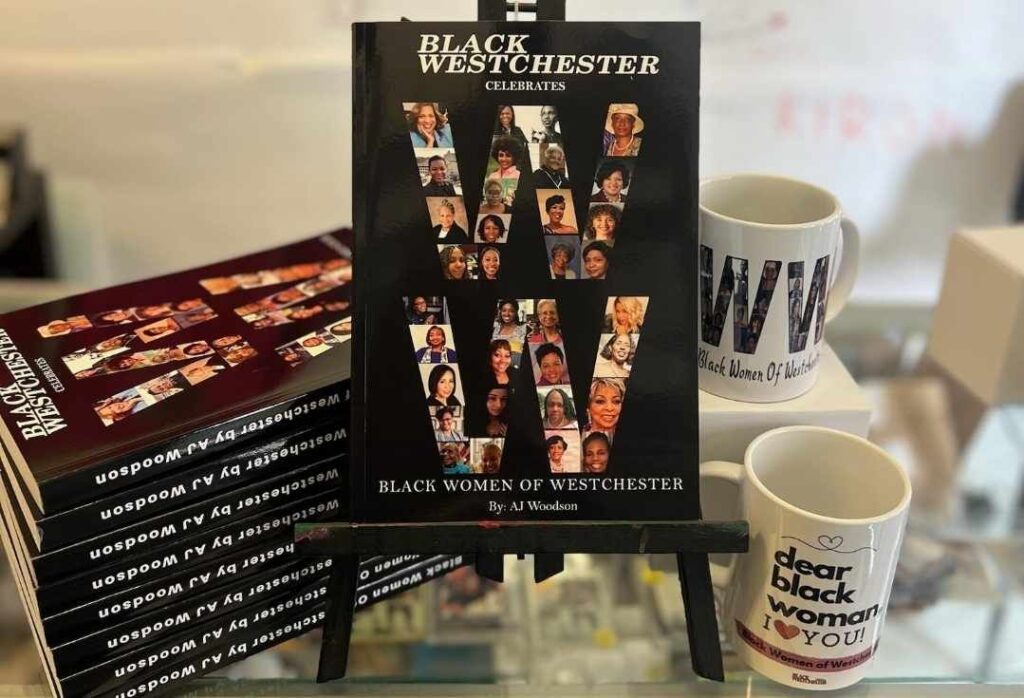
Black Westchester celebrates Cynthia J. Hood for shattering glass ceilings and paving the way for other African American Women in Law Enforcement!
A line from the political drama House of Cards captures a truth that applies far beyond politics. The character Frank Underwood once said:
“Money is the McMansion in Sarasota that starts falling apart after 10 years. Power is the old stone building that has stood for centuries.”
That quote perfectly explains the debate surrounding the recent distribution changes involving The Breakfast Club, including its move into a deal with Netflix through its parent distribution network.
At first glance, deals like this appear attractive. Large platforms offer guaranteed revenue, global distribution, and the prestige of being connected to one of the world’s largest streaming services. For any show, especially one that has been on the air for years, securing a large contract can look like the logical next step.
But media history shows that the biggest check is not always the best long-term strategy.
The real issue is not just money but the lasting power of influence, which media professionals should value most.
For modern media brands, power comes from reach.
Shows like The Breakfast Club did not become influential because they were locked behind a paywall. They became influential because their interviews, debates, and viral moments circulated freely on platforms like YouTube and across social media. A five-minute clip could travel across the internet in hours, generating millions of views and shaping national conversations.
That open distribution created cultural influence.
For media outlets and content creators, accessibility is key to building trust and influence. When content is easy to watch, share, and discover, it strengthens their role in public discourse.
This does not mean deals with large streaming platforms are automatically bad. They can provide stability, guaranteed income, and protection against the unpredictability of advertising revenue.
But they also come with a tradeoff.
Money today can cost influence tomorrow.
This is an important lesson for independent media outlets, particularly community-based platforms like Black Westchester Magazine and others that are still building their audience and expanding their reach.
For growing media companies, visibility is the most valuable currency they have. Every view, every share, and every viral moment helps expand the brand’s influence. Open platforms allow content to circulate freely and build trust with audiences who may never have heard of the outlet before.
Locking that content behind a subscription wall may produce a short-term financial boost, but it can also slow the very growth that independent media relies on.
In other words, short-term money can weaken long-term power.
This is why many of the most influential media personalities today remain heavily present on open platforms. They understand that cultural influence grows through constant exposure, not limited access.
Distribution is the new power in media.
Who controls the audience ultimately controls the conversation.
The lesson is simple but important. Media companies should think carefully before trading to reach for revenue. A large contract may look impressive today, but influence is what sustains a brand for decades.
As that famous line from House of Cards reminds us, money can fade. But real power—the kind built through reach, audience trust, and cultural relevance—can last much longer.
The recent buyout of Tyler Perry‘s ownership stake in BET+ by Paramount Skydance (formerly Paramount Global) is more than a routine corporate move—it’s the end of the last direct link to Black ownership within the BET ecosystem.
Paramount has acquired Perry’s minority stake (reportedly around 25% from his 2019 deal), paving the way for BET+to shut down as a standalone service. Starting in June 2026, its content library (over 1,000 hours) will be folded into Paramount+, unifying the platforms under one roof.
To many, this might seem like standard media consolidation—big companies restructure assets constantly. But the symbolism here is hard to overlook.
Tyler Perry’s investment represented the final piece of Black capital tied directly to the BET brand. While BET itself has long been part of a larger corporate structure, Perry’s equity in the streaming arm meant a prominent Black creator still held a stake in content distribution for Black audiences.
That connection is now gone.
The entire BET ecosystem—BET, BET Her, BET+ content—sits fully within Paramount‘s vast portfolio.
Why Ownership Matters (Beyond Representation)
Black culture remains one of the most influential forces in global entertainment. Black actors, writers, directors, musicians, and producers shape trends and drive audiences every day.
But influence ≠ ownership.
Ownership decides who controls the platform.
Ownership captures the long-term economic value from media.
Ownership ultimately determines what stories get told, how they’re told, and how they reach viewers.
This doesn’t mean Black creators or content will vanish—Black stories will keep appearing on streaming and TV. The deeper question is:
What kind of Black content will be prioritized?
Who decides which narratives about our history, communities, and experiences get amplified?
What messages will future generations absorb through the media they consume?
Major studios know the economic power of Black culture. Yet when platform ownership lies entirely outside the community, the power to define the message shifts away from the culture that created it.
For decades, BET symbolized more than entertainment—it represented the potential for Black entrepreneurs to build and control national media platforms. Even after BET’s corporate sale years ago, Perry’s BET+ stake kept a thread of Black ownership alive in distribution.
That thread has now been cut.
Paramount’s Massive Portfolio
To put this in context, Paramount owns one of the world’s largest entertainment empires:
Broadcast Networks
CBS
CBS News
CBS Sports
CBS Television Stations
Streaming Platforms
Paramount+
Pluto TV
CBS News 24/7
CBS Sports HQ
Cable Networks (via Paramount Media Networks)
BET
BET Her
MTV
VH1
Nickelodeon
Nick Jr.
Comedy Central
Paramount Network
TV Land
Logo
CMT
Pop TV
Smithsonian Channel
Showtime
The Movie Channel
Flix
Film & Studios
Paramount Pictures
Paramount Animation
Paramount Players
Paramount Television Studios
Nickelodeon Movies
Republic Pictures
49% stake in Miramax
Production & Distribution
CBS Studios
Showtime/MTV Entertainment Studios
Nickelodeon Animation Studio
Paramount Global Content Distribution
International Networks — Versions of many channels operate across Europe, Africa, Latin America, Asia, and beyond.
This buyout isn’t just the end of a partnership—it’s a stark reminder of today’s media landscape: Black culture is highly visible and profitable, but Black ownership of major national platforms is increasingly rare.
The BET brand will live on. Programming will continue. Audiences will stay engaged.
But with this transaction, the last remnant of Black ownership tied to the BET ecosystem has vanished.
That leaves a critical question for the future of Black media: If Black institutions no longer own the platforms distributing Black culture, what will it take to build new ones?
A deadly police shooting in Dallas has raised new questions after authorities confirmed the man killed had previously worked security at events connected to U.S. Representative Jasmine Crockett.
The man, identified in reports as Mike King, was shot and killed by Dallas Police Department officers following a tense standoff earlier this week.
While police say the shooting occurred after the suspect pointed a gun at officers, the revelation that he had previously worked security connected to a member of Congress has triggered scrutiny over vetting and security practices.
What Happened
According to police, officers were attempting to arrest King on a warrant related to impersonating a law enforcement officer.
Authorities tracked him to a parking garage near Children’s Health Hospital in Dallas, where he barricaded himself inside a vehicle. A SWAT response team was called to the scene.
After negotiations failed, officers deployed tear gas to force him out of the vehicle. Police say that when King exited the car, he emerged holding a firearm and pointed it toward officers.
Officers opened fire. King was pronounced dead at the scene.
No officers were injured during the incident.
A Security Contractor With Political Connections
Investigators later confirmed that King had previously provided security services at events involving Rep. Jasmine Crockett, a first-term Democratic congresswoman representing parts of Dallas and surrounding areas.
Reports indicate King operated a company that connected off-duty police officers with private security jobs, including political events.
Campaign finance records and public documentation reportedly show payments for security services linked to Crockett’s events within the past year.
There is currently no indication that Crockett or her office were aware of any criminal investigation involving King prior to the incident.
Her office has not issued a formal statement about the situation as of this writing.
Allegations of Police Impersonation
The warrant that led police to King was connected to allegations that he had been impersonating a law enforcement officer.
Investigators say he was suspected of using:
A replica undercover police-style vehicle
Stolen or altered license plates
Multiple aliases
Authorities are still investigating the full scope of those allegations.
Questions About Security Vetting
The incident has raised broader questions about how private security contractors are vetted for political events, particularly for elected officials who frequently rely on private firms rather than government protective services.
Members of Congress typically do not receive full-time federal protection unless they hold leadership roles or face specific threats. As a result, many campaigns and offices hire private security contractors for events.
The Dallas shooting has now sparked debate over whether additional background checks or licensing requirementsshould be implemented for individuals providing security for elected officials.
The Larger Debate
For critics, the situation highlights what they see as a growing problem with the loosely regulated private security industry.
Others argue the focus should remain on the circumstances of the police encounter itself, noting that officers say the shooting occurred only after the suspect pointed a weapon at law enforcement during an active standoff.
The investigation into the incident is ongoing.
What is clear is that the case now sits at the intersection of law enforcement, political security, and public accountability—a combination that almost guarantees continued scrutiny in the days ahead.
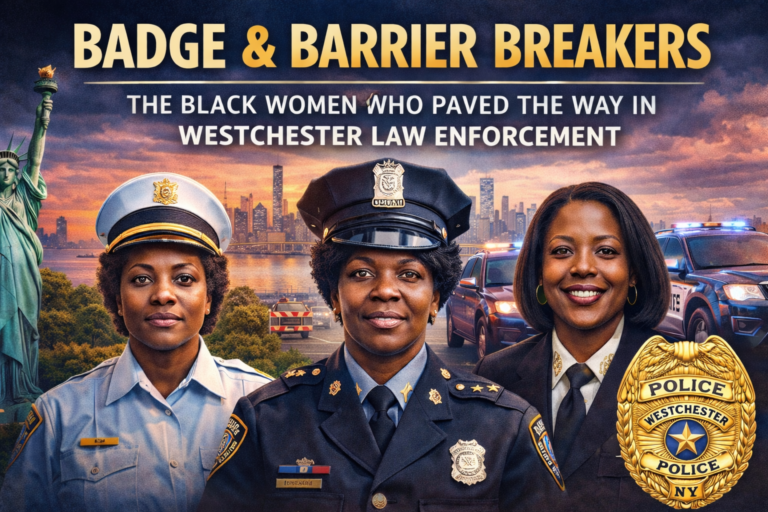
Black women have played a vital role in shaping law enforcement across Westchester County, often breaking barriers in institutions that historically excluded both women and African Americans. Their leadership, courage, and commitment to public service have helped transform policing, corrections, and public safety throughout the county.
Women like Rita Gross Nelson, the first Black Policewoman In Westchester County, and Cynthia Hood, the first African American Female Detective In White Plains PD., helped break both racial and gender barriers in Westchester law enforcement. Their courage and leadership helped open doors for the many Black women serving today in police departments, corrections, and investigative roles throughout the country. In observation of Women’s History Month, Black Westchester celebrates some of these Black Women Trailblazers in Law Enforcement in Westchester County.
Delores Johnson – First Black Female New Rochelle Police Captain
On July 11, 1966 – almost a year after Yonkers’ Rita Gross Nelson became the first Black policewoman in Westchester – Delores Johnson became the first Black policewoman with the New Rochelle Police Department (NRPD). She was hired on July 11, 1966.
Johnson was promoted to Sergeant on April 25, 1974, and awarded the Police Commissioner’s Award on January 7, 1977, for general performance. She received the Special Incident Citation on November 30th, 1977, for the Neptune Moving Company Shooting, which occurred on February 14, 1977 – a large-scale incident that made national news. NRPD Officer Allen McLeod was shot and killed by the gunman that day.
She graduated from the FBI National Academy in September 1978 – an 11-week school at the FBI academy in Quantico, VA, for police executives from around the world, and was promoted to Lieutenant on June 19th, 1980. On June 19, 1986, she made history again when she was promoted to Police Captain and appointed head of the Staff Services Division, becoming the first Black Woman promoted to the rank of Captain in Westchester County.
She retired from the NRPD on May 7, 1988. A resident of New Rochelle for 25 years, she had three sons, Richard Johnson, Rufus, and Stanley Richardson, two daughters, Marlene Vasquez-Ricketts and Katetrina Hudson, and seven grandchildren. We celebrate Captain Delores Johnson, a true Black Westchester Legend!
Yvonne M. Powell – First Black Female Associate Warden, Westchester Dept. of Corrections
Yvonne M. Powell, who was president of the guardians, First Black Female Associate Warden of the Westchester Department of Corrections – Valhalla Campus, now known as the Norwood E. Jackson correctional facility, named after the facility’s first Black Commissioner on May 6, 2004. She also played a lead role in representing Westchester to the National Black Police Association.
“Yvonne Powell is 5 feet 10 and has a way of entering a room. She doesn’t walk in so much as she arrives, moving unhurriedly with her head held high,” the New York Times wrote in 1994. “Her great aunt, who raised her, taught her that walk, said Ms. Powell, the newest member of the Westchester County Women’s Hall of Fame. The walk, and the imposing carriage, came from standing with her back against a wall for 10 minutes a day to learn posture and a sense of discipline.”
Ms. Powell graduated from Mercy College in Dobbs Ferry, where she majored in criminal justice. Ms. Powell said she thought she would become a physical education teacher. After passing three Civil Service examinations, however, she took a job instead as a meter maid in White Plains. Growing bored with that, she moved to a position as a deputy sheriff at the County Jail. It was 1967, and the women’s unit, which now has 242 beds, then had 60 beds. Ms. Powell advanced through Civil Service examinations and evaluations to positions as a corrections officer, sergeant and captain before being made an assistant warden. The climb was not easy. After receiving one of the top scores in the Civil Service test for captain, she was denied the position. “I was told I wouldn’t get the promotion because there wasn’t room for another female captain,” she said. “I decided to fight it, because it was cutting women’s career ladder off.”
She filed a sex discrimination case with the State Division of Human Rights, won, and was prepared to fight for her promotion during the county’s appeal. But County Executive Andrew P. O’Rourke – a Republican – took office, and after reviewing the case, Ms. Powell said, he decided she deserved the promotion. Mr. O’Rourke, who established the county’s Hall of Fame in 1985, recently presented Ms. Powell with her award at a lunch at the Rye Town Hilton. Ms. Powell, who is black, said that while she was not impeded in her career because of her race, racial discrimination remains a fact of life for blacks working as correctional professionals in the county.
While serving as warden, Ms. Powell launched numerous programs at the County Jail that received widespread recognition. The Board of Educational Cooperative Services began certification programs in nail care, building maintenance, and childcare, enabling many women to find jobs after their release. She also started the first program to let the female inmates have their babies with them at the Westchester County Jail instead of placing them in foster care. After retiring from the Westchester County Department of Corrections, she works with troubled youths at Abbott House here, where she is known, said Sister Mary Jane Fitzgibbon, the director of community relations and the person who nominated her for the Hall of Fame, for her professionalism and “quiet energy and strength.”
Black Westchester proudly celebrates Ms. Yvonne M. Powell, a true Black Westchester legend!
MVPD’s Latheia Smith Makes History As First Woman Senior Criminal Investigator In County District Attorney’s Office
March 24, 2022, Westchester County District Attorney Miriam E. Rocah announced the promotion of Latheia Smith, the first woman and the first Black woman, to hold the position of Senior Criminal Investigator in the history of the Westchester County District Attorney’s Office.
“Latheia Smith is an extraordinarily talented investigator who has dedicated her life to making her community safer through a career in law enforcement. She shares my vision of a criminal justice system that balances justice for victims with fairness for all involved,” DA Rocah said. “I am proud to promote Investigator Smith in recognition of her many exceptional talents, skills, and achievements. Making this Office truly representative of the diversity of the communities we serve by having women and women of color in leadership positions in law enforcement is critically important, and I remain committed to this as one of my top priorities.”
Smith a mother of four, who became a Mount Vernon Police officer 18 years ago, will now be leading other investigations in the special prosecutions division while handling her own load of cases, making history during Women’s History Month.
“Working at the Westchester County District Attorney’s Office has provided me with the opportunity to serve the County that I live in by working cases and assisting agencies with their investigations,” Investigator Smith said. “As a law enforcement officer, my ability to help victims and their families while they are going through a criminal matter is incredibly rewarding. I’m thrilled to be promoted to Senior Criminal Investigator and am proud to not only be the first woman in that role, but also the first Black woman.”
Investigator Smith began her career in 2003 with the Mount Vernon Police Department, where she worked on and investigated a wide range of cases in the General Investigations Division, Narcotics Division and Street Crime. Her dedication and experience handling confidential informants, securing search warrants, and successfully coordinating criminal investigations with other law enforcement agencies resulted in her being promoted to Detective.
In 2009, Investigator Smith joined the District Attorney’s Office Criminal Investigators Squad, where she has investigated and assisted in the prosecution of homicides, sexual assaults, child abuse, elder abuse, narcotics cases, and domestic violence. Investigator Smith, who is currently assigned to the Criminal Investigators Special Prosecutions Unit, oversees investigations into matters including human trafficking, sex crimes, domestic violence, elder abuse and child abuse.
Serapher Conn – Halevi – First Female Marshall in Westchester
Serapher Conn-Halevi is the first woman in Westchester County to serve as City Marshall. She is the founder and Chief Operating Officer (COO) of the first African American school in Westchester County, known as New Beginnings Educational Institute dba Bereshith Cultural Institute, Inc, based in Mount Vernon, New York. Serapher was the owner of Right Move, a moving company she founded in 1998. She is active and involved with the youth, seniors, landlords, and tenants in her community and political leaders in the state of New York. On Monday, September 27, 2004, she was elected by to the Mount Vernon City Democratic Committee as the first women Voted in as the Chairwoman of the Mount Vernon Democratic City Committee
Ms. Conn-Halevi has served on numerous committees and boards. She served as the past president of the Westchester Black Women’s Political Caucus (Mount Vernon Chapter). She served as second vice chair of the Mount Vernon Neighborhood Health Center and the Greenburgh Health Center Board. She served as first vice chair of the Mount Vernon City Committee, as well as a District Leader. She served as Vice President of Public Relations for the Minority Contractors Association of Westchester. She also chaired the African American Caribbean Family Day in Mount Vernon, which she hosted for fourteen years, with over five thousand in attendance. She was appointed Legislator Aide to Assemblyman James Gary Pretlow. She also served as financial secretary to the Black Democrats of Westchester County.
Below is a brief list of some of the Black Women Who Paved the Way in Westchester Law Enforcement.
1965 – Rita Gross Nelson became the first woman of color to serve as a patrol cop in Westchester County as a member of the Yonkers Police Department. Fredricka Hreyo is the second Black woman to join the Yonkers force.
January 6, 1967 – Helen Littleberry was sworn in as the first African American female White Plains Police Officer. She retired in 1987.
June 19, 1986 – Delores Johnson becomes the first Black female Captain in the New Rochelle Police Dept.
1994 – Yvonne M. Powell becomes the First Black Female Associate Warden of the Westchester County Department of Corrections.
March 14, 2005 –Detective Cynthia J Hood was promoted to the Rank of Sergeant, making her the first and only female of African American descent ever in the history of the City of White Plains Police Department to hold this position. (It would be seventeen years before another African American woman would be promoted to Sergeant.)
December 13, 2011 – Jennifer Carpenter became the first Black Female Supervisor in the Mount Vernon Police Department when she was promoted to Sergeant
October 19, 2019 – Krista Mann became the first African America Female Lieutenant of the Mount Vernon Police Department when she was promoted by then-Mayor Andre Wallace.
September 2020 – Mona Berry-Cauthen made history as the first African American to be promoted as Assistant Commissioner of the Westchester County Department of Probation, a high-level executive position where she is responsible for overseeing departmental operations and staff.
March 24, 2022 – Westchester County District Attorney Miriam E. Rocah promoted Latheia Smith, the first woman and the first Black woman, to hold the position of Senior Criminal Investigator in the history of the Westchester County District Attorney’s Office.
March 14, 2024 – Major Treneé D. Young, while serving on the New York State Police, had deep ties to the county. She was assigned to Troop K in Somers for eight years starting in 2007. She later became the first Black woman in the NY State Police to earn the permanent rank of Lieutenant in 2021, Captain in 2024, and eventually reached the rank of Major in 2025
July 2024 – Mona Berry-Cauthen made history again as the first Black female to be promoted as Deputy Commissioner of the Westchester County Department of Probation. These two promotions were a significant milestone in the history of the department, which has a legacy dating back to 1915.
January 14, 2025 – Tiesha Heath made history as not only the first Black female but also the first female Police Officer in the Village of Elmsford
In February 2026, Lieutenant Khalia Carter became the first African American woman promoted to the rank of Lieutenant in the Peekskill Police Department’s 177-year history.
March 19, 2026—Janie McKennie and Michel Yant-Terry became the first Black Female Police Captains in the Mount Vernon Police Department. Both women will serve as Commanding Officers of the Detective and Patrol Divisions, respectively, starting Friday, March 20th.
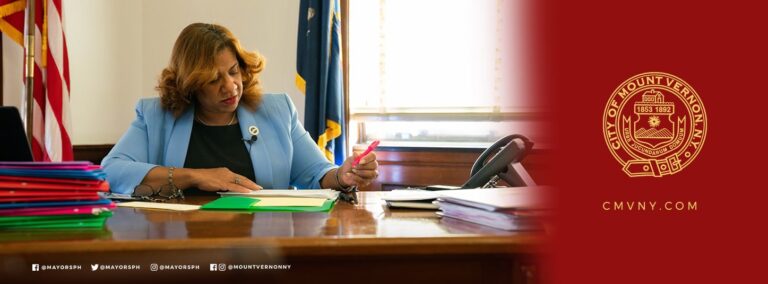
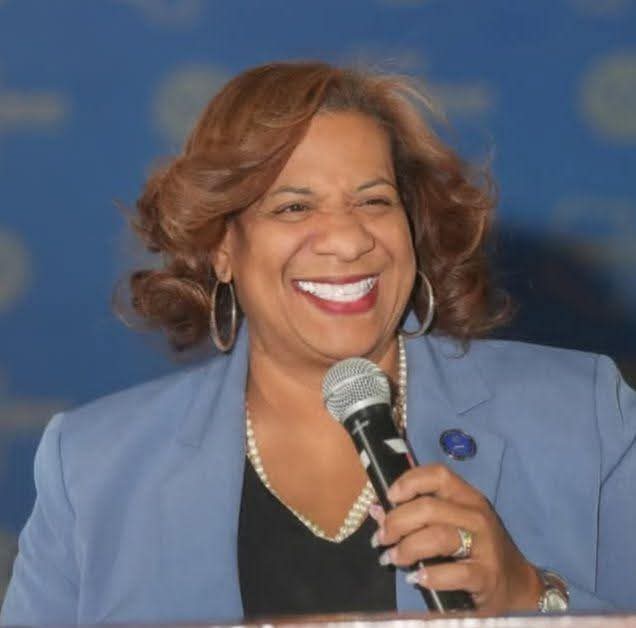
Democratic nominee Shawyn Patterson-Howard (SPH) made history Tuesday, November 5, 2019, when she narrowly won the general election, becoming the First Female Mayor elected in the City of Mount Vernon. The City of Mount Vernon’s 28th Mayor.
As a fourth-generation Mount Vernonite, Patterson-Howard explained in her acceptance speech, “Mount Vernon is the community of my birth, my development, my education. It’s where I was nurtured and mentored by people of all ages and ethnicities, allowing me to become the adult and the leader that I am now.”
With her husband standing proudly behind her, Shawyn spoke of unifying the city and being an agent of change. She campaigned on a good government platform, pledging to end the dysfunction in City Hall.
As Executive Director for the Mount Vernon, New York, Family YMCA from 2004 through 2009, and the first woman and person of color appointed President and Chief Executive Officer for the Yonkers Family YMCA in New York. Mayor SPH focused on programs that highlighted “Youth Development, Healthy Living, and Social Responsibility.” From afterschool programming, youth employment and training, college preparation, access and completion, adult education, water safety programs, senior services, and residential housing to gang intervention and violence prevention, prisoner reintegration, health and wellness, community nutrition and feeding programs, boxing, AmeriCorps, service-learning and video production, Mayor Patterson-Howard and her staff looked for new and innovative ways to develop partnerships to serve the community
As the Chief Executive Officer for the Yonkers Family YMCA, she also created programs to support the region’s growing community of immigrants and to address the needs of those reintegrating into the community after extended periods of incarceration.
Patterson-Howard shattered the glass ceiling as the first African American woman to be elected mayor in the history of Westchester County. Mayor SPH’s historic victory also gave the City of Mount Vernon an all-female Board of Estimates (Mayor, Council President, and Comptroller) for the first time in the city’s history.
A proud graduate of Mount Vernon High School, she also holds degrees from Howard University School of Social Work and a Master’s in Public Administration and Urban Development from John Jay College of Criminal Justice. Mayor Patterson-Howard began her esteemed career in public service as a social worker at AIDS-Related Community Services and Director of the City of Mount Vernon Housing Opportunity for Persons with AIDS Program (HOPWA).
Mayor Shawyn Patterson-Howard proudly continues her family’s century-long legacy of service to Mount Vernon with support from her husband of 38 years, Marvin Howard, and daughter Nia. She is the President Emeritus of the African American Mayors’ Association (AAMA), Trustee of the U.S. Conference of Mayors, Co-Chair of Mayors Against Illegal Guns (MAIG) / U. S. Climate Mayors Board, and VP of the New York State Conference of Mayors (NYCOM).
Mayor Patterson-Howard has served as a trailblazer in the not-for-profit and government sectors for 25-plus years, and she continues to blaze the trail for others to follow and shatter that proverbial glass ceiling at every level. Black Westchester celebrates Mount Vernon Mayor Shawyn Patterson-Howard!
In politics, policies are often judged by their intentions. In economics, policies are judged by their outcomes.
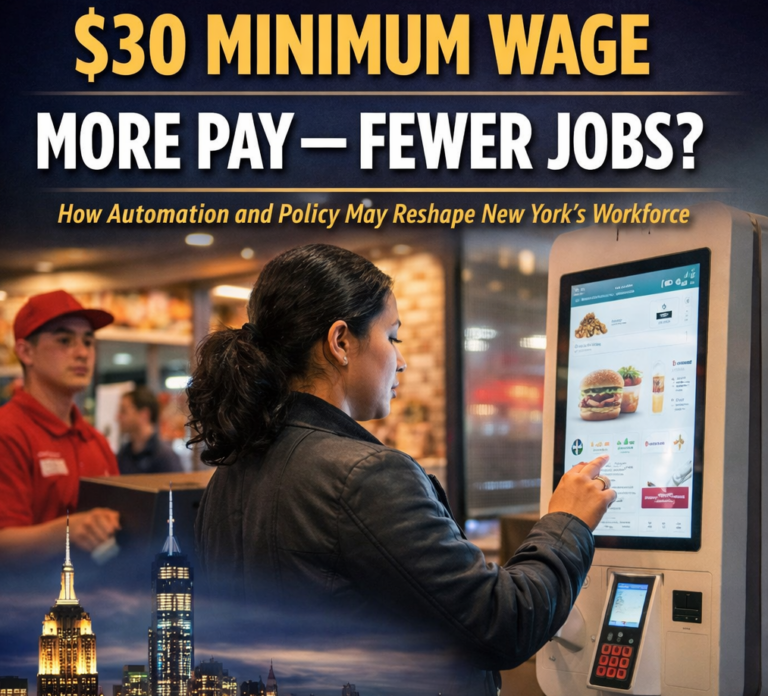
That distinction matters as New York City Council members push a new bill—Int 0757-2026, sponsored by Councilmember Sandra Nurse—that would phase in a $30-per-hour minimum wage. For large employers (more than 500 workers), it starts at $20 per hour by 2027 and reaches $30 by 2030. Smaller businesses would follow a slightly slower path, hitting $30 around 2032. The current city minimum wage stands at $17 per hour (effective January 2026). Supporters argue this is essential to help workers afford the city’s skyrocketing cost of living. The intention sounds compassionate. But history and evidence show that when government mandates wages far above what many businesses can sustainably pay, employers adjust in ways politicians rarely discuss.
They hire fewer workers.
We are already seeing elements of this in California, where fast-food wages rose to $20 per hour in April 2024. Research reveals mixed but concerning results: wages climbed significantly (around 8–11% for covered workers in various studies), yet some analyses estimate thousands of relative job losses—around 18,000 in the fast-food sector according to NBER research—along with accelerated automation like self-order kiosks, AI drive-thru systems, and robotic kitchen tools. Menu prices rose too, with increases ranging from modest (about 2%, or roughly 8 cents on a $4 item in some UC Berkeley reports) to sharper (up to 14.5% in others). Businesses cut hours or staffing in certain cases to manage costs.
In short, the policy delivered higher pay for some workers while shrinking opportunities—and especially entry-level positions—for others.
A $30 minimum in New York City would not hit massive corporations hardest. The real pain would land on the small businesses that form the backbone of the city’s neighborhoods—the family-run restaurant, the corner bodega, the local barbershop, the independent boutique, the neighborhood bakery, and the small pharmacy. These aren’t Fortune 500 companies with deep pockets and global supply chains. They run on razor-thin margins, battling high rents, steep insurance, heavy regulations, and competition from big-box stores and online giants—all while paying some of the nation’s highest operating costs.
For many of these businesses, labor is already the largest single expense. A jump toward $30 per hour would force tough choices: raise prices (driving customers away), cut staff, shift more roles to part-time, reduce hiring, or—in the worst cases—close entirely if the numbers no longer add up.
Policymakers tout higher wages but seldom address the ripple effects:
Fewer employees per shift.
More part-time work replacing full-time jobs.
Higher prices for everyday goods and services.
Fewer independent businesses anchoring local communities.
This isn’t just economics—it’s a community issue. Small businesses create neighborhood jobs, buy from local suppliers, and serve as gathering spots that build social ties. When they struggle or vanish, the economic and cultural fabric frays.
Automation is already reshaping entry-level work in New York. Walk through any major avenue or rest-stop plaza: fast-casual spots and takeout places increasingly rely on self-service screens, integrated payment kiosks, and AI ordering. One or two workers now handle areas that once needed several. Technology doesn’t take sick days, demand overtime, or require benefits—and over time, it often costs less than a growing payroll.
The push to $30 would only intensify this shift. Not every job disappears, but the total number shrinks—particularly the entry-level roles that have long served as stepping stones for first-time workers building skills and experience.
The damage would fall hardest on youth, especially Black youth in New York City. Young people—teens and young adults just entering the workforce—rely heavily on these low-barrier, minimum-wage jobs in retail, hospitality, and fast food to gain experience, build resumes, and earn independence. Economic research consistently shows that minimum wage hikes reduce teen employment (often by 1–3% or more per 10% wage increase in many studies), with larger disemployment effects for Black and minority youth due to factors like limited experience, geographic concentration in affected sectors, and existing barriers. In New York City, youth unemployment already stands at troubling levels—13.2% overall for ages 16–24 in 2024 (3.6 points above 2019 pre-pandemic figures, per the New York State Comptroller)—with young Black workers facing the steepest rates at 23.8%, over nine points higher than in 2019. These are the communities where entry-level opportunities matter most for breaking cycles of disadvantage. Mandating wages that accelerate automation and hiring caution risks decimating these first rungs on the ladder, leaving more young people—disproportionately Black youth—idle, disconnected from work experience, and further behind in building long-term economic stability.
The United States faces a deepening shortage of skilled labor in fields that already pay well above minimum wage. Construction, electrical work, plumbing, welding, HVAC, and infrastructure trades are desperate for workers. Recent projections from the Associated Builders and Contractors estimate the construction industry alone needs to attract nearly 349,000 net new workers in 2026 to keep pace with demand, with numbers potentially climbing higher in coming years. These jobs often pay $60,000 to $120,000 annually, many without requiring a four-year college degree.
Instead of pouring resources into trade schools, apprenticeships, vocational programs, and workforce training, policymakers keep chasing wage mandates. It’s politically simpler to pass a headline-grabbing law raising pay than to build a pipeline of skilled workers. One generates soundbites. The other delivers real, lasting economic mobility.
If New York City genuinely wants to expand opportunity and help working families thrive, the priority shouldn’t be mandating higher wages that risk fewer jobs, faster automation, and struggling small businesses. It should be equipping people for the high-demand, high-paying industries where opportunities already exist.
When policymakers try to fix a skills gap with blunt wage mandates, the result can be the opposite of what they intend: reduced employment, accelerated technology replacing people, and fewer neighborhood anchors left to sustain the communities they claim to help. Outcomes, not intentions, will tell the story.
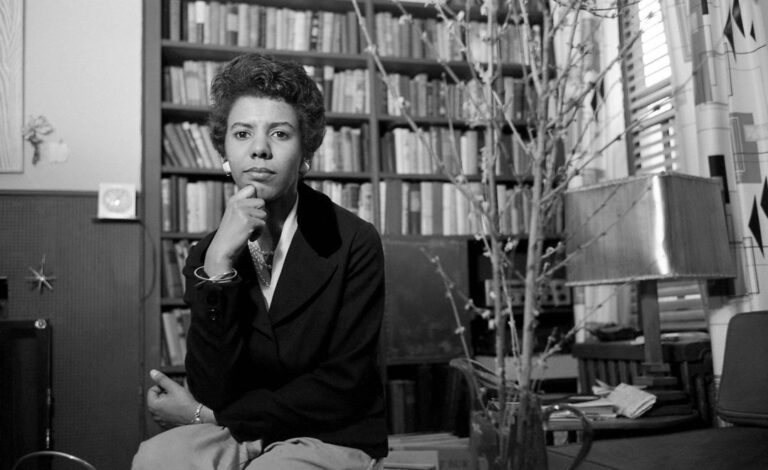
A Raisin in the Sun, the first Broadway play produced by a Black woman, Lorraine Hansberry, debuted at the Ethel Barrymore Theatre on March 11, 1959.
On March 11, 1959, Lorraine Hansberry, a Croton-On-Hudson resident, made history on Broadway with the opening of her play, A Raisin in the Sun. A story about a Black working-class family living in Chicago, the play was the first on Broadway to be written and produced by an African American woman.
Lorraine Hansberry’s A Raisin in the Sun, the first Broadway play written by a Black woman, opened at the Ethel Barrymore Theatre in New York on March 11, 1959.
Taking its title from the Langston Hughes poem “Harlem,” Hansberry’s story follows a working-class Black family from the South Side of Chicago hoping to improve their lives. Raised herself on Chicago’s South Side, Hansberry’s parents were racial justice activists, and A Raisin in the Sun was inspired by her life.
It was also the first Broadway show to feature a Black director, Lloyd Richards, and its stars included Sidney Poitier, Ruby Dee, Claudia McNeil, and Louis Gossett.
Scene from the play. Ruby Dee as Ruth, Claudia McNeil as Lena, Glynn Turman as Travis, Sidney Poitier as Walter, and John Fiedler as Karl Lindner.
The New York Drama Critics Circle Award named “Raisin” the best American play in 1959, and it received four Tony Award nominations for best play, best direction, and best performances for Poitier and McNeil. It ran for 530 performances until it closed in 1960 and was adapted for the big screen in 1961, with Hansberry writing the script. Broadway revivals took place in 2004 and 2014, and the play is credited with bringing Black audiences to the stage.
“Never before, in the entire history of the American theater, had so much of the truth of black people’s lives been seen on the stage,” James Baldwin later wrote of the production. “Black people had ignored the theater because the theater had always ignored them.”
March 11, 1874 – Frederick Douglass named president of The Freedmen’s Savings and Trust Company, commonly referred to as The Freedmen’s Bank. It was created by the United States Congress along with the Freedmen’s Bureau to aid the freedmen in their transition from slavery to freedom.
March 11, 1926 – Civil Rights Activist and Baptist Minister Ralph David Abernathy was born in Linden, Alabama. He was ordained in the Baptist tradition in 1948. Being the leader of the civil rights movement, he was a close friend and mentor of Martin Luther King Jr. He collaborated with King and E. D. Nixon to create the Montgomery Improvement Association, which led to the Montgomery bus boycott and co-created and was an executive board member of the Southern Christian Leadership Conference (SCLC). He became president of the SCLC following the assassination of King in 1968; he led the Poor People’s Campaign in Washington, D.C., as well as other marches and demonstrations for disenfranchised Americans. He also served as an advisory committee member of the Congress on Racial Equality (CORE).
March 11, 1950 – Grammy Award winning Singer Bobby McFerrin, most well known for his #1 hit “Don’t Worry Be Happy”, born in the UK.
March 11, 1957 – Singer Cheryl Lynn, most well known for her 1979 disco classic “Got to Be Real,” was born in Los Angeles, California. Got To Be Real became a staple for DJs to cut up as emcees spit rhymes over in the early days of Hip-Hop and has been sampled over 151 times, including on early Hip-Hop classic “Rappin and Rocking the House” by Funk Four Plus One More, released on Enjoy Records in 1979. Other Hip-Hop artists who sampled Got To Be Real include Full Force, DJ Jazzy Jeff & The Fresh Prince, NWA, Eric B & Rakim, Nate Dogg featuring Fabolous & Lil Mo, 2 Live Crew, Grand Master Flash, Too Short, Too Poetic, and many more. Yonkers native Mary J. Blige made her background vocal debut on Father MC’s song “I’ll Do 4 U” in 1990, the second single from Father MC’s debut album, Father’s Day. MJB also appeared in the music video for the song.
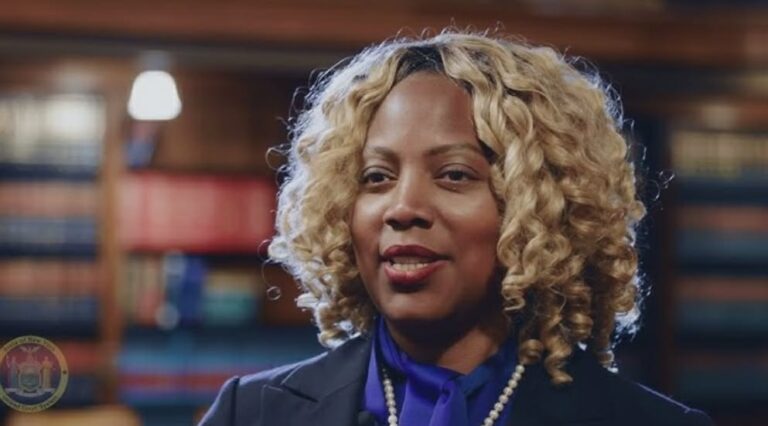
Dr. Betty Campbell, an adjunct professor of criminal and social justice and the Commissioner of Jurors for Westchester County, is the first African-American woman to attain this position in New York State. The Iona College graduate has 25 years of experience in criminal justice and law, including nearly a decade at the Manhattan DA’s Office in its Witness Aid Service Unit, Alternative to Incarceration Unit, and Drug Treatment Alternative to Prison Program.
Dr. Campbell served as Director of the 9th Judicial Problem-Solving Courts, which she spearheaded, and is also a trauma-informed response trainer. A lifelong resident of New Rochelle, she seeks to apply her “extensive research on leadership in policing and experience working with diverse communities to create positive change.”
Dr. Betty Campbell was a single mother just out of high school, who was raising her child, working full-time, and pursuing an associate degree at night. After earning her associate degree, she went on to earn a bachelor’s degree in criminal justice. That led to a job in the Manhattan District Attorney’s office. She spent a decade in the Witness Aid Service Unit, the Alternative to Incarceration Unit, and the Drug Treatment Alternative to Prison Program, which she spearheaded. While working in the DA’s office, Betty earned a master’s in public administration from New York University. She came to work for the court system in 2002, planning and overseeing 35 problem-solving courts in the Ninth Judicial District, which encompasses Westchester, Putnam, Dutchess, Rockland, and Orange counties. In 2011, Betty earned her doctorate in education.
In August of 2017, the Westchester County Jury Board unanimously appointed Campbell the first commissioner of jurors of color ever in Westchester, and the first female jury commissioner of color in the entire state.
She learned that justice takes on many different forms. In the District Attorney’s office, she worked first with crime victims and the Witness Aid Service unit, and then defendants in the Alternative Sentencing Unit, and then predicate felons in the DTAP Program. She realized that everyone had different needs and different outcomes. In the DA’s office, she was introduced to the practice of restorative justice, especially in the Alternative Sentencing Unit and the DTAP Program, because those units’ response to criminal behavior focused on restoring harmony between the offender and society. The Alternative to Sentencing Unit was a unit that was responsible for assigning individuals to various community service projects. If you had a case and your disposition was community service, the Alternative to Sentencing Unit actually assigned people to various community service.
The historical significance of Campbell’s role is not lost on her. Community outreach and education are integral to her mission of educating people about the lesser-known aspects of the jury process, such as the option of volunteering for service before receiving a questionnaire in the mail.
Dr. Campbell tells Black Westchester that she feels like a trailblazer in her position and hopes young African American kids will be inspired by her achievement.
“My job is to ensure that we have a diverse pool of qualified jurors from a cross-section of the county. The ability to participate in the jury process is a privilege; therefore, I’d like prospective jurors to think of their summons as an invitation to participate in something great—our justice system.”
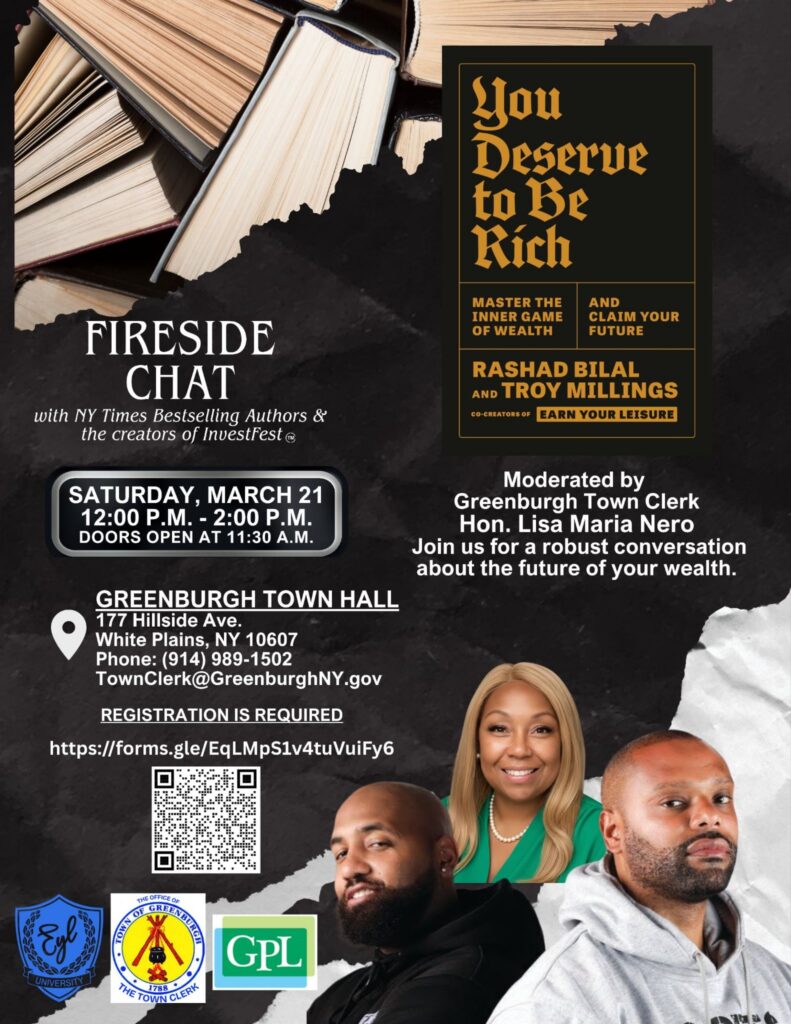
The Town Clerk of Greenburgh, Lisa Maria Nero, MPA, will host a special fireside chat featuring Troy Millings and Rashad Bilal, co-founders of the Earn Your Leisure Network. The event will take place at Greenburgh Town Hall, Saturday, March 21, 2026, and will honor Greenburgh natives & New York Times bestselling authors who have helped inspire financial education and investment literacy nationwide and internationally.
This fireside chat aligns with Greenburgh’s mission to foster financial literacy, support local authors, and provide meaningful cultural events for residents.
The event is free with registration. Attendees receive a complimentary autographed book upon registration, with opportunities for Q&A in the registration link.
You must RSVP by Friday, March 20th, to ensure seating and book allocations.
Event Details
Date & Time: Saturday, March 21, 2026, 12:00 PM – 2:00 PM (doors open at 11:30 AM) Location: Greenburgh Town Hall (177 Hillside Ave., Greenburgh, NY 10607) Admission: Free with registration
Registration Perks: A copy of the NYT Best-selling book, “You Deserve to Be Rich.”
What to Expect: Fireside Conversation: Insightful discussion with Troy Millings and Rashad Bilal of Earn Your Leisure about wealth-building strategies, entrepreneurship, and community empowerment.
Community Spotlight: Recognition of Greenburgh natives for their contributions to the community, as well as financial literacy and education.