










Let me start with this:
When you’re raising a daughter in New York’s education system, especially if you’re Black, Brown, immigrant, working-class, or anything other than “textbook privileged”, you see things differently.
You feel the shifts before the headlines hit.
You notice the cracks before the policies change.
You catch the tone, the tension, the “something’s off” long before the data confirms it.
Because when you’re parenting inside the culture-state-space of New York, you’re not just raising a child, you’re navigating an ecosystem. A system shaped by race, class, ZIP code, opportunity, history, and politics whether you signed up for it or not.
And right now, that ecosystem is moving under our feet.
Quietly.
Let’s Talk About the Quiet Dismantling Because It’s Real
Donald Trump said he wanted to dismantle the U.S. Department of Education and return power to the states.
A lot of people laughed it off.
Called it impossible.
Said “That’s not how government works.”
Well…
It’s happening.
Not loudly.
Not dramatically.
But piece by piece, like someone slowly moving furniture out of a house you still live in.
The Guardian reports the administration is breaking up the Department of Education by reassigning major responsibilities.
The Education Department itself announced it is transferring oversight to agencies like HHS, Labor, State, and Interior.
Reuters confirmed Trump signed an executive order to “facilitate the closure” of the Department.
No alarms.
No national uproar.
Just quiet movement with loud consequences.
As a New York Parent, I Feel This in My Spirit
Because here’s what parents like me know:
When the federal government steps back,
our ZIP code steps forward.
And in the culture-state-space of New York, ZIP codes can tell completely different stories:
Mount Vernon ≠ Scarsdale
Yonkers ≠ Bronxville
New Rochelle ≠ Rye
Peekskill ≠ Pelham
Two exits apart.
Two entirely different futures.
That’s why federal oversight mattered.
It wasn’t perfect, but it set a baseline.
Without that baseline?
We’re back to navigating education by luck, income, politics, and geography.
And my daughter’s future and yours, should NEVER be left to “luck.”
What the Dismantling Actually Looks Like
Forget the big speeches.
This dismantling is administrative:
1. Special Education → Health & Human Services
Great. Now your child’s IEP is sitting next to Medicaid paperwork.
2. Career & Technical Programs → Department of Labor
Because nothing says “student success” like someone who’s never been inside a classroom making workforce rules.
3. International Student Oversight → State Department
Diplomats handling your child’s student visa needs.
4. Tribal Education → Department of the Interior
Education being managed by people who handle land management.
This isn’t reform.
It’s a redistribution.
And it changes the shape of education as we know it.
Why This Hits Different in New York
Because New York is diverse.
New York is layered.
New York is complicated.
New York is a cultural universe inside one state.
And our public schools are ecosystems where:
- Black kids
- Latino kids
- Caribbean kids
- African kids
- Asian kids
- First-generation kids
- Multilingual kids
- Working-class kids
- Kids with disabilities
- Kids navigating trauma
…are learning side-by-side.
You cannot manage a system like that with a “figure it out at the state level” mentality.
Federal protections were the guardrails.
Without them?
The road becomes dangerous real quick.
What New York Gains and What It Loses
THE GAINS
- Faster curriculum changes
- More flexibility in testing
- State-directed funding priorities
THE LOSSES
- Federal civil rights enforcement
- Federal special education protections
- Federal funding stabilizers
- National standards that protect mobile families
And let me say this plainly:
The losses hit Black and Brown children first.
The gains benefit wealthy districts first.
(Education Trust)
(Education Law Center)
As a Parent, Here’s What Keeps Me Up at Night
The quiet dismantling doesn’t announce itself in your child’s backpack.
It shows up as:
- longer waits for evaluations
- bigger class sizes
- fewer counselors
- more pressure on teachers
- funding gaps widening
- curriculum shifts with no explanation
- accountability dropping
- resources disappearing
This is how inequity grows without a headline.
This is how futures shift slowly and silently.
HOW WESTCHESTER PARENTS CAN ADVOCATE UNDER THE NEW SYSTEM
This is where our power lives now, at the state level, not federal.
1. Know who shapes New York’s education rules
- Board of Regents
- NYSED Commissioner
- Governor
- State Senate & Assembly Education Committees
2. Attend your local school board meetings
This is where you’ll SEE the quiet changes first.
3. Build cross-district coalitions
Mount Vernon parents linking with Yonkers, New Rochelle, and Peekskill parents?
That’s power.
4. Track the state budget every year
Education is the largest line item.
Cuts hide in the details.
5. Watch charter expansion proposals
These decisions come from Albany, not D.C.
6. Document everything
Evaluations.
Service delays.
Denied support.
Shifts in staffing.
Data matters.
7. Bring local media into the conversation
Black Westchester is a watchdog.
Use it.
Because the system only changes when people shine a light on it.
Final Word:
I’m raising my daughter in this system.
I’m watching these changes not as a headline-reader, but as a parent who checks homework, emails teachers, attends meetings, asks questions, and understands what it means to fight for your child’s education in a state where inequity can hide behind a short commute.
The dismantling is quiet, but the impact is loud.
And if we don’t pay attention now,
we’ll feel the consequences for years.
This isn’t about panic.
This is about preparedness.
This is about awareness.
This is about protecting our children.
And the parents who understand the shift are the parents who will stay in front of it.

Larnez Kinsey is a writer for Black Westchester Magazine, a public-health advocate, and a seasoned New York State civil servant with two decades of service, including the last ten years as a Security Hospital Treatment Assistant in a maximum-security forensic psychiatric facility. With deep expertise in crisis management inside one of the state’s most demanding environments, she brings unmatched frontline insight into trauma, safety, human behavior, and the systemic gaps that influence community outcomes.
A lifelong supercreative, Larnez is also the Co-Founder and CEO of BlackGate Consulting Group, where she uses her multidisciplinary skill set to drive transformative change for businesses, nonprofits, and community-based organizations. Her work bridges policy, protection, and healing, grounded in a clear understanding of cybernetic ecology, New York’s cultural landscape, and the interplay between mental health and community resilience.
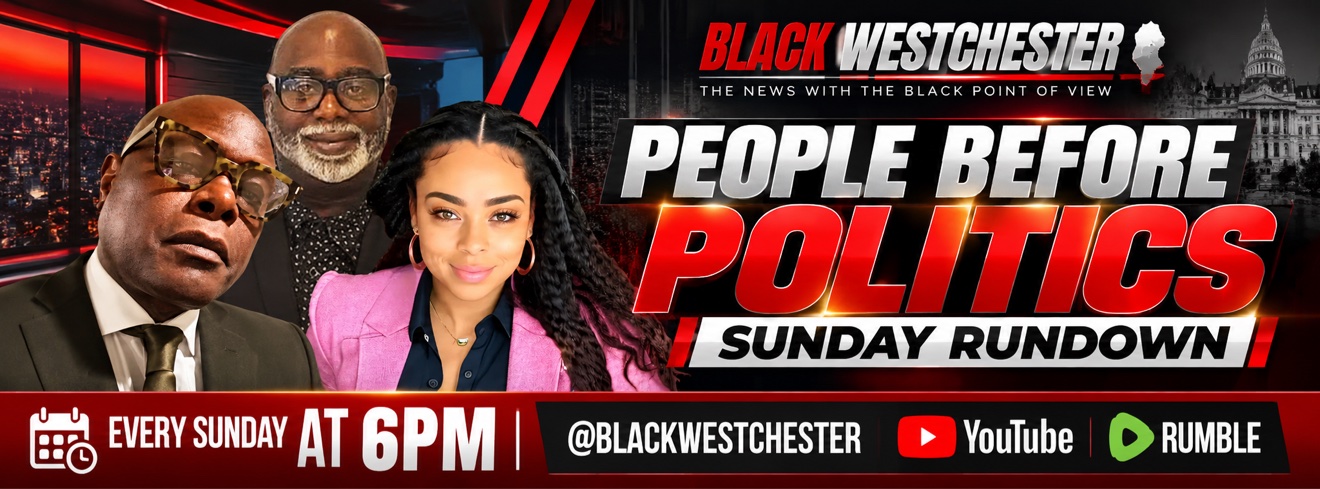
Larnez is additionally a co-host on Black Westchester Magazine’s flagship shows, People Before Politics and The Sunday Rundown, where she elevates community voices and engages in conversations that challenge systems and amplify truth.
She also serves as the Economic Development Chair for the Yonkers NAACP and is a Reiki Master Teacher, integrating holistic wellness with strategic advocacy. Through every role, Larnez remains committed to empowering individuals, strengthening communities, and moving resources to the places where they can create the greatest impact.

I just can’t believe people are still referring to others as privileged if they’re white just amazing I was born and raised in Westchester .
I feel you. I really do. And nobody at Black Westchester Magazine is saying white people in Westchester haven’t struggled. That’s not the point.
Privilege isn’t about who had an easy life.
It’s about how the system treats you by default.
In education that looks like:
who gets suspended first
who gets labeled “behavioral”
who gets the benefit of the doubt
whose district is fully funded and whose isn’t,
Those are real, measurable gaps in New York.
So when I say “privileged,” I’m not dismissing anyone’s story, I’m naming how the system works for our kids. And if we’re going to protect our children, we have to call it what it is.