Home Blog Page 33

Mount Vernon’s Budget Crisis — When Government Prospers and the People Don’t

Mount Vernon is learning a hard lesson that Thomas Sowell warned about for decades: the first rule of economics is scarcity, and the first rule of politics is to ignore it. The city’s newly released payroll numbers make that lesson painfully clear. In a small, working-class community with one of the lowest median household incomes in Westchester, the city is paying out more than $81 million to 804 employees, with dozens of them earning between $200,000 and $320,000 a year. The mayor is among the highest-paid mayors in the county, earning more than leaders of larger, wealthier cities with healthier tax bases. While residents juggle rent hikes, tax increases, failing services, and deteriorating infrastructure, City Hall has insulated itself from the economic reality that everyone else is forced to live in.

Let’s be absolutely clear: this is not an attack on the city workers — the police officers, firefighters, sanitation workers, clerks, inspectors, administrative staff, and everyone else who show up every day, work overtime, and keep the city functioning under challenging conditions. They are doing their jobs. They are not the architects of the fiscal mess. The real responsibility lies with those in charge of policy, budgeting, and budgetary oversight, and ultimately with the voters who put them in office to manage the city’s finances responsibly. This is not about the people who serve the city — it is about the people who are supposed to serve the taxpayers.

This is not an accident. It is a direct result of political decisions that put government comfort above taxpayer survival. Salaries remain inflated, departments remain bloated, overtime goes unchecked, and jobs multiply even as the population declines. The people who pay the bills live in one version of Mount Vernon; the people who benefit from the bills live in another. And the budget reveals exactly why.

If anyone still doubts the severity of the crisis, the Comptroller’s own letter to residents removes all ambiguity. In plain terms, he admits that the city must issue a Tax Anticipation Note to meet payroll and pay vendors — not for capital improvements or emergencies, but for basic survival. The letter outlines more than $11 million in unpaid obligations spanning 2018 to 2021, including nearly $4 million in old school taxes, $1.6 million in unpaid health benefits, $1.7 million owed to the IRS, and over $3 million in fronted capital for projects awaiting reimbursement. These are not one-time shocks. These are unpaid bills carried from administration to administration, ignored until they can no longer be hidden.

More troubling than the debt itself is what the Comptroller admits next: the city has no fund balance whatsoever. No reserves. No savings. No financial cushion of any kind. For a municipality, this is the equivalent of a household living paycheck to paycheck while maxing out multiple credit cards to keep the lights on. A city with declining revenue, numerous years of unpaid obligations, and zero reserves is not simply experiencing “cash flow challenges.” It is confronting the predictable consequences of chronic fiscal mismanagement. Borrowing money to get through the year is not responsible budgeting — it is emergency triage disguised as standard procedure.

Despite this, defenders of the status quo insist that the payroll is necessary, the salaries are justified, and the debt is routine. They avoid discussing the fact that you cannot sustain a government where over 100 employees make more than $150,000 in a city where most residents make far less. They avoid admitting that a shrinking tax base cannot indefinitely fund a growing government. They avoid one truth above all others: the city does not have a revenue problem. It has a spending problem.

And the greatest tragedy in all of this is opportunity cost. Mount Vernon has every ingredient needed for a true renaissance: historic housing, density, walkability, transit access, and proximity to New York City. It has one of the most resilient populations in the state. For years, I have said the city has the potential to be the Wakanda of Westchester. But instead of guarding its vibranium — its assets, its revenue, its land, its financial stability — leadership has repeatedly sold it off, not for the betterment of residents but for the political comfort of a small circle of insiders.

The delayed 2026 budget is just the latest evidence that the city is running out of places to hide the numbers. Costs continue rising while revenues fall. Old debts resurface. Departments perform poorly. And the most significant expense in the entire system — payroll — remains untouched. Leaders refuse to confront the structure they built because doing so would expose the political incentives that allowed it to grow in the first place.

Mount Vernon is not doomed. The city can still reverse course. But it will require something that has been missing for far too long: leadership that respects basic economics, understands the limits of the tax base, and places residents above political convenience. Sowell warns us to judge systems by outcomes, not intentions. The outcomes in Mount Vernon speak for themselves: rising taxes, shrinking services, emergency borrowing, unpaid bills, and a government that treats fiscal discipline as optional. Until that changes, taxpayers will continue paying more while receiving less — and Mount Vernon will remain a city with enormous potential held hostage by leadership that refuses to learn.

Comptroller Morton discussed Mt Vernon’s Financial Future on the Sunday, November 23, 2025, episode of Black Westchester presents The People Before Politics Radio Show. Also, check out his November 20, 2025, Town Hall Meeting if you missed it!

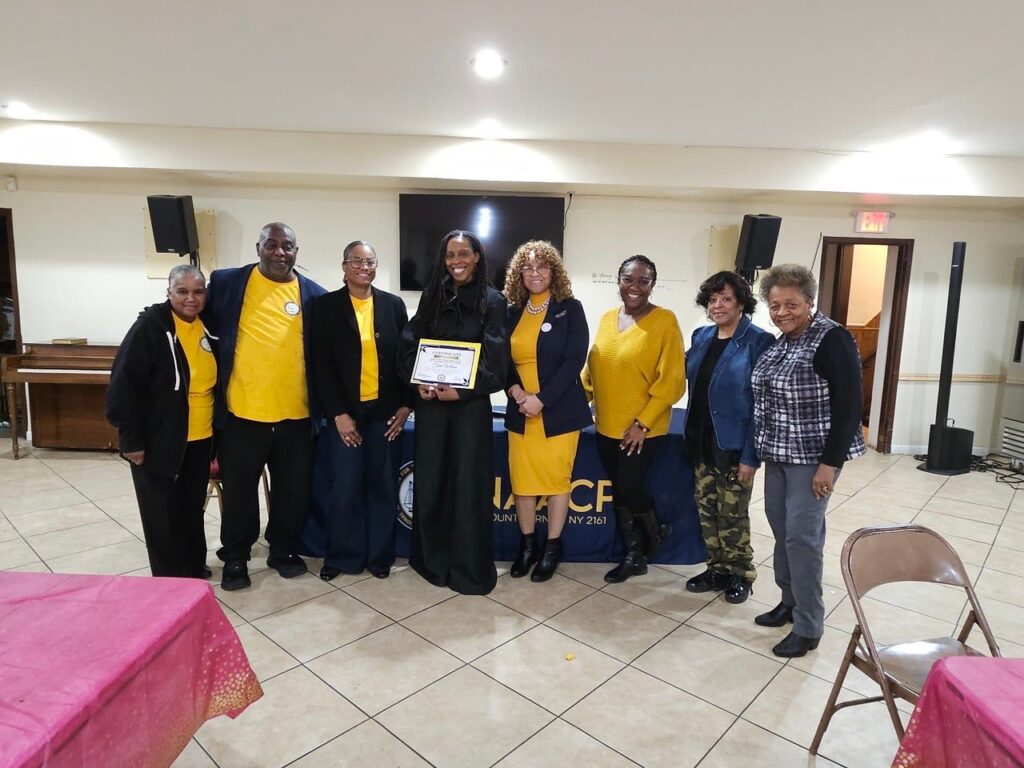
NYC Council Designates January 15 Annual Alpha Kappa Alpha Day, Recognizing The Historic Black Sorority

0

Resolution by AKA members, Speaker Adams, and Majority Leader Farías, honors organization’s long-lasting impact in communities 

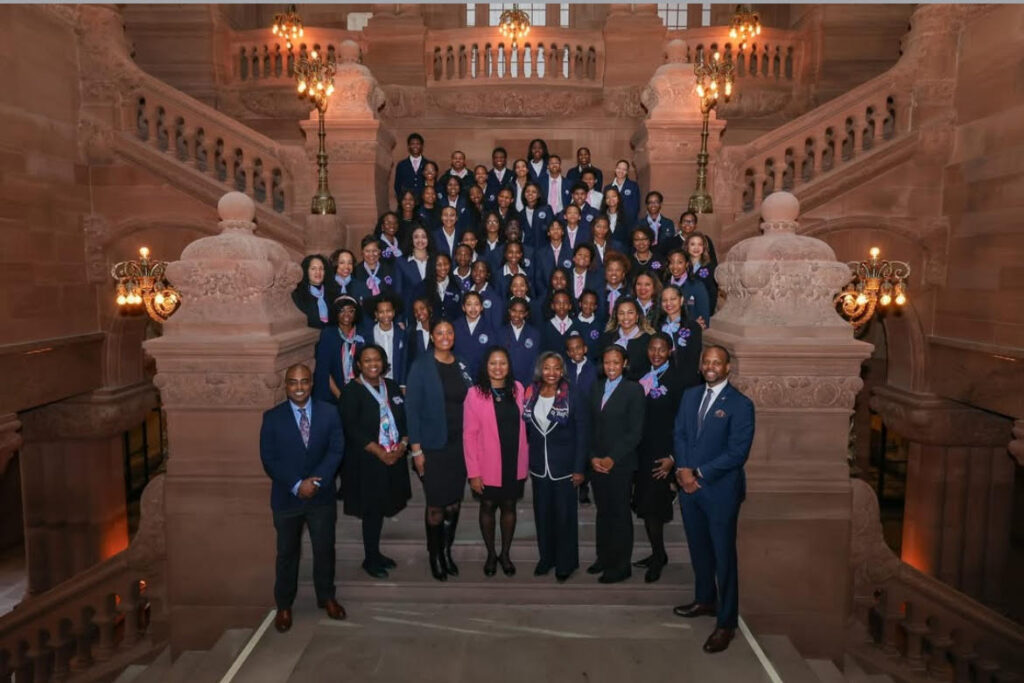
The New York City Council has designated January 15 annually as “Alpha Kappa Alpha Sorority, Incorporated® Day” in the City of New York.” The City Council passed a resolution on November 12, 2025, marking the recognition and urging “City agencies, community organizations, schools, cultural institutions, and New Yorkers to observe this day with appropriate programs, volunteer service, and educational activities that highlight and advance the values exemplified by Alpha Kappa Alpha Sorority.” 

Westchester’s own Dr. Alexandria Connally was proudly in attendance for this incredible occasion. Radiating excitement and joy, she exclaimed, “This is an auspicious occasion — a truly momentous milestone for our sisterhood. It is a wonderful day to be an AKA.”

“As a Life Member of Alpha Kappa Alpha Sorority, initiated at Spelman College, I am delighted to co-sponsor a resolution designating January 15th annually as Alpha Kappa Alpha Day in New York City,” said Speaker Adrienne Adams. “Being a member of the first Sorority for college-educated Black women has been pivotal in shaping my path – particularly in becoming the first Black Speaker of the New York City Council, leading a historic first women-majority Council body. The tenets of Alpha Kappa Alpha have empowered my life’s journey by breaking barriers and blazing trails, just as it has for generations of women before me. I am profoundly honored to buttress the perpetual recognition of my historic Sisterhood.”

“It is an honor to stand with Speaker Adrienne Adams—my Sister in Alpha Kappa Alpha Sorority, Incorporated—in co-sponsoring this resolution recognizing January 15th as Alpha Kappa Alpha Day in the City of New York,” said Majority Leader Amanda Farías. “For more than a century, Alpha Kappa Alpha has advanced educational access, civil rights, and community service through programs that change lives. Our members have established schools, registered voters, expanded access to healthcare, and mentored generations of women to lead with excellence. Here in New York City, Sisters organize annual service projects that support local shelters, award scholarships to high school students, and empower young women through mentorship and college readiness initiatives. Recognizing Alpha Kappa Alpha Day in the City of New York affirms the measurable and lasting impact of BIPOC women’s leadership. As a proud member of this sisterhood, I am proud to see that legacy reflected in the heart of New York.” 

Spearheaded by the Epsilon Pi Omega Chapter in Queens, NY, the resolution notes that AKA members across the five boroughs have contributed countless voluntary hours, strengthening families, mentoring youth, and uplifting communities.

“Alpha Kappa Alpha Day in New York City will present opportunities for service, civic engagement, and celebrations highlighting the positive impact our members make across this city,” Debra Farrow, President of Epsilon Pi Omega Chapter, shared with Black Westchester.

January 15, 2026, will mark the 118th founding of Alpha Kappa Alpha at Howard University in Washington, DC, and the resolution cites the sorority’s “enduring service, scholarship, and positive impact on families and communities.”

Alpha Kappa Alpha Sorority, Incorporated (AKA) is an international service organization that was founded on the campus of Howard University in Washington, D.C. in 1908. It is the first intercollegiate Greek-letter organization established by Black college-educated women. Its founders were among the fewer than 1,000 Black students enrolled in higher education institutions in 1908 and the 25 women who received bachelor’s degrees from Howard University between 1908 and 1911. AKA was founded on a mission of five basic tenets that have remained unchanged since the sorority’s inception: to cultivate and encourage high scholastic and ethical standards; to promote unity and friendship among college women; to study and help alleviate problems concerning girls and women to improve their social stature; to maintain a progressive interest in college life; and to be of “Service to All Mankind.” 

 In 1930, AKA became a founding member of the National Pan-Hellenic Council, also known as the Divine Nine, which is the coordinating body of historically Black fraternities and sororities.   

With its signature official colors of salmon pink and apple green, AKA currently has a membership of more than 390,000 women in more than 1,105 graduate and undergraduate chapters located in 14 nations and territories, including the United States, Bahamas, Bermuda, Canada, Germany, Japan, Liberia, Nigeria, South Korea, United Kingdom, and the U.S. Virgin Islands. Some notable AKA members include Dr. Maya Angelou, Coretta Scott-King, Rosa Parks, Toni Morrison, Ella Fitzgerald, Ava DuVernay, Mae Jemison, Phylicia Rashad, Cynthia Erivo, former United States Vice President Kamala Harris, and many more women who have made significant contributions in the fields of education, science, entertainment, civil rights, and government.  

Urgent Action is Needed to Prevent Legionnaires’ Disease in NY – Op/Ed by NYS Senator Cordell Cleare

NYS Senator Cordell Cleare read with great interest the Black Westchester articles recently published by Damon K. Jones concerning the Legionnaires situation in Westchester: The Hidden Health Risks for Black Families Living in Westchester’s Aging Buildings, and How to Prevent the Spread. Sen. Cleare serves the 30th NYS Senate District, which is primarily based in Harlem, but also includes portions of East Harlem, the Upper West Side, Morningside Heights, Hamilton Heights, and Washington Heights. There was a significant outbreak in her Senate District over the Summer as well, so she wanted to share her experience and response to the outbreak, including the drafting of a new Statewide bill that would help all communities, and wrote the following op/ed for Black Westchester.


NYS Senator Cordell Cleare (picture courtesy of Sen. Cleare)

As the State Senator representing Central Harlem, the epicenter of this summer’s Legionnaires’ disease outbreak, which sickened 114 people and tragically caused seven to lose their lives, I’d like to thank Damon Jones for his recent piece, Legionnaires’ Outbreak Exposes Hidden Health Risks for Black Families Living in Westchester’s Aging Buildings (10/30/25). Mr. Jones speaks to the underlying and systemic issues of neglected infrastructure and unequal housing conditions, which make black and Latino communities disproportionately impacted by this waterborne illness.

What we experienced this summer in Harlem, in Westchester, and in Parkchester in the Bronx is a stark reminder of the serious and persistent health disparities in black and brown communities, and how aging and neglected infrastructure contribute greatly to the health and safety of our homes and workplaces

The fact is that individuals with compromised immune systems, respiratory illness like asthma, those who smoke, and the elderly are more susceptible to Legionnaires’ disease.  Legionnaires’ is a severe form of pneumonia that can cause serious illness in those who contract it and has a fatality rate of 10%. Rates of asthma, comorbidities like heart disease and diabetes, and tobacco use are notably higher among individuals of color, placing them at greater risk.

Legionella, the waterborne bacteria that causes Legionnaires’ disease, thrives in stagnant water and poorly maintained building and water distribution systems, leading to human exposure. Individuals can contract Legionnaires’ when water containing Legionella is inhaled or aspirated (goes down the wrong pipe). Legionella is commonly found in nature- in source water and soil.  As water travels from lakes and reservoirs to treatment plants, the bacteria can escape and enter our vast, complex public water distribution systems, where the environment is favorable for Legionella to survive and thrive. When there are upset conditions like water main breaks, construction, heavy rainfall, and flooding, our plumbing systems and water-using equipment can be seeded with the bacteria from the distribution system.  Once legionella infects our plumbing systems and equipment, we can be exposed to it in our homes, facilities, and buildings through showers, sinks, fountains, misters, hot tubs, pools, garden hoses, humidifiers, and cooling towers, among other points.

Given these realities, it is critical for both our public water distribution systems and our building and premise plumbing systems to be properly monitored and maintained to mitigate these risks. And while New York put some regulations in place a decade ago, they have proven insufficient to combat the spread of Legionnaires’.  Outbreaks and cases have continued unabated, as many of us experienced this summer. New York State consistently ranks among the highest in Legionnaires’ cases each year in the United States. 

We must take a proactive approach to protect public health and reduce the incidence of Legionnaires’ disease through comprehensive regulation, increased transparency, and public education, as Mr. Jones rightly calls for.  That is why I introduced Senate bill 8499, along with my colleague, Assembly Housing Committee Chair Linda Rosenthal, to enhance public health and water quality measures to prevent Legionnaires’ disease, holistically from source to tap. 

The bill would require water management plans to monitor, manage, and ensure adequate treatment of our water quality throughout public distribution systems and building water systems.  The bill also requires stronger investigations of all cases and a dedicated public education campaign to raise awareness, especially among those who are most susceptible, so they are aware of the signs and symptoms and when to seek immediate treatment. 

The legislation is modeled after a law successfully passed in New Jersey last year and regulations in place in Illinois, and is consistent with several best practice recommendations of national organizations and experts. 

This call for urgent and comprehensive action was echoed in a recent national article in Circle of Blue, America’s Deadliest Waterborne Disease is Not Letting Up (11/11/25). Water treatment expert, Chad Seidel, said, “Legionella is the most substantial public health concern we are addressing, and [we] need to better address, related to drinking water… Nothing else comes close. Legionella is real and present… It is killing people…Everybody that uses water along the way- from the source all the way to the tap, the water utility to the customer- has to play their role in mitigating risks.”

New Yorkers deserve to know the water they drink and use every day is safe and will not make them and their loved ones sick, or worse, lead to death.  We must act now to prevent future tragedies from this preventable illness from happening again.

Senator Cordell Cleare
(D- 30th Senate District in Harlem)
Chair, Senate Aging Committee

For more info, visit Senator Cleare’s website and follow her on Facebook, Instagram, and X (Twitter).

Democrats Hold a Massive Generic Ballot Lead — And It’s No Accident

Democrats’ latest surge in the generic ballot — their biggest lead since 2017 — didn’t come out of nowhere. It is the result of narrative discipline, message consistency, and political strategy that has gone unmatched by Republicans all year. And the proof of their strategy’s success was visible in the most recent election: a blue wave, from school boards to statehouses, where Democrats ran the board in race after race — often in places where Republicans should have been competitive.

The win wasn’t driven by Democratic policy achievements. It was driven by their mastery of the storyline. Democrats controlled the narrative of the government shutdown even after it was publicly documented that they voted 15 times to keep the government closed. It didn’t matter. They repeated one message: Republicans were holding the country hostage. Meanwhile, Republicans had no unified message at all. They were too busy arguing among themselves to communicate with the public.

The Republican brand became chaos; the Democratic brand became consistency. And voters responded exactly as you would expect.

Then the Epstein files entered the national spotlight, offering an opportunity to expose elite misconduct across both parties. But instead of using the moment to bring clarity, Republicans delivered confusion. Infighting, scattered messaging, and contradictory statements turned a story of bipartisan corruption into yet another example of Republican dysfunction.

The Marjorie Taylor Greene–Trump fallout made matters worse. Greene went on progressive platforms like The Viewand publicly questioned Trump’s innocence — even though the attorney representing many of the Epstein victims explicitly cleared Trump of any wrongdoing. That contradiction was a gift to Democrats. It didn’t matter that Trump was exonerated. Greene’s comments validated the left’s narrative that he must have been involved. Republicans handed Democrats the ammunition.

And beneath all of this was a deeper ideological fracture: the war inside the GOP between America First and Israel First. This split isn’t theoretical. It showed up in voter behavior. A large number of young conservatives — especially those aligned with Turning Point USA — simply sat out the election. Not because they’re unmotivated or apolitical, but because they’re disillusioned. They are no longer sure whether the Republican Party’s priorities line up with their own. When the base feels the party is fighting harder for foreign interests than for American interests, enthusiasm collapses.

Democrats capitalized on that confusion. They unified around one message: stability. Republicans, meanwhile, couldn’t tell the public what they stood for — or who they stood with.

This is how Democrats engineered the blue wave. Not by inspiring voters, but by convincing them Republicans were too fractured to govern. And Republicans helped them do it by fighting each other on camera, contradicting their own leadership, and failing to present even a basic message of unity.

This generic-ballot lead is not an ideological shift. It’s the result of a disciplined political machine running against a party that can’t agree on a sentence, much less a platform. Democrats stayed on message. Republicans didn’t have one.

In politics, consistency beats chaos every time. A false narrative, repeated long enough and loud enough, becomes accepted as truth. Democrats understood that. Republicans ignored it. Today’s polling is not a reflection of what voters believe — it’s a reflection of what they hear.

America’s Convenient Compassion: Nicki Minaj at the UN: What New Yorkers See That America Won’t Say By Larnez Kinsey

New York has an instinct for truth.

It’s something in the air, something in the architecture, something in the lived experience of people who have seen too much to fall for political theater dressed up as humanitarian concern.

So when America suddenly becomes deeply invested in protecting Christians in Nigeria, New Yorkers notice the shift immediately. We raise an eyebrow, the same way we do when someone on the train loudly performs generosity right before asking for “just one more dollar.”

We understand sincerity.

And we understand strategy.

And this moment has strategy written all over it.

Let me be clear:

The violence impacting Christian communities in Nigeria is real and devastating.

Nicki Minaj using her platform to speak on that is powerful and meaningful.

But the timing, the political coordination, and the foreign policy choreography behind it require deeper examination. Because New Yorkers have always known how to look past headlines and focus on intention.

Here’s what the culture of this city understands better than most places on Earth:

America often prioritizes crises abroad while ignoring the crises happening at home.

Let’s talk about Christians right here in the United States.

Across New York City and Westchester, Black and Latino Christians fill pews from Brooklyn storefront sanctuaries to Bronx Pentecostal churches to Harlem’s historic congregations, and from Mount Vernon to Yonkers to Peekskill’s long-standing faith communities. 

These congregations have long faced:

  • rising hate incidents
  • vandalism
  • violence
  • Gentrification pushing churches out
  • delayed or inadequate police responses
  • community trauma that remains unaddressed

Where were the national emergency briefings?

Where were the high-level government statements?

Where was the collective outrage when OUR churches suffered?

New York remembers Charleston.

New York remembers Buffalo.

New York remembers every Black congregation that rebuilt after being burned, burglarized, or threatened without national intervention.

So when the federal government suddenly demonstrates heartfelt concern for Christian life, but only when the Christians are thousands of miles away, it raises legitimate questions.

Now, let’s talk about Nigeria and why America suddenly cares.

Nigeria is a global cultural powerhouse and one of the most resource-rich nations in Africa. It holds tremendous political influence on the continent.

And New Yorkers,  especially those raised alongside West African, Caribbean, Afro-Latinx, and immigrant communities,  know a pattern when we see one:

When the United States expresses sudden humanitarian urgency toward a resource-rich Black nation…

There is always more beneath the surface.

Nicki amplifying Nigerian suffering is important.

Her voice commands global attention.

But we must not overlook the geopolitical interests that have magically aligned with this moment, including Nigeria’s oil reserves, minerals, rare earth elements, and strategic military value.

Compassion alone does not explain this level of political mobilization.


Meanwhile, Christian communities across NYC continue to struggle without national support.

In this city:

  • Black pastors continue conducting funerals for young people lost to systemic neglect.
  • Latino congregations still worry about worship being interrupted or surveilled.
  • Immigrant churches face displacement due to rising costs and shrinking neighborhood space.
  • Black worship communities remain marked as “high risk,” yet receive minimal structural protection.

Where is the United Nations podium for them?

Where is the emergency response?

Where is the federal rallying cry?

New York sees the contradiction.

And New York names it plainly.


New Yorkers respect authenticity, not performance.

This city was shaped by people whose faith carried them through hardship:

  • Caribbean elders who brought prayer into every room
  • West African families who preserved tradition through worship
  • Dominican and Puerto Rican congregations navigating language barriers and systemic bias
  • Black Southern families who migrated north with church as their anchor

We know what Christian struggle looks like, locally, historically, and personally.

And we also know when the government is using Christianity as political leverage rather than human compassion.


FINAL WORD 

We can wholeheartedly support Nicki Minaj stepping into a critical conversation.

We can advocate for Nigerian lives.

We can acknowledge the tragedies abroad that deserve global attention.

But we cannot ignore this truth:

The United States cannot claim to defend Christian life internationally while neglecting the Christians suffering and dying within its own borders.

Two truths can coexist:

Nicki’s advocacy is powerful.

America’s motives require scrutiny.

New Yorkers understand nuance.

We understand contradictions.

And we always read the fine print.


BARB-SAFE DISCLAIMER:

I love Nicki Minaj.

I respect Nicki Minaj.

I am genuinely excited to see her speak on this issue.

Barbs, please do not activate your stingers on me. This is not about your Queen. 💗😂💅🏽

This critique is directed at the political system, not the artist.

The Entertainment Game Has Changed: How the $38 Billion OpenAI–Amazon Deal Rewires Music, Media, and Power

The entertainment industry is undergoing a transformation far more profound than most observers realize. The recent $38 billion agreement between OpenAI and Amazon Web Services was described as a cloud-computing deal, but that characterization understates its significance. What is happening is not merely a technical upgrade. It is a restructuring of power in entertainment, music, and media that will force a long-overdue reckoning with how creative industries operate.

To understand this shift, you have to understand what the old entertainment order relied on: centralized control. Record labels controlled artists, streaming platforms controlled distribution, Hollywood controlled production, and everyone else simply adapted to the rules those institutions created. For decades, technology disrupted distribution but never truly disrupted ownership. This partnership changes that equation.

AI-generated music and audiovisual content sit at the center of the next media revolution. Until now, the companies pursuing AI creativity have been small enough for the major labels and publishers to intimidate. Lawsuits were a deterrent. Legal threats were a strategy. If a startup couldn’t afford to fight, it simply stopped innovating. OpenAI entering the creative space under the protection of Amazon alters that balance. Labels can threaten a small company; they cannot threaten Amazon. Amazon Music already negotiates with the largest labels, publishers, and rights organizations. Those same legal and commercial pathways now serve as OpenAI’s protective shield.

This is the part most analysts miss. While OpenAI supplies the intelligence, Amazon supplies the infrastructure, the legal insulation, and the distribution ecosystem. Amazon controls Amazon Music, Audible, Twitch, Prime Video’s audio pipelines, Amazon Studios, and extensive licensing relationships. When paired with OpenAI’s generative technology, Amazon no longer has to wait for labels to supply music to its platforms. It can generate content, distribute it, and monetize it internally. The old gatekeepers—labels, studios, and traditional publishers—are no longer the only sources of creative supply.

The entertainment business has always depended on scarcity. Studio time was scarce. Distribution was scarce. Catalogs were scarce. That scarcity justified high costs and strict control. AI eliminates scarcity. A company with enough computing power can create infinite content at marginal cost. This is where the $38 billion matters. It is not just a price tag. It is the creation of a new form of economic scale. OpenAI now has guaranteed access to massive compute—backed by a corporation that can absorb legal, financial, and regulatory pressure. No label, no publisher, and no studio can match that combination.

Predictably, this will trigger resistance. Lawsuits will come. Politicians will be pressed to “protect artists.” Yet, the same institutions crying foul are the ones that historically underpaid, exploited, and controlled the very artists they now claim to defend. In typical fashion, they prefer regulation when it protects their dominance, not when it fosters innovation or expands opportunity. The irony is that the AI revolution exposes how fragile their business model has always been.

For Black artists and Black creative communities, this shift presents both opportunity and danger. Historically, innovation in music—from jazz to hip-hop—began with Black creators, while ownership resided elsewhere. AI tools lower the cost of creation but do not automatically guarantee ownership. The same systemic dynamics that extracted value from Black culture for generations can repeat themselves unless creators adapt quickly. The question is whether we will participate as owners or simply become the training data that fuels someone else’s wealth.

We are witnessing the formation of a new entertainment order—one built not on controlling artists but on controlling computing, models, rights infrastructure, and global distribution. The companies positioned to dominate are no longer the traditional entertainment giants but the AI-and-cloud empires. The OpenAI–Amazon partnership is the clearest signal yet that the old entertainment monopoly is entering its final chapter.

The real shift is simple: the power that used to belong to labels, studios, and media conglomerates now sits with those who can generate content, not merely distribute it. The entertainment game has changed, and those who fail to understand the economics behind that shift will soon find themselves debating rules for a game they no longer control.

Harlem Lit the Night and the Message Was Clear

0

All Photos courtesy of Living Redemption Community Development Corporation

[HARLEM, Manhattan] — On Tuesday, November 18, 2025, if joy had a ZIP code, it would’ve been stamped right on 125th Street and Broadway.

The holiday spirit returned in full color, sound, and soul as the Harlem Holiday Lights Parade 2025 illuminated 125th Street beginning at 6:00 p.m., transforming the corridor into a moving celebration of memory, culture, and collective pride. Families lined the sidewalks. Music bounced off storefronts. Lights reflected in young eyes wide enough to believe in magic and old enough to recognize tradition.

The annual parade kicked off Tuesday evening with a theme that felt less like a slogan and more like a truth Harlem lives by: “Culture, Community, Connections.” From the very first float, it was clear, this wasn’t just a parade. It was a reminder of who Harlem is and how it keeps showing up for itself.

Children didn’t hesitate to offer their reviews.

“It was really fun. I liked the lights and the music,” one girl said, bundled up and smiling.

Another boy chimed in, “I liked the cars, and when I saw Mario and Luigi.”

From glowing floats to familiar characters rolling through the neighborhood, joy moved freely through the crowd. Adults felt it too. One paradegoer, fresh off a work shift, summed up the night simply: people got the message. Love was present. The vibes were undeniable.

More than 20 magically lit-up floats made their way down the route, each one carrying pieces of Harlem’s past, present, and future. Community activations lined the street, including toy giveaways for youth, a canned food drive, and live entertainment and performances that turned the parade into a shared experience rather than something to simply watch from the sidelines.

This year’s celebration also highlighted the work and growth of the 125th Street Business Improvement District, showcasing how the corridor has evolved into a place to work, live, visit, and learn, while still honoring the generations that laid its foundation. Harlem’s evolution was on display, not as erasure, but as expansion.

The choice of grand marshals reflected that legacy. Actor Malik Yoba, born in the Bronx and raised in Harlem, represented storytelling rooted in lived experience. The legendary Apollo Theater served as a grand marshal as well, standing as a living symbol of Harlem’s global influence in arts, music, and culture.

The parade also honored Michael A. Walrond Jr., senior pastor of First Corinthian Baptist Church, as the 2025 Legacy Award recipient, recognizing leadership grounded in faith, service, and unwavering commitment to community uplift.

Among the floats rolling down 125th Street was one that carried more than lights; it carried testimony. The Living Redemption float stood as a visible reminder that redemption is not theoretical in Harlem; it’s practiced. Their presence reflected the power of second chances, healing, and restoration, as well as the belief that transformation is possible when communities invest in individuals rather than dwelling on past mistakes.

As spectators cheered and waved, the Living Redemption float underscored a deeper truth of the evening: celebration and responsibility can coexist. Joy and justice can share the same street.

Performers elevated the energy, literally. Stilt dancer Isaiah Young, standing more than 12 feet tall, towered over the crowd with ease and grace, laughing as he explained that it was “as easy as riding a bicycle.”

What began more than three decades ago as simple street decorations has grown into a community-wide tradition drawing thousands from across the region. According to Barbara Askins, president and CEO of the 125th Street BID, the parade is an opportunity to shine a spotlight on the corridor, not only as a destination, but as a thriving economic and cultural engine powered by small businesses and community institutions.

The Harlem Holiday Lights Parade was free and open to the public, reinforcing that access matters. No tickets. No barriers. Just a neighborhood gathering itself in warmth, generosity, and shared purpose.

Proudly sponsored by WABC-TV, the event amplified a message Harlem didn’t need help delivering: when this community comes together, it doesn’t just mark the start of the holiday season, it sets the tone for what together looks like.

As the lights dimmed and the floats passed on, one thing lingered in the air along 125th Street on November 18, 2025, Harlem doesn’t just celebrate the holidays.

It illuminates what community can be.

Mount Vernon NewsCenter Receives Letter Demanding Retraction of Inaccurate & Misleading Statements About Comrie Ent. LLC

Mount Vernon NewsCenter (MVNC) received a demand letter from Christian DiPalermo, Esq., the Attorney representing Comrie Enterprises, LLC, on Tuesday, November 18th, demanding a retraction of several misleading and inaccurate statements on the MVNC Facebook page regarding the property formerly operated as a YMCA facility, located at 20 South 2nd Avenue in Mount Vernon.

“Your post makes several inaccurate allegations based on misconceptions… In your post, you make several allegations that my clients are allegedly not fulfilling their duties and responsibilities, specifically listing issues involving exterior maintenance and cleanliness, as well as securing the Property from unauthorized access. You also note that there  “may” be mandated vacant property registration and recovery plans; then—having established that you are not clear whether such mandates exist—you nonetheless assert our client is not fulfilling those responsibilities either.” (See full letter below)


Comrie Demand Letter FINAL by BLACK WESTCHESTER MAGAZINE


So, how did we get here for those not keeping score with everything going on in the city? Here is a brief rundown.

On November 5, 2025, the Mount Vernon NewsCenter (MVNC), owned and operated by Atif Khalil Coleman, posted on their Facebook page that Comrie Enterprises, the developer of the Library Square project, is neglectful in maintaining the former YMCA building at 20 South 2nd Avenue property they own.

“ENOUGH IS ENOUGH! The YMCA building at 20 S. 2nd Ave. remains vacant, attracting trash and illegal dumping. Over the summer, weeds and trees have overgrown half the building and the entire playground area. Last time we checked, the city entered into a land agreement with Comrie Enterprise LLC, owned by Mr. #MarvinChurch and #DianaWilliams, who are responsible for maintaining the property, but it seems they have not fulfilled this duty. As property owners in New York State, they are required to keep the vacant building secure, safe, and sanitary. This includes maintaining the exterior, securing the property from unauthorized access, and keeping the grounds clean. Local laws may also mandate vacant property registration and recovery plans. Sadly, these responsibilities are not being met, leading to ongoing complaints from residents. Jeffrey Sha Holiday and Tyrone, who haven’t been active on Facebook due to technical issues, have taken it upon themselves to clean the site. It is unclear why DPW staff are involved in cleaning private property. We strongly urge the owners to address this issue immediately and properly maintain their property. We are exhausted from receiving complaints, and it is their obligation to resolve this matter,” Coleman wrote on the Mount Vernon NewsCenter Facebook page.

Several individuals, including BW Publisher Damon K. Jones, warned Coleman – who started as a writer for Black Westchester – that the information was incorrect. Jones left a comment on the post explaining that a land agreement (land contract) does not mean you own the property immediately; the seller retains legal title until the final payment is made. Therefore, the statement posted incorrectly accuses Comrie Ent. of neglecting the property, and that not removing or correcting the post could expose MVNC to a defamation lawsuit. Jones’ comment, which was shared by a friend and, as a professional courtesy, was then deleted by MVNC, and the post remained.

Five days later, on November 10th, MVNC interviewed MV Comptroller Dr. Darren M. Morton, during which Dr. Morton said at 21:33 that the city was counting on the $1.5 million sale of the YMCA. Still, the deal didn’t go through yet, further disproving the statement made by MVNC five days earlier about Comrie’s neglect of the property. The city still owns the property.

On Thursday, November 13th, at the Industrial Development Agency (IDA) or (MVIDA) regularly scheduled monthly meeting, Comrie made a presentation before the IDA. When the attorney for the IDA, Darius P. Chafizadeh of Harris Beach Murtha Attorneys At Law, introduced Comrie as the owner of the property at the beginning of the meeting, Corporation Counsel Brian G. Johnson corrected him and stated, “the city still owns the property,” and Comptroller Morton added, “and is responsible for its maintenance,” further proving MVNC’s post was incorrect and not factually reported.

The MVNC post led some Mount Vernon residents who read MVNC to leave comments on apps like Next Door, saying “Shawyn (Patterson-Howard) has city employees cleaning her campaign donor, Comrie Enterprises LLC’s private property…” This is not only incorrect but could be potentially damaging to Comrie’s reputation; it’s a misrepresentation of the Mayor. Especially since the city itself has on more than one occasion explained that Mount Vernon owns the property, not Comrie.

MVNC who claims to be “the definitive source for local and national news, sports, and entertainment information,” has repeatedly accused Comrie Enterprises of neglect, falsely claiming the developer is the owner of the former YMCA. Back on Friday, July 11, 2025, Coleman wrote, “Sources tell us that Comrie can’t move forward with this project without a PILOT agreement. Since the sale in 2021, the building has remained vacant, and there have been no updates regarding the timeline for the construction of the proposed apartment building. We’ve received numerous inquiries about the future of the YMCA building through messenger and comments, and we are actively seeking answers from the owner of Comrie Enterprise.”

And again on two days later on July 13th, during an interview with BW’s Damon K. Jones, Coleman says, “then comes Comrie and they brought the building from the city…” (22:16), when he was interupted by Jones who corrected him and let him know that, “they don’t own the building, they put in an offer for the building…” Despite being told by Black Westchester, the Comptroller, and several others, Coleman continued to falsely report that Comrie owns the building and is neglectful in maintaining it.

The letter goes on to threaten MVNC with legal action for defamation if they do not remove or correct the malicious, inaccurate statements.

“While our clients remain committed to resolving this matter amicably and hope that this letter will help to correct any misconceptions regarding their involvement with the Property, they  reserve all rights and remedies available under the law, including the pursuit of claims for defamation and injunctive relief should corrective action not be taken immediately.” 

As of the publishing of this article, the Mount Vernon NewCenter posts were still on their Facebook page.

Westchester County Elected Leaders Visit Israel 

3

Fresh off the election, Westchester County elected leaders, including NYS Assemblyman J. Gary Pretlow and wife Donna, Westchester County Executive Ken Jenkins, County Legislators Shanae Williams (District 16), Judah Holstein (District 10), and Emilana Ulaj (District 9), CE Staffers, Crystal Collins – Director of Faith-Based Initiatives and Urban Affairs, and Martha Lopez – Director of Minority and Women-Owned Business Development, and Steve Bass – Director of Intergovernmental Relations, Peekskill Mayor Vivian Mackenzie, Mamaroneck Town Supervisor Jaine Elkind Eney, Yorktown Town Supervisor Ed Lachterman, Port Chester Mayor Luis Marino, Peekskill Councilmember Patrick Jenkins, and Greenburgh Town Councilwoman Gina Jackson, arrived in Israel on Sunday, November 9th, for a week of connection, learning, and partnership.

CE Jenkins led the Westchester County delegation on a study trip to Israel to gain a deeper understanding of the complex issues affecting the region. The visit was Jenkins’s fourth trip to the country and was designed to strengthen cultural understanding, explore opportunities for collaboration, and deepen connections between Westchester County and communities throughout Israel. The delegation met with Israeli leaders, community organizations, and residents, gaining firsthand insight into the region’s history, religion, economy, and diverse cultural and social landscape.

“I was honored to be asked to lead the Westchester delegation of elected and public officials on the study trip to Israel. Our journey to Israel offered a meaningful chance to build connections — both with the people who live there, and with each other. We now have a deeper understanding of the cultural, political, and economic dynamics in the region, while also strengthening our relationships as colleagues committed to serving the people of Westchester. Experiences like this one help us to lead with greater awareness, compassion, and connection with others. To witness firsthand the work being done to find a way to co-exist in peace by the people experiencing it sends a powerful message of hope that can be carried back here in Westchester,” CE Jenkins shared with Black Westchester.

The educational retreat sponsored every 2 years by the Westchester Jewish Community Services (WJCS) for freshman legislators, newly elected officials, and those in government around the county to connect and learn from the Jewish community. It included trips to key historical sites such as

  • Meetings with Jerusalem Deputy Mayor Adir Schwartz and members of the US Embassy
  • A trip to Sderot to learn about the October 7 attack, and a visit to Tel Aviv to reflect on Israelis’ resilience in communities along the Gaza border
  • A walking tour through Jerusalem’s Old City featuring Jewish, Christian, and Muslim quarters
  • A visit to the Max Rayne Yad B’Yad (Hand in Hand) K-12 Jerusalem School, where Jewish and Muslim children learn in a bilingual Hebrew and Arabic program together
  • A tour of Yad Vashem, Israel’s largest national memorial to the six million Jewish victims of the Holocaust 

On Monday, November 10th, of the elected officials’ trip with UJA-Federation of New York — the largest local Jewish philanthropy in the world — they visited the Western Wall, cooked pita and rice, and took in the beauty and history of the city!

“In just 24 hours, this group has accomplished so much — from walking thousands of steps through the Old City and visiting Yad Vashem, to spending time at the Hand in Hand School, exploring the shuk and downtown Jerusalem, and even preparing their own Israeli dinner. It’s inspiring to watch our Westchester elected officials explore, learn, question, and reflect on all these experiences. #westchesterproud,” Tali Ruderman Strom, Director, Community Mobilizers at UJA-Federation of New York, shared on Facebook.

Director of Intergovernmental Relations Steve Bass said: “This trip offered an invaluable opportunity to observe the complex, resilient and above all, inspiring experience of the Jewish, Christian and Muslim communities that make up the State of Israel. Hearing directly from local leaders and residents gave us a more grounded perspective on the challenges they navigate every day, and the solutions they are creating to integrate and live peacefully together.  I am grateful for the chance to help strengthen ties with our closest international ally, and promote greater understanding about the special relationship between our country and Israel.”

Director of Policy and Programs for the Faith Community, Crystal Collins, said: “As a Black Christian woman visiting Israel, I am deeply moved by the rich tapestry of history and faith that intertwines in this land. This journey has opened my eyes to the unique challenges faced by the diverse communities coexisting in this vibrant country, especially amid ongoing conflict. I believe that through dialogue and understanding, we can build connections that honor both our differences and our shared humanity. I hope to share the insights I gained and continue engaging in meaningful conversations that advocate for peace.”

See the Westchester Delegation’s full itinerary below:

Day 1: Saturday, November 8, 2025: THE STUDY TRIP BEGINS

* Westchester Delegation departs JFK on an overnight flight to Israel.

Day 2: Sunday, November 9, 2025: WELCOME TO ISRAEL!

  • B’rukhim Haba’iml- welcome to Israel! Upon arrival at Ben Gurion International Airport, an Ayelet Tours representative meets us in the baggage claim area and assists us through customs.
  • They ascend to Jerusalem and stop at the Haas Promenade for a special welcome ceremony as we look out over the City of Gold for the first time together.
  • At Piccoli no, they enjoy a welcome dinner with Jonah Jeremy Bob, The Jerusalem Post’s senior military correspondent and intelligence analyst. He will brief us on Israel today and the political structure of Israeli politics.
    Overnight in Jerusalem (D)

Day 3: Monday, Nov 10, 2025: POLITICAL & CULTURAL RELATIONS

  • Breakfast at the hotel.
  • We depart our hotel early this morning and begin with a visit to the Temple Mount (security permitting). Next, we set out on a walking tour through Jerusalem’s Old City, featuring the Jewish, Christian, and Muslim Quarters.
  • We visit The Max Rayne Vad B’Yad (Hand in Hand) Jerusalem School, Israel’s largest bilingual Hebrew/ Arabic school, and the country’s only integrated Arab/Jewish high school, to engage in a discussion about the school’s current educational challenges and its future goals.
  • After a light lunch, we visit Yad Vashem, Israel’s national memorial to the six million Jewish victims of the Holocaust. Here we tour the museum and engage in a thought-provoking discussion with a renowned Jewish educator.
  • This evening, a chef accompanies us through the lively Machane Yehuda market and introduces us to the most characteristic ingredients of the local cuisine as we prepare dinner together.
  • After dinner, we experience how the market transforms from a bustling daytime market to a center of nightlife in the evening, including an outdoor museum of local art and graffiti.

Day 4: Tuesday, November 11, 2025: ISRAEL, THE START-UP NATION

  • Breakfast at our hotel, followed by a meeting with Member of Knesset Shirley Pinto and a formal tour of the Knesset building.
  • Afterward, we embark on a Jerusalem Tech Tour (Made in JLM) to learn about Jerusalem’s fast rise as a world-class tech hub. We explore how connections with Israeli/Jerusalem tech can create growth in tech in your region.
  • We enjoy a packed lunch near Shorashim.
  • Roots in English, Shorashim in Hebrew, Judur in Arabic: Since 2014, this not-for-profit group has facilitated interactions between Israeli Jewish settlers and Palestinians from nearby towns. Though they are neighbors, they often live in
  • parallel universes that rarely intersect. We learn how they build bridges and foster coexistence in this sensitive area.
  • This afternoon, we visit the Jerusalem Municipality and meet with the Deputy Mayor Adir Schwartz, learning about the complexity of managing a city faced with a multitude of challenges further complicated by archeological considerations and religious sensitivities. We’ll touch on city-level services, including policing,
    governance, parking, noise ordinance, trash collection, and more. We will also meet with Ran Yishai, who serves as the head of the research division of JCAP – the Jerusalem Center for Applied Policy and is active in the “If I Forget You” project, which deals with research, advocacy, and the promotion of strategic policy for
    Jerusalem.
  • Tonight, dinner is at FeelBeit, where we “immerse in a fresh world of ideas and experiences” and learn how to “use art and culture to break down social and cultural boundaries.”
  • We return to our hotel for a debriefing on today’s visits and plans for tomorrow.

————————–··-·———————–·—-··-··—————·—–·—————·——-
Day 5: Wednesday, November 12, 2025: RESILIENCE ALONG THE GAZA ENVELOPE

  • Breakfast and check out of our hotel.
  • This morning, we drove to Sderot. We learn from representatives of the city about the October 7, 2023, Hamas-led attack, including a visit to a police station attacked that day, and a view into Gaza. We then volunteer in a community-sponsored project and have lunch.
  • We pay our respects at the site of the Nova Music Festival, emphasizing our shared hope for a better tomorrow.
  • On our drive to Tel Aviv, we reflect on the events of October 7th and the Israelis’ resilience in communities along the Gaza border.
  • After checking into our hotel in Tel Aviv, we set out for dinner at an Ethiopian Culture Center, including an introduction to the challenges and successes of the community. Our speaker tonight is Oshra Yosef-Friedman, Deputy Director-General at the Social Equality Ministry.

Overnight in Tel Aviv (B, L, D)

Day 6: Thursday, November 13, 2025: TEL AVIV: A CITY OF MULTITUDES

  • Breakfast and check out of our hotel
  • Meeting with a representative from the US Embassy to learn how the embassy’s Commercial Services team helps expedite and encourage the import of US goods and services into Israel.
  • Continue to the ANU, Museum of the Jewish People, where the story of the Jewish experience across time and place-including the vibrant life of American Jewry and its enduring connection to Israel-comes to life through powerful, interactive exhibits.
  • After lunch, we head to visit Hostages Square and see how this became a center of gathering over the past two years until the final living hostages were finally returned just one month ago.
  • Our last stop will be at Park Ariel Sharon, a conservation-themed park built on a reclaimed and rehabilitated garbage dump. Today, it offers multiple biking and hiking trails and sits adjacent to a waste treatment center- a wonderful example of re-imagining land use.
  • At our farewell dinner, we reflect on our Westchester County Elected Officials study tour to Israel. We also meet with Khaled Abu Toameh, a journalist who covers Palestinian events for the Jerusalem Post and the New York-based Gatestone Institute, where he is a senior distinguished fellow. He has been a producer and consultant for NBC News since 1989. His articles have also appeared in numerous newspapers worldwide.
  • We transfer to Ben Gurion International Airport for our overnight flight to JFK.
    (B, L, 0)
    Day 7: Friday, November 14, 2025: WELCOME HOME
  • We arrive in the USA.

A Major Win for Yonkers: New $1.5B Subway Car Deal Secures Jobs and Strengthens Local Industry

Yonkers, NY — The industrial resurgence unfolding in Yonkers under Mayor Mike Spano reached a new milestone with the announcement that Kawasaki Rail Car, Inc. has been awarded a $1.507 billion contract from the Metropolitan Transportation Authority (MTA). The agreement authorizes the construction of 378 new R268 rail cars for the New York City subway system—solidifying Yonkers’ position as one of the region’s most important hubs of advanced manufacturing.

Mayor Mike Spano praised the historic contract, calling it a validation of Yonkers’ skilled workforce and Kawasaki’s long-standing reputation for excellence.

“Kawasaki Rail has long been a cornerstone of Yonkers’ manufacturing strength and innovation, and this new $1.5 billion contract from New York state and the MTA is a testament to their world-class craftsmanship and commitment to excellence,” Spano said. “We are proud that the next generation of New York City subway cars will be built right here in Yonkers — by our talented workforce, supporting good jobs and continuing our city’s proud legacy of industrial leadership.”

The new R268 subway cars will mirror the modern design and advanced specifications of the R211 cars that are already operating in the system. Beyond the rail cars themselves, the contract includes spare parts, specialized tools, diagnostic testing equipment, technical documentation, and training, ensuring that the MTA receives a fully supported and service-ready fleet.

Kawasaki Rail President Yusuke Hirose underscored the significance of the project for both workers and riders.
“The R268 contract will not only secure employment for hundreds of workers in our Yonkers facility, but also delivers state-of-the-art, high-quality subway cars to NYC riders,” Hirose said. “With this milestone, we will surpass over 4,000 cars produced for New York City Transit and we’re excited to continue building for the city’s future.”

Kawasaki’s footprint in the New York transit landscape spans more than four decades. Since receiving its first MTA contract in 1982 to build the R62 subway cars, the company has delivered more than 2,900 subway cars to the system—establishing itself as one of the nation’s premier rail car manufacturers.

The new contract marks one of the largest manufacturing investments in the city in years and further positions Yonkers as a leader in New York’s transportation future.