Home Blog Page 32

Mount Vernon Budget Hearing Erupts in Anger, Warnings of Fiscal Collapse, and Demands for Accountability

Mount Vernon residents packed a budget hearing to send a clear message to City Hall: they feel priced out of their own city while government favors insiders, rewards developers, and maintains a budget process that many describe as opaque, unstable, and disconnected from everyday life. Explain how these issues directly affect residents’ daily experiences and their trust in local government to foster better understanding among stakeholders.

Again and again, speakers returned to the core feeling of being ignored and distrusted, emphasizing that taxes rise while services decline, leaving residents feeling unheard and undervalued by city leadership.

One resident summarized the mood early: he came ready to explain why the budget is “broken and dishonest,” but said he believed the council would pass it regardless, because that is what the public has come to expect.

“Not the Press Releases… The Record”

Sam Lloyd of Harding Parkway told the council he was no longer interested in talking points. He wanted to discuss what this council has produced over the last five years.

First, he targeted PILOT agreements, arguing that the city has hollowed out its tax base through developer-driven deals approved without meaningful cost-benefit analysis, enforceable clawbacks, or accountability. In his framing, Mount Vernon’s homeowners are asked to absorb the pain of tax increases while select developers receive “tax forgiveness.” He called it a repeated choice.

Second, he accused the council of shielding predatory behavior and suppressing accountability when serious allegations surfaced involving sexual misconduct, mandatory reporting failures, and misuse of public authority. His critique was not framed as uncertainty. It was a moral indictment: when credibility and transparency mattered, he said the council “circled the wagons,” and silence became policy.

Third, Lloyd argued the city squandered a once-in-a-generation opportunity with $41 million in ARPA funds. He said the money was used to mask deficits, expand payroll, and purchase vehicles at a scale he described as roughly $8 million. He further claimed that millions—specifically naming $10 million in revenue replacement—remain inadequately documented or not documented at all. For him, ARPA should have been used to stabilize finances and reform operations. He argued that it instead became a short-term patch that allowed structural failures to deepen.

He alleged repeated violations of law and procedure—local charter violations, state open meetings law violations, and federal compliance issues—arguing that the city has made such violations a governing style. Expound on how these violations undermine public trust and the importance of legal adherence for effective governance to motivate policy review.

He warned that Mount Vernon is at risk of financial instability and potential bankruptcy due to reckless spending and weak oversight, aiming to instill a sense of concern and the need for immediate action among stakeholders.

Sixth, he accused the council of denying the public its right to vote on structural reform by interfering—directly or through silence—in the charter commission process, which he said ensured residents never got a meaningful chance to vote on significant changes.

Seventh, he attacked the city’s comprehensive plan as sloppy and developer-friendly, alleging it weakens single-family neighborhoods, ignores infrastructure limits, evades proper environmental review, and punishes the residents still paying the bills.

His closing was a line many in the room implicitly echoed all night: the record speaks louder than words. Rising taxes, failing services, broken infrastructure, and crushed public trust—those were presented as the actual outcomes of City Hall’s leadership.

A Budget Residents Describe as “Padded,” Unstable, and Built on Borrowing

Several speakers focused on the budget’s structure rather than political accusations.

Steven Vasquez said he reviewed the budget and believed it relied on padded revenue expectations and lacked an accurate estimate of expenses. He compared the city’s cash flow behavior to “payday loans”—borrowing to fund services until revenue comes in—and argued this is not responsible governance.

Others repeated a similar concern: revenue projections for 2026 appear unrealistic when compared with what the city has actually collected over recent years. Residents warned that optimistic revenue assumptions combined with rising expenses create a predictable cycle: shortfalls lead to borrowing, borrowing leads to deeper obligations, and taxpayers are told they must pay more to cover a hole that never closes.

A Pattern of Absence and a Feeling of Disrespect

Anger sharpened over who was not in the room. Multiple speakers criticized the absence of officials during what they called the most important meeting of the year, particularly while residents are being asked to absorb another tax hike. Several residents openly framed the lack of attendance as contempt for the public process.

Speakers expressed frustration over the absence of officials and the silencing of residents’ comments, which fostered a sense of disrespect and highlighted the need for greater civic engagement and transparency.

One resident described this as the city deliberately blocking accountability, then acting surprised when public trust collapses.

Personal Testimony: When Mismanagement Becomes Physical Harm

For one speaker, this hearing was not about projections and percentages. It was about damage, safety, and survival.

Dina Perelloo described a historic home she says has been severely damaged due to what she characterized as an illegally approved development. She alleged that an eight-story building was constructed without proper setbacks or zoning approvals and claimed that, once officials realized the error, the city attempted to conceal it. She described a compromised foundation, bedrock pushing through her basement floor, and alleged asbestos exposure. She said cracks continue to spread as the ground beneath her home settles. Highlight how these development issues threaten residents’ safety and health, emphasizing the human cost of governance failures to motivate action.

She presented her experience as the human cost of a system that shields developers while residents absorb the consequences. After years of pleading for answers, she said she was ignored, ghosted, and left to watch her property value, health, safety, and peace of mind deteriorate. She called for a complete fiscal “freeze”—a hiring freeze, a salary increase freeze, a travel freeze, a discretionary spending freeze, and an end to overtime abuse.

Her message was direct: higher taxes are not the solution. Fiscal discipline is.

Service Delivery Collapsing Under the Weight of the System

Residents linked budget debates to daily life. Kathy Bell, a homeowner who identified herself as both an attorney and investment banker with experience reviewing municipal budgets, argued that responsible public officials do not solve revenue shortfalls by raising taxes and fees until residents can no longer remain in their homes. She called for significant reductions in expenditures, including headcount reductions if necessary, and criticized the scale of salary increases given to elected officials during a fiscal crisis.

She also cited poor city services, including a streetlight outage in Fleetwood that she said has persisted since summer. When she contacted the city, she claimed she was told to call Con Edison because it must be their issue. Her question was simple: if the problem is external, why isn’t the city following up and managing it? Residents see dysfunction not in headlines but in unanswered calls, delayed repairs, and the slow decay of basic services.

Later, Sandra Borduchi, who said she works for property owners, described a building department that she claimed is nearly unreachable. She reported calling daily for 2 weeks, leaving voicemails and sending emails, but receiving no response. She described long lines of property owners waiting in frustration, a new compliance requirement that forces owners to pay outside contractors to complete inspections under threat of fines, and a city department responsible for processing that is barely accessible.

Her question cut through the entire meeting’s logic: with such a heavy payroll, why does it feel like only one person is working when residents need help?

PILOT Deals: The Deal That Keeps Coming Up

Few topics triggered as much repeated outrage as PILOT agreements.

Multiple speakers argued that long-term abatements shift the cost burden from developers onto homeowners. The framing was consistent: developers build, use city services, create added demand on police, fire, sanitation, and infrastructure, and yet do not pay their full share for decades. Meanwhile, homeowners are asked to cover the gap.

Some warned that once abatements expire, developers can sell or move on, leaving residents holding the costs of what was built. In that view, PILOTs are not “economic development” as intended—they are a structural wealth transfer out of the tax base and into private hands.

Tax Cap, Governance, and the Question of Who Has Power

Several speakers urged the council to adhere to the state tax cap, calling for a reduction to 2% or even zero, and demanding that the council send the budget back to the Board of Estimate and Contract.

A particularly heated online speaker challenged a newly elected official’s framing and insisted the council cannot hide behind the idea that this is “the mayor’s budget.” The speaker argued that exceeding the tax cap requires council action through a local law with formal timing and notice requirements. That speaker used profanity and insults and was cut off by the council president, who urged respect.

The incident exposed a deeper conflict: even residents who reject disrespectful language are increasingly convinced that polite participation has not produced results, and that City Hall has learned how to absorb opposition without changing course.

A Younger Voice, Third-Generation Stakes, and a Question of the Future

Among the most emotionally resonant testimonies came from a young, third-generation homeowner who described watching his mother stress over repeated tax burdens and worry about paying bills that keep returning even after taxes have already been paid.

He said he knows Mount Vernon has always had a reputation for corruption, but he has never seen conditions like this. He framed the crisis as a moral and generational issue: children will inherit what is being done now. He also asked a practical question that echoed throughout the meeting: Why isn’t the city bringing in money? Why isn’t there revenue growth tied to assets and identity—such as Mount Vernon’s history and reputation in sports and culture?

His point was not that corruption is unique to Mount Vernon. His point was that residents in a predominantly Black and Brown city within one of the wealthiest counties in the country feel trapped in a system where they pay more and receive less, year after year. At the same time, leadership appears absent when accountability is demanded.

The Council’s Response: We Hear You, But It’s Complicated

Council members who responded attempted to calm the room while acknowledging fiscal reality.

One council member said Mount Vernon’s strain did not happen overnight and reflects years of accumulated structural problems. She said the budget was initially presented with double-digit increases and claimed the council worked to reduce it. She also stated that travel was removed from every department’s budget for next year, including the mayor’s office.

She emphasized that health care costs are a major driver and largely outside the city’s immediate control, though she acknowledged union contributions to health care could reduce pressure. She also raised a warning residents do not want to hear but must grapple with: cutting labor means cutting services. She said layoffs have occurred and remain possible but described them as a last option.

Another council member said the city has sought to identify new revenue streams, noting that cannabis is a growing industry that the town has supported in part to generate tax revenue.

The council president sought to put the debate in context, reminding residents that city and school taxes are separate and that the school budget is larger, while acknowledging that residents pay both. She thanked residents for attending and said these conversations must continue.

What the Hearing Revealed: A City at the Breaking Point

This hearing was not simply about a 5% increase. It was about legitimacy.

Residents presented a narrative of government that has normalized deficit masking, treated transparency as optional, and built a political economy in which homeowners carry rising burdens while powerful interests receive preferential treatment. Several speakers warned that the city is moving toward consequences on par with bankruptcy and that residents are no longer convinced the system will correct itself.

What stood out most was not any single allegation. It was the convergence of complaints coming from multiple directions—finance professionals, longtime residents, property owners, young homeowners, civic organizers, and former officials—each describing different pieces of the same pattern: taxes rise, services stagnate, insiders win, and the public is asked to accept it as unavoidable.

Mount Vernon residents did not attend this hearing to be reassured. They came to force a record—spoken aloud, in public—of what they say has been done to their city.

Holding It Together Through the Holidays – Why Sleep May Be the Most Meaningful Gift We Give Ourselves This Season By Dr. Derek H. Suite, M.D.

By the time the holidays arrive, many of us are already running on empty. The calendar fills up, expectations pile on, and there’s a quiet pressure to show up for everyone else, often without slowing down enough to notice what the year has taken out of us.

From the outside, it can look like we’re managing just fine. Inside, our bodies may be telling a different story.

For many people, the holidays are often joyful. They bring togetherness, familiar faces, food, music, laughter, and traditions that remind us of who we belong to. There’s meaning in that, and it matters.

At the same time, the holidays can be heavy.

For some of us, they come with grief instead of celebration. Loved ones are missing. Jobs have changed or disappeared. Finances are tighter than people admit. There’s pressure to buy, to host, to travel, to be present and upbeat even when it feels forced. Many of us carry a quiet “blue Christmas,” holding sadness while the world around us feels loud and cheerful.

There’s also something else in the background this year. The world itself feels more stressful. If we let the news tell it, everything feels urgent, fractured, and on edge. War, violence, economic uncertainty, environmental strain, and political tension. Even when we’re not directly affected, that kind of constant exposure becomes background stress that the body still absorbs.

December has a strange way of amplifying that. Festive lights go up and holiday music plays. Social feeds fill with celebration. And at the same time, many of us feel a low-grade tension we can’t quite explain. Cheer on the surface, unease underneath.

All of this is just the reality we’re living in right now. And the part that’s easy to miss is that it doesn’t just stay out there. It plays out on us.

It plays out on our nervous systems every day we’re carrying it. We’re holding joy and excitement, grief and disappointment, responsibility and hope, often all at the same time. We’re trying to show up for family, keep things together at work, hold on to traditions, and still make it to the end of the year with something left.

That’s a lot for anyone.

As the holidays get closer, the emotional volume tends to rise. Even when moments are meaningful, the body still feels the load. Not just the body, but mind and spirit…they feel it too

And this is usually where sleep starts to get squeezed.

Nights begin running later, well past your usual bedtime. There’s more going on in the house. More conversations. More food, more scrolling …and more thinking once we finally lie down. Even when we’re exhausted, rest doesn’t always come easily.

And before you know it, your sleep becomes lighter, more fragmented, and less predictable.

Most of us don’t need research to recognize this, but the research backs it up. During the holidays, sleep tends to suffer as stress runs higher and routines fall apart. And for communities of color, the effect can be stronger because we’re often carrying so much even before the season begins.

When sleep takes a hit, the effects don’t always show up loudly. We’ll probably still get through the season and always show up— most likely with a smile. Falling apart is not an option. Somehow, we get it all done.

But underneath, the wear and tear is adding up as we sacrifice sleep and its benefits.

And sleep has lots of hidden benefits.

It helps lower stress and helps regulate blood pressure. It supports the immune system and helps moods stay steadier and thinking stay clearer. Sleep even plays a role in appetite and energy, which is why mornings can feel heavier when sleep has been off for a while.

Think of sleep as that quiet friend who is easy to ignore but who is always on your side, just trying to help you reset so everything else doesn’t feel quite so hard.

When sleep gets sacrificed, stress feels more intense. We might feel more irritable, more anxious, or more emotionally flat, even if nothing obvious has changed. And because it happens gradually, it’s easy to miss until we’re already worn down.

This is where many of us drift. We hold on, push through, and tell ourselves we’ll catch up later. And most of the time, we don’t break. But we do start the new year more depleted than we realize.

That’s why it helps to be intentional about sleep during this season.  You don’t have to be rigid about it or get perfect sleep. Just be intentional about getting it.

How we protect sleep during the holidays, realistically

Protecting sleep during the holidays is about making a few intentional choices that help the body recover instead of asking it to absorb everything without relief.

Decide when the day ends, even if the house doesn’t.
Evenings stretch during the holidays. Choosing a rough wind-down time for yourself, even if others are still going, helps signal to your body that the day is easing off.

Protect the last hour more than the bedtime.
What we do before sleep often matters more than the moment we close our eyes. Heavy news, intense conversations, and scrolling keep the nervous system activated. Small changes here matter more than exact bedtimes.

Let sleep be imperfect without giving up on it.
Holiday sleep won’t be ideal. What matters is getting back to your baseline when you can.
Consistency, not control, is what helps sleep settle over time.

Watch the alcohol with curiosity, not guilt.
Alcohol often fragments sleep. Especially the latter part of your sleep cycle. You might fall alssep after drinking but you may not stay asleep. Noticing how it affects you can help guide choices that support how you want to feel the next day.

Give yourself permission to rest without earning it.
Rest isn’t a reward. Short naps, quieter mornings, or earlier nights are your health and wellness maintenance keys, not a sign of weakness.

Pay attention to how you feel in the morning.
Sleep is doing its job when it helps us feel a little clearer, steadier, and less reactive, even if everything isn’t perfect.

Why this matters as the year closes

Most of us will get through the holidays. We always do!  The question is how we arrive at the other side.

When sleep is repeatedly sacrificed, the cost shows up later. It will show up in January not feeling productive because of diminished focus and low energy. It will also show up as low resilience reserves when life asks you for more. That’s why protecting sleep over the season is so important.  It’s about giving ourselves a softer landing into the new year.

As the year comes to a close, we’ll keep showing up.  No doubt we will handle it. The question is whether we let ourselves recover along the way.

Sleep won’t solve everything. But it’s a small way of saying to yourself: I’m worth taking care of too. Even now. Especially now.


Derek H. Suite, M.D., is a board-certified psychiatrist specializing in sleep, stress, and peak performance. He is the Founder and CEO of Full Circle Health, an Assistant Clinical Professor at Columbia University, and host of the daily podcast The SuiteSpot. His upcoming book explores sleep as a foundation for resilience, performance, and health.

Environmental Leaders of Color Celebrate 2nd Annual Graduation Showcasing Student Excellence in Artificial Intelligence

1

On Saturday morning, December 13, 2025, Environmental Leaders of Color (ELOC) proudly hosted its 2nd Annual Graduation Ceremony for the Environmental Leaders of Color Computer Classes at the Westchester Community College Annex in Mount Vernon, NY.

Over the 14-week fall semester, students demonstrated exceptional commitment by attending classes every Saturday from 9:00 a.m. to 12:00 noon. Participants consistently gave up their weekends to build technical skills that will support their academic and professional futures. With generous support from Con Edison, students received hands-on instruction in essential computer tools driving growth in today’s U.S. economy, with a strong emphasis on Artificial Intelligence (AI) and its real-world applications. Students also built upon knowledge gained in prior ELOC courses, including R, Python, and cybersecurity, integrating those skills into their final projects.

As the culminating requirement of the program, each student developed and presented a comprehensive project reflecting the concepts learned throughout the semester. A distinguished panel of judges—comprising a retired educational administrator, a banking industry expert, and an information technology specialist—evaluated the projects using a structured, rubric-based scoring system. Student scores ranged from an impressive 80% to 93%, demonstrating both mastery of the subject matter and excellence in presentation.

Parents and family members in attendance expressed pride and inspiration as they witnessed the depth of each student’s knowledge and confidence. The detailed presentations highlighted significant academic growth achieved over the 14-week program.

“The level of discipline and academic growth demonstrated by these students in just 14 weeks is remarkable,” said the retired educational administrator. “Their projects reflected not only technical understanding but also critical thinking and confidence—skills that will serve them well beyond this classroom.”

From an industry perspective, the program’s real-world relevance was clear. “From a financial and workforce standpoint, these students are gaining skills that are in high demand across industries,” noted the banking industry expert. “Their ability to apply Artificial Intelligence concepts to real-world scenarios shows they are prepared to compete in today’s evolving economy.”

The technical quality of the work also impressed evaluators. “I was truly impressed by the depth and detail of each project,” shared the information technology expert. “These students didn’t just learn about AI—they learned how to use it. Their presentations demonstrated a strong grasp of modern technology tools and the potential to innovate.”

A highlight of the ceremony was the presence of Mount Vernon’s newly appointed School Superintendent, Dr. Demario A. Strickland. Dr. Strickland observed the student presentations, engaged with parents, and addressed the audience. ELOC was especially pleased with his support and engagement with a Mount Vernon–based community organization.

Each student presented before an audience of parents, family members, and community guests. Those who completed their presentations were awarded monetary prizes in recognition of their achievements. Graduates also received certificates of completion from New York State Assemblyman Gary Pretlow, Mount Vernon Mayor Shawn Patterson-Howard, and Environmental Leaders of Color. Certificates were formally presented by Dr. Diana K. Williams, marking a proud milestone for the students and their families.

ELOC extends special thanks to Ms. Ramona Burton, Director of the Westchester Community College Annex, for her generous support in hosting this year’s graduation ceremony. Her commitment to community empowerment and educational excellence was instrumental to the program’s success.

The ceremony celebrated not only academic achievement but also the perseverance, discipline, and vision of students preparing to become future leaders in technology, environmental justice, and innovation.

When Representation Becomes a Substitute for Accountability and Redirection Masquerades as Engagement

Larnez Kinsey’s New Column, “If You Felt That, You’re Not Wrong”

This is the first installment of a recurring column examining power, presence, and accountability on the City of Yonkers (COY) and Westchester County!!!

Let’s start here, plainly:

If something in Yonkers has felt off lately, not explosive, not scandalous, just quietly unsettling, you’re not imagining it.

That pause you feel when concerns are acknowledged, but nothing changes.

That tightening when leadership responds with process instead of movement.

That familiar sensation that something important was absorbed, softened, or redirected until it no longer required action.

That isn’t emotion.

That’s pattern recognition.

Yonkers exists in a particular cultural state space. Close enough to New York City to borrow progressive language. Far enough to move cautiously when urgency is required. Diverse in population, careful in practice. Inclusive in appearance, inconsistent in outcome.

And once you see that, you begin to notice how often representation is treated as reassurance.

Too often, when familiar faces are elevated into visible roles to signal a broader range of perspectives, the assumption becomes that the work is done. Presence is treated as progress. Optics become resolution.

But what follows is rarely transformation.

Decision-making begins to mirror the same political norms that existed before. Cultural competence, once grounded in lived experience and community proximity, gets filtered through the demands of access, respectability, and political survival. The result isn’t expanded vision, but a diluted lens: experience present, but constrained by systems that reward alignment over disruption.

This isn’t about individual intent.

It’s about institutional gravity.

Political systems are skilled at absorbing differences without allowing it to fundamentally alter how power operates. They invite voices, then teach them the acceptable volume. They elevate perspective, then quietly condition it.

Communities feel this shift immediately.

You feel it when you show up to community events and notice who stopped showing up with you. The culturally competent faces. The bridge builders. The people who once stood closest to community, before stepping into elected seats or positions of formal authority, are no longer present in the same spaces. The proximity that once grounded their perspective thins. What was once advocacy becomes attendance-by-appointment.

And it’s especially noticeable during election seasons.

Certain individuals are highly visible when seats are being sought, present at community events, fluent in the language of alignment, and grounded in neighborhood concerns. But once those seats are secured, that visibility fades. The appearances become infrequent. The accessibility narrows. And the alignment that once felt rooted in community begins to feel conditional.

Not because people suddenly stopped caring.

But because alignment, at some point, began to carry risk.

When standing with the community might strain relationships, limit access, or impact a paycheck, courage doesn’t vanish overnight. It erodes. Slowly. Respectably. With explanations that sound reasonable but land hollow in the body.

That’s when cultural competence becomes conditional.

That’s when representation starts to feel performative.

And this is where trust comes into focus.

Trust moves at the speed of light.

And so does distrust.

Across Westchester, a quiet distrust wave is revealing itself, not through protests or headlines, but through hesitation, withdrawal, and recalibration. People are adjusting what they expect from institutions. They are paying attention to what remains unchanged after harm has been clearly named.

This erosion isn’t sudden. It’s cumulative.

It forms when concerns are acknowledged without response.

When representation is visible, but accountability is absent.

When cultural awareness gaps are allowed to persist uncorrected.

When leadership fails to understand how decisions and messaging land in real communities, silence becomes the default response.

And silence, over time, becomes policy.

What we’re witnessing is not a crisis of perception.

It’s a reckoning with patterns long felt and rarely named.

At the center of this moment is a distinction that matters more than most people realize: redirection versus engagement.

They are not the same, even though they are often presented as if they are.

Engagement brings clarity.

It shortens the distance between concern and response.

It comes with specificity, timelines, and visible movement.

Engagement settles the nervous system because it signals that something is actually happening.

Redirection feels polite but disorienting.

It thanks people without committing to change.

It offers meetings instead of outcomes.

It shifts conversations sideways, into reviews, committees, or future considerations, without addressing the substance of what was raised.

Your body usually knows the difference first.

Engagement feels grounding.

Redirection feels exhausting.

This matters because redirection is one of the most efficient ways institutions manage pressure without changing behavior. It allows leadership to appear responsive while preserving the status quo. Over time, it teaches communities to lower expectations, stop asking, or doubt whether their concerns were reasonable at all.

That’s not a communication issue.

That’s a power strategy.

Especially in underserved and marginalized communities, where redirection quietly answers an unspoken question: Who is expected to adapt, and who is expected to be accommodated?

This is why cultural awareness is not a courtesy.

It is a public safety issue.

When institutions rely on representation without protection, proximity without courage, and visibility without sustained alignment, trust collapses quietly. And when trust collapses, safety becomes performance.

If your body reacted before your mind could explain why, that wasn’t intuition being dramatic. That was information. Your nervous system recognizes a familiar pattern: being seen is not the same as being heard, and being invited is not the same as being defended.

Power in Yonkers rarely announces itself loudly. It delays. It reframes. It waits for fatigue to do the work.

But silence is not neutral.

Silence is a decision.

And when harm is clearly named and allowed to remain uncorrected, that inaction becomes information. It tells communities whose discomfort is negotiable and whose is not. It reveals who is treated as a valued stakeholder and who is expected to wait.

So no, you’re not wrong for noticing the quiet.

You’re not wrong for tracking who only shows up during election seasons.

You’re not wrong for expecting engagement instead of redirection.

This column exists to slow these moments down long enough to be understood.

Because once patterns are named, they lose their camouflage. Once language becomes shared, redirection stops working. And once attention becomes collective, it becomes pressure.

A Measured Invitation

This moment doesn’t require outrage.

It requires discernment.

Pay attention to patterns, not appearances.

Notice who shows up consistently and who fades once power is secured.

Share language that helps others trust what they’re already feeling.

When clarity spreads, control weakens.

If you felt that, you’re not wrong.

You were paying attention.

And in Yonkers, and across Westchester, attention that is steady, shared, and unexhausted remains one of the most effective forms of power we have.

PBP Radio Dec 14, 2025 – From Washington to Mount Vernon: Power, Policy, and the Cost to Black Communities

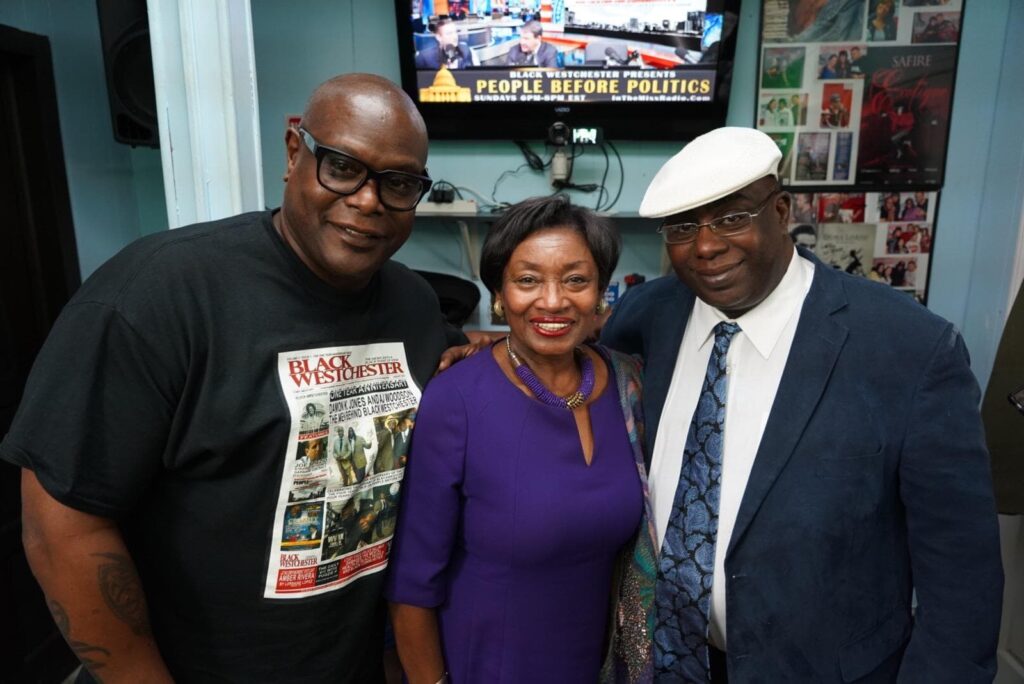
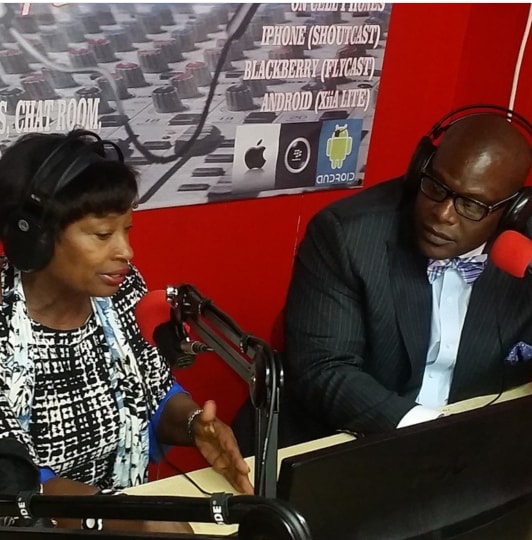
Black Westchester presents the People Before Politics Radio Show with Damon K. JonesAJ Woodson & Larnez Kinsey. Tonight, we’re bringing you a powerful and necessary conversation with two important voices shaping our community’s present and future.

This Sunday, on the People Before Politics Show — Sunday Rundown, powered by Black Westchester Magazine, we’re covering the stories reshaping our community and our politics. We start with Zohran Mamdani’s controversial appointments to the NYC Transition Team. We expose how the healthcare cartel continues to choke Congress, blocking real reform while our communities struggle. We shift to Texas, where Jasmine Crockett is running for U.S. Senate. We break down her chances, the political landscape.

Then we examine the Supreme Court’s ruling on redistricting, choosing partisanship over race, and what this means for Black representation moving forward. And we ask the big question: Are Black politics helping our community — or hurting it? Finally, our guest Steven Vazquez joins us to discuss the upcoming rally in Mount Vernon, calling on the Justice Department to investigate the city government — from broken finances to public safety concerns to elected officials communicating with sex offenders.

This conversation is about justice, reform, healing, and truth — and the work that still remains.
Join Damon K. Jones, AJ Woodson, and Larnez Kinsey tonight as we bring you not just news, but context, accountability, and community-centered analysis you can’t get anywhere else.

LIVE from 6 PM to 8 PM on YouTube, Facebook, LinkedIn, and X powered by Black Westchester Magazine.

As always, you can follow Black Westchester on TwitterFacebookInstagram and LinkedIn 

Follow People Before Politics Radio on Instagram and Twitter

If you want to support Black Westchester Magazine and People Before Politics Radio you can always donate https://www.paypal.com/donate/?hosted_button_id=9DT5P8R82NAHW

MV Resident Discusses Proposed Budget & Charter Revisions And The Upcoming Rally

Mount Vernon taxpayer Steven Vazquez appeared on Black Westchester presents The People Before Politics Radio Show, Sunday, December 14th, to discuss the upcoming rally in front of Mount Vernon City Hall, Tuesday, December 16th, calling on the Justice Department to investigate the city government — from broken finances to public safety concerns to elected officials communicating with sex offenders.

Last week, we published an editorial Mount Vernon on the Brink of a Tax Hike: What It Means for You. Explaining how Mount Vernon — like many cities across New York State — is wrestling with rising costs, shrinking revenue, and tough decisions about how to fund essential services. At the center of community debate is a proposed increase in property taxes and other local levies that could affect nearly every homeowner in the city, and talk that Mount Vernon is on the brink of bankruptcy, read more….

Black Westchester continues to recommend that residents stay informed and involved in ALL local hearings and meetings, like the upcoming City Council meeting on Tuesday, December 16th, at 6-8pm, as it will give residents the best chance to influence how these tax policies are shaped and applied.

Residents are planning a rally in front of City Hall ahead of the December 16th City Council meeting.

Politics is not a spectator sport, where you just vote and then sit back until the next election; it is a participatory sport, where the residents must actively take part and get involved. Democracy thrives on active citizen involvement, not just watching from the sidelines; like a game, it requires voters to show up (vote), engage in community discussions, contact officials, and stay informed, because low participation leads to policies that don’t reflect everyone’s needs, while high engagement ensures a more representative and healthy government. It emphasizes that doing something—whether voting, advocating, or discussing—is crucial for shaping outcomes, as ignoring the arena lets others dominate, and a government depends on informed, active citizens to make sound decisions. 

From Paramount to CBS: How the Ellisons Are Building Unprecedented Influence Over U.S. Media and Israel Coverage

America does not need a single company to “own the media” for narrative control to exist. Recognizing how ownership, editorial leadership, and cultural legitimacy converge can empower audiences to understand their roles during geopolitical crises.

If the proposed Paramount-Skydance acquisition of Warner Bros. Discovery succeeds, the risk isn’t only the loss of free speech but also the rise of narrative concentration around Israel, Gaza, and U.S. foreign policy, which can distort public understanding.

The Ellison family, led by Oracle co-founder Larry Ellison, has a well-documented record of strong support for Israel expressed through philanthropy, public statements, and longstanding political relationships. Most notably, in 2017, Ellison donated $16.6 million to Friends of the Israel Defense Forces (FIDF), at the time the most significant single contribution in the organization’s history. He has also maintained close personal ties with Israeli leaders, including former Prime Minister Benjamin Netanyahu. At the same time, Oracle executives have publicly emphasized the company’s commitment to Israel and its technology sector. Taken together, these actions place the Ellison family firmly within the pro-Israel camp of U.S. political and philanthropic life.

Politically, Larry Ellison is a major American donor, primarily aligned with Republican candidates and causes that advocate a strong U.S.–Israel relationship. While individual campaign contributions are not always tied to a single issue, Ellison’s broader giving patterns—combined with his Israel-focused philanthropy and associations—reflect consistent alignment with policies favoring robust military, diplomatic, and strategic support for Israel. This context has taken on greater significance as Ellison-backed entities expand their footprint across American media, raising questions about how concentrated ownership, leadership influence, and openly stated foreign-policy commitments may intersect with news framing and cultural influence during highly contested debates over Israel, Gaza, and U.S. foreign policy.

This context has taken on greater significance as Ellison-backed entities expand their footprint across American media, raising questions about how ownership, leadership, and openly stated foreign-policy commitments may intersect with news framing and cultural influence during contentious debates over Israel, Gaza, and U.S. foreign policy.

That expanding influence is underscored by Paramount-Skydance’s hostile takeover bid for Warner Bros. Discovery, a move that would dramatically reshape the U.S. media landscape if successful. The Ellison-backed entity has made an unsolicited, all-cash offer directly to Warner Bros. Discovery shareholders, seeking to override existing negotiations and fold Warner’s vast portfolio—including CNN, HBO, Warner Bros. Pictures, and Discovery’s cable networks—into its growing media empire. By pursuing a hostile bid rather than a negotiated merger, Paramount-Skydance has signaled both urgency and ambition, positioning itself to consolidate unprecedented control across broadcast news, cable, film studios, and streaming platforms. The proposal is now subject to shareholder response and intense regulatory scrutiny, given the scale of media concentration it would create and the implications for competition, editorial independence, and narrative diversity.

A combined Paramount–Warner entity would control CBS News and CNN, two influential platforms that set framingthrough language and sourcing, shaping the national understanding on issues like Israel and Gaza, as seen in their coverage patterns.

This matters because the Israel–Gaza conflict is not a distant foreign issue. It directly affects U.S. military aid, arms transfers, campus speech, protest policing, surveillance laws, and social-media regulation. In this context, media framing does not simply inform public opinion; it helps manufacture public consent.

The concern deepens when media consolidation intersects with Black-facing platforms. BET — Black Entertainment Television — is no longer Black-owned. It is a subsidiary of Paramount Global. While BET continues to brand itself as culturally representative of Black America, ultimate financial and executive authority rests with a multinational corporate parent whose broader media holdings have taken clear positions on foreign-policy issues.

This is not about symbolism. It is about who controls amplification.

BET occupies a unique position within Black America. Its trustworthiness fosters cultural legitimacy, empowering the audience to see Black media as a source of agency and resilience against narrow narratives shaped by corporate interests.

Recent changes in editorial leadership reinforce these concerns. Following the Paramount-Skydance restructuring, Bari Weiss, founder of The Free Press and an open, self-described Zionist, was elevated to a senior editorial role that influences CBS News. Weiss’s political and ideological positions are publicly stated.

In parallel, there have been reported allegations within media and journalism circles that recent CBS News layoffs and restructuring disproportionately impacted journalists of color, including Black journalists. Paramount and CBS have not released demographic breakdowns of the layoffs, and no court has ruled on these claims. Still, the reports have fueled broader concern about how ideological alignment at the top of major news organizations can shape newsroom culture, staffing decisions, and coverage priorities, particularly on contentious issues like Israel and Gaza.

This is where Christian Zionism enters the discussion.

Christian Zionism is not a fringe belief or a conspiracy theory. It is a well-documented political theology holding that support for the modern State of Israel is a Christian obligation tied to biblical prophecy. It has major institutions, donors, media platforms, and decades of influence on U.S. foreign policy.

What is new is its open emergence within Black influencer culture. Some Black public figures have publicly identified themselves as Christian Zionists. These voices are authentic, self-directed, and entitled to their beliefs. The issue is not their existence — it is their institutional amplification.

When Black Christian Zionist influencers are elevated within a media ecosystem controlled by non-Black corporate interests with strong foreign-policy alignments, they function as cultural translators. They normalize a geopolitical position inside Black Christian discourse by framing it as faith, morality, or biblical clarity rather than policy debate. This does not require coordination. It requires alignment.

Narrative power today is rarely exercised through overt propaganda. It operates through:

  • Which pastors, scholars, and influencers are platformed
  • Which scriptures are emphasized
  • Which humanitarian suffering is centered on or minimized
  • Which protests are framed as moral and which are framed as dangerous
  • Which dissent is treated as “complex” and which is labeled “extreme.”

This dynamic becomes even more consequential when paired with platform control. TikTok — the primary news source for much of Gen Z — disrupted traditional war narratives by showing unfiltered footage from Gaza. That disruption triggered bipartisan political action, revived a stalled sell-or-ban bill, and elevated Oracle’s role in TikTok’s U.S. infrastructure. In the modern media ecosystem, control over distribution is as robust as control over production.

When one corporate ecosystem holds:

  • Major broadcast news
  • Major cable news
  • Major film and television studios
  • Streaming platforms
  • Black-branded cultural media
  • And influence over a dominant youth information pipeline

This dynamic becomes even more consequential when paired with platform control. Recognizing how distribution shapes narratives can inspire the audience to stay vigilant and question mainstream legitimacy.

This is why Black media ownership isn’t optional but a vital safeguard for diverse narratives and democratic integrity in the media landscape.

Historically, Black America understood that representation without ownership was insufficient. That is why earlier generations built independent Black newspapers, radio stations, magazines, and publishers — not simply to be seen, but to set boundaries on how Black life, Black politics, and Black morality were discussed. Ownership was about narrative sovereignty.

Today, Black faces on screen are often mistaken for Black control behind the scenes. They are not the same. Without independent Black-owned media, Black audiences are left consuming narratives filtered through corporate interests that do not share their historical experience, political vulnerability, or global perspective.

Independent Black media creates space for:

  • Moral complexity instead of forced alignment
  • Policy debate instead of theological absolutes
  • Solidarity without erasure
  • Faith without geopolitical obedience

The real question is not whether dissent will disappear. It is whether dissent will remain credible, amplified, and normalized in the places where most Americans — including Black Americans — actually get their information.

When ownership, foreign-policy alignment, and cultural authority converge, narrative control does not announce itself. It becomes invisible — accepted as common sense.

That is why Black media ownership matters now more than ever — not as a brand, but as a democratic safeguard.

Mount Vernon on the Brink of a Tax Hike: What It Means for You

2

Mount Vernon — like many cities across New York State — is wrestling with rising costs, shrinking revenue, and tough decisions about how to fund essential services. At the center of community debate is a proposed increase in property taxes and other local levies that could affect nearly every homeowner in the city and talk that Mount Vernon is on the brink of bankruptcy!

Mount Vernon is facing recent and proposed tax hikes, primarily property tax increases for the 2025-2026 budget, with the City Council approving a 3.5% increase after residents pushed back on a higher initial proposal, while the School District also approved a 3.3% rise, driven by union contracts and rising expenses, though residents remain concerned about affordability, especially seniors. 

Mount Vernon residents voiced frustration Monday, December 1st, over a proposed property tax increase for 2026. The mayor’s draft budget proposes a 6.09% increase, compared to last year’s 3.6% rise, News 12 reported. Officials said the money is needed to cover added expenses, including $4 million tied to union contract obligations.

Why the Increase?

The city says higher taxes are needed to cover growing expenses, including union contract obligations and fixed costs that have outpaced revenue. Leaders have clarified that the numbers in the draft budget are not yet finalized, and that revisions and negotiations in the coming months could change the final tax rate.

Mount Vernon’s financial picture reflects broader pressures affecting many municipalities:

  • Rising city operating costs, including pensions, health benefits, and labor agreements.
  • Outstanding unpaid taxes and budget stress — auditors have reported millions in unpaid obligations and gaps between expenses and expected revenues. Westfair Online
  • Public services that residents rely on — such as police, fire, sanitation, and street repairs — still must be funded even as other revenue streams stagnate.

In a November 7th letter, Comptroller Darren Morton spelled out these growing expenses. This year, the City faced more pressure than usual because we had to pay over $11 million for obligations from prior years and advance payments that will be reimbursed later. These included:

  • $3.2 million in advance payments for capital projects awaiting State and Federal
    reimbursement.
  • $3.9 million in old school taxes (2018-19),
  • $1.6 million in unpaid 2021 health benefit costs,
  • $1.7 million in 2019 IRS payroll obligations

Comptroller Morton discussed Mt Vernon’s Financial Future on the Sunday, November 23, 2025, episode of Black Westchester presents The People Before Politics Radio Show. Also, check out his November 20, 2025, Town Hall Meeting if you missed it!

City officials have also used short-term financing tools (like tax anticipation notes) to bridge timing gaps without increasing debt long-term — but these maneuvers don’t eliminate underlying fiscal pressures.

What the Tax Hike Would Mean for Residents

For Homeowners

The most visible impact will be on property tax bills:

  • A 6% rise in the city tax levy typically translates into higher annual payments on your home — for a $500,000 assessed value, that could mean several hundred dollars more per year.
  • If the city moves forward with the proposal, every property owner could see an increase unless exemptions apply.

This is especially sensitive for:

  • Fixed-income seniors
  • Working-class families
  • Those already feeling the pinch of higher living costs

Homeowners have also been complaining about the proposed a $250 fire inspection fee, and sources report that:

  • Judges will grant warrants for forced entry,
  • Inspectors will cite properties aggressively,
  • And violations will be used to push owners into financial collapse.

Black Westchester has also been contacted by residents expressing their concerns over a proposed rubbish tax. While this has been proposed city officials tell BW this has not been approved. Just the proposal of this additional tax have many residents up in arms.

For Renters

Renters do not pay property taxes directly — but landlords often consider tax costs when setting rent, so some of the increase could get passed on indirectly.

For Prospective Buyers

A separate state law now authorizes Mount Vernon to increase its real property deed conveyance tax (the tax paid when property is sold), up to 1.5%. This new authority gives the city another revenue source, but also raises closing costs for buyers and sellers.

Community Response So Far

Public reaction has been strong:

  • Residents voiced frustration at budget hearings, saying rising everyday costs make this the wrong time for higher taxes. News 12
  • Past proposals for school district tax levy increases also sparked concerns from families who felt rates were already high. News 12
  • Some grassroots calls have urged residents to appeal tax assessments en masse or protest proposed hikes at public forums.

Are There Any Tax Relief Options?

Yes — at the state level:

New York recently expanded the maximum property tax exemption available to eligible seniors from 50% to 65% of assessed value. This could provide meaningful relief for older homeowners living on fixed incomes, if the city elects to adopt the new exemption locally. 101.5 WPDH

Local governments still decide whether to implement the expanded exemption, and under what income thresholds, so Mount Vernon residents should watch for announcements from the assessor’s office.

What Happens Next?

The proposed tax changes are drafts, not set in stone. In the coming weeks and months:

  • The city’s estimate board and city council will continue budget discussions.
  • Officials may revise tax rates before the final budget vote.
  • Residents can attend meetings, submit feedback, and petition local officials before final approval.

Bottom Line for Residents

A proposed tax hike in Mount Vernon reflects real fiscal challenges — rising costs, service demands, and limited revenue growth. But the exact impact will depend on final decisions made over the next budget cycle, including exemptions and possible offsets. For many households, especially seniors and homeowners in tighter financial positions, even a modest increase could require budget adjustments.

This is on top of the Mount Vernon City School Board adopting a $272,206,615 budget for the 2025–26 school year and transmitted the required property tax report card to the state, approving a 3.3% increase in the district tax levy that Superintendent’s office staff said would fund contract settlements and preserve programs.

Black Westchester recommends that residents stay informed and involved in ALL local hearings and meetings, like the upcoming City Council meeting on Tuesday, December 16th at 6-8pm as it will give residents the best chance to influence how these tax policies are shaped and applied.

Residents are planning a rally in front of City Hall ahead of the December 16th City Council meeting.

Also check out the 2026 Proposed Annual Estimate, below, so you can be informed

2026 Proposed Annual Estimate by BLACK WESTCHESTER MAGAZINE

Also check out Mount Vernon’s Budget Crisis — When Government Prospers and the People Don’t by Damon K. Jones

Resisting Slavery By Another Name: An Intimate Night Of Memory, Breath & Becoming

RESISTING SLAVERY BY ANOTHER NAME – THE POWERFUL RISE OF THE NAACP

Some nights arrive not as events,
but as visitations.
Moments when history, healing, and human truth
sit down together in the same room
and invite us to listen.

Monday, December 8th, 2025
was one of those nights.

Inside the lower lounge of the YWCA White Plains & Central Westchester,
the Westchester Women’s Agenda Juneteenth Committee
hosted:

“Resisting Slavery By Another Name: The Powerful Rise of the NAACP.”

But what happened inside that room
was more than a panel.
More than a program.
More than a commemoration.

It was a remembering.
A recalibrating.
A reclaiming.

It was the kind of evening that leaves a soft echo in your spirit
long after the chairs are folded and the lights are dimmed.

(See the event in its entirety in the video below)


When a Woman’s Voice Softens the Room into Safety

Before any declarations of history or calls to action,
Tasha Young stepped to the microphone
with a calm, maternal steadiness
that instantly grounded the entire space.

She welcomed us,
not just as attendees,
but as honored guests entering sacred work.

She named where the bathrooms were.
Where the exits were.
Where the refreshments waited.

Small details,
but spiritually essential.
A reminder that liberation begins with care.

Only when the room relaxed into itself
did the night begin to rise.


DR. JENNIFER LEWIS 

Opening the Portal with Precision and Presence

Dr. Jennifer Lewis moved to the podium
with the authority of someone who has held many rooms
and guided many truths.

She spoke with clarity,
setting the historical grounding for the evening,
weaving together justice, remembering,
and the lineage of resistance.

Her tone was steady, focused,
but filled with heart,
like a door gently opening itself
inviting us to step through.


SALLY PINTO 

A Voice of Gratitude on Behalf of WWA

Representing WWA and speaking for Kate Permut,
Sally Pinto brought warmth and sincerity.

Her voice carried appreciation
for the community that gathered,
for the work that continues,
and for the women who labor behind the scenes
to make nights like this possible.

She anchored the space in gratitude,
a rare but powerful leadership.


THE ROLL CALL OF PRESENCE

Tasha returned to honor the elected officials in the room.
Each name spoken was a soft drumbeat,
a recognition of stewardship and accountability.

In a space filled with memory,
names matter.


TIFFANY HAMILTON’S HOUSE 

The Quiet Power of Women Who Build Possibility

Then came a moment that rippled through the room:

Honoring Tiffany Hamilton
and the sacred space known as Tiffany Hamilton’s House,
a sanctuary where strategy, leadership, and sisterhood
are cultivated with intention.

And then Tasha shared a truth that felt like prophecy:

“Women didn’t wait for opportunity — we created it.
And now it’s our turn.”

Every woman in the room felt that.
Some nodded.
Some exhaled.
Some simply placed a hand over their heart.

Because it was true.


LEGISLATOR JEWEL WILLIAMS JOHNSON 

A Full-Circle Moment in the Same Building Where She Once Swam Alone

When Jewel Williams Johnson approached the mic,
her vulnerability opened a deeper layer of the night.

She shared that she once swam competitively
in the pool next door,
as the only Black girl on the team.

Now, decades later,
she returned to this building
as a legislator,
standing before a convening on racial justice.

That is not coincidence.
That is alignment.

That is healing walking back into the spaces that once held its ache.


THE YOUTH VOICE 

Sister to Sister Speaks

A young woman from Sister to Sister stepped up.
Her voice trembled for a moment,
not from fear,
but from the weight of being witnessed
by a room full of leaders.

But as she spoke,
her words gathered strength.
She reflected on identity, belonging,
and the power of being seen.

Her presence was soft,
but her truth was solid.

The future entered the room
through her voice.


MARITZA FASACK

The Silent Guardian Holding Up Signs That Guided the Flow

Not all leadership speaks through microphones.

In the back of the room sat Maritza Fasack,
the timekeeper,
the guardian of rhythm.

Throughout the night,
she lifted different signs
with reminders:

“Two minutes”
“Wrap up”

Each sign rose with precision,
and with every lift,
the energy in the room subtly recalibrated.

Panelists adjusted their cadence.
Moderators synced their pace.
The conversation flowed without rush
or stagnation.

Maritza wasn’t just keeping time.
She was tending the energetic field of the evening,
ensuring that every truth had space
and every voice had room to land.

She held the room
without ever needing to speak.


THE PANEL 

A Trinity of Memory, Law, and Youth Rising

When the panelists took their seats,
the room shifted again,
as if preparing to deepen its listening.

These were not just speakers.
They were carriers of lineage,
defenders of justice,
and midwives of the future.


KISHA SKIPPER 

The Embodiment of Community Lineage

Kisha began by honoring every NAACP branch and president present.
She spoke their names with reverence,
not as a list,
but as a lineage.

Her posture was firm.
Her tone assured.
Her presence grounded.

She spoke of the Yonkers NAACP
not as an institution,
but as an organism,
alive, responsive, rooted.

Her voice carried the resonance
of someone who holds both history and responsibility
in the same hand.


MAYO BARTLETT, ESQ. 

The Legal Alchemist Who Speaks to the Soul

Mayo leaned forward slightly before speaking,
hands clasped,
eyebrows soft in contemplation.

He spoke of the 14th Amendment with clarity,
but also with compassion.

He shared a story of affirming a young man
against a system intent on defining him by harm.

His words landed like balm:

“You are not what they are describing.”

It wasn’t a legal argument.
It was liberation in a sentence.

Mayo reminded the room that justice
is not only fought in courts
but in how we speak to each other.


INGRAHAM TAYLOR, LMSW 

The Midwife of Black Excellence

Ingraham spoke with her whole body,
hands expressive,
eyes bright,
smile unguarded.

Her stories of ACT-SO were stories of transformation.
She talked about youth with tenderness,
like one speaks about seedlings in their first bloom.

Her story about taking a young girl to get her ACT-SO dress
was a sermon on worthiness.

“She needed to know she was worth the trip.”

Ingraham teaches more than excellence.
She teaches self-belief.


Together, They Formed a Living Blueprint

Kisha brought memory.
Mayo brought framework.
Ingraham brought future.

Their synergy was seamless,
a braid of truth, justice, and possibility.

The audience didn’t just learn.
They felt.

Truth has texture when spoken by those who live it.


THE ROOM REFUSED TO EMPTY 

A Sign That Real Work Happened

When the formal program ended,
no one rushed out.

People lingered.
Hugged.
Made eye contact.
Exchanged numbers.
Reflected quietly.

That is how you know
the soul of a community has been stirred.


THE NIGHT CLOSES,

BUT THE CALL CONTINUES

As the room began to soften into evening,
Tiffany Hamilton’s words echoed once more:

“Women didn’t wait for opportunity — we created it.
And now it’s our turn.”

This night proved something:

We are not waiting.
We are remembering.
We are organizing.
We are rising.

And after a night this intimate, this honest,
This aligned with lineage and liberation.

I cannot wait to see the next event under this series. 

Because once a community wakes up together,
The healing cannot help but continue.

Man Suspected In Theft Of Shaq’s 180K Customized Range Rover Arrested In Mt Vernon

Suspect accused of stealing Shaquille O’Neal’s custom Range Rover in Georgia was arrested in New York; the vehicle is still missing

A man suspected of stealing basketball legend Shaquille O’Neal’s $180,000 customized Range Rover six weeks ago has been arrested in Mount Vernon, after a car associated with him had triggered a license plate reader.

According to Mount Vernon Police Deputy Chief Gregory Addison, the suspect was arrested around 8 p.m. on Friday, December 5th. Addison said officers received a license plate reader alert for a vehicle that might contain a wanted party with a warrant out of Lumpkin County, Georgia. The alert was for a specific South Carolina license plate. Officers located the vehicle within the city and watched as the driver walked into a local business. They followed the driver inside, detained him, and verified that he was the party wanted in Georgia.

Anthony Del Rosario, with addresses in Yonkers and Fort Lauderdale, Florida, was placed under arrest for the extraditable warrant and is currently being held at the Westchester County Jail as a “Fugitive From Justice,” the New York State designation for someone wanted in another state. The vehicle he was driving was impounded because it was not registered; authorities confirmed it was not O’Neal’s Range Rover.

Authorities tell Black Westchester that the stolen vehicle has not been recovered and is believed to be somewhere in the Middle East.

The arrest follows weeks of investigation into the disappearance of O’Neal’s customized 2025 Range Rover, which was taken from a Dahlonega firm on October 20th. The SUV, worth around $180,000, was meant to be delivered to Louisiana for O’Neal to use at an LSU game that weekend, but it never came.

According to the affidavit by a Lumpkin Sheriff’s investigator, an accomplice impersonated Effortless Motors of California’s transport provider by using a phony phone number. This allowed the thieves to change the pickup instructions and submit a phony certificate of insurance, prompting Effortless to accept the car’s release.

The owner of Effortless, a Riverside, Calif.-based firm that has customized multiple vehicles for the 7-foot-1 NBA Hall of Famer, offered a $10,000 prize for the car’s return following the theft, indicating that the transportation company had been hacked.

Ahmad Abdelrahman, a spokesperson for Effortless Motors, said the vehicle was removed from the shop under false pretenses. He said the company arranged transport through FirstLine Trucking LLC, which later claimed its system had been hacked.

Abdelrahman said the arrest is a major breakthrough in what appears to be a large, coordinated criminal operation. 

MVPD Deputy Chief Addison said that Mount Vernon police were notified about 8 p.m. that night that the car associated with Del Rosario, with South Carolina plates, had triggered a license plate reader.

After officers found the car and saw Del Rosario walking into a business on East Lincoln Avenue just east of Hutchinson Boulevard, they followed him inside and detained him. Once they confirmed he was the wanted man and the Lumpkin County Sheriff’s Office sought his return, he was arrested on a fugitive from justice charge and held at the county jail.