Home Blog Page 25

The Erasure of Reparations: How History Was Traded for Talking Points

From Republican Policy to Political Taboo

One of the curiosities of modern American politics is not what is debated, but what is carefully avoided. Reparations is one such subject. Today’s Democrats speak of it cautiously, often burying the issue beneath studies, commissions, and symbolic gestures. At the same time, many modern Black Republicans dismiss reparations outright, treating them as a Democratic invention rooted in victimhood politics. Both positions ignore an inconvenient historical fact: reparations were originally a Republican idea, openly argued for and fought over during Reconstruction, which underscores its legitimacy and importance.

In the years immediately following the Civil War, the Republican Party was not debating whether formerly enslaved people deserved assistance. The debate was whether the nation could remain stable without compensating millions of people whose unpaid labor had helped build it. Republican lawmakers understood something modern politics prefers not to say plainly: freedom without an economic foundation is fragile.

That understanding was not theoretical. Republican leaders such as Thaddeus Stevens argued on the floor of Congress that land confiscated from former Confederates should be redistributed to formerly enslaved people. His reasoning was neither sentimental nor ideological. It was practical. A population released from bondage with no assets, no land, and no capital would predictably fall into dependency or renewed exploitation. Stevens was not arguing for sympathy. He was arguing for stability.

Black Republicans shared this view. Decades later, Black Republican organizers such as Callie House led the Ex-Slave Pension Movement, petitioning Congress for federal pensions modeled after those paid to Civil War veterans. This was one of the most significant mass political movements led by Black Americans at the turn of the twentieth century. It failed not because its logic was weak, but because Black political leverage had been systematically dismantled after Reconstruction.

That logic did not disappear with Reconstruction. Even during the Civil Rights era, the argument resurfaced—though history often remembers it selectively. Martin Luther King Jr. is frequently reduced to a harmless dreamer, sometimes even recast as a “safe” Black conservative. Yet in his most famous speech, King framed America’s promise as a promissory note—one written to Black Americans and returned marked “insufficient funds.” This was an economic critique, emphasizing that civil rights without material repair would leave inequality structurally intact.

 The United States has paid restitution to multiple ethnic and national groups when political will existed. Japanese Americans received direct payments and a formal apology under the Civil Liberties Act of 1988. Native American tribes received land settlements and financial compensation through treaty claims and court rulings. Alaska Natives received land and monetary restitution under the Alaska Native Claims Settlement Act. In none of these cases were recipients required to demonstrate cultural readiness or moral worthiness before compensation. The principle was straightforward: acknowledging a wrong and providing a settlement is a matter of justice and fairness, which should also apply to reparations for Black Americans.

It is also worth noting that Jewish survivors received restitution and reparative benefits from the United States itself, even though Germany, not America, carried out the Holocaust. The U.S. facilitated restitution, returned seized assets, supported refugee resettlement, and administered compensation programs domestically through organizations such as the Claims Conference. Jewish Americans did not need to prove U.S. culpability in Germany’s crimes to receive restitution here. The standard applied was responsibility to protect and remedy harm suffered by people under U.S. jurisdiction, not geographic proximity to the original offense.

Reparations resurfaced again during the Black Power era and later in the early 1990s. In both cases, it failed for familiar reasons. During the Black Power period, the emphasis shifted toward rhetoric, symbolism, and moral urgency without sustained institutional leverage. In the 1990s, Black scholars and authors revisited reparations with serious economic and legal arguments. Yet by then, Black voters had become a reliable constituency rather than a negotiated one. Democrats, secure in electoral loyalty, faced little incentive to advance a politically risky policy. Votes were given; leverage was surrendered. Reparations were acknowledged rhetorically and avoided legislatively.

This pattern explains the modern dilemma. Democrats evade reparations because they face little political cost for doing so. Many Black Republicans dismiss it to signal ideological distance from Democrats—even when that dismissal contradicts their own political ancestry. In both cases, the outcome is identical: debts are deferred, not settled.

The modern media economy further distorts the situation. A growing number of Black conservative influencers portray reparations as a Democratic tool of victimhood. Rarely discussed are the financial and ideological incentives shaping these narratives. Wealthy donor networks—often aligned with pro-Israel political advocacy—have invested heavily in conservative media spaces. Within that ecosystem, dismissing reparations functions less as historical analysis and more as a loyalty signal.

Influencers like Xaviaer DuRousseau operate within a well-funded conservative media ecosystem — including institutions such as PragerU — that is sustained by large donors, foundations, and ideological networks with strong pro-Israel priorities. Within this ecosystem, narratives opposing Black American reparations are routinely amplified and framed as “personal responsibility” or “anti-victimhood,” while far less scrutiny is applied to the billions of U.S. taxpayer dollars sent annually to Israel, or to the fact that Israel itself was founded through international reparative support following World War II. The contradiction is striking: Black Americans are told restitution is divisive or unnecessary, yet foreign aid, military funding, and historic reparations for other groups are treated as moral obligations that must not be questioned. This selective logic reveals that the issue is not opposition to reparations as a principle, but which groups are deemed worthy of repair — and which histories are politically convenient to dismiss.

The irony is difficult to ignore. The United States sends billions of taxpayer dollars each year to Israel with little debate about the feasibility or moral hazard. Yet when the discussion turns to reparations for Black Americans—whose exploitation occurred on U.S. soil, under U.S. law, enriching the American state—the objections suddenly multiply. Too divisive. Too complicated. Too unrealistic. Standards that rarely apply elsewhere become decisive only here.

None of this suggests that reparations should replace responsibility, family, or self-discipline. Early Black Republicans never argued that. Neither did King. Reparations were never intended to substitute for independence; they were meant to make independence possible.

A policy born in Republican thought, echoed in the Civil Rights era, and reinforced by repeated American precedent, is now treated as politically radioactive by both parties. Democrats avoid it. Black Republicans deny it. Influencers distort it. Meanwhile, restitution remains acceptable everywhere—except at home.

History does not disappear because it is ignored.

It simply waits—until leverage returns.

References & Historical Sources

Reconstruction & Republican Reparations Framework

  • Thaddeus Stevens, speeches and congressional debates on land redistribution (U.S. Congressional Globe, 1865–1867)
  • Special Field Orders No. 15 (1865) – U.S. War Department (Sherman’s “40 acres” order)
  • Freedmen’s Bureau records and legislation (1865–1872)

Black Republican Reparations Movements

  • Callie House and the National Ex-Slave Mutual Relief, Bounty and Pension Association
  • Mary Frances Berry, My Face Is Black Is True: Callie House and the Struggle for Ex-Slave Reparations (2005)

Civil Rights Era & Economic Justice

  • Martin Luther King Jr.I Have a Dream speech (1963) — “promissory note” and “bad check” passages
  • Martin Luther King Jr., Where Do We Go from Here: Chaos or Community? (1967)
  • The Poor People’s Campaign (1968)

U.S. Reparations to Other Groups

  • Civil Liberties Act of 1988 — Japanese American internment reparations
  • Alaska Native Claims Settlement Act
  • Indian Claims Commission decisions and federal treaty settlements

Jewish Restitution & U.S. Role

  • Claims Conference (Conference on Jewish Material Claims Against Germany)
  • U.S. Holocaust Refugee and Restitution policies (post–World War II)
  • Germany–Israel Reparations Agreement (1952) — Luxembourg Agreement

Modern Reparations Scholarship

  • Ta-Nehisi Coates, The Case for Reparations (The Atlantic, 2014) — historical documentation focus
  • William Darity Jr. & A. Kirsten Mullen, From Here to Equality (2020)
  • Randall Robinson, The Debt: What America Owes to Blacks (2000)

What Progress Actually Looks Like in Mount Vernon — A Closer Look at the Outcomes Under Comptroller Morton

Following recent public discussion about Mount Vernon’s finances, City Comptroller Darren M. Morton submitted a January 6, 2026, letter to Black Westchester to clarify the record regarding the City’s fiscal progress. That clarification is necessary, not as a rebuttal, but as an essential accounting of what has actually been accomplished — and under what conditions.

Read: Mount Vernon’s Financial Crisis Is Not a Mystery — It Is a Structural Failure of Authority

Measuring Progress by Outcomes, Not Narratives

To fairly evaluate Mount Vernon’s current financial position, it is essential to begin with context.

When Comptroller Morton took office in 2022, he did not inherit a functioning financial system. He inherited years of unresolved audits, incomplete records, and institutional breakdown. Before addressing the fiscal years tied to his own elected term, he was required to complete the outstanding audits left undone under former Comptroller Deborah Reynolds.

That reality shaped everything that followed. Completing audits for fiscal years 2016 through 2020 — and filing the five corresponding State Annual Financial Reports — was not optional work; it was prerequisite work. Without resolving that backlog, the City could not move forward in any meaningful or compliant way.

Measured against that starting point, the concrete achievements under Comptroller Morton demonstrate tangible progress in restoring fiscal stability. Five audits have been completed and five AFRs filed. Financial policies are now in place. Three tax lien sales have been completed, and the In Rem foreclosure process has been initiated. These are not promises. They are actions.

Progress Under Constraint

It is also essential to understand why the City is not yet fully current.

Audits must be completed sequentially, and reconstructing records across agencies is labor-intensive, highlighting structural constraints rather than neglect.

Comptroller Morton has acknowledged that the City is not yet where it needs to be. But emphasizing the progress made can inspire confidence that positive change is underway, even amid challenges.

A History That Cannot Be Ignored

Credit where it is due also requires honesty about the broader institutional history.

Mount Vernon’s financial challenges are not the result of a single office or administration. They reflect a longstanding pattern of dysfunction across multiple parts of the City government.

That dysfunction spans the unresolved audit failures under former Comptroller Deborah Reynolds, the fiscal instability and governance issues during the administration of former Mayor Richard Thomas, and ongoing questions surrounding spending decisions under current Mayor Shawyn Patterson-Howard.

A critical and often overlooked factor in sustaining fiscal progress is the competence of departmental leadership. Even the strongest financial plans fail without commissioners who understand structure, staffing, and cost controls. In Mount Vernon, this challenge is compounded by a long political history of appointments driven more by nepotism, favoritism, and personal loyalty than by demonstrated competence. That culture weakens internal controls and allows overtime abuse, poor manpower allocation, and budget drift to become normalized. Sustainable fiscal recovery requires commissioners selected for their ability to manage operations, control costs, and execute policy — not for their political usefulness. Without that shift, progress made at the comptroller level will continue to be undermined inside city departments.

Comptroller Morton’s work must be evaluated within that reality. He did not create the conditions, he inherited it. He has been tasked with repairing them.

The Real Test Going Forward

The question now is not whether progress has been made. It has.

The real question is whether that progress can be sustained, completed, and institutionalized over time.

Rebuilding a city’s financial integrity is not a single event. It requires alignment across every level of government. It requires a Mayor who governs with an executive, taxpayer-first mindset. It requires commissioners who remain disciplined to the budget over time, resisting unnecessary and off-track spending. And it requires a City Council that legislates responsibly and exercises consistent oversight.

This work is measured over time — through completed audits, reliable financial reporting, enforceable policies, and consistent execution. By those metrics, Mount Vernon must move forward and govern accordingly, or it risks ending up in the same position as the school board.

Recognizing progress does not require ignoring remaining risk. But dismissing progress simply because the finish line has not yet been crossed would be intellectually dishonest.

Outcomes matter.
Context matters.
History matters.

And when judged by outcomes rather than rhetoric, Comptroller Morton’s tenure reflects repair — not stagnation — in a City that has spent too many years paying the price for dysfunction.

At Black Westchester, we do not traffic in feelings. We evaluate leadership by outcomes — because outcomes, not intentions, determine whether communities move forward or fall behind.

Three Kings Day – When The Stars Find You

January 6, 2026. Early evening. And surprisingly warm, especially compared to the frigid stretch January had been putting us through. Not warm enough to forget it’s winter, but warm enough that people lingered. Warm enough that coats stayed open. Warm enough that the city felt, for once, like it wasn’t rushing anyone along.

As soon as I walked into the open lobby of the Yonkers Riverfront Library, I heard the band playing.

Not faint. Not background. Present. Alive. The kind of sound that catches you mid-step and tells your body, you’re already late but not in a bad way.

Before I even looked for a seat, before I unfolded the program, the music had already done its work. It filled the open space, bounced lightly off the walls, and traveled up the staircases. It wasn’t asking for attention; it was setting the tone.

Which mattered because this Three Kings celebration, presented by Mike Spano and the Mayor’s Hispanic Advisory Board, wasn’t hidden behind doors or tucked into a side room.

It was happening right there. In the open. In motion. Where people were already passing through.

I sat down with the program folded in my lap, the blue night sky, the guiding star, the three travelers silhouetted in motion, and felt my shoulders drop. That’s how I knew this wasn’t going to be performative culture.

This was intentional culture.

The kind that doesn’t ask permission to exist.

People entered the lobby from every direction. Some came specifically for Three Kings Day. Others wandered in to return books or warm up and stayed. That’s the power of putting culture in the flow of daily life. It doesn’t have to announce itself. It just invites.

Kids swung their legs from chairs too big for them. Parents whispered reminders in Spanish and English, sometimes both in the same breath. Elders positioned themselves where they could see everything, scanning the room not with concern but with confirmation: yes, we are still here.

When the opening remarks began, the space didn’t tighten. It softened. Names were spoken carefully. Gratitude sounded practiced but not rehearsed. There’s a difference between honoring a tradition and using it as décor and the room felt that difference.

A young voice led the Pledge of Allegiance and the National Anthem, and something subtle happened. The lobby recalibrated. Footsteps slowed. Conversations paused. Phones lowered. Not out of obligation, but out of respect. A child sang like the space was holding them.

And it was.

Libraries are underrated architects of belonging. Their walls don’t just hold books, they hold permission. Permission to gather without purchasing something. Permission to exist without explaining yourself. Permission to be seen without being sold to.

The Yonkers Middle High School Madrigal Choir filled the open lobby with layered voices that echoed just enough to remind you that this wasn’t a performance hall, it was a shared civic space. Then dance, Espíritu de México, grounded, rhythmic, unapologetically alive. Applause traveled up staircases. People who hadn’t planned to stay… stayed.

When the Three Kings were introduced, I caught myself gripping the program again. Not because it was dramatic but because it was familiar. Familiar in that ancestral way. Familiar like a story you didn’t grow up hearing every year, but somehow your body recognizes anyway.

That’s lineage. Quiet. Persistent. Patient.

When gift distribution began, nothing felt frantic. No chaos. No scrambling. Just children receiving, adults smiling without documenting every second. And that’s when it landed: this wasn’t about toys. It was about order. Preparation. The message being delivered, without words, that said, you were expected.

As I stepped back into the evening, still mild, the river close by, I thought about how rare it is to see a city place culture where it can’t be ignored. Not siloed. Not ticketed. Not curated for optics. Just present.

Three Kings Day, at its core, is about following a star when the road is uncertain. That night, the star wasn’t overhead. It was right there, in an open lobby, on a folded program, in children’s faces, and in a city choosing to make room.

And honestly?

That kind of visibility, without conditions, feels radical in 2026.

DMX Will Be Posthumously Ordained as Minister at Historic Underground Railroad Site, On January 10th

The Gospel Cultural Center announces the historic posthumous ordination of Deacon Earl Simmons, known globally as the legendary Hip-Hop artist DMX, to the office of Minister. The celebratory service will take place on Saturday, January 10, 2026, at the historic Foster Memorial A.M.E. Zion Church, located at 90 Wildey Street in Tarrytown.

​Founded in 1860, the Foster Memorial A.M.E. Zion Church is a verified “Safe House” and stop on the Underground Railroad that symbolizes liberation and resilience. Hosting the ordination at this sacred site honors Simmons’ lifelong spiritual journey and his impact as a “Hip-Hop Pastor” who used his platform to lead millions in prayer.

​“Earl Simmons wrestled with God in the public square, turning his pain into a ministry of raw truth,” said Bishop Dr. Osiris Imhotep, founder of the Gospel Cultural Center. “This ordination recognizes the divine calling he fulfilled every time he spoke a prayer into a microphone”.

A meaningful tribute to the spiritual impact he left on generations.

Keep it real with us now, I wanna feel show me how
(Please!) Let me take yo’ hand, guide me (What!)
I’ll walk slow but stay right beside me
(Please!) Devil’s tryna find me (Please)
Hide me, Hold up, I take that back
Protect me and give me the strength to fight back! (Lord give me a sign!)

DMX famously included a sincere prayer on nearly every one of his studio albums, showcasing his deep Christian faith amidst his gritty music, with tracks like “Prayer (Skit)” on “It’s Dark and Hell Is Hot” released in 1998, “Prayer III” on And Then There Was X” released in 1999, “Ready to Meet Him” (also known as “Prayer II”) on Flesh of My Flesh, Blood of My Blood” the second album released in 1998, “Prayer IV” and “A Minute for Your Son” on “The Great Depression” released in 2001, “Prayer V” on “Grand Champ” released in 2003, and “Lord Give Me a Sign” on “Year of the Dog… Again” released in 2006, serving as raw, vulnerable pleas for guidance and redemption, contrasting his tough persona with his spiritual journey. These prayers highlighted his struggles, his belief in God, and his hope for salvation, becoming a signature part of his artistic legacy. 

He would often break into prayer on stage or in interviews, a signature move that highlighted his deep spiritual connection and desire for grace.

His lyrics often explored the internal fight between his faith and temptation, frequently referencing his struggles with addiction in the Damien Trilogy

  1. Damien” is the introduction and Part 1 of the story. It is one of the best songs off of his classic debut “It’s Dark and Hell is Hot’.
  2. The Omen ft Marilyn Manson” is part 2 of the story and features the Antichrist Superstar himself, who is a perfect character for this story. This one is from X’s Sophomore album ‘Flesh of My Flesh, Blood of my Blood”.
  3. Damien 3” is the last one he’s dropped in this series. It is from his album ‘The Great Depression’. This one has more upbeat production but still feels as evil as ever.

DMX’s spiritual journey was a powerful testament to the grace of God for sinners, showing that faith could coexist alongside profound struggle, making him a unique spiritual voice in Hip-Hop. 

In April 2021, following his passing, Black Westchester released a DMX Tribute issue. In it, I spoke about his spirituality in the article, “DMX Was A Modern Day Paul The Apostle.”

EVENT DETAILS:

  • EVENT: Posthumous Ordination of Minister Earl “DMX” Simmons
  • DATE: Saturday, January 10, 2026
  • TIME: 3:00 PM
  • LOCATION: Foster Memorial A.M.E. Zion Church, 90 Wildey Street, Tarrytown, NY 10591
  • SCRIPTURE: Acts 17:31

Foster Memorial A.M.E. Zion Church in Tarrytown, NY, is named after its pioneering founders, Amanda and Henry Foster, with Amanda being the primary driving force, often called the “Mother of the Church,” who established the congregation in her confectionery store around 1860, with the church built later, a crucial stop on the Underground Railroad. Amanda, a free Black woman who started the church, famously used her “free papers” to help enslaved people escape via the Underground Railroad.

MEDIA CONTACT: Bishop Dr. Osiris Imhotep – Phone: 347-996-6412 – Email Website

Mount Vernon’s Financial Crisis Is Not a Mystery — It Is a Structural Failure of Authority

When government fails, the instinct is to search for blame. A more useful exercise is to identify where authority actually exists and whether it is being exercised.

A December 19, 2025, letter from the New York State Comptroller’s Office regarding Mount Vernon’s finances removes much of the confusion surrounding the City’s ongoing fiscal instability. The problems are not speculative, political, or newly discovered. They are documented, recurring, and unresolved — not because they are unknown, but because enforcement authority does not currently exist.

The Evidence Is Established

The Comptroller’s Office confirms it has issued multiple audits of Mount Vernon over the past several years. These audits identified fundamental failures in financial reporting and oversight. The City failed to file required annual financial reports for multiple years. Audited financial statements have not been produced since 2015. Officials lacked reliable data to manage cash flow, evaluate budgets, or plan for long-term obligations.

A subsequent budget review found unsupported revenue projections and underbudgeted expenditures, increasing the risk of cash-flow shortfalls. Another audit documented weak oversight of non-payroll spending, leading to late payments, litigation, and higher costs to taxpayers.

These are not matters of opinion. They are operational facts documented by the State.

Why the Audits Did Not Lead to Intervention

The Comptroller’s letter also explains why these findings, despite their severity, did not result in state control of City finances.

Audits identify problems. They do not confer authority to fix them.

The Comptroller states plainly that his office’s recommendations are advisory. The State Comptroller does not have the legal power to compel corrective action or appoint a fiscal monitor for a city government without explicit legislative authorization. In short, the State can document failure, but it cannot intervene unless the law allows it.

This distinction explains why conditions can remain unchanged even as oversight continues.

Why the State Has Not Taken Over City Finances

Some residents have asked why the State imposed a fiscal monitor on the Mount Vernon City School District but not on the City government itself.

The answer is legal, not political.

The answer is legal, not political, because without a law authorizing oversight, the Comptroller has no authority to impose a monitor or control board for the City of Mount Vernon.

In public policy, authority comes from statute — not urgency.

What Mount Vernon Residents Must Do — Based on the Comptroller’s Letter

The Comptroller’s message underscores that only new legislation can enable the State to intervene, giving residents a clear path to meaningful change.

Audits and monitoring do not grant enforcement power. Only a law passed by the New York State Legislature and signed by the Governor can authorize a state fiscal monitor or takeover of City finances.

The responsibility now shifts to residents because legislative action is the only way to enable the State to intervene in Mount Vernon’s finances.

If Mount Vernon taxpayers want the State to act, they must actively encourage their representatives to introduce legislation, making residents key drivers of change.

If passed by the Legislature, the bill would then require the Governor’s signature to become law.

The Comptroller has already done his job. He documented the problem and explained the limits of his authority. What remains is not further investigation, but legislative action. Until the law changes, the outcome will remain the same.

The Bottom Line

Mount Vernon’s financial condition is no longer a matter of debate. The audits are complete. The risks are known. The constraints on state action have been clearly stated.

What happens next depends not on City Hall, auditors, or headlines — but on whether residents are willing to demand legislation from those who actually hold the power to change the outcome.

In government, results follow authority.

Until authority changes, results will not.

Sleep as Strategy: Why 2026 Belongs to the Well-Rested By Derek H. Suite, M.D.

You made it.

The holidays are behind you. The plates have been put away, the guests have gone home, and the calendar has finally stopped demanding so much. If you’re reading this now, there’s a good chance you’re running on less than you realize. Most of us are. December has a way of borrowing from the body without sending a bill until much later.

So here we are, standing at the beginning of another year, and most of us will make some kind of resolution. We always do. The harder part is making one that sticks.

I want to suggest something different this year and talk about sleep, but not in the way you’ve probably heard it discussed before.

The Education We Never Got

Here’s something that still surprises people when I mention it: sleep medicine wasn’t even recognized as a medical specialty until 1991. Most physicians practicing today received less than two hours of formal sleep education across their entire medical training. That’s two hours for something we spend a third of our lives doing.

This means that for decades, the very people we trusted to guide our health weren’t equipped to talk about sleep in any meaningful way. And if the doctors weren’t taught, the schools certainly weren’t teaching it either. So, the information just never reached us. We inherited a culture that treated sleep as negotiable, as something to sacrifice when life got demanding, and we passed that down without ever questioning it.

The result is a kind of generational blind spot. We talk about watching our blood pressure and managing our sugar and getting more exercise, but sleep rarely makes it into that conversation with the same weight. And yet the research has been quietly piling up for years, showing that sleep is connected to almost everything we’re already worried about, including heart disease, diabetes, weight, memory, mood, and immune function. The conditions that show up most often in our communities have sleep woven through them in ways we were never told.

What We’re Doing Instead

Americans spend somewhere around eighty billion dollars a year on sleep aids. Pills, supplements, gadgets, apps, weighted blankets, specialty mattresses, and melatonin gummies in every flavor you can imagine. It’s a massive industry built on the promise that better sleep is something you can buy.

And yet the research on many of these products tells a more complicated story. Studies have linked regular sleeping pill use to a higher mortality rate, with some showing three to five times the risk, even at relatively low doses. One large study found that people taking sleep medications had significantly shorter life expectancies than those who didn’t, even when they were getting what should have been a healthy amount of sleep.

I’m not saying this to frighten anyone who’s currently using sleep aids. These are personal medical decisions that belong between you and your doctor. But it’s worth knowing that the solutions we’ve been sold aren’t always as safe as the packaging suggests, and the approaches that work often don’t come in a bottle at all.

A Different Way to Think About Sleep

There’s a form of therapy called Cognitive Behavioral Therapy for Insomnia (CBT-I) that has become the gold standard treatment for sleep problems. It’s essentially a way of retraining your relationship with sleep, and the principles behind it can be useful for anyone, not just people with diagnosed insomnia. And it doesn’t involve medication.

One of the core insights from CBT-I is something that sounds almost too simple: the harder you try to sleep, the worse it tends to go. Sleep isn’t a task you can muscle through. It doesn’t respond to effort the way most things in life do. If anything, effort tends to push sleep further away.

This is worth sitting with for a moment, because it runs counter to everything many of us have been taught about how to get results. You know the drill: work harder, push through and stay disciplined. That mindset might serve you well in a career, in school, in building something meaningful over time. But when you bring that same energy to sleep, you end up lying in bed with your jaw clenched, watching the clock, calculating how many hours you’ll get if you fall asleep right now. This, of course, makes falling asleep even harder.

Sleep comes when you stop chasing it. The body already knows what to do if you get out of its way. And for people who’ve spent their lives “achieving”, that shift can feel almost unnatural.

What This Means for 2026

The resolution I’m offering has less to do with hours or pillows and more to do with how you relate to rest in the first place.

Respect the bed. 

Your bed should be for sleep and intimacy, and not much else. When you start using it as a workspace, a scrolling zone, a place to ruminate about tomorrow’s problems, your brain stops associating it with rest. This is one of the simplest CBT-I principles, and it works because the body learns through repetition.

Stop performing sleep. 

If you’ve been lying awake for twenty or thirty minutes, get up. Do something quiet in low light until you feel sleepy, then go back. The worst thing you can do is stay in bed frustrated, because that frustration becomes the new association.

Trust the pressure. 

Your body knows how to sleep. It’s been doing it your whole life without instruction. When you stop overriding its signals (pushing through tiredness, using caffeine to mask fatigue, ignoring what your body is asking for), sleep tends to come more naturally.

These aren’t quick fixes. They take consistency and sometimes a few uncomfortable nights before things settle. But they address the actual problem rather than masking it.

The Bigger Ask

I said this was about 2026, and it is. But I want to zoom out for a moment, because individual resolutions can only go so far.

If the education around sleep has been missing from our communities for generations, then the fix has to be bigger than any one person deciding to take sleep seriously. The information needs to reach people in the places where real conversations already happen.

I’m talking about barbershops and beauty salons because these are places where health topics come up naturally, where trust is already established. I’m including churches and mosques, where community wellness has always been part of the mission. And fraternities and sororities, community health organizations, school PTAs, and employee wellness programs. The institutions that touch people’s lives.

What if 2026 was the year we started treating sleep like the health conversation it is? What if it got the same airtime as blood pressure and diabetes, and heart health, because the truth is, sleep is connected to all of them?

This is my challenge for the year. To anyone running a community organization, leading a congregation, hosting a wellness event, or simply having regular conversations with people who trust them: put sleep on the agenda. Bring it up, ask questions, and share what you know.

The medical schools didn’t teach it, and the healthcare system hasn’t prioritized it. So, the knowledge must travel through us instead.

A Small Way of Saying Something Large

Sleep won’t solve everything. I’ve never believed in silver bullets, and I’m not going to pretend that fixing your sleep will automatically fix your life. But I’ve been doing this work long enough to know that when sleep is off, everything else gets harder. The patience runs thinner, thinking gets cloudier, and the body feels heavier than it should.

Taking sleep seriously is a small way of saying something larger: that you’re worth taking care of. Rest belongs to you now, not after everything is done. It’s how you keep going, not what you earn after you are tired and depleted. Try resting so that you are never tired or depleted. 

2026 is here. And it belongs to the people who stop treating rest as optional.


Derek H. Suite, M.D., is a board-certified psychiatrist specializing in sleep, stress, and peak performance. He is the Founder and CEO of Full Circle Health, an Adjunct Clinical Professor at Columbia University, and host of the daily podcast The SuiteSpot. His forthcoming book explores sleep as the foundation of performance medicine.

The Quiet Class Divide Between River Towns and Inner Cities

January doesn’t burst in with fireworks.

It settles into the body.

It settles into how early you wake up. Into the reflex of checking the weather, then your phone, then your bank account, like instinct, not anxiety. Into the way “Happy New Year” texts feel sincere, but unfinished.

By January 2nd, some people are already tired.

Not because they lack hope.

Because they carry systems on their backs.

That’s where the divide lives. Not in speeches. In mornings.

In Westchester’s river towns, January mornings feel supported. Streets are cleared early. Snow is anticipated, not negotiated. School reopening communications are timely and clear. Heat works. Infrastructure does its job so quietly that people forget it’s even there. That’s when people think about goals. Growth. What they’re calling in this year.

Now bring that same morning to Yonkers, Mount Vernon, or New Rochelle.

Here, January starts with questions.

Is school actually open?

Did the bus route change again?

Did the street get plowed or are we maneuvering slush and guesswork?

Is the heat reliable… or borrowed time?

Coffee cools while families wait for answers that don’t arrive with urgency. Parents check group chats before official notices. Kids stand at bus stops longer than they should. By the time the day officially begins, January has already demanded flexibility, patience, and resilience.

Again.

Same county.

Same winter.

Different expectations of who will be supported and who will adapt.

We’re often told the New Year is about mindset. But mindset doesn’t override infrastructure. You can’t affirm your way past a broken boiler. Vision boards don’t salt streets. Optimism alone doesn’t stabilize housing or make school reopenings predictable.

And that’s why this January felt different because January 1st was historic.

Across New York, people gathered outside, coats zipped, breath visible, to witness leadership change hands.

In New York City, Zohran Mamdani has come to represent something many people had stopped expecting from governance: a willingness to name broken systems without pretending they’re accidental. Housing that never stabilized. Transit that never centered riders. Affordability that always felt postponed. Mamdani doesn’t represent a finished answer, he represents permission. Permission to believe that systems can be confronted instead of excused.

That kind of permission matters, even beyond city lines.

Here in Westchester, hope sits closer to the machinery. Ken Jenkins occupies the level of governance where budgets, infrastructure, and emergency response determine how winter is actually experienced. Where coordination or the lack of it, decides whether January optimism holds or collapses.

At the city level, that hope became visible place by place.

In White Plains, Justin Brash stepped into office with immediate accountability, not symbolic expectations, but daily ones. Streets. Schools. Responsiveness.

In Peekskill, history stood in public view when Vivian McKenzie was sworn in by Kathy Hochul. Not just a ceremonial moment, but a relational one, elders watching, families present, young people learning what leadership can look like up close.

Four leaders.

Four lanes of power.

One shared moment in time.

And still, January 2nd arrived.

Because symbolism does not automatically become relief.

It doesn’t warm apartments overnight.

It doesn’t modernize infrastructure by morning.

It doesn’t erase the reality that some communities are expected to adapt, while others are expected to be served.

So when people ask, “Why does a fresh start feel different depending on your ZIP code?” the answer isn’t personal, it’s structural.

Hope feels lighter where systems are reliable.

Hope feels guarded where people have learned to plan for gaps.

Hope behaves differently when it’s backed by consistency instead of intention.

This isn’t cynicism.

It’s awareness and awareness is power.

Because naming the divide doesn’t weaken us. It clarifies where pressure belongs. A reset isn’t just emotional, it’s logistical. It’s whether families can plan without contingency stacked on contingency. It’s whether winter feels manageable or menacing.

So if your New Year didn’t feel light, if it felt measured, cautious, or tight in the chest, you’re not failing at optimism.

You’re reading your environment accurately.

January 1st made history.

January 2nd tested whether that history knows how to move.

And the real empowerment comes from this truth:

People are no longer confusing patience with progress.

Readers don’t need miracles.

They need systems that respect their mornings.

And once you can see that clearly, you can’t unsee it, and that’s where real power begins.

Community Reminder

This column was created with one purpose: to empower our community.

And when we say community, we mean come together.

We mean sharing information, naming patterns, and building understanding across neighborhoods, so no one is left carrying these realities alone.

This is not about blame.

It’s about clarity.

Because when we are informed, we are aligned. And when we are aligned, we are better positioned to impact our communities in ways that are meaningful, practical, and lasting.

Unity doesn’t require sameness; it requires shared truth.

And shared truth is how real change begins.

PBP Radio Jan. 4, 2026 – When The System Turns on Us” Politics, Policing & Unanswered Deaths

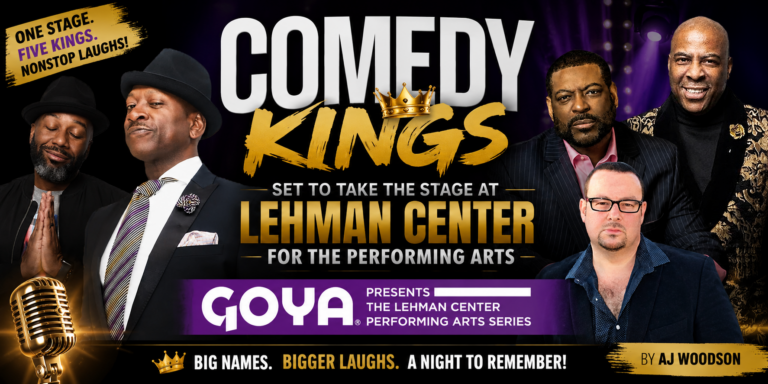
Black Westchester presents the People Before Politics Radio Show with Damon K. JonesAJ Woodson & Larnez Kinsey. Tonight, we’re bringing you a powerful and necessary conversation with two important voices shaping our community’s present and future.

Join Damon K. Jones, AJ Woodson, and Larnez Kinsey tonight as we bring you not just news, but context, accountability, and community-centered analysis you can’t get anywhere else.

LIVE from 6 PM to 8 PM on YouTube, Facebook, LinkedIn, and X powered by Black Westchester Magazine.

As always, you can follow Black Westchester on TwitterFacebookInstagram and LinkedIn 

Follow People Before Politics Radio on Instagram and Twitter

If you want to support Black Westchester Magazine and People Before Politics Radio you can always donate https://www.paypal.com/donate/?hosted_button_id=9DT5P8R82NAHW

HOW U.S. FOREIGN POLICY LOST ITS INDEPENDENCE

Foreign policy is not judged by intentions or alliances, but by outcomes. When those outcomes include expanding conflicts, legal exposure, diplomatic isolation, and rising costs to American taxpayers, the issue is no longer ideological. It is practical.

Over the last decade—accelerated under Donald Trump—American foreign policy increasingly aligned itself with the strategic priorities of Benjamin Netanyahu and his governing coalition. This alignment did not arise from open congressional debate or public mandate. It emerged through silence, incentives, and political risk avoidance.

The consequences are most visible in Palestine. The United States abandoned even the appearance of acting as a neutral intermediary. Palestinian statehood was removed from serious diplomatic consideration, while Israeli military operations in Gaza continued amid unprecedented international scrutiny. The International Court of Justice issued provisional measures, warning of a humanitarian catastrophe and directing Israel to take steps to prevent prohibited acts and to allow aid. Whether one accepts the claims or not, Israel’s conduct moved from political dispute into formal legal review.

That scrutiny deepened in November 2024, when the International Criminal Court issued arrest warrants for Netanyahu and Israel’s former defense minister, alleging war crimes and crimes against humanity. An arrest warrant is not a conviction, but it is not symbolic. It carries legal and diplomatic consequences that affect not only Israel but also the United States, which continues to provide political and military backing.

What is often overlooked is that this agenda does not stop at Israel’s borders.

In January 2026, Israel publicly applauded a U.S. military operation to seize Venezuelan President Nicolás Maduro. Israel’s foreign minister hailed the operation as an act of “historic leadership,” expressed hope for renewed Israeli-Venezuelan relations, and framed the intervention as a blow against an alleged global “axis of terror.” Netanyahu himself praised Trump’s leadership while conspicuously avoiding mention of the operation by name.

This episode matters not because of one Latin American government, but because it reveals a pattern where Israel’s strategic priorities increasingly influence American military posture far beyond the Middle East, as seen in Venezuela’s reemergence in Israeli rhetoric after U.S. intervention.

Venezuela’s VP: Maduro’s capture has ‘Zionist tint’

On Sunday, Rodriguez claimed that the operation to arrest Maduro had a “Zionist tint.”

“The governments of the world are simply shocked that it is the Bolivarian Republic of Venezuela which is the victim and subject of an attack of this nature, which has, without a doubt, a Zionist tint,” said Rodriguez in a televised speech, according to the Mexican public broadcaster.

She added that “the extremists who have promoted armed aggression against our country — history and justice will make them pay.”

Senior Israeli officials openly tied Maduro’s removal to Iran and Hezbollah, portraying Venezuela as part of a global enemy network. Opposition leaders and cabinet ministers framed the operation as a warning to Tehran. In other words, a U.S. military action in South America was immediately folded into Israel’s regional security narrative.

This expansion is not theoretical. Netanyahu’s agenda has widened the conflict across multiple theaters. Tensions with Iran escalated from proxy engagement to confrontation. Israeli strikes in Syria intensified. Hostilities with Hezbollah in Lebanon expanded. Iranian-aligned groups in Iraq and Yemen widened attacks, threatening shipping lanes and drawing U.S. forces into sustained deployments. What was framed as deterrence produced predictable spillover: more fronts, more instability, and greater American exposure.

The contradictions become sharper when moral rhetoric is examined. Netanyahu’s sudden concern for persecuted Christians in Nigeria rings hollow when measured against Israel’s actions in Palestine. Framing Israel as a defender of Christians abroad functions less as a humanitarian concern and more as political branding. In Gaza and the West Bank, Christian Palestinians—among the oldest continuous Christian communities in the world—have been killed, displaced, and stripped of protections alongside their Muslim neighbors. Churches have been damaged, communities uprooted, and civilians killed under policies that Netanyahu oversees. One cannot credibly claim to defend Christians abroad while enabling military actions that devastate Christian communities at home.

The financial cost of this alignment is measurable because American taxpayers are committed to roughly $38 billion in military aid to Israel under the current ten-year agreement, with tens of billions more authorized since the Gaza war escalated. This diverts resources from domestic priorities and increases the financial burden on American citizens.

Congress’s bipartisan silence should alarm the audience, as avoiding scrutiny due to incentives weakens oversight and national integrity.

Strength is rooted in independence. A nation that can reassess commitments and prioritize its own citizens’ interests empowers itself and leads more effectively.

The long-term consequences are already visible. America’s credibility as an independent actor has eroded. Its exposure to regional and global conflict has increased. And its foreign policy has become increasingly reactive—shaped less by national interest than by external agendas and domestic political incentives.

This requires no speculation about motives. Incentives are sufficient. When dissent is punished and compliance rewarded, outcomes follow.

Foreign policy driven by silence is not leadership. It is abdication. And a nation that abdicates strategic independence should not be surprised when it is asked to pay—in money, credibility, and eventually lives—for wars it did not choose.

Was the Seizure of Nicolás Maduro Legal — and What It Means for U.S.–Caribbean Relations

The reported seizure of Nicolás Maduro by the United States is more than a dramatic geopolitical moment. It is a test of international law, American restraint, and regional trust. Whether one views Maduro as a criminal, an authoritarian, or an illegitimate ruler is not the central issue. The larger question is whether global rules still matter when the power exists to circumvent them.

The United States has argued that Maduro was lawfully taken into custody based on longstanding federal indictments alleging narcotics trafficking and terrorism. From a domestic legal standpoint, U.S. officials can claim they acted to bring a criminal defendant before an American court. That argument, however, only answers a narrow question. Domestic law does not govern the international system, and international legality cannot be substituted with national authority.

Under widely recognized principles of sovereignty and non-intervention, the forcible seizure of a sitting head of state from within his own country, absent extradition, consent, or multilateral authorization, occupies highly contested legal ground. International law exists precisely to restrain such actions, especially when they are carried out unilaterally. The individual’s popularity or unpopularity does not alter the rule. Law is meant to be applied when restraint is hardest, not when it is easiest.

This distinction matters because legality and capability are distinct. The United States has the power to carry out such an operation. The unresolved question is whether that power was exercised in a way that strengthens or weakens the international system it claims to defend.

The consequences of this action extend well beyond Venezuela. Across the Caribbean and Latin America, the reaction is shaped less by sympathy for Maduro and more by concern over precedent. Many nations in the region have long memories of intervention carried out in the name of order, democracy, or security. When a powerful state removes a foreign leader without multilateral process, smaller states do not see justice being served; they see norms being rewritten.

For Caribbean governments, sovereignty is not an abstract principle. It is a form of protection. Regional bodies such as CARICOM have consistently emphasized diplomacy, negotiated solutions, and non-intervention precisely because stability depends on predictability. When rules appear optional for the powerful, trust erodes for everyone else.

Supporters of the operation may argue that removing Maduro accelerates political change, disrupts criminal networks, or advances democratic outcomes. These claims speak to intent, not consequence. Foreign policy failures are often rooted in the belief that good intentions can substitute for sustainable outcomes. History suggests otherwise.

The likely effects of this seizure include increased skepticism toward U.S. leadership, greater caution among regional partners, and a renewed incentive for rival powers to justify similar actions under the same logic. Once the principle is established that unilateral force is acceptable when moral certainty is claimed, it becomes difficult to object when others adopt the same standard.

Caribbean nations, in particular, must evaluate this event through a practical lens. Instability in Venezuela can increase migration pressures, strain regional resources, disrupt trade, and complicate energy markets. These countries do not benefit from spectacle. They benefit from order, predictability, and law that applies evenly.

Power, however, has a way of obscuring this reality. The United States had alternatives available, including multilateral legal mechanisms, international warrants, regional diplomacy, and negotiated political transitions. Choosing force over process may produce a short-term sense of resolution, but it introduces long-term uncertainty. It signals that outcomes justify methods, a principle that rarely remains contained.

This moment is therefore not primarily about Nicolás Maduro. It is about the future of international norms. When rules are enforced selectively, they weaken universally. When sovereignty is overridden without consensus, it becomes conditional rather than foundational.

The true cost of this action may not appear immediately. It will surface gradually in strained alliances, diminished credibility, and a regional order that becomes more cautious, more fragmented, and less cooperative. Those costs do not dominate headlines, but they shape history.

In international affairs, restraint is often mistaken for weakness. In reality, it is restraint that preserves legitimacy. And legitimacy, once lost, is far harder to recover than power ever is.