For years, Americans have been told that gerrymandering is one of the greatest threats to democracy. Democrats accused Republicans of rigging congressional maps in states like Texas, Florida, and North Carolina. Republicans pointed to Democratic-controlled states like Illinois and Maryland doing the same thing. Recognizing that both parties use political mapmaking when in power can evoke a sense of shared challenge, encouraging the audience to see this as a collective issue rather than a partisan conflict. The reality is that both parties use political mapmaking when they have the power to do it. But what is happening now is bigger than district lines. America is entering a political realignment shaped by the Supreme Court, migration, census power, and population shifts that could reshape the balance of power for decades.
The recent redistricting battles expose a fundamental strategic problem for Democrats. For years, Democrats pushed for independent redistricting commissions, legal safeguards, and “fair map” reforms in many blue states. They believed that creating nonpartisan systems would pressure Republicans to eventually do the same. Instead, Republicans treated redistricting as raw political warfare while Democrats built guardrails around themselves.
That miscalculation is now becoming visible.
The Virginia Supreme Court recently struck down a Democratic-backed ballot initiative that would have created four additional Democratic-leaning congressional districts ahead of the midterm elections. Democrats immediately framed the decision as political sabotage. President Donald Trump celebrated it as a major Republican victory. But the deeper story is not simply about one court ruling. It is about the growing realization that Democrats created rules Republicans never agreed to follow.
The narrowing of race-based districting by the U.S. Supreme Court has direct implications for Black communities, especially in Louisiana, Tennessee, Florida, and South Carolina, where districts heavily tied to Black political representation are now more legally vulnerable, potentially reducing their influence.
This matters because, as courts increasingly challenge race-based mapmaking, many historically Black districts created during the civil rights era face legal vulnerabilities, potentially weakening Black political power and representation.
That changes the entire political equation.
The Democratic Party still dominates many large urban centers such as New York City, Chicago, Los Angeles, and Philadelphia. But political dominance inside cities does not automatically translate into long-term congressional dominance nationally. Congressional districts are geographic. Democrats often pile millions of votes into concentrated urban districts while Republicans spread their voters more efficiently across suburban, rural, and exurban regions.
That structural difference matters more than most people realize.
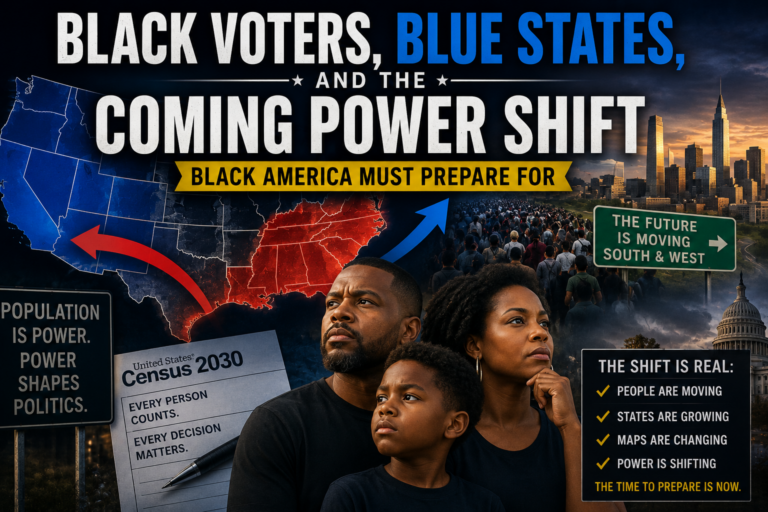
But the biggest threat to Democratic political power may not be gerrymandering at all. It may be migration.
Migration from high-tax blue states to Sun Belt regions like Texas, Florida, Tennessee, North Carolina, and Georgia includes large numbers of Black Americans seeking lower housing costs, safer neighborhoods, and economic opportunities, which shifts political power in these areas.
Population movement changes political power.
Every ten years, the census reallocates congressional seats and Electoral College votes based on population totals. States gaining residents gain influence. States losing residents lose influence. That means if current migration patterns continue, red states and Sun Belt regions gain congressional power while traditional Democratic strongholds in the Northeast and parts of the West lose it.
This is where the immigration debate becomes politically explosive.
Congressional apportionment is based on residents, not simply voting citizens. Population itself determines representation and federal funding levels. Critics argue Democrats aggressively support large-scale migration partly because population growth helps offset domestic population losses in blue states. Democrats argue immigration supports economic growth and labor needs. But regardless of political perspective, both parties understand the same reality: population equals power.
That is why the census matters so much.
The political battle is no longer only about persuading voters. It is about controlling long-term demographic influence, congressional representation, and institutional leverage.
Republicans appear to understand this increasingly well. The recent redraws in Florida, Tennessee, Missouri, and North Carolina show Republicans aggressively maximizing structural advantage wherever legally possible. Democrats, meanwhile, are discovering that independent commissions and procedural fairness do not stop political hardball when the opposing side views power itself as the priority.
The article discussing these developments described it best when it argued Democrats effectively engaged in “unilateral disarmament.” They created systems, believing both parties would eventually compromise. Republicans instead used those reforms as strategic openings.
But there is another uncomfortable reality neither party fully addresses.
Black America remains heavily politically loyal while receiving increasingly questionable outcomes.
For decades, Black voters have overwhelmingly supported Democrats, often delivering between 85 and 95 percent of the vote in major urban regions. Yet many Black communities continue struggling with failing schools, housing instability, violent crime, poor health outcomes, shrinking ownership rates, and widening wealth disparities.
The maps remain blue.
The conditions often do not improve.
This is why Black America must begin thinking more strategically about political leverage. Politics is not about emotional attachment. It is about outcomes, incentives, negotiation, and institutional power.
Both parties use Black voters strategically. Democrats depend heavily on concentrated urban Black voting blocs. Republicans often neglect serious Black outreach because they assume the Democratic margin is too large to overcome. Meanwhile, the deeper structural issues that actually determine long-term power, ownership, economics, education, family stability, land acquisition, and business development receive far less attention than partisan talking points.
The real political war in America is not simply over district lines. It is over where people live, where businesses invest, where families move, where populations grow, and which states control the future congressional map after the next census.
Democrats may still win some redistricting battles in the short term. But if migration trends continue, if census power keeps shifting southward, and if courts continue narrowing race-based districting protections, they may discover too late that they focused on protecting the map while the country itself was politically moving underneath them.
And Black America cannot afford to ignore that shift.
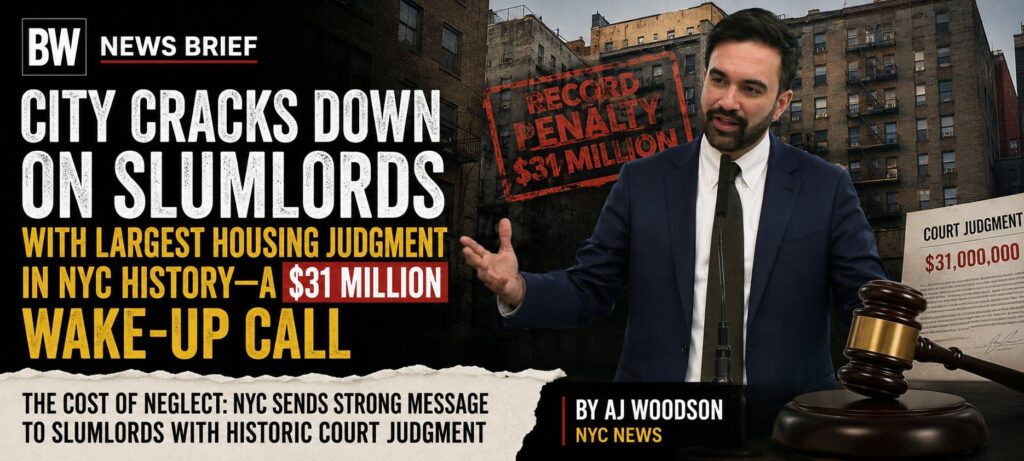
The Cost of Neglect: NYC Sends Strong Message to Slumlords With Historic Court Judgment
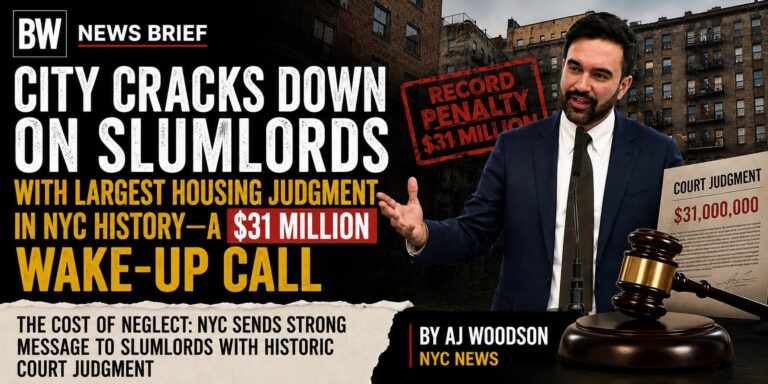
New York City officials announced on Wednesday, May 6th, a record-breaking $31 million penalty against the owners of two troubled Bronx apartment complexes accused of years of severe housing neglect, marking the largest civil judgment in the history of the city’s Department of Housing Preservation and Development (HPD).
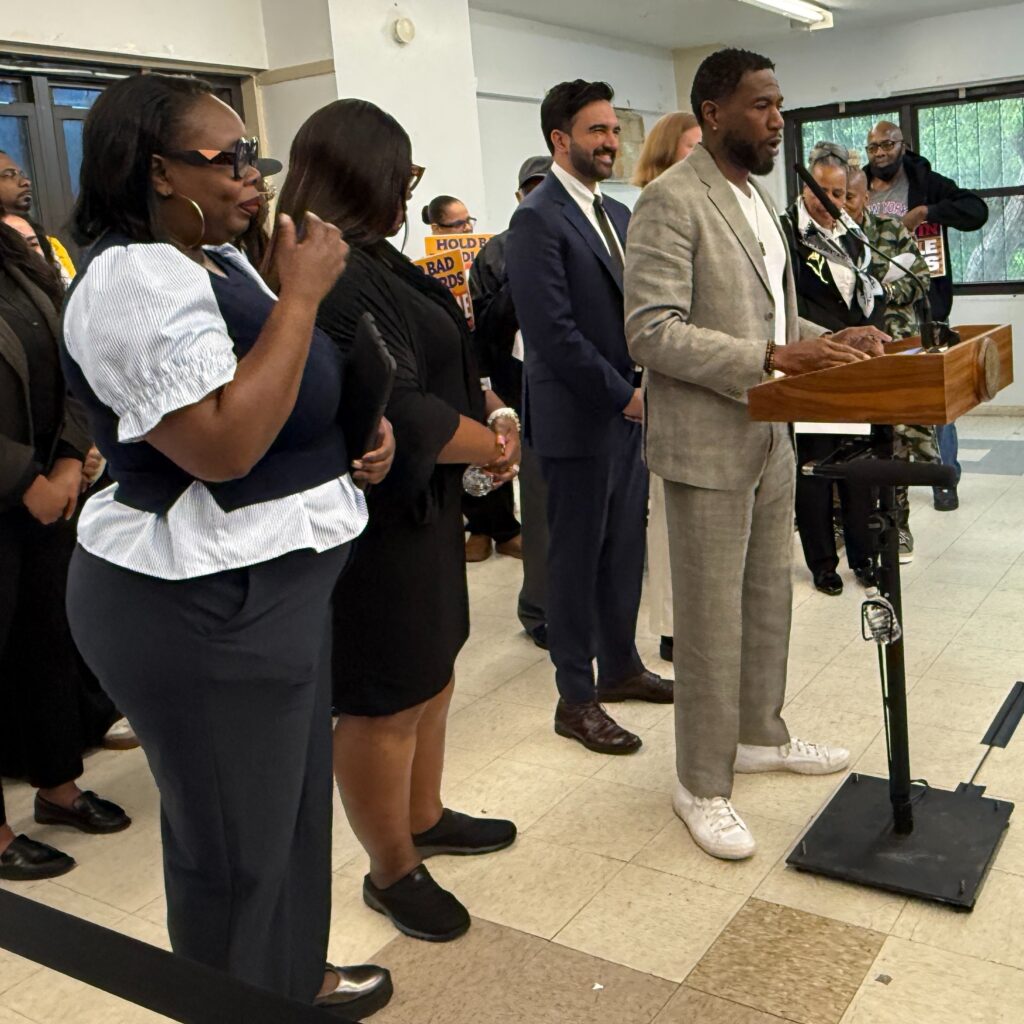
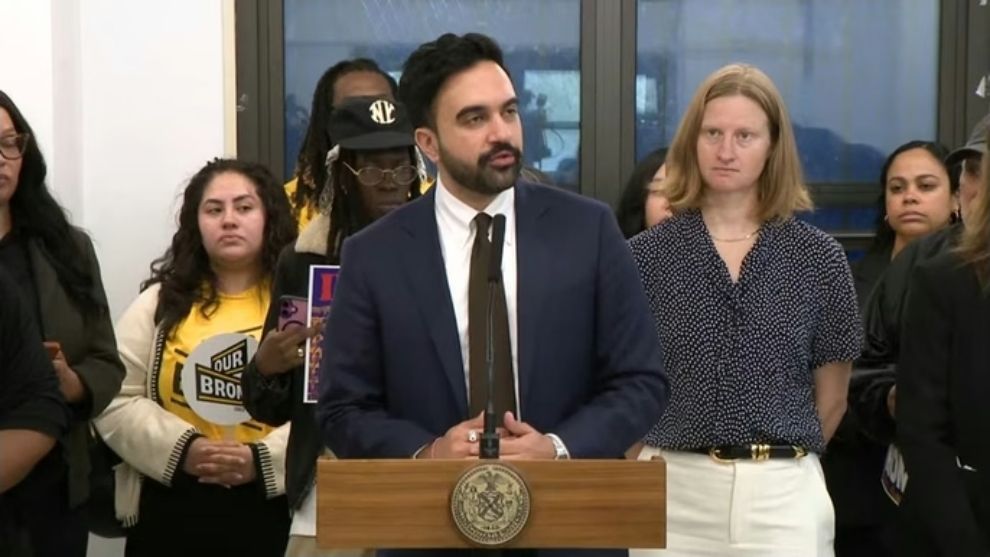
“For years, tenants at Robert Fulton Terrace and Fordham Towers have been forced to live with vermin infestations, chronic elevator outages, and a lack of heat and hot water—while their landlords met their suffering with silence,” Mayor Zohran Mamdani said at a press conference announcing the news (see video below). “Today, that neglect is finally met with consequences.”
These penalties, which include at least $900,000 taken straight from the landlords’ accounts to pay for the buildings’ urgent repairs, amount to the highest civil penalty in the history of the New York City Department of Housing Preservation and Development (HPD).
According to city officials, the buildings accumulated thousands of complaints and more than 1,700 housing code violations over the past two years alone. The landlords were previously placed on Public Advocate Jumaane Williams’ “Worst Landlords List.”
“We are sending a clear message to negligent landlords across this city: if you force tenants to live in dangerous and inhumane conditions, there will be consequences. Every New Yorker deserves safe, dignified housing — not broken elevators, mold, rats, and years of ignored complaints. These tenants fought to be heard, and today their voices were finally recognized,” said Jumaane D. Williams
Mayor Zohran Mamdani called the conditions “inhumane” during a press conference announcing the judgment.
“No landlord is above the law,” Mamdani said, pledging that the city would not only punish negligent ownership but also force meaningful repairs and oversight.
As part of the ruling:
More than $900,000 from the landlords’ bank accounts has reportedly been frozen to fund emergency repairs.
A Chief Restructuring Officer has been appointed to oversee building rehabilitation.
The judgment will become liens against the properties, giving the city leverage over any future sale or transfer.
City officials are pushing for a “preservation buyer” to take over the complexes and maintain affordability.
Tenants who have spent years organizing and demanding action welcomed the announcement cautiously, though many said accountability must also include compensation for residents forced to pay out-of-pocket for heaters, appliances, and repairs while living in unsafe conditions.
Housing advocates say the case could become a major turning point in New York City’s efforts to crack down on predatory landlords and deteriorating housing conditions, especially in working-class Black and Latino communities that have long complained about unequal enforcement and delayed responses to tenant suffering.
Though the lawsuit was originally filed in 2024—before Mamdani took office—it is an early and visible victory for the mayor who ran on a platform of tenant advocacy and landlord accountability.
“Every New Yorker deserves safe, dignified housing,” Mayor Zohran Mamdani said at the press conference. [NYC Mayor’s Office]
“No landlord is above the law. But penalties alone are not enough,” Mamdani added. “We are taking control of the situation to make sure repairs are made and conditions are permanently improved. Every New Yorker deserves safe, dignified housing.”
The mayor’s announcement was warmly received by tenants of the Robert Fulton building present at the press conference.
At Banks’ building alone, tenants have filed more than 2,300 housing complaints over the past two years, resulting in over 1,100 violations, according to HPD data. Fordham Towers has logged an additional 1,800 complaints, racking up more than 500 violations in the same period.
The 2024 lawsuit described residents going without hot water for days on end, forcing them to boil water just to bathe. The suit also described rat infestations, and elevator outages that effectively trapped residents who were unable to scale the hundreds of stairs to ascend the building’s 17 floors.
The mayor credited the buildings’ tenant organizations for their years of work to advocate for their neighbors and bring about change to the disturbing pattern of neglect.
Cea Weaver, director of the mayor’s Office to Protect Tenants, framed the ruling as a victory for tenants and tenant organizations throughout the city.
“In the Mamdani administration, the mayor of New York City is on tenants’ side,” she said. “This judgement is not just a step forward for the tenants of these buildings—it is a sign of a new era of leadership, where the City works hand in hand with organized tenants to deliver a fairer city for all New Yorkers.”
For far too many New Yorkers, especially Black and Brown families living in working-class neighborhoods, housing neglect has become normalized — leaking ceilings patched with buckets, broken elevators treated as routine, and children growing up in apartments plagued by mold, rodents, and unsafe living conditions. This historic $31 million judgment sends a message that the city can no longer look the other way while landlords profit off human suffering.
But the real victory will not be measured by headlines or courtroom numbers. It will be measured by whether tenants finally receive the safe, dignified housing they have been demanding for years. Accountability must mean repaired buildings, protected residents, and a housing system where people are valued more than profits. For the families who endured these conditions, justice is not just about punishment — it is about finally being seen, heard, and treated like their lives matter.
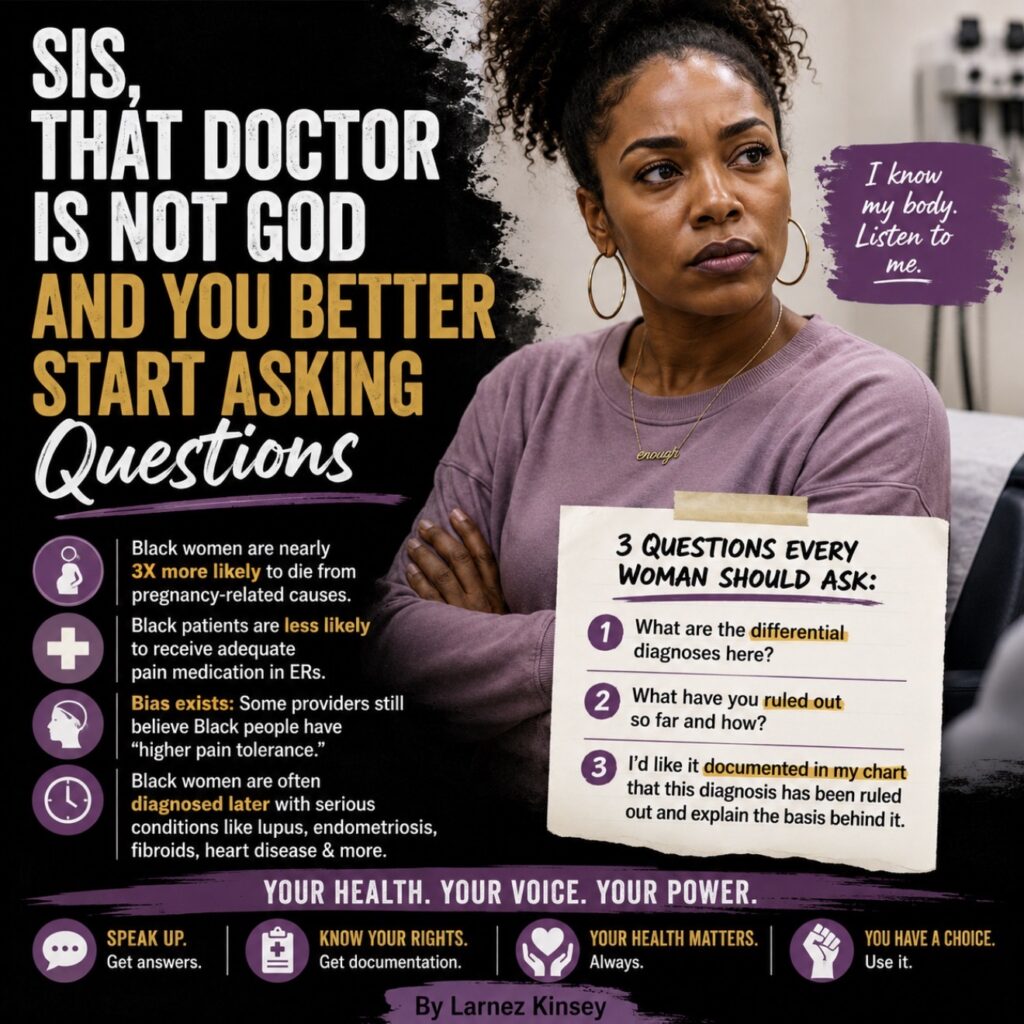
Black women in America are nearly three times more likely to die from pregnancy-related causes than white women. Black patients are less likely to receive adequate pain medication in emergency rooms. Studies have shown that some medical providers still falsely believe Black people have “higher pain tolerance” or biologically thicker skin. Black women are also disproportionately diagnosed later with conditions like lupus, endometriosis, fibroids, heart disease, and autoimmune disorders — often after years of symptoms being minimized, dismissed, or blamed on stress.
Translation? A lot of Black women are not imagining medical neglect. They are surviving it. And there is a particular kind of loneliness Black women know that nobody talks about enough.
It’s the loneliness of sitting half-dressed on crunchy exam table paper while somebody with a medical degree looks you dead in the face and minimizes what your body has been screaming at you for months… sometimes years.
You know the feeling.
You rehearse your symptoms before the appointment because you already know you’re going to have to “prove” your pain. You practice sounding calm because if your voice shakes too much, suddenly you’re “emotional.” If you’re too informed, you’re “difficult.” If you advocate too firmly, now you have “an attitude.”
Meanwhile, your body is waving red flags like it’s directing traffic at JFK. And still, somehow, the doctor hits you with:
“It’s probably stress.”
“You just need to lose weight.”
“That’s normal for women.”
“You’re overthinking.”
Ma’am.
Sir.
Respectfully… are you overthinking the fact that I said my chest hurts and my vision blurred while climbing stairs?
Because let’s talk about it. Some doctors have gotten entirely too comfortable playing in Black women’s faces. Not listening! Not investigating! Not explaining! Just dismissing. And the dangerous part is how normalized it has become.
Women are walking around right now with undiagnosed autoimmune diseases, cardiac conditions, reproductive disorders, thyroid issues, neurological symptoms, and chronic illnesses because somebody in a white coat decided their pain sounded “dramatic” instead of medically significant. That is not a personality conflict. That is a healthcare crisis.
I remember talking to a woman who kept going back to doctors, complaining about exhaustion so deep she could barely make it through the workday. Her joints hurt. Her hair was thinning. She was dizzy constantly. One doctor told her she was probably “burned out.” Another suggested yoga. Another recommended reducing stress.
Reducing stress. As though her immune system was waiting for a bubble bath and positive affirmations before deciding whether to attack her body. Months later? Lupus diagnosis.
And what stays with her wasn’t just the illness. It was the humiliation of knowing she had been right about her own body while professionals made her feel irrational for noticing it.
That’s the part people don’t discuss enough. Medical dismissal makes women question themselves.
You start wondering:
“Maybe I am overreacting.”
“Maybe this pain is normal.”
“Maybe I’m being difficult.”
Meanwhile, your body is practically filing formal complaints. This is why language matters in medical spaces. Because too many women walk into appointments asking for permission to be heard instead of expecting competent care. And no, this is not about becoming combative.
It’s about becoming informed enough to protect yourself. Because you have a choice. You can choose to ask more questions. You can choose to get a second opinion. You can choose to change doctors. You can choose to stop shrinking yourself to make dismissive providers comfortable. A medical degree does not make someone incapable of bias, laziness, ego, or bad listening skills. And there are three questions every woman should know how to ask when a doctor starts minimizing her concerns.
1. “What are the differential diagnoses here?”
Now I know that sounds like something said right before uncovering corruption in a political thriller, but stay with me. A differential diagnosis is simply the list of possible conditions that could explain your symptoms. This question forces the provider to think beyond their first assumption.
Because too often, Black women’s symptoms get categorized immediately as:
stress
anxiety
hormones
weight
depression
exhaustion
Without fully investigating what else could be happening. Asking: “What are the differential diagnoses here?” Changes the conversation from: “You’re probably fine,” to “Here are the conditions we’re considering and why.” That matters. Because your doctor should not be operating off vibes.
2. “What have you ruled out so far and how?”
This question right here? This is where the room shifts. Because now the provider has to explain the evidence behind their conclusions instead of casually tossing opinions at you like expired fortune cookies.
If they say, “I don’t think it’s cardiac-related.” Ask: “Okay, what testing ruled that out?”
If they say, “It’s probably hormonal.” Ask, “What labs support that conclusion?”
See, confidence is not confirmation. Some doctors speak with authority even when they’re making assumptions. And patients are often conditioned to interpret confidence as certainty. They are not the same thing. You are allowed to ask follow-up questions about your own body. That is not disrespectful. That is participation.
3. “I’d like it documented in my chart that this diagnosis was ruled out, and please explain the basis behind that decision.”
Whew. Now this one? This one suddenly makes people type slower. Because documentation creates accountability. If a provider dismisses your symptoms, refuses testing, or prematurely rules something out, asking for it to be documented creates a medical paper trail connected to that decision-making.
And suddenly the conversation becomes much more thoughtful. Because now there’s a record.
And before somebody says: “Well, that sounds aggressive…”
No. You know what’s aggressive? Ignoring women until symptoms become emergencies. You know what’s aggressive? Black maternal mortality. You know what’s aggressive? Women are being sent home from hospitals only to return in critical condition because nobody listened the first time. Women are taught to protect doctors from discomfort while women themselves are sitting in pain, confusion, fear, and exhaustion.
Enough. And let’s be clear about something else: advocating for yourself medically does not mean you think you know more than physicians. It means you understand healthcare should be collaborative.
The right doctor will not be offended by informed questions. The right doctor explains things clearly. The right doctor investigates thoroughly. The right doctor listens without making you feel ridiculous. The right doctor understands that patients know when something feels wrong. And if your provider repeatedly dismisses you, rushes you, talks over you, ignores your symptoms, or makes you feel small for advocating for yourself?
You have a choice. You can leave. You can find another provider. You can seek another opinion. You can stop handing blind trust to people who have not earned it. Because nobody lives inside your body except you. Not your doctor. Not social media. Not internet symptom checkers. Not wellness influencers drinking chlorophyll in soft lighting. YOU!
And Black women, especially, have spent generations being told to survive pain quietly. To endure. To be resilient instead of protected. But resilience should not be the entry fee for receiving competent healthcare.
You deserve thoroughness. You deserve explanation. You deserve investigation. You deserve dignity. You deserve to be believed the first time you say something feels wrong.
Too many Black women are getting harmed simply because they were taught to stay polite in rooms where nobody was truly listening.
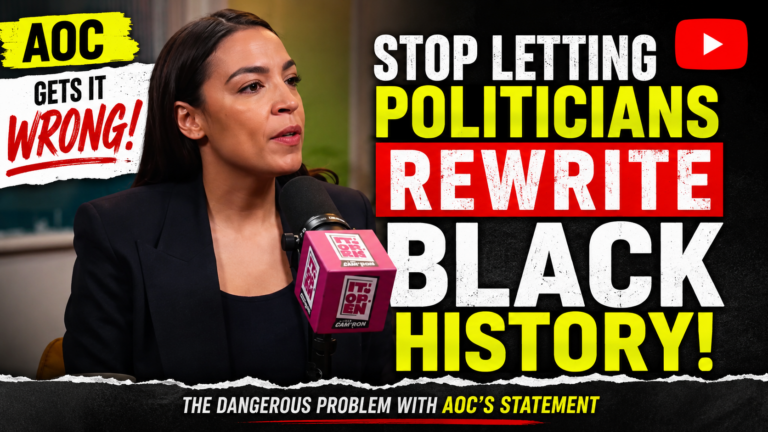
Recently, Alexandria Ocasio-Cortez made a statement claiming that Black Americans “created democracy” in America. The comment immediately gained attention because it reflects something deeper that has been happening in American politics for years: politicians increasingly using Black struggle as emotional political theater instead of discussing measurable outcomes in Black communities.
Let’s be honest and historically accurate. Black Americans did not invent democracy. Democracy existed centuries before the United States was formed. Ancient civilizations practiced forms of democratic governance long before slavery existed in America. Any Black American with a basic high school education understands that the Civil Rights Movement did not “start democracy.”
What Black Americans did do was force America to confront the contradiction between its stated democratic ideals and the reality Black citizens were living under. Black Americans fought for inclusion in rights that America already claimed belonged to all citizens. That distinction matters because truth matters.
And when public figures exaggerate Black history for applause, they unintentionally give real racists ammunition to attack legitimate Black suffering, legitimate discrimination, and legitimate contributions to America. Once history becomes a political performance, serious conversations become harder to have because critics can point to the exaggeration itself rather than engage the actual historical record.
The real tragedy is that Black history does not need exaggeration to be powerful. The facts of our endurance-surviving slavery, segregation, and violence-are already a compelling story that demands attention and respect.
Another example of this cultural rewriting is what happened to the word “woke.” Before white liberals, corporations, college activists, and social media politics turned it into a catch-all political slogan, “woke” had a very specific meaning in Black America, especially among Black people in the South. To be “woke” originally meant to stay alert, aware, and conscious of racial injustice, political manipulation, discrimination, and danger. It was rooted in survival and awareness, not performance politics. But like many things created in Black culture, the term was eventually appropriated and reshaped into something almost unrecognizable. Today, many Americans associate “woke” with corporate activism, censorship, identity politics, and ideological extremism instead of its original meaning, rooted in Black awareness and self-protection. That transformation should be a warning to Black Americans about what happens when outsiders redefine our language, our history, and our struggles for their own political agendas.
What makes this even more frustrating is that this kind of rhetoric has become part of a larger political pattern, particularly among Democrats over the last two decades. Black pain is repeatedly turned into emotional talking points while many Black communities continue to decline in measurable ways. Politicians deliver speeches about justice and representation while many Black neighborhoods continue struggling with failing schools, rising violence, weak economic ownership, poor health outcomes, and collapsing family structures.
At some point, Black Americans must ask a serious question: if the emotional rhetoric and symbolic politics were truly working, why are outcomes in so many communities still getting worse?
Speeches are not outcomes. Slogans are not outcomes. Symbolic representation is not outcomes.
Black Americans do not need more emotional applause lines from politicians. We need honest discussions about tangible progress in economics, education, and community development to stay focused and motivated.
And here is what is even more revealing: I can almost guarantee there will be silence from many high-profile Black political organizations and leadership groups regarding this bastardization of Black history and the Black struggle. Organizations like the NAACP, the National Urban League, and the National Action Network will likely say little or nothing publicly about these inaccurate claims.
Why?
Because too often, political loyalty has become more important than historical accuracy.
If a conservative politician made historically inaccurate statements about Black history, many of these same organizations would immediately respond. But when exaggerated rhetoric comes from politicians driven by their own interests, silence often follows. That inconsistency damages credibility and further convinces many Black Americans that symbolic politics has replaced honest accountability.
This is also why Black Americans must stop allowing people outside the culture to define Black struggle for political purposes. Too often, our pain becomes somebody else’s ideological branding instead of a real discussion about the future of Black America. Our struggle is deeper than campaign slogans and social media activism.
The Civil Rights Movement was real. Segregation was real. Housing discrimination was real. Economic exclusion was real. But so was Black excellence, Black entrepreneurship, Black faith, Black institution-building, and Black resilience.
The truth is already powerful enough.
Black Americans do not need politicians rewriting history to validate our contributions to America. We survived slavery, survived segregation, survived exclusion, and still helped shape America culturally, spiritually, economically, and politically. That is already extraordinary.
But if politicians continue exaggerating Black history for emotional applause, eventually the truth itself becomes weakened. And once truth becomes weakened, serious conversations about Black America become almost impossible to have honestly.
Black Americans did not invent democracy. But Black Americans absolutely forced America to confront its hypocrisy and move closer toward the democratic principles it claimed to believe in.
For millions of New Yorkers already struggling under high taxes, rising utility bills, unaffordable housing, and economic uncertainty, the latest confusion coming out of Albany only reinforces a growing public frustration: who is actually running the state government?
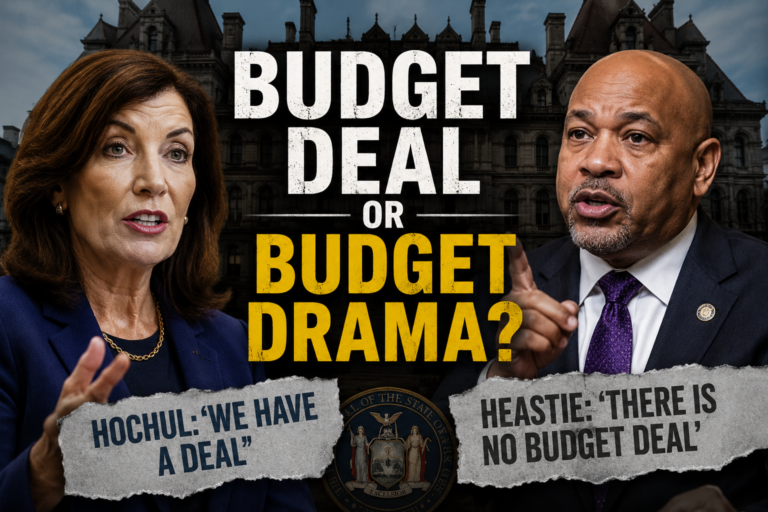
This week, Governor Kathy Hochul publicly announced that New York had reached a budget agreement. She spoke confidently about a deal being in place and presented the moment as a major breakthrough in negotiations over the state’s roughly $268 billion budget. But almost immediately afterward, Assembly Speaker Carl Heastie contradicted her publicly, stating plainly that “there is no budget deal.”
To the average taxpayer, that contradiction is not a small issue. It raises serious questions about transparency, leadership, and whether Albany’s political class is more focused on headlines than honest governance.
Technically, Heastie is correct. A budget is not finalized because politicians hold a press conference or claim there is a “general agreement.” A budget becomes real when legislative language is completed, lawmakers vote on it, and the governor signs it into law. Until then, New Yorkers are left with uncertainty while political leaders argue over definitions and messaging.
But the deeper issue is what this disagreement reveals about how Albany operates.
The budget process in New York has increasingly become less about fiscal discipline and more about political leverage. Massive policy issues often get folded into late-night negotiations behind closed doors, leaving taxpayers with little understanding of what is actually being negotiated in their name. From pension expansion proposals to climate mandates, utility regulations, housing policy, public safety spending, and aid to local governments, billions of dollars and long-term financial obligations are often decided through political bargaining rather than transparent public debate.
That matters because the consequences do not stay in Albany. They eventually land on the backs of ordinary residents through higher taxes, rising energy costs, shrinking services, or more people leaving the state altogether.
Westchester County residents understand this pressure better than most. Property taxes are already among the highest in America. Families are struggling with affordability while businesses and middle-class residents continue relocating to states with lower costs and more predictable economic policies. Every delayed budget, every rushed negotiation, and every unfunded political promise eventually affects local communities.
The disagreement between Hochul and Heastie also exposes growing tensions within New York’s Democratic leadership itself. Even though Democrats overwhelmingly control the governor’s office, the Assembly, and the Senate, the state still struggles to produce timely budgets and unified messaging. That should concern voters regardless of party affiliation because one-party dominance does not automatically produce effective government.
In fact, history often shows the opposite. When political competition weakens, accountability weakens with it. Leaders become more focused on internal power struggles than public outcomes. The public begins hearing different stories from different officials, while the actual problems facing the state continue to grow.
New Yorkers deserve more than political theater. They deserve clarity. If there is a budget deal, leaders should present the details honestly. If there is no final deal, they should stop pretending there is one for the cameras.
Because at the end of the day, budgets are not public relations campaigns. They determine how taxpayer money is spent, how services are funded, how much residents will ultimately pay to live here, and whether New York remains affordable for working families and businesses trying to survive.
And right now, Albany looks less like a government operating with confidence and more like a house divided trying to control the narrative while the people wait for answers.
Public debates about New York City often split into two familiar camps. One side argues the city has become hostile to business and investment. The other argues that it has become unaffordable for working people. Both sides present real concerns. Both sides are incomplete.
What is missing is a focus on outcomes.
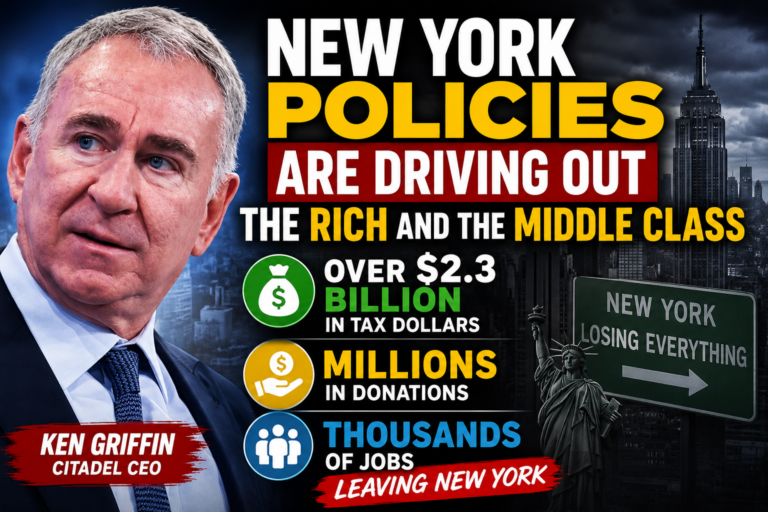
Recent comments from Ken Griffin and Jessica Ramos illustrate the divide. Griffin has made clear that his firm is expanding in Miami, citing a more favorable business environment. Ramos has emphasized that the cost of living, particularly rent, is forcing residents out of New York. These statements are often framed as opposing viewpoints. In reality, they are describing the same system from different positions within it.
New York has, over time, built a cost structure that is difficult to sustain. It is expensive to build housing, operate a business, and live. This is the result of accumulated policy decisions, including regulatory layers, tax burdens, fees, and approval processes that have grown more complex over time. Highlighting these causes helps readers understand the systemic nature of the decline. When costs rise across all three areas simultaneously, the results are predictable.
Developers respond first. When construction costs, regulatory uncertainty, and approval timelines increase, fewer projects meet the investment threshold. Some projects are delayed. Others have never started. Those that move forward often target the high end of the market, where margins are more likely to justify the risk. The result is a constrained housing supply relative to demand.
Businesses respond next. Companies evaluate where to allocate capital based on expected return. If operating in New York becomes significantly more expensive or uncertain than in other locations, firms may limit expansion, shift growth elsewhere, or relocate entirely. This is not a political decision. It is a financial one.
Residents feel the weight of rising costs daily, which can erode their sense of stability and security, especially for those with the least flexibility. Recognizing this emotional toll helps the audience understand the human side of economic shifts.
This is where the current narrative becomes misleading. It is often suggested that only the wealthy have mobility, while everyone else remains. The data shows a broader pattern. Domestic migration from New York has been negative for several years. In 2025 alone, the city experienced a net loss of roughly 114,000 residents to other parts of the United States. Since 2020, the cumulative losses have been in the hundreds of thousands.
This outflow is not confined to one income group. High earners, middle-class households, and working families are all part of the movement. The difference is not whether people want to leave. The difference is whether they can.
Those with resources and flexibility can evaluate the cost of living, tax structure, and opportunities elsewhere and make a decision. Those without that flexibility often remain, even as costs rise. Over time, this creates an imbalance. The system gradually loses those able to exit while increasing pressure on those who stay.
The implications extend beyond population shifts. They affect the city’s economic base.
Projects like Citadel’s $6 billion development at 350 Park Avenue are more than economic drivers; they symbolize potential growth and renewal. Highlighting their impact can inspire optimism about the city’s future.
If a project of that magnitude is delayed or canceled, the loss is tangible. It results in fewer jobs, less income, and lower revenue. The key question is how the city can replace that economic activity if multiple projects face similar delays, emphasizing the need for policy reevaluation to sustain growth. This leads to a fundamental issue that public debate often avoids. A city cannot simultaneously discourage large-scale investment and expect to maintain or expand the revenue base required to support public services. Nor can it restrict housing supply and expect affordability to improve. These are not ideological claims. They are structural relationships.
After decades of policy decisions, the outcomes are visible.
Housing affordability has not improved, and the cost of living remains high. The complex regulatory and cost environment for business persists, and domestic migration continues to decline. These measurable results directly link policy choices to the city’s economic and population health, underscoring the need for policy reevaluation.
This does not mean that concerns about inequality or affordability are misplaced. Nor does it mean that maintaining a competitive business environment should be the sole priority. It means that policies must be evaluated based on whether they achieve their stated goals without producing counterproductive side effects.
At present, the evidence suggests a system under strain. The wealthy have the means to relocate or diversify their exposure. The middle class faces increasing pressure from rising costs. Working-class residents face the greatest mobility constraints while bearing the heaviest share of those costs. When multiple segments of the population respond to the same environment by leaving or reconsidering their positions, it is no coincidence. It is a signal.
The real challenge is not just the interests of the wealthy or working people alone, but whether our policies create a sustainable future for the entire city. Framing it this way encourages shared responsibility and collective action.
Incentives matter. People and businesses respond to them consistently over time. If the incentives encourage exit, exit becomes more common. If they discourage investment, investment slows.
New York’s challenge is not simply to attract or retain one group or another. It is to realign its policies so that building, investing, and living in the city remain viable simultaneously.
Until that alignment is addressed, the pattern will continue. And when both the capital and the middle class begin to look elsewhere, the issue is no longer who is leaving.
No press conferences are warning you. No headlines telling you to prepare. No elected official standing in front of a camera saying your cost of living is about to rise again.
But make no mistake, that is exactly what is being set in motion.
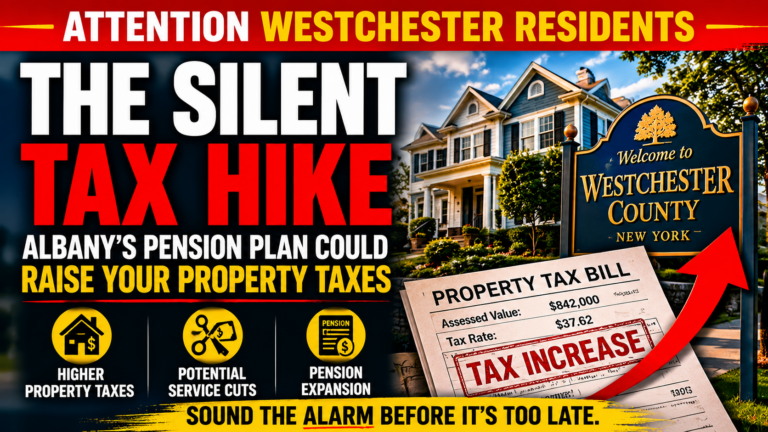
A proposal coming out of Albany, tied to the New York State and Local Retirement System, would expand pension benefits by allowing earlier retirement and reducing worker contributions, while maintaining guaranteed payouts. On paper, it sounds like a benefit for public workers. In reality, it is a long-term financial obligation that does not disappear. It simply shifts.
And in counties like Westchester County, that shift has a predictable destination. It lands on the taxpayer.
Pensions are not abstract policy ideas. They are contractual guarantees backed by law. When benefits increase and contributions decrease, the system does not absorb the difference through goodwill or efficiency. It absorbs it through money. If the money does not come from workers, it must come from the government. And if it comes from the government, it comes from you.
This is not speculation. It is arithmetic.
If a worker retires earlier, the system pays out for a longer period. If a worker contributes less, the system collects less. If investment returns fail to close the gap, taxpayers must do so. That is how the system is structured. There is no alternative mechanism waiting in the background.
What many residents do not realize is how directly this affects their tax bill. When pension costs rise under the New York State and Local Retirement System, local governments in places like Westchester County are required to increase their annual contributions. Property taxes primarily fund those contributions. That means when the pension bill goes up, your property tax bill is not far behind. Homeowners will see it directly, while renters will feel it through higher rents as landlords pass along those costs. Unlike discretionary spending, pensions cannot be cut or delayed, so the burden has to be absorbed somewhere in the budget. In practical terms, that leaves local officials with limited options, and raising taxes becomes the most immediate and reliable solution.
Westchester residents should be especially concerned because this is not a county with financial flexibility. Property taxes here are already among the highest in the nation. Housing costs are driving out both the middle class and the upwardly mobile. Local governments are already balancing rising payrolls, infrastructure needs, and public safety demands within tight budgets.
So the question is not whether this proposal is well-intentioned. The question is what happens when the bill comes due.
There are only three outcomes, and none of them are theoretical.
The first is higher property taxes. That burden falls directly on homeowners and indirectly on renters, as landlords pass costs through higher rents. In a county already struggling with affordability, this is not a minor adjustment. It is another push toward displacement.
The second is service reduction. When pension obligations rise, they compete with other budgetary priorities. That means fewer resources for schools, delayed road repairs, reduced sanitation services, and increased strain on public safety departments. The government does not operate on unlimited funds. Every dollar has a trade-off.
The third is financial deferral. Governments borrow, restructure, or push costs into the future. This may soften the immediate impact, but it guarantees a larger problem later. Deferred costs do not disappear. They compound.
These are not ideological arguments. They are the mechanical outcomes of how pension systems operate.
What makes this moment particularly dangerous is that it is happening quietly, layered on top of an already fragile economic environment. New York has been losing residents for years. Businesses are relocating. High earners, who carry a disproportionate share of the tax burden, are leaving for states with lower costs and fewer obligations. When that base shrinks, the remaining taxpayers are forced to carry more of the burden.
That is the part policymakers rarely address.
It is easy to expand benefits in isolation. It is much harder to sustain them in a system where the funding base is eroding. The risk is not immediate collapse. The risk is slow erosion. Higher taxes, fewer services, and continued outmigration all feed into each other.
Westchester cannot afford to ignore this pattern.
This is not about opposing public workers. It is about understanding the full cost of policy decisions before they are made. A system that promises more than it can sustainably fund does not create stability. It creates pressure. And that pressure does not stay in Albany. It shows up in your tax bill, your rent, your services, and your community.
Residents should be asking simple, direct questions. How will this be funded? What are the projected long-term costs? What happens if investment returns fall short? And most importantly, who pays the difference?
Because someone always does.
If those questions are not answered clearly and honestly, then the outcome is already predictable. Westchester residents will not hear about this proposal when it is passed. They will feel it later, when the numbers change, and the bills arrive.
By then, it will not be a debate. It will be a reality.
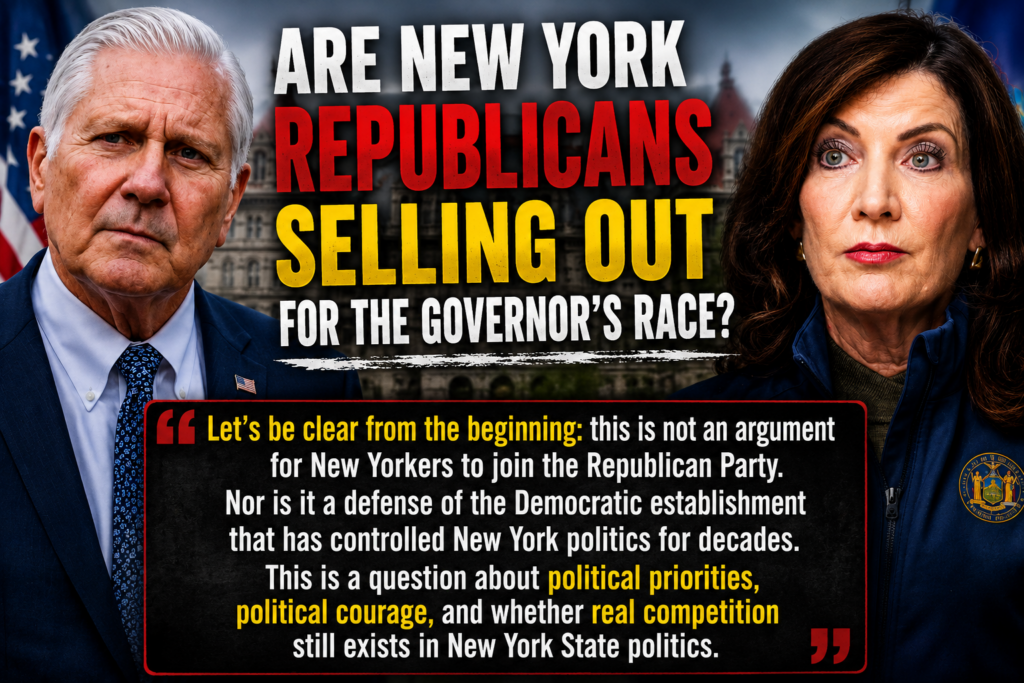
Let’s be clear from the beginning: this is not an argument for New Yorkers to join the Republican Party. Nor is it a defense of the Democratic establishment that has controlled New York politics for decades. This is a question about political priorities, political courage, and whether real competition still exists in New York State politics.
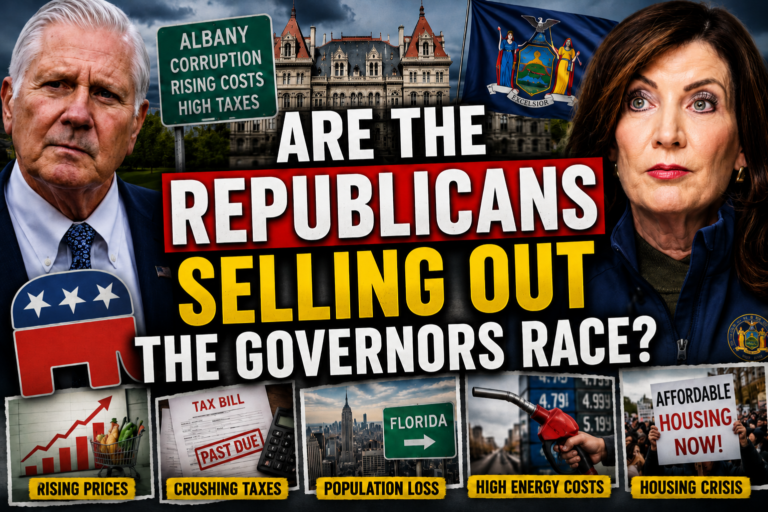
From the outside looking in, it increasingly appears that the New York Republican establishment may be sacrificing broader statewide engagement in exchange for a narrow strategy focused almost entirely on protecting select suburban seats over the governor’s race.
As a newspaper publisher, part of my responsibility is to examine political strategy, messaging, and outcomes objectively, regardless of party affiliation. From the outside looking in, it is difficult to identify a clear statewide strategy from New York Republicans that seriously challenges Democratic dominance beyond a few isolated suburban contests. That may work in the short term for Democrats because limited competition often benefits the party already in power. But the larger question is whether that is healthy for political balance, accountability, or the people of New York overall. One-party dominance, regardless of which party controls it, can eventually produce complacency, weak oversight, and a political culture in which voters are given fewer real choices and less meaningful debate about the state’s future direction.
And if that is true, then millions of New Yorkers—especially in urban communities—may feel overlooked and disconnected from the political conversation, highlighting the need for greater inclusion and representation.
Meanwhile, the real-life conditions facing working-class New Yorkers continue getting worse.
Prices continue rising across the board. Energy costs are climbing while the state pushes aggressive mandates without fully addressing affordability concerns for ordinary residents. Property taxes remain among the highest in the nation, especially in counties like Westchester. Rent continues increasing while pathways to homeownership shrink. Middle-class families are continuing to leave New York for states like Florida, Texas, Georgia, Tennessee, and the Carolinas in search of lower taxes, lower energy costs, economic opportunity, and a better quality of life.
At the same time, New York’s political climate increasingly appears hostile toward large-scale business investment and wealth creation. The continued attacks on high earners, corporations, developers, and major employers may satisfy political rhetoric, but they also create real economic consequences. When businesses scale back investment or relocate operations, the working class ultimately absorbs the damage through job losses, shrinking tax bases, rising costs, and declining economic opportunities.
And yet despite these realities, many New Yorkers see little evidence that Republicans have developed a serious, organized statewide plan to address any of it.
Instead, politics in New York increasingly revolves around one figure: Donald Trump.
Everything becomes about Trump. Every debate becomes filtered through Trump. Every political conversation becomes nationalized around Trump. Meanwhile, the daily realities affecting working-class New Yorkers receive far less sustained attention than political theater and partisan warfare.
The result is a political environment in which many Republicans spend more time reacting to Trump-related news cycles than in aggressively building issue-based coalitions around affordability, economic survival, energy policy, housing, education, infrastructure, workforce development, and the future of New York itself.
That is not a winning long-term strategy.
As the publisher and co-founder of Black Westchester Magazine and host of YouTube platforms that collectively reach more than 100,000 viewers monthly, I have personally seen this disconnect firsthand. Republican candidates and officials have been invited onto the platform to discuss these issues openly. With all the problems facing Albany and New York State, one would assume elected officials and party leadership would welcome opportunities to engage urban audiences and working-class voters directly.
But that has not been the case.
The lack of urgency is noticeable. The lack of outreach is noticeable. And the absence of consistent engagement with Black media platforms and independent community voices raises serious questions about whether the goal is truly statewide expansion—or simply maintaining a controlled political strategy centered around select regions and select voters.
Critical issues facing New York are not being debated with the urgency they deserve. The housing crisis continues, pushing families out of homeownership. Energy costs continue rising while long-term infrastructure concerns remain unresolved. Young people are entering an AI-driven economy with little public discussion about how to prepare them for the future workforce. Meanwhile, middle-class families continue leaving New York for Southern states in search of affordability, economic opportunity, and stability.
These are not small issues. These are defining issues.
This is not just about Black communities. It is about working-class New Yorkers across the board who feel ignored while the state continues moving in the wrong direction. That is how the political sellout works. Just enough visibility for a newspaper headline here and there, a few press conferences, a few carefully staged appearances, but no real substance, no serious statewide strategy, and no long-term commitment to changing the conditions people are actually living under.
If Republicans and conservatives truly believe New York is suffering from failed leadership, then where is the aggressive outreach to all the communities being crushed by taxes, unaffordable housing, population loss, economic decline, and public frustration? Where is the consistent presence in neighborhoods that politicians usually only visit during election season? Instead, much of the effort feels performative rather than transformational. Enough activity to create the appearance of opposition, but not enough to build a serious movement capable of competing statewide or changing the political direction of New York.
That approach may make sense to consultants focused on short-term math. But it also creates a dangerous long-term outcome: millions of voters increasingly believe nobody is seriously competing for them.
So the question becomes unavoidable: are New York Republicans truly trying to expand their coalition, or are they simply managing political positioning for the next governor’s race?
Recent election cycles have already demonstrated that Republicans can compete in New York when campaigns are disciplined, visible, and properly organized. Figures like Elise Stefanik have shown how aggressive messaging and consistent infrastructure can energize a base and create political momentum. Candidates like Michael Henry also demonstrated that there is space for challengers willing to confront the political establishment directly.
The blueprint exists.
But the current atmosphere suggests something different is happening inside New York politics. Instead of aggressive statewide expansion, many voters see caution, silence, and controlled messaging. That perception only deepens when independent or outsider voices struggle to gain traction within the political system.
Which raises another uncomfortable question: have the Republican and Democratic political elites in New York quietly reached an understanding—not ideologically, but structurally? Because when both major parties benefit from controlling ballot access, media exposure, donor networks, and institutional influence, independent movements and minor parties become threats to the system itself.
New Yorkers have seen versions of this before.
The collapse and takeover battles surrounding the Independence Party in places like Westchester County served as a warning about what can happen to alternative political structures once larger political interests move in. What began as a lane for voters outside the two-party establishment eventually became another example of how independent political energy can be absorbed, redirected, or neutralized.
That history matters today because many voters increasingly feel politically homeless.
Voices like Larry Sharpe have openly criticized the structural barriers facing independent candidates and alternative political movements. Whether voters agree with him or not, the broader issue remains: if the system only protects insiders, real political competition slowly disappears.
And the data suggests voters are noticing.
Recent polling from Siena College showed weakening support for Donald Trump in New York, including declines among Republicans themselves. The most important detail was not the Democratic opposition, which remains expected in New York. The key detail was that erosion appeared within the Republican base.
That matters because weakening enthusiasm inside a party usually signals something deeper than ideology. It often reflects frustration, disengagement, or lack of inspiration. In a healthy political environment, that kind of polling would trigger aggressive voter outreach, public debate, and renewed efforts to energize disconnected communities.
Instead, many New Yorkers see political maintenance rather than political competition.
Across the state—and increasingly across national politics—America is moving toward something dangerous: political environments where one party becomes so dominant that real competition begins disappearing. Whether it is Democrats dominating states like New York and California, or Republicans dominating states in other parts of the country, the long-term danger is the same. One-party political cultures eventually weaken accountability, discourage open debate, and create systems where political survival matters more than solving problems.
That should concern every American regardless of party affiliation.
The strength of the American republic was never supposed to come from permanent political domination. It was supposed to come from competition, checks and balances, and the constant pressure placed on leadership by opposing viewpoints and an engaged electorate. When one side believes it no longer has to compete seriously for voters, complacency and political arrogance often follow.
History shows this repeatedly.
When political systems become too insulated, voters eventually begin feeling unheard, disconnected, and powerless. Policies become shaped more by party loyalty, donor influence, and institutional protection than by outcomes for working-class citizens. Over time, frustration builds beneath the surface.
And the pendulum always swings back.
It may not happen immediately. It may take years. But American political history consistently shows that periods of one-party dominance eventually give rise to backlash movements, political realignments, and voter revolts. The danger is that by the time the pendulum swings, the economic and social damage may already be deeply rooted.
That is why healthy political competition matters.
Not because either party has all the answers, but because competition forces accountability. It forces debate. It forces leadership to defend results rather than rely on party identity and institutional power.
It is total hypocrisy for Hakeem Jeffries and other New York Democrats to challenge states like Florida or accuse Republicans elsewhere of trying to create one-party dominance when New York has operated under that model for decades. Congressional maps, political infrastructure, media influence, and institutional control have long favored Democratic dominance in this state. The outrage only seems to appear when other states begin using the same political hardball tactics New York normalized years ago.
Because once politicians stop fearing competition, the people often stop being the priority.
The issue is bigger than Trump. Bigger than Democrats versus Republicans. Bigger than one election cycle.
The real issue is whether New York still has a political culture willing to challenge failing policies and engage voters honestly and openly—or whether both parties have become more focused on preserving power than solving problems.
If Republicans are not doing anything visible to seriously challenge the conditions facing working-class New Yorkers—rising prices, crushing taxes, energy costs, housing affordability, population loss, and economic decline—then voters have a right to question whether the party is truly trying to change New York or preserve its position within the existing political system.
Because when voters stop believing anyone is seriously fighting for solutions, turnout drops, cynicism rises, and political machines grow stronger.
And that may be the greatest danger of all.
One-party rule is rarely healthy for the people, as power without serious competition often breeds complacency, corruption, and a lack of accountability. When politicians know their party is almost guaranteed to win, the pressure to perform begins to disappear. Government becomes more about protecting political allies, rewarding insiders, and maintaining control than delivering real outcomes for taxpayers. Nepotism grows because loyalty to the party becomes more important than competence. Public contracts, appointments, and leadership positions often circulate within the same political circles while the everyday concerns of citizens are ignored. Over time, public safety declines, infrastructure weakens, schools struggle, and financial mismanagement becomes normalized because there is no real political fear of losing power. Citizens should feel empowered to demand accountability and change, which is essential to inspire hope and active participation in governance.
The danger is not simply about Democrats or Republicans. Any state dominated by one party for too long becomes vulnerable to arrogance and stagnation. The opposing party eventually stops serious competition because the state is viewed as politically unwinnable, turning the people into collateral damage of political imbalance. Meanwhile, taxpayers continue paying higher taxes while services decline and the quality of life deteriorates. Families and communities feel the weight of this decline, leading to frustration and disillusionment. When people are forced to confront this reality, emotions like concern and frustration grow, making the need for change more urgent. Citizens begin asking the most important question of all: Is the government actually improving the lives of the people who fund it?
New Yorkers are not demanding perfection. They are demanding competition, transparency, accountability, and leadership willing to engage difficult realities openly. If neither major party is prepared to provide that, then the appetite for independent movements, outsider coalitions, and political disruption will only continue to grow.
The electorate is watching carefully.
And increasingly, it is asking whether the system is protecting the people—or protecting itself.
Westchester’s Future in Focus: Jenkins Delivers 2026 State of the County, Highlights Progress and Priorities
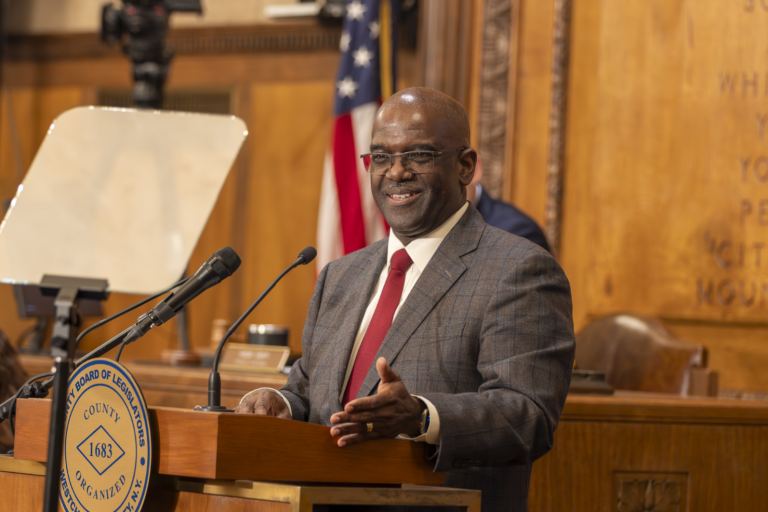
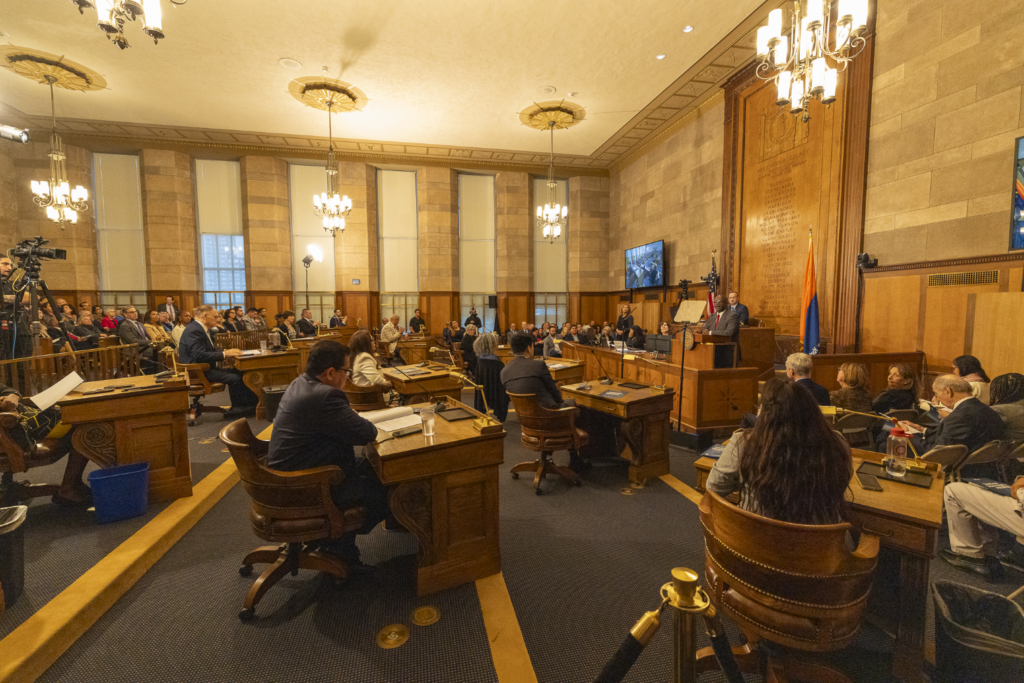
(White Plains, NY) – On Wednesday, May 6, Westchester County Executive Ken Jenkins gave his second State of the County Address in the Board of Legislators Chambers. He outlined a year of quantifiable progress, ongoing investment, and a people-first approach to governance that is focused on housing, affordability, public safety, mental health, and economic growth.
Speaking at the Michaelian Office Building before the Board of Legislators, led by Chairman Vedat Gashi, a packed audience of elected officials, community leaders, and residents, Jenkins struck a tone of progress while acknowledging the challenges that still lie ahead.
Westchester County Department of Correction Sergeant Joetta Crump played the National Anthem while Tom Roach led the Pledge of Allegiance from the podium. Thereafter came a succession of opening prayers that were both varied and significant. The first invocation was given by Rabbi Leora Frankel, president of the Westchester Board of Rabbis, and then by Arun Bhagirath of the Hindu Temple of the Tri-State. The interfaith contemplation was continued by Westchester Muslim Center Imam Shaffieq Chace, and the prayer portion was concluded by Westchester County Director of Faith-Based Initiatives Rev. Kym McNair.
CE Jenkins was brought to the platform by Majority Leader Judah Holstein and Minority Leader Margaret A. Cunzio.
In the opening of this speech, Jenkins said: “The State of our County isn’t something I read on a page—it’s something I see in the people I meet every single day. Because when you meet the people of Westchester, you understand the state of this County.”
The County Executive started off the State of the County address, highlighting the County’s finances. Westchester County once again earned the highest possible “AAA” bond ratings from both S&P Global Ratings and Fitch Ratings, reflecting strong financial management, healthy reserves, and long-term fiscal stability. Jenkins highlighted the county’s continued economic momentum, pointing to job growth, small business support, and ongoing development projects as signs that Westchester is moving in the right direction. He emphasized the importance of building an economy that works for everyone, noting that expanding opportunities for local entrepreneurs and strengthening workforce development remain key priorities for his administration.
Additionally, Jenkins addressed the tax increase head-on. He said, “I made a promise to you that I would always lead with honesty and with reality, not politics. And the truth is this: it would be irresponsible—truly irresponsible—for me to hold the line or cut taxes while the needs of our residents are growing every single day.”
Jenkins pointed out that the average annual impact of the tax increase is $60 a year, adding, “it was the right thing to do, and I appreciate you all supporting this decision.”
Public safety was another central theme of the address, with Jenkins reaffirming the county’s commitment to supporting law enforcement while also investing in community-based strategies that address the root causes of crime. He spoke about the importance of collaboration between county agencies, municipalities, and community organizations to ensure that neighborhoods across Westchester remain safe and supported. The County reported significant declines in crime across all seven-index categories in 2025 compared to 2024: Overall crime down 17%, Violent crime down 25%, and Property crime down 15%.
In 2025, compared to 2024, crime is down across the board. All of the seven major index crime categories saw a decline, from violent crimes like murder, rape, robbery, and aggravated assault, to property crimes including burglary, larceny, and motor vehicle theft. Additionally, Mount Vernon was one of five police departments in New York State to report zero shooting incidents from January through March 2026. Jenkins thanked Governor Kathy Hochul for her support, as well as the Westchester County Department of Public Safety and all the local municipal departments.
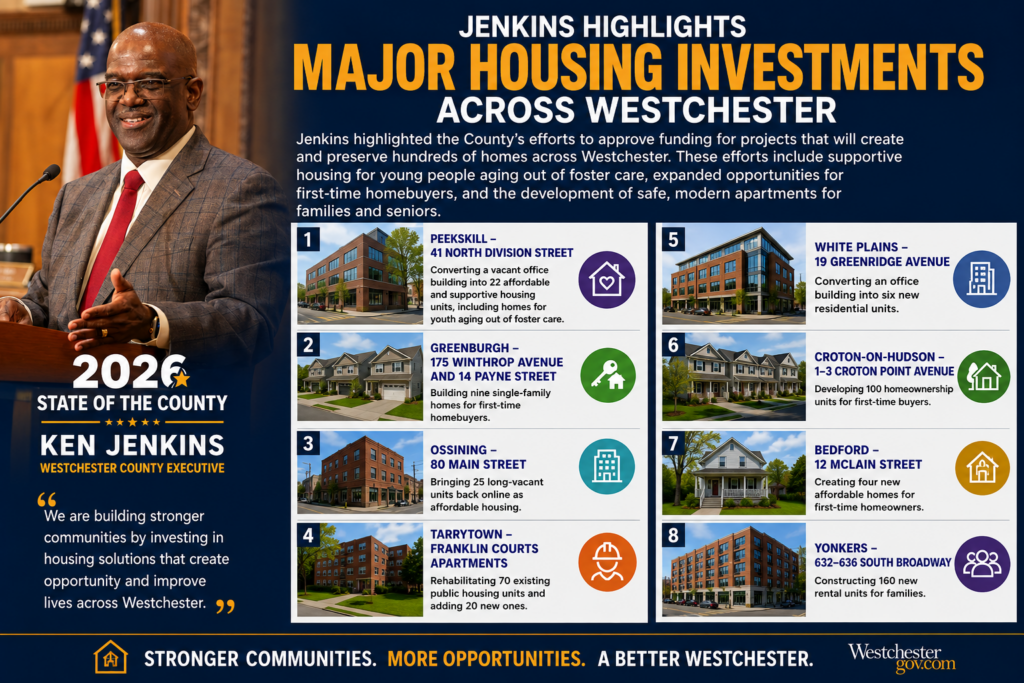
Housing affordability and access also took center stage, as Jenkins addressed one of the county’s most pressing issues. He discussed ongoing efforts to expand affordable housing options, streamline development processes, and work with both public and private partners to meet the growing demand. The County Executive underscored that ensuring residents can live and remain in Westchester is critical to the county’s long-term stability and growth.
Jenkins also pointed to investments in infrastructure, health services, and youth programming as part of a broader strategy to strengthen communities. From improvements in transportation and public facilities to expanded services that support families and young people, the address made clear that the administration is focused on both immediate needs and long-term impact.
He highlighted the County’s continued prioritization of care for residents facing some of life’s most difficult challenges – those who are struggling, vulnerable, or seeking a second chance. During the speech, one such initiative highlighted was the County’s Lives Forward Program, a partnership between the Department of Community Mental Health and the Department of Corrections. The Program provides training for justice-involved individuals living with mental health and substance use challenges, preparing them to become dual-certified peer counselors. Since its launch, multiple cohorts have graduated, with participants moving into meaningful roles supporting others on their path to recovery.
Among those graduates is Alfredo Roldan, who, after overcoming significant personal challenges, successfully completed the program, passed New York State certification exams, and now serves as a peer counselor with Family Services of Westchester. His journey reflects the Program’s impact and the broader potential for recovery and reintegration.
The Westchester County Mental Health Safety Net Clinic was showcased, restoring the County’s direct role in providing outpatient mental health services for the first time in nearly 15 years.
The County also expanded outreach and awareness of the 988 Suicide & Crisis Lifeline, a free, confidential, 24/7 resource, through partnerships with local businesses, community organizations, and the Department of Public Works and Transportation.
Jenkins said, “Government is measured by whether we are willing to help people rebuild their lives. This is what progress looks like.”
Underscored was also the County’s commitment to small businesses. Over the past five years, the County’s MWBE initiatives have facilitated more than $250 million in contracts, expanding opportunity across Westchester. The County is investing in its workforce through initiatives like Connect Westchester and County-wide job fairs, connecting residents directly to employers. Programs like the Element 46 Tech Accelerator are supporting entrepreneurs as they launch and grow in Westchester.
Westchester also secured an approximately $820,000, three-year grant from The Taft Foundation to launch the Partnership for Inclusive Internships Program with The Arc Westchester Foundation and AHRC New York City, expanding opportunities for individuals with disabilities.
The County continues to strengthen its partnership with Rensselaer Polytechnic Institute (RPI), building a direct pipeline from education to employment in high-growth fields like engineering, AI, and quantum computing. A new degree completion program with RPI and SUNY Westchester Community College allows students to earn a bachelor’s degree without ever leaving Westchester.
Jenkins said: “Let me be clear – while we are proud to partner with globally respected institutions like RPI, we are equally proud that we already have outstanding colleges and universities right here in Westchester that are shaping futures every single day. Institutions like Pace University, Mercy University, Iona University, Sarah Lawrence College, Purchase College, and SUNY Westchester Community College are producing talent, driving innovation, and opening doors of opportunity for students across our County. Westchester is not waiting for the future to arrive – we are educating it right now.”
Jenkins closed his address by returning to the central theme of his administration. He said: “If anyone asks what the State of our County is—tell them it is not found in a report, a spreadsheet or a speech… The State of our County is our people… your struggles, your resilience, your hopes—and your voices.
“The State of our County is strong. The State of our County is hopeful. And the State of our County is you.”
He called on residents to move forward together—with courage, with compassion, and with confidence in what can be built side by side. In a moment that brought both pride and a sense of summer nostalgia into the room, Jenkins closed by looking ahead to something generations of Westchester families hold dear—the reopening of the iconic Dragon Coaster at Playland Park this summer.
“I’ll meet you at the Dragon Coaster,” he said—ending the night on a note of optimism, tradition and the shared experiences that continue to define Westchester County.
The State of the County is always more than a speech—it’s a statement of direction. And for Jenkins, this address was about reinforcing a message: progress is happening, but the work is far from done. The real question moving forward isn’t just what was said on that stage—it’s how those priorities translate into results for the people of Westchester. Because at the end of the day, residents aren’t just listening for promises… they’re watching for progress.
There is a kind of exhaustion that sleep alone cannot fix.
The kind where you wake up already tired, before the world has even asked anything of you yet. Where your mind begins moving the moment your eyes open. Where your body feels heavy, your chest feels tight, and silence itself no longer feels restful.
And still… you keep going.
You answer the calls.
Show up for work.
Care for your family.
Handle responsibilities.
Smile when needed.
While quietly carrying emotional weight no one else fully sees.
Many people have become experts at carrying pain silently.
Especially within Black communities, where survival, resilience, caregiving, and emotional endurance have often been necessary for generations. Strength becomes second nature. Pushing through becomes normal. Rest becomes something postponed until “later.”
We call it “being strong.”
We call it “handling business.”
We call it “doing what has to be done.”
But beneath the surface, many people are not simply tired.
They are emotionally, mentally, spiritually, and energetically overloaded.
And eventually, the body keeps the score.
More people are beginning to recognize that wellness is not only physical. It is emotional. Mental. Spiritual. Nervous-system-based. The conversations around burnout, emotional fatigue, overstimulation, and emotional suppression are expanding because people are realizing that surviving is not the same as living in balance.
Sometimes the body begins asking for help long before the mind is ready to listen.
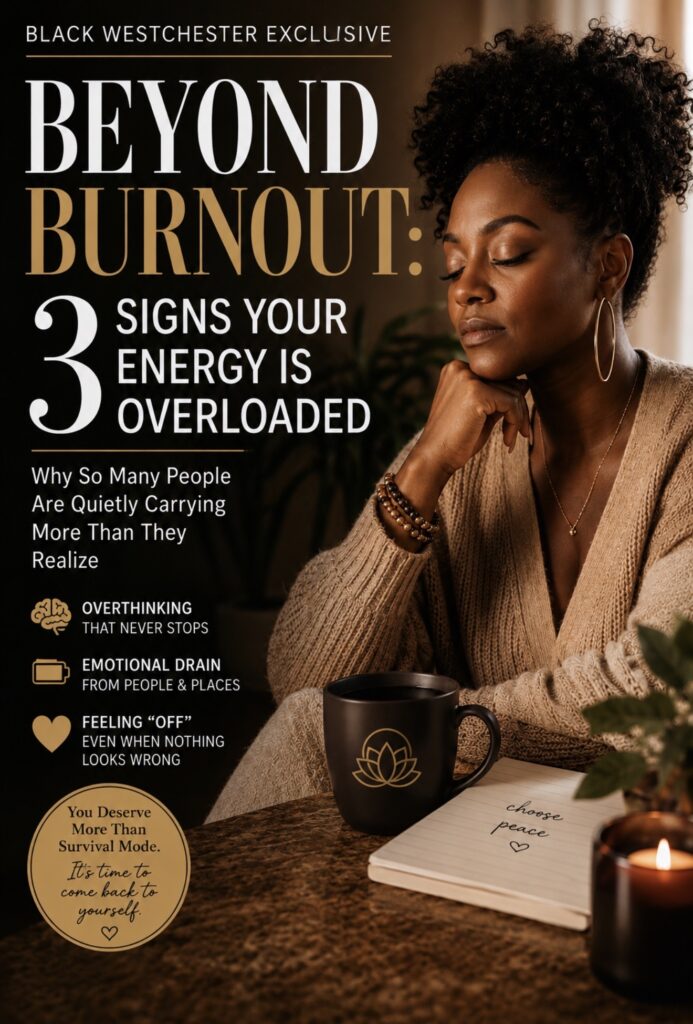
Here are three signs your energy may already be overwhelmed.
1. Your Mind Never Truly Rests
Even when the room becomes quiet… your mind does not.
You replay conversations long after they end.
Overanalyze small interactions.
Prepare for problems before they happen.
Carry emotional tension into moments that were supposed to feel peaceful.
Your body may be sitting still, but internally, your nervous system remains activated.
And after a while, you forget what true rest even feels like.
Many people have lived in survival mode for so long that stillness begins feeling unfamiliar, sometimes even uncomfortable.
So instead of resting, the mind continues scanning.
Thinking.
Preparing.
Holding.
This constant emotional and mental stimulation can eventually show up as:
racing thoughts
emotional irritability
difficulty sleeping
chronic exhaustion
inability to fully relax without guilt
The body was never designed to carry constant emotional pressure without restoration.
And yet so many people force themselves to continue functioning while internally overwhelmed.
2. Certain People and Spaces Leave You Feeling Drained
There is a difference between being physically tired and emotionally depleted.
Some conversations leave you feeling heavy.
Some environments leave you anxious without explanation.
Some people leave you feeling disconnected from yourself after being around them.
And if you are someone who naturally pours into others, listening, helping, supporting, and comforting, you may absorb more emotional weight than you realize.
Many people have mastered taking care of everyone else while quietly abandoning themselves.
You become the strong one.
The safe place.
The listener.
The helper.
Until one day your own spirit begins craving silence just to recover.
Not because you dislike people…
but because your inner world has become emotionally overcrowded.
You may notice yourself:
withdrawing more often
craving isolation
feeling exhausted after social interaction
becoming emotionally overstimulated easily
These are not always signs of weakness.
Sometimes they are signs that your energy has been extended too far without enough restoration in return.
3. You Feel “Off” Even When Nothing Looks Wrong
This is often the hardest sign to explain.
Because externally, life may appear manageable.
You continue functioning.
You continue showing up.
You continue getting through the day.
But internally, something feels unsettled.
You may feel:
emotionally numb
disconnected from joy
mentally foggy
spiritually exhausted
unusually sensitive
heavy in ways you cannot fully explain
And because there is no dramatic event attached to it, many people ignore it.
But emotional overload rarely happens all at once.
It accumulates quietly over time through:
chronic stress
unresolved emotions
emotional suppression
overstimulation
grief
constant responsibility without release
The body often recognizes imbalance before the mind fully understands it.
And eventually, what goes emotionally unprocessed begins showing up physically.
The Truth About Burnout
Burnout is not always loud.
Sometimes it looks like functioning while emotionally drowning.
Sometimes it looks like smiling publicly while privately feeling disconnected from yourself.
Sometimes it looks like being everyone else’s safe place while secretly feeling exhausted inside.
And many people are carrying emotional and energetic weight that was never meant to be held alone.
Returning To Yourself
Healing does not always begin dramatically.
Sometimes it begins quietly.
A deep breath.
A moment of stillness.
A boundary.
A conversation.
A decision to stop abandoning yourself while trying to save everyone else.
Because the truth is:
You deserve more than survival mode.
You deserve moments where your body feels safe enough to soften.
Where your mind becomes quiet enough to rest.
Where your spirit feels supported enough to breathe again.
And perhaps healing begins the moment you finally acknowledge that you have been carrying too much for too long.
Reach Out If This Resonated
If this article spoke to something you have been silently carrying, let it be a reminder that you do not have to navigate it alone.
Hearth & Harmony offers both virtual and in-person energy reset sessions focused on emotional release, nervous system regulation, grounding, restoration, and teaching practical tools clients can continue using in everyday life.
Because healing is not only about temporary relief.
It is about learning how to return to yourself consistently.
If your spirit has been asking for rest, clarity, balance, or reconnection…
And stay connected with Hearth & Harmony on Instagram @Hearthandharmonynyc for grounding tools, wellness practices, emotional support, and everyday techniques to help you navigate life with more balance and peace.