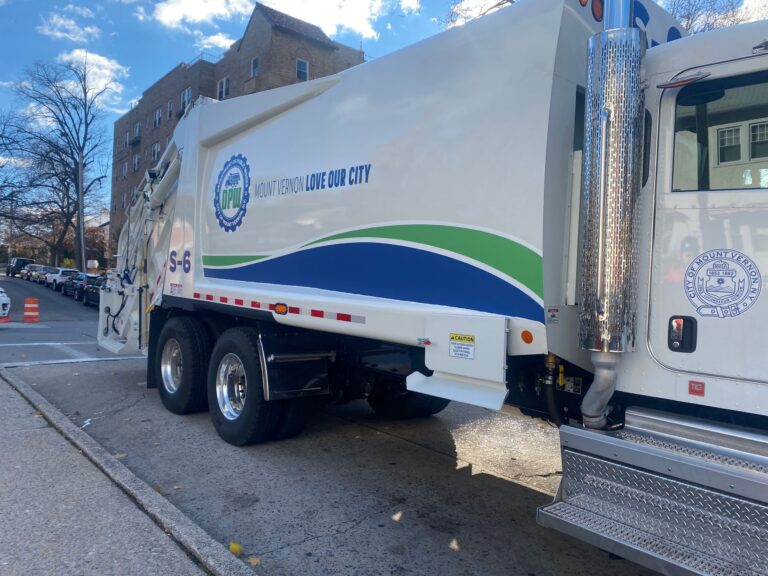
The situation involving Mount Vernon police officer Derek Williams has sparked outrage, confusion, and now an official response from City Hall. But once you strip away the statements, the legal references, and the procedural language, what remains is simple.
A 19-year veteran police officer is suffering from kidney failure, dependent on dialysis, and facing termination that would strip him of the health insurance he needs to survive.
That reality alone should trouble anyone who believes public service still carries meaning.
But this situation goes even further.
In a December 18, 2025, statement to the press, Shawyn Patterson-Howard framed the situation as one of process, not merit, stating that no determination was ever made that Officer Derek Williams’ illness was work-related because he did not file under §207-c. But that claim ignores a critical fact. Officer Williams did what he was supposed to do. Two weeks later, a formal request for a §207-c hearing was submitted to the police department and the City Council, supported by state, federal law, and case law. After reviewing the evidence, City Councilman Andre Wallace recommended granting the hearing. The issue was not whether the injury was legitimate. The issue is that the process for determining that legitimacy has been denied since 2020.
The City’s position reduces a life-threatening condition to a paperwork argument, even as Officer Williams undergoes nine hours of dialysis seven days a week to survive. The Mayor offering a temporary six-month extension of coverage and calling it “grace” does not resolve the failure of the city and the PBA. By denying Officer Williams his due process at a §207-c hearinCityCityCity’she City has only exacerbated that failure, along with the PBA’s””City’sWilliams’ failure to do so. This was never about a lack of options. It was about a choice not to fully apply the protections that exist under state and federal law for COVID-related line-of-duty injuries. Whether the PBA acted or not is secondary. The responsibility to follow the law rests with the City and the Mount Vernon Police Department.
After a formal request was submitted to the City Council, supported by state law, federal law, and relevant case law outlining why Officer Williams was entitled to a §207-c hearing, the issue was placed before the Council for review. After examining the evidence, City Councilman Andre Wallace, following established legal standards, recommended that Officer Williams be granted a §207-c hearing to determine whether his illness qualified as duty-related.
Despite that recommendation, the City has moved to terminate Officer Williams without providing him due process in the form of a §207-c hearing. This decision was made even after the legal basis for such a hearing was clearly presented and acknowledged.
That recommendation was not followed.
The authority to grant that hearing rested solely with Shawyn Patterson-Howard.
She chose not to act.
Even more concerning, this decision was made without any formal medical examination conducted on behalf of the City to determine whether Officer Williams’ condition was duty-related. The City’s position has not been that his illness is illegitimate. Their argument is procedural. They claim deadlines were not met.
What remains unanswered is the City’s responsibility to follow both state and federal law when it comes to COVID-related line-of-duty injuries. At no point has the City clearly explained how those obligations were met in Officer Williams’ case. There has also been no public explanation for why the PBA did not act to ensure that Officer Williams’ protections were properly secured.
But even if the PBA failed to act, that does not absolve the City or the Mount Vernon Police Department. The responsibility to comply with state and federal law does not shift to a union. It remains with the employer. The City and MVPD had an obligation to recognize, apply, and enforce the protections tied to COVID-related injuries, regardless of whether those protections were formally requested or perfectly processed.
Failure at multiple levels does not cancel responsibility. It exposes it.
That distinction matters.
Because what it means in practice is this: a man suffering from kidney failure, with a condition consistent with known long-term effects of COVID exposure during active duty, is being denied protection not because his injury lacks merit, but because of timing and paperwork.
That is not a medical determination. That is an administrative one.
Administrative decisions should not override medical reality.
Donnie Moore, a retired Mount Vernon police officer of 21 years, also spoke in support of Officer Derek Williams receiving a §207-c hearing. Following the denial, Moore stated plainly, “that he was disappointed and that Mount Vernon does not take care of its own”. His statement reflects a deeper concern shared by many within the law enforcement community — that those who serve the City are not being protected when they need it most.
A §207-c hearing is not a formality. It is the mechanism designed to examine exactly these questions. Whether an officer was injured or made ill in the line of duty. Whether that condition warrants continued pay and medical coverage.
By denying that process, the City has effectively made a determination without ever fully examining the evidence.
After reviewing the Mayor’s response and the broader facts, one conclusion becomes unavoidable. This crisis is not the result of a lack of authority. It is the result of how authority is being used.
Nearly one in four Black Americans has Sleep Apnea. 95% have never been diagnosed.
Patient stories in this piece are composites drawn from years of clinical experience, with identifying details changed.
Ron came to see me because his wife insisted.
He was 47, an operations manager at a logistics company in the Bronx, coaching his son’s basketball team on weekends in the same worn-out Nike Monarchs he had been wearing for three years. By every measure Ron was functioning, showing up, doing what the day required. His wife had started sleeping in the guest room six months earlier because the snoring had become unbearable. She had also started watching him sleep, and one night she recorded it on her phone and played it back for him the next morning. Long pauses, complete silence, then a desperate gasp, and silence again.
Ron watched the video and said he thought he was just tired.
He had been tired for so long that he had stopped noticing it. He figured it came with the territory, the job, the commute, the kids, the weight of keeping everything together. He was a Black man in his late 40s. Tired was just part of the deal.
He was wrong about that. This was much more than just being tired.
Ron had severe obstructive sleep apnea. His airway was collapsing over 60 times an hour. Every night, his brain was being robbed of oxygen while he slept. His blood pressure, climbing for two years despite two medications, was being driven in part by a condition nobody had ever looked for. Stress alone didn’t explain it. He was suffocating in his sleep, and in fifteen years of seeing doctors the question had never come up.
Ron is not an exception. He is closer to a disturbing pattern.
A Story That Disappeared
A 2022 analysis of two decades of CDC mortality data found that Black men were the only demographic group in America whose sleep apnea mortality had continuously increased, while rates for white Americans and Black women had flattened. The study got a Medscape write-up and a university press release. Then it disappeared, though the condition it documented has not.
“He was suffocating in his sleep, and in fifteen years of seeing doctors the question had never come up.”
A Crisis That Doesn’t Know It Exists
Sleep apnea affects a large share of Black Americans in some measurable form. Research from the Jackson Heart Sleep Study, one of the largest cardiovascular studies ever conducted in African Americans, found that 24% of participants had moderate to severe sleep apnea, with the figure rising to 37% under more sensitive scoring criteria. Only 5% of those with the condition had ever received a physician diagnosis.
Which means that in any room full of Black adults, a meaningful share are living with a condition that is interrupting their breathing dozens of times a night, driving up their blood pressure, fragmenting their sleep, clouding their thinking, straining their hearts, and quietly shortening their lives. Almost none of them know it.
The clinical pathways that should catch it don’t always reach the people carrying the most risk.
Something I’ve Had to Sit With
Early in my career, before sleep medicine became central to my clinical thinking, I was part of this problem. I had patients sitting across from me describing exhaustion that should have prompted a sleep conversation, and I reached for the more familiar explanations first. Stress, depression, the cumulative weight of navigating a world that asks more of Black people and gives back less. Those things were real, and they were also, sometimes, a convenient explanation that let me stop asking.
Looking back, I can see the pattern in patients I was seeing a decade ago. The exhaustion in the chart, the blood pressure that wouldn’t come down, the partner who came to the appointment carrying a worry I didn’t know how to meet. The question I should have been asking wasn’t on my intake form. I suspect it isn’t on a lot of intake forms, in a lot of clinical offices, right now.
What Is Actually Happening Inside
Understanding why sleep apnea kills helps explain why it kills disproportionately in the Black community, where cardiovascular disease is already the leading cause of death.
Every time the airway collapses during sleep, oxygen levels drop, and the brain reads this as an emergency, repeatedly activating the body’s stress response. Heart rate spikes, blood pressure surges, and the cardiovascular system is pulled into a state it was never designed to sustain. Breathing resumes, and the body briefly settles, until the airway collapses again. Dozens of times a night, sometimes more than a hundred, the body is running a silent emergency drill it was never designed to run repeatedly. Over months and years, that cycle damages blood vessels, drives oxidative stress, inflames arterial walls, and accelerates the hardening of the arteries that precedes heart attack and stroke.
There is also a mechanical dimension that rarely gets discussed in plain language. When someone strains to breathe against a collapsed airway, the chest creates intense negative pressure, physically pulling on the walls of the heart with each attempt. Night after night, that strain accumulates. This is structural cardiac stress, happening while the person sleeps.
This is why treating hypertension in someone with untreated sleep apnea often produces disappointing results. The blood pressure medication is working against a physiological storm that restarts every night.
A Note on Body Size
Obesity is a recognized risk factor for sleep apnea, because excess weight around the neck narrows the airway. The relationship runs in both directions. Poor sleep disrupts the hormones that regulate hunger and fullness, making weight management harder. The two conditions can feed each other in a cycle that is difficult to break without addressing both.
More importantly, body size doesn’t tell the whole story.
Sleep apnea is increasingly documented in athletes and physically fit individuals. Jaw structure, neck anatomy, airway dimensions, and nasal anatomy all contribute independently of body weight. A lean, physically active person can have severe sleep apnea.
The assumption that someone doesn’t “look like” a sleep apnea patient has cost lives and is one of the more persistent and dangerous myths in this space. Smaller-framed Black men and women are not exempt. Neither are Black children, Black athletes, or anyone who has been told they are too young or too fit to have this condition.
Why Black Men Are Dying From This
Black men tend to be diagnosed later, with more severe disease by the time they reach a sleep lab. Clinical data show a higher apnea-hypopnea index, greater symptom burden, and more coexisting medical conditions at the point of diagnosis compared with white men. They are more likely to stop breathing completely during sleep, more likely to fall asleep at the wheel, and more likely to carry years of cardiovascular damage that traces directly back to what happens in the bedroom every night.
When a Black man dies of a heart attack at 53, the chart doesn’t usually mention sleep apnea. It mentions hypertension, obesity, and stress. The airway collapse that was happening dozens of times a night for a decade, flooding his system with stress hormones, straining his heart, driving his pressure up while he slept, that part doesn’t make the record. It was never diagnosed. Nobody looked.
Research tracking two decades of mortality data found that Black men were the only demographic group to show a continuous increase in sleep apnea-related deaths over the most recent ten-year period studied. That trajectory has not reversed.
The Women Nobody Is Asking
Denise is 52, a school administrator in Pelham, mother of three grown children, grandmother of one. She described her fatigue to me the way many Black women do, carefully, almost apologetically, as if exhaustion were a personal failing instead of a symptom. She had mentioned it to her primary care doctor twice in three years, and both times the conversation moved toward stress management and sleep hygiene tips. Her labs were fine. She was told to try going to bed earlier.
The sleep-related questions never came up. No one asked about snoring, checked in with her husband about what he might have noticed at night, or considered whether a sleep study belonged in the workup.
When we finally did one, Denise had moderate sleep apnea. She had almost certainly had it for years. The fatigue, the brain fog she had attributed to getting older, the morning headaches she thought were from stress, all of it had a name, and all of it had a treatment.
Sleep apnea doesn’t look the same in women.
The dramatic gasping that sends a man to a sleep lab isn’t always how it presents. In women it can surface as fatigue that won’t lift, mood that won’t stabilize, concentration that keeps slipping. In a Black woman’s clinical visit, those complaints can easily get absorbed into a conversation about stress or depression before anyone considers what is happening during sleep.
Black women have some of the worst sleep quality of any group measured, and that holds across income levels, education levels, and work schedules. They are also among the groups least likely to be referred for a sleep evaluation, least likely to complete one, and least likely to receive consistent follow-up afterward. Those gaps compound across a lifetime.
A System Built for Someone Else
Sleep labs are concentrated in wealthier, predominantly white ZIP codes, and transportation barriers alone eliminate a significant share of Black patients who might otherwise pursue evaluation. Home sleep testing is more accessible, and research shows over 80% of urban Black patients prefer it, though insurance coverage through Medicaid is inconsistent and varies by state.
When a primary care physician does make the referral, the loop often doesn’t close. In one community-based study of Black patients referred for possible sleep apnea, only 38% made it to the sleep consultation, and of those who did, the overwhelming majority received a diagnosis. The signal was there in the clinical record, and the follow-through stalled.
When CPAP is prescribed, the follow-up support needed to troubleshoot fit, comfort, and adherence is less available in lower-resourced clinical settings. When CPAP fails, surgical options exist, and Black patients are less likely to be offered them at comparable rates. The pathway narrows at every stage where another choice could have been made.
None of this is new. Black Americans have a documented history of receiving less aggressive diagnostic workups and less comprehensive treatment across nearly every disease category studied. Sleep medicine sits squarely in that pattern. It has just not been talked about enough outside of academic journals.
It Starts in Childhood
Black children have higher rates of sleep-disordered breathing than children of any other racial or ethnic group.
Some of it is anatomical, and a lot of it is environmental. Growing up in neighborhoods with elevated noise, poor air quality, and chronic stress affects airway development and sleep architecture in ways that accumulate over time.
A child who can’t sit still in class, who is falling behind, who is being labeled a behavior problem, may simply not have slept well in years. Untreated sleep apnea can mimic ADHD in the classroom, with inattention, restlessness, and poor impulse control all presenting in ways that are hard to tell apart from a teacher’s desk. One presentation gets a medication, and the other needs a sleep study. When the wrong answer gets established early, it follows a child for a long time.
One Thing to Do Tonight
If you are waking up tired despite a full night of sleep, if someone has told you that you snore loudly or stop breathing, if your blood pressure is not responding to medication the way it should, if you are dragging through the day in a way that feels bigger than stress, ask your doctor specifically about a sleep evaluation at your next visit.
If your doctor doesn’t bring it up, you bring it up. You are not being difficult. You are asking for a diagnostic conversation that should have happened years ago.
And tonight, before you go to sleep, ask the person next to you one question: do I stop breathing during the night? That question has saved lives. It may save yours.
Ron got his diagnosis. He started CPAP therapy, and within three months his blood pressure had dropped enough that his cardiologist reduced one of his medications. His wife moved back into the bedroom. He told me recently that he had forgotten what it felt like to wake up rested.
Denise called her daughter after her first full night of treated sleep and said she had not felt that clear-headed in a decade. She asked her daughter to make an appointment with her own doctor.
Her daughter is 31.
Derek H. Suite, M.D.
About the author:Derek H. Suite, M.D., M.S., is the Founder and CEO of Full Circle Health and Full Circle Wellness. He is the host of the daily SuiteSpot podcast and a frequent guest health contributor for Black Westchester Magazine. Dr. Suite is a board-certified psychiatrist, specializing in high performance, mental resilience, and sleep medicine. He is an alumnus of the Columbia School of Journalism and a former clinical professor of psychopharmacology at Columbia University.
There’s a particular kind of silence Black and minority women in New York know too well.
Not the city silence, we don’t really have that.
Not with sirens, subways, and somebody always yelling down the block.
I’m talking about the silence in exam rooms.
In delivery rooms.
In those moments where something feels off, but you’re calculating how to say it so somebody actually listens.
That pause?
That second-guessing?
That quiet fear of being dismissed?
That’s not in your head.
That’s history.
And that’s exactly why Global Pulse: Voices of Progress, Episode 1, “Reclaiming Joy”, didn’t just feel like a podcast.
It felt like somebody finally turned the volume up on what Black and minority women have been saying all along.
THIS WASN’T JUST A WATCH PARTY, THIS WAS WITNESSING
April 13th, 2026. 6:30 PM. Zoom.
But this wasn’t one of those “log in, cameras off, multitask” situations.
You could feel it, people were present.
Because what was happening inside that space wasn’t performance.
It was recognition.
Stories weren’t rushed.
Truth wasn’t softened.
And for once, Black and minority women weren’t being translated for comfort, they were being heard as they are.
That matters.
Especially in a state like New York, where access is high, but equity still isn’t guaranteed.
“RECLAIMING JOY” HIT DIFFERENT HERE
Let’s talk about that theme, Reclaiming Joy.
Because in New York, joy for Black and minority women, especially in healthcare spaces, often comes with conditions.
You walk into an appointment already prepared:
Prepared to advocate.
Prepared to repeat yourself.
Prepared to stay calm enough to be taken seriously.
That’s not care.
That’s strategy for survival.
So when this episode centered joy, it didn’t feel soft.
It felt like a correction.
A reminder that joy should not be something you earn after being ignored.
It should be part of the experience from the beginning. And the conversation didn’t dance around it.
Black women and women of color, have been central to advancing gynecology.
Our bodies have been studied.
Our experiences have informed research.
Our pain has shaped the field.
And still, we are too often the last to benefit from that progress.
Still more likely to be dismissed.
Still more likely to face preventable complications.
That contradiction lives right here in New York.
From the Bronx to Westchester, the disparities are real and they are not accidental.
DR. ASHANDA SAINT JEAN BROUGHT THE BRIDGE
Featuring Dr. Ashanda Saint Jean, M.D., F.A.C.O.G., the episode grounded the conversation in something we don’t get enough of, alignment.
Not just medical expertise.
Understanding.
You could hear it in how she spoke, clear, informed, but connected to the reality Black and minority women face every day.
Because representation alone isn’t enough.
It’s about how you show up when you’re in the room.
And this felt like a bridge between:
The medical system
And the lived experiences of the women navigating it
That bridge? That’s where change starts.
THIS ISN’T JUST GLOBAL, IT’S LOCAL
Sister to Sister International (STSI), led by Dr. Cheryl Brannan, didn’t just create a podcast.
They created a pathway.
From the Zoom room to real-life spaces across New York, like gatherings in Westchester and wellness-centered events in White Plains, this work is rooted in community.
Because transformation doesn’t just happen online.It happens when people show up in real life.
When conversations turn into relationships.
When awareness turns into action.We are past the point of just being informed.
New York has the resources.
The hospitals.
The institutions.
What’s needed now is accountability and participation.
If this conversation moved you, even a little, don’t stop at listening.
Not in a war zone. Not in a failed state. In America. Inside what was supposed to be a place of safety.
The man at the center of this case, Shamar Elkins, did not just commit a horrific act. He exposed a pattern we continue to ignore.
We talk about domestic violence.
We talk about mental health.
But we almost never talk about what happens when both exist in the same person at the same time.
That is where the real danger lives.
Domestic violence is not just conflict. It is control, escalation, and emotional volatility. Mental instability is not just stress. It is deterioration, imbalance, and in some cases, a loss of control.
When those two forces collide inside one individual, the outcome is not random. It is predictable.
Yet our systems are not designed to treat that combination as a critical risk.
Domestic situations are handled as private disputes or legal matters. Mental health is treated as a personal or medical issue. There is no unified response that flags the combination as urgent and dangerous.
So nothing happens.
Until everything happens.
This is not just a system failure. It is a cultural failure.
We have normalized dysfunction inside the home. We are taught to mind our business, to stay out of other people’s situations, to assume that time will fix what is clearly getting worse.
But instability does not correct itself. It compounds.
And when it reaches a breaking point, the people with the least control pay the highest price.
Children.
There is another layer to this conversation that many will want to focus on. The possibility that these were Black children.
If that is confirmed, the response cannot be reduced to symbolism.
Because too often, when tragedy strikes in Black communities, the reaction is emotional but not structural. Vigils replace strategy. Hashtags replace accountability. And once the attention fades, the conditions that produced the outcome remain untouched.
The issue is not whether these children were Black. The issue is whether we are willing to address the environments where instability is allowed to grow without interruption.
These patterns are not unique to one community, but the failure to intervene early is consistent.
We wait for visible violence. We wait for police involvement. We wait for something that forces action.
By the time that happens, the situation is already out of control.
If someone is showing signs of domestic instability and mental deterioration at the same time, that is not a private matter. That is a high-risk situation that requires immediate intervention.
But we do not treat it that way.
We rely on temporary fixes. Separation orders. Time apart. The assumption that space will calm a situation that is already escalating.
But time does not calm instability. It often intensifies it.
This is why cases like this continue to happen. Not because we lack awareness, but because we refuse to connect the dots.
We refuse to treat dangerous combinations as urgent threats.
We refuse to build systems that intervene early.
And we refuse to hold environments accountable before they become crime scenes.
If a system only activates after eight children are dead, then it is not functioning. It is documenting failure.
Eight children are gone.
That should not only produce grief. It should force a change in how we define risk, how we respond to warning signs, and how we prioritize the safety of those who cannot protect themselves.
Because if we continue to treat instability as private and intervention as optional, then what happened in Shreveport is not an exception.
When headlines broke that 40 missing children were found in Westchester County, the public reaction followed a predictable pattern. Shock. Relief. Then speculation.
But if you strip away the emotion and look at the facts, the real story is not about a sudden crisis. It is about a system that has been producing the same outcomes for years.
More than 40 children were located in a coordinated operation. That sounds alarming until you understand what those cases actually were. The majority were not kidnappings. They were classified as runaways. That distinction matters because it tells you where to look for the cause.
These children were not taken. They left.
And when you follow that logic, the conversation changes completely.
A significant portion of missing youth cases across New York involves children already known to the system. Many come from foster care placements, group homes, or unstable family environments. These are not random victims of chance. These are predictable outcomes of instability.
So the question is not how did they go missing. The question is why do children keep leaving places that are supposed to be safe?
If a child runs from home, that is a family issue. If a child runs from foster care or a group home, that is a system issue. If dozens can be located in just a few days, that tells you something even more important. These were not invisible children. They were already known, already tracked, already part of an ongoing problem.
That is not a mystery. That is a management failure.
Now layer in the risk factor that rarely gets explained properly. According to the National Center for Missing & Exploited Children, about one in six endangered runaways show signs consistent with trafficking risk. Not all are trafficked. But the longer they remain outside of stable supervision, the more vulnerable they become.
That means every runaway case is a race against time.
So when you hear that children were found in hotels, with acquaintances, or moving between locations, that is not random. That is the predictable environment where vulnerability turns into exploitation.
The uncomfortable truth is this. We are not dealing with a missing children crisis. We are dealing with a stability crisis.
And no amount of emotional language will fix a structural problem.
If you want different outcomes, you have to change the inputs.
First, accountability in the child welfare system has to be real, not rhetorical. If children are repeatedly leaving the same placements, those placements should be reviewed, restructured, or shut down. A system that cannot retain the children it is responsible for is not functioning.
Second, we need to stop measuring success by how many children are found and start measuring success by how many do not run in the first place. Recovery operations make for good press. Prevention makes for real progress.
Third, there has to be targeted intervention for high risk groups. Youth in foster care, group homes, and unstable housing situations are statistically more likely to run and more likely to be exploited. That is where resources should be concentrated, not spread thin for political optics.
Fourth, family stabilization has to become part of the conversation. Many of these cases start with conflict at home. Ignoring that reality in favor of broader talking points does not solve the problem. It avoids it.
And finally, we need honesty in how this issue is communicated. Telling the public that dozens of children were “rescued” without explaining that most were runaways creates confusion, not clarity. The public deserves the truth, even when the truth is less dramatic.
Because the real danger is not what makes headlines. It is what becomes normalized.
Westchester did not just find missing children. It exposed a system where too many children are already on the edge before they disappear.
Until that changes, we are not solving the problem.
The Address Confidentiality Program (ACP) was designed to be a lifeline, an anchor for survivors whose safety depends on keeping their location private. It exists to protect people escaping domestic violence, sexual assault, and stalking, where a single leaked address can mean renewed danger.
That’s why the breach I experienced at the hands of the Mount Vernon Police Department was more than a mistake. It was a failure of the system itself.
I was explicit. I told the reporting officer that while I had relocated back to Mount Vernon, my abuser did not know where. I informed them that I was part of the Address Confidentiality Program and that my safety depended entirely on my new location remaining hidden. Yet, days later, there it was—my protected address, typed clearly onto the report, and what makes it even more gut-wrenching, this was sent to the Rensselaer Police Department as there was an ongoing case against my abuser.
When I filed a complaint against the department, I wasn’t met with a plan to fix the leak. I was told that they simply ‘can’t keep up’ with every law in New York. A mere apology was offered for a mistake that put my life back in the crosshairs. But an apology doesn’t erase the memory of those nights in my car, and it doesn’t stop me from reliving that nightmare every time I have to interact with a system I no longer trust.
When I requested a directed patrol unit to watch the home they had just exposed, I was met with a lack of urgency that felt like a second betrayal. I was asked: ‘Other than being in fear, what reason exactly are you requesting the directed patrol?’
As a long-time resident, I was coming home to Mount Vernon to find safety. Instead, I was gaslighted. My fear—a direct result of their negligence—was treated as an insufficient reason for them to do their jobs.
You may ask why I am still fighting this eighteen months later. It is because as long as the Mount Vernon Police Department ‘can’t keep up’ with the law, other survivors are at risk of experiencing this incident too.
The mandate of the law is clear, but the culture of the Mount Vernon Police Department is currently in crisis. From leaking protected addresses to the recent arrest of an officer for stalking, the department has shown a fundamental disregard for the lives of survivors.
As a Legislative Coordinator for the New York State Assembly, I decided to do more than just file a complaint. I used my professional expertise to analyze exactly where protections were failing and identified the specific gaps in the law that allowed my address to be leaked. I drafted the bill language to amend the current statutes, ensuring that what happened to me could not be dismissed as a simple oversight.
The resulting legislation, A.8263-B/S8629-A, sponsored by Assemblymember Zaccaro and Senator Salazar, would require the Secretary of State to develop and mandate training for all police department personnel and State Police officers on the protocols of the Address Confidentiality Program.
Safety should not be a matter of luck or an officer’s memory. It should be the law. It is time for New York to pass A.8263-B/S8629-A, and ensure the Address Confidentiality Program is the shield it was always meant to be.
About the Author:Ayanna Armstrong is a long-time resident of Mount Vernon and a Legislative Coordinator for the New York State Assembly and part of the Criminal Justice Committee of the NAACP Mount Vernon, NY Branch (#2161). As a Certified Human Rights Consultant, she provides pro-bono guidance to individuals navigating the criminal justice system to ensure they receive the protections they are legally owed. The views expressed in this piece are her own and do not represent the official position of the New York State Assembly. Ms. Armstrong is also the author of “A New Hope For Justice.”
A LOCAL LAW AMENDING CHAPTER 31 TO ADD SECTION 31-30a, TITLED “DYNAMIC PRICING PROHIBITED” OF ARTICLE III OF CHAPTER 31 OF THE CHARTER OF THE CITY OF YONKERS.
Notice is hereby given that the City Council of the City of Yonkers has adopted the abovementioned legislation that amends the charter to prohibit Retail Entities in the City of Yonkers from setting prices using dynamic pricing, which is the practice of causing a price for a good or a product to fluctuate based upon demand, the weather, consumer data or other similar factors including an artificial intelligence-enabled pricing adjustment. It provides that a violation of this provision is a violation of the Yonkers Consumer Protection Code. Dynamic pricing does not include:
(1) A discount;
(2) A special price set for a limited period of time, such as a lunch menu, early bird or happy hour price; or
(3) A market price for a good or product that traditionally has been priced based upon market conditions, such as seafood, except that a market price may only be set once in a business day.
Prohibition on dynamic pricing. A Retail Entity, as defined in this Code, may not use Dynamic pricing, as defined herein, in setting the price for a good or product sold by the Retail Entity. The price for a good or product must remain fixed for at least one business day and must be posted or displayed in a manner visible to the public, such as on a menu, menu board, price tag, or label.
The penalties for violation of this ordinance are as follows:
A violation of this section is a violation of the Yonkers Consumer Protection Code and a Class II Offense.
The complete text of the ordinance is on file and may be examined at the Office of the City Clerk, City Hall, 40 S. Broadway, Yonkers, NY 10701.
A LOCAL LAW AMENDING ARTICLE IX OF THE CHARTER OF THE CITY OF YONKERS IN RELATION TO PRIVATE CONNECTION WITH WATER SUPPLY
Notice is hereby given that the City Council of the City of Yonkers has adopted the above-referenced legislation amending the charter to ensure that property owners have installed the new meters.
The penalties for violation of this ordinance are as follows:
Any person, firm, or corporation who/which shall violate any of the provisions hereof, or who/which shall omit or refuse to do any act by the terms of this chapter required to be performed by him, her, or it, or who/which shall obstruct, hinder, or prevent any officer or employee of the Yonkers Bureau of Water Works of the Department of Public Works, duly authorized, from the discharge of any duty required of him under any of the provisions of this chapter, shall be deemed to be a disorderly person and shall be prosecuted as such, and, upon conviction thereof, shall be subject to a penalty of not more than $1000 or by imprisonment for a term not to exceed 15 days, or both. Each day such violation shall continue shall be deemed and shall constitute a separate offense. In addition, the City may also, at any time, maintain an action or proceeding in the name of the City, in a court of competent jurisdiction, to compel compliance with or to restrain by injunction the violation of this provision, rule, regulation, part, or portion thereof.
The complete text of the ordinance is on file and may be examined at the Office of the City Clerk, City Hall, 40 S. Broadway, Yonkers, NY 10701.
“…the pairing of Usher and Brown signals a major moment for contemporary R&B.” – Black Enterprise
“…anticipation building for what could be one of the year’s biggest live music events.” – TheGrio
“R&B enthusiasts will love this“ – USA Today
Two of R&B’s biggest global icons are set to light up the stage this summer as Chris Brown and Usher bring their highly anticipated The R&B Tour to MetLife Stadium.
The powerhouse pairing marks a rare moment in modern R&B, bringing together two generations of hitmakers whose catalogs have defined the sound of the last two decades. With chart-topping singles, electrifying choreography, and a reputation for high-energy performances, the show is expected to draw thousands of fans from across the Tri-State area.
GRAMMY Award-winning iconsChris Brown and USHER today officially announce dates for The R&B Tour, a 2026 co-headlining stadium run across North America. Uniting two of the genre’s defining hitmakers, the tour will deliver a must-see run of performances across the U.S. and Canada. The artists surprised fans last week with a joint teaser commercial on Instagram, sparking widespread excitement and anticipation for the upcoming trek.
Produced by Live Nation, the 33-date outing kicks off on Friday, June 26th, at Empower Field at Mile High in Denver, making stops in major cities including Detroit, Chicago, Toronto, Las Vegas, Los Angeles, Houston, and Miami before wrapping up on Friday, December 11th, at Raymond James Stadium in Tampa.
The tour will be in the Tri-State area for two dates at the MetLife Stadium, Friday, August 7th, and Saturday, August 8th. The tour will also partner with Global Citizen to provide access to quality education for children around the world by donating $1 for every ticket sold to the FIFA Global Citizen Education Fund.
For Usher—fresh off a career resurgence that included a critically acclaimed Las Vegas residency and a Super Bowl halftime performance—the tour represents another victory lap for a legendary career. Meanwhile, Chris Brown continues to prove his staying power, consistently delivering hits and maintaining one of the most loyal fan bases in music.
This enormous live event comes after both performers achieved record-breaking feats. The North American leg of USHER: Past, Present, Future sold over 1.1 million tickets at the end of 2024, with 62 sold-out performances spread over several nights in each location. This was followed by a similarly remarkable European leg.
Chris Brown’s sold-out Brezzy Bowl XX World Tour concluded in October of last year, marking the conclusion of a huge international tour commemorating his career’s 20th anniversary. With approximately $300 million in revenue and 2 million people attending stadiums across North America, Europe, and the UK, the tour was Brown’s highest-grossing tour to date and now the highest-grossing tour ever by a solo Black American male artist.
Tickets will go on sale on Tuesday, April 21st, for the Citi presale (details below), and on Thursday, April 23rd, for The R&B Tour presale. Before the general on-sale, which starts on Monday, April 27th, at 12 p.m. local time on RaymondAndBrownTour.com, additional presales will take place throughout the week.
THE CHRIS BROWN & USHER R&B TOUR 2026 DATES:
Fri, Jun 26 | Denver, CO | Empower Field at Mile High
Tue, Jun 30 | Minneapolis, MN | U.S. Bank Stadium
Thu, Jul 2 | Detroit, MI | Ford Field
Fri, Jul 3 | Detroit, MI | Ford Field
Tue, Jul 7 | Cleveland, OH | Huntington Bank Field
Fri, Jul 10 | Washington, DC | Northwest Stadium
Sat, Jul 11 | Washington, DC | Northwest Stadium
Fri, Jul 17 | Charlotte, NC | Bank of America Stadium
Tue, Jul 21 | St. Louis, MO | The Dome at America’s Center
Sat, Jul 25 | Nashville, TN | Nissan Stadium
Tue, Jul 28 | Birmingham, AL | Protective Stadium
Sat, Aug 1 | Syracuse, NY | JMA Wireless Dome
Fri, Aug 7 | East Rutherford, NJ | MetLife Stadium
Sat, Aug 8 | East Rutherford, NJ | MetLife Stadium
Tue, Aug 11 | Toronto, ON | Rogers Stadium
Wed, Aug 12 | Toronto, ON | Rogers Stadium
Mon, Aug 17 | Boston, MA | Gillette Stadium
Fri, Aug 21 | Chicago, IL | Soldier Field
Fri, Aug 28 | San Francisco, CA | Levi’s Stadium
Sat, Sep 5 | Las Vegas, NV | Allegiant Stadium
Sun, Sep 6 | Las Vegas, NV | Allegiant Stadium
Thu, Sep 10 | Dallas, TX | AT&T Stadium
Fri, Sep 25 | Los Angeles, CA | SoFi Stadium
Sat, Sep 26 | Los Angeles, CA | SoFi Stadium
Tue, Sep 29 | Glendale, AZ | State Farm Stadium
Sat, Oct 3 | El Paso, TX | Sun Bowl Stadium
Mon, Oct 5 | San Antonio, TX | Alamodome
Fri, Oct 9 | Houston, TX | NRG Stadium
Sat, Nov 7 | Atlanta, GA | Mercedes-Benz Stadium
Sun, Nov 8 | Atlanta, GA | Mercedes-Benz Stadium
Fri, Nov 20 | New Orleans, LA | Caesars Superdome
Thu, Dec 3 | Miami, FL | Hard Rock Stadium
Fri, Dec 11 | Tampa, FL | Raymond James Stadium
As Chris Brown and Usher prepare to take the stage, this tour feels bigger than just another stop on the concert circuit—it’s a defining moment for R&B. Two artists who helped shape the genre in different eras are now sharing one stage, bridging generations of fans and reminding the world that R&B is not only alive, but still evolving. When the lights hit at MetLife Stadium, it won’t just be a show—it will be a statement that the culture, the sound, and the legacy of R&B continue to move forward, louder than ever.
New York lawmakers continue to behave as though wealth is an immovable object. Every fiscal shortfall seems to produce the same political instinct: find another way to tax those with the greatest means and assume they will remain exactly where they are, paying whatever bill Albany presents. The latest proposal to increase taxes on luxury second homes in New York City is merely the newest chapter in a long-running policy mistake: confusing taxable capacity with economic captivity.
The logic behind these measures is politically attractive but economically shallow. If a person owns a $5 million second home, lawmakers assume that person can absorb another tax without consequence. But taxation does not occur in a vacuum. Every added levy changes incentives. Every surcharge alters calculations. Wealthy individuals, unlike fixed infrastructure, can move. Their investments can move faster still.
This is where New York policymakers repeatedly fail to understand causation. A tax on luxury second homes may appear targeted and narrow, but markets do not interpret taxes in isolation. Investors read signals. Affluent buyers read patterns. When state leaders repeatedly create new taxes aimed at high earners and high-value property owners, the broader message is unmistakable: New York sees wealth not as something to attract, but as something to extract. That message has consequences.
High-income taxpayers already carry a disproportionate share of New York’s tax burden. A relatively small percentage of residents generate an outsized percentage of state income tax revenue. This creates a fragile dependency. If even a modest number of top earners leave, the fiscal damage can outweigh the revenue gained from new taxes. This is not ideology. It is arithmetic. But there is a deeper flaw in the political philosophy driving these policies. Too often, the modern political talking point is built around taxing the wealthy to provide more free benefits to those in need, as though redistribution alone is an economic strategy. It is not. A society cannot tax its way into widespread prosperity. Giving people temporary relief without creating pathways to ownership, investment, entrepreneurship, and upward mobility only institutionalizes dependency.
The real moral failure is not that some people have wealth. The real failure is when the government abandons the harder work of equipping people to build their own wealth.
Instead of making it easier to start businesses, reducing regulatory barriers, expanding vocational training, improving financial literacy, and creating ownership incentives in underserved communities, lawmakers default to the easier politics of redistribution. It is far simpler to promise voters benefits funded by “someone else” than to build systems that help citizens become economically self-sustaining.
Thomas Sowell has often pointed out that when politicians focus on equalizing outcomes rather than expanding opportunities, they reward rhetoric over results. Taxing productive citizens to finance permanent dependency may sound compassionate in speeches. Still, in practice, it weakens the very economic engine that creates jobs, investment, and upward mobility in the first place. The defenders of these tax policies often argue that the wealthy will stay because New York is New York. That argument mistakes prestige for permanence. Cities do not retain capital solely through reputation. They retain it by remaining economically rational places to live, invest, and own property. States like Florida and Texas have already demonstrated that affluent individuals are willing to relocate when policy environments become hostile.
What makes this especially troubling is that lawmakers often ignore the cumulative effect of policy layering. It is never just one tax. It is property tax on top of income tax, on top of mansion tax, on top of transfer taxes, on top of regulatory costs, on top of rising insurance and maintenance burdens. Each new measure may seem modest on paper. Together, they create a climate of diminishing returns.
The intention behind taxing luxury second homes may be framed as fairness. The result may be declining investment, weakened property markets, slower development, and shrinking tax receipts over time. When lawmakers punish the very tax base they depend upon, they are not redistributing wealth. They are redistributing the incentive, pushing it elsewhere.
New York’s problem is not merely that it taxes too much. Its deeper problem is that it increasingly signals to productive capital that success is a liability. No economy can remain strong when its governing philosophy treats economic contributors as targets rather than partners. The question lawmakers should ask is not whether the wealthy can afford another tax.
The better question is why New York keeps making it harder for wealth to stay, and harder for ordinary people to build it.