Home Blog Page 160

The Untold Story: Uncovering Big Money Anti-Black Campaign in Westchester County!

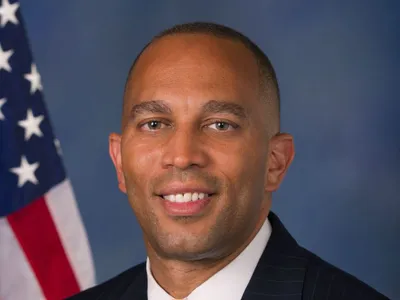
According to a lohud report, the Teach Coalition is set to spend a substantial $1.6 million to oust Congressman Jamaal Bowman from his position. This organization operates across seven states and is actively involved in a campaign centered on Westchester County. The significance of this campaign lies in its sizable budget, specifically targeted at targeting Jamaal Bowman, a Black representative.

The Teach Coalition’s primary objectives include influencing the 16th District race and various state Legislature contests. Furthermore, the successful execution of this campaign in Westchester could potentially serve as a blueprint for similar endeavors elsewhere in New York, illustrating the significant influence of financial interests in politics, which can often leave Black and Brown communities underserved.

As previously mentioned in our articles, organizations like Teach and AIPAC, significant contributors to George Latimer’s Congressional campaign, appear to exhibit limited concern for the welfare and socioeconomic well-being of Black and Brown residents in Westchester. What is additionally concerning is the apparent lack of awareness among some Black leaders and pastors regarding the unfolding political landscape in Westchester, which could have adverse implications for Black interests.

The Teach Coalition is actively gearing up to establish a voter registration center in New Rochelle and is planning to open multiple field offices throughout the county. They have a team of five paid staff members, with potential hires and volunteers in the pipeline.

Notably, twelve Jewish schools and synagogues in Westchester and the Riverdale section of the Bronx have pledged their support for the voter outreach campaign.

With a 35-year history in various public offices and serving as county executive since 2018, George Latimer launched his campaign to challenge Jamaal Bowman for the 16th Congressional District, which encompasses the southern half of Westchester and the Wakefield neighborhood of the Bronx.

In contrast, Congressman Jamaal Bowman, seeking his third term, has secured over $200 million in aid for NY-16. This funding includes a substantial $20 million allocated to local groups, nonprofits, and government entities dedicated to the betterment of senior citizens, infrastructure enhancement, improved access to healthcare services, and enriching activities for youth.

The political climate in Westchester, often considered liberal, seems to be witnessing an under-the-radar anti-Black campaign that has also extended to other parts of the country. This campaign targets Black and Brown politicians who challenge policies allocating significant taxpayer funds to military efforts. At the same time, Black and Brown communities grapple with a range of issues, including social problems, crime, violence, understaffed police and fire departments, hospital closures, and the championing of these causes in both urban and rural areas.

Finally, the scheduled primary election in New York, initially set for June 25, could experience delays. These potential delays stem from legal challenges tied to the redrawing of the state’s 26 House districts, as per the directive issued by the highest court in the state.

There is significant speculation regarding whether these district changes will result in the removal of more Bronx areas from the 16th district, which has a historical Black and Brown population, potentially benefiting Jamaal Bowman, or if the district will see an increase in Westchester regions, potentially providing George Latimer with an advantage due to a predominantly white voting base. The outcome remains uncertain, and we must wait and see how it unfolds.

PUBLIC NOTICE – Littering GO 17-2023.HA

0

A GENERAL ORDINANCE AMENDING CHAPTER 93 OF THE CODE OF THE CITY OF YONKERS ENTITLED “LITTERING”

Notice is hereby given that the City Council of the City of Yonkers has adopted the abovementioned legislation that amends Chapter 93 of the Code of the City of Yonkers entitled “Littering”, in part, by amending several sections to prohibit the disposal of any litter by depositing it in any body of water, watercourse, or public space within the City of Yonkers.

The penalties for violation of this ordinance are as follows:

§93-14 Penalties for offenses.  

Any violation of this chapter shall constitute a Class II offense. Notwithstanding any other inconsistent provision of law to the contrary, by resolution, the City Council may from time to time fix an additional fine, surcharge or penalty for violations of this chapter.

The complete text of the ordinance is on file and may be examined at the Office of the City Clerk, City Hall, 40 S. Broadway, Yonkers, NY 10701. 

Dated: December 18, 2023

Vincent Spano

PUBLIC NOTICE – Vehicles and Traffic LL 18-2023

0

A LOCAL LAW AMENDING CHAPTER 109 OF THE CODE OF THE CITY OF YONKERS, ENTITLED “VEHICLES AND TRAFFIC” IN REGARDS TO DUE PROCESS PROCEDURES FOR TOWING AND IMPOUNDED VEHICLES

Notice is hereby given that the City Council of the City of Yonkers has adopted the abovementioned legislation that amends Chapter 109 of the Code of the City of Yonkers entitled “Vehicles and Traffic” is hereby amended in part by amending various sections to update the process by which vehicles are towed and impounded and by which vehicle owners/lessors are notified.

The penalties for violation of this local law are as follows:

§ 109-160. Penalties for offenses; towing and storage fees.

A.  Except for violations of this chapter which are within the jurisdiction of the Parking Violations Bureau, and in the event that a penalty is not established for a given violation of this chapter, then such violation shall be punished by a fine not exceeding $250 or confinement in jail not exceeding 10 days, or both.

B.  Parking, standing, and stopping violations shall be punished as follows:

Type of ViolationFeeType of ViolationFee
Expired meter (on street)$30M/T 12 inches from curb, 2-way street$50
Overtime parking at meter (on street)$30M/T 12 inches from curb, 1-way street$50
Expired meter (off street)$30Parking left side to curb, 2-way street$50
Failed to activate meter (on street)$30Parking wrong direction, 2-way street$50
Overtime parking at meter (off street)$30Parking wrong direction, 1-way street$50
Failed to activate meter (off street)$30Parking opposite construction site$50
Parking in 2 meter spaces (on street)$50Improper parking$50
Parking rear to meter (on street)$50Parked rear to curb$50
Parking in 2 meter spaces (off street)$50Improper angle parking$50
Parking rear to meter (off street)$50Angle parking prohibited, 2-way street$50
No parking$50Angle parking prohibited, 1-way street$50
Overtime parking, no meter$50Wheels not turned to curb on hill$50
Parking in driveway, public or private$50Parking a trailer, semitrailer, tractor-trailer, tractor, house-on-wheels, bus or school bus$500
Parking within 30 feet of stop sign$50Other commercial vehicle$50
Parking within 10 feet of crosswalk at intersection$60Parked on bridge$50
Parking in loading zone$50Unattended vehicle$70
Parked at theater entrance$50No current license plate$90
Parked on private property$50Unauthorized license plate$90
Parked without lights$50Parked leaving L/T 10 feet roadway$90
Inspection violations$50Restricted area$70
Parked on entrance or exit ramps, state highway$50Restricted area, parking lot$70
Parked on state highway$50Restricted area, off street$70
Parked alongside curbcut$50Restricted, raceway parking$70
Parked for purpose of vehicle sale$50Obstructing traffic$90
Parked for vehicle repair, except emergency$50Obstructing traffic, L/T 10 feet roadway$90
Parked on highway with speed limit over 35 mph for purpose of selling frozen desserts$50Double-parked$90
Parked within safety island$60Double-parked commuting hours (Mon. – Fri. 7:00 a.m. to 10:00 a.m. and 3:00 p.m. to 7:00 p.m., excluding holidays)$100
Parked within crosswalk$60Parked within 15 feet of fire hydrant$70
Parked within intersection$60Parked in fire zone$90
Parked on sidewalk$80Parked within 20 feet of fire station entrance$90
No standing$70Parked in tow-away zone$90
No stopping$70Emergency snow removal$90
No stopping, bus stop$50Parked in handicap space, no permit, on street$200
Stopped on pavement$50Parked in handicap space, no permit, off street$100
Registration violations$70Abandoned vehicle$450
Unregistered motorcycle$70Abandoned vehicle in a designated emergency$500
Tab improperly on plate$70All other parking violations, including violations of Article 32 of the New York State Vehicle and Traffic Law$50
License plate violations$90

C.  In the event that a respondent does not enter a plea or remit the fine due for a parking, standing or stopping violation as and when required by this chapter, then they shall pay a late payment penalty equal and in addition to the scheduled fine for the violation charged.

D.  In the event that a vehicle is towed pursuant to this chapter, the owner or person entitled to possession of the vehicle shall pay a towing charge and a storage charge as set by the rules and regulations of the City of Yonkers. These charges shall be in addition to any fines or penalties for illegal stopping, standing, parking, abandonment or any other offense under this chapter. Towing and storage charges shall be paid as lawfully. No vehicle shall be released unless all towing and storage fees, outstanding parking violations and related penalties are paid in full.

The complete text of the ordinance is on file and may be examined at the Office of the City Clerk, City Hall, 40 S. Broadway, Yonkers, NY 10701. 

Dated: December 18, 2023

Vincent Spano City Clerk

Westchester Community Health Center 50th Anniversary Gala

0

Westchester Community Health Center Celebrated 50 Years of Providing Quality Health Care at its 50th Anniversary Gala with Over 500 Supporters

50th Anniversary Celebration Welcome [All Photos Courtesy of John Vecchiolla]

Mount Vernon, N.Y. – Westchester Community Health Center, formerly known as Mount Vernon Neighborhood Health Center, held its 50th Anniversary Gala in celebration of 50 years of providing high-quality health care on Wednesday, December 6th at the Glen Island Harbour Club located at Weyman Avenue in New Rochelle, NY. This year’s gala honored Mr. Louie Lanza, Rev. Dr. Stephen W. Pogue, Dr. Bruce Roseman, and Dr. Nora H. Farkouh for their long-time support of Westchester Community Health Center.

“I would like to thank everyone who joined us as we celebrated 50 years of Westchester Community Health Center providing high-quality, comprehensive, and affordable health care to the communities we serve,” said Judith Watson, CEO of Westchester Community Health Center. “We look forward to what the next 50 years will bring as we continue our mission to ensure that residents in our communities receive access to the health care they are entitled to.”

Over 500 attendees enjoyed an evening that included a cocktail hour featuring live music from Da-Vine Tuch, gospel singing from the John H. Paxton Chorale of the Greater Centennial A.M.E. Zion Church of Mount Vernon as they led the attendees upstairs for the program, an awards presentation highlighting this year’s honorees, fabulous food, a silent auction, a 360 photo booth, and an after party featuring DJ Brother Arthur.

Dignitaries were also on hand to pay tribute, which included the Hon. Shawyn Patterson-Howard, City of Mount Vernon Mayor; Paul Feiner, Town of Greenburgh Supervisor; New York State Assemblyman Gary Pretlow, Ken Jenkins, Westchester Deputy County Executive; Councilwoman Lisa Copeland, City of Mount Vernon; Legislator Ben Boykin, Westchester County Board of Legislators; New York State Assemblywoman MaryJane Shimsky; Councilman Derrick Thompson, City of Mount Vernon; Tyrae Woodson-Samuels, Westchester County Legislator; and Andre Wallace and Ernie Davis, former City of Mount Vernon Mayors.

The 50th Anniversary Gala was sponsored by: Title Sponsor – Joe Duffy and Harry DiMarzo; Platinum Sponsor – Lanza Family Foundation, Montiefore Mount Vernon, Montiefore New Rochelle; Gold Sponsor – Dr. Chaudhry Hameed; New York Presbyterian Westchester; Silver Sponsor – Affinity by Molina Healthcare, BioReference, CohnReznick, Greater Centennial A.M.E. Zion Church, Westchester Medical Center; Bronze Sponsor – ABC Realty, CureMD.com, MedStock, Simone Development Companies, Valuable Drugs/RL Mt. Vernon Pharmacy, Inc., Wartburg, Webster Bank, and XTreme Home Care. For those who would still like to make a donation in support of Westchester Community Health Center, please visit their website at www.westchestercommunityhealthcenter.org

About Westchester Community Health Center: The Westchester Community Health Center (formerly Mount Vernon Neighborhood Health Center) offers high-quality, preventative, and affordable health care and support services in an atmosphere of humane care, dignity, and respect, to improve the lives of adults, teens, and children in Westchester County and the Bronx, New York. Westchester Community Health Center is overseen by a group of dedicated, experienced professionals devoted to furthering the mission and ideals of quality affordable health care for all. To learn more about Westchester Community Health Center, please visit their website at www.westchestercommunityhealthcenter.org.

Greenburgh Town Board salutes retiring Town Board member-Ken Jones

0

Greenburgh Town Councilman Ken Jones is retiring from the Town Board after 12 years of hard work and dedicated service. Monday, December 18th, was his last official Town Board meeting and the Board paid tribute to his exceptional service.  You can watch the tribute to Ken in the video link below. Ken will be replaced by Councilwoman-elect Joy Haber who takes office on January 1, 2024.

“A big thank you to Ken for all you did to make Greenburgh a better place,” Town Supervisor Paul Feiner shared.

Ken has served as liaison to the Greenburgh Housing Authority, helping the GHA obtain approvals for new, state-of-the-art affordable housing units; and to renovate older, existing units and obtain funding to provide broadband internet services to residents. 

Ken served as as liaison to the Hartsdale Parking District. He helped the parking authority come up with creative new policies to overcome pandemic challenges.

Ken worked to improve pedestrian safety–securing funding and approval for almost 12 miles of new sidewalks around town, many built with funding from the federal and state governments.

The Councilman encouraged Town Board members to conduct department head evaluations and organized the review process.

During his tenure, Greenburgh enhanced playgrounds and our parks and initiated new programs and activities. Last night Councilman Jones voted for the proposal by Sportime to build/operate a robust racket sports program including pickleball at AF Veteran park-there will be free programs for seniors, disabled and scholarships.

Ken worked to make sure that our court system is well run and pushed for the appointment of the first African American police chief in Greenburgh history;

During Ken’s tenure, Greenburgh was named the 9th Best Family Friendly community in the United States by Fortune Magazine and the 8th Best locality in the northeast by Money Magazine; and, all the bond agencies gave Greenburgh a triple A bond rating–the highest rating a municipality could obtain–a rating reserved for only 2% of American municipalities.

You can watch the tribute to Ken Jones by all the members of the Greenburgh Town Board in video below

Ken has lived in Greenburgh full time since 2003. His parents moved from New Rochelle in 1984 when his father inherited the house where Ken lives now. In 1984 Ken was away at Cornell University and then the University of Wisconsin Law School so he only came home to Greenburgh sporadically. After graduation from law school he moved to New York City where he lived for 10 years. In 2003 Ken inherited the house from his mother and he has lived there since.

In addition to being a Greenburgh Democrat, he is vice president of the Parkway Gardens Civic Association, a member of the Westchester Black Bar Association, and a 2018 recipient of the Thurgood Marshall Award from the Black Democrats of Westchester for his dedication to civil rights, community activism and devotion to equal justice for all. In 2017 he was named Mentor of the Year by the William F. Carter Foundation for his program “Careers in Law Enforcement” which he ran for youth at the Theodore Young Community Center.

He also sits on the boards of the Howard Memorial Fund and the Fellas Scholarship Fund; both funds provide financial assistance to students in college and medical school.

As Councilman, Ken is the liaison to: the Greenburgh Town Court, Department of Philanthropy, Department of Community Resources, Greenburgh Housing Authority, Greenburgh/Elmsford Community Action Program, the Hartsdale Public Parking District, the Westchester Community Opportunity Program and the Police Advisory Committee.

In addition to being a three-term Councilman, Ken is a Senior Associate Counsel at the Legal Aid Society of Westchester County. He is also an Administrative Law Judge for the Westchester County Human Rights Commission.

While holding office here in Greenburgh, Ken has been available and responsive, present in the community, and leading by example. He has been an advocate for low-income and workforce housing, an advocate for our Town Court and Greenburgh Police, an advocate for organic waste recycling in the town, and a role model for youth at the Theodore Young Community Center.

His wife is the artist and therapist Jeanine Primm Jones. They live in Parkway Gardens in a house where Ken’s family has lived for over 90 years.

Controversial Israeli Developer Sparks Outrage with Plans for New Settlements in Gaza: Kill them and take their land!

0

In a recent social media post shared by Jewish Voice for Peace, disturbing revelations have emerged regarding the intentions of a prominent Israeli developer with a history of building illegal settlements in occupied Palestinian territory. The post displays a juxtaposition of a destroyed Gaza alongside a schematic for a new Israeli settlement, raising serious concerns about potential violations of international law. This article delves into the details of this controversial situation and its implications for the ongoing Israeli-Palestinian conflict.

The Developer in Question

The focus of this controversy is an Israeli real estate firm named Harey Zahav, known for its involvement in constructing illegal settlements in the occupied West Bank. These settlements have long been a contentious issue in the Israeli-Palestinian conflict, as they are widely viewed as obstacles to peace and have drawn condemnation from the international community.

The Disturbing Advertisement

The Jewish Voice for Peace post highlights advertisements from Harey Zahav that have ignited outrage and concern. The firm’s promotional material unabashedly promotes the idea of settling in Gaza, despite the area’s tumultuous history and the ongoing Israeli-Palestinian conflict. One of their advertisements boldly declares, “A house on the beach is not a dream! We have begun clearing rubble and fending off squatters.” Another ad goes further, referring to Gaza as the “Land of Israel” and encouraging individuals to “Fight. Liberate. Settle.” It even provides a hotline for people to register their interest in securing a place in the proposed settlement.

The Timing and Context

What adds to the gravity of this situation is the timing and context in which these plans have surfaced. The revelation comes during Hanukkah, a significant Jewish holiday when a coalition of settler groups funded by the Israeli government convened to discuss a “practical” plan for constructing settlements in Gaza. This development is particularly concerning given that it coincides with an Israeli military campaign against Palestinians, a situation that some have labeled a “genocidal war.”

Violation of International Law

If indeed accurate, the proposed settlement in Gaza raises many legal and ethical concerns under international law. Building settlements in occupied territories is considered illegal under various international conventions and United Nations resolutions. These actions are seen as undermining the possibility of a two-state solution and exacerbating tensions between Israelis and Palestinians.

The controversy surrounding Harey Zahav’s plans for new settlements in Gaza underscores the complexities and challenges of the Israeli-Palestinian conflict. It highlights the ongoing struggles for territory and sovereignty in the region and the role of developers in perpetuating tensions. While the authenticity and seriousness of these plans remain subjects of investigation and debate, they serve as a stark reminder of the need for a peaceful resolution to the longstanding conflict. International attention and scrutiny are essential to ensuring that actions taken in the region adhere to established legal frameworks and principles of justice.

We Got Our Own Thang: Hip Hop from The 914 with ENU Builds and AJ “AJ Rok” Woodson (JVC Force)

0

ENU Builds & Race Talk Revolution presents Music Of The People & Beyond: A Look At 914 Hip-Hop, a panel discussion with AJ Woodson (author of “We Got Our Own Thang: A Look At Hip-Hop From The 914“), Brother Arthur Muhamad (Zulu Nation and Dir of East Coast for Karl Kani), Tri-State Jericko (rapper, DJ who has worked with Heavy D, The Lox & DMX), TJ Davis (co-host of The Starting 5 podcast) and Large Amount: The Boy With A Billion Barz (D-Block) discussing Hip-Hop From The 914, in celebration of the 50th Anniversary of Hip-Hop, Monday, December 18th, 7PM

My new book, “We Got Our Own Thang: A Look At Hip-Hop From The 914,” is officially out in time for the holidays. After checking out all of the 50th Anniversary celebrations of Hip-Hop, I noticed one region that was often overlooked and underrepresented was the 914. So I present this literary offering to celebrate the role of 914 Hip-Hop in the 50 years of Hip-Hop! This is the latest in my series of books documenting Black in Westchester!

You can purchase your copy today on Amazon for $30.00, or you can order an autographed copy directly from me via Venmo @AJ-Woodson-2 or PayPal http://PayPal.me/BlackWestchestackWestchesterMag or CashApp $MrAJWoodson. Add $5 for postage, and make sure you email me your mailing address, MrAJWoodson@gmail.com.

Follow me on YouTube, Instagram, Twitter (X), and Facebook

Follow JVC FORCE on YouTube, Instagram, Twitter (X), and Facebook

Yonkers Legal Notice – SO.52-2023 – Bond Ordinance

0

LEGAL NOTICE

The ordinance, a summary of which is published herewith, has been adopted on November 28, 2023, and approved by the Mayor on December 18, 2023, and the validity of the obligations authorized by such ordinance may be hereafter contested only if such obligations were authorized for an object or purpose for which the CITY OF YONKERS, in the County of Westchester, New York, is not authorized to expend money or if the provisions of law which should have been complied with as of the date of publication of this Notice were not substantially complied with, and an action, suit or proceeding to contest such validity is commenced within twenty days after the publication of this Notice, or such obligations were authorized in violation of the provisions of the constitution.

Vincent E. Spano, City Clerk

City of Yonkers, New York

SPECIAL ORDINANCE NO.52-2023

BOND ORDINANCE OF THE CITY OF YONKERS, NEW YORK AUTHORIZING FUNDING FOR VARIOUS CAPITAL PROJECTS INCLUDED IN THE CITY’S 2023-2024 CAPITAL BUDGET, AS AMENDED; STATING THE TOTAL ESTIMATED MAXIMUM COST THEREOF IS $82,981,816; APPROPRIATING SAID AMOUNT THEREFOR; AND AUTHORIZING THE ISSUANCE OF BONDS OF SAID CITY IN THE PRINCIPAL AMOUNT OF NOT TO EXCEED $82,981,816 TO FINANCE SAID APPROPRIATION

The bonds are authorized to finance various capital projects included in the City’s 2023-2024 Capital Budget, as amended. 

The amount of obligation to be issued is $82,981,816.

The periods of usefulness are various, periods from 3 to 40 years.

Pursuant to the provisions of Section 17 of the Special Local Finance and Budget Act of the City of Yonkers, constituting Chapters 488 and 489 of the Laws of 1976 of the State of New York (herein called the “Act”), the City is authorized and directed to include the pledge and agreement of the State of New York (herein called the “State”) contained in said Section 17 of the Act, in the ordinance, and the Act provides that upon payment for the bonds or notes by the original and all subsequent holders thereof the inclusion of such pledge and agreement shall be deemed conclusive evidence of valuable consideration received by the State and City for such pledge and agreement and of reliance upon such pledge and agreement by any holder and that any action by the State contrary to or inconsistent with the provisions of such pledge and agreement shall be void.

A complete copy of the Bond Ordinance summarized above shall be available for public inspection during normal business hours at the office of the City Clerk, 40 South Broadway, Yonkers, New York 10701.

The Profound Influence of Black Fathers: Shaping Daughters’ Understanding of Masculinity and Relationships

In today’s society, the role of Black fathers in the lives of their daughters often goes underestimated and overlooked. In modern Black culture, there has been a concerning trend where Black men are sometimes perceived as merely fathers who have children but are not actively involved in raising them. Statistics show that a significant portion of Black children, around 80 percent, are born out of wedlock. This trend has significant and long-lasting consequences, particularly for young girls, who are the focus of this discussion.

When a young girl grows up without a positive and nurturing Black male figure in her life, it can profoundly affect her ability to form meaningful connections with men in her adulthood. The absence of such a role model deprives her of the opportunity to witness a healthy and loving relationship with a Black man, which is essential for her understanding of what a healthy connection with a man should entail.

A father’s role is multifaceted, with profound implications for his daughter’s development. He is the first man in her life to provide unconditional love and unwavering support. He is a positive role model who helps her foster effective communication skills with men and teaches his daughter to respect masculinity by his example. Additionally, he offers emotional security, laying the foundation for trust and self-confidence to serve her throughout her life.

It is essential to recognize that this responsibility does not rest solely on the father’s shoulders. Mothers, too, play a vital role, understanding that fathers are needed for more than just financial support. Emotional, spiritual, and caring guidance from fathers is equally crucial in their Black daughters’ lives. It is a collective effort to ensure that these girls grow up with the love and support they deserve.

Consequences of an Absent or Neglectful Father:

When a father does not fulfill these responsibilities in raising his daughter, it can negatively affect her emotional well-being, self-esteem, and ability to form healthy relationships. Here are some potential consequences:

Low Self-Esteem: A lack of emotional support, positive role modeling, and encouragement can lead to low self-esteem in the daughter. She may struggle with self-doubt and have a negative self-image.

Insecurity: Without a secure emotional bond and validation from her father, a daughter may develop insecurity that can manifest in various aspects of her life, including relationships with others.

Difficulty in Forming Healthy Relationships: A father’s role modeling significantly influences a daughter’s understanding of healthy relationships. With positive role modeling, she may be able to form healthy, respectful, and loving relationships with others.

Communication Challenges: If effective communication patterns are established during childhood, the daughter may be able to express her thoughts and feelings, hindering her ability to communicate effectively in relationships.

Emotional and Psychological Issues: The lack of emotional support and a positive father-daughter relationship can contribute to emotional and psychological issues such as anxiety, depression, and a sense of abandonment or neglect.

Risky Behaviors: Some girls and young women may seek validation and acceptance elsewhere if they don’t receive it from their fathers. This can lead to engaging in risky behaviors, substance abuse, or entering into unhealthy relationships in an attempt to fill the emotional void.

Difficulty in Setting Boundaries: A father’s guidance on setting healthy boundaries can empower a daughter to assert herself and protect her own emotional and physical well-being in relationships.

Understanding and Respecting Masculinity:

Respecting masculinity is a crucial aspect of a healthy father-daughter relationship. It involves understanding holistic, healthy, and spiritual masculinity. A father can play a vital role in helping his daughter develop a nuanced and respectful view of masculinity as part of her broader understanding of human relationships.

Children absorb messages and cues from their surroundings from an early age, including their family, media, and society. These early experiences form the foundation of their understanding of gender roles and relationships. For young girls, their father often serves as one of the primary male role models, offering valuable insights into masculinity.

Positive masculinity is not a one-size-fits-all concept but encompasses a range of qualities and behaviors that are constructive, respectful, and empathetic. It includes responsibility, integrity, emotional intelligence, and a commitment to gender equality. A positive masculine role model demonstrates that being a man does not equate to dominance, aggression, or the suppression of emotions but rather to qualities that contribute positively to one’s own life and the lives of others.

The Importance of Respecting Masculinity:

When a woman grows up respecting a man’s masculinity, it can have several positive effects:

Healthy Masculine Role Modeling: An active father can serve as a role model for positive masculinity, demonstrating traits like responsibility, empathy, integrity, and Respect for others.

Understanding Boundaries: Fathers can teach their daughters about the importance of respecting others’ boundaries contributing to respectful and healthy interactions with men in the future.

Positive Male Relationships: A girl with an active father is more likely to have positive early experiences with men, leading to a greater sense of trust and comfort when forming relationships with men.

Emotional Security: An active and emotionally available father can provide his daughter with a sense of security and stability, contributing to her overall well-being and her ability to form healthy relationships with men in adulthood.

As we explored earlier, the absence of a father figure can lead to a range of emotional and psychological challenges for daughters. This absence often results in a lack of positive masculine role modeling, emotional support, and guidance. However, it’s important to recognize that the consequences of an absent father can extend beyond the immediate family dynamic and into how a woman views and interacts with men throughout her life. In this context, understanding and respecting a man’s masculinity is significant. Let’s delve further into how a woman’s relationship with her father, or the absence thereof, can influence her perceptions of and interactions with men and how this, in turn, can impact her personal and professional relationships.

When a woman grows up without respecting a man’s masculinity, it can have various consequences for her relationships and interactions with men. It’s important to recognize that the idea of “respecting a man’s masculinity” will be interpreted differently, especially in today’s modern era where women are taught to be independent, and there’s no need for a man.

However, In this text, the perception of how a man’s masculinity fits into a woman’s life runs contrary to what is taught to modern women today. It’s not about suggesting that women should be subordinate to men, but rather understanding that the concept of a man’s masculinity and its role within a female child’s upbringing and in a woman’s life can be seen as fulfilling and even spiritual. Unfortunately, regardless of the different understandings, statistics have proven the outcomes are the same circumstances and behaviors. Here are some potential results:

Strained Relationships: Lack of Respect for a man’s masculinity can lead to strained relationships with men, including romantic partners, family members, colleagues, and friends. This lack of Respect can manifest as dismissive or disrespectful attitudes and behaviors.

Communication Issues: Disregarding a man’s masculinity can result in communication problems and misunderstandings. Effective communication often requires understanding and acknowledging each other’s perspectives, which may be compromised if Respect is lacking.

Conflict and Tension: Disrespecting a man’s masculinity can lead to conflicts and tensions in personal and professional relationships. It may contribute to power struggles, arguments, and negative interactions.

Stereotyping and Prejudice: If a woman fails to respect a man’s masculinity, she may rely on stereotypes or prejudice when forming opinions about men. This can lead to unfair judgments and discrimination based on gender.

Difficulty in Intimate Relationships: A lack of Respect for a man’s masculinity can hinder emotional intimacy and connection in romantic relationships. It may create an atmosphere of distrust and insecurity.

Impact on Career: In a professional setting, respecting the masculinity of male colleagues or superiors can help career advancement and teamwork. It may lead to difficulties in collaborating with male coworkers and supervisors.

It’s important to emphasize that mutual Respect is essential in all relationships, but it’s also important to understand it must be learned, and for someone to learn it; it must be taught. A young girl having a healthy, positive Black man in her life allows her to recognize and value the diverse qualities, perspectives, and experiences that Black men bring to the table while avoiding harmful stereotypes or prejudices about Black men. 

The presence or absence of a Black father figure in a daughter’s life can have profound and far-reaching effects. While having an involved and supportive father offers numerous advantages, an absent or neglectful father can pose challenges and potential consequences. It is crucial to recognize that the impact of a father’s presence or absence is significant but not deterministic.

Fostering understanding, empathy, and open communication within all family dynamics is essential. Creating an environment where every child, regardless of their family structure, can develop a strong sense of self-worth and the skills to build healthy, fulfilling relationships in adulthood is a collective responsibility. Respect for masculinity, when understood in a holistic and healthy context, can contribute to more positive and balanced relationships between fathers and daughters, and between women and men in society as a whole.

In conclusion, the saying “Daughters end up marrying their fathers” underscores the weight of this relationship. It reflects that our upbringing and early father-daughter bonds influence our adult choices and relationships. A healthy, positive father-daughter relationship can set the stage for a lifetime of positive interpersonal connections.

The impact of an absent father on a woman’s life can be profound, but it is not insurmountable. Recognizing father’s wounds and taking proactive steps to heal them through counseling can lead to personal growth, improved self-esteem, healthier relationships, and enhanced mental well-being. Seeking counseling is a courageous and transformative journey toward healing, allowing individuals to break free from the chains of past pain and embrace a brighter, more fulfilling future.

The Truth Black Families Are Owed: 50 Years of the Black Family Crisis, but Nobody Wants to Admit it.

In 1965, a controversial report warned of a growing crisis in Black families that would hinder racial equality. The so-called Moynihan Report sparked an immediate backlash rather than an honest reckoning. For the next 50 years, the inconvenient truths in the report would be ignored, while Black communities suffered the consequences.

Authored by Daniel Patrick Moynihan, then an assistant secretary of labor under President Johnson, the report aimed to understand why racial inequality persisted even as legal barriers fell. It flagged a startling rise in single-mother households and welfare dependence in African-American communities despite more Black men obtaining jobs. Moynihan hypothesized that the relative lack of stable, two-parent homes in Black neighborhoods would severely hamper children’s development and advancement.

At the time, the outcry drowned out the substance of the report. Critics attacked Moynihan’s focus on family structure as “blaming the victim,” insisting he ignored racism and economic forces. Leading Black scholars and civil rights figures decried notions of crumbling Black families as racist stereotypes. They pushed an alternative narrative of strong, matriarchal family units continuing African traditions. The controversy meant Johnson distanced himself from implementing the report’s recommendations.

While academics and activists argued their perspectives, the tangible trends in low-income Black communities painted a contrasting picture. Over the course of the following five decades, the rate of out-of-wedlock births within the Black community increased significantly, prompting some to view it as a crisis. School dropout, crime, addiction, and delinquency rose markedly through the 1970s, 1980s, 1990s, and 2000s; we see the same trends today in 2024. Most devastatingly, welfare dependency – the problem Moynihan had said would perpetuate the economic marginalization of the Black community became a reality.

However, liberal elites, mainly Democrats, remained unwilling to confront the evidence, choosing ideology over facts. Black single mothers continued to be romanticized as strong pillars of their community. Discussions framed that traditional Black family with a Black man and women as an oppressive white structure to reject. Debates focused narrowly on providing services while refusing to discuss behavioral causes for poverty. With political correctness dominating, the honest discussion Black families needed has been silenced for 50 years.

In the early 1980s, a new conservative critique finally challenged the censorship around family breakdown. Sociologists like Charles Murray, Lawrence Mead and Thomas Sowell directly blamed welfare incentives and ghetto cultural pathologies – not abstract racism or “blaming victims” – for the declines in two-parent homes. Though controversial, they advocated that the Black single-family unit was the face of dysfunctional poverty, where liberals had painted them as heroic.

Let us not forget that Many welfare programs give more excellent benefits to unmarried individuals than to a married couple of otherwise identical income. The resulting marriage penalty discourages marriage and rewards single parenthood.

Their iconoclastic stance shattered the stagnant orthodoxy. News outlets rang the alarm on “The Vanishing Black Family.” The suppressed Moynihan Report was dusted off and revisited during its 20th anniversary, but Black leadership controlled by liberal money did not listen.  

William Julius Wilson, a renowned liberal, broke ranks to admit his colleagues had become “confused and defensive”. He agreed social science needed to investigate single parenthood’s impacts on poor children rigorously.

The black social theorist Thomas Sowell, a professor at Stanford University, has extensively written about the decline of the black family. In his article titled “A Legacy of Liberalism,” Sowell dismisses the argument that attributes current black impoverishment to slavery or inherent racism. He criticizes the “legacy of slavery” argument, stating that it discourages critical thinking and reliance on empirical evidence by evoking emotional reactions. Sowell suggests that for a more profound analysis, we should compare the economic status of blacks a century after slavery ended with their status after three decades of the liberal welfare state. He points out that despite the widespread belief that black economic progress started or accelerated with the passage of civil rights laws and “war on poverty” programs in the 1960s, historical data shows that the poverty rate among blacks had already decreased from 87 percent in 1940 to 47 percent by 1960, well before the implementation of those programs.

The evidence is accurate, and they have known it for 50 years.  

 Sociologist Sara McLanahan began researching the outcomes of single motherhood in the 1990s. Though expecting to prove no real differences from two-parent homes, her analysis uncovered worse results across child wellbeing indicators from income to school performance. Despite initially facing resistance, her findings made academics accept family structure as conclusively necessary.

McLanahan’s research marked a turning point. With the concentrated poverty and social dysfunction in inner cities at a peak, President Clinton – Known for political savviness regarding public sentiment – made marriage promotion a feature of his welfare reform agenda. In his 1994 State of the Union address, he admonished that “more than half of our children will be born into families where there is no marriage.” The numbers simply made denial impossible any longer.

From the 2000s to the present day, the vision of a flawless, strong single Black mother was promoted, and anyone who pushed back on the narrative was labeled sexist. When you deal with facts over feelings, academics today agree with McLanahan’s evidence. Popular Black culture has glamorized unwed pregnancy. Along with a broken view of feminism, it disregarded marriage as an important building block in the Black community. What’s unfortunate is that we are fighting a battle against the disappearing Black family in 2024; in the early 1960s, about 20 percent of black children were born to unmarried mothers, and Black Marriage was at 80 percent; by 2024, 80 percent of Black children are born out of wedlock. But we have yet to see this as a crisis in the Black community.

In another article, Sowell asserted, “The significant expansion of the welfare state in the 1960s had a detrimental impact on the black family structure, causing its decline, even though the black family had persevered through centuries of slavery and generations of racial oppression.”

There are 80 percent of Black children born out of wedlock, and the average single parent earns 55 thousand a year. When will Black leaders, Black pastors, and even so-called liberal white people wake up? The Black community is 50 years trapped in a cycle of fatherless childhoods and teenage parenthood and stuck in ghettos across America when the solution that has been known for 50 years by academics is more two-parent families represented a desperately needed solution.

The Toll of Denial to the Black Community

There was, and there is, planned obstruction of open discussion and obfuscation of facts regarding Black family breakdown exacted a heavy price on Black communities over 50 years.

The Black community has suffered due to those who claimed to champion its interests, as well as the silence of Black political and religious leaders who failed to address the significant policy issues inherent in the American welfare system. Consequently, we have witnessed several generations of young Black individuals who were ill-prepared to establish stable family structures. This situation deprived impoverished Black men and women of the opportunity to make informed choices, as they were exposed to misleading narratives about their available alternatives.

According to a study published in the Journal of Blacks in Higher Education, 54 percent of the White population is married, while only 31.2 percent of the Black population is married. Additionally, 27.5 percent of the White population has never been married, whereas half of the Black population has never been married. An article in Forbes Magazine explores the advantages of being married for families, particularly in terms of achieving middle-class status and generational wealth. Married-parent families typically enjoy higher incomes than single-parent families, meaning they have better access to quality schools, neighborhoods, and job opportunities. Furthermore, married parents are more likely to invest more time and resources into raising their children.

Furthermore, marriage rates in states are closely connected to their economic well-being. States with more married parents tend to have higher incomes, better chances for kids from low-income families to improve their financial situations, less child poverty, and higher family incomes.

For example, when you compare states with the most married-parent families to those with the fewest, the ones with the most married parents have an average $1,451 higher income per person. Kids from low-income families in these states also have a 10.5% better chance of moving up the income ladder, and there’s a 13.2% lower rate of child poverty.

Approximately 80% of Black children are born to unmarried parents, while roughly 38% of Black children continue to live below the poverty line, as revealed by a Pew study analyzing Census data. The stark reality is that Black children are still four times more likely than their white or Asian counterparts to experience poverty. We must recognize that there exists a significant issue within Black families, yet it seems that, as a society, we are either unaware or reluctant to address it. Could it be that our Black leadership fears being labeled as sexist or canceled for advocating Black marriage and the importance of strong Black families led by both men and women?

Apart from the decline in wages of the Black family, particularly Black men, the sudden shift in the American economy’s demand for less-skilled workers has created a disparity for Black males. This disparity is rooted in the disparity between the types of jobs they historically identified with, which were closely linked to their sense of identity, and the present reality of job opportunities available to those with lower levels of education. Notably, the decline in manufacturing jobs, which have historically played a vital role in sustaining Black middle-class families, over the past few decades can be attributed to both a decrease in job prospects for workers with intermediate skill levels and their reluctance to pursue employment in different industries or skill categories.

One of the most tragic aspects of this situation is the disproportionate burden placed on marginalized Black fathers. Black men have been intentionally excluded from discussions about family progress, leading to an inaccurate portrayal of them as increasingly irrelevant. In reality, 51 percent of Black men are single but still in the middle class, and 31 percent are married, underscoring their significance in various family structures. Despite their vital roles, they have been unfairly stigmatized as neglectful or unnecessary.

The media has often portrayed Black women as self-reliant and not in need of a husband while subtly suggesting that being a baby momma is better than being a wife. On the flip side, some Black men have embraced these stereotypes, choosing to baby daddy without marrying, and this cycle continues. These misconceptions, coupled with the unsupported notion that all single Black mothers are heroic figures while excluding Black men, have marginalized many Black men and promoted an unfair narrative.

While there is often an emphasis on Black women’s independence from Black men, studies reveal that for Black men, marriage can significantly influence their economic mobility. Approximately 70% of married Black men attain middle-class status by midlife, in sharp contrast to the 20% of never-married Black men and 44% of divorced Black men who reach a similar economic status. These statistics underscore the crucial role of marriage in offering economic stability and support for Black men as they strive to achieve upward mobility.

The critical issue we must confront is our reluctance to acknowledge the decline of two-parent Black households. Discussions about the state of Black families in the United States and their progress started long before the Moynihan report, but they were often disregarded by Black leadership. This report specifically examined how the structure of Black families impacted various factors that collectively hindered the advancement of social equity.

According to a Harvard report, breaking the cycle of intergenerational poverty among Black Americans necessitates a significant transformation in the economic prospects of Black men, particularly concerning their earnings. One critical aspect to note is the bidirectional relationship between earnings and marriage. Married men tend, all else being equal, to earn more. For instance, one study involving identical twins suggests that marriage can boost earnings by as much as one-fourth. This increase in earnings for married men may be linked to a heightened sense of responsibility to provide financially for their families, especially their children. Consequently, low marriage rates among Black men may have an impact on their earnings.

Recognizing that addressing the profound racial inequalities cannot be achieved solely through upward mobility is crucial. Relatively speaking, Black girls are more likely to escape poverty through their own earnings. However, it’s essential to consider the substantial number of Black children who are initially raised in low-income households. Closing the racial gaps in upward mobility will require comprehensive shifts in economic outcomes, focusing on improving men’s earnings.

Regrettably, many of the social problems highlighted in the Moynihan report have worsened for Black communities in the decades since its publication. Achieving social and economic progress depends on multiple factors, requiring action from policymakers, community leaders, and individuals. Suppose we fail to address these issues and improve social equity and economic opportunities for Black men and families. In that case, we may find ourselves lamenting the lack of progress and stagnation in Black family well-being for another 50 years.

The current state of sociology and the conditions Black families and communities face provide strong support for the enduring relevance of Patrick Moynihan’s insights from over 50 years ago. We can no longer overlook the consequences of out-of-wedlock births, as we have known for years that Black children often find themselves ensnared in an unending cycle of hardship. This harsh reality has been learned the hard way over three generations.

Drawing from my 33 years of experience as a Correction Officer at the Westchester County Department of Corrections, I have witnessed three generations of men, women, and their children entering our correctional system. It was clear that the issue extended beyond mere criminal behavior; it was a systemic failure characterized by symbolism without meaningful substance, and it had never adequately addressed the fundamental needs of Black families. Whether the crisis within Black families will finally receive the attention it deserved decades ago and whether it will serve as a catalyst for the much-needed change we seek remains uncertain.

This article serves as a testament to the failure of intellectual gatekeepers, both within the Black community and among white individuals, who chose to conceal the crisis conditions in low-income neighborhoods to protect their ideologies or avoid facing uncomfortable truths. With the benefit of hindsight, some may feel regret for their actions. This article also criticizes any Black leaders who were either swayed by liberal incentives or too afraid to address these issues from their platforms.

The seriousness and scale of the breakdown of Black families were often sidelined in favor of addressing racism and civil rights, with a lack of awareness that preserving the Black family is, in itself, a civil rights issue. 

Today, prevailing sociology supports the insights of Patrick Moynihan, made over 50 years ago. It is clear that being raised by a single parent in Black communities, who usually face a disadvantage of wealth, significantly increases the likelihood that children will remain trapped in a cycle of disadvantage. Two generations have learned this the hard way. Whether Black families will finally receive the honest analysis they should have had decades ago remains uncertain. Still, there is no time to wasted in taking action to save the Black family.