Home Blog Page 114

God’s Chaos Theory: Why America’s Political Crisis Might Be Part of a Divine Plan

From Biblical Patterns to Modern Politics: Finding Purpose in the Disorder of 2024

As America grapples with unprecedented social upheaval, such as the Black Lives Matter movement and the Capitol riot, political division over issues like immigration, abortion, and healthcare. In the face of increasing secularism, natural disasters like hurricanes and wildfires, and moral uncertainty, many wonder: What will we make of all this chaos? Looking through the lens of biblical history, we might find some illuminating parallels that offer perspective on our current national turbulence.

Throughout scripture, we see a recurring pattern of God using periods of chaos and disruption not to punish but to redirect and reform society. Consider the Great Flood—a response to a world that had become ‘corrupt and was filled with violence.’ Similarly, the Israelites’ exile in Babylon, the destruction of Jerusalem, and the persecution of early Christians were all periods of upheaval that ultimately led to spiritual renewal. Today, as our cities experience rising crime rates and the social fabric appears to fray, these ancient accounts resonate with peculiar relevance.

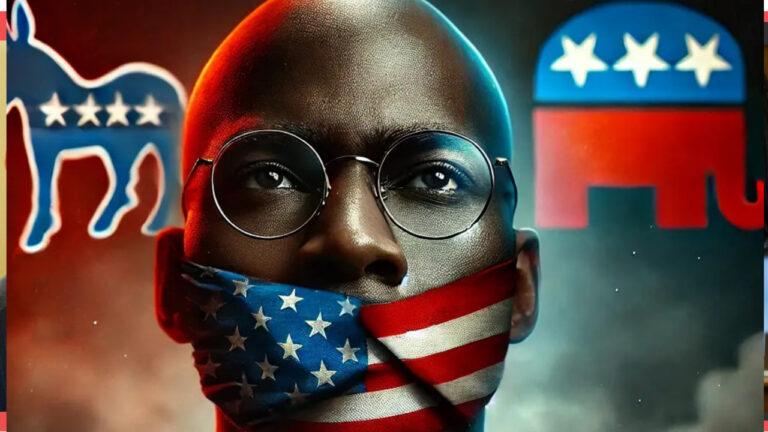
Nowhere is this chaos more evident than in our current political landscape. As Americans face the election between Vice President Kamala Harris, a Democrat known for her progressive policies, and former President Trump, a Republican who has been criticized for his handling of the COVID-19 pandemic and his stance on immigration, we find ourselves in an unprecedented moral quandary. One side faces criticism for its stance on the Palestinian conflict, raising questions about complicity in suffering. The other side carries allegations of threatening democratic institutions and fostering racial division. The traditional political wisdom of choosing ‘the lesser of two evils’ suddenly feels inadequate when viewed through a biblical lens. This moral quandary is not just about policy differences but about the character and integrity of our leaders and the values they represent.

As 1 Corinthians 14:33 reminds us, “For God is not the author of confusion, but of peace.” Yet here we stand, torn between choices that seem to conflict with divine principles. This brings to mind the Israelites’ demand for a king in 1 Samuel 8 – a choice God warned would bring consequences, yet allowed as part of His larger plan.

The story of Babel presents another striking parallel. In that account, humanity’s pride and technological ambition led to confusion and division. Today, as we navigate not just technological challenges but fundamental questions about leadership and morality, we find ourselves similarly divided – though now by ideology rather than language.

Even the account of Sodom and Gomorrah speaks to our time. While often oversimplified, these cities’ downfall came not just from moral decay but from their pride, excessive wealth, and failure to care for the poor and needy (Ezekiel 16:49). As we witness political leaders on both sides potentially compromising moral principles for power or ideology, this cautionary tale takes on new significance.

Perhaps our current political turbulence reflects the biblical principle that God sometimes allows chaos to expose what’s in our hearts. When faced with seemingly impossible choices, do we compromise our principles for political expediency? Do we accept “lesser evils” when God’s standard calls for righteousness?

The biblical pattern suggests that periods of upheaval often precede periods of reformation and revival. Our current political crisis concerns more than choosing between candidates and recognizing that our system needs divine intervention and renewal. As in biblical times, this chaos will likely drive us not to political solutions but to spiritual ones. These spiritual solutions conclude a renewed commitment to justice, compassion, and humility in our political discourse, reevaluating the values and principles guiding our political decisions and actively seeking divine guidance in our political choices.

The historic streets once walked by Jesus—where he taught us to love enemies and blessed peacemakers—now thunder with artillery and airstrikes, while America, a nation founded on Christian principles, funds the devastation of Christ’s ancestral homeland. This profound irony raises a haunting question: How can a country that claims Jesus as Lord so callously dismiss the killing of His people, the descendants of those who first carried His message to the world? The contradiction is staggering: we worship a Middle Eastern Jew on Sunday while funding the bombing of His homeland on Monday, print “In God We Trust” on our currency while investing $3.8 billion annually in military aid that devastates Palestinian Christians—direct descendants of the first followers of Christ. Like the Pharisees of old who claimed to honor God while persecuting His prophets, we’ve mastered the art of religious hypocrisy on a national scale.

Like the prophets who warned ancient Israel about misplaced trust in military alliances rather than God’s principles, today’s chaos in the Holy Land appears to be a divine correction at work—forcing American Christians to confront their complicity in suffering and their betrayal of Christ’s teachings. This divine disruption isn’t merely political; it’s prophetic, serving as God’s chaos theory in action. Throughout biblical history, when God’s people strayed far from His principles, He often used chaos to bring correction and revelation. Today’s turmoil serves as divine disruption, demanding America choose between the way of Christ and the way of empire, between genuinely following Jesus and merely using His name while betraying His people. Perhaps this chaos is God’s way of asking: When did we become so comfortable with crucifying Christ’s children in His homeland?

For Christians facing this electoral dilemma, scripture offers guidance: When human leaders present choices between different shades of evil, perhaps we’re being called to look higher. The biblical response to chaos was never to choose between evils but to seek God’s righteousness first.

As we navigate these troubled waters, we might recall that in biblical narratives, God often used chaos not to push people toward compromise but to drive them toward clarity. When Moses faced Pharaoh, Daniel faced Nebuchadnezzar, and Esther faced Haman, the solution wasn’t finding the lesser evil but standing firmly for God’s truth regardless of political consequences.

This perspective might lead us to ask different questions: How can we work toward genuine righteousness in our political system instead of choosing between problematic options? Rather than accepting the binary choices, how can we advocate for leadership that reflects godly principles?

The future of American democracy may depend not on choosing between imperfect options but on rediscovering the moral clarity that comes from seeking God’s standards above political expedience. In times of chaos, God often calls His people not to compromise but to conviction – not political pragmatism but moral faithfulness.

As we face this pivotal moment in American history, perhaps we’re being called through disruption to reformation – not just of our political system, but of our national soul. The answer may lie not in choosing between evils but in recommitting ourselves to the divine principles that transcend political divisions.

This divine disruption transcends political parties and election-year rhetoric. Whether you support Trump or Harris, the fundamental question isn’t about political allegiance—it’s about our collective moral conscience and relationship with God. As we witness the endless cycle of blame and shame between parties, we must acknowledge a harsh truth: there is no God in our politics, only the idol of power and control. The chaos we’re experiencing isn’t about choosing sides between Democrats or Republicans; it’s about recognizing that humanity itself hangs in the balance. When we reduce the suffering of Christ’s people to partisan talking points, we’ve lost our spiritual compass entirely. This moment of divine chaos calls us not to rally behind candidates but to return to God’s principles.

Whether you lean left or right, the blood of innocents cries out from the very ground where Jesus once walked. The question isn’t which party will save us—whether we’ll recognize God’s correction and return to His ways before it’s too late. Humanity’s fate doesn’t rest in the hands of politicians; it rests in our willingness to recognize divine truth amidst the chaos and choose God’s principles over political expediency. Whichever choice you make, pray and get your house in order.

Yonkers Mayor Spano & Yonkers Parks Dept. Rename Daylighting III Honoring Hispanic Heritage

0

Yonkers Mayor Mike Spano joined Yonkers Parks, Recreation & Conservation Commissioner Steve Sansone, staff, residents, and community members on Monday, October 21 at 1 PM at the corner of Nepperhan Avenue and New Main Street to re-name Daylighting III park in honor of Hispanic influence across the City of Yonkers.

“More than 20 Latin American countries are represented in our great city of Yonkers, so this park formerly known as Daylighting III is now dedicated to all of you,” Mayor Spano said at the ceremony. “It is the first park dedicated to Hispanic Heritage and the first park with a bilingual sign. Culture Park represents the Hispanic influence here in Yonkers from business to art to music and more importantly to the beautiful culture. We already have three schools that are recognizing the influential Hispanics in our community and this park will be a daily reminder of the Latino migration to our wonderful city in collaboration with all of your communities.”

“I’m just excited, I really am happy that I live in a city that can celebrate everyone,” NYS Senate Majority Leader Andrea Stewart-Cousin shared. “I want to thank you Mayor [Spano], the city council, and everyone who had a role in this, because this doesn’t come together without comunidad, without the whole community, I am just pleased to join with my colleagues in the state legislature to help make good things like this happen for all of us because we all benefit when we understand each other better when we celebrate each other. When we recognize the historic roles that we’ve played and continue to teach our children and give them great beautiful spaces to learn.”

El Parque de la Cultura, translates to Culture Park, and will pay tribute to the more than 20 Latin American countries represented in Yonkers. It will be the first bilingual sign installed at Yonkers Parks. 

“It is such a beautiful day, in celebration of a great event,” Yonkers City Council President Lakisha Collins-Bellamy shared. “It is such a beautiful day to be here and celebrate with you all. And I want to thank our mayor and the entire city council for having the foresight to celebrate diversity because Yonkers is a hugely diverse city and of course we celebrate many festivities here at the park and that’s why this is the perfect location. I want to thank the organization and the many individuals Ms. Lorraine Lopez who asked the mayor to put this together, so congratulations on your efforts.”

Mayor Spano came back to the mic to introduce Lorraine Lopez who he describes as someone who he “puts on a mission and she never disappoints.”

“Today I had the great honor of pulling the cloth off of the new naming of the park from Daylight Park to “El Parque De La Cultura.” Today I couldn’t have been more proud of the team I put together on behalf of Mayor Spano. Today I’m so proud to call Mike Spano my Mayor. Today I’m so grateful to have been born in this Great City of Yonkers. Today is the culmination of a promise to make this a city that is representative of the people who live in it,” Former Yonkers Councilwoman and People Before Politics Radio Co-Host Lorraine Lopez shared after the renaming. “For the first time since its founding in 1646, Yonkers now has a public park with an official name in the Spanish language. Known as “El Parque De La Cultura,” this newly designated city space will serve as a symbol of how our city has grown and expanded to be more inclusive of its diverse population. Thank you to Mayor Mike Spano, Commissioner Steve Sansone, and the Parks Board for your support. I would also like to take this opportunity to acknowledge the amazing people who comprised the committee and made this day possible: Carmen Goldberg, Millie Gutierrez, Gilberto Gutierrez, Armando Rivas, and Alberto Velasquez.”

“As a Latina woman and a Latina Councilwoman, it is a great day to celebrate the renaming of this park,” Councilwoman Corazon Pineda-Isaac (District 2) shared. “This park provides a space for all to celebrate their stories through art. music, dance, and community events. And the renaming of the Daylighting is also part of a larger vision to create sustainable spaces where nature and city life can co-exist. This park is a reminder of this possibility to care for the environment as we care for each other and will be a gathering place for families as it has always been but now with an added measure where it has a name that is bilingual in nature.:

Opened in 2018, Daylighting III is one of three Yonkers Parks designed to create open, green space for the City’s downtown while protecting the ecology of the Saw Mill River.

Election 2024: What You Need To Know

0

ELECTION DAY IS NOVEMBER 5, 2024!
Don’t forget to register to vote!

The General Election is Tuesday, November 5, 2024 – Hours: 6 AM – 9 PM

EARLY VOTING

Early voting for the Federal/State/County/Local Primary and General Election is a nine (9) day period where voters can vote in person before Election Day in Westchester County – Saturday, October 26, 2024 – Sunday, November 3, 2024

Days and Hours as follows:

Saturday, October 26, 2024, from 10 a.m. until 6 p.m.
Sunday, October 27, 2024, from 10 a.m. until 6 p.m.
Monday, October 28, 2024, from 8 a.m. until 4 p.m.
Tuesday, October 29, 2024, from 12 p.m. until 8 p.m.
Wednesday, October 30, 2024, from 8 a.m. until 4 p.m.
Thursday, October 31, 2024, from 12 p.m. until 8 p.m.
Friday, November 1, 2024, from 8 a.m. until 4 p.m.
Saturday, November 2, 2024, from 10 a.m. until 6 p.m.
Sunday, November 3, 2024, from 10 a.m. until 6 p.m.

Voting during early voting is the same as voting on Election Day. When you get to the early voting center, you will check in to vote, receive your ballot, and vote as you would in any other election.

Instructions will be available at the early voting centers to familiarize you with the ballot. A notice to voters and a bill of rights will also be available. You may ask an election inspector to explain how to vote or if you need any assistance.

You can vote at any of the twenty-five (25) designated Early Voting sites throughout the County. These Early Voting centers are listed below:

WESTCHESTER COUNTY EARLY VOTING CENTERS

Croton Municipal Building, 1 Van Wyck Street, Croton on Hudson, NY 10520
Eastchester Public Library, 11 Oakridge Place, Eastchester, NY 10709
Greenburgh Town Hall, 177 Hillside Avenue, White Plains, NY 10607
Hastings-on-Hudson Public Library, 7 Maple Avenue, Hastings-on-Hudson, NY 10706
St. Gregory The Great Church, 215 Halstead Avenue, Harrison, NY 10528
Mamaroneck Town Center, 740 W. Boston Post Road, Mamaroneck, NY 10543
Mt. Kisco Public Library, 100 E. Main Street, Mt. Kisco, NY 10549
Mt. Pleasant Community Center, 125 Lozza Drive, Valhalla, NY 10595
Joseph G. Caputo Community Center, 95 Broadway, Ossining, NY 10562
Pound Ridge Town House, 179 Westchester Avenue, Pound Ridge, NY 10576
Rye Brook Firehouse, 940 King Street, Rye Brook, NY 10573
Somers Town House, 335 Route 202, Somers, NY 10589
Jefferson Village Annex, 3500 Hill Boulevard, Yorktown Heights, NY 10598
Yorktown Cultural Center, 1974 Commerce Street, Yorktown Heights, NY 10598
Doles Center, 250 S. 6th Avenue, Mt. Vernon, NY 10550
Mt. Vernon City Hall, 1 Roosevelt Square, Mt. Vernon, NY 10550
New Rochelle City Hall Annex – 90 Beaufort Place, 90 Beaufort Place, New Rochelle, NY 10801
New Rochelle United Methodist Church, 1200 North Avenue, New Rochelle, NY 10804
Peekskill Lincoln Depot Museum, 10 S. Water Street, Peekskill, NY 10566
Peekskill Neighborhood Center, 4 Nelson Avenue, Peekskill, NY 10566
Rye City- Resurrection- Early Childhood Education Center, 88 Milton Road, Rye, NY 10580
Westchester County Board of Elections, 25 Quarropas Street, White Plains, NY 10601
Grinton I. Will Library, 1500 Central Park Avenue, Yonkers, NY 10710
Nodine Hill Community Center, 140 Fillmore Street, Yonkers, NY 10701
Riverfront Library, One Larkin Center, Yonkers, NY 10701

ABSENTEE BALLOT

If you are out of your home county, if you live in New York City, are outside of the five boroughs, or if you are permanently or temporarily disabled, ill, or are the primary caregiver for one or more people who are ill or physically disabled, or a resident of a Veterans Hospital, or detained in jail awaiting Grand Jury action or incarcerated for an offense other than a felony you may apply for an absentee ballot.

VOTE BY MAIL

All New Yorkers can now request to vote by mail. You can request a ballot online at www.elections.ny.gov/request-ballot

Mail-in ballot requests for the General Election must be received by October 26th. Mail-in ballots must be postmarked no later than November 5th for the General Election’

You can also bring your mail-in ballot to your early voting locations during the early voting period, or deliver it in person to the Westchester County Board of Elections located at 25 Quarropas St Unit 1, White Plains, NY 10601. For information, you may contact the Board of Elections by mail (address above) or by phone (914) 995-5700

REGISTER TO VOTE!

The deadline to register is October 26, 2024. You can register in person or by mailing in your application.

To register to vote, you must:
Be a United States citizen
Be 18 years old (you may pre-register at 16 or 17 but cannot vote until you are 18)
A resident of this state and the county, city, or village for at least 30 days before the election
Not be in prison for a felony conviction
Not be adjudged mentally incompetent by a court
Not claim the right to vote elsewhere.

How to register to vote:
Visit your state’s official voter registration website
Check eligibility requirements.
Submit proof of identity if applicable.
Review and confirm your details to ensure all information is correct before submitting.
Submit your registration online and take note of any confirmation or reference number.
Follow up: After submitting, you may receive confirmation by mail or email. Be sure to check your registration status on your state’s voter portal.
For more details and to register today, visit https://elections.ny.gov.

EN ESPANOL

¡El Día de las Elecciones es el 5 de Noviembre de 2024!
¡No olvides registrarte para votar!

La fecha límite para registrarse es el 26 de Octubre de 2024. Puedes registrarte en persona o enviando tu solicitud por correo.

Para registrarte para votar, debes:
Ser ciudadano de los Estados Unidos
Tener 18 años (puedes pre-registrarte a los 16 o 17 años, pero no puedes votar hasta cumplir 18)
Ser residente de este estado y del condado, ciudad o pueblo durante al menos 30 días antes de las elecciones
No estar en prisión por una condena de delito grave
No haber sido declarado mentalmente incompetente por un tribunal
No reclamar el derecho a votar en otro lugar.
Cómo registrarse para votar:
Visita el sitio web oficial de registro de votantes de tu estado.
Verifica los requisitos de elegibilidad.
Presenta prueba de identidad, si es aplicable.
Revisa y confirma que toda la información sea correcta antes de enviar tu solicitud.
Envía tu registro en línea y toma nota de cualquier número de confirmación o referencia.

PROP 1  (New York State) 

On the reverse side of your ballot in this year’s general election, you will have the opportunity to vote on NYS Proposition 1, the Equal Rights Amendment.

Amendment to Protect Against Unequal Treatment

This proposal amends Article 1, Section 11 of the New York Constitution. Section 11 now protects against unequal treatment based on race, color, creed, and religion. The proposal will amend the act to also protect against unequal treatment based on ethnicity, national origin, age, disability, sex, sexual orientation, gender identity, gender expression, pregnancy, and pregnancy outcomes, as well as reproductive healthcare and autonomy.  The amendment allows laws to prevent or undo past discrimination.

A “YES” vote puts these protections in the New York State Constitution.

A “NO” vote leaves these protections out of the State Constitution.

PROP 2 (WESTCHESTER COUNTY)

Statement Form for Westchester County Proposition No. 2024-1

Should individuals serving in the position of Westchester County Legislator serve four-year terms instead of two-year terms?

Learn More: westchesterlegislators.com/your-voter-guide

For information, you may also contact the Board of Elections in a variety of ways.

Office and mailing address is:
Westchester County Board of Elections
25 Quarropas St.
White Plains, NY 10601

You may visit the office during business hours Monday – Friday, 9 a.m. – 5 p.m.

Tajian M. Nelson, Democratic Commissioner
Tel: (914) 995-5706 – Email: taj1@westchestercountyny.gov

Frank S. Corvino, Democratic Deputy Commissioner
Tel.: (914) 995-5701 – Email: fsc3@westchestercountyny.gov

Douglas A. Colety, Republican Commissioner
Tel.: (914) 995-5703 – E-mail: dac7@westchestercountyny.gov

Christine A. Sculti, Republican Deputy Commissioner
Tel.: (914) 995-5707 – E-mail: casy@westchestercountyny.gov

For additional information, visit the New York State Board of Elections.

Public Hearing Notice – Mayor Of Yonkers

0

Notice is hereby given, pursuant to law, that the Mayor of the City of Yonkers, New York, will hold a Public Hearing on Thursday, November 7, 2024, at 5:00 pm, Mayor’s Reception Room, 2nd floor, 40 South Broadway, Yonkers, New York, to hear all interested parties and citizens regarding the adoption of the following Local Law, to wit:

LOCAL LAW AUTHORIZING THE SALE OF CITY-OWNED PROPERTY AT 337 SOUTH BROADWAY TO THE CITY OF YONKERS INDUSTRIAL DEVELOPMENT AGENCY FOR THE DEVELOPMENT OF MIXED-INCOME HOUSING AND PUBLIC PARKING IMPROVEMENTS

Said hearing may be adjourned from time to time as necessary. Further information, including access to a copy of said proposed local law, may be obtained at the City Clerk’s office, City Hall, 40 South Broadway, Yonkers, New York, and on the City’s Website.

The Power of Plant-Based Foods: A Path to Better Health in Black American Communities

The health challenges facing Black Americans today are significant, but solutions exist within our reach—starting with what we eat. By increasing our intake of fruits, vegetables, and legumes, we can take meaningful steps toward better health outcomes in our communities.

Understanding the Health Stakes

The statistics tell a concerning story. Black Americans consistently face higher rates of chronic diseases compared to other populations. High blood pressure affects our community 40% more frequently than white Americans, while type 2 diabetes appears at double the rate. Heart disease, stroke, and obesity-related complications also disproportionately impact Black Americans. However, these challenges aren’t insurmountable, especially when we harness the power of natural, plant-based foods.

The Healing Power of Plant-Based Foods

Nature provides powerful tools for better health through fruits, vegetables, and legumes. Each category offers unique benefits that can help combat our community’s health challenges.

Fruits serve as nature’s medicine cabinet, providing essential vitamin C to boost our immune systems and antioxidants that fight inflammation throughout our bodies. The natural fiber in fruits supports digestive health, while potassium helps control blood pressure – a crucial benefit for our community. Berries, citrus fruits, apples, and melons are beneficial choices that can easily be incorporated into daily meals.

Vegetables, especially dark, leafy greens, are powerful defenders of our health. Traditional favorites like collard greens and newer additions like kale pack a serious nutritional punch. These foods provide essential minerals like iron and calcium while also containing compounds that help protect against cancer. Sweet potatoes, bell peppers, and broccoli add color to our plates while delivering vital nutrients our bodies need.

Legumes – including beans, peas, and lentils – offer an affordable yet powerful source of nutrition. These versatile foods provide plant-based protein and fiber for muscle health that help control blood sugar levels. Black-eyed peas, kidney beans, black beans, and lentils can become the foundation of countless healthy meals that honor our culinary traditions while promoting better health.

Making the Change: Practical Steps Forward

Change doesn’t have to happen overnight. Start small by adding one extra serving of fruits or vegetables to your daily meals. Consider replacing one meat-based meal with legumes each week. Keep fresh fruit visible and accessible in your home for easy snacking.

Connect with your cultural roots by embracing traditional African American dishes rich in vegetables. Many soul food recipes can be modified to include more plant-based ingredients without losing their beloved flavors. Share these healthy versions with family and friends, creating new traditions that support better health.

For those concerned about cost, remember that eating healthy doesn’t have to break the bank. Buy seasonal produce when most affordable, utilize frozen fruits and vegetables, and purchase dried beans and legumes in bulk. Consider starting or joining a community garden to grow your fresh produce while connecting with neighbors.

Building Healthy Families and Communities

Make healthy eating a family affair by cooking meals together and visiting farmers’ markets. Teaching children about healthy eating creates habits that will serve them throughout their lives. Share recipes and cooking tips within your community to help others discover the benefits of plant-based foods.

The benefits of increasing plant-based foods in your diet become apparent fairly quickly. Many report lower blood pressure, better blood sugar control, and improved energy levels. Over time, these changes can lead to reduced risk of heart disease, healthy weight management, and enhanced overall well-being.

Taking Action as a Community

Our community grows stronger when we work together. Advocate for better access to fresh produce in your neighborhood. Support local farmers’ markets and food co-ops. Create cooking groups where people can learn new plant-based recipes together. Mentor young people about the importance of nutrition and how it connects to our cultural heritage.

Looking to the Future

Increasing plant-based foods in our diets represents more than just a health trend – it’s about taking control of our community’s health destiny. By embracing more fruits, vegetables, and legumes, we can fight against the chronic diseases that have impacted our families for generations. We can honor our cultural food traditions while creating a healthier future for those who come after us.

Remember, every meal is an opportunity to make a positive change. Start today by adding just one more serving of fruits, vegetables, or legumes to your plate. Small changes, multiplied across meals and communities, can lead to transformative health improvements for Black Americans.

The path to better health begins with the choices we make each day. By incorporating more plant-based foods into our diets, we choose a healthier future for ourselves, our families, and our community.

Remember: This article provides general information only. Your healthcare provider remains your best source for personalized medical advice and dietary recommendations.

G. Lamont Blackstone Honored as One of Crain’s New York Business’ Notable Black Leaders

G. Lamont Blackstone has been honored as one of 100 Crain’s New York Business’ Notable Black Leaders 2024 in the October 21 issue. Explaining the selection process, Crain’s editors noted that the criteria was “demonstrated accomplishments, professional success and meaningful contributions to their respective industries.”

Blackstone, Project REAP (Real Estate Associate Program)’s past chair, served as interim executive director prior to the appointment of the current executive director, Taneshia Nash Laird. He is the principal of his eponymous firm, G.L. Blackstone & Associates.

Blackstone is known for his award-winning commercial real estate services. He has sourced, structured, negotiated, and implemented retail real estate development deals in urban markets ranging from free-standing supermarkets to supermarket-anchored shopping centers. You can also typically find him working out of Mount Vernon and the surrounding New York area.

Blackstone was commended for playing a key role in the $70 million capital campaign for the restoration of Newark Symphony Hall, successfully leading the application for a competitive state historic tax credit that secured $8 million through the Historic Property Reinvestment Program. Nash Laird, then president and CEO of Newark Symphony Hall, worked closely with Blackstone at the time, revitalizing the nearly insolvent c. 1925 performing arts center, one of the oldest and largest in the State.

He holds a B. S. in Business Administration from Boston University, Questrom School of Business; an M.B.A. in Finance & Real Estate from The Wharton School of Business and is a Certified Retail Property Executive (CRX), ICSC. Blackstone is based in Mount Vernon, NY, just north of New York City.

In April 2021, he was named one of 914 Inc.’s 6 Inspiring Black Leaders and Executives from Westchester County.

Mary J Blige Inducted In Rock & Roll Hall Of Fame

The Queen of Hip-Hop Soul, Mary J. Blige’s anthems of resilience & empowerment have inspired a legion of loyal fans – particularly women – while influencing virtually every R&B artist of the last twenty years.

Dr Dre inducted Blige, who is credited with creating a completely new category of music — Hip-Hop Soul. The nine-time Grammy-winner’s best-known song is ”Family Affair″ from her triple-platinum 2001 album “No More Drama.” “When you listen to Mary, you understand you’re not alone in heartbreak,” Dre said.

“I need some water!” the winded Blige said after her performance.

“Thank you so much. This is a lot… and I’m grateful,” she added, thanking her mother for instilling a resilience, a work ethic, and strength that she might not otherwise have. She also thanked extended family and two lifelong friends – Dre and Method, who flanked her – for their unwavering support.

“Friendship is about winning together,” Blige said, tearfully thanking her “Tri-Star Team” of pals who supported her through divorce. “Talent requires a team to be terrific and awesome. When you stop exchanging, you become stagnant.”

She teared up again.

“And to my fans, y’all endured blood sweat and tears with me and helped me heal like I helped you,” Blige said. “None of this would be possible without… your diehard love and loyalty, if you didn’t cheer for me. There are no words to express what you did for me.”

Mary J. Blige ushered in her Rock and Roll Hall of Fame induction with a medley of hits in Cleveland on Saturday featuring Ella Mai and Lucky Daye, with Dr. Dre and Method Man onstage to induct the singer. Dre and Meth introduced Blige before she took the stage and opened her performance with the 1994 single “My Life,” wearing an all-black dress and matching hat alongside Daye. The icon shed her coat to reveal a dazzling top and thigh-high boots to deliver “Love No Limit” and was soon joined by Mai. The performance also saw the Hall of Fame inductee perform hits “Be Happy” and “Family Affair,” her Dre-produced hit from 2001’s No More Drama. (Blige and Dre performed the song at Super Bowl LVI’s halftime show back in 2022.), Rolling Stones reported.

In addition to Mary J. Blige, the 2024 Class of inductees included A Tribe Called Quest, Cher, Kool & the Gang, Dionne Warwick Ozzy Osbourne, Dave Matthews Band, and posthumous recognition for Jimmy Buffett, MC5, Alexis Korner, John Mayall, Norman Whitfield, and Big Mama Thornton.

Dave Chappelle helped induct A Tribe Called Quest — Q-Tip, Jarobi, Ali Shaheed Muhammad, and the late Phife Dawg — the lone hip-hop group to make the cut this year. Chappelle said the group incorporated “jazz and soul in a way hip-hop had never seen” and they also proved you could be “cool and not necessarily gangster.” Queen Latifah, Busta Rhymes, Common, The Roots, and De La Soul were on hand to perform a medley of Tribe hits, including “Bonita Applebum,” “Scenario” and “Can I Kick It?”

Chuck D inducted Kool & the Gang, saying “This is a long-due celebration.” The band had 12 Top 10 hits on the Billboard Hot 100 including the 1980 chart-topper “Celebration” as well as “Cherish,” “Get Down On It,” “Jungle Boogie,” “Ladies Night” and “Joanna.” They’ve been eligible for the hall since 1994.

The Roots helped the band do a medley of hits that got the crowd grooving led by Robert “Kool” Bell — bass guitarist, co-founder and last original member — and longtime singer James “JT” Taylor. Confetti shot into the arena and Taylor asked the crowd to use their cellphone lights as he read off the names of 10 members who were critical to the band’s success.

New York Liberty Win WNBA Championship

The Liberty gave the city of New York its first basketball title since 1973 when the Knicks won the NBA championship!

The New York Liberty bring the Big Apple its first WNBA Championship, after coming up on the losing end of five WNBA Finals. They defeat the Minnesota Lynx 67-62 in a winner-take-all Game 5 Sunday night at Barclays Center.

Breanna Stewart and Sabrina Ionescu, two Liberty stars, had difficulty during the victory, but when it counted, their teammates stood up for them. After a 3-pointer by Leonie Fiebich to open overtime, Nyara Sabally stole the ball and made a layup to make it 65-60 and send the sold-out crowd into a frenzy.

Jonquel Jones, who was named the WNBA Finals MVP led New York with 17 points and six rebounds, and Breanna Stewart had 13 points and 15 rebounds. Napheesa paced Minnesota with 22 points and seven rebounds, while Kayla McBride added 21 points, five rebounds, and five assists.

Breanna Stewart sunk two free throws with 10 seconds left on the clock to pull Liberty clear in a game that ended 60-60 in regulation. And now Stewart, a two-time MVP (2018 and 2023) and former Rookie of the Year Award winner (2016) is now a three-time WNBA champion, earning her first title with the Liberty after winning two championships with the Seattle Storm (2018 and 2020) before joining New York ahead of the 2023 season and re-signing with the team earlier this year.

As the final seconds ticked off the clock the players hugged and streamers fell from the rafters.

It’s been a long road for the Liberty, one of the original teams when the WNBA debuted in 1997. New York reached the league’s first final that season, losing to the Houston Comets, and were dispatched by the Comets again in 1999 and 2000 before losing to the Los Angeles Sparks in 2002. It then took the Liberty 21 years to make it back to the Finals, but they couldn’t overcome the Las Vegas Aces last year.

But now, New York has finally conquered the mountain and can celebrate. It’s been 28 years in my making but now the New York Liberty can finally call themselves WNBA champions!

Liberty head coach Sandy Brondello earned her second championship as a WNBA head coach (2014 with Phoenix Mercury).

The Case for Reparations: Addressing Centuries of Injustice Against Black Americans

The debate over reparations for Black Americans has gained increasing prominence in recent years as the nation continues to grapple with its long history of racial injustice and the ongoing effects of systemic racism. This article examines the historical context and contemporary arguments for why reparations are needed, looking at 246 years of slavery, 99 years of Jim Crow laws, decades of lynching and violence, the civil rights struggle, police brutality, educational inequities, and mass incarceration.

As we celebrate the political accomplishments of Vice President Kamala Harris potentially becoming the first Black female President, following in the footsteps of former President Barack Obama, the issue of America making amends with Black Americans still eludes us and remains taboo even as we rally to elect Black leaders to the highest office in the land. While complex and controversial, the case for reparations aims to address deep-rooted inequalities and centuries of compounded injustices faced by Black Americans. It challenges us to confront the uncomfortable truth that symbolic victories, while important, have not yet translated into the systemic changes needed to rectify historical wrongs and current disparities.

The case for reparations asserts that the compounded injustices faced by Black Americans cannot be adequately addressed through regular social programs or piecemeal reforms. Historically, when attempts have been made to focus on repairing the lasting damage of American policies towards Black people, the benefits have often been diluted.

In contrast, other ethnic groups have had laws specifically enacted to address their grievances. For instance, Native Americans have benefited from the Indian Reorganization Act of 1934 and the Native American Graves Protection and Repatriation Act of 1990. Japanese Americans received a formal apology and reparations through the Civil Liberties Act of 1988 for their internment during World War II. Hawaiian Natives have the Hawaiian Homes Commission Act of 1921 and the Native Hawaiian Education Act of 1988. Even the Hispanic community has seen targeted legislation like the Voting Rights Language Assistance Act of 1992. Given this precedent and the clear historical evidence of harm done to Black Americans, why not consider reparations? The unique, long-standing, and pervasive nature of anti-Black racism in American history, from slavery through Jim Crow and beyond, calls for a comprehensive approach. Such an approach is necessary to fully acknowledge the depth of harm done and to actively work to close the gaps created by generations of systemic racism.

The long history of Slavery

At the core of the argument for reparations is the fundamental injustice of chattel slavery in America, which lasted for 246 years from 1619 to 1865. During this period, millions of Africans were forcibly brought to America and subjected to brutal exploitation, family separation, torture, rape, and murder. Slavery was not just an economic system, but a social order predicated on white supremacy that denied the very humanity of Black people.

The immense wealth generated through slave labor helped build the economic foundations of the United States. Industries like cotton, tobacco, and sugar relied heavily on enslaved workers. The profits from these industries fueled industrial development, provided capital for banks and insurance companies, and funded universities. Meanwhile, Black Americans were systematically denied education, the right to own property, or to benefit from their own labor.

The end of slavery did not mean the end of exploitation and oppression. The brief period of Reconstruction was followed by nearly a century of Jim Crow laws and de jure segregation across the South. This system of apartheid denied Black Americans basic rights, restricted their movement and opportunities, and subjected them to constant threats of violence.

Proponents of reparations argue that the multi-generational impacts of slavery – in terms of denied wealth accumulation, lack of access to education and property ownership, destruction of family structures and cultural ties, and psychological trauma – continue to reverberate today. The racial wealth gap, health disparities, educational inequities, and other measures of inequality can be traced back to the legacy of slavery and the failure to provide restitution after emancipation

A Century of Jim Crow and Segregation

The end of slavery did not mean true freedom or equality for Black Americans. Instead, it was followed by nearly 100 years of Jim Crow laws, segregation, and systemic discrimination that continued to deny basic rights and opportunities.

In the South, a web of laws and social codes rigidly enforced racial segregation and white supremacy. Black Americans were denied the right to vote through poll taxes, literacy tests, and outright violence and intimidation. “Separate but equal” policies segregated public spaces, schools, transportation, and other facets of daily life – with Black facilities always underfunded and inferior. Interracial relationships were criminalized. Economic opportunities were severely restricted, with many professions and trades off-limits to Black workers.

Even in Northern states without explicit Jim Crow laws, de facto segregation and discrimination were widespread. Racial covenants and redlining by banks and government agencies restricted where Black families could live. Job discrimination limited economic advancement. And social codes still enforced separation in many public spaces.

This system of American apartheid had profound and lasting impacts:

  • It prevented wealth accumulation and property ownership among Black families for generations
  • It created massive disparities in education funding and quality that persist today
  • It restricted access to health care, leading to worse health outcomes
  • It denied Black Americans full participation in democracy and self-governance
  • It reinforced notions of white supremacy and Black inferiority in the broader culture

Critically, many of the institutions and systems established during Jim Crow – from electoral practices to zoning laws to funding models for public schools – remain in place today, perpetuating racial inequities long after de jure segregation ended.

Reparations advocates argue that addressing the ongoing harms of Jim Crow is just as essential as grappling with slavery itself. The systematic denial of rights, opportunities, and resources to Black Americans for a century after emancipation compounded the injustices of slavery and created new forms of oppression whose effects are still felt.

Racial Justice and Exstajudicial Killing

One of the most horrific aspects of the post-slavery era was the campaign of racial terror waged against Black Americans, particularly in the form of lynchings. For nearly a century, thousands of Black men, women, and children were murdered by white mobs, often in public spectacles attended by thousands of onlookers.

The Equal Justice Initiative has documented over 4,000 racial terror lynchings between 1877 and 1950. However, this number is likely an undercount. Many lynchings went unreported, and the threat of violence was ever-present even when not carried out.

Lynchings served multiple purposes in upholding white supremacy:

  • They terrorized Black communities into submission and enforced racial hierarchy
  • They punished perceived violations of Jim Crow social codes
  • They suppressed Black economic advancement and political participation
  • They reinforced notions of Black criminality and white innocence

Crucially, lynchings were not just the actions of fringe mobs, but were often publicly sanctioned events. Local law enforcement frequently participated or stood aside. Perpetrators were almost never punished. Some lynchings were even advertised in newspapers in advance.

The trauma inflicted by this reign of terror cannot be overstated. Entire Black communities were devastated. Families were torn apart. Wealth was destroyed as Black-owned homes and businesses were targeted. And a deep psychological toll was exacted that spans generations.

Beyond lynchings, other forms of racial violence and oppression were common – from sexual violence against Black women to attacks on civil rights activists to bombings of Black churches and homes. This created a climate of constant fear and insecurity.

Reparations advocates argue that this campaign of terror and violence constitutes a form of collective punishment against Black Americans that demands restitution. They note that the federal government failed in its duty to protect Black citizens, and that many white communities actively perpetrated or condoned this violence. Addressing this history of racial terror is seen as a key part of any comprehensive reparations program.

Educational Inequity and the Racial Wealth Gap

Education has long been seen as a path to opportunity and advancement in America. However, for Black Americans, educational access and quality have been systematically denied or limited throughout the nation’s history. This educational inequity is both a product of broader racial injustices and a critical factor in perpetuating racial wealth and income gaps.

During slavery, it was illegal in many states to teach enslaved people to read and write. After emancipation, Black communities had to build their schools from scratch, often with little outside support. The landmark Brown v. Board of Education decision in 1954 ruled that segregated schools were unconstitutional, but proper integration has remained elusive.

Today, more than 65 years after Brown, America’s schools remain highly segregated by race and class. Schools serving predominantly Black and brown students are chronically underfunded compared to majority-white schools. This leads to:

  • Larger class sizes and fewer resources
  • Less experienced teachers and higher staff turnover
  • Fewer advanced courses and extracurricular opportunities
  • Deteriorating physical infrastructure in many urban schools

These K-12 disparities have significant downstream effects. Black students are less likely to be placed in gifted programs, take Advanced Placement courses, or receive college prep services. This impacts college readiness and admissions.

At the higher education level, historically Black colleges and universities (HBCUs) have played a crucial role in educating Black Americans. However, these institutions have been consistently underfunded compared to predominantly white institutions. Many HBCUs are currently facing financial crises that threaten their long-term viability.

The impact of these educational inequities is stark when looking at the racial wealth gap. The median white family has about 10 times the wealth of the median Black family. Education level fails to close this gap – the median white family headed by someone with a bachelor’s degree has over 7 times more wealth than a median Black family with the same education.

Reparations advocates argue that investing in education – from early childhood through higher ed – must be a crucial part of addressing long-standing racial injustices. This could include:

  • Significant funding increases for schools serving Black students
  • Student debt relief targeted at Black borrowers
  • Increased support for HBCUs and other minority-serving institutions
  • Programs to increase Black representation in teaching and educational leadership

Reparations efforts aim to expand opportunities and begin closing persistent wealth and income gaps by addressing educational inequities.

Mass Incarceration and its Impacts

One of the most devastating developments for Black communities in recent decades has been the rise of mass incarceration. The United States incarcerates a larger share of its population than any other country, with Black Americans disproportionately impacted.

The statistics are staggering:

  • Black Americans are incarcerated at more than five times the rate of white Americans
  • One in three Black men born in 2001 can expect to be incarcerated in their lifetime
  • Black women are incarcerated at twice the rate of white women

While often framed as a response to crime, mass incarceration is more accurately understood as a system of racial and social control. The explosive growth in prison populations was driven by policy choices, particularly around the War on Drugs, not increases in crime rates.

The impacts of mass incarceration extend far beyond those who are imprisoned:

  • Families are separated, with millions of children growing up with an incarcerated parent
  • Entire communities are destabilized as large numbers of residents cycle through the justice system
  • Those with criminal records face severe limitations on employment, housing, and educational opportunities
  • Felon disenfranchisement laws have stripped voting rights from millions, diluting Black political power

Significantly, mass incarceration has drained wealth from Black communities. Money spent on prisons has crowded out other public investments. And the economic losses from incarceration – in terms of lost wages, future earnings, and wealth accumulation – run into the billions.

Reparations advocates argue that mass incarceration represents a new phase of racialized social control, continuing the legacy of slavery and Jim Crow. They call for:

  • Sentencing reforms to reduce incarceration rates
  • Investments in alternatives to incarceration and reentry support
  • Restoration of voting rights and removal of barriers for those with criminal records
  • Economic restitution for those harmed by over-policing and excessive sentencing

By addressing the harms of mass incarceration, reparations efforts aim to restore justice and economic opportunity to communities that have been devastated by punitive criminal justice policies.

The Path Forward: Making the Case for Reparations

The moral and historical case for reparations is compelling. Centuries of slavery, segregation, violence, and systemic racism have inflicted deep and lasting harm on Black Americans. These injustices are not just historical artifacts but continue to shape outcomes today through persistent wealth gaps, educational inequities, mass incarceration, and more.

However, translating this moral imperative into concrete policy remains challenging. Key questions that must be grappled with include:

  • What form should reparations take? Options range from direct cash payments to targeted investments in Black communities and institutions.
  • Who should be eligible? Determining criteria for who qualifies as a recipient is complex.
  • How would reparations be funded? The potential cost is substantial and requires new revenue sources.
  • What legal and political pathways exist for enacting a reparations program?

Despite these challenges, momentum for reparations has grown in recent years:

  • Several cities and states have launched reparations task forces or pilot programs
  • Major institutions like universities and churches have begun to reckon with their ties to slavery
  • Polls show increasing support for the concept of reparations, especially among younger Americans
  • The idea has entered mainstream political discourse, with several 2020 presidential candidates endorsing it

Ultimately, reparations advocates argue that addressing this historical debt is essential for America to live up to its ideals of equality and justice. They contend that the wounds of racism cannot fully heal without a sincere attempt at restitution and reconciliation.

Critics raise concerns about cost, logistics, and the fairness of holding current generations accountable for historical injustices. Proponents counter that the current racial wealth gap represents the compound interest on stolen labor and denied opportunity – a debt that has only grown over time.

The path forward will require difficult national conversations about race, responsibility, and reconciliation. But increasingly, there is a recognition that America’s long history of racial injustice cannot be wished away or addressed through half-measures. Reparations represent an attempt to genuinely reckon with this history and chart a more just and equitable future.

Maya Wiley Comes To Westchester

0

Westchester Black Women’s Political Caucus (WBWPC) Celebrates 48th Anniversary With Annual Cocktail Reception “A Seat at the Table” with Maya Wiley

Over 200 individuals gathered at The Sailhouse (238 Green St, Tarrytown) for the Westchester Black Women’s Political Caucus (WBWPC) 48th Cocktail Reception, “A Seat At The Table” Thursday, October 17th.

The evening built up to a panel discussion where MSNBC Legal Analyst, Civil Rights Attorney, Activist, and Author Maya Wiley discussed her new book, “Remember You Are A Wiley,” and other political issues joined by NYS Senate Majority Leader Andrea Stewart-Cousins and County Legislator Jewel Williams-Johnson. Cynthia Turnquest-Jones, President of the Mount Vernon Chapter served as the events Mistress of Ceremony. Everyone was blessed with an autographed copy of Wiley’s book, which is a moving, politically-charged memoir of surviving trauma and the power of activism from MSNBC legal analyst, professor, civil rights lawyer, and former New York City Mayoral candidate Maya Wiley.

For over 42 years, the WBWPC has been vital in promoting the inclusion of African Americans; women in particular, in all phases of the political process.  The WBWPC was founded in 1976. For 48 years, the WBWPC has played a vital role in promoting the inclusion of African Americans; women in particular, in all phases of the political process in Westchester County. The WBWPC is a six-chapter, multi-partisan, political organization with chapters in Bedford, Greenburgh, Mount Vernon, New Rochelle, Peekskill, and Yonkers.