“A vote is not a Valentine, it’s a chess move. You don’t have to fall in love—you just have to show up.” This phrase, made popular by civil rights activist and writer Rebecca Solnit, is a powerful reminder that voting is not about perfection or romance. It’s about participation. Nowhere is that participation more urgently needed—and more impactful—than in local elections.
While presidential races often dominate the headlines and attract record-breaking turnout, local elections typically suffer from low participation. Yet, the decisions made at the local level often have a more direct and immediate impact on our daily lives than those made in Washington.
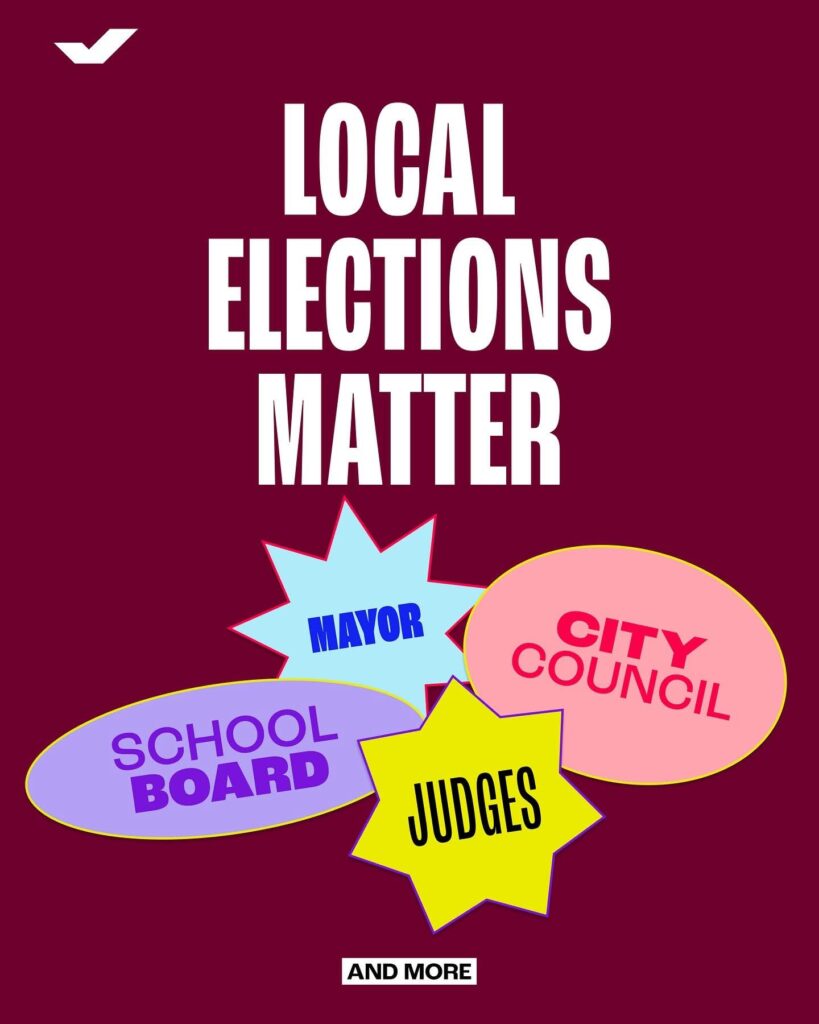
Why Local Elections Matter: Local officials shape the policies and services that touch almost every aspect of our communities. School boards, city councils, mayors, sheriffs, county commissioners, and judges—all play critical roles in:
Education policy: from curriculum choices to school funding and safety.
Policing and criminal justice: setting budgets, oversight, and accountability for law enforcement.
Public transportation and infrastructure, including roads, transit systems, and maintenance.
Housing and zoning laws: affecting rent prices, development, and homelessness.
Health and social services, such as local clinics, food assistance, and mental health programs.
Environmental regulations: decisions on water quality, waste management, and climate resilience.
Every pothole filled, every library funded, every policy that affects your neighborhood begins with choices made by elected officials in your city, county, or school district.
Low Turnout, High Stakes: Ironically, while local elections have the most tangible effect on our communities, they often suffer from alarmingly low voter turnout. It’s not uncommon for mayors, school board members, or district attorneys to be elected by just 10–20% of eligible voters. That means a small, organized group can sway an entire election—especially when others stay home. When fewer people vote, representation becomes skewed. Local elections become more susceptible to special interest influence or extremist candidates who don’t reflect the broader community’s values. In contrast, higher turnout leads to more balanced, inclusive, and accountable governance.
Every Vote Truly Counts: Unlike national races where millions of votes are cast, local elections can be decided by just a handful. There are countless examples of city council races or school board seats being decided by fewer than 100 votes—or even a single vote. That’s not a metaphor. It’s a fact.
So when people say “my vote doesn’t matter,” local elections prove otherwise. Your vote can determine who decides whether your kids’ school gets funded, whether your neighborhood park stays open, or whether a new affordable housing development gets built.
Local Politics = Grassroots Power: Local elections also build the foundation for broader social change. Many national leaders started their careers in city halls and school boards. By engaging in local politics, citizens don’t just influence immediate policies—they help shape the next generation of leadership.
Moreover, local civic engagement builds community power. Organizing, voting, and holding local leaders accountable cultivates a culture of participation. It fosters connections between neighbors, builds coalitions, and creates momentum that can scale to state and national movements.
Voting Is a Responsibility, Not a Romance: You don’t have to adore a candidate to cast your ballot. You don’t have to agree with every policy or like every personality. Voting is about choosing the best available option to represent your interests and your community’s needs.
We don’t wait for perfect weather to wear a coat. We don’t wait for perfect love to build a relationship. And we shouldn’t wait for perfect candidates to vote. Voting is an act of power, not passion.
Show Up: Local elections may not come with the fanfare of national ones, but they are every bit as important—if not more. They shape the schools our children attend, the streets we drive on, the safety of our neighborhoods, and the future of our communities.
So remember: a vote is not a Valentine—it’s a tool. Use it. Don’t wait for perfection. Don’t sit it out. Show up, speak up, and vote—especially when it’s local.
Click here to see who is running in your area & if you do not know your voting location, click here.
Complaints were sent to Westchester County Board of Elections Commissioner Tajian Nelson detailing allegations that Kenneth Plummer no longer resides at his claimed address of 14–16 Martens Place in Mount Vernon and has not lived there for several years, despite being a Mount Vernon District Leader who influences who the Mount Vernon Democratic City Committee endorses as their candidates in elections. Some of these individuals contacted Black Westchester, which led to BW Publisher Damon K. Jones writing about it in his column From The Publisher’s Desk, titled What Is The Democratic Party Hiding?” Kenny Plummer Case Ignored Despite Evidence & Legal Precedent.
Commissioner Nelson contacted Black Westchester to address the accusations that she wasn’t responding to the complaints and shared with us what the process was to have Plummer removed.
Please be advised that NYS Election Law does not allow the Board of Elections to arbitrarily cancel or change a voter’s registration status. Please see below the NYS Election Law §5-220 regarding registration challenges. I am attaching the post-registration challenge affidavit form for your completion. Once our office has received a properly completed form, we will proceed with an investigation regarding Kenneth Plummer’s registration status. After the investigation is concluded, if the findings determine that Mr. Plummer does not reside at his address in the City of Mount Vernon, the Board per NYS Election Law will proceed with the cancellation of his registration at that address.
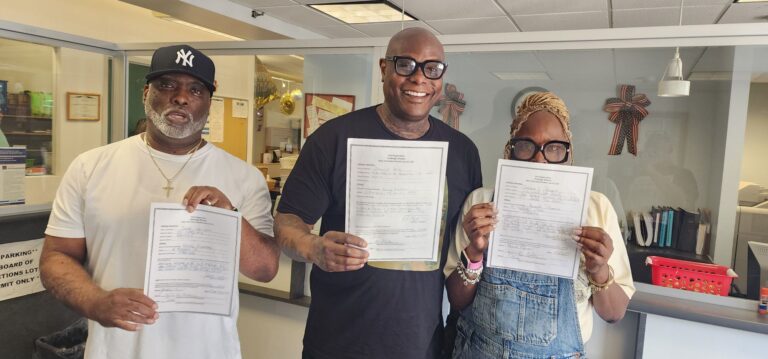
On Monday, June 23rd, a few concerned citizens, including Jones and Jesse Van Lew of Save Mount Vernon, did just that and went to the BOE to make their formal complaints.
“Something that had to be done, being a district leader, to mislead this community this should be a warning for others that there are few who believe in trust, dignity, and have Morals, we will hold all accountable, going forward it’s about Saving Mt.Vernon and Having pride in our leaders to lead,” Van Lew shared with Black Westchester.
Others tell Black Westchester they will be going to the BOE shortly to also fill out post-registration challenge affidavits.
After filling out the affidavits in person they were signed following the taking of an oath: “I do solemnly swear (or affirm) that the foregoing statement made by me on (insert day, month and year) is a truthful disclosure of the reasons for my belief that the registered voter therein named is not qualified to continue to be registered in the election district in which he is now registered.’’
According to Commissioner Nelson, once the properly completed form is filled out, “we will proceed with an investigation regarding Kenneth Plummer’s registration status. After the investigation is concluded, if the findings determine that Mr. Plummer does not reside at his address in the City of Mount Vernon, the Board per NYS Election Law will proceed with the cancellation of his registration at that address.“
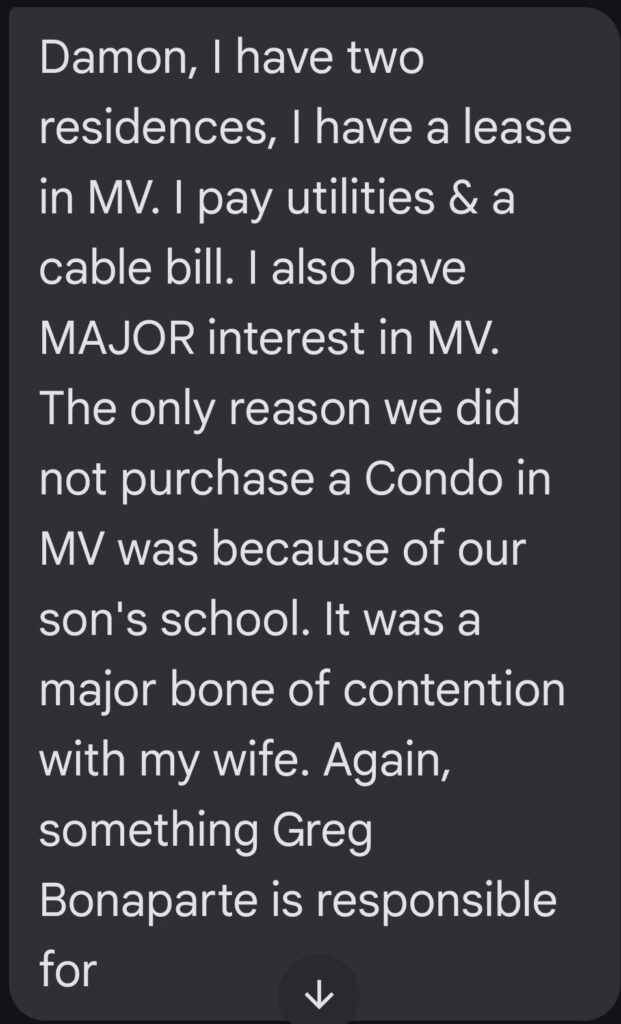
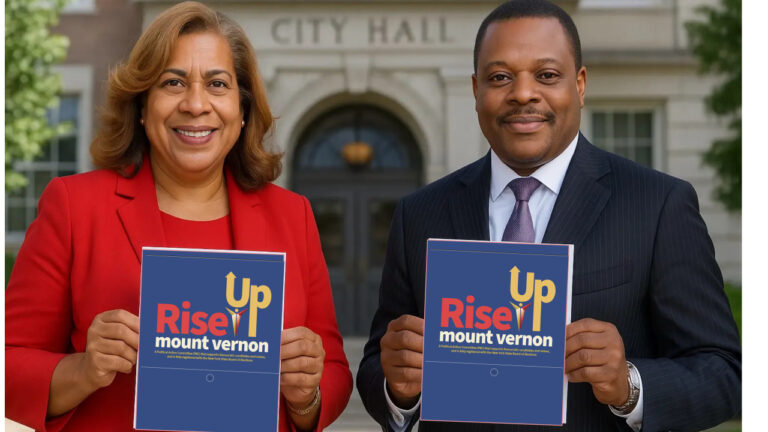
A Black Westchester investigation shows that Kenneth Plummer lives at The Regency Condo, 14 Nosband White Plains, NY, but Mr. Kenneth Plummer is serving as a Mount Vernon District Leader using the address 14 Martens Pl. in Mt. Vernon. You must reside in the same Assembly District, or you are not qualified to be a District Leader in the City of Mount Vernon. Plummer admitted he lives in White Plains in a text message to Black Westchester’s Jones and Woodson in a poor attempt to get us to back down from the articles about him and his Political Action Committee, RiseUp Mount Vernon.
“Each member of a county committee shall be an enrolled voter of the party residing in the county and the assembly district from which or in the assembly district containing the election district in which such member is elected.” Therefore, a County Committee member is not required to live in the same municipality but can be a County Committee member in any municipality that includes their Assembly District.
So since the City of Mount Vernon is in New York’s 89th State Assembly District and White Plains, NY is split between two New York State Assembly districts: Assembly District 88 and Assembly District 93, according to NYS Election Law Section 2-104(1) of the New York State Election Law, Plummer is not legally allowed to be a District Leader in the City of Mount Vernon or vote in the Mount Vernon Democratic Primary.
The complaints have been filed, and now the investigation begins. Stay tuned to Black Westchester for more on this developing story.
A Growing Web of Political Abuse, Developer Debt, and Illegal Coordination
A newly filed lawsuit in Westchester Supreme Court adds weight to what many Mount Vernon residents have long suspected—Mayor Shawyn Patterson-Howard is deeply involved in a political operation powered by misused public resources, unethical campaign tactics, and a shadowy PAC known as Rise Up Mount Vernon, funded by developer interests. This lawsuit not only corroborates key allegations but also strengthens Black Westchester’s ongoing investigation into how Rise Up Mount Vernon is influencing local elections and governance behind closed doors.
The 22-page complaint, filed on June 23, 2025, by Mount Vernon resident and taxpayer Gabriel Thompson, details alleged violations of city ethics rules, state election laws, and the Public Officers Law. Among the most alarming revelations: the Mayor’s direct coordination with Rise Up Mount Vernon, which the lawsuit now documents with concrete evidence—including campaign texts, public endorsements, and shared communications infrastructure.
One critical detail now comes into focus: Rise Up Mount Vernon was not registered with the New York State Board of Elections until May 16, 2025—just four days before the May 20th School Board election.
Despite that, the group appears to have been active well before that date—sending political mailers, promoting specific candidates, and organizing smear campaigns—all in coordination with the Mayor’s office. Under New York Election Law, no political committee may raise or spend money to influence an election prior to official registration. If Rise Up engaged in any activity before May 16, that could constitute serious violations of campaign finance and election law, including unreported expenditures, illegal coordination, and operating as an unregistered committee.
The lawsuit further alleges that Mayor Shawyn Patterson-Howard engaged in potentially unlawful conduct when she personally alerted a close associate of a school board candidate—later arrested and charged with sexually abusing a minor—of pending allegations before informing law enforcement. According to the complaint, the Mayor received a message regarding the individual’s alleged misconduct involving a 14-year-old girl and possible financial theft from a nonprofit. Rather than treating the matter with immediate urgency by reporting it to the proper authorities, Mayor Patterson-Howard allegedly summoned the accused to City Hall and disclosed the content of the anonymous warning. The individual was subsequently arrested by the Westchester County District Attorney’s Office. The lawsuit claims this action demonstrates not only a serious lapse in judgment but also a possible attempt to interfere in a criminal investigation—particularly troubling given that the accused was romantically involved with one of the Mayor’s endorsed school board candidates.
Now that the lawsuit provides clear evidence of the Mayor’s direct ties to Rise Up, the legal implications multiply. This is no longer a matter of political perception—it’s a matter of potential criminal exposure. Under state law:
Coordinating with a PAC while in public office and using city resources to advance partisan outcomes could violate Public Officers Law § 74(3)(h) and Election Law § 17-158.
The Mayor’s use of active-duty police officers as a personal campaign security detail—without budgetary authorization—may constitute theft of services and violation of the city charter.
The creation and promotion of fraudulent “sample ballots” tied to the Mayor’s endorsements, distributed via a PAC not yet registered, raises questions of deliberate election interference.
This mounting evidence also casts a glaring spotlight on Kenny Plummer, a political figure widely associated with Rise Up Mount Vernon. According to a Facebook post from Candidates Andre Wallace and Nicholas Mastrogiorgio, Plummer has doubled down, actively defending the PAC’s role, asserting influence over its political narrative, and even threatening candidates.
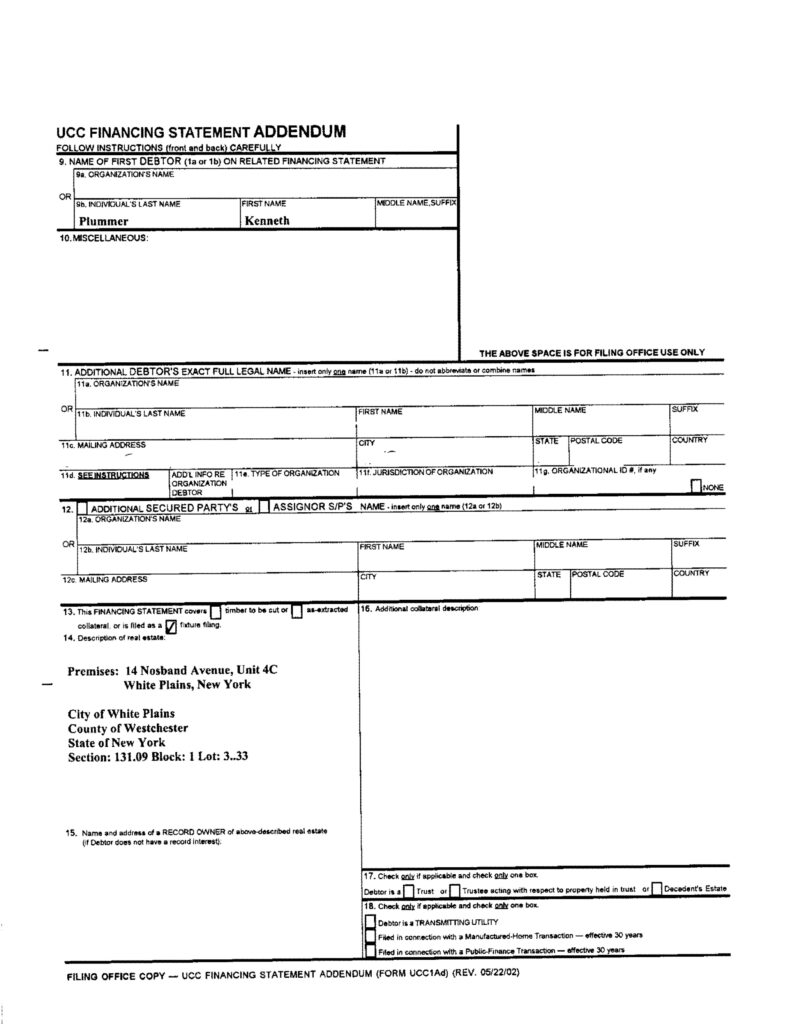
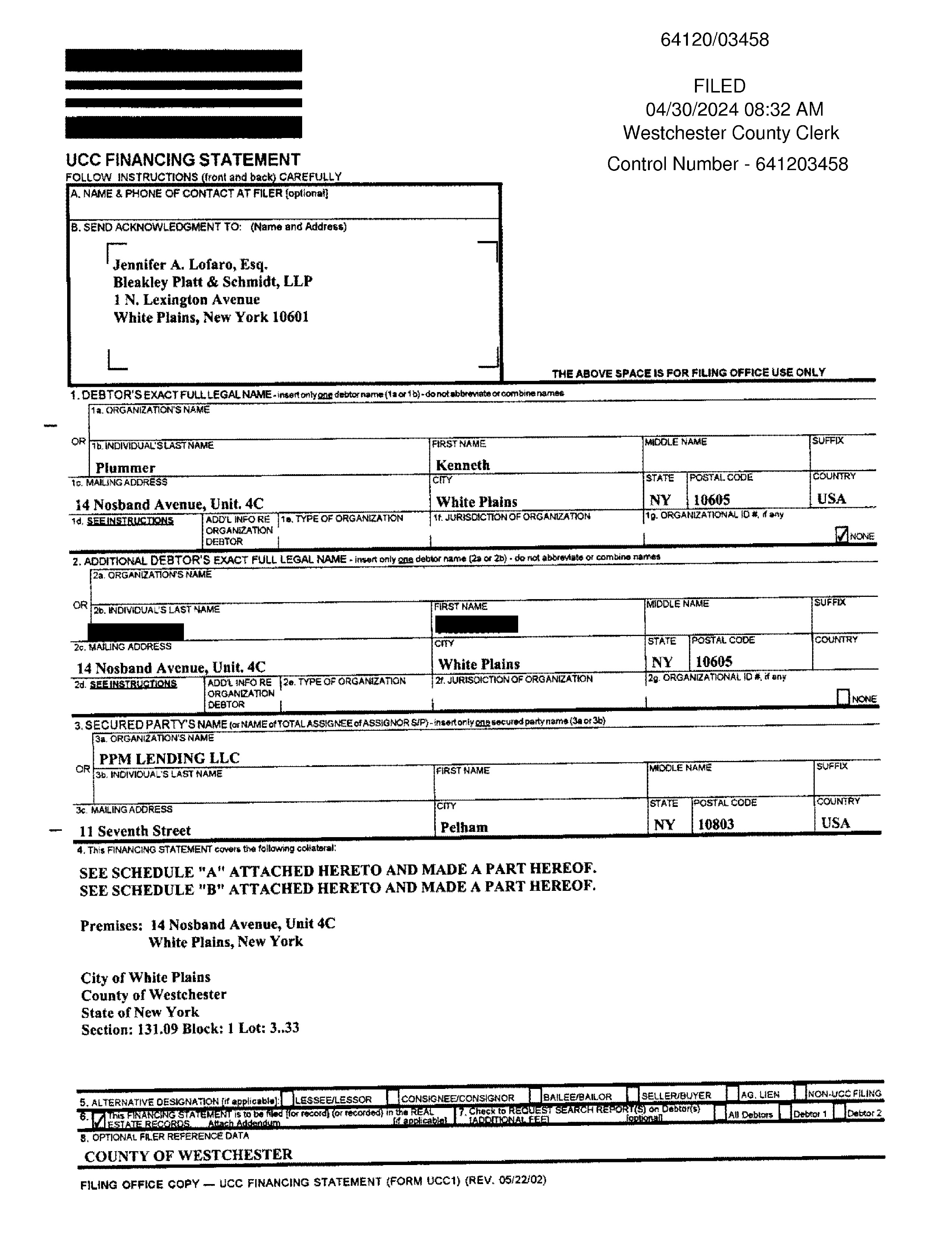
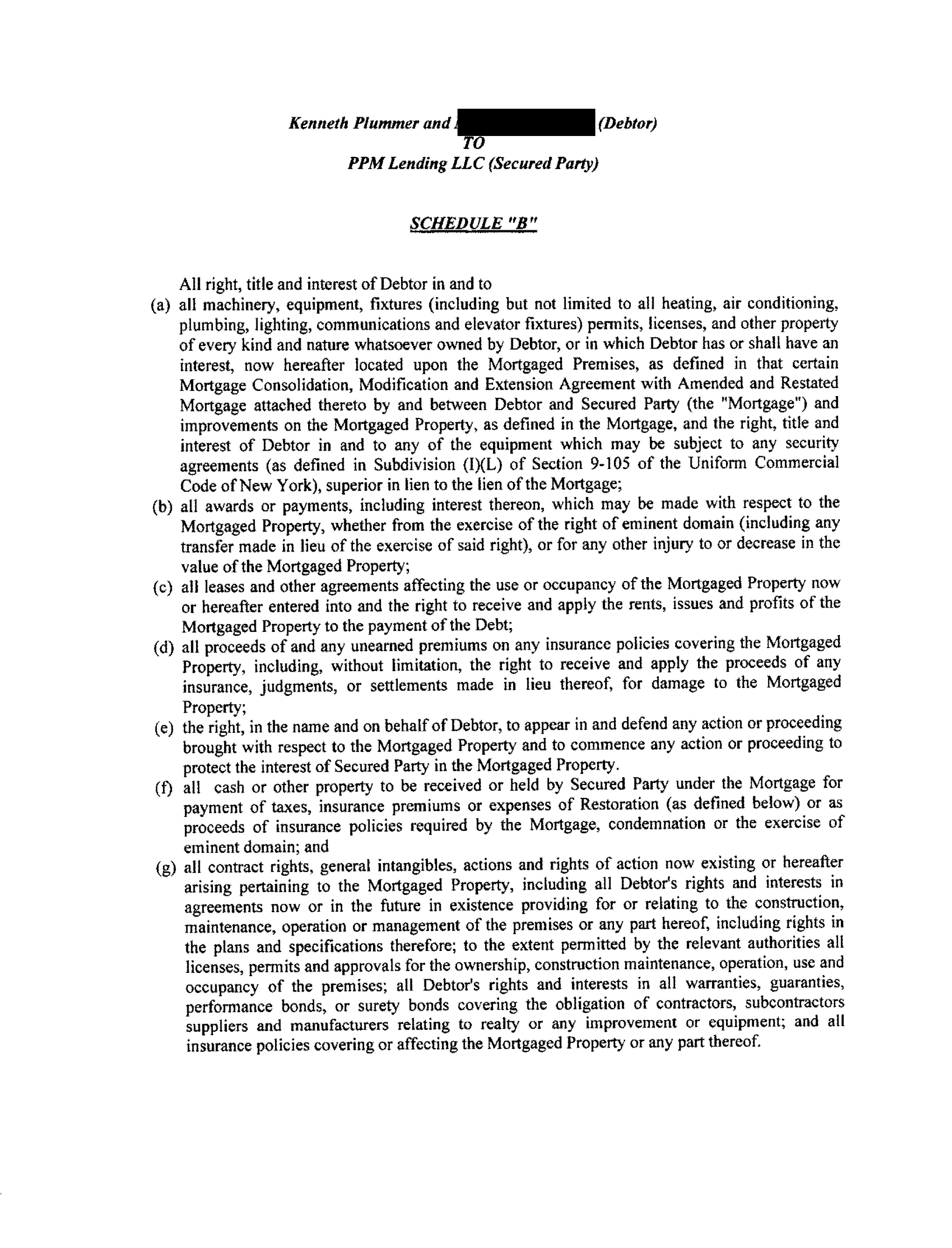
Plummer’s judgment is further questioned by his financial entanglement with PMP Lending LLC, a developer-connected firm. A UCC filing with the Westchester County Clerk confirms that Plummer entered into a sweeping mortgage agreement that gives the lender control over income generated from the property, along with other rights. Simply put, Plummer is compromised, owing significant money to a developer in a city where development policy is now intertwined with campaign politics.
Further complicating the picture,formal complaints have been filed alleging that Kenny Plummer is illegally holding a District Leader positionwhile no longer residing at his registered address in Mount Vernon. As a District Leader, Plummer influences who the Mount Vernon Democratic City Committee endorses in local elections. These complaints raise serious concerns about voter fraud, political eligibility, and the legal integrity of party leadership.
The lawsuit further alleges that Mayor Patterson-Howard and Rise Up Mount Vernon:
Created and distributed partisan mailers disguised as official city communications
Used taxpayer-funded police for political escort duties
Hosted online forums for endorsed candidates
Launched a smear website to discredit opponents just days before the primary
All of this points to a dangerous blurring of lines between government, campaign activity, and private special interests. If these claims are substantiated, Rise Up Mount Vernon did more than violate paperwork deadlines—it hijacked local elections under the cover of legitimacy, shielded by silence from other elected officials.
Now that there’s documented coordination between the Mayor and Rise Up, several key outcomes are possible:
The New York State Board of Elections Enforcement Division may launch a full investigation
The Attorney General or District Attorney could pursue charges for misuse of public resources or illegal campaign coordination
Other candidates backed by Rise Up may now be vulnerable to ethics complaints or financial scrutiny
Mayor Shawyn Patterson-Howard said the lawsuit is frivolous and politically motivated.
“This is a politically motivated and frivolous lawsuit filed by a so-called activist. Unfortunately, it will force the City to divert valuable resources at a time when we are focused on public safety, economic development, and housing for our residents. It seeks to drag Mount Vernon back to an era we’ve worked hard to move beyond. When I took office, I promised to lead with integrity and not to do anything that would embarrass our community—and I have kept that promise. We will allow this matter to play out in court,” Mayor SPH shared with Black Westchester.
Stay tuned to Black Westchester for more on this developing story.
The climb is complete. The rebuild is done. The Oklahoma City Thunder are champions.
In a series that has defied expectations, the Oklahoma City Thunder just captured their first championship in franchise history. The Thunder were the best team in the league during the regular season, finishing with a franchise-record 68 wins. OKC’s core players, including Shai Gilgeous-Alexander, Jalen Williams, and Chet Holmgren, are relatively young, suggesting the possibility of more championship runs in the future. Fans in Oklahoma City celebrated the team’s first championship since the move from Seattle. Mount Vernon’s Gus Williams, known for his volume scoring and electric on-court style, who in 1979 helped the Seattle SuperSonics win their only championship. The SuperSonics, a historic NBA franchise, moved to Oklahoma City in 2008.
The best team all season was the best team at the end, bringing the NBA title to Oklahoma City for the first time. Gilgeous-Alexander finished off his MVP season with 29 points and 12 assists, and the Thunder beat the Indiana Pacers — who lost Tyrese Haliburton to a serious leg injury in the opening minutes — 103-91 in Game 7 of the NBA Finals on Sunday night.
“It doesn’t feel real,” said Gilgeous-Alexander, the Finals MVP. “So many hours. So many moments. So many emotions. So many nights of disbelief. So many nights of belief. It’s crazy to know that we’re all here, but this group worked for it. This group put in the hours and we deserve this.”
Jalen Williams scored 20 points and Chet Holmgren had 18 for the Thunder, who finished off a season for the ages. Oklahoma City won 84 games between the regular season and the playoffs, tying the 1996-97 Chicago Bulls for the third most in any season. Only Golden State (with 88 wins in 2016-17) and the Bulls (with 87 wins in 2015-16) won more. A major accomplishment for the team that had a 22-win season in the 2020-2021 season, under coach Mark Daigneault’s first season as head coach. Followed by a 24-win season in 2021-2022. In 2025, the Thunder achieved significant success, culminating in their first NBA championship win.
Shai Gilgeous-Alexander (SGA) also made NBA history. Winning the NBA Finals and Finals MVP, he joined a very exclusive club of players who have won both the regular season MVP and Finals MVP in the same year. Gilgeous-Alexander is the first player since LeBron James in 2013 to win both the regular season MVP and Finals MVP in the same year. This should also solidify his place as the greatest player in Thunder history, surpassing Russell Westbrook, making him the first player in Thunder history to lead the franchise to an NBA title, further cementing his legacy.
Furthermore, winning the Finals makes the three-time NBA All-Star and three-time All-NBA First Team member only the fourth player to achieve a scoring title, MVP, and hoisting the Larry O’Brien trophy in the same season, alongside Kareem Abdul-Jabbar in 1971, Shaquille O’Neal in 2000, and Michael Jordan four times, in 1991, 1992, 1996, and 1998.
Oklahoma City’s KOCO 5 News SKY 5 captured fans taking to the streets in downtown Oklahoma City to celebrate Sunday night’s win against the Indiana Pacers for the Thunder’s first championship.
Pacers forward Pascal Siakam was part of the Toronto team that won in 2019, Thunder guard Alex Caruso was part of the Los Angeles Lakers team that won in the pandemic “bubble” in 2020, Milwaukee won in 2021, Golden State in 2022, Pacers forward Thomas Bryant and Denver prevailed in 2023, and Boston won last year’s title.
And now, the Thunder get their turn. The youngest team to win a title in nearly a half-century has reached the NBA mountaintop, and SGA may have arguably made the case as the greatest player in Thunder history!
The Thunder are the second-youngest team in at least the last 70 years to win a finals, with an average age per player of 25.56, when weighted for playoff games played, according to the league. Only the 1976-77 champion Portland Trail Blazers were younger, by an average age of about half a year per player.
Last year, with Holmgren on the court for 82 games, Oklahoma City became the youngest team to ever finish first in the conference. After a disappointing — but perhaps necessary for learning purposes — loss in the second round in 2024 to the Dallas Mavericks, the Thunder returned this season stronger by adding Caruso and Hartenstein.
Again, this is the second championship for the franchise. The Seattle SuperSonics won the NBA title in 1979, but there’s nothing in the rafters in Oklahoma City to commemorate that title. In October, a championship banner is finally coming. A Thunder banner.
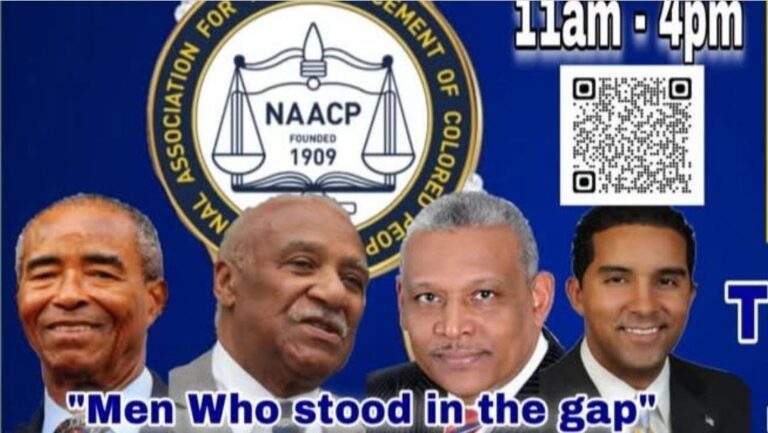
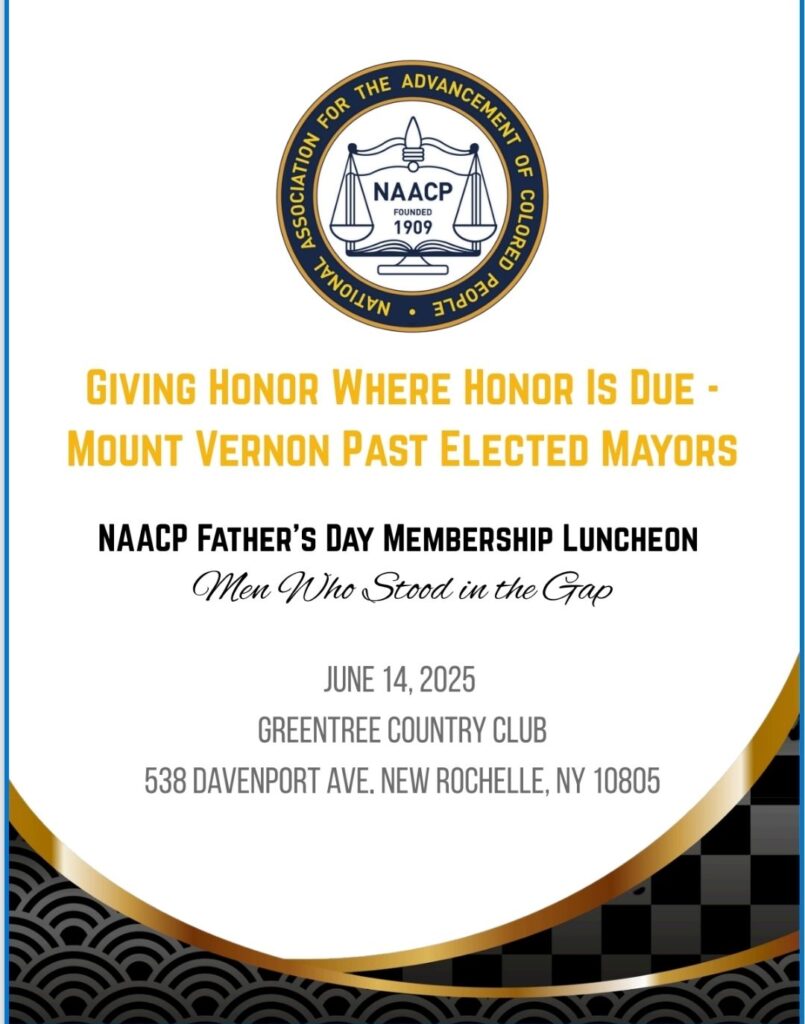
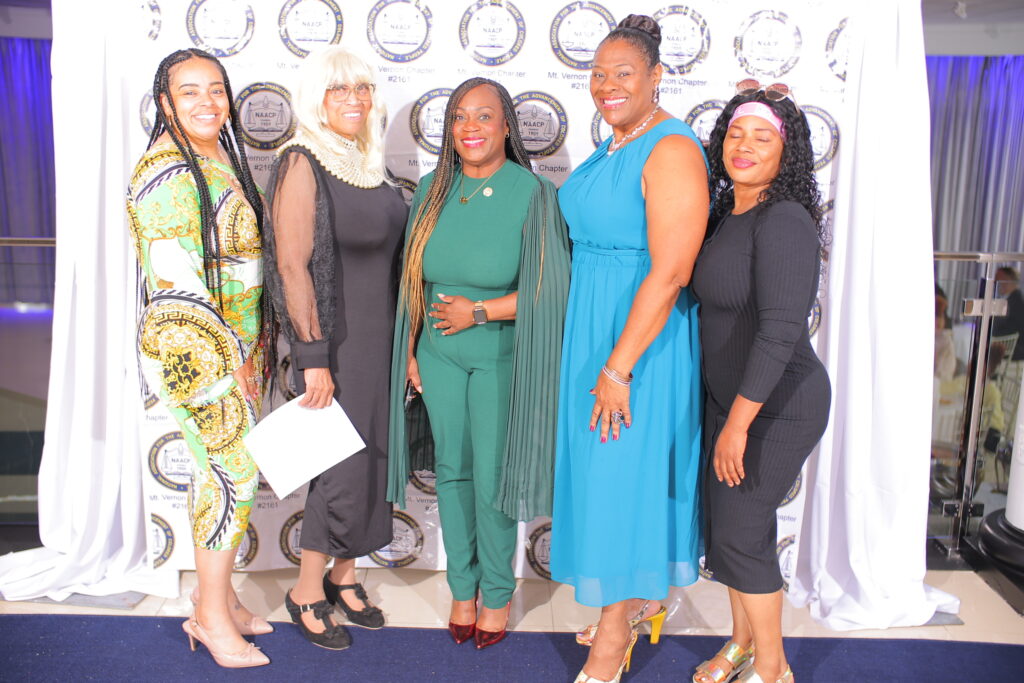
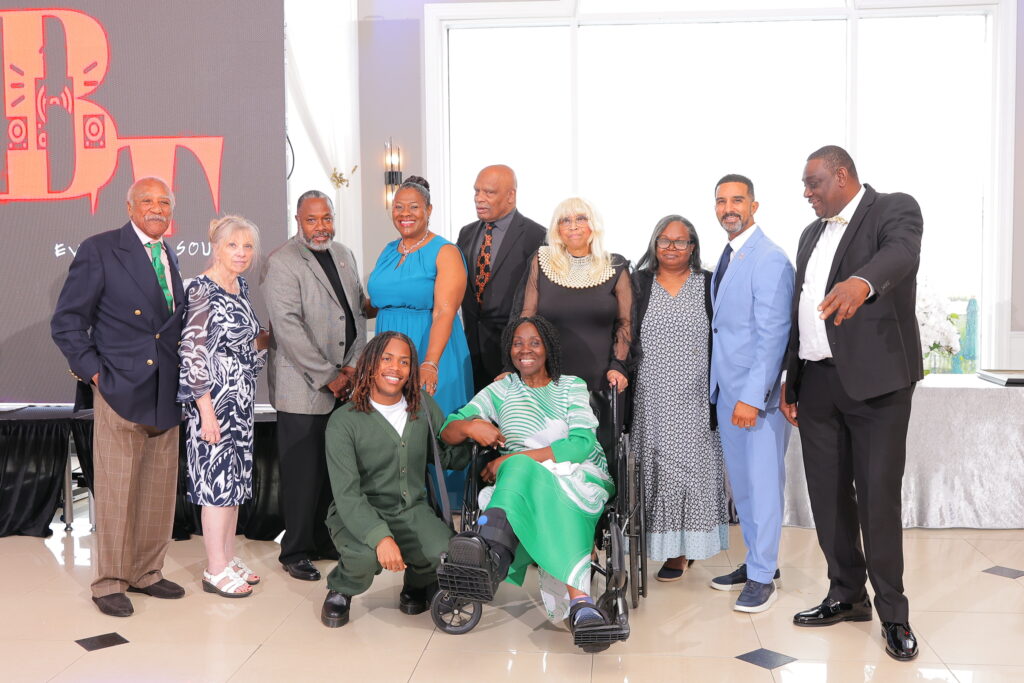
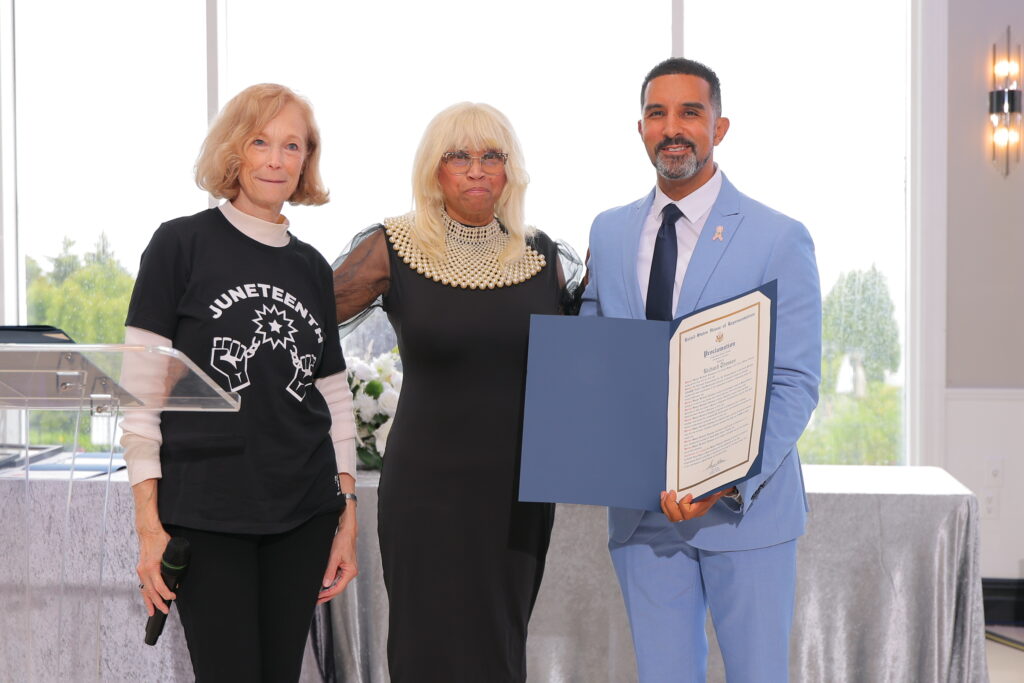
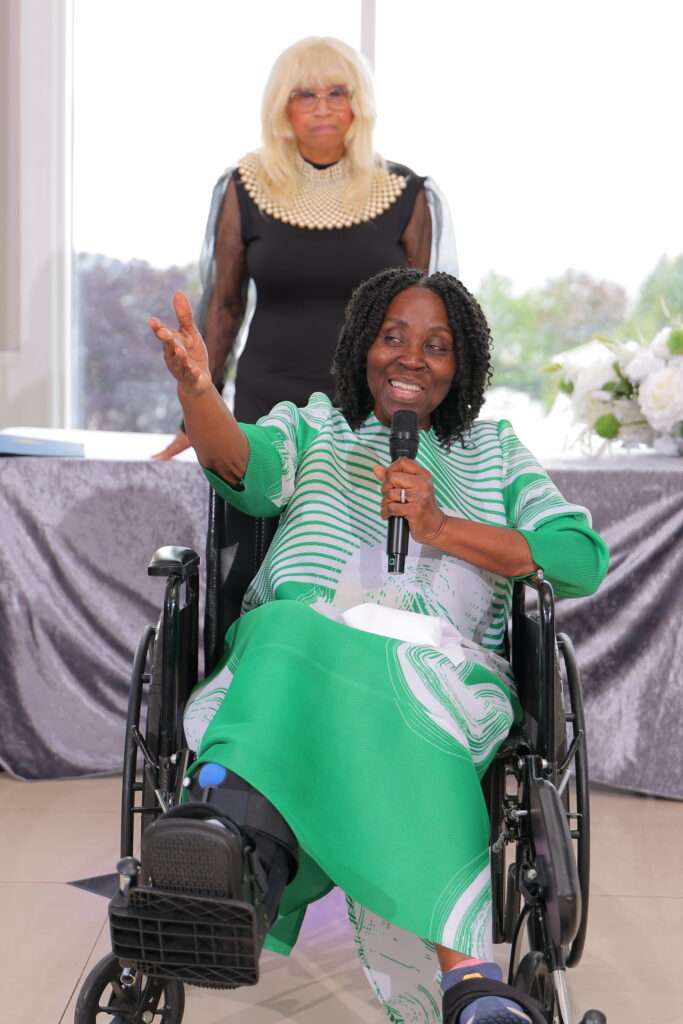
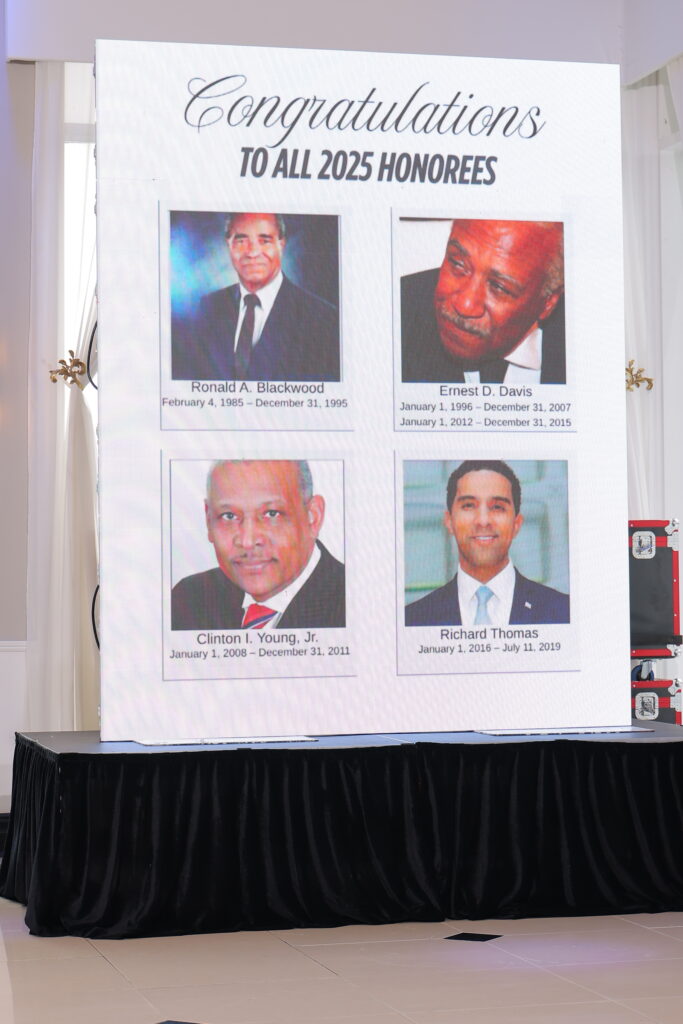
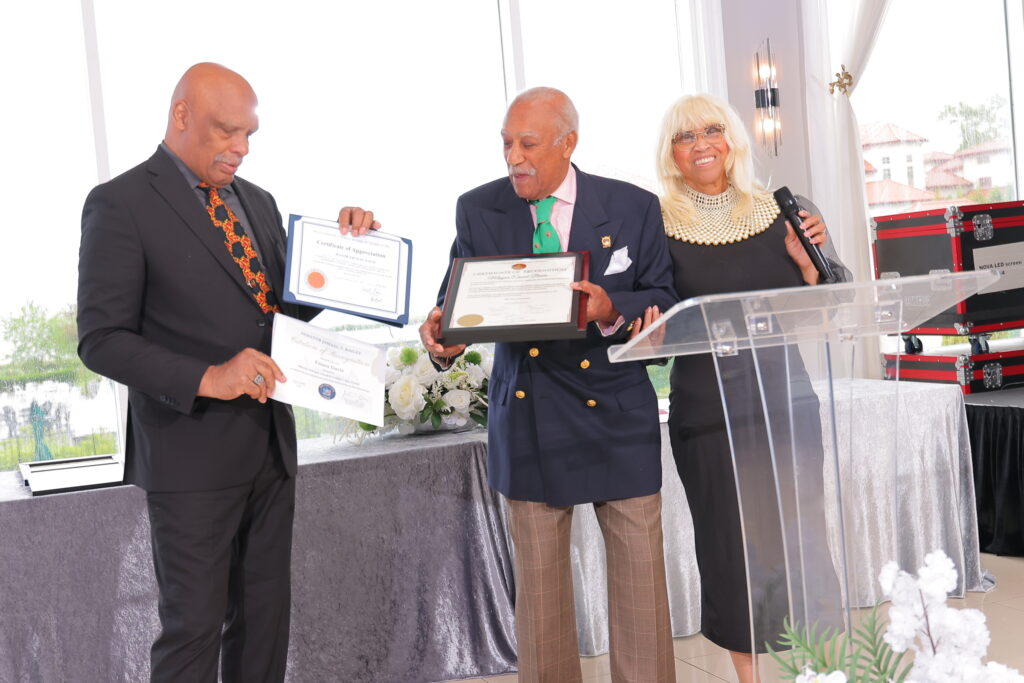
It was one of those days when the sky was thick with clouds and the rain came down like it had something to say. But the weather couldn’t drown the moment. On Saturday, June 14, 2025, at The Greentree Country Club located at 538 Davenport Ave in New Rochelle, the NAACP Mount Vernon Branch gathered community leaders, elders, and youth to pay tribute to the past elected Mayors of Mount Vernon, NY.
And listen, if you weren’t there, you missed more than a program.
You missed a pulse. One made possible with the support of dedicated partners like Zonzini Pipeline Service Inc, WORLDGROUP914, Ridgeway Garden Center, Stonewell Management, and others who believe in investing in Black legacy.
Lois Campbell Opened the Gates
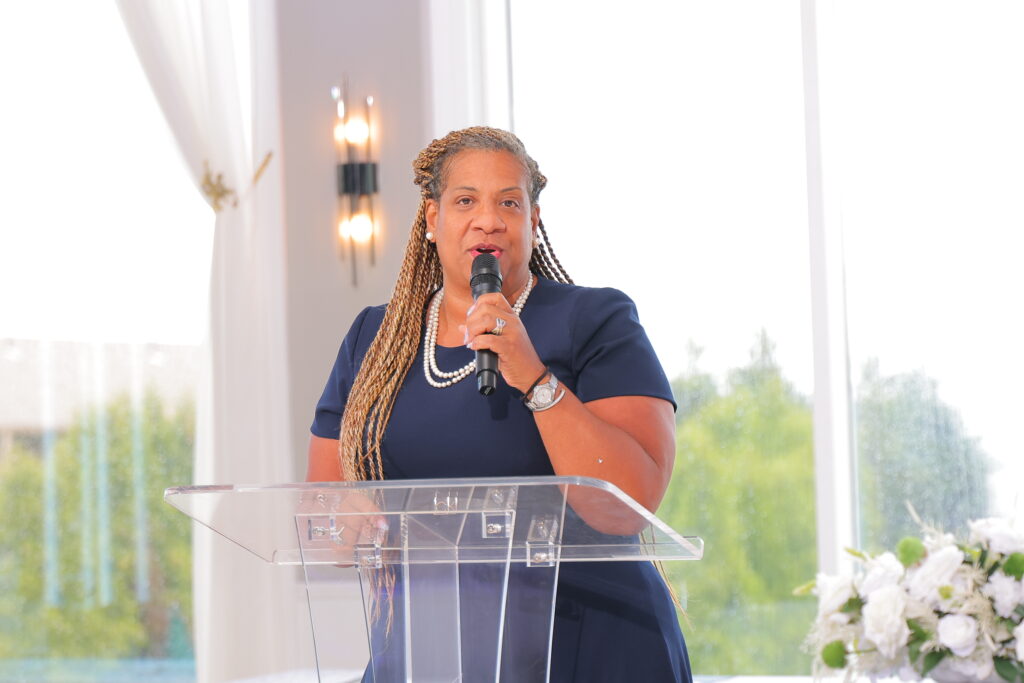
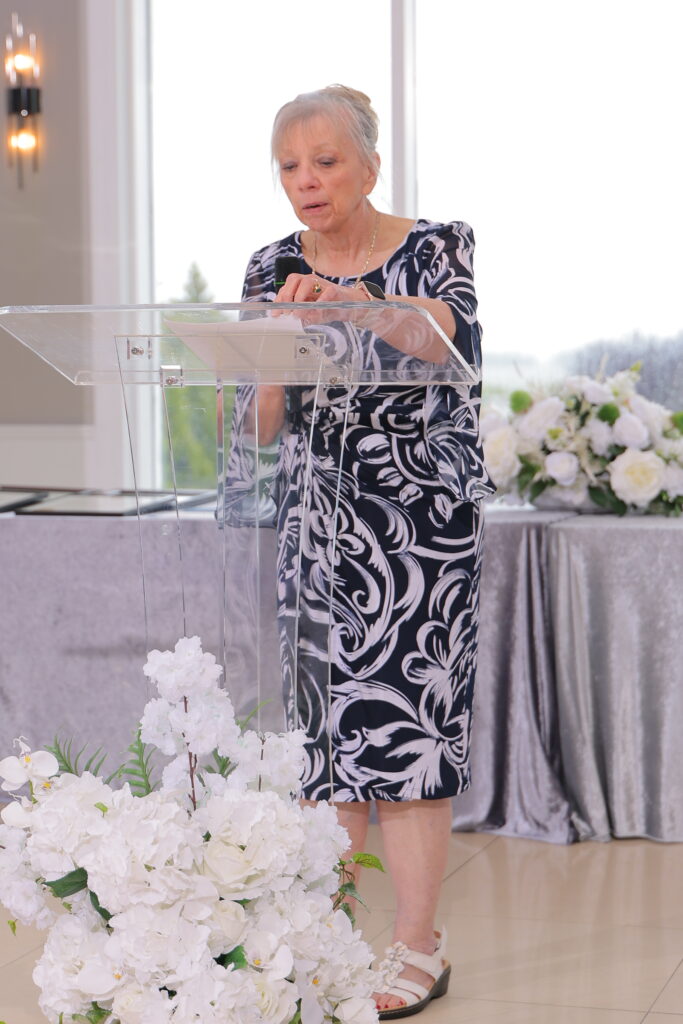
Before any music dropped or mics got warm, Lois Campbell stepped forward and laid the foundation. Her words didn’t just welcome us, they rooted us. She brought grace, depth, and truth, reminding us that community doesn’t start with applause. It starts with intention. Lois didn’t just open a ceremony. She opened a space for reverence.
Legacy in the Air, Even in the Rain
Inside the Greenntree Country Club, there was a stillness that felt powerful. Elders embraced. Students stood tall, eyes wide. You could feel it, the culture. The history. The love. The rain outside wasn’t a nuisance. It was a symbol. It felt like ancestral tears, watering the soil of the legacy we were there to celebrate. This wasn’t a staged event. It was a living, breathing archive of who we are.
The Ceremony Had Heat from the Jump
Kathie Brewington, president of the NAACP Mount Vernon Branch, brought the presence that only comes from years of service. Then Kay Starr, our Mistress of Ceremonies, guided the energy like a master storyteller, flowing effortlessly between moments with rhythm and grace.
And then, Matthew Samuels, a student from Denzel Washington School, stepped up to sing “Lift Every Voice and Sing.” Whew. He didn’t sing to us. He sang for us. He sang through us. His voice wasn’t just beautiful, it was powerful. Transcendent. The whole room froze, then filled with something you can’t name but you know when you feel it.
From the Pulpit to the Past
Pastor Michael Basedo, Senior Pastor and Founder of Christ Tabernacle Church, brought a prayer that didn’t just bless the event; it charged us. His words reminded everyone in the room that public service is a sacred calling. That leadership is more than policy; it’s people. And this city? Deserves leaders who show up even when the lights are off.
Then came the students of Denzel Washington School, led by Jahelyn Jacobs, delivering a history of the NAACP with clarity, pride, and purpose. They didn’t just speak it, they lived it. You could see it in their posture, their tone, and their fire. Our future? In excellent hands.
Mayor Shawyn Patterson-Howard Brought the Truth
When current Mount Vernon Mayor Shawyn Patterson-Howard took the mic, the room leaned in. She spoke with the weight of responsibility and the clarity of purpose. She honored her predecessors but didn’t sugarcoat the truth. “Legacy is not a statue you walk past, it’s a standard you live by.” Bars. Absolute bars.
She reminded us that real leadership isn’t about being liked, it’s about being loyal. Not to power. But to people.
Chapter of Black Brilliance
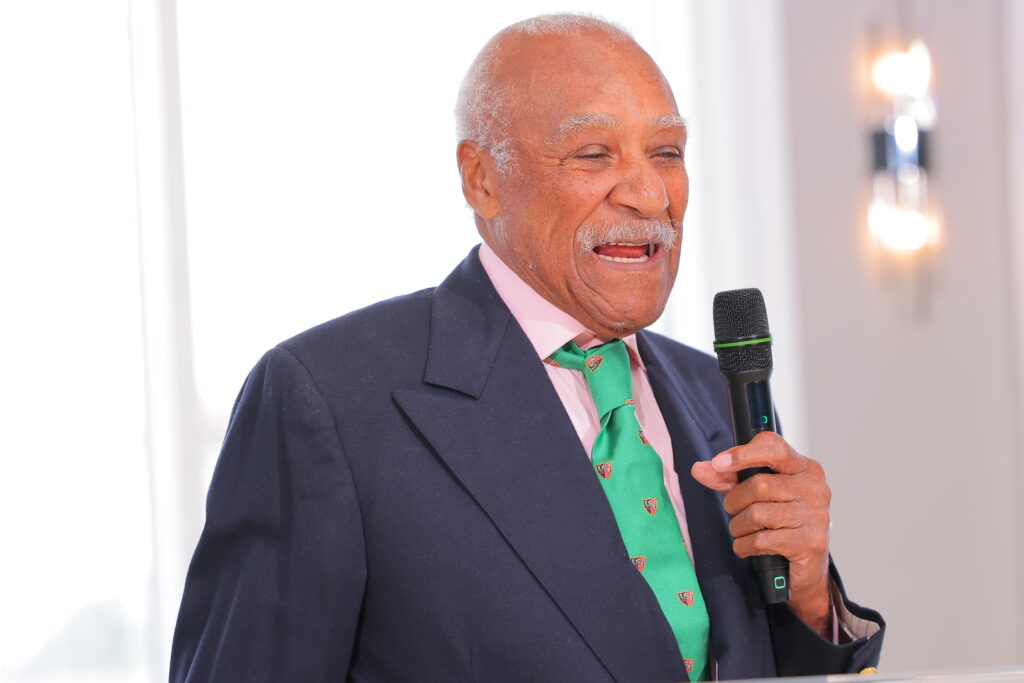
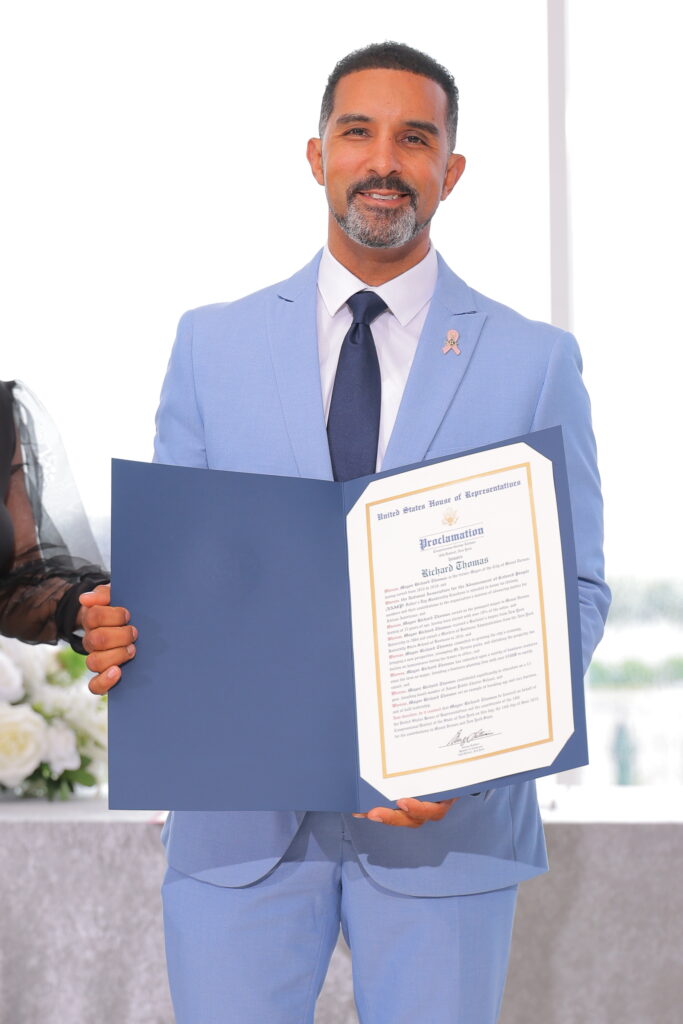
Mayor Ernie Davis. Mayor Richard Thomas. Each brought their truths, their scars, and their wisdom. This wasn’t a victory lap; it was testimony. They spoke on budgets, barriers, and the weight of leadership when the spotlight fades but the challenges remain.
Mayor Ronald Blackwood, the first Black mayor of Mount Vernon, was honored posthumously. His name was spoken with reverence. A reminder of the doors he opened and the path he paved.
Mayor Clinton I. Young Jr. was not in attendance, but his legacy was acknowledged with deep respect. Keisha Skipper, President of NAACP Yonkers, presented in his honor, recognizing his lasting contributions to Mount Vernon’s civic life.
These weren’t just officials. They were community architects. And hearing them reflect?
It hit differently.
We Weren’t Just Celebrating, We Were Healing.
Every nod in the crowd. Every hand on a heart. Every teary eye. It wasn’t performative. It was personal. Mount Vernon came together not just to applaud, but to affirm. To say “We see you. We thank you. We remember.”
This was healing in real time.
Legacy Is a Living Thing
That’s what stayed with me most. The truth is that legacy isn’t a look back, it’s a leap forward. This wasn’t a commemoration. It was a call to action. The baton didn’t just get passed; it got placed in the hands of a new generation. Quietly. Clearly.
Mount Vernon reminded us that history doesn’t belong to the past. It belongs to the people brave enough to carry it forward.
And if you missed this moment? You still have time. Time to listen. Time to act. Time to show up.
Because Mount Vernon isn’t just history. It’s happening.
On the evening of June 21st, former President Donald J. Trump ordered a series of coordinated airstrikes on Iran’s top nuclear facilities in an operation labeled “Midnight Hammer.” The U.S. military targeted key sites in Natanz, Isfahan, and Fordow using stealth bombers and submarine-launched cruise missiles. Trump took to the airwaves declaring the strikes a complete success, stating the Iranian enrichment infrastructure was “totally obliterated.”
While the mainstream media focuses on the geopolitical implications and military precision of the strikes, the real political story is unfolding here at home. Trump’s decision not only marks a dramatic escalation in U.S.–Iran tensions but also stands in direct conflict with the core beliefs of many within his own political base—particularly the MAGA movement.
One of Trump’s signature campaign positions was his outspoken rejection of endless wars and foreign entanglements. He ran against the legacy of the Bush-Cheney war doctrine, criticized the Obama-era interventions, and promised to refocus American resources inward. Many of his supporters embraced that vision: secure the borders, rebuild the economy, avoid foreign wars. That anti-interventionist stance became a foundational pillar of his appeal to working-class voters, veterans, and political independents.
This latest move, however, raises serious questions about whether Trump is now contradicting the very message that fueled his rise to power. The use of military force, without congressional authorization, resembles the same establishment-driven foreign policy that Trump once condemned. Across independent conservative media, voices that once championed Trump are expressing deep concern. They are asking whether this signals a return to neoconservative influence, wrapped in different branding.
It’s also important to examine the domestic costs of this decision. Military strikes don’t exist in a vacuum. They come with financial, political, and social consequences. Defense contractors may thrive, but working families at home often suffer. As we brace for possible economic ripples—rising fuel prices, increased defense spending, and reduced attention to domestic crises—the question remains: what’s the real return on investment for the American people?
At the same time, the timing of the strike raises flags. With an election season underway, the bombing conveniently shifts national conversation away from pressing domestic concerns like housing affordability, education reform, economic instability, and healthcare access. War, historically, has served as a reset button for political narratives. The question is whether this is a strategy to reframe Trump as a wartime leader—or a calculated move to dominate the news cycle.
Now Trump’s base faces a defining moment. Do they stay loyal regardless of contradictions? Or do they hold the former president to the very principles he used to challenge the political establishment? The MAGA movement has long claimed to stand for America First. That slogan was never just about immigration or trade—it was also about rejecting the costly legacy of American empire-building overseas.
This moment is bigger than missiles. It is a test of political integrity. It is a reminder that the decisions made abroad have consequences at home. And it is a chance for voters—across party lines—to judge leadership not by bravado, but by consistency, priorities, and results.
For more political insight and analysis from an independent Black perspective, visit BlackWestchester.com and subscribe to our YouTube channel.
As Kenny Plummer continues to assert political influence in Mount Vernon—promoting candidates, guiding campaign decisions, and positioning himself as a leader in the city’s political future—newly obtained documents raise serious questions about the financial interests that may be shaping, or benefiting from, his involvement. What began as public concern over his role in the controversial Rise Up Mount Vernon PAC has evolved into a broader examination of possible conflicts of interest, undisclosed financial obligations, and ethical concerns that merit closer scrutiny. At the center of this controversy is a fourth-floor condominium on Nosband Avenue in White Plains, New York—and a mortgage agreement with PMP Lending LLC, a company affiliated with a real estate development firm based in New Rochelle.
For the people of Mount Vernon, understanding who is behind the money, messaging, and political maneuvers is essential. If Mr. Plummer seeks to play a central role in shaping the city’s leadership, residents deserve full transparency—not just about the candidates he supports, but about the financial and political networks that may be influencing those choices. Where there is power and influence, there must also be accountability.
What the Documents Reveal
1. Confirmed Mortgage with PMP Lending LLC
A Uniform Commercial Code (UCC) Financing Statement filed with the Westchester County Clerk confirms that Kenny Plummer and a co-debtor entered into a mortgage agreement with PMP Lending LLC. The agreement provides the lender with a broad secured interest in the property, including not only the real estate itself but also associated fixtures, appliances, rental income, leases, insurance proceeds, eminent domain claims, and contracts for maintenance or renovation. Such comprehensive mortgage terms are common in commercial lending and indicate a significant financial relationship between the borrower and lender.
Given that the mortgaged property is located in White Plains and that PMP Lending is affiliated with a real estate development firm in New Rochelle, this arrangement raises important public interest questions—particularly in light of Plummer’s political role in Mount Vernon. Residents may reasonably ask: Why is a politically active figure with confirmed financial obligations tied to properties outside of Mount Vernon so heavily involved in shaping the city’s political landscape? What influence, if any, do these financial relationships have on campaign activity, endorsements, or policy advocacy?
These questions speak to a broader concern about transparency and accountability in local governance. While there is no evidence that the mortgage itself is improper or illegal, it underscores the need for political figures to clearly disclose financial ties that may intersect with public responsibilities—particularly when those ties involve entities that could have an interest in municipal decisions
Who Is PMP Lending LLC—and Why It Matters
PMP Lending LLC is not only a lender but is also affiliated with a real estate development firm based in New Rochelle, New York. This dual role—financial institution and developer—raises reasonable questions about how financial and political interests may intersect, particularly when connected to individuals involved in public political activity.
In Westchester County, developers from cities like New Rochelle have historically expressed interest in expanding their influence into neighboring municipalities such as Mount Vernon. In this context, any financial relationship between a politically active figure and a development-linked entity in a neighboring city warrants careful public scrutiny. While there is no evidence of wrongdoing, the potential for perceived conflicts of interest exists—especially if the developer-lender could benefit from decisions related to land use, zoning, or contracts influenced by political actors.
The mortgage between Kenny Plummer and PMP Lending LLC goes beyond a typical financial transaction, as it includes control over property-related income streams and contractual arrangements. When considered alongside Plummer’s involvement in local political endorsements and campaign financing, this financial relationship raises legitimate questions about transparency and the balance of influence in Mount Vernon’s decision-making process.
At the time of publication, a request for comment was sent to PMP Lending LLC representative William O’Connor. No response has been received.
Even more troubling is the question of whether Kenny Plummer was ever legally eligible to serve as District Leader in the first place. Under New York Election Law § 6-122, candidates for party positions—such as District Leader—must be bona fide residents of the Assembly district they seek to represent. This requirement is not symbolic—it’s a legal mandate to ensure local leadership reflects the will of the people actually living in the district.
By his own admission, Plummer splits his time between White Plains and Mount Vernon. And while he may have held a lease or utility bill in Mount Vernon, that alone does not establish legal residency or domicile. In New York, domicile is defined by where a person actually lives with the intent to remain. Simply put, it doesn’t matter if your name is on a lease or if the lights are on in an apartment—if it’s not your true, permanent home, it doesn’t meet the standard.
This apparent violation of the residency requirement not only undermines the integrity of his position, but it also suggests Plummer misled both the party and the public. Ultimately, the legal and ethical pressure surrounding this issue forced him to resign, casting a shadow over the political judgment of those who allowed it to happen in the first place
2. Federal Tax Liens Totaling Over $69,000
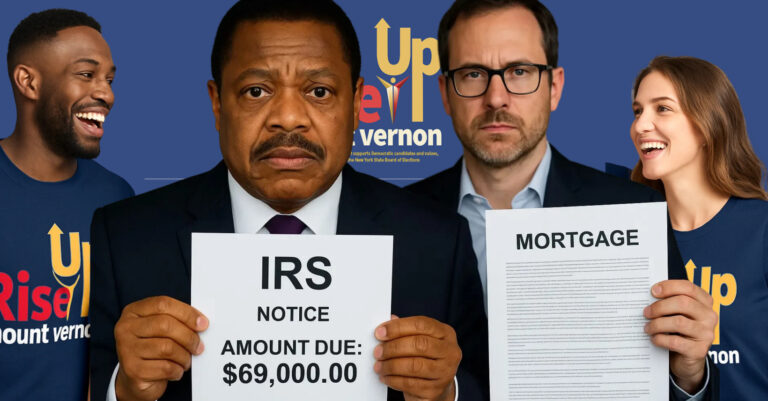
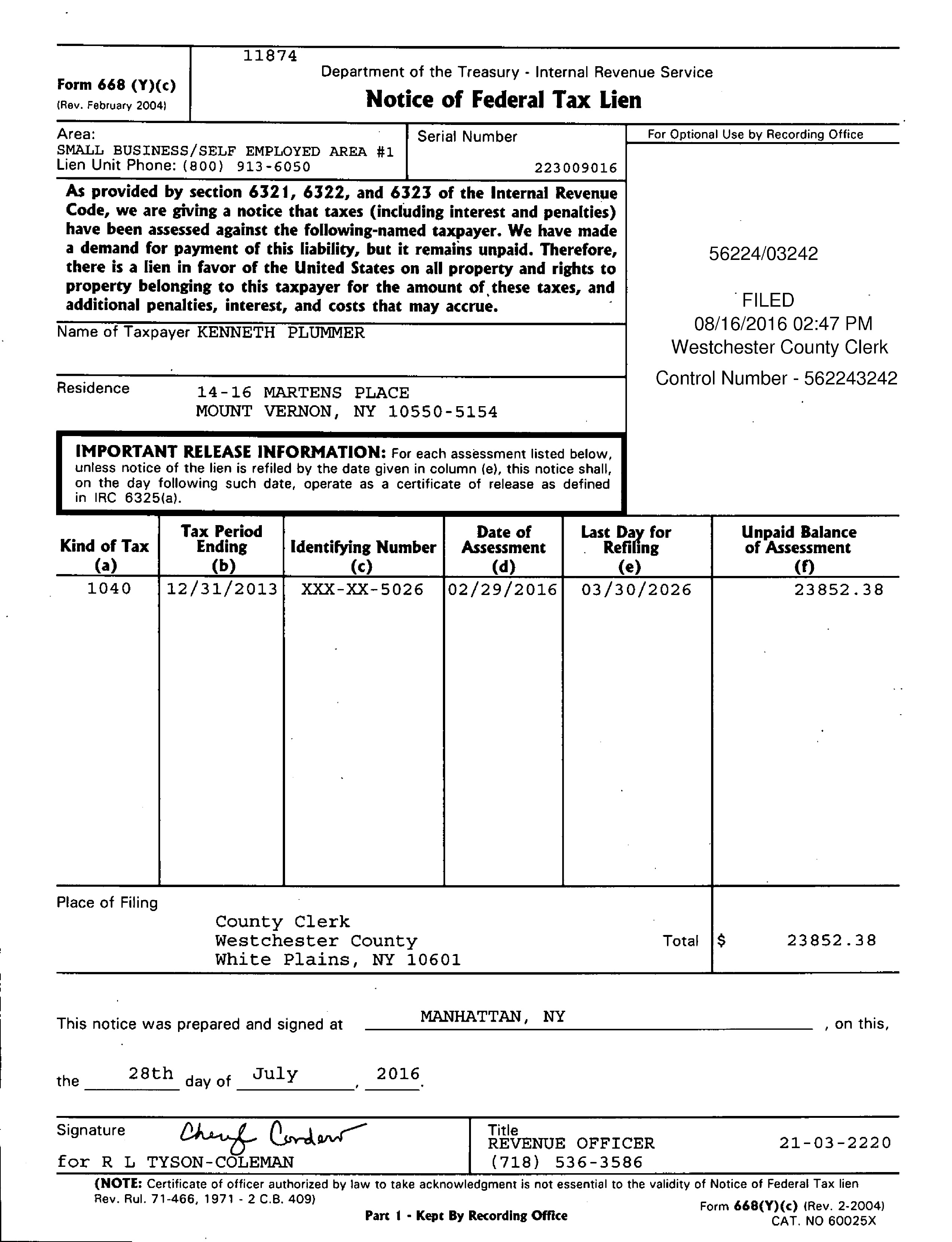
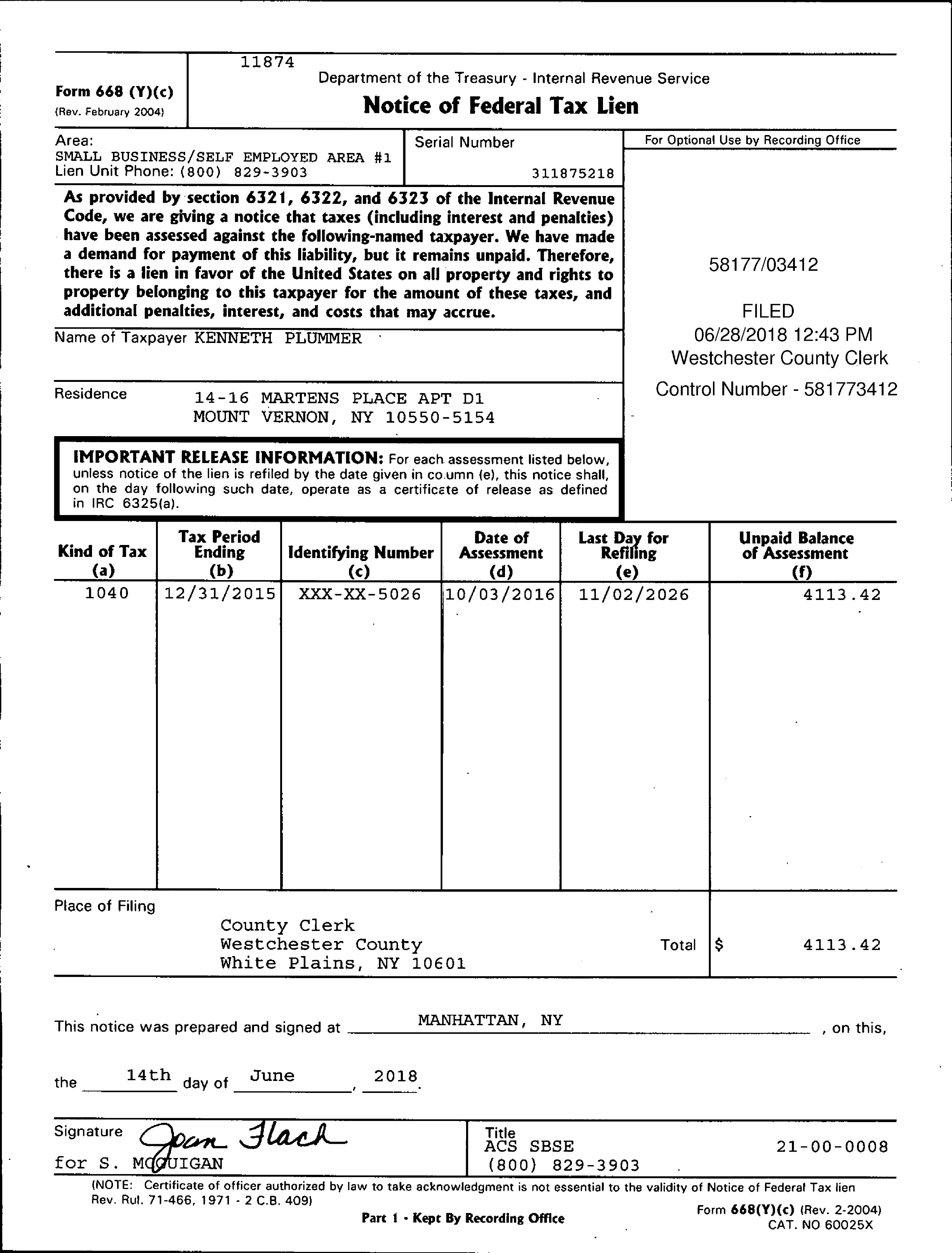
Public records from the Internal Revenue Service’s Small Business/Self-Employed Division show that two federal tax liens have been filed in Kenny Plummer’s name: one totaling $45,016.47 for income taxes reportedly owed from 2016 and 2017, and another for $23,852.38 related to 2013. These liens, which appear to remain active, apply to all property and assets associated with Plummer. While the existence of tax liens does not imply criminal wrongdoing, they raise legitimate questions about financial transparency—particularly given his active role in political endorsements and campaign operations. It is unclear whether these liabilities have been disclosed to political committees or party leadership, a matter that may warrant further review under applicable ethics or disclosure requirements.
3. Power of Attorney on File
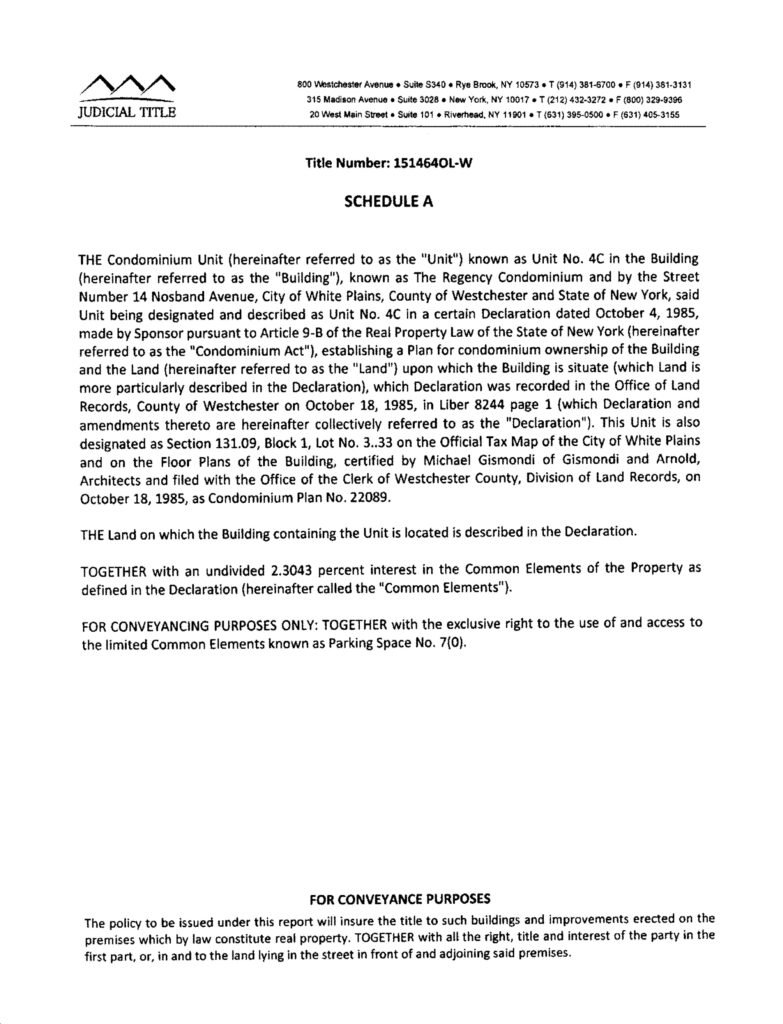
Title documents include a Unit Owner’s Power of Attorney signed by Kenny Plummer, authorizing the condominium board and its affiliated developer to act on his behalf in matters related to the property’s transfer, leasing, or legal management. While such an arrangement is not unusual and is not illegal, its existence is noteworthy given Plummer’s political activity in Mount Vernon. If any individuals or entities connected to the condominium’s development also have business or political interests in Mount Vernon, the relationship could warrant closer public scrutiny to ensure transparency and avoid any perceived conflicts of interest.
What the Documents Reveal
A Pattern of Political Gain Amid Public Decline
Since Kenny Plummer’s emergence as a behind-the-scenes powerbroker in Mount Vernon politics, the city has not improved—it has declined. Trash piles up across neighborhoods. Violent crime remains unaddressed. Housing code enforcement is uneven, and development projects continue to move forward with little to no community input. Meanwhile, candidates tied to the Rise Up Mount Vernon PAC—backed by developer dollars—are now positioned to shape the city’s future.
Plummer, who carries significant unresolved tax liabilities and maintains a private financial relationship with a developer-lender based in New Rochelle, isn’t just participating in politics—he appears to be orchestrating outcomes. Which begs a fundamental question: Who is Mount Vernon being developed for—its people, or the financiers and interests backing its political operators?
Why This Matters
Kenny Plummer currently serves as a District Leader in Mount Vernon, a position of political influence in the local Democratic Party. He has played a public role in endorsing candidates and guiding campaign strategy, and is directly linked to the Rise Up Mount Vernon PAC—a political action committee that has accepted sizable donations from development-connected entities. One poll site worker referred to him as “the boss,” underscoring the perception of his influence.
Recently uncovered documents show that Plummer took out a mortgage with PMP Lending LLC, a company affiliated with a developer firm operating in New Rochelle. That mortgage secures not only the property itself, but also rental income, insurance payouts, and renovation contracts—suggesting a deep financial relationship. When combined with over $69,000 in unresolved federal tax liens, this creates a picture of a political figure under substantial private financial obligation.
If that developer-lender has interests in projects or influence within Mount Vernon, and if Plummer is guiding which candidates are supported and how campaign resources are distributed, this raises serious ethical concerns and the appearance of a conflict of interest. The public has a right to know whether city politics are being influenced by outside financial actors or undisclosed debts.
Possible Legal and Ethical Violations
The findings in these documents raise potential violations under state and federal law, including:
New York Public Officers Law § 74 (Code of Ethics): Prohibits public officials or political leaders from engaging in actions where financial interests may conflict with public duty.
New York Election Law §§ 14-126 and 17-152: Addresses illegal coordination between PACs and candidates, as well as improper campaign financing.
18 U.S. Code § 1346 (Federal Honest Services Fraud): Prohibits schemes that deprive the public of honest services by way of undisclosed financial entanglements.
26 U.S. Code § 7201: Criminalizes willful tax evasion or concealment of federal tax obligations.
If Plummer failed to disclose his financial relationship with PMP Lending, his federal tax liabilities, or any material benefits while engaging in campaign endorsements or political organizing, he may be subject to ethics complaints, civil penalties, or even formal investigation.
Complaint Filed with JCOPE: Residency, Lobbying, and Ethics
A formal complaint has been submitted to the New York State Joint Commission on Public Ethics (JCOPE) against Plummer, alleging multiple violations of state law. The complaint asserts that Plummer no longer resides in Mount Vernon—potentially violating Public Officers Law § 3 and Election Law § 2-110, which require residency for holding political office.
It also alleges that Plummer has engaged in unregistered lobbying activity, including arranging a $25,000 developer contribution to the Rise Up PAC—possibly violating the Lobbying Act. This echoes his prior history: in 2012, JCOPE found Plummer guilty of failing to register lobbying activity on behalf of developers through his firm, DiRA Consulting. He admitted the violation and paid a fine.
Taken together, these allegations point to a repeated pattern of political activity entangled with private developer interests, raising serious concerns about transparency and the integrity of local governance.
A Pattern of Silence
Despite mounting concerns and documented evidence, Mount Vernon’s Democratic leadership has remained publicly silent. To date, only one Democratic-endorsed official—City Comptroller Darren Morton—has denounced the Rise Up Mount Vernon PAC. Other candidates who have benefited from PAC funding have yet to respond to questions about Plummer’s role or disclose whether they were aware of his financial entanglements.
This silence is more than political caution—it suggests a broader culture of unaccountability within the local party structure. When financial influence goes unchecked and ethical boundaries are blurred, public trust is eroded, and the political process becomes compromised.
The Public Deserves Answers
Mount Vernon residents deserve to know the full scope of Kenny Plummer’s financial relationships—especially if those relationships influence who gets elected, how money flows through campaigns, and which developers benefit from city contracts.
This is no longer a partisan issue. It is a matter of ethical leadership, legal compliance, and public accountability. Mount Vernon cannot afford to let private interests dictate public outcomes.
Black Westchester Magazine will continue to follow this developing story and report on new findings as they emerge.
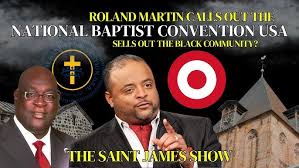
The National Baptist Convention, USA (NBCUSA) has accepted a $300,000 donation from Target. This decision has led to criticism and controversy, particularly in the context of a Target boycott initiated by certain Black community leaders and activists who are protesting the retailer’s reduction of Diversity, Equity, and Inclusion (DEI) initiatives.
Critics are questioning the timing of the donation, as accepting the donation during a boycott effort undermines the boycott and is a “stunning act of betrayal to Black America.” Some view the $300,000 as insignificant given Target’s overall revenue and consider it insufficient to address community needs effectively. There are claims that the NBCUSA leadership did not consult with or reach out to the leaders of the Target boycott before accepting the donation.
The newly installed President of the NBCUSA, Dr. Boise Kimber, stated that the donation will be used to provide scholarships, support senior citizens, and invest in entrepreneurship programs.
Roland S. Martin, Host/Managing Editor of Roland Martin Unfiltered, blasts the National Baptist Convention, USA for taking $300K from Target in the middle of a boycott!
“In a stunning act of betrayal to Black America, the National Baptist Convention, USA has accepted a $300,000 donation from @target. The leadership of this Black Baptist church denomination made no effort to talk with, consult, or reach out to the leaders of the Target boycott. Their actions are reprehensible, and they deserve to be called out in every possible way. Trust me, this is not the last time I will speak on this. If your church is one of the 31,000 churches under their leadership, you need to demand that your pastor go on the record as to whether he or she supports the conventions decision to take this dirty money from target these questions should be shouted out on Sunday morning, so please let us know,” Martin posted on social media, Friday evening.
“The National Baptist Convention takes $300K from Target with no public-facing programs, no investment in Black businesses, and no accountability. How the hell are you saying $300K will support scholarships, senior citizens, and entrepreneurship across 31,000 churches and 7.5 million people? Make it make sense,” Nikki Porcher, founder of Buy from a Black Woman (BFABW), a Nonprofit Organization that helps bring awareness to Black Women business owners and the people who support them, posted. “Leadership means knowing when to say no. It means your community comes first. It means knowing that people trust your choices. I turned down $250K because I understood what was at stake. But too many people out here saying yes for crumbs and leaving the rest of us to clean it up. This? This right here is why. Because do you know what happens now, Dr. Kimber? This one agreement might have just shut down every other conversation that was in motion. It sends a message: Black people can be divided. And now those of us doing the real work have to fight even harder just to be believed. Just to be funded. Just to be seen. This isn’t how you rebuild trust. This isn’t how you invest in community. This isn’t it. And you’re having it in Montgomery?!!”
Some Black faith leaders, including Rev. Jamal Bryant, have expressed discontent with Target’s actions regarding DEI initiatives, viewing them as a lack of commitment to the Black community and prompting called for boycotts and protests like the “#TargetFast” and “#TargetBoycott”.
House Minority Leader Hakeem Jeffries stood before the American people and said with a straight face:
“Not a single undocumented immigrant gets a dime in federal taxpayer dollars for any part of comprehensive Medicaid coverage.”
Let’s call it what it is: a lie dressed up as legalese—carefully crafted to mislead, distract, and protect a broken political narrative.
Jeffries wants you to believe that undocumented immigrants aren’t costing taxpayers a thing when it comes to Medicaid. What he conveniently leaves out is that state taxpayers—not federal—are footing the bill. And the price tag is growing fast.
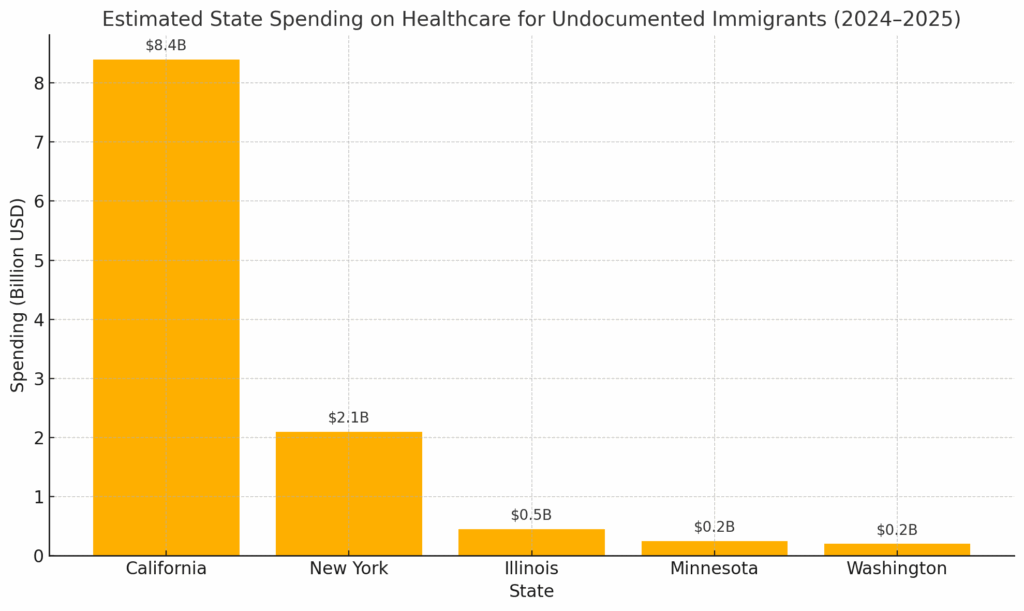
In California alone, the cost of providing health care to undocumented immigrants through its Medi-Cal program is expected to reach $8.4 billion this year. New York, Illinois, and other blue states have similar programs that use state money to offer Medicaid-style coverage to undocumented adults, children, and pregnant women. These are not emergency-only services—they include cancer treatments, mental health care, and ongoing primary care.
Despite House Minority Leader Hakeem Jeffries boldly stating that “not a single undocumented immigrant gets a dime in federal taxpayer dollars for any part of comprehensive Medicaid coverage,” official government reports tell a different story. In 2024, a federal audit found that California improperly claimed $52.7 million in federal Medicaid funds for undocumented immigrants—money that should have been covered by state funds only. Even more revealing, a CBO-backed analysis from the House Budget Committee confirmed that between 2021 and mid-2024, over $16.2 billion in federal and state Medicaid dollars were spent on emergency medical services for undocumented migrants nationwide—services which are, by law, reimbursed by the federal government.
Federal Tax Dollars Were Used in Two Ways:
Emergency Medicaid Services
The $16.2 billion figure cited by the CBO-backed House Budget Committee (2021–2024) includes federal reimbursements for emergency medical care provided to undocumented immigrants.
Emergency Medicaid is federally funded under limited conditions — such as childbirth, trauma, or life-threatening illness.
Improper Billing in California
The $52.7 million identified in the 2024 federal audit was money that California wrongly claimed from the federal government for services to undocumented immigrants.
This was federal Medicaid money, and California has agreed to repay it.
These facts directly contradict Jeffries’s claim and prove that federal tax dollars are indeed being used to provide healthcare for undocumented immigrants. Whether through emergency Medicaid or improper billing, the financial burden is very real—and it’s federal taxpayers who are footing the bill.
So when Jeffries says “not a dime of federal money,” he’s hiding behind technicalities. You’re still paying for it. Just not through D.C.—through your state taxes.
And let’s be clear: this isn’t just about numbers. It’s about priorities. While millions of Black Americans, working-class families, and struggling seniors fight for basic care, Democratic leaders are spending billions to provide full benefits to non-citizens—then lying to your face about it.
Migrants and those abusing the system are the primary targets of the proposed reform—not mothers, seniors, and families who genuinely need care. Jeffries made his misleading claim while attacking a Republican bill that would block federal Medicaid matching funds to states offering full benefits to undocumented immigrants. He warned that “14 million people” could lose coverage if the bill passed. But that number is intentionally misleading—it includes millions of American citizens who would be affected by broader policy changes, such as new work requirements for Medicaid and the scaling back of Affordable Care Act (ACA) subsidies. The ACA, also known as Obamacare, provides financial assistance to help low- and middle-income Americans afford private insurance. The proposed bill wouldn’t strip coverage overnight—it would tighten eligibility rules, reduce waste, and restore accountability. Most of those “14 million” would face adjustments to benefits, not total loss of care. Jeffries’s rhetoric leaves that part out on purpose.
He’s mixing truths and half-truths like a slick salesman, trying to distract you from the fact that his own party has made promises they can’t pay for and put the needs of citizens second to political gamesmanship.
At the core of this debate is a question too many are afraid to ask: Why are American citizens—especially Black communities—always expected to sacrifice for everyone else?
Why are we told there’s “no money” for mental health programs, housing, or small business support—yet there’s always billions available for those who aren’t even supposed to be here?
For Black Americans—who are disproportionately represented in low-income and Medicaid-eligible populations—this debate exposes a deeper injustice. While state budgets stretch to cover undocumented immigrants with full healthcare benefits, many Black families still face barriers to accessing quality care, mental health services, and affordable prescriptions. Resources meant to uplift struggling citizens are being diverted, while politicians like Hakeem Jeffries downplay the impact. Instead of prioritizing communities with generational health disparities, these policies often sideline Black Americans in favor of political agendas that offer symbolic virtue over real solutions. It’s a betrayal of both trust and need.
Jeffries isn’t just being dishonest. He’s gaslighting the very people who put him in office. And the silence from other so-called Black leaders on this issue is just as shameful.
This is bigger than immigration—it’s about truth, priorities, and who this government really serves.
If Black America doesn’t start demanding receipts—not slogans—we’ll keep getting played. And politicians like Hakeem Jeffries will keep counting on our silence.
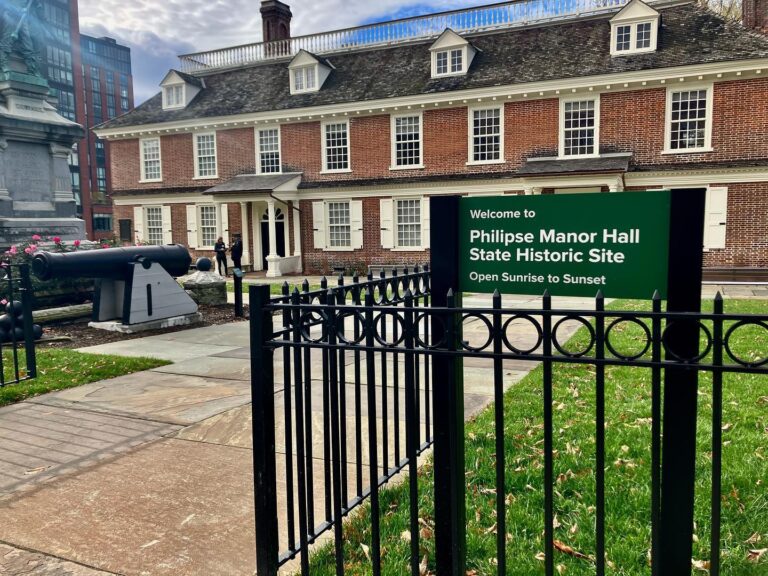
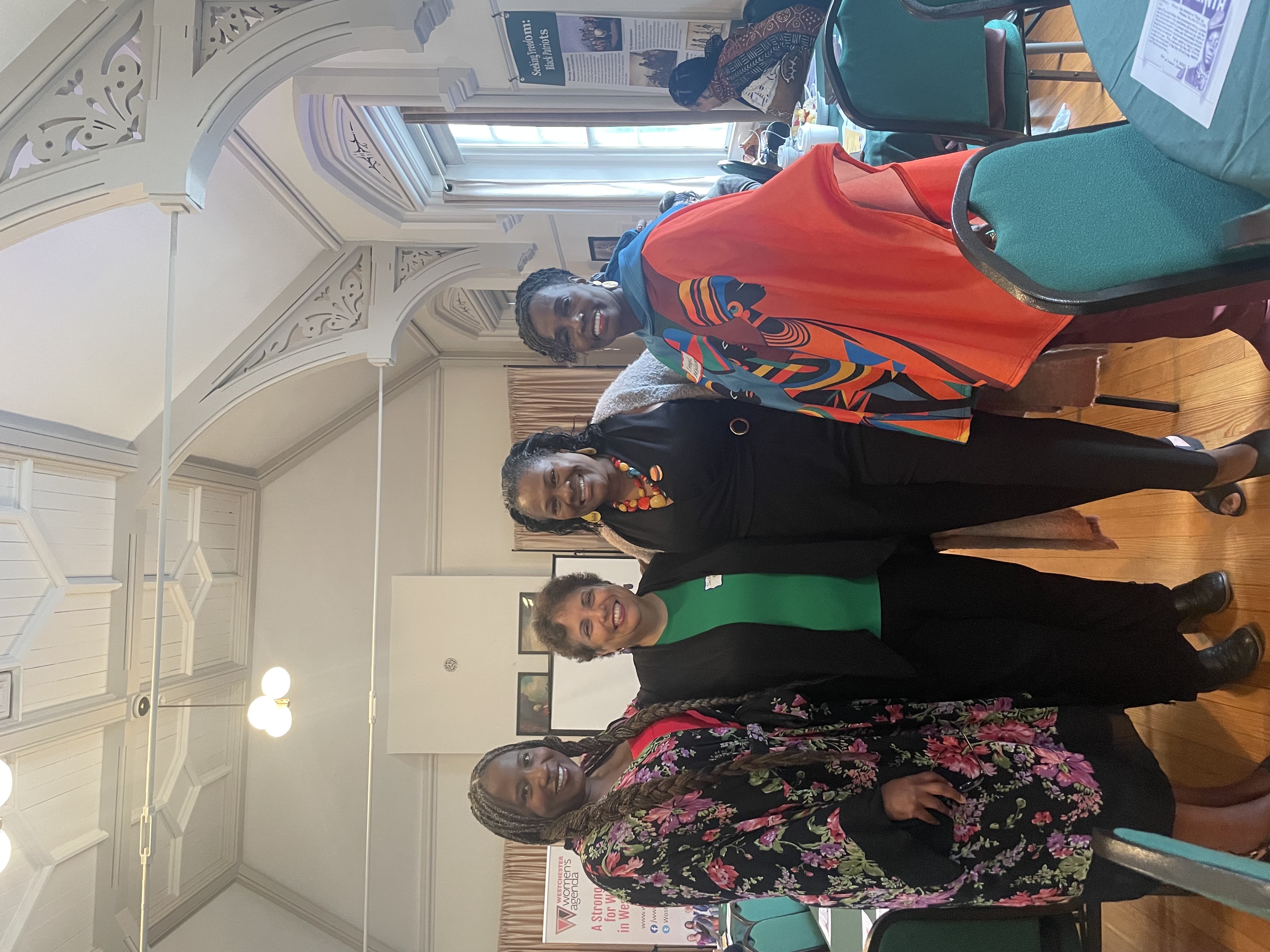
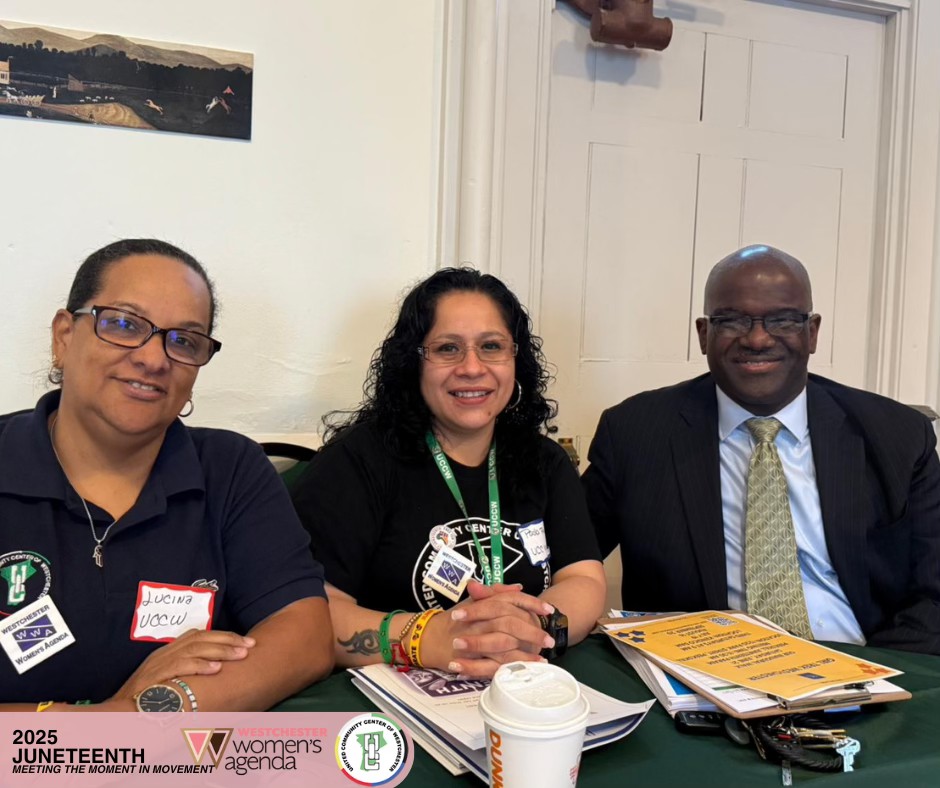
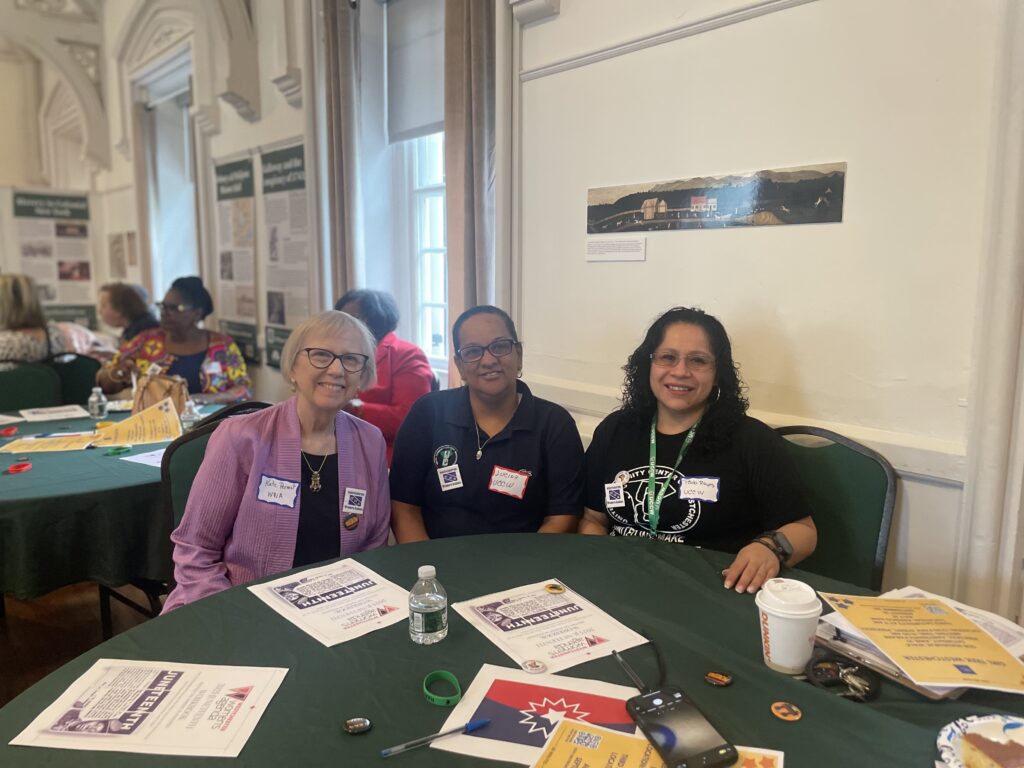
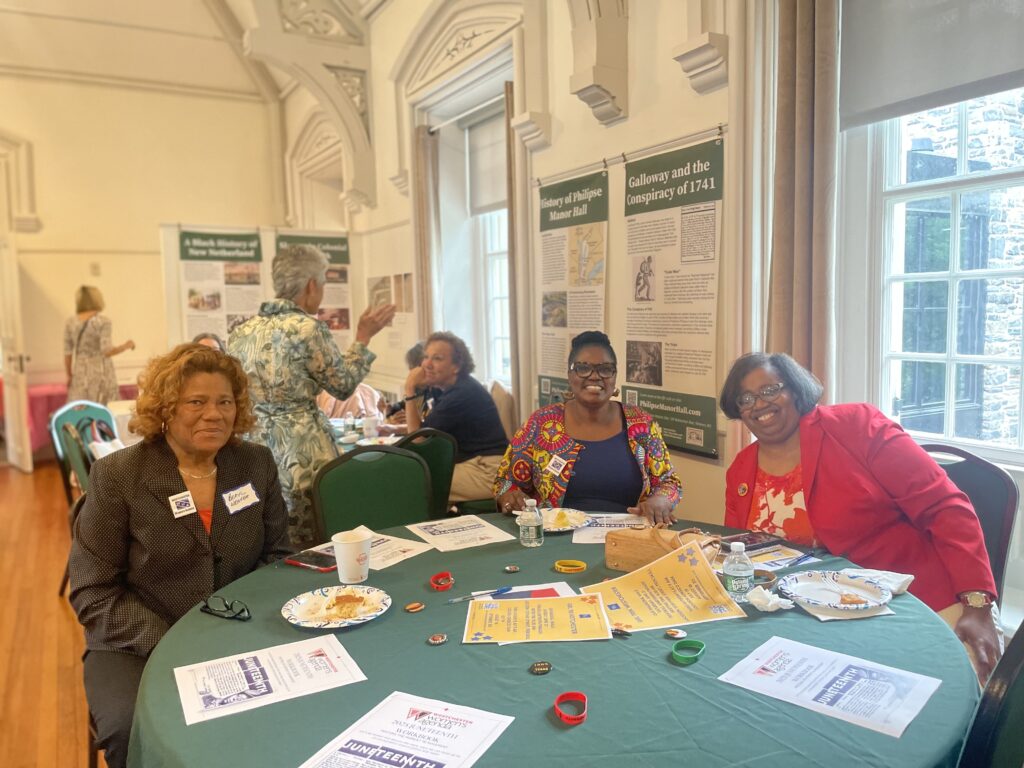
Wednesday, June 18th, 2025, was not just another date on the calendar. It was a reckoning. It was Westchester’s call to consciousness. And it happened in one of the most symbolically loaded buildings in the county, Philipse Manor Hall, the oldest building in Yonkers, located at 29 Warburton Ave. A site once held up by slavery, now transformed into a stage for policy, power, and liberated truth.
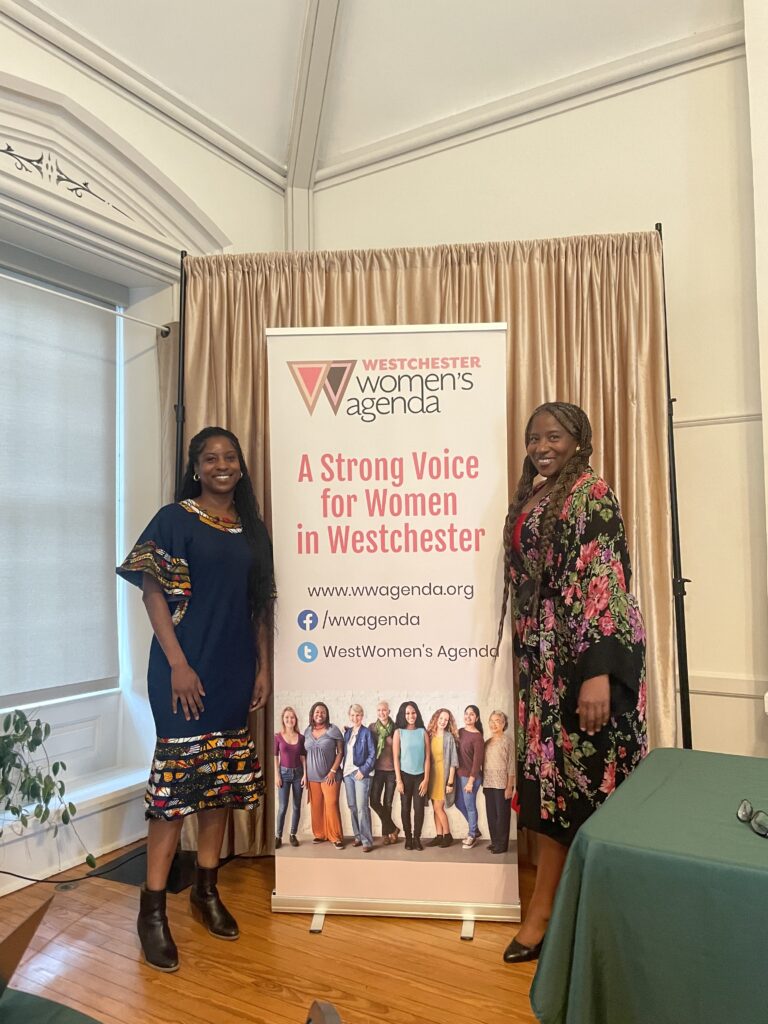
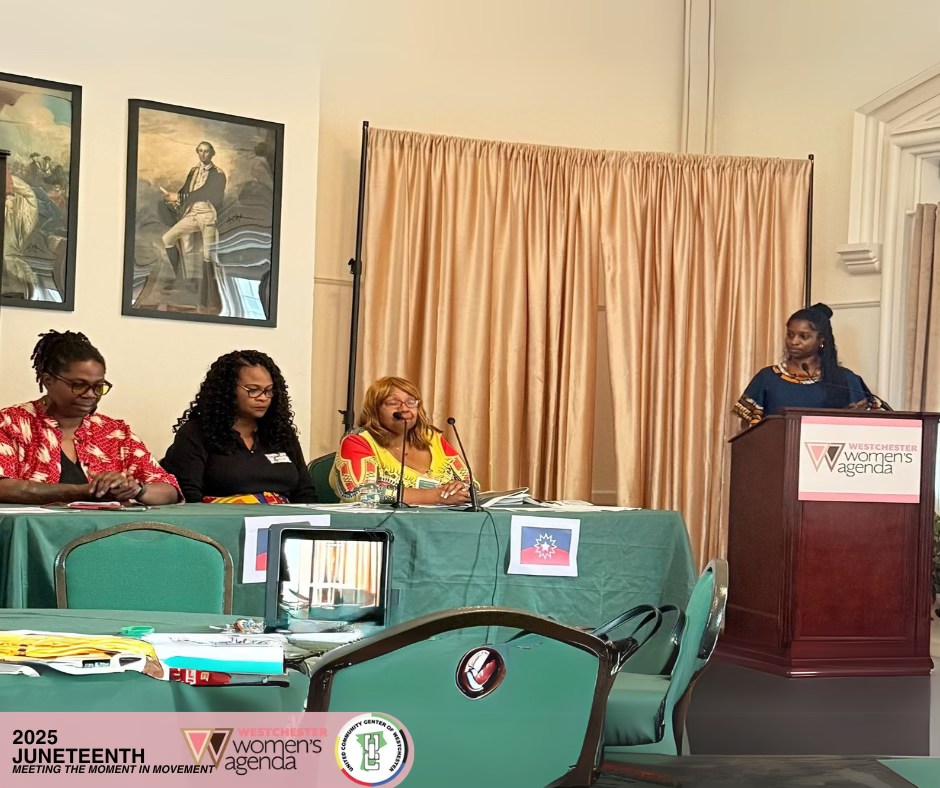
At 8:30 AM, while the city was still stretching its limbs, the Westchester Women’s Agenda (WWA) was already in motion, hosting their 4th Annual Juneteenth Legislative Event, themed “The Movement in Movement.” And baby, the theme was not metaphor. It was a mandate.
Because listen… this wasn’t your auntie’s brunch panel. This was radical remembrance meets legislative strategy. This was a political revival in the house that bondage built.
The event featured a panel discussion with Q&A, followed by a Town Hall conversation regarding the history of enslavement and the road to repair. Panelists consisted of Dr. Jennifer Lewis – Westchester Center for Racial Equity Director, Kym McNair – Senior Director of Social Transformation, My Sisters’ Place, and PISAB Educator, Greenburgh Town Clerk Lisa Maria Nero, and Moderator Yakira Young – Content Strategist, YK Digital LLC.
We Don’t Just Gather, We Shift Timelines
The morning kicked off with registration, food, and fam reconnecting, but don’t get it twisted. From the first handshake to the final word, this was a ritual. A reclamation. A resetting of the civic table.
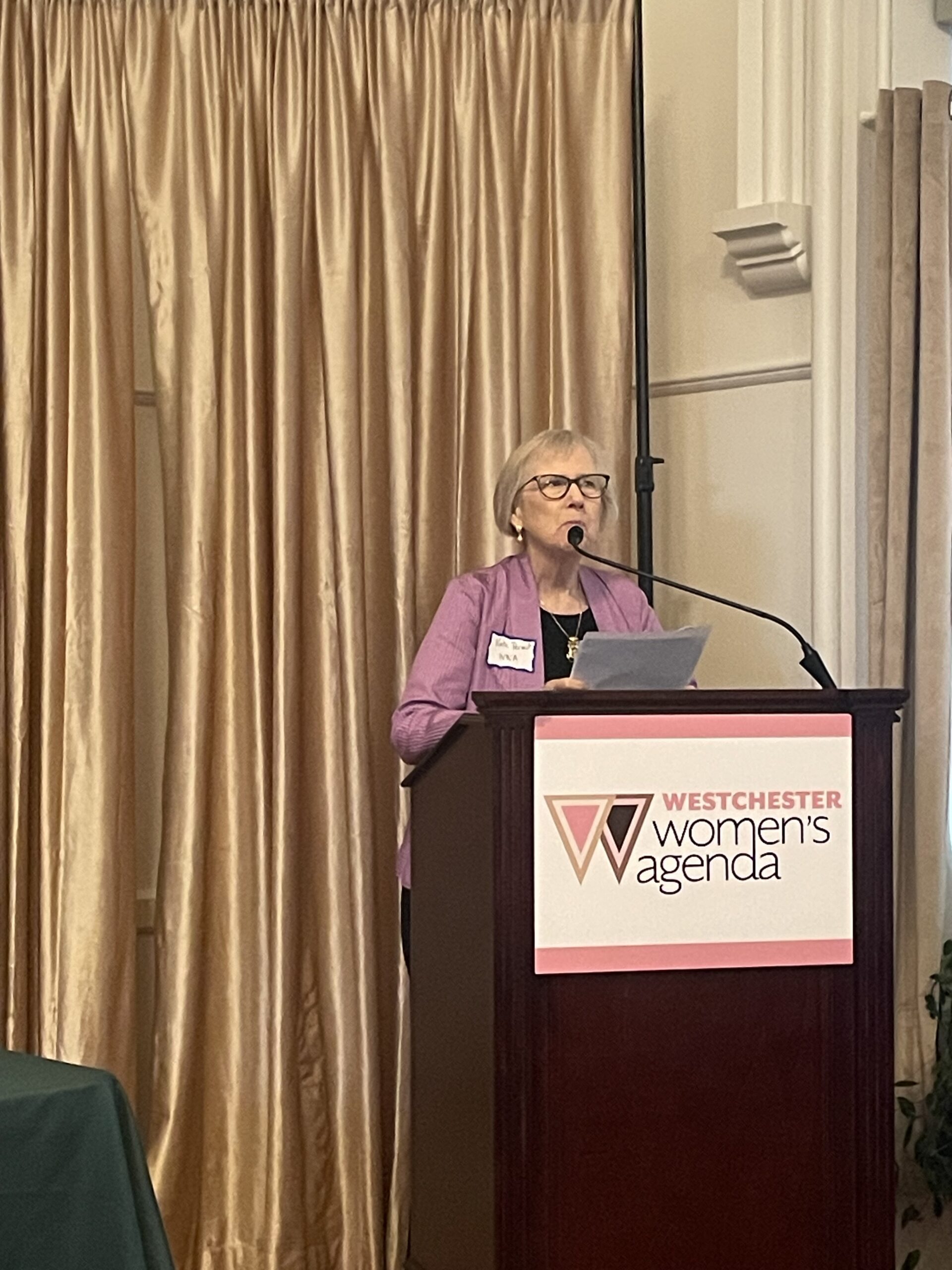
Michael Lord, Museum Director, and Kate Permut, WWA Board Chair, reminded us: we’re not just guests here, we’re healing on haunted land. And we came to make policy out of pain.
Westchester County Executive Ken Jenkins followed up with opening remarks that didn’t just acknowledge Juneteenth as a holiday, they honored it as a promise we still haven’t fully delivered. And his words rang louder than the walls ever did.
And then came the anchor: Tasha Young, our Mistress of Ceremonies and Juneteenth Curator. Her presence? Ancestral. Incendiary. Instructive. She didn’t just guide the room, she summoned it into alignment. We weren’t here for comfort. We were here for clarity.
The Panel Wasn’t Just Powerful, It Was a Pulse Check on Freedom
Moderated by the laser-sharp Yakira Young, the panel didn’t come to play; they came to provoke, empower, and realign. These weren’t just titles on a flyer. These were women who lived the work every day.
Dr. Jennifer Lewis set the tone with a deep dive into the truth most folks try to tiptoe around: you cannot separate liberation from mental health. Period. She pulled back the curtain on how the trauma of systemic racism is not just historical, it’s neurological. She told the truth about how healing in our communities won’t happen through quick fixes or performative panels; it happens when we get real about the emotional labor Black women carry, and when we center wellness as policy, not just practice. Her presence was both clinical and spiritual, like the therapist and freedom coach you didn’t know you needed in the same body.
Kym McNair? Whewwww. Sis didn’t just speak; she plugged us into a timeline I didn’t even know I needed to observe until she laid it out plain. She connected dots across generations from our grandmothers who couldn’t speak their truths to us, to our daughters watching how we hold ours. She made it clear: reproductive justice isn’t just about policy, it’s about legacy, lineage, and liberation. In that moment, she didn’t just give us history, she gave us ancestral orientation. And now? I’ll never unsee it. Kym wasn’t just talking policy, she was talking possession. Reclaiming the right to our bodies, our time, our voices. All of it.
Hon. Lisa Nero, Westchester through and through, brought the courtroom to the community. She reminded us that while the language of the law might be coded, our power to interpret and influence it is real. She broke down what justice actually looks like when we’re in the room and at the table, not just subjects of policy, but architects of it. And she made it plain: reform doesn’t happen in the abstract; it happens when we hold the system accountable, line by line, case by case. Lisa held that mic like a gavel, and every word carried weight. She didn’t just advocate. She armed us with a strategy.
This wasn’t your average panel discussion. This was a spiritual subpoena. A collective download. A policy remix with liberation on the beat. They didn’t just speak. They activated. And if you were in the room, you left differently.
Town Hall: This Is What Democracy Should Look Like
Led by Lesley Mazzotta and Tasha Young, the Town Hall cracked the floor open. It wasn’t a Q & A. It was testimony, strategy, and calling things by their real names.
And in a county like Westchester, where redlining, racial wealth gaps, school inequity, and silent segregation still exist, you better believe these truths needed airtime.
Because we can’t liberate what we’re still too polite to name.
Westchester Is Not Neutral Ground. It’s a Sacred Battleground.
Let me say this plainly: Westchester has receipts. This country raised revolutionaries and raised rent. It gave us civil rights history and quiet suppression. It’s got towns with million-dollar median incomes and neighborhoods still fighting for basic resources.
That’s why this event mattered. Because culture state space means confronting that duality on purpose with vision, with action, with legislation that uplifts Black women and every woman whose power has been overlooked, undervalued, or underfunded.
And doing it at Philipse Manor Hall? Whew. That was ancestral alignment. We stood in the same place where our people were once enslaved and declared, not anymore.
Call to Action: If You Felt This, Move Differently
This isn’t a vibe. It’s a responsibility.
Don’t just “like” the recap. Get in the room next time.
Don’t wait on change, BE the bill, BE the budget, BE the ballot.
Don’t let Juneteenth end in June. Let it live in how you vote, how you advocate, and how you love your people forward.
Because in Westchester? We’re not just remembering history. We’re rewriting it. With our full chest. With policy. With purpose. And with each other.