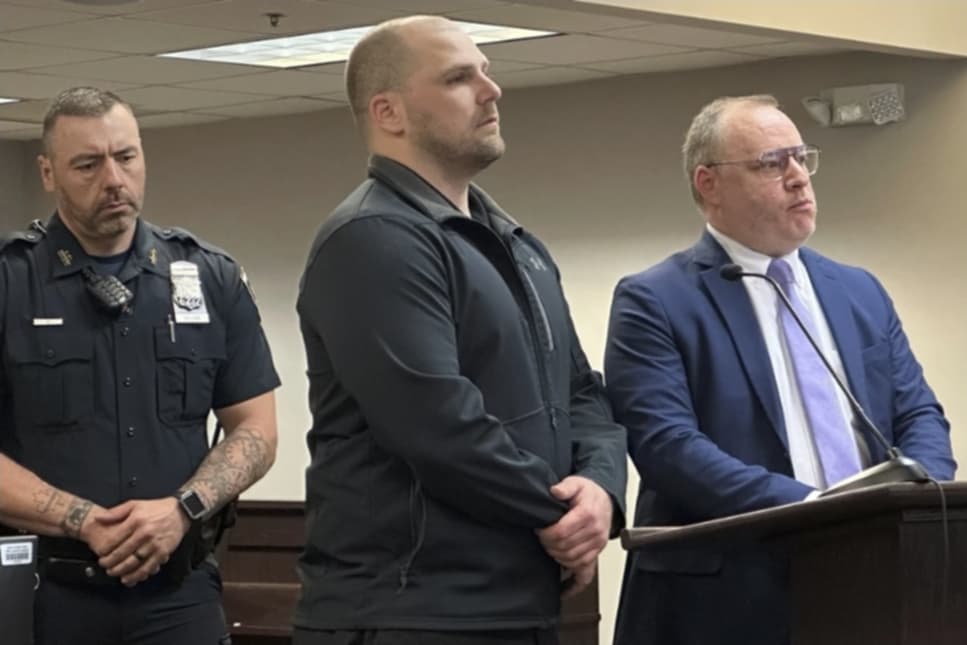
Former Marcy Correction Officer Christopher Walrath was sentenced to 15 years in prison Monday for his role in the death of a Black inmate, Robert Brooks, whose beating by a group of guards at an upstate New York prison was captured on bodycam videos.
Walrath was one of six guards charged with murder in the death of Robert Brooks, who was pummeled at the Marcy Correctional Facility on Dec. 9. He pleaded guilty to first-degree manslaughter in May under the first plea deal among the guards charged with murder. His sentencing on Monday marks the first major conviction in the case.
Brooks, 41, was serving a 12-year sentence for assault. He had just been transferred to Marcy from another facility on the night of December 9 when the fatal beating took place. Video footage shows him being struck in the chest with a shoe, lifted by the neck, and dropped to the floor.
Under questioning in May from Onondaga County District Attorney William Fitzpatrick, Walrath admitted that he and other guards assaulted Brooks, that he put Brooks in a chokehold, and that he struck the inmate’s body and groin.
During the sentencing, Brooks’s son addressed the court and said, “In that video, I see you and your fellow officers treating him as if his life holds no value at all, as if you’re entitled to brutalize him for sport,” Robert Brooks Jr., the victim’s son, told the court. I am not OK and I never will be.”
In total, ten prison workers have been indicted. Alongside the six murder charges, three guards face manslaughter charges, and one was indicted for evidence tampering. Prosecutors said three of those workers have already accepted plea deals.
Walrath’s deal nullifies his murder charge and results in a 15-year prison term, instead of the potential 25 years to life.
Before Walrath was sentenced, impactful statements were made, not only from Robert Brooks’ son but also by special prosecutor Onondaga County District Attorney Bill Fitzpatrick.
“I’m a prosecutor for 45 years,” Fitzpatrick stated. “I have difficulty watching that tape. I really do.”
A guard pleaded guilty in May to attempted tampering with physical evidence and was sentenced to a one-year conditional discharge. Trials were scheduled to begin in October for guards who have rejected plea deals.
Fitzpatrick is also prosecuting guards in the fatal beating of Messiah Nantwi on March 1 at another Marcy lockup, the Mid-State Correctional Facility. Ten guards were indicted in April, including two who are charged with murder. Both prisons are about 180 miles (290 kilometers) northwest of New York City.
As of January 2026, several states will begin banning the purchase of soda, candy, and other junk foods with SNAP benefits. While the move has sparked debate nationwide, one truth is undeniable: Black communities stand to gain the most in terms of health outcomes. For years, sugar-laden products have flooded low-income neighborhoods, not by accident, but by design. Now, some states are finally pushing back—and it’s long overdue.
Let’s be clear. This is not about government control or food shaming. This is about reclaiming our health from the grip of an industry that profits off addiction, disease, and death. Diabetes, obesity, high blood pressure, and early-stage heart disease disproportionately plague Black communities. Much of that is driven by the regular consumption of ultra-processed sugary drinks that provide no nutritional value—only empty calories and long-term illness.
Consider this:
1 in 2 Black adults is diagnosed with some form of cardiovascular disease.
Black men have one of the highest rates of hypertension in the world.
Over 12% of Black adults live with diabetes—and many more remain undiagnosed.
And according to the American Cancer Society, Black men and women have some of the highest cancer incidence and mortality rates—with diet being a key contributor.
Yet in too many grocery stores across urban America, sugary drinks and processed snacks occupy more shelf space than fresh produce. Worse, billions in SNAP dollars go directly into the hands of corporations that market poison to the poor, including Black children. This is systemic exploitation through food. And it’s been legal.
But not anymore.
With states like Nebraska, Arkansas, and Texas leading the way, we are witnessing a cultural and policy shift—one that recognizes food is not just fuel but a form of medicine. Limiting SNAP purchases of soda and energy drinks won’t cure everything overnight, but it is a critical step in breaking the cycle of disease.
It’s not about what people can’t buy. It’s about creating healthier default options. Imagine a community where fresh juice, clean water, fruits, and vegetables are the new norm. Where the corner store pushes health, not hype. Where our children reach for hydration instead of addiction.
This is also an opportunity to build partnerships between community leaders, nutritionists, and Black-owned food suppliers. It’s time we reclaim the Black health narrative—not as victims of circumstance, but as architects of change. Policy, when done right, can be protection. And this is a protective policy.
Yes, some will argue it’s restrictive. But freedom without boundaries leads to chaos—and in this case, to chronic disease. Just as we support anti-smoking laws, seatbelt laws, and school nutrition standards, we should support this move as one aimed at long-term wellness.
If Black health matters, then Black food policy must matter too.
Now is the time for:
Local health departments to step up education in affected communities.
Black politicians to get off the sidelines and talk about health—not just equity slogans.
Urban grocery stores to improve access to nutritious options.
And for SNAP recipients to be given not just limitations—but resources and inspiration to make better choices.
We’ve spent too long reacting to health crises. This is a chance to prevent one.
A soda ban may seem small, but in the fight for Black wellness, it’s a big first step. Let’s embrace it.
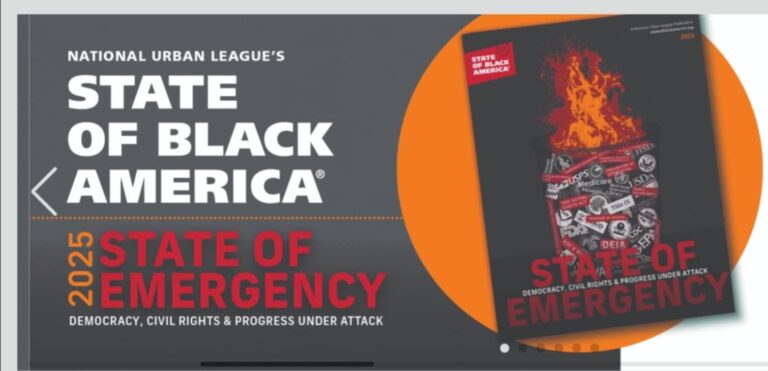
The National Urban League’s annual publication, now in its 49th edition, is the highly anticipated source for thought leaders focusing on racial equality in America. The 2025 State of Black America report dives into an unprecedented extremist, anti-diversity movement to erase 60 years of freedoms gained under the Voting Rights Act and undermine Democracy. Read how in the face of these threats, the Urban League movement is fighting alongside Civil Rights leaders and communities across the country as a leader in the resistance. (read the report in its entirety below).
Since its first appearance in 1976 under the stewardship of the late Mr. Vernon E. Jordan, Jr., the organization’s fifth president, the State of Black America® remains one of the most highly- anticipated benchmarks and sources for thought leadership around racial equality in America. The report explores the inequities across America’s economics, employment, education, health, housing, criminal justice, and civic participation systems through research and the words of our contributors. Each edition contains penetrating commentary and insightful analysis from recognized authorities and leading figures in politics, the corporate and tech sectors, the nonprofit arena, academia, and popular culture. In the 47th edition of the State of Black America Democracy In Peril: Confronting the Threat Within, we are raising the alarm around the explosive growth of far-right and domestic extremism and the threat it poses to our communities, our families, and our nation. After the dismantling of Jim Crow and the freedoms won during the Civil Rights Movement, some of the most violent forms of white supremacy began to go underground throughout America. But in recent years, dangerous rhetoric that emboldens racists and incites violence has moved from the dark web into mainstream politics…
****UPDATED Tuesday, August 12, 2025, at 3:06 PM to correct the relationship between CO Nappi and Captain Cox. Nappi is not Cox’s son-in-law as originally reported; Nappi has a child by Cox’s daughter, and they never married, according to Attorney Joseph Sullivan, who represents the Cox family! ****
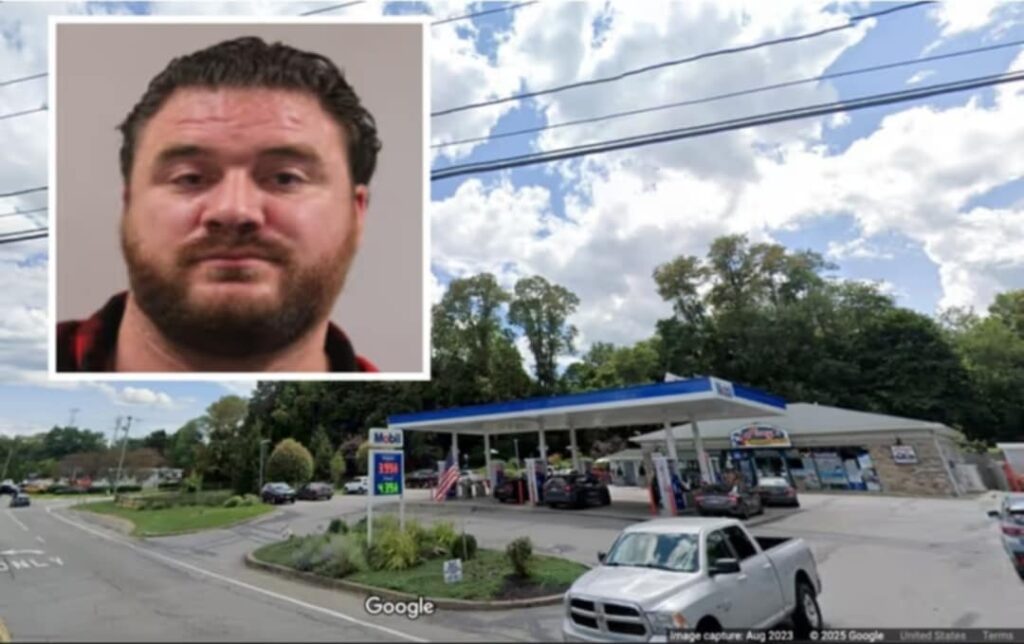
Putnam County District Attorney Robert Tendy announced that Nicholas Nappi, 33, of Hopewell Junction, was found guilty of Driving While Intoxicated following a bench trial before the Honorable Judge Robert Nachamie on July 8, 2025.
Nappi was arrested on October 11, 2024, after a concerned 911 caller reported a vehicle driving the wrong way up an exit ramp, and erratically along the Taconic State Parkway. Nappi’s erratic driving caught the attention of another driver, who alerted police. The caller followed the car to a Mobil gas station located at 157 Bryant Pond Road in Putnam Valley, where police discovered the defendant unconscious behind the wheel. A DWI investigation conducted by the New York State Police and the Putnam County Sheriff’s Office led to his arrest.
What was missing from the announcement and all news coverage of the case up to this point is the fact that Nappi is a Westchester Correction Officer. Could that be because Nappi has a child with the daughter of Westchester Department of Corrections Captain Thomas Cox, whose wife is on the Westchester County Correction Advisory Board and Criminal Justice Professor at Pace University, Kimberly Collica-Cox. The Board was established by then Westchester County Executive George Latimer to advise the Department of Correction on programs and services for inmates, and to help reduce recidivism and improve public safety.
A DWI conviction for a Westchester County Correction Officer is a serious matter that can lead to significant disciplinary action. The Westchester County Correction Department expects its employees to adhere to the highest standards of ethical conduct, both on and off duty. While a DWI conviction’s specific disciplinary actions are not explicitly detailed in WCDOC policies, the following general principles from the Department of Corrections and Community Supervision (DOCCS) and general New York laws and county policies shed light on potential consequences.
Employees are prohibited from knowingly or willingly violating any law or ordinance of the United States or New York State. A DWI conviction, being a violation of New York’s Vehicle and Traffic Law, falls under this category. According to O’Brien & Eggleston PLLC, a DWI conviction can jeopardize a professional license in New York State, including the possibility of suspension or revocation, depending on the profession and the circumstances of the case. Correction officers hold peace officer status under New York State law, according to the Westchester County Government. This status may be revoked or suspended upon a DWI conviction.
In essence, a correction officer convicted of DWI in Westchester County may face severe penalties beyond those applicable to civilians, including potential loss of their professional license and employment, due to the nature of their role and the expectations associated with it. But at sentencing, despite the District Attorney’s Office’s request for a sentence of three years’ probation, the judge instead imposed a one-year conditional discharge.
“This case highlights the dangers of impaired driving and the importance of community members speaking up when they see something wrong,” Putnam DA Tendy said. “Thanks to the quick action of a concerned citizen and the efforts of law enforcement, a dangerous situation was brought under control before anyone was seriously hurt.”
Tendy thanked the civilian witness, the New York State Police, and the Putnam County Sheriff’s Office “for their cooperation and diligence throughout the investigation.” This case was prosecuted by Assistant District Attorney Nicole Camillone and Assistant District Attorney Mackenzie Ferguson. District Attorney Tendy expressed his gratitude to the civilian witness, the New York State Police, and the Putnam County Sheriff’s Office for their cooperation and diligence throughout the investigation.
While there may be no connecting of the dots, one has to ask, are Nappi’s alleged family ties the reason he is still correctly in the employ of the Westchester County Department of Corrections, or the fact that he is actively a Correction Officer in Westchester was left out of all announcements and news coverage? If he weren’t allegedly connected to the Captain, whose wife serves on the county board that advises the WCDOC, would Nappi have received a stiffer sentence, and would the fact that he is a Westchester Correction officer have been buried in all news coverage?
No one was killed thanks to an observant concerned citizen. According to the National Highway Traffic Safety Administration (NHTSA), approximately 34 persons per day, or one every 42 minutes, pass away in drunk driving accidents in the US. 12,429 persons lost their lives to alcohol-impaired driving in 2023. All of these deaths could have been avoided. Given that he or others could have died, the situation could have been even worse. The public is entitled to answers and better accountability when one of their County Correction Officers is drunk and driving the wrong way up an exit ramp, erratically along the Taconic State Parkway, and the fact that he is a peace officer is buried in the press while he still has a job and gets off with a smack on the wrist.
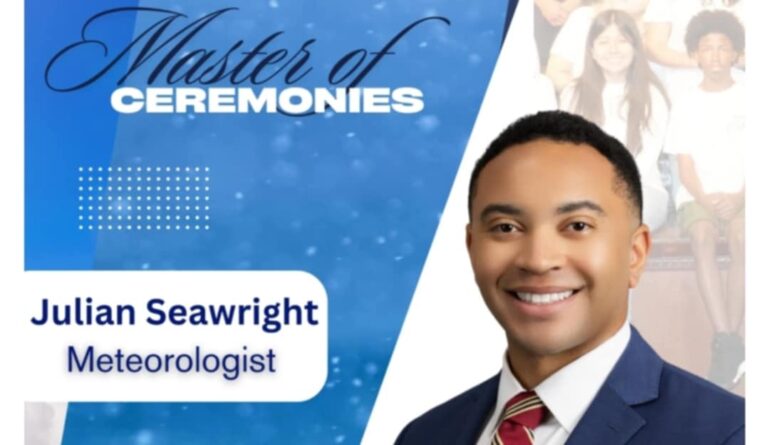
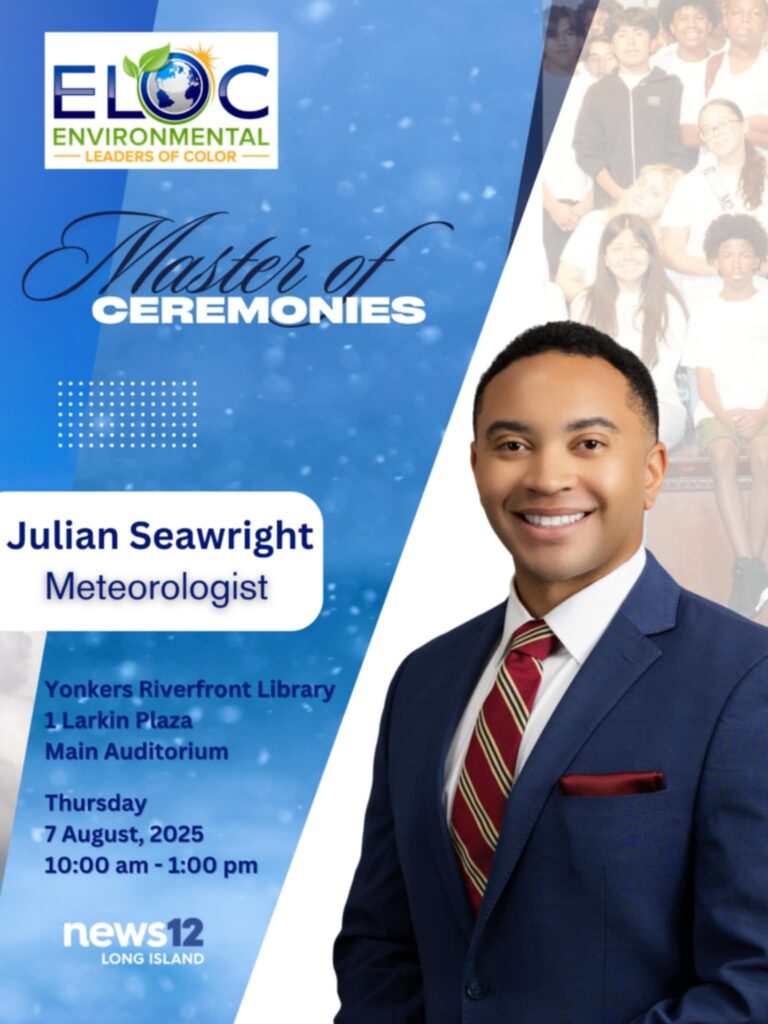
Environmental Leaders of Color (ELOC) cordially invites you to their 5th Annual Student Graduation on Thursday, August 7, 2025, at the Yonkers Riverfront Library in the Main Auditorium (1st Floor), NY. News 12 Long Island Meteorologist Julian Seawright will serve as our Master of Ceremonies. The program will begin promptly at noon.
The Award Winning Meteorologist & Reporter describes his role at News 12 as “curating hyper-local forecasts for the Tri-state region. Providing on-air and online forecasts for the local communities and communicating how the weather will impact your daily lives.” He has served as the Weekend Meteorologist for New 12 Long Island since July 2021. Before that, he served as a Meteorologist for WISC-TV in Madison, Wisconsin, the Morning Weather Anchor & Weekend Weather Anchor at CBS News Channel 5 – KGWN in Cheyenne, Wyoming.
Renowned Meteorologist Dr. J. Marshall Shepherd -Distinguished Professor at the University of Georgia to Speak at ELOC’s Student Graduation
Before the main event, the student showcases will be held in the atrium of the Library from 10:00 a.m. to 11:40 a.m. We hope you can join us for this inspiring day! Guest speakers will include distinguished climate scientist, meteorologist, and former president of the American Meteorological Society, Dr. J. Marshall Shepherd, who will serve as the keynote speaker, and Rickey Petty, a retired meteorologist from the U.S. Department of Energy.
Dr. Shepherd will speak on critical environmental issues, including climate change, extreme weather events, and community resilience in the face of ecological challenges. A brief audience Q&A will follow his presentation, offering attendees an opportunity to engage directly with one of the nation’s foremost voices in climate science.
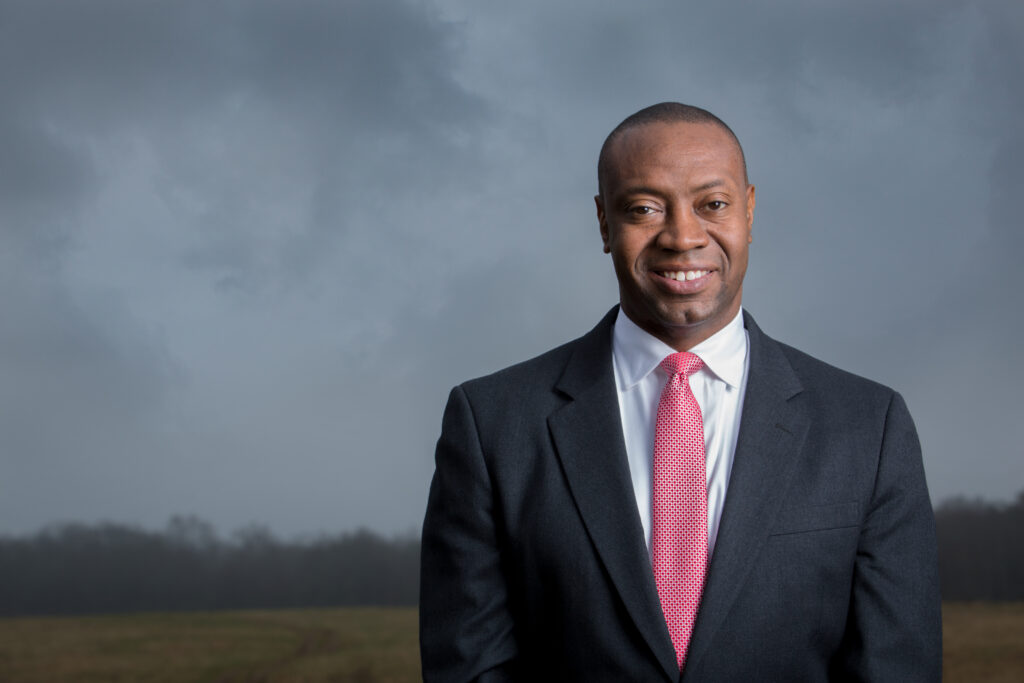
Dr. J. Marshall Shepherd is a globally respected authority on meteorology and climate science. He has authored numerous scholarly articles and books and has spoken at leading institutions and forums worldwide. Dr. Shepherd is recognized for his ability to translate complex scientific topics into clear, actionable insights that resonate with both academic and general audiences. He is also a member of the National Academy of Engineering, the National Academy of Sciences, and the American Academy of Arts and Sciences. In addition, he was the 2nd African American to preside over the American Meteorological Society.
Dr. Marshall Shepherd, photos taken in a field on South Milledge.
This event is part of the Environmental Leaders of Color’s Student Summer Graduation program. The Graduation will be hosted at the Yonkers Riverfront Library, the main branch of the Yonkers Public Library, located at 1 Larkin Center. The library is dedicated to fostering education and culture through inclusive community programming.
ELOC is a pioneering Westchester County, N.Y. 501(c)(3) nonprofit. ELOC provides educational programming through which it aims to incubate the next generation of environmental advocates, entrepreneurs, and innovators in the county’s underserved communities. ELOC educates youth about climate change, offers pathways into climate fields, and empowers communities with strategies for resilience. We advocate for climate education, support impacted areas, and promote clean energy solutions for a sustainable future.
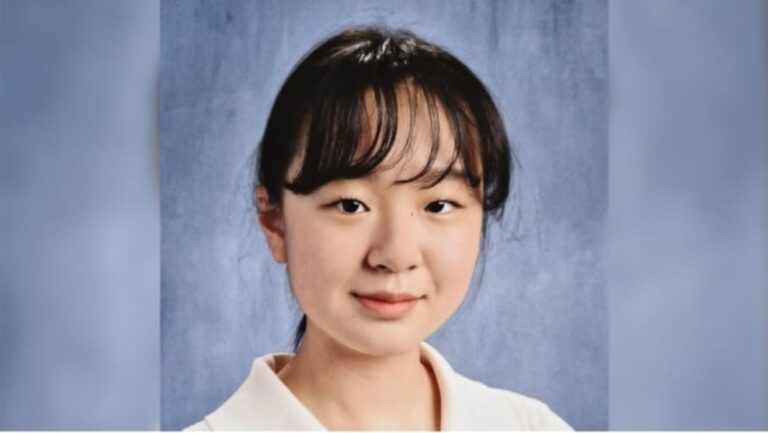
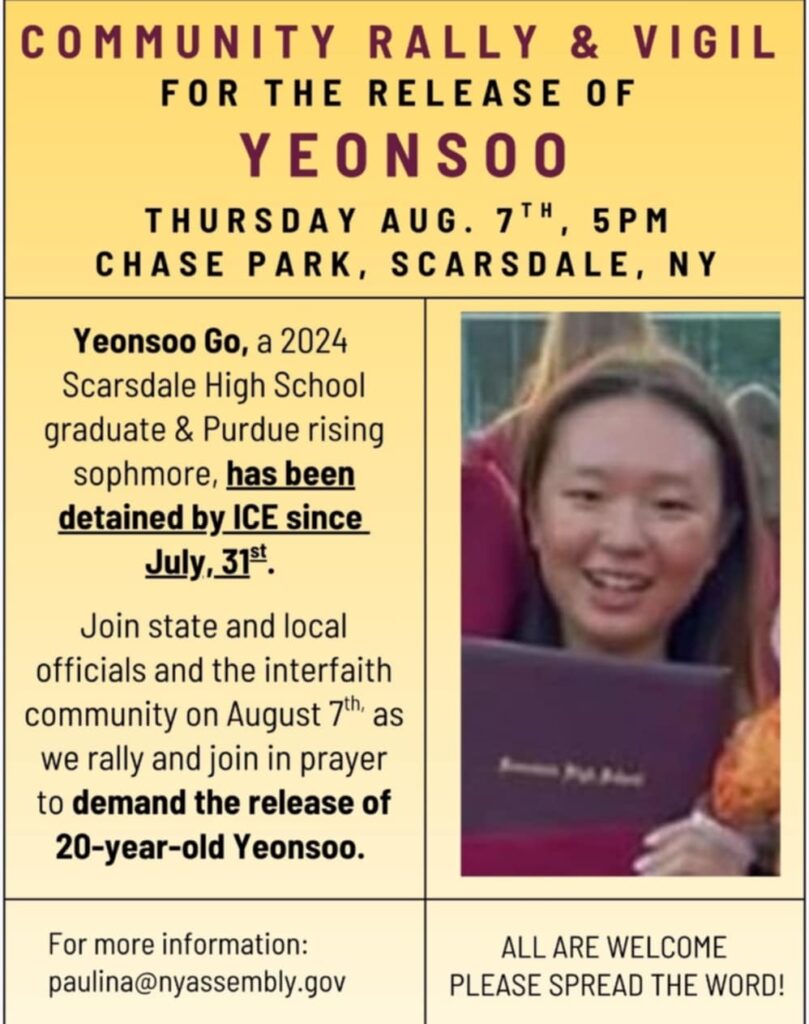
Yeonsoo Go, a South Korean graduate of Scarsdale High School and the daughter of a beloved Episcopal Priest in New York, was arrested and placed in federal detention close to her home before being transferred, like many other recent ICE prisoners, to a facility in Louisiana. She was held at the Richwood Correctional Center in Louisiana, according to a federal immigration database. The engineering major at Purdue University was released on her own recognizance, Monday night.
On Sunday, the Department of Homeland Security issued a statement calling Go an illegal alien from South Korea “…who overstayed her visa that expired more than two years ago,” adding, “ICE arrested her on July 31 and placed her in expedited removal proceedings.”
Yeonsoo Go – whose mother, the Rev. Kyrie Kim, is a priest in the diocese – went to a routine visa hearing on July 31 at Federal Plaza in Manhattan as part of the process to renew her visa, which is set to expire in December. An immigration judge scheduled Go’s next hearing for October. After Go left the hearing, U.S. Immigration and Customs Enforcement agents arrested her outside the building and placed her in federal detention, accusing her of “overstaying her visa.”
She had been placed in expedited deportation proceedings, according to Tricia McLaughlin, assistant secretary at the Department of Homeland Security.
“Yeonsoo Go, an illegal alien from South Korea, overstayed her visa that expired more than two years ago,” McLaughlin stated, adding that the Trump Administration is “committed to restoring integrity to the visa program” so immigrants cannot use it as a “permanent one-way ticket to remain in the U.S.”
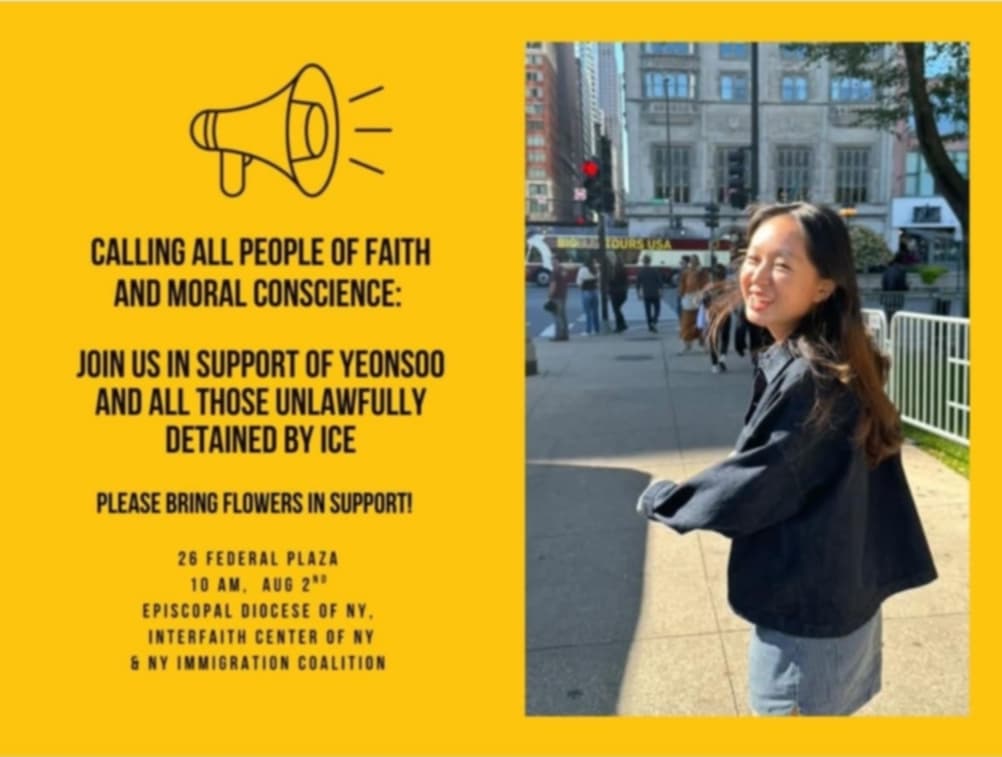
“[Go’s] detention represents a disturbing and unacceptable escalation of enforcement against individuals in good standing with pending immigration cases,” the Diocese of New York said in a Facebook post promoting an Aug. 2 interfaith vigil “calling for Yeonsoo’s immediate release and for broader accountability in how ICE is targeting immigrants, students, and family members.” The diocese hosted the public vigil in collaboration with the Interfaith Center of New York and the New York Immigration Coalition.
The Diocese of New York called for prayers and shared news stories, statements, and advocacy efforts on social media in response to the arrest and detainment of the 20-year-old daughter of an Episcopal priest, who is from South Korea.
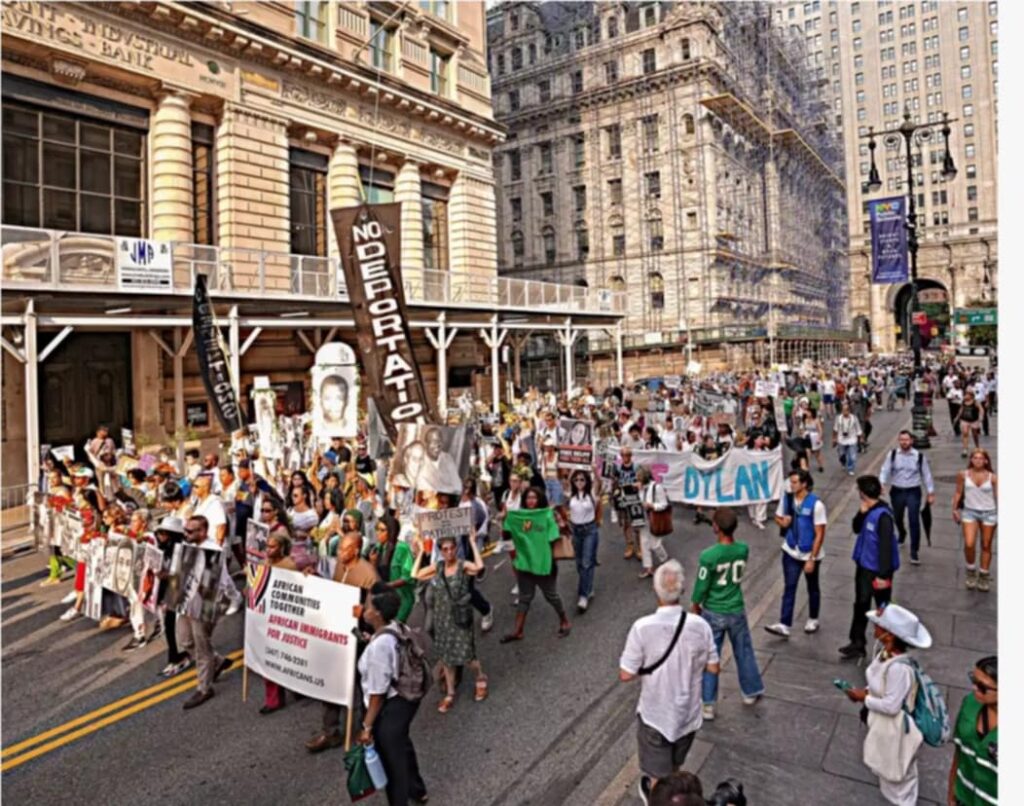
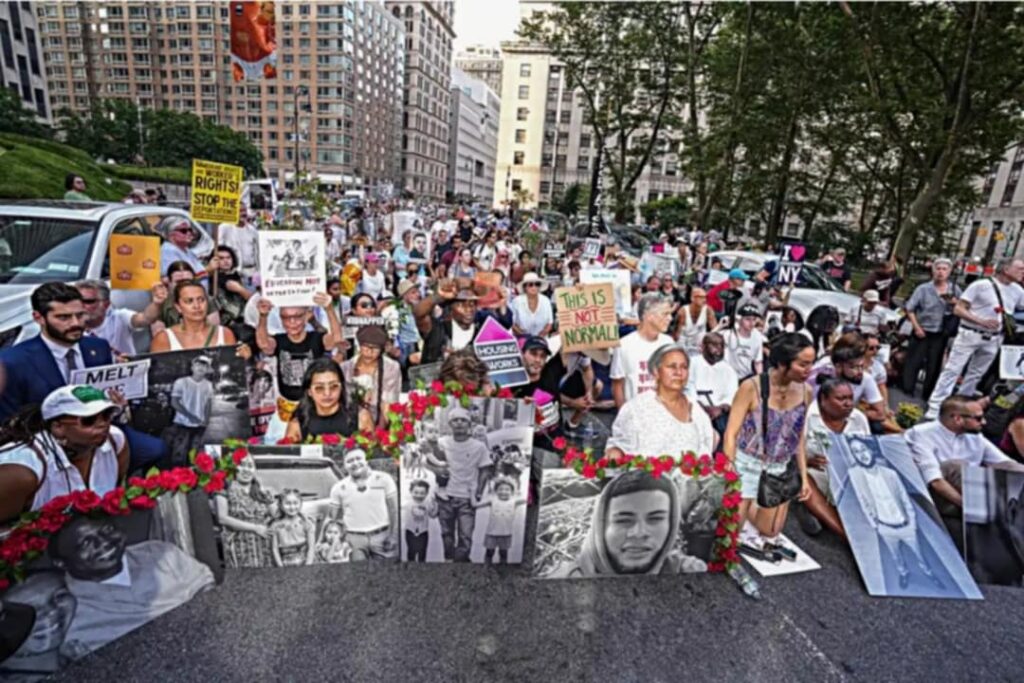
Yeonsoo Go’s detention last week sparked outrage and rallies across the five boroughs and Westchester County.
The Episcopal Diocese of New York, the Interfaith Center of New York, and the New York Immigration Coalition hosted a public vigil and prayer gathering on Saturday, August 2nd, at 26 Federal Plaza in New York City, calling for the immediate release of Yeonsoo Go. Thousands of Faith leaders and people of moral conscience gathered to offer prayers, bear witness, and call for justice and compassion in the face of unjust detention practices. Faith leaders across New York called for Yeonsoo’s immediate release and for broader accountability in how ICE is targeting immigrants, students, and family members.
New York State Assemblywoman Amy Paulin, who represents Westchester, had organized a prayer vigil and rally on Thursday, August 7th, at Chase Park in Scarsdale that had been cancelled due to Yeonsoo’s release. According to Paulin, Go has been in the U.S. on a religious visa for the last five years because her mother is a pastor, and her hearing was an appointment to extend it.
Paulin released a statement on X, Monday night, after speaking to Go following her release.
“I spoke with Yeonsoo Go tonight, and hearing her voice-happy, relieved, and finally free-filled me with emotion I can hardly put into words. She is home, she is safe, and she is grateful for the incredible outpouring of love and support from this incredible community. I am overjoyed, moved to tears, and filled with pride in everyone who stood up for Yeonsoo. The pain, fear, and uncertainty she and her family endured over the past five days should never have happened-but tonight we celebrate her freedom and the strength of a community that refused to stay silent.
I want to extend my heartfelt thanks to Senator Kirsten Gillibrand, Congressman George Latimer, Congresswoman Grace Meng, and Congressman Mike Lawler for their swift efforts to help secure Yoensoo’s release. Because of this joyous outcome, the vigil and rally planned for Thursday at 5 pm is now canceled. But the spirit behind it-unity, justice, and compassion-lives on. Let this moment remind us of the power we have when we come together, and of the work we must continue to ensure that no one is unjustly detained in this country,” Assemblywoman Paulin shared.
Go, known as Soo to her friends and family, was all smiles as she walked out of the ICE detention facility in Lower Manhattan.
“I always had faith that [I’d] be out soon,” Go said. “I wish for everyone to be safe, everyone that supports me to be safe, and have hopes to be told and heard.”
Ashley Gonzalez-Grissom, a lawyer with the Episcopal Diocese of New York, refuted that, saying Go’s visa was valid through December 2025.
“We are so grateful that after five long days, Soo gets to sleep at home in bed and gets to hug her mother. We were all so worried about her,” Gonzalez-Grissom said.
DHS did not say why Go was released. Gonzalez-Grissom said some questions need to be answered, but for now, she’s just happy Go was able to go home.
“No one, regardless of their status, should have to experience what she experienced. We are grateful to God that Soo was returned home to her family,” Gonzalez-Grissom said.
Paulin says Go is confined to her home while all of this gets worked out. There’s no timeline yet on how long that could take.
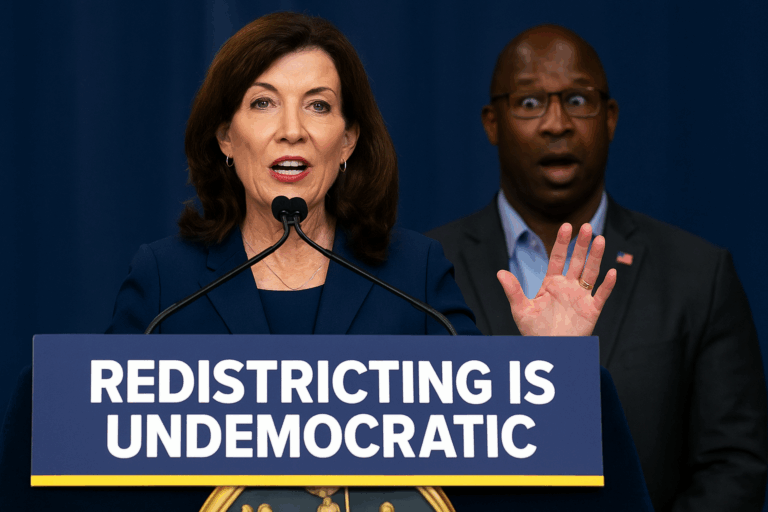
Governor Kathy Hochul stood at a podium this week denouncing Texas Republicans for redistricting tactics she called “undemocratic,” “un-American,” and a “legal insurrection.” Yet in her own backyard, the Democratic Party did exactly what she’s now condemning — and they did it first, to their own, and notably, to a Black man.
Let’s not rewrite history. New York Democrats have redrawn District 16 twice in the past four years, both times with the same goal: shaping the outcome of elections. Congressman Jamaal Bowman, the district’s first Black representative, was squeezed from both ends. In 2022, Democratic legislators ignored the state’s Independent Redistricting Commission and attempted to ram through gerrymandered maps — until the courts struck them down. When new maps were drawn under court supervision, they removed heavily Black and working-class areas from Bowman’s base.
Then, in 2024, Democrats came back and redrew the lines again — this time restoring Co-Op City in a weak attempt to counter the backlash and protect Bowman’s re-election chances. But the damage had been done. Bowman was ultimately drowned by over $20 million in outside spending from corporate and pro-Israel groups, while Hochul and other state leaders stood by, silent.
Now she wants to stand on principle?
This is the problem with performative outrage. Governor Hochul wants to be the face of democratic fairness when it’s politically convenient — but her party engaged in the same rigging, in the same decade, and under her watch. Worse, they did it not just to any incumbent — but to a Black man with the audacity to challenge power structures inside his own party. That’s not just hypocritical. That’s political malpractice.
You can’t claim to be defending democracy while redrawing maps in the backroom and letting PAC money decide who stays in power. You can’t condemn Republicans for mid-decade map manipulation while rewriting your own district lines for partisan gain. And you certainly can’t ignore the racial optics of helping push out the only Black congressman the district has ever had.
Congresswoman Jasmine Crockett has been quick to label the Texas redistricting effort as racist and undemocratic — and yet, her voice was notably absent when similar political maneuvers were carried out against Congressman Jamaal Bowman in New York. When Democrats redrew District 16 not once, but twice, ultimately helping to remove the district’s first Black congressman under a flood of PAC money and party silence, Crockett had nothing to say. Her selective outrage raises serious questions: Is the issue truly about race and fairness, or only when it’s politically convenient? Ignoring what happened to Bowman while now decrying Texas shows a troubling double standard — and it doesn’t go unnoticed by Black voters who are tired of being used as political pawns
Jamaal Bowman may not have been everyone’s favorite. But what he represented — a strong, unapologetic Black voice from the Bronx and Westchester — was historic. And for the Democratic establishment to quietly participate in dismantling that, only to now cry foul about Texas, is the height of political hypocrisy.
This is exactly why so many Black men are leaving the Democratic Party — the hypocrisy. Do they really think Black people are that stupid? That we wouldn’t notice what they did to Bowman? To now point fingers at Trump or any Republican is the very definition of hypocrisy — especially after you did it to one of your own.
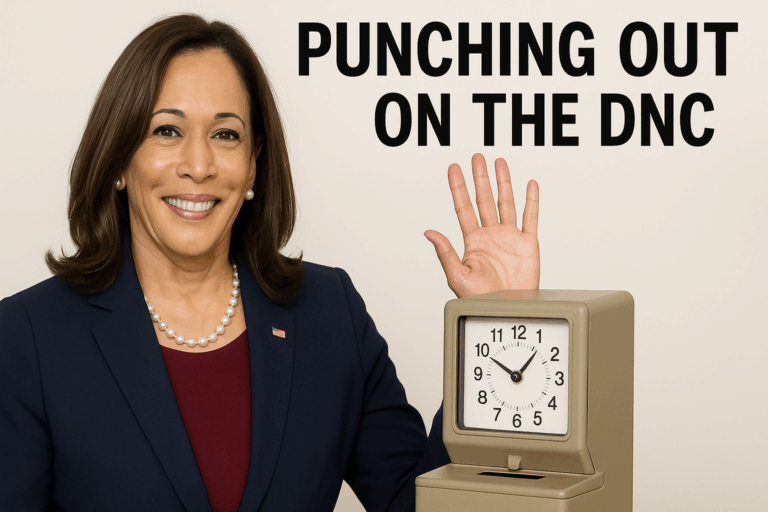
Kamala Harris’ decision not to run for governor of California in 2026 may seem like a personal choice—but it exposes a deeper crisis in the Democratic Party. At a time when national leadership is fractured and voter confidence is eroding, one of the party’s most recognizable figures has opted to sit on the sidelines. The implications are larger than California—they’re national. Because Kamala’s retreat doesn’t just leave a campaign trail empty. It leaves a vacuum in a party already running on fumes.
The Democratic Party is entering uncharted territory. With President Biden out, Vice President Harris stepping back, and no clear successor stepping up, the party is leaderless at the very moment it needs direction. The 2026 midterms are fast approaching. Donald Trump is back in the White House. And the Democrats? They are struggling to find a voice—and worse, to find someone to speak with it.
Polls now show the Democratic Party with the lowest approval rating in its modern history. Trust is collapsing among working-class voters, independents, and the very coalitions that put Democrats in power just four years ago. Black voters are disillusioned. Latino and Asian voters are peeling away. Young voters are either disengaged or defecting. The base is shrinking, and the bench is missing.
Kamala Harris was once seen as the bridge—a historic figure with the potential to energize key constituencies. Flawed or not, she represented something. And now, she has chosen silence over struggle. She says she wants to support the party “in other ways.” But where? From what platform? At what cost?
Meanwhile, Donald Trump is stealing the headlines with the help of the media pushing aggressive border policy, imposing tariffs, and reshaping the economy around a populist vision that’s gaining traction even among traditional Democratic voters. Agree or disagree with his policies, like him or hate him, he has a message, a plan, and a base that’s listening. The Democrats, by contrast, have internal squabbles, vague talking points, and no standard-bearer.
This is not just a political vacuum—it’s a leadership collapse. And Kamala Harris, by stepping away from the public arena, has deepened it.
Politics abhors a vacuum. And while Democrats retreat, Trump is on offense—writing the script, defining the terms, and locking in voter loyalty. The contrast could not be clearer: one party is fighting for the future; the other is busy arguing over who should hold the mic.
There is no obligation for Kamala Harris to run for anything. But leadership is not about obligation—it’s about presence. And in this defining moment, the Democratic Party is absent.
That absence has a cost. Not just in elections—but in the future of national governance. Because if the Democrats won’t lead, someone else will. And we already know who that someone is.
In my opinion, Kamala Harris should write her book, tell all the secrets, make millions, and take care of her family. She gave at the door, played the political games, and now it’s time to sit back, cash in, and live her life. Politics moves on—but so should she.
While the political class debates budgets and slogans, a silent crisis is claiming Black lives—one cell mutation at a time.
The American Cancer Society’s latest 2025 report drops a sobering truth: Black Americans still face the highest death rates for breast, prostate, and colorectal cancers. Not because of biology, but because of systems—systems that delay screenings, ration access, and minimize our pain. Systems that are now on the chopping block as federal Medicaid and Medicare cuts creep toward reality.
Let’s be clear: this isn’t a medical mystery. It’s an economic and political equation. The risk factors—late-stage diagnoses, food deserts, environmental toxicity, low health literacy, and poor access to early intervention—are all rooted in public neglect and failed leadership. When you close clinics, defund outreach, and send millions back into the uninsured pool, outcomes are not theoretical. They’re fatal.
Look at prostate cancer. Black men are twice as likely to die from it. And yet, the most common screening test (the PSA test) is still treated like a debate topic instead of a default for high-risk populations. Why? Because our lives are measured by budgetary line items, not outcomes. Meanwhile, colorectal cancer—once seen as a disease of the elderly—is rising fast among adults under 50. That’s your nephew, your co-worker, your barber. The new normal is younger, deadlier, and avoidable.
But here’s the deeper issue: too many of our institutions still treat Black health as a reactive, not proactive, concern. We talk “equity,” but where’s the ecosystem? Where are the HBCU-led cancer research centers, the culturally competent clinics, the community health navigators embedded in barbershops, churches, and gyms? Why aren’t we using technology—apps, text alerts, AI—to reach Black families where they are?
We don’t need more panels. We need pipelines.
Here’s what must happen:
We stop waiting for political permission to save ourselves. Every Black church, barbershop, media outlet, and nonprofit must be part of a decentralized wellness infrastructure. Preventive care, real food education, stress management, and masculine wellness must be preached like scripture. We don’t have time for gatekeepers.
HBCUs must return to mission. They were built to create what white institutions denied us. That includes medical infrastructure. Health innovation, community clinics, and preventive research must be core priorities. Graduating influencers while our people die young is not liberation. It’s distraction.
Black celebrities and professionals must collaborate. If you can sell merch, you can sell mammograms. We need a new alliance between entertainers, athletes, doctors, and community health workers to drive health campaigns with the same energy we put into album drops and shoe releases.
Black politicians must get off the sidelines. Stop chasing headlines and start holding hearings on issues that actually matter—like Black health. Where is the legislation on early cancer screening, on funding Black-run clinics, on protecting Medicaid access in our districts? If your platform is more about identity than outcome, you are part of the problem. Do your job—or step aside.
The truth is simple: cancer doesn’t care about hashtags. And budgets don’t lie.
If we don’t own the solution, we will inherit the outcome.
Let’s build a future where Black health isn’t managed. It’s mastered. Not by reacting to diagnosis—but by rewriting the diagnosis of a broken system that was never meant for us.
At a time when Black students are graduating in record numbers but owning less than ever, we must confront a hard truth: our educational institutions have lost their mission—and Black America is paying the price.
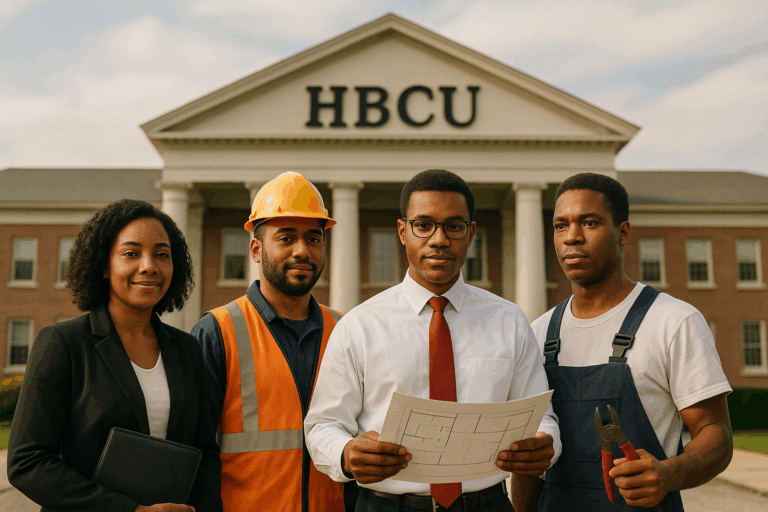
Historically Black Colleges and Universities (HBCUs) were never designed just to hand out degrees. They were created to train builders—men and women who could construct the economic, spiritual, and institutional backbone of a free Black society. They existed because white America locked us out of its systems—so we built our own. But somewhere along the way, the mission shifted. And with that drift, we began producing employees instead of entrepreneurs, consumers instead of creators, social climbers instead of community builders.
The majority of degrees Black students now earn are in fields like mass communications, general business, sociology, criminal justice, and psychology—fields that offer limited job security, low ownership potential, and are increasingly being disrupted by automation or corporate downsizing. These are not the trades of the future. They are the degrees of stagnation. We are not preparing our young people to own, to build, or to lead. We are preparing them to compete for jobs that are disappearing. In the age of AI, automation, and economic decentralization, this is not just short-sighted—it’s catastrophic.
Black Americans own just 2% of all businesses in the United States. We control even less of the real estate, land, supply chains, healthcare systems, media platforms, or infrastructure that shape our daily lives. We didn’t get here by accident. We got here by failing to train a generation to build. Our grandparents built businesses with nothing but grit and faith. Today, our most credentialed generation in history can’t point to a single national institution it owns or controls. That is not progress. That is a misapplication of talent.
Instead of being pipelines to sovereignty, many HBCUs have become pathways to dependency. They prepare students to get hired by the same systems that exploit our communities, not to build alternatives to them. That must change. If HBCUs want to remain relevant—and if Black America wants to survive the next economic shift—they must return to their original mission: not to produce the most graduates, but to produce the most builders.
The solution isn’t just pushing Black students into AI or finance. It’s deeper than that. We must reclaim and elevate the trades. Electricians, plumbers, HVAC techs, solar panel installers, welders, and builders—these are not fallback careers. They are foundation careers—essential to every community, and recession-resistant in a world where most white-collar jobs are being digitized or outsourced. We must fuse these trades with technology and ownership. Teach smart-home installation, solar energy systems, and infrastructure management. Help students become licensed contractors, not just project managers. Equip them to start companies, not just write résumés. We must create Black-owned land development firms, cooperative housing models, credit unions, agricultural ventures, and broadband infrastructure. And we must do this within our institutions—not in partnership with systems that never intended for us to lead.
AI will eliminate jobs. Automation will collapse industries. But it will never replace the man who can build a home, fix the grid, or own the land beneath his feet. Our ancestors built HBCUs to ensure Black survival through education. Now we must rebuild HBCUs to ensure Black sovereignty through infrastructure, trades, and ownership. If we’re not producing electricians, developers, contractors, and coders… if we’re not training engineers, land-use planners, builders, and business owners… then we are not producing a future. We’re producing dependents.
This is not about returning to the past. It’s about finishing what our ancestors started. And if our institutions won’t do it, then they must be challenged, restructured, or replaced. Because survival is no longer the goal. The goal is power. And power is built—never granted.