Notice is hereby given, pursuant to law, that the City Council of the City of Yonkers,
New York will hold a Public Hearing on Tuesday, April 28, 2026, at 6:30 P.M. in the City Council Chambers, 40 South Broadway, Yonkers, New York on the following Local Law, to wit:
PROPOSED LOCAL LAW
A PROPOSED LOCAL LAW AMENDING CHAPTER 43 OF THE CODE OF THE CITY OF YONKERS TITLED “ZONING” BY AMENDING ARTICLE XV IN RELATION TO AFFORDABLE HOUSING
Said hearing may be adjourned from time to time as necessary. Further information,
including access to a copy of said Local Law, may be obtained at the Yonkers City Clerk’s Office located at City Hall — Room 102, 40 S. Broadway, Yonkers, NY 10701
I arrived on March 30 at 5:30 p.m., just as registration opened, and before anything was even said from a microphone, the room was already speaking.
Not loudly. Not performatively. But clearly.
You could feel intention in the way people moved. Coats coming off, name tags pressed on, quiet greetings exchanged, but underneath all of that was something else. A kind of awareness. Like everyone understood, on some level, that this wasn’t going to be a surface conversation.
And I remember pausing before fully stepping in, just taking it in. Because you don’t get rooms like this often. Rooms where people aren’t there to be entertained or impressed, but to understand something that has been intentionally left unclear.
By the time the program began at 6:00, that energy had shifted into focus. The room settled. Not in a passive way, but in a present way. Like we had all agreed, without saying it out loud: we’re here for the truth.
And when Janet Rolon Fry,Tiffany S. Hamilton, and Cheryl Brannan, welcomed us, it wasn’t just an introduction, it was a grounding.
Because let’s be honest and I mean actually honest, not polite-conversation honest, menopause has been treated like a side note in women’s lives. Something to whisper about. Something to “get through.” Something to make smaller so it doesn’t make anybody else uncomfortable.
And that framing? That’s not accidental.
So when they stood there, holding space with intention, with care, with clarity, it mattered. Not just what they said, but how they made it clear that this conversation deserved to exist in full.
Jennifer Lewis, serving as host for the evening, understood that assignment. She guided the room with a presence that didn’t try to control the energy, it respected it. And that’s a difference people can feel, even if they don’t have the language for it.
Because this event wasn’t about packaging menopause into something digestible.
It was about telling the truth.
And when the speakers began, that truth showed up in layers.
Melissa Ferrara came with the kind of clarity that only comes from witnessing the same pattern over and over again, women being dismissed, misdiagnosed, or told their experiences don’t align with what’s “supposed” to happen. And she named it. Directly.
Honorable Judge Janet Malone didn’t just speak from a title, she spoke from a life of navigating systems that were never designed with her in mind and still finding ways to shift them. And in a moment that grounded the conversation even further, she acknowledged her husband in the room, recognizing his support and, in many ways, his quiet co-sign of the resilience it takes to move through these transitions. It was a reminder that while this is a women-centered conversation, support systems matter, and they show up in real ways.
Dr. Sharon Parish brought in the clinical lens, but without losing the humanity. And that’s important, because too often medicine removes the person from the experience. She didn’t. She made it clear that menopause isn’t something to “fix”, it’s something to understand.
Paulina Portero shared her story in a way that didn’t ask for sympathy, it offered perspective. When someone reframes what could have been a breaking point into a moment of return, that changes how people see what’s possible.
And Lauren Tetenbaum filled in the part of the conversation that gets ignored most often, the emotional and psychological reality. Identity shifts. Relationship shifts. Internal negotiations that women are expected to manage quietly. She gave language to that silence.
And let’s not overlook who was in the room.
Westchester County Legislator Jewel Williams Johnson of District 9 showed up, not symbolically, but intentionally. Because when leadership is present for conversations like this, it signals that this isn’t just personal, it’s structural.
But here’s the part that doesn’t always get named clearly enough: none of this happens without people deciding it should.
Screenshot
Jennifer Lewis, Tania Weiss, Beryl Weaver, Valya Dessaure, Lora Nelson, Kate Permut, Tanya Briendel, and Alisa Kesten, they didn’t just attend. They contributed to building a space where this conversation could exist the way it needed to.
Not perfectly. Not effortlessly. But intentionally.
And I’m especially grateful to WWA, the YWCA, and STSI for bringing this topic and this level of informed, necessary dialogue to the forefront. Because creating space for truth, especially around something that has been systemically minimized, is not light work.
It’s necessary work.
And sitting there, listening, I kept coming back to something simple: silence has never protected women. It has only made it easier to ignore them.
What happened in that room disrupted that pattern.
Not in a loud, attention-seeking way, but in a grounded, undeniable way.
The kind of truth that stays with you after the room empties. After the chairs are folded. After the conversations end, but the awareness doesn’t.
Because this was never just about menopause.
It was about agency.
It was about language.
It was about refusing to let something so universal remain so misunderstood.
And once truth is spoken clearly, consistently, and collectively, silence doesn’t get to take the lead anymore.
Yonkers, NY — April 3, 2026 — Students from Environmental Leaders of Color (ELOC) — a Mount Vernon-based nonprofit that has been cultivating the next generation of environmental advocates since 2021 — recently had the opportunity to trade the classroom for the tipping floor. Their destination: the Daniel P. Thomas Material Recovery Facility (MRF) in Yonkers, the center of recycling in Westchester County. The trip provided a front-row seat to the industrial machinery that turns what residents toss into their blue bins into something genuinely valuable, for both the environment and for the county’s bottom line.
Inside the MRF: Where Recycling Actually Happens
The Yonkers Daniel P. Thomas MRF serves as the cornerstone of recycling efforts for the municipalities in the County’s Refuse Disposal District. About 90 percent of all residentially collected recyclable material in Westchester County passes through this single facility. When trucks pull in, they dump their loads onto the tipping floor — a massive staging area where recyclables are received and fed into the sorting system. From there, conveyors carry the material through a sophisticated series of machines: screens that separate by size, magnets that pull out steel cans, eddy-current separators that fling aluminum, and high-tech optical sorters that shoot thousands of laser beams per second through each plastic container to identify the resin type by code. The result is a series of neatly categorized material streams — cardboard, mixed paper, glass, aluminum, steel, and plastics — that are compressed into bales and sold to manufacturers who use them as raw material for new products.
ELOC students first saw all of this from an observation tower overlooking the operation, then got to explore the facility happenings up close and personal. They also explored the MRF’s Recycled Material Art Gallery, located inside the Education Center, where six local artists have created stunning works entirely out of recycled and reused materials — a vivid reminder that what looks like waste can be transformed into something beautiful.
Why It Matters: Recycling Is Big Business for Westchester
Here is something most residents don’t realize: recycling generates real revenue for the county. In 2023, the MRF processed 65,929.27 tons of curbside recyclables, generating over $4 million in revenue from the sale of those materials. Under the county’s contract with its facility operator, Westchester receives an 80 percent share of all proceeds from the sale of recyclables.
This is not an abstraction for Black and Brown communities across Westchester. Cities like Mount Vernon, Yonkers, and New Rochelle — home to many of ELOC’s students — sit closer to industrial corridors, transfer stations, and other environmental burdens that come with gaps in environmental stewardship. Teaching young people from these communities to understand the systems of waste and resource recovery isn’t just civics education; it is environmental justice in action. When communities are empowered to recycle correctly, they protect their neighborhoods, reduce the demand for new raw material extraction, and ensure that public revenues stay strong.
Growing Leaders, Growing Impact.
The MRF offers educational tours free of charge to groups from kindergarten through adulthood, including school classes, scout troops, and community organizations. Tours are by appointment only and available on weekdays. To schedule a tour for your group, email the MRFTours@WestchesterCountyNY.gov.
For ELOC’s students — many of them young people from communities that have historically had the least say in environmental decisions that affect them most — standing on the observation deck of a facility that processes tens of thousands of tons of material every year sends a message: You belong in these conversations. You are part of the solution.
At the National Action Network convention, one young Black man’s challenge to the Democratic establishment disrupted a room full of political elites. It exposed a growing fracture between a younger generation demanding measurable results and an older political order still relying on promises that have gone unfulfilled for decades.
Nowhere is that fracture clearer than in the debate over reparations.
When Congressman John Conyers Jr. first introduced H.R. 40 in 1989, it was meant as a symbolic first step toward addressing America’s debt to the descendants of enslaved Africans. The bill was not even a reparations payment bill. It merely sought to establish a federal commission to study and develop proposals for reparations.
That was thirty-seven years ago.
Thirty-seven years later, H.R. 40 still has not become law.
That means the legislation itself is likely older than the young man who stood up at the convention to question why reparations are still discussed as if they are perpetually just around the corner. His frustration is not detached from history. It is rooted in it. For an entire generation of Black Americans born after H.R. 40 was introduced, reparations have existed largely as political language without legislative delivery. That matters.
When young Black voters hear reparations invoked at conferences, rallies, and election campaigns, they are increasingly asking a legitimate question: If this has been a priority for decades, why is it still just talk? Their frustration invites empathy and underscores the importance of genuine progress.
The answer raises uncomfortable political contradictions.
Rev. Al Sharpton has long maintained that the National Action Network supports reparations and backs only politicians who support reparative justice. On its face, that sounds principled. But the real test of political sincerity is not rhetorical endorsement. It is what happens when those same politicians have opportunities to act.
Consider Kamala Harris.
During her presidential campaign, Harris declined to make a firm commitment to reparations as a policy priority. Like many national Democrats, she acknowledged the conversation without embracing a definitive legislative path forward.
Then consider Maryland Governor Wes Moore.
Moore, often celebrated as a historic Black Democratic leader, recently vetoed legislation that would not have issued reparations. The bill merely sought to create a commission to study reparations and issue a formal apology for slavery and systemic discrimination. A study commission.
An apology.
Even that was too much.
This is where younger Black voters see the contradiction that older leadership often avoids confronting.
If organizations claim to support reparations and claim only to endorse politicians who support reparations, how do they reconcile backing leaders who retreat when faced with actual legislative opportunities?
That contradiction is precisely why skepticism is growing.
The younger generation is not rejecting reparations as a cause. They are rejecting the performative politics surrounding it.
They see H.R. 40 repeatedly introduced and celebrated symbolically, while year after year it dies in committee.
They hear speeches about justice, but they watch elected officials avoid binding commitments. They are told that reparations are morally urgent, yet political leaders continue treating them as electorally optional.
This pattern creates a credibility crisis.
For younger Black voters, the issue is no longer whether reparations should happen. Many already believe the case is morally and historically clear.
The deeper issue is whether Democratic leaders and legacy Black political institutions are truly committed to pursuing it beyond rhetoric.
And that skepticism extends beyond reparations itself.
If a party can invoke reparations for nearly four decades without delivering even a federal study commission, what does that say about its larger relationship to Black political demands? What young voters are beginning to recognize is that symbolic support without measurable progress becomes indistinguishable from political theater.
That young man at the convention exemplifies a critical point. His frustration is not impatience. It is a sign of generational clarity that challenges the political status quo. His frustration is not impatience. It is generational clarity.
He belongs to a generation that has inherited decades of unresolved promises. A generation born after H.R. 40 was introduced yet still being told to wait for the same conversations their parents and grandparents were promised.
That generation is now asking a question Democratic elites and Black political leadership can no longer avoid:
How long can a promise remain unfulfilled before people stop believing it was ever meant to be kept?
That is not disrespect.
That is accountability.
And in politics, accountability is where slogans end, and truth begins.
Welcome to another edition of SportsTalk With AJ ROK. After Sunday night’s conclusion of the regular season, the 2026 NBA Playoffs are officially set. One thing is certain, though: this playoffs is expected to be wide open, unpredictable, and packed with storylines.
Eastern Conference Storylines
The top four teams were locked into their seeds entering the regular-season finale, but they’re walking into a conference that’s anything but easy: The Detroit Pistons (59-22) shocked the league with the top record, and the number two-seeded Boston Celtics (55-26) remain battle-tested and dangerous. The New York Knicks (53-28) come in as the No. 3 seed, continuing their rise as a legitimate force in the East, and the Cleveland Cavaliers (51-30) are right there in the mix. Translation: There are no easy paths to the Finals!
The remaining teams in the East battled it out for positioning. The Atlanta Hawks (46-35) entered Sunday’s game at Miami at No. 5, but with a loss and an Orlando loss plus a Toronto win, they finished 6 and will face the NY Knicks (53-29) in the first round. The Toronto Raptors (46-36) entered Sunday’s game vs. Brooklyn at No. 6, but with wins and losses by Atlanta and Orlando, they finished 5th and will face the Cavs in the first round!
While the 7th-seeded Philadelphia (45-37), 8th-seed Orlando Magic (45-37), 9th-seed Charlotte Hornets (44-38), and 10th-seed Miami Heat (43-39) will compete for the final two playoff spots in the East. The winner of the 7-8 game in the East will play the 2-seed Boston Celtics. The winner of the final play-in game in each conference will face the 1-seed Detroit Pistons.
Western Conference Storylines
Out West, it’s a different kind of pressure: The Oklahoma City Thunder (64-18) dominated all season, the San Antonio Spurs (62-20) are right behind them finishing the 2nd seed, teams like the 3rd-seeded Denver Nuggets (54-28) and Los Angeles Lakers (53-29) bring experience and star power, finishing in the 4th seed. The West is stacked—and every round will feel like a Finals matchup!
While the 7th-seeded Phoenix Suns (45-37), 8th-seed Portland Trail Blazers (42-40), 9th-seed L.A. Clippers (42-40), and 10th-seed Golden State Warriors (37-45) will compete for the final two playoff spots in the East. The winner of the 7-8 game in the East will play the 2-seed San Antonio Spurs. The winner of the final play-in game in each conference will face the 1-seed Oklahoma City Thunder.
The Play-In Tournament (Seeds 7–10)
Everything to know about the 2026 SoFi NBA Play-In Tournament
Teams placed seventh through tenth in each conference compete for the final two playoff slots prior to the official start of the playoffs. The dates of the 2026 NBA SoFi Play-In Tournament are April 14–17, 2026. However, a postseason berth is assured for the clubs who place first through sixth in each conference. Teams ranked seventh through tenth compete in these six games, which determine the final No. 7 and No. 8 postseason seeding in each conference. This tournament’s games are all available only on Amazon Prime Video.
7-10 in the standings will enter the SoFi NBA Play-In Tournament. These teams will battle for the seventh and eighth playoff seeds.
Here is an overview of how it works:
Below is the latest SoFi NBA Play-In Tournament Schedule. All games will be broadcast exclusively on Prime Video.
Tuesday, April 14
East: CHA (9) vs. MIA (10), 7:30 p.m. ET- West: PHX (7) vs. (8) LAC/POR, 10 p.m. ET. Winners advance to Playoffs as No. 7 seeds
Wednesday, April 15
East: PHI (7) vs. ORL (8), 7:30 p.m. ET – West: LAC/POR (9) vs. GSW (10), 10 p.m. ET. Losers are eliminated
Friday, April 17
East: 7/8 loser vs. 9/10 winner, 7:30 p.m. ET – West: 7/8 loser vs. 9/10 winner, 10 p.m. ET Winners advance to Playoffs as No. 8 seeds
The 2026 NBA Playoffs are scheduled to begin immediately following the tournament on Saturday, April 18, 2026.
At the end of the day, the regular season is just the résumé—the playoffs are the interview. Every possession matters, every adjustment counts, and every weakness gets exposed under the brightest lights. This is where talk ends, and truth begins. The stars will be tested, the role players will be called on, and only the teams built with toughness, discipline, and belief will survive. Because in the 2026 NBA Playoffs, it’s simple—win, or you go home!
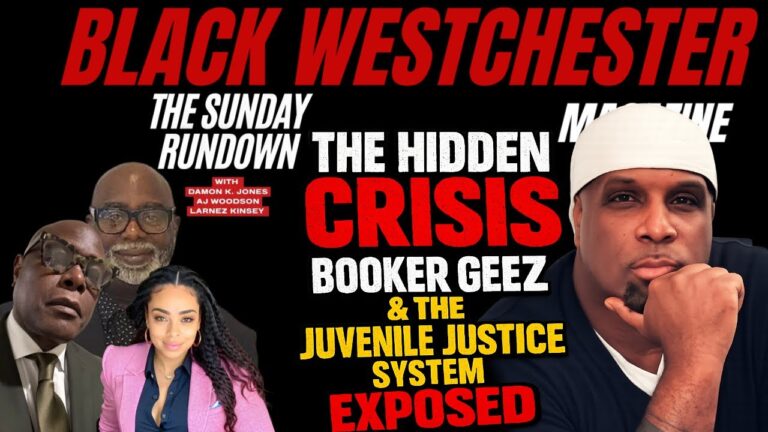
In this powerful episode of People Before Politics: Sunday Rundown, we break down the week’s top local headlines impacting Westchester and beyond, then in the second half, author and youth advocate Booker Geez joins us for an eye-opening conversation on the hidden realities inside America’s juvenile detention system. As the author of Locked Up and Put Away, Booker Geez brings firsthand insight from his 10 years working as a juvenile counselor inside New York detention facilities. He reveals the systemic failures, trauma, corruption, and long-term damage affecting young people trapped in a broken juvenile justice pipeline. This is more than an interview. It is a conversation about truth, accountability, and what happens to children once society locks them away and stops paying attention.
Topics include:
The realities inside juvenile detention centers
The school-to-prison pipeline
How Black and Latino youth are disproportionately affected
Reform failures and what must change now
This week’s major local political and community news
Watch, comment, and subscribe to Black Westchester for independent journalism that puts people before politics.
Join Damon K. Jones, AJ Woodson, and Larnez Kinsey as they bring you not just news, but context, accountability, and community-centered analysis you can’t get anywhere else.
LIVE from 6 PM to 8 PM on YouTube, Facebook, LinkedIn, and X, powered by Black Westchester Magazine.
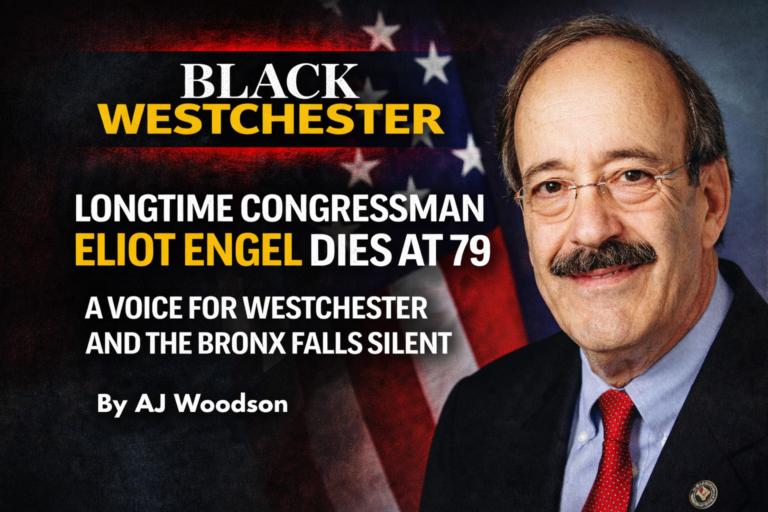
U.S. Congressman Eliot Engel, who served in Lower Hudson Valley/Bronx politics for 30 years, has died.
Eliot Engel, the former New York congressman from the Bronx, died Friday, April 10th, his family said in a statement. He was 79. The Democrat represented parts of Westchester County and the north Bronx in the House of Representatives for over 30 years from 1989 to 2021. Engel’s family said he died peacefully and surrounded by family “in the borough that raised him: The Bronx.”
“It is with great grief and sadness that our family announces the death of the Honorable Eliot Lance Engel, former Chairman of the House Foreign Affairs Committee, Congressman for New York’s 16th, 17th, and 19th districts, and Assemblyman for New York’s 81st district,” the Engel family said in a statement. “Eliot passed on April 10th, 2026, at the age of 79, surrounded by family and loved ones in the borough that raised him: The Bronx.”
He was perhaps best known for his leadership as Chairman of the House Foreign Affairs Committee, where he played a major role in shaping U.S. foreign policy, including involvement in the Balkans conflict and international human rights efforts. Engel also helped craft the Harkin-Engel Protocol, aimed at combating child labor in West Africa’s cocoa industry.
A former teacher and state Assembly member, Engel rose through the ranks of the House Foreign Affairs Committee, eventually becoming its chair in 2019. He was a strong supporter of Israel and one of the first lawmakers to call for military intervention on behalf of Kosovo, then a province where ethnic Albanians were seeking independence from Serbia, in their war in the 1990s. A U.S.- and U.K.-led NATO bombing campaign opened the way for Kosovo’s eventual independence nine years later.
According to reports, Engel died from complications related to Parkinson’s disease, surrounded by family in the Bronx—the borough where he was born and raised. Political leaders across New York and the nation have begun honoring his legacy, remembering him as a dedicated public servant, global diplomat, and fierce advocate for his constituents.
Eliot Engel’s impact stretched from local neighborhoods in Westchester and the Bronx to the global stage. Whether advocating for his district or influencing international policy, his career reflected decades of commitment to public service.
He leaves behind a legacy defined by experience, influence, and a lifetime of political service.
Westchester & The Bronx Mourn the Loss of Congressman Eliot Engel at 79
“I am saddened by the loss of Congressman Eliot Engel, a dedicated public servant who spent decades representing Westchester and the Bronx. I had the opportunity to work alongside Eliot for many years, and I came to know him as a steady, experienced leader who remained focused on delivering for the people he served, both at home and on the national stage. His impact will be felt for years to come, and his legacy of service will be remembered across our region, state, and nation. My thoughts are with his family, friends, and loved ones,” Senate Majority Leader Andrea Stewart-Cousins
“It is with deep sadness that I learned of the passing of Congressman Eliot Engel. Congressman Engel was a personal friend and mentor, a lifelong, dedicated public servant who led with an unwavering commitment to his constituents and community. For many years, Congressman Engel represented Westchester, Rockland, and the Bronx with courage, leadership, and compassion. We are particularly indebted to him for his leadership as Chair of the House Foreign Affairs Committee. I extend my heartfelt condolences to his wife Pat, his family, friends, and all who had the honor of working alongside him. Our community is stronger because of his leadership, and we will continue to honor the lasting impact of his work. May his memory be a blessing,” State Senator Shelley Mayer
Westchester County Executive Ken Jenkins issued a statement Friday afternoon via the county’s website.
“We are deeply saddened to learn of the passing of former Congressman Eliot Engel, a tireless public servant who devoted more than three decades to representing the people of New York. Throughout his career, Congressman Engel was a fierce advocate for his constituents in Westchester and the Bronx. He was a champion of human rights, and as Chairman of the House Foreign Affairs Committee, he helped shape U.S. policy on the global stage while never losing sight of the needs of the communities he represented at home. His legacy is one of commitment, conviction, and service. He understood that public office is a responsibility to speak up, to stand firm, and to deliver for the people who entrusted him with their voice. We extend our deepest condolences to his family, friends, and all those who had the privilege of working alongside him. His impact will be felt for generations,” County Executive Ken Jenkins
Congressman George Latimer, who now represents Engel’s former 16th district of New York, issued a statement Friday afternoon on Engel’s “lifetime” devotion to public service, as both a teacher and an elected official in Albany and Washington.
“His legacy consists of hard work on issues and kindness to all. His work in helping bring peace to the Balkans in the 1990s was a major accomplishment, among many others,” Latimer said. “We mourn with his family, and extend to them our deepest condolences. We intend to honor Eliot on the floor of the House. May he rest in peace.”
County Legislator Tyrae Woodson-Samuel says goodbye to his former boss, eternal friend, and mentor,
To the world, he was a dedicated public servant and a champion for New York, but to me, he was a steady source of wisdom and encouragement. I am forever grateful for the years I spent learning under his leadership—he didn’t just teach me the mechanics of the work, he showed me what it meant to lead with integrity and heart. Thank you, Eliot, for opening doors, for your example, and for a friendship that meant more than words can say. Your legacy lives on in the lives you touched and the communities you served so well. You will be deeply missed. Rest easy, my friend, job well done
“I join the many across Westchester, the Bronx, and beyond in mourning the passing of former Congressman Eliot Engel. He was truly a giant in public service — a steady, respected presence who served with distinction in Congress and served his district with deep commitment, seriousness, and care. For decades, he helped give voice to the needs, hopes, and concerns of the people he represented, and he did so with a sense of duty that leaves a lasting mark. His legacy is one of service, leadership, and enduring dedication to his constituents. May he rest in peace, and may his family, loved ones, and all who knew and respected him find comfort in the tremendous impact of his life and work,” Legislator Jewel Williams-Johnson
The Bronx Dems mourn the loss of Congressman Eliot L. Engel,
“I met Congressman Eliot Engel nine years ago. He didn’t really know me, but I was running for Village Trustee, and I was honestly shocked by how supportive and present he was throughout our campaign. He showed up at multiple events, gave a donation, recorded a phone message that went out the night before the election, and at the end, he even came out to celebrate with us (pictured). He seemed genuinely happy to see newcomers trying to get started in public service. I’m not sure he ever realized what it might mean to a small-town local candidate to get that kind of support from such an important figure. I didn’t know him well, but I appreciated the interactions we had. When he talked about politics, he wasn’t petty or vengeful or gossip-y. He described elected office as “a noble profession,” done in service to the greater good. I think that’s the way politics should be. Thank you for your service, Congressman. May you rest in peace…” Village of Pelham Mayor Chance Mullen
Yonkers Mayor Mike Spano said in a Facebook post Friday he was “deeply saddened” to hear of Engel’s death, noting that he had worked closely with the congressman on issues close to home. “From protecting the Hudson River to addressing local concerns, I was proud to stand with him in his continued service. My thoughts are with his family and all that knew and admired him….”
“I’m saddened to hear of the passing of former Congressman Eliot Engel, a dedicated public servant who spent decades advocating for New York. His commitment to public service and his deep connection to the people he represented left a lasting impact on New Rochelle and beyond. I had the honor of working alongside leaders who were shaped by his legacy, and his influence will not be forgotten. My thoughts are with his family, loved ones, and all who were touched by his life and service,” New Rochelle Mayor Yadira Ramos-Herbert
“We honor the enduring legacy of former Congressman Eliot Engel, a selfless public servant and friend of HDW, who championed the causes of our community and inspired a staff that reflected the values of his constituents. Our thoughts and prayers are with his family and friends,” Hispanic Democrats of Westchester
“Honoring the life and legacy of Eliot Engel, whose years of service shaped so many communities, including my own journey. I will never forget him administering my oath of office in 2018. Grateful for his leadership and the example he set for all of us in public service. May his memory be a blessing,” Yonkers Councilwoman Corazon Pineda Isaac.
“Congressman Eliot Engel is a leader who has always fought and battled for the people he represents and the issues that matter most. The Congressman has always stood hand-in-hand with organized labor, including the Teamsters, and the time is NOW that we stand hand-in-hand with him. Please vote between today and June 23, or vote on June 23, for our friend, a fearless leader, and an even better person, Congressman Eliot Engel,” Teamster 456 President Louis A Picani said in a statement
MEMORIAL DETAILS FROM THE FAMILY OF CONGRESSMAN ELIOT ENGEL
We are eternally grateful for the outpouring of support from loved ones, colleagues, friends, and supporters of our beloved Eliot. The Engel family will sit shiva at the Hebrew Home for the Aged at Riverdale. Friends and loved ones are encouraged to attend. Hebrew Home for the Aged at Riverdale, Jacob Reingold Pavilion, 5901 Palisade Ave, Bronx, NY 10471
Sunday, April 12th from 3:00pm-7:00pm
Monday, April 13th from 2:00pm-7:00pm
Tuesday, April 14th from 2:00pm-7:00pm
A public memorial service will be announced shortly.
What generational beliefs about rest are doing to Black health — and what can change
A patient I’ll call Marie was in her mid-forties, raising a grandchild, and when I asked how she was sleeping she went quiet for a second, the kind of quiet that means the question surprised her. Then she told me her mother used to say sleep was for people who didn’t have anything to do. She said it the way people quote something they grew up hearing, like they’re not sure anymore whether they believe it or just absorbed it. We shared a small laugh, the kind that shows up when something is both funny and true.
I’ve heard this laugh more times than I can count.
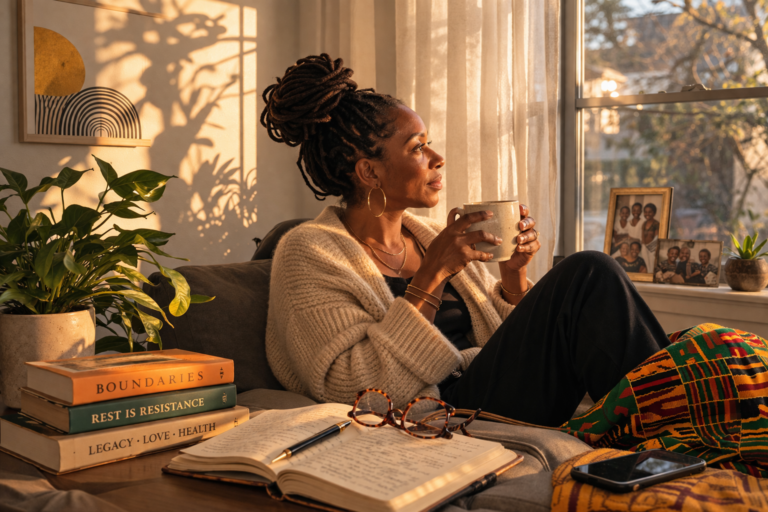
In a lot of Black households rest came with conditions. Somebody worked the double, somebody watched the kids, and if you were still in bed when the sun came up you were lazy. Sleep was what you grabbed on the couch with the TV on. Those conditions made sense for the lives people were living, and in some cases they were survival. The problem is that the rules outlasted the circumstances. They got passed forward into how we talk to our children about effort, into the small pride we take in running on empty, into the half-conscious sense that being exhausted means you’re doing something right. Over time exhaustion can become a quiet measure of worth, and that’s when it stops being something a person thinks to report to a doctor.
“Exhaustion can become a quiet measure of worth, even after the conditions that created it have changed.”
Roughly four in ten Black adults in this country report sleeping fewer than seven hours a night, according to national survey data, and research has consistently linked that shortened sleep with higher rates of high blood pressure, diabetes, stroke, obesity, and depression, conditions already concentrated in Black families at higher rates than anywhere else.
Shift work, noisier streets, and less stable housing are real, and they belong in any honest account of the disparity. They’re downstream from redlining and wage suppression and decades of disinvestment, and nobody chose them. What has received less attention, though that is changing, is what happens after those conditions get inside a person and start to feel like normal.
Researchers have begun asking not just how much Black adults sleep but what they think about sleep, and the findings describe something most readers will recognize without being told. Qualitative studies of urban African American adults document a cycle of work stress, money stress, caregiving, racing thoughts at night, late-night TV, phones kept close, and naps used to survive the week rather than recover from it. The participants understood sleep mattered for their health. Many of them had also absorbed their fatigue as just the price of a responsible life, which made it invisible as something worth raising with a doctor.
Other research found that Black adults were more likely than White adults to minimize sleep problems or assume nothing could be done about them, and those beliefs tracked directly with shorter sleep, more insomnia, and worse health outcomes in analyses that attempt to account for structural conditions, which suggests the inherited script is doing something to the body that sits alongside everything else.
Sleep apnea, insomnia, and related disorders show up more frequently in Black communities and tend to present more severely, yet the diagnosis rarely comes. Data from the Jackson Heart Study found that among African Americans with moderate to severe sleep apnea, about five percent had ever received a physician diagnosis.
People come in describing years of loud snoring, gasping awake, needing three cups of coffee before noon, nodding off at red lights, and they’ve long since filed it under the cost of a full life. Medical visits stay focused on blood pressure and blood sugar, sleep never gets asked about, and part of the reason is that the patient walking in has already decided tiredness isn’t really a medical issue. It’s just what carrying a lot feels like.
When the script starts to shift
When I see that belief start to move in a patient it usually begins with recognition before anything else. They start hearing their own language differently, noticing when they’re describing exhaustion like a credential, or talking about their teenager’s late bedtime with the same disapproval their grandmother had about sleeping past sunrise.
Naming where the belief came from tends to move people more than explaining what it costs. Sleep research supports this pattern: shifting unhelpful beliefs about sleep improves outcomes sometimes before anything else changes, and the frame that tends to reach people in this community has less to do with hustle or productivity and more to do with time, with staying present long enough to be there for the people they’re doing all of it for.
The structural conditions that broke sleep for generations won’t be fixed by a bedtime routine, and it’s worth saying that plainly. What follows is what individuals can work with in the meantime, while those larger fights continue.
In people living under chronic stress, years of short sleep and hypervigilance leave a nervous system that reads quiet as unfamiliar rather than safe, and that pattern doesn’t dissolve quickly once external conditions improve. What tends to help is consistency offered over time, the same signals sent repeatedly until the body starts to trust them. A regular wake time held even on weekends, because the internal clock responds to predictability more reliably than to any particular bedtime. Reduced light in the hour before sleep, because the brain interprets screen light as daytime and keeps alert systems running that would otherwise be winding down. Some reduction in ambient sound through white noise or earplugs, which lowers the low-level environmental monitoring the brain keeps doing when it’s learned to stay on guard. These work because they are sending the nervous system a signal it has rarely received, that the environment is stable enough to release into.
Sleep symptoms are worth naming out loud at a medical appointment, specifically and directly. Snoring that wakes someone else in the room, gasping in the night, waking without having rested, falling asleep somewhere other than a bed are all worth raising because the question often won’t come from the other side of the desk. Providers should be asking, and if yours hasn’t asked, it’s fair to bring it yourself. Given what the research shows about how rarely Black patients get screened for sleep disorders, the conversation has to start somewhere.
What gets handed down
The generation being raised right now is where the inheritance has the most room to go differently. Adults in these studies, once they understood what chronic sleep loss costs over a lifetime, said what they most wanted was to hand their kids something other than the same script.
Praising a child for a good night’s sleep the way they’d praise a good grade. Finding one morning where a teenager gets to wake without an alarm. Keeping the bedroom for sleep instead of running it as a second living room. These are small enough to happen, and that matters more than the size of any single change.
Marie’s mother was getting her ready for a world that would ask everything of her, and that preparation was honest given what she knew and what she’d seen. A body of research now exists that can put specific numbers on what that preparation costs, and a generation has enough distance from the original conditions to decide what travels forward next.
Derek H. Suite, M.D.
Dr. Derek H. Suite is a board-certified psychiatrist and sleep medicine specialist. He is an alumnus of the Columbia School of Journalism and a former professor of psychopharmacology at Columbia University. Dr. Suite is the founder of Full Circle Health, the host of the daily SuiteSpot podcast, and a frequent guest health contributor for Black Westchester Magazine.
This article is for educational purposes and does not constitute individual medical advice.
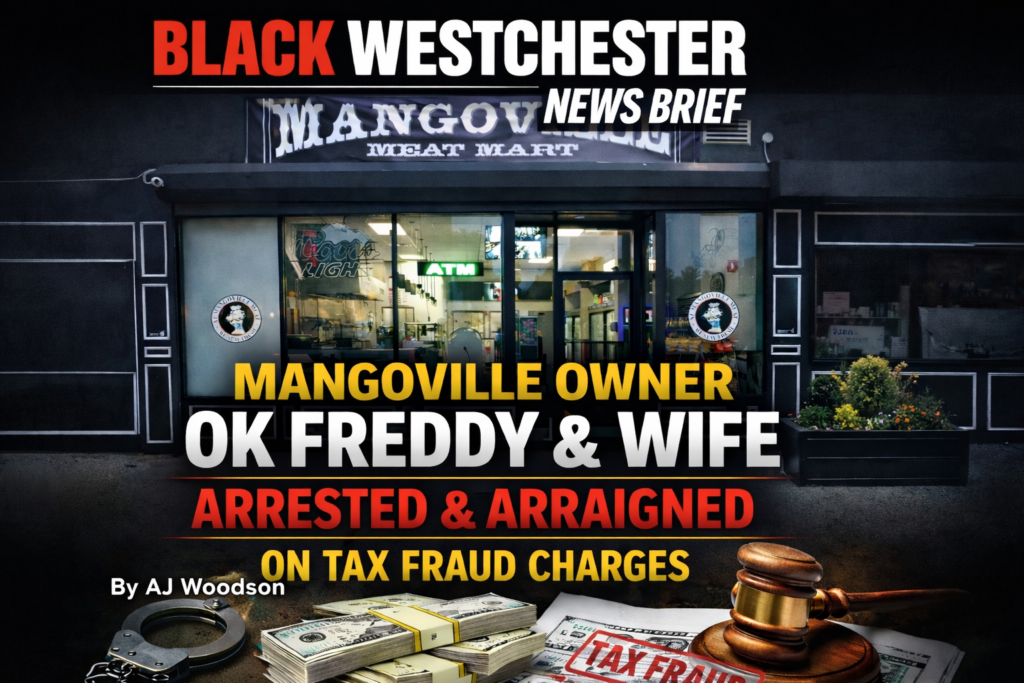
Westchester County District Attorney Susan Cacace announced Thursday, April 9th, the arrest of a married couple and owners of Mangoville Meat & Grocery—a Mount Vernon Caribbean Restaurant known for its Jamaican Cuisine—on tax-related charges.
Estrado Willis—known as OK Freddy—and Eleanor Willis, 45 and 46 years old respectively, were arraigned on March 27 on charges of Grand Larceny in the Second Degree, Criminal Tax Fraud in the Third Degree, Criminal Tax Fraud in the Fourth Degree, and Offering a False Instrument for Filing in the First Degree, all felonies. The defendants, owners of Mangoville Meat & Grocery store in Mount Vernon, appeared before Mount Vernon City Court Judge Nichelle Johnson and were released on their own recognizance.
The District Attorney’s office tells Black Westchester, “the charges stem from the defendant’s alleged failure to report personal income and their failure to remit sales tax funds to the New York State Department of Taxation and Finance collected from sales at the Mangoville Meat & Grocery store from March, 2018 through April, 2025. These funds are said to total roughly $76,000.”
Eleanor Willis and Estrado Willis also allegedly received income from Mangoville, as well as other income sources, but knowingly failed to include all the income received on returns filed with New York State. Allegedly, with intent to defraud, the defendants filed personal income tax returns with the New York State Department of Taxation and Finance for tax years 2020, 2021, 2022, 2023, and 2024.
“This arrest sends a clear message: individuals who attempt to evade their tax obligations will be held accountable. Our office is committed to protecting the integrity of the financial system and ensuring fairness to all taxpayers,” DA Cacace shared with Black Westchester in a statement.
This is not Freddy’s first run-in with the law. Estrado Willis was previously involved in a high-profile criminal case tied directly to an incident at the restaurant. He was charged in a separate 2020 case regarding a physical altercation with an employee, though he was found not guilty in March 2021. Prosecutors had alleged he placed the employee in a chokehold.
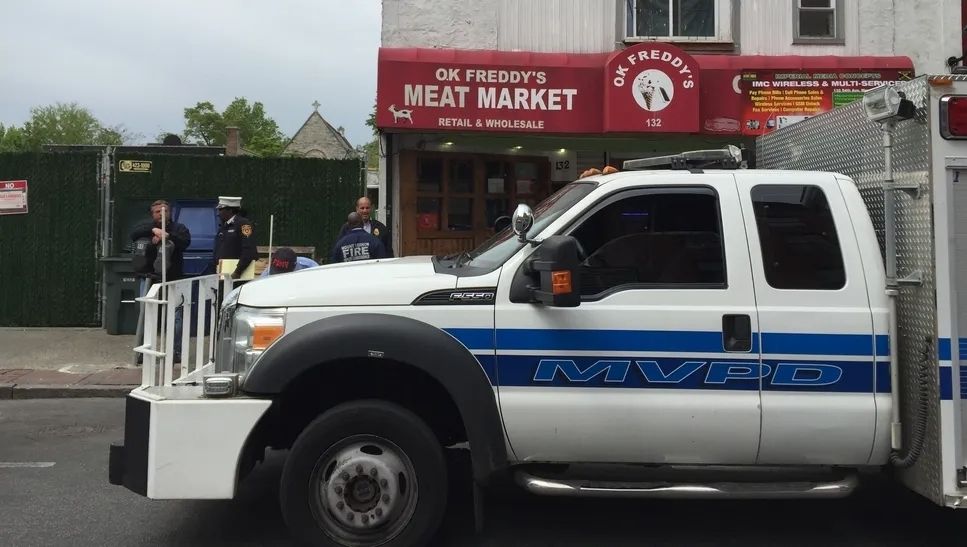
In an earlier case, Willis’ business, OK Freddy’s Meat Market, located at 132 South Fourth Avenue, was fined for liquor violations, which led to then-Mayor Richard Thomas illegally shutting down the business without due process. Freddy eventually won the case and moved across the street to 133 South Fourth Avenue (Richard Thomas former campaign office when he was running for mayor in 2015) and rebranded his business Mangoville Meat & Grocery.
Mount Vernon Police raid Ok Freddy’s Meat Market and shut business down, Tuesday, May 17, 2016 [Black Westchester]
Then-Mayor Thomas claimed the business was a “clear and present danger” and a “nuisance” due to violations, including missing fire extinguishers, lack of carbon monoxide detectors, and illegal storage of liquor. The meat market was fined $6,000 by the New York State Liquor Authority for various violations following the actions by the Mayor.
This current investigation was conducted by the New York State Department of Taxation and Finance.
This case is being prosecuted by Nicole Gamble, a Senior Tax Fraud Counsel in the Economic Crimes Bureau of the Westchester County District Attorney’s Office.
The charges against the defendants are merely accusations, and the defendants are presumed innocent unless and until proven guilty.
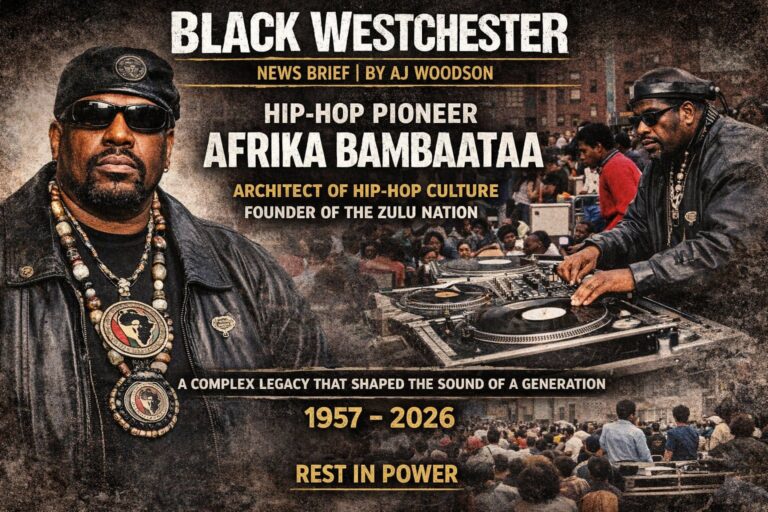
The Hip-Hop community is mourning the loss of one of its foundational figures as Afrika Bambaataa passed away on Thursday, April 9, 2026. Black Westchester has learned he died from complications of cancer early April 9th, just days away from his April 17th birthday, in Pennsylvania.
A pioneering DJ, cultural visionary, and founder of the Universal Zulu Nation, Bambaataa played a critical role in shaping Hip-Hop during its earliest days in the Bronx. Emerging from a time marked by gang violence and economic decline in the 1970s, he helped redirect that energy into music, art, and community-building—laying the groundwork for what would become a global culture.
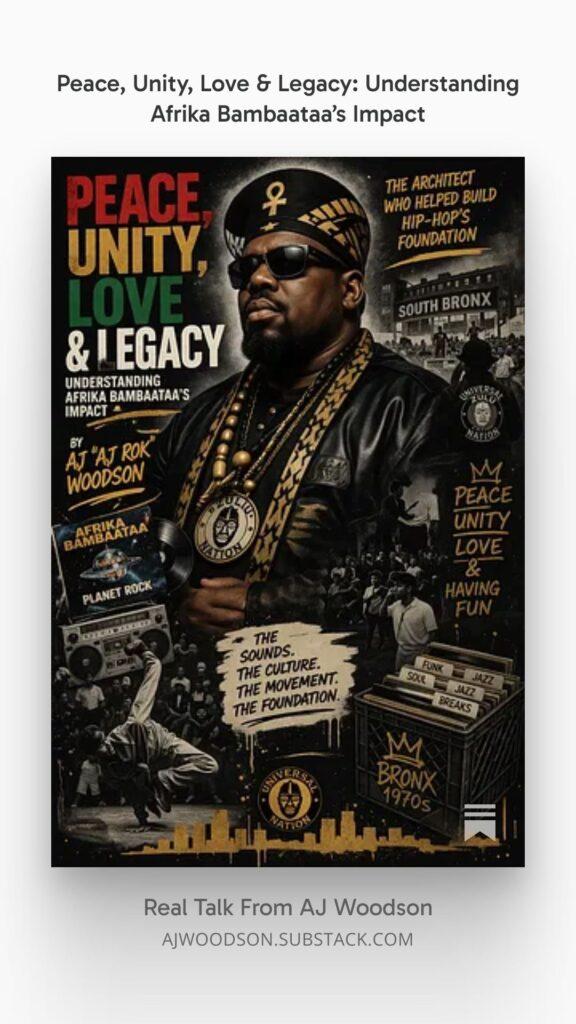
Bambaataa—credited as ‘The Godfather of Hip-Hop—is widely credited with helping define the core principles of Hip-Hop—Peace, Unity, Love, and Having Fun—while using music as a tool to bring people together. Through Zulu Nation, he created a movement that extended beyond DJing and parties, encouraging knowledge, cultural awareness, and collective identity.
Musically, his influence was groundbreaking. His 1982 release Planet Rock fused Hip-Hop with electronic music, introducing a futuristic sound driven by synthesizers and the Roland TR-808 drum machine. The track not only expanded Hip-Hop’s sonic boundaries but also helped lay the foundation for electro, Miami bass, house, and techno—genres that would grow out of the blueprint he helped establish.
That sound would ripple across regions, influencing the development of Southern Hip-Hop and shaping the global evolution of dance and electronic music. Bambaataa’s willingness to experiment beyond traditional breakbeats helped position Hip-Hop as a limitless art form rather than a localized genre.
However, Bambaataa’s legacy has also been the subject of serious controversy in recent years, with allegations that sparked ongoing debate within the Hip-Hop community. His passing brings renewed attention to a complicated history—one that continues to challenge how the culture acknowledges both influence and accountability.
Still, his role in the formation and early direction of Hip-Hop remains historically significant. From block parties in the Bronx to stages around the world, Bambaataa helped transform a grassroots movement into a cultural force that now spans generations and continents.
Afrika Bambaataa’s death marks the end of a chapter in Hip-Hop history—but the sound, structure, and global reach he helped create will continue to shape the culture for years to come.
Black Westchester extends condolences to those impacted by his life, influence, and legacy.