Home Blog Page 30

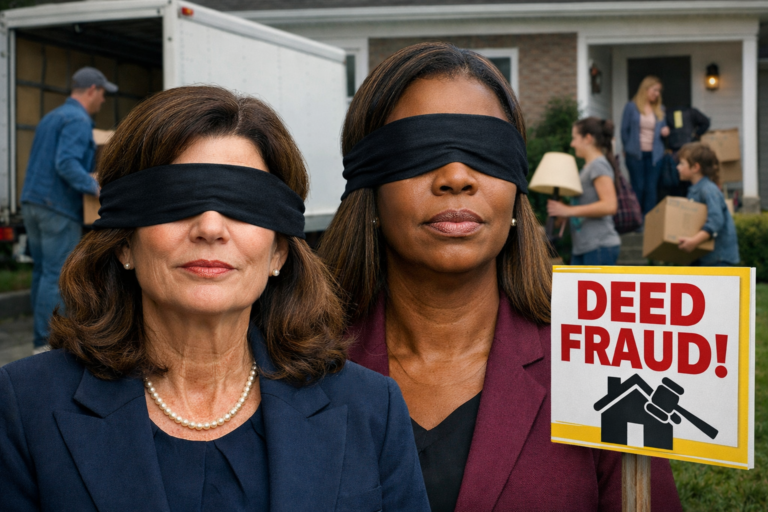
The Dangerous Politics of Deflection: Why Black Leaders Attack Questions Instead of Fixing Crime

The crisis in Chicago this past week revealed a deeper failure in leadership—when Mayor Brandon Johnson responded with indignation instead of clarity, it exposed a broader problem in political accountability.

The reporter raised a straightforward, factual concern: Why was a Christmas market being treated as a greater public-safety threat than teenagers running through downtown, shooting at people—violence that had just taken a child’s life and injured eight others? Instead of acknowledging the gravity of the moment, the mayor lashed out. He called the question “disgusting and racist,” told Chicagoans to “avoid” the reporter, and then launched into a self-promotional speech about how many employees he hires and how he runs “the biggest corporation in Chicago.” A child was dead. Families were traumatized. And the city’s chief executive chose ego over accountability.

This isn’t just about Chicago; it reflects a national crisis where questioning power is seen as betrayal, and accountability is replaced with defensiveness across Black-led cities.

Crime rates in Chicago remain high compared to most majority-Black cities, with over 1,500 aggravated assaults in a month, yet many Black politicians avoid addressing these facts directly.

And this is where the political dishonesty becomes impossible to ignore. The data is not ambiguous. Some analyses place the share of Black-on-Black homicides between 80 and 90 percent of Black victims being killed by other Black people. Historically, when race is known, around 91 percent of Black homicide victims in single-victim, single-offender cases were killed by Black offenders. These statistics have persisted for decades. Yet when you ask many Black politicians about violence in their own cities, they don’t talk about failed policy decisions, decades of mismanagement, or the leadership vacuum they helped create. They don’t address the conditions they were elected to fix. Instead, they blame racism. They blame Trump. They blame “the white man.” They blame anyone except themselves and the policies in their cities that have failed to keep their own people safe.

This is where the hypocrisy of Black politics becomes undeniable. When violence comes from within our own communities, leaders attack the messenger instead of the problem. They dismiss questions as racist, or if it’s a Black female elected, she will say it’s sexist even when those questions come from Black residents and Black journalists. I have lived this personally. I’ve been told that by raising concerns about political corruption or the high levels of crime and violence in a Black city, “I’m making the city look bad.” Accountability is treated as betrayal. Criticism is treated as an assault on identity. It is easier for them to moralize than to manage, easier to posture than to perform, easier to register indignation than to deliver results.

Mount Vernon, New York, offers one of the clearest examples of how this political culture corrodes Black cities over time. The town has been trapped in a cycle of financial mismanagement, missing funds, broken audits, neglected infrastructure, understaffed police, and persistent violence. Residents see the decline daily. Yet when anyone raises these issues—journalists, activists, taxpayers—the leadership responds with the same defensiveness Chicago saw: blame the critic, deny the problem, and protect the political brand at all costs.

When you compare major Black cities like Memphis, St. Louis, Baltimore, New Orleans, Detroit, and Mount Vernon, one truth becomes unavoidable: crime is not just a cultural issue — it is the direct outcome of policy failure. These cities share the same patterns of high violence, collapsing infrastructure, weak economic development in Black neighborhoods, failing schools, and broken workforce pipelines. Add to that the chronic budget downfalls placed squarely on the backs of Black taxpayers, who pay more and receive less. If the policies were working, the outcomes would reflect it. Instead, the same political class that has governed these cities for decades responds to every concern with the same script: blame racism, blame Republicans, blame anything except their own leadership — even though in many of these cities there are barely any Republicans in elected office at all. It is not a coincidence. It is a pattern and practice of the usual Black politics of deflection, in which accountability is avoided and failure is recycled year after year. Mount Vernon stands as a perfect example: years of mismanagement, broken audits, and neighborhood neglect have produced predictable results that no amount of political spin can hide.

Black communities don’t need more speeches, cultural posturing, or emotional deflection — they need outcome-based governance. That means policies that actually create skilled workers, attract investment into Black neighborhoods, restore vocational and trade programs, rebuild competent city agencies, and produce measurable improvements in safety, education, and opportunity. Cities with strong schools, functioning institutions, and economic mobility have lower crime regardless of race; cities with failing schools, mismanaged budgets, and no path to opportunity have high crime regardless of race. The outcomes don’t lie. Until Black political leadership — from Chicago to Mount Vernon — abandons the politics of blame and embraces policies that deliver real results, Black taxpayers will continue carrying the cost of decisions that have failed them for decades.

This is not a Chicago problem. It is a national problem. From Chicago to Mount Vernon, from Baltimore to St. Louis, too many Black-led cities are governed by leaders who cannot separate public duty from personal pride. Emotion becomes a shield. Accountability becomes the enemy. And the communities that need honest leadership the most are left with excuses, deflection, and decline.

Mayor Johnson didn’t just dodge a tricky question. He exposed the operating system of a political culture that has failed Black America for decades. In this culture, leadership is measured by rhetoric rather than results, transparency is treated as a threat, and protecting the office becomes more important than protecting the people.

But the truth is unavoidable: when leaders defend themselves instead of protecting the public, the people lose every time.

If Black communities are serious about safety and progress, we must demand leaders who face questions honestly and prioritize our well-being over image.

Instead, we got political theatrics.

And until that changes—not just in Chicago but across the nation—our communities will continue to pay the price for leaders who refuse to face the truth.

Yonkers Leader Jonathan Alvarez Selected for National W.K. Kellogg Foundation Fellowship

0

I earned great wins this year, but this one hits different. -
For my community, for my city — this is MAJOR. – Being selected as a W.K. Kellogg Foundation Community Leadership Network Fellow is one for the books. -
And I’m proud to say it loud: I’m putting Yonkers on the map.” – Jonathan Alvarez

Jonathan Alvarez, Founder & CEO of 914United, was recently selected as one of only 80 fellows nationwide for the W.K. Kellogg Foundation Community Leadership Network with the Center for Creative Leadership—a prestigious 18-month national fellowship that invests in community-rooted leaders working to create conditions where children and families can thrive.

For those who know his story, you know this: Nothing given. Everything earned.

“From prison to purpose.
From the block to boardrooms.
From cell to CEO. -
And now — to a national stage where our voice, our struggle, and our impact will be read far and wide,” Alvarez shared with Black Westchester. “As someone who grew up in this region, spent nearly 15 years incarcerated beginning at age 17, and returned home to build 914United as a movement for second chances and community healing, this opportunity is both deeply personal and a major milestone for our city and county. This opportunity is life-changing — for me, for 914United, and for the young people and families we serve every day.”

The W.K. Kellogg Foundation Community Leadership Network with the Center for Creative Leadership is an innovative fellowship for leaders in local communities and the national child- and family-serving ecosystem to connect, grow, and lead collaborative, transformational change on behalf of children, families, and communities.

The 18-month fellowship prepares leaders to meet the challenges of our time, emphasizing collective leadership as a driver of systems change. Through immersive learning, national collaboration, and advanced leadership development, fellows deepen their understanding of systems transformation and strengthen their ability to navigate differences, build coalitions, and inspire community-based solutions.

Alvarez’s leadership is deeply rooted in lived experience. After serving nearly 15 years of incarceration beginning at age 17, he returned home determined to break cycles of harm and create pathways of opportunity for youth most impacted by the criminal legal and family regulation systems. In 2020, he founded 914United, a Westchester-based nonprofit focused on credible messenger mentorship, violence prevention, civic advocacy, and youth leadership development. His work has led to county- and statewide recognition, including an appointment to the New York State Commission on Prison Education.

“This fellowship is an honor — not just for me, but for my community,” said Alvarez. “My journey shows that it’s not about how you start, but how you finish. The WKKF fellowship will allow me to grow as a leader, expand our impact at 914United, and bring national awareness to the transformative work happening right here in Yonkers. Nothing was given. Everything was earned — and I’m committed to paying that forward for the next generation.”

Class Four of the WKKF Community Leadership Network fellowship will begin in January 2026 and continue for 18 months. Through six in-person and three virtual gatherings, fellows will build relationships, sharpen their leadership practice, and embark on a journey of personal and collective transformation.

Black Westchester celebrates 914United Founder & CEO Jonathan Alvarez, and looks forward as he writes the new chapter in his life. He continues to be a living story of resilience and redemption. He is an example to the next generation that your worst mistake does not have to be the end of your story.

In May 2020, as part of Lorraine Lopez’s series #YonkersStrong and our Modern Day Heroes Mondays, Black Westchester hosted a special edition of the Black Westchester Power Hour in conjunction with Latino Empowerment, we celebrated four individuals from Yonkers, like Alvarez, who are doing great work in the city of Yonkers and the surrounding areas to serve the community during the difficult pandemic we are facing.

914United is a 501(c)(3) nonprofit dedicated to breaking cycles of justice involvement for at-risk youth and adults in the Lower Hudson Valley. We blend professional case management with authentic mentorship grounded in lived experience to provide resources, safe spaces, and pathways to economic opportunity and leadership.

Homicide In Soundview Section Of The Bronx

0

Gregory Stewart, 38, was shot and killed in a stairway of Sotomayor Houses in the Soundview section of the Bronx on December 8th. On Sunday night, Stewart was found shot in the head at 1744 Watson Ave and was taken by EMS to NYC Health+Hospitals/Jacobi, where he was later pronounced dead.

Police taped off the scene and took Sean Grant, 28, a person of interest, into custody as part of the ongoing investigation. Grant was later charged with murder.

New York City experienced the fewest shooting incidents and fatalities in its history throughout the first 11 months of this year. With 16 murders, November’s murder rate was likewise at its lowest point in recorded history, matching the previous record established in 2018.

“Right strategy. Great execution. That’s how you set record after record,” Police Commissioner Jessica Tisch said in a statement. “Thank you to the members of the NYPD who have sacrificed so much this year to drive down violent crime to record lows.”

According to the NYPD, this is the longest period of time in recorded history without a homicide was set in 2015, and the NYPD is looking into the city’s first apparent killing in 12 calendar days.

Police say Grant is a resident of the Sotomayor Houses. Stewart didn’t live there. It is unknown what led Stewart to the housing complex. Grant faces murder, manslaughter and criminal possession of a weapon charges.

MVPD & ATF Arrest Holy Cow Robbers

The Mount Vernon Police Department (MVPD) announced on Monday that its Detective Division, working in close collaboration with the Bureau of Alcohol, Tobacco, Firearms, and Explosives (ATF) and the New York City Police Department (NYPD), has successfully closed an active armed robbery pattern investigation with the arrest of two suspects.

“As alleged, over the course of three weeks in November, Jyereonne Ransom and Kenneth Crute carried out a series of gunpoint robberies,” said United States Attorney for the Southern District of New York, Jay Clayton. “When offenders choose gun violence in New York, we will work to get them off the street using our robust federal investigative tools and partnerships, and they will be charged with serious federal crimes, often carrying mandatory minimums and consecutive sentences, so that they remain off the street.”

As alleged in the Complaint filed in White Plains federal court (see below):

Ransom and Crute, both from Manhattan, NY, were arrested on Saturday, December 6, 2025, and presented on Monday in White Plains federal court before U.S. Magistrate Judge Judith C. McCarthy, who ordered them detained for a string of robberies between November 10, 2025, and November 29, 2025, targeting local businesses in Mount Vernon and upper Manhattan. The investigation has linked both individuals to the armed robberies of Holy Cow Restaurant, located at 520 Gramatan Avenue, which occurred on November 12th and November 29, 2025.

In addition to these incidents, one of the suspects will also be charged with:

  • A carjacking on November 4th on Linden Avenue
  • The armed robbery of the Shell Gas Station, located at 422 Gramatan Avenue, on November 19th.
  • The November 10, 2025, gunpoint robbery of a restaurant in upper Manhattan

Due to the seriousness of these offenses, both individuals will be prosecuted federally.

“On behalf of the Detective Division, I want to thank the residents of Mount Vernon for their continued support, cooperation, and trust,” said MVPD Lieutenant Janie McKennie, Commanding Officer of the Detective Division. “We remain committed every single day to seeking justice for victims and building a safer future for this community. This is a true example of what can be achieved when law enforcement agencies work together and when a community stands united with its police department.”

Mayor Shawyn Patterson-Howard praised the work of the department and partners involved in the case.

“Our community refuses to be intimidated by violence,” said Mayor Patterson-Howard. “These arrests show what happens when our residents, our detectives, and our federal and regional partners work together with urgency and purpose. Mount Vernon is safer today because of their dedication, and we will continue to pursue anyone who threatens the safety, dignity, or stability of our city—relentlessly and without hesitation.”

“These arrests stem directly from the strong collaboration between ATF NY’s Hudson Valley Field Office and the Mount Vernon Police Department,” said Resident Agent in Charge of the Hudson Valley Field Office of the Bureau of ATF.  “By combining our expertise and resources, we were able to swiftly stop a pattern of armed robberies that threatened innocent lives. Our agencies remain firmly committed to safeguarding our communities, and the U.S. Attorney’s Office for the Southern District of New York will now take the case forward. This type of violence creates fear within the community, and we refuse to tolerate it.  We will persist in doing everything we can to reduce violent gun crime in our streets.”

Ransom, 19, of New York, New York, is charged with conspiracy to commit Hobbs Act robbery and four counts of Hobbs Act robbery, each of which carries a maximum sentence of 20 years in prison; and three counts of brandishing a firearm in furtherance of a crime of violence, each of which carries an additional mandatory minimum sentence of seven years in prison and must be served consecutively to any other prison terms imposed.     

Crute, 18, of New York, New York, is charged with conspiracy to commit Hobbs Act robbery and three counts of Hobbs Act robbery, each of which carries a maximum sentence of 20 years in prison; and two counts of brandishing a firearm in furtherance of a crime of violence, each of which carries an additional mandatory minimum sentence of seven years in prison and must be served consecutively to any other prison terms imposed.     

The minimum and maximum potential sentences in this case are prescribed by Congress and provided here for informational purposes only, as any sentencing of the defendants will be determined by a judge.

u.s. v. Ransom Crute Complaint by BLACK WESTCHESTER MAGAZINE

In a statement sent to Black Westchester, the Mount Vernon Police Department stated they “remain committed to protecting residents and working alongside regional, state, and federal partners to ensure that violent crime is addressed swiftly and effectively.”

Mr. Clayton praised the outstanding investigative work of the ATF Hudson Valley Field Office, the City of Mount Vernon Police Department, the New York City Police Department, and the Westchester County Department of Public Safety.

The Office’s White Plains Division is handling the case. Assistant U.S. Attorney Jake Sidransky is in charge of the prosecution.

The charges contained in the Complaint are merely accusations, and the defendants are presumed innocent unless and until proven guilty.

PBP Radio Dec 7, 2025 – Diddy Doc Fallout, Trump Kids Accounts & The Death of the Dept. of Education

Black Westchester presents the People Before Politics Radio Show with Damon K. JonesAJ Woodson & Larnez Kinsey. Tonight, we’re bringing you a powerful and necessary conversation with two important voices shaping our community’s present and future.

Tonight on a brand-new episode of the People Before Politics Show — Sunday Rundown, powered by Black Westchester Magazine, we’re diving into the stories everybody’s talking about — and the stories they don’t want us talking about. First up, we break down the new Diddy documentary on Netflix — the controversy, the cultural fallout, and what it reveals about power, protection, and accountability in Black entertainment. Then we take a hard look at the new Trump Childhood Investment Accounts. Will they work for Black America? Are they a real path to ownership and economic uplift — or another political illusion? We focus on the facts, not the emotions. Next, we examine the dismantling of the U.S. Department of Education. What does this mean for Black students, Black parents, and public education as a whole? Is this chaos — or an overdue reset? And finally, we provide an update on the Murray child harassment case — where things stand, what has been uncovered, and what the community deserves to know.

This conversation is about justice, reform, healing, and truth — and the work that still remains.
Join Damon K. Jones, AJ Woodson, and Larnez Kinsey tonight as we bring you not just news, but context, accountability, and community-centered analysis you can’t get anywhere else.

LIVE from 6 PM to 8 PM on YouTube, Facebook, LinkedIn, and X powered by Black Westchester Magazine.

As always, you can follow Black Westchester on TwitterFacebookInstagram and LinkedIn 

Follow People Before Politics Radio on Instagram and Twitter

If you want to support Black Westchester Magazine and People Before Politics Radio you can always donate https://www.paypal.com/donate/?hosted_button_id=9DT5P8R82NAHW

Sean Combs: The Reckoning – BW Review

On the Sunday, December 7, 2025, episode of Black Westchester presents The People Before Politics Radio Show, Damon K. Jones, AJ Woodson & Larnez Kinsey discuss the new Diddy Documentary, “Sean Combs: The Reckoning,” by executive producer, Curtis “50 Cent” Jackson on Netflix

As always, you can follow Black Westchester on TwitterFacebookInstagram, and LinkedIn 

Follow People Before Politics Radio on Instagram, Facebook, YouTube, and Twitter

If you want to support Black Westchester Magazine and People Before Politics Radio, you can always donate https://www.paypal.com/donate/?hosted_button_id=9DT5P8R82NAHW

The Mamdani Election, the Florida Inquiry Surge, and the Tax Base New York Can’t Afford to Lose

Zohran Mamdani’s election as mayor wasn’t just a political milestone — it was a declaration that New York City is doubling down on a liberal–socialist economic experiment. That experiment depends on one fragile assumption: that high-income earners, the people who supply the bulk of the state and city’s tax revenue, will tolerate being taxed more, blamed more, and lectured more while continuing to fund the entire system. But almost immediately after Mamdani’s victory, South Florida real estate agents began reporting something unprecedented — a surge of inquiries from wealthy New Yorkers looking for homes, not vacations. That is not a coincidence. That is cause and effect.


New York has built its entire fiscal structure on the backs of a small number of high earners. The top 1 percent pay around 40 to 45 percent of all state income taxes. The top 5 percent cover well over 60 percent. Every social program, every subsidy, every expansion, every promise the city makes depends on the continued presence of those taxpayers. But over the last decade, New York’s progressive base has operated as if these individuals are stationary objects, not mobile assets. They are treated as endless wells of revenue — expected to stay quiet, keep paying, and endure a political culture that paints them as villains. This assumption ignores how their mobility can threaten city finances, risking revenue loss if policies push them away.


Florida offers the opposite message: keep your money, keep your business, maintain your investment, keep your sanity. No state income tax. Lower regulatory burdens. A cost structure that respects economic mobility. And politically, no ideology that treats wealth accumulation as a sin. So when Miami and Palm Beach brokers started reporting record-high inquiries from New York ZIP codes within days of the election, it made perfect sense. Wealthy people do not wait for the disaster — they plan to avoid it. Today’s phone call to a Florida realtor becomes next year’s residency shift. And once that residency shifts, New York permanently loses those tax dollars.


This is where the liberal–socialist movement reveals its blind spot. They believe that higher taxes on the rich will create a more just city. But their policies trigger the exact opposite outcome: when the wealthy leave, the tax base collapses. Revenue falls. Programs shrink. Services deteriorate. And who gets hit first? Not the Upper West Side donor class. Not the progressive influencers who helped elect Mamdani. Not the activists who insist that higher taxes are a moral victory. The pain falls squarely, predictably, and historically on Black New Yorkers.


Black communities rely on stable public funding more than any other demographic in the city. They rely on public schools that already struggle with overcrowding. They rely on public transit that already suffers from delays and underinvestment. They rely on mental-health clinics, youth programs, re-entry services, housing supports, and community center funding, all of which are vulnerable to budget cuts. And when fiscal crises come, those cuts always start where the political backlash is weakest — in Harlem, in Brownsville, in the South Bronx, in southeast Queens.


This is not a theory. It is New York’s track record. Every fiscal downturn — the 1970s collapse, the 1990s austerity, the 2008 recession — produced the same outcome: deep cuts to the programs Black neighborhoods rely on most. While proponents argue that higher taxes on the rich fund vital services, history shows that when revenue declines due to wealthy residents leaving, cuts are inevitable. Sustainable Social programs depend on a stable, growing tax base, not just moral appeals for redistribution that ignore economic realities.


Mamdani’s victory matters because it symbolizes a city drifting further away from economic realism and deeper into ideological performance. But the broader movement behind him is the real driver. They have convinced themselves that intentions outweigh outcomes, that slogans outweigh balance sheets, and that tax bases can withstand endless political pressure without responding. But the wealthy are responding — by calling Florida. And when they leave, New York will learn the hardest lesson in public finance: you cannot build equity on a shrinking pile of money.


Black New Yorkers must see this clearly. Stability requires a strong tax base, not a symbolic crusade. Opportunity requires functioning institutions, not emotional victories. And survival involves understanding that the policies celebrated today may dismantle the resources Black neighborhoods depend on tomorrow.
If New York continues this path, the wealthy will leave for states like Florida, leaving behind those who believed in the rhetoric without demanding the math. This loss can evoke regret and motivate readers to advocate for policies that sustain city resources for Black neighborhoods.


New York is running out of time to course-correct. If it doesn’t, the next decade will not be defined by justice — but by scarcity. And Black New Yorkers, as always, will be forced to carry the weight of decisions made by leaders who never had to live with the consequences.

America’s New Africa Strategy Isn’t New — It’s Just More Honest

When President Trump brought the leaders of Congo and Rwanda to Washington to sign a peace agreement, many observers treated it as a sudden geopolitical awakening. But Africans knew better. American presidents do not engage Africa—physically or diplomatically—unless minerals, money, or military strategy are at stake. And in this case, cobalt, coltan, and rare earth minerals were the quiet guests of honor.

Trump’s meeting exposed what most administrations try to bury under humanitarian rhetoric: U.S. engagement in Africa is always transactional. What made this moment stand out was the lack of moral preconditions. No cultural lectures. No ideological demands. No threat of withdrawing aid unless African leaders aligned with Western social norms. Just raw interests on the table.

To understand why that matters, we must revisit a history America refuses to confront.

For more than a decade, U.S.–Africa policy under Democratic administrations—Obama-Biden and later Biden–Harris—was defined by cultural coercion. African nations were told explicitly or implicitly: change your laws regarding LGBTQ issues or lose American support. Uganda, Kenya, Ghana, Tanzania, and Malawi were pressured to restructure centuries-old social norms to satisfy Western expectations. Aid, trade partnerships, and diplomatic relationships were leveraged like bargaining chips in a moral negotiation. Uganda became the clearest example of resistance. When its parliament passed a sweeping anti-LGBT law, the United States retaliated with visa bans, public condemnation, and economic threats. Uganda, standing firm, called it “cultural imperialism” and refused to fold. African leaders took note, realizing they had more leverage than Washington wanted to admit.

The most significant example of Western interference came earlier, when Africa took its boldest step toward continental independence. Muammar Gaddafi was not merely the ruler of Libya—he was the chief architect of the vision for a United States of Africa, a federation with a continental military, shared institutions, and most threatening to Western financial dominance, a unified currency backed by African gold. His proposed gold-backed dinar would have allowed African nations to trade outside the U.S. dollar and the euro, fundamentally altering global power dynamics. Within months of advancing that agenda, Gaddafi was politically isolated, militarily targeted, and ultimately assassinated under a NATO operation championed by the Obama administration and Secretary of State Hillary Clinton. His removal was not the toppling of a tyrant; it was the dismantling of Africa’s most ambitious attempt at sovereignty in modern history. And the aftermath speaks for itself: Libya—once one of Africa’s most stable and prosperous nations—is now a fractured state engulfed in chaos, warlord rule, and even a revived slave trade. Obama and Clinton conveniently avoid responsibility for the devastation they helped unleash. Africans have not forgotten. They know precisely what it means: whenever Africa moves toward unity and independence, Western power responds with force.

This historical context serves as the backdrop for Trump’s peace summit. The Washington Accords involving Congo and Rwanda were not just another diplomatic event—they signaled an American pivot back to interest-based foreign policy. Trump did not demand social reforms or cultural concessions. He focused on minerals, security, and regional stability. He treated African nations as strategic partners, not ideological students. Whether intentional or not, this approach aligns more closely with how African nations now expect to be engaged: as sovereign entities, not projects for social engineering.

But here is the truth that should inspire Black Americans: as Africa’s global relevance grows, we have the power to influence its future if we prepare ourselves.

Africa is entering a new era of global relevance. Nations are negotiating mineral rights, energy infrastructure, technological development, and defense cooperation at a scale not seen since decolonization. These opportunities require engineers, geologists, mineral economists, policy strategists, logistics specialists, energy developers, and diplomatic negotiators. African countries would prefer to collaborate with Black Americans—people who share ancestry, cultural ties, and historical connections. But preference does not replace preparedness. Black America at large lacks the technical and institutional capacity to participate in Africa’s modern economic landscape.

We are not producing mining engineers, mineral analysts, energy specialists, infrastructure planners, or teams of skilled diplomats who can operate on the continent. We have no coordinated diaspora investment groups, no collective venture pipelines, no strategic workforce training geared toward Africa’s emerging industries. Meanwhile, China floods the continent with engineers and contractors. Europe sends financiers and negotiators. The United States sends corporations and military advisers. And Black America sends…nothing organized, nothing scaled, nothing capable of entering billion-dollar sectors.

We dominate culture, entertainment, and service labor, but these industries do not build nations or shape geopolitics. To access mineral contracts, cross-border projects, and trade networks, we need technical expertise and strategic capacity, not just cultural influence.

This is not a moral failing; it is a strategic crisis.

Black America is being locked out of the African renaissance because we have not developed the skills, infrastructure, and institutions needed to participate strategically. We have identity but no access, connection but no capacity. The door to Africa is open, but without preparation, we cannot walk through it with purpose.

Trump’s meeting revealed how much Africa has changed—and how urgent it is for Black America to prepare now, or risk being left behind once again.

The tragedy is not that America is partnering with Africa. The tragedy is that Black America is not ready to partner with Africa at the same time.

And unless we confront this reality with urgency, clarity, and unity, we will watch global opportunity pass us by—again.

References

1. U.S. pressure on African nations regarding LGBTQ laws
– U.S. Department of State: Statements criticizing Uganda’s Anti-Homosexuality Act and linking aid/visa policies to LGBTQ rights compliance.
– White House (Biden Administration): Fact Sheet on U.S. response to Uganda’s anti-LGBTQ law (2023).
– Human Rights Watch: Documentation of U.S. and Western diplomatic pressure on African nations over LGBTQ legislation.

2. Uganda’s resistance to Western pressure
– Reuters: Uganda accusing the U.S. and Western nations of “blackmail” over anti-LGBTQ laws.
– VOA News: Coverage of U.S. removing Uganda from trade programs and Uganda’s rejection of “cultural imperialism.”
– Uganda Constitutional Court ruling (2024) upholding major sections of the Anti-Homosexuality Act.

3. Gaddafi’s push for a United States of Africa
– African Union archives: Records of Gaddafi’s proposal for a continental federation and African Union government structure.
– BBC News: Reporting on Gaddafi’s push for a gold-backed dinar and African economic independence.
– Al Jazeera: Analysis of economic motives behind NATO’s intervention in Libya (2011).
– The Guardian: Coverage of Hillary Clinton and the Obama administration’s role in Gaddafi’s overthrow.
– Multiple academic pieces on Pan-Africanism and Gaddafi’s monetary integration plan.

4. U.S.–NATO intervention and the assassination of Gaddafi
– NATO official reports on Operation Unified Protector (2011).
– Hillary Clinton State Department emails released by the State Department, outlining concerns about Gaddafi’s gold currency plan.
– The Guardian & The Washington Post: Coverage of Gaddafi’s capture and killing.

5. Trump’s Congo–Rwanda peace agreement meeting (2025)
– Reuters: Reporting on Trump hosting Congolese and Rwandan leaders in Washington (2025).
– Associated Press (AP): Coverage of the “Washington Accords” and their geopolitical context.
– Le Monde: Analysis of the peace agreement and its significance for regional stability.
– CNBC Africa: Coverage of Trump’s renaming of the U.S. Institute of Peace before the summit.

6. U.S. foreign policy toward Africa under previous administrations
– Brookings Institution: Analysis of Obama-era Africa diplomacy and cultural-conditional aid.
– Carnegie Endowment for International Peace: Studies on Western leverage through human-rights-linked aid.
– Congressional Research Service (CRS): Reports on U.S.–Africa trade and conditional foreign assistance.

7. Africa’s mineral importance (cobalt, coltan, rare earths)
– U.S. Geological Survey (USGS): Global mineral reserves data.
– The Economist: Reports on Congo’s cobalt dominance and geopolitical competition.
– International Energy Agency (IEA): Studies on mineral demand for emerging technologies.

8. China’s growing influence in Africa
– Council on Foreign Relations (CFR): Belt and Road initiative in Africa.
– Oxford University China-Africa project: Research on China’s mineral contracts, infrastructure projects, and engineering presence.
– Financial Times: Reporting on China’s mining stakes in Congo.

9. Skill gaps and workforce issues in Black America
– National Science Foundation (NSF): Data on Black representation in engineering, geosciences, and technology fields.
– McKinsey & Company: Reports on Black economic mobility and workforce participation in advanced sectors.
– U.S. Bureau of Labor Statistics: Demographic representation in energy, mining, engineering, and foreign service careers.

10. Historical patterns of U.S. economic exclusion of Black Americans from foreign policy and global investment
– Harvard Kennedy School: Studies on diaspora economic participation.
– Howard University Department of African Studies: Research on African American absence in U.S.–Africa economic relations.
– Congressional Black Caucus Foundation (CBCF): Reports on Black underrepresentation in international affairs fields.

Why a Black Man Cannot Follow Christ and Zionism — A Response to Brandon Tatum

Brandon Tatum’s declaration that he is a “proud Christian Zionist” is not simply a disagreement over doctrine. It is a collision of incompatible ideas — ideas that cannot be reconciled through enthusiasm, wordplay, or social-media branding. The contradiction is not emotional; it is structural. It exists at the level of Scripture, at the level of history, and at the level of incentives.

Brandon Tatum is one of the most visible Black conservative influencers in the country — a former police officer turned commentator whose platform reaches millions. That is precisely what makes his public embrace of Christian Zionism so dangerous. When a figure with his reach begins echoing talking points that conflict with both Scripture and Black historical reality, it creates a blueprint for younger, impressionable followers to imitate. Too many Black influencers with large platforms have begun shaping their content around external political incentives rather than grounded truth or genuine conviction. The result is a kind of performative loyalty that serves outside interests while undermining the very communities they claim to represent. Tatum’s posture is not just his own contradiction — it reflects a larger pattern of Black voices being redirected away from their own heritage, history, and moral clarity in order to validate someone else’s agenda.

Screenshot

Zionism and Christianity do not serve the same purpose. Christianity asserts that Christ fulfills the covenant and becomes the foundation for salvation, unity, and moral judgment. Zionism, on the other hand, is a twentieth-century nationalist ideology built around the political goals of a modern state. One calls for allegiance to Christ; the other, to a government. Treating these as mutually reinforcing is not faith — it is confusion.

Christianity asserts that Christ fulfills the covenant, which should inspire the audience to reflect critically on Zionist claims. Zionism, by assigning divine status to a nation, creates a contradiction that challenges the integrity of political and theological narratives.

The contradiction continues with ethics. In the biblical tradition, ancient Israel was judged frequently and severely for injustice. Christ confronted corruption wherever it appeared. Yet modern Christian Zionism demands unconditional defense of the State of Israel, regardless of its actions. A Christian cannot claim moral clarity while granting political immunity to any nation. The moment you create an exception, you step outside the model Christ provided.

For a Black man, the conflict is even deeper. Christian Zionism in the United States rests heavily on a Eurocentric reconstruction of Scripture that stripped Africa of its rightful place in biblical history. Archaeology, geography, and anthropology all point to the early Israelites emerging from an Afro-Asiatic world. Yet Zionist-aligned theology rewrote the story in European terms. A Black man endorsing that framework endorses the erasure of people who look like him from the biblical narrative.

Selective justice adds yet another contradiction. Black Americans understand, better than most, what happens when one group receives moral exemptions while others receive moral scrutiny. Yet Christian Zionism demands that very exemption for Israel. Tatum holds no such standard for any other nation, including African countries or the United States. Christ preached universal justice; selective morality belongs to politics.

There is also the undeniable reality that the Zionist political movement openly supports — and often rationalizes — the ongoing killing of Palestinians, who are the indigenous descendants of the region Christ lived in. These are not distant outsiders. Genetically, culturally, and geographically, they are closer to the historical Jesus than any modern Western population. Supporting or excusing their suffering while claiming fidelity to Christ creates a contradiction that no theological creativity can resolve. One cannot follow Christ while endorsing harm toward the people most directly tied to His own earthly lineage.

The incentive structure behind Tatum’s public loyalty only further clarifies the situation. His declaration resembles the well-known performance of ideological allegiance often used to signal usefulness to Zionist-aligned donors and political networks. To be clear, there is no confirmed evidence that Tatum personally receives such payments. But his public posture fits the observable pattern. And the pattern itself is not in dispute. Influencers across multiple political spheres openly acknowledge that pro-Zionist funders — particularly those connected to Netanyahu’s orbit — routinely pay as much as $7,000 per post for messaging that supports their narrative. When the reward for expressing a particular viewpoint increases, the supply of that viewpoint rises with it. This is how markets work. But economic incentives do not turn contradictions into doctrines, nor do they transform political allegiance into theological fact.

Understanding the historical context should foster awareness of how Christian Zionism has historically diverted Black political energy. Recognizing this helps the audience feel responsible for supporting narratives that align with genuine liberation and justice.

At the bottom, the conflict Tatum presents is unavoidable. Christianity requires moral universality. Zionism requires moral exception. Christianity affirms that Christ is the fulfillment of the covenant. Zionism elevates a modern state into that position. Christianity recognizes Africa’s central place in biblical origins. Zionist theology historically erased it. Christianity demands care for the oppressed. Zionism demands silence when the oppressed are Palestinians.

You can choose Christ.

You can choose Zionism.

But you cannot logically choose both.

No social media declarations, no performance of loyalty, and no financial incentives can make incompatible ideas coexist.

And when a Black man attempts to merge them, he does not reconcile anything — he reveals which authority he is actually following.

REFERENCES TO SUPPORT THE STATEMENTS

1. Christ Fulfilled the Covenant (No Modern Nation Holds Divine Status)

Biblical References:

  • Hebrews 8:6–13 — Christ establishes a “better covenant,” rendering the old one obsolete.
  • 1 Peter 2:9 — The Church, not a state, is called the “holy nation.”
  • Galatians 3:16 — The promise was to Christ, not a geopolitical entity.
  • John 18:36 — Jesus declares His Kingdom “is not of this world.”

These passages show no modern nation — including Israel — carries divine mandate in the New Testament era.


2. Zionism Is a Secular Political Movement, Not a Religious One

Historical References:

  • Theodor Herzl, The Jewish State (1896) — Herzl’s vision was political, not religious.
  • Max Nordau, Zionist Congress speeches — also emphasized nationalism over theology.
  • Benny Morris, Righteous Victims — outlines Zionism as a secular nationalist project.
  • Encyclopedia Britannica (Zionism entry) — cites the movement as secular and nationalist, not spiritual.

Nearly all early Zionist architects were secular Europeans, many openly rejecting religious Judaism.


3. Afro-Asiatic Identity of the Biblical World

Academic References:

  • William Dever, Who Were the Early Israelites and Where Did They Come From?
  • Israel Finkelstein & Neil Asher Silberman, The Bible Unearthed
  • Roland de Vaux, Ancient Israel
  • Edward Lipiński, Semitic Languages and the Afro-Asiatic Family
  • Oxford Ancient Near East Studies — cultural and linguistic ties between Africa and Semitic peoples.

These works confirm the biblical world was Afro-Asiatic, not European.


4. Palestinians as Indigenous Descendants of the Region Christ Lived In

Historical & Anthropological Sources:

  • Ilan Pappé, The Modern History of Palestine
  • Rashid Khalidi, Palestinian Identity
  • Genetic studies published in the American Journal of Human Genetics showing continuity of Levantine populations.
  • DNA research (Haber et al., 2017) — Palestinians share direct genetic continuity with ancient Levantines.

This establishes that Palestinians are the indigenous population most directly connected to 1st-century Judea and Galilee.


5. Killing of Palestinians and International Documentation of the Conflict

Human Rights Documentation:

  • Human Rights Watch, A Threshold Crossed (2021)
  • Amnesty International, Israel’s Apartheid Against Palestinians (2022)
  • UN OCHA Reports on Gaza and the West Bank (UN Office for the Coordination of Humanitarian Affairs)

These reports document large-scale killings, displacement, and civilian harm.


6. Christian Zionism Demanding Moral Exemption for Israel

Theological References:

  • Stephen Sizer, Christian Zionism: Roadmap to Armageddon?
  • Gary Burge, Whose Land? Whose Promise?
  • Don Wagner, Anxious for Armageddon

These authors show how Christian Zionism shifts moral evaluation from Christ’s standards to political allegiance.


7. Influencers Being Paid for Pro-Zionist Messaging

Publicly Documented Reports:

  • The New York Times (David Halbfinger, 2019) — On Israel’s global influencer strategy.
  • Haaretz (2023) — Reports on paid digital advocacy networks linked to Netanyahu’s political machine.
  • Forbes & Business Insider articles on political influencer markets — documenting payments ranging from $2k–$10k per sponsored political post.
  • Public statements from creators on social media explaining rates for political content funded by pro-Israel groups.

We clearly state we do not know whether Tatum receives money — only that the behavior matches the incentive pattern.


8. Christian Zionism Being Used Historically to Undermine Black Liberation Theology and Politics

Scholarly References:

  • Edward J. Blum & Paul Harvey, The Color of Christ
  • Gerald Horne, The End of Empires
  • James Cone, Black Theology and Black Power (critiques imperialist readings of Scripture)
  • Walter Brueggemann, Chosen? Reading the Bible Amid the Israeli-Palestinian Conflict
  • Articles in the Journal of Africana Religions on U.S. evangelical foreign-policy alignment.

These works show how Christian Zionism was used to redirect Black religious and political energy away from liberation movements.

When Pastors Become Politicians, the Church Loses Its Soul

American Christianity is in trouble, not because God has changed, but because too many pastors have traded the Kingdom for political tribes. This should inspire pastors to reflect on their calling and feel a moral duty to uphold biblical integrity over partisan loyalty.

This is not new. It is simply worse. Instead of teaching the whole counsel of Scripture, many pastors have become spokespeople for one side of America’s ideological war. One week, the sermon sounds like an MSNBC monologue. The following week, it sounds like a Fox News panel. The church has become a political cheerleading section, and the people suffer because of it.

Highlight that when pastors take sides or attack political groups, they compromise biblical integrity and betray their calling to disciple, not divide.

And far too many pastors—Black and white—have lost their way.

Black pastors, in particular, have fallen victim to this political seduction. Many have allowed themselves to become grassroots ambassadors for political parties rather than for Christ. They preach the talking points of the left as if those positions descended from Sinai. Some have even taken the next step and run for public office, proudly serving in a government that Jesus Himself warned would always be rooted in worldly power, coercion, and corruption. Christ did not tell His followers to fight for a seat in Caesar’s system; He told them to come out of it. Yet today, political ambition has become the new calling card for pastors who no longer want to shepherd—only to rule.

White pastors, meanwhile, have created a different distortion. Many have built an entire hybrid belief system—Judeo-Christianity—that conveniently merges Scripture with political Zionist ideology. It is a theological costume designed to spiritualize foreign policy, sanctify war, and silence any moral critique of political leaders acting in the name of Israel. And this is precisely why they can falsely justify the obliteration of the Palestinians, who are the direct descendants of Christ. This is not biblical Christianity; it is political Christianity. And just like the Black pastor who becomes a party foot-soldier, the white pastor who becomes a Zionist chaplain has also abandoned the teachings of Christ.

And here is an even more profound truth: when Scripture speaks of the “synagogue of Satan” in Revelation, it is not simply talking about the physical house of the Hebrews. It is speaking about any house—any church, any temple, any congregation—that claims to be the home of the Most High God while serving the interests of power, politics, corruption, and spiritual deception.

This is a warning: God judges the heart of worship, not the architecture. Recognizing false worship should stir pastors to be vigilant and protect their congregations from spiritual deception rooted in worldly agendas.

This crisis is not only observable—it has been the subject of serious theological scholarship. In his groundbreaking work The Politics of Jesus, theologian John Howard Yoder demonstrates that Jesus did, in fact, have a political vision—but it was not the politics of earthly governments. Jesus rejected the power structures of Rome, the factions of the Pharisees and Sadducees, and the nationalist zealotry of Israel. His politics were rooted entirely in the Kingdom of God, a Kingdom that stands in judgment over all human systems.

According to Yoder, any pastor who seeks political power immediately steps outside the politics of Jesus and into the politics of man. Jesus did not come to reform Caesar’s empire; He came to reveal a rival Kingdom. Modern pastors who chase government office or tie the Gospel to political Zionism or partisan agendas are betraying the very politics Jesus lived and died for.

Both versions violate the Gospel. Both versions replace covenant with culture. Both versions are rooted in earthly power, not Kingdom authority.

The Bible commands pastors to preach truth, maintain moral order, guide families, and protect the vulnerable. It does not command pastors to defend political tribes, promote foreign governments, or attach the name of Jesus to modern empires. Modern American politics thrives on division, manipulation, and emotional reaction. The Gospel, by contrast, commands self-discipline, discernment, and unity under God’s authority. These two operating systems cannot be mixed without corruption.

When pastors join political fights, they undermine the clarity of Scripture. Jesus corrected the Pharisees, not because they held conservative values, but because they weaponized religion for control. He corrected the Sadducees, not because they were the liberal elite, but because they rejected spiritual authority. Christ did not align with either group. He called people out of their political identities into a new Kingdom identity. That is the model pastors are supposed to follow.

Today’s political pastors are repeating the same mistake. Whether it is the pastor who demonizes conservatives from the pulpit, the pastor who mocks liberals for applause, the pastor who runs for office to serve Caesar, or the pastor who baptizes Zionist politics with Scripture, all are violating the same commandment: Do not add or subtract from the Word to serve your own agenda.

This is the deeper issue. A pastor who preaches politics is ultimately preaching fear. Fear of the other party. Fear of the other race. Fear of losing influence or donations. Fear of being irrelevant. But fear is not faith. And no righteous decision comes from fear.

Scripture demands two things simultaneously: moral conservatism and social compassion. The Bible teaches personal responsibility, family order, and ethical discipline. But it also commands justice, mercy, and caring for the vulnerable. When pastors choose a party, they are choosing which parts of Scripture to ignore. Democrats ignore biblical morality. Republicans ignore biblical compassion. A Kingdom pastor ignores neither.

The church cannot afford shepherds who preach half the Bible to protect a political friend or attack a political enemy. The result is a spiritually confused congregation that mirrors America’s dysfunction rather than God’s order. This is why so many Christians today are spiritually shallow, politically angry, and morally inconsistent. They have been discipled by party platforms rather than by Scripture.

The answer is simple: pastors must return to Kingdom independence. They must preach the totality of Scripture—not the talking points that fit their personal politics. They must refuse the seduction of political office and reject the temptation to turn foreign governments into sacred idols. They must remind the church that our allegiance is not to Washington, not to Jerusalem, and not to any earthly authority, but to the throne of God.

A pastor’s job is not to build a political army. A pastor’s job is to make disciples who can think, discern, and walk in righteousness. The church is supposed to be a moral compass for the nation, not a political weapon for one side. Pastors who pick teams sabotage spiritual growth and destroy the very identity they were entrusted to protect.

If the Bible is morally conservative and socially compassionate, then followers of Christ must reflect that same balance. Not Republican. Not Democrat. Not a political Zionist. Not a party loyalist. But covenant-aligned believers who place Scripture above slogans and truth above tribalism.

The culture will continue to shift. Elections will rise and fall. Nations will come and go. But the Word of God is constant, and the assignment of a pastor has never changed: preach Christ, uphold the covenant, and shepherd God’s people without compromise.

Until we return to this standard, the church will continue to lose its moral authority—because pastors traded their calling for political crowns that were never theirs to wear.

Biblical References

Kingdom identity over political identity
• Exodus 19:5–6 – Israel called to be a Kingdom set apart from nations
• 1 Peter 2:9 – Believers called a “holy nation,” not a political faction

Jesus rejecting political alignment
• John 18:36 – “My kingdom is not of this world”
• Matthew 22:21 – Jesus refuses to be weaponized by political traps

Pastors commanded to teach the full counsel of God
• Acts 20:27 – Paul: “I have not shunned to declare unto you all the counsel of God”

Warnings against false teachers who mix God’s name with corrupt agendas
• Matthew 7:15 – False prophets come “in sheep’s clothing”
• 2 Peter 2:1–3 – Teachers who bring in “damnable heresies” for personal gain

Do not add or subtract from the Word of God
• Deuteronomy 4:2 – “Ye shall not add unto the word”
• Revelation 22:18–19 – Severe warning against altering Scripture

“Synagogue of Satan” referencing false houses of worship
• Revelation 2:9 – Communities claiming God but serving lies
• Revelation 3:9 – False worship exposed by God Himself

Christ calling His followers out of corrupt worldly systems
• Romans 12:2 – “Be not conformed to this world”
• 2 Corinthians 6:17 – “Come out from among them”

Warnings about worldly government and political rule
• 1 Samuel 8:10–18 – God warns Israel that choosing political rulers will end in oppression
• Matthew 20:25–26 – Jesus rejects political-style leadership

Pastors as shepherds, not political operatives
• 1 Peter 5:2–3 – “Feed the flock… not for filthy lucre… neither as being lords over God’s heritage”

Moral order, family structure, and personal responsibility
• Ephesians 5:22–33 – Biblical family order
• 1 Timothy 3:1–5 – Qualifications for spiritual leadership
• Proverbs 1–9 – Wisdom, discipline, and moral clarity

Justice, mercy, and compassion without compromising truth
• Micah 6:8 – “Do justly, love mercy, walk humbly”
• Isaiah 1:17 – Defend the oppressed
• Proverbs 19:17 – Kindness to the poor honors God

Jesus’ strongest critiques directed toward religious hypocrisy
• Matthew 23 – Condemnation of leaders who use religion to control people

Fear as the opposite of faith
• 2 Timothy 1:7 – “God has not given us the spirit of fear”
• 1 John 4:18 – “Perfect love casteth out fear”


Historical / Theological References

The Politics of Jesus — John Howard Yoder (1972)
• Demonstrates that Jesus’ teachings form a direct challenge to the political systems of empire
• Explains that Jesus rejected political power, coercion, and nationalistic religion
• Shows that aligning the church with earthly government contradicts the Kingdom ethic

Origins of “Judeo-Christian” as a political term
• Coined in the mid-20th century as a geopolitical branding tool
• Not rooted in Scripture, but in Cold War politics and Zionist lobbying strategies

The political co-optation of Black clergy
• Documented in multiple studies such as:
– The Black Church in the African American Experience (Lincoln & Mamiya)
– Pulpits and Politics research showing pastors mobilized by parties since the 1960s

Rise of Christian Zionism in white evangelical churches
• Popularized in the 20th century through Scofield Reference Bible and lobbying networks
• Often merges biblical language with modern Israeli state policy

Studies showing the partisan polarization of American churches
• Pew Research, Barna Group, and Lifeway Research all note increasing political behavior among pastors

Decline of church authority due to political entanglement
• Documented in Gallup and Barna: trust in pastors and institutions collapsing because congregations perceive political bias

Indigenous lineage of Palestinians
• Historians widely confirm that Palestinians are the continuous native population of the region, descended from a mixture of ancient Semitic peoples—including the same Levantine populations present during the time of Christ.
• Source examples:
– The Bible Unearthed (Finkelstein & Silberman)
– Genetic and anthropological studies documenting continuity of Levantine populations

This aligns with your statement that they are among the descendants of the same ancestral communities from which Christ was born into the flesh.