Much of reality operates through forces we cannot see directly.
Now consider this:
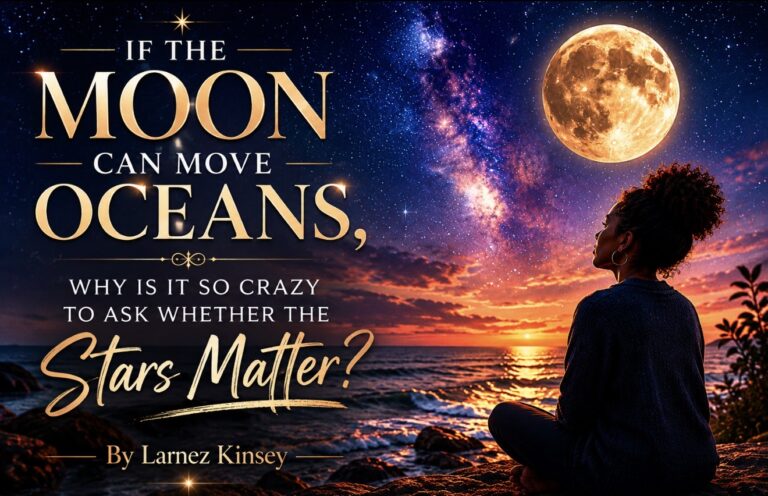
The Moon, nearly 239,000 miles away, moves entire oceans through its gravitational pull.
Every day, billions of tons of water rise and fall because of a celestial body hanging in the sky.
That’s not spirituality.
That’s science.
So perhaps the real question isn’t whether celestial bodies influence life.
We already know they do.
The question is:
How much do we still not understand?
Human beings have looked to the heavens for thousands of years.
The Egyptians.
The Maya.
The Polynesians.
The Sumerians.
Not because they were primitive.
Because they were observant.
Because they understood that life moves in cycles.
A constellation is simply a pattern of stars as viewed from Earth.
A map.
A marker.
A reminder that we are part of something much larger than ourselves.
And while many people imagine the Solar System sitting still like a textbook diagram, reality is far more extraordinary.
The Sun is moving through the Milky Way at over 500,000 miles per hour.
The Earth is moving.
The Moon is moving.
Everything is moving.
Right now.
As you read these words.
We are not standing still in the universe.
We are traveling through it.
As someone who has spent years studying healing, trauma, and nervous system restoration, I’ve learned something profound:
Some of the most powerful forces shaping our lives are the ones we cannot see.
Love.
Stress.
Fear.
Hope.
Memory.
Grief.
Belief.
None of them are visible.
Yet all of them leave an impact.
They shape our decisions.
Influence our health.
Affect our relationships.
And alter the way we move through the world.
Maybe that’s why I find humanity’s relationship with the stars so fascinating.
Not because I believe the stars control us.
But because they invite us to remember something we’ve forgotten.
Perspective.
Humility.
Wonder.
The ancients studied the heavens not simply to predict events, but to understand their place within creation.
To observe patterns.
To recognize cycles.
To remember that they were participants in the universe, not separate from it.
Somewhere along the way, many of us stopped looking up.
We became so busy proving, debating, and explaining that we forgot how to observe.
How to reflect.
How to wonder.
Maybe the stars aren’t trying to tell us who we are.
Maybe they’re reminding us that we belong.
And perhaps the greatest mistake of modern humanity is not that we’ve stopped believing in the stars.
It’s that we’ve stopped looking up long enough to wonder.
At Hearth & Harmony, I believe healing begins with curiosity.
With slowing down.
With reconnecting to the rhythms of life that help us feel grounded, present, and whole.
Because sometimes the journey isn’t about finding all the answers.
Sometimes it’s about remembering that we are part of something far greater than ourselves.
And sometimes, healing begins the moment we look up and wonder.
Follow @HearthAndHarmonyNYC for conversations on healing, nervous system wellness, sacred self-care, and creating small pockets of healing throughout your day.
After all, wonder may be one of the most powerful medicines we have.
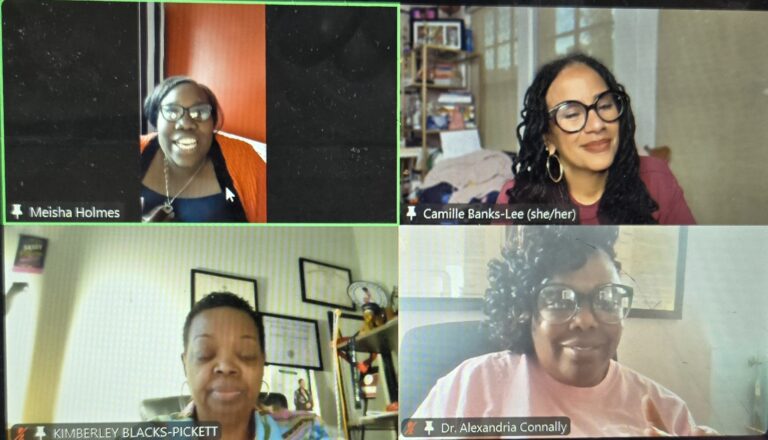
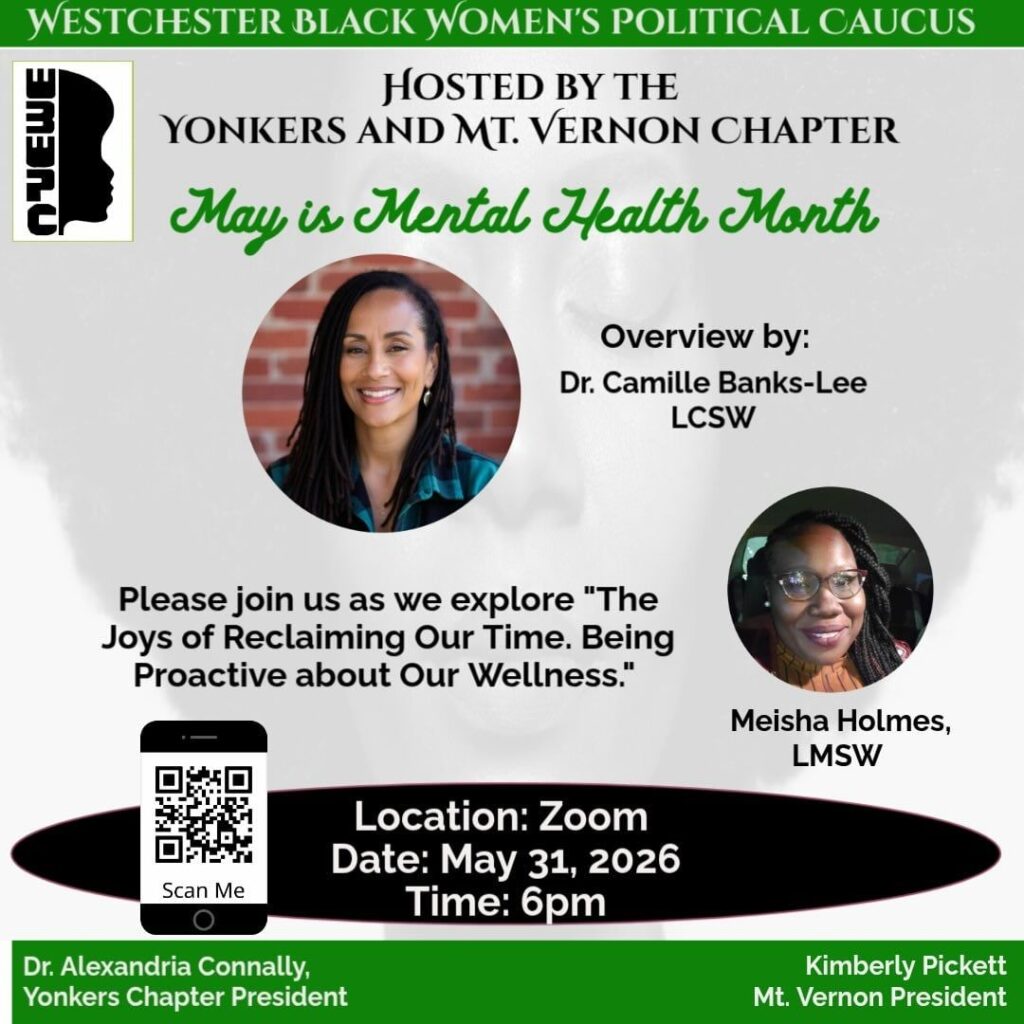
WESTCHESTER COUNTY, NY — In recognition of Mental Health Awareness Month, the Yonkers and Mount Vernon Chapters of the Westchester Black Women’s Political Caucus (WBWPC) hosted a powerful virtual discussion centered on self-care, healthy boundaries, and emotional wellness on Sunday, May 31, 2026. The event, titled “Reclaiming My Time,” featured an engaging presentation by Meisha Holmes, LMSW, a Licensed Master Social Worker and school social worker with Yonkers Public Schools.
Drawing inspiration from Congresswoman Maxine Waters’ now-famous phrase, “Reclaiming My Time,” Holmes challenged participants to consider how intentionally reclaiming time can serve as an act of self-preservation and self-care. The presentation included a clip of Waters using the phrase during a congressional hearing, providing a framework for a conversation about protecting one’s peace, prioritizing rest, and establishing healthy boundaries.
The event was hosted by Dr. Alexandria Connally, President of the Yonkers Chapter of the Westchester Black Women’s Political Caucus, and Kimberly Black Pickett, President of the Mount Vernon Chapter. Together, they welcomed attendees and facilitated a candid and meaningful discussion on the realities of managing stress while balancing personal, professional, and community responsibilities.
Throughout the presentation, Holmes emphasized the importance of intentional breathing, rest, and self-awareness. She shared personal experiences about learning to slow down, control anxiety, and use breathing techniques to remain present during challenging moments.
Participants explored how generational patterns of worry and overcommitment often impact Black women, particularly those who carry multiple caregiving responsibilities. The discussion examined the pressures associated with the “Strong Black Woman” narrative and encouraged attendees to embrace vulnerability, seek support, and prioritize their own wellness without guilt.
The conversation was enriched by insights from Dr. Camille Banks Lee, a Licensed Clinical Social Worker and therapist, who highlighted practical strategies for maintaining mental wellness. Dr. Banks Lee encouraged attendees to incorporate intentional breathing exercises, warm baths, candle-lighting rituals, and moments of stillness into their daily routines as acts of self-care. She also stressed the importance of community, noting that healing often occurs through relationships and supportive networks in addition to formal therapy.
Attendees actively participated by sharing personal stories and reflections on reclaiming their time, overcoming guilt, and learning to set healthier boundaries. The discussion reinforced the message that self-care is not selfish but necessary, particularly for Black women who often find themselves caring for others before caring for themselves.
“Reclaiming My Time” served as both a call to action and a reminder that wellness requires intention. By creating space for honest dialogue and practical tools for mental health, the Westchester Black Women’s Political Caucus continues its commitment to empowering women and strengthening communities through education, advocacy, and support.
As Mental Health Awareness Month comes to a close, organizers encouraged participants to continue prioritizing their mental wellness, embracing rest as a form of resistance, and remembering that reclaiming time is ultimately about reclaiming oneself.
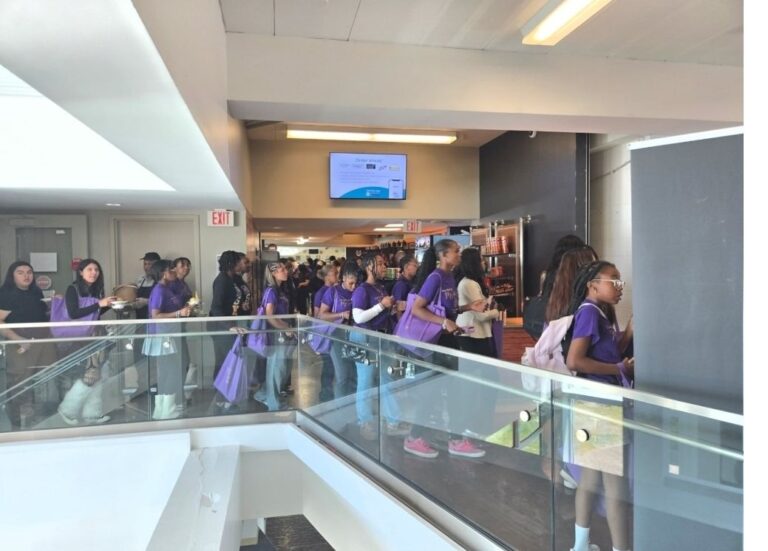
Students recently participated in the My Sister Keeper STEM Day at SUNY Old Westbury on Monday, May 4, 2026, joining peers from across the region for a full day of learning, leadership, and inspiration centered around careers in science, technology, engineering, and mathematics.
The immersive program provided students with an opportunity to experience college life firsthand while engaging in meaningful conversations about academic success, career pathways, and personal growth. The day began with a grab-and-go breakfast before students gathered for programming that officially started at 9:30 a.m.
Throughout the event, students participated in a variety of STEM-focused presentations designed to introduce emerging fields and encourage curiosity and innovation. A featured College Experience and Beyond panel discussion allowed participants to hear directly from college students, professors, and academic advisors about navigating higher education and preparing for future careers.
Students also enjoyed a guided campus tour of SUNY Old Westbury, giving them a closer look at college facilities, academic spaces, and student life. The experience helped students envision themselves pursuing higher education and future opportunities in STEM-related fields.
Networking opportunities throughout the day encouraged students to build connections with mentors and professionals while gaining valuable insight into college readiness and career planning. Lunch was provided for all registered student participants, helping to create a welcoming and community-focused atmosphere.
To promote unity and assist with identification during the event, each student received a commemorative event T-shirt and a goodie bag.
Dr. Connally, a member of the New York State My Sister Keeper Steering Committee, emphasized the importance of creating opportunities that expose students to STEM education, mentorship, and college readiness experiences. The event reinforced the value of representation, leadership, and access in helping students pursue successful futures in STEM disciplines and beyond.
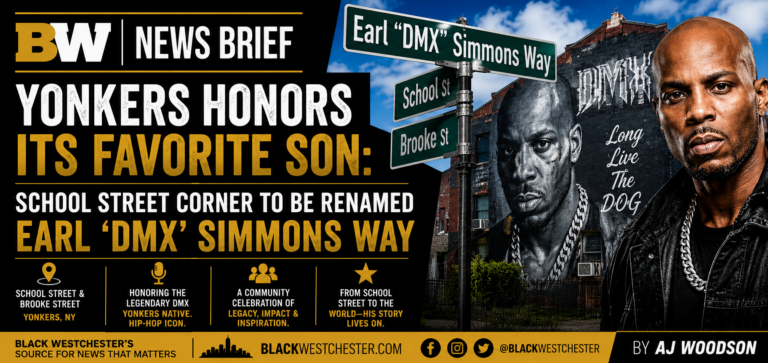
Long Live The Dog: Yonkers Moves To Rename School Street Corner For DMX
Yonkers is officially moving forward with honoring DMX by renaming a street corner in his hometown as “Earl ‘DMX’ Simmons Way.” A public hearing on the proposal was held on Wednesday, May 27, 2026. The Yonkers City Council formally passed the resolution that was successfully spearheaded by Yonkers Councilwoman Tasha Diaz, who has represented District 3—which includes School and Brook Streets—since January 2020.
“DMX was a rapper, actor, humanitarian to the community, and a legend!, I sponsored the resolution, answering calls from the local community and the Simmons family, because DMX gave hope to many. He is proof of what happens when you continue to push forward no matter where you come from, or what you’ve been through.” Councilwoman Diaz shared with Black Westchester. “The Bible tells us ‘Let the one among you who is without sin be the first to throw a stone,’ DMX is an inspiration to many, he proved your trials and tribulations do not have to be the end of your story!”
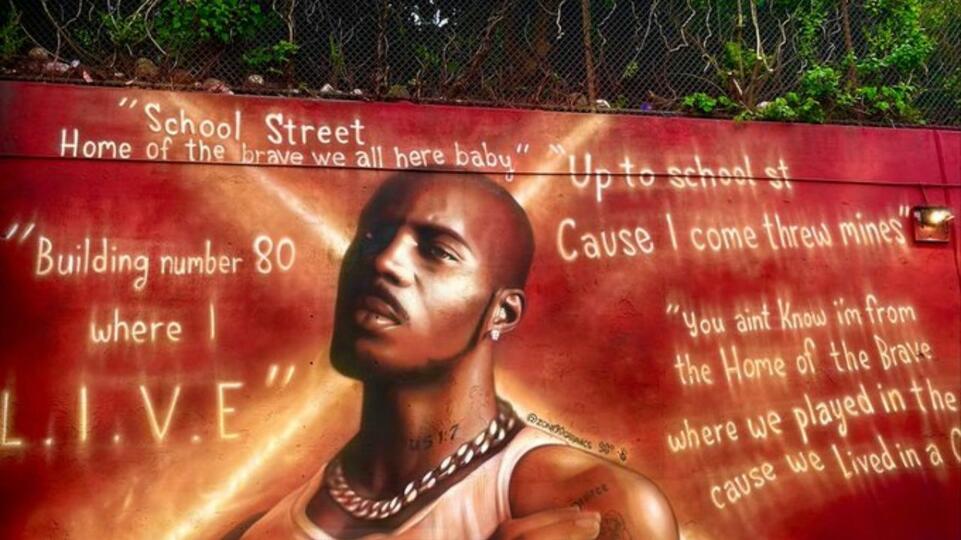
DMX’s connection to School Street (Building 80) is legendary in Yonkers. In songs such as “School Street” (the second track on DMX’s fourth album, The Great Depression, released in 2001) and “Look Thru My Eyes” (the fifth track on DMX’s legendary 1998 debut album, It’s Dark and Hell Is Hot), he referenced the neighborhood that helped shape both his life and career. A large mural honoring him already stands on School Street near the housing complex, known as ‘The Home Of The Brave,’ where he once lived.
“I’m so glad my colleague, Councilwoman Diaz, introduced the street-renaming legislation on behalf of DMX and his estate, and I’m even happier to have supported it. School Street and Brook Street will now be Earl DMX Simmons Way. Earl was an icon in this city and around the world, but beyond his legendary impact, he was one of the most authentic people you could ever meet. He touched countless lives through his music, his faith, and his unwavering honesty. This honor is well deserved, and he deserves so much more. Long live the legacy of DMX,” Majority Whip Councilwoman Deana Norman (District 1) shared with Black Westchester.
The effort is the culmination of years of community advocacy. Shortly after DMX’s passing in April 2021, Yonkers officials discussed several ways to honor the rap icon, including a 35-by-22-foot mural, behind 55 School St., created in July 2021 by artist Floyd Simmons. The street renaming appears to be the city’s latest step in permanently recognizing one of YO’s most famous sons.
Born in Mount Vernon but bred in Yonkers from the age of five, the emcee known for hits like the gritty street manifesto “Ruff Ryders’ Anthem” traveled the world, sold over 74 million records worldwide, starred in films, inspired a generation of artists, and proudly carried the name of Yonkers wherever he went. Yet no matter how far Earl “DMX” Simmons traveled, his heart never left School Street. He never forgot the city that shaped him, the struggles that molded him, or the people who embraced him long before the fame. From platinum albums and sold-out arenas to Hollywood screens and global stages, DMX remained one of Yonkers’ most authentic ambassadors.
Now, five years after his passing, Yonkers is ensuring that one of its favorite sons will never be forgotten. The Yonkers City Council has officially approved the honorary renaming of the corner of School Street and Brooke Street as “Earl ‘DMX’ Simmons Way,” a fitting tribute located in the neighborhood where X grew up. For the City of Yonkers, this is more than a street sign—it is a permanent reminder that a young man from the projects who overcame unimaginable obstacles went on to become a global icon while proudly representing his hometown every step of the way.
“This street renaming serves as a lasting tribute to a son of our city, a reminder of his generosity, his authenticity, and the pride he carried for his community every day. DMX was a proud Yonkers native whose impact reached far beyond music. He faced challenges throughout his life, but he never forgot where he came from and never stopped showing love for this city. Whether he was helping families through Thanksgiving turkey drives or stopping by the Nepperhan Community Center to connect with residents, DMX remained deeply committed to the people of Yonkers. His legacy will continue to inspire future generations who walk these streets and call Yonkers home.” Yonkers Mayor Mike Spano shared with Black Westchester.
As Yonkers prepares to officially unveil Earl “DMX” Simmons Way, the street sign will represent far more than a tribute to a legendary rapper. It stands as a symbol of what is possible when someone refuses to let their circumstances define their destiny. DMX’s story was never perfect, but it was real. He gave voice to pain, struggle, redemption, faith, and perseverance in a way that resonated with millions around the world. Through every triumph and every setback, he remained unapologetically himself—a quality that made him one of the most beloved and respected figures in Hip-Hop history.
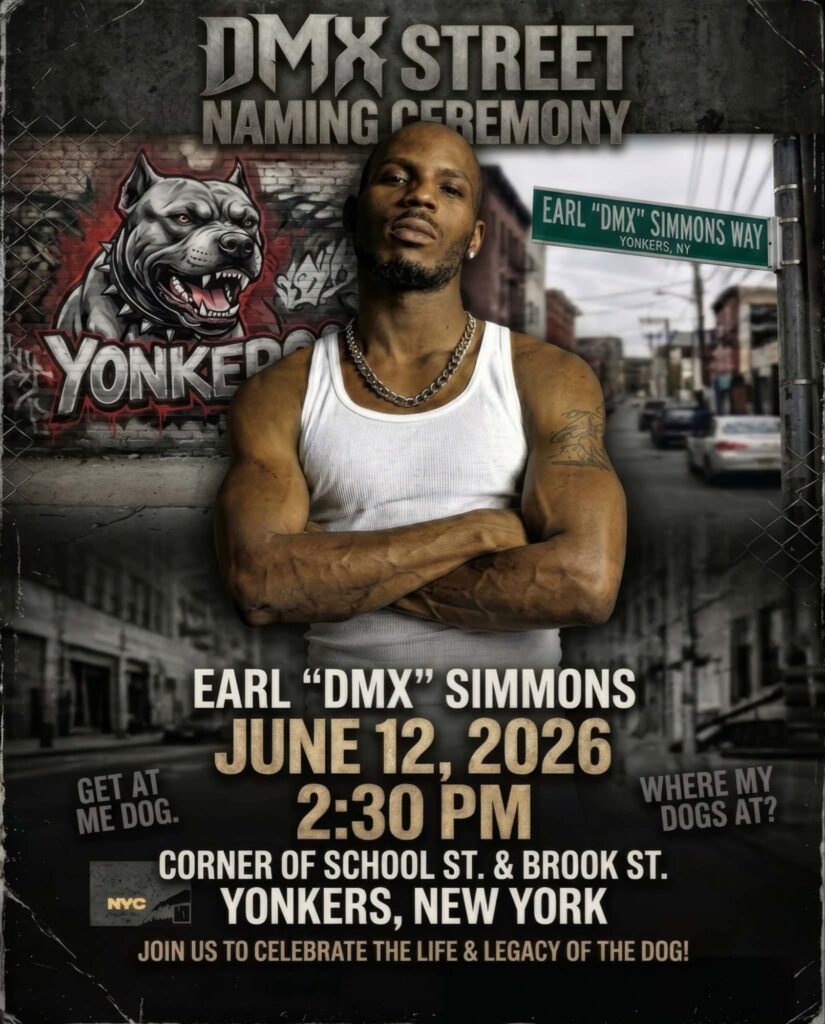
The official street renaming will take place on Tuesday, June 12th, at 2:30 PM. The proposed honorary street renaming covers the corner of School Street and Brooke Street—a location with deep significance because it is near the School Street housing complex, where DMX spent part of his childhood.
For the City of Yonkers, this honor is a long-overdue recognition of a hometown hero who never stopped putting the city on his back. Long before social media made it fashionable to represent where you’re from, DMX proudly shouted out Yonkers on records, in interviews, and on stages across the globe. He turned a city often overlooked by outsiders into a name known around the world. While countless artists achieved success and moved on, X carried Yonkers with him everywhere he went.
Years from now, young people walking past the corner of School Street and Brooke Street may not have witnessed DMX dominate the charts, sell out arenas, or redefine Hip-Hop with his unmistakable bark and raw honesty. But they will see his name and hopefully learn his story. They will learn that a kid from Yonkers rose from adversity to become a cultural icon, proving that greatness can come from any neighborhood. And in that way, Earl “DMX” Simmons Way is more than a street designation—it is a permanent reminder that legends may leave us, but their impact continues to guide the communities that helped create them. As Yonkers honors one of its favorite sons, it also ensures that the legacy of DMX will forever have a home where it all began.
Neuroscientists estimate that the human brain contains approximately 86 billion neurons, each shaped by a lifetime of experiences, relationships, successes, failures, lessons, and memories.
No two people stand in exactly the same place when they look at reality.
Research in cognitive science has repeatedly shown that perception is not a passive recording of the world. The brain actively filters, predicts, and interprets information through the lens of prior experience.
Different families.
Different cultures.
Different opportunities.
Different wounds.
Different information.
Yet somehow we’ve convinced ourselves that acknowledging different vantage points is a threat to equality.
So let me ask a question:
When did acknowledging expertise become the same thing as creating hierarchy?
At what point did we decide that recognizing someone knows more than we do about a particular subject was somehow an attack on human dignity?
Because that’s the conversation hiding underneath much of our public discourse.
We’ve spent generations fighting against systems that treated certain people as inherently more valuable than others.
Good.
We should.
But somewhere along the way, many of us started confusing equal human worth with equal understanding.
And those are not the same thing.
Every person deserves dignity.
Every person deserves respect.
Every person deserves the opportunity to be heard.
None of that means every person possesses the same knowledge, experience, training, or perspective.
The fact that this feels controversial says more about our relationship with identity than it does about knowledge.
Several years ago, I watched a senior leader reject a solution that would have saved his team months of frustration.
The solution wasn’t the problem.
The source was.
It came from someone younger.
Someone with less status.
Someone he didn’t expect to teach him anything.
The room knew the idea was sound.
He knew it too.
But accepting it would have required him to release a story about who he was.
Six months later, the problem became a crisis.
That’s when I realized something important:
People rarely resist information.
They resist what the information threatens.
The Hidden Threat Nobody Talks About
What if the greatest threat to learning isn’t ignorance?
What if it’s identity?
I’ve spent years watching intelligent people reject useful information.
Not because the information was wrong.
Because accepting it required them to release a story about themselves.
The executive who could lead a company but couldn’t receive feedback.
The activist who could identify systemic problems but couldn’t recognize personal blind spots.
The entrepreneur who understood markets but not relationships.
The academic who possessed expertise but lacked curiosity.
Different people.
Same pattern.
The moment information threatened identity, learning stopped.
We say we want growth.
We say we value truth.
We say we believe in learning.
Yet many of us unconsciously translate:
“You have something to learn.”
Into:
“You are less than.”
The emotional distance between those two statements is the distance between wisdom and defensiveness.
Because once self-worth becomes attached to being right, curiosity becomes dangerous.
Correction feels like rejection.
Guidance feels like judgment.
Expertise feels like hierarchy.
And curiosity quietly leaves the room.
People aren’t protecting their ideas.
They’re protecting their identities.
And identities are often survival structures.
They help us answer fundamental questions:
Who am I?
Where do I belong?
What makes me valuable?
What keeps me safe?
When information challenges an opinion, we can adapt.
When information challenges an identity, we become defensive.
That’s why so many conversations fail before they begin.
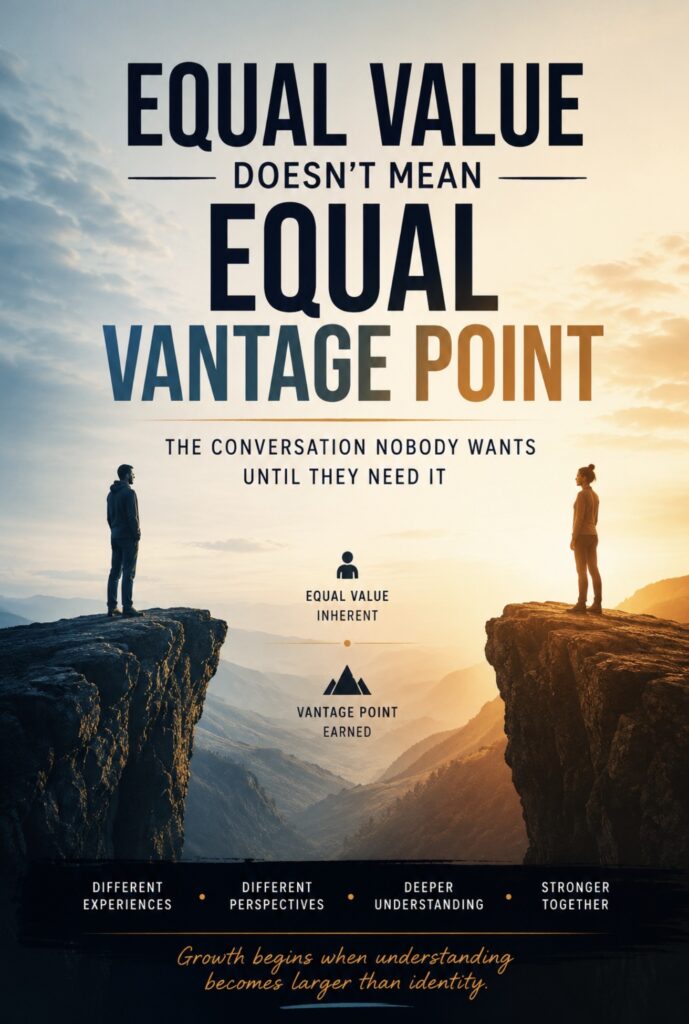
Value Is Inherent. Vantage Point Is Earned.
Let’s be clear.
Expertise does not make someone better than you.
But pretending expertise doesn’t exist doesn’t make you enlightened.
It makes you difficult to teach.
There’s a difference.
A surgeon sees patterns you don’t see.
A mediator hears tensions you don’t hear.
A teacher recognizes misunderstandings you don’t recognize.
An elder notices consequences you haven’t lived long enough to understand.
This doesn’t make them superior.
It means they have access to a different vantage point.
What we call expertise is often misunderstood.
Many people imagine expertise as superior intelligence.
More often, it is accumulated memory.
The surgeon carries thousands of procedures.
The mediator carries thousands of conversations.
The teacher carries thousands of moments of misunderstanding and breakthrough.
The elder carries decades of observing human nature repeat itself in different forms.
What appears to be wisdom is often memory organized into pattern recognition.
Not superiority.
Perspective.
Perhaps wisdom is not intelligence operating at a higher level.
Perhaps wisdom is memory operating across a longer timeline.
Value is inherent.
Vantage point is earned.
Value belongs to your humanity.
Vantage point belongs to your experience.
One is given.
The other is accumulated.
Confusing the two creates fragile identities.
Understanding the difference creates growth.
Humility as a Technology of Learning
What if humility is not primarily a moral virtue?
What if humility is a perceptual technology?
What if its purpose is not to make us smaller, but to make us teachable?
Arrogance prevents reality from updating us.
Humility allows reality to revise us.
Arrogance insists understanding has already arrived.
Humility remains available to what has not yet been seen.
Viewed this way, humility is not self-rejection.
It is openness to information.
Each of us sees through a particular window.
Each of us carries a particular memory.
Each of us inhabits a particular vantage point.
Learning occurs when those windows begin to overlap.
Growth occurs when understanding becomes larger than identity.
And wisdom may simply be the ability to keep expanding that horizon throughout a lifetime.
The Real Question
So perhaps the real question isn’t whether someone knows more than you.
Perhaps the real question is:
Why does that possibility make you uncomfortable?
What happens inside you when someone else’s expertise enters the room?
What story do you immediately tell yourself?
What wound gets touched?
What fear gets activated?
Because the answer to those questions will reveal something far more important than whether you’re right.
It will reveal whether you’re teachable.
And teachability may be one of the most underrated forms of intelligence we have.
The opposite of arrogance is not humility.
It is teachability.
The deepest form of confidence is not believing you know everything.
It is knowing your worth remains intact when you discover you don’t.
Equal value.
Different vantage points.
The moment we stop treating those ideas as enemies, we create the possibility for real learning, real dialogue, and real growth.
Because growth begins the moment understanding becomes larger than identity.This version is likely the strongest balance of depth, readability, authority, and shareability. It has a memorable framework, a human story, multiple quotable lines, and a clear intellectual through-line without becoming overly long.
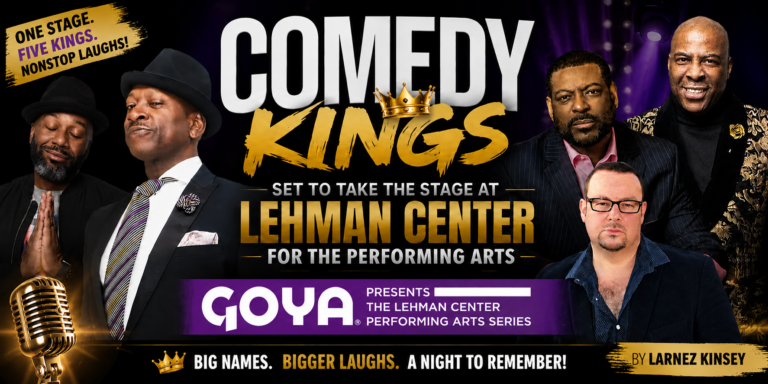
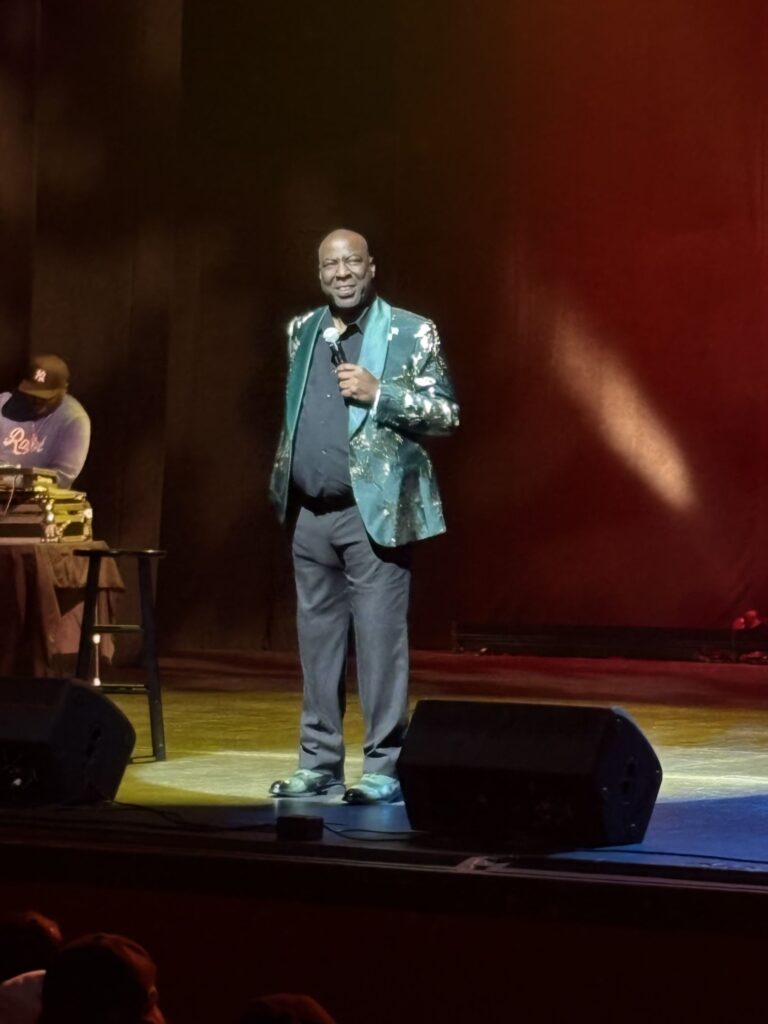
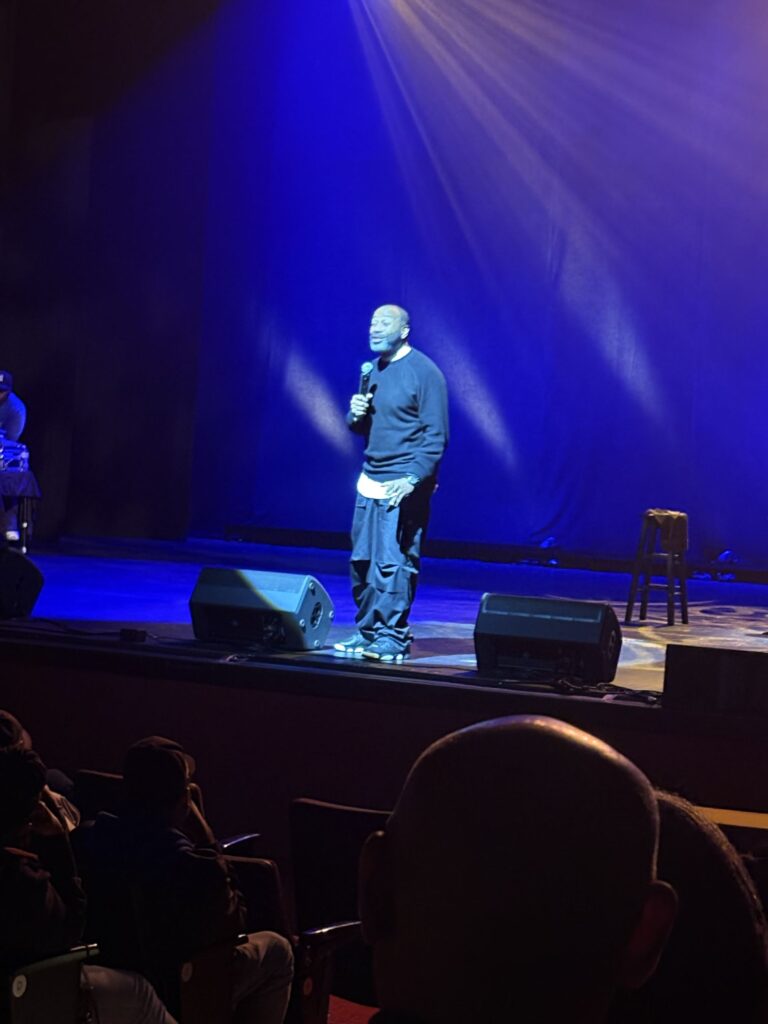
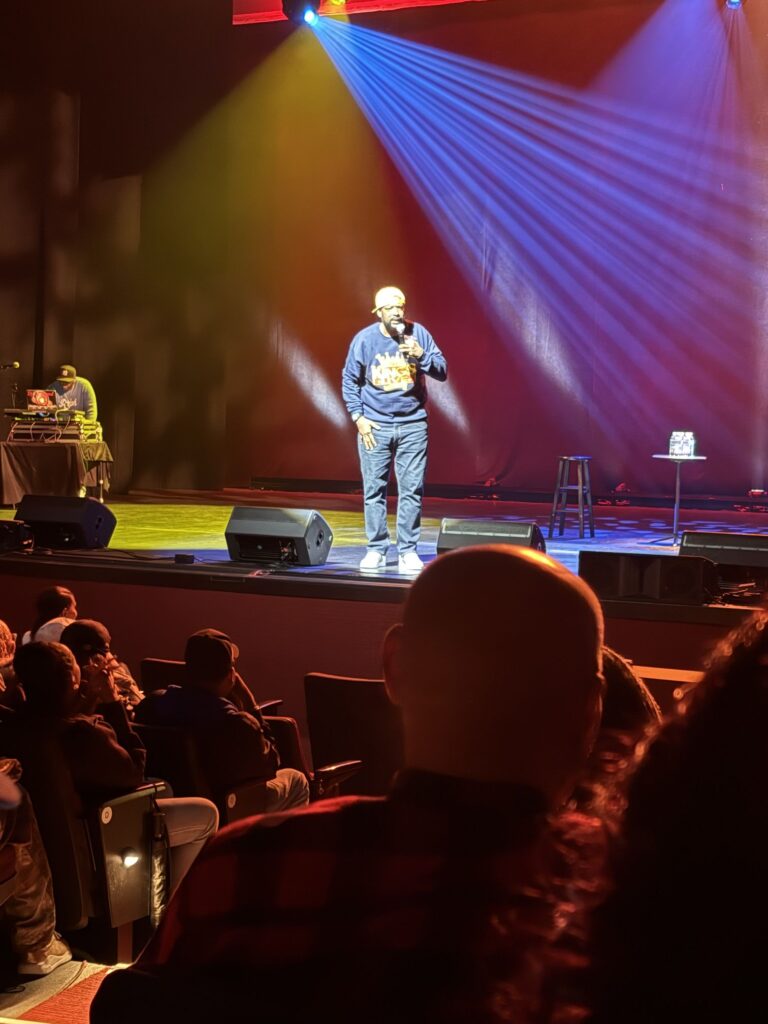
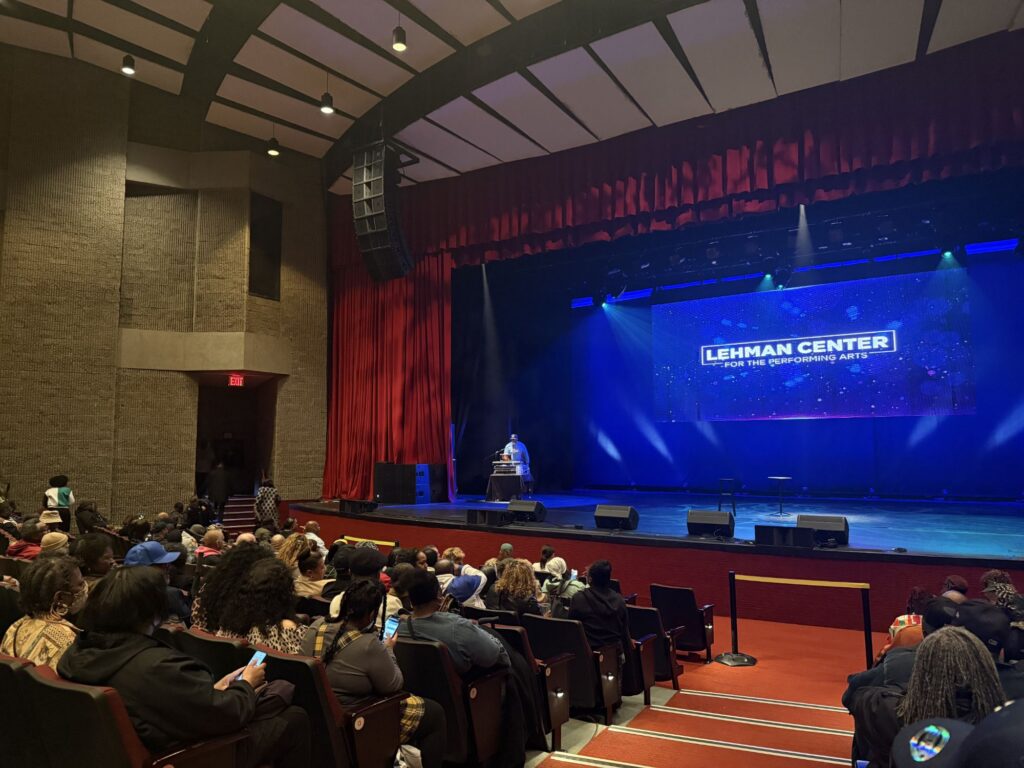
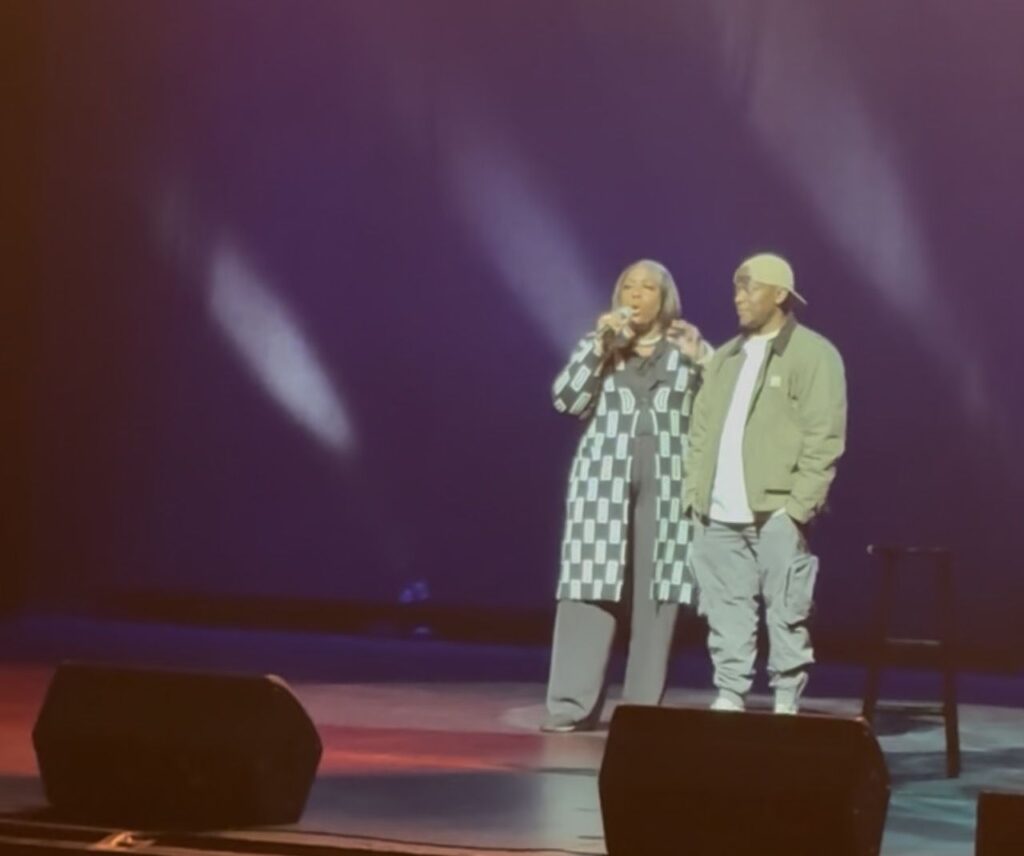
There are comedy shows… and then there are nights that feel like cultural moments. Comedy Kings Live at the Lehman Center for the Performing Arts, on Saturday, May 23rd, was absolutely the second kind. The type of night people are still going to be talking about weeks later saying, “WAIT… Joe Torry was THERE?!”
Because honestly? This lineup felt legendary before the first joke was even told.
The evening opened with AG White setting the tone perfectly, smooth, funny, welcoming, and completely in sync with the crowd. He wasn’t trying to overpower the room. He understood exactly how to guide it. Like a real host. The kind who knows Bronx audiences don’t need manufactured hype because the energy already lives in the building.
And this wasn’t just entertainment. This was a collaboration between Lehman Performing Arts Center and New York City Council Member Kevin C. Riley, who stepped onstage and introduced Bronx Borough President Vanessa Gibson. She spoke briefly but powerfully about what events like this mean to the Bronx, spaces where Black culture, joy, and community can gather together and feel celebrated instead of erased. Then she stepped offstage and sat with the audience to enjoy the show herself, which honestly made the entire moment feel even more genuine.
But once the comedians hit the stage?
BABY.
Joe Clair came out first with that effortless cool that only certain comedians have. No gimmicks. No trying too hard. Just confidence, timing, and that classic smooth delivery that had the audience laughing before the punchlines even fully landed. Joe Clair performs like the funniest person at the family reunion who somehow also knows everybody’s business. Every joke felt conversational, natural, lived-in. The crowd was completely with him.
Then Talent Harris walked out casually in jeans and a Comedy Kings Live sweatshirt looking like somebody’s cousin who accidentally became famous for being hilarious. And that relaxed energy made him hit even harder. Women immediately started screaming because Talent has mastered something a lot of comedians can’t fake: familiarity. He talks about relationships, dating, Black love, and everyday drama in a way that feels painfully real. Every few minutes women were grabbing each other’s arms yelling “THAT’S EXACTLY WHAT THEY DO!” while men sat there laughing nervously trying not to make eye contact.
And then Capone took the stage and shifted the whole room into pure New York mode. Sharp. Loud. Animated. Bronx crowds love authenticity and Capone delivered exactly that. His comedy felt like standing outside a corner store hearing the funniest man in the neighborhood tell stories that are somehow both reckless and accurate at the same time. Every punchline hit harder because the audience recognized themselves inside the jokes.
But when Joe Torry finally stepped onstage?
The room exploded.
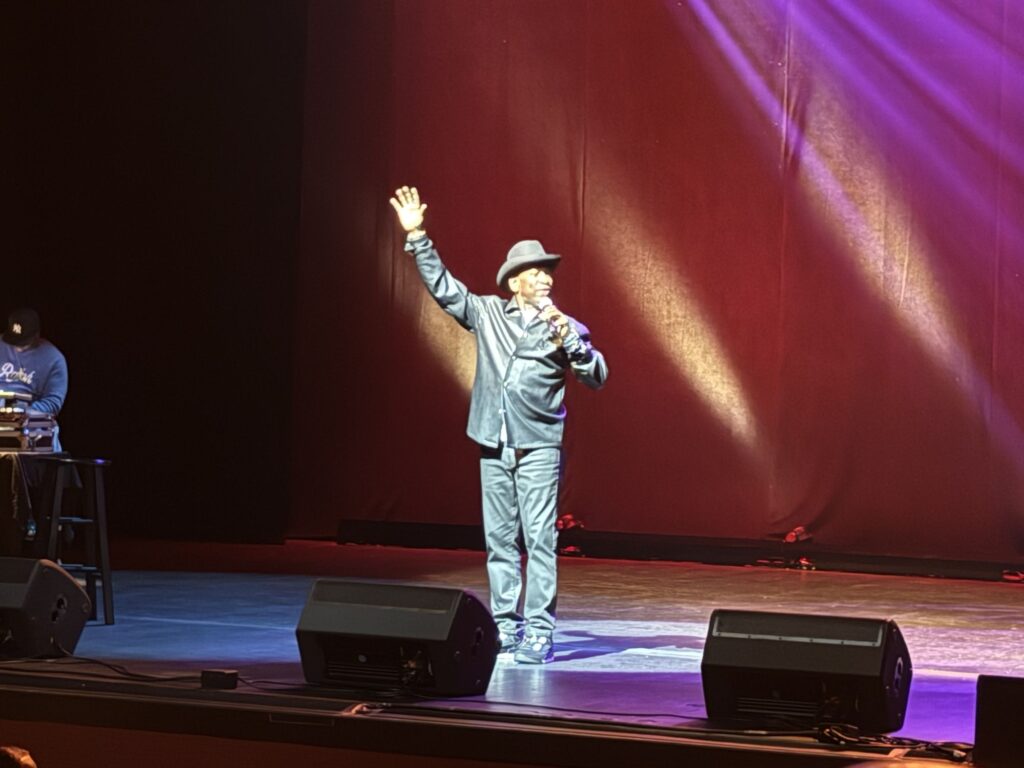
Not regular applause either. Nostalgia applause. Respect applause. The kind of reaction reserved for somebody who helped shape Black comedy culture itself. Joe Torry walked out with that signature grin and effortless swagger that immediately transported people back to the Def Comedy Jam era when Black comedy wasn’t just entertainment, it was an event. A lifestyle. A soundtrack to Friday nights.
And Joe knew exactly what he was doing. He let the audience sit in that excitement for a second before he even started. Veteran move. Because legends understand timing differently.
The laughter inside Lehman Center that night felt layered. People weren’t just reacting to jokes. They were reacting to memories. To recognition. To hear comedians speak the language of Black life without explanation or apology.
And honestly, the location made it even more powerful. The Bronx has always been one of the cultural hearts of New York, and with Westchester communities like Mount Vernon, Yonkers, and New Rochelle so close, the audience reflected generations of Black New York culture all under one roof. Everyone dressed beautifully. Date nights happening in real time. Old friends reconnecting in the lobby. Entire rows laughing so hard they missed the next joke.
Comedy Kings Live didn’t feel like one of those overproduced corporate comedy tours where everybody rushes in and rushes out. It felt personal. Like the borough itself hosted the night.
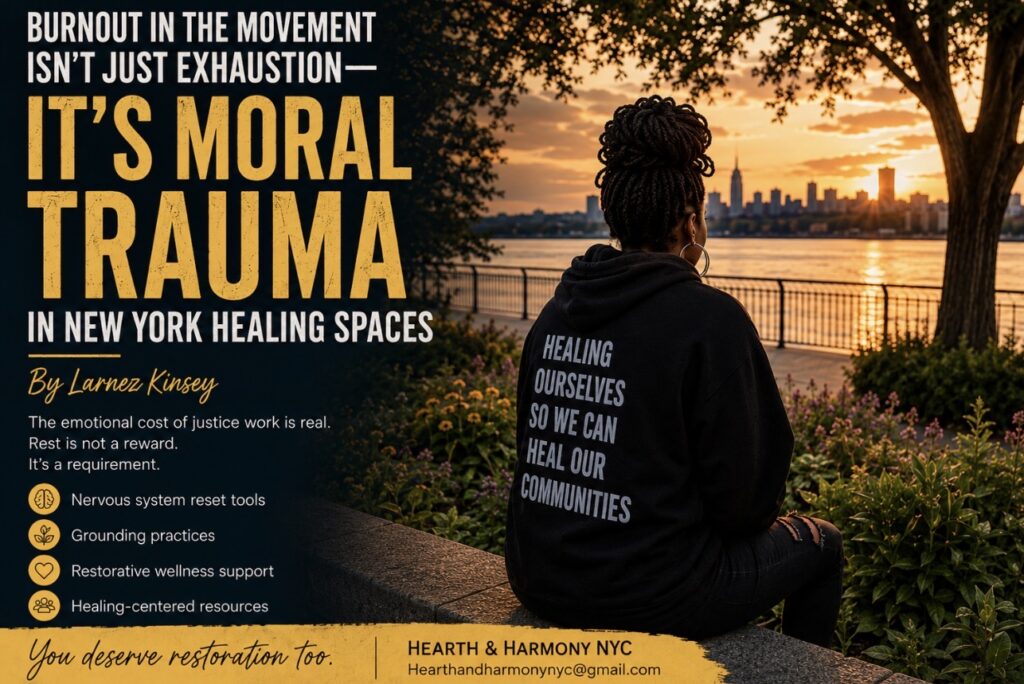
Nearly 76% of nonprofit and community workers report experiencing severe burnout, while mental health researchers increasingly point to “moral trauma” as one of the hidden emotional costs of justice work.
And honestly?
“Moral trauma” probably explains what many people in restorative justice spaces are actually feeling better than burnout ever could.
Because burnout sounds temporary.
Burnout sounds like vacation days and sleep.
Moral trauma sounds like what happens when your spirit gets exhausted from witnessing too much pain while still being expected to function like nothing is happening.
And if you’ve spent enough time inside restorative justice spaces across New York, from the Bronx to Yonkers, Mount Vernon to Brooklyn, Harlem to New Rochelle, you already know exactly what that feels like.
Because this isn’t just about being tired.
This is about being emotionally overloaded while constantly expected to hold everybody else together.
And New York creates a very specific kind of nervous system pressure.
This city rewards survival mode.
People wear exhaustion like designer fashion here.
In New York healing spaces, people facilitate trauma circles all day, answer crisis calls all night, hold community pain for entire neighborhoods, and still show up to events pretending they’re “good.” Meanwhile their nervous system has been in emergency mode for months.
That’s not simply burnout anymore.
That’s moral trauma.
Moral trauma happens when compassionate people repeatedly witness violence, injustice, grief, addiction, incarceration, poverty, and systemic failure while feeling emotionally responsible for helping everybody survive it.
And restorative justice spaces across New York are full of people carrying exactly that weight.
It’s the Bronx mentor trying to save teenagers from systems that already decided who they’re allowed to become.
It’s the Mount Vernon organizer answering emotional emergencies at midnight while privately struggling with anxiety themselves.
It’s the Harlem healer pouring energy into everybody else’s restoration while secretly feeling emotionally numb.
It’s the Yonkers advocate facilitating peace circles while their own nervous system hasn’t experienced peace in years.
And because New York culture glorifies hustle, hyper-independence, and resilience, many people don’t even realize they’re depleted until their body physically forces them to stop.
Suddenly:
Your chest stays tight constantly.
Text messages feel emotionally overwhelming.
You’re exhausted even after sleeping.
Rest feels uncomfortable.
Joy feels unfamiliar.
Small conflicts feel emotionally catastrophic.
Your body feels alert even when nothing dangerous is happening.
That’s what chronic nervous system activation looks like.
And honestly?
A lot of people stay overly invested in everybody else’s problems because it feels safer than paying attention to themselves.
Because healing requires stillness.
Self-awareness requires honesty.
And both of those things can feel terrifying when your nervous system has spent years surviving instead of resting.
It actually takes an enormous amount of energy to avoid yourself.
To constantly stay busy.
To always answer everybody’s crisis calls.
To over-function in community spaces.
To become the “strong one” for everybody else while quietly neglecting your own emotional needs.
Sometimes taking on everybody else’s pain becomes a distraction from your own.
And restorative justice spaces attract deeply compassionate people, but compassion without boundaries can quietly turn into self-abandonment.
A lot of healers know how to hold space for others but panic when they finally have to sit alone with themselves in silence. Because once the meetings end, once the organizing slows down, once the community emergencies stop for five minutes, there’s often grief, exhaustion, anger, loneliness, and nervous system dysregulation waiting underneath all the movement.
That’s why rest can feel uncomfortable for so many people in justice work.
Stillness forces truth to rise.
And truthfully?
Some people aren’t burned out from doing too little.
They’re emotionally overwhelmed from spending years disconnected from themselves while constantly rescuing everybody else.
Healing is not only learning how to help people.
Healing is learning how to come back home to yourself too.
And let’s tell another truth nobody says enough inside movement spaces:
You cannot build sustainable healing from a permanently dysregulated nervous system.
Healing work requires regulated people too.
Not perfect people.
Not endlessly available people.
Regulated people.
And part of that regulation is learning how to build nervous system capacity.
Not just calming yourself down temporarily.
Actually expanding your body’s ability to experience stress, emotion, conflict, uncertainty, grief, and responsibility without immediately collapsing into survival mode.
Because a lot of people in restorative justice spaces think healing means becoming emotionless. It doesn’t. Healing means your nervous system can stay present without shutting down, exploding, dissociating, over-functioning, or abandoning yourself emotionally every time life becomes overwhelming.
That’s capacity.
And honestly, many Black and Brown communities across New York are carrying nervous systems shaped by generations of survival. Hypervigilance. Hustle culture. Emotional suppression. Constant adaptation. We inherited coping mechanisms that helped people survive systems designed to exhaust them.
But survival patterns eventually become stored inside the body.
That’s why certain environments, smells, tones of voice, conflicts, abandonment, instability, or even silence can trigger reactions that feel bigger than the present moment itself. Sometimes your nervous system isn’t only responding to today. It’s responding to accumulated memory.
And this is where conversations around quantum memory become deeply important in healing spaces.
Quantum memory explores the idea that emotional experiences, trauma patterns, survival responses, and energetic imprints can remain stored within the body and subconscious in ways that move beyond linear thinking. Whether people understand that spiritually, scientifically, ancestrally, or emotionally, many healers already recognize the body remembers what the mind tries to move past.
Anybody who has ever felt anxiety in a safe room, panic during rest, grief with no immediate explanation, or emotional exhaustion that feels older than the current moment already understands this intuitively.
The body carries memory.
And nervous system healing is not just about managing stress in the present. Sometimes it’s about teaching the body that safety is finally possible after years, sometimes generations, of bracing for harm.
That’s why building nervous system capacity matters so much in restorative justice work.
Because people cannot create sustainable peace externally while internally living in constant emotional emergency.
Capacity-building looks like:
Learning how to stay grounded during conflict.
Allowing yourself to rest without guilt.
Practicing emotional regulation before crisis happens.
Expanding your ability to experience joy without waiting for disaster afterward.
Sitting still long enough for your body to recognize safety without immediately searching for danger.
That kind of healing changes communities too.
Because regulated people create different conversations.
Different relationships.
Different homes.
Different movements.
And honestly?
A lot of people don’t need more productivity tools.
They need nervous systems that no longer believe survival is the only way to exist.
So what does actual restoration look like for organizers, healers, mentors, restorative justice practitioners, and community leaders across New York?
Not performative self-care.
Not luxury wellness aesthetics.
Real nervous system repair.
1. Stop Carrying Every Emergency Inside Your Body
New York trains people to react immediately to everything. But every text, email, crisis, or conflict does not require your nervous system to enter panic mode. Pause before responding. Slow your breathing intentionally. Let your body know you are safe first.
2. Create Physical Rituals To Remove Emotional Residue
After emotionally heavy conversations, restorative circles, community meetings, or crisis intervention:
Wash your hands with cold water intentionally.
Change clothes when you get home.
Sit in silence before scrolling social media.
Stretch your shoulders, jaw, and neck.
Burn sage, palo santo, incense, or light candles if spiritual grounding practices resonate with you.
Your body needs help understanding the danger has passed.
3. Reconnect With New York Joy
Healing isn’t always isolation. Sometimes healing looks like:
Summer nights walking the Bronx waterfront.
Music playing from cookouts in Mount Vernon.
Caribbean food spots in Flatbush.
Sitting near the water in New Rochelle.
Dancing at family functions.
Laughing with people who don’t need emotional labor from you.
Sitting quietly in front of the Enslaved Africans Rain Garden on the Yonkers riverfront for thirty minutes without answering anybody’s texts.
Just breathing.
Watching the water move.
Letting your nervous system remember that not every moment requires performance, productivity, or emotional labor.
Because places like that matter.
The rain garden itself carries deep historical energy and remembrance. The memorial sculpture created by acclaimed artist Vinnie Bagwell honors the lives and humanity of enslaved Africans whose labor helped build New York long before many communities are willing to fully acknowledge that truth.
Sitting near that space forces a different pace onto your body. Slower. More grounded. More honest.
And honestly, too many people in restorative justice spaces move through New York constantly overstimulated without ever permitting themselves to pause long enough to hear their own thoughts clearly.
The riverfront becomes a reminder that healing is not always loud.
Sometimes healing looks like stillness.
Sometimes healing looks like water.
Sometimes healing looks like finally sitting with yourself long enough to realize how exhausted you actually are.
And for people carrying moral trauma, moments like that are not small.
They’re nervous system medicine.
4. Stop Treating Rest Like A Reward
You do not have to collapse first to deserve restoration. Especially Black people in New York have been conditioned to believe rest must be earned through suffering. That mindset keeps nervous systems trapped in survival mode.
5. Practice Stillness Without Productivity
Not content creation.
Not multitasking.
Not “productive healing.”
Stillness.
Five quiet minutes of intentional breathing can interrupt stress cycles your body has normalized for years.
Organizations across New York are expanding restorative justice work because communities are desperate for healing-centered alternatives. But the movement cannot keep talking about restoring communities while ignoring the emotional depletion of the people doing the restoring.
That contradiction becomes part of the harm itself.
Because burnout might leave you exhausted.
But moral trauma disconnects people from joy, softness, safety, and eventually themselves.
And too many brilliant healers, organizers, educators, advocates, mentors, and restorative justice practitioners across New York are silently carrying emotional weight nobody sees.
You deserve restoration, too.
Not just survival.
Not just functionality.
Not just pushing through.
Real restoration.
And honestly?
You should not have to heal alone.
If this article resonated with you, if your nervous system feels exhausted, if you’ve been carrying community pain while quietly neglecting yourself, Hearth & Harmony NYC was created for people exactly like you.
Through nervous system reset tools, grounding practices, restorative wellness support, healing-centered conversations, and community care resources, the goal is simple: helping people reconnect with themselves before burnout turns into complete emotional disconnection.
Because regulated people change communities.
And healing yourself is not abandoning the movement.
It’s making sure you survive it.
For support, workshops, healing-centered resources, or restorative wellness guidance, contact: Hearth & Harmony NYC Hearthandharmonynyc@gmail.com
Governor Kathy Hochul and New York lawmakers are promoting a series of housing reforms designed to address the state’s housing crisis. The goal is straightforward: increase the supply of housing by speeding up development approvals, reducing regulatory barriers, encouraging local governments to approve new projects, and investing billions of dollars into affordable housing construction.
State officials argue that New York has not built enough housing for decades, leading to rising rents, soaring home prices, and a shortage that has pushed many working families out of the market. On that point, they are largely correct. Housing supply is a real problem.
But there is another question that receives far less attention.
Will these reforms create homeowners, or will they simply create more renters?
That distinction matters because the housing crisis and the wealth crisis are not necessarily the same thing.
Much of what Albany describes as “affordable housing” consists of rental units. These developments may provide lower-cost apartments, preserve existing affordable rentals, or create mixed-income housing complexes. They may help families remain in their communities and avoid displacement. Those are worthwhile goals.
However, affordable housing is not the same as affordable ownership.
A family can spend thirty years in an affordable apartment and still have no assets to pass on to their children. They can pay rent every month, contribute to the tax base, and work hard their entire lives while building equity for a landlord. Homeownership, by contrast, creates wealth. It allows families to build equity, leverage assets, accumulate net worth, and transfer wealth from one generation to the next.
This is where many working families are being left behind.
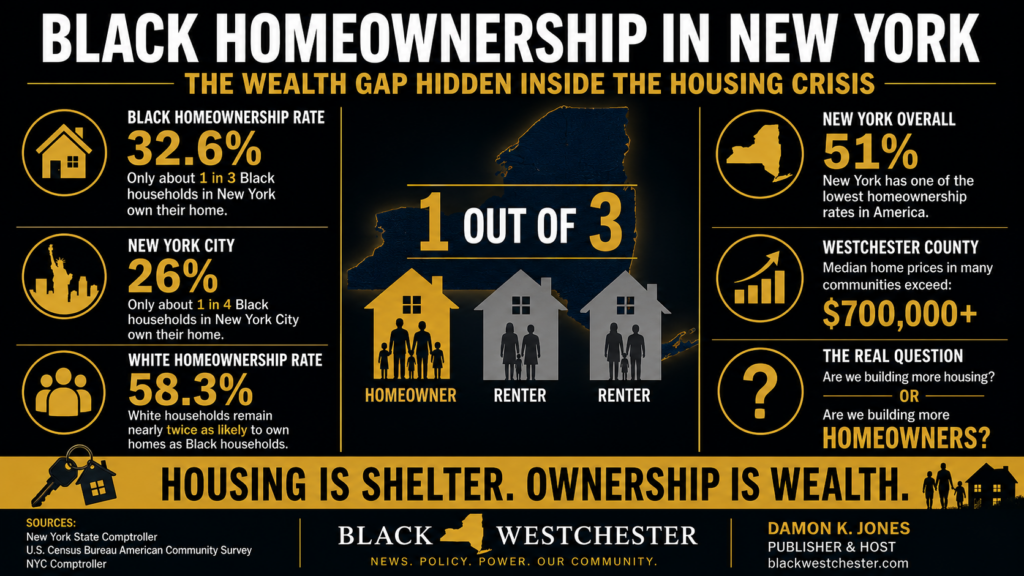
Consider a single mother who is a nurse practitioner in Westchester County. She has done everything society told her to do. She pursued higher education, built a professional career, earned a respectable income, and contributed to her community. Yet she may still struggle to purchase a home when many properties in Westchester sell for $700,000, $800,000, or even more than $1 million. When mortgage rates, property taxes, insurance costs, childcare expenses, and student loan obligations are factored in, homeownership can remain out of reach even for members of the professional class.
If a nurse practitioner struggles to buy a home, what does that mean for teachers, correction officers, municipal workers, social workers, healthcare aides, and countless other middle-income families?
The answer is obvious. Many of them are being pushed permanently into the rental market.
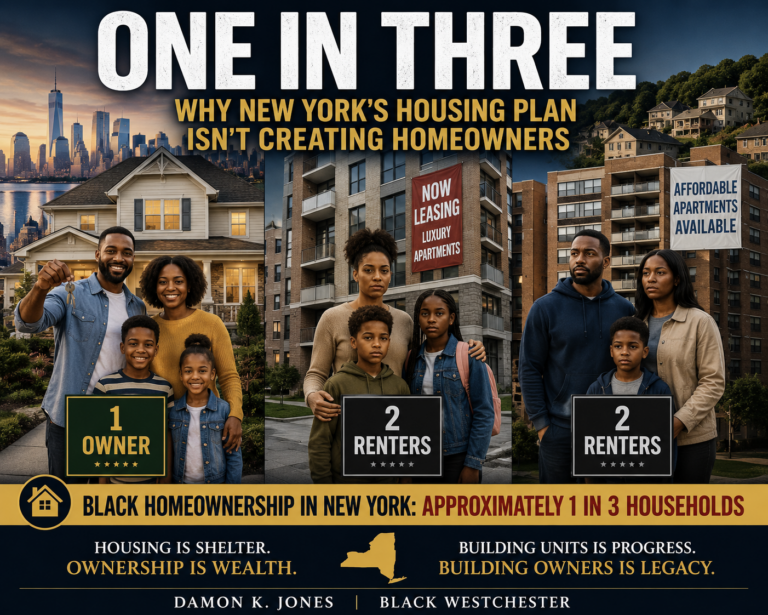
The consequences are particularly severe for Black New Yorkers because homeownership has long been one of the primary ways families build and transfer wealth. Yet New York already has a serious Black homeownership problem. According to data from the New York State Comptroller, only about one-third of Black households in New York own their homes, compared to roughly two-thirds of White households. In New York City, Black homeownership is even lower, hovering around one-quarter of households. These numbers represent more than a housing gap. They represent a wealth gap.
When only one in three Black households statewide owns a home, the conversation should not simply focus on creating more housing units. The conversation should focus on increasing the number of homeowners. In a state where most Black families remain, renters face a challenge that extends far beyond housing policy. It is a challenge of wealth creation, economic mobility, and generational opportunity.
This is why New York’s housing debate needs to become more sophisticated. The conversation cannot stop at the number of units being built. Politicians often announce housing projects as if every new unit represents economic progress. But from a wealth-building perspective, the type of housing matters just as much as the quantity.
A city can build thousands of affordable apartments while simultaneously producing very few new homeowners.
For communities concerned with wealth creation, the most important metrics should not be simply how many housing units were approved or how many apartments were constructed. The real measure of success should be how many first-time buyers purchased homes, how many working families moved from renting to owning, and how many children will inherit property rather than housing insecurity.
This issue is especially important in communities such as Mount Vernon, Yonkers, New Rochelle, and other parts of Westchester County, where rising housing costs continue to make homeownership more difficult. The challenge facing these communities is not merely finding a place to live. The challenge is creating pathways to ownership that allow families to build long-term wealth.
For decades, political leaders have measured success by the number of affordable housing units created. Yet affordable housing and wealth building are not the same thing. A family living in a subsidized apartment may have a roof over its head, but it is not necessarily building equity. A homeowner, on the other hand, has the opportunity to benefit from appreciation, borrow against an asset, start a business using home equity, or leave property to the next generation.
That is why many Black families are asking a different question than Albany policymakers.
They are not asking where they can rent.
They are asking where they can buy.
The current reforms may increase housing supply. They may ease some pressure on rents. They may help address shortages. But they are not primarily designed to create a new generation of homeowners.
That is the conversation Albany has largely avoided.
New York does not simply need more housing. New York needs more ownership. It needs starter homes that working families can afford. It needs stronger support for first-time homebuyers. It needs policies that make it easier for middle-income families to purchase homes rather than compete against institutional investors and rising prices. It needs to ask why a nurse practitioner, a teacher, a police officer, or a municipal employee can earn a respectable income and still find homeownership out of reach in many communities.
Because at the end of the day, housing policy should not be measured solely by how many people are housed. It should also be measured by the number of people building wealth.
The real question facing New York is not whether it can build more apartments. The real question is whether it can build more owners.
Until that happens, the state’s housing reforms may succeed in creating more housing units while failing to solve the deeper problem of wealth creation. And for Black New Yorkers, a state where only one in three households owns a home does not merely have a housing problem.
The NAACP’s recently announced “Out of Bounds” campaign, supported by members of the Congressional Black Caucus, raises a question that Black America should not be afraid to ask. After decades of political organizing, legislative advocacy, legal challenges, voter mobilization, fundraising, and public activism, why are Black children now being asked to carry a burden that belongs to adults?
According to the campaign, Black athletes should reconsider attending certain universities in Southern states because of concerns over congressional redistricting and political representation. Whether one agrees or disagrees with the legal arguments surrounding those issues is not the central point. The more important question is why some of the most powerful Black political institutions in America have arrived at a strategy that places responsibility on teenagers instead of the adults and organizations that claim to represent them.
A high school athlete did not draw congressional maps. A college recruit did not write election laws. A student athlete did not create the political conditions currently being debated. Yet the solution being offered by the NAACP and echoed by members of the Congressional Black Caucus is for those young people to use their scholarships, athletic careers, and educational opportunities as leverage in a political fight they did not create.
For many Black families, a scholarship is not simply a ticket to a football field or basketball court. It is often the first real opportunity for economic mobility. It may represent the first college graduate in a family. It may represent years of sacrifice from parents and grandparents who worked extra shifts, delayed retirement, or struggled financially so the next generation could have opportunities they never had. Asking young people to walk away from those opportunities should not be treated lightly.
What makes the proposal even more troubling is who is making it. The Congressional Black Caucus exists to influence legislation, shape federal policy, and advocate for the interests of Black Americans in Congress. The NAACP is one of the oldest and most influential civil rights organizations in American history. Together, these institutions possess political influence, legal expertise, fundraising networks, media access, and relationships with elected officials throughout the country.
If anyone should have the ability to pursue legislative, legal, and policy solutions, it would be organizations with this level of influence.
That reality makes this campaign difficult to understand. Black Americans are being asked to believe that, after generations of political engagement, legal advocacy, elections, endorsements, lobbying efforts, and coalition building, the best solution available from the NAACP and the Congressional Black Caucus is to tell Black teenagers where they should not attend college.
If that is truly the best strategy our most prominent Black political institutions can produce, then perhaps the conversation should not be about athletes at all. Perhaps the conversation should be about the effectiveness of the political strategy that produced this outcome.
The problem is that too much of modern Black politics measures activity rather than results. Press conferences are treated as victories. Symbolic gestures are treated as victories. Representation itself is often treated as a victory. Yet representation was never supposed to be the destination. It was supposed to be the vehicle that produced tangible improvements in the lives of ordinary people.
When Black families think about progress, they are not thinking about congressional press conferences. They are thinking about whether their children attend quality schools. They are thinking about whether neighborhoods are safe. They are thinking about whether they can afford a home, start a business, find a good job, build wealth, and leave something behind for the next generation.
Those are the outcomes that matter.
That is why one of the most striking aspects of the “Out of Bounds” campaign is what was missing from the conversation. There was extensive discussion about political power, voting rights, representation, democracy, and redistricting. There was very little discussion about improving schools, increasing homeownership, expanding business ownership, strengthening families, reducing crime, creating wealth, or improving health outcomes.
Yet those are the issues that affect the daily lives of Black Americans far more directly than congressional district maps.
Supporters of the campaign may argue that political representation eventually influences all of those outcomes. That may be true. But if representation is the means, then outcomes must be the measurement. After decades of support for the Congressional Black Caucus and organizations like the NAACP, Black Americans have every right to ask whether the promised outcomes have materialized.
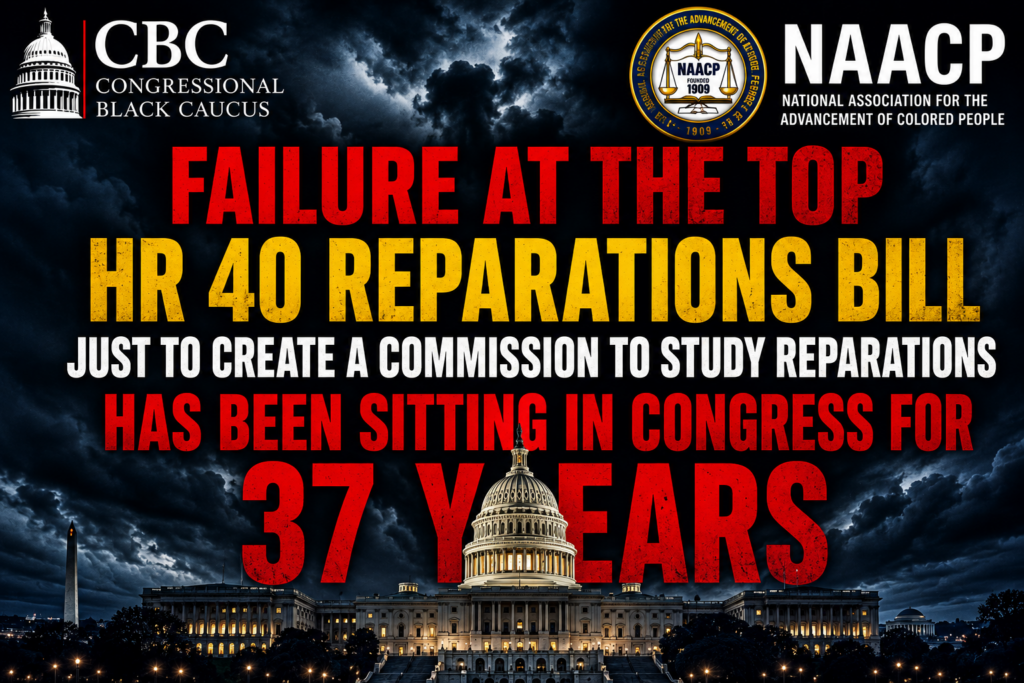
Consider HR 40. Regardless of one’s position on reparations, the legislation was first introduced by Congressman John Conyers in 1989. It was not a reparations payment bill. It was a bill to establish a commission to study reparations. More than three decades later, it still has not become law.
Again, the point is not whether one supports or opposes reparations. The point is that one of the most visible priorities in Black politics has remained unresolved for nearly four decades, despite the existence of the Congressional Black Caucus, decades of NAACP advocacy, and generations of Black voter support.
That reality should force a difficult but necessary conversation.
Real political power is not measured by speeches, media appearances, social media campaigns, or symbolic victories.
Real political power improves schools.
Real political power creates jobs.
Real political power increases homeownership.
Real political power strengthens families.
Real political power creates safer communities.
Real political power expands business ownership.
Real political power builds wealth.
The deeper concern raised by this campaign is that it reflects a political culture that increasingly confuses symbolism with achievement. Asking young athletes to sacrifice opportunities may generate headlines and media attention, but neither headlines nor attention should be mistaken for progress.
Leadership should create opportunities for children, not ask them to pay for the failures of adults.
If after decades of political influence, legislative representation, legal advocacy, and institutional power, the best solution being offered by the NAACP and the Congressional Black Caucus is another sacrifice from the next generation, then Black America deserves an honest conversation about what political power has actually produced.
Let me say at the outset that I am not someone who reflexively opposes new revenue. New York has real needs. The subway needs investment. Schools in low-income districts need resources. I have supported targeted tax increases before and I will again when the situation warrants.
What I cannot support is the latest proposal from some lawmakers in New York and Albany to tax small businesses twice on the same dollar.
Buried inside the budget proposals circulating in Albany right now is a change to how the pass-through entity tax (PTET) credit works. If you haven’t heard of it, you’re not alone. The PTET credit is not the kind of policy that generates many constituent phone calls. But it is the kind of policy that could get snuck into a budget without anyone quite realizing the consequences.
Here is what it actually means. When the Trump administration passed the 2017 Tax Cuts and Jobs Act, it capped the deduction that residents of high-tax states could take for their state and local tax payments. For New Yorkers — people who already pay some of the highest state and city taxes in the country — this was a gut punch. Democrats, myself included, spent years pointing out that this was an unfair policy that disproportionately hurt states like ours. We were right. We fought it. We eventually made progress on restoring those deductions.
Now the Senate budget proposes to reduce the PTET credit to ninety cents for every dollar paid. The Assembly is considering changes to New York City’s version. The end result is structurally identical to what we spent years condemning: income that has already been taxed at the entity level gets taxed again at the personal level, because the credit that was supposed to offset it has been quietly shaved down.
The proponents of this change will tell you it’s progressive, that it’s all about hedge fund managers. What they won’t tell you is that this tax increase will also hit the pediatric dentist in Binghamton, the physical therapy practice in Bay Ridge, the small accounting firm in Syracuse that does the taxes for half the businesses on its block. These are not hedge fund operators. They are the people who quietly serve their communities.
For a practice earning a few million dollars in gross revenue — which sounds like a lot until you account for staff salaries, equipment, insurance, and overhead — a 10 percent reduction in the PTET credit translates to tens of thousands of dollars in additional annual tax liability. That money comes out of somewhere. It comes out of hiring. It comes out of equipment upgrades. It comes out of the salary line for the front desk worker who grew up in the same neighborhood as the patients they serve.
We have a genuine budget challenge in New York. The Governor’s office is under real pressure, particularly from New York City, which is facing its own fiscal difficulties. I understand the impulse to find revenue wherever it can be found. But the right answer is not to reach into the pockets of small business owners through a mechanism obscure enough that most of them won’t understand what happened until they get their tax bills.
I believe the government can be a force for fairness. Taxing people twice on the same dollar is not fair, and dressing it up in technical language does not make it so. When the Trump administration structured the SALT cap the way it did in 2017, we called it what it was: a politically-driven policy designed to squeeze taxpayers in Democratic-leaning states. We organized around it. We made it a cause. Some lawmakers built entire legislative careers on reversing it.
So what do we say now to the New Yorker who asks why we’re doing the same thing ourselves — not because a hostile federal government forced our hand, but because we chose to? There is no clean answer to that question. If the principle was worth fighting for then, it is worth honoring now. Albany can do better than this