Senator also extends thanks to Guard members for their work in NYS correctionalfacilities
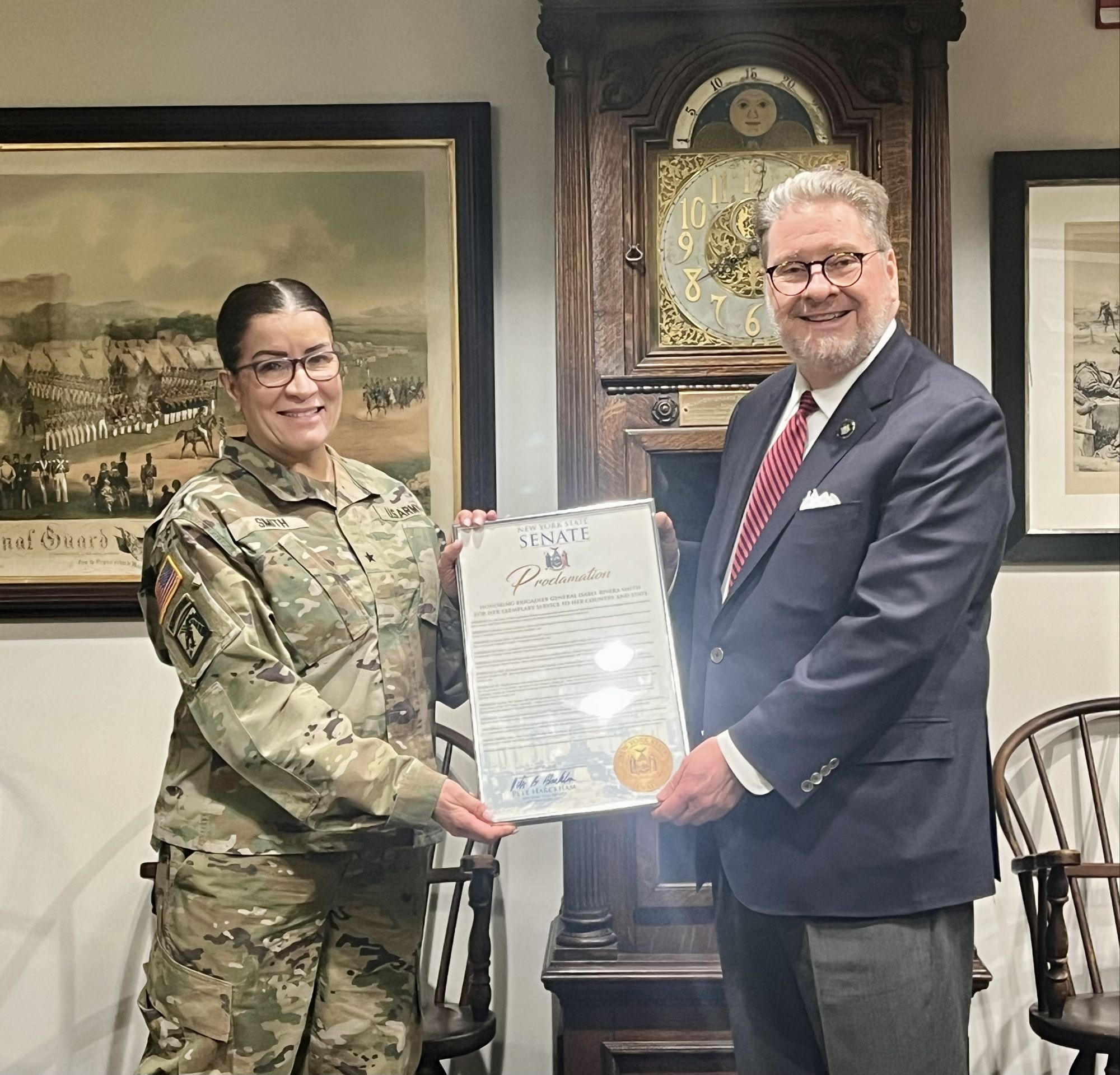
New York State Senator Pete Harckham presented a special Senate Proclamation and medal today to Brigadier General Isabel Rivera Smith, the first woman and Latina commander of the New York Army National Guard’s 53rd Troop Command, based here at the Camp Smith Training Site here in Cortlandt, NY.
“I congratulate General Smith for assuming command of this important unit in the Army National Guard and being a trailblazer as the first woman and Latina to head the 53rd Troop Command,” Harckham said. “I also want to thank Guard members from Camp Smith who are assisting the New York State Department of Corrections as it faces current challenges in upstate correctional facilities. The sacrifice and commitment of these men and women show how invaluable they are to all New Yorkers.”
Appointed in October 2024 to replace Major General Jack James at Camp Smith, Brig. Gen. Smith was the first Latina and woman to lead one of the two major commands of the New York Army National Guard.
“As commander of the 53rd Troop Command, it is an honor to be recognized by Senator Harckham for all the hard work that our soldiers do to support not only the National Guard, but also the many local communities that we assist,” said Smith, an Iraq War veteran.
Sen. Pete Harckham with Brig. Gen. Isabel Rivera Smith and members of the Camp Smith Command Staff. Credit: Office of State Sen. Pete Harckham / James Persons.
The 53rd Troop Command is one of the New York Guard’s two general officer commands, with troops located across the state in combat support and combat service support roles. The Guard was recently deployed to assist workers at state correctional facilities with tasks including distributing meals and medication to incarcerated individuals and helping maintain general order and wellness.
Brig. Gen. Smith also serves as the Director of Joint Staff for the New York National Guard, overseeing joint Army and Air Guard operations, which include responses to state emergencies. She will continue in that role while serving as the 53rd Troop Command leader.
Born in Lorain, OH, to Puerto Rican parents, Smith enlisted in the active Army in October 1985 as a Motor Transport Operator. Her command assignments and operational deployments include commander of the Headquarters detachment of the 53d Troop Command, commander of the 369th Special Troops Battalion, and deputy team chief at Iraq Police National Headquarters in support of Operation Iraqi Freedom in 2010.
Brig. Gen. Smith’s awards include the Legion of Merit, the Bronze Star Medal, the Meritorious Service Medal, the Army Commendation Medal, the Army Achievement Medal, the Army Good Conduct Medal, the Iraq Campaign Medal, the Global War on Terrorism Service Medal, and the Humanitarian Service Medal. She is also the recipient of the 2017 Latina Style Military Service Award.
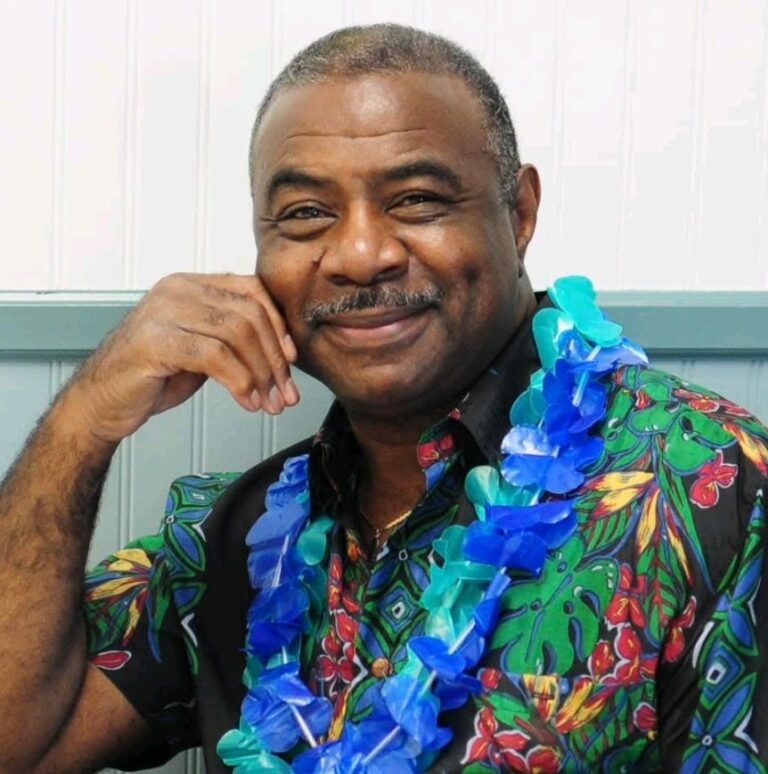
James Roger Rice, a devoted husband, father, grandfather, attorney, and man of deep faith, went to be with the Lord on February 16, 2025, at the age of 75.
Born on January 1, 1950, in Buffalo, NY, to James Albert Rice and Frankie Jones Rice, Roger was raised in a home shaped by Christian values, instilled in him by his mother. At the age of 13, he was baptized at Faith Baptist Church by Rev. Rosco Mitchell, a moment that solidified his lifelong faith in God. Before he left for college, though his mother had no financial wealth to offer, she gave him Psalm 120:1 “In my distress, I cried to the Lord, and He heard me.” That scripture became his anchor through every season of his life.
Roger was a standout student-athlete at Hutchinson Technical High School in Buffalo, where he excelled on the basketball court, earning All-City honors for his skill and leadership. His talent led to a full basketball scholarship to Kings College in Wilkes-Barre, PA, where he continued to play the game with heart, discipline, and excellence—qualities that he would later carry into his career and family life. Beyond his own playing career, he became a dedicated youth basketball coach, pouring his life into his sons and other youth. For many, he was more than a coach; he was a mentor and a guiding force, helping to build lifelong friendships and lasting lessons both on and off the court.
While pursuing his Juris Doctor degree at the University of Buffalo, Roger’s life took a beautiful turn when he met Gail, the love of his life, on the very first day of law school. Their first date was nothing short of legendary—crossing borders from the American to the Canadian side of Niagara Falls. That fateful meeting led to a lifetime of love, partnership, and purpose. They married in 1978; two sons were born of this union.
In 1982, Roger and Gail took a leap of faith together, founding their own law firm, Rice & Rice, Attorneys-at-Law. Their firm, which later included both sons, became a pillar of the community, serving countless clients with integrity, wisdom, and compassion. Upon the retirement of the founding partners in 2019, Rice & Rice closed after over 35 years of service.
Above all, Roger was a family man. He took immense pride in the achievements of his wife, children, and grandchildren, celebrating their victories and supporting them in every endeavor. His love for his family was unwavering, and his presence was a source of strength, encouragement, and wisdom.
Photos courtesy of Facebook
Roger’s faith was central to his life. After his marriage, he became a member of Shiloh Baptist Church of Tuckahoe where he was ordained as a deacon. Over the years, he also worshiped at Bethesda Baptist Church of New Rochelle, and, until the time of his passing, was a founding member of Renaissance Christian Church in Harlem. His commitment to his faith was evident in how he lived—serving his community, mentoring others, and walking in integrity.
Roger was pre-deceased by his parents Frankie and James Rice; brother Lawrence C. Brown; sister Frances Marshall; daughter-in-love, Danielle Williams Rice; and his parents-in-love, Mabel and Herman Whitaker.
He leaves behind a legacy of love and devotion, cherished by his wife, Gail Rice; his sons, Jared and Jordan Rice; his daughters-in-love, Jasmine and Jessica Rice; and his treasured grandchildren, Jocelyn, Jayden, Jameson, and Josiah Rice. He is also survived by his siblings-in-love Sandra and Glen McGhee, Quincy and Gail Brooks, Joyce and Keno Johnson, and Margo Clarke; uncles Prince Allen Whetstone and Arnold Brooks; nieces and nephews Paula and Charles Barber, Spencer and Helen Rodriguez, Luis, Alexander and Jasmine Rodriguez, Talia and Edward Faustin, and Darren and Christine Brooks. Additionally, a host of great-nieces and nephews, cousins, extended family members, friends, colleagues, the Rice & Rice family, and former clients will forever remember his kindness, wisdom, and generosity.
His impact will be felt for generations to come, and his legacy will continue through those he loved and mentored. Roger Rice lived a life well-loved and well-lived. His presence will be deeply missed, but his footprint will endure forever.
Roger Rice was a true Black Westchester Legend! Our prayers and condolences to his family and friends.
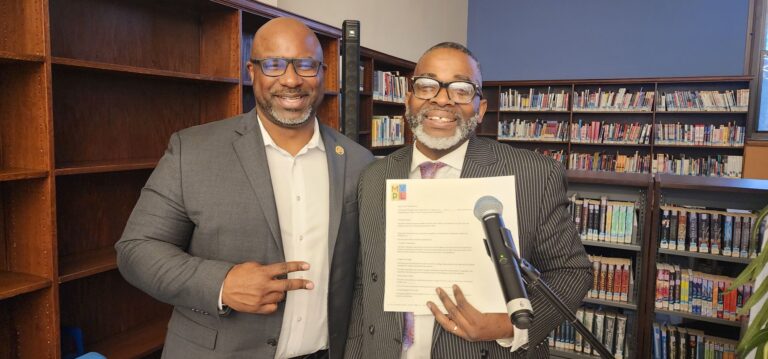
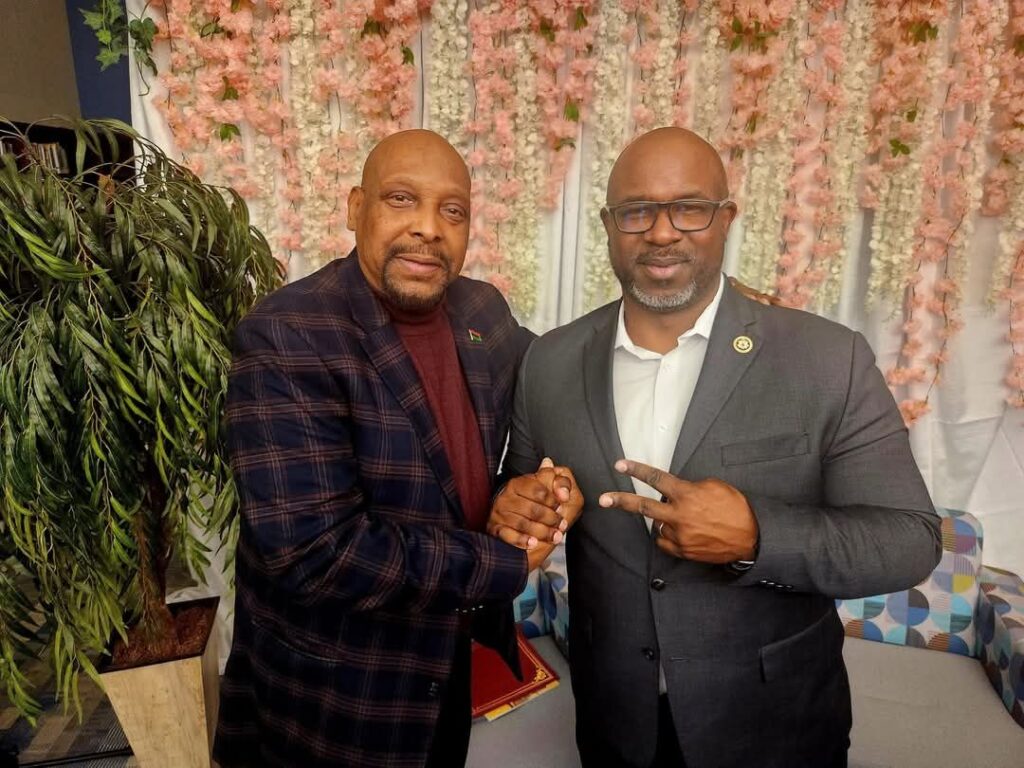
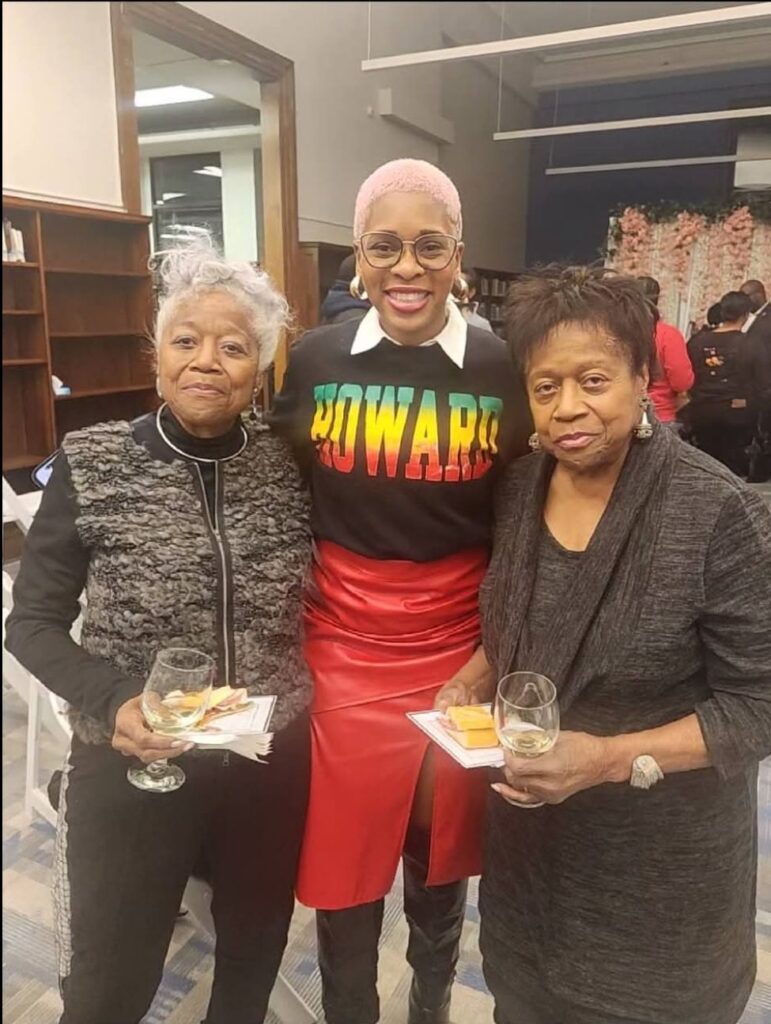
Former Congressman Jamaal Bowman, Ed.D., the first African American in history to represent New York’s 16th congressional district, in celebration of Black History Month donated his congressional papers, memorabilia, and artifacts to be memorialized at the Mount Vernon Public Library, Wednesday, February 19th.
“The Mount Vernon Public Library hosted a Black History Month event honoring Congressman Jamaal Bowman. The gathering celebrated his significant contributions to education and social justice, reflecting his dedication to uplifting marginalized communities,” MVPL Executive Library Director Timur Davis shared with Black Westchester. “Congressman Bowman, a former educator and founder of the Cornerstone Academy for Social Action, has been a staunch advocate for equitable education and systemic reform. His tenure in Congress was marked by efforts to address disparities in education and promote social justice.”
Former Congressman Bowman said he was honored and humbled to be part of history at the MVPL.
“Serving the 16th district and Mount Vernon specifically has been the honor of my life. As a lifelong educator, I hope to continue to inspire a love of scholarship and literacy in the people of Mount Vernon and beyond. I also hope to continue to celebrate our libraries as the ecosystems of learning that they are,” Bowman shared with Black Westchester.
The Mount Vernon Public Library Board of Trustees voted unanimously to accept the contributions from Congressman Bowman on Wednesday, January 15, 2025.
“The rare donation of Dr. Bowman’s Congressional Papers will no doubt elevate the value of our Library’s Special Collections. With age its value will increase; evolving as a standard reference source for historians, archivists, and storytellers alike,” MVPL Board Of Trustees President Hope Marable shared with Black Westchester.
“The event featured speeches from local leaders and community members, highlighting the importance of education and activism in the fight for equality. Attendees reflected on the progress made and the work still needed to achieve true equity,” MVPL Director Davis shared. “This commemoration underscored the enduring impact of Congressman Bowman’s work and the ongoing commitment of the Mount Vernon community to honor Black history and advocate for social change.”
“Much love and respect to our beloved brother, Congressman Jamaal Bowman, who dedicated his congressional papers to Mount Vernon Public Library,” Greenburgh Community Activist Clifton Abrams.
Black History Month has always been a time of reflection and introspection. It is a time to take a moment, however brief, to marvel at the rich tapestry of preserved Black cultural traditions and heritage, acknowledge the extraordinary societal contributions of Black leaders and pioneers, and draw strength and inspiration from the sacrifices and achievements of celebrated leaders and legendary ancestors.
More than merely honoring ancestral achievements, celebrating Black History Month honors the tangible and intangible contributions of Black resilience, including collective self-awareness, collective self-confidence, and collective self-agency skills.
Knowing one’s history contributes to one’s mental well-being because it validates one’s heritage, thereby increasing cultural pride, affirming self-identity, and bolstering self-worth- especially important when facing microaggressions and negative stereotypes.
Understanding how racially motivated adversity and atrocities gave birth to undeniable tenacity and triumphs within the context of one’s ancestral history provides a historical roadmap that informs one’s critical thinking, strategic decision-making, and adaptive problem-solving in the face of current challenges.
The Dangers of Losing Historic Connections
Increasingly, though, opportunities to learn and draw strength from Black resilience within the context of Black history are becoming less accessible. Ongoing efforts across many states to eliminate the Black historical narrative from the curricula within educational institutions continue to gain momentum.
The result? There is now limited access to books written by black authors, elimination of discussions about racial history, and a downplaying of the significance of slavery. Questions about the relevance of Black History Month and other such celebrations threaten to erase the existence and acknowledgment of Black history—and its associated lessons in moral courage, unflinching faith, and relentless resilience.
From a psychological perspective, the elimination of intergenerational examples of historical resilience within Black culture can negatively affect the development of key individual resiliency traits, such as self-understanding and self-regulation. Black resiliency necessitates being able to place (and understand) oneself in a broader historical context. It also draws strength and guidance from proven self-control strategies used by one’s ancestors to safeguard their mental, emotional, and overall well-being in the face of systemic and existential challenges.
As opportunities to explore, study, and draw inspiration from the cultural practices, shared experiences, and ancestral wisdom embedded in Black history continue to shrink, we, as a community, and a country, are challenged to use this Black History Month to not only celebrate but concentrate on the protection and preservation of Black history.
Why fight to preserve Black History?
Because Black history is inextricably tied to the promotion and perpetuation of Black resilience, which historically has always been tied to individual and collective survival. Together, they serve as twin pillars withstanding the prevailing winds of historical erasure that threaten to eradicate societal understanding of the unique and invaluable contributions of Black culture- a critical aspect of American heritage. Erasing Black history means separating individuals from the empowering knowledge of their struggles, triumphs, and contributions; disaffirming their individual and collective identities; increasing their vulnerability to internalized negative self-perceptions; and removing opportunities for intergenerational coping and healing.
Weakening the pillar of Black history ultimately weakens the pillar of Black resilience, which, unlike other types of individually grit-based resilience, is a collective experience. Black resilience is shaped by history, in particular, the legacy of slavery, segregation, and racial injustice. Unlike traditional resilience models, it incorporates cultural pride and draws heavily from the lessons and legacies of ancestral wisdom. It is committed to the transmission of historical intergenerational strength through multiple avenues, including but not limited to storytelling, family networks, rituals, community, advocacy faith-based practices, social movements, art, music (gospel, hip hop, jazz), mentorship, sports, education, grassroots and organized activities, allyship and ritual celebrations (i.e., Juneteenth).
Ultimately, the pillars of Black history and Black resilience are foundational to American history and to society at large. Erasing them doesn’t just weaken a people: it weakens society by diminishing collective knowledge, respect, appreciation, equity and empathy and progress. It also makes us less capable of addressing ongoing challenges.
Wielding the Shield and the Sword: Fighting for the Future of Black History
Moving forward will require more than hope and optimism. It will take intention, determination, and sustained action to make sure that Black history and Black resilience are not just highlighted in February but fully integrated into everyday life. From reclaiming narratives to supporting independently owned businesses, to legal advocacy, to grassroots activities, to political activism, mentorship, and faith-based initiatives, we (meaning everyone–not just Black people) must be individually and collectively committed to the protection and preservation of Black history and the promotion of Black resilience.
Ultimately, no act of support for Black history or Black culture is too small. Even tiny, seemingly insignificant acts of kindness, caring, and compassion can have a profound impact by planting seeds of faith and hope in the harsh and unforgiving soil of racism and anti-Blackness. As history has often shown, repeated micro-actions by committed individuals standing together, regardless of race, can create a ripple effect that protects the promise of a more equitable and inclusive future—a promise that Black resilience has preserved and propagated through centuries of opposition and persecution.
For anyone committed to the ongoing fight for preservation and protection, it’s worth remembering that Black resilience, though collective, starts with the individual experience. Fighting to preserve it, promises to be a grueling, unforgiving, relentless, and potentially all-consuming battle. Self-care and self-preservation are critical internal resiliencies that should not be sacrificed as the battle escalates into a war.
Why? Because it’s hard to win a battle if the soldiers are worn down or dead.
Maya Angelou’s timeless words- “I can be changed by what happens to me, but I refuse to be reduced by it”—remind us that Black resilience is both a shield and a sword, capable of accepting a painful reality yet refusing to succumb to it. Black history must continue to serve as the irreducible reservoir of knowledge, determination, faith, and pride from which today’s leaders can draw strength, courage, and wisdom to continue the work of ensuring that historical sacrifices, struggles, and achievements are not erased as the battle for a more equitable and inclusive future intensifies.
Dr. Derek H. Suite is a board-certified high-performance psychiatrist and nationally recognized physician-leader. With over 25 years of experience, Dr. Suite currently serves as the lead sports psychiatric consultant to four iconic sports franchises—the New York Knicks, New York Jets, New York Rangers, and formerly the New York Liberty. He is also the Lead Restorative Practices Clinician Consultant for Major League Soccer (MLS), providing expert critical incident guidance and restorative interventions. Dr. Suite’s influence extends beyond sports, having provided professional evaluations and strategic mental wellness program consultation to mission-critical leaders within local, state, and federal agencies, including the United States Congress, the U.S. Department of the Treasury, and the United States Army. His success lies in seamlessly integrating evidence-based interventions with leadership psychology, allowing organizations to excel under high-stakes conditions. As the founder and CEO of Full Circle Confidential, a nationally recognized resource for sports mental performance and executive leadership coaching, Dr. Suite oversees a team of highly trained professionals providing confidential peak performance consultation to elite athletes, C-suite executives, and leaders in mission-critical roles. His work has been featured in Forbes Magazine, The New York Times, The Psychiatric Times, and Black Enterprise Magazine, underscoring his national reputation as a leader in the field of mental health and performance psychology. Dr. Suite’s scholarship includes published articles on healthcare disparities, intimate partner violence, resilience, and trauma, showcasing his ability to translate clinical research into practical, real-world solutions. His multidimensional coaching philosophy is rooted in integrating medical science with leadership strategy to address underlying conditions that impact performance, including sleep, mood & anxiety, addictions, cultural context, and stress-related issues
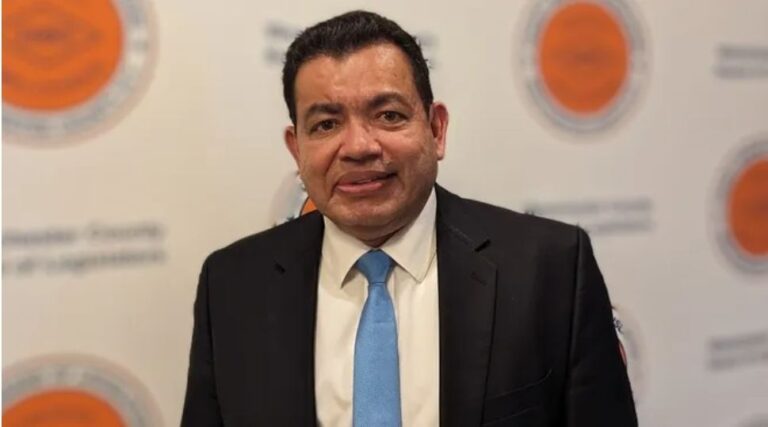
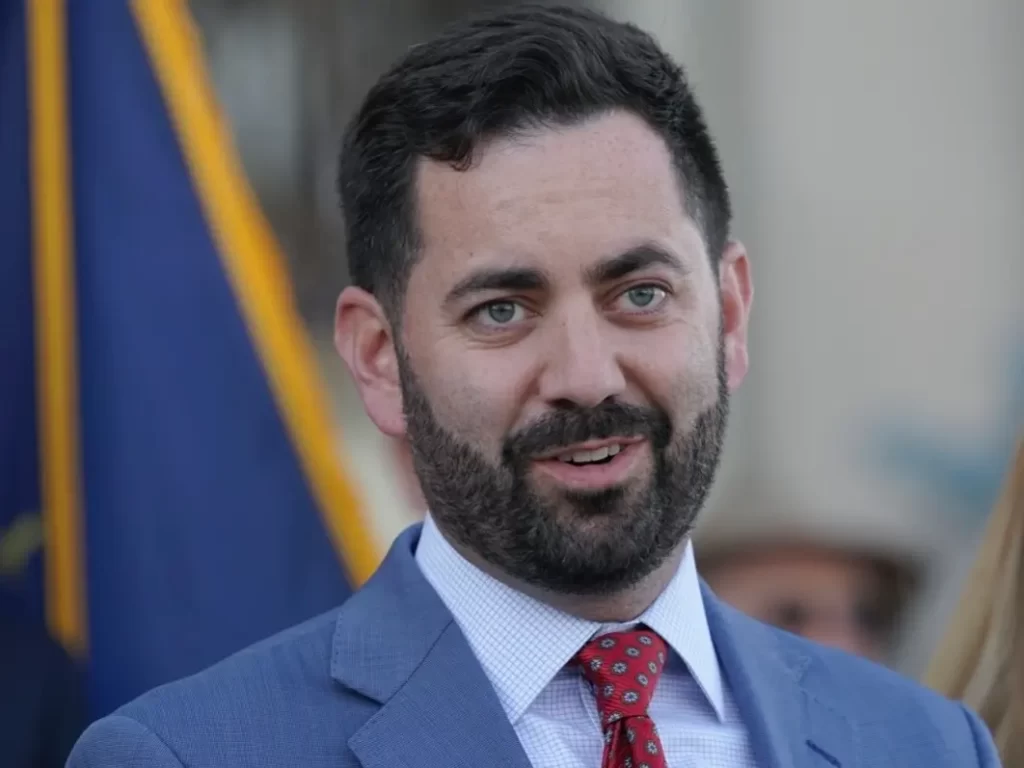
After asking a Latino lawmaker, Jose Alvarado if he is a citizen during a public hearing, U.S. Congressman Mike Lawler is receiving backlash and criticism. Local activists said it is an illustration of the type of profiling Latinos are seeing as a result of the Trump administration’s immigration crackdown. Alvarado, who is a U.S. citizen, and the Vice Chair of the Westchester County Board of Legislators says Lawler’s response left him appalled and some other members of the board shocked.
Alvarado, who represents the 17th District, which covers Southwest Yonkers stated, “To be honest, my jaw just fell; I didn’t know how to react.”
The New York Working Families released the following statement on what they call Mike Lawler’s “shocking comments at the County Board Meeting.”
In response to Congressman Lawler’s racist and xenophobic comments questioning Legislator Jose Alvarado’s citizenship, NYWFP Westchester-Putnam Chairs Jennifer Cabrera and Noah Gitta released the following statement:
“We strongly condemn Congressman Mike Lawler’s insensitive and shocking comments in the Westchester County Board of Legislators meeting. Clearly, the Congressman believes that the status of Latinos is always under question. We doubt that Congressman Lawler would’ve questioned the immigration status of legislators who are not Hispanic, including the two County Legislators who immigrated from Europe. One must be a US citizen to hold public office in Westchester, something that Congressman Lawler should know.
“More concerning than his comments to Legislator Alvarado is Lawler’s support for the Trump Regime’s mass deportation agenda. Immigrant families in Congressional District 17 and throughout the country are living in fear, regardless of their immigration status. We believe that everyone residing in our country must be treated with respect and dignity.”
“What is his right to question another duly elected official, a high-ranking duly elected official in Westchester County about his citizenship status,” says Alvarado.
Lawler addressed his comments a short time later during the meeting, “Yes, I understand to hold office, you have to be a citizen,” Lawler said.
Honduras is where Alvarado was born. He told News 12 that he has since experienced the American dream. On the Westchester County Board of Legislators, he is the first Latino Majority Leader. Though not for himself, he wants Lawler to apologize.
“The community needs to hear an apology from him,” Alvarado says.
Yonkers City Councilmember Corazon Pineda-Isaac also has organized in conjunction with Hispanic Democrats of Westchester, elected officials, community leaders, and advocates, a rally at the Westchester County Office, Thursday morning at the Westchester County Office, to denounce recent racist and xenophobic remarks made by Rep. Mike Lawler, who questioned the citizenship status of a Latino official.
“The comments, which have sparked outrage among Latino communities, reflect a dangerous and discriminatory attitude toward immigrants and people of color,” Pineda-Issac shared.
The Democratic Caucus of the Westchester County Board of Legislators also released the following statement:
“Rep. Lawler’s actions are deeply disrespectful to the Vice Chairman and an open affront to Latinos and all people of color in Westchester County and beyond. Congressman Lawler should know that all elected officials in this state, including those in Westchester County, must be U.S. citizens to hold office. We stand firmly by our colleague, José Alvarado and demand a full and immediate apology.”
100+ Constituents Rally in Bitter Cold, Call on Rep. Lawler to Protect Public Schools
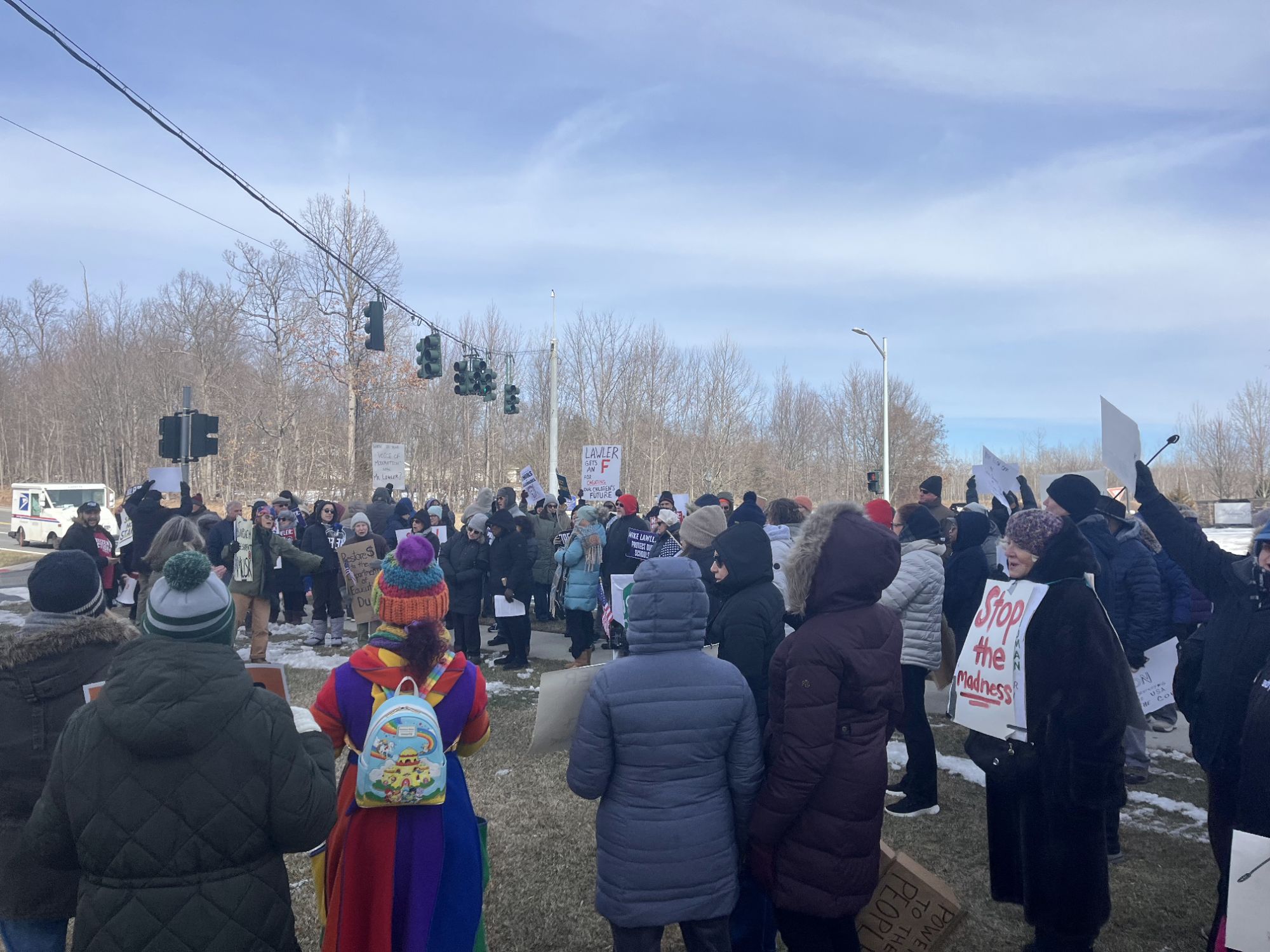
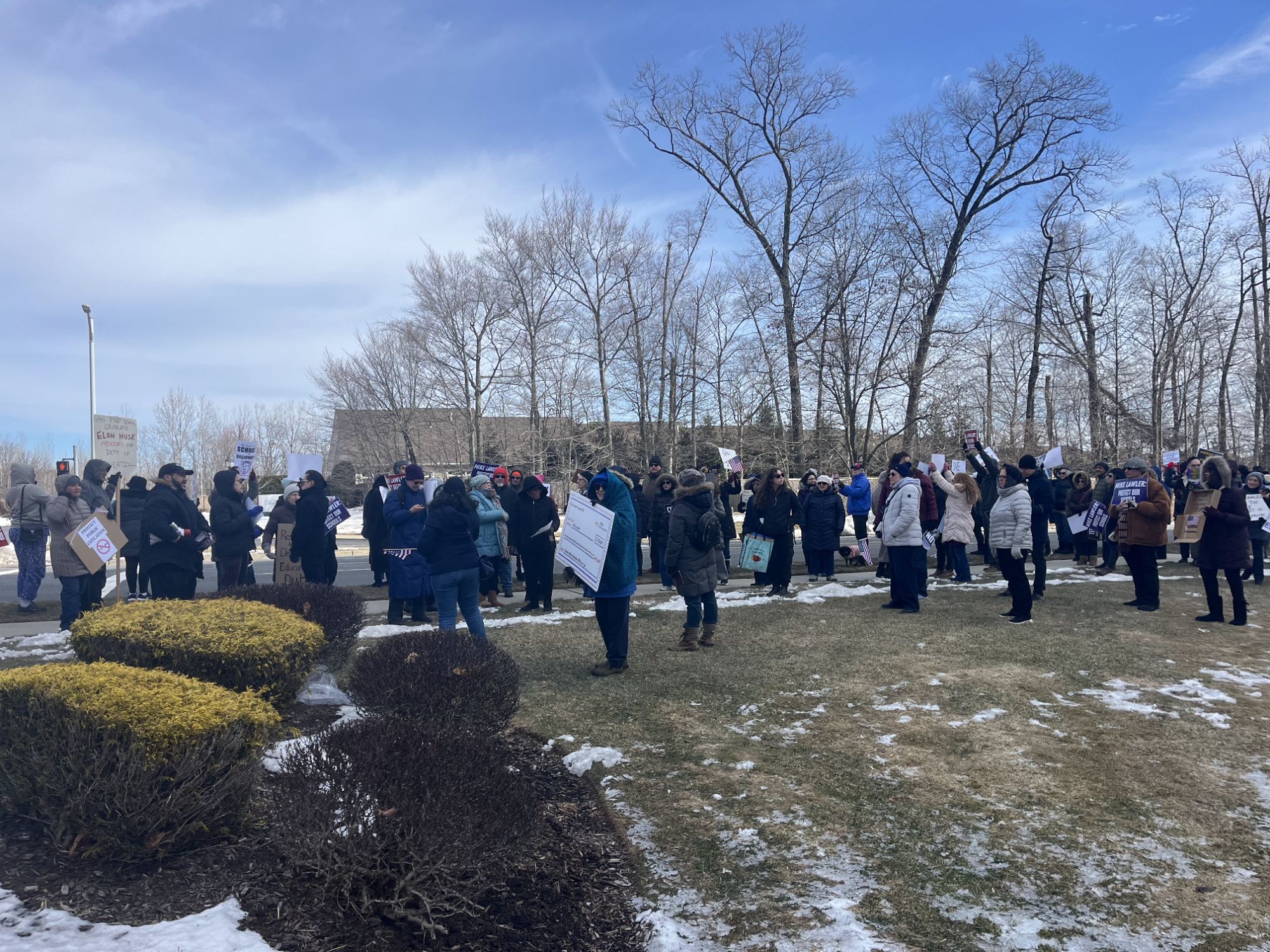
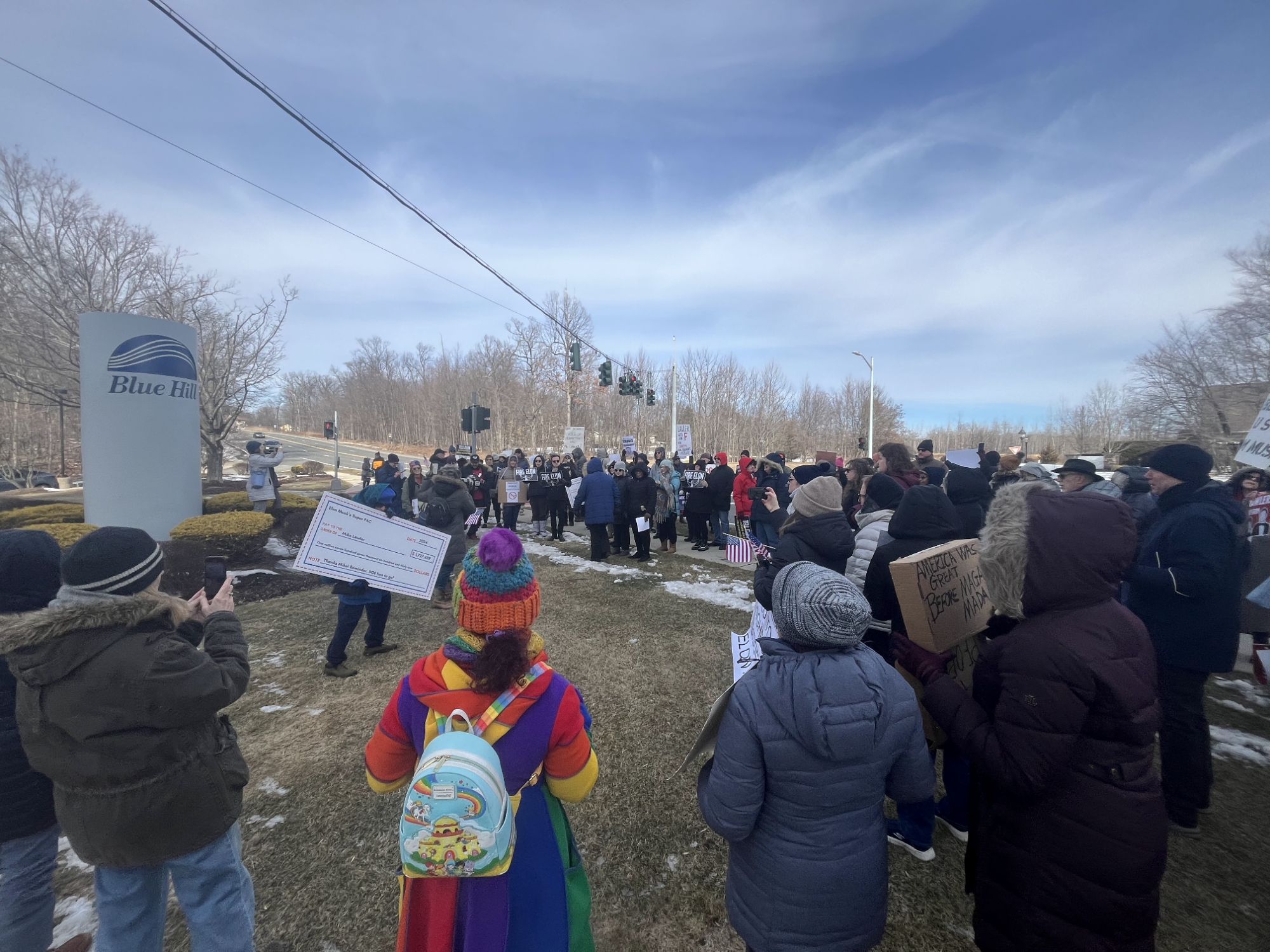
On Wednesday, February 19th, more than 100 constituents from the NY-17 Congressional District, comprising parents, teachers, students, education advocates, and others, convened outside Rep. Mike Lawler’s Pearl River Office located at One Blue Hill Plaza, to protest the Trump administration’s proposal to eliminate the Department of Education.
On Monday, the Department of Government Efficiency (DOGE) cut $370 million in funding for diversity, equity, and inclusion (DEI) at the Department of Education. Musk said on Twitter that his operation had revoked 70 DEI training grants within the department.DOGE has cut approximately $1 billion in funding to the Department of Education, with the majority of the money going to the Institute of Education Sciences (IES), which researches to improve education.
The Working Families Party organized the rally that started at 12:30 pm, which focused on cuts to the Department of Education. President Trump proposed dissolving the department while campaigning in 2024, and as evidenced by his efforts to dissolve USAID, he is not opposed to completely scrapping long-standing federal programs. Members of the New York Working Families Party, Citizen Action NY, Community Voices Heard, VOCAL-NY, and other community groups were present, speakers included: Carole Anderson – Former East Ramapo school board member, Jennifer Cabrera – Westchester-Putnam Working Families Party Chair, Isaiah Fenichel – Citizen Action Hudson Valley Organizer, Melita Corselli – North Salem Public School parent.
“I was born into a working-class family. Education combined with years of hard work helped us to reach the middle class,” said Jennifer Cabrera, parent and chair of the Westchester-Putnam chapter of the New York Working Families Party. “And now Elon Musk and Donald Trump want to deny families like mine the opportunity to succeed. They want to defund our public schools, taking resources away from our kids and communities as part of their plot to ransack our government and sell it for parts. We’re here to tell [Lawler] that he may be afraid of Donald Trump or of Elon Musk, but the people he should be afraid of are us, his constituents because we are not going to allow all of this to happen and re-elect him.”
“Our children deserve an education that meets their diverse needs and gives them every chance to thrive. These children are not numbers on a paper or products of a zip code; they have real faces,” said Melita Corselli, a North Salem public school parent whose children rely on federal education funding for special needs. “They are the kids who wave at you in the supermarket or whose laughter you hear at the park. They are our future, and it’s our responsibility to protect them, no matter where, how, or to whom they were born.”
Background provided by the 100+ NY-17 Constituents
Abolishing the Department of Education would cut K-12 education by 8%, mainly from programs supporting low-income students and students with special needs.
Lawler has also expressed strong support for ending New York City’s status as a Sanctuary City and eliminating congestion pricing for those driving into the city, both high-priority items on President Trump’s wish list. Amidst the proliferation of rumors that Congressman Lawler will run for New York Governor in 2026, the congressional representative for NY-17 must navigate a delicate balance between advancing the Republican party’s agenda and mitigating the discontent of a fragmented electorate.
Mount Vernon High School Parent Teacher Association President Erica Peterson contacted Black Westchester to officially announce her intentions to run in the upcoming election for Mount Vernon City School District Trustee.
“Hello, Black Westchester readers! My name is Erica Peterson, and I am excited to announce my candidacy for the Mount Vernon City School District Board of Trustees. As our district reaches a critical juncture, it’s time for positive and sustainable change that ensures the integrity and future of our schools,” Peterson shares.
“I have dedicated my life to supporting the children and families of Mount Vernon, and I’m committed to ensuring that our district is guided by fiscal transparency and strong community involvement. It’s vital that the voices of our residents and homeowners are heard in the decision-making process, and I will prioritize their input every step of the way.”
As a candidate, she shares that she believes in:
Accountability: I will be a strong advocate for accountability within the Board. Every decision made should be transparent, well-thought-out, and in the best interest of our children, teachers, and taxpayers.
Engagement: Our families deserve to be encouraged to engage with the schools. I will work to create an environment where parents, students, and educators collaborate more effectively to help our students thrive.
Equitable Education: Every scholar in Mount Vernon deserves access to a high-quality education that includes enrichment opportunities and prepares them for the future.
Support for Teachers: Our educators need a strong contract that not only retains our current teachers but also attracts highly qualified new educators to the district.
Transparency: Our taxpayers deserve transparency. Every decision made by the Board will be open and clear, especially when it comes to the handling of district finances.
“I promise to work tirelessly for our families and taxpayers to ensure that our schools receive the resources they deserve. I am no stranger to advocating for what is best for our district, and I am ready to take this fight to the next level. As a proud graduate of Mount Vernon High School and the mother of three children who have and currently attend our schools, I am deeply invested in the future of our district. I have served as the PTA President for Mount Vernon High School, Secretary for the Mount Vernon Council of PTAs, a youth coach with the Mount Vernon Junior Knights, and as a Girl Scout Troop Co-Leader. These roles have given me an up-close look at the strengths and challenges of our district, and I am ready to help move us forward. We can no longer stand by as our district faces challenges. Now is the time to vote for someone who will fight for the success of our children, teachers, and community. Together, we can bring Mount Vernon schools back to the top!”
The election is Tuesday, May 20, 2025, Peterson is vying for one of the three seats that are up this year, to “make a change for the better.” For more on her candidacy or to contact her, you can reach her at Peterson4MVSchoolBoard@gmail.com
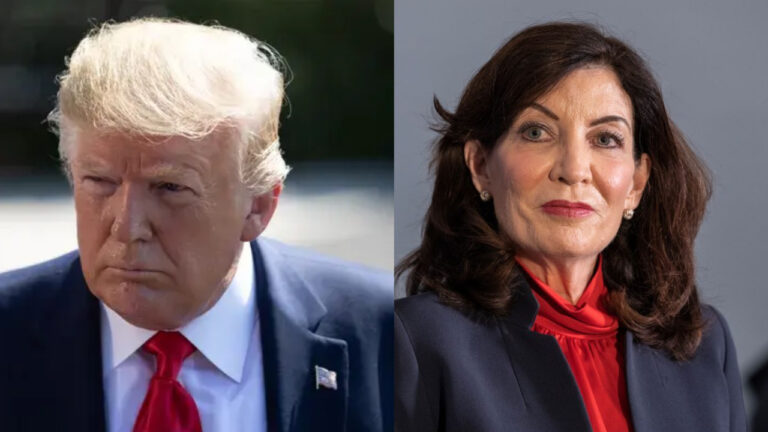
In a dramatic move, President Donald Trump has rescinded federal approval for New York City’s congestion pricing program, effectively terminating the initiative that faced significant public opposition. The decision, communicated through a letter from U.S. Secretary of Transportation Sean Duffy, was celebrated by many commuters and business owners but met with resistance from New York Governor Kathy Hochul and MTA officials.
“New York hasn’t labored under a king in over 250 years, and we sure as hell are not going to start now,” Hochul declared, referencing a social media post by Trump. The governor framed the decision as an overreach by Washington, despite growing dissatisfaction with the tolling plan among residents and businesses. “This is an attack on our sovereign identity, our independence from Washington,” she insisted.
The Failure of Congestion Pricing
The congestion pricing program, which charged vehicles entering Manhattan’s central business district, quickly became one of the most unpopular policies in recent memory. Critics contended that the tolls placed an unfair burden on working-class commuters while providing minimal traffic relief. Polls indicated widespread opposition, with a Siena College survey revealing that 64% of New Yorkers opposed the plan.
Despite MTA Chair Janno Lieber’s claims that the program led to a 9% reduction in traffic, concerns persisted regarding its economic impact. Business owners reported a decline in customer foot traffic, and many New Yorkers viewed the initiative as another tax rather than a genuine improvement to public transit. “The people who live here, who are real New Yorkers, they’re the ones I have to listen to,” Hochul stated in defense of the program, although surveys indicated otherwise.
Congressman Mike Lawler also weighed in on the issue on MSNBC, calling the congestion pricing plan a “scam.” While he acknowledged the need for infrastructure upgrades, he criticized Governor Hochul for burdening everyday New Yorkers with additional costs. “The fact is, Governor Hochul is charging the average New Yorker $2,500 more to drive into the city to go to work on an annual basis,” Lawler said. “Meanwhile, she is spending billions of dollars in taxpayer money on free housing, clothing, food, education, and health care for illegal immigrants.”
Lawler maintained that while improvements are necessary, the MTA needs a complete overhaul instead of accumulating more debt. He described the agency as “the worst-run authority in the country,” arguing that congestion pricing was merely a way to mask longstanding financial mismanagement.
Within minutes of receiving the federal letter, the MTA filed a lawsuit to reinstate congestion pricing. “We are keeping the cameras on. Lights, cameras, action. They’re staying on,” Hochul insisted. However, opposition remains strong, with many New Yorkers relieved by Trump’s intervention.
MTA officials argued that congestion pricing was essential for funding infrastructure improvements, but opponents pointed out that the agency had a history of mismanaging funds and failing to deliver significant transit upgrades. “The next time you’re stuck in traffic, the next time your train is delayed, the next time you’re in a flooded station, remember this moment,” Lieber stated. Critics responded by highlighting that the MTA’s budget issues predate congestion pricing and that new tolls were not a guaranteed solution.
A Political Showdown
Hochul suggested that Trump’s decision was politically motivated, labeling it part of his “revenge tour” against New York. However, Trump’s action aligns with the sentiments of many New Yorkers who perceived congestion pricing as an unfair and costly burden. “I thought the Republican Party supported local control,” Hochul remarked, although many viewed federal intervention as essential to mitigate economic damage.
When asked whether this marks a shift in her approach to the Trump administration, Hochul responded, “I think the bear has been poked.” However, with broad public disapproval of congestion pricing, political momentum appears to be on Trump’s side.
What’s Next?
Legal battles over the program’s future are expected to be drawn out, but congestion pricing has been halted for now. “We have no contingency plan,” Lieber admitted, emphasizing confidence in a legal victory. Yet, with public sentiment largely against the tolls, the program’s future remains uncertain.
Currently, New Yorkers who opposed the pricing plan are celebrating what they perceive as a victory for fairness and affordability. As Hochul and the MTA work to reinstate the policy, they may encounter a tough challenge from a population that has mostly rejected the plan from the beginning.
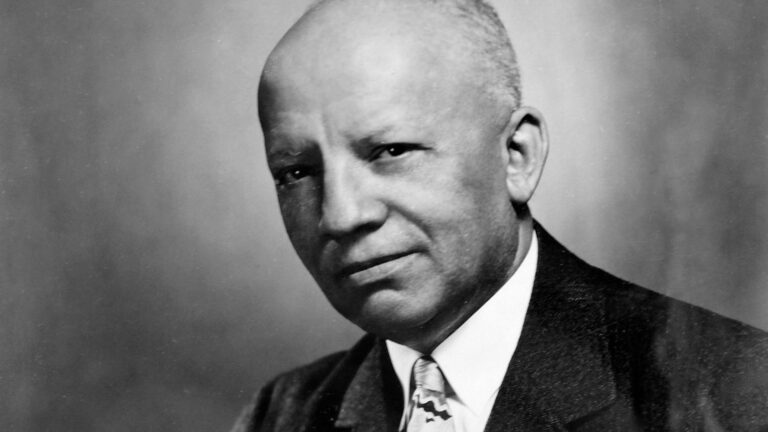
In 1933, Carter G. Woodson published The Mis-Education of the Negro, a powerful critique of an education system that conditioned Black people to serve others rather than build for themselves. Today, his words resonate more than ever as discussions about dismantling the U.S. Department of Education resurface. While some fear the implications for marginalized communities, Woodson would likely perceive this as an opportunity—an overdue call for Black Americans to seize control of their education.
Education as a Tool for Liberation, Not Dependency
Woodson warned that the American education system was not designed to empower Black people but rather to make them “seek entrance into a world that does not want them.” He lamented that educated Black individuals, rather than using their knowledge to uplift their communities, often became unwitting enforcers of white supremacy—trained to think of themselves as inferior and to perpetuate systems that keep Black people dependent.
He famously wrote: “When you control a man’s thinking, you don’t have to worry about his actions… If there’s no backdoor, he will create one for his own benefit.” The Black community has long depended on an education system that was never intended to serve its best interests. The question now is: Why continue to do so?
A System That Has Failed Black Americans
For decades, Black students have encountered systemic obstacles in the public education system—underfunded schools, biased curricula, and policies that criminalize rather than support them. The school-to-prison pipeline disproportionately impacts Black youth, while Black history is frequently whitewashed or entirely omitted.
If the federal education system is weakened or dismantled, Black Americans must recognize the moment for what it is: not merely a challenge but also an opportunity. It is time to establish Black-owned and community-controlled educational institutions that provide more than just compliance—they should teach self-sufficiency, financial literacy, entrepreneurship, and Black history through an empowerment lens.
Instead of relying on a flawed system, Woodson’s teachings advocate for direct action in education. Supporting Black-owned schools and institutions is vital. Historically Black colleges and universities (HBCUs), charter schools, and homeschooling networks deserve full community backing. If the government won’t invest in our children’s future, we must take the lead. Emphasizing trade skills and entrepreneurship is equally important. Rather than solely advocating for traditional four-year college degrees, Black youth should be provided with practical skills in business, technology, and skilled trades that promote economic independence.
We have missed the mark by failing to teach vocational skills to Black youth in our high schools. These skills are not just a means to secure employment, but rather a way to establish institutions instead of simply working for white-owned businesses. The lack of vocational education has left generations unprepared to build and sustain their economic foundations. By reintroducing and emphasizing skilled trades, we can empower young Black individuals to become entrepreneurs, craftsmen, and industry leaders who create wealth and job opportunities within their communities.
It is equally important to ensure that Black communities play an active role in selecting school board trustees who have a vision for uplifting Black youth, rather than perpetuating cycles of dependency. Too often, we become part of the problem by continuing to view education through a slave-minded lens, which does a greater disservice to our community. Meanwhile, we participate in superficial networking events that feature wine and cheese. We must demand leadership that prioritizes empowerment over photo opportunities and is dedicated to fostering self-sufficiency in Black education.
Reclaiming Black history and cultural education is vital. The mainstream curriculum erases or distorts Black history, and Black-run educational initiatives must center our achievements and resilience. Developing community-led educational models is another crucial step. Online learning, mentorship programs, and grassroots education movements can fill the gaps left by failing public schools. Encouraging political and economic literacy is equally important. Understanding how wealth and power function is crucial. Teaching Black students about real estate, investing, cooperative economics, and political advocacy is essential for long-term empowerment.
If the Department of Education is dismantled or weakened, the government will no longer be a crutch—nor an excuse. Black Americans must seize this moment to redefine education on their terms. The shift away from a federally controlled education system means we must rebuild from within, ensuring that future generations are empowered and employable.
In a major policy shift, former President Donald Trump signed an executive order establishing the Make America Healthy Again (MAHA) Commission. With Robert F. Kennedy Jr. at the helm as Secretary of Health and Human Services, the commission is set to investigate the causes of chronic disease and declining public health in America. The initiative comes at a time when the nation faces alarming increases in cancer, autism, obesity, and autoimmune disorders, issues that disproportionately affect Black communities.
Trump, in announcing the commission, emphasized that Kennedy’s appointment aligns with a shared commitment to uncovering the root causes of chronic disease, rather than simply focusing on healthcare costs and access. “Bobby is going to lead a great national mission to make America healthy again. He is a fierce advocate for the health of our children and for the values of free speech, democracy, and peace,” Trump said. Despite the United States spending more on healthcare than any other country, he pointed out that Americans are becoming sicker, with chronic illnesses on the rise. “There’s something wrong. We’re going to find out what it is, and Bobby is the right person to lead this mission.”
Kennedy, in his first address as HHS Secretary, underscored the magnitude of the health crisis. He cited alarming statistics, noting that six out of ten American adults suffer from at least one chronic disease and that the U.S. has the highest cancer rate in the world. Autism rates, once affecting only one in 10,000 children, have surged to one in 36. He described how conditions like obesity and diabetes have become commonplace, saying, “These conditions were virtually unheard of when my uncle was President from 1960 to 1963, when I was a 10-year-old boy.” He further highlighted a drastic decline in male reproductive health, stating, “The sperm counts and testosterone are down about 50% in American boys, and our girls are reaching puberty six years earlier than historical generations.”
Kennedy did not shy away from placing blame on systemic issues, arguing that corporate influence, environmental toxins, and overreliance on pharmaceuticals are at the core of the problem. “Our only solution to these issues seems to be more and more pharmaceutical interventions that don’t seem to be alleviating the problem—and in many cases, appear to be worsening it.” He also stressed the need for radical transparency, emphasizing that the public must have access to unbiased scientific research in order to make informed health decisions. “No one trusts science that isn’t transparent about its research hypothesis, its raw data, or its conflicts of interest. No one trusts a government built on lies, secrets, cover-ups, and propaganda.” He made it clear that the commission will examine all possible factors contributing to chronic illness, declaring, “Nothing is going to be off limits.”
For Black Americans, the commission’s work holds profound implications. The Black community has historically suffered from medical racism, environmental injustice, and a lack of access to quality healthcare. Kennedy’s pledge to examine issues such as environmental toxins and pharmaceutical overuse could be particularly relevant. He acknowledged that American institutions have lost public trust, and part of his mission is to restore faith in scientific and medical institutions. His commitment to unbiased research could help address the deep-rooted medical mistrust among Black Americans, which stems from unethical experiments such as the Tuskegee Syphilis Study and forced sterilizations.
Environmental health is another crucial issue that could impact Black communities. Kennedy, who has long been an advocate for environmental justice, pointed out that many chemicals and pollutants in the environment have had devastating effects on public health. He emphasized that factors like pesticides, electromagnetic radiation, and microplastics must be examined, particularly as Black communities are disproportionately exposed to environmental hazards like lead-contaminated water and poor air quality.
Kennedy also addressed the overmedication of children, raising concerns about the widespread use of psychiatric drugs. He noted that 3.4 million American children are currently taking medication for ADD and ADHD, yet the numbers of diagnoses continue to rise. This is a particularly relevant issue for Black youth, who are more likely to be misdiagnosed with behavioral disorders and overprescribed psychiatric drugs at an early age. The commission’s investigation into pharmaceutical influence and medical practices could bring much-needed attention to this crisis.
Another critical area of concern is Black maternal health. Kennedy did not specifically address maternal mortality in his speech, but his broader focus on chronic disease and overmedicalization aligns with concerns about the high rates of pregnancy-related deaths among Black women, who are three times more likely to die from childbirth-related complications than white women. If the commission follows through on its mission, it could lead to changes in how healthcare providers treat Black women during pregnancy and childbirth.
Kennedy’s speech was not only a call for scientific inquiry but also a reflection on the broader implications of health on the human condition. He connected the rise in chronic disease to a deeper spiritual and societal crisis, saying, “Spiritual and physical maladies thrive on one another. They feed on one another.” He described how modern life has left many people feeling disconnected, hopeless, and anxious, a condition he believes contributes to poor health outcomes. “Vested interests and malignant political actors profit and flourish when we are atomized and fragmented and uncertain, when we can be easily propagandized, when we live in fear and helplessness and victimization,” he said.
The Make America Healthy Again Commission has the potential to reshape public health policy and tackle long-standing racial health disparities. However, its success will depend on whether it remains independent of political and corporate influence. Kennedy acknowledged the controversy surrounding his appointment and urged his colleagues to approach this mission with an open mind. “I promise to keep an open mind toward every possibility and every contingency. The health of our people is more important than being right or being vindicated.”
While the commission is still in its early stages, its impact on Black health and wellness will ultimately be determined by the policies it pursues and the extent to which it prioritizes the needs of communities that have long been overlooked. If Kennedy and Trump genuinely commit to health justice, this initiative could be a groundbreaking moment for Black America. However, if the commission fails to address racial disparities, it risks becoming another political maneuver with little lasting impact. As the initiative unfolds, Black communities will be watching closely, demanding accountability, and ensuring that their voices are heard in the fight for better health outcomes.