



For many entrepreneurs in Westchester, the first goal is straightforward: open the business, serve customers well, and generate steady revenue. A restaurant may want to take online orders. A wellness provider may want to sell service packages. A consultant may need to accept deposits. A local retailer may want to reach customers beyond foot traffic.
A less visible issue can interrupt all of that: payment access. If a business cannot accept cards, process online orders, handle disputes, or receive funds reliably, growth becomes harder. Some owners discover the problem when a payment platform rejects their application. Others find out after funds are held, transactions are reviewed, or an account is closed.
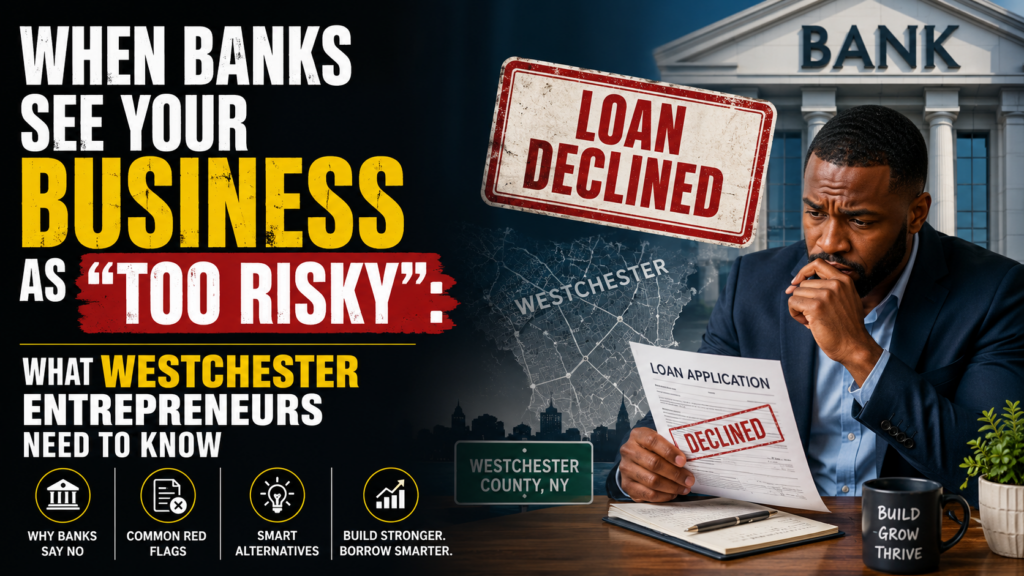
In many cases, the business is legal and legitimate. The problem is that banks and processors may classify it as higher risk.
What “High-Risk” Really Means in Payment Processing
In payment processing, “high-risk” refers to how banks, card networks, and processors evaluate the chance of financial loss. It does not automatically mean the business is unsafe, illegal, or poorly managed.
A business may be considered higher risk because of frequent refunds, fraud exposure, large transaction amounts, recurring billing, delayed delivery, regulatory scrutiny, or chargeback history. Certain industries are reviewed more carefully because customers may dispute payments more often or because the service is delivered after payment is collected. Common examples include travel, coaching, online education, CBD-related products, nutraceuticals, credit-related services, subscription offers, event ticketing, telehealth, and some e-commerce categories.
When a customer disputes a charge, the merchant may lose the sale, pay a fee, and face closer monitoring. If disputes become frequent, the processor may decide the account presents too much risk.
For entrepreneurs whose businesses fall into categories that banks review more carefully, understanding payment processing for high-risk industries can help reduce the chance of rejected applications, frozen funds, or sudden interruptions in revenue.
Why Some Westchester Businesses May Face More Scrutiny
Westchester has a wide mix of local service providers, online sellers, consultants, wellness entrepreneurs, event organizers, beauty professionals, restaurants, nonprofits, and community-based brands. Many rely on digital payments to book appointments, take deposits, send invoices, process online orders, and serve customers across the Tri-State area.
Some business models create risk signals. A company that takes deposits months before delivering a service may receive more review than a store that sells products in person. A subscription business may face questions because customers sometimes forget recurring billing terms. A wellness brand selling online may need to document product claims, refund policies, and shipping timelines. A coaching or consulting business may have to explain exactly what the customer receives and when.
For Black-owned and community-based businesses, these barriers can be especially frustrating. Entrepreneurs are encouraged to create jobs, build wealth, and reach customers beyond their immediate neighborhood. But expansion usually requires more than cash transactions. It requires card payments, online checkout, digital invoices, deposits, and reliable settlement.
If a business is treated as risky, the owner may need to provide more documentation, pay higher processing fees, operate with rolling reserves, or use stricter fraud prevention tools. The result affects practical decisions such as payroll, inventory, vendor payments, and customer service.
What Happens When a Customer Pays by Card
When a customer pays by card, several parties are involved. The customer enters card details online, taps a card in person, or uses a stored payment method. A payment gateway or terminal captures the transaction information and sends it securely for review. The processor routes the request through the card network. The issuing bank checks whether the card is valid, whether funds or credit are available, and whether the transaction appears suspicious.
If the transaction is approved, the money still has to be settled. Funds move through the payment system and are later deposited into the merchant’s account, usually after fees are deducted.
Risk checks may happen throughout this process. Processors may review transaction size, customer location, card type, billing pattern, refund history, chargeback activity, and fraud signals. If a business suddenly processes much larger payments than expected, receives several disputes, or operates in a category with higher complaint rates, the account may be reviewed.
That is why payment processing should be treated as part of a business’s financial infrastructure, not as a simple checkout feature.
Why Chargebacks Can Put a Business at Risk
A chargeback happens when a customer disputes a transaction through their card issuer. The customer may not recognize the charge, claim the product never arrived, object to the service, or report fraudulent card use.
Consumers have formal rights around credit card disputes, so merchants need clear records, refund policies, delivery confirmations, signed agreements, and customer communication before a payment problem escalates.
For a small business, a chargeback can be costly. The merchant may lose the sale amount, pay an additional fee, and spend time gathering evidence. Processors also measure dispute patterns, even when the merchant believes each sale was valid.
Some industries face more misunderstandings than others. A customer may forget they agreed to recurring billing. A client may expect immediate results from a service that takes time. A buyer may dispute a charge instead of requesting a refund. A delayed shipment may become a formal payment dispute.
High-risk businesses should reduce confusion before the sale. Product descriptions should be accurate. Refund policies should be easy to find. Subscription terms should be clear. Service agreements should explain timelines and deliverables. Receipts should display a business name customers will recognize on their bank statement.
The Difference Between a Standard Account and a Higher-Risk Setup
Many popular payment platforms are built for simple businesses with low dispute rates and predictable transaction patterns. A local coffee shop selling in person is easier for a processor to evaluate than an online coaching company selling six-month programs to customers across several states.
Higher-risk businesses usually go through more detailed underwriting. The processor may review the owner, business model, website, refund policy, expected monthly volume, average transaction size, customer base, and dispute history. It may also request prior processing statements, business registration documents, bank information, and proof that the company operates transparently.
A higher-risk setup may include fraud filters, chargeback alerts, transaction monitoring, reserve requirements, ACH options, virtual terminals, or e-commerce integrations. These tools help reduce losses and keep payments moving.
Rules vary by industry, sales model, transaction volume, and documentation quality. A business that can clearly explain how it sells, fulfills orders, manages refunds, and handles complaints has a better chance of passing review.
What Entrepreneurs Should Prepare Before Applying
Business owners should address payment processing during launch planning. A strong application should include business documents, accurate ownership information, clear product or service descriptions, expected processing volume, average sale amount, refund policy, delivery timeline, and customer support process.
For online businesses, the website matters. It should show contact information, terms and conditions, a privacy policy, refund or cancellation rules, and clear descriptions of what customers are buying. Subscription terms should be easy to understand. If a service will be delivered later, the timeline should be visible before payment is collected.
Recordkeeping is equally important. Invoices, signed agreements, shipment tracking, appointment confirmations, email communication, and proof of delivery can help if a customer disputes a payment. These records do not prevent every dispute, but they give the business a stronger response.
Entrepreneurs who have processed payments before should review past statements and chargeback history. If issues occurred, they should be ready to explain what changed, such as updated refund policies, improved customer service, clearer product descriptions, or discontinued offers that caused complaints.
Why This Matters for Local Economic Growth
Payment access affects business opportunity. A company that accepts reliable digital payments can sell beyond its immediate area, book customers in advance, invoice professionally, and reach people who rarely carry cash. A company that struggles to process payments may lose customers to competitors with stronger systems.
For Westchester entrepreneurs, this connects to ownership, self-determination, and local wealth. A business needs customers, visibility, and community support, but it also needs back-end systems that convert that support into revenue.
Discussions around local Black business growth often focus on visibility and community spending. Those issues matter, but payment systems, bookkeeping, tax planning, customer records, and fraud prevention also shape whether a business survives beyond the launch stage.
This is especially true for hybrid businesses. A local brand may sell at community events, through social media, on its website, and by invoice. A service provider may work with customers in Mount Vernon, Yonkers, White Plains, New Rochelle, the Bronx, and New Jersey. Each sales channel can create different payment needs.
Entrepreneurs should ask direct questions before choosing a processor. What happens if sales volume grows quickly? How are disputes handled? Are funds held in reserve? What industries are supported? What fraud tools are available? What documents are needed before approval?
Payment Access Is Part of Business Infrastructure
Entrepreneurs often spend months thinking about branding, pricing, marketing, and customer service. Payment processing deserves the same level of planning because unreliable access to funds can weaken every part of the business.
For businesses in industries that banks review more carefully, preparation is essential. Owners should understand why their category may be considered higher risk, how transactions are reviewed, why chargebacks matter, and what documents processors may request. They should also build clear policies and keep strong records from the beginning.
A business can have a strong mission, loyal customers, and real community value, yet still struggle if the payment side is weak. Westchester entrepreneurs who understand the risk conversation early can protect cash flow, avoid preventable disruptions, and build businesses ready for a card-first economy.