



Students across this county head back to school in a few weeks, and the restorative circles will start up not long after. So, picture an eleven-year-old boy sitting in a circle of fifteen chairs with no desks. Call him John, though John is a composite drawn from many children rather than any one child. A restorative counselor is in the circle too, holding a small wooden object that gets passed from hand to hand so everyone knows whose turn it is to talk. John is there because of something that happened in a hallway on Tuesday. When the object reaches him, he says he felt disrespected. The counselor, who means well, tells him that disrespect is not a feeling, then asks him what he was really feeling underneath. John looks down. Shrugs his shoulders. He says he doesn’t know. After a moment of awkward silence, the object passes to the next person.
Districts across Westchester and beyond have brought restorative practice into their buildings as an alternative to suspension, and much of it works well. I have watched it change outcomes for young people who would otherwise have been suspended and sent home for three days with nothing to think about except how much they hated school. There is meaningful research behind it, even if implementation and outcomes vary, and the restorative facilitators I have met over the years have been remarkably sensitive.
So, what follows is offered from inside a practice I believe in, by someone who has spent years on the clinical side of restorative circles in professional sport, where grown men, especially men of color, are often trying to put difficult experiences into words while also figuring out how those words will be heard.
This is where the language around what people are feeling starts to matter.
Some of the ideas behind restorative practice come from the work of the psychologist Silvan Tomkins and, later, the psychiatrist Donald Nathanson. Tomkins listed nine basic affects that he believed show up very early in life: anger, fear, distress, disgust, dissmell, shame, interest, enjoyment, and surprise. Dissmell is the instinctive urge to turn away from an offensive smell. In his view, many of the more complex feelings we have arise from these basic emotional responses and the meanings we make of what happens to us.
That matters because disrespect is not one of the nine.
In some restorative-practice training, particularly material influenced by Nonviolent Communication, facilitators are taught to understand “I felt disrespected” as a person’s interpretation of what happened, rather than the underlying emotion. From there, the facilitator may ask what the person felt in that moment. It could be anger, shame, hurt, fear, humiliation, or something else.
Tomkins was an influential thinker, and his model was built to describe a handful of basic affective responses that appear early in life, the ones that show on a child’s face before they have the words. That is a description of what the body does. His model was not developed as an account of what racism does to a person. And back in John’s circle, Tomkins’ list is doing something he never asked it to do, which is deciding which words count.
I ran into it from the wrong side of the chair a few weeks ago.
We were doing a restorative training exercise on affective language, the kind where you build a sentence out loud so the group can hear it. I said, “I feel disrespected when…” and got no further. The example I had in mind involved nobody in that room. The facilitator stopped me and said they wanted to teach me something about the difference between an emotion and respect.
I had picked that word on purpose. This is work I do for a living.
An article on the subject turned up in the group chat a few minutes later, posted in the same teaching spirit. I got very quiet. Three people found me during the break to ask if I was all right, and I told them I was fine. I drove home on the Saw Mill River Parkway looking for a better word and, like John, not finding one.
If a more precise word exists, I would use it. But weeks of turning this over have not produced one that does the same work.
I went back to the restorative literature to see what I was missing.
In 2002, the criminologist Bas van Stokkom wrote about indignation in restorative conferences. Indignation turns up when someone feels wronged and cannot get the size of the wrong into words. It comes out as irritation, or bitterness, or something the room files as sarcasm. Van Stokkom, drawing on Retzinger and Scheff, calls this a kind of helpless anger. The person is struggling to convey the enormity of what happened.
That felt familiar.
The literature describes a familiar restorative move, which is to help the person get underneath the indignation to the more vulnerable feelings, the sorrow and anxiety and hurt that make it easier for a room to hear one another. In a footnote, the paper sets out the instruction: mediators should reinterpret repeated expressions of indignation, and the accusations that come with them, into wishes or interests so those softer feelings can surface.
But van Stokkom does not leave it there.
He argues that indignation is doing something else at the same time, which is putting a question of responsibility in front of the room. Somebody is saying that something happened here and somebody has to answer for it. I have read that footnote maybe a dozen times now, and it still does not sit easily with me. Something in it goes missing.
My facilitator was not working from van Stokkom. The distinction they were following has its own name. In some restorative training, words like disrespected are called pseudo-feelings and grouped with threatened, bullied, and misunderstood, on the reasoning that they describe what somebody else did rather than what you felt.
That thinking is familiar from Nonviolent Communication, and the concern behind it is valid. Saying you feel disrespected does put the cause of your feeling in another person’s hands.
What surprised me, when I went looking, is that the restorative literature does not appear to speak with one voice about this. A paper presented at the 2012 IIRP World Conference and published on the institute’s own website offers “I feel really disrespected by you” as an example of a disapproving affective statement. So, the word turns up in the field’s own published material as a model of the very thing it is elsewhere said to violate. I do not read that as a contradiction. I read it as a sign that the question is still open.
I do not think the facilitator who stopped me stepped outside their training. I think they did what they were taught to do. That stays with me, because the facilitator may simply have been doing what the training asked them to do.
Because when a Black person says, “I felt disrespected,” the word is already saying more than one thing.
Something physical happens first, and the body is on alert. You start tracking how you are being seen, how you are being spoken to, whether this is one event or one of many. History lives in the word too, and a question about dignity and standing that anger does not account for.
One study of mostly African American teenagers found that those reporting more racial discrimination at sixteen were more sensitive to disrespect two years later, and that the same sensitivity was tied to aggression. It is a small study, and the authors were careful with it, but the direction is worth noticing: the sensitivity tracks what young people are living through.
I have sat with young men on both sides of that, the ones whose sensitivity kept them out of trouble and the ones whose sensitivity walked them into it.
Translating disrespected into angry leaves the job half done. Anger is in there. So is hurt, and sometimes fear, and often shame. The word “disrespected” is also telling us what the person believes happened between him and somebody else.
Take that away, and we keep the emotion while losing the claim.
The cost of the correction itself is the part I would ask facilitators to think about. For some Black participants, saying out loud that they felt disrespected may come after deciding several times over not to say it.
One study found prospective teachers wrongly reading Black children’s faces as angry more often than white children’s, and the most biased among them were not harsher on Black children so much as more generous with the white ones. In my own practice, I have watched Black children learn to keep their faces still in mixed settings, and I have rarely had to explain to them why.
So, when someone finally says, “I felt disrespected,” and the first response from the authority in the room is to correct the word, the subject changes. He came in trying to explain what happened to him. Now part of his attention has gone to whether he said it the right way.
There is a more appropriate sequence in my view, and it yields more useful information when it is handled with care. I am still working it out myself.
Honor it. Take the word as given. “You felt disrespected. Tell me more about what that was like.” Eleven words that keep a person in the room.
Explore it. Ask what it felt like in his body. Ask what it told him about how he was being seen. Ask whether it reminded him of other times. Ask what respect would have looked like instead. These questions get you further than pressing for anger does, because they surface the pattern and the repair at the same time.
Expand it only if the protocol requires it. “It sounds like what you felt carried a lot in it. Maybe some anger, maybe some hurt, maybe something about how you were treated. What else was in there?” The word stays as the container and other feelings live inside it. They do not replace it.
One more thing, for anyone facilitating with Black boys and Black men.
He may be choosing the word disrespected precisely because it feels safer than angry. Disrespect names the violation while leaving him unmarked. Anger is the word that has followed Black men into disciplinary hearings, traffic stops, and personnel files for generations.
When a facilitator presses past disrespect to anger, they are asking a young man to hand over the one word he has been taught, sometimes through real consequences, will be used against him. He may well hand it over, and from the outside it will be hard to tell whether he was persuaded, strategic, or simply outranked.
Somewhere, a boy like John is sitting in a circle. The object has moved on without him, and someone else is talking now.
Consider what it costs him.
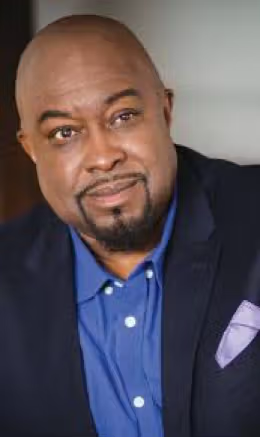
Dr. Derek H. Suite is a board-certified psychiatrist, a graduate of the Columbia University Graduate School of Journalism, and the founder of Full Circle Health, PLLC. He consults to professional sports organizations, where his work includes restorative practice. He contributes monthly to Black Westchester Magazine and writes here in his personal capacity.
This article is for educational purposes and does not constitute individual medical advice.
Sources. The disrespect-sensitivity study is Espinoza, Goering, and Mrug, International Journal of Developmental Science (2021), which followed 75 adolescents, nearly all of them African American. The face-reading study is Halberstadt and colleagues, Emotion (2020). On indignation, Bas van Stokkom, Theoretical Criminology (2002). The pseudo-feelings distinction is set out by Joe Brummer at joebrummer.com (2015). The affective-statement example is from Miller and Olstad, 15th IIRP World Conference (2012), published at iirp.edu.